House vote to extend FISA spy tool fails and it could lapse as Friday deadline looms
WASHINGTON — A rare lapse in a law that allows the United States to gather intelligence abroad appears likely after the House failed on Thursday to temporarily extend the program, in a protest of President Trump ‘s refusal to name a permanent head of the nation’s intelligence agencies.
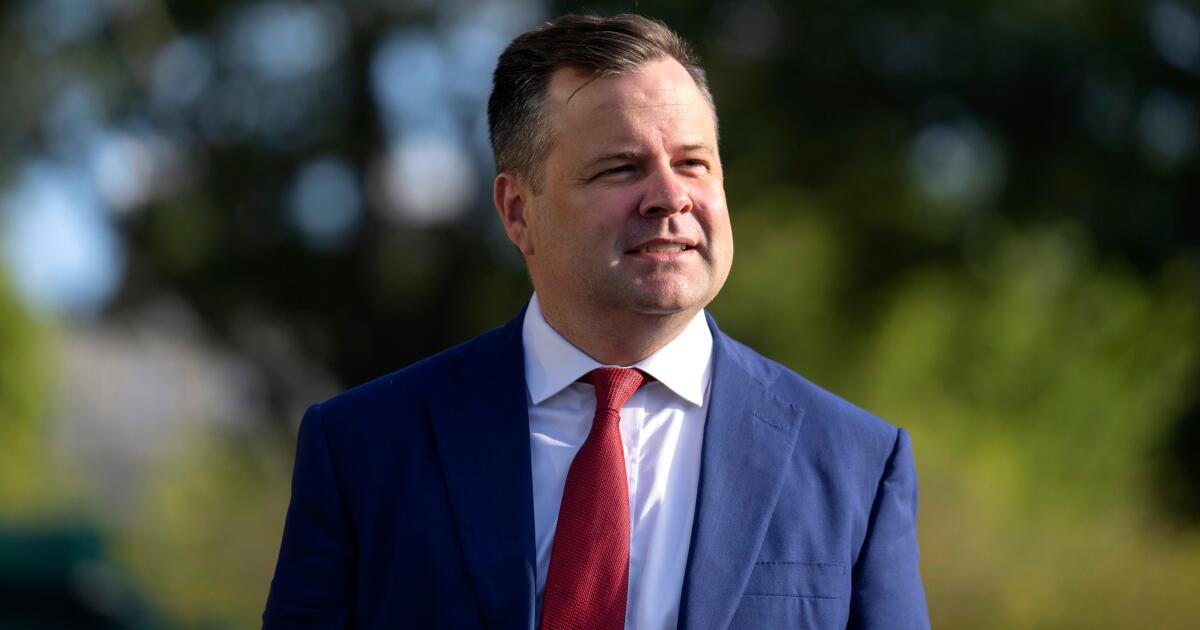
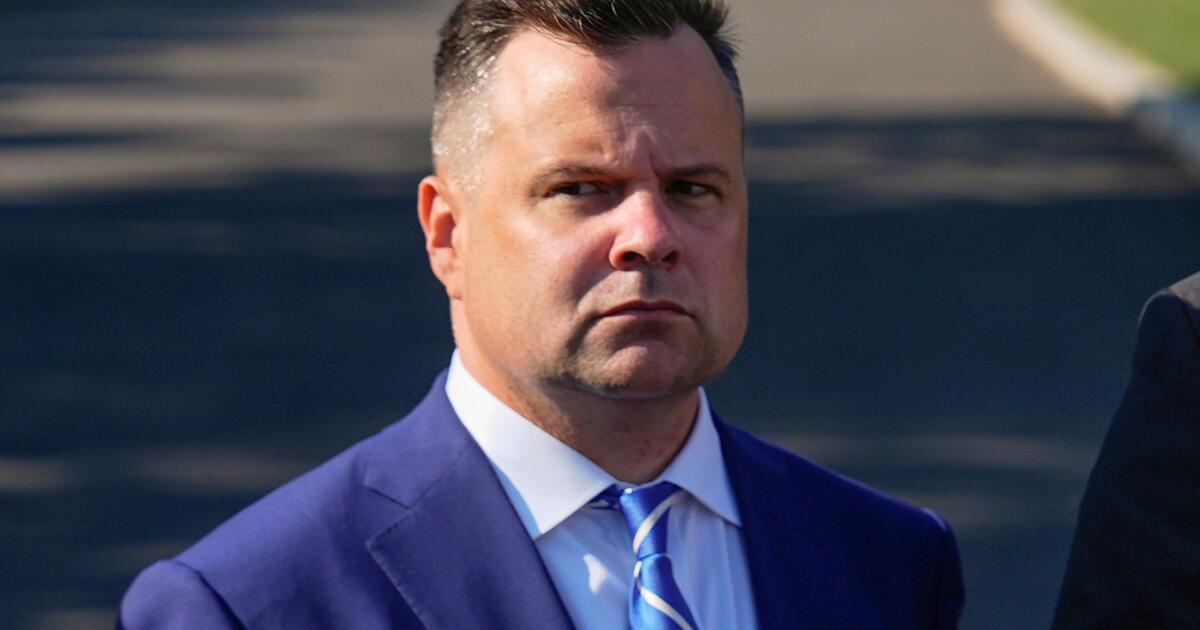
Trump has doubled down on his temporary pick for director of national intelligence, federal housing finance regulator Bill Pulte, even though Pulte has little experience for the job. Democrats say they won’t support the renewal of Section 702 of the Foreign Intelligence Surveillance Act, known as FISA, unless the Republican president withdraws Pulte’s appointment and nominates a permanent replacement.
The House vote collapsed in bipartisan fashion, with some Republicans and nearly all Democrats rejecting the temporary measure, 198-218. The Senate may try its own vote later Thursday, but hopes are dimming to prevent what could be an unprecedented lapse in the surveillance tool. The law expires on Friday at midnight.
The impasse could soon result in limitations on what intelligence the U.S. government can collect abroad just as World Cup games begin in cities around the country and ahead of celebrations for the nation’s 250th anniversary.
“We can’t let them extort us,” Trump said of Democrats.
Trump has stuck with Pulte as the acting head, rebuffing demands from lawmakers for a more qualified nominee. Trump asked Congress for a short-term extension of the law to “provide time for the selection and confirmation” of a permanent director. He said he wants Pulte to begin downsizing intelligence agencies.
The parties leveled blame for the potential interruption in what has been seen as an essential, if long-debated, surveillance program for keeping the country safe.
“We’re going to ask every member here to do the right thing,” said House Speaker Mike Johnson, R-La. “We cannot allow that to go dark.”
The House Democratic leadership announced its opposition, saying Pulte has no relevant intelligence background, in defiance of the law’s requirement for “extensive” national security experience.
“The apparent motivation for his elevation is the demonstrated willingness of Bill Pulte to search government databases for alleged dirt on President Trump’s chosen political enemies,” Democratic leader Hakeem Jeffries of New York and the leadership team said in a joint statement. They said there is a path to reauthorizing FISA, “but it will require enacting meaningful reforms.”
GOP leaders lobby the White House, to no avail
Congressional Republicans have lobbied Trump all week to quickly nominate a permanent replacement. But he said he needs more time to do so.
Senate Majority Leader John Thune, R-S.D., said Republican leaders have “made our views known” to the White House.
Trump has said that he is interviewing five candidates for his pick to lead the agency permanently, after the resignation of Tulsi Gabbard.
Johnson said the president has made it very clear that Pulte will serve a “very short term — a sort of renovation role” to help the Office of the Director of National Intelligence be “renovated and downsized.”
But Democrats on the House Intelligence Committee led by Rep. Jim Himes of Connecticut said in a letter to the president that Pulte is a “uniquely poor choice” to serve even in the acting capacity.
Both Republican and Democratic lawmakers skeptical of Pulte have pointed to his lack of intelligence experience and also his record at the Federal Housing Finance Agency. In the position, he has been linked with criminal referrals over allegations of mortgage fraud by public officials Trump sought to punish, including New York Attorney General Letitia James, a Democrat; Sen. Adam Schiff, D-Calif.; and Lisa Cook, a board member of the Federal Reserve.
“He has distinguished himself only as someone who will do or say anything to stay in your good graces,” Himes and the other lawmakers wrote, “qualities that are precisely the opposite of what our nation needs.”
FISA will lapse at midnight Friday
Section 702 of FISA allows agencies such as the CIA, National Security Agency and FBI to collect communications from foreign targets overseas without a warrant.
While members of both parties who cite privacy issues have long wanted to limit the authority, there was broad bipartisan support to renew it, especially after Republicans and Democrats recently worked out a compromise bill.
Virginia Sen. Mark Warner, the top Democrat on the Senate Intelligence Committee, has worked with Republicans on the compromise legislation to renew the authority. But he called Pulte’s appointment to replace Gabbard “a live hand grenade” disrupting the process.
Warner said the only way he’ll support a short-term extension of the surveillance law is if the principal deputy director of national intelligence, Aaron Lukas, is the acting leader during the duration of that extension.
Arkansas Sen. Tom Cotton, the chairman of the Senate Intelligence Committee, and Iowa Sen. Chuck Grassley, chairman of the Senate Judiciary Committee, have warned the administration that the spy tool is likely to lapse.
The administration should prepare “for a potential significant gap in foreign intelligence collection,” they wrote in a letter.
Trump doesn’t back down on Pulte
After bipartisan pushback to Pulte’s temporary appointment, Trump said last week that he would not permanently nominate him to the position. But Democrats, and some Republicans, want his appointment pulled immediately and for Trump to nominate a replacement that can be confirmed by the Senate.
On Tuesday, though, Trump announced that Pulte would not only take over as acting director — he’d also start earlier than expected, on June 19.
One of several possible replacements could be Pete Hoekstra, Trump’s ambassador to Canada and a former chairman of the House Intelligence Committee. The White House has reached out to Hoekstra about the job and conversations are ongoing, according to a person familiar with the outreach who requested anonymity to discuss the private conversations.
Jalonick, Mascaro and Kim write for the Associated Press. AP reporters Joey Cappelletti, Kevin Freking and Eric Tucker contributed to this report.