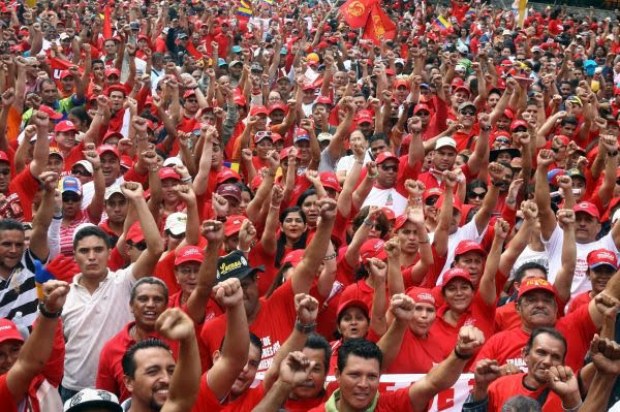
Merida, May 10th 2013 (Venezuelanalysis.com) – Venezuela’s new Labour Law for Workers (Lottt) came into effect this week, guaranteeing shorter working hours, longer maternity leave and pensions for all Venezuelans.
Described by the Venezuelan government as the “most advanced labour law in the world”, the Lottt reduces the working week from 44 hours to 40, and requires that employers provide two consecutive days a week off.
When the law came into effect on Tuesday, labour minister Maria Iglesias stated that the new working hours are part of the process towards a “just distribution of wealth”.
The following day, Carabobo state labour affairs committee president Jose Joaquin Vargas hailed the law as an important part of the transition from “capitalism to socialism”, while last week vice president of the National Federation of Public Sector Workers Franklin Rondon described it as “historic”.
“We are in a historic moment, in 14 years the achievements we have obtained for workers are numerous; we have achieved much more than in the last forty years,” Rondon told VTV on 5 May.
Vargas also urged workers to ensure their employers and unions act in accordance with the Lottt.
For the next six weeks, the government will be inspecting workplaces to ensure employers adhere to the new requirements. Although employers were informed earlier in the year that they would need to make any necessary changes prior to 7 May, on Tuesday Iglesias stated that inspections over the next six weeks will be “corrective in nature”. The minister warned that penalties will be imposed on employers who fail to adhere to the Lottt after 15 June.
However, workers are already reporting breaches of the new laws. In Miranda state, employees of processed meat manufacturer Industrias Alimenticias de Corralito (Inacor) have denounced their employer. A worker spokesperson, Peggy Serrano, alleged that management made a series of surprise changes to the timetable that could result in employees being forced to work overtime.
A Decade in the Making
Along with establishing new working hours, the Lottt prohibits unfair dismissal, outsourcing, guarantees the right to work for both women and people with disabilities and increases maternity leave.
Under the Lottt, Venezuela now has the world’s third longest maternity leave. Mothers are entitled to six weeks pre-natal leave, and twenty post-natal. Fathers are also entitled to two weeks paternal leave. Under the law, the same conditions apply to parents who adopt a child under three years of age.
All workers are also now entitled to retirement pensions, including full time mothers and the self employed.
The Lottt is the result of nearly a decade of discussions in both the national assembly and the labour movement.
When he approved the law last April, former president Hugo Chavez stated that, “In more than 200 years of republican history I am absolutely positive that there has never been a work law….that has been debated so much as this one.”
Toronto, Canada: As Canadian Prime Minister Mark Carney races to make the country less dependent on the United States, attract billions in new investment and get major projects built faster, his economic overhaul is running into resistance from a group that says it wants many of the same things: organised labour.
The latest clash, over the right to strike, comes after months of mounting pressure on Ottawa from Washington, DC.
Recommended Stories
list of 4 itemsend of list
US President Donald Trump, since taking up a second term in office last year, has imposed steep tariffs on Canadian goods and weakened trade agreements – perilous moves as Canada has historically sent close to 80 percent of its exports to its southern neighbour. He has repeatedly piled on with the tariff threats to make Canada the 51st US state.
Canada has responded with retaliatory tariffs, while a broader movement to “Buy Canadian” has taken hold. The hockey-inspired “elbows up” — meaning a readiness to defend against an opponent — has become a national rallying cry.
With trade talks stalled since August, Carney has moved with urgency to shore up the economy and invite new investments. Last month, he announced Bill C-39, known as the Building Canada Strong Act, promising to bring “speed, certainty and predictability” to investors.
Along with measures to speed up approvals for major projects, the bill would also give Ottawa clearer powers to intervene in legal strikes and lockouts in federally regulated workplaces — a provision that has put Carney on a collision course with unions.
Canada’s largest unions have come together against the changes. The largest, the Canadian Union of Public Employees (CUPE), had its national executive go as far as voting to defy the bill’s proposed limits on the right to strike if it passes Parliament without amendments.
CUPE National President Mark Hancock credited Carney’s handling of Trump and said the union’s 800,000 members, who work everywhere from hospitals to schools to municipal services, want to be part of “Team Canada”.
“But at what cost?” he said in an interview with Al Jazeera.
A fight over the right to strike
The controversy centres on Section 107 of the Canada Labour Code, which already gives the Labour Minister broad powers to step into disputes if needed to maintain “industrial peace”, end work stoppages and force the two sides into a binding arbitration.
Beginning in 2024, Ottawa used the provision eight times to intervene in disputes involving airlines, Canada’s two largest railways, three major ports and Canada Post and again during the Air Canada dispute in 2025 when flight attendants went on strike.
Unions have challenged the use of that law in court and had hoped the proposed C-39 would restrict, if not repeal, that clause while businesses wanted it strengthened.
The bill does neither. Instead, it introduces two conditions that the government would have to fulfil first before turning to Section 107.
Before stepping in, the government would have to appoint a special mediator, wait for a public report and consider whether a work stoppage is hurting the “national interest”.
Once a strike or lockout is underway, the minister could direct the Canada Industrial Relations Board to get operations running again and impose a binding process, such as arbitration.
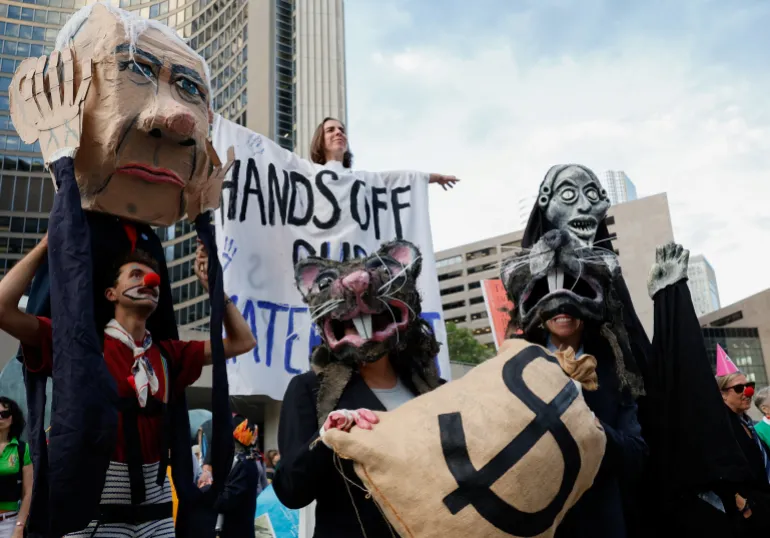
A protester carries an effigy depicting Canada’s Prime Minister Mark Carney as people march to protest against the Canada Investment Summit in Toronto in September [File: Carlos Osorio/Reuters]
The government says those steps put clearer guardrails around a power that already exists, and Carney has said the bill “absolutely reinforces the right to strike”, according to the Canadian Broadcasting Corporation.
Unions have rejected this defence, pointing out that the meaning of “national interest” would ultimately be decided by the minister. They also argue that the prospect of government intervention is bound to change what happens at the bargaining table.
“The political lesson that employers will draw from it is simple,” Larry Savage, a professor of labour studies at Brock University, told Al Jazeera. “Hold out long enough, emphasise the economic damage, and then Ottawa will remove the union’s leverage for you.”
Disruption, Savage said, is precisely what gives a strike its power. “Every effective strike is disruptive,” he said.
Unions say they have already seen employers expect Ottawa to intervene.
Teamsters Canada alleges the Canadian National Railway (CN) and the Canadian Pacific Kansas City (CPKC) railroad companies were counting on Ottawa to step in when they locked out thousands of workers in 2024. Section 107 was invoked within hours.
“Companies have gotten used to the idea that if there is a labour dispute, they can just wait for the government to intervene,” Christopher Monette, Teamsters Canada’s director of public affairs, told Al Jazeera.
CUPE said it saw a similar dynamic at Air Canada in August 2025. Hancock said bargaining stalled after more than 10,000 Air Canada flight attendants voted overwhelmingly to strike because the airline was “expecting the government of Canada to step in and end the strike” — an account Air Canada disputed.
Less than 12 hours after workers walked out, Ottawa invoked Section 107. Air Canada CEO Michael Rousseau later told BNN Bloomberg the airline had expected the provision to be enforced and did not expect a strike.
“That was why they didn’t have a strategy on how to deal with the strike,” Hancock said.
Building Canada faster
The fight over the right to strike is also part of a much bigger argument taking shape around Carney’s economic agenda: Who gets a say in how Canada should change, and how quickly, in the name of making itself less vulnerable to the US?
Critics accuse Carney of using the economic threat from the US to push through changes that go well beyond responding to Trump’s trade war.
New Democratic Party leader Avi Lewis has accused him of using the “fear and disorientation around the trade war to push through a series of unpopular measures that he did not run on, has no mandate for and would never get away with under normal circumstances”.
A protester carries an effigy depicting Canada’s Prime Minister Mark Carney outside the Canada Investment Summit in Toronto [File: Carlos Osorio/Reuters]
That tension was on display in Toronto just a week before C-39 was introduced. Inside Canada’s first national investment summit, hundreds of global investors met with government officials and executives as Carney pitched a country ready to build.
Outside, hundreds of protesters marched through downtown towards the summit’s opening gala under the banner “The Many vs The Money”. The rally brought together labour, Indigenous, environmental and migrant-rights groups, with signs and speeches taking aim at everything from fossil fuel and military projects to AI and the use of public money to attract private investment.
For unions, C-39 has sharpened that debate, pitting the government’s promise of greater certainty for investors against workers’ ability to exert pressure through strikes.
But Jim Stanford, an economist and director of the Vancouver-based Centre for Future Work, questions how much of an economic threat strikes actually pose.
While work stoppages can be costly for individual companies, Stanford said, “It is very, very rare that you would see a noticeable and sustained impact on GDP, employment or incomes.”
Production and transportation are often delayed rather than permanently lost, he added, with businesses catching up once work resumes.
Stanford also questioned the idea that strikes are driving away investment, noting that more than 95 percent of collective bargaining ends without a work stoppage and saying there is “no empirical evidence whatsoever” that strikes have reduced investment.
“This is more of the government giving some icing on the cake for business. It’s not that this has to happen or else our investment won’t work,” he said.
There is also an economic cost to weakening the right to strike, Stanford argued. Workers need bargaining power to win higher wages, which can support consumer spending, productivity and worker retention.
“It may seem like labour peace is a good thing, but if it means that a worker’s share of the pie shrinks, then this actually hurts the economy.”
For labour leaders, that’s where Carney’s economic push goes too far.
“Canada’s unions are part of Team Canada. We have our elbows up,” Canadian Labour Congress President Bea Bruske said in a statement. “But we can’t have our elbows up against Trump with our hands tied at the bargaining table.”
Savage said the government’s “Team Canada” rhetoric risks treating workers’ bargaining power as a national liability.
“I don’t think Canada becomes stronger by telling workers in ports or railways or airlines that their rights have to be surrendered whenever employers invoke competitiveness or the national interest,” he said.
Demonstrators protest against UK government’s proscription of Palestine Action as a terrorist organisation.
Published On 28 Sep 202628 Sep 2026
Police in the United Kingdom have arrested more than 50 people protesting in support of the banned Palestine Action group outside a Labour Party conference in the northwestern English city of Liverpool.
The local Merseyside Police confirmed the arrests in a statement published on Sunday.
Recommended Stories
list of 3 itemsend of list
The police said those taken into custody at the protest, organised by Defend Our Juries, had displayed material in support of Palestine Action, proscribed as a “terrorist” group by the Labour government in July 2025 under the Terrorism Act.
According to the statement, police respected the rights of people to protest lawfully while aiming to keep the peace and ensure the public are safe.
A police officer speaks to a supporter of the group Palestine Action as demonstrators gather to protest outside the conference venue on the first day of the annual Labour Party conference in Liverpool, northwest England, on September 27, 2026 [Oli Scarff/AFP]
More than 250 protesters sat outside the conference centre holding banners with words supporting the group on Sunday, before dozens of police began making arrests.
English band Massive Attack singer Robert Del Naja was among those arrested.
After asking demonstrators if they were going to continue holding up the signs, officers led people away, telling them they had been arrested under the Terrorism Act.
Reporting from Liverpool, Al Jazeera correspondent Milena Veselinovic said the protesters wanted to put proscription “front and centre of the UK Prime Minister Andy Burnham’s agenda” on the first day of his party’s annual conference.
“Being arrested is nothing in comparison to what the people in Gaza are going through, and it’s also worth it, because this is about our right to free speech,” one protester told Al Jazeera.
Another said that “there are priests, there are healthcare workers, there are people who deeply care, and deeply care about right and wrong.”
Kerry Moscogiuri, chief executive of Amnesty International UK, said protesting “is one of the most effective tools” to make government leaders listen and described the arrests as “a truly shameful attack on freedom of speech”.
“The new prime minister can reform our laws so that communities are protected in coming together and demonstrating on the issues they care about. Will he do so?” she said.
Activists also confronted Foreign Secretary Ed Miliband inside a restaurant in Liverpool, demanding that he lift the ban on the group and declare Israel’s genocide in Gaza.
The activists left after Miliband reportedly refused to comment.
A civil disobedience campaign has emerged since Palestine Action was outlawed in July 2025, with more than 3,600 people arrested for showing their support for the group, often while holding signs reading, “I oppose genocide. I support Palestine Action.”
The UK Supreme Court is now set to hear the case after London’s Court of Appeal upheld the government ban in June.
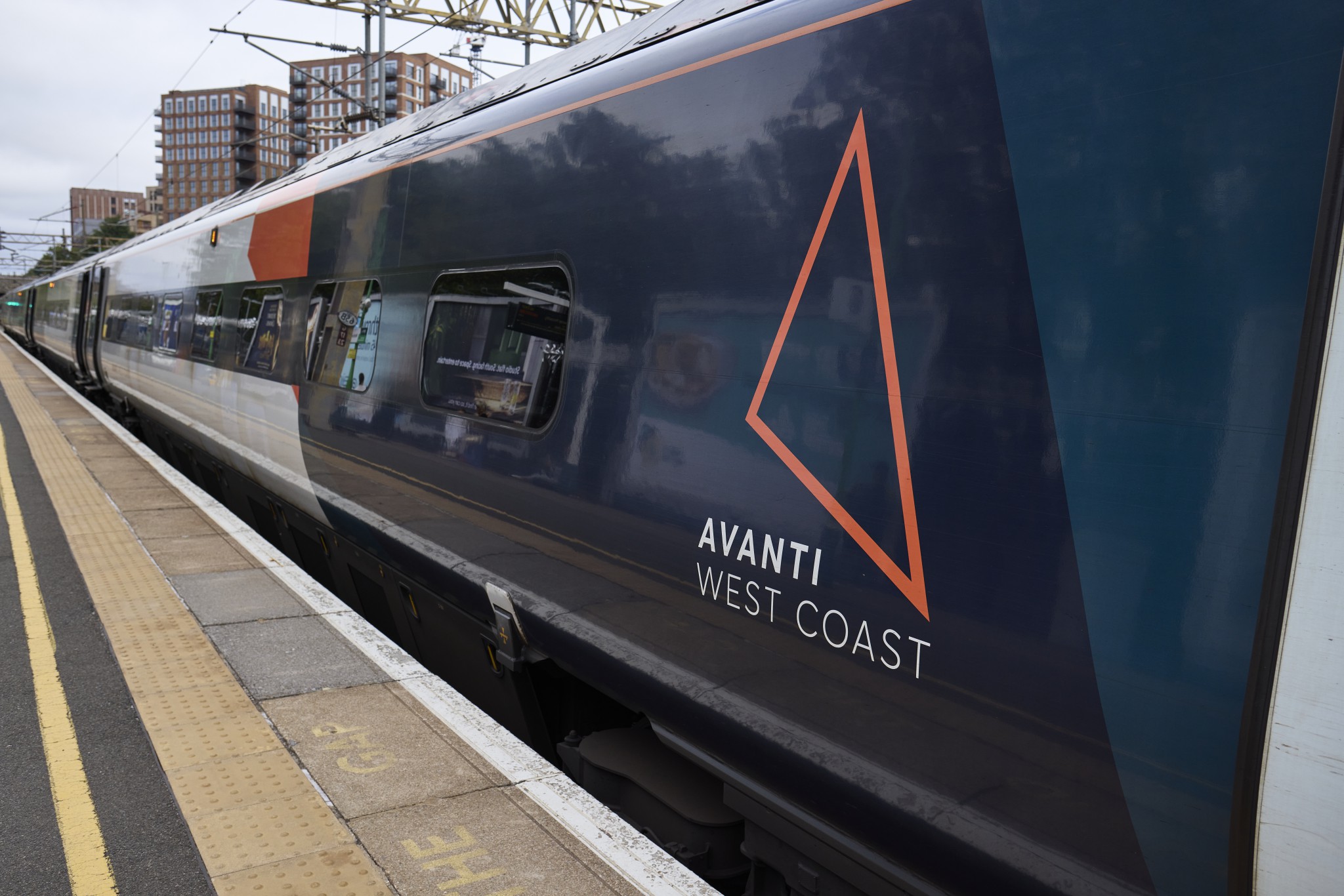
ANDY Burnham is set to nationalise Avanti West Coast next year as Labour pledges to start “delivering for passengers”.
The Government will take control of the private operator from March 7 as the PM said passengers had been failed “time and time again”.
Avanti West Coast is set to be nationalised from next year, the government has announcedCredit: Getty
An extra £10million is set to be invested in power and signalling maintenance in addition to £840million earmarked for infrastructure on the West Coast Main Line, reports ITV.
The government hopes timetable changes will also improve services for passengers as well as boosted WiFi connectivity.
Sign up for the Travel newsletter
Thank you!
It was also announced that Euston station in London will receive a £50million upgrade.
Transport Secretary, Heidi Alexander said: “For years, we’ve heard stories of Avanti underperforming, with passengers left paying the price. Enough is enough.
“That is why we will bring Avanti into public ownership at the earliest opportunity, in March next year.
“This Labour Government is committed to putting essential services back in public hands, connecting people to opportunity and delivering growth in every postcode and this move reflects that commitment.
“We will also introduce a comprehensive improvement plan, focused on delivering for passengers, not shareholders.”
Avanti West Coast’s contract is due to come to an end on March 7, 2027.
That will leave East Midlands Railway and Cross Country as the only train operators yet to be nationalised.
Prime Minister Andy Burnham blasted Avanti, saying they had failed passengers “time and time again”.
In a post on X he said: “We’re putting essential services back in public hands and building a railway that actually works for the people who use it.”
It comes as Avanti West Coast recorded the highest number of cancellations in the UK this summer, according to analysis by The Times.
That is double the national average as they made 1.4million delay repay claims in the year to March – around a million more than in 2019, according to the outlet.
Andy Mellors, managing director at Avanti West Coast, said: “We’re proud of what we’ve achieved over the last six years – from refurbishing our Pendolino fleet and introducing our new Evero trains to running more services than ever before.
“Together, these improvements have given customers greater choice, more capacity and better connectivity, while we’ve continued to innovate to shape the future of the West Coast and wider rail industry.
“Over the coming months, we’ll work closely with the government to ensure a seamless transition into public ownership while remaining focused on delivering for our customers and communities.”
A reduced timetable will also continue between Christmas and the new year due to engineering works, with the scheduled change aiming to “save taxpayers money“.
Pro-Palestine protesters have marched on Labour’s annual conference in Liverpool, calling for an end to UK arms sales to Israel and the imposition of sanctions. The protest follows Labour’s sanctions on Israeli settlements, but demonstrators say the measures do not go far enough.
The Labour Party chair has said Sir Jim Ratcliffe loses “the moral high ground” by making statements about the UK while living in tax exile.
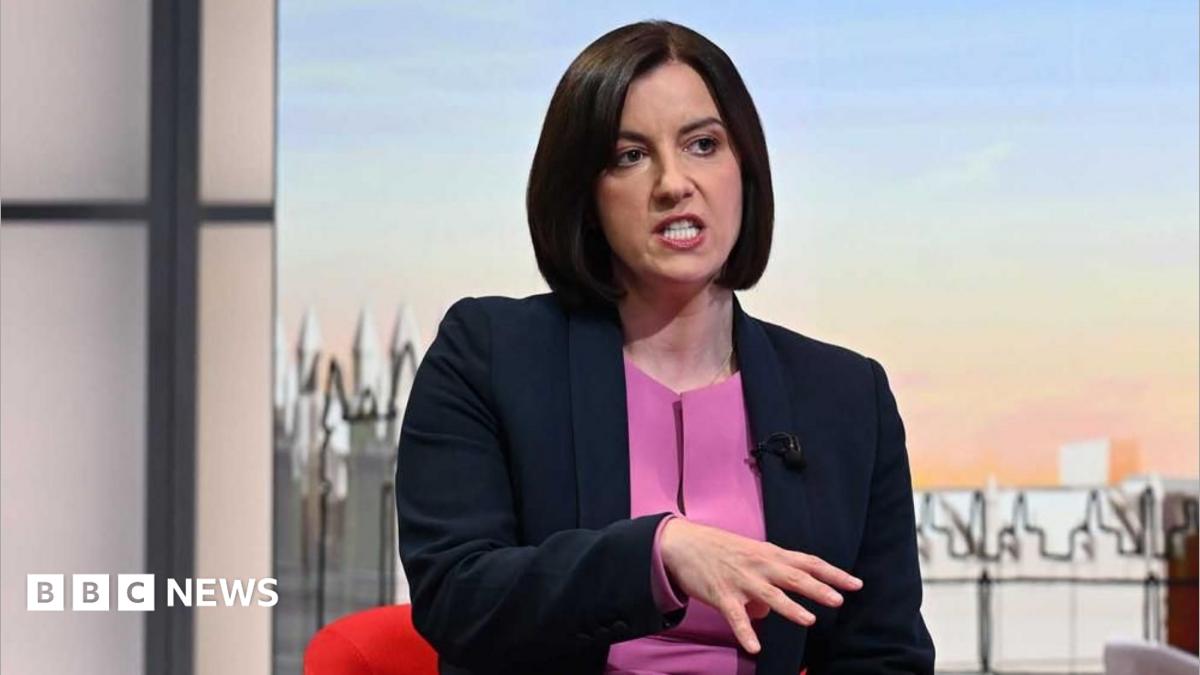
Speaking to Sunday with Laura Kuenssberg, Bridget Phillipson said she would take the billionaire businessman’s comments that the UK was “on the slide” with a “pinch of salt”.
Sir Jim, the founder of petrochemical giant Ineos and Manchester United’s co-owner, told the BBC he has lost confidence in the UK due to a combination of high taxes and high immigration.
He has been a tax resident in Monaco since 2020 and said “things would have to get better” in the UK for him to return.
When questioned over the remarks, Phillipson said Sir Jim loses “the moral high ground” by “making these kinds of pronouncements while choosing to make decisions, that he is within his rights to make, to become a tax exile”.
Pushed on whether it bothers her that people who create jobs and pay a lot of tax were leaving the UK, the minister said she was “optimistic about our country’s prospects”.
Other high profile billionaires have left the UK, including including steel tycoon Lakshmi Mittal and most recently the UK’s third biggest taxpayer, hedge-fund boss Chris Rokos.
But, Philipson argued the country was in a good position ahead of the Budget next month, and Andy Burnham has shown a “sense of hope and optimism whilst recognising that many families are still struggling and there is more to do.”
“Of course, there are challenges, including big international headwinds, but I fundamentally believe that we are in a strong position going into this budget because of the decisions taken over the last two years, and I believe our country’s best days lie ahead of us,” she said.
Philipson declined to speculate over whether there would be tax rises in the Budget on 28 October, and said the government remained committed to being disciplined about its spending rules.



![A policeman speaks to a supporter of the proscribed group Palestine Action as they gather to protest outside the conference venue on the first day of the annual Labour Party conference in Liverpool, north-west England on September 27, 2026 [Oli Scarff/AFP]](https://i0.wp.com/occasionaldigest.com/wp-content/uploads/2026/09/AFP__20260927__C9GU2MN__v1__HighRes__BritainPoliticsLabourConferencePalestineConflic-1790556936.jpg?w=640&ssl=1)