Kyiv

Ukraine Situation Report: Kyiv Is Turning Soviet-Era Armor Into Robotic Combat Vehicles

In another effort to advance robotic warfare, Ukraine is working to turn Soviet-era BRDM-2 armored reconnaissance vehicles into remotely controlled systems. The move comes as uncrewed ground vehicles (UGVs) are playing an increasing role on both sides of the conflict as movement along the front lines has been highly contested by the ubiquity of aerial drones.

This is one of the latest efforts by the Central Innovation Activities Directorate of the Ukrainian Armed Forces to help provide weaponry that will keep troops out of harm’s way, the head of that unit told the Ukrainian Ukrinform news outlet on Friday. Ukraine is using UGVs mainly for logistics and casualty evacuation, but they are also increasingly engaging in ground combat as well air defense.

Col. Vladyslav Voloshyn said work is currently underway “to enable remote control of the vehicle from a distance of up to 1,000 km. In addition, the BRDM-2 is planned to be fitted with a powerful foreign-made diesel engine, with General Motors and Mercedes engines among those being considered, replacing the Soviet-made GAZ gasoline engine. An automatic transmission is also planned.”

“The platform will have expanded capabilities for integrating a remotely controlled combat module equipped with an automatic weapon of at least 12.7 mm caliber,” Voloshyn explained. “This is expected to enhance the capabilities of Ukrainian units and their effectiveness in carrying out combat missions while helping preserve the lives of service members.”

The directorate is also installing additional mine protection for the vehicle’s hull bottom, tubeless high-mobility tires, a backup remote-control system inside the hull, and anti-fragmentation protection, the colonel added. Equipped this way, the vehicles would likely be used to assault front line Russian positions where troops can’t go on foot or as a remote option to provide fire control and support Ukraine’s often porous front line defenses. Uncrewed ground vehicles have also been used heavily in medical evacuations and general logistics to the front lines.

Unlike having to build a totally new vehicle, this project aims to take advantage of the large supply of BRDM-2s Ukraine has in storage, Voloshyn added.

Ukrainian BRDM-2 Armored Vehicle Conducts Indirect Fire #warinukraine thumbnail

Ukrainian BRDM-2 Armored Vehicle Conducts Indirect Fire #warinukraine


The vehicles will be equipped with day/night cameras to assist with guidance and will be remotely controlled from beyond line-of-sight. A vehicle this size would be able to more easily accommodate robust satellite links for that kind of operation. Beyond these features, the colonel provided few details about how the vehicles would be operated.

The head of Ukraine’s Brave1 defense technology hub previously provided some insights about how this works for purpose-built UGVs.

“I can tell you that combat UGVs without artificial intelligence do not work at appropriate effectiveness,” Brave1 CEO Andrii Hrytseniuk told us in May in a discussion about Ukraine’s burgeoning UGV industry. “All combat turrets that we are using have elements of artificial intelligence, and it allows them to be as effective as they are.”

The UGVs use machine vision for “object recognition, identification, classification, tracking and providing recommendations for the operator on what to do,” he added.

These systems communicate through Ukraine’s Delta command and control system, the Brave1 CEO noted.

Without the Delta system, “all these advanced technologies on the battlefield will not be working,” Hrytseniuk suggested. “The Delta command and control system, which is number one in the world, is absolutely crucial. And this is for all our drones, multi-domain operations, everything.”

War in Ukraine: An advanced digital map. The Delta system #shorts #warinukraine #united24media thumbnail

War in Ukraine: An advanced digital map. The Delta system #shorts #warinukraine #united24media


The Ukrainian company ArmSpetsTekhnolohiya unveiled the BRDM-2M in June during the Defense Builder Accelerator Demo Day. Now the directorate is preparing this system for deployment to the front lines, Voloshyn stated without providing timelines. If it does turn out to be a viable option, it will join tens of thousands of other Ukrainian UGVs on the battlefield.

The Latest

On the battlefield, both sides are making small advances, however, the front lines are largely static. Here are some key takeaways from the latest Institute for the Study of War analysis. 

  • Sumy: Russian forces recently advanced in northern Sumy Oblast. 
  • Kharkiv: Russian forces continued offensive operations in northern Kharkiv Oblast on August 19 and 20 but did not advance as Ukrainian forces counterattacked. However, Russian forces are reportedly intensifying strikes in the Kupyansk direction, likely in preparation for future ground attacks.
  • Donetsk: Russian forces continued offensive operations in the Kostyantynivka-Druzhkivka tactical area on August 19 and 20 but did not make confirmed advances. Ukrainian forces recently advanced south of Dobropillya while Russian forces recently advanced southwest of Pokrovsk.
  • Zaporizhzhia: Russian forces continued offensive operations in the Hulyaipole direction and western Zaporizhzhia Oblast on August 19 and 20 but did not advance.
  • Kherson: Neither Russian nor Ukrainian sources reported ground activity in the Kherson direction on August 20.

In an update to a story we reported earlier this month, North Korea is reportedly sending KN-30 missiles, also known as the Hwasong-11C, to Russia.

“Ukraine’s Main Military Intelligence Directorate (GUR) confirmed on August 20 that North Korea transferred around 50 KN-23, KN-24, and KN-30 (Hwasong-11C) ballistic missiles to Russia as of July 2026,” the Institute for the Study of War reported on Thursday, citing Ukrainian media.

The KN-30 is an enlarged derivative of the original Hwasong-11 and designed to carry larger warheads. North Korea has previously said it has tested subvariants of the Da/C type with 2.5-ton and 4.5-ton conventional high-explosive warheads, and that it can also be fitted with a nuclear warhead.

North Korea has also sent a new wave of about 8,500 North Korean troops to Russia, CNN reported. This includes “a drone unit that could attack targets inside Ukraine,” the network stated, citing Major General Vadym Skibitskyi, Deputy Head of Defence Intelligence of Ukraine (GUR).

Thousands of North Korean engineers and bomb disposal experts are mostly dispersed across Kursk Oblast, Skibitskyi stated. The North Korean forces deployed in Russia also include 400 drone operators. Many gained previous experience fighting against Ukraine. Their drones are likely to be used both for reconnaissance and attacks on Ukraine, CNN noted.

Around 25,000 North Koreans have so far either been part of the forces deployed in Russia or passed through the Russian armed forces, the GUR leader added. He said that Russia could request up to 50,000 more troops during a meeting between Kremlin leader Vladimir Putin and North Korean leader Kim Jong Un in September.

Ukrainian officials have made it clear that they cannot defend against Russian ballistic missiles because they are out of Patriot missile interceptors. In the latest bid to offset that and hit missiles before they can be launched, Ukraine is seeking help from Elon Musk, the Financial Times reported.

“Ukraine is seeking approval to use Starlink-equipped drones against ballistic missile launchers up to 200km inside Russia,” the publication reported on Friday, citing people familiar with the matter.

Such a move, if approved, would provide Ukrainian drones with beyond line-of-sight connectivity and resistance to jamming, increasing their ability to strike deeper into Russia against dynamic targets, giving them the ability to hunt for missiles deep inside Russia and strike them when they are found. This use of Starlink helped Ukraine with its mid-range strikes against Russian logistics.

The introduction of Starlink to the battlefield in Ukraine has revolutionized how war is waged, giving users high bandwidth, relatively secure communications basically anywhere, all in a small, off-the-shelf package. This has impacted everything from high-level command and control, to basic communications and data exchange between troops across the entire battlespace. The antennas have also been reduced in size enough so that they can now fit onto relatively small one way-attack drones.

There is a major catch, however, in any bid to use Starlink in offensive weapons beyond how it is currently employed. While he wouldn’t sign off on similar requests in the past, Musk is now allowing Ukraine to use Starlink to hit targets deep behind enemy lines and, apparently, ships in the the Sea of Azov as well, though we don’t know for sure.

Musk would need to sign off on the kinds of strikes deep into Russia that Ukraine is currently seeking. While his Starlink service is helping Ukraine now, he also shut it off earlier in the war during Ukrainian attacks on Crimea, fearing there could be a nuclear response from Moscow.

Complicating matters, Ukrainian President Volodymyr Zelensky recently fired defense minister Mykhailo Fedorov, who was Ukraine’s most direct connection to Musk.

TWZ cannot independently confirm FT’s reporting. We’ve reached out to SpaceX, Musk’s company providing Starlink service, for clarification.

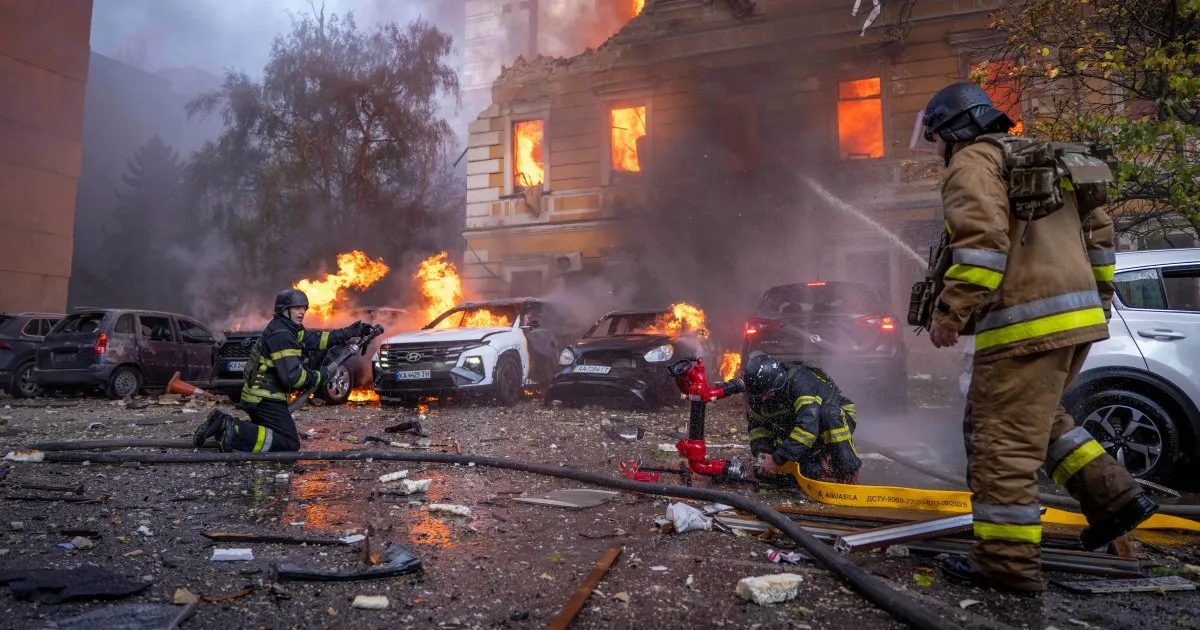
Russia attacked a shopping mall in Ukrainian President Volodymyr Zelensky’s hometown of Kryvyi Rih. The attack killed at least 14 and wounded more than 100 others, the Ukrainian president stated on X.

“The attack drones struck in two waves – half an hour after the first hit and the fire, there was a second strike targeting the emergency responders,” Zelensky stated on earlier on X. “Attacks like these are nothing less than terrorist acts. And the world must respond to them accordingly – with real pressure on the aggressor. For peace to be possible, Russia must face real accountability.”

Rescue workers tend to a building fire in the aftermath of the attack on Kryvyi Rih. (Volodymyr Zelensky)

Russia also struck the Tabaky crossing at the Ukraine-Moldova border.

“The attack damaged buildings and structures at the crossing, and fires broke out at the site,” according to Ukrainian border guards. “Traffic through the Tabaky crossing is currently suspended. Vehicles are being redirected to other border crossing points.”

For its part, Ukraine is continuing its long-range strike campaign against Russian energy and military targets. This campaign has severely crippled Russia’s oil infrastructure in particular, causing widespread domestic gasoline shortages and a drastic reduction in oil exports.

“Last night, our deep strikes hit an oil refinery in Perm, more than 1,600 kilometers from the border, and the Marinovka military air base in the Volgograd region,” Zelensky claimed. “There are also results in the Black Sea.”

“We also have confirmed results from previous strikes: a Russian Su-34 aircraft was damaged at the Akhtubinsk air base, about 600 kilometers from the front line,” the Ukrainian leader added. “And in Primorsko-Akhtarsk, nearly 180 kilometers away, a facility used for storing, preparing, and launching attack drones that the Russians use to strike our people was hit.”

TWZ cannot independently verify these claims.

Ukraine’s campaign against Russian air defenses continues as well.

A Russian S-300 surface-to-air missile system (SAM) was located and destroyed, Ukraine’s Defense Ministry (MoD) claimed on X.

Video emerged on social media showing a Ukrainian MiG-29 chasing a Russian Shahed drone, which eventually crashed apparently without being fired on. Based on the quality of the video and the distance from which it was shot, it is hard to say exactly what caused the drone to crash.

Russia has introduced a new method of attack. It involves using a drone that lies in wait until a microphone picks up the sound of a passing vehicle and activates the weapon.

Ukraine’s mid-range strike drone campaign against Russian logistics, especially fuel trucks, has relied heavily on AI for terminal guidance and target recognition. Now Russia is supposedly testing a new method of trying to defend against those strikes.

Russian forces have reportedly fitted a UAZ-452 “Bukhanka” vehicle with mirrored panels as a potential countermeasure against drones using optical or AI-assisted guidance.

The improvised modification, which makes the van look like a rolling disco, appears intended to interfere with the drone’s ability to visually identify and track the vehicle by altering its appearance and creating reflections. However, whether this works is not known.

Earlier in this piece, we touched on Ukraine’s Delta battle management system. It turns out the country’s SBU state security service arrested a commander of a National Guard special purpose group for giving Russia access to his Delta account in return for $1,000 in cryptocurrency, a serious security breach.

That’s it for now. We’ll update this again at a later date.

Contact the author: howard@twz.com

Howard is a Senior Staff Writer for TWZ. He writes frequently about conflict, focusing heavily on the Middle East and Ukraine, and interviews with military and intelligence officials and industry leaders from around the globe. He lives near Tampa, Florida, home of U.S. Central Command, U.S. Special Operations Command.


Source link

Russia unleashes ‘massive attack’ on Kyiv, killing at least five

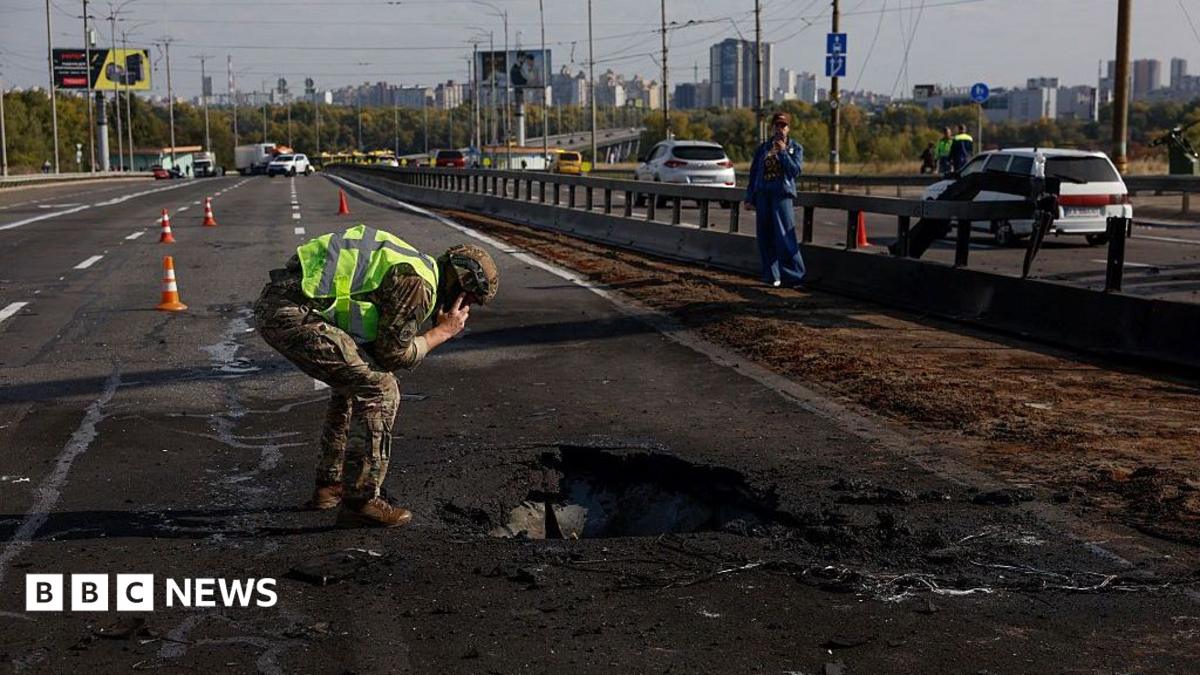
A wave of overnight Russian missile strikes has killed at least five people in the capital Kyiv and the surrounding region, Ukrainian authorities say.

Apartment blocks and warehouses were targeted in the “massive attack” on Thursday, according to the State Emergency Service of Ukraine (DSNS). At least least 23 people were injured in the strikes.

Authorities are scrambling to rescue anyone trapped underneath the rubble of demolished buildings, with crews already pulling one survivor from debris.

Kyiv Mayor Vitali Klitschko said a children’s hospital had been damaged in the overnight strikes, where windows were broken and cars set ablaze nearby.

An industrial centre in the Solomyanskyi district, south-west Kyiv, was also hit by missiles, the mayor said.

An attack in Brovary district of the broader Kyiv region killed one man and wounded another, Kyiv regional governor Tymur Tkachenko said.

The regional administration issued an alert earlier in the night warning residents to take shelter. It continued: “Air defense operations are possible in the area”.

More missile alerts were issued from regional authorities, citing warnings from the Ukrainian air force.

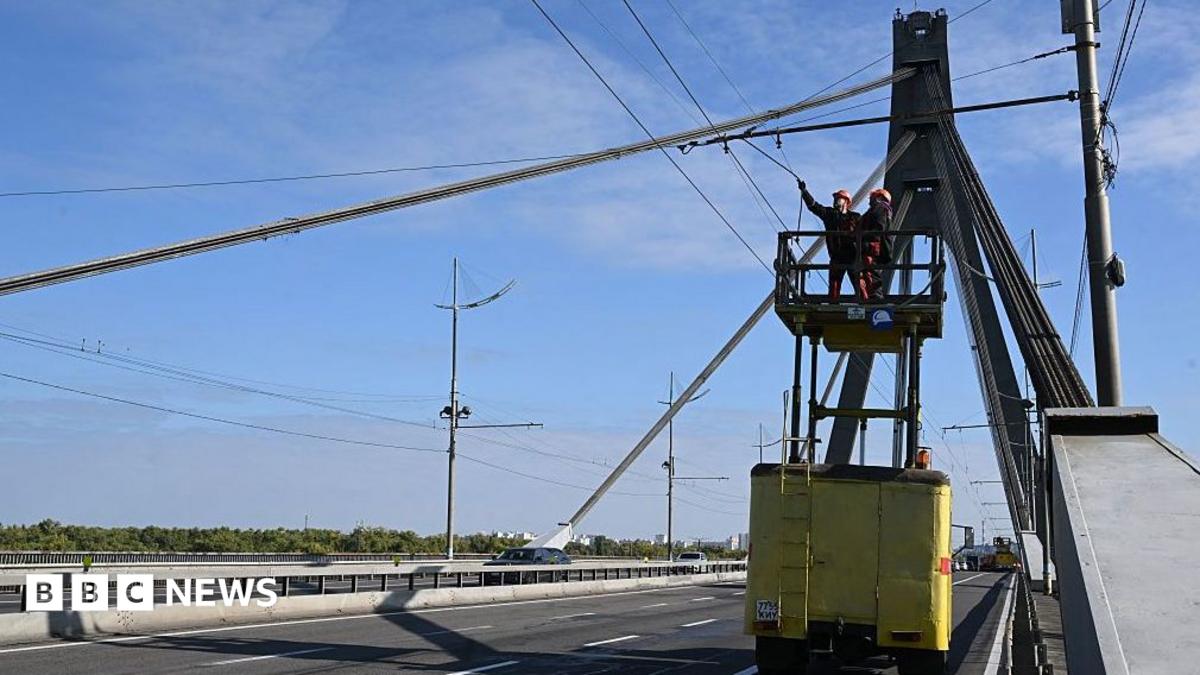
The Russian airstrikes cut power to thousands of properties overnight, plunging parts of the Kyiv region into darkness, with technicians racing to repair the damaged energy grids.

Source link

Ukraine: At least 4 killed in Kyiv bombing, including 3-year-old boy

Aug. 8 (UPI) — Overnight Russian attacks on Kyiv and the surrounding region killed at least 4 people, one of which was a 3-year-old child, officials said Saturday.

Two of boy’s grandparents were also killed in the strike from Russian drones in the Brovary district of the Kyiv region, northeast of the capital city. Four others — the boy’s 15-year-old brother, his parents and a neighbor — were injured as they tried to help the three. They were all hospitalized.

In Kyiv, the city’s military administration said one other person was killed and four others wounded.

Ukraine‘s air force reported that it had downed or intercepted 135 of 151 drones launched by Russia overnight. The attack also involved six ballistic missiles and other guided missiles, CBS News reported.

“Last night, Russia killed three people in Pukhivka, Kyiv region, with drone strikes — a grandfather, a grandmother and their grandson. The boy was only 3 years old,” Ukraine President Volodymyr Zelensky posted on X. “Four more people were hospitalized: the child’s parents, his 15-year-old brother and a neighbor who came to the family’s aid and was wounded in a double-tap strike. The victims suffered thermal burns and shrapnel wounds. My condolences. It was an ordinary residential building. The Russians could not have been unaware of this. There was also a strike involving six ballistic missiles against civilian infrastructure in Kyiv. As of now, one person has been reported dead. My condolences to the family and loved ones. The Donetsk, Kharkiv, Sumy, Dnipro, Zaporizhzhia, Odesa, Kherson, Mykolaiv, Chernihiv and Poltava regions also came under attack.”

Zelensky went on to reiterate that Ukraine needs more support, including stronger sanctions on Russia and anti-ballistic missile weapons.

The Ukrainian president is on an official visit to Serbia, a close ally of Russia. It’s a first for Zelensky, and the two countries agreed to work toward closer economic ties. Serbian President Aleksandar Vučić said his country will support Ukraine’s territorial integrity with “no buts” during a joint press conference, The Kyiv Post reported. Serbia is trying to join the European Union.

Zelensky has been trying to get the United States to license its Patriot interceptor missiles, but President Donald Trump has hesitated.

The U.S. Senate passed a bill Friday that imposes new sanctions on Russia and Iran. The bill was once championed by the late Sen. Lindsey Graham. On Friday, the Senate voted 86 to 11 in favor of passing The Lindsey O. Graham Sanctioning Russia and Iran Act of 2026.

A drone also entered Bulgarian airspace Saturday after crossing from Romania and exploded near an international gas pipeline, the BBC reported Bulgarian prime minister Rumen Radev said. He said there was a “significant” amount of explosives aboard the drone, but that there were no casualties or reports of damage. It’s not clear where the drone originated.

Visitors pray during a ceremony for atomic bomb victims at Hiroshima Peace Memorial Park that marked the 81th anniversary of the atomic bombing of Hiroshima, Japan, on August 6, 2026. Photo by Keizo Mori/UPI | License Photo

Source link

Can Ukraine Defend Kyiv as Russia Intensifies Missile Strikes?

Russia launched another large-scale overnight missile and drone attack on the Kyiv region, killing at least 14 people, injuring dozens, and damaging warehouses and civilian infrastructure. The assault highlights Moscow’s continued focus on overwhelming Ukraine’s air defenses while intensifying pressure on the capital.

Heavy Strike Targets Kyiv Region

Emergency officials said Russian strikes killed 14 people and injured 27 across the Kyiv region, while authorities in the capital reported one death and 24 injuries. Warehouses, storage facilities, and industrial sites were among the locations hit, with rescue teams continuing to search through collapsed buildings for survivors.

The attack also triggered fires and an ammonia leak, adding to the challenges facing emergency responders.

Missile Barrage Tests Ukraine’s Air Defenses

According to Ukraine’s Air Force, Russia launched four Zircon hypersonic missiles, 24 Iskander-M ballistic missiles, and 115 drones overnight.

Stay ahead of the geopolitical week.

MD Briefing delivers expert analysis across five global fronts — the Indo-Pacific, energy, geoeconomics, European security, and the Middle East — every Monday morning. Free.

While Ukrainian air defenses intercepted or suppressed 98 drones, officials said no missiles were successfully destroyed, underscoring the growing challenge posed by Russia’s expanding use of advanced ballistic weapons.

Patriot Missile Debate Gains Urgency

The latest assault comes as Kyiv continues urging Washington to provide additional PAC-3 Patriot interceptor missiles, one of the few systems capable of intercepting advanced ballistic missiles.

At the same time, discussions continue between the United States and Ukraine over potential domestic production of Patriot missiles, despite uncertainty surrounding the Trump administration’s long-term support for the initiative.

Escalation Continues on Both Sides

Russia said it targeted logistics hubs and supply facilities it claims support Ukraine’s military operations.

Meanwhile, Ukraine continued its campaign against Russian logistics infrastructure, reportedly striking another logistics hub linked to Russian retailer Wildberries, reflecting Kyiv’s broader effort to disrupt Russian supply chains far from the front lines.

Russia Is Increasing Pressure on Ukraine’s Air Defense Network

The latest strike suggests Russia is shifting toward saturation attacks that combine ballistic missiles, hypersonic weapons, and large drone swarms to exhaust Ukraine’s increasingly strained air defense systems. While drones can often be intercepted, advanced missiles such as the Iskander-M and Zircon remain significantly harder to stop, increasing pressure on Kyiv to secure additional Patriot interceptors. At the same time, Ukraine’s retaliatory strikes on Russian logistics networks indicate that both sides are increasingly targeting the infrastructure that sustains military operations rather than relying solely on battlefield gains. As missile stockpiles, interceptor availability, and industrial production become central to the conflict, the war is evolving into a contest of endurance in which logistics and defense manufacturing may prove as decisive as frontline combat.

With information from Reuters.

Source link

Russian ballistic missile strikes on Kyiv come after Zelenskyy’s warning | Russia-Ukraine war News

Returning from the US, Zelenskyy says Ukrainians’ safety depends on allies’ willingness to provide anti-missile defences.

Kyiv Mayor Vitali Klitschko says some non-residential sites in the city caught fire as Russia struck the Ukrainian capital with ballistic missiles.

Multiple explosions were heard in the city at 1:18am on Thursday (22:18 GMT Wednesday), according to Kyiv Independent reporters on the ground. Klitschko instructed people to seek shelter.

Recommended Stories

list of 4 itemsend of list

Ukrainian President Volodymyr Zelenskyy had warned on Wednesday that a massive Russian attack on Ukraine was likely and the safety of Ukrainians depended on the willingness of allies to provide anti-missile defences.

He was returning from the United States, where he said President Donald Trump had agreed to give Ukraine licences to make Patriot missiles.

Zelenskyy also repeated his request to Ukraine’s allies to supply Kyiv with the missiles its air defence system lacks in an X post.

In early July, Trump had expressed his intention to allow Ukraine to make the surface-to-air missiles at a time when Russia had stepped up its ballistic missile strikes.

Only US Patriot systems are capable of shooting down Russian missiles, but Ukraine is short of PAC-3 interceptor missiles.

This shortage has worsened since the war on Iran launched by the US and Israel in February.

In Washington, DC, Zelenskyy held what he called a “good meeting” with Trump, as he underscored Russian President Vladimir Putin’s loss of initiative on the war front due to heavy losses.

Zelenskyy spent just over an hour with Trump at the White House, in talks that came as Kyiv and Moscow intensified long-range strikes, as US-led diplomatic efforts to end the war stalled.

After the meeting, Trump posted photos to social media with a note that said: “Many things were discussed. The meeting went very well!”

Relations between Zelenskyy and Trump have warmed since the start of the US president’s second term, with Trump suggesting earlier this month that Ukrainian strikes inside Russia “could help” end the war.

Source link

Zelensky has a ‘good meeting’ with Trump at the White House as he seeks more cooperation with U.S.

President Trump and Ukrainian President Volodymyr Zelenskymet Tuesday ahead of Sen. Lindsey Graham’s funeral, with the two leaders discussing ways for Ukraine to produce its own powerful weapons and “other ideas that could help” in its ongoing war against Russia.

The sit-down in the Oval Office, which was closed to the media, followed a consequential meeting at the NATO summit earlier this month in Ankara, Turkey, where Trump announced that the U.S. will give Ukraine a license to make Patriot defense systems — a long-running request from Kyiv to counter Russian missile attacks.

In a post on social media after the meeting, Zelenskythanked Trump for the “good meeting” and the Republican administration’s efforts to aid Kyiv in the long-running war, which began more than four years ago when Russia invaded Ukraine.

“The President and I discussed licenses for Patriot interceptor production and several other ideas that could help,” said Zelensky, who also noted that he offered condolences to Trump for the death of Graham, a close ally. “We also spoke about diplomacy — it’s important that the diplomatic process be reinvigorated.”

The White House did not immediately return a request for comment on the meeting.

Trump welcomed Zelenskyto the White House as the Ukrainian leader traveled to Washington to honor Graham, whose final act as a public official was visiting Kyiv and securing an agreement on a package of sanctions that seek to punish countries that purchase Russian oil, gas and other exports.

In a Fox News Channel interview on Tuesday, Trump recalled Graham’s hawkishness and said the Republican South Carolina senator’s support for Ukraine never wavered. Trump said Graham had suggested it was time to make a deal with Iran but had no similar suggestion for the Russia-Ukraine war.

“Ukraine, he’s very militant about,” Trump said on “Fox & Friends.” “I mean, Lindsey liked war, to be honest with you.”

“It’s looking good for Ukraine, right?” Loomer said during an interview with The Associated Press. “Going into this meeting next week at the Oval Office is looking pretty good.”

Kim writes for the Associated Press.

Source link

Hundreds protest in Kyiv over Zelenskyy’s dismissal of defence minister | Russia-Ukraine war News

Mykhailo Fedorov has been credited with reforming defence procurement and tackling corruption.

Hundreds of people have gathered near the Ivan Franko National Theatre in central Kyiv to protest against the dismissal of Defence Minister Mykhailo Fedorov, calling on President Volodymyr Zelenskyy to reverse the decision.

According to local media reports, protests also took place in several other cities on Thursday, including Lviv, Odesa and Dnipro, while in Kyiv, protesters chanted “Shame!” and carried placards reading “The Russians are celebrating”.

Recommended Stories

list of 4 itemsend of list

The theatre is close to the presidential office, the site of last July’s so-called “cardboard protest”, when public pressure prompted Zelenskyy to reverse a widely criticised measure that stripped Ukraine’s anticorruption agencies of their independence.

The demonstrations came as Ukraine’s parliament prepared to vote on a new wartime government on Thursday following Fedorov’s departure as defence minister. The wider overhaul also saw Prime Minister Yulia Svyrydenko leave office.

The move forms part of Zelenskyy’s second cabinet reshuffle in a year. Lawmakers expect Minister of Internal Affairs Ihor Klymenko to replace Fedorov as defence minister. Parliament is also expected to approve the appointment of energy executive Serhii Koretskyi as prime minister, along with new defence and foreign ministers.

Writing on X, Fedorov said it had been “a great honour to serve the Ukrainian people” as the minister of defence, before outlining what he described as the ministry’s key achievements during his tenure, including disabling “Starlink access for Russian forces” and launching programmes to expand Ukraine’s domestic drone production amid the ongoing war with Moscow.

The 35-year-old technology specialist, who previously served as Ukraine’s first minister for digital transformation, has been credited with streamlining bureaucracy and introducing a more data-driven approach to the war against Russia.

Supporters say his efforts to reform defence procurement and tackle corruption won him enemies within parts of the political and military establishment. However, critics say he failed to deliver quickly enough on promises to overhaul military recruitment.

Speaking to reporters on Wednesday, Zelenskyy said he wanted the Ministry of Defence and military leadership to work with greater unity, appearing to acknowledge reports of tensions between Fedorov and other officials.

Source link

Russian missiles strike Ukraine’s capital, Kyiv, for third time in a week | Russia-Ukraine war News

DEVELOPING STORY,

The attacks have triggered fires in two districts of Kyiv, according to the city’s mayor.

Russian missile attacks have struck Kyiv in the third large-scale assault on the Ukrainian capital in less than a week.

Early on Wednesday, Kyiv Mayor Vitali Klitschko said in a statement on Telegram that the Russian strikes had triggered fires in two districts of the city. It is not clear if there have been any casualties or damage.

Recommended Stories

list of 3 itemsend of list

Moscow also launched a large-scale attack on Kyiv on Monday, killing at least 14 people and damaging at least a dozen buildings.

Both Russia and Ukraine have recently expanded their use of long-range weapons, including missiles, marking a new front in Moscow’s four-year war.

Ukraine has focused its attacks on Russian energy facilities to weaken its war efforts.

Ukraine said on Tuesday that its drones attacked a dozen tankers from Russia’s “shadow fleet” over the past two days that were delivering fuel to Moscow-occupied Crimea. Kyiv’s military said they had struck eight vessels subject to sanctions in the Sea of Azov, each with a deadweight of about 7,000 metric tonnes. Two more tankers were hit later in the day.

The Sea of Azov is a key supply route for Russian forces in Crimea and other occupied parts of southern Ukraine.

Russia annexed Crimea in 2014 – in a move that has been unrecognised internationally – eight years before launching its full-scale invasion of Ukraine.

Moscow has not publicly commented on this week’s attacks on Ukraine, which also included strikes on electrical substations, radar systems, and missile installations.

Attacks amid NATO Summit

The latest exchange of fire between Russia and Ukraine also comes amid NATO’s annual summit, which began on Tuesday. The military alliance’s leaders have gathered in Turkey’s capital Ankara for the two-day summit, where defence spending and the Russia-Ukraine war is under discussion.

NATO is expected to pledge further military support for Ukraine, as President Volodymyr Zelenskyy urges the alliance to step up aid for the country’s air defences following a deadly escalation of Russian attacks on Kyiv.

Zelenskyy – who has renewed his call for Ukraine to be allowed to join the alliance – wrote on social media on Tuesday that he had signed new agreements with Estonia, the Netherlands, and Denmark in Ankara.

The deals create “new opportunities for joint production, the development of innovative defense technologies, systematic exchange of expertise, and the export of Ukrainian battlefield-proven solutions”, he said.

Further agreements are expected with Germany, Norway, Finland, and Canada.

US President Donald Trump is also expected to meet Zelenskyy on the summit sidelines on Wednesday, having spoken with Russian President Vladimir Putin ahead of the NATO gathering.

Asked about Russia’s war in Ukraine, Trump said he hoped it would be settled “soon”.

“I think they both want to make a deal,” Trump said.

“It’s too bad it took so long, but I think something’s going to come out.”

Source link

Kyiv struck in deadly strikes on eve of Nato talks, killing nine

Rescuers in Kyiv are racing to find people trapped under the rubble of partly demolished apartment blocks, after at least nine were killed in Russia’s second round of strikes on the Ukrainian capital in a week.

Kyiv’s top military administrator Timur Tkachenko said 46 people were injured, with at least five children injured.

The strikes come on the eve of the Nato summit in Turkey, where Ukrainian President Volodymyr Zelensky is expected to hold talks with US President Donald Trump.

Hours before the latest strikes, Zelensky warned that Moscow was preparing a second “massive strike” on Kyiv following its attacks on Thursday that killed 30 people.

Russian ballistic missiles hit several buildings across the city, Mayor Vitaly Klitschko said, adding that fires had broken out in some apartment complexes.

Warehouses and a garage workshop were also damaged, according to the mayor.

Photos emerging from Kyiv show smouldering wreckage and charred cars littered throughout the city. Footage also shows crews continuing to comb through wreckage on Monday morning to find survivors.

Zelensky said on Sunday, hours ahead of the strikes, that intelligence indicated that Kyiv would come under a second wave of Russian attacks in a week.

After a barrage of drone and missile strikes through Thursday night, tens of thousands of residents evacuated to metro stations around the city as alarms blared in the early hours of Friday morning.

Ukraine accused Moscow of deliberately attacking civilian areas in the attack, which left at least 30 people dead. Russia said it had targeted military and energy bases in retaliation for recent Ukrainian strikes on power stations and energy facilities in Russian territory.

Such attacks continued overnight with power being cut off temporarily in the city of Sevastopol in Russian-occupied Crimea.

Ahead of the Nato meeting, Zelensky urged allies to not delay on supplies of long-range missiles to be used against Russia.

He wrote on X: “Any delay with missiles for our air defense… means the loss of lives, and it encourages Russia to continue the war.”

Zelensky has also appealed to the US to grant Ukraine licences to manufacture Patriot defence missiles.

Source link