Kurds

Turkiye agrees to gradual handover of Bashiqa base to Iraq | United Nations News

Iraqi Prime Minister al-Zaidi and Turkish President Erdogan pledged deeper security cooperation at UNGA.

Turkiye and Iraq have agreed to a gradual transfer of Ankara’s military base in Bashiqa to Baghdad, according to a statement released by the Iraqi prime minister’s office.

The announcement followed a meeting on Wednesday between Iraqi Prime Minister Ali al-Zaidi and Turkiye’s President Recep Tayyip Erdogan on the sidelines of the United Nations General Assembly in New York.

Recommended Stories

list of 3 itemsend of list

“Within this framework, they reached an agreement on fully establishing state authority in Sinjar and ending the presence of outlawed foreign armed elements,” Iraq’s prime minister’s office announced, in an apparent reference to the Kurdistan Workers’ Party (PKK), which has maintained a presence in the mountainous Sinjar region of northern Iraq.

“The two sides also agreed to expand the volume of bilateral trade and investment, to implement signed agreements immediately, and to accelerate joint strategic projects, particularly the Development Road project,” the office added.

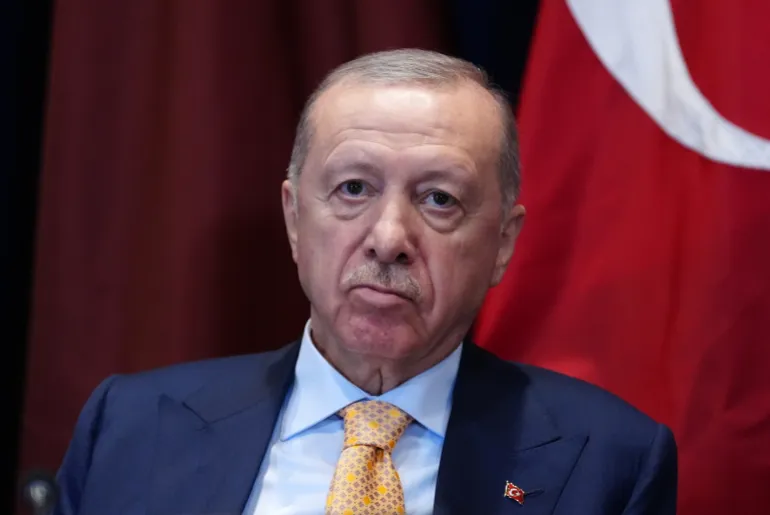
Turkey's President Recep Tayyip Erdogan listens during a meeting with President Donald Trump at a multilateral meeting with the Gulf Cooperation Council during the United Nations General Assembly, Tuesday, Sept. 22, 2026, at the UN headquarters. (AP Photo/Julia Demaree Nikhinson)
Turkiye’s President Recep Tayyip Erdogan at the United Nations General Assembly on September 22, 2026 [Julia Demaree Nikhinson/AP]

The decision to transfer the facility addresses a longstanding flashpoint between the two neighbours.

Turkiye first established the base in Bashiqa, northeast of Mosul, in December 2015 through an agreement with the autonomous Kurdistan Regional Government to train local forces fighting the ISIL (ISIS) group.

The deployment of up to 600 Turkish soldiers drew criticism from Baghdad, which viewed the presence as a violation of Iraqi sovereignty.

The Sinjar region has long been a focal point for Turkish military operations targeting fighters from the PKK.

Kurdistan Workers’ Party fighters, who reportedly withdrew from Turkiye with their weapons, stand at attention during a ceremony in the Qandil area of northern Iraq in 2025
Kurdistan Workers’ Party fighters, who reportedly withdrew from Turkiye with their weapons, stand at attention during a ceremony in the Qandil area of northern Iraq in 2025 [File: Rashid Yahya/AP]

Cross-border operations in Sinjar had eased following a landmark peace process between Ankara and the PKK in 2025, paving the way for federal authorities to assert control over the border zone.

Wednesday’s accord caps months of efforts by Baghdad to consolidate state authority over northern flashpoints, while aligning with Ankara on trade corridors and security coordination along their shared frontier.

Source link

Syria’s president appoints ex-commander of Kurdish-led SDF as advisor | Government News

Kurdish leader appointed to the role days after the dissolution of the force he commanded.

Syrian President Ahmed al-Sharaa has appointed Mazloum Abdi, leader of the now-dissolved Kurdish-led Syrian Democratic Forces (SDF), as a presidential advisor.

Al-Sharaa issued Decree No 164, appointing Abdi as “as an advisor to the Presidency of the Republic” on Thursday, the Syrian state news agency Sana reported.

Recommended Stories

list of 3 itemsend of list

The move comes three days after Abdi announced the dissolution of the SDF and the completion of its integration with the Syrian military.

Abdi is the most senior of several Kurdish figures appointed to state posts. Another commander was made assistant defence minister for the eastern region earlier this year.

The advisory role is a lesser position than one offered in January, when al-Sharaa proposed making Abdi deputy defence minister and nominating him as governor of Hasakah province, in order to restore state control over the SDF-controlled provincial capital.

Al-Sharaa and Abdi first agreed to fold the SDF into the central government in March 2025. That deal made little progress before its year-end deadline, spurring state forces to battle into the northeast in January, taking the cities of Raqqa and Deir Az Zor from the SDF.

A ceasefire that ended the fighting placed Raqqa, Deir Az Zor and Hasakah under central government control and committed the SDF to join the defence and interior ministries under a 14-point plan.

One Kurdish-led force has yet to be absorbed. The YPJ, the SDF’s women’s units, asked to join the defence ministry but were told the army’s structure has no units for women.

Alongside the military track, al-Sharaa issued a decree in January recognising Kurdish as a national language and restoring citizenship to Syria Kurds, the first formal recognition of Kurdish rights since Syria’s independence in 1946.

The SDF was the largest force still outside the army, and its dissolution leaves Damascus with formal authority over almost all Syrian territory. Reunifying the country has been al-Sharaa’s central promise since former Syrian leader Bashar al-Assad was overthrown in December 2024.

Source link