South Korea’s presidential office criticises Ukraine for denying POW nondisclosure agreement.
Published On 27 Sep 202627 Sep 2026
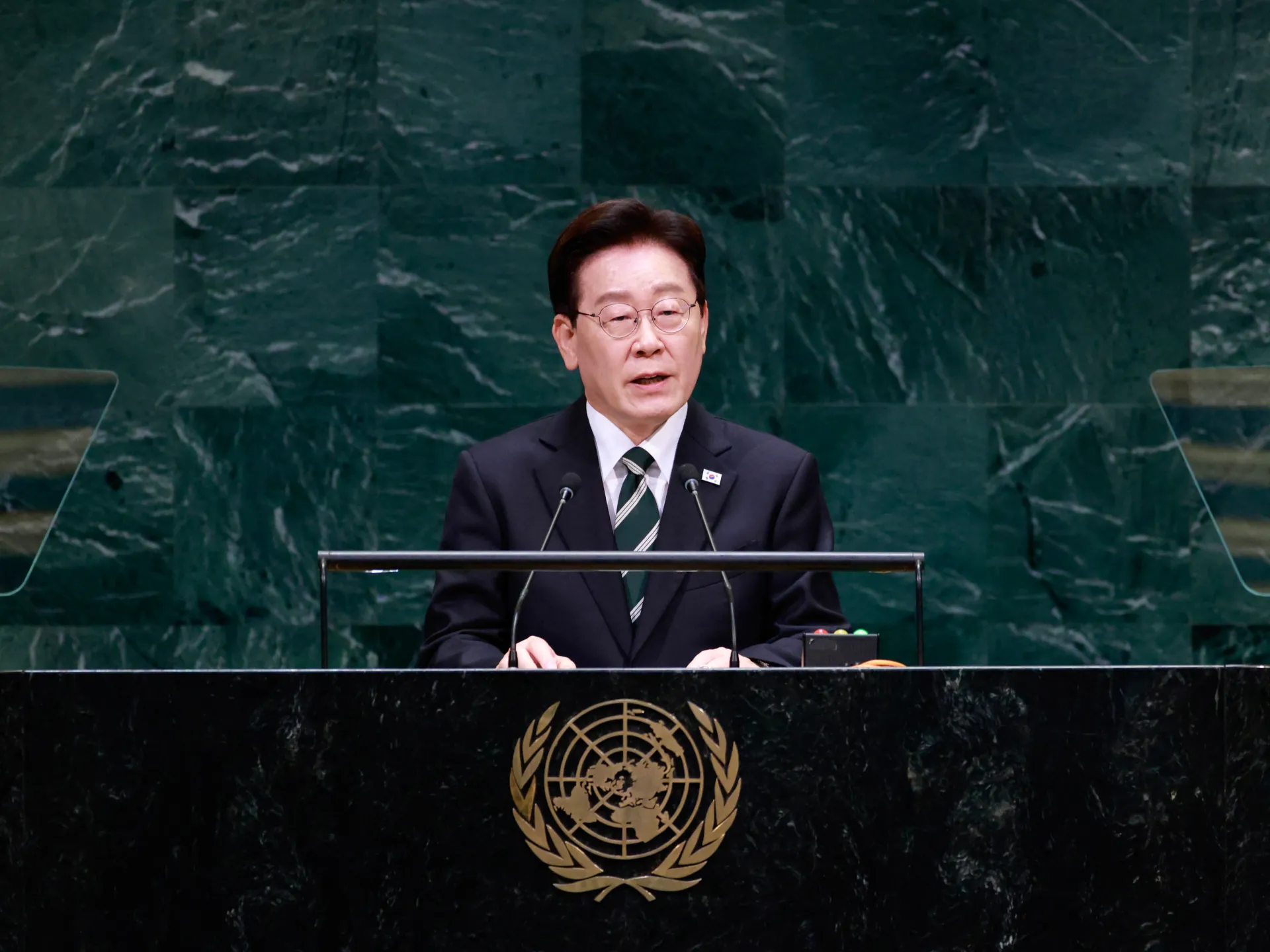
The South Korean president’s office has expressed “strong regret” over Ukraine’s disregard for a nondisclosure agreement with Seoul in the transfer of two North Korean prisoners of war (POWs) to Seoul, South Korean media reported.
Last week, Ukraine’s President Volodymyr Zelenskyy said in an address to the United Nations General Assembly (UNGA) that his country transferred two North Korean POWs to South Korea.
Recommended Stories
list of 3 itemsend of list
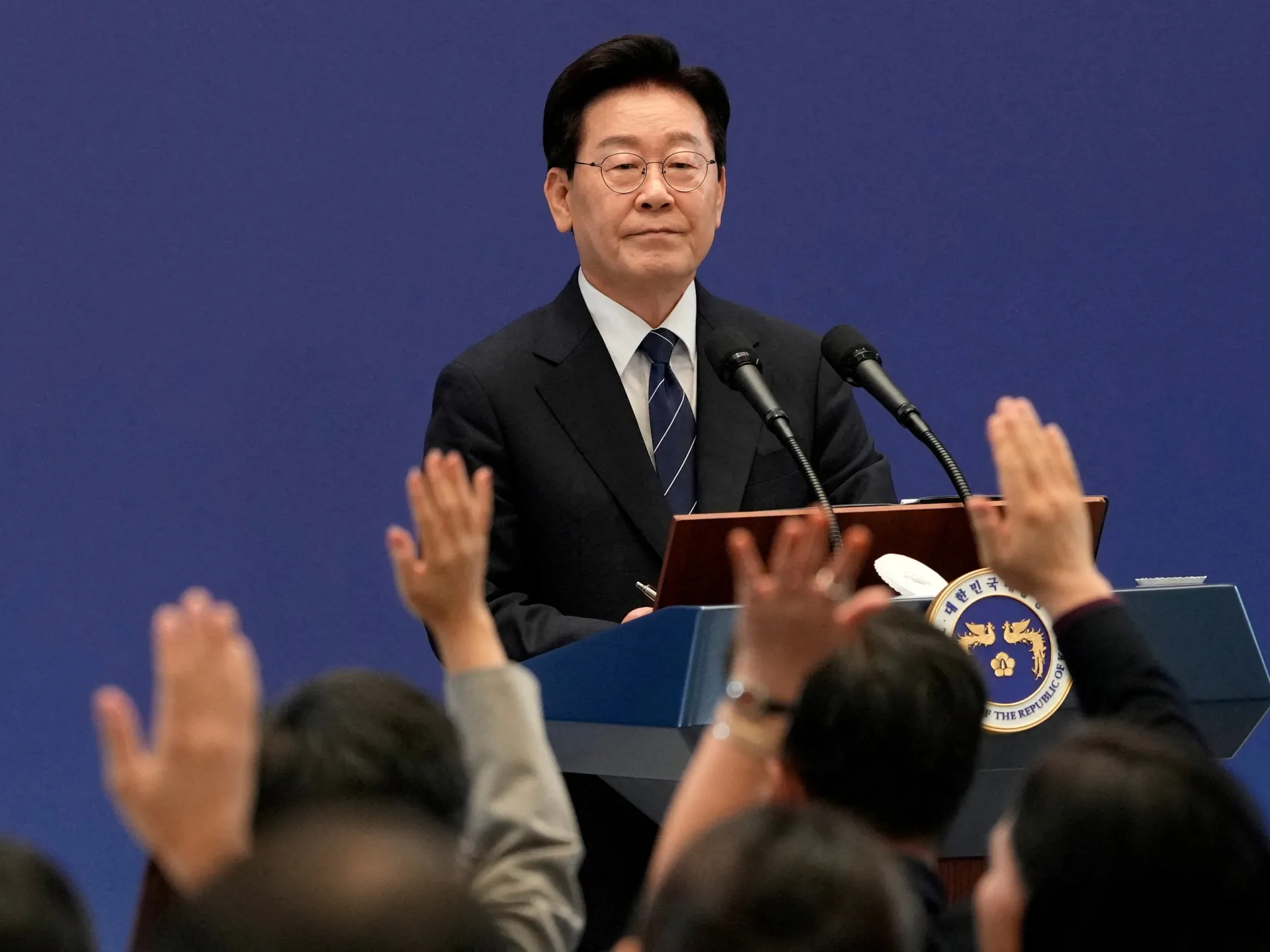
President Lee Jae Myung’s office “expresses strong regret over Ukraine’s unilateral disclosure [of the transfer] and its subsequent false announcement that there had not been a non-disclosure agreement”, the Yonhap news agency quoted Seong Ghi-hong, South Korea’s senior presidential secretary for public relations, as saying in a statement on Sunday.
The office said the nondisclosure agreement aimed to safeguard the soldiers from dangers they could face if their transfer were to be disclosed, in accordance with international law and humanitarian principles.
According to Yonhap, a South Korean media outlet, the Ukrainian presidential office said it had disclosed the transfer of the POWs without extensive details on the process, claiming that it would have been strange to keep the entire transfer a secret. Ukrainian media outlets reported a Ukrainian presidential source as denying the existence of a confidentiality agreement with Seoul, Yonhap said.
The South Korean presidential office said the Ukrainian presidential office’s “false” denial of the confidentiality agreement “seriously hampers” bilateral trust and causes serious disruptions to bilateral friendship.
Seong Ghi-hong said the government was considering additional measures over the issue, if necessary, Yonhap added.
North Korean POWS
Ukrainian forces captured the two North Korean soldiers in Russia’s Kursk region in January 2025.
Mounting evidence, including from intelligence reports and testimonies of defectors, has indicated that North Korean soldiers resorted to self-detonation or other forms of suicide rather than be captured.
In his UN address, Zelenskyy said, “These guys are not easy to capture alive.” He added, “One of them, when he realised he was going to be taken prisoner, tried to kill himself. And he was shocked that fate did not let him die.”
South Korean media reported that the two captured soldiers had expressed their desire to defect to South Korea.
The issue of North Korean prisoners of war was a key topic during the NATO summit in Ankara, Turkiye, where Lee met Zelenskyy in July.
Senior presidential spokesperson Kang Yu-jung stated afterwards that both leaders agreed to resolve the status of North Korean POWs in accordance with international law. This built on a prior agreement reached during the South Korea-Ukraine foreign ministers’ meeting in March, where both nations pledged to cooperate on the POW issue.
According to South Korean intelligence, North Korea is estimated to have deployed approximately 14,000-15,000 soldiers to support Russia’s efforts in its war with Ukraine since 2024, primarily in the Kursk border region. South Korean, Ukrainian and Western officials said they suffered heavy casualties, with more than 6,000 North Korean soldiers killed in the fighting.
The transfer comes as South Korea has backed efforts to revive dialogue with North Korea, while United States President Donald Trump has renewed his willingness to engage with Pyongyang.
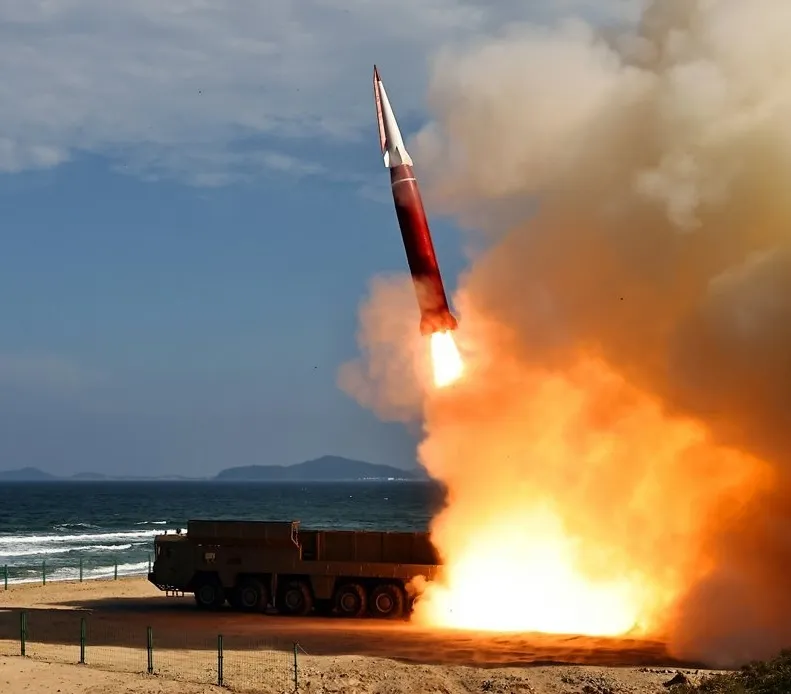
North Korea has released imagery of what appears to be a flight test of an updated version of its Hwasong-11Ma hypersonic missile, nearly a year after the weapon first appeared publicly at a military technology exhibition in Pyongyang.
Launch of a Hwasong-11Ma-1 missile from the test facility in Anbyon County, south of Wonsan. North Korean State Media
The September 20 test involved a short-range ballistic missile (SRBM) booster fitted with a hypersonic glide vehicle, according to photographs released by North Korean state media. A display screen visible in the imagery identifies the weapon as the Hwasongpho-11Ma-1, or Hwasong-11E-1 in the equivalent English-language designation.
The test was conducted from the east coast near Anbyon County, south of Wonsan, an area North Korea has repeatedly used for missile testing. The launch site allows missiles to be fired eastward over the Sea of Japan, providing a relatively controlled area for testing short- and medium-range systems.
Another two views of the launch of the Hwasong-11Ma-1 missile. North Korean State Media
South Korean and Japanese authorities say they detected two launches on September 20, with the first occurring at approximately 3:00 p.m. local time and the second several hours later.
North Korean photographs show the missile being launched from a coastal location, with Kim Jong Un and senior missile officials observing the test. Kim’s daughter, Kim Ju Ae, also appears in the imagery.
Kim Jong Un and Kim Ju Ae monitor the progress of the Hwasong-11Ma-1 test. North Korean State Media
North Korea displayed a mock-up of what it called the Hwasong-11Ma at its Defense Development-2025 exhibition in October 2025. The design uses the basic architecture of the Hwasong-11 family, known in the West as the KN-23 family, but substitutes a distinctive glide wedge-shaped vehicle for the conventional warhead arrangement.
The Hwasong-11Ma, among other weapons, on display at the weapons exhibition in Pyongyang in October 202. North Korean State Media
North Korea claimed another hypersonic missile test that same month, but did not release launch imagery clearly connecting that test to the Hwasong-11Ma. The missile was subsequently shown again during a military parade in Pyongyang.
Hwasong-11Ma missiles on five-axle TELs at last October’s military parade in Pyongyang. North Korean State Media
The latest “-1” designation suggests an iterative evolution of the Hwasong-11Ma, although Pyongyang has not explained what modifications it represents.
Based on the imagery, the new configuration also includes a modified launcher, with the missile carried on a six-axle transporter-erector-launcher (TEL). When the Hwasong-11Ma was first shown, it was mounted on a five-axle TEL. The latest vehicle also appears to incorporate modified retractable covers around the missile.
It remains unclear whether the new TEL represents a standardized operational vehicle or a test configuration.
As with previous North Korean weapons announcements, the country’s state media claims need to be treated very cautiously. Pyongyang has a long record of publicizing weapons systems and test results that cannot be independently verified, while some of its purported hypersonic tests have left outside analysts unable to determine whether the advertised maneuvering performance was actually demonstrated.
Perhaps the most revealing test-related imagery comes from a display screen photographed at the launch site.
Kim Jong Un and his daughter can be seen watching the screen, which shows the apparent flight trajectory of the Hwasong-11Ma-1. The displayed path initially follows a ballistic trajectory before descending and then performing a pull-up maneuver, regaining altitude before continuing toward the target area.
That type of trajectory is consistent with the basic concept behind a hypersonic glide vehicle. The booster provides the initial velocity and altitude, after which the unpowered glide body follows a relatively shallow, atmospheric flight path at hypersonic speeds, while maneuvering rather than following a simple ballistic path.
The graphic is useful for understanding what Pyongyang says the weapon is designed to do, but it does not independently demonstrate that the missile actually followed the depicted trajectory.
The flight data visible on the display provides some unusually specific figures.
Enhancing the original image released by North Korea allows for an excellent view of the HS-11Ma hypersonic glide missile trajectory, providing altitude and speed data. Note: Slight inaccuracies in the numbers may occur due to the use of AI tools. pic.twitter.com/M4LkfF5VYu
According to the North Korean imagery, the missile traveled 908.2 kilometers (564.3 miles), reached an altitude of 35.8 kilometers (22.2 miles), and remained in flight for approximately 445 seconds, or 7.4 minutes.
The display gives a velocity of 2,146 meters per second, equivalent to roughly 4,800 mph. That is hypersonic velocity in the aerodynamic sense, but speed alone is not what makes a hypersonic glide weapon particularly challenging to defend against. More consequential parameters include sustained controlled flight, maneuverability, guidance, and accuracy.
Other portions of the display appear to show additional points along the flight, including different times, altitudes, and speeds. None of these figures have been independently verified.
The TEL raises one of its two Hwasong-11Ma-1 missiles into the launch position. North Korean State Media
The claimed range is particularly noteworthy because it does not match the publicly reported tracking data from South Korea and Japan.
South Korea’s Joint Chiefs of Staff said North Korea launched two SRBMs from the Wonsan area on September 20. The missiles were assessed to have traveled approximately 450 and 600 kilometers, respectively.
Japan similarly reported two launches, assessing the first at approximately 440 kilometers and the second at approximately 590 kilometers, with maximum altitudes of roughly 60 and 70 kilometers.
Those figures are substantially different from the 908.2-kilometer distance shown on North Korea’s display.
The Hwasong-11Ma-1 climbs after launch. North Korean State Media
The discrepancy does not necessarily establish that either side’s data are incorrect. The North Korean figure could represent a different measurement of the flight path, or could correspond to a portion of the test that was not reflected in the public South Korean and Japanese assessments. It is also possible, if not highly probable, that Pyongyang selectively presented or altered the data.
South Korean analysts have already raised questions about the unusually long distance displayed by North Korea. Yonhap reported that experts suggested Pyongyang may have altered the figure to portray the test as more successful.
Regardless of the range actually achieved in this test, the Hwasong-11Ma/Ma-1 is significant because it represents an attempt to combine a relatively compact SRBM with a maneuvering hypersonic glide vehicle.
The underlying Hwasong-11 family is a well-established North Korean missile design. In its KN-23 configuration, members of the family have also been used by Russia against Ukraine. By placing a glide vehicle on this type of booster, Pyongyang could potentially give a regional strike weapon a flight profile substantially different from that of a conventional ballistic missile. The Hwasong-11Ma/Ma-1 also uses a solid-fuel booster, allowing for faster launches than earlier liquid-fuel designs.
The original North Korean Hwasong-11 short-range ballistic missile. North Korean State Media
In principle, the Hwasong-11Ma/Ma-1 could give North Korea an additional hypersonic strike option against more heavily defended targets in South Korea. Having road-mobile TELs would also provide greater operational flexibility despite their relatively limited range, while making it more difficult for adversaries to locate and track the launchers.
A genuine boost-glide weapon creates significant challenges for defending forces since the sheer speed of the weapon bypasses most air defenses. Its trajectory can also become less predictable after the boost phase. Maneuvering at lower altitudes could also reduce the time available to detect, track, and engage the weapon.
A close-up look at the Hwasong-11Ma’s boost-glide-vehicle. North Korean State Media
However, the available imagery does not establish the extent of the vehicle’s maneuverability, its ability to maintain controlled flight, its accuracy, or the reliability of the complete missile system.
North Korea has made similar claims about its hypersonic weapons in the past.
The challenge is not simply reaching hypersonic speed. A weapon has to sustain controlled flight and maneuverability under extreme thermal loads, while also overcoming demanding materials-science, guidance, and navigation requirements. The terminal phase is harder still. Accurately finding and striking a moving target, particularly a ship, requires a highly capable seeker and guidance system. Integrating a nuclear warhead introduces another layer of engineering and weapons-design challenges.
Those demands have made hypersonic weapons a major technological challenge for the United States and other major powers. China is currently widely regarded as the leading country in deploying and developing operational hypersonic systems, although important questions remain about the capabilities and maturity of individual weapons.
Pyongyang said it first flight-tested a wedge-shaped hypersonic glide vehicle in 2021 aboard the liquid-fuel Hwasong-8, before pairing a similar-looking vehicle with the solid-fueled Hwasong-16B intermediate-range ballistic missile (IRBM) in 2024.
VIDEO: Korean Central Television (KCTV) broadcasted footage of North Korea successfully testing the new “Hwasong-16B” hypersonic intermediate-range ballistic missile (IRBM) on Tuesday. pic.twitter.com/VNdhLAeyyK
In its coverage of the latest test, North Korean state media initially avoided identifying the weapon, describing the event as a successful trial of a “new-type weapon” that it said was significant for the rapid development of weapons technology.
Kim said the development would give adversaries an “incurable headache” and deliver what he described as a “cruel and unavoidable blow.”
Tal Inbar, the head of the Space and UAV Research Center at Israel’s Fisher Institute for Air and Space Strategic Studies identifies the Hwasong-11Ma/Ma-1 as a “very significant weapon, bringing hypersonics to the operational/tactical arena and [posing] a challenge to … air and missile defense systems.”
Whatever the exact achievements of the test, the imagery points to continued development of a weapon North Korea first publicly displayed nearly a year ago. The appearance of a new, six-axle TEL, a potentially modified missile, combined with the apparent flight test, suggests that the Hwasong-11Ma/Ma-1 program has progressed since its initial public unveiling.
What remains uncertain is how much of that progress represents a genuine improvement in operational capability.
The latest test therefore provides another indication of the resources and attention Pyongyang is devoting to hypersonic weapons, but the available evidence is still insufficient to determine how closely the Hwasong-11Ma-1’s actual performance matches the capabilities depicted by North Korean state media.
The NATO Response Force (NRF) and EU Battlegroups have demonstrated that placing multinational forces on standby does not automatically make them immediately operational. German-Dutch military integration, in contrast, has generated a different outcome since cooperation was internalized within permanent command structures, units, training, and capability planning before a crisis occurred.
Such a comparison is becoming increasingly relevant to Northeast Asia. A Taiwan contingency could absorb American military assets at the very moment when North Korea embarks upon a serious provocation towards South Korea. Continued US commitments in Europe and the Middle East could further complicate the allocation of finite resources.
Why Standby Forces Encountered Problems
The NRF was established after the 2002 Prague Summit as a rapidly deployable multinational joint force of roughly 25,000 troops. Yet the NRF was heavily dependent on the member countries assigning their respective forces to particular rotations, while these governments had the final say over whether the forces could ultimately be employed. During the Afghanistan and Iraq wars—when operational demand was high—each government had strong disincentives in introducing scarce high-readiness units and specialized enablers to NRF rotational deployment.
Stay ahead of the geopolitical week.
MD Briefing delivers expert analysis across five global fronts — the Indo-Pacific, energy, geoeconomics, European security, and the Middle East — every Monday morning. Free.
This created a gap between designated readiness and actual availability. Strategic transportation, logistics, specialized support units, and communication capacity could still be subject to competing national demands. Eventually, in 2024, NATO replaced the NRF with the NATO Force Model, which emphasized a substantially larger pool of high-readiness forces that is closely aligned with specific defense plans.
Meanwhile, the EU Battlegroup was faced with an even clearer problem. Although the multinational battlegroups had been maintained on rotational standby since 2007, they had never been deployed. While acknowledging that the battlegroups enhanced interoperability and military transformation, the European Parliament attributed the shortcoming largely to insufficient political will, difficulties in decision-making, implementation problems, and the financing arrangements.
What Germany and the Netherlands Did Differently
German-Dutch cooperation developed according to a different institutional logic. Although the 1st German-Netherlands Corps was created in Münster in 1995, the integration later expanded deep into both militaries’ force structures. The Dutch 11th Airmobile Brigade was incorporated into the German Division Schnelle Kräfte (DSK) in 2014, while the Dutch 43rd Mechanized Brigade was integrated into Germany’s 1st Panzer Division in 2016, and the Dutch 13th Light Armoured Brigade joined Germany’s 10th Panzer Division in 2023.
The relationship was extended below the brigade level. Germany’s Panzerbataillon 414 is operated under the Dutch 43rd Mechanized Brigade, and Dutch personnel operate Germany’s Leopard 2A6MA2 tanks while serving within the battalion. Moreover, German officers serve in Dutch command headquarters and vice versa, turning multinational command into a routine organizational reality instead of a stopgap measure that is only activated during major exercises.
Needless to say, such an arrangement does not eliminate national sovereignty. Both Germany and the Netherlands preserve the political prerogative over whether and where their forces are deployed. Meanwhile, the benefits of integration would become observable once a crisis necessitates the deployment. Staff are already well-versed in each other’s procedures, and units have repeatedly conducted joint exercises, while command and logistics relations do not need to be newly constructed during mobilization.
The distinctions were visibly observable during training. For example, approximately 7,000 German and Dutch personnel participated in the 2026 Fighter Lion—the largest military exercise conducted by the Netherlands in two decades—ten years after the Dutch 43rd Mechanized Brigade was integrated into Germany’s 1st Panzer Division. These types of exercises strengthen existing command relations rather than creating temporary interoperability for a single event.
What Japan and South Korea Can Apply
It is quite obvious that Japan and South Korea cannot replicate the German-Dutch model. Neither country has a formal mutual defense pact nor a NATO-style integrated command structure. Therefore, the directly applicable lessons are more limited. Nonetheless, selected operational relationships can and should be institutionalized before multiple simultaneous contingencies make such coordination necessary.
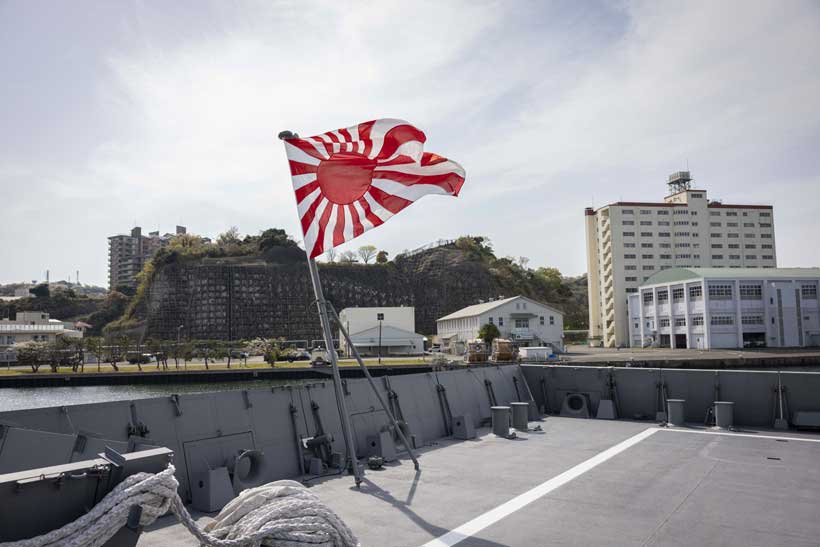
The practical first step could be a standing bilateral adjustment mechanism that links Japan’s Joint Operations Command (JJOC) with relevant South Korean joint headquarters. Instead of exercising command authority, the mechanism could maintain procedures for intelligence exchange, deconfliction in the air and at sea, movement of US reinforcements, logistics coordination, and the use of Japanese facilities that support a Korean contingency. This would be especially crucial when Japan has to assist US operations related to Taiwan while installations across Japan—including Yokota, Yokosuka, Sasebo, Iwakuni, and other United Nations Command (UNC)-Rear facilities—play a pivotal role in US reinforcement to the Korean Peninsula in accordance with Operational Plan (OPLAN) 5055.
Under this mechanism, small-scale functional cells could concentrate on specific missions. Missile warning would be the most obvious starting point since the United States, Japan, and South Korea have conducted North Korean missile-warning data-sharing since December 2023. Additional cells could treat maritime domain awareness (MDA), anti-submarine warfare (ASW), cyber defense, transportation, medical evacuation, and logistics.
The exchange of officers should accompany the aforementioned measures. Japanese officers could participate in South Korean command posts, while South Korean officers could join Japanese operational staff who deal with naval operations, air defense, logistics, or reinforcement coordination. The goal is to get familiar with each country’s procedures, communications, command relations, and other miscellaneous constraints before wartime pressure markedly shortens the timeframe for decision-making.
Exercise Scarcity Rather Than Ideal Conditions
The most notable changes should be related to exercise design. Trilateral exercises should not be premised on the assumption that the full inventory of United States support capabilities will always be available. A more pessimistic scenario would begin with a Taiwan scenario that is already consuming a substantial amount of US assets—including its ISR capacity, strategic transportation, and precision-guided munitions—when North Korea embarks upon a serious horizontal or vertical military escalation on the Korean Peninsula.
In this particular situation, elaborated by the Atlantic Council report, South Korean military planners should determine which missions could be conducted independently and which can be addressed bilaterally. South Korea may assume greater responsibility for ISR, missile defense, logistics, and conventional firepower on the Korean Peninsula—yet this would be affected by the tempo of wartime operational control (OPCON) transition—while Japan could take on additional maritime surveillance, ASW, sea lines of communication (SLOC) protection, base defense, and logistics. The primary aim is not to divide the Taiwan and Korean Peninsula theaters between Seoul and Tokyo but to identify how both countries could most effectively conduct missions that complement US military operations across the two regions.
Logistics should be placed at the center of these exercises. A dual contingency could impose on the Japanese government the need to support both US operations on Taiwan and USFJ reinforcement to the Korean Peninsula, which inevitably involves Japanese ports and airfields. It could cause competition for fuel, maintenance, transportation, ammunition depots, runways, and port capacity. Thus, Tokyo and Seoul should develop procedures concerning reciprocal servicing, immediate repair, medical support, transportation, and selected supplies before the bottleneck transmogrifies into wartime problems.
Functional Integration Without a Bilateral Alliance
The German-Dutch case illustrates that political authority is not necessarily the same thing as operational preparedness. A government can maintain full authority over whether its forces enter conflicts and can also prepare in advance to cooperate effectively if that decision is made. These distinctions are highly relevant to Japan and South Korea since they enable a considerable level of operational preparedness without a formal defense pact. For instance, South Korea could discuss target allocations for North Korean TELs with its Japanese counterparts in order to effectively use the finite weapons available to Japan’s enemy base strike capability and South Korea’s Kill Chain and Korea Massive Punishment and Retaliation (KMPR).
Naturally, the primary objective should be functional integration in fields where both governments already have overlapping interests. A large set of measures—spanning from ISR coordination to cyber defense—can be institutionalized without creating either an integrated force or an Asian version of NATO.
Both the NRF and EU Battlegroups revealed the limits of formations that remained dependent on political and operational arrangements being assembled only when crises occur. German-Dutch cooperation worked better since many of those arrangements already existed.
Given the historical baggage that Japan and South Korea carry, it would undoubtedly be a Herculean task for them to take novel steps. Nonetheless, the emerging regional security environment is rapidly narrowing down the available options.
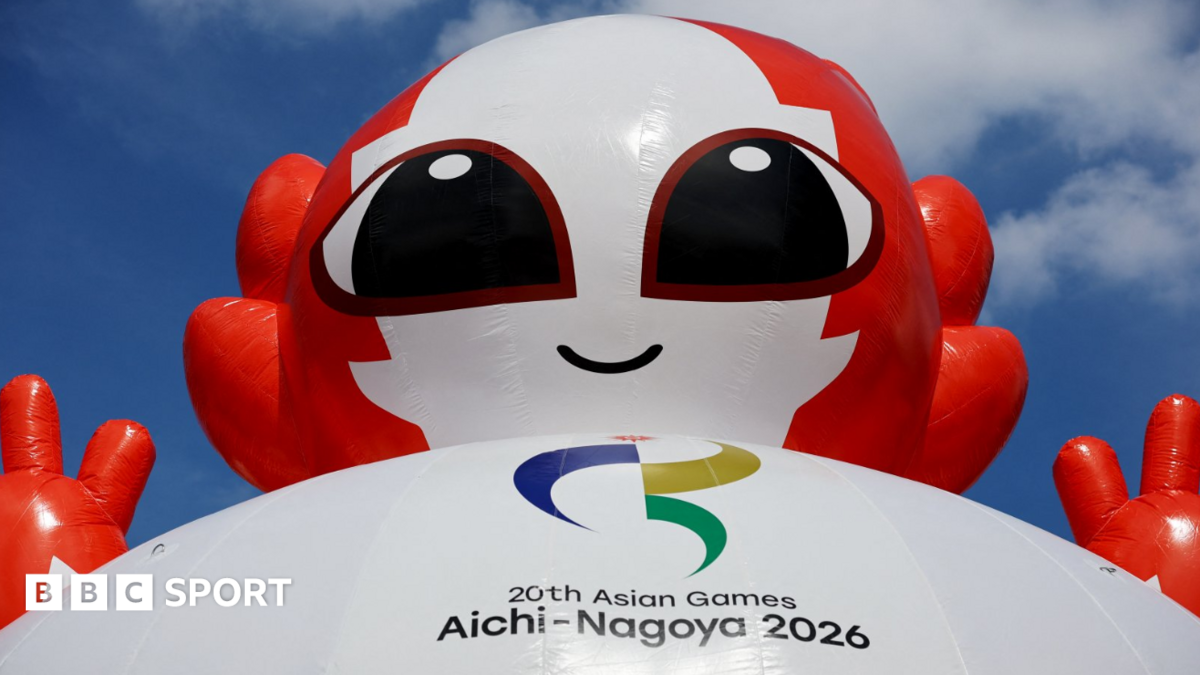
Organisers have apologised for playing the North Korean national anthem for the South Korean men’s hockey team at the Asian Games in Japan.
South Korea, who thrashed Bangladesh 5-0, looked confused as the incorrect national anthem was played.
South Korea’s Yonhap news agency reported that Bangladesh’s national anthem followed before South Korea’s actual anthem was played.
A stadium announcer did apologise for the mistake.
“This is a really serious problem. When we protested, they said, ‘We’re sorry. It wasn’t that it wasn’t prepared; there was a mistake on the part of those responsible for playing it’,” South Korea coach Min Tae-seok said.
“But this is something that simply should never happen.”
North Korea’s national anthem, along with other symbols of the secretive state, are banned in South Korea.
The two countries are still technically at war, after the 1950-53 conflict between the two ended without a peace treaty.
The build-up to the Asian Games, which officially starts on Saturday, has already seen complaints from teams about the quality and amount of accommodation.
A member of the South Korea basketball team posted a video of a leaking pipe and soaked floor in his room, with the caption: “Please help me.”
Some teams were also stranded at the airport for up to six hours when they landed this week.
Field hockey at the Asian Games started on Friday and runs until 3 October.
South Korea will continue efforts to facilitate talks between Washington and Pyongyang.
Published On 18 Sep 202618 Sep 2026
South Korean President Lee Jae Myung said on Friday that United States President Donald Trump wants dialogue with Pyongyang and confirmed Seoul will not be deploying troops to intervene militarily in the Iran war.
“Trump clearly wants dialogue with North Korea,” Lee said on Friday.
Recommended Stories
list of 3 itemsend of list
He added that while such talks are uncertain, they are not impossible.
South Korea was continuing “preliminary coordination efforts” to facilitate dialogue between North Korea and the US.
“The resumption of North Korea-US dialogue would be far easier than resuming inter-Korean dialogue,” he said, according to South Korean news agency Yonhap.
Trump, seeking to revive the bond he claims to have forged with North Korean leader Kim Jong Un in his first term, said he plans to meet Kim later this year.
The US president said it was important to “get along” with Kim, adding that Pyongyang now had 57 “very powerful” nuclear weapons.
Seoul has assessed that Pyongyang has about 80-120 nuclear warheads.
North Korea, which has secured critical backing from Russia in recent years, did not clearly respond to Trump.
Inter-Korean relations reached a high in 2018 but deteriorated after talks between Kim and Trump collapsed in February 2019.
On Thursday, a court in Seoul ordered North Korea to pay roughly $32.5m for blowing up the Inter-Korean Liaison Office building in 2020. The office was intended to improve relations on the peninsula but was destroyed amid rising tensions between the neighbours.
South Korea is working to strengthen relations with other regional partners. The first-ever presidential summit between Seoul and five Central Asian states was held on Wednesday, aiming to establish deeper economic engagement with the Russian-allied countries.
South Korea will not dispatch troops
Despite growing pressure from the US, Lee reiterated three times that South Korea will not deploy troops to the Strait of Hormuz.
“Let it be clear. There will be no dispatch of troops that will lead to involvement in a conflict. There will be no engagement or involvement in war,” Lee said.
The South Korean government found itself at odds with large parts of Korean society as protests broke out in recent weeks opposing a potential deployment of South Korean military assets to the Strait of Hormuz.
Lee added that South Korea will “carry out the minimum necessary activities” to protect its own merchant ships and oil shipping routes.
North Korea, enjoying support in the stands, were up 7-0 by half-time and are the favourites for the gold.
Published On 14 Sep 202614 Sep 2026
North Korea’s formidable women’s football team, cheered on by several hundred pro-Pyongyang fans in Osaka, Japan, launched their Asian Games campaign with a 10-0 hammering of Bangladesh.
The North Koreans have enjoyed stunning international success at the youth level and start among the favourites for gold in Japan.
Recommended Stories
list of 4 itemsend of list
They were far too hot for Bangladesh to handle and were seven goals ahead by half-time on Monday.
Striker Ri Song-a, who was born and raised in Japan, was in North Korea’s starting lineup and scored in the second half.
North Korea were cheered on by a large group of red-clad fans, who sang and chanted throughout the match.
The men’s and women’s football teams were welcomed by supporters waving flags as they arrived for the games last week wearing white blazers and pink ties.
More than 100 North Koreans are set to compete in 14 sports at the games, which take place in Nagoya-Aichi and officially open on September 19.
North Korea suspended participation in international sporting competitions during the COVID-19 pandemic, but returned at the Asian Games in China in 2023 and also took part in the Paris Olympics.
North Korea’s women face South Korea in a Group F grudge match on September 21.
The men’s team begin their campaign against China on Wednesday.
North Korean fans cheer for their team during the women’s group B football match [AFP]
SEOUL: North Korea said Monday it conducted a joint live-fire drill involving missiles, artillery and drones that it claimed demonstrated “huge destructive power.”
The test included firing different types of weapons simultaneously, likely aiming at developing the ability to overwhelm South Korean and U.S. air defenses.
Experts say North Korea is not slowing its testing activities even after U.S. President Donald Trump recently scaled back a military exercise with South Korea in an apparent effort to revive diplomacy with leader Kim Jong Un.
The North’s official Korean Central News Agency said Saturday’s drill was meant to practice the operations of an integrated weapons control system. South Korea’s military earlier said it detected short-range ballistic missile launches from North Korea’s eastern coastal Wonsan area on Saturday morning.
After observing the firing drill, North Korean Marshal Pak Jong Chon said the drill would “improve the level of specialization to bring down the enemy’s armed forces organizationally and structurally once an order is issued.” He added that the weapons systems mobilized demonstrated “the huge destructive power of concentrated fire,” according to KCNA.
It’s extremely difficult to independently verify North Korean claims on its weapons tests. South Korea’s Joint Chiefs of Staff said several missiles fired Saturday each flew about 250 kilometers (155 miles) toward North Korea’s eastern waters. The flight distances signal that the weapons are designed to strike targets in South Korea including U.S. military bases.
The firing drill, which included North Korea’s first public ballistic missile launches in about three weeks, came a day after the United States, South Korea and Japan wrapped up a trilateral military exercise that North Korea views as a provocation.
In August, Trump ordered the Pentagon to “substantially reduce” a major bilateral military exercise with South Korea, citing what he called a good relationship with Kim. But North Korea rebuffed Trump’s overture, saying that shortening the drill didn’t change its “provocative, aggressive nature.” The Ulchi Freedom Shield exercise eventually ended six days earlier than originally scheduled.
Buoyed by his advancing nuclear arsenal and deepened ties with Russia and China, experts say Kim likely thinks he has greater leverage in possible diplomacy with the U.S. than when he first met Trump in 2018-2019.
Kim said earlier this year that he could return to talks if the U.S. drops its “hostile policy” against his country and respects what he calls the North’s status as a nuclear state.
SEOUL: North Korea said Monday it conducted a joint live-fire drill involving missiles, artillery and drones that it claimed demonstrated “huge destructive power.”
The test included firing different types of weapons simultaneously, likely aiming at developing the ability to overwhelm South Korean and U.S. air defenses.
Experts say North Korea is not slowing its testing activities even after U.S. President Donald Trump recently scaled back a military exercise with South Korea in an apparent effort to revive diplomacy with leader Kim Jong Un.
The North’s official Korean Central News Agency said Saturday’s drill was meant to practice the operations of an integrated weapons control system. South Korea’s military earlier said it detected short-range ballistic missile launches from North Korea’s eastern coastal Wonsan area on Saturday morning.
After observing the firing drill, North Korean Marshal Pak Jong Chon said the drill would “improve the level of specialization to bring down the enemy’s armed forces organizationally and structurally once an order is issued.” He added that the weapons systems mobilized demonstrated “the huge destructive power of concentrated fire,” according to KCNA.
It’s extremely difficult to independently verify North Korean claims on its weapons tests. South Korea’s Joint Chiefs of Staff said several missiles fired Saturday each flew about 250 kilometers (155 miles) toward North Korea’s eastern waters. The flight distances signal that the weapons are designed to strike targets in South Korea including U.S. military bases.
The firing drill, which included North Korea’s first public ballistic missile launches in about three weeks, came a day after the United States, South Korea and Japan wrapped up a trilateral military exercise that North Korea views as a provocation.
In August, Trump ordered the Pentagon to “substantially reduce” a major bilateral military exercise with South Korea, citing what he called a good relationship with Kim. But North Korea rebuffed Trump’s overture, saying that shortening the drill didn’t change its “provocative, aggressive nature.” The Ulchi Freedom Shield exercise eventually ended six days earlier than originally scheduled.
Buoyed by his advancing nuclear arsenal and deepened ties with Russia and China, experts say Kim likely thinks he has greater leverage in possible diplomacy with the U.S. than when he first met Trump in 2018-2019.
Kim said earlier this year that he could return to talks if the U.S. drops its “hostile policy” against his country and respects what he calls the North’s status as a nuclear state.
South Korea said it boosted its surveillance posture and was closely exchanging information on the launches with the US and Japan.
Published On 12 Sep 202612 Sep 2026
North Korea has fired ballistic missiles towards the sea off its eastern coast, according to South Korea’s military.
South Korea’s Joint Chiefs of Staff (JCS) said that it detected several missiles launched from North Korea’s eastern coastal area of Wonsan about 5:20am on Saturday (20:20 GMT on Friday), which flew about 250 kilometres (155 miles). It added that it is closely exchanging information on the launches with the United States and Japan.
Recommended Stories
list of 4 itemsend of list
South Korea’s presidential National Security Office said it held an emergency security meeting with the Defence Ministry, the JCS and other relevant agencies following the launch.
The US Pacific Command said North Korea’s launch event does not pose an immediate threat to US territory or to its allies, adding that Washington remains committed to the defence of South Korea and its other allies in the region.
The missiles were launched a day after South Korea concluded five days of joint maritime drills with the US and Japan that were focused on North Korea.
Hours after the exercises began on Monday, North Korea’s defence minister, Kim Song Gi, criticised the exercise and warned North Korea was capable of taking “strong and reflective countermeasures from the standpoint of power”.
Late last month, North Korea slammed plans for the so-called Freedom Edge exercises in international waters off South Korea as a “threat” to Pyongyang and other countries in the region.
The North also fired a barrage of missiles into the sea on August 20, despite an overture from US President Donald Trump, who said he planned to meet this year with North Korean leader Kim Jong Un.
Tehran has threatened “serious consequences” for South Korea if it interferes in the US-Israel war on Iran.
The warning comes amid reports that Seoul is mulling contributing to the US naval blockade of the Strait of Hormuz passage, which has hampered Iran’s oil exports.
Recommended Stories
list of 4 itemsend of list
In a statement posted on X on Monday, Ministry of Foreign Affairs spokesman Esmaeil Baghaei said Iran and South Korea had more than 64 years of diplomatic relations based on mutual respect and that Tehran values that friendship.
However, if South Korea joins the United States in its military actions against Iran at a time when the country is defending itself from what he called US aggression and “war crimes against women and children”, then there will be consequences, he warned.
Baghaei threatened that Iran would regard any military presence or participation in operations by another country in the Gulf and the Strait of Hormuz “would inevitably be regarded as direct support for the aggressor and would have serious consequences”.
“No sovereign and responsible country should succumb to US pressure and intimidation and become complicit in acts of aggression and horrific crimes against the great Iranian nation,” he added.
Seoul did not respond directly, but a Ministry of Foreign Affairs statement on Monday said it is communicating with the international community over the situation in the passageway.
Here’s what we know about how South Korea is getting roped in:
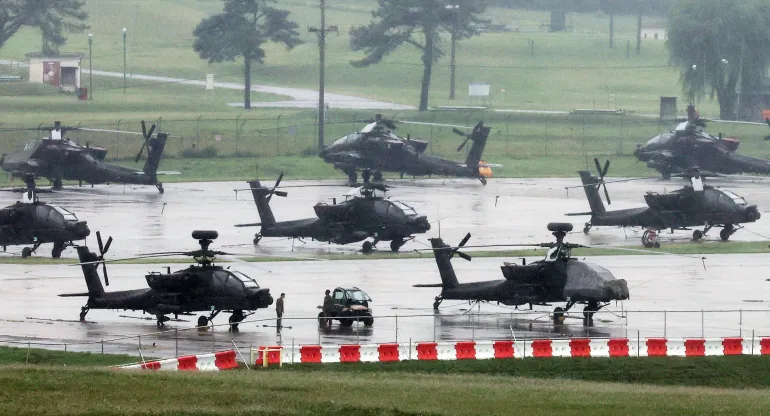
AH-64 Apache attack helicopters at Camp Humphreys on the final day of the annual US-South Korea UFS joint military exercise, which was shortened by six days after President Donald Trump ordered a substantial reduction in US participation, in Pyeongtaek, South Korea, August 21, 2026 [Yonhap via Reuters]
Why is South Korea involved?
Seoul, a close ally of Washington, has been under pressure from US President Donald Trump.
The issues began in mid-August, when Trump revealed in an interview, and later online, that he had spoken to South Korean President Lee Jae Myung and asked that Seoul give “a little hand” in the war on Iran.
According to media reports, the two leaders had spoken over the phone on May 17.
Seoul said, “No, thanks!”, according to Trump’s message on social media.
However, as South Korea now knows, saying no to Trump has repercussions.
On August 16, Trump announced that the US would significantly scale back joint military drills it holds annually with South Korea – the evening before they were scheduled to begin.
The Ulchi Freedom Shield (UFS) exercises are meant to sharpen Seoul’s readiness in case of a North Korean attack. They usually last for more than 11 days but were reduced to five.
In a post on his Truth Social site, Trump claimed the drills were “costly” and that they send a “hostile” signal to North Korean leader Kim Jong Un, with whom he is trying to build a relationship. South Korean Foreign Minister Cho Hyun said in parliament there was no warning from the US.
Trump also questioned why South Korea would refuse his request when thousands of US soldiers are stationed on the Korean Peninsula.
The US also cancelled another military exercise scheduled for September, although South Korea’s military revealed it received a notification much earlier in June, with Washington citing constraints due to the war on Iran.
How has South Korea responded?
President Lee, a liberal who pushes for a dialled-down defence posture, has opted to negotiate. His office earlier released statements saying it hopes for “meaningful dialogue” with Trump.
South Korea’s Yonhap news agency reported on Monday that Washington has, however, “ratcheted up pressure” on Seoul.
On Friday, a South Korean presidential official told Yonhap that Seoul could consider a military contribution to international measures seeking to free up navigation in the passageway as long as it does not affect the country’s defence readiness.
South Korea is looking at various options, the official said, including possible cooperation with France, the United Kingdom and other allies on sending noncombat and search-and-rescue forces.
The South Korean military has also started reviewing assets and troops that could be deployed, including maritime patrol aircraft, explosive ordnance disposal teams and unmanned mine detection and clearing systems, he added.
Such a move would be unpopular. The opposition has spoken out against a possible deployment, as have some within Lee’s ruling Democratic Party. Many South Koreans have also protested against the US-Israel war on Iran.
An activist wearing a cutout mask of Trump attends a rally to condemn the US-Israel war on Iran, with others in front of the US embassy in Seoul, South Korea, March 1, 2026 [Kim Hong-Ji/Reuters]
What is the history of US-South Korea relations?
South Korea became one of the US’s closest allies after Washington backed Seoul against Pyongyang in the Korean War of 1950.
The US supported Seoul’s economic and military growth in the years after. Under a treaty, some 29,000 US soldiers have been stationed permanently on the Korean Peninsula since the end of the war. Seoul has also relied on US defence might to deter nuclear-armed North Korea.
In return, South Korea supported several US wars, including the Iraq War, and is designated an important non-NATO ally.
In 2025, however, Washington imposed a 25 percent tariff on the country, testing relations. Seoul opted to negotiate rather than retaliate, leading the US to lower tariffs to 15 percent.
Many South Koreans were also alarmed after hundreds of South Koreans were arrested in Immigration and Customs Enforcement (ICE) raids on a Hyundai plant in Georgia in September 2025.
Last October, Trump travelled to Seoul in a historic state visit, and earlier this year, President Lee visited the US. Lee is also trying to resume dialogue between Washington and Pyongyang.
How is South Korea being affected by the US-Israel war on Iran?
South Korea is facing an economic crisis. The country relies on the Gulf supplies via the Strait of Hormuz for 60 to 70 percent of crude imports, meaning supply is being severely hit. The war has led to soaring inflation, causing the Korean won to fall to a 17-year low.
Seoul therefore has an interest in freeing up the strait. However, under Korean law, the government will require parliament’s approval before a military deployment, although some governing party members could oppose it.
Manila defence chief says Washington gave ‘definite assurances’ that its commitments to the Philippines remain.
Published On 7 Sep 20267 Sep 2026
Philippine Defence Secretary Gilberto Teodoro has warned that Beijing could view recent cuts to the joint US-South Korea military drills as an opportunity to reassert itself in the Asia Pacific.
Speaking on the sidelines of the Seoul Defense Dialogue, an annual multilateral security forum, Teodoro said that “China is very quick to exploit gaps”, when asked on Monday whether Beijing could seize on the move.
Recommended Stories
list of 3 itemsend of list
He added that Washington had given Manila “definite assurances” that the US commitments to the Philippines remained unchanged.
He also accused China of exploiting democratic systems to spread “distortive narratives”.
US General Xavier T Brunson, commander of the ROK/US Combined Forces Command (CFC), the United States Forces Korea (USFK) and the United Nations Command (UNC), shakes hands with a US Army soldier during a US-South Korea joint river-crossing exercise near the Demilitarized Zone separating South and North Korea, in Yeoncheon, South Korea [Kim Soo-hyeon/Reuters]
South Korea and the US shortened the duration of their annual joint military drills and scaled back field training exercises last month after US President Donald Trump ordered a “substantial reduction” in the annual war games.
The US-led Ulchi Freedom Shield war games ended six days earlier than originally planned.
Trump cited his “very good relationship” with North Korean leader Kim Jong Un and linked the decision to Seoul’s refusal to join the US and Israel’s war on Iran at the time.
Last week, South Korea’s presidential office said it was mulling “contributions” to the US’s freedom of navigation in the Strait of Hormuz. The presidential office later clarified that nothing has been decided, as any military deployment by South Korea requires a decision by the country’s National Security Council, a resolution at a cabinet meeting, and consent from the National Assembly.
Trump said he planned to meet with Kim later this year. Kim’s sister, Kim Yo Jong, later released a statement denying any ongoing communication between the US president and her brother and maintained that Washington continues to engage in a “hostile” policy towards her country, despite the warm relationship between the two leaders.
US, South Korea and Japan hold trilateral military drills
The US, South Korea and Japan are due to hold five days of military drills in waters east and south of South Korea’s Jeju Island starting on Monday.
South Korea’s military said in a statement that the Freedom Edge exercise is defensive in nature and meant to respond to North Korean nuclear and missile threats as well as promote regional peace and stability.
North Korea has previously slammed the trilateral drill as a “reckless show of strength” that proved its adversaries’ confrontational stance. Pyongyang has also said the drill contained a US intention to lay siege to China and exert pressure on Russia.
Leader Kim Jong Un says vessel will form part of Pyongyang’s nuclear response system, strengthen naval forces.
Published On 7 Sep 20267 Sep 2026
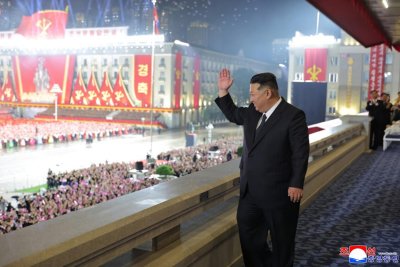
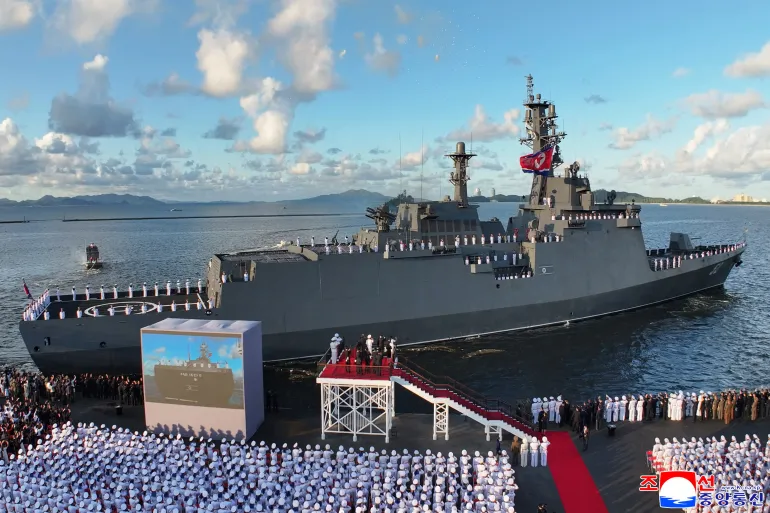
North Korean leader Kim Jong Un attended the commissioning of a warship he said could deliver “annihilating retaliatory strikes on an enemy”, citing “constant threats”, according to the state-run Korean Central News Agency (KCNA).
The Kang Kon, named after the North Korean military leader who was killed in action during the Korean War, was formally deployed at a ceremony at the eastern Wonsan Port in Kangwon Province on Sunday.
Recommended Stories
list of 3 itemsend of list
In his address, Kim said the warship “represents the self-respect and will” of North Korea to defend its rights and interests, KCNA reported.
“The time has come for us to exercise our sovereignty at sea and under water,” Kim said, according to KCNA.
He said that “dangerous shadows must be erased” and that North Korea was under constant threat in the “sea east of the Korean Peninsula and nearby waters”, KCNA reported.
KCNA did not specify what weapons systems might be deployed on the Kang Kon, but said it has the same weapons systems as the 5,000-tonne warship Choe Hyon launched in June.
A previous KCNA report said Choe Hyon-class destroyers can carry a range of weapons, including missiles that analysts say are capable of carrying a nuclear payload.
The commissioning ceremony of the destroyer ‘Kang Kon’, at Wonsan Port, North Korea, September 6, 2026 [KCNA/Reuters]
Sunday marks the third launch of the Kang Kon; the destroyer partially capsized during the first commissioning in May 2025 before it was repaired and relaunched the following month. It underwent further repairs and sea trials before completing weapons testing in July this year.
Kim said he would demonstrate another stage of North Korea’s naval buildup in eight months, KCNA said, without giving details.
North Korea has accelerated efforts to modernise its navy as Kim pursues a broader expansion of the country’s nuclear-capable forces.
He also said the construction of naval bases on North Korea’s east coast was under way and that the country would create new naval units and build different classes of warships.
Pyongyang, which calls itself an “irreversible” nuclear state, frames the build-up as deterrence against Washington and Seoul. The Korean Peninsula remains technically at war, and Kim has accused the allies of driving the region “to the brink of a nuclear war”.
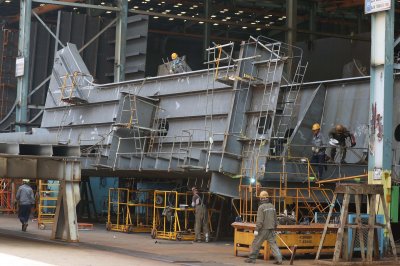
Workers weld at Okpo Shipyard of Daewoo Shipbuilding & Marine Engineering Co. in Geoje, South Korea, in 2022. File Photo by Yonhap/EPA
Sept. 3 (UPI) — South Korean shipbuilders are pouring investment, technology and expertise into a U.S. maritime industry struggling with shrinking capacity, worker shortages and competition from China, offering Washington a potential path to rebuild American shipyards without sending ship construction overseas.
The growing partnership also raises a difficult question: How much foreign participation is the United States prepared to accept in an industry considered essential to national security?
The issue has gained urgency following a White House directive aimed at increasing competition and capacity in the U.S. maritime industrial base. The administration’s plan allows greater use of foreign shipbuilding expertise under certain conditions, including investment in American shipyards, training U.S. workers, transferring production technologies and developing domestic supply chains.
Limited shipyard capacity and a shortage of skilled workers remain major obstacles to expanding the U.S. Navy fleet, according to Shelby S. Oakley, director of Contracting and National Security Acquisitions at the U.S. Government Accountability Office.
“The capacity of the existing yards and the size and skill level of the current workforce are certainly a limiting factor when it comes to the U.S. Navy’s ability to increase the size of the fleet,” Oakley told UPI.
Oakley said meeting Navy shipbuilding goals will require expanding existing yards or adding new ones, increasing the skilled workforce and making greater use of technology and automation. Without those changes, she said, the Navy will struggle to meet its fleet targets.
South Korea could provide part of that capacity.
Under a broader $350 billion U.S.-South Korea investment framework, Seoul has committed $150 billion specifically to shipbuilding cooperation, with another $200 billion intended for strategic investments in other sectors.
South Korea moved toward implementing the maritime portion in June when the Korea-U.S. Strategic Investment Corporation, Korean policy finance institutions and shipbuilders HD Hyundai Heavy Industries, Hanwha Ocean and Samsung Heavy Industries agreed to identify projects and coordinate financing.
The arrangement combines something Washington needs: capital and industrial expertise.
For decades, U.S. commercial shipbuilding has lost ground to Asian competitors. China now dominates global commercial ship construction, while South Korea and Japan retain substantial production capacity. The United States accounts for only a fraction of global commercial output.
President Donald Trump recently elevated shipbuilding capacity to a national security priority, directing his administration to look abroad for models that could help rebuild the U.S. maritime industrial base.
“I have determined that it is in the national security interest of the United States to increase domestic shipbuilding capacity,” Trump said in the memorandum, pointing to the October 2025 U.S. Finland Agreement on icebreaker construction as a model for cooperation with foreign companies.
China adds urgency to that effort.
China’s enormous civilian shipbuilding industry supports an expanding naval industrial base, allowing shipyards, suppliers and skilled workers to serve both commercial and military production. That industrial scale has made shipbuilding an increasingly important element of U.S.-China strategic competition.
The United States faces a different reality. The Government Accountability Office reported this year that Navy and Coast Guard shipbuilding programs have repeatedly exceeded budgets and fallen years behind schedule, while yards face skilled-worker shortages, capacity constraints and fragile supplier networks.
South Korea offers an alternative source of expertise. Its yards have decades of experience with modular construction, automation, digital design and high-volume production. Korean companies also build sophisticated naval vessels, including Aegis-equipped destroyers and submarines.
Hanwha Ocean and Hanwha Systems acquired Philly Shipyard for $100 million in 2024, giving the conglomerate a direct U.S. manufacturing foothold. Hanwha subsequently announced plans for billions of dollars in additional investment to expand the yard and introduce Korean shipbuilding technology.
Hanwha employs nearly 30,000 workers at Hanwha Ocean’s Geoje Shipyard in South Korea, where advanced manufacturing and automation help produce more than 40 ships a year.
“In the coming years, we will continue to bring trainers to develop our workforce at the Hanwha Philadelphia Shipyard as well as transfer technology to expand commercial and naval shipbuilding capacity,” Hanwha Defense USA spokesman James Hewitt told UPI.
Hanwha Ocean also completed a major overhaul of the Military Sealift Command dry cargo ship USNS Wally Schirra at Geoje in March 2025. The seven-month project was the first large-scale regular overhaul of a Military Sealift Command vessel awarded to a South Korean yard.
HD Hyundai Heavy Industries is pursuing a different route.
Rather than acquiring a U.S. yard, HD Hyundai has developed partnerships with American shipbuilders. The company and Huntington Ingalls Industries are cooperating on shipbuilding technology and production, including an August pilot program to expand automated welding at HII’s Ingalls Shipbuilding yard in Mississippi.
“The United States is a strong ally and a key business partner for us,” said Hannae Choi, Executive Vice President at HD Hyundai Shipbuilding and Offshore Engineering.
Such arrangements offer Washington a possible compromise: Korean companies can bring capital, technology, automation and production methods into American yards while training U.S. workers and developing domestic supply chains.
That distinction — foreign investment in U.S. shipbuilding rather than shifting construction overseas — has emerged as a key dividing line for the domestic industry.
The Shipbuilders Council of America supports foreign investment when it expands U.S. shipyard capacity but opposes sending construction abroad, said Danielle Hagen, the council’s executive vice president for communications.
“If South Korean capital and automation expertise flow into American facilities, employ American workers and produce American-built hulls, that model is consistent with our longstanding position,” Hagen told UPI.
“The SCA’s concern has never been the nationality of capital, but whether the work, the workforce and the industrial capability remain here in the U.S.,” she said.
Federal law has long restricted construction of U.S. naval vessels in foreign shipyards, while the Jones Act requires vessels operating in U.S. coastwise trade to be U.S.-built, U.S.-owned and U.S.-crewed.
“Any foreign partner needs to operate their U.S. yard as a genuinely American enterprise, with real decision-making authority here,” the council said, adding that foreign acquisitions should face national security scrutiny and continued congressional oversight.
Despite the backlog at U.S. yards, bipartisan opposition remains strong in Congress to building Navy vessels overseas. Rep. Jared Golden, D-Maine, a member of the House Armed Services Committee, has been among lawmakers seeking to preserve domestic construction requirements and prevent naval shipbuilding from migrating to foreign yards, including South Korea and Japan.
Those concerns extend beyond jobs. Modern warships contain classified systems, sensitive designs and specialized supply chains. Greater participation by even close allies raises questions about intellectual property, cybersecurity and control over technologies considered essential to U.S. military power.
Few U.S. allies, however, can match South Korea’s shipbuilding scale, speed and technical expertise. The emerging model seeks to use those capabilities to increase production in the United States rather than substitute foreign yards for American ones.
Whether that approach succeeds will depend not only on transferring Korean technology and manufacturing expertise into U.S. yards, but also on Washington’s ability to integrate those investments into a broader shipbuilding strategy.
Managing competing demands for Navy ship construction and repair requires such an approach, Oakley told UPI. A 2025 GAO report found that the Navy lacked a comprehensive strategy for managing the private shipbuilding and repair industry on which it depends, complicating efforts to coordinate investment, yard capacity and workforce needs.
The challenge is magnified by China. Its dominance of commercial shipbuilding has created a vast network of yards, suppliers and skilled workers that the United States cannot quickly replicate. South Korea cannot close that gap alone, but its capital, technology and expertise could help expand U.S. capacity as American yards modernize, train workers and rebuild supply chains.
For Washington, the central policy question is whether greater South Korean participation can strengthen U.S. shipbuilding capacity without creating a new dependence on foreign production.
1 of 2 | A smelter of Korea Zinc in Ulsan. The company has increased the annual production capacity of semiconductor-grade sulfuric acid by more than 14%. Photo by Korea Zinc
SEOUL, Sept. 2 (UPI) — Korea Zinc said Wednesday that its production capacity for semiconductor-grade sulfuric acid has increased by more than 14% as the country’s two leading chipmakers boost production to meet rising demand.
The world’s largest non-ferrous metals manufacturer noted that it recently built two additional production lines for ultra-high-purity sulfuric acid at its Onsan Smelter in Ulsan, roughly 190 miles southeast of Seoul.
With the two new lines now in full-scale operation, Korea Zinc’s annual production capacity has risen from 280,000 tons to 320,000 tons.
Eventually, Korea Zinc aims to raise its domestic production capacity to 500,000 tons a year. It is also considering installing semiconductor-grade sulfuric acid lines at its planned integrated smelter in the United States.
In cooperation with the U.S. government, Korea Zinc is set to construct the smelter for strategic materials on a 160-acre site in Clarksville, Tenn. Under the $7.4 billion Project Crucible, the facility is expected to start production in 2029.
Korea Zinc said that it supplies more than 60% of South Korea’s demand for semiconductor-grade sulfuric acid. The Asian nation is home to the world’s two largest memory chipmakers, Samsung Electronics and SK hynix.
The corporation said that its product has a purity of more than 99.9999 percent, known as “six nines,” or 6N, purity.
“Through this capacity expansion, we will respond in a timely manner to the operation and ramp-up of key domestic clients’ new manufacturing facilities,” Korea Zinc said in a statement.
“Moving forward, we will phase in additional domestic production capacity in alignment with our clients’ demand and investment timelines. At the same time, we plan to establish a supply base in global markets, including the United States,” it added.
The share price of Korea Zinc fell 3.92% on the Seoul bourse on Wednesday, while the benchmark KOSPI declined 3.99%.
North Korea on Monday condemned the “hostile policy” of the United States and vowed to continue bolstering its nuclear arsenal. In this October 2025 photo, leader Kim Jong Un attends a military parade in Pyongyang. File Photo by KCNA/EPA
SEOUL, Aug. 31 (UPI) — North Korea on Monday condemned what it called the United States’ continued “hostile policy” and vowed to keep bolstering its nuclear arsenal despite U.S. President Donald Trump’s recent overtures to Pyongyang.
In a statement carried by the official Korean Central News Agency, a spokesperson for the Foreign Ministry accused Washington of maintaining a confrontational stance toward North Korea in both “rhetoric and behavior.”
“The Trump administration has thus fully reconfirmed its invariable hostile policy to wantonly violate the sovereignty, political system and security interests of the DPRK through the ‘denuclearization’ racket, ‘human rights’ smear campaign and military threat,” the statement said, using the official acronym for North Korea.
“It is pointless to expect any detente in the region,” it added.
The statement comes amid a push from Trump to restart direct diplomacy with North Korean leader Kim Jong Un, with whom the U.S. president has touted a “very good relationship.”
Earlier this month, Trump ordered Seoul and Washington to curtail their joint Ulchi Freedom Shield military exercise, citing its cost and saying the drills sent an “inappropriate and hostile” signal to Pyongyang. The exercise was subsequently shortened by almost a week.
Despite the move, the U.S. State Department last week reaffirmed its commitment to the “complete denuclearization” of North Korea in a statement to Yonhap News Agency.
The United States, South Korea and Japan also confirmed last week that their annual Freedom Edge trilateral military exercise will be held Sept. 7-11 in international waters east and south of South Korea’s Jeju Island.
The Foreign Ministry spokesperson called the multi-domain exercise a “threat to the DPRK and regional countries.”
North Korea routinely denounces joint military drills as rehearsals for an invasion and has carried out weapons tests around major allied exercises.
The spokesperson said North Korea’s nuclear status, which has been enshrined in its constitution, could not be “weakened nor diluted” by repeated U.S. calls for denuclearization.
“Our nukes serve as an absolute guarantee for defending its sovereignty and the nuclear weapons in possession of the DPRK and their sustained bolstering are the most responsible and correct option for ensuring regional peace and security,” the statement said.
“There is no change in our policy toward the U.S. to respond to its invariable hostile policy with the toughest stand to the last,” it added.







![AH-64 Apache attack helicopters at Camp Humphreys on the final day of the annual US-South Korea UFS joint military exercise, which was shortened by six days after President Donald Trump ordered a substantial reduction in US participation, in Pyeongtaek, South Korea, August 21, 2026 [Yonhap via Reuters]](https://i0.wp.com/occasionaldigest.com/wp-content/uploads/2026/09/2026-08-21T112627Z_433179406_RC2Z2NAQ96GA_RTRMADP_3_SOUTHKOREA-USA-MILITARY-1788858262.jpg?w=640&ssl=1)

![US General Xavier T. Brunson, commander of the ROK/US Combined Forces Command (CFC), the United States Forces Korea (USFK) and the United Nations Command (UNC), shakes hands with a US Army soldier during a US-South Korea joint river-crossing exercise, which is a part of the annual Freedom Shield joint military training, near the demilitarised zone separating South and North Korea, in Yeoncheon, South Korea [Kim Soo-hyeon/Reuters]](https://i0.wp.com/www.aljazeera.com/wp-content/uploads/2026/09/2026-03-14T101408Z_1688914085_RC254KAMA6O8_RTRMADP_3_SOUTHKOREA-USA-MILITARY-1788746327.jpg?w=640&ssl=1)
![The commissioning ceremony of the destroyer "Kang Kon", at Wonsan Port, North Korea, September 6, 2026, in this picture released by North Korea's official Korean Central News Agency [KCNA/Reuters]](https://i0.wp.com/occasionaldigest.com/wp-content/uploads/2026/09/2026-09-06T221129Z_337993451_RC2XDNAY9M33_RTRMADP_3_NORTHKOREA-WARSHIP-1788736575.jpg?w=640&ssl=1)