Kong

Hong Kong court rules Dow Jones tried to stop journalist taking union role | Freedom of the Press News

Court also acquits Dow Jones on the charge of dismissal over Selina Cheng’s leadership role with the Hong Kong Journalists Association.

A Hong Kong court has convicted Dow Jones for trying to deter a journalist from taking a union role, but also acquitted the publisher on the charge of dismissal over the role, in a case that raised concerns about media freedom in the city.

Selina Cheng, who was fired by the Wall Street Journal (WSJ) in July 2024, had accused the newspaper’s publisher Dow Jones of unlawfully terminating her employment over her role chairing the Hong Kong Journalists Association (HKJA) and of trying to prevent her from standing for a union position.

Recommended Stories

list of 3 itemsend of list

The court found the company guilty on Thursday of trying to prevent Cheng’s right to run for the union chairmanship.

However, the judge sided with Dow Jones’ argument that she was made redundant because of corporate restructuring, and not due to her role as HKJA chair.

The right to take part in a trade union is protected by Hong Kong’s labour laws. An employer found guilty on “prevent or deter” charges could be fined up to 100,000 Hong Kong dollars ($12,755).

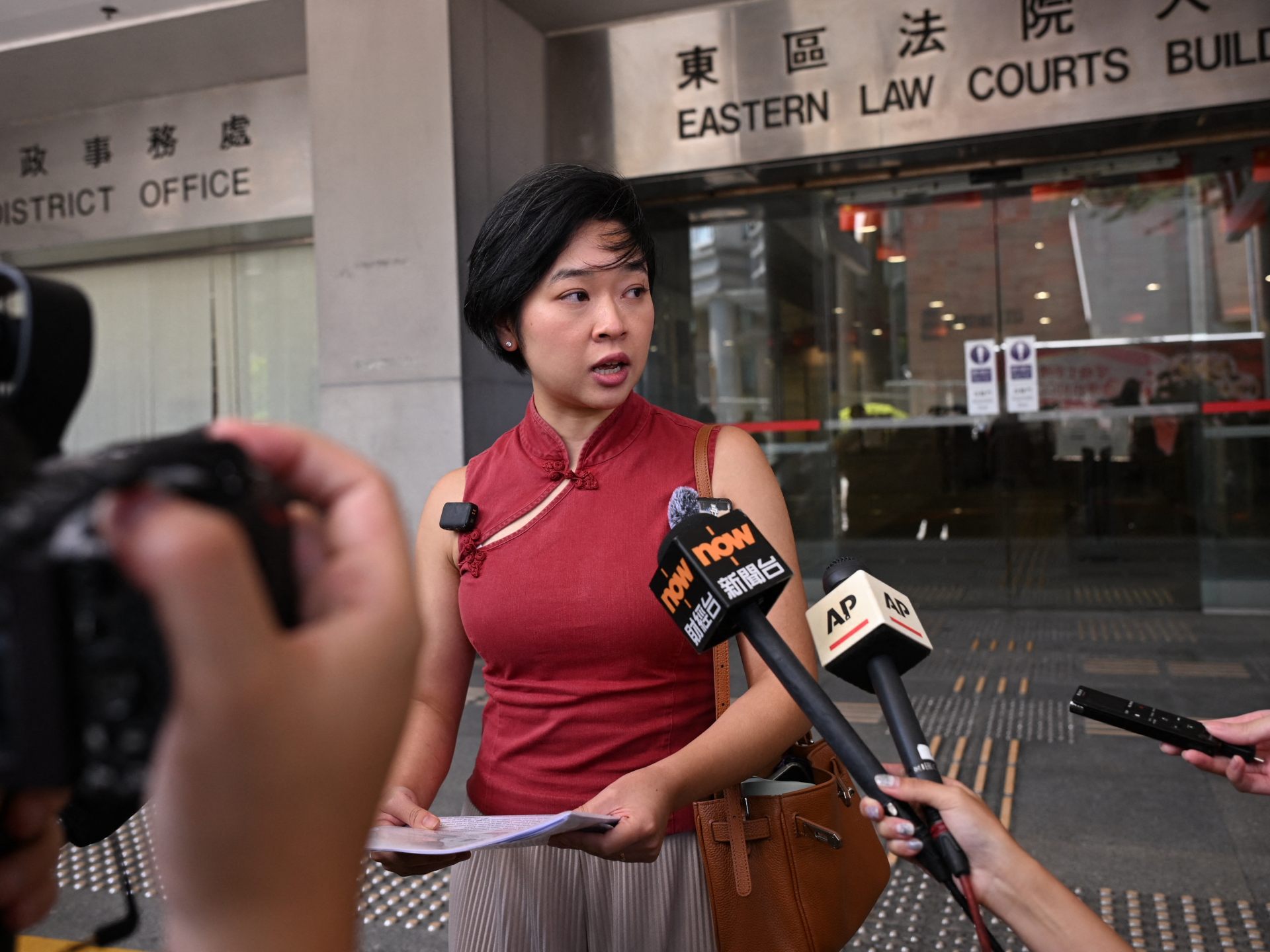
“If reporters’ employment rights are not sufficiently safeguarded, or when their rights are violated and not enforced in law, then we can no longer work safely as reporters,” Cheng told reporters outside the court after the ruling.

The judge said the company’s requirement that Cheng seek prior permission to take a union role was an “unjustified deterrent” of her rights.

Dow Jones said it disagreed with the ruling and was evaluating next steps.

“The Wall Street Journal has a long and proud history as an employer in Hong Kong. Throughout that time, we have remained deeply respectful of its labour laws and supportive of our employees’ rights, while publishing excellent, impartial journalism about the region,” a spokesperson said.

Sentencing is expected to be handed down at a later date.

Cheng launched a private prosecution last year for illegal termination, after filing a complaint with the Labour Department that did not result in a prosecution.

Founded in 1968, the HKJA is Hong Kong’s longest-established journalists’ organisation and one of the last remaining groups advocating for media rights in the city.

Although Hong Kong was once known for its independent news outlets, media freedom has come under strain and many outlets have disbanded since Beijing imposed a 2020 national security law following sometimes violent pro-democracy protests, according to international rankings and HKJA surveys.

Source link

Shein shares fall on Hong Kong debut as parcel duties and Iran costs bite

Shares in fast-fashion giant Shein fell as much as 10% on their trading debut on Hong Kong’s stock market on Tuesday, before recovering some of their losses, following years of delay to the company’s plans to list publicly and regulatory setbacks in Europe and in the US.


ADVERTISEMENT


ADVERTISEMENT

Shein’s initial public offering opened on 24 August, with the final share price set a week later on 31 August. Trading began the following day, on Tuesday.

The gap reflects standard IPO process, as investors placed their orders over about a week, the banks running the deal then fixed the final price and decided who got shares, and trading opened a few business days later once the exchange gave the final go-ahead.

The listing marks the end of a long search for a stock market willing to take Shein after plans to list in New York and London stalled amid scrutiny over its Chinese supply chains, forcing the company to turn to Hong Kong instead.

New US and EU tariffs on low-cost parcels from China, along with rising shipping costs from the war in Iran, have contributed to Shein’s swing from a $395 million (€340mn) profit to a $99 million (€85mn) loss in the first quarter of this year.

Shein raised about $1.7 billion (€1.46bn), pricing shares at HK$48.56 (€5.33) each, in one of the city’s biggest share sales this year.

“Shein’s Hong Kong listing marks a new starting point,” said Leigh Gui, Shein’s chief financial officer, in a short speech at its listing ceremony.

But in early trading, the shares fell to below HK$44 (€4.83) before losses narrowed.

Tariffs squeeze profits

Shein has built its appeal to customers on ultra-fast, affordable fashion, delivered from China to the West within days.

However, the end of “de minimis” tariff exemptions in the US and the European Union has raised duties on low-value parcels from China, including Shein’s products. Higher logistics costs, driven partly by the war in Iran, have also squeezed the company’s low-price business model and profitability.

Tariff costs have forced Shein to raise prices, “cutting into its main advantage,” said Jacob Cooke, CEO of WPIC Marketing + Technologies.

Back to its roots

Shein, pronounced “she-in,” earlier explored listing its shares in New York and London, and moved its headquarters from China to Singapore in 2021.

But increasingly strict scrutiny by Beijing and by regulators in the US and Europe led it to embrace its Chinese roots and switch to a Hong Kong listing.

Launched in 2012 in China, much of Shein’s operations were in the southern province of Guangdong before it moved its corporate headquarters out of the country.

“Guangdong is Shein’s roots, and the starting point of our journey,” founder Sky Xu said in a speech in February.

Pivoting its focus back to China also highlighted the advantages Shein derives from a supply chain system that “only exists” in Guangdong, said William Ma of GROW Investment Group, referring to its small-batch, fast-response manufacturing model.

Shein has hit other roadblocks in expanding in Europe. In February, the EU launched a probe into the company with a focus on “illegal” products, including alleged child sexual abuse material.

In May, Shein acquired San Francisco-based eco-friendly clothing retailer Everlane, a move some analysts said was not the best fit.

Hong Kong’s IPO boost

The company’s market value was roughly $27 billion (€23.2bn) as it listed in Hong Kong, a fraction of its peak valuation a few years ago.

“Shein has probably missed its golden listing window due to the shift of momentum toward AI and tariffs, which can affect valuations and profitability,” said Gary Ng, a senior economist for Asia Pacific at French bank Natixis.

Still, Shein’s listing is welcome news for Hong Kong, as the Chinese territory makes increasing efforts to hold onto its role as a global financial hub following a downturn in 2023.

Hong Kong’s stock exchange has had a strong year for IPOs, raising more than $40 billion (€34.4bn) so far.

There is also a backlog of companies seeking to list there, said Lorraine Tan at investment research firm Morningstar.

Source link

Shein to make $1.77B stock market debut in Hong Kong after years of delays

Chinese fast-fashion giant Shein announced plans Monday to raise $1.77 billion by selling 280 million shares in its long-awaited IPO on the Hong Kong Stock Exchange. File photo by Hannibal Hanschke/EPA

Aug. 24 (UPI) — Chinese fast-fashion giant Shein announced plans Monday to raise $1.77 billion in its long-awaited IPO on the Hong Kong Stock Exchange.

In a filing to the SEHK, Shein said it will offer nearly 280 million shares with a price range of $6.07 and $6.32 in its Sept. 1 debut, valuing the company at a little under $27 billion. The final price will be fixed on Aug. 31.

The valuation is sharply down from the $100 billion it was valued at in 2020, due to higher costs and a slowdown in the growth of sales, and follows effort to float on the New York, NASDAQ and London stock exchanges in 2023 and 2024 that were abandoned amid roadblocks erected by regulators and lawmakers on both sides of the Atlantic.

Analysts said the firm had been hit hard by U.S. President Donald Trump‘s summer 2025 scrapping of the so-called de minimis import tariff exemption on low value packages on which its business model depended, with Shein reporting a $99 million loss in Q1, down from a $395 million profit in the same period in 2025.

The European Union imposed its own flat $3.50 import tax on low value packages coming into its single market, effective July 1, with Britain, another big market for the Chinese online retailers, also expected to implement similar measures to the United States and EU in 2028.

With the Hong Kong stock market’s attention focused on a string of highly sought after AI and chipmaker IPOs, investor enthusiasm for Shein has dwindled along with much of its appeal with consumers under the age of 35 amid the challenge from competition from firms like Temu.

The firm has also had reputational issues with scrutiny over multiple issues from environmental pollution to working conditions in its supply chain, including the possible use of forced labor in its supply chain.

In February, the EU launched an investigation alleging the design of Shein’s app was addictive, a lack of transparency of recommender systems, as well as the sale of illegal products, including “child sexual abuse material.”

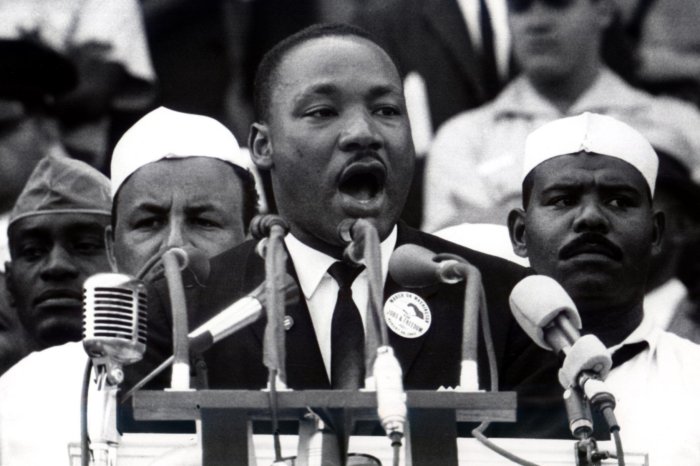
Martin Luther King Jr. delivers his famed “I Have a Dream” speech from the steps of the Lincoln Memorial in Washington on August 28, 1963. The speech galvanized the nation’s civil rights movements and led to the passage of the 1964 Civil Rights Act, the 1965 Voting Rights Act and the 1968 Fair Housing Act. File photo by UPI | License Photo

Source link

Tiananmen Square vigil organizers convicted of subversion in Hong Kong

Security was tight outside the West Kowloon Law Courts Building on Friday morning as guilty verdicts were handed down inside against Chow Hang-tung and Lee Cheuk-yan on charges of inciting subversion over their roles in organizing candlelit vigils commemorating the deadly 1989 Tiananmen crackdown in Beijing. Photo by May James/EPA

Aug. 21 (UPI) — Two Hong Kong activists who organized vigils to commemorate those killed in a crackdown by the Chinese military on the June 4, 1989, Tiananmen Square pro-democracy protests were facing up to 10 years in prison after being convicted Friday of inciting subversion.

Chow Hang-tung, 41, and Lee Cheuk-yan, 69, who had been in custody since 2021, “incited other persons to organize, plan, commit or participate in acts by unlawful means with a view to subverting state power.”

The two leaders of the now-dissolved Hong Kong Alliance organized the vigils, which had been held annually on June 4 since 1990, after they were banned in 2020 after a tough new National Security Law was imposed from Beijing, following huge street protests that rocked the territory the previous year.

Former Democratic Party lawmaker Albert Ho, 74, who was charged alongside Chow and Lee, pleaded guilty at the start of the trial in January.

Amnesty International expressed dismay at the verdicts saying it demonstrated how the national security law was being used to go after people for peacefully marking the anniversary of one of the most sinister events in the history of China, in the only place in the country where it was permitted.

It said the decision marked another “grim milestone in the government’s deliberate campaign to erase that legacy and silence those who seek truth, justice and accountability.”

Deputy Regional Director Sarah Brooks said Chow and Lee’s “crime” was not one that would be recognized anywhere else.

“The Hong Kong authorities should quash these convictions and end the ongoing persecution of people seeking to keep the memory of Tiananmen alive. Chow Hang-tung and Lee Cheuk-yan are prisoners of conscience who should never have been prosecuted in the first place. They must be released immediately and unconditionally.”

The Foreign Office in London issued a statement criticizing the case saying it was not in line with the “one-country-two systems” treaty Britain signed with Beijing for the return of its former colony which guarantees the rights and way of life of Hong Kong people for 50 years after the handover in 1997.

“This verdict is a further demonstration that even peaceful acts of remembrance in Hong Kong are now treated by the authorities as threats to national security. The extensive use of Beijing’s national security law to punish and restrict peaceful expression undermines the commitments China made to Hong Kong under the 1984 Sino-British joint declaration,” said Indo-Pacific minister Rosie Winterton.

“We reiterate our call for the national security law to be repealed, and for rights and freedoms to be respected in the Hong Kong special administrative region,” she added.

Martin Luther King Jr. delivers his famed “I Have a Dream” speech from the steps of the Lincoln Memorial in Washington on August 28, 1963. The speech galvanized the nation’s civil rights movements and led to the passage of the 1964 Civil Rights Act, the 1965 Voting Rights Act and the 1968 Fair Housing Act. File photo by UPI | License Photo

Source link

Hong Kong Tiananmen activists found guilty of national security charges | Hong Kong Protests News

Activist group says the ‘twisted’ Hong Kong judicial system had long ago decided that the pair were guilty.

A Hong Kong court has found two pro-democracy activists guilty on national security charges in a trial widely viewed as exemplifying the erosion of freedom of expression in the Chinese city.

Lee Cheuk-yan, 69, and Chow Hang-tung, 41, former leaders of the Hong Kong Alliance in Support of Patriotic Democratic Movements of China, were found guilty of “incitement to subversion” for their role in organising candlelit vigils to mark Beijing’s deadly 1989 Tiananmen crackdown, in a Hong Kong court on Friday. The two had pleaded not guilty and were charged in 2021.

Recommended Stories

list of 3 itemsend of list

The pair could face up to 10 years in jail. Sentencing is expected at a later date.

Prosecutors argued that the pair “endanger[ed] national security in the name of human rights”.

Chow, a human rights barrister who represented herself, told the court in May that the law itself was on trial.

Friday’s verdict was “no surprise”, said Mark Clifford, president of the Committee for Freedom in Hong Kong Foundation.

Hong Kong’s “twisted” judicial system had already decided the pair were guilty in 2021, he said. He described Lee and Chow as “true Chinese patriots” who were silenced because they “spoke truth to power” and “held up a mirror to the Chinese Communist Party”.

Pro-democracy activists Lee Cheuk-yan, left, Cheung Man-kwong and Chow Hang-tung, centre right, at a 2019 vigil for the victims of the Tiananmen Square massacre. [File: REUTERS/Tyrone Siu]
Pro-democracy activists, from left, Lee Cheuk-yan, Cheung Man-kwong and Chow Hang-tung, attend a 2019 vigil for the victims of the Tiananmen Square massacre [File: Tyrone Siu/Reuters]

Hong Kong’s crackdown

For three decades, the candlelight vigil organised by the alliance was the only large-scale public commemoration of the Tiananmen crackdown, drawing tens of thousands of people annually to mourn the victims in China. The event was banned in 2020 during the first year of the COVID-19 pandemic, weeks before Beijing imposed the security law on Hong Kong to quell the 2019 massive antigovernment protests.

The alliance’s leaders have been behind bars since they were charged.

Chow and Lee “exposed the Chinese government’s fears of the memory of its own atrocities”, Elaine Pearson, Asia director at Human Rights Watch, said, urging governments around the world to hold Beijing to account for erasing Hong Kong’s freedoms.

Earlier this year, Jimmy Lai, 78, a media mogul and high-profile rights campaigner in Hong Kong, was found guilty on national security charges and sentenced to 20 years behind bars.

Led ‘like a dog on a lead’

In a personal blog published in the days leading up to the verdict, Chow detailed her treatment by correctional services, in which she described being led “like a dog on a lead”, shackled at the wrists, waist and ankles.

She described a new method of restraint, with specialised handcuffs, as the source of significant pain during her long detention: “One can only ‘choose’ which part of the body shall suffer in turn” due to the bodily contortions forced by the restraints she has been held in.

Chow is one of the few high-profile political prisoners detained in Hong Kong to continue to speak out publicly against the authorities.

In June 1989, China’s government sent tanks and soldiers to crush a pro-democracy movement that had installed itself in Beijing’s central Tiananmen Square. Hundreds, possibly thousands, of people were killed by soldiers, and many were injured. Beijing has since sought to censor mention of the incident in China.

Source link
