


kind

Dodgers make wrong kind of history in NLCS loss to Brewers

The Dodgers’ offseason began at 8:07 Thursday night. Heavily favored to win a third straight World Series, they were swept into winter by the Milwaukee Brewers.

The final score doesn’t really matter, but for the record it was 6-4 Brewers. It wasn’t really that close.

The Dodgers led in every game of the National League Championship Series. They didn’t win any of them. No team has ever done that while getting swept in a best-of-seven series. So while the Dodgers didn’t three-peat, they made history just the same.

“They were relentless with everything that they did,” Dodgers infielder Max Muncy said of the Brewers. “They just strung together good at-bat after good at-bat. That’s usually what we do.

“We didn’t do it this series and they did.”

The Dodgers’ starting rotation, the most expensive in history, gave up 16 hits and 13 runs in 18 innings for a 6.50 earned-run average. The bullpen was nearly as bad, posting a 4.50 ERA in 16 innings.

The Brewers’ relievers, on the other hand, were spectacular. Milwaukee manager Pat Murphy went to his bullpen 14 times and just twice did a reliever give up a run. All four victories against the Dodgers and all seven Brewers wins this postseason have gone to a reliever, with the bullpen posting a 1.33 ERA in 40⅔ innings.

“Pitcher after pitcher came in and executed,” Muncy said. “When one of their pitchers faltered, the next guy came in and picked up the slack.”

And each time the Dodgers took a lead, the Brewers waited no more than two innings to cut into the deficit. Milwaukee trailed 4-0 after two innings Thursday. By the top of the fifth, the score was tied. An inning later, the Brewers went ahead to stay, becoming the first team with six comeback wins in their first eight postseason games.

“They respond,” Murphy said of his players. “We’ve talked about it all year long. You have a bad week, you have a bad game, you have a bad at-bat, you bounce back.”

“I love the Dodgers. I love their players. They’ve got legendary players,” he continued. “But we came in with a group that would not be denied. They were hungry, very hungry.”

The two-time defending champion Dodgers, meanwhile, appeared to be full. They hit with runners in scoring position as often as they hit into double plays, going four for 27 and stranding 24.

“We had our opportunities. We just didn’t get the job done,” first baseman Freddie Freeman said. “We won two [titles]. We came up short on the third.

Milwaukee's Garrett Mitchell, right, celebrates with Cooper Pratt after hitting the go-ahead home run.

Milwaukee’s Garrett Mitchell, right, celebrates with Cooper Pratt after hitting the go-ahead home run in the sixth inning of a 6-4 win over the Dodgers in Game 4 of the NLCS on Thursday night.

(Robert Gauthier / Los Angeles Times)

“There’s a lot of hurt at the end of the season. Sometimes you just get beat. That’s just kind of how it goes. You have to give credit to the Brewers. They played really good baseball.”

A year ago the Dodgers swept the Brewers in the NLCS. This fall the results were reversed.

“The sadness is we just didn’t accomplish our goal,” Muncy said. “The goal every year is to be the last team standing. This year we had a chance to do something historic, and we didn’t accomplish it. And every single time you’re not the last team standing, it’s heartbreak and it’s failure and it’s not what you’re looking for.”

The Dodgers’ clubhouse was closed for more than 35 minutes after the game, partly to process that heartbreak but also to give manager Dave Roberts and veteran infielder Miguel Rojas, who announced his retirement, a chance to address the team. When the doors finally opened, nearly every player was sitting in front of his locker, most still in uniform, waiting to explain what seemed to be inexplicable.

How did the greatest team money can buy wind up so flat when the stakes were so high?

“We’ve been grinding all season long,” said right-hander Tyler Glasnow, who retired the first 10 Brewers in order, but lasted just one more inning. “No one slacked off at all. Everyone just came in and worked hard. They just played a lot better than us. They were hitting on everything. It wasn’t our year.”

“Not every time it’s gonna be us,” left fielder Teoscar Hernández added through a forced smile. “It’s not fair for us to be doing the same thing over and over every year. Teams are going to learn from their losses the same way we’re gonna learn from this one.

“So hopefully we come back next year stronger.”

Speaking of next year, no one would.

Half the players on the Dodgers 26-man NLCS roster are on expiring contracts. The core of the team — Mookie Betts, Freeman, Muncy, Kiké Hernández and Teoscar Hernández along with pitchers Blake Snell and Glasnow — are 33 or older. The Dodgers could look very different when spring training starts — if spring training starts — in February.

“There’ll come a time when we think about next year,” Muncy said. “But that’s not right at this moment.”

The Dodgers have an extra-long winter to get through first.

Source link

Russian oligarch says Donald Trump Jr. has paid him back for wedding celebration expenses

The Russian oligarch who helped bankroll Donald Trump Jr.’s wedding celebration says the president’s eldest son has paid back the money.

“Yes, he did,” Umar Kremlev told an International Boxing Association press conference in Istanbul on Tuesday. “He did repay the money I spent on the present.” Still, he said he felt the repayment was unnecessary.

“Frankly speaking, I do not understand why he decided to do so,” he went on. “There are all kinds of events organized by all kinds of people. It is as if I invite you to come and visit my country house. Would you expect me to issue an invoice to them afterward?” Speaking through an interpreter, he said that would be “ridiculous.”

ProPublica, a nonprofit investigative website, reported last month that Kremlev, who has close ties to Russian President Vladimir Putin, “footed the bill for hundreds of thousands of dollars of wedding expenses” when Trump Jr. married socialite Bettina Anderson in the Bahamas in May. That included paying to rent one of two private islands where the three-day party was held.

In a subsequent post on her Instagram page signed by the couple, Bettina Trump wrote that they had been married “surrounded ONLY by our family,” but that Kremlev, head of the boxing association, was a “dear friend” who “very generously hosted two incredible nights of celebrations for us AFTER our wedding.”

President Trump, who did not attend the nuptials, previously defended the arrangement but told reporters that the money would be paid back.

“It’s totally allowed,” he said. “But, as I understand it, he paid them back.”

“That’s very common,” he added, “I’ve given wedding parties to numerous people.”

Kremlev, who was recently honored with the Order of Friendship by Putin, also played down the significance, saying the celebration was “a shared event” and “people blew it out of proportion.”

“I mean, why can’t we be friends? We are just friends,” he went on. “We are simply friends and what unites us is love for sports.”

The focus on Kremlev comes as Russia remains at war with Ukraine following its invasion in 2022 and as Trump has failed to broker a promised peace deal between the nations.

Trump Jr. has previously been scrutinized over his ties to Russia. During the 2016 campaign, his meeting with a Russian attorney in Trump Tower to discuss potentially incriminating information about his father’s then-Democratic opponent was a critical element of investigations into whether the Trump campaign coordinated with Russia to meddle in the election to help Trump win.

Colvin writes for the Associated Press.


Source link

Rock Me Tonight singer Freddie Jackson dead at 70 as family mourns ‘kind, generous soul’

LEGENDARY R&B singer Freddie Jackson has died at 70 as family and friends mourn the icon’s passing online.

The singer, known for his hit song Rock Me Tonight (For Old Times Sake), passed away on Monday, just days after his milestone birthday.

R&B legend Freddie Jackson has died, days after his 70th birthday Credit: Getty Images
Freddie is known for his hit songs Rock Me Tonight (For Old Times Sake) and You Are My Lady Credit: Getty Images

Freddie’s family announced the sad news on his Instagram on Tuesday.

“It is with profound sadness and heavy hearts that we share the passing of our beloved Freddie Jackson, who went home to rest last night,” the post read alongside a photo of the iconic vocalist.

“Freddie was more than a legendary voice. He was a kind, generous soul who loved his fans, his family, his friends, and his music with everything he had.

“For decades he gave us the songs that became the soundtrack to our love stories, our celebrations, and our most treasured memories. That gift will live on forever,” the caption continued.

Read More on Celebrity Deaths

FAMILY PAIN

Rob Lowe’s 13-year-old niece died by suicide as actor races to brother’s side

“To everyone who ever sang along, danced, or felt something when Freddie took the stage: thank you. You were family to him, and he carried your love with him always.

“Please keep his family, friends, and loved ones in your prayers during this difficult time. Details regarding arrangements and how to honor his legacy will be shared in the coming days.”

The family concluded the post, writing, “Rest in peace, Freddie. Your legacy and your voice will live on forever.”

They did not reveal the artist’s cause of death.

Most read in Entertainment

Fans shared their grief and condolences to Freddie’s loved ones in the comments.

“Another Legend Gone…Another Legacy left behind. This sucks! Grateful for the gift he shared with an unforgiving world,” professional wrestler Elijah Burke (Da Pope), wrote.

“Oh man Freddie one of. The true greats!!!! I had the pleasure of working on a song duet with him and Natalie Cole! Superb!” singer Narada Michael Walden added.

“Three days after his birthday. Rest well and Thank you for all the wonderful songs throughout the years here with us on earth,” a fan said.

The singer’s cause of death was not disclosed Credit: Getty
The vocalist released his newest album, My First Love, in May 2023 Credit: Getty

“Awww man. Such a cool brother. So talented too ! One of the Greats,” chimed in a fourth.

“Heartbreaking news!!! Rest in Paradise Freddie,” a fifth echoed.

Freddie’s music career took off in the 1980s, with his chart-topping hits, You Are My Lady, Have You Ever Loved Somebody, and Jam Tonight.

The New York native kept performing until his death, singing his old hits and songs from his newest album, My First Love, released in May 2023.

He hit the stage in June for a performance at a winery in Philadelphia and was among the headliners at an 80s Night Concert in Fort Worth, Texas, in April, per his recent Instagram posts.

In one of Freddie’s latest posts, he thanked fans “for all the love” on his birthday and shared a photo of himself in a white suit.


Source link

Why Hallmark Movies and John Wilson’s ‘The History of Concrete’ take the mundane so seriously

Hallmark films have mastered the art of escalating low-stakes situations into high-stakes emotional emergency plotlines. They have made a lucrative business out of absurdities.

The town’s ice sculpture competition is in danger of being canceled forever. How can the Christmas celebration in Colorado go forward without a nice spruce? The only way to really save the bakery is to have a life-size gingerbread house competition.

It’s a proven formula that leans into the ridiculousness of mundane situations but earns its audience every holiday season. Whether it’s watching the movies for comfort or to turn a viewing party into a drinking game, millions of people tune in to laugh or cry watching them.

The Hallmark situations can be predictable, comfortable and wholesome, which can come off as absurd for a film plotline. Their sincerity and humor come from the cast’s commitment to the mundane, said Ron Oliver, writer and director of many Hallmark films.

A scene from "The History of Concrete."

A scene from “The History of Concrete.”

(Magnolia Pictures)

“Funny is only funny if you don’t think it’s funny,” he said. “We know that’s ridiculous. But at the same time, if the actor commits to it, it makes it seem real, then the audience gets it.”

He likes to think they’re laughing along with the idiosyncratic elements of the movies, and as long as it is creating a communal atmosphere, Oliver is all for it.

“If there’s anything we need these days, it’s a sense that people belong somewhere,” he added.

The formula isn’t what makes a movie a Hallmark movie. The structure has existed since God wore shorts, said Oliver. The channel’s achievement has been its ability to turn the structure into a recognizable brand through its stories.

When filmmaker John Wilson was in between jobs after finishing his HBO show “How To With John Wilson” during the writers’ strike, he attended a seminar on how to write and sell a Hallmark film.

After seeing what makes the Hallmark brand recognizable, Wilson decided to adapt the style into his own genre of making a documentary about concrete titled “The History of Concrete,” hoping the structure would help him finance the film.

John Wilson in "The History of Concrete."

John Wilson in “The History of Concrete.”

(Magnolia Pictures)

“But it’s very loose and almost impossible to even identify at points,” he said.

Instead of mocking the genre, Wilson subverts the Hallmark elements into his style of documenting, which finds the filmmaker recording trivial life moments — a person sitting on a pole, for example, or someone ruining a perfectly good jar of peanut butter by dipping their fingers into it — alongside his contextualizing narration.

“I both embrace but betray certain rules,” he said.

The seminar told him to avoid mentioning Christianity in the context of Christmas, so he pivoted to a Buddhist community with an annual tradition of running around a school in New York. The formula prefers to stay away from trauma. Instead, he made the death of one of his subject’s fiancées one of the main plotlines of the film.

“The actual Hallmark of it all fits in a way because that’s the kind of living proof that this rhythmic cyclical way of storytelling is actually soothing and attractive to people over long periods of time, to be able to return to this thing that they can trust and understand,” he added.

A scene from "The History of Concrete."

A scene from “The History of Concrete.”

(Magnolia Pictures)

In Wilson’s film, the entrance point is concrete, but what begins to unravel is a romance story involving a boy who has a movie idea, needs money to make a movie and tries everything he can to sell it — a signature love trope for most Hallmark movies.

Throughout the film, Wilson goes from pitch meeting to pitch meeting trying to finance his art. In the process, Wilson meets other eccentric characters that share his passion of filmmaking but have their own interests, like clearing gum from a sidewalk, immortalizing a person’s tattoo after they’re dead, and music.

“I’m just finding different ways to court this industry that doesn’t seem ready for this relationship,” Wilson said. “I’m trying to find some consensual way into it, but I eventually just need to perform the romantic gesture of doing what feels right and what comes naturally to me.”

The love story is the kind of theme that sometimes it’s OK to lean into, even though he’s constantly battling whether he should explore it in his films, Wilson added.

A scene from "The History of Concrete."

A scene from “The History of Concrete.”

(Magnolia Pictures)

Oliver believes that battle is a product of the cynicism that exists in society. Pledging love and respecting someone or a relationship can make people feel so uncomfortable that leaning into these tropes of life can feel humorous, and that’s where the laughs from a Hallmark film come from.

“They’re realizing that they’re being emotional about somebody who can’t find the right Christmas sweater,” he said.

The people in “The History of Concrete” aren’t funny because Wilson makes them out to be ridiculous. He doesn’t emphasize their eccentricities or tell the audience what makes them funny. He simply lets them be themselves. He captures their personality through a curiosity lens.

The humor comes from their passions not seeming worthy of the level of seriousness with which they pursue them. These people love something so much that their devotion mirrors the kind of energy normally reserved for higher stakes.

“There’s no definition of normal that sticks,” Wilson said.

A Christmas celebration isn’t objectively a life-or-death situation, and neither is concrete. But when people care deeply about them, those seemingly mundane things can take on an emotional significance the audience understands.

“Even if it’s something absurd … [the casts] are also committed to the idea of making it real,” Oliver said.

Source link

Local slaughterhouse worker who butchered kind OAP in his home caught in forensic first

In 2002, 91-year-old Edwin Hiles was murdered in his Oxfordshire home and the way police tracked down his killer changed forensic investigations forever and led them straight to the killer

Frail 91-year-old Edwin Hiles was brutally murdered in his Oxfordshire home by a former local slaughterman who cut his phone line so he couldn’t call for help.

Paul Weedon, 24 – who worked in the ‘gut room’ of Mutchmeats’ slaughterhouse in Witney, Oxfordshire – stabbed the pensioner in the throat in 2002 after trying to rob the widower when he refused to give him money for rent.

Mr Hiles’ body was found in the front downstairs living room of his semi-detached home by a neighbour who had called in to see him. But there was no sign of the killer.

Mr Hiles was known in his community for his small-scale money lending to those in hard times and detectives immediately linked his murder to his generosity and that he may have had cash at his house

What followed changed British forensic science forever. In order to catch the killer, investigators pioneered a breakthrough technique known as “fibre-taping” for the first time in the UK – linking the victim’s body directly to bloodstained clothes Weedon had stashed in a nearby woodland close to where he was living in Chipping Norton.

Rather than just gathering loose fibres to see if the two people interacted, investigators used a complete, grid-indexed tape on both the killer’s clothing and Mr Hiles’ body to reconstruct their positions during the attack.

During the trial in 2003, Weedon had changed his story multiple times, even claiming to have seen drug dealers kill the elderly widow, according to the Oxford Mail. He also claimed he had been deliberately framed by an acquaintance who had had dealings with Mr Hiles.

But later on, he then said he stabbed Mr Hiles in the throat after the pensioner came at him with a kitchen knife to stop the robbery. In mitigation, Julian Baughan, defending, said: “This wasn’t pre-planned. It was intended possibly as an application for a loan which turned into a robbery which went wrong.”

The breakthrough forensic testing from 2003 will be shown and explained on the brand new documentary series UK Forensic Breakthroughs on the True Crime channel. Spanning across 10 episodes, each instalment will focus on its own murder case where scientific breakthroughs and microscopic evidence secured justice for grieving families.

Forensic scientist Jo Millington will give exclusive access to the experts behind the investigations, including the case of Edwin Hiles, which is set to air on September 27. Jo Millington has been a forensic scientist for over 30 years, even working behind the scenes on BBC’s Silent Witness.

Speaking of the new documentary, Jo Millington said UK Forensic Breakthroughs stands out from other crime shows and explained: “The first difference is that it puts forensic science at the heart of the show, which normally sits on the periphery in the shadow.

“Over a 10 part series, we’re using the programme to kind of assure a spotlight on forensic science. And more importantly, the scientists that do forensic science, every single day.”

Jo explained how forensic evidence isn’t just about fingerprints and bloodstains. Speaking to the Mirror, she said: “Forensic science is based on the principle that every contact leaves a trace and that’s exactly what people do when they commit a crime. Every interaction, every step has the potential to leave material in the crime scene or take it away.

“The challenge sometimes is finding the evidence in the first place, but once forensic scientists do find it then they can start to interpret it and put it into the context of an investigation.

“The evaluation of the science is really important. For example, finding my DNA in a place where I live or work is unlikely to unlock a case, but if investigators find my fingerprint in the blood of the person that has been injured, then that is like a timestamp.

“It tells you I was there when the person was bleeding – that contextual evaluation is vital – and in that particular example, I would have questions to answer.”

As well as shining a light on the forensic science work, Jo aims to tackle one common misconception about her job. She added: “The thing about forensic science is it’s mostly a process – things need to happen in a particular order in line with a particular method and the results need to be checked and double checked by people who are trained and competent.

“The chain between the evidence that is collected from a crime scene and the scientific findings that are presented to the court, and the jury, needs to be water-tight. That level of diligence and checks takes a longtime.”

TRUE CRIME is available on Sky, Virgin Media, Freeview, Freesat and Freely as well as for streaming via TRUE CRIME UK (FAST), accessible on platforms including Prime Video, Rakuten TV, Pluto TV, Plex, LG Channels, Samsung TV Plus, ITVX and 5.

Source link

Prep talk: Corona del Mar’s unbeaten football team relies on multiple-sport athletes

If ABC brought back the TV show “Superstars” that featured top athletes competing in various events, then a trip to Corona del Mar High would be a must, because the Sea Kings have top multiple-sport athletes competing every day.

The football team is 5-0 thanks to a trio of athletes who are still learning what their best sport is.

Nolan Scott (left) and brother Maxwell Scott pose for a photo in their basketball uniforms.

Nolan Scott, left, scored the winning basket and his brother, Maxwell, scored 35 points in Corona del Mar’s basketball team’s 78-77 win over Los Alamitos.

(Eric Sondheimer / Los Angeles Times)

Nolan Scott is a 6-foot-4 tight end and linebacker who can dunk and plays basketball with his Harvard-bound brother, Maxwell.

Tucker Murray is a safety, receiver and punt returner who’s committed to Princeton to play both football and lacrosse.

Corona Del Mar High's JJ Haley (foreground) breaks into a big smile after scoring a run in baseball game.

Corona del Mar High’s JJ Haley (3) comes up smiling with teammate Max Brengel after both scoring two runs during the Battle of the Bay baseball game against Newport Harbor last season.

(Don Leach / Daily Pilot)

JJ Haley is a receiver and center fielder for the baseball team who could play both sports in college.

That kind of versatility and ability to handle pressure is seen every week in football.

For them to keep playing more than one sport instead of focusing on a single sport shows their commitment and belief you can do both and be good in both while having fun with friends.

This is a daily look at the positive happenings in high school sports. To submit any news, please email eric.sondheimer@latimes.com.

Source link

Contributor: We need more of the hopeful sci-fi that ‘Star Trek’ gave us 60 years ago

Rod RoddenberryGuest contributor 

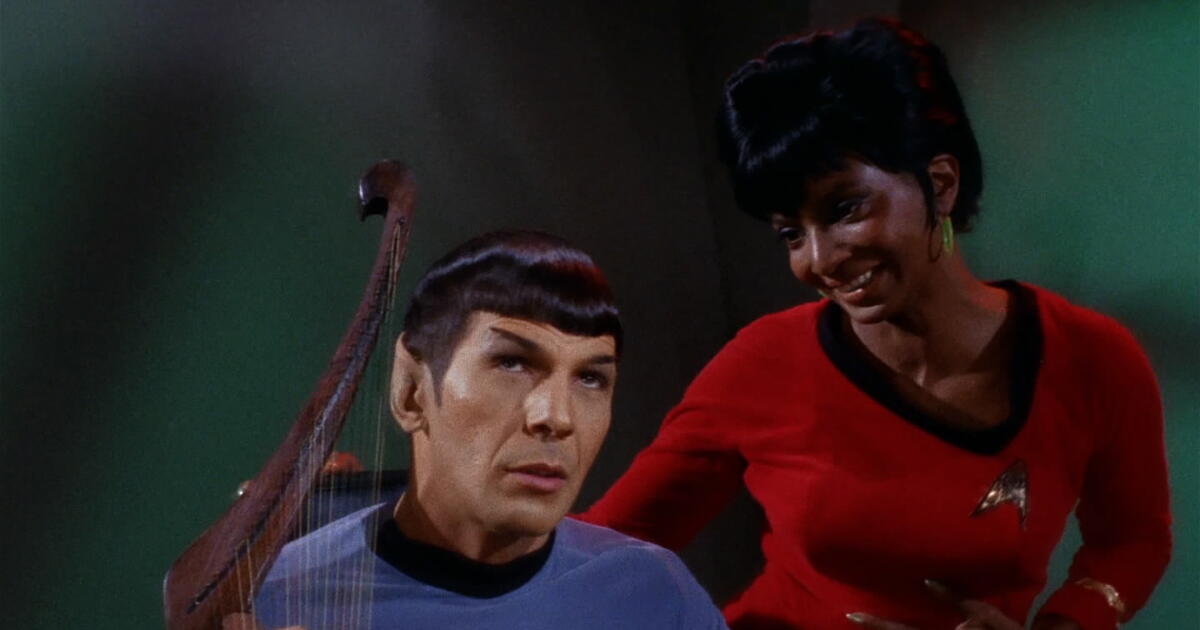
A few years ago, I received a call I’ll never forget. Jeanette Epps, an astronaut aboard the International Space Station, Zoomed into my living room from 250 miles above Earth. During our conversation, she told me that one of the reasons she chose her career was a television show my father created in 1966.

She wasn’t alone. I’ve heard versions of that same story from countless people over the years. Engineers. Scientists. Astronauts. People who saw possibility on a television screen before they ever saw it in the real world.

They credit “Star Trek” for showing them a future they wanted to help build. That’s an extraordinary thing for a television series to accomplish. It didn’t just entertain millions of people. It gave many of them a direction.

And I don’t think that was because of the ships, the gadgets or the aliens. It was because, underneath all of it, was a profoundly human belief that we are capable of becoming something better.

There was a time when science fiction made a bet on humanity. A bet that humanity was worth rooting for. We need storytellers willing to make that bet again.

I don’t think we have an innovation problem. We have an inspiration problem.

We talk a lot about what we’re leaving the next generation. The debt. The climate. The geopolitical mess. But there’s another inheritance we don’t talk about enough: what we show them is possible.

Today, many visions of the future are dominated by collapse, dystopia and fear. Those stories can have value. But conflict doesn’t always have to come from destruction. It can come from discovery. Two minds encountering an idea neither had considered. A crew facing the unknown with curiosity instead of fear. That kind of conflict doesn’t leave you feeling like the world is ending. It leaves you feeling like it’s just beginning.

Most storytelling holds a mirror up to who we are. Our flaws, our failures, our contradictions. But there is another kind. Stories built around characters a step or two ahead of where humanity is. Not perfect. But people who have learned how to cooperate, how to lead, how to stay curious and how to put something larger than themselves first. Characters you don’t just recognize. Characters you want to become one day.

That distinction changes what a story asks of you. And what you walk away believing is possible.

This year, “Star Trek” celebrates its 60th anniversary.

That’s not a milestone you reach by accident. Franchises built on spectacle fade. Ones built on something people actually needed tend to stick around.

The engineers who built Silicon Valley, the astronauts who went to space, the scientists pushing the edges of medicine and artificial intelligence — many of them trace a line back to this show. That wasn’t the plan. Nobody set out to build an innovation pipeline out of a television series. But that’s exactly what happened. When you give people a future worth believing in, they go build it — or sometimes they get inspired to imagine other hopeful destinations and lead us toward them. That’s not nostalgia. That’s a model.

One thing my dad understood that I think gets overlooked: “Star Trek” wasn’t going out into the galaxy to find aliens that looked different. It was going out to find aliens that thought different.

Diversity of perspective is how a species grows. My father gave that idea a name: IDIC. Infinite Diversity from Infinite Combinations. It didn’t mean you had to abandon your own point of view. It meant staying open to someone else’s. Because that’s how you grow. That idea has never been more relevant. And it has never been more achievable.

For the first time in history, a creator anywhere in the world can tell a story that reaches everyone, and now it can come from anywhere. The future belongs to everyone. The stories that shape it should too.

That astronaut who called me from space didn’t just watch a television show. She saw a future worth dedicating her life to.

Every generation needed something to build toward before they ever picked up a tool. A vision. A direction. A story that made the future feel worth the work. And right now, we’re not building enough of that.

We need stories that don’t just entertain us, but also become our compass. We need the kind of storytelling that doesn’t ask what could go wrong, but asks what could go right.

Rod Roddenberry, founder of the Roddenberry Foundation and son of “Star Trek” creator Gene Roddenberry and actor Majel Barrett Roddenberry, is an executive producer on current “Star Trek” television shows.

Insights

L.A. Times Insights delivers AI-generated analysis on Voices content to offer all points of view. Insights does not appear on any news articles.

Perspectives

The following AI-generated content is powered by Perplexity. The Los Angeles Times editorial staff does not create or edit the content.

Ideas expressed in the piece

  • The article argues that optimistic science fiction can do more than entertain: it can give audiences a constructive vision of the future and inspire people to pursue careers in science, engineering and space exploration. “Star Trek” is presented as an example of storytelling that made human progress feel attainable.

  • It contends that contemporary culture is overly saturated with collapse, dystopia and fear. Although such stories can be useful, the article suggests that narratives centered on discovery, cooperation and curiosity can encourage audiences to imagine what might go right rather than merely anticipate disaster.

  • The piece maintains that aspirational characters—people who have learned to cooperate, remain curious and serve purposes larger than themselves—can function as moral examples. In this view, fiction should not only reflect present flaws but also depict people and societies worth becoming.

  • It further argues that “Star Trek’s” emphasis on cultural and intellectual diversity remains especially relevant. The franchise’s principle of “Infinite Diversity in Infinite Combinations” is presented as a model for learning through different perspectives, while the series’ enduring influence is cited as evidence that hopeful stories can shape real-world ambitions.[1][2]

Different views on the topic

  • A contrasting perspective holds that dystopian and cautionary science fiction serves an essential purpose by exposing the consequences of reckless behavior, political failure and technological overreach. Recent commentary argues that many influential works were intended as warnings or satire, not as blueprints for an attractive future.[3]

  • Feminist dystopian fiction offers another counterpoint: bleak speculative narratives can make systemic problems—including misogyny, violence against women, gender inequality and threats to reproductive rights—more visible. From this perspective, darkness is not simply pessimism; it can be a way to represent harms that already exist and demand attention.[4]

  • Critics also caution that “Star Trek’s” hopeful vision can obscure tensions within its own world. The franchise combines ideals of cooperation and equality with armed exploration, alien conflict and interventionist politics, making it both an image of peaceful progress and a vehicle for examining militarism and political failure.[2]

  • Consequently, the strongest science fiction may not choose between hope and warning. Utopian stories can provide direction, while dystopian stories can identify dangers and test whether an envisioned future genuinely addresses exclusion, power and conflict. Treating either mode as sufficient on its own risks producing either inspiration without scrutiny or criticism without a constructive destination.[3][4]

Source link