




kills

Israel kills Iran’s spy chief; government seen as ‘largely degraded’

The Iranian government remains “intact but largely degraded,” National Intelligence Director Tulsi Gabbard told Congress on Wednesday, as Israel continued to hunt down the Islamic Republic’s leadership with an overnight airstrike that killed the nation’s spy chief.

The death of Intelligence Minister Esmail Khatib, announced Wednesday by Israel, was the third high-level assassination in roughly 24 hours in a series of strikes that have hollowed out Tehran’s leadership ranks.

Israel ordered strikes Tuesday that killed Iranian security chief Ali Larijani and Basij paramilitary commander Gholamreza Soleimani.

Additional senior Iranian figures could be targeted, Israeli Defense Minister Israel Katz said Wednesday. “Israel’s policy is clear and unequivocal: No one in Iran has immunity — everyone is a target,” Katz said.

Ayatollah Mojtaba Khamenei, Iran’s new supreme leader, issued a rare statement Wednesday addressing Larijani’s assassination.

“Undoubtedly, the assassination of such a person shows the extent of his importance and the hatred of the enemies of Islam towards him,” he wrote, according to the Associated Press. “All blood has its price that the criminal murderers of the martyrs must pay soon.”

Tehran responded with renewed missile and drone attacks on Israel and U.S.-aligned countries across the Persian Gulf, further disrupting strained energy infrastructure and shipping lanes. Fighting has halted oil and gas production throughout the region, as shipping was stalled through the Strait of Hormuz, a key artery for global oil supplies.

The war has triggered a severe global oil shortage that has destabilized electronics, agriculture, pharmaceutical and energy supply chains.

Exacerbating those disruptions, the U.S. and Israel carried out a coordinated attack on the South Pars natural gas field on Wednesday. The strikes drew swift condemnation from Qatar, a U.S. ally that shares the reservoir with Iran. The Qatari Foreign Ministry called the attack “dangerous and irresponsible” and “a threat to global energy security.”

The attack is a major blow to Iran’s supply of electricity too, as most of the country’s energy grid relies on gas, analysts said. The field accounts for about 75% of Iran’s natural gas production.

Tehran promised to respond with more attacks on its Mideast neighbors, the Associated Press reported.

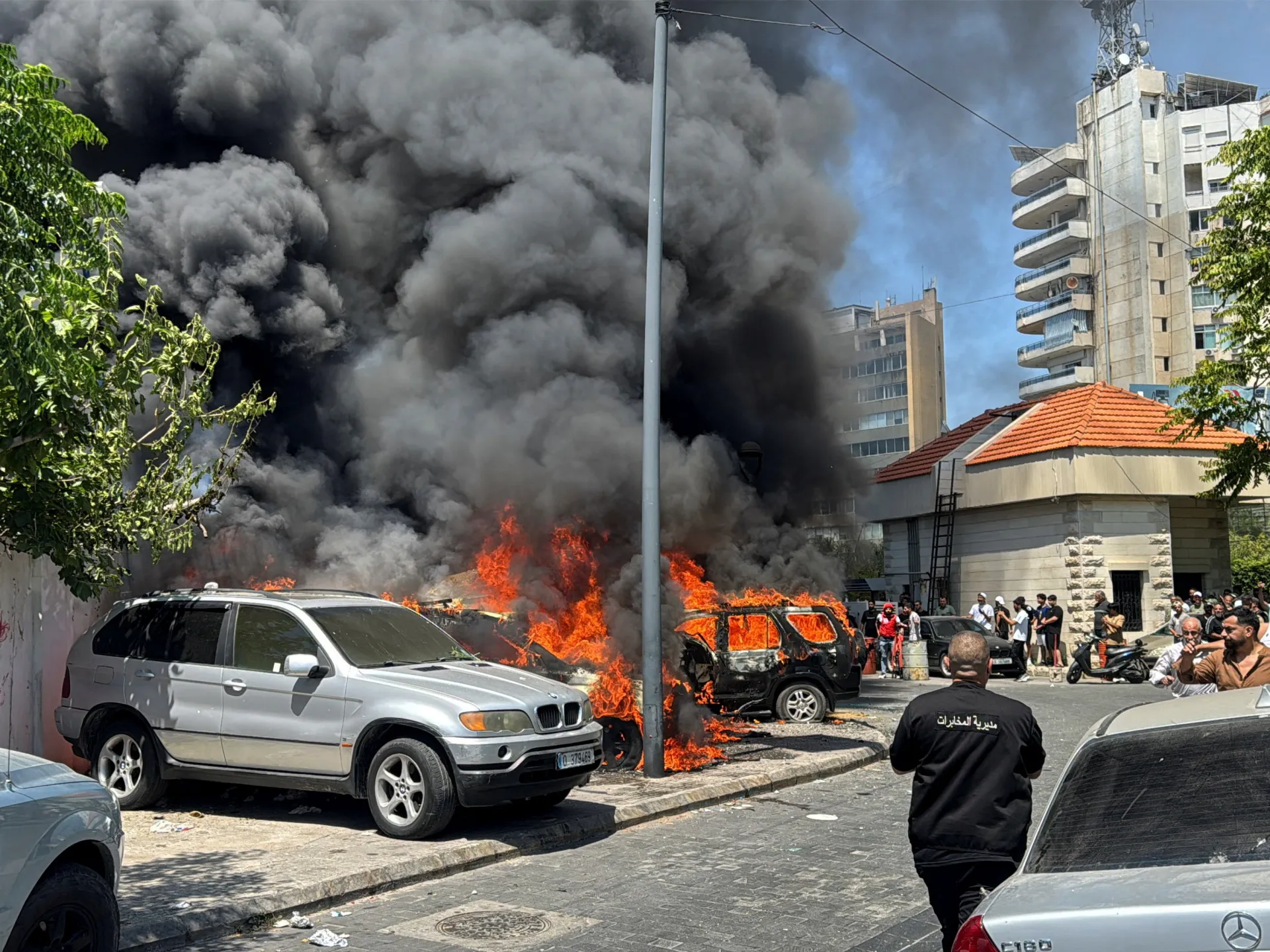
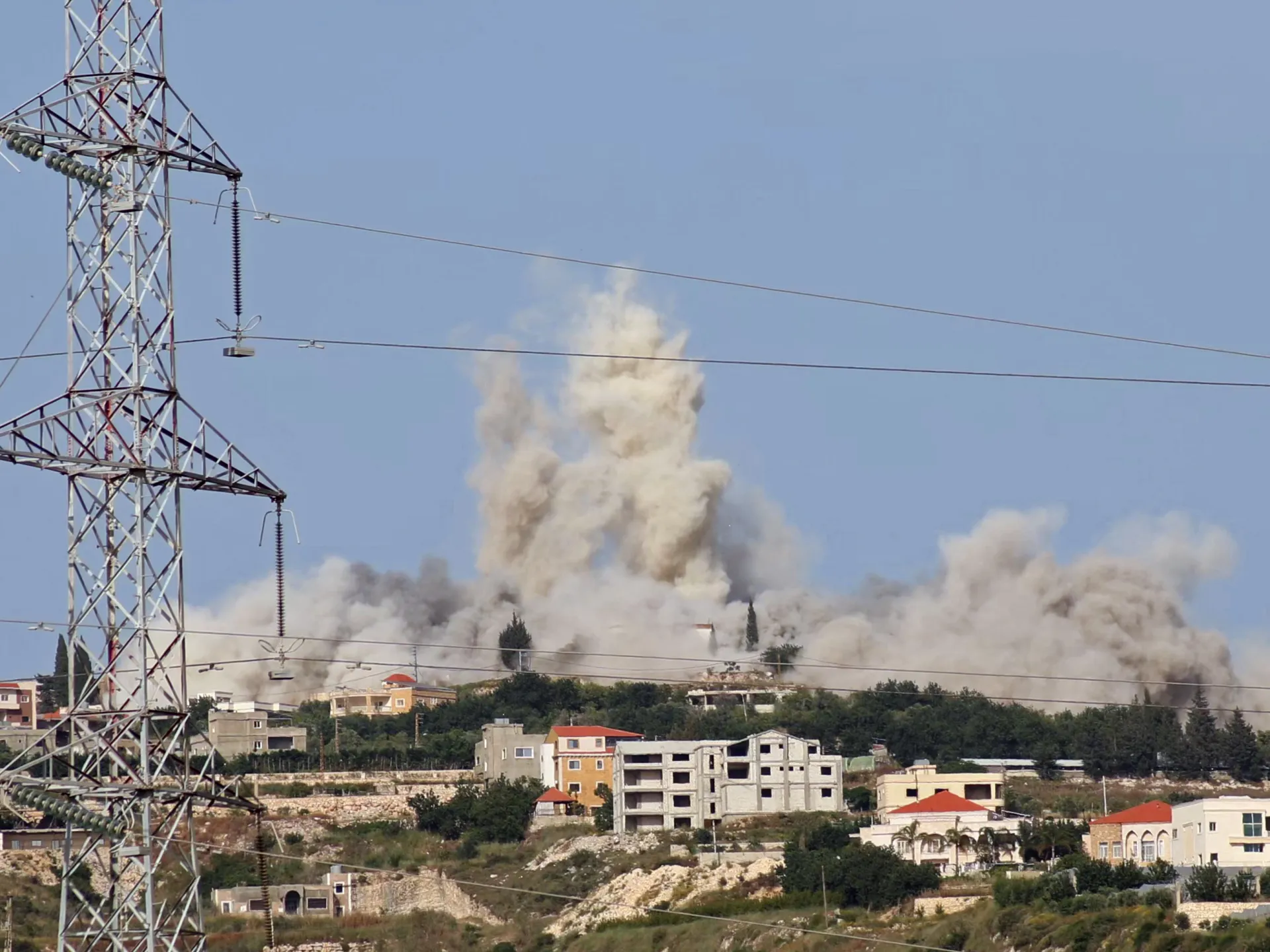
Meanwhile, near-constant Israeli strikes in Beirut and southern Lebanon have displaced over 1 million people, and killed 968 civilians, according to the Lebanese Health Ministry.

With the war in its third week, deaths now number in the thousands across Iran, Israel and neighboring countries.

International reaction has sharpened as the fighting showed no sign of relenting. Russia condemned the “murder and liquidation” of sovereign leadership and called for an immediate ceasefire, while European leaders voiced growing alarm about the war’s trajectory and the risks of broader destabilization.

Director of National Intelligence Tulsi Gabbard testifies Wednesday before the Senate Committee on Intelligence.

Director of National Intelligence Tulsi Gabbard testifies Wednesday before the Senate Committee on Intelligence.

(Jose Luis Magana / Associated Press)

All allies in the North Atlantic Treaty Organization have refused to heed President Trump’s call to send warships to the Strait of Hormuz, signaling a deepening rift in the world’s most powerful military alliance. Trump has sought to sever the U.S. from the alliance.

“We no longer ‘need,’ or desire, the NATO Countries’ assistance — WE NEVER DID! “ he wrote on social media Tuesday.

Trump on Wednesday signaled little appetite for de-escalation, floating the prospect of a decisive military endgame.

“I wonder what would happen if we ‘finished off’ what’s left of the Iranian Terror State,” he wrote on his social media website.

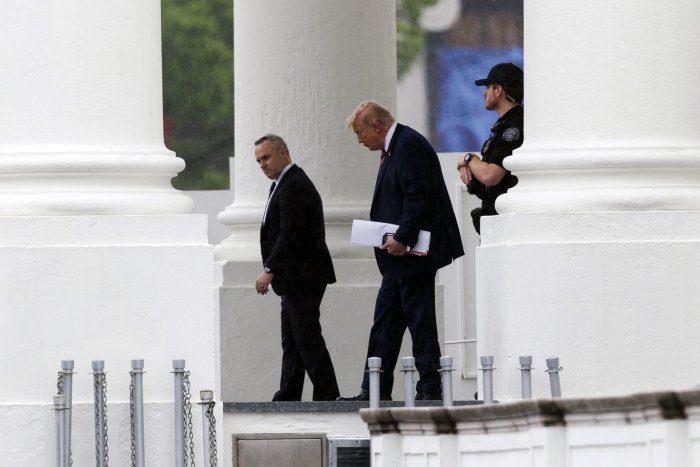
The president visited Dover Air Force Base in Delaware on Wednesday, where the remains of six U.S. service members killed in the crash of a refueling aircraft were returned to their families. The visit marks the second time since the Feb. 28 launch of the war with Iran that Trump has attended the solemn military ritual known as a dignified transfer, the Associated Press reported.

At a Senate Intelligence Committee hearing on “worldwide threats” Wednesday, Democrats grilled Gabbard and other intelligence leaders over their preparation for Iranian retaliation against Mideast energy infrastructure, civilian areas and American military sites and personnel.

Trump has maintained that the U.S. was caught off guard by Iran’s retaliatory strikes.

“Nobody expected that. We were shocked,” he said at a Kennedy Center board meeting Monday. Later in the day, when asked at an Oval Office news briefing whether he had been warned about the possibility of Iranian retaliation, Trump reiterated his surprise.

“Nobody, nobody, no, no, no. The greatest experts — nobody thought they were going to hit,” he said.

Last year, intelligence agencies testified to Congress that Iran was capable of inflicting substantial damage on an attacker, executing regional strikes and disrupting shipping, “particularly energy supplies, through the Strait of Hormuz,” Sen. Ron Wyden (D-Ore.) said at the hearing, reading from last year’s worldwide threats report.

“In other words, every problem we’re seeing now was not only foreseeable, but was actually predicted by the intelligence agencies,” Wyden told Gabbard. “It’s hard to see how you can sit here and say that the intelligence agencies couldn’t provide a clear warning that if attacked, the Iranians would respond by attacking our people.”

Gabbard refused to confirm whether intelligence agencies briefed the president on the subject, saying she “won’t divulge internal conversations.”

She also testified that U.S. strikes on Iran had “obliterated” the country’s nuclear enrichment program, including underground facilities, and said officials are now watching to see whether Tehran attempts to rebuild. So far, she said, Iran has not restarted the program.

But Sen. Jon Ossoff (D-Ga.) challenged that assessment, noting that Trump had used the same word — “obliterated” — to describe strikes just months before. He pressed Gabbard on how serious the nuclear threat was leading up to the February operation, given that timeline.

The intelligence community assessed that Iran “maintained the intention to rebuild and to continue to grow their nuclear enrichment,” Gabbard said adding that the “only person” who can determine what constitutes an imminent threat is the president.

“False,” Ossoff shot back. “It is precisely your responsibility to determine what constitutes a threat to the United States.”

Source link

US-Israeli strike kills 15 at Isfahan factory, Iranian media says | US-Israel war on Iran News

Iranian media report the deaths in central Iran as Tehran launches new missile salvoes at Israeli targets.

A missile strike on an industrial area of the central Iranian city of Isfahan has killed at least 15 people, with workers having been inside a factory at the time of the attack, Iranian media reports.

The strike hit a factory producing heating and cooling equipment on Saturday, a working day in Iran, according to the semi-official Fars news agency, which attributed the attack to US and Israeli forces.

Recommended Stories

list of 3 itemsend of list

It came on the 15th day of a conflict that Iran’s Ministry of Health says has now killed at least 1,444 people and wounded more than 18,500 since the US-Israeli attacks began on February 28.

Cities across Iran have been repeatedly targeted following the onset of hostilities.

On March 8, shelling damaged Russia’s consulate in Isfahan, injuring staff, with Moscow calling the strike a “blatant violation” of international conventions.


Iran’s Ministry of Culture said on Saturday that 56 museums and historic sites had been damaged, including Naqsh-e Jahan Square, a 17th-century centrepiece of Isfahan, and the UNESCO-listed Golestan Palace in Tehran.

UNESCO said it was “deeply concerned,” noting that four of Iran’s 29 World Heritage Sites had been affected.

Separately on Saturday, Iran’s army confirmed that Brigadier General Abdullah Jalali-Nasab had been killed in an Israeli attack, saying he was “martyred while defending the country”.

Earlier, US forces also struck Kharg Island, which handles roughly 90 percent of Iran’s crude exports, though a regional official said operations were continuing normally, and there were no casualties.

US President Donald Trump had previously threatened to target the island’s oil infrastructure if Tehran continued to disrupt the Strait of Hormuz.

Any prospect of negotiations appears remote. The Trump administration has rebuffed regional efforts to broker a ceasefire, with a senior White House official telling the Reuters news agency the president is focused on pressing ahead.

“He’s not interested in that right now, and we’re going to continue with the mission unabated,” the official said.

Iran has equally ruled out talks while the attacks continue, Reuters reported, citing an anonymous Iranian official.

Iranian Minister of Foreign Affairs Abbas Araghchi struck a defiant tone on Saturday, saying the US security framework in the region had “proven to be full of holes” and calling on neighbours to “expel foreign aggressors”.

Israeli Minister of Defence Israel Katz said the war was entering a “decisive phase”, which would “continue as long as necessary”.

Iran launched new missile salvoes at Israel on Saturday, with explosions heard over Jerusalem, according to reporters from the AFP news agency.

Six waves of missiles, some carrying cluster bomb warheads, struck wide areas of the country, the Israeli army said. In Eilat, a cluster munition impact injured three people, including a 12-year-old boy, according to The Times of Israel.

Source link

Israel kills 12 medics in attack in southern Lebanon as war ravages nation | US-Israel war on Iran News

Israel’s attack, echoing similar carnage it wrought in Gaza, kills doctors, paramedics and nurses who were on duty.

An Israeli strike on a health centre in southern Lebanon has killed 12 medical workers, the Lebanese Ministry of Public Health said, as its devastating assault continued amid a wider regional war launched by the United States and Israel on Iran 15 days ago.

The attack late on Friday occurred in the village of Burj Qalaouiyah in the Bint Jbeil District, and killed doctors, paramedics and nurses who were on duty, Lebanon’s health ministry said.

Recommended Stories

list of 4 itemsend of list

The carnage echoed Israel’s constant targeting of medics and hospitals that decimated Gaza’s healthcare system during its genocidal war on the Palestinian enclave and which contravenes international humanitarian law.

Israeli strikes have so far killed 18 paramedics among 773 people reported killed in Lebanon since fighting between Hezbollah and Israel reignited March 2, after a US-Israeli assault on Iran began on February 28, with the conflict now embroiling much of the region.

According to Al Jazeera’s Heidi Pett, reporting from Beirut, the toll of medics was preliminary as rescue teams continued searching for missing people.

“You can see how deadly some of these individual air strikes have been, not just across the south, but of course, we are seeing air strikes hitting across the capital, Beirut,” said Pett.

Lebanon’s Ministry of Health said it was the second attack on the health sector within hours, after another Israeli strike on the southern village of Souaneh killed two paramedics and wounded five others when it hit a paramedic centre.

The ministry condemned the attack and denounced what it called as continued violence against health workers.

At least four people were also killed in an Israeli air raid on Taamir Haret Saida in the country’s south, the Lebanese News Agency (NNA) said.

Meanwhile, Hezbollah overnight claimed it fired suicide drones against Israeli troops in the northern town of Ya’ara inside Israel.

It was the 24th military operation announced by the group on Friday.

The Lebanese armed group also said it launched rocket attacks targeting Israeli soldiers in southern Lebanon, one in the town of Kfar Kila, and the other in the city of Khiam.

Late on Friday, Hezbollah leader Naim Qassem said his group is ready for a “long confrontation” with Israel as the war continues.

“This is an existential battle, not a limited or simple battle,” he said.

Damage in Israel from Iranian ‘cluster missiles’

Meanwhile, Iran’s retaliatory attacks against Israel continued.

Rocket and missile strikes early on Saturday targeted the Upper Galilee region of northern Israel, Channel 12 reported.

The news outlet said that a “limited number of launches” were either “intercepted” or exploded in open areas.

A post on X from Israel’s public broadcaster KAN featured several vehicles damaged in the strikes.

Alarms were raised for suspected rocket and missile fire in Manara, Margaliot, Kfar Giladi, Misgav Am, Tel Hai, Metula, Kfar Giladi and Kfar Yuval throughout the early morning on Saturday.

“A lot of the damage that we are being told about at the moment seems to be coming from these cluster missiles that Iran has been launching pretty much consistently for the last week at least and they scatter over a large area,” said Al Jazeera’s Rory Challands, reporting from Amman, Jordan.

“They disperse these submunitions bomblets. Each of those has about 2.5 kilogrammes (5.5 pounds) of explosives in them. You can see why that does quite some damage when it scatters and hasn’t been intercepted by the Israeli air defence.”

Source link