kills

Explosion in southwest Colombia kills at leat seven, state governor says | Crime News

Authorities in Cauca region demand ‘decisive’ government action after deadly explosion on Pan-American Highway.

At least seven people were killed, and 20 were wounded following a suspected explosive attack in the southwestern province of Cauca, Colombia, according to regional authorities.

Governor Octavio Guzman said that an explosive was detonated on the Pan-American Highway in the El Tunel sector of Cajibio on Saturday. He condemned what he called an “indiscriminate attack” against the civilian population.

Recommended Stories

list of 3 itemsend of list

“There are not sufficient words for the pain we feel,” Guzman said in a social media post, demanding a “decisive, sustained” response from the government against the “terrorist escalation”.

A video shared by the governor appeared to show the aftermath of the bombing, with ambulances on site and mangled vehicles and debris covering the road.

“Cauca cannot continue facing this barbarity alone,” he added, stating that other actions had also been carried out in El Tambo, Caloto, Popayan, Guachene, Mercaderes, and Miranda.

The deadly incident comes after a series of attacks on Friday, attributed to criminal groups formed by dissident members of the FARC rebel group, who split with the group following a landmark peace agreement with the government in 2016.

On Saturday, Minister of Defence Pedro Sanchez was convening a security council in Cali to assess the regional security situation when the latest attack occurred.

President Gustavo Petro responded to the deadly explosion by saying that powerful criminal groups are seeking to control the population through fear.

While details of the attack are still emerging, Petro appeared to blame a drug trafficker and FARC dissident leader known by the alias Ivan Mordisco.

“I want the maximum worldwide pursuit against this narco-terrorist group,” Petro said.

Source link

Israel kills at least 12 Palestinians in Gaza amid ‘ceasefire’ | Israel-Palestine conflict News

Hamas says the Israeli escalation represents the failure of the international community to uphold the truce in Gaza.

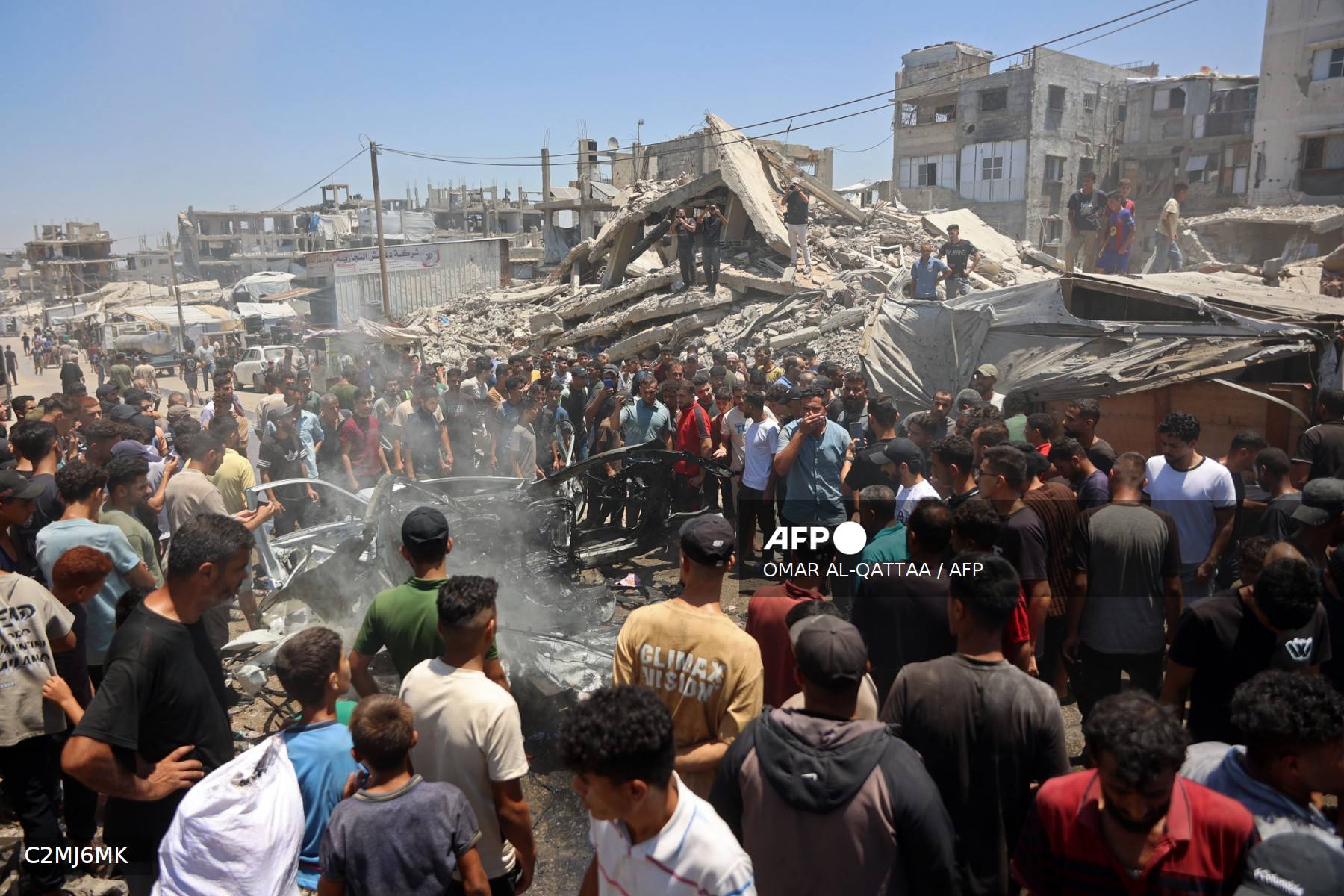
Israeli forces have killed 12 Palestinians in attacks throughout Gaza, medical sources in the enclave tell Al Jazeera, as Israel continues its daily violations of the ceasefire struck last year.

An Israeli attack on a police vehicle on Friday killed at least eight people, including three civilian bystanders, in Khan Younis. A separate attack in Gaza City also killed two police officers.

Recommended Stories

list of 3 itemsend of list

Two other people were killed in the bombing of a house in Beit Lahiya in northern Gaza.

Gaza’s Ministry of Interior called on the international community on Friday to intervene and end the Israeli targeting of local police forces working to restore security in civilian areas.

It said the attack in Khan Younis came after security forces intervened to break up a fight in the area.

“The continued silence of international organisations … regarding the targeting of civilian police officers constitutes complicity with the Israeli occupation, encouraging it to commit further crimes against a civilian institution protected under international law,” the ministry said.

“We emphasise that the police force provides services to citizens in the Gaza Strip across various aspects of daily life. There is absolutely no justification for targeting it or killing its personnel.”

Israel has been systemically killing police officers in Gaza, as it allies itself with criminal gangs in the occupied territory.

During its genocidal war on Gaza, which started in October 2023, the Israeli military regularly targeted officers securing aid convoys, which led to intensified looting. That, in turn, deepened the hunger crisis that Israel imposed on the territory.

A ceasefire, brokered by United States President Donald Trump, came into effect in October of last year. That decreased the intensity of the Israeli bombardment.

But Israel has nevertheless continued its attacks on the territory, killing at least 984 people and injuring 2,235 others since the truce was announced, according to health authorities.

Just this week, Israeli strikes killed five people, including three children, on Wednesday.

The overall death toll in the war has surpassed 72,500, with more than 172,000 others injured. Thousands of missing people are believed to be dead and buried under the destroyed buildings.

The number of confirmed casualties represents more than 7 percent of the enclave’s population of two million people. The Israeli assault also turned most of Gaza’s structures into piles of rubble.

Leading rights groups and United Nations investigators have concluded that the Israeli military campaign amounts to genocide: an effort to destroy the Palestinian people.

Under the far-right government of Prime Minister Benjamin Netanyahu, Israel has continued to bomb Gaza as it simultaneously attacks south Lebanon, in violation of a separate truce with Hezbollah.

Hamas on Friday called the deadly attacks in Gaza part of the Israeli government’s “unprecedented bloody, fascist approach”.

“This escalation … by the government of the war criminal Netanyahu represents a clear failure of the role of the mediators and guarantors [of the ceasefire] and the international community to quell the barbaric Zionist killing machine,” it said.

More than six months into the ceasefire, Trump has struggled to implement the 12-point plan on which the truce was based.

Israel continues to occupy most of Gaza. Reconstruction in the territory has not begun. An international security force envisioned by the agreement has not been formed.

In February, Trump convened his so-called Board of Peace that is supposed to govern Gaza through a council of Palestinian technocrats, but it is not clear when or how these forces will take over government agencies in the territory.

Source link

Israel kills journalist and wounds another in south Lebanon targeted attack | Newsfeed

NewsFeed

Israel has killed journalist Amal Khalil and injured her colleague Zeinab Faraj in a ‘double-tap’ attack in southern Lebanon. Repeated strikes on the reporters and paramedics delayed rescue efforts for hours, according to Lebanon’s Al Akhbar News.

Source link

U.S. kills three in latest military strike on a suspected drug boat

April 20 (UPI) — The U.S. military announced late Sunday that it has killed three men in its latest strike targeting a suspected drug-smuggling boat in the Caribbean.

Seventeen people have been killed in six strikes the U.S. Southern Command has carried out in little over a week, marking one of the deadliest publicly announced stretches of the Trump administration’s monthslong anti-drug smuggling operation.

As in previous strike announcements, SOUTHCOM released little information.

The attack occurred Sunday, targeting a boat operated by a designated terrorist organization in the Caribbean, SOUTHCOM said in a statement, without naming the organization or providing evidence.

“Intelligence confirmed the vessel was transiting along known narco-trafficking routes in the Caribbean and was engaged in narco-trafficking operations,” it said.

A 12-second, black-and-white clip of the strike posted to SOUTHCOM’s social media shows a boat moving across the ocean before disappearing in a large fiery explosion.

Since the first strike on Sept. 2, the U.S. military has killed at least 180 people, according to UPI’s tally of publicly released data. Fifty-five boats have been destroyed in the more than 50 strikes.

President Donald Trump argues that the use of deadly military force is warranted as the United States is in “armed conflict” with the 10 drug cartels and gangs he has designated as terrorist organizations since returning to the White House in January 2025.

The operation comes as the Trump administration seeks to expand its influence in the Western Hemisphere, including by using its military to dismantle what Trump has called “narco-terrorist networks.”

The strikes have been repeatedly condemned and their legality questioned by Democrats, rights groups, critics and United Nations experts, who accuse the Trump administration of violating international and maritime law over the use of the military to conduct law enforcement drug operations.

Last month, Ben Saul, the United Nations’ special rapporteur on counter-terrorism and human rights, lambasted the Trump administration over “its phony war on so-called narco-terrorism.”

“These serial extrajudicial killings gravely violate the right to life, which applies extraterritorially,” he said on March 13.

“The attacks were not in national self-defense, since the vessels were not engaged in any armed attack on the U.S. Drug trafficking is crime, not war.”

On Wednesday, the same day the U.S. military killed three people in a strike in the eastern Pacific, a group of Democrats, led by Rep. John Larson of Connecticut, filed six articles of impeachment against Defense Secretary Pete Hegseth, with one of the articles accusing him of violating the law of armed conflict over the strikes.

Larson accused Hegseth of abusing his position by ordering “our armed forces to strike boats in the Caribbean,” he said in a statement.


Source link

On This Day, April 17: Explosion at Texas fertilizer plant kills 15

1 of 4 | Remains of a fertilizer plant and other buildings smolder after the plant exploded in West, Texas on April 17, 2013. File Photo by Larry W. Smith/EPA

April 17 (UPI) — On this date in history:

In 1421, the sea broke the dikes at Dort, Holland, drowning an estimated 100,000 people.

In 1521, the Roman Catholic Church excommunicated Martin Luther after he refused to admit to charges of heresy.

In 1790, U.S. statesman, printer, scientist and writer Benjamin Franklin died in Philadelphia at age 84.

File Photo by Kevin Dietsch/UPI

In 1912, the sister ship of the doomed RMS Titanic, the Olympic, radioed in that survivors of the ocean liner sinking were rescued and safely on board the RMS Carpathia.

In 1961, a force of anti-Castro rebels began the Bay of Pigs Invasion in an attempt to overthrow Cuba’s new communist government.

In 1964, Jerrie Mock of Columbus, Ohio, became the first woman to complete a solo flight around the world.

In 1969, a jury found Sirhan B. Sirhan guilty of first-degree murder for the assassination of Sen. Robert F. Kennedy.

File Photo by Ron Bennett/UPI

In 1970, with the world anxiously watching on television, Apollo 13, a U.S. lunar spacecraft that sustained a severe malfunction on its journey to the moon, safely returned to Earth.

In 1989, the Polish labor union Solidarity was granted legal status after nearly a decade of struggle and suppression — clearing the way for the downfall of the country’s Communist Party.

In 1993, a federal jury convicted two Los Angeles police officers and acquitted two others of violating the civil rights of Rodney King during his 1991 arrest and beating.

In 2004, the Israeli army confirmed it had killed Abdel Aziz Rantisi, Hamas co-founder and its leader in Gaza, in a missile strike. Two others also died with Rantisi, who had opposed any compromise with Israel.

In 2012, U.S. investor Warren Buffett, one of the world’s wealthiest people, said he had been diagnosed with prostate cancer.

File Photo by Molly Riley/UPI

In 2013, an explosion at a West, Texas, fertilizer plant killed 15 people, injured dozens and caused massive property damage in the community.

In 2018, former first lady Barbara Bush died at the age of 92 after refusing medical treatment for her failing health. Her husband, former President George H.W. Bush, died less than one year later.

In 2024, Russian missile strikes targeting the northern Ukrainian city of Chernihiv killed more than a dozen people and injured scores more.

File Photo by State Emergency Service/EPA-EFE

Source link

Russian attack on Ukraine’s Kyiv kills 12-year-old child, wounds 10 | Russia-Ukraine war News

BREAKING,

Kyiv’s mayor says the attacks hit Podilskyi and Obolonsky districts, causing large fires and damage to residential buildings.

Russian forces have bombed the Ukrainian capital, Kyiv, killing a 12-year-old child and wounding at least 10 people, including several doctors, according to the city’s mayor.

The child was killed early on Thursday in Kyiv’s Podilskyi district, where rocket fragments hit a 16-storey building and caused a fire at a residential building, Mayor Vitaliy Klitschko wrote in a post on Telegram.

Recommended Stories

list of 4 itemsend of list

He said rescuers have pulled another child and her mother were pulled from the rubble in Podilskyi.

The attack also hit Kyiv’s Obolonsky district, with falling rocket debris causing a large fire at a non-residential building. “Cars are also on fire,” Klitschko wrote.

More soon…

Source link

US military kills two men in new strike on vessel in eastern Pacific | Crimes Against Humanity News

Latest attack brings death toll from US strikes on vessels in the Pacific and Caribbean to at least 170 since September.

The ⁠United States military has ⁠carried out another attack on a vessel in the eastern Pacific, killing two people, in the latest deadly strike by US forces on boats that Washington alleges have links to Latin American drug trafficking cartels.

US Southern Command (SOUTHCOM), which is responsible for Washington’s military operations in Latin America and the Caribbean, confirmed the attack in a post on social media late on Monday, claiming to have killed two “male narco-terrorists”, without providing any evidence.

Recommended Stories

list of 4 itemsend of list

SOUTHCOM claimed that, based on intelligence reports, the boat was “⁠transiting along known narco-trafficking routes ⁠in the ⁠Eastern Pacific” and was targeted with “a lethal kinetic strike” on the orders of US Commander General Francis L Donovan.

A grainy video clip released with the statement shows a stationary boat with outboard engines and what appear to be floats from fishing nets nearby. The boat comes under attack from the air and explodes into flames.

The attack marked the second day in a row that SOUTHCOM announced a deadly strike on boats in the Pacific. On Sunday, the US military said it blew up two boats in the eastern Pacific a day earlier, killing five people and leaving one survivor. It was not immediately clear what happened to the person who survived the attack, though SOUTHCOM said the US coastguard was notified.

With the attack on Monday, the US military has now killed at least 170 people in dozens of strikes on vessels in the eastern Pacific and Caribbean Ocean since September.

International law experts, human rights groups and regional governments have accused the administration of US President Donald Trump of carrying out extrajudicial killings in international waters, which have likely targeted civilians, often fishing crews, who do not pose an immediate threat to the US.

The Trump administration claims that such attacks are part of its war on drug trafficking cartels in Latin America, but has provided no solid evidence that any of the vessels targeted since last year have been involved in drug trafficking.

Source link

Bahrain First To Claim F-16 Block 70 Air-To-Air Kills

Bahrain has scored the first air-to-air kills by the latest Block 70 variant of the iconic F-16 Viper, taking down two Iranian drones during the conflict in the Middle East earlier this month. The incident comes as air forces around the world grapple with the emerging aerial drone threat and as interest in the advanced version of the Viper remains undiminished.

In a social media post, below a photo of a Royal Bahrani Air Force (RBAF) F-16D Block 70, Lockheed Martin stated: “Proven in combat. Two hostile unmanned aerial vehicles eliminated.”

In another post on X, Lockheed Martin linked to an article from Aviation Week, which provides more details of the landmark air-to-air kill.

On April 1, the RBAF F-16 brought down a pair of Iranian drones after these had evaded intercept attempts by ground-based air defenses in the pre-dawn hours. The fact that the jet was scrambled to respond to drones that had leaked through ground-based air defenses points to the flexibility and rapid response time offered by crewed fighters in this kind of scenario.

The pilot fired single examples of the AIM-120 Advanced Medium-Range Air-to-Air Missiles (AMRAAM) and AIM-9X Sidewinder to take down the drones. For counter-drone work, the pilot can also call upon an internal 30mm M61 Vulcan rotary cannon, although safely engaging slow-flying drones with the gun is notoriously challenging.

It should be noted that using missile-armed fighters to shoot down low-cost drones has raised repeated concerns about the mismatch in cost between the target and the interceptor. For example, the latest variants of the AMRAAM cost around $1 million each, while current-generation AIM-9X Sidewinders each have a price tag of around $450,000. Air-to-air optimized laser-Guided rockets that are already equipping USAF F-16s will help bring down this cost dramatically, although the capability is still young and few F-16 operators have been equipped with it yet.

The first Royal Bahraini Air Force F-16 Block 70 lands at Edwards Air Force Base, California, March 28. The 412th Test Wing’s 416th Flight Test Squadron will conduct flight tests on the aircraft before delivery to the Bahrain Defence Force. (Photo courtesy of 412th Test Wing Public Affairs, US Air Force)
The first Royal Bahraini Air Force F-16 Block 70 at Edwards Air Force Base, California, before delivery. Photo courtesy of 412th Test Wing Public Affairs, U.S. Air Force Chase Kohler

Regardless, the Block 70 version of the F-16 is especially well-equipped to tackle drones.

Its Northrop Grumman AN/APG-83 radar, also known as the Scalable Agile Beam Radar (SABR), uses an active electronically scanned array (AESA), which makes it especially suitable for working against drones and cruise missiles. These typically fly at low levels, which, combined with their small size, radar cross-section, and infrared signature, makes them inherently difficult for traditional mechanically scanned fighter radars to spot.

The jets also carry an AN/AAQ-33 Sniper Advanced Targeting Pod, which can also be used to detect and identify aerial threats.

Bahrain was on the receiving end of constant barrages of Iranian missiles and drones after the conflict began on February 28.

According to the Bahrain Defense Force, its units intercepted 194 missiles and 515 drones headed toward the small island kingdom between the start of the conflict and the temporary ceasefire that was announced earlier this week.

Fittingly, for the first operator to claim an aerial kill with the F-16 Block 70, Bahrain was also the launch customer for this version of the jet. It placed an order for 16 examples in 2019, and the first of these arrived at Isa Air Base in Bahrain in 2024.

On the move! ✈️ The very first F-16 Block 70 ferry is now en route to Bahrain! This jet represents a significant leap in 4.5 generation fighter technology, revolutionizing operational capabilities and redefining 21st-century aerial combat for air forces worldwide. pic.twitter.com/yWHIvgA0uz

— Lockheed Martin (@LockheedMartin) March 6, 2024

It is worth noting that, in addition to their air defense role, the Bahraini Block 70s are well equipped for offensive missions.

During weapons tests in the United States, we have seen the jets carrying 500-pound-class Joint Direct Attack Munition (JDAM) precision-guided bombs, including dual-mode GBU-54/B Laser JDAMs (LJDAM).

Air Force Reserve Crews over Southern California with the 370th FLTS from Edwards Air Force Base provide aerial refueling from a KC-135 to a Lockheed Martin F-16 Block 70 aircraft for the Royal Bahraini Air Force. The F-16 Block 70 is currently in developmental test with the 416th FLTS, Airpower Foundations Combined Test Force at Edwards. A sub-mission of the 416th FLTS is to provide flight test services for Foreign Military Sales customers of the F-16.
A Bahraini Block 70 Viper is seen loaded with a pair of AIM-120 AMRAAMs on its wingtips, as well as an AIM-9X Sidewinder and a test pod on its left and right outboard underwing stations, respectively. Moving inboard, there are two 500-pound-class JDAM: a mix of two standard GBU-38/B types and a pair of dual-mode GBU-54/B Laser JDAMs. All the weapons are inert training rounds. The aircraft also has an AN/AAQ-33 Sniper Advanced Targeting Pod on the right intake “chin” station. U.S. Air Force Richard Gonzales

The U.S. government also approved the potential sale to Bahrain of a slew of other weapons to arm these jets. These included AGM-84 Harpoon anti-ship missiles, AGM-88 High-Speed Anti-Radiation Missiles (HARM), AGM-154 Joint Stand-off Weapon (JSOW) glide bombs, 250-pound-class GBU-39/B Small Diameter Bombs (SDB), 2,000-pound class JDAMs (including LJDAMs), and Paveway-series precision-guided bombs.

While the RBAF has not revealed further details of its recent combat missions, the Block 70 is clearly a significant part of the service’s capabilities.

The new Vipers are far more capable than the Block 40 versions that Bahrain originally acquired in the 1990s.

Under the Peace Crown I and II Foreign Military Sales (FMS) programs, Bahrain received 22 F-16C/D Block 40 aircraft in two tranches. Survivors remain in service today.

Royal Bahraini Air Force F-16 Fighting Falcons conduct a formation flyover during the Bahrain International Airshow, at Sakhir Air Base, Bahrain, Nov. 15, 2024. Bahrain's security partnership with the U.S. extends beyond the region, as demonstrated by their 30-year involvement in the F-16 fighter jet program. Bahrain is the first in the world to fly the newest and most advanced version, the F-16 Block 70, which arrived in March 2023. (U.S. Air Force photo by Tech. Sgt. Peter Reft)
Royal Bahraini Air Force F-16C Block 40 Fighting Falcons conduct a formation flyover during the Bahrain International Airshow, at Sakhir Air Base, Bahrain, Nov. 15, 2024. U.S. Air Force photo by Tech. Sgt. Peter Reft Tech. Sgt. Peter Reft

As well as an AESA radar and the aforementioned advanced weapons, the Block 70 has a 12,000-hour airframe life and a host of other major upgrades over older F-16s, such as cockpits with wide-panel digital displays and conformal fuel tanks. They also have improved mission computers that give the jets a new ‘digital backbone,” and more, as you can read about in detail here.

Since Bahrain ordered it, five more countries have signed up for the Block 70, creating an order book for 148 aircraft. These aircraft are being built at a new assembly line in Greenville, South Carolina, after production was relocated from Fort Worth, Texas, to make room for F-35 expansion.

Already, the new Block 70 versions have seen a surge in demand in recent years, providing the F-16 with a new lease of life. The fact that the type has now proven itself in aerial combat, against Iranian drones, is another significant milestone in the Viper story.

Contact the author: thomas@thewarzone.com

Thomas is a defense writer and editor with over 20 years of experience covering military aerospace topics and conflicts. He’s written a number of books, edited many more, and has contributed to many of the world’s leading aviation publications. Before joining The War Zone in 2020, he was the editor of AirForces Monthly.


Source link

Israeli army fire on WHO vehicle in southern Gaza kills one, medics report | Israel-Palestine conflict News

WHO driver Majdi Aslan was killed and a WHO doctor wounded, along with several other Palestinians, medical sources said.

A member of staff from the World Health Organization (WHO) has been killed in Gaza and several others injured when the Israeli army fired on their vehicle, according to sources, including an Al Jazeera correspondent.

WHO driver Majdi Aslan, 54, was killed on Monday. A doctor from the international organisation and several other Palestinians were also injured in the incident in eastern Khan Younis, according to sources at the enclave’s Nasser and Al-Aqsa hospitals.

Recommended Stories

list of 4 itemsend of list

As the world’s attention remains fixed on the United States-Israel war on Iran, Israel is continuing its attacks on the Gaza Strip, which has seen near-daily Israeli fire and strikes since a fragile ceasefire was reached in October, with more than 700 Palestinians killed since, according to Gaza’s Health Ministry.

Monday’s incident took place in an area close to the so-called yellow line in eastern Khan Younis, reported Al Jazeera’s Hani Mahmoud.

Israeli forces shot “indiscriminately” at people and vehicles moving along the Salah al-Din Street in the southern Gaza Strip, he said.

A commercial vehicle was transporting civilians between southern and central Gaza. It was followed by a car carrying WHO employees, said Mahmoud.

“The driver was shot in the head, and by the time he was transported to the Al-Aqsa Hospital, he was announced dead,” the correspondent reported from Gaza City. Seven or so others suffered injuries, he added.

Translation: Qamar Majdi Mustafa Aslan (54 years old), a resident of Bureij camp, who ascended after being wounded in a shooting targeting a World Health Organization vehicle on Salah al-Din Street east of Khan Younis city.

WHO did not immediately confirm that the man killed was an employee, but said in a statement emailed to Al Jazeera that “this morning, a critical security incident occurred in Gaza that is under review by relevant authorities”.

“As [a] result of this critical security incident, today’s medical evacuation from Gaza via Rafah to Egypt has been put on hold with immediate effect, until further notice,” the statement added.

WHO has been overseeing coordination between Egypt and Israel since the opening of the Rafah crossing, which has allowed small numbers of injured Palestinians desperate for medical aid to leave to seek treatment abroad.

Israel has, however, continued to limit the entry of humanitarian aid into the besieged territory, also shutting the vital crossing in the early days of the US-Israeli war on Iran.

Elsewhere on Monday in the southern part of Khan Younis, a Palestinian man with special needs was killed after being shot by Israeli soldiers.

To the north, a drone attack in Gaza City killed one person, Mahmoud said.

“The target was an electric bike … moving in the area that was struck by drone missiles. It killed … a 36-year-old individual who was moving … around the displacement camps,” he reported.

A child was also injured in the attack and is now in critical condition in hospital, the correspondent added.

Two Palestinians were also killed in Israeli drone strikes on the Yarmouk and Shujayea neighbourhoods, according to a medical source at al-Shifa Hospital.

Sources at Gaza hospitals have reported the deaths of eight Palestinians in Israeli air strikes outside areas under Israeli control since Sunday.

Source link

Tribes in Montana lose millions after USDA kills farm grants

Kim Paul, executive director of the Piikani Lodge Health Institute, a nonprofit on the Blackfeet Reservation that promotes health and well-being, saw the email notification flash across her computer screen as she was working late one day recently.

It was the U.S. Department of Agriculture saying a nearly $9-million grant contract with Piikani Lodge had been terminated.

“The U.S. Department of Agriculture has determined that awards under this program involved discriminatory preferences based on Diversity, Equity and Inclusion and wasteful spending that did little to further lawful agricultural land purchases,” the USDA wrote.

Paul was stunned. Piikani Lodge had planned to use the grant to improve operations for Native and non-Native farmers and ranchers in the Montana region. The nonprofit had already separately acquired 600 acres on the Blackfeet Reservation and planned to use the USDA funds to build a training hub for food producers and support about 300 farmers and ranchers in Glacier and Pondera counties.

Paul said she became short of breath when she saw the email. She dreaded sharing the news with her team.

“It was horror,” she said. “The horror of losing stability for our community.”

Funded through the Biden-era American Rescue Plan Act of 2021, the Increasing Land, Capital and Market Access Program was designed to support “underserved” farmers and ranchers. It awarded about $300 million to 50 grantees in 2023. Forty-nine of those grants were terminated last month.

At least two additional projects in Montana were affected by the cancellations: a Chippewa Cree Tribe project to purchase land and train young farmers and ranchers how to manage it; and one run by South Dakota-based Four Bands Community Fund that would have trained and financially supported at least 25 low-income agricultural producers in North Dakota, South Dakota, Wyoming and Montana.

Montana-based awardees called the terminations “devastating.” They also say the grant cancellations were based on a false presumption that tribal initiatives fall under the Diversity, Equity and Inclusion — DEI — rubric, and that USDA claims of wasteful spending are baseless.

Asked for comment, a USDA spokesperson said in a statement Thursday that the agency “has worked to clean up the mess left for us by the last Administration. To no surprise, a peek behind the curtain of this Biden-era program revealed the egregious misuse of taxpayer dollars.”

Piikani Lodge Health Institute leaders say they will have to restructure budgets and reconfigure staffing to keep some semblance of their project going. The Chippewa Cree Tribal project may be halted altogether. Four Bands Community Fund did not respond to an interview request by publication deadline. Awardees say the terminations hinder economic progress, not just in their communities but across the state.

Montana projects targeted

The Chippewa Cree Tribe in north central Montana was awarded a grant of nearly $6 million for a land acquisition project.

Chippewa Cree planning director Neal Rosette said the tribe planned to purchase agricultural land on and around the reservation and train prospective farmers and ranchers how to manage it.

Though reservation land can be used for farming and ranching, Rosette said, land prices can keep people from entering the industry. The Rocky Boy’s Reservation is home to almost 3,400 people, about 35% of whom live below the poverty line, according to U.S. census data. The median household income on the reservation is $49,550, almost $26,000 less than the state average.

“We are trying to give opportunities to our young folks to make a living,” Rosette said.

Rosette said people working on the project had been trying to close on a 320-acre reservation property for months. The land costs about $400,000, but, according to Rosette, the tribe has received only about $50,000 of the nearly $6-million grant since 2023. The tribe, he said, asked USDA repeatedly to release the funds, but received minimal communication from the agency.

“They drug their feet, drug their feet, and then finally they pulled the rug out from under us,” he said.

Rosette has written many grants for the tribe in the past. He said receiving the termination letter from USDA marked “the first time I’ve ever got to the point where I felt like crying.”

“It’s so, so, so cruel,” he said. “It’s the worst feeling in the world. It was devastating for everybody. We were so proud of this project. We were so happy that we were finally going to be able to recover some lands for the benefit of our young people. And now it’s gone.”

Micaela Young, development director at Piikani Lodge Health Institute, said the canceled grant will delay construction on the community training center on the Blackfeet Reservation.

The Piikani Lodge project included building an industrial community kitchen where agricultural producers could prepare and process products such as jam and jerky.

In its termination letter to Piikani Lodge, the USDA cited a “$20,000 allocation for a [barbecue] smoker” as an example of funding for items “outside the program’s mission of increasing land access.” The USDA has also mentioned a “$20,000 [barbecue] smoker” in statements to other media outlets as an example of “inappropriate spending.”

Paul said the characterization is hurtful.

“We did all this work, we spent so many years on this,” she said. “To say this was built on fraud? It’s a travesty. This was going to be five years of jobs for our people. Can you imagine the economic development that would come from that?”

‘’DEI’ is the new buzzword’

Paul and Rosette both took issue with the USDA’s assertion that programs benefiting tribes fall into the category of DEI. It’s well established in federal law that tribal citizenship is a political classification, not a racial one.

In a May 2025 memorandum, Secretary of Agriculture Brooke Rollins acknowledged the distinction, writing that “the Department’s unique government-to-government relationship” with tribes and their members “are legally distinct from policy-based Diversity, Equity and Inclusion programs.”

“We are a sovereign nation,” Rosette said of the Chippewa Cree Tribe. “We have a political relationship with this government.”

Democratic state Sen. Jonathan Windy Boy, a citizen of the Chippewa Cree Tribe who is running for Congress in Montana’s eastern district, called the agriculture department’s DEI reasoning “ludicrous.”

“‘DEI’ is the new buzzword in D.C.,” he said. “Why isn’t our delegation protecting the sovereign status of the tribes? The bottom line is we don’t have representation in D.C.”

Asked for comment on the grant terminations, a spokesperson for the incumbent in the eastern district, Rep. Troy Downing, said his “office is aware of the rescinded grants and welcomes input from community members regarding their impact.” A spokesperson for Sen. Steve Daines (R-Mont.) said the senator “is looking into the grant cancellations and will always work to support Montana’s tribal communities.”

Sen. Tim Sheehy and Rep. Ryan Zinke, both Republicans, did not respond to requests for comment.

Walter Schweitzer, president of the Montana Farmers Union, said that as land, livestock and equipment prices increase, and as more farms are purchased by corporate entities, it becomes increasingly hard for young people to enter the agriculture industry.

“The average age of a farmer or rancher is somewhere around 60,” he said. “We need to encourage and incentivize any way we can to get young people involved in agriculture. And having diversity in who gets into agriculture is a positive thing because they bring a diverse set of ideas.”

Young, of Piikani Lodge Health Institute, said agricultural producers living on tribal land also face unique challenges. A patchwork of historical and sometimes conflicting federal policies have congealed over the course of more than a century into an unwieldy system of property ownership on reservations. Banks have not learned to effectively navigate the legal, bureaucratic and financial peculiarities of that system, making it difficult for prospective producers to access the capital necessary to enter the agricultural industry. Tribes, Young said, are also often located far from markets where they could sell their products.

“These kinds of projects that bring capital into Native communities can really help revitalize their main streets, increase public safety, there’s the opioid crisis, the suicide crisis in tribal communities, and people are really looking for hope,” Young said. “People are looking for jobs. Families need that income. So this kind of work really does lift up our Native communities to strengthen the overall state.”

What’s next?

Piikani Lodge leaders said they plan to file an appeal through the National Appeals Division, which reports directly to the secretary of agriculture, before the 30-day deadline.

Andrew Berger, director of agriculture and climate adaptation at Piikani Lodge, said the organization is drafting a petition urging restoration of the funds.

“We’re still wrapping our heads around this,” he said. “[The grant] supported salaries and internships and all kinds of things. So we need to fill those gaps with other funding.”

Rosette isn’t sure whether the Chippewa Cree Tribe will file an appeal, which he noted requires time and resources. He said the tribe plans to ask the USDA to reconsider its decision.

“Whether they will listen?” he said. “Who knows?”

This story was originally published by Montana Free Press and distributed through a partnership with the Associated Press.

Source link

Russian attack on Ukrainian market kills 5

A Russian strike on a market in Nikopol, Ukraine, killed five people and injured at least 19 others. Photo courtesy Ukraine’s prosecutor’s office

April 4 (UPI) — A Russian drone attack on a market in Nikopol, Ukraine, killed five people and injured at least 19 others Saturday, local officials said.

The strike hit the town in southeastern Ukraine, just across the Dnipro river from Ukrainian land now occupied by Russia, the BBC reported. Nikopol faces regular attacks from Russia due to its proximity.

Oleksandr Hanzha, the head of the regional military administration, said there were three women and two men among the dead. The injured included a 14-year-old girl, Sky News reported.

The Ukrainian prosecutor general’s office described the attack as “yet another war crime by Russia.”

The nearby city of Sumy was also targeted by strikes overnight, with 11 people injured, the national police said. Among the damaged buildings were residential areas and utility networks.

The country’s State Emergency Service also reported strikes at a three-story office building in Kyiv, causing a fire on the first floor.

All told, the Ukrainian military said it down 260 of the 286 drone strikes launched toward its airspace overnight.

President Donald Trump meets with Ukrainian President Volodymyr Zelensky inside the Oval Office of the White House in Washington on February 28, 2025. Photo by Jim Lo Scalzo/UPI | License Photo

uk

Source link

Fire at Korean car parts factory kills 14, injures nearly 60

1 of 2 | Firefighters search for missing people at a car parts plant after a large fire engulfed the building in Daejeon, South Korea, Friday. Photo by Yonhap/EPA

March 21 (UPI) — A fire at a Daejeon, South Korea, car parts factory Friday has killed at least 14 people and injured dozens more.

There were nearly 60 injured in the fire in a three-floor plant. The Ministry of the Interior and Safety said that some of the injured had inhaled smoke, and some were injured when they jumped from the building. It said 25 were seriously injured, but it didn’t say if any were in life-threatening condition. There were 170 people inside when the fire erupted.

Nam Deuk-woo, fire chief of the city’s Daedeok district, said almost all of the bodies were found inside a third-floor space that had been used as a gym locker room, The New York Times reported. Some bodies were so badly burned it will take DNA testing to identify them.

Nam said workers recovered more than 220 pounds of highly reactive chemicals from the site before firefighters could spray water on the fire, and some witnesses have reported that there was an explosion when the fire began.

All of those missing have now been found, The Guardian reported.

Officials said they are still investigating the cause of the fire.

Firefighters said they couldn’t enter the structure earlier for fear of collapse.

They used unmanned robots Friday to cool the structure and do a safety inspection before they were able to go in and search for missing workers.

Daejeon is in central South Korea.

Source link

Drone attack from Sudan kills 17 people in Chad as war spills over border | Sudan war News

Local resident says casualties include mourners at funeral and children playing nearby.

A drone attack launched from Sudan has killed 17 people in Chad, according to the Chadian government, which has pledged to retaliate against any further strikes as the civil war in the neighbouring nation rages on.

A spokesman for the Chadian government announced the death toll on Thursday from the attack on the border town of Tine, which had been targeted despite “various firm warnings addressed to the different belligerents in the Sudan conflict and the closure of the border”.

Recommended Stories

list of 3 itemsend of list

It occurred as mourners gathered at a house on Wednesday for a funeral, according to a local resident quoted by the Reuters news agency, who reported there were two explosions and casualties included mourners and children playing nearby.

Local government sources said it was not immediately clear who was behind the attack, according to Reuters.

Chadian President Mahamat Idriss Deby called a meeting of the defence and security council on Wednesday night, ordering the army to “retaliate starting from tonight to any attack coming from Sudan”, according to a presidency statement.

Early on Thursday, the government said Chad had strengthened its security presence at the border and could potentially carry out operations on Sudanese territory.

Sudan’s paramilitary Rapid Support Forces (RSF) denied involvement in a post on Telegram, blaming the Sudanese army.

Porous border

The conflict in Sudan between its military and the RSF began in April 2023. The war has killed tens of thousands of people and displaced more than 12 million – nearly one million of them fleeing under fire to Chad, according to the United Nations.

The border between Chad and Sudan, which is nearly 1,400km (870 miles) long and located in a desert region, is porous and difficult to control.

Almost the entirety of Darfur, a vast region in western Sudan bordering Chad, has been captured by the RSF. The last major city there under the military’s control, el-Fasher, was seized by the RSF in October. The UN has accused the paramilitary group of carrying out massacres with “hallmarks of genocide”.

On February 21, the RSF claimed control of the border town of Tina, which is separated from Tine in Chad only by a narrow stream bed that is dry most of the time.

Chad closed its eastern border with Sudan last month after clashes linked to the war killed five Chadian soldiers. Its government said the move was aimed at preventing “any risk of the conflict spreading”.

Drones a key weapon of war

Drones have become a key weapon used by both Sudan’s military and the RSF.

The Sudanese army has received Iranian-made drones and Turkish and Russian military support.

The RSF, which has no air force of its own, has been equipped through a network of supply routes reportedly running through Chad and other transit states with reports pointing to the United Arab Emirates as a key supporter, an allegation that Abu Dhabi denies.

In the first two months of 2026, the Armed Conflict Location and Event Data project recorded 198 strikes by both sides, at least 52 of which caused civilian casualties. The attacks killed 478 people.

Source link

Israel kills Iran’s spy chief; government seen as ‘largely degraded’

The Iranian government remains “intact but largely degraded,” National Intelligence Director Tulsi Gabbard told Congress on Wednesday, as Israel continued to hunt down the Islamic Republic’s leadership with an overnight airstrike that killed the nation’s spy chief.

The death of Intelligence Minister Esmail Khatib, announced Wednesday by Israel, was the third high-level assassination in roughly 24 hours in a series of strikes that have hollowed out Tehran’s leadership ranks.

Israel ordered strikes Tuesday that killed Iranian security chief Ali Larijani and Basij paramilitary commander Gholamreza Soleimani.

Additional senior Iranian figures could be targeted, Israeli Defense Minister Israel Katz said Wednesday. “Israel’s policy is clear and unequivocal: No one in Iran has immunity — everyone is a target,” Katz said.

Ayatollah Mojtaba Khamenei, Iran’s new supreme leader, issued a rare statement Wednesday addressing Larijani’s assassination.

“Undoubtedly, the assassination of such a person shows the extent of his importance and the hatred of the enemies of Islam towards him,” he wrote, according to the Associated Press. “All blood has its price that the criminal murderers of the martyrs must pay soon.”

Tehran responded with renewed missile and drone attacks on Israel and U.S.-aligned countries across the Persian Gulf, further disrupting strained energy infrastructure and shipping lanes. Fighting has halted oil and gas production throughout the region, as shipping was stalled through the Strait of Hormuz, a key artery for global oil supplies.

The war has triggered a severe global oil shortage that has destabilized electronics, agriculture, pharmaceutical and energy supply chains.

Exacerbating those disruptions, the U.S. and Israel carried out a coordinated attack on the South Pars natural gas field on Wednesday. The strikes drew swift condemnation from Qatar, a U.S. ally that shares the reservoir with Iran. The Qatari Foreign Ministry called the attack “dangerous and irresponsible” and “a threat to global energy security.”

The attack is a major blow to Iran’s supply of electricity too, as most of the country’s energy grid relies on gas, analysts said. The field accounts for about 75% of Iran’s natural gas production.

Tehran promised to respond with more attacks on its Mideast neighbors, the Associated Press reported.

Meanwhile, near-constant Israeli strikes in Beirut and southern Lebanon have displaced over 1 million people, and killed 968 civilians, according to the Lebanese Health Ministry.

With the war in its third week, deaths now number in the thousands across Iran, Israel and neighboring countries.

International reaction has sharpened as the fighting showed no sign of relenting. Russia condemned the “murder and liquidation” of sovereign leadership and called for an immediate ceasefire, while European leaders voiced growing alarm about the war’s trajectory and the risks of broader destabilization.

Director of National Intelligence Tulsi Gabbard testifies Wednesday before the Senate Committee on Intelligence.

Director of National Intelligence Tulsi Gabbard testifies Wednesday before the Senate Committee on Intelligence.

(Jose Luis Magana / Associated Press)

All allies in the North Atlantic Treaty Organization have refused to heed President Trump’s call to send warships to the Strait of Hormuz, signaling a deepening rift in the world’s most powerful military alliance. Trump has sought to sever the U.S. from the alliance.

“We no longer ‘need,’ or desire, the NATO Countries’ assistance — WE NEVER DID! “ he wrote on social media Tuesday.

Trump on Wednesday signaled little appetite for de-escalation, floating the prospect of a decisive military endgame.

“I wonder what would happen if we ‘finished off’ what’s left of the Iranian Terror State,” he wrote on his social media website.

The president visited Dover Air Force Base in Delaware on Wednesday, where the remains of six U.S. service members killed in the crash of a refueling aircraft were returned to their families. The visit marks the second time since the Feb. 28 launch of the war with Iran that Trump has attended the solemn military ritual known as a dignified transfer, the Associated Press reported.

At a Senate Intelligence Committee hearing on “worldwide threats” Wednesday, Democrats grilled Gabbard and other intelligence leaders over their preparation for Iranian retaliation against Mideast energy infrastructure, civilian areas and American military sites and personnel.

Trump has maintained that the U.S. was caught off guard by Iran’s retaliatory strikes.

“Nobody expected that. We were shocked,” he said at a Kennedy Center board meeting Monday. Later in the day, when asked at an Oval Office news briefing whether he had been warned about the possibility of Iranian retaliation, Trump reiterated his surprise.

“Nobody, nobody, no, no, no. The greatest experts — nobody thought they were going to hit,” he said.

Last year, intelligence agencies testified to Congress that Iran was capable of inflicting substantial damage on an attacker, executing regional strikes and disrupting shipping, “particularly energy supplies, through the Strait of Hormuz,” Sen. Ron Wyden (D-Ore.) said at the hearing, reading from last year’s worldwide threats report.

“In other words, every problem we’re seeing now was not only foreseeable, but was actually predicted by the intelligence agencies,” Wyden told Gabbard. “It’s hard to see how you can sit here and say that the intelligence agencies couldn’t provide a clear warning that if attacked, the Iranians would respond by attacking our people.”

Gabbard refused to confirm whether intelligence agencies briefed the president on the subject, saying she “won’t divulge internal conversations.”

She also testified that U.S. strikes on Iran had “obliterated” the country’s nuclear enrichment program, including underground facilities, and said officials are now watching to see whether Tehran attempts to rebuild. So far, she said, Iran has not restarted the program.

But Sen. Jon Ossoff (D-Ga.) challenged that assessment, noting that Trump had used the same word — “obliterated” — to describe strikes just months before. He pressed Gabbard on how serious the nuclear threat was leading up to the February operation, given that timeline.

The intelligence community assessed that Iran “maintained the intention to rebuild and to continue to grow their nuclear enrichment,” Gabbard said adding that the “only person” who can determine what constitutes an imminent threat is the president.

“False,” Ossoff shot back. “It is precisely your responsibility to determine what constitutes a threat to the United States.”

Source link

US-Israeli strike kills 15 at Isfahan factory, Iranian media says | US-Israel war on Iran News

Iranian media report the deaths in central Iran as Tehran launches new missile salvoes at Israeli targets.

A missile strike on an industrial area of the central Iranian city of Isfahan has killed at least 15 people, with workers having been inside a factory at the time of the attack, Iranian media reports.

The strike hit a factory producing heating and cooling equipment on Saturday, a working day in Iran, according to the semi-official Fars news agency, which attributed the attack to US and Israeli forces.

Recommended Stories

list of 3 itemsend of list

It came on the 15th day of a conflict that Iran’s Ministry of Health says has now killed at least 1,444 people and wounded more than 18,500 since the US-Israeli attacks began on February 28.

Cities across Iran have been repeatedly targeted following the onset of hostilities.

On March 8, shelling damaged Russia’s consulate in Isfahan, injuring staff, with Moscow calling the strike a “blatant violation” of international conventions.


Iran’s Ministry of Culture said on Saturday that 56 museums and historic sites had been damaged, including Naqsh-e Jahan Square, a 17th-century centrepiece of Isfahan, and the UNESCO-listed Golestan Palace in Tehran.

UNESCO said it was “deeply concerned,” noting that four of Iran’s 29 World Heritage Sites had been affected.

Separately on Saturday, Iran’s army confirmed that Brigadier General Abdullah Jalali-Nasab had been killed in an Israeli attack, saying he was “martyred while defending the country”.

Earlier, US forces also struck Kharg Island, which handles roughly 90 percent of Iran’s crude exports, though a regional official said operations were continuing normally, and there were no casualties.

US President Donald Trump had previously threatened to target the island’s oil infrastructure if Tehran continued to disrupt the Strait of Hormuz.

Any prospect of negotiations appears remote. The Trump administration has rebuffed regional efforts to broker a ceasefire, with a senior White House official telling the Reuters news agency the president is focused on pressing ahead.

“He’s not interested in that right now, and we’re going to continue with the mission unabated,” the official said.

Iran has equally ruled out talks while the attacks continue, Reuters reported, citing an anonymous Iranian official.

Iranian Minister of Foreign Affairs Abbas Araghchi struck a defiant tone on Saturday, saying the US security framework in the region had “proven to be full of holes” and calling on neighbours to “expel foreign aggressors”.

Israeli Minister of Defence Israel Katz said the war was entering a “decisive phase”, which would “continue as long as necessary”.

Iran launched new missile salvoes at Israel on Saturday, with explosions heard over Jerusalem, according to reporters from the AFP news agency.

Six waves of missiles, some carrying cluster bomb warheads, struck wide areas of the country, the Israeli army said. In Eilat, a cluster munition impact injured three people, including a 12-year-old boy, according to The Times of Israel.

Source link

Israel kills 12 medics in attack in southern Lebanon as war ravages nation | US-Israel war on Iran News

Israel’s attack, echoing similar carnage it wrought in Gaza, kills doctors, paramedics and nurses who were on duty.

An Israeli strike on a health centre in southern Lebanon has killed 12 medical workers, the Lebanese Ministry of Public Health said, as its devastating assault continued amid a wider regional war launched by the United States and Israel on Iran 15 days ago.

The attack late on Friday occurred in the village of Burj Qalaouiyah in the Bint Jbeil District, and killed doctors, paramedics and nurses who were on duty, Lebanon’s health ministry said.

Recommended Stories

list of 4 itemsend of list

The carnage echoed Israel’s constant targeting of medics and hospitals that decimated Gaza’s healthcare system during its genocidal war on the Palestinian enclave and which contravenes international humanitarian law.

Israeli strikes have so far killed 18 paramedics among 773 people reported killed in Lebanon since fighting between Hezbollah and Israel reignited March 2, after a US-Israeli assault on Iran began on February 28, with the conflict now embroiling much of the region.

According to Al Jazeera’s Heidi Pett, reporting from Beirut, the toll of medics was preliminary as rescue teams continued searching for missing people.

“You can see how deadly some of these individual air strikes have been, not just across the south, but of course, we are seeing air strikes hitting across the capital, Beirut,” said Pett.

Lebanon’s Ministry of Health said it was the second attack on the health sector within hours, after another Israeli strike on the southern village of Souaneh killed two paramedics and wounded five others when it hit a paramedic centre.

The ministry condemned the attack and denounced what it called as continued violence against health workers.

At least four people were also killed in an Israeli air raid on Taamir Haret Saida in the country’s south, the Lebanese News Agency (NNA) said.

Meanwhile, Hezbollah overnight claimed it fired suicide drones against Israeli troops in the northern town of Ya’ara inside Israel.

It was the 24th military operation announced by the group on Friday.

The Lebanese armed group also said it launched rocket attacks targeting Israeli soldiers in southern Lebanon, one in the town of Kfar Kila, and the other in the city of Khiam.

Late on Friday, Hezbollah leader Naim Qassem said his group is ready for a “long confrontation” with Israel as the war continues.

“This is an existential battle, not a limited or simple battle,” he said.

Damage in Israel from Iranian ‘cluster missiles’

Meanwhile, Iran’s retaliatory attacks against Israel continued.

Rocket and missile strikes early on Saturday targeted the Upper Galilee region of northern Israel, Channel 12 reported.

The news outlet said that a “limited number of launches” were either “intercepted” or exploded in open areas.

A post on X from Israel’s public broadcaster KAN featured several vehicles damaged in the strikes.

Alarms were raised for suspected rocket and missile fire in Manara, Margaliot, Kfar Giladi, Misgav Am, Tel Hai, Metula, Kfar Giladi and Kfar Yuval throughout the early morning on Saturday.

“A lot of the damage that we are being told about at the moment seems to be coming from these cluster missiles that Iran has been launching pretty much consistently for the last week at least and they scatter over a large area,” said Al Jazeera’s Rory Challands, reporting from Amman, Jordan.

“They disperse these submunitions bomblets. Each of those has about 2.5 kilogrammes (5.5 pounds) of explosives in them. You can see why that does quite some damage when it scatters and hasn’t been intercepted by the Israeli air defence.”

Source link