Khalil

Mona Khalil, 76, sea turtle advocate, dies from Israeli attack

Mona Khalil watches small sea turtles crawling on the sandy beach of al-Mansouri, south of Beirut, in 2003. Khalil, a protector of sea turtle hatching sites, died Saturday after sustaining injuries in an Israeli attack on Lebanon on June 5. File Photo by Nabil Mounzer/EPA

June 20 (UPI) — A Lebanese conservationist and protector of sea turtles died from injuries she suffered when her home was hit by an Israeli strike.

Mona Khalil, 76, died after suffering injuries from an Israeli attack on her home at al-Mounsouri Beach on Lebanon‘s southern coast on June 5. Her assistant was also injured in the attack, according to Green Southerners, a local nonprofit.

The Israeli military told CNN that Khalil “was not a target” of the Israel Defense Forces. “There is no known IDF strike in which she was injured,” the military said in a statement Saturday. “However, strikes were conducted in the area after the IDF issued evacuation warnings.”

Khalil was born in Lagos, Nigeria, and moved to her parents’ homeland Lebanon at age 7. In her 20s, she fled to the Netherlands to escape the Lebanese civil war and became a porcelain restorer. She attained British citizenship because she was born in a British colony.

She returned to Tyre, Lebanon, when she inherited property from her grandmother. There, she spent the rest of her life protecting the nests of loggerhead and green sea turtles.

Both species of turtles are threatened by coastal development, plastic pollution, fishing nets and light pollution. They are at risk of extinction in the eastern Mediterranean.

Khalil helped create the Orange House, an eco-tourism project at al-Mansouri beach. She painted her house orange to symbolize the safety the Netherlands had given her.

“She is a deeply committed environmental defender,” Hisham Younes, founder and president of Green Southerners, told the BBC. “She used to talk about the beach like it was a person. Her bond to the sunset, her bond to the water and the turtles … she was really into conservation, and into the soul, the spirit of conservation.”

In 2006, CNN profiled her, and she said she refused to leave her sea turtles even among fighting between Israel and Hezbollah.

“Me and my animals were all traumatized, and I lost a bit of my hearing. But otherwise I’m still alive and kicking,” Khalil told CNN at the time. “I live every day to the fullest and don’t worry about tomorrow.”

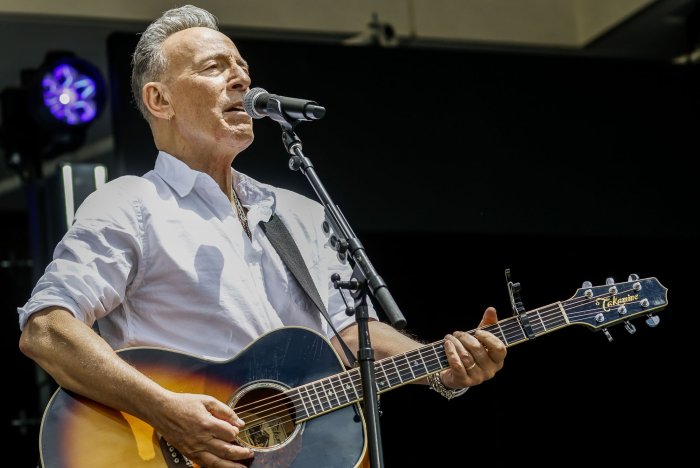
Bruce Springsteen performs at the grand opening for the Obama Presidential Center, in the center’s John Lewis Plaza in Chicago on June 18, 2026. The grounds open to the public on Juneteenth, June 19th. Photo by Tannen Maury/UPI | License Photo


Source link

Mona Khalil, Lebanon’s turtle advocate, dies after Israeli attack | Environment News

Khalil spent more than two decades protecting the nests of endangered turtle species in southern Lebanon.

Lebanese marine ecologist Mona Khalil, who was severely wounded after an Israeli strike hit her home near Tyre last week, has died, according to local reports.

Khalil, 77, succumbed to her wounds on Friday, the same day Israel escalated air attacks on southern Lebanon, killing at least 50 people and injuring dozens despite the risk posed to a fragile peace deal between Iran and the United States.

Recommended Stories

list of 4 itemsend of list

“It is with deep sadness that we mourn the passing of Mona Khalil today,” environmental group Live Love Tyre said in a Facebook statement on Friday.

“She will be remembered through an incredible legacy. Through it all, Mona chose to stay and care for the turtles of Live Love Tyre. Her life was selfless and impactful.”

A life of impact

Khalil was born in Lagos, Nigeria, in 1949. She spent several years abroad before moving to southern Lebanon.

A fleeting encounter with a turtle which had emerged from the ocean to lay its eggs on al-Mansouri beach near Tyre in 1999 propelled her on a lifelong journey devoted to animals.

She went on to dedicate decades to protecting the nesting sites of endangered loggerhead and green sea turtles on Lebanon’s southern coast.

Both species are highly threatened by coastal development, plastic pollution, fishing nets, and light pollution and are at risk of becoming extinct in the eastern Mediterranean.

In 2000, Khalil helped establish the Orange House, an eco-tourism project situated at al-Mansouri beach. She also helped document marine life in southern Lebanon and advocated for wildlife and against the pollution of Lebanon’s coastline.

“You have left us yet you remain within us – we, your children,” journalist and volunteer Fadia Joumaa, who worked closely with Khalil, said in a tribute shared on Facebook.

Khalil’s death “is a loss for all of Lebanon… not just for us. A loss for the life you guarded so faithfully,” she said.

Source link

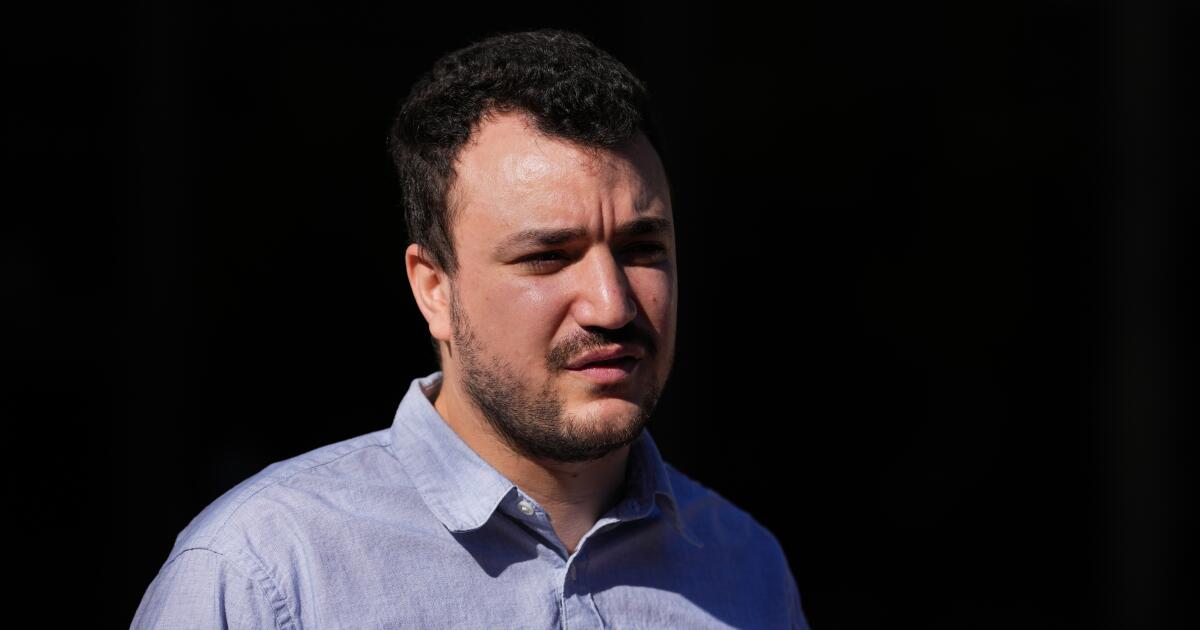
Pro-Palestinian activist Mahmoud Khalil wants Supreme Court to weigh in on deportation fight

Former Columbia University graduate student Mahmoud Khalil will ask the U.S. Supreme Court to intervene after a federal appeals court on Friday declined to reconsider a decision that put the government a step closer to deporting him, the pro-Palestinian activist’s lawyers said.

Judges on the 3rd U.S. Circuit Court of Appeals in Philadelphia voted 6-5 against having the court’s full complement of judges review the ruling. In January, a three-judge 3rd Circuit panel found that a federal judge in New Jersey who had sided with Khalil and ordered his release last year from immigration detention didn’t have jurisdiction to decide the matter.

The American Civil Liberties Union, which is involved in representing Khalil, said his lawyers will ask the 3rd Circuit for an order preventing the decision from taking effect — and barring Khalil from being detained or deported — while it asks the Supreme Court to take up the case.

An appeal to the high court is expected in the coming months, possibly in late summer.

“Today’s decision is not the final word, and we still strongly believe in our arguments going forward,” ACLU senior counsel Brett Max Kaufman said in a statement.

In its January ruling, the 3rd Circuit found that Khalil’s lawsuit challenging his detention and U.S. District Judge Michael Farbiarz’s subsequent rulings in the case were premature because federal law requires that such challenges first move through the separate immigration court system. That system is part of the Justice Department, not the judicial branch.

The decision didn’t decide the key issue in Khalil’s case: whether the Trump administration’s effort to throw Khalil out of the U.S. over his campus activism and criticism of Israel is unconstitutional.

Judge Cheryl Ann Krause, who had voted for the 3rd Circuit to review the decision, wrote in a dissent that the court was “abdicating our duty to meaningfully review Khalil’s constitutional claims. The Judicial Branch, she wrote, cannot fulfill its role as a check on the other branches of government, “if we write ourselves out of relevance and leave the Executive Branch to check itself.”

Khalil, 31, has also appealed to the 5th U.S. Circuit Court of Appeals in Louisiana, where he was detained, after the Board of Immigration Appeals upheld his removal order.

Through his lawyers, Khalil argued that the immigration judge who issued the order failed to consider relevant evidence and wrongly upheld a charge that he had misrepresented information on his application for legal permanent resident status. That charge, Khalil’s lawyers said, was brought in retaliation for his protest activity.

The immigration judge suggested Khalil could be deported to Algeria, where he maintains citizenship through a distant relative, or Syria, where he was born in a refugee camp to a Palestinian family. Khalil’s lawyers have said he would face mortal danger if forced to return to either country.

An outspoken leader of the pro-Palestinian movement at Columbia, Khalil was arrested in March 2025. He then spent three months detained in a Louisiana immigration jail, missing the birth of his child.

Federal officials have accused Khalil of leading activities “aligned to Hamas,” though they have not presented evidence to support the claim and have not accused him of criminal conduct. They also accused Khalil of failing to disclose information on his green card application.

Khalil has dismissed the allegations as “baseless and ridiculous,” framing his arrest and detention as a “direct consequence of exercising my right to free speech as I advocated for a free Palestine and an end to the genocide in Gaza.”

The government justified the arrest under a seldom-used statute that allows for the expulsion of noncitizens whose beliefs are deemed to pose a threat to U.S. foreign policy interests. In June 2025, Farbiarz ruled that justification would likely be declared unconstitutional and ordered Khalil released.

President Trump’s administration appealed that ruling, arguing the deportation decision should fall to an immigration judge, rather than a federal court. The 3rd Circuit ruled 2-1 in the administration’s favor.

Judge Emil Bove, who was involved in investigating student protesters while a top Justice Department official, did not participate in the 3rd Circuit vote on whether to review the decision. He later issued an order denying a request by Khalil’s lawyers that he step aside from the matter, calling it moot.

Sisak writes for the Associated Press. AP writer Lindsay Whitehurst contributed to this report.

Source link

Mahmoud Khalil calls for deportation to be halted in light of new evidence | Israel-Palestine conflict News

The lawyers for Mahmoud Khalil, a former Columbia University student targeted for deportation by the United States government over his pro-Palestine advocacy, have called on an immigration appeals court to reopen and terminate his case.

The latest legal appeal points to new evidence, some of which was documented in media reports, that Khalil’s lawyers said it “suggests that the Trump Administration secretly engineered the outcome of his immigration case to make an example of him”.

Recommended Stories

list of 3 itemsend of list

It comes just over a month after the Board of Immigration Appeals issued a final order of removal for Khalil, who was first detained by immigration enforcement agents in March 2025, one of several students targeted for their participation in pro-Palestine campus protests that swept the US the previous year.

Khalil, a US permanent resident who is married to a US citizen, has long maintained that he has been unjustly targeted for his political views.

His legal team said on Friday that “apparent procedural abnormalities” support that view.

“It’s clear that the revelations of DOJ misconduct corroborate what we have known since Mahmoud was arrested–that the administration has reverse-engineered its desired outcome by weaponising a farcical proceeding littered with abnormalities,” Johnny Sinodis, a lawyer representing Khalil, said in a statement.

The new evidence includes a report by The New York Times that found that Khalil’s case had been flagged as high priority before it had arrived at the Board of Immigration Appeals, in what his lawyers say indicated the case was being “fast-tracked”.

The report, citing case documents, also found that the court had been instructed to treat Khalil’s case as if he were still in detention custody, which typically results in an expedited processing timeline.

Khalil was released from immigration detention in June 2025 following a federal judge’s order. An appeals court later ruled the judge did not have jurisdiction over the matter. He is also appealing that decision, during which time authorities are barred from re-detaining or deporting him.

The New York Times report also found that three judges at the Board of Immigration Appeals recused themselves from the case. While the reasons for the recusals were not made public, experts familiar with the board’s procedures have said the rate of recusals was extremely rare.

The Board of Immigration Appeals is meant to be independent. Like other immigration courts, it falls under the Department of Justice in the executive branch, which critics say makes it more vulnerable to interference.

Other federal courts fall under the independence of the judicial branch.

The Trump administration has framed Khalil’s deportation as part of a crackdown on anti-Semitism. They have presented no evidence to back the claims against him, and Khalil has never been charged with a crime.

This week, The Intercept news site reported that shortly after he was detained by immigration agents, the FBI had closed an investigation into a tip that Khalil had called for “violence on behalf of Hamas”, saying it did not warrant further investigation.

In targeting Khalil, US Secretary of State Marco had invoked a rarely used provision of the Immigration and National Act that allows the deportation of individuals deemed to be a national security threat based on “past, current or expected beliefs, statements, or associations that are otherwise lawful”.

The manoeuvre raised questions over freedom of speech and whether those protections extended to permanent residents like Khalil. The government later added the claim that Khalil had intentionally failed to disclose his past work for the UN agency for Palestinian refugees (UNRWA) on his immigration application.

Administration officials have repeatedly stood by the claims and maintained that Khalil received proper due process.

In a statement on Friday, Khalil said the administration “wants to arrest, detain, and deport me to intimidate everyone speaking out for Palestine across this country, and they are willing to violate longstanding US rules and procedures to do it”.

He added, “No lies, corruption, or ideological persecution will stop me from advocating for Palestine and for everyone’s right to free speech.”

Source link