A 24-year-old man, who was already being held in quarantine, is the latest to test positive, according to the Health Ministry.
Published On 20 Oct 202620 Oct 2026
Kenya has confirmed a new Ebola case, bringing the total number of infections in the country to nine, amid an outbreak in the Democratic Republic of Congo (DRC), raising concerns about a regional spread.
A 24-year-old man, who was already being held in quarantine, is the latest to test positive, Kenya’s Ministry of Health said in a statement on Tuesday.
Recommended Stories
list of 3 itemsend of list
“He was isolated at the first sign of illness, tested and started on treatment immediately upon confirmation of his positive test result,” it said, adding he “was already in quarantine when he fell ill”.
The man was a close family member of Kenya’s first Ebola patient, who had travelled from the DRC, through Uganda and before arriving in Kenya and dying at a Nairobi hospital on October 5.
“All nine cases belong to one cluster, and as of today there is no evidence of transmission outside this group,” Director-General for Health Patrick Amoth said in a statement on Tuesday.
“Eight patients are stable and responding well to treatment, while 134 of 135 contacts have been traced and quarantined,” Amoth said.
Amoth said a milestone was in sight for the majority of the contacts in quarantine as they had remained well for the 21-day monitoring period and could return home from October 25.
It appealed to communities to welcome them back, saying they “pose no risk of infection”.
The ministry said no infections had occurred within quarantine facilities and that it was continuously monitoring infection-prevention measures to protect health workers.
Kenyan Ebola cases are linked to an outbreak in the Democratic Republic of Congo where 9,000 cases have been reported and more than 4,000 deaths since May [File: Sebastien Kitsa Musayi/AP Photo]
Despite the nine infections, Kenya has not imposed restrictions on travel, trade or public gatherings, with authorities saying the country remains open for business.
In the DRC, there have been more than 9,000 Ebola cases and 4,000 deaths since May.
The European Centre for Disease Prevention and Control says it’s the second-largest epidemic on record.
It has been difficult to contain because there is no licensed vaccine or specific treatment for the Bundibugyo strain of the virus.
Kenyan health authorities say latest patient was likely exposed to the country’s first Ebola case.
Published On 19 Oct 202619 Oct 2026
Kenyan health authorities say an eighth Ebola case has been detected, bringing the total number of known infections in the East African nation to eight.
Director-General for Health Patrick Amoth told Kenya’s Citizen TV that of the 38 people tested on Sunday, one had returned a positive result.
Recommended Stories
list of 3 itemsend of list
“He is a 49-year-old man who is not a healthcare worker. He developed fever, headache and muscle pain,” he said.
Amoth said the man, who worked as a patient attendant cleaning utensils and linens, was likely exposed to Kenya’s first Ebola case, discovered earlier this month.
He developed symptoms on Saturday, was quarantined and tested for the virus, a Ministry of Health source said.
The ministry reported four new cases on Saturday, three of whom were health workers who treated the country’s first Ebola patient, a man who travelled from the Democratic Republic of the Congo (DRC) to Nairobi and died at a Nairobi hospital on October 5.
In a post on X, the ministry said the fourth person was related to the deceased patient.
Travellers enter Kenya’s immigration services to access port health services at the Busia One Stop Border Post, a crossing point between Kenya and Uganda, in Busia, Kenya, on October 8, 2026 [James Keyi/Reuters]
Kenya has been on heightened alert, as the Ebola outbreak has spilled across the border from the DRC. The current outbreak is of the Bundibugyo strain of the virus, for which there is no vaccine or specific treatment.
The DRC has recorded at least 9,400 cases, including more than 4,500 deaths, in the deadliest outbreak in the country’s history, which started in May.
Ituri province in eastern DRC remains the disease’s epicentre, accounting for almost three quarters of confirmed cases, according to the government’s most recent data. It announced on Sunday that the virus has reached an eighth province, North Ubangi.
State-run news agency ACP reported on Sunday that authorities in North Kivu province, where the World Health Organization said substantial transmission continues, are introducing a one-week ban from Monday on people entering the province from Ituri in an effort to slow the spread.
Other measures set to be introduced include restrictions on passenger numbers in cars and on motorbikes and suspension of large public gatherings.
Neighbouring Uganda recorded 20 confirmed cases, including 15 imported from the DRC, and two deaths, before it was declared Ebola-free in August.
Nairobi, Kenya – Kenya’s response to an imported Ebola case has demonstrated its ability to mobilise a national response in the capital.
But a suspected case in the northeastern county of Wajir has raised a critical question: whether the country’s preparedness measures can protect communities far from major hospitals, laboratories and transport hubs.
The suspected case in Wajir tested negative, according to county officials, easing fears of wider transmission. Yet the incident highlighted the importance of local health facilities being able to recognise suspected infections, isolate patients safely and communicate reliable information to residents.
For communities near Kenya’s borders, preparedness requires more than screening travellers at airports and official crossings.
It also depends on trained health workers, appropriate protective equipment, functioning isolation facilities and clear referral procedures. Residents must know where to seek care and how to respond when health authorities raise the alarm.
Wajir’s readiness under scrutiny
Garad Saney Mohamed, communications director for Wajir county, told Al Jazeera that the county had established an isolation centre in Wajir town and formed a rapid response team to strengthen its preparedness.
He said the county was also using radio campaigns, community health promoters, school health programmes and posters to raise awareness about Ebola. A preparedness plan and budget had been put in place, he added.
However, the county did not provide details on the isolation centre’s capacity, the number of health workers trained specifically in Ebola response or the budget allocated to these efforts. Without that information, it is difficult to assess whether the county has the personnel and resources needed to manage suspected infections safely or respond to a wider outbreak.
The suspected case involved a 20-year-old man who had travelled from the Democratic Republic of the Congo through Uganda before reaching his home in Wajir on September 20. He was assessed at Habaswein Subcounty Hospital in Wajir South after presenting with a severe febrile illness.
His sample tested negative for Ebola, according to county officials. He was to remain under observation while receiving medical care.
The case prompted precautionary action, but it does not establish whether Wajir’s wider preparedness systems would be sufficient during an outbreak. That would depend on factors including the availability of protective equipment, staff trained in infection prevention and control, safe sample transport and reliable links between local facilities and designated testing laboratories.
Wajir’s proximity to Somalia, which lies 110km (70 miles) to the east, and the movement of people and goods across the border make surveillance and public communication particularly important. Screening at formal entry points remains essential, but it cannot replace the ability of local health facilities and community health workers to recognise warning signs and guide people towards appropriate care.
National screening, local challenges
Kenya’s national response intensified after an Ebola case was linked to a Kenyan travelling from the Democratic Republic of the Congo through Uganda. The patient arrived in Nairobi on October 3, was diagnosed with Bundibugyo virus of the disease and died on October 5, according to the World Health Organization (WHO). Kenya notified the WHO on October 6.
The patient had fallen ill while living in the Democratic Republic of the Congo and travelled by road to Kampala before flying to Nairobi. Laboratory tests at the National Virology Reference Laboratory and the Kenya Medical Research Institute confirmed the infection, according to the Ministry of Health.
On October 14, Kenya confirmed a second case of Bundibugyo virus disease involving a 39-year-old man who was a close family member of the first patient. He was already in quarantine and under daily monitoring when he developed symptoms, including fever, fatigue and joint pains, on October 13.
Laboratory tests confirmed the infection, and he was transferred to a designated treatment centre for supportive care. The Ministry of Health said the two cases were linked and there was no evidence of transmission in the wider community.
Authorities subsequently intensified surveillance at points of entry, contact tracing and public communication. The negative test result in Wajir underscored the importance of investigating suspected infections promptly and using laboratory testing to establish whether the virus is present.
As of October 6, Kenya had screened 652,584 travellers, tested 267 samples and trained 4,971 healthcare workers in Ebola prevention and management, according to the Ministry of Health.
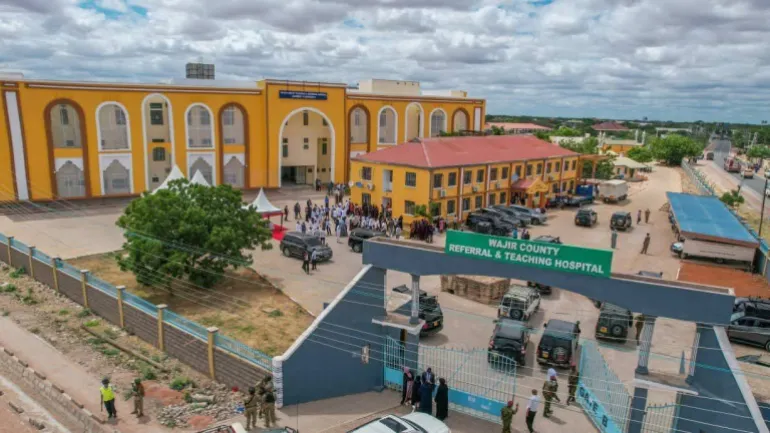
Wajir’s health facilities are on the front line of detecting and responding to suspected infectious disease cases [File: Hafsa Sheikh/Al Jazeera]
By October 12, the WHO reported that more than 665,000 travellers had been screened and 127 contacts had been listed, with 94 in quarantine. Five laboratories had been designated to test for the disease, and nearly 5,000 health workers had received training.
These figures demonstrate the scale of the national response. But the number of travellers screened or health workers trained does not, on its own, establish how effectively those resources are distributed or whether individual counties can manage suspected infections.
For Wajir, the key questions concern the readiness of local facilities, the availability of trained personnel and protective equipment, and the speed with which samples can be transported for testing. The county has outlined the measures it has taken, but the available information does not provide a complete picture of its operational capacity.
Preparedness means more than the numbers
Health workers need to recognise suspected cases, follow infection-prevention protocols, collect and transport samples safely, and refer patients without exposing others. Facilities must also have appropriate protective equipment and clear procedures for managing suspected infections.
The WHO reported that Kenya’s national preparedness score rose from 66 percent in May to 82 percent in July. The assessment covered measures including surveillance, laboratory testing, isolation and treatment facilities, and trained response teams.
The improvement suggests that preparedness measures had advanced before the imported case was confirmed. However, a national score cannot establish whether every county has the equipment, staffing and referral arrangements needed to respond effectively. Assessments of local capacity are essential to identifying gaps that national figures may not reveal.
The Kenya Red Cross has also supported preparedness and public awareness efforts. Dr Paul Olale, a representative of the organisation, told Al Jazeera about a preparedness assessment. However, the basis of the separate figure attributed to the organisation was not established in the information available for this report, making it difficult to determine what it measured or whether it identified county-level weaknesses.
The organisation has highlighted the need to counter misinformation. During an outbreak, rumours can leave people uncertain about symptoms, how the virus spreads and whether they should seek medical attention.
For residents, information needs to be practical. People should know where to seek care, how to report a suspected illness and what to do while awaiting medical advice. Communication must also address stigma and reassure people that reporting a suspected illness can help protect their families and communities.
Community health promoters, local radio stations, schools and trusted community leaders can help deliver information in languages and formats residents understand. But awareness campaigns are most effective when they are consistent and backed by health services capable of responding promptly to concerns.
Wajir’s experience illustrates why Kenya’s Ebola preparedness must be measured not only by national screening figures and training totals, but also by the ability of individual counties to respond safely when a suspected case emerges.
An isolation centre, a rapid response team and public awareness campaigns are important components of an effective response. Their existence alone, however, does not establish whether facilities have adequate equipment, staff can follow established protocols or residents can access reliable information when they need it.
Questions remain over how prepared remote communities such as Wajir county are to respond to a potential Ebola outbreak [File: Hafsa Sheikh/Al Jazeera]
Kenya has demonstrated its ability to mobilise a national response, expand screening and undertake laboratory testing. The challenge is ensuring that these measures translate into effective protection beyond major transport hubs, including in remote communities where access to healthcare and timely information may be more difficult.
Dr Mary Muthoni, Kenya’s principal secretary for public health and professional standards, underscored the importance of protecting frontline staff in remarks delivered on behalf of Health Cabinet Secretary Aden Duale, according to a WHO statement released on October 12.
“No health worker in this country should be asked to attend to a suspected Ebola case without the right protective equipment.”
Beni, Democratic Republic of Congo – The Ebola outbreak in the Democratic Republic of the Congo (DRC) has spread to another health zone in the east, while a fatal imported case in Kenya has underscored the risk of cross-border transmission.
The World Health Organization (WHO) said in an October 8 update that Alimbongo health zone in North Kivu province had reported cases for the first time. As of October 6, four confirmed cases, including two deaths, had been recorded there.
The outbreak is caused by the Bundibugyo virus, a species of Ebola virus. According to the WHO, cases had been reported in 64 health zones across seven provinces in the DRC. Ituri remained the worst-affected province in cumulative cases, while North Kivu was accounting for a growing share of newly confirmed infections.
As of October 6, the WHO had recorded 8,728 confirmed cases and 4,205 confirmed deaths in the DRC. A further 2,269 people had recovered, and the crude case fatality ratio stood at 48.2 percent.
Kenya confirms imported case
Kenya confirmed its first imported case of Bundibugyo virus disease on October 6, according to the WHO. The patient, a Kenyan citizen who had been living in the DRC, fell ill there and received treatment at several health facilities before travelling to Kenya through Uganda.
The patient travelled by road to Kampala, Uganda, before flying to Nairobi, arriving on October 3. The patient was isolated in hospital and tested positive for the virus. Despite supportive treatment, the patient died on October 5, the WHO said.
Kenyan authorities identified 28 contacts, including family members and healthcare workers. The WHO also reported efforts to trace passengers and crew members from the flight to Nairobi.
Kenyan Ministry of Health officials screen arriving passengers at Jomo Kenyatta International Airport in Nairobi amid Ebola-related health precautions [AFP]
Public health measures have been initiated in Kenya and Uganda, including contact tracing and enhanced surveillance.
On October 8, preliminary laboratory results for a suspected Ebola case in Kenya’s Wajir County came back negative, according to the county governor. The result eased concerns about a possible second case, although monitoring continued.
The imported infection has underscored the importance of surveillance and coordination between neighbouring countries. Identifying exposed people and monitoring them for symptoms are central to detecting infections early and interrupting further transmission.
Treatment capacity under pressure
In the DRC, the response is facing mounting pressure from limited treatment capacity, insecurity and difficulties securing cooperation from some communities.
Daniel Makasi Levergénois, founder of Watoto Radio, said insecurity and misinformation were undermining efforts to contain the outbreak. In Beni and Butembo, both in North Kivu, rumours and misconceptions about Ebola had contributed to reluctance among some residents to cooperate with response teams, he said.
In an October 5 update, medical charity Doctors Without Borders, known by its French initials MSF, said North Kivu accounted for nearly 40 percent of newly confirmed cases nationwide, up from 24 percent at the end of August.
MSF also reported that, as of September 28, 34 percent of confirmed Ebola patients were being treated in non-specialised health facilities. Dedicated treatment centres lacked sufficient beds, while delays in diagnosis meant some patients were being treated outside facilities equipped to manage Ebola.
The organisation warned that many of these facilities lacked the resources and expertise needed to manage the disease, increasing the risk of transmission among patients and healthcare workers.
“For weeks, treatment capacity has stretched to its limit,” said Stephanie Hoffmann, coordinator of MSF’s Ebola treatment centre in Butembo.
“Because there are not enough beds available, we are sometimes forced to refer confirmed Ebola patients elsewhere, despite the significant risk this poses to the wider community. In addition, standards of care in some peripheral facilities do not always meet the requirements for Ebola treatment. This is extremely concerning.”
Mistrust threatens containment efforts
Alberto Lusenge, a community leader in Beni, said the failure to stop transmission early in Ituri province, followed by new cases and attacks on response workers in Beni and Butembo, had deepened public concern.
Lusenge warned that mistrust could discourage residents from reporting symptoms or cooperating with health workers. He said North Kivu could become a greater focus of the outbreak if authorities failed to secure stronger cooperation from local communities.
A worker in protective gear handles sanitary basins at an Ebola treatment centre run by MSF in Butembo, eastern DRC [Gradel Muyisa Mumbere/Reuters]
The WHO said response teams were following up 23,741 of the 29,535 identified contacts as of October 4, equivalent to 80.4 percent – below the response target of at least 85 percent.
Contact tracing allows health authorities to identify people who may have been exposed, monitor them for symptoms and detect infections early. Gaps in follow-up can make it harder to identify and interrupt chains of transmission.
The Africa Centres for Disease Control and Prevention (Africa CDC) has called for a community-centred response, including active case finding, systematic contact tracing, daily follow-up of exposed people and sustained engagement with local communities.
A history of deadly outbreaks
The DRC’s 2018–2020 Ebola outbreak, caused by a different virus species, killed nearly 2,300 people. The current outbreak presents distinct challenges: According to the WHO, there are no approved vaccines or specific treatments for Bundibugyo virus disease.
Early detection, supportive care and infection prevention therefore remain central to the response. But as infections spread into additional health zones and treatment facilities struggle to accommodate patients, health authorities face the dual challenge of containing transmission and maintaining public trust.
Jean Kaseya, director-general of Africa CDC, has stressed the importance of rapidly identifying and monitoring people exposed to the virus.
“To bring this outbreak under control, we need to know where every contact is, track them and quickly identify anyone showing symptoms before they pass the virus on to their family, their community or across borders. We will only bring this outbreak under control once the last chain of transmission has been broken,” Kaseya said in a news release seen by Al Jazeera.
The first imported case of Ebola has been recorded in Kenya. The health minister said a Kenyan citizen who had been living in the Democratic Republic of the Congo, arrived in Nairobi on Saturday and died from the disease.
The multi-vehicle crash occurred in the Salama area, 90km southeast of Nairobi, killing mostly Catholic pilgrims.
Published On 3 Oct 20263 Oct 2026
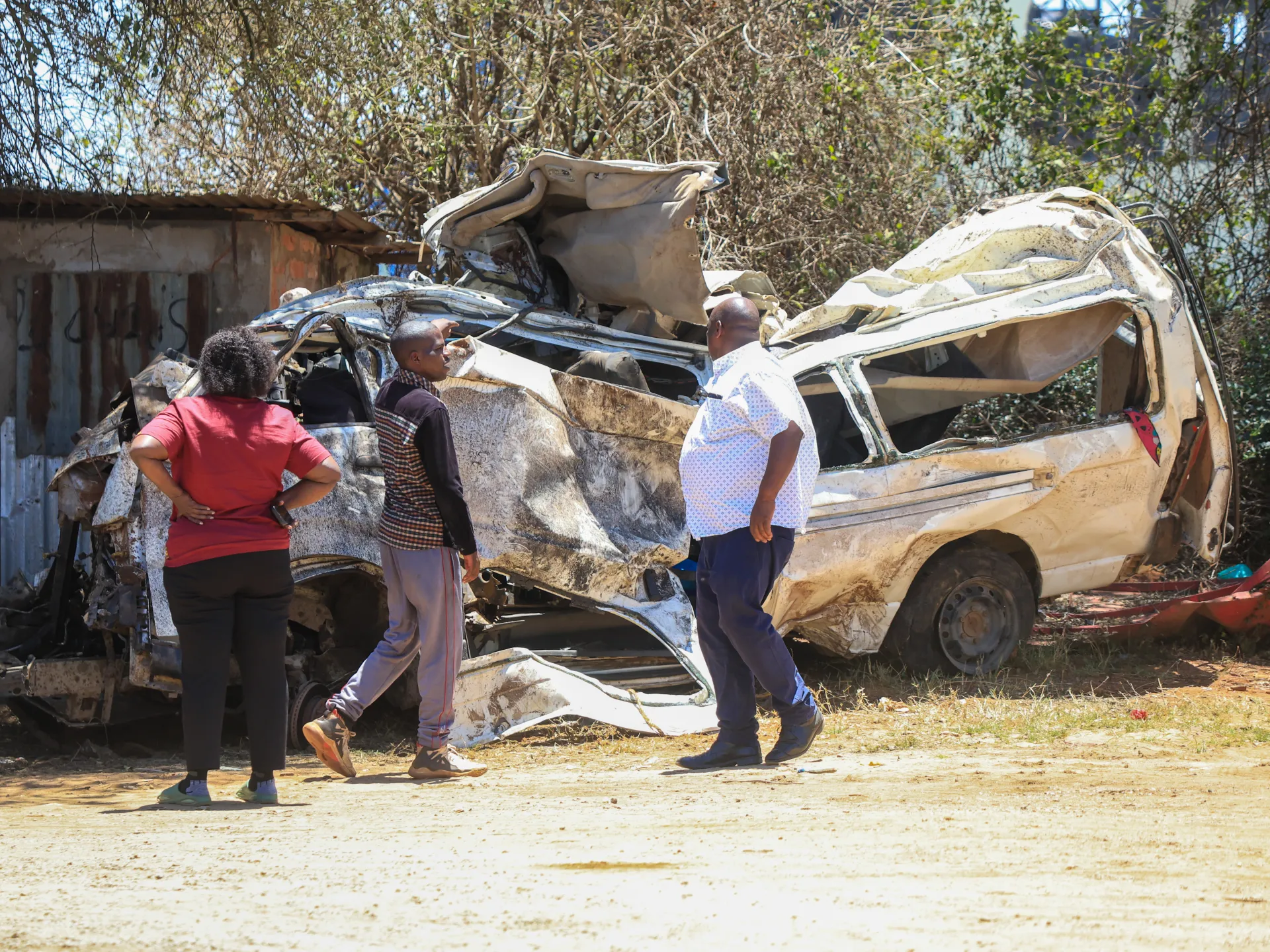
At least 17 people, most of them Catholic pilgrims on the way to a prayer site, have been killed in a crash involving multiple vehicles on the highway to the Kenyan coastal city of Mombasa.
The crash in the Salama area, about 90 kilometres (about 55 miles) southeast of the capital Nairobi, happened after midnight, police said on Saturday.
The crash occurred when a truck driver tried and failed to overtake another truck; that caused a collision with vehicles including a van carrying pilgrims, police said.
Kenyan media reported that the pilgrims were travelling in a 14-seater minibus.
The van’s driver and 16 passengers, most of them women, died at the scene, police said.
The pilgrims were going to a prayer site in Nakuru County, west of Nairobi, said Martin Kivuva, archbishop of the Catholic Archdiocese of Mombasa.
The archbishop said in a statement that he and others were “saddened with lots of grief” over the deaths.
President William Ruto offered condolences to the families, friends, parishioners and the entire Catholic community “who are mourning this painful loss”.
Kenya’s National Transport and Safety Authority (NTSA) launched an investigation into the crash.
The NTSA said it dispatched investigators “to establish the full circumstances leading to the collision”.
But it noted that the stretch of road where the crash occurred is a known “black spot” and that “recommendations have been made to address safety concerns” regarding the route.
Road accidents are a problem across Africa. In Kenya and elsewhere in the region, the accidents are often blamed on poorly maintained vehicles, excess speed and poor road conditions.
Kenya recorded 5,009 road traffic deaths last year, while 2,150 deaths were reported in the first six months of 2026, local media reported, citing numbers from the NTSA.
Memusi Lochede sits on a bed as her 24-year-old daughter Chaula lies motionless on the floor of their home in Archer’s Post, in the shadow of the training grounds. A donated wheelchair sits in the corner. Her daughter’s right leg is gone; metal rods brace a body so badly injured that she struggles to hold up her head.
“I have so much pain in my heart seeing my daughter in this condition,” 46-year-old Lochede tells Al Jazeera, wiping the drool from her daughter’s chin. “I feel ashamed that she needs so much help, and I don’t know how to help her.”
In 2019, Chaula, then a teenager, says she was hit by a speeding BATUK vehicle while crossing the road. Her leg was amputated and, her mother says, she was left paralysed and spent nearly three years in hospital.
A BATUK representative later came to see Lochede, she says.
“He apologised for what happened and said they don’t want a court case and would take care of my daughter — anything she needs,” she recounts.
The MOD said it “has not located a record of an approach having been made by a BATUK representative to the family.”
When her daughter was discharged, BATUK paid the hospital bills — without receipts or disclosing the amount — and disappeared, Lochede says. For years, Lochede called its community liaison officer, the Kenyan official tasked with receiving complaints like hers, who never answered. Eventually she gave up.
The MOD told Al Jazeera in August that BATUK is aware of the claim that one of its drivers “hit and injured a minor” in 2019, “resulting in permanent injuries”.
It said legal representatives have been in contact with the Kenya National Commission on Human Rights about the case and that a compensation offer has been made but the commission has not responded.
In late September, Al Jazeera asked the MOD what had been offered, when, and through whom. It did not provide those details, saying instead that BATUK “remains willing to engage with the child’s family, through an appropriate representative and on a without-prejudice basis,” but that “to date, we have been unable to establish contact with the family or an authorised representative”. Any resolution would have to rest on “verified medical and factual information” and, because the claim concerns a minor, be approved by a Kenyan court.
Ruth Getobai Nchagwa, a deputy director at the commission, says it has “never engaged with BATUK directly as our letters to them went unanswered”.
Chaula’s case “has not been addressed to date,” she notes, and the commission is not aware of any discussions about compensation. Lochede similarly says no one has ever approached her about compensation.
Before the accident, Lochede supported her five children by making beaded necklaces and selling them in Nairobi. Now she cannot leave her daughter’s side, and Chaula’s care costs about 30,000 Kenyan shillings ($230) a month — more than Lochede usually earns.
“It’s a shameful feeling to pick up the phone and call so many numbers for help, and no one picks up your call,” she explains, her lips quivering as she fights tears. “In those moments where I can’t provide for my daughter, I just lock myself inside the room and lie in my bed and cry.”
Her daughter, once healthy and active, now barely speaks.
“There are some days she wakes up and says just one word, like ‘food’ or ‘bathroom,’” Lochede says. “Those are the good days. Other days, she refuses to eat. I can see that she’s depressed and lonely. Inside, her soul is shattered.”
“These soldiers do these things because they know they can get away with it,” she adds sharply. “They know we don’t have money. We don’t have power. It’s extremely difficult for us to fight them.”
Cases like Chaula’s are far from isolated. Last year, a landmark two-year inquiry by Kenya’s parliamentary defence committee put decades of alleged BATUK abuses on the official record.
The 94-page report gathered testimony from hearings across Laikipia and Samburu, including a herder allegedly shot by a British sergeant; the alleged gang rape of 30 women at knifepoint in 1997; a boy who lost both arms and an eye to unexploded ordnance; and women with children their British fathers had never acknowledged.
BATUK declined to appear, citing its status and immunities under the defence arrangements. The committee condemned the refusal as contemptuous, calling it “emblematic of institutional contempt for the authority of Parliament and, by extension, the sovereignty of the people of Kenya”.
It concluded that BATUK “is increasingly seen as an occupying presence rather than a development partner”, with affected residents drawing parallels to colonial injustices. Witnesses told the committee that “suspected BATUK abuses are not only unpunished but actively covered up” — that whenever a BATUK member is implicated, police files often “go missing” and complainants are “intimidated into silence.”
An MOD spokesperson told Al Jazeera the UK “deeply” values its relationship with Kenya, “which has long been the UK’s defence partner of choice in East Africa”.
The MOD is “addressing concerns raised by Kenyan authorities and communities, focusing on legal accountability, ethical standards, environmental stewardship, economic benefit and social responsibility,” the spokesperson said.
Regarding road traffic incidents, the spokesperson said BATUK “cooperates fully with the local authorities and Kenyan Police”, that all such incidents are “investigated thoroughly” and that “where claims are made, BATUK submits to the jurisdiction of the Kenyan courts”.
When asked what progress the MOD had made on the concerns raised by the committee, and whether it was investigating any of the specific cases, it referred Al Jazeera to the written statement it submitted to the inquiry, which said it was “not aware of any evidence to support any allegation of collusion with security forces to suppress or dismiss complaints, or intimidate, bribe or coerce victims into silence”, and that any such evidence “would be taken extremely seriously and investigated accordingly”.
For Awino Okech, professor of feminist and security studies at SOAS University of London, the parliamentary report points beyond individual abuses. “This is no longer a case of a few bad apples but reckoning with what many will interpret as accepted militarised institutional culture,” she tells Al Jazeera.
“The fundamental question the British government is being asked to reflect on is their responsibility when there is a documented pattern of malbehaviour by their employees in a foreign country.”
Okech says the pattern cannot be separated from race. “We cannot ignore the racialised element. In this case, it is visible when crimes committed in Kenya are taken less seriously.”
Nairobi, Kenya – With less than nine months until the 2027 Africa Cup of Nations kicks off, Kenya, Uganda and Tanzania are entering the most demanding phase of preparations: completing and testing the stadiums, training grounds and supporting infrastructure needed to host the tournament.
The tournament, scheduled for June 19 to July 17, 2027, will be the first Africa Cup of Nations jointly hosted by three countries and the competition’s return to East Africa since Ethiopia staged the finals in 1976.
A Confederation of African Football (CAF) delegation spent eight days inspecting facilities across the three host countries earlier this month, assessing stadiums, training grounds, hotels, airports and other infrastructure. The delegation included officials responsible for competitions, safety and security, transport, media, television and logistics.
Kenya: Talanta takes centre stage
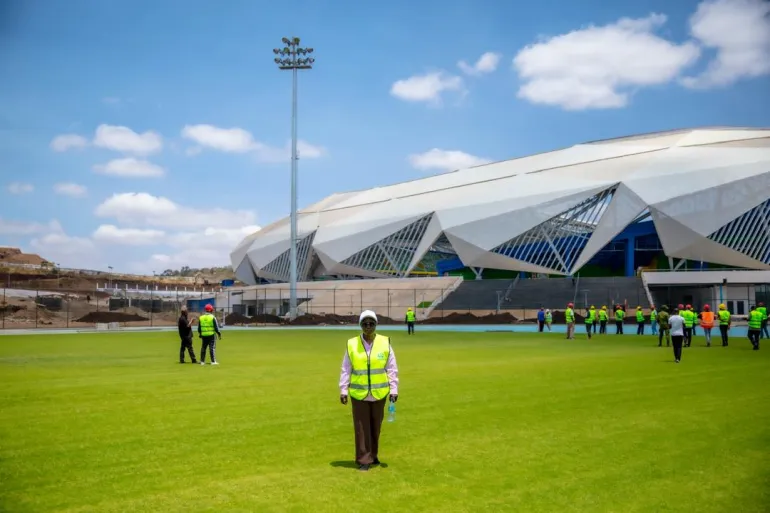
In Kenya, the biggest project is the newly built Talanta Sports International Stadium in Nairobi.
The 60,000-capacity stadium is intended to be the country’s flagship AFCON venue and was inspected by CAF earlier this month. During a subsequent visit, CAF President Patrice Motsepe said he was impressed by the progress at Talanta. He also visited Kasarani Stadium, where work remains to be completed.
But Kenya’s preparations extend well beyond its new flagship stadium.
CAF’s inspection also covered training venues, hotels, airport infrastructure and other sites supporting the Nairobi tournament operation.
Nicholus Musonye, chairman of Kenya’s AFCON 2027 Local Organising Committee, told Al Jazeera that the country was addressing the outstanding requirements.
“I want to assure Africa, and I want to assure the world, that Kenya, Uganda, Tanzania, we are ready to host AFCON,” Musonye said.
He said work on Kasarani’s pitch should be completed by the end of October, with the venue planned to be ready for handover in December.
But concerns remain about some of the facilities that will support the tournament.
Kelvin Kimaru, a Kenyan football fan, told Al Jazeera that training grounds remained a concern.
“We are not yet ready because the training grounds for the coming teams are not yet ready,” Kimaru said.
Moses Kamalik, an executive member of the Boxing Federation of Kenya, said other venues also needed work, including Nyayo Stadium and Kipchoge Keino Stadium in Eldoret.
The challenge for Kenya is broader than completing Talanta; it needs a network of match venues, training grounds and supporting facilities capable of operating together when teams and supporters arrive.
Tanzania: the race extends beyond stadiums
Tanzania is also entering the final stretch, with preparations covering stadiums, training grounds and the infrastructure connecting them.
Neema Msitha, chief executive of the country’s AFCON 2027 Local Organising Committee, told Al Jazeera that the country’s stadiums were more than 80 percent complete on average and expected to be ready for handover to CAF in January.
“All these stadiums are almost ready. If you grade them on average, all of them are almost above 80 percent,” Msitha said.
Training facilities are being developed alongside the main venues, with five facilities being prepared in each host location. Msitha said they were about 75 percent complete.
The three East African hosts are moving from construction to testing and operational preparations as the 2027 tournament approaches [Hafsa Abdiwahab Sheikh/Al Jazeera]
The Tanzanian government has also applied pressure to accelerate the work.
In August, Prime Minister Mwigulu Nchemba ordered work on AFCON training grounds to speed up, saying the facilities needed to be completed on time and meet CAF standards. He issued the directive after inspecting the Farasi and Leaders Club training grounds in Dar-es-Salaam.
Road infrastructure is also part of the preparations. In June, Works Minister Abdallah Ulega ordered contractors working on roads linked to the tournament in Arusha to operate around the clock to meet deadlines and international standards.
Msitha pointed to regional airlines, Air Tanzania and ferry services between Dar-es-Salaam and Zanzibar as part of the transport arrangements being developed for teams, officials and supporters.
CAF’s September inspection included Benjamin Mkapa Stadium in Dar-es-Salaam and other key facilities in Tanzania as the governing body continued to assess preparations across the three hosts.
Uganda faces its own deadlines
Uganda is working towards the same year-end push.
Patrick Ogwel, a CAF infrastructure monitoring officer, told Al Jazeera that infrastructure development was expected to be ready by December 31.
Hoima City Stadium has been completed and commissioned, he said, while Akii-Bua Olympic Stadium in Lira is due to be completed and commissioned by December.
Uganda’s Local Organising Committee has identified Akii-Bua, Hoima City Stadium and Mandela National Stadium as its three main stadiums. It expects 10 of the country’s 12 training facilities to be ready by the end of the year.
The organising committee said after CAF’s latest inspection that all three stadiums remained on course for completion by the end of December, while some training facilities were planned to be completed in January 2027.
But the deadlines are not without pressure.
On September 24, Uganda’s State Minister for Sports Peter Ogwang directed the Uganda People’s Defence Forces to accelerate work on several AFCON training facilities, citing concerns about the pace of construction at sites including Pece Stadium in Gulu, Lira and Gulu University.
After its September inspection, the CAF delegation also briefed President Yoweri Museveni, with challenges outside Kampala among the issues raised during the assessment.
From construction to tournament readiness
The coming months will test whether the three hosts can turn construction progress into a functioning tournament operation.
AFCON requires stadiums and training grounds that can handle teams and spectators while meeting requirements for broadcasting, media, security, transport, hospitality and match operations.
A completed stadium is only one part of the equation.
CAF inspections are now focusing on whether venues and supporting facilities can meet the operational demands of the continental tournament [Hafsa Abdiwahab Sheikh/Al Jazeera]
Kenya, Tanzania and Uganda have already gained experience from jointly hosting the 2024 African Nations Championship, which allowed the three countries to work together on a major continental tournament. CAF has also involved representatives from the three local organising committees in an observer mission at the recent AFCON in Morocco.
But AFCON will be a larger undertaking, with 24 national teams competing across the three countries for almost a month.
The coming months will determine whether the work under way across the three countries can be completed, verified and brought into operation before teams and supporters begin arriving.
For supporters in East Africa, the tournament represents more than a test of stadiums and infrastructure. It is also a chance to experience Africa’s biggest national-team competition on home soil.
Gilbert Okeya, a Kenyan football fan and Football Kenya Federation referee, told Al Jazeera:
“We are happy because we are going to host, and we are going to have an opportunity to have live matches for AFCON in our country.”
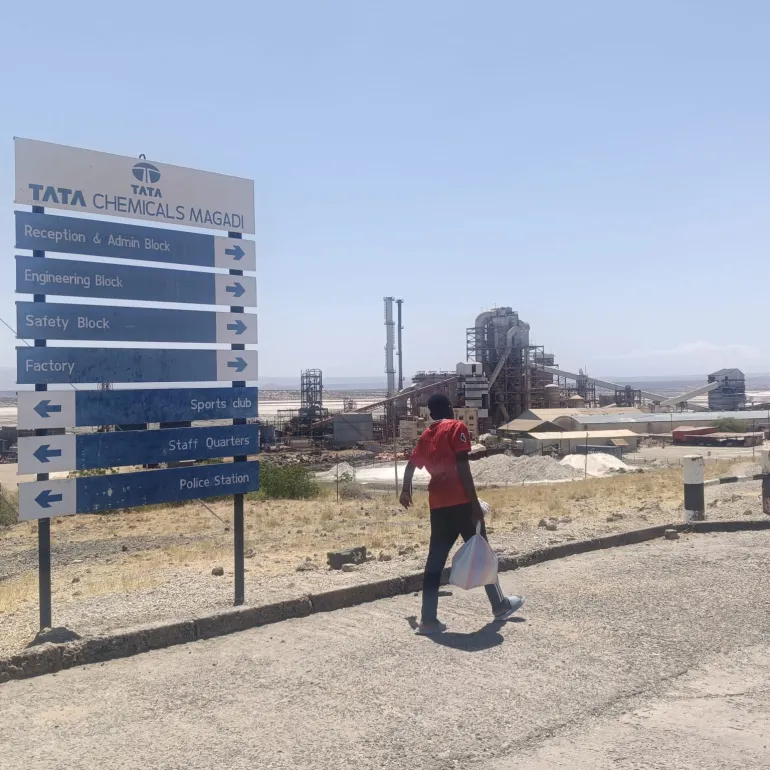
Magadi, Kenya – For more than a century, soda ash has shaped life in Magadi, a remote town on the shores of Lake Magadi in Kenya’s Kajiado County.
The mineral has brought exports, jobs and business. But for many people living around the lake, that activity has not brought enough opportunities or basic services. The result is a complicated relationship with Tata Chemicals Magadi, the company that has mined soda ash there for generations.
Now that relationship is under strain. The Kenyan government has suspended the company’s mining operations, and President William Ruto has ordered it to leave while a joint technical committee works with the company to resolve outstanding issues.
For Magadi, the dispute is also about what the community and Kenya have gained from a resource extracted there for more than a century.
A century of soda ash
Commercial soda ash production in Magadi dates back to 1911. Tata Chemicals acquired the operation in 2005 and later renamed it Tata Chemicals Magadi Limited.
The company has become one of Kenya’s major soda ash exporters, with much of its production destined for international markets. It has also become part of everyday life in Magadi, providing jobs and supporting services including water, healthcare and education.
But the government says its long history in the area does not exempt Tata from Kenya’s current mining laws.
Mining Cabinet Secretary Hassan Joho told Al Jazeera on September 11 that the regulatory environment changed after the 2010 Constitution and the Mining Act. He said a government-wide compliance audit found that Tata had not applied for a mineral right under the Mining Act and had instead relied on its land concessions.
The plant has provided jobs and essential services for generations, but residents and officials are pressing for greater local benefits from the resource [Hafsa Sheikh/Al Jazeera]
According to Joho, Tata made its first application for a mineral right on July 26, 2024, after which the government began engaging with the company over compliance.
“Past oversights do not grant immunity from existing laws,” Joho said.
He said the review also identified issues around mineral royalties, community development agreements, local processing, employment of Kenyan citizens, procurement of local goods and services, and outstanding matters with the Kajiado County government.
The government says Kenya should get more value from the resource instead of mainly exporting it as a raw material.
Ruto has made a similar argument, saying communities have not benefitted enough from the mineral extracted from Magadi. During his visit to Kajiado, he said a new investor should establish major glass and chemical manufacturing facilities in the county, creating jobs and keeping more value in Kenya.
Why now?
The government’s decision has raised a question for a company that has operated in Magadi for more than a century: why now?
Joho told Al Jazeera that the answer lies in the government’s decision to carry out comprehensive compliance audits across the mining sector, including legacy concessions.
The ministry suspended Tata’s operations in July, citing regulatory concerns. Since then, the company and the government have been negotiating over how to resolve the outstanding issues.
Tata disputes the suggestion that it has ignored regulatory requirements.
In a statement to Al Jazeera, the company said its subsidiary submitted a comprehensive response to the ministry on August 11 regarding the issues raised in the July 28 suspension notice. Tata said the submission included information on its compliance with applicable regulations and that it was waiting for further direction from the ministry.
The company said it respected the authority of the Kenyan government and remained committed to constructive engagement with concerned agencies and regulators.
The economic stakes are significant. The Standard has previously reported that Tata’s Magadi operation contributes substantially to Kenya’s economy and that the company has argued that a shutdown would affect exports, foreign exchange and employment.
The operation supports hundreds of workers directly, while thousands more people in Magadi depend on the wider economy around it.
A community caught between dependence and frustration
For residents, the debate is not simply about whether Tata should stay or go. It is about what they have received from a company that has been at the centre of Magadi’s economy for generations, and what they could lose if it leaves.
Nkanoi Matipei, a Magadi resident, said locals want more jobs at different levels, more corporate social responsibility projects and access to land under Tata that they say is currently idle and used for grazing.
Another resident, Esther Nganoni, strongly opposed the idea of removing Tata.
“Tata Chemicals Company has been our lifeline,” Nganoni told Al Jazeera, pointing to bursaries, water and health services provided by the company.
She questioned what a replacement investor would offer the community and said residents must be consulted before any decision is made.
Cosmas Karera Kiratu, who previously served as the subcounty children officer for Kajiado West, told Al Jazeera that Magadi faces serious challenges, including poverty, water shortages, long distances to schools, inadequate infrastructure and teachers, child labour, teenage pregnancy, female genital mutilation and child marriage.
He said some schools are about 15km (9 miles) apart, while water remains particularly difficult to access.
According to Karera, the only clean water available through a piped system is supplied to Tata Chemicals from Ngurumani, about 40km (25 miles) away.
Residents depend heavily on Tata water bowsers, which he said do not reach all communities and often provide insufficient water for both domestic and livestock use.
“The local community was very dependent on Tata company in terms of water, health services, school bursary and schools upgrading,” Karera said.
He warned that an abrupt end to Tata’s operations could have serious consequences if alternative services are not put in place.
The technical committee and what happens next
That uncertainty is now at the centre of the government’s negotiations with Tata.
Joho said the ministry’s suspension was intended to give the company an opportunity to address the identified compliance issues. After Tata committed to remedy the outstanding matters, he said, a joint technical committee was established to guide the process.
Joho said the committee is dealing with the formation and gazettement of Community Development Agreement Committees, local processing facilities, outstanding mineral royalties, employment of Kenyan citizens, procurement of local goods and services and unresolved matters with the Kajiado County government.
He said discussions were progressing.
The plant’s future is now under scrutiny as the government pushes for greater regulatory compliance and wants more value from the resource to remain in Kenya [Hafsa Sheikh/Al Jazeera]
“Deliberations within the joint technical committee remain progressive, with a clear focus on achieving full statutory compliance under the Mining Act and securing socioeconomic returns for the extractive sector, the local community, and the nation at large,” Joho told Al Jazeera.
The Standard reported that the committee is also considering mineral beneficiation and in-country value addition, outstanding community benefits and royalties, unresolved land matters, the possibility of opening the area to multiple mineral extraction companies and outstanding issues involving Kajiado County.
For Kajiado Governor Joseph Ole Lenku, the county government must have a seat at the table.
“We want to thank the president for his firm stand and directives on Tata Chemicals Magadi. I have been vindicated,” Lenku told Al Jazeera.
He said county participation in negotiations was non-negotiable and identified payment of accrued land rates as the county government’s “irreducible minimum”.
He also said the grievances of Magadi residents had been known and repeated for years.
What does the future hold for Magadi?
The government has made clear that if a new investor eventually comes in, it wants more than the export of soda ash. It wants processing, manufacturing, jobs and a larger share of the economic value to remain in Kenya.
But residents are asking what happens to the services and livelihoods that currently depend on Tata.
For Matipei, keeping Tata does not mean accepting the status quo. She wants more jobs, greater community investment and access to land that residents say remains underused.
For Nganoni, removing Tata without a clear alternative could put the community at risk. She argues that residents must be involved in deciding what comes next.
Lenku wants the county government’s interests addressed, while Joho says the government’s objective is to bring the operation fully within Kenya’s mining laws and ensure that the country and local community receive greater socioeconomic benefits.
Tata says it is waiting for the government’s response to its August submission and remains committed to resolving the outstanding issues through engagement.
For Matipei, however, the question is what the community has gained from an industry that has shaped Magadi for generations.
“Over the years, the company’s assistance to the local community has been trickling, sustaining us but denying us economic freedom,” Matipei told Al Jazeera.
The qualifiers for the 2027 Africa Cup of Nations begin on Thursday, with 48 countries competing to earn spots in Africa’s biggest football tournament.
Tanzania, Kenya and Uganda will cohost AFCON 2027, as the competition returns to East Africa for the first time in 51 years.
Recommended Stories
list of 4 itemsend of list
Divided into 12 groups, the teams will be involved in a six-round qualifying process that runs to March next year.
Here’s everything to know about AFCON 2027:
Which teams are in the AFCON 2027 qualifiers?
The draw for the AFCON 2027 qualifiers took place in Cairo, Egypt, in May.
The 48 teams competing in the qualifiers are as follows:
Group A: Morocco, Gabon, Niger, Lesotho
Group B: Egypt, Angola, Malawi, South Sudan
Group C: Ivory Coast, Ghana, The Gambia, Somalia
Group D: South Africa, Guinea, Kenya, Eritrea
Group E: Democratic Republic of the Congo, Equatorial Guinea, Sierra Leone, Zimbabwe
Group F: Burkina Faso, Benin, Mauritania, Central African Republic
Group G: Cameroon, Comoros, Namibia, Congo
Group H: Tunisia, Uganda, Libya, Botswana
Group I: Algeria, Zambia, Togo, Burundi
Group J: Senegal, Mozambique, Sudan, Ethiopia
Group K: Mali, Cape Verde, Rwanda, Liberia
Group L: Nigeria, Madagascar, Tanzania, Guinea-Bissau
What are the top AFCON 2027 qualifying matches?
From the first two rounds:
Ivory Coast vs Ghana – Thursday, September 24 at 19:00 GMT
Nigeria vs Madagascar – Friday, September 25 at 16:00 GMT
Morocco vs Gabon – Friday, September 25 at 19:00 GMT
Egypt vs Angola – Friday, September 25 at 19:00 GMT
Algeria vs Zambia – Friday, September 25 at 19:00 GMT
Senegal vs Mozambique – Friday, September 25 at 19:00 GMT
South Africa vs Guinea – Saturday, September 26 at 16:00 GMT
What is the schedule for the 2027 Africa Cup of Nations qualifiers?
The six rounds of AFCON 2027 qualifying will be held across these FIFA international windows:
Rounds 1 and 2: September 21-October 6, 2026
Rounds 3 and 4: November 9-17, 2026
Rounds 5 and 6: March 22-30, 2027
How many teams can qualify for the Africa Cup of Nations?
In total, 24 teams qualify for AFCON 2027.
The general rule is that the top two teams in each group will advance to the finals.
However, in groups containing Kenya, Uganda and Tanzania – who have automatically qualified as cohosts – only the highest-ranked team outside the respective host country will go through.
The qualifiers will be played in a home and away format, with each team playing six matches.
When and where is AFCON 2027?
The 36th edition of AFCON will be held in Kenya, Uganda and Tanzania, bringing the tournament back to East Africa after five decades.
The tournament will run from June 19 to July 17, 2027, at 10 venues across the countries.
The stadiums are in the Tanzanian cities of Dar-es-Salaam, Arusha, Zanzibar, the Kenyan capital Nairobi, and Hoima, Kampala and Lira in Uganda.
Who won the last AFCON?
Senegal defeated Morocco 1-0 in the latest AFCON final on January 18, as Pape Gueye’s extra-time goal in a chaotic contest guided them to their second continental title.
But in March, the Confederation of African Football (CAF) made the extraordinary move to strip Senegal of their crown and award it to Morocco.
The controversial decision came after a review of an incident at the end of normal time in the final, which saw most of the Senegalese team temporarily leave the field to protest an added-time penalty awarded to Morocco, which was missed after a lengthy delay.
Senegal have appealed against CAF’s decision, and the appeal will be heard by the Court of Arbitration for Sport on October 8.
Senegal supporters protest after a controversial penalty was awarded to Morocco during the Africa Cup of Nations final [File: Youssef Loulidi/AP Photo]
Salah, Diaz and Lookman: The top players in AFCON 2027 qualifiers
Two-time African Footballer of the Year Mohamed Salah, who now plays club football for Trabzonspor in the Turkish Super Lig, stars in record seven-time African champions Egypt’s squad.
Fans should also watch out for Real Madrid forward Brahim Diaz and teen midfield sensation Ayyoub Bouaddi in the Morocco squad, led by new coach Mohamed Ouahbi, as well as Ademola Lookman and Samuel Chukwueze in the Nigerian side.
Elsewhere, Ghana are strengthened by the return of their attacking midfielder Mohammed Kudus, who missed the FIFA World Cup 2026 during a seven-month injury absence, while Senegal’s midfield features several talents such as Ibrahim Mbaye and Iliman Ndiaye.
Will Mane and Hakimi play in the AFCON qualifiers?
Morocco will be without their key player and captain Achraf Hakimi for the opening two matches as he serves a two-match suspension, alongside Ismael Saibari, who is banned for three games, for unsporting behaviour during the shambolic AFCON final in January.
Senegal will be without Sadio Mane, two-time African Footballer of the Year, as the Al-Nassr player sits out the match against Mozambique with what newly-appointed coach Patrick Vieira described as a “physical issue”.
Morocco defender Achraf Hakimi in action during the FIFA World Cup 2026 [Vincent Carchietta/Imagn Images]
Which other key players will miss the AFCON qualifiers?
Nigeria’s star striker Victor Osimhen will miss the opening qualifiers against Madagascar and Guinea-Bissau as he continues his recovery from a muscle problem. One of Africa’s finest forwards, Osimhen picked up the injury while playing for his Turkish club Galatasaray.
Naby Keita is among the several established names excluded from the Guinea squad, while Tunisia’s Hannibal Mejbri and Ivory Coast’s Amad Diallo are both out with injuries.
Gabon will be without former captain and all-time top scorer Pierre-Emerick Aubameyang, who quit international duty, saying he felt “humiliated” by his exclusion and subsequent reinstatement after the AFCON in Morocco in January.
Many other players also called time on their international careers this year. This includes Riyad Mahrez, who guided Algeria to the AFCON 2019 title; Edouard Mendy, Senegal’s first-choice goalkeeper during their AFCON 2021 triumph; and Ghana’s Spanish-born forward Inaki Williams.
How to watch and follow AFCON 2027 qualifying matches?
Fans can catch all the action from the AFCON 2027 qualifiers on the following broadcasters or streaming platforms:


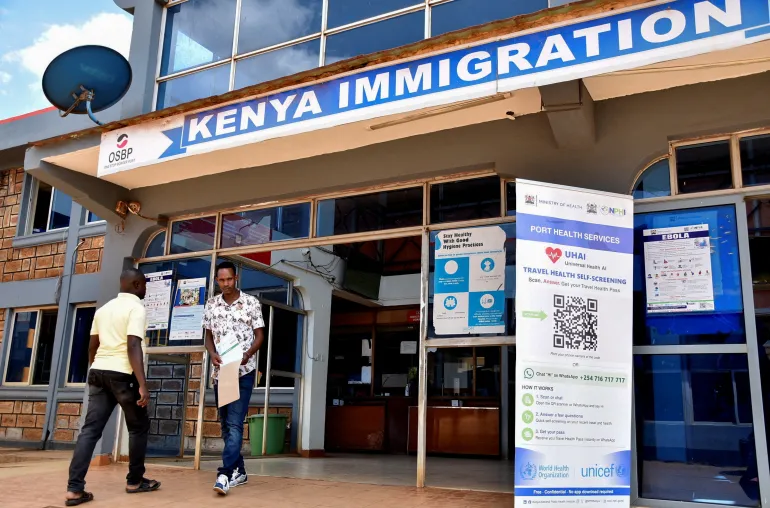
![Travellers walk at the Kenya immigration services to access port health services at the Busia One Stop Border Post, crossing-point between Kenya and Uganda, after a man who had been living in the Democratic Republic of Congo travelled and died of a new Ebola outbreak involving the Bundibugyo species at the Nairobi Hospital, in Busia, Kenya October 8, 2026 [James Keyi/Reuters]](https://i0.wp.com/occasionaldigest.com/wp-content/uploads/2026/10/2026-10-14T155735Z_34711835_RC22ZNATTZD9_RTRMADP_3_HEALTH-EBOLA-KENYA-1792367033.jpg?w=640&ssl=1)


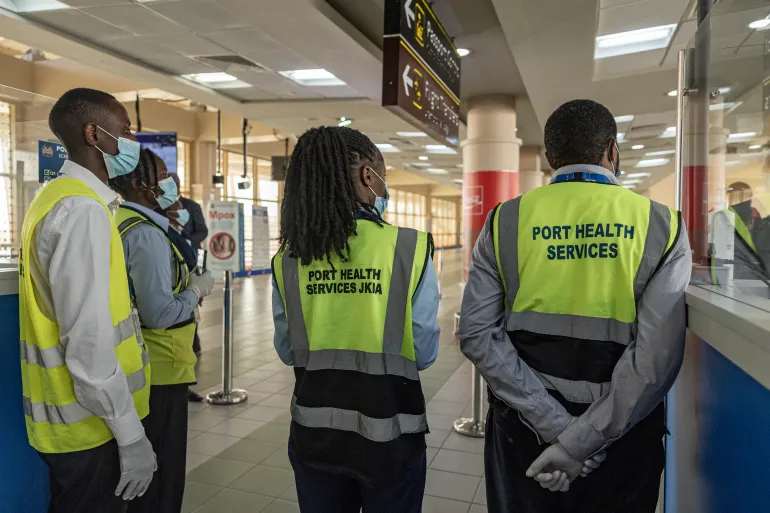
![Kenyan Ministry of Health officials screen arriving passengers at Jomo Kenyatta International Airport in Nairobi amid Ebola-related health precautions [AFP]](https://i0.wp.com/occasionaldigest.com/wp-content/uploads/2026/10/afp_6ac66094d7af-1791385748.jpg?w=640&ssl=1)
![A worker in protective gear handles sanitary basins at an Ebola treatment centre run by Médecins Sans Frontières in Butembo, eastern DRC [Gradel Muyisa Mumbere/Reuters]](https://i0.wp.com/occasionaldigest.com/wp-content/uploads/2026/10/reuters_6ab6e4f3-1790371059.jpg?w=640&ssl=1)