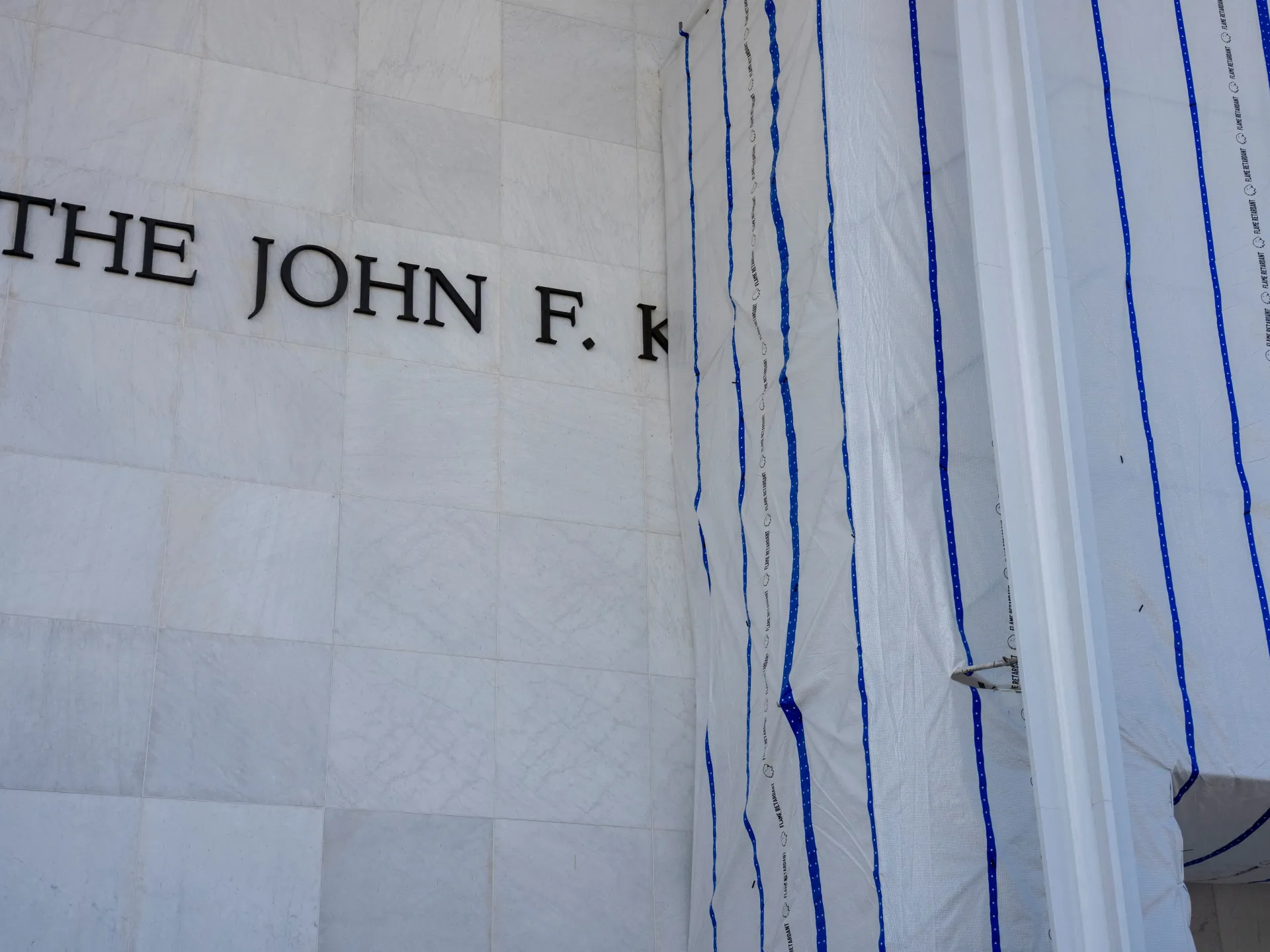
Like any other building from 1971, or a democracy created in 1776, the Kennedy Center could use some attention and possibly some structural repair. But I was a vice president at that arts center in Washington, and I can tell you that maintenance is almost certainly not why it closed its doors last month.
Officially, it’s closed because a section of the Grand Foyer ceiling gave way in a storm, plaster crashing to the floor, and the building needed to be shut down for safety. The Justice Department itself has argued in court filings that there is no real emergency requiring the closure. The board, meanwhile, has approved a quarter-billion-dollar renovation plan, put together without competitive bidding, while the president muses openly about tearing the building down altogether if his own name isn’t affixed to it. This administration is effectively bulldozing arts infrastructure in an attempt to abolish an infrastructure of the imagination.
I watch all of this from the outside now. When the new “leadership” took over last year, my team and I were among the first let go. My department worked on free public programming, on creative equity, on cross-sector community development and on measuring the social impact of art. That we were among the first out the door probably tells you everything you need to know about who was put in charge of the place.
As an American, as an artist and as a former member of its labor force, I understand that the Kennedy Center is more than a building. It is a living memorial to a president who was taken from us too soon, a man who had the audacity to aim for the moon before the science existed to get us there. To honor that kind of visionary, this country built a center for the creative impossible, and gave it his name.
And true to that name, my job at the Kennedy Center was to investigate the correlation between the arts economy and the economy of civic aspiration. As a team, we believed that inspiration erodes apathy and yields empathy. The building is a container of federal infrastructure, but the arts that imbue the Kennedy Center make the argument that inspiration itself is part of the infrastructure of our democracy. An arts center is built to ask: “What are the conditions necessary to dream together in public?”
Who, if not artists, are the authors of the public imagination? When a baby is born, or your daughter gets married, do you read a piece of legislation to commemorate the occasion or do you quote a poem, or dedicate a song? Who, if not artists, might light the path to a post-fear economy?
So why invade an arts center? What could possibly be gained by shuttering a national citadel for creative excellence? How perverse that a president whose policies have underfunded education and the arts would gut a national sanctuary for curiosity, and then demand that his name be emblazoned on the shell of what was. This president has used executive orders to intimidate artists, banned writers and journalists, sabotaged arts education, created oppressive red lines within the National Endowment for the Arts and threatened philanthropic organizations that fund arts and culture, and then he turns around and wants his name on our national cultural center.
When I worked there, the Kennedy Center wasn’t perfect. No institution is. But the business was viable, the staff was talented and reliable, and the work we made together would, often enough, touch something close to the sublime. Our job, like those of so many arts workers across the country, was to activate creative magic in service of social cohesion and well-being.
This is what gets lost in the noise of storms and lawsuits and renovation budgets: Entertainment is everywhere, but inspiration is rare. Sometimes you are sitting in a dark theater with strangers and the right note gets struck, and you hear it with your ears but you feel it somewhere else entirely. In the gut and heart. And the person next to you, a stranger, feels it too, at the exact same moment. You can practically feel the room change. All that magic can happen in one theater, and the Kennedy Center has nine of them. If a solar panel uses the energy of the sun to power a building, an intentionally run theater can use the energy of its inspired audiences to power a city.
Art holds memory. It also holds the horizon, the sense of what a country could still become. Patriotism as enacted by the creative community takes the American experiment seriously enough to question, examine, remember what we’ve forgotten and catalyze collective American dreaming. That is what the Kennedy Center was named for: a president who dreamed of a country unafraid of beauty, unafraid of grace.
Thankfully, America’s creative labor force tirelessly stewards that sense of creative provocation and patriotic inquiry. It is alive everywhere, including in the work of individual artists such as Carrie Mae Weems or in the work of collectives such as For Freedoms and their “America, the Beautiful” initiative.
We, the chronically underwhelmed citizenry of the United States, can’t afford one less pillar of creativity. We should be fighting to reconstitute any and all artistic institutions with an eye toward an inspired future.
Marc Bamuthi Joseph, a spoken-word artist and actor, was vice president for social impact at the Kennedy Center.
The 49th Kennedy Center Honors gala will go on despite the recent closure of the Kennedy Center, with the event moving to the Capital One Arena in Washington, D.C., on Dec. 7. The honorees and a broadcaster for the program will be disclosed at a later date.
The annual event will take place amid an ongoing legal battle as President Trump attempts to add his name to the building.
Hours after a federal judge blocked the president’s attempt to restore his name, the Kennedy Center’s board voted on Sept. 15 to shutter the venue for renovations. Trump, however, threatened on social media to block the $250-million renovation, which he initially proposed, if his name weren’t added to the facade.
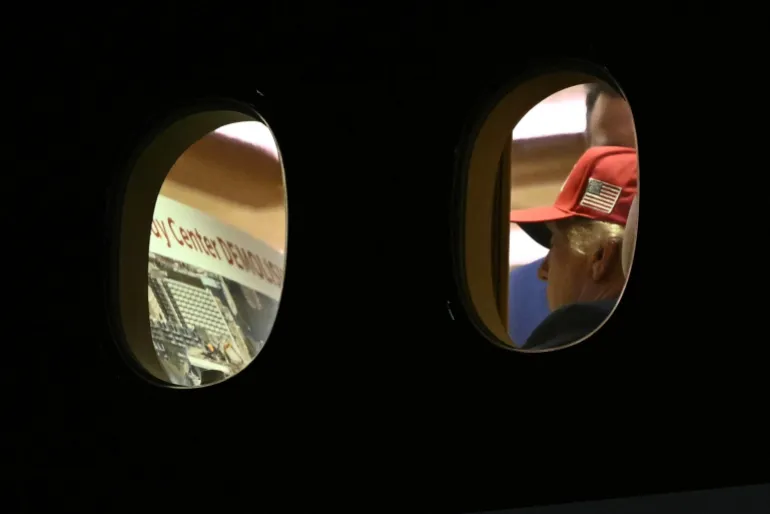
In mid-September, a picture of the president aboard Air Force One reviewing plans that were titled “Kennedy Center Demo[lished]” prompted panic as architectural, preservation and civic organizations asked the court for a “neutral officer to protect the building and institution.”
A federal judge ordered Kennedy Center leaders to provide 30 days’ notice before any changes, including demolition.
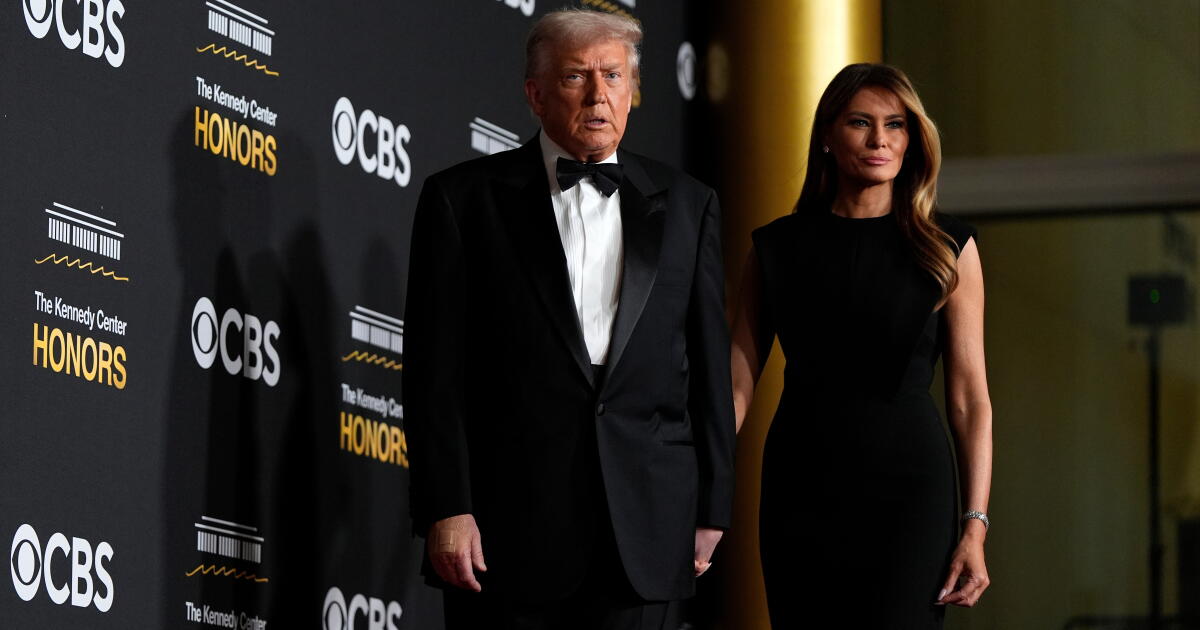
Last year’s Kennedy Center Honors gala, which recognizes artists who have contributed to American culture, was hosted by Trump and televised on CBS and Paramount. The ceremony, honoring Sylvester Stallone, Kiss, Gloria Gaynor, Michael Crawford and George Strait, earned the lowest ratings in its history. It was not announced whether Trump would return as master of ceremonies for this year’s event.
The 39th annual Hispanic Heritage Awards — which will honor the contributions and accomplishments of Latinos in the U.S. and Latin America — will air nationwide Friday on PBS.
In a historic decision by the Hispanic Heritage Foundation, which presents the annual awards, the event departed from its home base of Washington. Instead, Latino luminaries gathered at the Orchestra Hall in Minneapolis, where the celebratory occasion was taped for broadcast Sept. 10.
The move to the Midwest was a timely decision for members of the Hispanic Heritage Foundation, a nonprofit organization established by the White House in 1988. They took into consideration Minnesota’s response to a large-scale immigration enforcement campaign that began in December, known as “Operation Metro Surge.”
“We went to Minneapolis because we wanted to recognize what’s great about our community, [our] courage, resilience, strength, unity and looking out for each other,” said Antonio Tijerino, president and CEO of the Hispanic Heritage Foundation, in a phone call with De Los.
The Department of Homeland Security called the undertaking the “largest DHS operation ever” earlier this year on X, with an estimated 2,000 agents deployed to the Minneapolis–St. Paul metropolitan area. Thousands of Minnesota residents rallied against the tactical and militant methods used by Immigration and Customs Enforcement agents.
Civil unrest hit a boiling point following the killings of Renée Good and Alex Pretti on Jan. 7 and 24, respectively, by federal agents.
“ We actually went with a delegation of national Latino leaders to offer our support of the community during this crisis and we were overwhelmed by the heroism,” said Tijerino, who recalled a group visit to Minneapolis in February. There, he and his colleagues learned more about the rapid response efforts underway in the city.
“It was an American story that we wanted to tell,” he added.
At the 39th ceremony, Los Tigres del Norte presented a bit of that story to the people of Minnesota — who were collectively honored with the Humanitarian Award.
“Peaceful, hard-working communities of immigrants and refugees found themselves in fearful chaos as more than 4,000 parents, grandparents, neighbors, friends and families were taken by force, U.S. citizens among them,” Los Tigres del Norte announced in English while presenting the award. The players closed the show with a rendition of their 1984 song “Jaula de Oro,” which speaks to the plight of the undocumented community.
“I think Minnesota [is] a reflection of all of our Latino communities across the nation,” said Henry Jiménez, president and CEO of Propel Nonprofits, who was one of the individuals on stage representing the people of Minnesota.
“It uplifted the people. I think people felt validated for all of their hard work and effort that they’ve had to endure, not just the last couple months, but really a lifetime of work,” said Jiménez, whose organization helps consult and raise funds for budding nonprofits.
The relocation of the Hispanic Heritage Awards also comes as D.C. deals with the temporary closure of the John F. Kennedy Center for the Performing Arts — which hosted the Hispanic Heritage Awards in years prior.
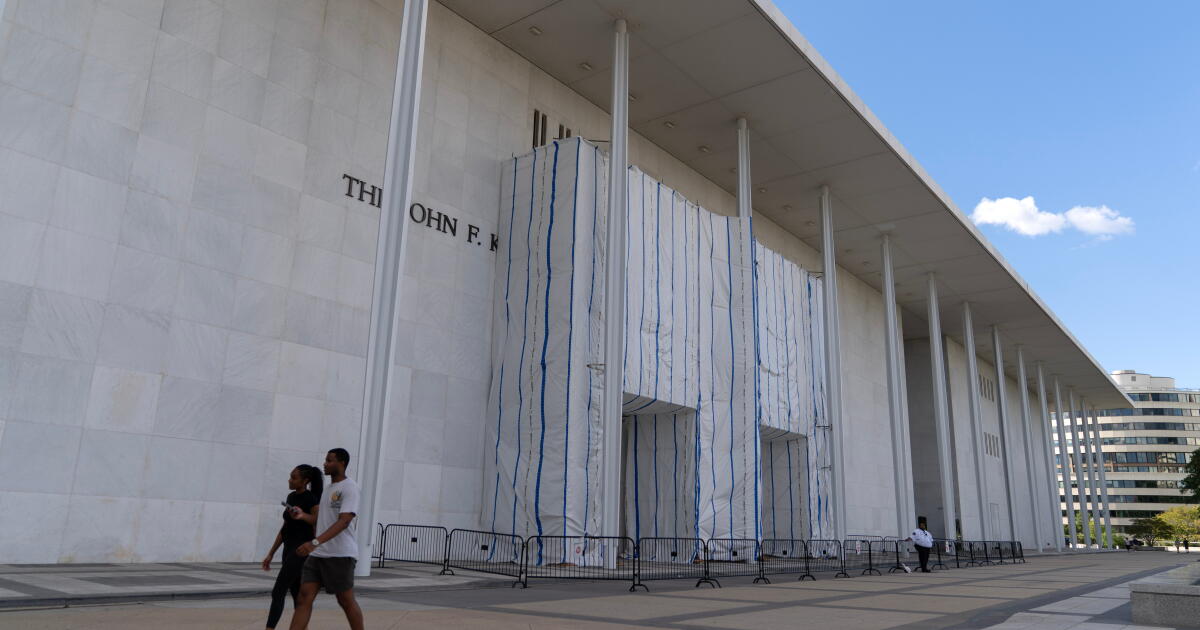
The Kennedy Center closed its doors indefinitely on Sept. 15 after an inspection found acute public safety concerns, among them roofing issues. In a letter to Congress, various former employees allege that leadership was aware of the issues but halted plans for repair in April.
The closing also comes after a federal judge blocked the board’s decision to include President Trump’s name on the building in September. Trump’s takeover of the Kennedy Center began in February 2025, when he dismissed half its board members and installed himself as chairman.
“We were [at the Kennedy Center] for a very long time. It brought a lot of prestige and to fill a historic venue like that with Latinos was wonderful,” said Tijerino. “After many years of being at the Kennedy Center, we decided we wanted to go to another venue.”
In April 2025, the Hispanic Heritage Foundation announced that it would host its 38th annual awards at the Warner Theater instead; previous versions of the ceremony have also taken place at the historic Warner Theater venue, including in 2015 for the 28th Annual Awards and 2017 for the 30th celebration.
Hosted by comedian Anjelah Johnson-Reyes, the other honorees of the 39th Hispanic Heritage Awards included Venezuelan artist Oscar D’León, the salsa singer behind notable hits such as “Llorarás” and “Me Voy Pa’ Cali,” who received the Legend Award for his lifelong contributions to the genre.
Chilean singer-songwriter Mon Laferte, the vocal powerhouse behind power ballads like “Tu Falta de Querer” and “Amárrame (feat. Juanes),” also received the Social Justice Award. The Latin Grammy-winning artist has long championed feminist causes and challenged sexual harassment in the entertainment industry — a topic central to her 2024 Netflix documentary, “Mon Laferte, Te Amo.”
Puerto Rican rapper Eladio Carrión, whose trap flow famously featured in songs like “Coco Chanel” with Bad Bunny and “Sigue Bailandome,” was also honored with the Inspira Award.
Mexican singer-actor Ximena Sariñana, whose early composition appeared on the soundtrack of the 2002 teen film “Amar Te Duele,” received the Music Award as well.
Following the success of their Minneapolis awards show, the Hispanic Heritage Foundation is now toying with the idea that the ceremony can take place anywhere where there is a strong Latino presence.
“Who knows if L.A. is the [next] spot!” said Tijerino, who hails from Long Beach,
Though Jiménez assures that he is not swayed by any particular city at the moment, he offers one idea: “I hope that the community that’s chosen [to host] doesn’t have to go through a difficult time to be chosen.”
WASHINGTON — About half of rural voters identify with Make America Healthy Again, a sprawling political movement championed by the Trump administration, but most said President Trump’s healthcare policies have not benefited their communities, according to a new poll from The Associated Press in partnership with KFF.
About 8 in 10 rural voters — an important voting bloc for Trump and fellow Republicans — said the Trump administration’s policies have had a negative effect or no impact on the health of people where they live. Most MAHA supporters, 68%, also feel this way, according to the national survey of more than 2,000 rural registered voters.
The findings signal an apparent disconnect between the Trump administration’s MAHA-branded policy priorities and rural America’s perception of their reach and effectiveness.
Iowa pastor Mike Jager, 58, is a registered Republican and considers himself part of the MAHA movement. The Trump administration’s health policies have had “minimal” impact on the health of his community, Jager said, but he added that Trump’s health secretary, Robert F. Kennedy Jr., is moving the needle “in the right direction.”
“It’s a beginning,” Jager said. “It’s a big ship to try and turn around and course-correct.”
Kennedy has used the MAHA label to support various agendas, including abandoning long-standing vaccine guidance, researching ultraprocessed foods and investing in regenerative agriculture.
Jager lives in Sumner, Iowa, “less than a quarter mile from where the corn ends and the city begins.” He’s seen family members and neighbors develop diseases that he believes resulted in part from exposure to agricultural chemicals and consumption of unhealthy, processed foods.
In the June Republican primary for governor, Jager voted for Zach Lahn, a businessman and farmer who ran on a MAHA platform and beat out Trump-backed U.S. Rep. Randy Feenstra. He plans to vote for him again in November.
Many rural voters are prioritizing health issues
About two-thirds of rural voters who support MAHA said it’s “extremely” or “very” important to them to vote for a candidate who does, too, while only 4 in 10 rural voters overall said the same.
Trump sought to seize on MAHA support during his campaign for another term two years ago. Now, amid tight midterm races, Kennedy has campaigned to galvanize the movement’s support. In May, he attended a MAHA bill signing with Iowa Republican Gov. Kim Reynolds, and in August, he went fishing with Lahn, posting about it on social media.
Yet the survey indicates voters are noticing “this weird split in the Trump administration” between what Kennedy messages and what Trump says and does, said David Peterson, a political science professor at Iowa State University.
In Iowa, concerns about what’s causing rising cancer rates are “a big deal,” he said. For many people who identify with MAHA, being healthy includes taking on corporate agriculture and pharmaceutical companies that they think cause cancer, he added.
In the poll, views on healthcare access and costs largely diverged along party lines. Most Democratic and independent voters said the Trump administration’s healthcare policies have had a negative impact on their healthcare costs and the health and well-being of people in their communities. Republicans were likelier to say there hasn’t been an impact.
Talking on the phone from her 200-acre farm in Carroll County, Iowa, 71-year-old Donna Klocke said that her husband had died from cancer and that she has neighbors who also have cancer.
“It’s just very prevalent,” Klocke said. “We’re in a farming community. We use chemicals and pesticides and all kinds of things that aren’t necessarily good for us.”
Klocke, a Democrat, said the MAHA movement is a good idea because she cares about being healthy, but she does not consider herself part of it and will not be voting for a candidate who represents the movement.
“Measles are coming back and polio,” Klocke said. “It’s the measles that really gets me. It’s like, do you not understand how dangerous it is?”
Survey reflects angst over healthcare
Nearly half of rural voters said their communities don’t have enough doctors or other healthcare providers, and even more said there aren’t enough mental health workers specifically. The share of rural voters who said their community does not have enough hospitals increased to 35% from 21% in a similar question asked in a KFF-Washington Post survey in 2017.
And as with the general population, healthcare, gas and grocery costs are top pain points. At least 6 in 10 rural voters said they were worried about healthcare costs.
The level of worry varied based on coverage, with rural voters enrolled in employer plans or Medicare less likely to be worried. The survey found that 80% of working-age rural voters on Medicaid were very or somewhat worried about healthcare costs. Last year, Republicans passed a tax and spending bill that cut over $900 billion in projected Medicaid spending over a decade and mandated new eligibility requirements.
In the tiny community of Lipan, Texas, west of Dallas, Kim Solis and her husband have a handyman-and-home-remodel business and get their insurance on the marketplace. Since Trump returned to office, their premium payment jumped from zero to $166 a month. Their copays went up, and their deductibles each increased by $2,000.
Solis, 62, said she worries what will happen if they get a big medical bill.
“Certainly, we’d be in a world of hurt trying to take money out of savings or getting it out of our 401(k) just to be able to do something about it,” she said.
Most MAHA voters are also MAGA — but not all
Like the general population, rural voters said they trust their own doctors and healthcare providers for health information over government agencies or officials, according to the poll.
Trust in Kennedy and Trump fell largely along partisan lines. About 10% of rural Democratic voters reported having a “great deal” or “fair amount” of trust in Kennedy, compared with 74% of rural Republican voters. About 5% of rural Democrats and 69% of rural Republicans said they trust Trump a “great deal” or “fair amount” for reliable health information.
While Make America Great Again and MAHA identities are “linked in a lot of ways,” the rising costs of healthcare and groceries pose a challenge for those committed to the MAHA principles that Kennedy promotes, said Peterson, the Iowa State professor.
Buying healthy food “becomes, ‘I can’t afford to do that because of Trump’s policies,’” he said.
In Stamping Ground, Kentucky, Alma Johnson, 65, works night security at a horse farm.
Johnson voted for Trump in 2016, 2020 and 2024 and said she “pretty much” likes how Trump is running the country. But she said she is not a MAGA devotee, preferring to “think for myself.”
MAHA, however, is an easy sell for Johnson because, she said, she doesn’t think people should be able to buy junk food in the Supplemental Nutrition Assistance Program, or SNAP.
Still, she said she hasn’t seen much impact from the Trump administration’s healthcare policies, including the new food pyramid.
“It takes a long time to change people, their habits, their thoughts or the things they do,” Johnson said.
Swenson, Tribble and Sanders write for the Associated Press.
The poll of 2,241 U.S. adults registered to vote in rural areas of the country was conducted Aug. 12-24, 2026, using a sample drawn from the probability-based SSRS Opinion Panel. The margin of sampling error for the full sample is plus or minus 3 percentage points. In collaboration with AP, KFF researchers worked to design the survey sample and questionnaire, analyze and report findings. This report is a collaboration between the Associated Press and KFF Health News. KFF Health News is a national newsroom that produces in-depth journalism about health issues and is one of the core operating programs at KFF — the independent source for health policy research, polling and journalism.
Kennedy Center officials were long aware of serious structural issues that they cited as new problems after the abrupt decision to close the performing arts venue this month, a group of former employees allege in a letter to Congress.
The center’s executive director and chief operating officer, Matt Floca, did not treat the roofing issues as priorities and in April halted a funded plan to address them, according to the letter Thursday signed by David Seide, a lawyer representing the anonymous whistleblowers.
Floca denied their allegations, saying recent investigations of the leaks exposed new hazards at the building.
In a September court declaration, Floca noted there were “acute risks to public safety” when the aging building temporarily closed its doors after an inspection of a deteriorating roof terrace canopy and a partial ceiling collapse. The former employees, however, claim those “acute” issues were known previously by Floca, who joined the Kennedy Center as vice president of facilities in 2024.
“More than one year ago, Mr. Floca had requested and received the needed funds to remediate the New Problems he references,” Seide wrote, citing President Trump’s tax cut and spending bill that he signed in the summer of 2025. “Yet six months ago – with the funds in hand – he stopped the remediation process from moving forward.” In the legislation, Congress earmarked $257 million for the Kennedy Center.
The letter, first reported by The New York Times, is the latest in a series of tensions over an iconic Potomac River waterfront building that has become a focus of the Republican president in his remaking of the nation’s capital in his second term. Trump has installed his own leadership to the center’s governing board and had his name placed on the building before a judge ruled the new lettering was illegally added and ordered it removed.
The Trump-aligned board voted earlier this month to close the center indefinitely for repairs hours after U.S. District Judge Christopher Cooper blocked its plans to return Trump’s name to the building.
Cooper has told the center that it must give 30 days’ notice before making any major physical changes to the building, including demolishing it, as Trump has threatened. The Kennedy Center leadership also must file a status report no later than Friday on the temporary closure and emergency repairs.
Asked for a response to the whistleblowers’ claims, a Kennedy Center spokesperson sent a written statement from Floca, who said the safety of patrons, artists and staff is his priority.
“The Kennedy Center has known for years that the roof overhang leaked,” he wrote. “What we did not know until this summer was how far the damage had spread inside it.”
Floca added that rather than halting design plans in April as the whistleblowers alleged, he had reassigned the work to a more comprehensive plan because the contractor’s quote for the initial plans were nearly three times the expected cost.
“That was a change in the approach to procuring and delivering the work, not a determination that the work was unnecessary,” Floca wrote.
Rhode Island Sen. Sheldon Whitehouse, the top Democrat on the Senate Committee on Environment and Public Works, wrote Floca on Thursday after receiving the whistleblower letter. Whitehouse said the documents showed Kennedy Center leadership had “hoarded” congressionally appropriated funding for repairs “while blaming previous leadership for the state of repairs.”
“My initial investigation into misconduct at the Center focused on cronyism and corruption, with documents demonstrating considerable excessive and self-serving spending under President Trump’s chairmanship,” Whitehouse said. “The documents that I attach today seem to reveal deeper financial mismanagement.”
A spokesperson for the committee’s Republican majority did not immediately reply to a request for comment Saturday.
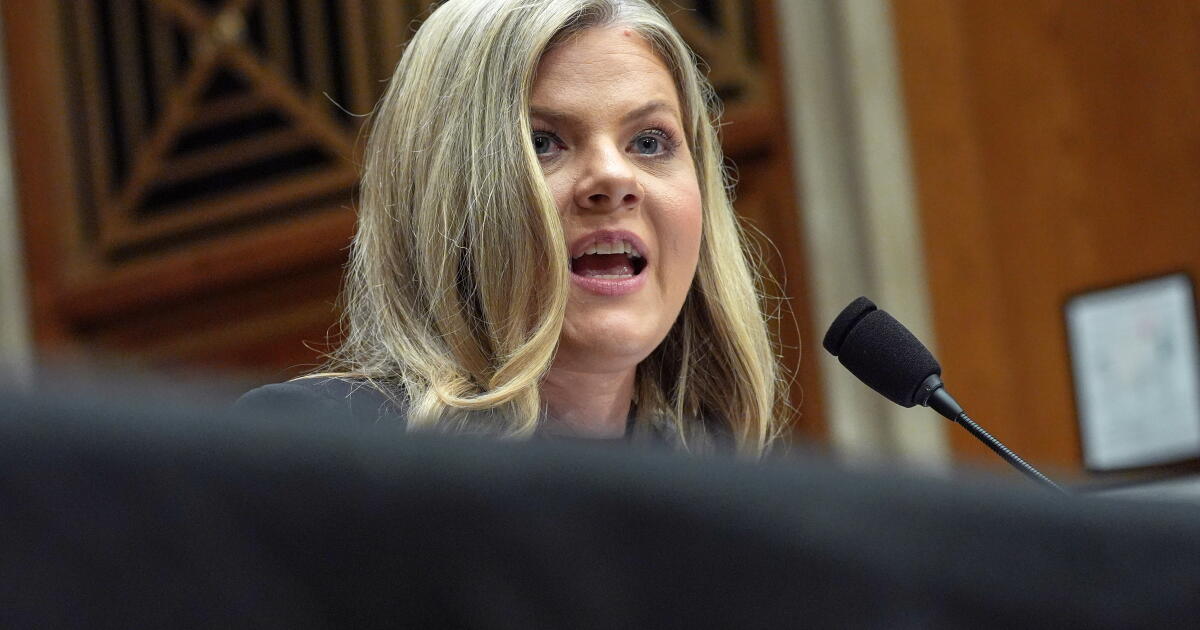
WASHINGTON — President Trump’s pick to lead the Food and Drug Administration voiced support for the safety of long-established vaccines at a hearing Thursday, even as senators questioned her about the White House’s efforts to upend childhood immunizations.
Dr. Heidi Overton, a physician serving as a White House adviser, has worked on a series of Trump health initiatives, including an executive order last month that called for splitting up and spacing out decades-old childhood vaccinations. Overton stood beside Trump in the Oval Office when he falsely remarked that the combined measles, mumps and rubella, or MMR, vaccine is “quite lethal.”
Senate Health Committee Chairman Sen. Bill Cassidy, a physician from Louisiana, pushed Overton to reject that statement and affirm the safety of FDA-approved vaccines.
“Right now every vaccine that is on the market has been determined to be safe and effective,” including the MMR vaccine, Overton said.
Cassidy repeatedly has tried to extract commitments from Trump health nominees to uphold vaccine standards, including from Health Secretary Robert F. Kennedy Jr., only to see the Republican administration push forward with efforts undermining their use.
“Kennedy gave me guarantees, and he did not keep them,” said Cassidy, a Republican. “If the president asks you to do something that goes against those guarantees you give us today, what will you do?”
Overton said she would “follow the statutory requirements” for FDA commissioners and give Trump her best advice.
If confirmed by the Senate, Overton would inherit a raft of other controversial projects at the agency, including a safety review of the nation’s principal abortion drug and new rules that make it easier to sell flavored electronic cigarettes. Both issues were a focus for Republicans and Democrats on the panel, who will vote on Overton’s nomination.
Overton sidesteps past statements on abortion pill
The FDA approved the abortion pill mifepristone in 2000 and repeatedly has affirmed its safety while broadening access, including allowing it to be sent through the mail. But Kennedy ordered an FDA review of the drug’s safety last year, following calls from antiabortion groups and lawmakers favoring abortion restrictions.
While working at the Trump-aligned America First Policy Institute, Overton called the FDA decision to allow mail delivery of mifepristone “dangerous for women,” referring to the practice as “chemical abortion on demand.”
In response to questions from Washington Sen. Patty Murray, Overton sidestepped her personal views on the drug, stating that it “has met the safety and efficacy determinations of the FDA.” Overton said she didn’t want to “prejudge” the FDA’s safety review of the pill.
“The FDA has said this is safe,” responded Murray, a Democrat. “We need someone in FDA to make sure this is done by science.”
Overton’s abortion views could complicate her efforts to win over two moderate Republicans on the panel: Maine Sen. Susan Collins and Alaska Sen. Lisa Murkowski. Both have bucked their party on the issue, supporting federal access to abortion. Collins is locked in a tight reelection race in which abortion access is a central issue.
But Collins focused her questions Thursday on a different issue: recent FDA decisions allowing new flavored e-cigarettes onto the market. Under previous administrations, including Trump’s first term, the agency had restricted sweet flavors that appeal to kids.
Overton pointed out that approval of the fruit-flavored products had the backing of FDA scientists, who determined the products met the standard of “appropriate for the protection of public health,” by helping adult smokers quit cigarettes.
“They believed that standard was met because so many adult smokers are using flavors preferentially,” Overton said.
To become commissioner, Overton will need a majority of votes from the 21-member health committee, followed by a positive vote from the full Senate.
Under the current administration, leading the agency has involved balancing Trump’s demands for slashing regulations — such as those for vaping products — alongside Kennedy’s interests in scrutinizing vaccines, drugs and food ingredients.
The previous FDA head faced numerous challenges before quitting
Those challenges dogged the tenure of the previous FDA head, Dr. Marty Makary, who resigned in May. Makary’s time at the agency was defined by scientific disputes, leadership changes and a string of media stories detailing low morale and internal dysfunction among staffers. The FDA has lost about 20% of its employees to layoffs, buyouts, retirements or resignations since Trump took office.
Overton studied under Makary at Johns Hopkins University, where she received a doctoral degree in clinical research after earning her medical degree at the University of New Mexico.
Like Makary, Overton has no experience running a large bureaucracy, a critical skill for steering the FDA’s 16,000 staffers spread across numerous U.S. and international locations.
In financial disclosure forms, Overton reported no investments in healthcare or food companies. That’s a stark contrast to Makary and other recent FDA nominees who have had to divest investments or cut other financial ties with companies regulated by the FDA.
Overton reported $50,000 to $100,000 in student loans.
Is President Trump holding the Kennedy Center hostage? The allegation has been made at least twice, most recently by John F. Kennedy’s niece Kerry Kennedy, and earlier by Rep. Joyce Beatty (D-Ohio), an ex-officio member of the board, who has sued to keep Trump’s name off the building.
The Merriam-Webster dictionary defines “hostage” as, “a person taken by force to secure the taker’s demands.” Swap, “person” for the “Kennedy Center” and “taker” for “Trump,” and you have a pretty straightforward “yes.”
The ongoing Kennedy Center dumpster fire points to an unusual presidential obsession with the nation’s premier performing arts venue that dates back to Trump’s first term when he became the first sitting president in history to twice miss the annual Kennedy Center Honors.
In his second term, Trump turned that snub upside down by firing the board and strong-arming his way into being named chairman. If he expected to be welcomed into the arts community with open arms, he was gravely mistaken. His takeover resulted in a wave of high-profile cancellations that ultimately led to a massive dip in ticket sales. The exodus became even worse when the Trump-appointed board voted to add Trump’s name to the building late last year. The reaction, it seems, injured the president’s fragile ego and incurred his wrath.
By early February the president announced he would close the center for a two-year, $257-million renovation. Calling the historic venue “dilapidated,” Trump said he would be the one to restore it to glory. Behind the scenes another story was unfolding, and six months later the Washington Post reported that “ticket sales and fundraising collapsed” after Trump’s name was added to the building, “even as the center’s leaders publicly touted a financial turnaround.”
This week saw chaos at the venue that even the most seasoned journalists struggled to keep up with as the board voted to close the building on the same day that a federal judge upheld an order that Trump’s name could not be restored to its facade after he ordered it removed in late May.
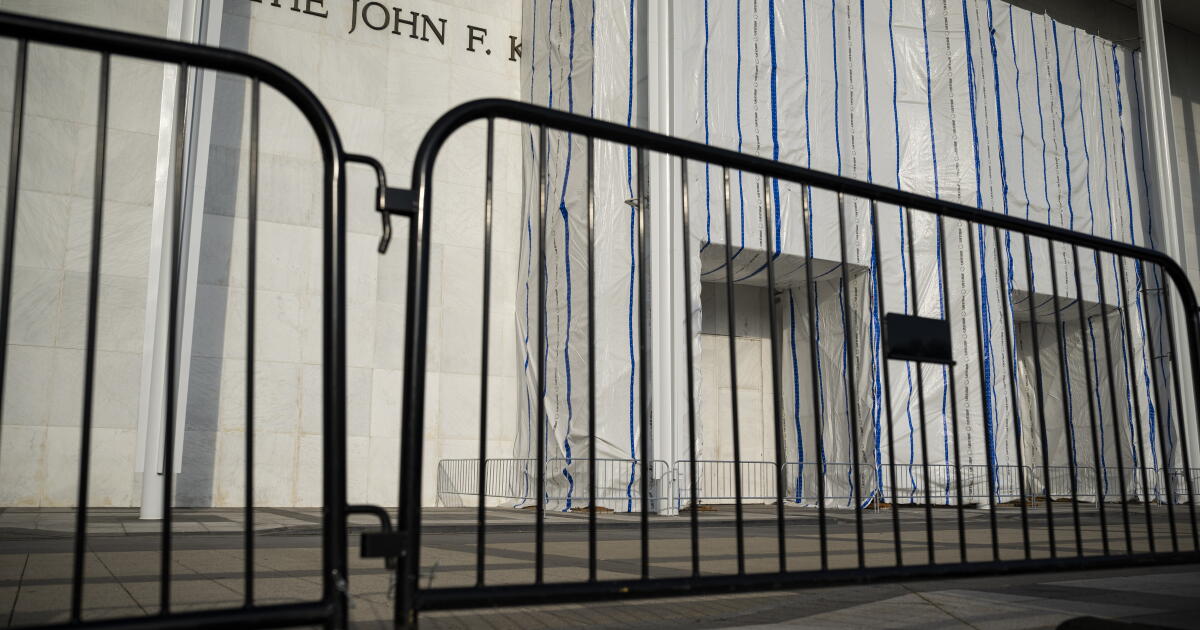
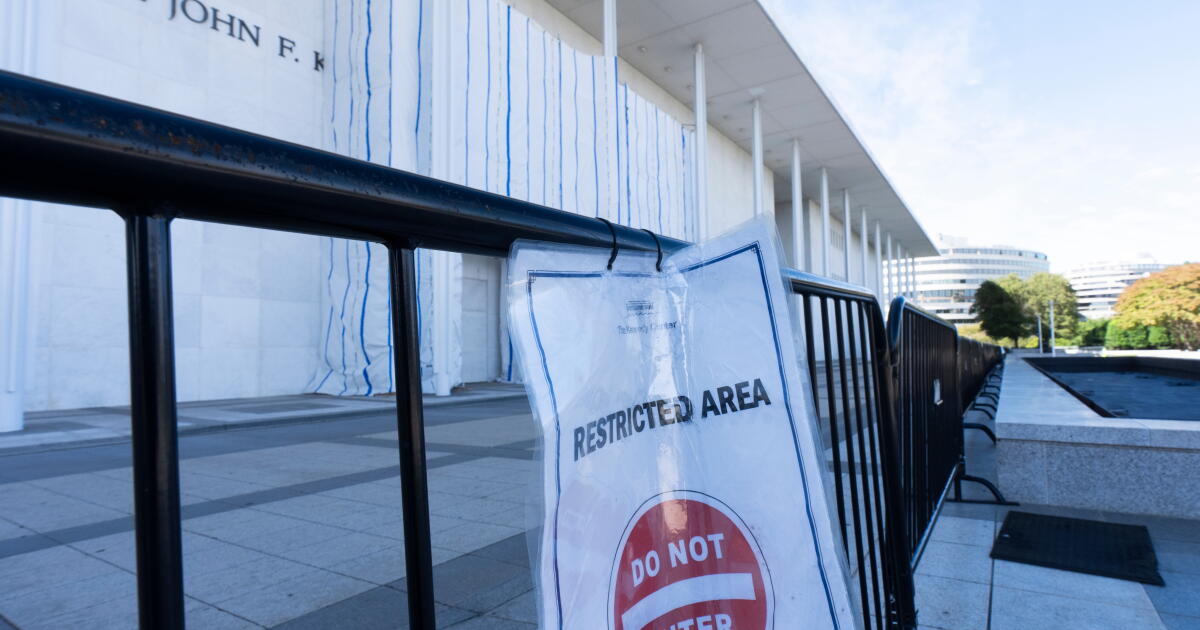
Trump took to social media to decry the decision, threatening to withhold his support for the renovation and noting that the center could be “ripped down” if he wasn’t formally honored with his name on the building. Despite a preliminary injunction barring the venue from closing, people were kicked out of the building and barricades erected in the name of public safety that same day.
Those prone to hyperbole might be tempted to call this presidential tantrum disguised in procedural clothes a constitutional crisis. Or you could just say that Trump has taken the Kennedy Center hostage. The taker wants his name on the building, and the center will not be released for renovation or reopening if that doesn’t happen.
In the meantime an image of Trump on Air Force One was captured that shows him holding a large placard that reads, “Kennedy Center DEMO[LISHED],” leaving concerned parties to wonder just what exactly the chairman of the board has in mind. Is he using a Sharpie at this very moment to slash a line through the image at the center on that board, or is it just a prop to be trotted out in a cruel bit of future social media hazing?
Getting lost in all the drama: a beloved arts venue has gone pointlessly dark, and the people who loved it are heartbroken. If no one is inside to hear the wind whistle, does it make a sound?
I’m Arts editor Jessica Gelt, willing to rustle up a ransom. This is your arts and culture news for the week.
You’re reading Essential Arts
Our critics and reporters guide you through events and happenings in the SoCal arts scene. In your inbox every Friday.
By continuing, you agree to our Terms of Service, which include arbitration and a class action waiver. You agree that we and our third-party vendors may collect and use your information, including through cookies, pixels and similar technologies, for the purposes set forth in our Privacy Policy such as personalizing your experience and ads.
The week ahead: A curated calendar
FRIDAY
Oliver Lee Jackson: Form Follows Feeling The Bay Area painter, sculptor, and printmaker’s work, created over decades, is inspired by the human figure in its composition and structure. Opening reception, 6-8 p.m. Friday; 10 a.m.-6 p.m. Tuesday-Saturday. Lisson, 1037 N. Sycamore Ave. lissongallery.com
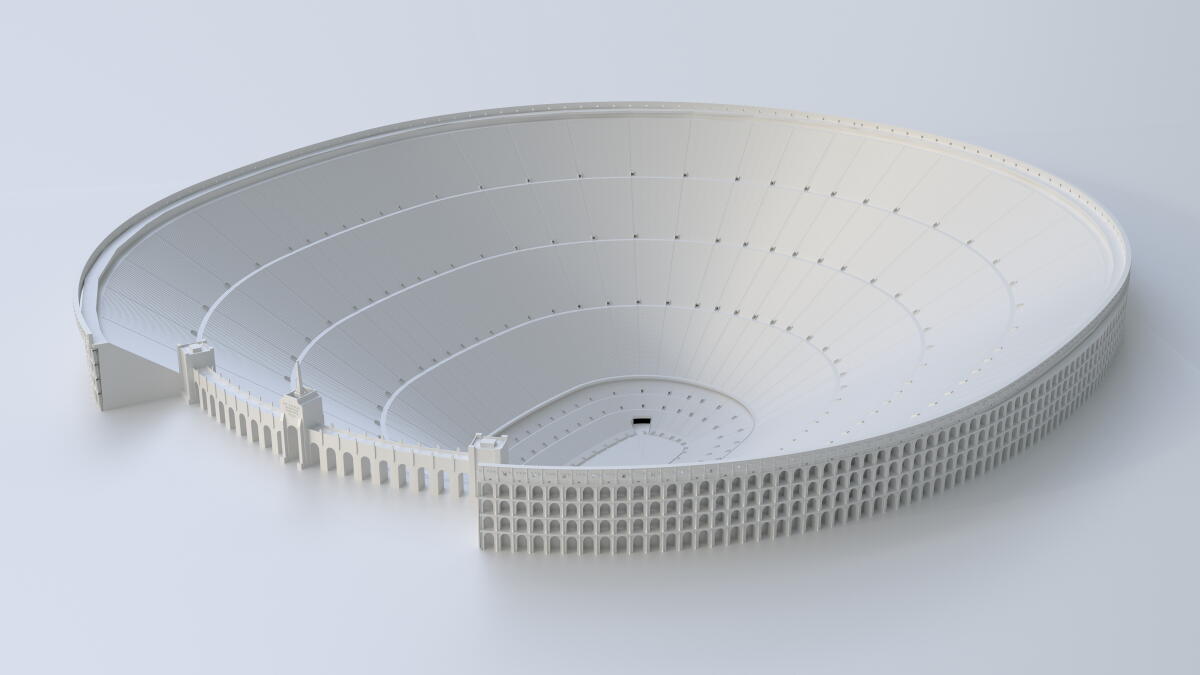
“Vitruvian Figure (Los Angeles Memorial Coliseum),” 2026, 3D model by Paul Pfeiffer.
(Paul Pfeiffer/Perrotin)
Paul Pfeiffer: Olympia In new work focused on Los Angeles, the artist explores the intersection between media, spectacle, architecture and the body ahead of the city hosting the 2028 Olympic Games. Opening reception, 6-8 p.m. Friday; Pfeiffer in conversation with Britt Salvesen, 3 p.m. Saturday; exhibition, 10 a.m.-6 p.m. Tuesday-Saturday, through Nov. 7. Perrotin, 5036 W Pico Blvd. perrotin.com
SATURDAY
“Couple walking, Park Avenue,” 1960.
(Estate of Roy DeCarava)
Roy DeCarava: the sound i saw The exhibition presents more than 130 images created between the late 1940s and 1960s, depicting the photographer’s intense interest in the relationship between the visual and the aural. Accompanying the exhibition, in the gallery next door, will be “SIDE B: the sounds,” a listening room featuring DeCarava’s personal playlists and favorite jazz album. Opening reception, 6-8 p.m.; exhibition runs through Oct. 31. David Zwirner Gallery, 606 and 6166, N. Western Ave. davidzwirner.com
Sutton Foster The two-time Tony winner and TV star performs Broadway hits and standards with Pacific Jazz Orchestra, featuring new arrangements by conductor Chris Walden. 8 p.m. The Soraya, 18111 Nordhoff St., Northridge. thesoraya.org
Mia Middleton: Summoning Cleo New work by the artist explores interpreting familiar forms through a surreal lens. Opening reception, 5-7 p.m. Saturday; exhibition runs through Oct. 24. Roberts Projects, 442 S. La Brea Ave. robertsprojectsla.com
Mrs. Warren’s Profession Real-life mother and daughter Cyndy Fujikawa and Nell Murphy star in this production of George Bernard Shaw’s 1893 play about a Victorian woman coming to terms with how she built a business empire. Directed by Michael Rothaar. Opening night, 8 p.m. Saturday; 8 p.m. Thursdays, Fridays and Saturdays; 3 p.m. Saturdays and Sundays (check website for exceptions), through October 25. Pacific Resident Theatre, 707 Venice Blvd, Venice. pacificresidenttheatre.org
Grammy Award-winning composer and bandleader Arturo O’Farrill and Afro Latin Jazz Orchestra open the Segerstrom Center for the Arts’ Jazz series.
(John Abbott)
Arturo O’Farrill & Afro Latin Jazz Orchestra The pianist and composer, a six-time Grammy winner, and his ensemble kick off the Segerstrom Center for the Arts’ 2026-27 Jazz series with Afro-Cuban rhythm, modern jazz harmony and big-band sounds. 8 p.m. Segerstrom Center for the Arts, 600 Town Center Drive, Costa Mesa. scfta.org
Other Places An alternative art fair devoted to contemporary art spaces and projects, plus workshops, readings, talks and performances. Noon-7 p.m. Angels Gate Cultural Center, 3601 S. Gaffey St., San Pedro. opaf.info
Karma The gallery presents solo exhibitions by painters Randy Wray (“Hothouse”) and Felipe Suzuki, one featuring vivid abstractions, and the other, work created through the lens of memory . Opening reception 6-8 p.m. Saturday; 10 a.m.-6 p.m. Tuesday-Saturday, through Oct. 24. Karma, 7351 Santa Monica Blvd. karmakarma.org
SUNDAY
Alexander Apóstol “Regime: Dramatis Personae” (2017), a series of black-and-white portraits of archetypal figures in both populist and authoritarian governments, uses photography to analyze the intertwining of art and political power in Latin America. 11 a.m.-5 p.m. Tuesday, Wednesday and Friday; 11 a.m.-8 p.m. Thursday; 11 a.m.-6 p.m. Saturday-Sunday; through Jan 3, 2027. Museum of Contemporary Art, 250 S. Grand Ave., downtown L.A. moca.org
Textile Alchemy: The Art of Reiko Sudō and NUNO More than 100 limited-edition textiles, along with numerous objects, including drawings, sketches, raw materials, tools, mock-ups, and prototypes, are part of the largest retrospective ever of the Japanese designer’s work created with her textile collective and other collaborators from throughout Japan, Through March 7, Los Angeles County Museum of Art, Resnick Pavilion, 5905 Wilshire Blvd. lacma.org
TUESDAY
The entrance of the Lucas Museum of Narrative Art in Los Angeles in Exposition Park.
(Ron De Angelis/For The Times)
Lucas Museum Of Narrative Art Where else will you see Luke Skywalker, Vincent Van Gogh, Norman Rockwell, Gordon Parks and Charles Schulz under one roof? The new museum officially opens Tuesday, featuring 100,000 square feet of space spread across more than 30 galleries, exhibiting a mind-bending range of visual storytelling. Check out our full coverage. Public opening, 10 a.m.-5 p.m. Tuesday; regular hours, 10 a.m.-5 p.m. Mondays, Wednesdays and Thursdays; 10 a.m.-5 p.m. Fridays; 9 a.m.-9 p.m. Saturdays; 9 a.m.-5 p.m. Sundays. Lucas Museum of Narrative Art, Exposition Park, 3800 S. Vermont Ave. lucasmuseum.org
THURSDAY
Bilal The Grammy Award-winning singer-songwriter delivers a blend of soul, funk, and jazz. Queens-born R&B musician Yaya Bey is the opening act. 8 p.m. Carpenter Center, 6200 E. Atherton St., Long Beach. carpenterarts.org
Each Other’s Hands: Trans Mutual Aid, 1966—1996 Oxy Arts, Occidental College’s community-based arts hub, presents an exhibition featuring the work of six L.A. artists. curated by Umi Hsu. The opening reception marks the launch of the 2026 CIRCA Queer Histories Festival hosted by One Institute. Opening reception, 7 p.m. Thursday; 11 a.m.-4 p.m. Monday-Saturday. Oxy Arts, 4757 York Blvd. oxyarts.oxy.edu
Arts Anywhere
Robert Wilson and the Civil Wars The newly remastered 4K version of Howard Brookner’s 1987 documentary, the essential yet long elusive film about the 1984 L.A. Olympics Arts Festival, can finally be streamed courtesy of Criterion Channel. It is everything LA28 doesn’t want you know. criterionchannel.com
— Mark Swed
Culture news and the SoCal scene
Christian Barillas, Melinda Page Hamilton and John Lavelle in “The Visit” at Pasadena Playhouse.
(Jeff Lorch)
Pasadena Playhouse opened a new production of Swiss dramatist Friedrich Dürrenmatt’s revenge tragicomedy “The Visit,” and The Times got in on the action. Contributor Jenelle Riley wrote a preview about how the new show features more than a dozen creatives behind the Playhouse’s production of Peter Shaffer’s “Amadeus” earlier this year, including director Darko Tresnjak and actor Jefferson Mays. “Amadeus” was a major hit, so Artistic Director Danny Feldman welcomed the team back with open arms.
Meanwhile, Times theater critic Charles McNulty attended opening night and declared the play a refreshing success (with a few caveats), and expressed “gratitude for the high-level production, gratitude for making the case for why the play still matters, and gratitude for the opportunity of allowing us to make up our own minds about whether the work earns its designation as a modern classic.”
Castulo Guerra as Tlahtoani Klion in a dress rehearsal ahead of its premiere of “Antigone: In the Language of the Kings” by the Latino Theater Company at the Getty Villa.
(Ariana Drehsler/For The Times)
McNulty also headed to the Getty Villa for its annual outdoor theater production. This year, the Villa’s outdoor stage marks its 20th anniversary with a co-production with Latino Theater Company of Sophocles’ “Antigone,” reimagined to take place in pre-conquest Tenochtitlan and performed in English, Spanish and Nahuatl. “If the drama is oversimplified, it nonetheless makes for a gripping spectacle,” McNulty writes.
Finally, a very busy McNulty checked out out a revival of José Rivera’s “Marisol” in an Open Fist Theater Company production at Atwater Village Theatre. The play originally opened in the early 1990s around the same time as Tony Kushner’s “Angels in America,” and McNulty says this new staging is gratifying because it allows a new generation to “embrace the play’s kinetic freedom.”
There are as many acrobats as actors in “Water for Elephants,” which is running at the Hollywood Pantages Theatre through Sept. 27 before heading to Segerstrom Center for the Arts (Nov. 10-22, with stops in Portland, Seattle, Reno, Sacramento, Tempe, Fresno and Eugene in between). Contributor Jenelle Riley headed backstage before opening night to watch the high-stakes performers warm up with poles, hoops, ropes and more. When the curtain raises, there’s a real circus onstage.
Enjoying this newsletter? Consider subscribing to the Los Angeles Times
Long Beach Opera will perform its 2026-27 season aboard the Queen Mary.
(Allen J. Schaben / Los Angeles Times)
Long Beach Opera announced its 2026-27 season, which is slated to be performed aboard the historic Queen Mary. First up: three works by composer Georges Aperghis, with vocal performances from coloratura soprano Habin Kim. Next: soprano Amanda Forsythe and Opera Prima in a performance of “Tormento Seicento.” Four additional productions include: an Anna Schubert recital, Peter Brook’s “Impressions of Pelleas,” Handel’s “Tolomeo” and Ana Sokolović’s “Svadba.”
The Jewish Federation of Greater Los Angeles and Daniel Gryczman, the federation’s board chair, sued Pasadena’s Norton Simon Museum for the return of the diptych “Adam and Eve,” a pair of 16th century masterpieces by Lucas Cranach the Elder. The suit was one of two filed in the state “since California and Congress passed a pair of laws bolstering U.S.-based claims to Nazi-looted artwork around the world,” reports the Times’ Kevin Rector.
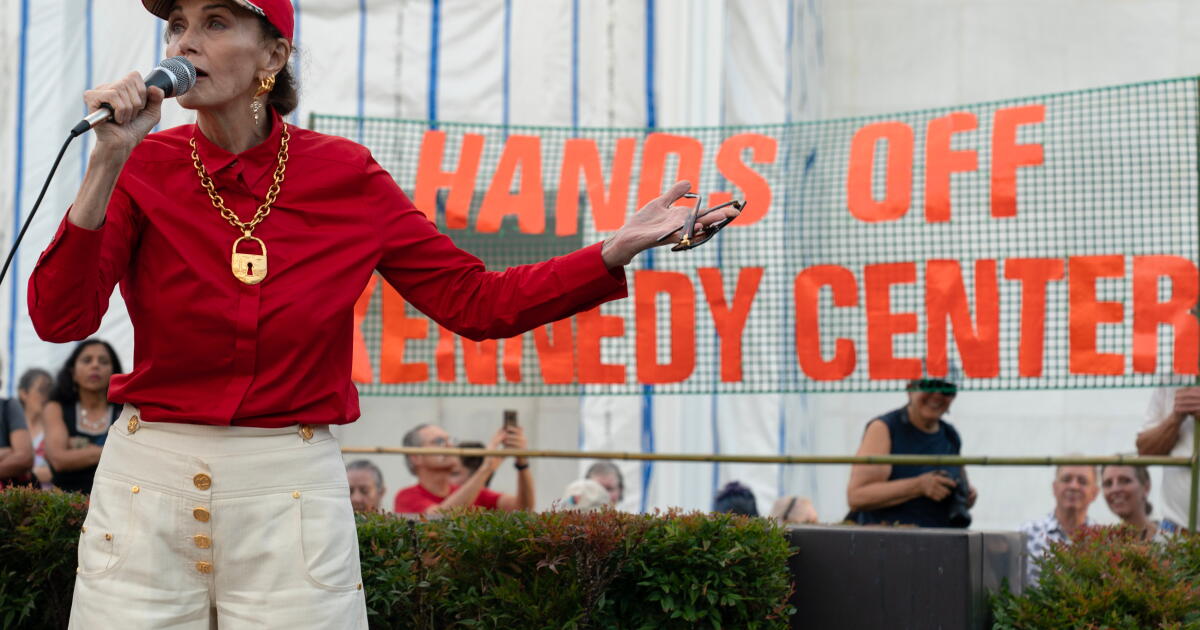
WASHINGTON — Thousands of people joined outside the John F. Kennedy Center for the Performing Arts on Friday evening to protest President Trump’s plans for the facility, lending their voices to a chorus of organizations and individuals who have been horrified that he might make good on his threat to close and tear down the storied institution.
The crowd streamed in from the nearest subway stop, crowding streets in the Foggy Bottom area of Washington and locking down traffic as they walked, many carrying signs, as they joined in an event dubbed “Hands Around the Kennedy Center.” At one point some held hands, forming a human chain around the center.
Chris Raleigh, co-founder of Hands Off the Arts, which set up the gathering, said in an interview that he hoped it would show that people are willing to fight to keep Trump’s plans for the building at bay.
One of the most iconic buildings on the Potomac River waterfront, the Kennedy Center has been a focus of Trump’s remake of Washington since 2025, when he began installing his loyalists on its governing board. Late last year, he had his named placed on the center in front of that of President Kennedy. A judge ruled that Trump’s name was illegally added and ordered it removed.
The Kennedy Center board, which remains aligned with the president, voted Tuesday to close the center indefinitely for repairs hours after U.S. District Judge Christopher Cooper blocked their plans to return Trump’s name to the building. On Thursday, the judge ordered the Kennedy Center to provide 30 days’ notice before making any major physical changes to the building, including demolishing it.
Raleigh said he, like others, is concerned that Trump could take the step without notifying the court. “Look at the East Wing,” he said, referring to the demolished portion of the White House. “We got up one morning and there was a giant hole there.”
Raleigh said the Kennedy Center is more in the public eye than the East Wing was. He added that he doesn’t believe the president fully understands why people are so upset, “but that’s our job, right? This may be the line that no one expected, but this is where the line is going to be.”
Protesters talked about the importance of the center as the pinnacle of the nation’s performing arts world.
Bud Wilkinson, a local member of the arts community, set up a chalkboard with Trump’s name written on it hundreds of times. Protesters flocked to him to erase the names and replace them with hearts.
“The Kennedy Center is vital to the arts in Washington. We need it. We need this,” Wilkinson said. “This is not just about putting the president’s name on the Kennedy Center. It’s about censoring the performances and the programming. That’s what started all this. So that’s what the nitty-gritty really is about this. So I want to replace all of this with love. That’s why there’s a heart.”
Alina Baciu talked about the opportunities and relationships that students at the Duke Ellington School of the Arts have with the center and how those relationships might be affected by what’s going on.
Her daughter had opportunities to take advantage of all the center had to offer as a student at the Ellington school, she said. “I mean, they borrowed the beautiful costumes and the beautiful dresses from the Washington National Opera for their performances at Duke Ellington,” she said. They also performed on the center’s Millennium Stage.
“All of those things have gone away because of this craziness. And it just hurts my heart,” Baciu said.
Laura Steinberg, a volunteer for the last 10 years, said the loss of performances has already been heart-wrenching. “This reminds me of that picture from Tiananmen Square, where that young man stood in front of the tank,” she said of the throngs present. “This was my visceral response to this. I’ll stand in front of the wrecking ball if it’s going to come to that. My guess is many of these people would come down because we saw what he did to the East Wing. Nobody thought he would actually do it. So I think the shock has mobilized people.”
Friday’s event followed a tumultuous week in federal courts in Washington, where filings and counter-filings flooded the courts as the administration continues pushing for the president’s vanity projects. The administration has made substantive steps to begin work on a number of projects, despite the fact they are still being litigated. Such projects include Trump’s triumphal arch and the administration’s takeover of East Potomac Golf Links and the U.S. Institute of Peace.
Speaking from the Oval Office, Trump said he was willing to save the center, which he said was losing money. He did not address a question about demolishing it.
“We have a lot of people working very hard on it to save it,” he said. “I can save it easily, but why should we be doing that and then raise money for the rest of our lives to keep it afloat? Because that’s what you have to do, if we get no recognition. I think the Trump administration should be recognized as having saved the Kennedy Center.”
The “Hands Around the Kennedy Center” rally drew thousands after Trump-backed board votes to close the iconic arts venue.
Published On 19 Sep 202619 Sep 2026
Thousands of protesters formed a human chain around the Kennedy Center for the Performing Arts in Washington DC to contest its closure, amid fears that United States President Donald Trump could make good on his threat to demolish the venerated landmark.
The crowd filled streets in the Foggy Bottom neighbourhood of the capital on Friday evening, bringing traffic to a standstill as demonstrators made their way to the “Hands Around the Kennedy Center” protest. Many carried signs and some wore costumes, while boos rang out when Trump was mentioned during the programme.
At one point, some protesters linked hands around the building, whose marble facade remained partly concealed by scaffolding and tarpaulins.
Among the most iconic buildings on Washington’s Potomac waterfront, the Kennedy Center has become a battleground over Trump’s bid to assert control over the institution since he returned to office last year, replacing its board with his own appointees and installing himself as chairman.
Protesters in Washington, DC denounce the Kennedy Center board’s vote to close one of the nation’s premier performing arts venues, September 18, 2026 [Leah Millis/Reuters]
Chris Raleigh, co-founder of Hands Off the Arts, which organised the rally, said in an interview with The Associated Press news agency that he hoped the turnout would show that people were prepared to push back against Trump’s plans for the building.
The demonstration comes just days after the Trump-installed board voted to close the centre for repairs that are expected to last up to two years. That came hours after District Judge Christopher Cooper quashed the board’s latest attempt to restore Trump’s name to the building.
Last December, the new board added Trump’s name to the building’s facade after the Kennedy Center said its Board of Trustees had unanimously voted to rename the institution in his honour.
A federal judge blocked those efforts in May, ruling that the board had exceeded its statutory authority by unilaterally renaming the Kennedy Center and adding Trump’s name to its facade without congressional approval. Congress had designated the centre as a memorial to the late 35th US President John F Kennedy.
In August, the board tried again to inscribe Trump’s name on the building, this time with wording along the lines of “The John F. Kennedy Center for the Performing Arts Restored and Renovated By President Donald J. Trump”.
The federal judge scotched the move in September, ruling that it violated his May injunction.
Protesters outside the John F. Kennedy Memorial Center for the Performing Arts in Washington after its board voted to close the venue. September 18, 2026 [Leah Millis/Reuters]
Trump has since declined to rule out demolishing the building, while a federal judge on Thursday ordered the Kennedy Center to give 30 days’ notice before undertaking any major structural changes, including demolition.
Speaking to reporters in North Carolina on Wednesday, Trump argued that his administration deserved recognition for rescuing the Kennedy Center and that without the repairs, the building risked falling into disrepair and ultimately being forced to shut down.
Raleigh said he, like others, is concerned that Trump could move ahead without first notifying the court.
“Look at the East Wing,” he said. “We got up one morning and there was a giant hole there.”
The ruling comes amid legal battle over Trump’s changes to the Kennedy Center, including his effort to rename it.
By AFP and The Associated Press
Published On 17 Sep 202617 Sep 2026
A United States federal judge has ordered the Kennedy Center to provide 30 days’ notice before making major physical changes to the building, including demolition, after President Donald Trump said the Washington performing arts venue could be “ripped down”.
US District Judge Christopher Cooper issued the order on Thursday, saying it would “avoid any confusion” following the centre’s sudden closure this week.
Recommended Stories
list of 3 itemsend of list
The Kennedy Center closed on Wednesday and will remain closed for at least seven days to assess what its executive director Matt Floca called “acute risks to public safety” from structural deterioration. Officials have cited a partial ceiling collapse earlier this month and problems with the building’s roof terrace canopy.
The temporary closure came a day after the center’s board voted to close the facility for an extended renovation. The Trump-aligned board has argued that the building, which opened in 1971, is in serious disrepair.
Trump said on Wednesday that his administration’s efforts to restore the centre deserved recognition and warned that without them, “it’s going to close. It’ll end up being ripped down”.
The judge’s order followed a request from Democratic Representative Joyce Beatty, an ex officio Kennedy Center board member who has challenged Trump’s efforts to overhaul the institution. Judge Cooper rejected Beatty’s request for an emergency hearing but ordered that any major physical changes, including demolition, would require 30 days’ notice.
On Wednesday, an AFP news agency photograph showed Trump on board Air Force One examining a placard that appeared to depict the Kennedy Center being demolished. The image showed the words “Kennedy Center DEMOLIS…” above a picture of heavy machinery clearing rubble.
US President Donald Trump examines a large printout about the Kennedy Center on board Air Force One after landing at Joint Base Andrews, Maryland, on September 16, 2026 [Brendan Smialowski/AFP]
The AFP image was viewed millions of times on social media and made headlines in many US news outlets. The photograph was included in Beatty’s court filing on Thursday.
The legal dispute follows Judge Cooper’s earlier rulings that blocked efforts to add Trump’s name to the Kennedy Center without congressional approval.
WASHINGTON — The Kennedy Center Board of Trustees is planning to propose adding President Trump’s name to the facility’s exterior in recognition of his saving the building from its “precarious fiscal position,” according to a new court filing in a suit aimed at blocking the move.
It’s the latest development in the case revolving around adding the president’s name to the exterior of the cultural and arts facility that sits along the Potomac River in Washington and reflects the Trump-aligned board’s efforts to honor the president.
The new information came out of a court filing made by Democratic Rep. Joyce Beatty of Ohio, an ex-officio member of the board. Beatty, who has led an effort to block Trump from putting his name on the building, said in a filing she was alerting the court to the proposal because it could implicate a pending decision before the court.
Both the court and the Kennedy Center board are expected to hold meetings Tuesday.
Beatty’s filing includes two exhibits. One is a draft vote to shut the center down, asserting the building is unsafe for occupancy. That assertion incorrectly cites a consulting group’s finding, “which expressly disclaimed providing any such opinion,” according to Beatty.
The other document asserts the center faces dire financial straits. It specifically calls for Trump’s name to be placed in marble beneath the name of the center on the building’s exterior. It offers 10 options for a possible inscription, including “Renovation and endowment overseen by President Donald J. Trump and the Trump Kennedy Center Fund.” Another proposes: “With Gratitude for Support from President Donald J. Trump and the Trump Kennedy Center Fund.”
“The Board understands that without such appropriate recognition it is unlikely that President Trump will provide the fundamental oversight of the renovation of the main building and lead the fiscal rescue of the Center,” the board wrote in the proposed resolution.
Trump has spent much of his second term reshaping Washington, demolishing the East Wing of the White House to make way for a ballroom and planning a triumphal arch near Arlington National Cemetery as well as a renovated golf course along the Potomac River.
The Kennedy Center has been a stumbling block in that effort after a judge ruled in May that Trump’s name was added to the building illegally, ordering it to be removed.
Trump and his allies, however, have continued to fight the ruling.
The board voted last month to inscribe his name on the venue’s facade to read “The John F. Kennedy Center for the Performing Arts Restored and Renovated By President Donald J. Trump.”
If the Trump Kennedy Center Fund reached $100 million, another inscription would be added reading: “Endowed by the Trump Kennedy Center Fund.”
Board of trustees recommending that the main building be closed immediately due to costs, US newspaper reports.
Published On 14 Sep 202614 Sep 2026
The John F Kennedy Center for the Performing Arts in Washington, DC, is on the brink of bankruptcy and could close as soon as Tuesday, The Washington Post has reported.
According to the report in the United States newspaper on Sunday, the institution’s board of trustees, of which President Donald Trump is the chairman, has argued that putting the president’s name on the facade could be the only way to avoid imminent and “certain fiscal collapse”.
Recommended Stories
list of 3 itemsend of list
The trustees also say the institution will not be able to pay employees or meet maintenance costs within a few weeks.
The assessment was set out in a 57-page report before a special meeting on Tuesday, when the Trump-led board is expected to consider the two main issues affecting the performing arts centre: A financial crisis and a physical one, as the building needs renovation.
The Post reported that board members are recommending that the main building be closed immediately due to costs.
The Post also said Trump would help the Kennedy Center if his involvement is acknowledged. The trustees’ report represents “a remarkable new phase in Trump’s takeover of the Kennedy Center, which has been engulfed by financial turmoil, leadership upheaval and litigation since he installed himself as chairman last year”, the paper said.
The Kennedy Center was named in honour of the late US president who championed civil rights before he was assassinated in 1963.
Trump placed himself as chairman of the Kennedy Centre shortly after beginning his second term last year, and in December his hand-picked board voted to rename it the “Trump-Kennedy” Centre, a move later blocked in court.
In response to Trump’s takeover, a host of artists have cancelled concerts, with US media reporting that ticket sales had fallen to their lowest levels since the COVID-19 pandemic.
The Post reported that the centre was expected to collect about $124m of the projected $220m in revenue that it had budgeted, “leaving a roughly $23 million deficit even after substantial spending cuts” this past fiscal year.
It added that a spokesperson for the centre blamed the problems on “financial mismanagement by previous leadership” and said Trump’s name had attracted new donors.
UCLA senior wide receiver Mikey Matthews expects the Bruins’ aerial attack to be as electrifying and dominant as their ground game was in a season-opening win over California.
The passing offense lived up to Matthews’ expectations against Cal — but only for a half.
After quarterback Nico Iamaleava completed 12 of 18 passes for 179 yards in the first half, he completed just two more passes for five yards — the Bruins’ only yardage in the third quarter.
The rushing attack carried the Bruins to victory, breaking open a tied game with three fourth-quarter touchdown runs.
UCLA receiver Mikey Matthews (7) celebrates after quarterback Nico Iamaleava (9) ran for a touchdown against Cal at California Memorial Stadium on Saturday.
(Godofredo A. Vasquez/For The Times)
While UCLA called a run-heavy script in the second half, throwing it just four times compared to 18 rushing attempts, the passing game clearly stalled.
Offensive coordinator Dean Kennedy said the offense had to improve after last weekend’s 45-24 victory, noting that two penalties in the third quarter — including on third and one — derailed drives and that the self-inflicted wounds were a teaching moment.
“You have to make sure that every drive, you’re treating it independently. There was a lull in the third quarter, but when you look at it, I was happy with how they responded,” Kennedy said as the team prepared for Saturday’s home opener against San Diego State. “Obviously, you’re not happy with the production of the third quarter, but you’re happy with how they responded in the fourth. There was always belief on the sideline. We had three really bad drives and that’s just as much on me as it is on anyone else.”
Iamaleava played a vital role in keeping the offense on track. And despite largely not contributing through the air in the second half, he looked more comfortable and confident than he ever had in his college career. Matthews called that poise Iamaleava’s greatest improvement since the duo arrived in Westwood last year.
Kennedy said the senior signal-caller was walking up and down the sideline, talking to teammates and stressing a “next drive” mentality.
And Iamaleava’s short-term memory focus echoed his coordinator’s in-game philosophy.
“We will make corrections on bad plays on Sunday, there will be things where we have to make in-game adjustments, but when you are talking about a missed assignment, there’s nothing you can do about it,” Kennedy said. “The only thing you can do about that is worry about ‘how do I get better, how do I learn from my mistake,’ and you have to do it in the moment. You are in a 60,000-seat stadium and it’s not the easiest thing to do, but having other people understand, ‘Let’s move on,’ that’s where he did a really good job.”
Leading up to the opener, Kennedy said he was “beyond confident” in Iamaleava as a leader, player and face of the program, and added that Iamaleava’s willingness to run hard and take hits instills conviction in the team and makes him an easy person to rally around.
“He’s had the opportunity to play young in his career. He’s been in the spotlight for so long,” UCLA assistant quarterbacks coach Jon Boyer said. “He’s dealt with victories. He’s dealt with adversity, and now he does feel valued, and I don’t want him to feel like he’s in it all alone ever.
“He’ll be tested this year where moments of doubt come in, and that’s our job to provide that vision of hope and come up with a plan to get him out of whatever he’s facing.”
Matthews, who led the receivers with four catches for 88 yards, is confident his quarterback will put the ball in the hands of many UCLA receivers he can trust.
“We’re deep in the receiver room. Landon Ellis, Semaj Morgan, Brian Rowe, Aidan Mizell, Shane Rosenthal. I can literally just go down,” Matthews said. “I feel like everyone is bound to have a breakout season, breakout game, whatever it is. Everyone’s going to eat in that room. That’s just how much we trust everyone throwing the ball down the field and everything like that.”