kamala harris

Kamala Harris endorses Rep. Jasmine Crockett in Texas Senate Democratic primary

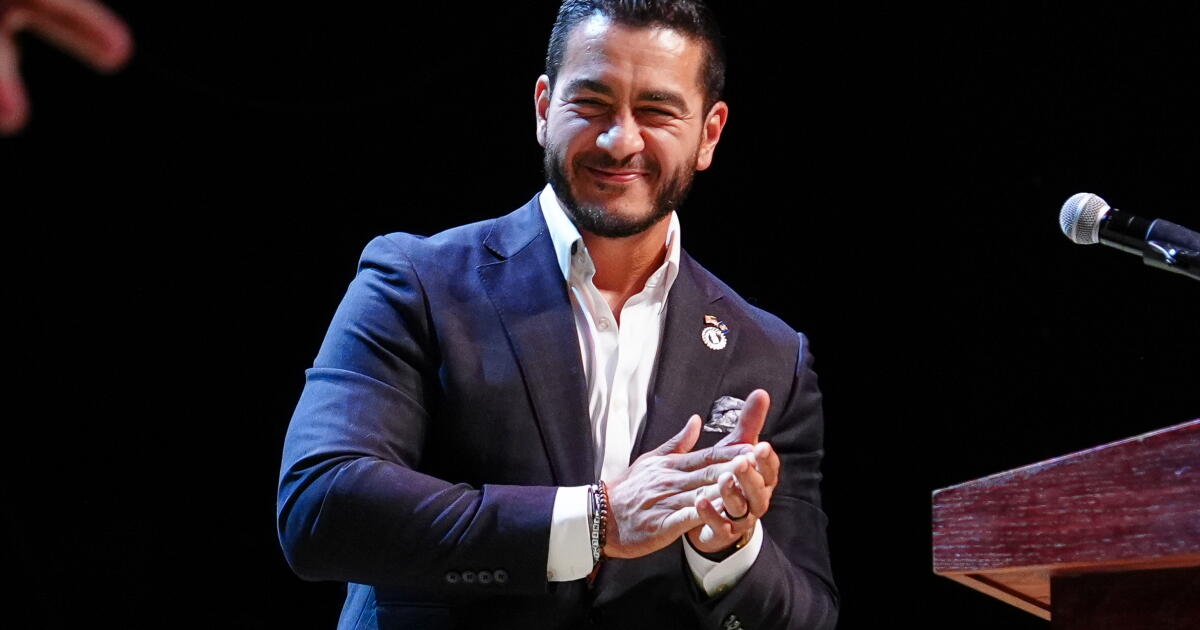
1 of 2 | Rep. Jasmine Crockett, D-Texas, pictured speaking at the 2024 Democratic National Convention, has been endorsed by former Vice President Kamala Harris in the Democratic primary for a U.S. Senate seat and who recorded a robocall for her ahead of the election on Tuesday. File Photo by Tannen Maury/UPI | License Photo

Feb. 27 (UPI) — Former Vice President Kamala Harris has endorsed U.S. Rep. Jasmine Crockett, D.-Texas, in the Texas Democratic primary for the U.S. Senate.

Harris recorded a robocall for Crockett in the race, which has the Texas representative facing off against Texas State Rep. James Talerico for the Democratic nomination in the race this fall Republican Sen. John Cornyn‘s seat, The Texas Tribune reported.

Cornyn, who has been in the Senate since 2002, is running for re-election but has to win a Republican primary against Texas Attorney General Ken Paxton and Rep. Wesley Hunt.

“Texas has the chance to send a fighter like Jasmine Crockett to the United States Senate,” Harris said in the robocall, which was first reported by the Tribune. “Jasmine has the experience and record to hold Donald Trump and his billionaire cronies accountable.”

Crockett launched her campaign for Senate on Dec. 8 and will face off against Talarico in the March 3 primary.

She launched the campaign the same day that Colin Allred, a potential primary opponent, dropped out because he felt that “a bruising Senate Democratic primary and runoff would prevent the Democratic party from going into this critical election unified” — specifically citing Crockett’s entry into the race.

Crockett also has been endorsed by Maryland Sen. Angela Alsobrooks and California Rep. Ro Khanna, according to The New York Times.

Tuesday’s primary winner will face Cornyn, Paxton or Hunt, with the election moving to a runoff in May if none of the candidates receive more than half the votes.

President Donald Trump, a Republican, has not endorsed a Republican in the race.

Senate Majority Leader John Thune, R-S.D., speaks during a press conference after the weekly Republican Senate caucus luncheon at the U.S. Capitol on Wednesday. Photo by Bonnie Cash/UPI | License Photo

Source link

Column: Trump keeps reminding us why people support him. It’s the racism

The president of the United States posted a racist video Thursday night depicting Barack and Michelle Obama as apes. On Friday, the White House dismissed criticism — but the president deleted the post. Was this episode disappointing? Yes. Surprising? Not anymore.

Last spring, after Pope Francis had died, Donald Trump posted an AI image of himself as the pope just days before cardinals convened to elect a successor.

So, no — it is not surprising that the president would choose to post virulent anti-Black imagery during Black History Month.

But it is disappointing here in 2026 that an occupant of the Oval Office is still thinking like that.

Back in 1971, the president of the United States laughed when the governor of California referred to the African delegates at the United Nations as monkeys. Less than 10 years later, that governor became the president of the United States. And here we are, half a century later, and yet another president has amplified that racist trope.

Meaning white supremacy is still on the ballot.

That Nixon-Reagan-Trump throughline isn’t tightly wound around policy or principle, but simply that shared worldview. After all, Nixon created the Environmental Protection Agency and Reagan offered amnesty to immigrants — highly un-Trump-like moves. No, their commonality is best revealed in the delight each man took in an old racist attack against Black people.

For Americans who are 50 and older — roughly a third of the nation — this worldview has been the architect responsible for White House policy for most of our lives. And yet, when Kamala Harris lost the 2024 election, the forensic investigation focused on grocery prices and her absence from Joe Rogan’s podcast. Some — in trying to explain why Harris lost — mischaracterized her role at the border or inflated her influence on the war in Gaza.

For some reason, race did not seem to receive the same level of scrutiny.

This factor was slighted despite decades of data, such as the wave of white nationalists endorsing Harris’ opponent and the birther movement questioning President Obama’s citizenship. The trio of presidents who are on the record as enjoying depictions of Black people as monkeys — Nixon, Reagan and Trump — all used racist dog whistles in their combined 10 presidential campaigns. Their administrations have tended to be more anti-civil-rights movement than post-civil-rights movement.

Our nation’s attempts at understanding ourselves are continuously undercut by the denial that for some single-issue voters, race is their single issue. Not the price of bacon or their religious convictions. Not Gaza. Just the promise of having a safe space for prejudice. And when the president of the United States entertains racist jokes as Nixon did in the 1970s or shares racist videos as Trump continues to do, undoubtedly there is a sense among the electorate that such prejudice has a home in the White House.

Before Trump used social media to push yesteryear’s ugliness, earlier in the week Harris relaunched her 2024 social media campaign account, calling it a place where Gen Z can “meet and revisit with some of our great courageous leaders, be they elected leaders, community leaders, civic leaders, faith leaders, young leaders.” She exhorted: “Stay engaged. I’ll see you out there.”

Whether she plans to run again in 2028 is unclear. What we do know is she would not have posted an AI picture of herself as the new pope while Catholics were mourning Francis (or any other time). We know she would not have advocated for immigration officers to racially profile Black and brown Americans or disregard the 14th Amendment to detain children. We do not know how many of her policy proposals she would have been able to get across the finish line in Congress, but we do know her record of public service to the American people, in contrast with the current president who is suing the American people for $10 billion.

There is nothing wrong with revisiting Harris’ missteps on the campaign trail or debating her electability as she reemerges in the public spotlight. But now that Trump has resorted to posting monkey jokes about Black people, perhaps updated forensics will consider our well established history of racism among the factors in the 2024 election.

It is not a shock that a president of the United States thinks poorly of Black people. Not when you know that more than 25% of those who have held the office were themselves enslavers. But it is disappointing that 250 years into our nation’s story, some of us still deny the role that racism plays in shaping our politics and thus all of our lives.

YouTube: @LZGrandersonShow

Insights

L.A. Times Insights delivers AI-generated analysis on Voices content to offer all points of view. Insights does not appear on any news articles.

Viewpoint
This article generally aligns with a Left point of view. Learn more about this AI-generated analysis
Perspectives

The following AI-generated content is powered by Perplexity. The Los Angeles Times editorial staff does not create or edit the content.

Ideas expressed in the piece

  • Trump’s posting of racist imagery depicting the Obamas as apes during Black History Month represents a troubling continuation of a historical pattern, with Nixon and Reagan similarly engaging with racist depictions of Black people[1][3]. The incident reveals that white supremacy remains embedded in American politics across multiple presidential administrations, united not by policy consistency but by a shared worldview that finds amusement in racist attacks against Black Americans[1].

  • Race has been an under-examined factor in recent electoral outcomes, with the 2024 presidential election analysis focusing disproportionately on issues like inflation and media appearances while overlooking documented evidence of racist mobilization, including white nationalist endorsements and baseless conspiracy theories targeting the previous administration[1]. This omission is particularly significant given decades of data demonstrating racism’s influence on voting patterns[1].

  • For some voters, racism functions as a single-issue priority—not economic concerns or religious convictions, but rather the assurance of having a politically sanctioned space for racial prejudice[1]. When a sitting president entertains or amplifies racist content, it signals to this constituency that their prejudices have legitimacy within the highest office[1].

Different views on the topic

  • The White House initially characterized the incident as misrepresented outrage, framing the video as an internet meme depicting political figures as characters from “The Lion King” rather than focusing on the racist imagery, and urged critics to “report on something today that actually matters to the American public”[1][2]. This framing suggested the controversy represented distraction from substantive governance concerns[3].

  • The White House later attributed the post to an erroneous action by a staff member rather than deliberate presidential conduct, creating distance between the president’s stated intentions and the offensive content[3]. This explanation positioned the incident as an aberration in staff management rather than reflective of administrative values[3].

Source link