kamala harris

Los Angeles Rep. Xavier Becerra poised to become California’s first Latino attorney general

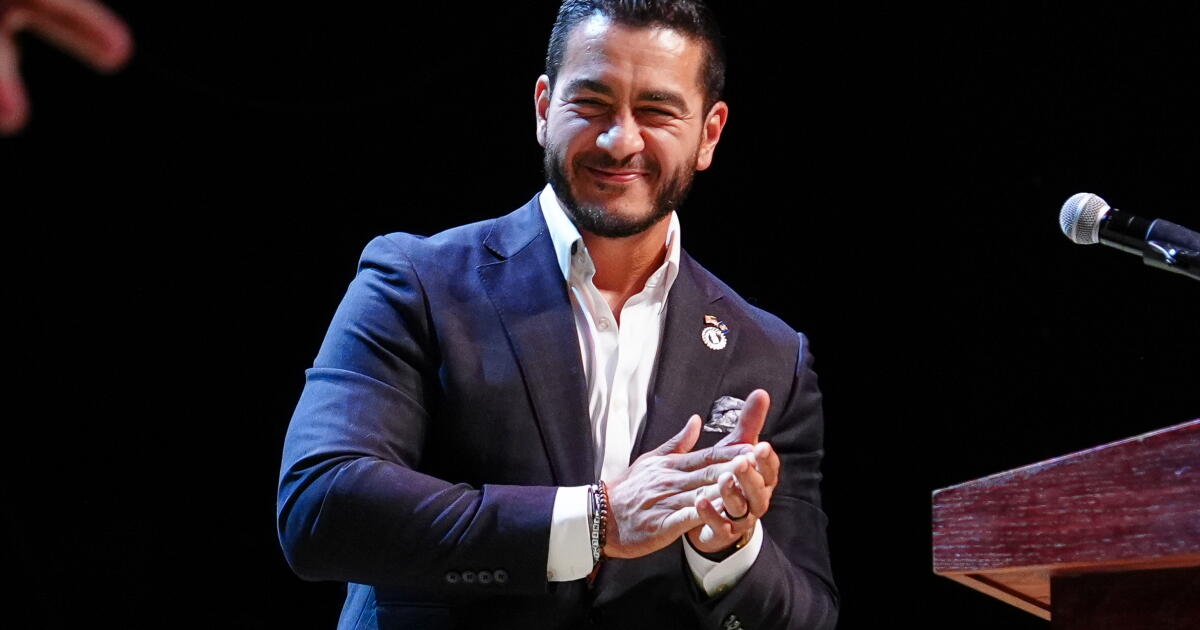
In a move that suggests a sharp battle to come with the administration of President-elect Donald Trump and upends conventional wisdom about who will emerge as the next generation of statewide elected officials, Gov. Jerry Brown picked House Democratic Caucus Chairman Xavier Becerra (D-Los Angeles) on Thursday to be California’s next attorney general.

If confirmed by both houses of the Legislature, he will succeed Kamala Harris, who was elected to the U.S. Senate in November.

Becerra, 58, has served 12 terms in Congress. Just days before the appointment, he had announced a bid to become the ranking Democrat on the powerful House Ways and Means Committee.

“It’s a phenomenal opportunity,” Becerra said. “It means I get to be home a lot more.”

Few statewide offices are as powerful, or prominent, as that of attorney general. The role has often been referred to as the state’s top lawyer and its top law enforcement officer, a nod to the breadth of responsibilities vested in the office and its leadership of the California Department of Justice.

Attorneys general not only must pursue cases of criminal and civil wrongdoing, they oversee criminal forensic work for most counties and make the final choice about defending state laws — even crafting the language that summarizes ballot measures for voters.

Becerra was beaming during an interview in his House office Thursday morning shortly after Brown offered him the job.

“I’m still processing,” Becerra said with a laugh. “I didn’t expect it.”

Becerra would be the state’s first Latino attorney general. The son of Mexican immigrants, he was the first member of his family to attend college, earning a law degree from Stanford Law School and a bachelor’s degree in economics from Stanford University. Elected to a two-year term in the state Assembly and then to the House in 1992, he rose through the ranks to become the highest-ranking Latino in Congress.

Becerra worked in the civil division of the state attorney general’s office, writing advisory opinions for former Gov. George Deukmejian, a Republican, and defending the state’s constitutional officers from 1987 to 1990 before entering the Assembly. He said he had always wanted to return to the office.

“It was a great place to be,” he said.

Brown’s pick was so sudden that Becerra has not yet had time to reactivate his state law license, though he would not be the first attorney general to have to do so. Inactive status allows attorneys to hold on to their licenses when they are not actively practicing law.

Becerra would also be the first attorney general appointed by a governor since Thomas Lynch, who was chosen by former Gov. Pat Brown in 1964. Few political appointments are likely to be as personal to the current governor as this one, given his own four-year stint as attorney general starting in 2006 and the fact that his father used the office as a steppingstone to governor more than five decades ago.

“Xavier has been an outstanding public servant — in the state Legislature, the U.S. Congress and as a deputy attorney general,” Brown said in a statement. “I’m confident he will be a champion for all Californians and help our state aggressively combat climate change.”

The choice sent political shock waves through California, in large part because Becerra was not on any of the widely circulated lists of potential picks. Brown had offered no details on whom he would pick or when.

Many suspected that he might choose a caretaker, perhaps even a career staffer who would simply carry out the office’s functions through the 2018 election. Virtually no Democrats who heard the news on Thursday believed that Becerra would be that kind of officeholder.

“He has the smarts, political experience and ambitions to run and win reelection,” said state Sen. Steve Glazer (D-Orinda), a former top political adviser to Brown.

If Becerra serves less than two years of Harris’ existing term, he could be eligible to run for up to two additional terms — eight years — as attorney general. Harris has said she plans to hold the position until she is sworn in to the Senate on Jan. 3, and at that point Brown could officially nominate Becerra.

Becerra said Thursday he’s thinking about the confirmation process at this point and not whether he’ll run for a full term as attorney general or another office in 2018. He must be confirmed by the state Senate and Assembly, both controlled by Democrats. Becerra said he hasn’t been told when a confirmation vote might happen.

Earlier, Becerra had flirted with a bid for U.S. Senate when Sen. Barbara Boxer (D-Calif.) announced plans to retire, but Harris’ quick entry into the race kept him and other California Democrats from running.

Holding such a prominent statewide post would raise Becerra’s profile as the Golden State’s foil to Trump, potentially setting him up to run for governor or U.S. Senate in the future. The attorney general, by virtue of the office’s broad power, will likely be a key player alongside Brown in pushing back against Trump’s proposed efforts on issues important to California, including immigration and climate change. In Texas, a state that has its own experience fighting the federal government, attorneys general have been a major force in the battle over states’ rights.

“He has great tenacity and he respects the rights of all Californians — much-needed qualities for an attorney general given the troubling times ahead,” Assembly Speaker Anthony Rendon (D-Paramount) said Thursday.

Several congressional colleagues echoed that sentiment.

“Many of the values that we stand by in California will be under attack in the next few years, and Chairman Becerra is the fighter I want in our corner,” Rep. Tony Cardenas (D-Los Angeles) said in a statement.

Becerra said that with Trump headed to the White House, he’s prepared to protect California’s progressive policies on immigration, the Affordable Care Act, energy and criminal justice. As California politicians embrace their roles in guarding the state against Trump’s policies, Becerra threw down his own gauntlet Thursday.

“If you want to take on a forward-leaning state that is prepared to defend its rights and interests, then come at us,” Becerra said.

A vocal advocate for Hillary Clinton’s presidential bid, Becerra was briefly floated as a potential pick for vice president or a Cabinet position. With Clinton’s loss Nov. 8 and no upward mobility available in House leadership, Becerra’s future political career was unclear.

He’d reached the time limit on serving as caucus chairman, the fourth highest-ranking House Democratic leadership position, and with House Minority Leader Nancy Pelosi (D-San Francisco) and the other two Democrats above him in leadership staying put, there was no path up the ladder headed into the next Congress.

Becerra serves on the powerful House Ways and Means Committee, and made a play as recently as Tuesday to be the committee’s ranking Democrat. He was quickly endorsed by the current ranking member, Rep. Sandy Levin (D-Mich.), who said in a statement Thursday that he respects that Becerra “feels a special responsibility during these difficult times to look after vital legal interests in his home state.”

Democrats across California reacted Thursday with effusive praise for Becerra. Lt. Gov. Gavin Newsom called him “a thoughtful and effective leader, with a keen legal mind and a passion for giving a voice to the voiceless.”

In particular, some pointed out the importance of elevating a Latino politician to statewide office, alongside both Latino leaders of the Legislature and Secretary of State Alex Padilla.

“It’s good for the state’s future,” said Bill Lockyer, who served as attorney general from 1999 to 2007.

The announcement also meant early guessing as to who would replace Becerra in representing downtown Los Angeles and communities to the west and north in Congress. Becerra won reelection in November in the solidly Democratic district. A special election to fill the seat would probably take place in late spring of 2017, though the law gives Brown wide discretion on the precise schedule.

John A. Pérez, the former Assembly speaker and current University of California regent, announced his bid less than an hour after Brown’s announcement, and more contenders may follow.

sarah.wire@latimes.com; john.myers@latimes.com

Follow @sarahdwire and @johnmyers on Twitter

Read more about the 55 members of California’s delegation at latimes.com/politics

ALSO

After beating back rival for House leadership post, Nancy Pelosi says Democrats are ready for Trump

Trump seems ready to fight the world on climate change. But he’s likely to meet resistance

Updates on California politics


Source link

New York sweep by Israel critics shines light on a fraught issue for Democrats

When Varun Venkatesh cast his ballot in New York’s primary this week, he thought about “a good litmus test for me as a voter.” He wanted to know what the candidates are doing for the Palestinian cause.

The 27-year-old Brooklyn resident decided to support Claire Valdez, who was backed by Mayor Zohran Mamdani, over Antonio Reynoso, another progressive who was the choice of the Democratic establishment, because she had “a clear and more consistent stance.”

Valdez triumphed in her congressional primary, as did two other insurgent candidates endorsed by Mamdani, and Israel was a key issue in each of the races. Now the question for Democrats is how many more voters like Venkatesh are out there as the party charts its path toward the November midterms and the next presidential election.

The war in Gaza, which began during Joe Biden’s presidency and undermined Kamala Harris’ bid to replace him, remains an open wound, and how Democrats attempt to stitch it closed will help define their future. A step in any direction risks alienating pieces of the party’s unwieldy coalition at a time when it’s trying to unify around the mission of retaking control of Congress.

“The Israel question has become defining,” said Matt Bennett, who leads the centrist Democratic group Third Way and frequently criticizes progressives as jeopardizing outreach to independent voters. He said some in Mamdani’s camp have embraced “a new level of extremism,” warning that “Republicans are very good at weaponizing crazy ideas on the fringe against mainstream candidates.”

Mamdani has no such concerns as he tries to reshape the Democratic Party from the mayor’s office of the country’s largest city. He sharply criticized the American Israel Public Affairs Committee for defending what he calls “a status quo of immorality” in Gaza, and voters who celebrated his slate’s victories on Tuesday night chanted “Free Palestine.”

The mayor, meanwhile, argues that New York should shape Democrats’ search for their national identity in the coming years.

“When does the race for 2028 begin?” Mamdani asked last week on a stage with his slate of candidates. “It starts now.”

Israel-Palestine conflict animates Democrats’ left flank

Even for a party accustomed to searing debates between progressives and moderates, the schism over Israel has been blistering. Although the U.S. alliance with Israel once had bipartisan support, the ascendancy of Israel’s right wing led by Prime Minister Benjamin Netanyahu strained those ties over the years. Then the war in Gaza shredded them.

Biden was denounced as “Genocide Joe” by pro-Palestinian supporters, who shifted their attention to Harris once she replaced him as the Democratic nominee for president two years ago.

“She was trying to the right thing,” said Jamie Harrison, who led the Democratic National Committee at the time. “It was a hard and awkward place to be in.”

Harrison said the war in Gaza helped cost Harris the state of Michigan, which has a sizable Arab American population. However, he doubts that it was a defining national issue then or now.

“It’s one thing to be in New York. But I can tell you that most places, including where I am in South Carolina, it’s not what people are talking about,” he said. “They are concerned about affording gas and groceries and housing.”

Harrison expects Democrats to look for middle ground in the future, which includes “still supporting Israel’s sovereignty” while calling for “reducing U.S. aid to Israel and changing the nature of the relationship.”

One primary victor blasted the ‘hug Bibi’ strategy

Finding middle ground has been difficult so far, as demonstrated by the primary in New York’s 10th congressional district.

Brad Lander, the former city comptroller backed by Mamdani, successfully challenged U.S. Rep. Dan Goldman in the race.

Both candidates are Jewish, and both have criticized the Israeli government. But Lander says the war in Gaza is a genocide, and Goldman does not.

“Our party needs to admit that Joe Biden’s ‘hug Bibi’ strategy was a catastrophic mistake,” Lander said in his primary victory speech. He added, “We cannot keep paying for Netanyahu’s wars with our tax dollars. Democratic voters are saying this, loud and clear.”

Ari Rassouli, a voter in the district, said the incumbent’s views on Israel were “one of the many reasons that I didn’t like Dan Goldman.”

Describing the war as a genocide, she said “a candidate that is in support of that has no place in our democracy at all.”

While talking to reporters on Tuesday, Lander acknowledged that Israel was among the top issues along with affordability and immigration.

“I like talking to Jewish voters who feel anxiety about the times we live in and say, ‘I have these values, I want to treat everyone like they’re equal and with dignity and created in God’s image. How do we navigate the times we’re in?’” he said.

He added with a smile, “Those are probably the longest conversations at the polls.” ___

Barrow, Peoples and Offenhartz write for the Associated Press. AP writers Anthony Izaguirre and Larry Neumeister contributed to this report.

Source link

Mamdani-backed progressives win in N.Y. as states hold primaries

June 23 (UPI) — Mamdani-backed progressives scored big wins Tuesday night in New York state’s Democratic primary, as voters cast ballots across the Empire State, Maryland, Utah and South Carolina.

New York State

Of the four states holding primaries, New York state’s was being closely watched to gauge the influence of New York City Mayor Zohran Mamdani, who had endorsed three progressive candidates in competitive Democratic races — all of whom appeared poised late Tuesday to win their races.

Brad Lander, a former city comptroller, was running against Goldman in New York District 10 with the endorsements of other big-name progressives, including Sen. Bernie Sanders, I-Vt., and Rep. Alexandria Ocasio-Cortez, D-N.Y.

Lander said he was drawn to challenge Goldman because Goldman had called for increasing U.S. support for Israel. Their differing views on support for Israel have been a key issue in the race. Goldman and Lander are both Jewish.

Preliminary results showed Lander with an overwhelming 65.3% vote share, compared to Goldman’s 33.7%, with all 417 districts reporting.

Lander claimed victory Tuesday night.

After being introduced by Mamdani, Lander told supporters that he believes he and Goldman have more in common than they have differences. And to Goldman’s supporters, he said he knows that they want to “rescue our country back from Trumpism,” renew U.S. democracy and find a humane path for the country on the world stage.

“Solidarity is the force that we need to vanquish Trump’s fascism, to abolish ICE and to stand up to the billionaires who are rigging our economy against us,” he said.

“This campaign here was born out of solidarity.”

In New York District 7, Mamdani-endorsed Claire Valdez appeared poised to succeed outgoing Rep. Nydia Velazquez, who backed Brooklyn Borough President Antonio Reynoso.

With all 393 election districts reporting, preliminary election results showed Valdez had secured 55.5% of the vote to Reynoso’s 35.4%.

And in New York District 13, Mamdani endorsed Darializa Avila Chevalier, who late Tuesday appeared to be edging out incumbent Rep. Adriano Espaillat.

Chevalier, who was a field organizer for Mamdani, had secured 48.59% of the vote to Espaillat’s 45.2%, according to preliminary results.

Mamdani did not endorse a candidate in District 12 in a stacked field that consisted of state lawmakers Alex Bores and Micah Lasher, Lincoln Project co-founder George Conway, President John F. Kennedy‘s grandson Jack Schlossberg, attorney Laura Dunn and health researcher Nina Schwalbe.

Former House Speaker Nancy Pelosi had endorsed Schlossberg and former New York City Mayor Michael Bloomberg had endorsed Lasher.

Artificial intelligence has been a central topic in the District 12 race. The Leading the Future super PAC, funded by the heads of OpenAI and venture capital firms supporting the AI industry, funneled more than $10 million to a super PAC opposing Bores’ campaign. Bores has been supportive of establishing regulations on AI.

With all 410 precincts reporting, Lasher had secured nearly 39% of the vote, followed by Bores with 34.82% and Schlossberg with 10.7%.

South Carolina

The big race in South Carolina was the GOP gubernatorial runoff between notable candidates, South Carolina Lt. Gov. Pamela Evette and state Attorney General Alan Wilson.

Preliminary results indicate Wilson stormed his way to the nomination and likely the South Carolina governor’s mansion.

With all counties reporting, Wilson netted 68.5% of the vote to Evette’s 31.44%.

Wilson has claimed victory, and Evette has conceded defeat.

The runoff followed a dramatic turnaround by President Donald Trump, who had initially endorsed Evette, before rescinding his support.

Trump gave his “Complete and Total Endorsement” to Evette ahead of the state’s primary earlier this month. But after it was determined to be a runoff between Evette and Wilson, Trump, rather than continue his support for Evette, told voters that they “can’t go wrong” with either candidate.

Evette finished less than two percentage points ahead of Wilson in the Republican primary but neither candidate cracked 30% of the vote, let alone 50%. While Trump endorsed Evette, the other candidates who ran in the primary — Reps. Ralph Norman and Nancy Mace — have endorsed Wilson. Sen. Tim Scott, R-S.C., also gave Wilson his endorsement on Friday.

“I’ve proudly stood with President Trump from the very beginning, defended him when others would not, and fought alongside him against the radical left,” Wilson said in a news release after Trump posted his support on social media. “I am deeply honored to have his support because he understands I am focused on making South Carolina more affordable for families and profitable for businesses.”

Evette’s campaign had highlighted her receiving Trump’s endorsement.

Wilson will face Democratic state Rep. Jermaine Johnson in November.

Maryland

In Maryland, Adrian Boafo was poised to succeed Rep. Steny Hoyer in the Democratic primary for District 5.

From among the two dozen candidates in the running, Boafo, Hoyer’s former field director, had nearly 32% of the vote, according to preliminary results, far exceeding healthcare CEO Quincy Bareebe, who was sitting second with 18% and former police officer Harry Dunn in third with 13.4%.

Dunn was among those defending the U.S. Capitol from attacks by pro-Trump rioters on Jan. 6, 2021. He is also a co-plaintiff in a lawsuit seeking to stop the Trump administration from establishing an “anti-weaponization fund” to pay rioters for being “targeted” by the Department of Justice.

Boafo had received Hoyer’s endorsement.

Utah

Former Rep. Ben McAdams appeared poised Tuesday night to win the Democratic nomination for Utah’s new District 1, created under Utah’s new congressional map.

Largely made up of Salt Lake City, the district went to Vice President Kamala Harris in the 2024 presidential election.

Preliminary results show McAdams with 60.2% of the vote, state Sen. Nate Blouin with 24.04% and Utah Democratic convention winner Liban Mohamed with nearly 12%.

President Donald Trump presents a Medal of Honor to Tom Ripley on behalf of his father, John W. Ripley, during a Medal of Honor award ceremony in the East Room of the White House on Thursday. Photo by Aaron Schwartz/UPI | License Photo

Source link

Hannah Pingree, Bobby Charles advance in Maine gubernatorial election

Maine Gov. Janet Mills addresses her counterparts during a convening of the northeastern Governors and Canadian Premiers at the Massachusetts State House to discuss the impacts of President Trump’s tariffs in Boston, on June 16, 2025. Mills has endorsed Democrat Hannah Pingree to succeed her in the governor’s office. File Photo by CJ Gunther/EPA

June 19 (UPI) — Maine election officials announced the results of its ranked-choice primary runoffs Friday, confirming Democrat Hannah Pingree and Republican Bobby Charles as the candidates for the gubernatorial election in November.

Democrat Matt Dunlap, Maine’s state auditor and former secretary of state, advanced to the midterm elections, seeking the 2nd District seat held by Democrat Rep. Jared Golden. Republican and former Gov. Paul LePage will be his opponent.

The 2nd District congressional race has been targeted by the Republican Party as one it believes it could flip in November. President Donald Trump had a 10% edge in the district in the 2024 election.

Maine is one of two states in the United States to do ranked-choice voting for statewide elections. The other is Alaska. Ranked-choice voting is also used in municipalities across the country.

Gov. Janet Mills, a Democrat who has reached her term limit in the office, endorsed Pingree, the Democratic nominee, to succeed her. Former Vice President Kamala Harris won Maine by 7% in 2024.

Pingree is a former speaker of the House in Maine’s state legislature.

Pingree’s opponent, Charles, is a former naval intelligence officer and was the assistant secretary of state for the Bureau of International Narcotics and Law Enforcement Affairs under President George W. Bush. He also served in the White House under the Reagan administration from 1981 to 1983.

President Donald Trump presents a Medal of Honor to Tom Ripley on behalf of his father, John W. Ripley, during a Medal of Honor award ceremony in the East Room of the White House on Thursday. Photo by Aaron Schwartz/UPI | License Photo

Source link

‘Unhelpful’: Top Democrats say Jill Biden’s memoir is reopening 2024 wounds

Democrats have spent nearly two years trying to move past the 2024 presidential election. Now, Jill Biden’s new memoir is forcing them to relive it.

Her new book, “View from the East Wing,” which comes out Tuesday, is already drawing sharp rebukes from top Democrats, some of whom say it is a poorly timed and misleading account of the events that led to the demise of her husband’s presidency.

“Unhelpful … Ripping open a healing scab is never helpful,” John Morgan, a Florida trial attorney who was a major fundraiser for Biden’s 2024 campaign, told The Times. “In my opinion, she was the main problem. She loved the life and didn’t want it to end.”

Those type of frustrations erupted last week as the former first lady began promoting her book, including in a sit-down interview with CBS News airing Sunday, in which she said she thought the sitting president was having a stroke as she watched the 2024 presidential debate.

“I was frightened, because I had never ever seen Joe like that before or since. Never,” Biden said. The moment “scared me to death,” she added.

For Democrats who had a similar reaction in real time, but who spent months being told by the Biden campaign that their concerns were overblown, her remarks landed like a gut punch. With the midterms around the corner, some bemoaned that Biden was relitigating a sore subject — particularly the question of who knew what about Biden’s aging and cognitive decline.

“What I care about is what happens going forward,” Dan Pfeiffer, a host of “Pod Save America,” a popular progressive podcast, said on the show Thursday. “What bothers me the most is not the timeline of events, but whether Democratic leaders now will ever reckon with the massive breach of trust that came because of how all of that was handled.”

Meghan Hays, a former White House aide to Joe Biden, said on C-SPAN’s “Ceasefire” that although she understands that Jill Biden is trying to sell books, her efforts are not helping the party ahead of the midterm elections.

“We have a lot of momentum in our favor … and when we get pulled back into conversations about age and the election in ‘24, it’s never gonna be a good place for Democrats,” Hays said. “I think it is a tough place to be.”

The Democratic Party found itself trapped in a similar dynamic earlier this month, when the Democratic National Committee released a long-awaited, 192-page report dissecting the 2024 loss. The committee’s chairman, Ken Martin, shared the postelection autopsy after coming under intense pressure from Democratic operatives, and apologized for how he handled its release.

The report faulted Kamala Harris and Democrats’ focus on “identity politics” but did not address Biden’s decision to seek reelection amid health concerns and the rushed selection of Harris to replace him on the ticket.

In her book, the former first lady writes that her goal is to be able to “set the record straight” about what happened during the debate and the months that followed that led to President Trump’s return to the White House, according to the Atlantic, which obtained a copy of the book ahead of its release.

At one point, she writes that she even suspected her husband may have been inadvertently impaired after taking cough syrup. In the CBS interview, Biden maintained that she never saw any signs of cognitive decline while he was the sitting president.

“He was the same, the essence of the same Joe Biden, but yeah, he was slowing down. He was getting older,” she said. “You know, it’s a very intense job. I think it ages you — quickly.”

Morgan, the former Biden fundraiser, said he does not believe the first lady is telling the truth in her memoir.

“If you like fiction it’s good,” Morgan said. He added that her claim that she had never witnessed her husband act in a similar way since the debate “defies the smell test.”

“His keys should have been taken long before that night,” Morgan said.

Michael LaRosa, a former press secretary for the first lady, called Democrats’ reaction to the new memoir “pretty grim.”

“There is a deep reservoir of frustration among ‘formers’ who believe she enables the culture around her and the President rather than challenging it,” LaRosa wrote. “So now they seem to be challenging her.”

Although many Democrats are publicly expressing their annoyance at the conversation Biden has resurfaced, others do not see the former first lady’s comments having an effect on the upcoming elections.

“This is not going to be part of a conversation in the election. It’s going to be part of a conversation in Washington because that is what Washington does, but this is not going to move the needle in New Hampshire or other states where it matters,” said Steve Schale, a Democratic strategist who ran a pro-Biden super PAC during the 2020 election cycle.

Schale was blunt: “She is selling books.”

Even if that is the case, Republicans are taking notice.

In a Truth Social post on Friday, President Trump appeared gleeful to note that Biden was “finally admitting” that she did not know what was wrong with her husband during “our spectacular, and highly rated, 2024 Presidential Debate.”

The president lamented that the former first lady did not compliment his performance.

“In other words, as many have asked, did my strong performance in that debate cause him to plain and simple ‘choke,’ leading to his ignominious defeat, or were other reasons the cause? Nobody else knows the answer to that, BUT I DO!!!” Trump wrote.

Source link

Facing intense internal pressure, DNC releases postelection autopsy that criticizes Kamala Harris

Kamala Harris “wrote off rural America” during the 2024 presidential campaign and failed to attack Donald Trump with sufficient “negative firepower,” according to a long-awaited post-election autopsy released on Thursday by the Democratic National Committee.

The committee’s chair, Ken Martin, shared the 192-page report only after facing intense internal pressure from frustrated Democratic operatives concerned with his leadership. Martin had originally promised to release the autopsy, only to keep it under wraps for months because he was concerned it would be a distraction ahead of the midterms as Democrats mobilize to take back control of Congress.

On Tuesday, Martin apologized for his handling of the situation and conceded that the report was withheld because it “was not ready for primetime.”

Although the autopsy criticizes Democrats’ focus on “identity politics,” it sidesteps some of the most controversial elements of the 2024 campaign. The report does not address former President Joe Biden’s decision to seek reelection, the rushed selection of Harris to replace him on the ticket or the party’s acrimonious divide over the war in Gaza.

“I am not proud of this product; it does not meet my standards, and it won’t meet your standards,” Martin wrote in an essay on Substack on Thursday. “I don’t endorse what’s in this report, or what’s left out of it. I could not in good faith put the DNC’s stamp of approval on it. But transparency is paramount.”

A spokesperson for Harris did not immediately respond to a request for comment.

The initial reaction from Democratic operatives was a mix of bafflement and anger over Martin’s handling of the situation.

“Why not say this in 2024, or bring in more people to finish it, instead of turning this into the dumbest media cycle for 7-8 months?” Democratic strategist Steve Schale wrote on social media.

Report says Democrats don’t ‘listen to all voters’

The postelection report, which was authored by Democratic consultant Paul Rivera, calls for “a renewed focus on the voters of Middle America and the South, who have come to believe they are not included in the Democratic vision of a stronger and more dynamic America for everyone.”

“Millions of Americans are suffering from poor access to healthcare, manufacturing and job losses, and a failing infrastructure, yet continue to be persuaded to vote against their best interests because they do not see themselves reflected in the America of the Democratic Party,” the report says.

The autopsy points to a reduction in support and training for Democratic state parties, voter registration shifts and “a persistent inability or unwillingness to listen to all voters.”

Thursday’s release comes as Martin confronts a crisis of confidence among party officials who are increasingly concerned about the health of their political machine barely a year into his term. Some Democratic operatives have had informal discussions about recruiting a new chair, even though most believe that Martin’s job wasn’t in serious jeopardy ahead of the midterm elections.

Were Democrats too nice?

The report found that Harris and her allies failed to focus enough on Trump’s negatives, especially his felony convictions. This was part of a broader criticism that Democrats’ messaging is too focused on reason and winning arguments, “even in cycles when the electorate is defined by rage.”

“There was a decision in the 2024 Democratic leadership not to engage in negative advertising at the scale required,” the report states. “The Trump campaign and supportive Super PACs went full throttle against Vice President Harris, but there was not sufficient or similar negative firepower directed at Trump by Democrats.”

The report continues: “It was essential to prosecute a more effective case as to why Trump should have been disqualified from ever again taking office. The grounds were there, but the messaging did not make the case.”

Trump’s attack on Harris’ transgender policies were cited as a key contrast.

Specifically, the report suggested the Democratic nominee was “boxed” in by the Trump campaign’s “very effective” ad that highlighted Harris’ previous statement of support for taxpayer-funded gender-affirming surgeries for prison inmates.

Democratic pollsters believed that “if the Vice President would not change her position – and she did not – then there was nothing which would have worked as a response,” the report said.

‘The math doesn’t work’

The report criticized Harris’ outreach to key segments of America while condemning the party’s focus on “identity politics.”

“Harris wrote off rural America, assuming urban/suburban margins would compensate. The math doesn’t work,” the report says. “You can’t lose rural areas by overwhelming margins and make it up elsewhere when rural voters are a significant share of the electorate. If Democrats are to reclaim leadership in the Heartland or the South, candidates must perform well in rural turf. Show up, listen, and then do it again.”

The report also references Democrats’ underperformance with male voters of color.

“Male voters require direct engagement. The gender gap can be narrowed. Deploy male messengers, address economic concerns, and don’t assume identity politics will hold male voters of color,” it says.

Peoples writes for the Associated Press.

Source link

Kamala Harris endorses L.A. Mayor Karen Bass for reelection

Former Vice President Kamala Harris endorsed Los Angeles Mayor Karen Bass for reelection on Monday.

“Mayor Karen Bass is the leader Los Angeles needs right now. She has done what so many said couldn’t be done — the first ever two-year decline in homelessness, reducing crime to levels this city hasn’t seen since the 1960s, and refusing to back down when the federal government came after our neighbors,” Harris said in a statement. “She has my full support for re-election.”

The endorsement comes as ballots have begun arriving in Californians’ mailboxes at a critical moment in the race to lead the nation’s second-largest city. Although Bass leads in polls, she is viewed unfavorably by many Angelenos for her perceived lack of leadership in the aftermath of the devastating Palisades fire.

A quarter of voters supported Bass in a March poll by the UC Berkeley Institute of Governmental Studies that was co-sponsored by The Times. City Councilmember Nithya Raman had the backing of 17%, and conservative reality TV star Spencer Pratt had 14%. A quarter of voters were undecided.

Though Bass led the other prominent mayoral candidates, political strategists say the numbers are troubling for the incumbent because she is facing off against lesser-known rivals and because 56% viewed her unfavorably. And Pratt and Raman had raised more money than Bass this year through April 18, according to fundraising disclosures filed with the city’s Ethics Commission. However, Bass had nearly $2.3 million in the bank because she started fundraising for reelection two years ago.

Though Bass and Harris were rivals to be selected as presidential nominee Joe Biden’s running mate in 2020, the two Democrats have known each other for more than two decades and have a long shared history. Bass was sworn in by Harris as the 43rd mayor of Los Angeles in 2022. Two years later, at the Democratic National Convention where Harris became the party’s presidential nominee, Bass spoke about working with her more than a decade ago on youth homelessness and fixing the child welfare system when Bass led the California Assembly and Harris was a state prosecutor.

Harris also endorsed Rob Bonta for reelection as state attorney general, Malia Cohen for reelection as state controller and Lt. Gov. Eleni Kounalakis for state treasurer. Here’s a look at those races and the rest on the ballot.

Source link