kalshi

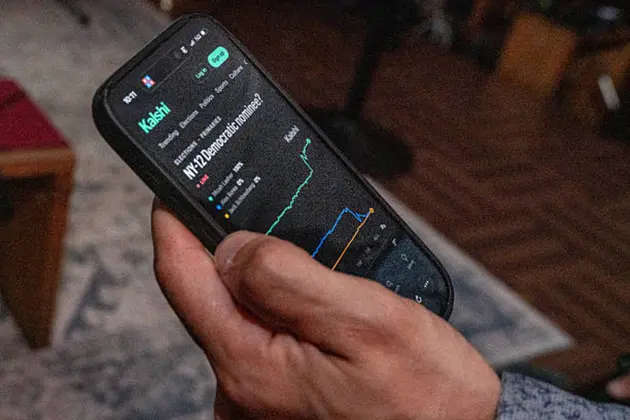
People are betting on elections. Congress is watching

As Spencer Pratt fell behind in the Los Angeles mayoral primary, an unexpected group began claiming election fraud: people tracking the Republican’s success on prediction markets, the increasingly popular online exchanges on which people can make bets on almost anything.

“Crazy how much voter fraud can be done with mail in ballots,” one user following bets on the mayoral race wrote last week on Kalshi, one of the top trading platforms.

“Same old California fraud,” said another who had bet that Pratt would win.

Election fraud claims extended to social media, where a handful of influencers who post content for prediction market platforms questioned the ballot count. “It’s a dead heat on Kalshi,” one user wrote on social media. “Is CA cheating to get Spencer Pratt out?”

Kalshi told the influencers to delete the posts, which violated company guidelines. Polymarket, the other leading platform, directed them to remove the paid partnership label from those posts.

The amplification of election misinformation by users who had money staked on the mayoral race adds a new twist to evolving scrutiny of prediction markets, and scholars say the ability to bet on elections broadly raises questions about whether the exchanges could alter how Americans engage in democracy.

“Elections are not a game,” said Davina Hurt, director of government ethics at the Markkula Center for Applied Ethics at Santa Clara University. “[If market] probabilities begin influencing donor decisions, media attention, the energy around [campaign] volunteers — at that point, markets aren’t just observing the election. They’re a part of it.”

Fans of the exchanges say they are powerful tools that can help decision makers, and company leaders have touted them as highly accurate predictors that can act as an antidote to misinformation and provide election insights.

“By shifting focus from ‘what people say’ to ‘where they put their money,’ and filtering out social media noise and pundit bias, we are providing a level of clarity and predictive power that cannot be matched,” said Kalshi spokesperson Dani Lever .

But these markets’ rapid rise has also raised a host of questions among members of Congress, state lawmakers and others — about betting on elections, wars and other political events, about potential insider trading, and about whether the platforms should be left to self-regulate. Some states are also in legal battles with the federal government over whether the activity amounts to gambling, which they seek to regulate.

“It’s like we’re in the 1930s with financial markets — we have some things that we want to regulate and restrict [as a country], and we’re sort of in the early stages of trying to lay out what the rules are,” said Koleman Strumpf, an economist at Wake Forest University.

Concerns about insider trading

The discourse around the Los Angeles mayoral race was the latest to raise questions at the intersection of prediction markets and politics. Earlier this year, an Army soldier was indicted after allegedly using his knowledge of the planned U.S. operation to capture former Venezuelan leader Nicolas Maduro to make bets on it, winning more than $400,000. He has pleaded not guilty.

Around the same time, several anonymous users reportedly earned $2.4 million combined by making remarkably prescient bets on the Iran war, prompting concern in Congress about insider trading. And during the primary elections, Kalshi fined a few politicians for betting on themselves, while the Justice Department began investigating a former congressman on similar charges.

Kalshi co-founder Luana Lopes Lara speaks at a conference in Santa Monica, Calif., in April.

Kalshi co-founder Luana Lopes Lara speaks at a conference in Santa Monica, Calif., in April.

(Anna Webber / Inc.)

The episodes set off a debate in Washington. The Republican-led House Oversight Committee opened an investigation into potential insider trading, and a bipartisan group in Congress has introduced a flurry of bills seeking to put up guardrails. It remains unclear whether any will pass this session.

The chatter in Congress appeared to lead the Commodities Futures Trading Commission, which regulates prediction markets, to propose a new framework last week to govern issues raised by lawmakers, such as potential betting on wars. Commission Chair Mike Selig said the proposal would allow for scrutiny of suspicious activity “while letting legitimate markets move forward pursuant to the public interest.”

The markets commission under former President Biden was viewed as somewhat skeptical of prediction markets; the agency under President Trump — whose eldest son holds advisory positions at both Polymarket and Kalshi — has been seen as more favorable to the industry. The federal government has sued several states over their attempts to regulate the markets under state laws banning sports gambling and other measures.

Sen. Adam Schiff (D-Calif.), who has introduced legislation on the topic, said the agency’s framework would benefit the industry at the expense of the public interest.

The agency lacks “the leadership, will and investigative staff needed to confront the dangers of election misinformation, insider trading, and more,” Schiff said, “and seems content to allow the industry to police itself.”

Making bets

As California’s primary neared, people staked their dollars on the state’s races in droves. On Kalshi, trading volume on one contract about who will win the L.A. mayoral race in November had reached more than $117 million as of Tuesday.

Prediction market users trade on the outcome of future events, making money if they’re correct and losing money if they’re wrong. Someone can purchase a contract on the prediction that L.A. Mayor Karen Bass will win in November, a yes contract, or on the prediction that she will lose, a no contract.

On Tuesday, Bass contracts on Kalshi were selling at 63 cents each for yes and 38 cents for no, meaning the market was forecasting a 63% chance of her winning. Users receive $1 per contract if their prediction is correct, creating a profit on their initial investment.

Prediction markets generally create more accurate forecasts than political polls, according to Strumpf, whose research has examined 30 years of prediction markets in various forms.

Many of the issues critics raise are theoretical and have not been seen in practice, Strumpf said. By his analysis, there is no evidence that the markets have ever influenced an election outcome. He said serious traders tend to do extensive research in order to make money, meaning their bets are educated.

Rep. Mike Levin (D-San Juan Capistrano), who has introduced legislation to prohibit event contracts involving terrorism, war, assassination and deaths, said the platforms may be useful in some cases but shouldn’t be left to police themselves. He said he’s concerned that the markets create “all the wrong incentives” for people, including political candidates and officials, to abuse inside knowledge.

“I don’t trust them to self-regulate at all,” Levin said of the companies. “The federal role should be guardrails that are reasonable and pragmatic.”

‘The sanctity of our elections’

Skeptics’ concerns regarding elections largely center around the markets’ introduction of a new way for money to potentially influence politics.

They say the desire to elevate a candidate’s market odds could create an incentive for market manipulation, and they worry that the votes of Americans using the market could be influenced by their desire to profit.

“This has real impacts for the sanctity of our elections,” said Assemblymember Maggy Krell (D-Sacramento), who raised concerns about how prediction markets could impact the democratic process in a March letter to the state’s Fair Political Practices Commission. (California lawmakers are looking at the issue, a spokesperson for Assembly Speaker Robert Rivas (D-Hollister) said, though none of the bills introduced this year have yet moved forward.)

The platforms create a potential new channel “for dark money to flow into our elections,” Krell said. “Specifically, someone who’s opposing or supporting a candidate could potentially use sites like Kalshi to elevate that candidate and impact the entire pool.”

The industry has endeavored to “get out in front” of concerns by creating their own policies aimed at preventing insider trading, market manipulation and other issues, said attorney Ronak D. Desai, partner and head of the congressional practice at the Washington law firm Paul Hastings.

Kalshi has a ban on those practices and has banned markets tied directly to death and war, Lever said. It also screens all new users and, in the first quarter of this year, blocked more than 100 potential insider trades and referred more than 20 cases to law enforcement.

In the case of the military member who bet on the United States’ operation in Venezuela, for instance, Polymarket caught the activity and referred the case to the Justice Department, a spokesperson said. The company has referred nearly 100 cases of suspicious activity to law enforcement, he said.

Election markets are not offered on Polymarket’s U.S. exchange — though users in the U.S. and other countries that ban the company’s international exchange are widely reported to access it using online tools.

“Polymarket prohibits trading based on stolen information, illegal tips, or information obtained in breach of a duty of trust, confidentiality, or other legal obligation,” the Polymarket spokesperson said in a statement.

Aaron Klein, senior fellow in the Center on Regulation and Markets at the Brookings Institution, predicted that pressure for further regulation would continue to mount.

“The top goal of a society is to have free and fair elections,” Klein said. “At a time in our nation’s history where people are doubting the integrity of elections and foreign governments are stoking those flames, we ought to be pretty careful.”

Source link

George Santos reported to prosecutors over suspicious Kalshi trades, AP source says

A prediction market reported former U.S. Rep. George Santos to federal prosecutors after he boasted he’d be going to President Trump’s State of the Union address, then bet against his own attendance, according to a person familiar with the investigation.

Kalshi, the online prediction marketplace, referred Santos to the Department of Justice after detecting suspicious trades made by him ahead of Trump’s Feb. 24 speech, the person said. The person spoke to the Associated Press on the condition of anonymity because they weren’t authorized to discuss the matter publicly.

Kalshi also reported the trades to the Commodity Futures Trading Commission, a federal regulatory body that has vowed to crack down on insider trading in prediction marketplaces.

The Justice Department and the CFTC didn’t immediately respond Tuesday to inquiries from the AP.

Santos also did not respond to text messages or phone calls.

The referral was first reported by NPR. Santos told NPR that he wasn’t aware of the investigation. He declined to say whether he had a Kalshi account.

“I’m not saying yes, I’m not saying no,” Santos told NPR.

The convicted ex-congressman had repeatedly discussed his intention to attend the State of the Union, which came just four months after he was granted clemency by Trump in a fraud case that led to his expulsion from the U.S. House.

On the eve of Trump’s speech, Kalshi put the odds of Santos attending at close to 75%.

Then, minutes into the speech, Santos posted on X that he had been waylaid at the airport. Immediately, several social media users accused him of running another scheme.

“Santos talking to his accountant and telling him to open his Kalshi account and bet all his money on No,” one user wrote, alongside a meme of Al Pacino counting money in the movie Scarface.

In March, Santos addressed the complaints on his podcast.

“I guess people lost money,” he said. “Some people made unexpected money. That’s to show you how fragile these markets are.”

Santos, who won office as a Republican after inventing a bogus persona as a Wall Street dealmaker, was sentenced to seven years in prison after pleading guilty to fraud and identity theft in 2024.

After serving just 84 days, he was ordered released by Trump, who called Santos a “rogue” but said he didn’t deserve a harsh sentence and should get credit for voting Republican.

Prediction markets, including Kalshi and its chief rival Polymarket, have drawn scrutiny as their businesses have expanded — with some lawmakers urging the platforms to do more to guard against insider trading.

Both companies have said they are reporting suspicious trades to federal regulators. Some investigations have led to criminal charges. In April a soldier involved in the military operation to capture Venezuelan President Nicolás Maduro was charged with using classified information to win more than $400,000 predicting the date of his capture on Polymarket.

In April, the Senate approved a bipartisan resolution to prevent its own members from using prediction markets.

Offenhartz writes for the Associated Press.

Source link