Tarek William Saab is Out. Who Comes Next?
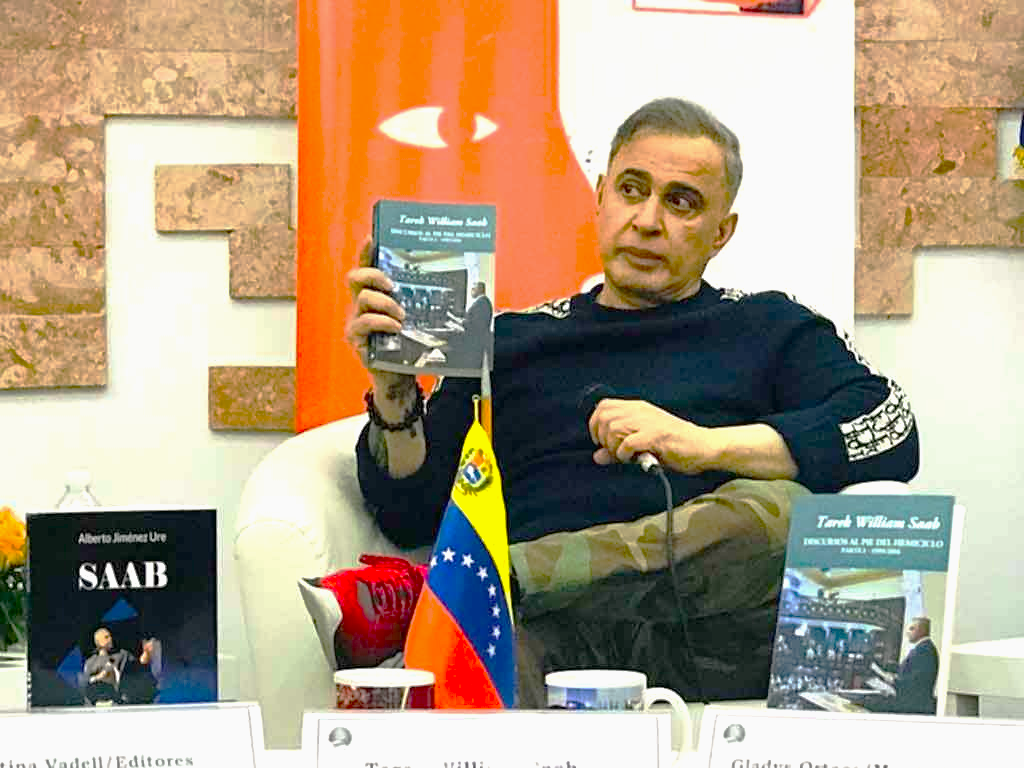
The demise of Tarek William Saab, Nicolas Maduro’s prosecutor general and face of his kangaroo courts, is one of the emblematic events in the aftermath of El Bombazo. A guy who, under Maduro and Hugo Chávez, symbolized a combination of vanity, evil and bad taste that made people both mock and despise him. A bit like Delcy Rodríguez, he rose from within chavismo as a posh comrade with an interest in literature and poetry before becoming a human rights lawyer for victims of the Cuarta República, such as Tupamaro activist and agitator Oswaldo Rivero.
His ascent encompassed an impressive range of public positions: member of the 1999 constituent assembly, lawmaker in the early days of ruling chavismo and big defender of 21st-century socialism in foreign papers, an Anzoátegui state governor, ombudsman, and finally successor to Luisa Ortega Diaz as prosecutor general, appointed by the infamous 2017 constituent assembly.
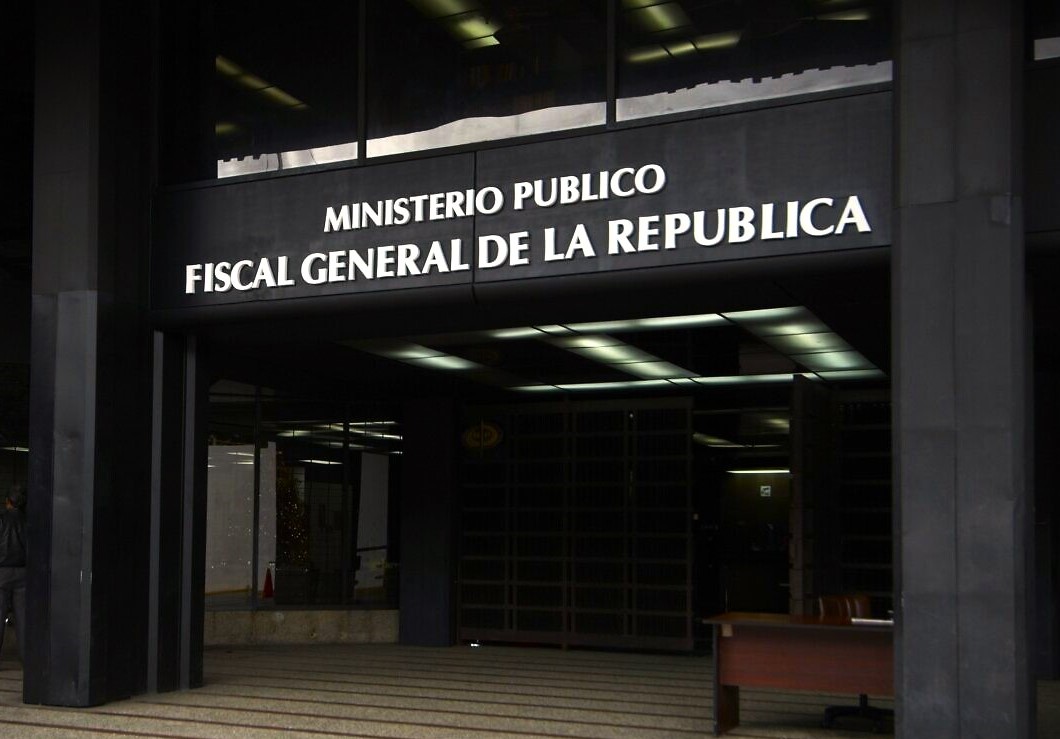
Things were already bad back then, with gruesome episodes like the case of María Afiuni, a judge Hugo Chávez sent to jail indefinitely and was sexually abused in prison, and a growing history of political persecution under Ortega’s watch. Nevertheless, Saab’s takeover marked the full transformation of the Prosecutor General’s Office into an instrument for clientelism and grand corruption. Following his appointment in August 2017, he welcomed a contingent of armed men into the prosecutor’s office building. Inside, they took photographs, entered offices and removed documents, according to a 2021 United Nations report. Saab then dismantled specialized units meant to probe crimes committed by public officials. A year later, he eliminated the prosecutorial career track: all posts were provisional moving forward; permanence depended upon political variables and influence.
If you were arrested under Saab, you could have over a dozen prosecutors “taking care” of your case over many years. The moment one of them took a genuine interest and decided to ask the right questions, he was removed and you would get a new one. In a country where prisons exceed their capacity by 164.19% according to the Venezuelan Prisons Observatory, the same NGO reports that 70% of all inmates (not just political detainees) face unjustified delays in their judicial processing. The indefinite postponement of hearings is a routine practice. Trials can face constant interruptions: the judge had a “personal issue” or needed to run errands, the police officer involved didn’t want to show up. Not to mention the sea of irregularities that defendants face, such as “lost files” (se extravió la carpeta, señora) or prison authorities failing to transport detainees to court.
In January, when she announced El Helicoide’s shutdown and launched the amnesty project, Delcy acknowledged these issues and more. She called her top magistrates and “Doctor Saab” to address systemic graft and consider alternatives to imprisonment. She obviously fell short in her apparent assessment of the Saab era. While Saab turned into an emissary of state violence, providing public justifications for arbitrary arrests and extrajudicial killings, Venezuelan courts became money-printing machines for a web of hundreds of prosecutors, judges and clerks.
Saab will soon be gone, and gone for good. Maybe à la Alex Saab.
In public, this was a man that tried to be popular by addressing incidents when it was convenient. In some occasions, because they went viral on social media, like the time he issued an arrest warrant on a Venezuelan reporter for a misogynistic tweet about Lionel Messi’s wife. In others, Saab applied his brand of “Twitter justice” to cases that received widespread notoriety, like his handling of a serial harasser or the reopening of the investigation into Canserbero’s murder in 2023, eight years after the iconic rapper was murdered and just as Maduro needed a headline-grabbing win with young voters.
But this is not about Saab’s record or the diverse list of victims he slandered and charged on bogus grounds (grassroots chavistas and once-powerful officials, opposition and NGO leaders). That description is just a small glimpse into informal institutions that make our justice managers tick, and the challenge that successors will face to change the culture among public servants.
Saab will soon be gone, and gone for good. Maybe à la Alex Saab. Yesterday, Delcy named him chief of the Gran Misión Viva Venezuela, Mi Patria Querida, a two-year old social program meant to promote Venezuelan culture (at least Saab will get to interact with fellow artists for a while). As part of the post-Maduro government reshuffle and the paquete of halfway measures, Delcy had forced Saab’s resignation before naming him acting ombudsman (again) to avoid him the embarrassment of a nasty public fallout. The invisible ombudsman, Alfredo Ruiz, also had to quit. And Delcy gave her brother the green light to set up a process to appoint the new chief prosecutor and ombudsman.
Call it a hoax or a potential game-changer for Venezuela, but this is one of the most important political developments in the country right now, with the potential to mark a hypothetical Rodríguez takeover of the Public Prosecutor’s Office, or the outset of a common-sense cleanup process through a competent, reform-driven figure.
The main contender to replace Saab is obviously a Rodriguez guy. Larry Devoe, who was the immediate pick for the post on an interim basis, is an UCAB graduate and lawyer with higher education abroad who became the representative of the Maduro regime for human rights issues before UN authorities, the Inter-American Human Rights Court and other multilateral fixtures. He has a reputation for being diligent and serious for chavista standards, a view echoed by Caracas Chronicles sources in the opposition who interacted with Devoe during Maduro-era negotiations (Devoe was a member of the chavista delegation in Mexico). One of the sources even mentioned that Devoe once praised him for a data-driven account of Venezuela’s economic conditions on the ground (“he’s a guy you can sit down and have a chat with.”) Tal Cual notes that in recent years Devoe held at least seven government positions, including executive secretary of the Venezuelan Human Rights Council and advisor to Venezuela’s vice president.
In the opposite lane we have Magaly Vásquez, a lawyer and tenured professor who coordinates UCAB’s Criminal Law studies. She is the first female criminal lawyer to be elected a full member of the National Academy of Political and Social Sciences. She co-wrote Venezuela’s Criminal Procedure Code. She has the credentials to be an excellent chief prosecutor in an ideal country: if the choice were based on scholarly distinction and unquestioned expertise in the rule of law, she would be a sensible pick. She has the backing of both the leading public university in the country, Universidad Central, and private school Unimet. Both institutions have tried to get involved in the Rodriguez-sponsored lawmaking initiatives, though the UN Fact-Finding Mission recently noted that authorities have not considered their input.
Among NGO groups and independent media, there’s the feeling that the regime will stick to Devoe as a figure that represents continuity with better optics than Saab.
The rest of the candidates are a mixed bunch that you can familiarize with scrolling this amazing website created by activist Giuseppe Gangi. They include former judges and prosecutors with little public exposure, like Roger López and José Alciviades Monserratia, as well as professionals who can say they know the system while also having private-sector experience, such as Giovanni Rionero.
There’s Angel Zerpa, also a former UCAB staff professor and Chávez-era judge. He served as counsel to Ortega Díaz when she broke with the Maduro regime during the 2017 constitutional crisis. When the Julio Borges-led National Assembly named him among a group of parallel higher-court magistrates, Maduro arrested Zerpa and threw him into a tigrito, a bathroom used for solitary confinement in El Helicoide
There’s Danilo Mojica, an emeritus TSJ magistrate and career judge that condemned Maduro’s decision to set up the constituent assembly, urging him to call for free elections. Or José Alcalá Rhode, formerly a key aide to Manuel Rosales in Un Nuevo Tiempo and his administration of Zulia. Nelson Chitty La Roche, a former COPEI congressman and UCV professor, is also in the running (the university has nominated both him and Vásquez).
Among NGO groups and independent media, there’s the feeling that the regime will stick to Devoe as a figure that represents continuity with better optics than Saab. In the meantime, while many of these candidates speak to Venezuelan journalists and interact with pundits and civil society figures on social media, political parties keep themselves distant to the process. Their public position combines skepticism and a refusal to get involved. Last week, the Unitary Platform accused chavismo of “forging a pact with its allies” to divide these appointments among different players.
On the other hand, María Corina Machado’s return to Venezuela keeps being delayed. She hasn’t really acknowledged what’s happening on this front: if it’s through the 2025 National Assembly, it won’t be kosher. Beyond the celebrations over Venezuela’s historic baseball will, ordinary citizens continue to complain about how slowly political and economic announcements are translating into real change. On Monday, public transport unions organized a strike to demand a $50‑cent bus fare.
Delcy responded that “extremist sectors” were behind the strike and called on unions to “get back to work.” No matter how many dialogue commissions she sets up, or who she appoints as defense minister or Ministerio Público chief, Delcy can’t hide from the fact that people care the most about the basics.
And that exchange‑rate gap isn’t going anywhere, as things stand.