justice department

At least 16 files have disappeared from the Justice Dept. webpage for Epstein documents

At least 16 files disappeared from the Justice Department’s public webpage for documents related to Jeffrey Epstein — including a photograph showing Donald Trump — less than a day after they were posted, with no explanation from the government and no notice to the public.

The missing files, which were available Friday and no longer accessible by Saturday, included images of paintings depicting nude women, and one showing a series of photographs along a credenza and in drawers. In that image, inside a drawer among other photos, was a photograph of Trump, alongside Epstein, Melania Trump and Epstein’s longtime associate and accomplice, Ghislaine Maxwell.

The Justice Department didn’t answer questions Saturday about why the files disappeared but said in a post on X that “photos and other materials will continue being reviewed and redacted consistent with the law in an abundance of caution as we receive additional information.”

Online, the unexplained missing files fueled speculation about what was taken down and why the public was not notified, compounding long-standing intrigue about Epstein and the powerful figures who surrounded him. Democrats on the House Oversight Committee pointed to the missing image featuring a Trump photo in a post on X, writing: “What else is being covered up? We need transparency for the American public.”

The episode deepened concerns that had already emerged from the Justice Department’s much-anticipated document release. The tens of thousands of pages made public offered little new insight into Epstein’s crimes or the prosecutorial decisions that allowed him to avoid serious federal charges for years, while omitting some of the most closely watched materials, including FBI interviews with victims and internal Justice Department memos on charging decisions.

Scant new insight in the disclosures

Some of the most consequential records expected about Epstein are nowhere to be found in the Justice Department’s initial disclosures, which span tens of thousands of pages.

Missing are FBI interviews with survivors and internal Justice Department memos examining charging decisions — records that could have helped explain how investigators viewed the case and why Epstein was allowed in 2008 to plead guilty to a relatively minor state-level prostitution charge.

The gaps go further.

The records, required to be released under a recent law passed by Congress, hardly reference several powerful figures long associated with Epstein, including Britain’s former Prince Andrew, renewing questions about who was scrutinized, who was not and how much the disclosures truly advance public accountability.

Among the fresh nuggets: insight into the Justice Department’s decision to abandon an investigation into Epstein in the 2000s, which enabled him to plead guilty to that state-level charge, and a previously unseen 1996 complaint accusing Epstein of stealing photographs of children.

The releases so far have been heavy on images of Epstein’s homes in New York City and the U.S. Virgin Islands, with some photos of celebrities and politicians.

There was a series of never-before-seen photos of former President Clinton but fleetingly few of Trump. Both have been associated with Epstein but both have since disowned those friendships. Neither has been accused of any wrongdoing in connection with Epstein, and there was no indication the photos played a role in the criminal cases brought against him.

Despite a Friday deadline set by Congress to make everything public, the Justice Department said it plans to release records on a rolling basis. It blamed the delay on the time-consuming process of obscuring survivors’ names and other identifying information. The department has not given any notice when more records might arrive.

That approach angered some Epstein accusers and members of Congress who fought to pass the law forced the department to act. Instead of marking the end of a years-long battle for transparency, the document release Friday was merely the beginning of an indefinite wait for a complete picture of Epstein’s crimes and alleged crimes and the steps taken to investigate them.

“I feel like again, the DOJ, the justice system is failing us,” said Marina Lacerda, who alleges Epstein started sexually abusing her at his New York City mansion when she was 14.

Redactions, lack of context

Federal prosecutors in New York brought sex trafficking charges against Epstein in 2019, but he killed himself in jail after his arrest.

The documents just made public were a sliver of potentially millions of pages of records in the department’s possession. In one example, Deputy Atty. Gen. Todd Blanche said Manhattan federal prosecutors had more than 3.6 million records from sex trafficking investigations into Epstein and Maxwell, though many duplicated material already turned over by the FBI.

Many of the records released so far had been made public in court filings, congressional releases or freedom of information requests, though, for the first time, they were all in one place and available for the public to search for free.

Ones that were new were often lacking necessary context or heavily blacked out. A 119-page document marked “Grand Jury-NY,” probably from one of the federal sex trafficking investigations that led to the charges against Epstein in 2019 or Maxwell in 2021, was entirely blacked out.

Trump’s Republican allies seized on the Clinton images, including photos of the Democrat with singers Michael Jackson and Diana Ross. There were also photos of Epstein with actors Chris Tucker and Kevin Spacey, and even Epstein with TV newscaster Walter Cronkite. But none of the photos had captions and was no explanation given for why any of them were together.

The meatiest records released so far showed that federal prosecutors had what appeared to be a strong case against Epstein in 2007 yet never charged him.

Transcripts of grand jury proceedings, released publicly for the first time, included testimony from FBI agents who described interviews they had with several girls and young women who described being paid to perform sex acts for Epstein. The youngest was 14 and in ninth grade.

One had told investigators about being sexually assaulted by Epstein when she initially resisted his advances during a massage.

Another, then 21, testified before the grand jury about how Epstein had hired her when she was 16 to perform a sexual massage and how she had gone on to recruit other girls to do the same.

“For every girl that I brought to the table he would give me $200,” she said. They were mostly people she knew from high school, she said. “I also told them that if they are under age, just lie about it and tell him that you are 18.”

The documents also contain a transcript of an interview Justice Department lawyers did more than a decade later with the U.S. attorney who oversaw the case, Alexander Acosta, about his ultimate decision not to bring federal charges.

Acosta, who was Labor secretary during Trump’s first term, cited concerns about whether a jury would believe Epstein’s accusers.

He also said the Justice Department might have been more reluctant to make a federal prosecution out of a case that straddled the legal border between sex trafficking and soliciting prostitution, something more commonly handled by state prosecutors.

“I’m not saying it was the right view,” Acosta added. He also said that the public today would probably view the survivors differently.

“There’s been a lot of changes in victim shaming,” Acosta said.

Jennifer Freeman, an attorney representing Epstein accuser Maria Farmer and other survivors, said Saturday that her client feels vindicated after the document release. Farmer sought for years documents backing up her claim that Epstein and Maxwell were in possession of child sexual abuse images.

“It’s a triumph and a tragedy,” she said. “It looks like the government did absolutely nothing. Horrible things have happened and if they investigated in even the smallest way, they could have stopped him.”

Sisak and Caruso write for the Associated Press. AP journalists Ali Swenson, Christopher L. Keller, Kristin M. Hall, Aaron Kessler and Mike Catalini contributed to this report.

Source link

Justice Department releases Epstein files, with redactions and omissions

The Justice Department released a library of files on Friday related to Jeffrey Epstein, partially complying with a new federal law compelling their release, while acknowledging that hundreds of thousands of files remain sealed.

The portal, on the department’s website, includes videos, photos and documents from the years-long investigation of the disgraced financier and convicted sex offender, who died in federal prison in 2019. But upon an initial survey of the files, several of the documents were heavily redacted, and much of the database was unsearchable, in spite of a provision of the new law requiring a more accessible system.

The Epstein Files Transparency Act, which passed with overwhelming bipartisan support in Congress, unequivocally required the department to release its full trove of files by midnight Friday, marking 30 days since passage.

But a top official said earlier Friday that the department would miss the legal deadline Friday to release all files, protracting a scandal that has come to plague the Trump administration. Hundreds of thousands more were still under review and would take weeks more to release, said Todd Blanche, the deputy attorney general.

“I expect that we’re going to release more documents over the next couple of weeks, so today several hundred thousand and then over the next couple weeks, I expect several hundred thousand more,” Blanche told Fox News on Friday.

The delay drew immediate condemnation from Democrats in key oversight roles.

Rep. Robert Garcia (D-Long Beach), the ranking member of the House Oversight Committee, and Rep. Jamie Raskin (D-Md.), the ranking member of the House Judiciary Committee, accused President Trump and his administration in a statement Friday of “violating federal law as they continue covering up the facts and the evidence about Jeffrey Epstein’s decades-long, billion-dollar, international sex trafficking ring,” and said they were “examining all legal options.”

The delay also drew criticism from some Republicans.

“My goodness, what is in the Epstein files?” Rep. Marjorie Taylor Greene (R-Ga.), who is leaving Congress next month, wrote on X. “Release all the files. It’s literally the law.”

“Time’s up. Release the files,” Rep. Thomas Massie (R-Ky.) wrote on X.

Already, congressional efforts to force the release of documents from the FBI’s investigations into Epstein have produced a trove of the disgraced financier’s emails and other records from his estate.

Some made reference to Trump and added to a long-evolving portrait of the social relationship that Epstein and Trump shared for years, before what Trump has described as a falling out.

In one email in early 2019, during Trump’s first term in the White House, Epstein wrote to author and journalist Michael Wolff that Trump “knew about the girls.”

In a 2011 email to Ghislaine Maxwell, who was later convicted of conspiring with Epstein to help him sexually abuse young girls, Epstein wrote, “I want you to realize that the dog that hasn’t barked is trump. [Victim] spent hours at my house with him … he has never once been mentioned.”

Maxwell responded: “I have been thinking about that…”

Trump has strongly denied any wrongdoing, and downplayed the importance of the files. He has also intermittently worked to block their release, even while suggesting publicly that he would not be opposed to it.

His administration’s resistance to releasing all of the FBI’s files, and fumbling with their reasons for withholding documents, was overcome only after Republican lawmakers broke off and joined Democrats in passing the transparency measure.

The resistance has also riled many in the president’s base, with their intrigue and anger over the files remaining stickier and harder to shake for Trump than any other political vulnerability.

It remained unclear Friday afternoon what additional revelations would come from the anticipated dump. Among the files that were released, extensive redactions were expected to shield victims, as well as references to individuals and entities that could be the subject of ongoing investigations or matters of national security.

That could include mentions of Trump, experts said, who was a private citizen over the course of his infamous friendship with Epstein through the mid-2000s.

Epstein was convicted in 2008 of procuring a child for prostitution in Florida, but served only 13 months in custody in what was considered a sweetheart plea deal that saved him a potential life sentence. He was charged in 2019 with sex trafficking, and died in federal custody at a Manhattan jail awaiting trial. Epstein was alleged to have abused over 200 women and girls.

Many of his victims argued in support of the release of documents, but administration officials have cited their privacy as a primary excuse for delaying the release — something Blanche reiterated Friday.

“There’s a lot of eyes looking at these and we want to make sure that when we do produce the materials we are producing, that we are protecting every single victim,” Blanche said, noting that Trump had signed the law just 30 days prior.

“And we have been working tirelessly since that day to make sure that we get every single document that we have within the Department of Justice, review it and get it to the American public,” he said.

Trump had lobbied aggressively against the Epstein Files Transparency Act, unsuccessfully pressuring House Republican lawmakers not to join a discharge petition that would force a vote on the matter over the wishes of House Speaker Mike Johnson (R-La.). He ultimately signed the bill into law after it passed both chambers with veto-proof majorities.

Rep. Ro Khanna (D-Fremont), who introduced the House bill requiring the release of the files, warned that the Justice Department under future administrations could pursue legal action against current officials who work to obstruct the release of any of the files, contravening the letter of the new law.

“Let me be very clear, we need a full release,” Khanna said. “Anyone who tampers with these documents, or conceals documents, or engages in excessive redaction, will be prosecuted because of obstruction of justice.”

Given Democrats’ desire to keep the issue alive politically, and the intense interest in the matter from voters on both ends of the political spectrum, the fact that the Justice Department failed to meet the Friday deadline in full was likely to stoke continued agitation for the documents’ release in coming days.

In their statement Friday, Garcia and Raskin hammered on Trump administration officials — including Atty. Gen. Pam Bondi — for allegedly interfering in the release of records.

“For months, Pam Bondi has denied survivors the transparency and accountability they have demanded and deserve and has defied the Oversight Committee’s subpoena,” they said. “The Department of Justice is now making clear it intends to defy Congress itself.”

Among other things, they called out the Justice Department’s decision to move Maxwell, who is serving a 20-year sentence for sex trafficking, to a minimum security prison after she met with Blanche in July.

“The survivors of this nightmare deserve justice, the co-conspirators must be held accountable, and the American people deserve complete transparency from DOJ,” Garcia and Raskin said.

Sen. Adam Schiff (D-Calif.), in response to Blanche saying all the files wouldn’t be released Friday, said the transparency act “is clear: while protecting survivors, ALL of these records are required to be released today. Not just some.”

“The Trump administration can’t move the goalposts,” Schiff wrote on X. “They’re cemented in law.”

Source link

National Guard troops under Trump’s command leave Los Angeles

Dozens of California National Guard troops under President Trump’s command apparently slipped out of Los Angeles under cover of darkness early Sunday morning, ahead of an appellate court’s order to be gone by noon Monday.

Administration officials would not immediately confirm whether the troops had decamped. But video taken outside the Roybal Federal Building downtown just after midnight on Sunday and reviewed by The Times shows a large tactical truck and four white passenger vans leaving the facility, which has been patrolled by armed soldiers since June.

About 300 California troops remain under federal control, some 100 of whom were still active in Los Angeles as of last week, court records show.

“There were more than usual, and all of them left — there was not a single one that stayed,” said protester Rosa Martinez, who has demonstrated outside the federal building for months and was there Sunday.

Troops were spotted briefly later that day, but had not been seen again as of Monday afternoon, Martinez said.

The development that forced the troops to leave was part of a sprawling legal fight for control of federalized soldiers nationwide that remains ongoing.

The U.S. 9th Circuit Court of Appeals issued the order late Friday but softened an even more stringent edict from a lower court judge last week that would have forced the president to relinquish command of the state’s forces. Trump federalized thousands of California National Guard troops in June troops to quell unrest over immigration enforcement in Los Angeles.

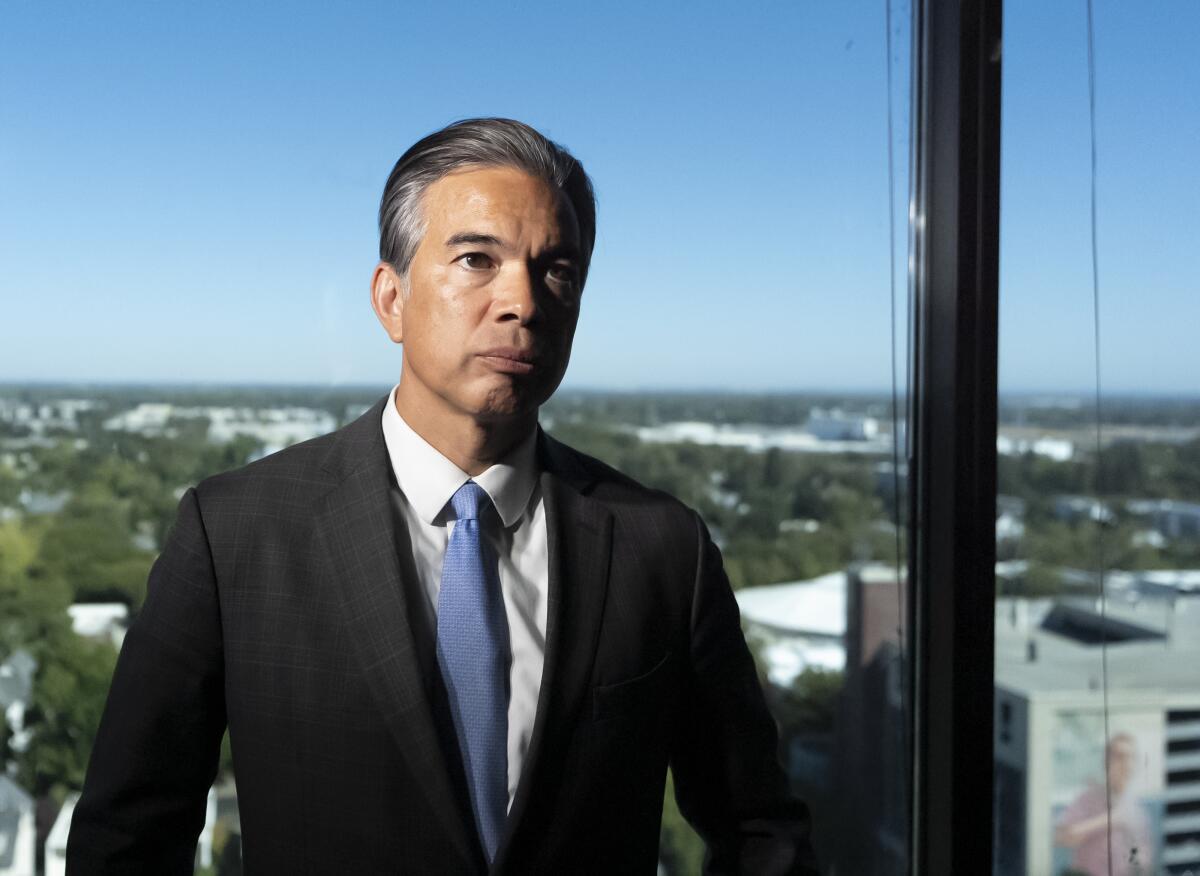
“For the first time in six months, there will be no military deployed on the streets of Los Angeles,” California Atty. Gen. Rob Bonta said in a statement. “While this decision is not final, it is a gratifying and hard-fought step in the right direction.”

The ruling Friday came from the same three-judge panel that handed the president one of his most sweeping second-term victories this summer, after it found that the California deployment could go forward under an obscure and virtually untested subsection of the law.

That precedent set a “great level of deference” as the standard of review for deployments that have since mushroomed across the country, circumscribing debate even in courts where it is not legally binding.

But the so-called Newsom standard — California Gov. Gavin Newsom was the lead plaintiff on the lawsuit — has drawn intense scrutiny and increasingly public rebuke in recent weeks, even as the Trump administration argues it affords the administration new and greater powers.

In October, the 7th Circuit — the appellate court that covers Illinois — found the president’s claims had “insufficient evidence,” upholding a block on a troop deployment in and around Chicago.

“Even applying great deference to the administration’s view of the facts … there is insufficient evidence that protest activity in Illinois has significantly impeded the ability of federal officers to execute federal immigration laws,” the panel wrote.

That ruling is now under review at the Supreme Court.

In November, the 9th Circuit vacated its earlier decision allowing Trump’s Oregon federalization to go forward amid claims the Justice Department misrepresented important facts in its filings. That case is under review by a larger panel of the appellate division, with a decision expected early next year.

Despite mounting pressure, Justice Department lawyers have doubled down on their claims of near-total power, arguing that federalized troops remain under the president’s command in perpetuity, and that courts have no role in reviewing their deployment.

When Judge Mark J. Bennett asked the Department of Justice whether federalized troops could “stay called up forever” under the government’s reading of the statute at a hearing in October, the answer was an unequivocal yes.

“There’s not a word in the statute that talks about how long they can remain in federal service,” Deputy Assistant Atty. Gen. Eric McArthur said.

For now, the fate of 300 federalized California soldiers remains in limbo, though troops are currently barred by court orders from deployment in California and Oregon.

Times staff writers David Zahniser and Kevin Rector contributed to this report.

Source link

Justice Department faces hurdle in seeking case against Comey

The Justice Department violated the constitutional rights of a close friend of James B. Comey and must return to him computer files that prosecutors had hoped to use for a potential criminal case against the former FBI director, a federal judge said Friday.

The ruling from U.S. District Judge Colleen Kollar-Kotelly not only represents a stern rebuke of the conduct of Justice Department prosecutors but also imposes a major hurdle to government efforts to seek a new indictment against Comey after an initial one was dismissed last month.

The order concerns computer files and communications that investigators obtained years earlier from Daniel Richman, a friend of Comey’s and Columbia University law professor, as part of a media leak investigation that concluded without charges. The Justice Department continued to hold onto those files and conducted searches of them this fall, without a new warrant, as they prepared a case charging Comey with lying to Congress five years ago.

Richman alleged that the Justice Department violated his 4th Amendment rights by retaining his records and by conducting new warrantless searches of the files, prompting Kollar-Kotelly to issue an order last week temporarily barring prosecutors from accessing the files as part of its investigation.

The Justice Department said the request for the return of the records was merely an attempt to impede a new prosecution of Comey, but the judge again sided with Richman in a 46-page order Friday that directed the Justice Department to give him back his files.

“When the Government violates the Fourth Amendment’s prohibition on unreasonable searches and seizures by sweeping up a broad swath of a person’s electronic files, retaining those files long after the relevant investigation has ended, and later sifting through those files without a warrant to obtain evidence against someone else, what remedy is available to the victim of the Government’s unlawful intrusion?” the judge wrote.

One answer, she said, is to require the government to return the property to the rightful owner.

The judge did, however, permit the Justice Department to file an electronic copy of Richman’s records under seal with the Eastern District of Virginia, where the Comey investigation has been based, and suggested prosecutors could try to access it later with a lawful search warrant.

The Justice Department alleges that Comey used Richman to share information with the news media about his decision-making during the FBI’s investigation into Hillary Clinton’s use of a private email server. Prosecutors charged the former FBI director in September with lying to Congress by denying that he had authorized an associate to serve as an anonymous source for the media.

That indictment was dismissed last month after a federal judge in Virginia ruled that the prosecutor who brought the case, Lindsey Halligan, was unlawfully appointed by the Trump administration. But the ruling left open the possibility that the government could try again to seek charges against Comey, a longtime foe of President Trump. Comey has pleaded not guilty, denied having made a false statement and accused the Justice Department of a vindictive prosecution.

The Comey saga has a long history.

In June 2017, one month after Trump fired Comey as FBI director — while the agency was investigating Russia’s interference in the 2016 presidential election and its ties to the Trump campaign — he testified that he had given Richman a copy of a memo he had written documenting a conversation he had with Trump and had authorized him to share the contents of the memo with a reporter.

After that testimony, Richman permitted the FBI to create an image, or complete electronic copy, of all files on his computer and a hard drive attached to that computer. He authorized the FBI to conduct a search for limited purposes, the judge noted.

Then, in 2019 and 2020, the FBI and Justice Department obtained search warrants to obtain Richman’s email accounts and computer files as part of a media leak investigation that concluded in 2021 without charges. Those warrants were limited in scope, but Richman has alleged that the government collected more information than the warrants allowed, including personal medical information and sensitive correspondence.

In addition, Richman said the Justice Department violated his rights by searching his files in September, without a new warrant, as part of an entirely separate investigation.

“The Court further concludes that the Government’s retention of Petitioner Richman’s files amounts to an ongoing unreasonable seizure,” Kollar-Kotelly wrote. “Therefore, the Court agrees with Petitioner Richman that the Government has violated his Fourth Amendment right against unreasonable searches and seizures.”

Tucker writes for the Associated Press.

Source link

Justice Department sues four more states for access to detailed voter data

The U.S. Justice Department is suing four more states as part of its effort to collect detailed voting data and other election information across the country.

The department filed federal lawsuits against Colorado, Hawaii, Massachusetts and Nevada on Thursday, accusing them of “failing to produce statewide voter registration lists upon request.” So far, 18 states have been sued, including California, along with Fulton County in Georgia, which was sued over records related to the 2020 election, which President Trump continues to falsely claim he won.

The Trump administration has characterized the lawsuits as part of an effort to ensure the security of elections, and the Justice Department says the states are violating federal law by refusing to provide the voter lists and information about ineligible voters.

The lawsuits have raised concerns among some Democratic officials and voting rights advocates who question exactly how the data will be used, and whether the department will follow privacy laws to protect the information. Some of the data sought include names, dates of birth, residential addresses, driver’s license numbers and partial Social Security numbers.

“States have the statutory duty to preserve and protect their constituents from vote dilution,” Assistant Atty. Gen. Harmeet K. Dhillon of the Justice Department’s Civil Rights Division said in a press release. “At this Department of Justice, we will not permit states to jeopardize the integrity and effectiveness of elections by refusing to abide by our federal elections laws. If states will not fulfill their duty to protect the integrity of the ballot, we will.”

Colorado Secretary of State Jena Griswold, a Democrat, said her office declined to provide unredacted voter data.

“We will not hand over Coloradans’ sensitive voting information to Donald Trump. He does not have a legal right to the information,” Griswold said Thursday after the lawsuit was filed. “I will continue to protect our elections and democracy, and look forward to winning this case.”

Nevada Secretary of State Francisco Aguilar, also a Democrat, said the Justice Department hasn’t provided clear answers about how the data will be used, and he has a duty to follow state law and protect voters’ sensitive information and access to the ballot.

“While these requests may seem like normal oversight, the federal government is using its power to try to intimidate states and influence how states administer elections ahead of the 2026 cycle,” Aguilar said in a news release. “The Constitution makes it clear: elections are run by the states.”

In a Sept. 22 letter to the Justice Department, Hawaii Deputy Solicitor Gen. Thomas Hughes said state law requires that all personal information required on a voter registration district other than a voter’s full name, voting district or precinct and voter status must be kept confidential. Hughes also said the federal law cited by the Justice Department doesn’t require states to turn over electronic registration lists, nor does it require states to turn over “uniquely or highly sensitive personal information” about voters.

An Associated Press tally found that the Justice Department has asked at least 26 states for voter registration rolls in recent months, and in many cases asked states for information on how they maintain their voter rolls. In addition to California, other states being sued by the Justice Department include Michigan, Minnesota, New York, New Hampshire, Pennsylvania, Delaware, Maryland, New Mexico, Rhode Island, Vermont and Washington. Nearly all the states are Democrat-led, and several are crucial swing states.

The bipartisan Wisconsin Elections Commission voted 5 to 1 on Thursday against turning over unredacted voter information to the Trump administration. The lone dissenter was Republican commissioner Robert Spindell, who warned that rejecting the request would invite a lawsuit. But other commissioners said it would be illegal under Wisconsin law to provide the voter roll information, which includes the full names, dates of birth, residential addresses and driver’s license numbers of voters.

Boone writes for the Associated Press. AP writer Scott Bauer in Madison, Wis., contributed to this report.

Source link

Trump says he is likely to support ending blanket federal ban on marijuana

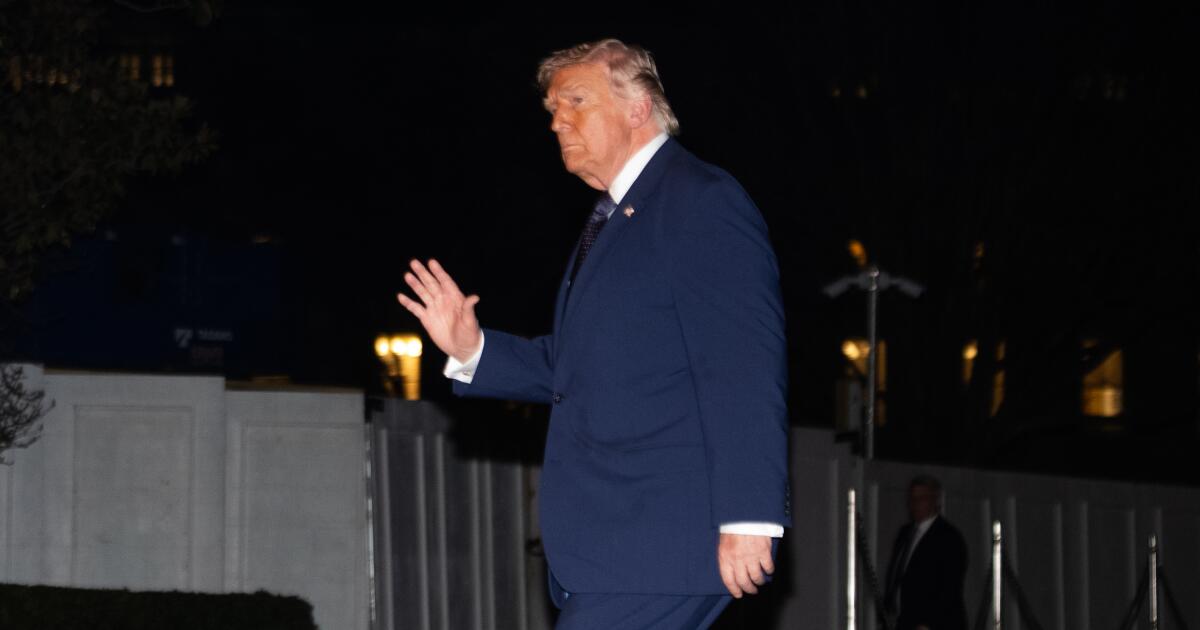
President Trump said he likely will support a congressional effort to end the federal ban on marijuana, a major step that would reshape the pot industry and end the threat of a Justice Department crackdown.

Trump’s remarks put him sharply at odds with Atty. Gen. Jeff Sessions on the issue. The bill in question, pushed by a bipartisan coalition, would allow states to go forward with legalization unencumbered by threats of federal prosecution. Sessions, by contrast, has ramped up those threats and has also lobbied Congress to reduce current protections for medical marijuana.

Trump made his comments to a gaggle of reporters Friday morning just before he boarded a helicopter on his way to the G-7 summit in Canada. His remarks came the day after the bipartisan group of lawmakers proposed their measure.

One of the lead sponsors is Sen. Cory Gardner (R-Colo.), who is aligned with Trump on several issues but recently has tangled with the administration over the Justice Department’s threats to restart prosecutions in states that have legalized marijuana.

“I support Sen. Gardner,” Trump said when asked about the bill. “I know exactly what he’s doing. We’re looking at it. But I probably will end up supporting that, yes.”

The legislative proposal, which is also championed by Sen. Elizabeth Warren (D-Mass.), would reshape the legal landscape for marijuana if it becomes law.

California and eight other states, as well as Washington, D.C., have legalized all adult use of marijuana. An additional 20 states permit marijuana for medical use.

But even as states legalize, marijuana has remained a risky and unstable business because of federal law making it illegal. Concerns about federal law enforcement seizures have inhibited most lenders from working with marijuana businesses. And investors have also proceeded cautiously.

“If you are in the marijuana business … you can’t get a bank loan or set up a bank account because of concern over the conflict between state and federal law,” Gardner said at a news conference Thursday to unveil the new bill. “We need to fix this. It is time we take this industry out of the shadows, bring these dollars out of the shadows.”

He called it a “public hypocrisy” that the firms are expected to pay taxes yet are barred from participation in the financial system.

A lifting of the federal prohibition also would bolster efforts to create uniform testing and regulatory standards for marijuana, and potentially free scientists to pursue research into the medical uses of marijuana.

Trump’s support could potentially have a major impact, providing political cover for Republicans who worry about being tagged as soft on drugs. Still, the proposal faces a tough road in Congress.

Even though most lawmakers now represent areas where pot is legal for at least medical use — and public opinion polls show majorities of Democratic and Republican voters nationwide favor legalization — congressional leaders have shown little appetite for loosening restrictions. The House is blocking the District of Columbia from permitting sales of recreational pot, even after its voters chose to legalize. A 2014 budget amendment that protects medical marijuana businesses from Drug Enforcement Administration raids is perpetually under attack.

“It faces tremendous head winds,” John Hudak, a marijuana policy expert at the Brookings Institution in Washington, said, referring to the Gardner-Warren bill.

Trump said he is likely to support the federal legalization effort despite a warning against it from a coalition of narcotics officer groups.

“We urge you to see through the smoke screen and reject attempts to encourage more drug use in America,” they wrote in a letter to Trump Thursday.

The marijuana industry continues to be whipsawed by mixed messages from the administration.

In January, the Justice Department sent pot businesses into a panic by rescinding an Obama-era policy that restricted prosecutors from targeting sellers who operate legally under state laws. Sessions warned at the time that any pot business could find itself in the crosshairs of prosecutors — regardless of whether marijuana was legal in their state.

The move enraged Gardner, who said the administration had earlier given him assurances that there would be no such raids, at least in his state. At Gardner’s behest, Trump in April ordered an abrupt retreat from the announced crackdown. Trump made the order without even consulting Sessions, a sign of their tense relationship.

But prosecutors did back off. During this administration, there have apparently been no federal raids or seizures of pot companies for sales that are legal under state law.

“Remarkably little, if anything, has changed,” said John Vardaman, a former Justice Department attorney who helped draft the Obama-era rules, known as the Cole memo, after former Deputy Atty. Gen. James M. Cole, who issued it. “Almost every U.S. attorney in states where marijuana is legal has decided to apply the same principles as the Cole memo,” said Vardaman, now an executive at Hypur, which sells banking compliance software to marijuana companies.

Banking is the area in which the Gardner bill could most help pot companies.

The Senate proposal, and a companion bipartisan measure in the House, would amend the Controlled Substances Act so that its marijuana provisions do not apply to any person or business that is in compliance with state laws. To put bankers at ease, it specifies that such marijuana sales would not be considered trafficking and do not amount to illegal financial transactions.

“The very people you want involved in this market are the ones who have been most reluctant to get involved because of the banking issue,” said Vardaman. “If you address that, you would have enormous beneficial effects for the industry.”

While Trump’s comments were welcomed by marijuana activists, they remain on edge, especially because of Trump’s spotty record at actually pushing legislation through Congress.

“We have seen this president voice his support for a lot of things related to cannabis, but he has done absolutely nothing to move legislation,” said Hudak. “This is just more empty rhetoric from a president who is vague on this issue.”

Gardner is hoping he can persuade more of his conservative colleagues to join the crusade by framing the issue as one of state’s rights. Several Republicans, including Reps. Dana Rohrabacher of Costa Mesa and Don Young of Alaska, are demanding an end to federal marijuana laws that intrude on the states. Their movement is slowly growing in Congress.

“This is a chance for us to express that federalism works,” said Gardner, who like some other Republicans was not a proponent of marijuana but took up the cause after his state’s voters endorsed legalization, “to take an idea that states have led with and provide a solution that allows them to continue to lead.”

evan.halper@latimes.com

Follow me: @evanhalper


UPDATES:

2:10 p.m.: This article was updated with additional analysis and reaction.

This article was originally published at 8:50 a.m.


Source link

Justice Department asks appeals court to block judge’s contempt inquiry in mass deportation case

The Justice Department on Friday asked an appeals court to block a contempt investigation of the Trump administration for failing to turn around planes carrying Venezuelan migrants to El Salvador in March.

The department also is seeking Chief Judge James Boasberg’s removal from the case, which has become a flashpoint in an escalating fight between the judiciary and the White House over court orders blocking parts of President Trump’s sweeping agenda.

The department wants the U.S. Court of Appeals for the District of Columbia Circuit to rule on its requests before Monday, when Boasberg is scheduled to hear testimony from a former government attorney who filed a whistleblower complaint.

Department officials claim Boasberg is biased and creating “a circus that threatens the separation of powers and the attorney-client privilege alike.”

“The forthcoming hearing has every appearance of an endless fishing expedition aimed at an ever-widening list of witnesses and prolonged testimony. That spectacle is not a genuine effort to uncover any relevant facts,” they wrote.

Boasberg, who was nominated to the bench by Democratic President Obama, has said that a recent ruling by the appeals court gave him the authority to proceed with the contempt inquiry. The judge is trying to determine whether there is sufficient evidence to refer the matter for prosecution.

Boasberg, who has been chief judge of the district court in Washington since March 2023, has said the Trump administration may have “acted in bad faith” by trying to rush Venezuelan migrants out of the country in defiance of his order blocking their deportations to El Salvador.

The Trump administration has denied any violation, saying the judge’s March 15 directive to return the planes was made verbally in court but not included in his written order.

Boasberg has scheduled a hearing on Monday for testimony by former Justice Department attorney Erez Reuveni, whose whistleblower complaint claims a top department official suggested the Trump administration might have to ignore court orders as it prepared to deport Venezuelan migrants.

The judge also scheduled a hearing on Tuesday for testimony by Deputy Assistant Atty. Gen. Drew Ensign. The Justice Department has said Ensign conveyed Boasberg’s March 15 oral order and a subsequent written order to the Department of Homeland Security.

“This long-running saga never should have begun; should not have continued at all after this Court’s last intervention; and certainly should not be allowed to escalate into the unseemly and unnecessary interbranch conflict that it now imminently portends,” department officials said in Friday’s court filing.

Kunzelman writes for the Associated Press.

Source link

Justice Department drafting a list of ‘domestic terrorists’

Justice Department leadership has directed the FBI to “compile a list of groups or entities engaged in acts that may constitute domestic terrorism” by the start of next year, and to establish a “cash reward system” that incentivizes individuals to report on their fellow Americans, according to a memo reviewed by The Times.

Law enforcement agencies are directed in the memo, dated Dec. 4, to identify “domestic terrorists” who use violence, or the threat of violence, to advance political and social agendas, including “adherence to radical gender ideology, anti-Americanism, anti-capitalism, or anti-Christianity.”

Although the memo does not mention protests against President Trump’s immigration crackdown directly, it says that problematic “political and social agendas” could include “opposition to law and immigration enforcement, extreme views in favor of mass migration and open borders.”

The memo, sent by Atty, Gen. Pam Bondi to federal prosecutors and law enforcement agencies, follows on a presidential memorandum signed by Trump in the immediate aftermath of the killing of Charlie Kirk, a prominent conservative figure, that gave civil rights groups pause over the potential targeting of political activists, donors and nonprofits opposed to the president.

The memo also outlines what it says are causes of domestic terrorist activity, including “hostility towards traditional views on family, religion, and morality.”

“Federal law enforcement will prioritize this threat. Where federal crime is encountered, federal agents will act,” the memo states.

Some national security experts said the memo represents a dramatic operational shift, by directing federal prosecutors and agents to approach domestic terrorism in a way that is “ideologically one-sided.” At worst, critics said, the memo provides legal justification for criminalizing free speech.

“I think this causes a chilling impact, because it definitely seems to be directing enforcement toward particular points of view,” Mary McCord, a former acting assistant attorney general for national security, said in an interview.

The memo, for example, primarily focuses on antifa-aligned extremism, but omits other trends that in recent years have been identified as rising domestic threats, such as violent white supremacy. Since Trump resumed office, the FBI has cut its office designated to focus on domestic extremism, withdrawing resources from investigations into white supremacists and right-wing antigovernment groups.

The memo’s push to collect intelligence on antifa through internal lists and public tip lines also raised questions over the scope of the investigative mission, and how wide a net investigators might cast.

“Whether you’re going to a protest, whether you’re considering a piece of legislation, whether you’re considering undertaking a particular business activity, the ambiguity will affect your risk profile,” Thomas Brzozowski, a former counsel for domestic terrorism at the Justice Department, said in an interview.

“It is the unknown that people will fear,” he added.

Protesters in 1980s style aerobic outfits hold signs reading "Stop ICE Cruelty."

Protesters in 1980s style aerobic outfits work out during a demonstration dubbed “Sweatin’ Out the Fascists” on Sunday in Portland, Ore.

(Natalie Behring / Getty Images)

Groups such as the American Civil Liberties Union have expressed alarm over the new policy, which could be used by the Justice Department to target civil society groups and Democratic individuals and entities with burdensome investigations.

But the White House argues that Democratic appointees under the Biden administration targeted conservative extremists in similar ways.

Members of Trump’s team have embraced political retribution as a policy course. Ed Martin, the president’s pardon attorney, has openly advocated for Justice Department investigations that would burden who Trump perceives as his enemies, alongside leniency for his friends and allies.

“No MAGA left behind,” Martin wrote on social media in May.

Law enforcement agencies are directed in the memo to “zealously” investigate those involved in what it calls potential domestic terrorist actions, including “doxing” law enforcement. Authorities are also directed to “map the full network of culpable actors” potentially tied to crime.

Domestic terrorism is not an official designation in U.S. law. But the directive cites over two dozen existing laws that could substantiate charges against domestic extremists and their supporters, such as conspiracy to injure an officer, seditious conspiracy and mail and wire fraud.

Only in a footnote of the memo does the Justice Department acknowledge that the U.S. government cannot “investigate, collect, or maintain information on U.S. persons solely for the purpose of monitoring activities protected by the First Amendment.”

“No investigation may be opened based solely on activities protected by the First Amendment or the lawful exercise of rights secured by the Constitution or laws of the United States,” the footnote says.

Some tension could arise when citizens report what they believe to be suspected domestic terrorism to the FBI.

The memo directs the FBI online tip line to allow “witnesses and citizen journalists” to report videos, recordings and photos of what they believe to be suspected acts of domestic violence, and establish a “cash reward system” for information that leads to an arrest.

“People will inform because they want to get paid,” Brzozowski said. He added that some information could end up being unreliable and likely be related to other Americans exercising their constitutional rights.

State and local law enforcement agencies that adhere to the Justice Department directive will be prioritized for federal grant funding.

A man dressed as a bee holds an American flag at a No Kings protest.

A man dressed as a bee participates in the No Kings Day of Peaceful Action in downtown Los Angeles on Oct. 18.

(Genaro Molina / Los Angeles Times)

One of the directives in the memo would require the FBI to disseminate an “intelligence bulletin on Antifa and Antifa-aligned anarchist violent extremist groups” early next year.

“The bulletin should describe the relevant organizations structures, funding sources, and tactics so that law enforcement partners can effectively investigate and policy makers can effectively understand the nature and gravity of the threat posed by these extremist groups,” the memo states.

The mission will cross several agencies, with the FBI working alongside joint terrorism task forces nationwide, as well as the Counterterrorism Division and the National Threat Operations Center, among others, to provide updates to Justice Department leadership every 30 days.

Source link

Justice Department again fails to re-indict New York Atty. Gen. Letitia James, AP source says

A grand jury declined for a second time in a week to re-indict New York Attorney General Letitia James on Thursday in another major blow to the Justice Department’s efforts to prosecute the president’s political opponents.

The repeated failures amounted to a stunning rebuke of prosecutors’ bid to resurrect a criminal case President Trump pressured them to bring, and hinted at a growing public leeriness of the administration’s retribution campaign.

A grand jury rejection is an unusual circumstance in any case, but is especially stinging for a Justice Department that has been steadfast in its determination to seek revenge against Trump foes such as James and former FBI Director James Comey. On separate occasions, citizens have heard the government’s evidence against James and have come away underwhelmed, unwilling to rubber-stamp what prosecutors have attempted to portray as a clear-cut criminal case.

A judge threw out the original indictments against James and Comey in November, ruling that the prosecutor who presented to the grand jury, Lindsey Halligan, was illegally appointed U.S. attorney for the Eastern District of Virginia.

The Justice Department asked a grand jury in Alexandria, Va., to return an indictment Thursday after a different grand jury in Norfolk last week refused to do so. The failure to secure an indictment was confirmed by a person who was not authorized to publicly discuss the matter and spoke on the condition of anonymity.

It was not immediately clear Thursday whether prosecutors would try for a third time to seek a new indictment. A lawyer for James, who has denied any wrongdoing, said the “unprecedented rejection makes even clearer that this case should never have seen the light of day.”

“This case already has been a stain on this Department’s reputation and raises troubling questions about its integrity,” defense attorney Abbe Lowell said in a statement. “Any further attempt to revive these discredited charges would be a mockery of our system of justice.”

James, a Democrat who infuriated Trump after his first term with a lawsuit alleging that he built his business empire on lies about his wealth, was initially charged with bank fraud and making false statements to a financial institution in connection with a home purchase in 2020.

During the sale, she signed a standard document called a “second home rider” in which she agreed to keep the property primarily for her “personal use and enjoyment for at least one year,” unless the lender agreed otherwise. Rather than using the home as a second residence, prosecutors say James rented it out to a family of three, allowing her to obtain favorable loan terms not available for investment properties.

Both the James and Comey cases were brought shortly after the administration installed Halligan, a former Trump lawyer with no previous prosecutorial experience, as U.S. attorney amid public calls from the president to take action against his political opponents.

But U.S. District Judge Cameron McGowan Currie threw out the cases last month over the unconventional mechanism that the Trump administration employed to appoint Halligan. The judge dismissed them without prejudice, allowing the Justice Department to try to file the charges again.

Halligan had been named as a replacement for Erik Siebert, a veteran prosecutor in the office and interim U.S. attorney who resigned in September amid Trump administration pressure to file charges against both Comey and James. He stepped aside after Trump told reporters he wanted Siebert “out.”

James’ lawyers separately argued the case was a vindictive prosecution brought to punish the Trump critic who spent years investigating and suing the Republican president and won a staggering judgment in a lawsuit alleging he defrauded banks by overstating the value of his real estate holdings on financial statements. The fine was later tossed out by a higher court, but both sides are appealing.

Comey was separately charged with lying to Congress in 2020. Another federal judge has complicated the Justice Department’s efforts to seek a new indictment against Comey, temporarily barring prosecutors from accessing computer files belonging to Daniel Richman, a close Comey friend and Columbia University law professor whom prosecutors see as a central player in any potential case against the former FBI director.

Prosecutors moved Tuesday to quash that order, calling Richman’s request for the return of his files a “strategic tool to obstruct the investigation and potential prosecution.” They said the judge had overstepped her bounds by ordering Richman’s property returned to him and said the ruling had impeded their ability to proceed with a case against Comey.

Richer and Kunzelman write for the Associated Press. Richer reported from Washington. AP reporter Eric Tucker in Washington contributed to this report.

Source link

Justice Department can unseal records from Epstein’s 2019 sex trafficking case, judge says

Secret grand jury transcripts from Jeffrey Epstein’s 2019 sex trafficking case can be made public, a judge ruled on Wednesday, joining two other judges in granting the Justice Department’s requests to unseal material from investigations into the late financier’s sexual abuse.

U.S. District Judge Richard M. Berman reversed his earlier decision to keep the material under wraps, citing a new law that requires the government to open its files on Epstein and his longtime confidant Ghislaine Maxwell. The judge previously cautioned that the 70 or so pages of grand jury materials slated for release are hardly revelatory and “merely a hearsay snippet” of Epstein’s conduct.

On Tuesday, another Manhattan federal judge ordered the release of records from Maxwell’s 2021 sex trafficking case. Last week, a judge in Florida approved the unsealing of transcripts from an abandoned Epstein federal grand jury investigation in the 2000s.

The Justice Department asked the judges to lift secrecy orders in the cases after the Epstein Files Transparency Act, passed by Congress and signed into law by President Trump last month, created a narrow exception to rules that normally keep grand jury proceedings confidential. The law requires that the Justice Department disclose Epstein-related material to the public by Dec. 19.

The court records cleared for release are just a sliver of the government’s trove — a collection of potentially tens of thousands of pages of documents including FBI notes and reports; transcripts of witness interviews, photographs, videos and other evidence; Epstein’s autopsy report; flight logs and travel records.

While lawyers for Epstein’s estate told Berman in a letter last week that the estate took no position on the Justice Department’s unsealing request, some Epstein victims backed it.

“Release to the public of Epstein-related materials is good, so long as the victims are protected in the process,” said Brad Edwards, a lawyer for some victims. “With that said, the grand jury receives only the most basic information, so, relatively speaking, these particular materials are insignificant.”

Questions about the government’s Epstein files have dominated the first year of Trump’s second term, with pressure on the Republican intensifying after he reneged on a campaign promise to release the files. His administration released some material, most of it already public, disappointing critics and some allies.

Berman was matter of fact in his ruling on Wednesday, writing that the transparency law “unequivocally intends to make public Epstein grand jury materials and discovery materials” that had previously been covered by secrecy orders. The law “supersedes the otherwise secret grand jury materials,” he wrote.

The judge, who was appointed by President Clinton, a Democrat, implored the Justice Department to carefully follow the law’s privacy provisions to ensure that victims’ names and other identifying information are blacked out. Victim safety and privacy “are paramount,” he wrote.

In court filings, the Justice Department informed Berman that the only witness to testify before the Epstein grand jury was an FBI agent who, the judge noted, “had no direct knowledge of the facts of the case and whose testimony was mostly hearsay.”

The agent testified over two days, on June 18, 2019, and July 2, 2019. The rest of the grand jury presentation consisted of a PowerPoint slideshow and four pages of call logs. The July 2 session ended with grand jurors voting to indict Epstein.

Epstein, a millionaire money manager known for socializing with celebrities, politicians, billionaires and the academic elite, killed himself in jail a month after his 2019 arrest. Maxwell was convicted in 2021 by a federal jury of sex trafficking for helping recruit some of Epstein’s underage victims and participating in some of the abuse. She is serving a 20-year prison sentence.

Maxwell’s lawyer told a judge last week that unsealing records from her case “would create undue prejudice” and could spoil her plans to file a habeas petition, a legal filing seeking to overturn her conviction. The Supreme Court in October declined to hear Maxwell’s appeal.

Maxwell’s grand jury records include testimony from the FBI agent and a New York Police Department detective.

Judge Paul A. Engelmayer sought to temper expectations as he approved their release on Tuesday, writing that the materials “do not identify any person other than Epstein and Maxwell as having had sexual contact with a minor.”

“They do not discuss or identify any client of Epstein’s or Maxwell’s,” wrote Engelmayer, an appointee of President Obama, a Democrat. “They do not reveal any heretofore unknown means or methods of Epstein’s or Maxwell’s crimes.”

Sisak writes for the Associated Press.

Source link