judge

Judge sides with New York Times in challenge to policy limiting reporters’ access to Pentagon

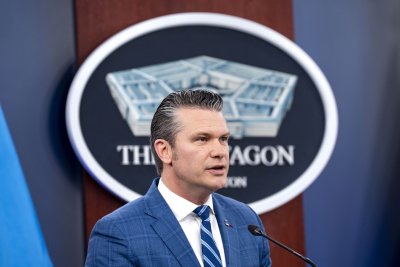
A federal judge agreed Friday to block the Trump administration from enforcing a policy limiting news reporters’ access to the Pentagon, agreeing with The New York Times that key portions of the new rules are unlawful.

U.S. District Judge Paul Friedman in Washington sided with the newspaper and ruled that the Pentagon policy illegally restricts the press credentials of reporters who walked out of the building rather than agree to the new rules.

The Times sued the Pentagon and Defense Secretary Pete Hegseth in December, claiming the credentialing policy violates the journalists’ constitutional rights to free speech and due process.

The current Pentagon press corps is comprised mostly of conservative outlets that agreed to the policy. Reporters from outlets that refused to consent to the new rules, including from the Associated Press, have continued reporting on the military.

Friedman, who was nominated to the bench by Democratic President Bill Clinton, said the policy “fails to provide fair notice of what routine, lawful journalistic practices will result in the denial, suspension, or revocation” of Pentagon press credentials. He ruled that it violates the First and Fifth amendment rights to free speech and due process.

“In sum, the Policy on its face makes any newsgathering and reporting not blessed by the Department a potential basis for the denial, suspension, or revocation of a journalist’s (credential),” he wrote. “It provides no way for journalists to know how they may do their jobs without losing their credentials.”

The Pentagon did not immediately respond to a request for comment on the ruling.

It has argued that the policy imposes “common sense” rules that protect the military from the disclosure of national security information.

“The goal of that process is to prevent those who pose a security risk from having broad access to American military headquarters,” government attorneys wrote.

Times attorneys claim the policy is designed to silence unfavorable press coverage of President Trump’s administration.

“The First Amendment flatly prohibits the government from granting itself the unbridled power to restrict speech because the mere existence of such arbitrary authority can lead to self-censorship,” they wrote.

Kunzelman writes for the Associated Press. AP writer Konstantin Toropin contributed to this report.

Source link

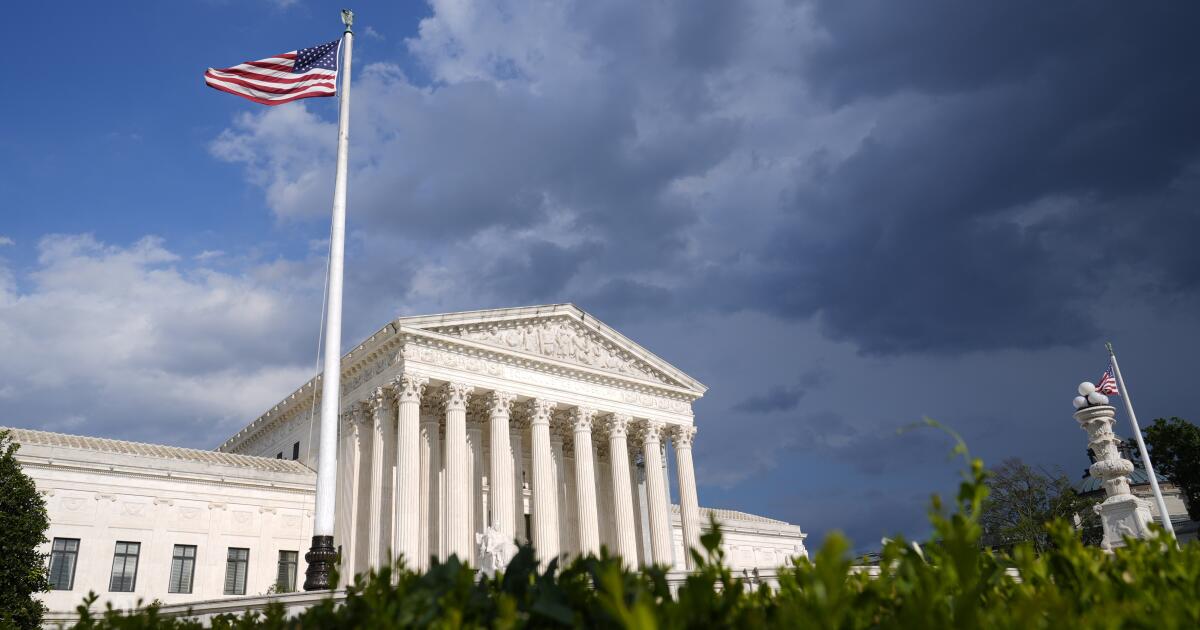
Supreme Court will rule on Trump’s plan to end temporary protection for Haitians, Syrians

The Supreme Court agreed Monday to rule on whether the Trump administration may end the temporary protection that had been extended in the past to migrants who live and work in the United States.

At issue are legal protections for about 6,000 Syrians and up to 350,000 Haitians.

The court’s announcement signals the justices want to resolve this issue in a written opinion rather through emergency appeals.

Twice last year, the court’s conservatives set aside decisions from judges in San Francisco who said President Trump’s Homeland Security secretary had overstepped her authority.

Those cases involved the temporary protection status extended to about 600,000 Venezuelans.

But those decisions did not set clear precedents, and in recent weeks, judges in New York and Washington, D.C., blocked the administration’s plan to end the special protections for Haitians and Syrians.

Frustrated by what he labeled “indefensible” decisions, Trump’s Solicitor Gen. D. John Sauer advised the court to hear arguments and issue a written ruling on the issue.

The justices on Monday agreed to just that. Arguments will be heard in April, and a decision will be handed down by July.

Immigrant-rights advocates argued the repeal of the special protection would be cruel and unjust to migrants who have established lives and careers in this country.

In 1990, Congress authorized giving temporary shelter to non-citizens from countries experiencing armed conflict, natural disaster or “extraordinary and temporary conditions” that prevent them from returning there.

In 2012, the Homeland Security secretary extended this protection to Syrians in response to a “brutal crackdown” engineered by its then-President Bashar al-Assad.

Last year, citing Assad’s fall from power, Trump’s Secretary Kristi Noem proposed to cancel the temporary protection for Syrians. Lawyers for the Syrians questioned how this could be seen as an emergency requiring an immediate ruling.

They said about 6,100 Syrians who have lived here lawfully for years.

They are “highly sought-after doctors and medical professionals, reporters, students, teachers, business owners, caretakers, and others who have been repeatedly vetted and by definition have virtually no criminal history. The government apparently needs urgent authority to send them to a country in the middle of an active war,” the lawyers said.

In 2010, the Obama administration extended the protection to Haiti after an earthquake caused death and damage in Port-au-Prince, the capital.

Judges in New York and Washington blocked those repeals and said the high court had given “no explanation” for its decision upholding the repeal for Venezuelans.

Those judges said the Supreme Court’s earlier orders orders “involved a TPS designation of a different country, with different factual circumstances, and different grounds for resolution by the district court.”

Sauer pointed to a provision in the 1990 law that says judges have no authority to second-guess the government’s decision to end it.

“There is no judicial review of any determination of the [Secretary] with respect to the designation, or termination or extension of a designation, of a foreign state under this subsection,” the law says.

In the three weeks since Trump’s attorney filed his emergency appeal, there have been two significant changes since then.

Trump fired Homeland Security Secretary Kristi Noem. And his war launched against Iran threatens countries throughout the Mideast, including Syria.

In agreeing to hear the pair of cases, the justices did not disturb the lower court rulings that blocked the repeals for now.

Source link

Judge blocks U.S. government from slimming down vaccine recommendations

A federal judge on Monday temporarily blocked federal health officials from cutting the number of vaccines recommended for every child, and said U.S. Health Secretary Robert F. Kennedy Jr. likely violated federal procedures in revamping a key vaccine advisory committee.

The decision halts an order by Kennedy — announced in January — to end broad recommendations for all children to be vaccinated against flu, rotavirus, hepatitis A, hepatitis B, some forms of meningitis and RSV.

A number of leading medical groups raised alarms that the vaccine recommendation changes made under Kennedy would undermine protections against a half-dozen diseases. And the American Academy of Pediatrics and some other groups amended a lawsuit they had filed in July, asking the judge to stop the scaling back of the nation’s childhood vaccination schedule.

The original lawsuit, in federal court in Boston, focused on Kennedy’s decision to stop recommending COVID-19 vaccinations for most children and pregnant women.

The suit was updated as Kennedy took more steps that alarmed medical societies, causing the plaintiffs to ask Judge Brian E. Murphy to take steps to address those policy changes too. For example, the amended complaint asked the court to look at Kennedy’s actions concerning the Advisory Committee on Immunization Practices, which advises public health officials on what vaccines to recommend to doctors and patients.

Kennedy, a leading anti-vaccine activist before becoming the nation’s top health official, fired the entire 17-member panel last year and replaced it with a group that includes several anti-vaccine voices.

Murphy, who was nominated to the bench by President Biden, said Kennedy’s reconstitution of ACIP likely violated federal law. He ordered the appointments — and all decisions made by the reformed committee — put on hold.

Department of Health and Human Services spokesman Andrew Nixon said: “HHS looks forward to this judge’s decision being overturned just like his other attempts to keep the Trump administration from governing.”

ACIP was scheduled to meet this week to discuss COVID-19 vaccines, among other issues, but that gathering was being postponed.

“ACIP as currently constituted cannot meet,” said Richard Hughes IV, an attorney representing the AAP. “How can a committee meet without nearly the entirety of its membership?”

Stobbe writes for the Associated Press.
Source link

Judge halts termination of deportation protections for Somali immigrants

A U.S. court ruling in Massachusetts has temporarily paused the looming termination of Temporary Protected Status for immigrants from Somalia.

U.S. District Judge Allison D. Burroughs’ ruling Friday said there would be “weighty” consequences if Somalia’s TPS designation were allowed to expire Tuesday. Advocates filed an emergency motion in federal court seeking to pause the termination after the Trump administration promised to end the designation last month during an immigration crackdown in Minneapolis, where many Somalis live.

“Over one thousand people will face ‘a myriad of grave risks,’ including detention and deportation, physical violence if removed to Somalia, and forced separation from family members,” the ruling said.

Burroughs said implementing an administrative stay and deferring ruling on the postponement gives both sides time to file briefs on the emergency motion.

“While the stay is in effect, the termination shall be null, void, and of no legal effect,” the ruling said, noting that those with TPS status or pending applications will retain rights including eligibility for work authorization and protection against deportation and detention.

In a statement, the U.S. Department of Homeland Security said the ruling is the latest example of a judge preventing Trump from “restoring integrity” to the U.S. immigration system.

“Temporary means temporary,” the statement said. “Country conditions in Somalia have improved to the point that it no longer meets the law’s requirement for Temporary Protected Status. Allowing Somali nationals to remain temporarily in the United States is contrary to our national interests. The Trump administration is putting Americans first.”

Representatives of the plaintiffs fighting the termination said in a statement that even though the order is temporary and “many battles lie ahead,” they are “heartened by the interim protection today’s order affords all Somali people in the U.S. who have TPS or pending TPS applications.”

Source link

Judge quashes subpoenas for Fed Chair Jerome Powell

March 13 (UPI) — A federal judge this week quashed subpoenas the Department of Justice had issued to Federal Reserve Chair Jerome Powell because they were issued to pressure him into adjusting interest rates.

Judge James Boasberg redressed the DOJ for the subpoenas, saying that their purpose had nothing to do with a probe about renovations at the Federal Reserve in Washington, D.C.

The DOJ in January launched a criminal investigation into Powell’s testimony last year about the renovations, which Powell at the time said were “pretexts” to punish him and the Fed after they did not set interest rates at levels demanded by President Donald Trump.

“The Government has produced essentially zero evidence to suspect Chair Powell of a crime; indeed, its justifications are so thin and unsubstantiated that the Court can only conclude that they are pretextual,” Boasberg wrote in the opinion.

The department in January issued grand jury subpoenas in reference to Powell’s comments about the multi-year project to renovate the Fed’s office buildings during his June 2025 testimony before the Senate Banking Committee.

During a tour of the renovations, Powell disputed Trump’s over-estimates of the renovation’s cost, and threatened to sue him for the “horrible and grossly incompetent job” Powell had done on the project.

Overall, however, Trump has repeatedly ripped into and mused about firing Powell, which he cannot do, because the Fed chair has repeatedly said that interest rate changes would be dictated by only the market, rather than the preferences of any one person.

In the opinion, which was unsealed Friday, Boasberg said he blocked the subpoenas because “a mountain of evidence suggests that the Government served these subpoenas on the Board to pressure its Chair into voting for lower interest rates or resigning.”

President Donald Trump speaks during an event celebrating Women’s History Month in the East Room of the White House on Thursday. Photo by Bonnie Cash/UPI | License Photo

Source link

Judge quashes Justice Department subpoena of Federal Reserve in blow to investigation

A federal judge on Friday quashed Justice Department subpoenas issued to the Federal Reserve in January, a severe blow to an investigation that has already attracted strong criticism on Capitol Hill.

Judge James Boasberg said that a “mountain of evidence suggests” that the purpose of the subpoenas was simply to pressure the Fed to cut its key interest rate, as President Trump has repeatedly demanded.

Fed Chair Jerome Powell revealed the investigation Jan. 11, prompting Senator Thom Tillis, a North Carolina Republican to block consideration of Trump’s pick to replace Powell as Fed chair when his term expires May. 15.

Rugaber writes for the Associated Press.

Source link