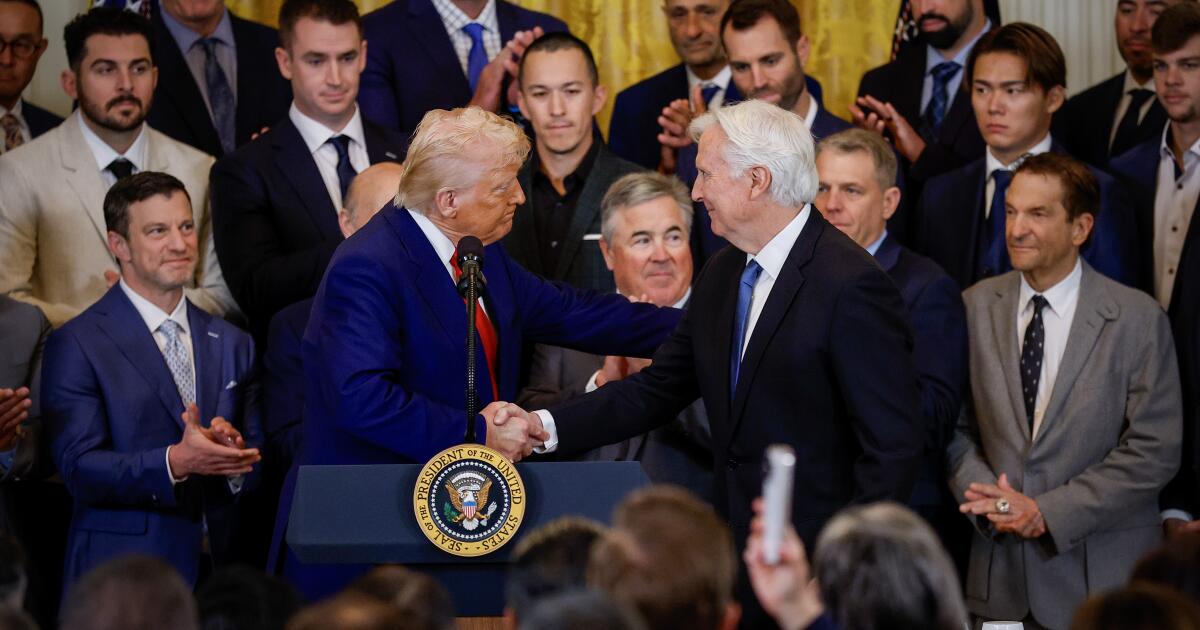
I am a lifetime resident of Los Angeles and my family has always rooted for the Dodgers. Last year we gave them a pass when they went to visit Trump at the White House. This year after Trump’s attack on our community we cannot accept the Dodgers visiting Trump again. Dave Roberts should know that the first obligation of a patriot is to stand up against tyranny. Shame on him and any other Dodger who goes to the White House this year. I will be canceling my Spectrum service. I’m not playing with the future of our democracy.
Felipe Caceres Los Angeles
If the Dodgers kowtow to Donald Trump yet again, Angelenos should consider boycotting the team for the rest of the season. Yes, they are an exceptional team and might return to the World Series yet again. However, other great athletes, such as the recent U.S. women’s Olympic hockey team, have displayed their courage and integrity in refusing to bow down to that dangerous tyrant.
By serving, as too many others continue to do, to support and enable the thug, they are enabling him in his inhumane and destructive policies and actions. As well, Trump invaded L.A., and the Dodgers did little to support the city they allegedly represent. If they return, it is more than a slap in the face of every sane and thoughtful Angeleno.
Barry Cutler Palm Desert
I have always paid for the Dodgers’ games on mlb.tv, but this year when the Dodgers did not decline the White House visit, I did not. I was holding out hope they wouldn’t squeeze a visit in on their road trip after the All-Star Game and I’d get half a season. Instead I’m listening to the games on the radio. I’ve heard the players say things like “you never know when this might happen again” or “it’s tradition.” I don’t get either one of those excuses. Is Mookie Betts going to ask Trump why he posted the picture of the Obamas as monkeys? Or any of the players going to stand up for anything?
How about be like the women’s Olympic hockey team and stand up for what is right? Don’t be a pawn for another photo op for this dysfunctional White House. Please?
Marnie Jernagan Fresno
Columnist Bill Plaschke wants to impose his political views on us and the Dodgers. Let each player decide if he wants to go to the White House, and if some players don’t want to go, then fine — don’t go. But why should all the players be confined to Plaschke’s view of politics?
David Waldowski Laguna Woods
I was a huge Dodgers fan until last year when they visited the White House. What a happy crowd they looked, even presenting President Trump with his own jersey, No. 47. That wasn’t enough? They’re off again, with Dave Roberts talking about “respecting the highest office in the land, it doesn’t matter who’s in office” while Clayton Kershaw, who presented the jersey is so “excited to go” again. Roberts had previously talked about it being a tradition. Nothing about this White House or this president is traditional, and not going is not making a “political” stand. It would be a stand for decency and normalcy. While visiting the East Wing maybe they can present Trump with the inaugural Baseball Peace Prize. Shame on the Dodgers!
I was in New York City with my family on the day Taylor Swift and Travis Kelce tied the knot at Madison Square Garden. Although our hotel was a few short blocks from the venue, which was surrounded by swooning fans, we managed to steer clear. Instead, we headed for the Nederlander Theatre on 41st Street to catch “Schmigadoon.”
The show, which took the Tony Award for best musical last month, was at the top of my must-see list, along with two other recent Tony winners — “Death of a Salesman” and “Giant,” — which I wasn’t sure would be as appealing to my 10-year-old.
There is a certain magic to Broadway despite the crush of commercial horrors a person must wade through in Times Square to get to a show, and “Schmigadoon” did not disappoint. I don’t remember the last time I laughed so hard during a live show. The jokes about a modern couple trapped in a magical town stuck more than 200 years in the past hit the mark with just the right amount of bawdy fun.
SNL alumn Ana Gasteyer is pitch perfect as the town’s vengeful moral crusader Mildred Layton, but the real hero of the show is McKenzie Kurtz, who plays Betsy, a love-hungry young farm girl desperate to catch a man and get married. Kurtz’s comic delivery is so over-the-top that laughter is the only option — and once you start laughing with her you can’t stop.
Like most Broadway musicals , “Schmigadoon” features an ensemble cast that represents the very best of the best when it comes to dancing and singing. It’s clear these actors like one another and know that they have a good thing. There is joy on the stage that transfers effortlessly to the audience. It’s one of those only-in-New-York experiences to be treasured. The show is scheduled to run through Jan. 3.
When we stepped out into the night after the show, we found it had rained. The temperature that day had reached 99 degrees and the city had wilted, but the downpour caused the mercury to plummet a good 10 degrees. The lights of Broadway sparkled in puddles as we made our way down the slick sidewalk, singing the show’s most catchy tune, “It’s not a metaphor, oh no it’s something more, it’s a literal bridge.”
I’m Arts editor Jessica Gelt wishing you a summer vacation that is also a journey. This is your arts and culture news for the week.
You’re reading Essential Arts
Our critics and reporters guide you through events and happenings of L.A.
By continuing, you agree to our Terms of Service, which include arbitration and a class action waiver. You agree that we and our third-party vendors may collect and use your information, including through cookies, pixels and similar technologies, for the purposes set forth in our Privacy Policy such as personalizing your experience and ads.
Arts anywhere
FRIDAY
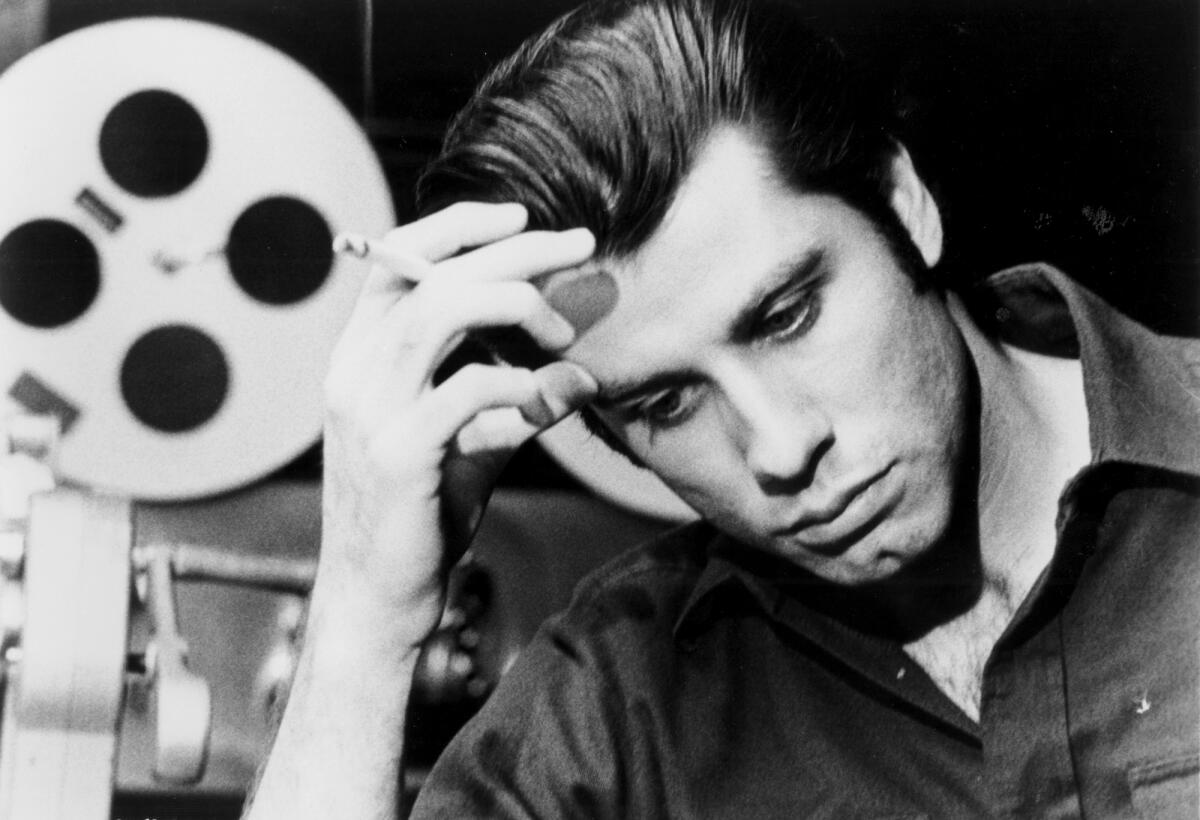
John Travolta listens for evidence which he hopes will trap a killer in Brian De Palma’s 1981 suspense drama, “Blow Out.”
(Filmways Pictures)
Blow Out The Academy Museum’s Summer Thrills series features a 35mm screening of Brian De Palma’s 1981 thriller about a movie sound tech who unwittingly uncovers a political assassination. John Travolta, Nancy Allen, John Lithgow and Dennis Franz star. 7:30 p.m. Academy Museum, 6067 Wilshire Blvd. academymuseum.org
SATURDAY
Defiantly Joni The artist collective Muse/ique, in partnership with Center Theatre Group, presents a celebration of singer-songwriter Joni Mitchell, featuring Chris Pierce, Effie Passero, the DC6 Singers Collective and the Muse/ique Orchestra led by artistic and music director Rachael Worby. 5 p.m. Saturday and Sunday; 7:30 p.m. Thursday, July 16 and July 17; 2:30 and 7:30 p.m. July 18; and 2:30 p.m. July 19. Mark Taper Forum, 135 N. Grand Ave., downtown L.A. muse-ique.com
Installation view of Alex Hubbard Abstract or Regular? at Regen Projects, Los Angeles July 11–August 15, 2026
(Evan Bedford, courtesy the artist and Regen Projects)
Alex Hubbard The exhibition “Abstract or Regular?” features video animations projected on wood cutouts by the Los Angeles-based artist, as well as a painting that demonstrates experimentation with the boundary between representational form and abstraction. Opening, 5-7 p.m. Saturday; exhibition continues through Aug. 15. Regen Projects, 6750 Santa Monica Blvd., L.A. regenprojects.com
The Shoebox Museum: A Private Immersive Experience A “narrative video game” is brought to life by theatrical and sensory vignettes that enhance the interactive audience’s examination of artifacts and memories of a past relationship. Shows begin every 30-45 minutes, 1-10 p.m. Saturdays and Sundays, through July 26. Afterhours Theater, 5628 Vineland Ave., North Hollywood. eventbrite.com
Earnestine Phillips, from left, Cynthia Kania, Susan Angelo and Ellen Geer rehearse “Waiting in the Wings.”
(Ian Flanders)
Waiting in the Wings Noël Coward’s 1960 play about a feud between two female residents in a retirement home for actors joins “Romeo & Juliet,” “A Midsummer Night’s Dream” and “Treasure Island” in the Theatricum Botanicum’s repertory season. 7:30 p.m. Saturday, through Oct. 3 (check schedule for specific days and times). Theatricum Botanicum, 1419 N. Topanga Canyon Blvd., Topanga. theatricum.com
SUNDAY
Journey Through Cahuenga: Indigenous Storytelling and Dance Generations of Native narratives are expressed through music, poetry and dance. Scheduled participants include Dennis Garcia (Fernandeño-Tataviam, Chumash, and Tongva), Chad Hamill/ čnaq’ymi (Spokane), Eric Hernandez (Lumbee), and Carolyn M. Dunn, Ph.D. (Cherokee, Muscogee Creek, Seminole, Cajun, French Creole, and Tunica-Biloxi). Hosted by Tonantzín Carmelo (Tongva). An LA Soundscapes Family Concert featuring a pre-show activity and participatory artmaking. Doors open at 10 a.m. 11:30 a.m. The Ford, 2580 Cahuenga Blvd. E., L.A. theford.com
Mahjong Social With Mahjong Mistress A full afternoon begins with a screening of the late Taiwanese American filmmaker Edward Yang’s 1996 film “Mahjong” followed by an open mahjong session for all experience levels led by Mahjong Mistress, a collective of four friends united by their love of the game and its use in fostering cultural connection and conversation. 1:30 p.m. UCLA Hammer Museum, 10899 Wilshire Blvd., Westwood. hammer.ucla.edu
MONDAY
Hudson Hawk A 35th-anniversary 35mm screening of the 1991 Bruce Willis heist satire with director Michael Lehmann and co-screenwriter Daniel Waters; introduced by Larry Karaszewski. 7:30 p.m. Brain Dead Studios, 611 N. Fairfax Ave. studios.wearebraindead.com
TUESDAY
“Apparition, ” circa 1880–1890 by Odilon Redon. Charcoal, powdered charcoal, black chalk, and black and yellow pastel with stumping on brown paper. 20 11/16 × 14 11/16 in.
(Getty Museum)
Odilon Redon: Otherworldly Visions The exhibition includes charcoal drawings, lithographs and pastels by the French artist from the Getty’s collection, revealing the inspirations and imagination that helped create them. Through Oct. 18. Getty Center, 1200 Getty Center Drive, L.A. getty.edu
Harry Dean Stanton: Partly Fiction On what would have been the actor’s 100th birthday, Vidiots welcomes the 2013 documentary’s director Sophie Huber for a screening hosted by Cherry Jones and a conversation with Logan Sparks, writer-producer of Stanton’s final film, “Lucky.” 7:30 p.m. Eagle Theatre, 4884 Eagle Rock Blvd. vidiotsfoundation.org
National Museum of the Aftermath screening series The final screening in the series pairs Reginald Alan Hudlin’s 1994 sci-fi short “Space Traders: Cosmic Slop” with William Greaves’ 1968 meta-documentary hybrid “Symbiopsychotaxiplasm: Take One.” 8 p.m. Oxy Arts, 4757 York Blvd. oxyarts.oxy.edu
Tchaikovsky & Beethoven Cristian Măcelaru conducts the L.A. Phil for Tchaikovsky’s “Violin Concerto in D major, Op. 35” (with soloist Leonidas Kavakos on violin) and Beethoven’s “Symphony No. 7 in A major, Op. 92.” 8 p.m. Hollywood Bowl, 2301 N Highland Ave. hollywoodbowl.com
THURSDAY
The Lord of the Rings: The Fellowship of the Ring in Concert The Pacific Symphony, soprano Kaitlyn Lusk, voices/LA and Los Angeles Children’s Chorus unite under conductor Ludwig Wicki for the 25th anniversary of Howard Shore’s Academy Award-winning score, performing live as director Peter Jackson’s epic film is projected on a 60-foot screen. 7 p.m. Thursday and Friday; 1 and 7 p.m. Saturday. Peacock Theater, 777 Chick Hearn Court, downtown L.A. peacocktheater.com
Mozart & Brahms Spanish conductor Roberto González-Monjas leads the L.A. Phil on Korngold’s “Straussiana,” Mozart’s “Piano Concerto No. 19 in F major, K. 459” (with pianist Mao Fujita), and Brahms’ “Symphony No. 4 in E minor, Op. 98.” 8 p.m. Hollywood Bowl, 2301 N. Highland Ave. hollywoodbowl.com
— Kevin Crust
Dispatch: Remembering a master actor
Trisha Miller, from left, Josey Montana McCoy, Peter Van Norden and Dan Lin in “Misalliance” at A Noise Within.
(Craig Schwartz)
Peter Van Norden, one of Los Angeles’ most accomplished stage actors, died Wednesday at age 75. A graduate of Colgate University, he worked steadily in film and television, wracking up notable credits (“The Accused,” “St. Elsewhere,” “Murder, She Wrote”) over four decades.
But it was in the classical theater where he distinguished himself with his command of language and depth of human understanding.
He didn’t need to be cast as the star to elevate a production. His textual fluency and incisive, unfussy intelligence set a standard for his fellow company members, who might not be able to match him but couldn’t help gaining inspiration from his veteran example.
What might his Prospero be like, I wondered longingly? Later that year, he got the chance to show me in a rackety Antaeus Theatre Company revival that unfortunately failed to make the most of his poetic gifts.
He was better served by the graceful 2024 production of “Misalliance” at A Noise Within, where he played the wealthy underwear industrialist John Tarleton in a voluble comedy of ideas that proved Van Norden was as adept in crisp, rational, talky idiom of George Bernard Shaw as he was in the more supple iambic pentameter of Shakespeare.
He was slated to appear as Capt. Shotover in Antaeus’ upcoming production of “Heartbreak House,” Shaw’s masterpiece. It was a role he had long wanted to play, and I can’t imagine the part being better cast.
For his heroic service to Los Angeles theater, Van Norden received the 2024 Michael McCarty Recognition Award, honoring Los Angeles–based Actors’ Equity members who have built their lives in the theater. I remember cheering from my desk the moment the announcement landed in my email inbox. Sometimes the award gods get things right.
Van Norden, who is survived by his wife, Wendy, and his son, Robert, a film producer, inspired that kind of hearty, spontaneous, grateful applause. Whenever I saw his name in a theater program, I breathed more easily, knowing that whatever else might happen that evening I would at the very least have the pleasure and the privilege of another Van Norden master class.
— Charles McNulty
Culture news and the SoCal scene
Nael Nacer, from left, Andrea Martin and Susan Pourfar in “Meet the Cartozians” by Talene Monahon at Second Stage Theater.
(Photo: Julieta Cervantes)
Times theater critic Charles McNulty knows a good show when he sees one — but also when he reads one. And this past week he helpfully compiled a list of eight works that he’s read for award consideration — or seen outside of L.A. — that he believes deserve local productions. I’m not going to spoil it for you by listing them here, so you’ll just have to read the story.
Are you a budding artist, or even a seasoned one looking to step up your game? Times contributor Sarah Fensom put together a handy list of seven L.A. figure drawing events and classes that feature unique concepts including high fashion and nude muscle men. Find your perfect match, here.
The Lucas Museum of Narrative Art in Los Angeles.
(Myung J. Chun / Los Angeles Times)
The Lucas Museum of Narrative Art is set to open on Sept. 22, but it announced some exciting news this week: It is giving free annual passes to its South L.A. neighbors in the 90037 ZIP code. The LM37 passes entitle holders to reserve tickets for themselves along with a guest. Tickets for non-pass holders go on sale July 21 and cost $25 for adults and $21 for seniors. Kids 17 and under are free.
On the heels of its 60th season, East West Players, the largest and longest-running Asian American theater in the country, announced its 2026-27 slate. “This season is the first chapter of East West Players’ next sixty years, a bold invitation to imagine what Asian American theater can become,” said artistic director Lily Tung Crystal in a statement. “By centering new voices, we’re not just honoring our legacy, but shaping the canon for generations to come.” The mainstage season will include the Southern California premiere of Jaclyn Backhaus’ comedy “Wives,” the Los Angeles premiere of the eponymously titled work “Kristina Wong, #Foodbankinfluencer” by the Pulitzer Prize finalist and East West Players’ New Works Festival. The group is also enticing theatergoers with new ticketing options: Pay-What-You-Will for every show and the Emerging Artist Membership, a free program for theatergoers ages 18 to 35, which guarantees $20 orchestra seats for them and a guest.
Enjoying this newsletter? Consider subscribing to the Los Angeles Times
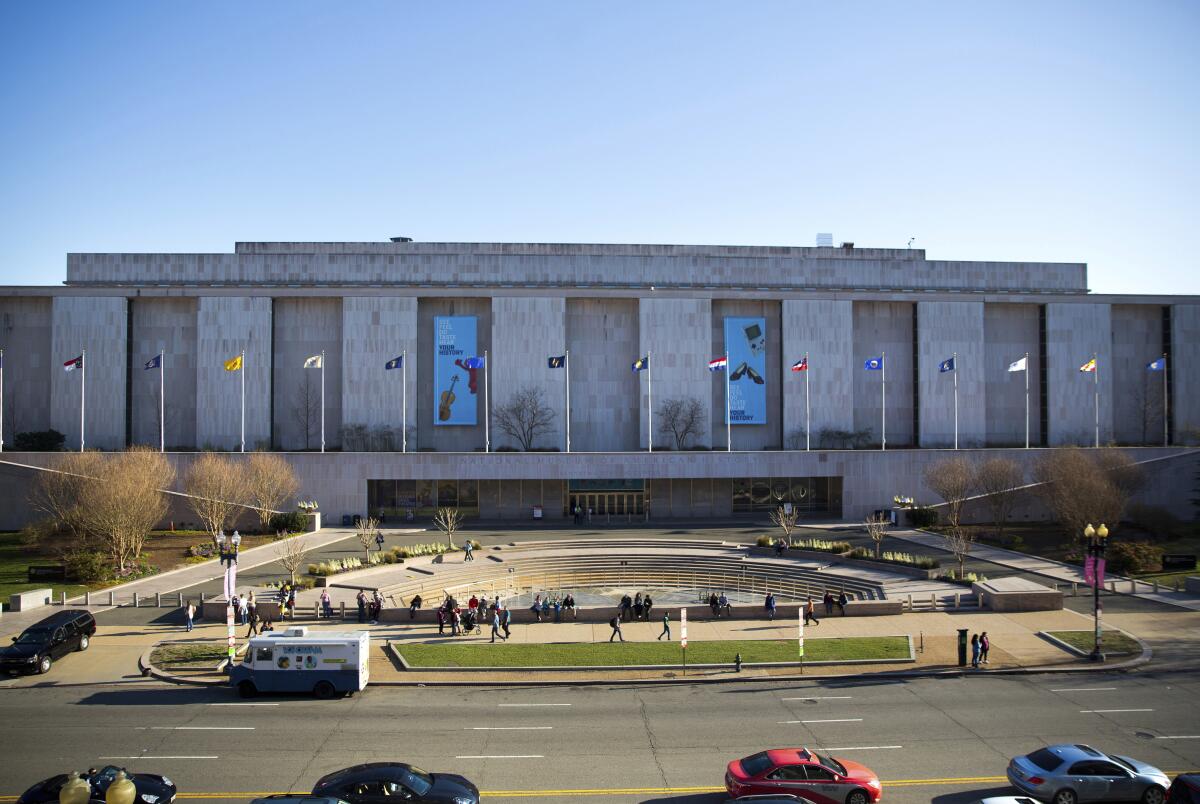
The Smithsonian Museum of American History on the National Mall in Washington.
(Pablo Martinez Monsivais / Associated Press)
A new White House report calls leadership of the Smithsonian Institution radical activists who “cannot be trusted to tell America’s story honestly and in a way that is inspiring, unifying, and worthy of our great republic.” The report specifically singles out the National Museum of American History, and culture watchers fear it’s paving the way for Trump to install his own team of leaders as he did at the Kennedy Center.
Speaking of the Kennedy Center, Trump appealed a court decision to remove his name from the building’s facade, but this week an appeals court denied his request.
— Jessica Gelt
And last but not least
We can all stop taking our kids to live-action remakes of Disney classics. Seriously. Times film critic Amy Nicholson breaks down why in this crushing review of the new live-action “Moana.”
Everyone knew going in that Lionel Messi would be the narrative centerpiece of the 2026 World Cup. Easily the most recognized name in the competition, Messi is considered by many to be the greatest soccer player of all time and, as the captain of 2022 winner Argentina, he is the reigning World Cup champ. At 18, he scored his first World Cup goal in 2006 and has competed in every World Cup since. He celebrated his 39th birthday before this year’s knockout rounds began, so it’s not unreasonable to assume that this will be his last.
No matter what Messi did, or failed to do, it would be News. Everyone with even a passing interest in the event knew this. Including me.
But I didn’t expect to completely fall for the guy. He’s a professional male athlete, for heaven’s sake, and I don’t emotionally invest in professional male athletes. Admire some of them, sure; watch with bated breath and then scream in astonishment when they pull off some amazing feat or another, absolutely. But the only athletes that have ever touched my heart have been women — Nadia Comăneci; Billie Jean King and the Title IX-sparking stars of women’s tennis; Dorothy Hamill; Brandi Chastain and 1999 Women’s World Cup winners; Venus and Serena Williams; Simone Biles; Caitlin Clark.
But here I am, at age 62, truly, madly, deeply in love with Lionel Messi.
I know, I know, me and half the world. Which normally would serve as an effective prophylactic. I am habitually wary of super-intense fandoms and the men who inspire them; stadiums filled with people chanting a single name inevitably set off internal alarm bells. As I have asked several times in columns throughout the years, how many “heroes” must we watch falter under pressure or be exposed for decidedly unheroic acts before we wise up and get out of the pedestal-placement business?
Yet here I am, stalking him on Instagram, up all hours flicking through interviews and career highlight clips. (I even watched the Apple TV docuseries “Messi Meets America”!) Here I am, literally praying to God, who clearly has more important things to do, for Argentina to advance and screaming Messi’s name every time he scores, assists or pretty much does anything at all.
In a matter of weeks, I have become addicted not just to watching the man play but seeing how he reacts when a shot is made or a game won.
Every World Cup player is happy when they or their team scores, but Messi is delighted. Like a kid seeing a puppy under the tree on Christmas morning. Like he cannot believe this wonderful thing that has just happened even if he was the one who sweat and ran and defied physics to make it happen.
His smile is infectious and even when he is running toward the stands, arms spread wide, after making some impossible shot or other, it never seems self-congratulatory. He is simply filled with joy and wants to spread it around. The field, the stadium, the world.
And his hugs. Long, deep, radiating emotion, utterly unself-conscious. Everyone needs to find someone who hugs them like Messi hugs people — teammates, coaches, opposing players, young fans. I could watch videos of him hugging his mentor and former teammate Ronaldinho or Argentina coach Lionel Scaloni all day long. (I’m not saying I have, nor am I saying I haven’t.)
Sometimes the hype gets a bit nauseating — former teammates who claim he never makes a mistake, commentators who refer to him as superhuman (despite the fact that he has missed as many penalty kicks as he has made in this World Cup). Whether Messi himself agrees that he is the GOAT is none of my business, but he doesn’t act like many sports stars who have received similar adulation. He doesn’t peacock, he doesn’t preen; he is visibly angry with himself when he doesn’t produce. He isn’t perfect — in various past games, he has gotten into heated disputes and shoving matches and famously (and many believe deservedly) taunted Netherlands coach Louis van Gaal during World Cup 2022. But for a man who has been such a star for so long, he presents himself as simply a player among players. The captain, certainly, but not the most important person on the field.
That is the most lovable, and superhuman, thing about him.
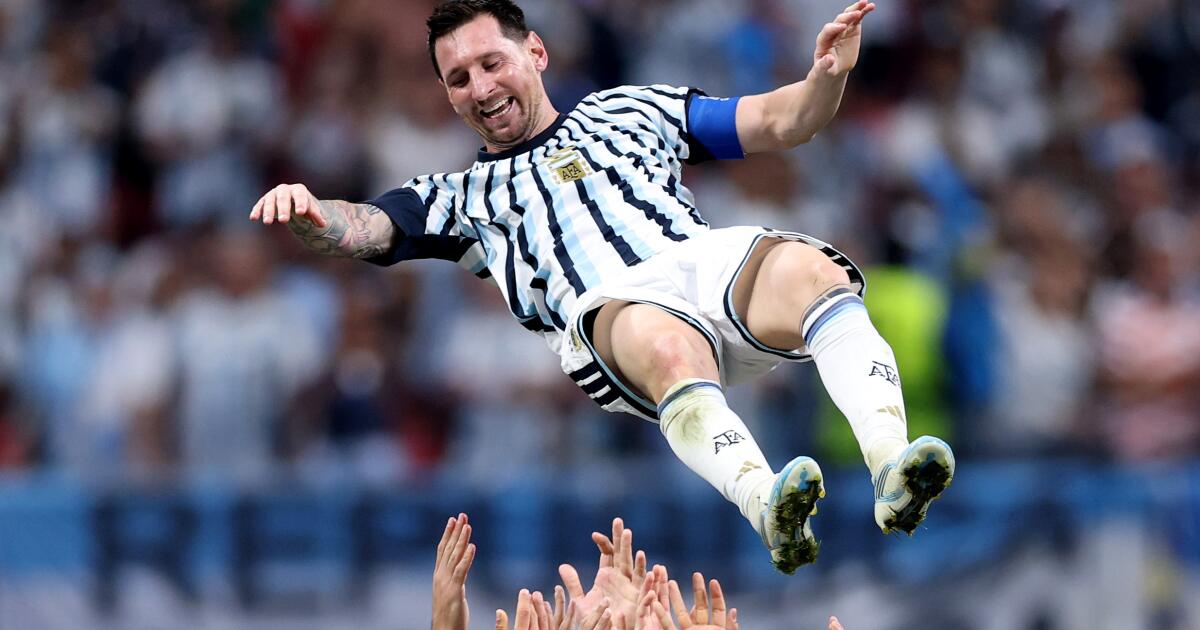
It feels pretty basic, not to mention embarrassing, to have a sudden summer crush on Messi, but I don’t care. He’s married to his childhood sweetheart, has three adorable sons and a picture of his mother tattooed on his back. He lets his teammates hoist him in the air and allows sports commentators to regularly (and lovingly) refer to him as “Little Messi.” He gets angry sometimes, but in this tournament he has yet to noticeably hector the refs or rumble with his opponents. He wants to win, obviously, but his joy comes from playing the game well rather than defeating another team.
That’s why, despite my newfound addiction to Messi delight, the moment I loved him best was when he didn’t celebrate at all. In the round of 32, Argentina (No. 2 in FIFA rankings) seemed guaranteed a win over Cape Verde (67). But even with Messi’s early goal, the game was a nail-biter, with Cape Verde scoring two brilliant goals while their goalie Vozinha made eight saves, including four shots (one of them a free kick) from Messi. After Argentina won in additional playing time, there was none of the usual jubilation. Instead, a subdued Messi walked to the midfield to shake hands with his opponents, a sign of exhaustion, no doubt, but also of respect. He hugged Vozinha and told him that his country should be proud of him.
The exuberance was back Tuesday, however, when, after trailing Egypt for most of the round of 16 game, Argentina managed to pull off the comeback of the tournament, going from a 0-2 deficit to a 3-2 win after the 79th minute, with Messi scoring the tying goal.
This time, the smiles, the hugs, the radiant joy filling Atlanta Stadium could have powered the entire state of Georgia. This time, Messi was so happy, he wept.
So did I. The World Cup is over in less than two weeks, and France and Spain are currently the 1-2 favorites to win the thing. My love for Messi is, after all, just a summer romance.
And as with any summer romance, I want it to last forever.
Here we go again: Twenty-five years after “Mamma Mia!” premiered on Broadway, the national tour returns to Los Angeles at the Ahmanson Theatre with show-stopping set pieces and a crew that knows the show inside and out.
The beloved jukebox musical, which chronicles a Greek wedding with three potential fathers of the bride, has taken over the Ahmanson through July 19 as part of its 25th anniversary tour, and audience members should expect a full-on ABBA sing-along dance party.
“People come dressed up,” said associate choreographer Janet Rothermel. “There’s a lot of boas, and there’s a lot of spandex, and platform shoes.”
Rothermel is one of many people on the creative team who have worked on the show since its original Broadway run in 2001. Associate director Martha Banta and associate music supervisor David Holcenberg have also seen the musical through its nearly 14-year original Broadway run, national tours and numerous international iterations (Holcenberg was its original music director).
“When we were all back together again in rehearsal, it was an extraordinary feeling,” Banta said. “Not with the same cast, but Janet, David and I and others that have done it for years. With everything that’s been going on in the world in the last three years, it was just a soothing thing to do.”
“We’ve just been embraced beyond what we were used to, which was pretty great,” she added.
Everyone involved in the production echoed a similar sentiment: that the “ultimate feel-good musical” is exactly what audiences want to see during painful or overwhelming times. The show’s traveling costume supervisor and associate designer Eva Maciek put it most bluntly: “I love working on it because nobody dies.”
Rehearsals for the original Broadway run coincided with the Sept. 11 terrorist attacks, Holcenberg explained, and he was struck by audience members’ emotional responses to the first shows.
“I’d have people coming down to the pit after the show with tears streaming down their faces saying, ‘Thank you for letting us forget the world for a couple hours and just have joy,’” he said. “Because this show is joy. It’s full of joy.”
Beyond the absurdly catchy music and the rom-com story, part of the show’s joyfulness comes from its colorful costumes and beachy aesthetic. The onstage set is relatively sparse, consisting only of a pair of rotating “taverna” walls, but backstage, hundreds of moving parts, including stage mechanics, hand props and costume changes, propel the story forward and keep the production looking effortlessly glamorous.
1/6
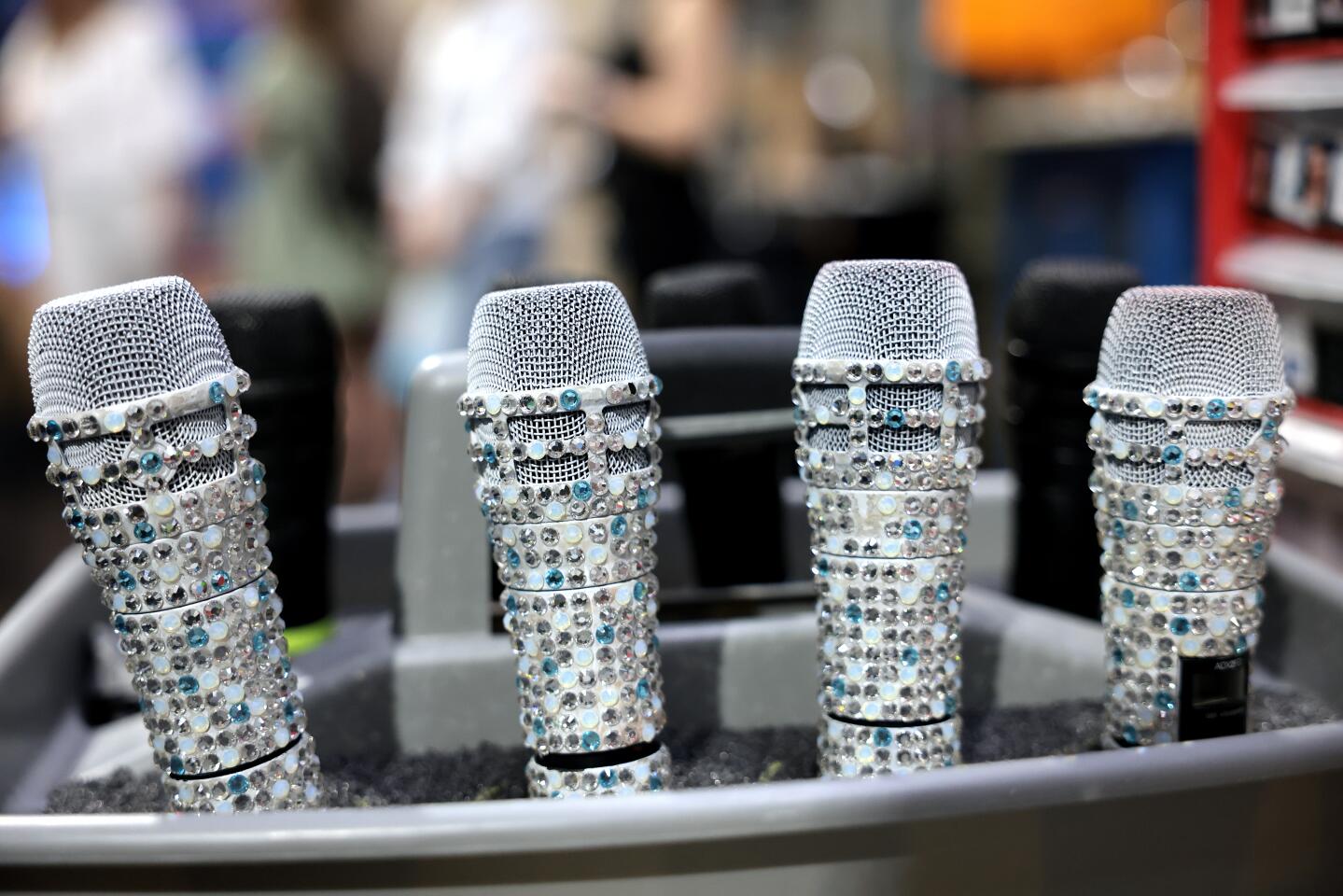
Blingy microphones backstage for the “Mamma Mia!” production at the Ahmanson Theatre in downtown Los Angeles. (Christina House / Los Angeles Times)
2/6
Eva Maciek, the travel costume supervisor of the show, shares some wardrobe pieces backstage. (Christina House / Los Angeles Times)
3/6
Ryan Sander, assistant choreographer, left, and Eva Maciek, travel costume supervisor of the show, show off Sander’s “Voulez-Vous” costume. (Christina House / Los Angeles Times)
4/6
Life jackets backstage for a musical number. (Christina House / Los Angeles Times)
5/6
Shelves full of hats are seen during a backstage tour. (Christina House / Los Angeles Times)
6/6
The show‘s stage is seen during a backstage tour of the “Mamma Mia!” theater production at the Ahmanson Theatre. (Christina House / Los Angeles Times)
The obvious choice for coolest costumes, according to Maciek, are the bejeweled jumpsuits worn by titular mamma Donna Sheridan (played by Jessica Crouch) and her Dynamos, Tanya (Jalynn Steele) and Rosie (Carly Sakolove). Each one has hundreds of glittering silver stars attached.
“I’m glad I’m not the one who had to sew them on originally!” Maciek joked. The costumes all originated in London or New York, but they’ve been traveling from city to city in storage “gondolas” since the current tour started in 2023, requiring constant repairs and touch-ups from local stitchers.
Thematically, Maciek said, the costumes’ evolving colors tell their own story throughout the show.
“When everybody arrives at the island, they’re all in beige with a little hint of blue,” she explained. More blue gets added by “Voulez Vous,” and then they transition into jewel tones. “When you get into the wedding scene, everybody is in pinks, soft reds, oranges and yellows,” Maciek said. “So there’s a real color story that goes throughout.”
Ryan Sander, the show’s assistant choreographer, dance captain and current “swing” (an actor covering multiple ensemble roles), has a special relationship to his “Voulez-Vous” costume. He originally wore it as a performer on the national tour more than 20 years ago, and when he was called to come back onstage, he found that it still fit like a glove. The costume, a denim vest and pants set with extremely Y2K lace-up details, is representative of the show’s approach to fashion trends.
“There is something timeless about these pieces that’s just so interesting,” he said. “It is a period piece and we stick to that, but there is something timeless about the costumes.”
Besides the costume racks, another crucial backstage element are the vocal booths, where the ensemble contributes to the musical soundscape from behind the curtain.
“One of the main things about the ‘ABBA sound’ is how they layered the vocals, and we do that all live in our show,” Holcenberg said. “The ensemble works really, really hard, because when they’re not on stage, they don’t get any time off. They’re just singing their little faces off.”
Even though the show has been running for decades, the creative team said each cast brings a new energy and tone.
“Our new Donna, Jess, brings a real rock chick energy to it,” Holcenberg said. “Even though the notes on the page stay the same, the casting and the way they perform it still changes from person to person and night to night.”
According to stage manager Andrew Volzer, the most “unique” aspects of the show are its long history with a tight crew and its multigenerational appeal — “Not only from the audience perspective, but also for the people working on the show. People are always coming and going,” he said.
Seattle, United States – There were goals. There were jubilations and heartbreak. There were raucous crowds, confrontations and comradery. There were protests, politics and Palestinian flags. There was a missed penalty. There was joy. There was disappointment.
Egypt’s 1-1 draw with Iran in Seattle at the FIFA World Cup on Friday had it all. Iran is still in contention to qualify as one of the eight best third-place finishers, depending on Saturday’s results.
Recommended Stories
list of 4 itemsend of list
Wild celebrations among the Egyptian fans erupted outside the stadium after the match, as the country proceeded past the World Cup group stages for the first time.
“The feeling is outstanding,” Daniel Salib, who was draped with an Egyptian flag, told Al Jazeera.
“After this game, and the game we played against New Zealand, and how we played against Belgium, we absolutely deserve it. So, I couldn’t be more proud of this country and this team.”
Egypt survived a late Iranian onslaught that saw Team Melli, as the Iran team is known, hit the woodwork and have a goal chalked off by VAR for offside.
Iran also had a penalty saved in the first half, but the entire match was action-packed, going blow-for-blow.
Iran supporter Saeed Nassef said he was disappointed with Friday’s result but hopeful that Iran would still make it through to the round of 32, all depending on the results of Sunday night’s games.
“The Iranian team did a beautiful job. They faced a lot of hardship, but we’re really happy how they played,” Nassef told Al Jazeera.
Protests
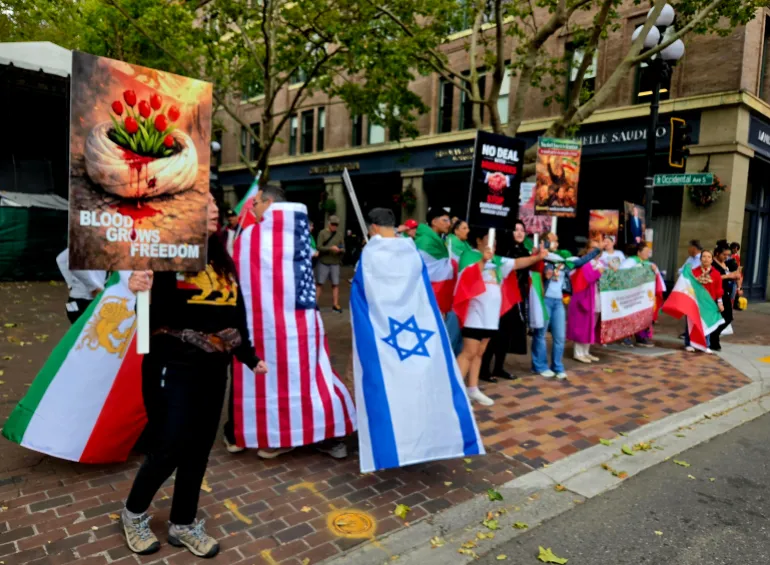
Protesters against the Iranian government had gathered outside the stadium, waving US and Israeli flags and holding up photos of Iranian opposition figure Reza Pahlavi.
Nassef, who carried the official Iranian flag, which features the name of God, was one of several fans who told Al Jazeera they faced harassment from opposition activists.
“We’re here to support the team. We’re here to support sports… It’s not cool for people to come here and say bad things because we are here to support the players. We want some happiness,” he said.
After the match, Al Jazeera witnessed a confrontation between antigovernment activists and a supporter carrying an Iranian flag.
The protesters hurled insults at the fan, calling him a “terrorist” and saying he should leave the country. They also engaged in expletive-laden Islamophobic chants.
The fan, who identified himself by his first name only as Milad, approached a man leading the chants on a megaphone and criticising Team Melli fans. He stood inches away from the protester before police officers intervened to pull them apart.
“My issue is not political. My issue is: Players, they play for the country, they play for the people. I support the people. That’s it,” Milad said.
“Good or bad, it doesn’t matter. Our people went and they tried to create joy for other people, and that’s all that matters,” he added.
But the commotion did little to overshadow the nearby festivities where Egyptians had gathered, singing and dancing at their country’s historic moment.
Protesters against the Iranian government outside the Seattle Stadium, June 26 [Ali Harb/Al Jazeera]
Electric atmosphere
Inside the stadium, the atmosphere was electric throughout the match – not an empty seat, not a quiet moment.
When the first half concluded, several sets of Iranian and Egyptian fans started taking pictures together.
The players also showed support for each other. After the final whistle, several Egyptian players consoled their Iranian counterparts, who were visibly upset with the result.
Throughout the 90 minutes, spectators appeared to be alternating in their chants between “Iran, Iran” and “Misr, Misr”, Arabic for Egypt, rather than chanting over each other.
There were a few pre-Islamic revolution Iranian flags in the crowd – featuring a regal lion and sun – but they were far outnumbered by the country’s official flag.
Some people waved LGBTQ+ pride flags and rainbow paraphernalia, due to the game being designated the World Cup’s “Pride Match”. But there did not appear to be any problems in the stadium, despite the hype around the issue.
The Egypt supporters boasted their ancient heritage with pharaohs’ headdresses and outfits.
“We’re so proud to be Egyptian and so proud of our national team,” said Karim Elshabini, who was sporting a gold and black pharaoh’s headpiece and a red Egypt football top.
“It feels amazing. Everybody’s vibing really well. People are really cool. The Egyptian fans, the Iranian fans, we’re all having a really good time.”
There were numerous Palestinian flags at the match, including a couple that were prominently displayed behind the goals.
Egypt fan Bilal Ali, who brought a Palestinian flag to the stadium, told Al Jazeera he would like to keep politics out of football, but with Israeli atrocities continuing in Gaza and elsewhere, he could not remain silent.
“I feel guilty sometimes when I get to [see] the game and our people in Palestine just get bombed and killed,” Ali added.
Several Egyptian and Iranian fans shouted “Free Palestine” as they walked past Ali with his flag.
Iranian fan Hameed with his children outside the Seattle Stadium, June 26 [Ali Harb/Al Jazeera]
‘Minab 168’
There was more than football at the game.
Hameed, an Iranian fan who wished to be identified by his first name only, wore a shirt that said Minab 168.
The message is meant to honour the victims of the school in southern Iran that was bombed on the first day of the US-Israel war on the country.
“I just want to remind the world that the plight of these kids who were bombed, either intentionally or not intentionally, should not be forgotten,” Hameed told Al Jazeera.
“This is why we should not have wars.”
He added that there must be a credible investigation into the incident.
“Politics aside, humanity needs to survive, and the only way to do it, whether the kids are being blown up in Palestine, in Lebanon, in Iran, in Sudan, in Congo, we’ve got to protect them,” Hameed said.
Political statements, flags and protests aside, at the final whistle, the moment belonged to Egypt with a historic sporting achievement.
“Seeing your country after all these years of cheering them, all the highs and lows, finally putting in all the high, good effort and getting good results is a surreal feeling,” said Rafael Youssef, who had the colours of the Egyptian flag painted on his cheek.
“I’m very happy for them, very happy to be here with them.”
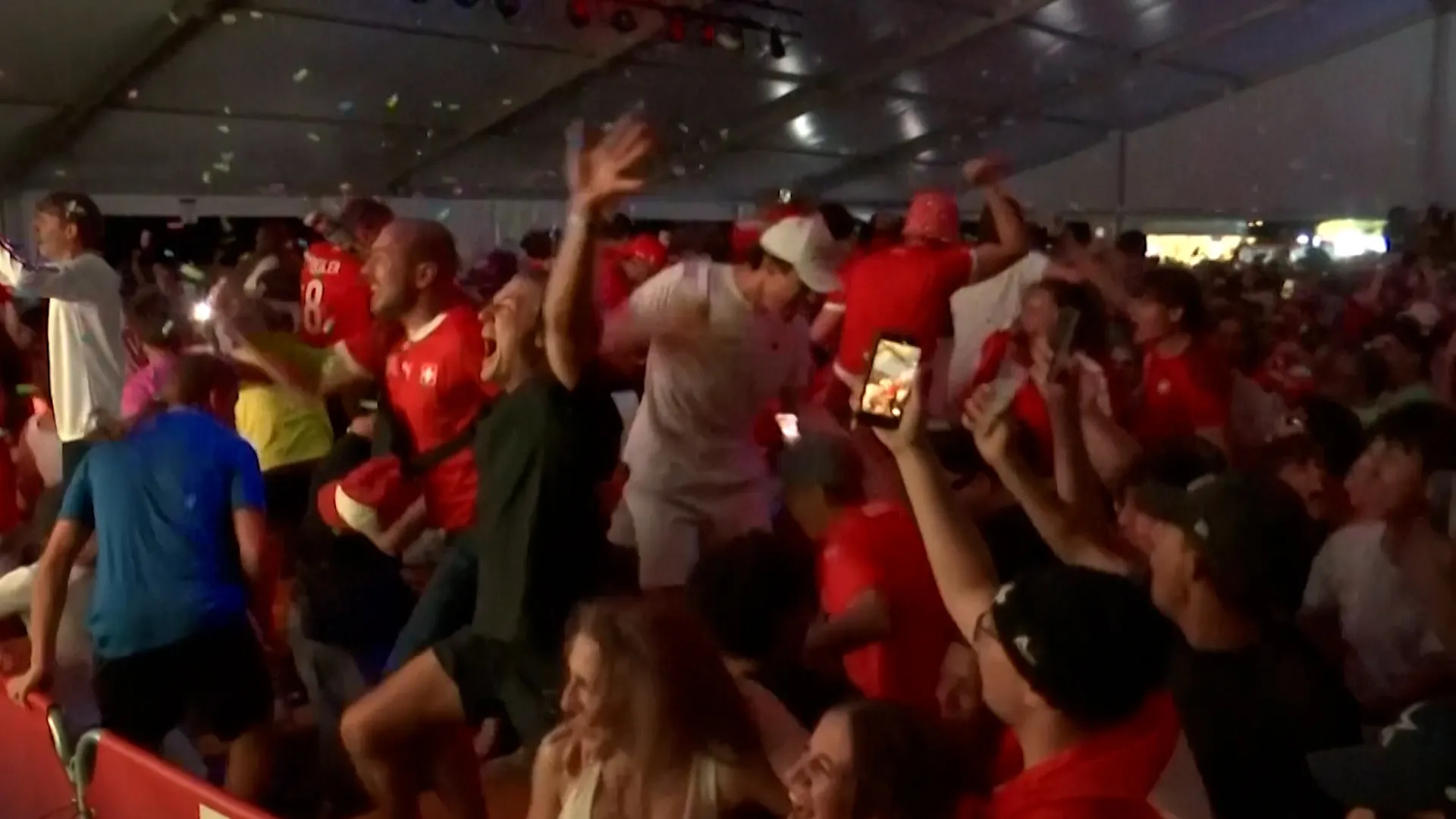
Brenda Jaimes pushed her way through an ecstatic crowd in downtown Santa Ana Thursday night, stopping in the middle of Fourth Street and calling attention to herself by shouting, “Me! Me!”
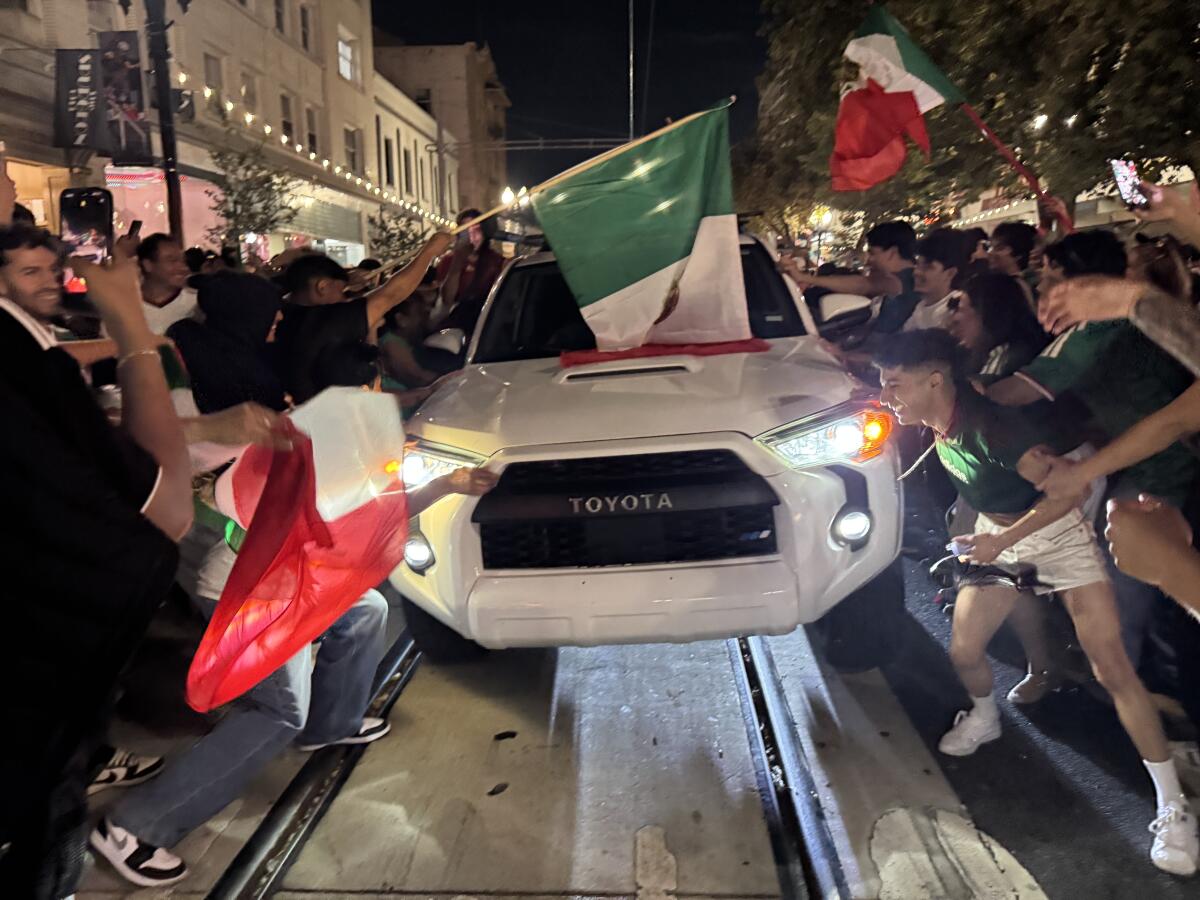
Fans blew horns and spun noisemakers, chanting “México!” and “¡Sí se puede!” They brandished the Mexican flag seemingly everywhere: on banners, painted on cheeks, emblazoned on Jaimes’ tube top. They stood on the back of trucks and boogied.
An Orange County Fire Authority truck flashed its sirens to cheers. A line of drivers cruised down Fourth Street — the historic cultural and economic heart of Latino Orange County — to high-five the crowd and let people shake their cars as if everyone was inside a bounce house.
Jaimes wanted something more dramatic.
She lay down in the arms of some men wearing green Mexico soccer jerseys. They counted to three, launched her a good 8 feet upward, then effortlessly caught the laughing Jaimes.
Scenes like this replicated themselves across Southern California after the match, from Koreatown to Boyle Heights to Pacoima to Huntington Park — really, anywhere with a big Latino population. It happens any time Mexico wins big in soccer. But the pachanga was even more pronounced in Santa Ana.
A year earlier, Fourth Street was empty. Federal immigration agents were seizing people across the city. The National Guard set up a roadblock complete with an armed Humvee for over a month, just a block away from where Jaimes and so many others celebrated.
One of the most Latino big cities in the country trembled in fear. On Thursday night, Santa Ana erupted in joy.
“This here is the antithesis of the raids last year,” said Sandra De Anda, who wore a Stetson and a Tigres Mexican soccer club jersey and waved a South Korea flag. She’s the director of policy and legal strategy at the Orange County Rapid Response Network.
Last June, the Santa Ana native joined thousands as they marched down Fourth Street for days demanding that ICE and the National Guard leave town. Through the rest of 2025, she and others in the Rapid Response Network fought la migra in courthouses and through fundraisers for immigrant detainees and their loved ones.
“They tried to take our community down, but they had no chance,” De Anda added as her boyfriend rushed off to join the celebration. “We Mexicans always get beat down, but we have pride. Tonight, you see how we stand up when we need to.”
Jaimes agreed.
“It’s so important to do this especially after last year,” she told me after her short turn as a Cirque du Soleil performer. “We don’t care what Trump can say about this. It was his birthday recently — who cares? This right here is real.”
Another young woman shrieked as she sailed above us. Jaimes pointed at her, then looked at me. “Throw yourself también [also], bro!”
I stuck to slapping the hoods and windows of so many cars that my hand turned black with soot.
Mexico soccer fans shake a car cruising down Fourth Street in downtown Santa Ana after Mexico’s 1-0 World Cup win over South Korea on Thursday.
(Gustavo Arellano / Los Angeles Times)
Seeing Mexico become the first country to win its World Cup group would be thrilling any year. But in 2026, when Trump continues to meddle in Latin American affairs while his migra goons keep launching raids across the country, the satisfaction hits that much more.
Few things irk Trump and his followers more than Mexicans succeeding at anything. Eleven years ago this week, he announced his presidential campaign by stating that Mexico was “not sending its best” immigrants but instead, people he claimed were mostly rapists and drug dealers. Trump has spent his two terms obsessing over the U.S.-Mexico border, attacking anything that reeks of diversity and demeaning Mexican President Claudia Sheinbaum as if she were a junior executive at one of his many failed companies.
Conservatives and more than a few liberals always get furious when Mexican Americans wave the flag of their ancestral homeland — but rooting for Mexico’s soccer team especially brings out the venom. Fans far outnumber supporters of the U.S. soccer team during matches in this country, which brings on accusations of treason against Mexican Americans even though other diasporas do the same, with nowhere near the same opprobrium.
Haters don’t get why so many Mexican Americans root for El Tri. The team embodies what it means to be Mexican: They’re a good group of folks who always seem to get bad breaks and never seem to win against the powers that be — but never stop fighting for a better day, while having fun doing so.
That’s why Americans of all ethnicities should back Mexico along with the U.S. side in this World Cup, which Trump has already sullied. The U.S. Department of Homeland Security denied a Somali referee entry into this country because he allegedly was “talking to some very bad people,” per the White House World Cup task force. The Trump administration is forcing Iran’s squad to base its training camp in Tijuana, which means players have to fly to matches in Los Angeles and Seattle instead of taking every other team’s short bus trip.
Every Mexico victory should give solace to the underdogs of the world and affirm the belief that a communion of nations engaged in friendly rivalries is better than Trump’s proclivity for launching indiscriminate raids and bombings. To cheer for Mexico is about as American as you can get right now.
Sydney Tran took her turn at the Fourth Street procession in a Honda Civic packed with friends. The crowd shook her car with such vigor that the 23-year-old Westminster resident couldn’t turn up the music like people shouted at her to do.
“This is crazy!” yelled Tran, who wore a Mexico soccer jersey. “I’m Vietnamese, but this is wonderful to see my Mexican friends so happy. They deserve to be happy — it’s been rough for them. It’s been rough for all immigrants.”
Mexico fans celebrate a goal while watching a FIFA World Cup soccer Group A matchup between Mexico and South Korea in Boyle Heights on Thursday.
(Eric Thayer / Los Angeles Times)
The festivities were still going strong when I left. Restaurants that were usually closed by 10 p.m. had lines out the door. Dance parties sprouted on sidewalks. Rancheras, funk and oldies blasted everywhere. The police were nowhere to be seen, unlike last year, when they broke up the anti-ICE protests with rubber bullets and tear gas.
Cynicism shot through me for a second. Mexico, which won on a fluke goal and two miraculous saves, stands virtually no chance of beating soccer titans like France and Argentina once the knockout stage of the World Cup begins. Trump’s immigration team vows that more raids are forthcoming. And I can only hope that the overwhelmingly young crowd will take the passion they showed for Mexican soccer to the ballot box this November.
Then I chilled out.
Everyone around me got to breathe and scream and let out their frustrations about our nation in the most delightful way imaginable. Reality would return the next morning — but for one night, for a few hours, life was wonderful for Mexican Americans, and better days ahead seemed possible. Sí se puede, indeed.
Los Angeles is often nicknamed “Tehrangeles” – a fact that drew smiles from both player and manager when it was mentioned at the news conference.
Many Iranian-Americans will be heading to SoFi Stadium on Monday where Iran will open their World Cup campaign against New Zealand.
Many will not be there to cheer, but to protest.
Fifa has banned the pre-revolutionary Lion and Sun flag – a powerful symbol for many Iranians living abroad.
The decision has angered parts of the diaspora.
“You don’t come to Los Angeles and tell us we can’t fly the Lion and Sun flag,” said activist Arezo Rashidian, who is helping organise demonstrations outside the stadium.
“This is the largest Iranian community outside Iran. Many of us came here after the revolution. We’re opposing Fifa’s ban and standing in solidarity with the people of Iran.”
Many members of the diaspora are hostile towards Iran’s regime, and some see the squad as an extension of the Islamic Republic.
“It’s unfortunate that the regime turns athletes into mouthpieces.” said Rashidian. “We want athletes to remain athletes.”
Despite that, she and many others still plan to attend the match.
“We understand the pressure they’re under,” she said. “We’ll carry our colours. We’ll cheer for Iran – the country – held captive by the Islamic Republic.”
But while protesters prepare to make their voices heard outside the stadium, Iran’s players say their focus remains on football.
“As players of the national team, we play for every single Iranian, whether in the diaspora or in Iran,” Taremi said.
“In every country people have different opinions. We are here to unite people and bring joy. Everyone is entitled to their opinion. We don’t get involved in politics.”
That may be the ideal.
But for Iran’s team, keeping politics outside the stadium could prove difficult in a tournament where football has often felt like a sideshow for this squad.
“There is no winning for Iran’s team,” investigative football journalist Samindra Kunti said.
“Given the circumstances, the political pressure, the location of the matches and the diaspora in Los Angeles, they’re under enormous pressure.”
“It’s impossible to avoid the politics.
“Everything becomes a reminder of their situation.”
The players face pressure from home, pressure from the host nation and pressure from a diaspora determined to make its voice heard.
In many ways, the most ambitious World Cup in history — which kicked off Thursday in Mexico City — has inspired more angst than anticipation, more fear than fervor.
The competition, returning to North America for the first time in more than three decades, has expanded to 48 teams and 104 matches, to be played over 39 days in 16 cities in the U.S., Mexico and Canada. The complex planning was eight years in the making.
Yet even before the competition opened with Mexico facing South Africa at the iconic Estadio Azteca, it has been marred by a number of controversies that threaten to overshadow the soccer and cloud the tournament’s legacy.
“I view this World Cup as the most politically combustible World Cup in recent history. And that’s saying something,” said Jules Boykoff, a political science professor at the University of Portland and author of eight books on the politics of international sport.
“We’re in uncharted territory in many ways.”
Relations between the host countries, once strong, have been strained by the Trump administration’s tariff policies and disagreements over border security. Travel bans have barred potential World Cup visitors — and even support staff and match officials — from entering the U.S. and others are fearful of making the trip, worried about ICE raids and immigration roundups.
The U.S. is at war with a tournament qualifier, Iran. And Iran has fired missiles and drones on Jordan, Qatar and Saudi Arabia, nations that also are World Cup participants.
The International Sports Press Assn. said Iranian and African journalists have been denied visas to cover games in the U.S., and Iran protested after more than a dozen members of its support staff had their requests to enter the U.S. rejected. The Iranians, who were forced to move their training base from Tucson to Tijuana, will spend limited time in the U.S. during group-play games that will take place in Inglewood and Seattle.
Players and journalists from Senegal, Uzbekistan and Iraq have been detained at U.S. airports for up to seven hours by immigration officials. Then on Monday, Omar Artan, a decorated referee and the first Somali official selected to work a World Cup, was turned away at Miami International Airport.
In addition, ticket prices have been so high and the lottery process for obtaining them so opaque, the attorneys general of New York and New Jersey have begun formal investigations into FIFA practices. Other states, including California, hosting tournament matches have begun asking questions as well.
All that has conspired to produce a World Cup that is struggling to catch on with the public. According to a recent poll by Yougov.com, a majority of Americans — 54% — say they are not at all interested in the tournament and nearly six in 10 say they will not watch any matches.
“People are just in a bad mood,” Boykoff said. “It’s a tough time.”
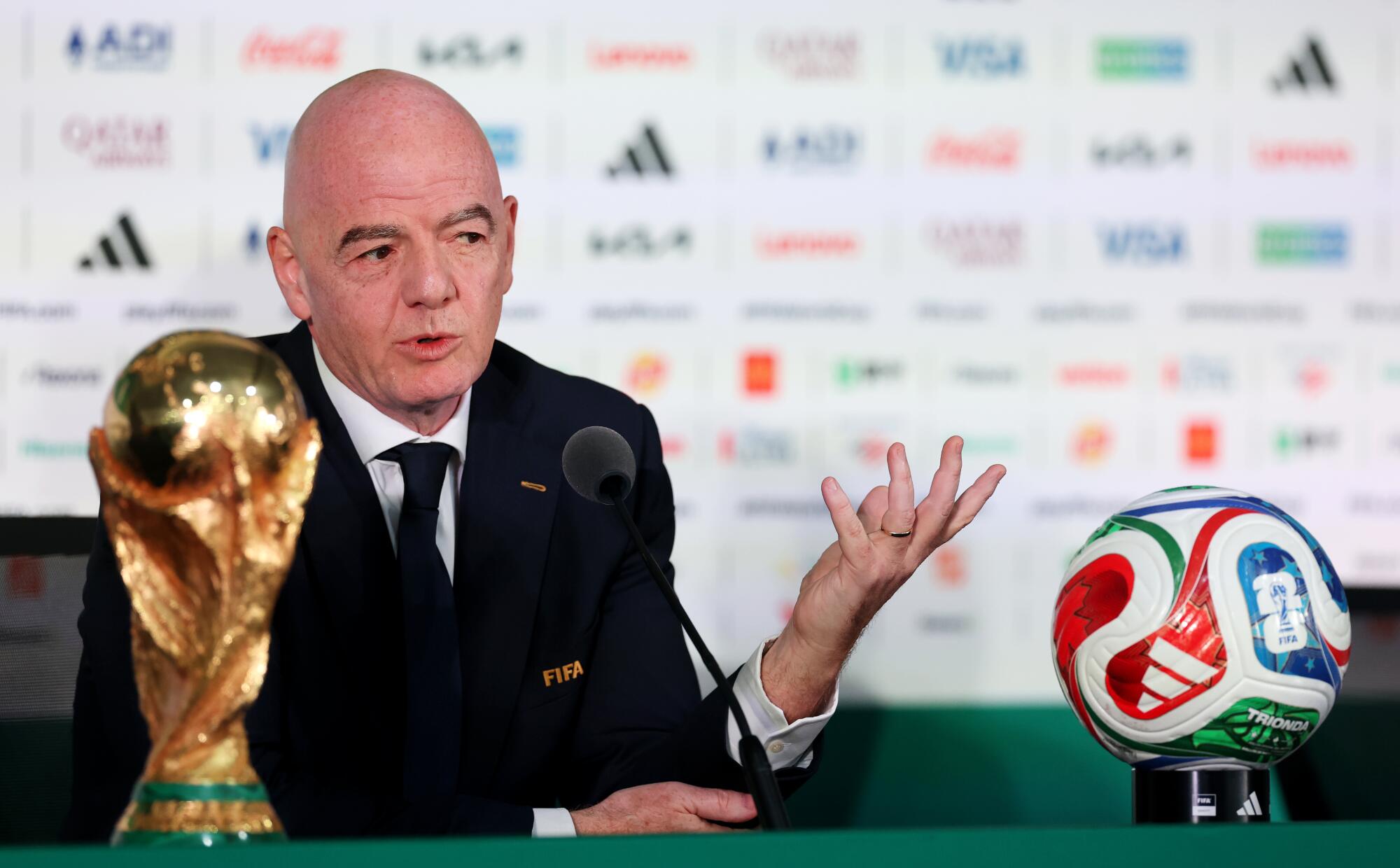
FIFA president Gianni Infantino remains optimistic, promising this will be “the biggest, the most inclusive, the greatest FIFA World Cup ever.” He made the same claim about the 2022 World Cup in Qatar and the 2018 tournament in Russia.
FIFA president Gianni Infantino speaks during a news conference on Wednesday before the start of the World Cup.
(Carl Recine / Getty Images)
“The World Cup should be understood as both a global sporting celebration and a major commercial enterprise, with these two dimensions being mutually enforcing rather than contradictory,” said Steve Georgakis, a lecturer on sports studies at the University of Sydney and a frequent author on soccer.
This year’s tournament is projected to swell FIFA’s coffers by nearly $9 billion and the TV ratings, it says, will be massive.
“Its universal appeal combined with the participation of 48 nations ensures that it remains a genuinely global sporting event,” Georgakis said.
Boykoff has his doubts.
“In this particular political moment, with the Trump administration being erratic and impulsive and needing a win from this tournament and the fact there’s so many moving parts geopolitically, I don’t have confidence that it’s just going to end up being a soccer-focused next five weeks,” he said.
This is not the first World Cup to kick off under some kind of black cloud.
The 1974 tournament in West Germany was tarred by the geopolitical fallout of the 1973 Yom Kippur War. Four years later Argentina’s military dictatorship used the World Cup to sportswash a “Dirty War” in which as many as 30,000 people were tortured, murdered and disappeared.
The 2010 and 2014 World Cups were troubled by cost overruns and delays in the construction of stadiums and other infrastructure and the threat of labor unrest while global outrage over human rights violations and discrimination against women and LGBTQ people hung over the last two tournaments.
Those issues never fully disappeared but were overshadowed by the brilliance of the soccer. Jonathan Wilson, a columnist with the Guardian and author of “The Power and the Glory: The History of the World Cup,” expects the same this summer.
“The other stuff will still be there in the background,” he said, “but fundamentally the football will, for the vast majority of people, take over. It’s just sort of a natural cycle.”
Argentina star Lionel Messi controls the ball during an international friendly against Iceland on Tuesday.
(Butch Dill / Associated Press)
And as with every World Cup, there undoubtedly will be unforgettable moments.
Argentina’s Lionel Messi and Portugal’s Cristiano Ronaldo, the top scorers in soccer history, will be playing in their sixth and final World Cups — Messi chasing a second straight title and Ronaldo pursuing the only prize that has eluded him.
Kylian Mbabbe will be trying to take France to a third consecutive final while young superstars like Erling Haaland of Norway and Lamine Yamal of Spain will be looking to put their mark on their first World Cups.
Four teams — Jordan, Curacao, Cape Verde and Uzbekistan — have qualified for the tournament for the first time.
And there will be other storylines no one saw coming, all of which will contribute to the narrative of this World Cup.
“Major sporting events have a way of capturing public attention and shifting the conversation toward what is happening on the field rather than off it,” Georgakis said.
How much the actions of the Trump administration affect that calculation remains to be seen.
There are travel restrictions in place that fully or partially bar citizens from 39 countries — including a number of World Cup participants — from entering the U.S. And the administration has said ICE and Homeland Security personnel will have a visible presence at World Cup venues, including SoFi Stadium in Inglewood, where the American team will begin play Friday.
“There will be federal agents,” confirmed L.A. County Sheriff Robert Luna, who added that he could not guarantee immigration sweeps would not take place. “ They told us that specifically would not be occurring,” he said. “Any of that’s subject to change.”
Mexico fans celebrate during a watch party at Plaza Mexico in Lynwood on Thursday.
(Kayla Bartkowski / Los Angeles Times)
The difficulty in obtaining visas and the fear of being rounded up by immigration agents are being blamed, in part, for less-than-expected tourist traffic. Hotel operators in all 11 World Cup host cities say bookings for the tournament are well below projections. Several countries have issued warnings about travel to the U.S.
Then there are the own goals from FIFA over tickets and parking prices as high as $900 at some stadiums, weather issues and a short-lived ban on water bottles.
FIFA has defended its policies on ticket prices by arguing that premiums are necessary to maximize revenue, which it will invest in global soccer development. Variable, market-based pricing, it said, simply reflects standard entertainment practices in North America. The organization did, however, reverse its ban on fans bringing bottles into games. Spectators are now allowed to enter stadiums with one soft, plastic 20-ounce water bottle.
And despite a warning from climate scientists that one in four World Cup games could be played in dangerously hot conditions, FIFA will start 40 of them at 3 p.m. or earlier local time, the warmest time of day, to accommodate European TV viewers.
Georgakis said the play on the field will have to overcome all those issues if this World Cup is to earn a favorable place in history.
“Ultimately the success of the World Cup will be judged by what happens on the field,” he said. “If the football is compelling, dramatic and memorable, the tournament will likely be remembered as a great World Cup. If the play falls short, then the off-field issues such as ticket prices, extreme heat, ICE enforcement activities, the Trump administration will receive great attention and could shape perceptions of the event.”
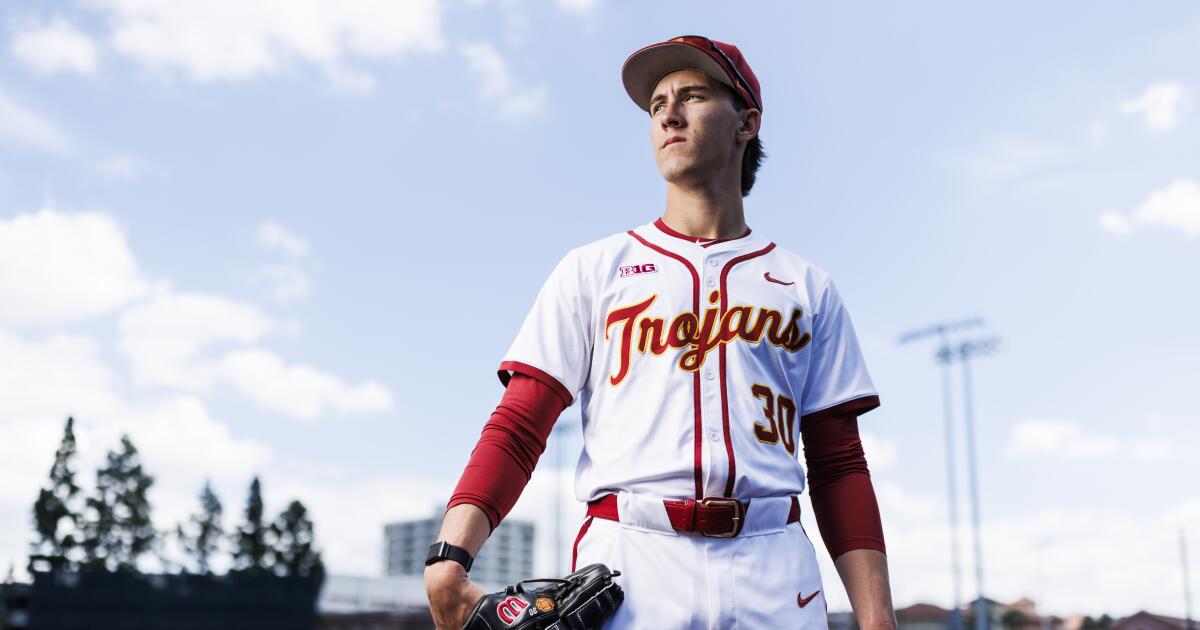
Mason Edwards has first-round hype ahead of July’s 2026 MLB draft for a reason.
USC’s ace takes the mound like a boxer enters the ring, eager to land blow after blow. And as the Trojans (43-15) open the NCAA tournament in College Station, Texas, at 6 p.m. PDT Friday (ESPNU), the southpaw packs a serious punch. He carries a nation-leading 160 strikeouts and the second-best 1.43 ERA.
“They’re getting a competitor,” Edwards said of what people can expect when he pitches. “There have been a lot of situations where I’ve had to battle and fight adversity. So, I think you’ll see a good fight when I toe the rubber. I’m not going to shy away from any type of competition.”
If anything, the competition probably shies away from Edwards.
Named the Big Ten 2026 Pitcher of the Year after stacking a record 113 strikeouts in conference play, Edwards is integral to what has been USC’s best team since the early 2000s.
The junior enters Friday’s regional matchup against Texas State with a perfect 8-0 record through 15 starts and 88 1/3 total innings and has collected nine-plus strikeouts in all but two games during the 2026 season — earning a career-high 16 in a 9-2 home win over Iowa on April 10.
MLB.com ranks Edwards No. 36 in its latest draft prospect rankings. Despite being on his way to becoming a professional baseball player, Edwards remains focused on helping the Trojans pursue their first national title since 1998.
“It’s important to stay present,” Edwards said. “I still play at SC, so I’m still concerned with how USC’s doing and how our team is doing. At the end of the day, that’s what’s important right now. It’s a team sport, it’s not tennis or golf. Got to stay grounded with what’s important. Team winning; going to a regional, winning that; trying to take this team to Omaha. That’s the biggest thing.”
Edwards, 20, is having fun while focusing on the Trojans.
Describing himself as playful, “cool with everyone” and as an “all-around happy” person, Edwards is enjoying his third year at USC, particularly as a teammate everybody can rely on.
Underrecruited during his prep career at Palisades Charter High, Edwards was inconsistent during his first season with the Trojans. He had some promising outings but finished with a 7.88 ERA and 1-3 record through 37 2/3 frames.
Edwards improved as a sophomore, serving as a starter and reliever, finishing with a 3.86 ERA and 3-0 record over 32 2/3 innings. However, he dealt with minor arm injuries and still didn’t have a clear-cut role.
Today, though, Edwards is one of the best pitchers in the country. And his skipper couldn’t be prouder.
“His development’s been really good,” USC coach Andy Stankiewicz said of Edwards. “He’s gotten better. That’s the thing we’re proud of. He’s a guy that’s been in our program for three years. Mason was trying to figure out who he was gonna be. ‘Is he going to be a starter? Is he going to be a reliever? So, he was kind of that spot starter … When he was a youngster, sometimes his misses [were] really big, and they really weren’t competitive pitches. Now, every pitch is pretty competitive.”
Stankiewicz credited Trojans pitching coach Sean Allen for helping Edwards, known for his rising heater, improve his curveball and develop his breaking ball.
The four-year head coach also praised Edwards for being an increasingly confident leader.
“Guys like him,” Stankiewicz said. “Guys enjoy being around him. I enjoy his growth. I enjoy being around him. He’s fun. We can tease each other pretty well and have fun with it. [Edwards was] a typical young man his freshman year, doesn’t say much. And then by the junior, senior year, they just grow up.”
The ace said he appreciates Stankiewicz, noting the coach’s emphasis on making sure players leave the program as “good men.”
Edwards also shouted out Trojans director of player development Josh Goossen-Brown, for being in his corner for years.
“He’s been through it all,” Edwards said of Goossen-Brown. “Been working with him since high school — very early high school — and he works here now. So, very small world, that he was able to get a job here.”
It’s hard not to see how the stars have aligned for Edwards.
While he didn’t consider USC his dream school growing up, Edwards is achieving Trojans royalty status, with loved ones nearby to support his journey in the same threads as great Trojans he idolized such as Randy Johnson and Seth Etherton.
Already named his conference’s best pitcher, Edwards is a semifinalist for both National Pitcher of the Year and for the Golden Spikes Award — given to the best amateur baseball player in America — after becoming the first USC pitcher to surpass 140 strikeouts in a single season since Ian Kennedy in 2005.
Edwards said he has always believed in himself, especially after a particularly rocky freshman campaign when his future appeared far from clear.
“When you’re your own person, you kind of see more than something other people might see,” Edwards said. “But yeah, freshman year, I flashed stuff that I really held onto. It was definitely a roller coaster … but you just hold on to the good things. Really holding on to those positives and trying to take them into the following years has been a big part of why you see that development process.”
Joy Behar is trading her usual spot at “The View’s” roundtable for the spotlight in one of London’s West End theaters.
The comedian, who is one of the talk show’s longest-running hosts, is taking a temporary leave from the daytime program to take her play, “My First Ex-Husband,” overseas for the first time. The 83-year-old TV personality announced her break on Tuesday, on the podcast, “Behind the Table,” a companion program of “The View.”
“I fly to Paris this week, and then I go take the Chunnel to London after a week, and I’ll be in London a second week doing my play, ‘My First Ex-Husband,’ at the Boulevard Theatre in the West End,” Behar said on the podcast.
Behar confirmed she has already pre-taped several installments of “The Weekend View,” ahead of her absence. She will miss the next two weeks of tapings. Her last appearance on the weekday edition of the show is Thursday.
In Behar’s absence, several “View” regulars will step in. Brian Teta, the show’s producer, said on the podcast that Sheryl Underwood, Kara Swisher and Ana Navarro will make appearances in the coming weeks. Whoopi Goldberg, another one of the talk show’s staple personalities, will also be coming in on Fridays, which is her usual day off.
“I don’t think she knows yet, but I’ll let her know that she’s going to be here,” Teta joked of Goldberg’s new responsibility.
Behar’s play, “My First Ex-Husband,” first debuted off-Broadway in New York in 2025. The comedian wrote the show over the span of 12 years. The story follows a rotating cast who tell chaotic stories about past relationships. The play is set to debut in the coming weeks, according to Behar. She and Jackie Hoffman will be two American narrators for the show, while two British actresses perform the scenes.