Journeys

Israel’s West Bank road closures turn routine journeys into long ordeals | Israel-Palestine conflict News

Mohammed Abu Hijleh still finds it hard to believe that his mother passed away just over a week ago; she had suffered from nothing more than diabetes. But the restrictions Israel imposes on various cities, towns, and villages in the occupied West Bank can alter a Palestinian’s life in an instant.

Zahriya Abu Hijleh, 66, was attending her niece’s wedding reception in her hometown of Deir Istiya, northwest of Salfit, on September 20, when she suddenly felt dizzy and collapsed.

Recommended Stories

list of 3 itemsend of list

After she was taken to the town’s medical centre, the doctor immediately ordered her transfer to Salfit Governmental Hospital, a facility just an eight-minute drive from Deir Istiya.

Mohammed requested an ambulance, but the vehicle could not enter the town because the iron gate operated by Israeli forces at the entrance was closed. Instead, an ambulance from the medical centre transported her to the gate, and from there, she was taken off the stretcher, carried past the gate on foot, and transferred to a second ambulance waiting on the other side.

It is a scenario that happens repeatedly in the occupied West Bank, Mohammed told Al Jazeera.

“My mother was breathing her last; had the gate been open, we wouldn’t have lost her on the way,” he said.

Medics later determined that Zahriya had suffered a pulmonary embolism and required urgent treatment, according to her family.

“Sadly, she died due to the delay,” Mohammed said. “She had no prior health issues other than diabetes.”

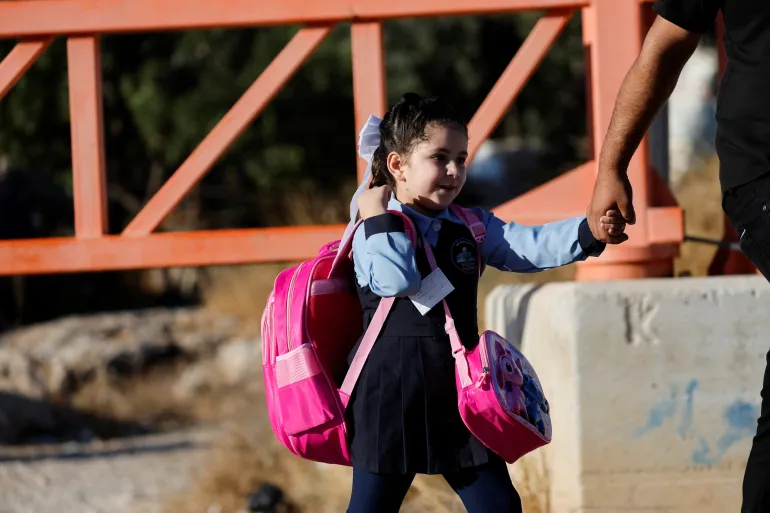
A Palestinian student crosses an Israeli checkpoint as students return to school for the new academic year, near Hebron in the Israeli-occupied West Bank, September 6, 2026. REUTERS/Mussa Qawasma
A Palestinian student crosses an Israeli checkpoint as students return to school for the new academic year, near Hebron in the Israeli-occupied West Bank, September 6, 2026 [Mussa Qawasma/Reuters]

Comprehensive closures

The military checkpoints and iron gates erected by Israel in the West Bank have become a significant source of misery for Palestinians.

They disrupt daily life, causing delays for people trying to reach work, schools, and universities, while also posing a daily threat to the lives of the sick.

Israel periodically imposes closures on the West Bank for various reasons, including Jewish holidays. The current closure runs from September 27 to October 3, coinciding with the Jewish festival of Sukkot.

While Israeli settlers move freely between West Bank cities, and even storm Palestinian villages and towns under Israeli army protection, Palestinians are forced to wait for hours at closed checkpoints.

Ibtihal Mansour from Nablus endured such an ordeal last Friday while visiting her in-laws’ home in the village of al-Janiya, near Ramallah.

The family left the village at 10am, hoping to reach Nablus within 45 minutes. But they encountered closures at the Atara and Ein Siniya checkpoints north of Ramallah, effectively trapping them in the area.

“We tried taking alternative routes west of Ramallah, but were surprised to find the road between Ramallah and Nablus blocked by settlers, with all vehicle traffic completely halted. We remained on the roads, trying to find any way through, until midnight, a span of more than 14 hours,” she told Al Jazeera.

Her children were crying, exhausted after spending so long confined in the vehicle. Passing through one roadblock near Nablus, in an area called al-Lubban Asharqiya, a soldier forced Ibtihal to wake the children. When her 11-year-old son did not wake up, she said that the soldier punched him in the head, causing him to jolt awake crying.

“The scene was heartbreaking; I felt a deep lump in my throat and profound sorrow. Long hours of waiting in the vehicle ended with an assault like this, and the ordeal didn’t even end there,” she said, explaining that they had to turn back. “We were forced to spend the night at my sister-in-law’s home in Ramallah before setting out early the next morning for Nablus.”

Like Ibtihal’s family, many Palestinians travelling between cities and villages are forced to stay overnight in hotels or at relatives’ homes. Some municipalities have converted wedding halls and mosques into shelters for those stranded, providing meals donated by residents of towns near the checkpoints.

The Colonization and Wall Resistance Commission (CRRC) recorded 942 checkpoints, closure points, and obstacles across the occupied West Bank as of September 25, up from 793 in March 2024.

The total length of the obstacles amounts to approximately 107.7km (70 miles), according to data from the UN Office for the Coordination of Humanitarian Affairs.

The CRRC says the closures effectively fragment Palestinian communities, making access to workplaces, schools, medical facilities, and agricultural land dependent on whether roads and crossings are open.

Al Jazeera has reached out to Israeli authorities for comment on the road closures and the allegations from Palestinians in this article, but has yet to receive a response.

Strangling Hebron and Jerusalem

In Hebron – which has an Israeli settler presence in the centre of the Old City – the Israeli army has closed the Ibrahimi Mosque to Palestinians and tightened restrictions at checkpoints and gates leading to the site until Wednesday, all while securing access for settlers to celebrate Jewish holidays.

Issa Amro, coordinator of the Youth Against Settlements group, told Al Jazeera that soldiers have closed checkpoints and imposed curfews in several city neighbourhoods, restricting resident movement and making it increasingly difficult to reach the Old City and the Ibrahimi Mosque.

“The area west of the mosque contains settlements and closed zones, while access from the east is limited to a few roads. These measures make reaching the site both more difficult and more dangerous,” he explained.

The situation in occupied East Jerusalem is also fraught, as Israel imposes strict restrictions on Palestinian movement and access to the Al-Aqsa Mosque, while thousands of Israeli settlers enter the site and move about unhindered under heavy security escort.

Activist Fakhri Abu Diab told Al Jazeera that Israel’s closures in occupied East Jerusalem during the Jewish holidays are part of attempts to impose religious sovereignty over the city.

Abu Diab explained that Israeli settlers and hardliners head either to storm the Al-Aqsa Mosque or to synagogues to perform religious rituals, while Palestinians are forced to remain at home.

He described how the closures disrupt daily life in East Jerusalem, shutting shops, schools, and workplaces, and halting movement.

“Israeli police restrict the movement of Jerusalemites. Families and vehicles attempting to move about risk being attacked by extremists and settlers, while the latter are permitted to roam freely and dominate the streets,” he said.
Source link

New train ticket rule which saves you money if your journey’s cancelled comes into force across UK

A NEW train ticket rule has officially rolled out to make life much easier for travellers.

Passengers on Britain’s biggest train operators will now spend much less money when their train is cancelled.

Rail stock
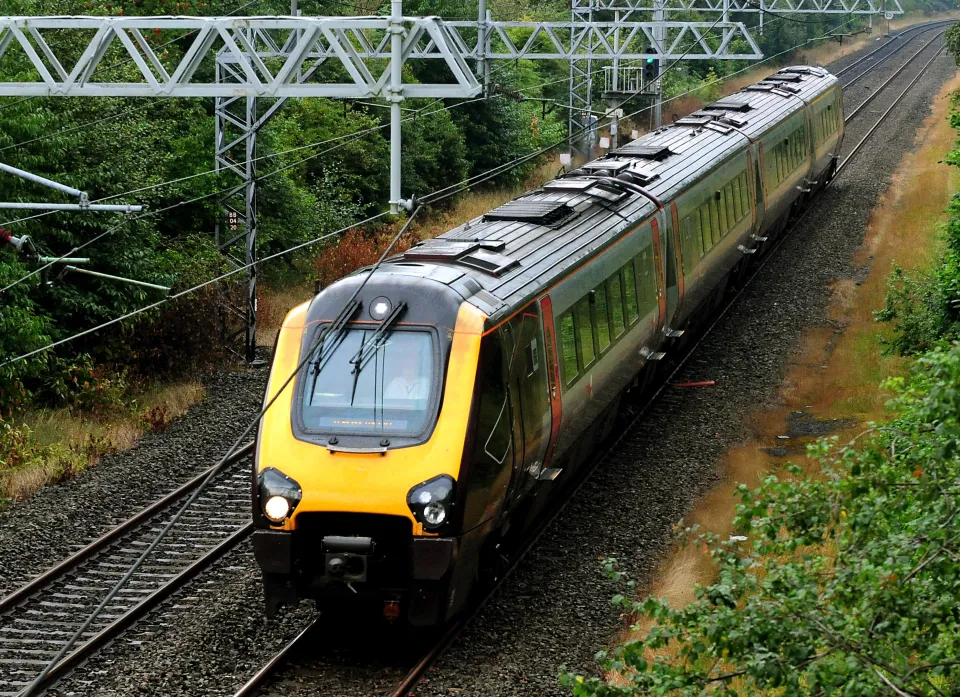
A new train rule has come into force making life much easier for passengers Credit: PA:Press Association

For the first time, passengers left stranded at stations can use an alternative operator’s service to complete their journey free of charge.

The new rule which came into force on Sunday, September 20 hopes to end limbo at stations following cancellations and end the need for costly re-bookings.

Many regular travellers will be aware that this scheme already operates across all 13 publicly-owned operators, such as LNER, Southern, South Western Railway and Greater Anglia.

However, from now, Avanti West Coast, Chiltern Railways, CrossCountry and Great Western Railway will also be involved, offering more stability on a host of key intercity routes across the UK.

GHOST TRAIN

UK’s busiest long-distance train line cuts HUNDREDS of journeys over Christmas


ON TRACK

First look at £4.3bn UK station set to connect passengers to over 100 locations

East Midlands Railway will also be joining the scheme at a later date.

The new scheme comes ahead of the establishment of Great British Railways (GBR) – a programme to transfer all rail services to public ownership and to create a “one-stop shop” for train travel.

Valid ticket holders can travel with another train operator on a direct or reasonable alternative route, but the service must depart within two hours before or after the original cancelled train.

To claim the new ticket, passengers will need to show their original ticket to customer support staff as a proof of purchase, and will not be required to download the new one.

Full list of operators taking part in the new scheme:

East Midlands Railway is expected to join the scheme at a later date:

  • c2c
  • Gatwick Express
  • Greater Anglia
  • Great Northern
  • LNER
  • London Northwestern Railway
  • Northern
  • Southeastern
  • Southern
  • Thameslink
  • South Western Railway
  • Transpennine Express
  • West Midlands Railway
  • Avanti West Coast (new)
  • Chiltern Railways (new)
  • CrossCountry (new)
  • Great Western Railway (new)

When the new scheme was unveiled, Rail Minister, Lord Hendy, said: “This is a simple, common-sense change that puts passengers first.

“No one should be left stranded because of a fragmented railway when their journey is disrupted.

“From this weekend, if your train is cancelled, you can get on another operator’s service and carry on your journey without paying again.  

“We’re fixing the railway from the ground up, making it simpler, fairer and easier to use, as we move towards Great British Railways and put public service back at the heart of our railways.”

Source link

Journey’s biggest hits, ranked from worst to best

Turn on a radio between 1978 and 1987 and you were sure to hear Journey — any of the more than two dozen sumptuous yet muscular rock hits that shaped young America’s ideas about love, inspiration and wanting it the way you need it. Four decades later, the band’s music is still everywhere, including television, social media and streaming platforms like Spotify, where Journey has more monthly listeners than Bruce Springsteen, U2 or Bob Dylan. Yet Saturday night the group will bring what it’s calling its farewell tour to Crypto.com Arena — a capstone (at least if the band is to be believed) to a long career full of twists and turns.

Indeed, domination was hardly a given when guitarist Neal Schon and keyboardist Gregg Rolie — both of whom had played with Carlos Santana — formed Journey as a kind of jazzy proto-jam band in San Francisco in 1973. But with the addition a few years later of singer Steve Perry, the group found its gloriously dramatic sound and began racking up hits one after the next (though critics were rarely kind). Perry eventually quit, which took the wind out of Journey’s sails until Schon discovered an uncanny soundalike from the Philippines, Arnel Pineda, on YouTube; he’s helped the band get back into arenas and the occasional stadium even as Schon and keyboardist Jonathan Cain, who replaced Rolie in 1980, have battled each other in court over financial matters.

Got all that? To try to make sense of Journey’s path, I’ve ranked all 25 of the band’s hits that have charted on Billboard’s Hot 100, starting with the worst and ending with the best. Hold onto that feeling — it goes on and on and on and on.

25. ‘Walks Like a Lady’ (peaked at No. 32 in July 1980)

Some are born to sing the blues, as Perry once observed — just not Perry himself, who chews his way through this corny come-on like an overserved uncle at the Hard Rock Cafe. Nice showcase for Rolie’s organ work, though, on one of the last Journey singles he played on before leaving the band.

24. ‘Just the Same Way’ (peaked at No. 58 in May 1979)

Rolie and Perry tag-teaming lead vocals is not a form of democracy I’d vote for.

23. ‘After the Fall’ (peaked at No. 23 in August 1983)

Safe? Sterile? Soulless? Look, the haters can’t always be wrong.

22. ‘Too Late’ (peaked at No. 70 in January 1980)

“Before your time has run astray / You’ve got to try to get away.”

21. ‘Anytime’ (peaked at No. 83 in July 1978)

After overseeing Queen’s first few albums, producer Roy Thomas Baker turned his attention to Journey (and to the Cars); this midtempo number from the “Infinity” LP offers a credible approximation of Queen’s trademark stacked vocal harmonies.

20. ‘The Party’s Over (Hopelessly in Love)’ (peaked at No. 34 in April 1981)

Three platinum plaques in less than two years — for “Infinity,” “Evolution” and “Departure” — meant that Journey had no choice but to drop a live record, “Captured,” at the top of 1981. (It went platinum by Christmas.) As extra consumer bait, the double album closed with this new studio cut built around a killer Schon lick (and not much else).

19. ‘Good Morning Girl’/‘Stay Awhile’ (peaked at No. 55 in September 1980)

Phantom of the roller rink.

18. ‘Why Can’t This Night Go On Forever’ (peaked at No. 60 in May 1987)

Propelled by the success of his debut solo album — not to mention his appearance on the smash all-star “We Are the World” — Perry assumed greater control of Journey’s sound for 1986’s synthed-up “Raised on Radio,” which spawned no fewer than five singles, ending with this slightly lugubrious ballad. Yet the takeover came with a cost: By the end of 1987, the band had entered a hiatus that would last nearly a decade.

17. ‘Still They Ride’ (peaked at No. 19 in July 1982)

Listen to how nimbly Perry maneuvers some very tricky intervals.

16. ‘When You Love a Woman’ (peaked at No. 12 in December 1996)

Journey reunited for 1996’s “Trial by Fire,” which brought the band its only Grammy nomination (and which might feature the ghastliest album cover in music history). If the members knew that rock had changed dramatically while they were away, they didn’t show it in the LP’s romantic lead single: “When You Love a Woman” — a chart-topper for three weeks on Billboard’s adult contemporary tally — clearly sought to pick up where “Open Arms” and “Faithfully” had left off.

15. ‘Girl Can’t Help It’ (peaked at No. 17 in November 1986)

Wonder what Perry and Huey Lewis talked about between takes on “We Are the World.”

14. ‘Be Good to Yourself’ (peaked at No. 9 in May 1986)

“Karate Kid”-core.

13. ‘Only the Young’ (peaked at No. 9 in March 1985)

More “Karate Kid”-core, in this case released first as a song by Patty Smyth’s band Scandal; Journey’s version later wound up alongside Madonna’s “Crazy for You” on the soundtrack to “Vision Quest.”

12. ‘Wheel in the Sky’ (peaked at No. 57 in May 1978)

Before Perry came aboard in 1977, Journey spent a few months with Robert Fleischman as lead singer — long enough for Fleischman to co-write the group’s first Hot 100 entry, not so long that he got to sing it on the record.

11. ‘Any Way You Want It’ (peaked at No. 23 in April 1980)

Ooh, baby, hold tight.

10. ‘Suzanne’ (peaked at No. 17 in August 1986)

Easily Perry’s most unhinged vocal performance.

9. ‘Send Her My Love’ (peaked at No. 23 in November 1983)

A luscious and melancholy white-soul song that I’d bet Phil Collins admired back in the day — and that Justin Bieber would probably flip for now.

8. ‘Lovin’, Touchin’, Squeezin’’ (peaked at No. 16 in October 1979)

Inducting Journey into the Rock & Roll Hall of Fame in 2017, Train’s Pat Monahan belted the na-na-na outro of the band’s first Top 40 hit as he made his case for the group’s excellence. “They didn’t even need lyrics — that’s how badass this band is,” he pointed out. Still, let’s not gloss over the appealing perversity of starting a song this horny the way Perry does: “You make me weep and want to die.”

7. ‘Lights’ (peaked at No. 68 in September 1978)

Dodgers fans can delight in the fact that Perry originally wrote this paean to San Francisco — an anthem taken up at one time or another by every Bay Area pro sports team, including the Giants — about the lights going down and the sun shining on … Los Angeles. (Swap out “the bay” for “L.A.”) Maybe that’s why “Lights” has always felt to me like a precursor to the Red Hot Chili Peppers’ “Under the Bridge.”

6. ‘Separate Ways (Worlds Apart)’ (peaked at No. 8 in March 1983)

[Listens to “Eye of the Tiger” once.]

5. ‘I’ll Be Alright Without You’ (peaked at No. 14 in February 1987)

Shout out to future “American Idol” judge Randy Jackson, who joined Journey for “Raised on Radio” and proceeded to lay down the slinkiest, sultriest, funkiest bass line the band had ever known.

4. ‘Don’t Stop Believin’’ (peaked at No. 9 in December 1981)

Believin’ in what, exactly? The genius of Journey’s most-streamed track on Spotify (with more than 2.9 billion plays) is its use of concrete images to advance a pretty mysterious narrative. We’ve all stood under a streetlight; we all know the smell of wine and cheap perfume. Yet everybody’s midnight train is going to a different anywhere.

3. ‘Open Arms’ (peaked at No. 2 in February 1982)

Famously — and fortuitously — rejected by a former bandmate of Cain’s as “sentimental rubbish,” “Open Arms” was perhaps just waiting to be embraced by Perry, who sings it with the wounded gusto of a man well acquainted with regret. In a poetic twist, Journey’s highest-charting hit was blocked from No. 1 by the J. Geils Band’s “Centerfold,” in which the heartbroken narrator goes laughing all the way to his bed.

2. ‘Who’s Crying Now’ (peaked at No. 4 in October 1981)

The first of three Top 10 singles from 1981’s 10-times-platinum “Escape,” this immaculate R&B jam imagines an alternate dimension where Perry and Cain hear Earth, Wind & Fire’s “After the Love Has Gone” and decide to form a new group with David Foster. Except Perry remembers the song as a high point for Schon: “You know the guitar outro from ‘Who’s Crying Now’?” he asked a New York Times reporter in 2003. “I fought for that because I knew no DJ would cut that song off with Neal’s guitar wailing at the end of it. It was too brilliant.”

1. ‘Faithfully’ (peaked at No. 12 in June 1983)

It wasn’t the first rock ballad about life on the road — and it definitely wasn’t the last — but “Faithfully” might be the most emotionally generous: “Loving a music man ain’t always what it’s supposed to be,” Perry tells his lady, grounding the song in the experience of those who leave and those left behind; later, he envisions their reunion with such tenderness — “I’ll get the joy of rediscovering you” — that you know he’s already decided to take off again.

Source link