Trump’s ambassador to Greece, Kimberly Guilfoyle, resigns after allegations of improper conduct
WASHINGTON — President Trump’s ambassador to Greece, Kimberly Guilfoyle, resigned on Tuesday after allegations of improper conduct but insisted she’ll “vigorously defend” herself.
Trump’s administration said earlier Tuesday it had asked Guilfoyle to leave her post after she faced severe criticism over allegations she engaged in improper and possibly illegal conduct before and during her tenure in Athens.
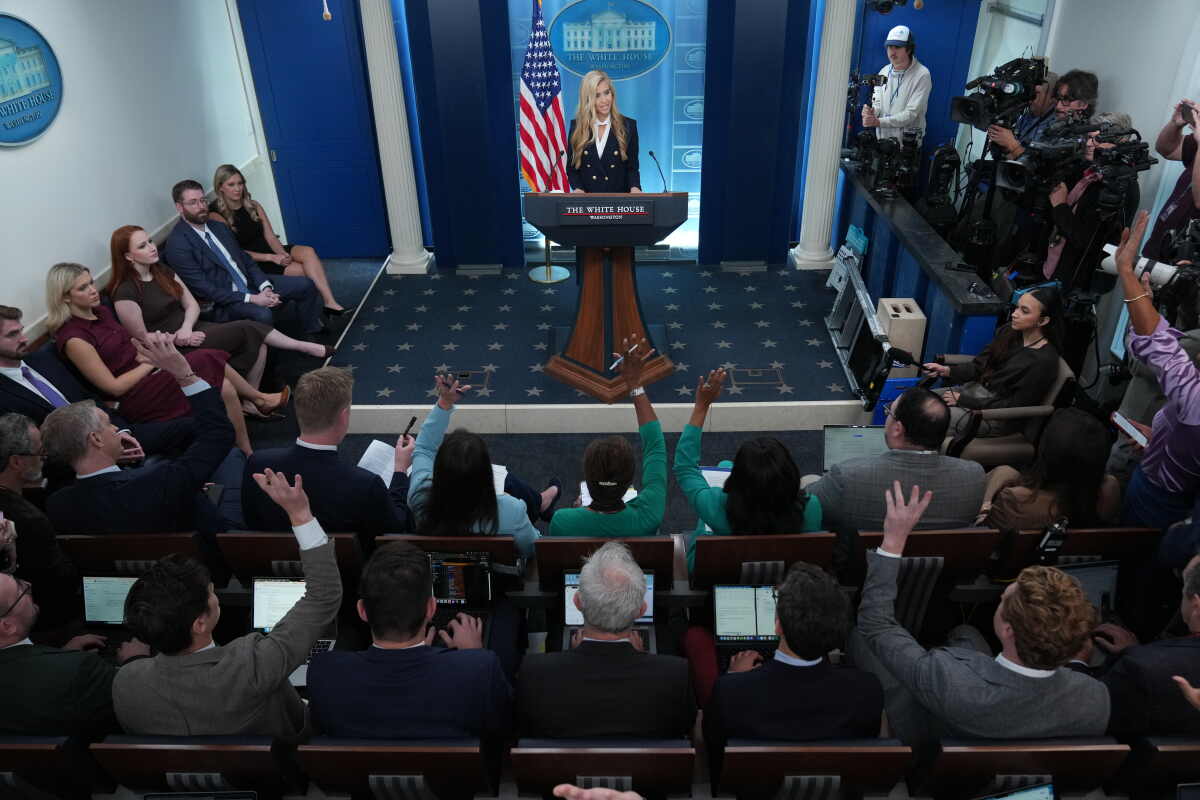
The announcement, after days of comments and speculation, came in response to a question to freshly minted White House press secretary Katie Zacharia at her first media briefing Tuesday morning. Zacharia said Guilfoyle “has been a wonderful asset to the team, and we wish her well.”
Guilfoyle’s departure comes after its possibility was previewed to the Associated Press over the weekend and Trump registered his unhappiness on Monday at reports about her alleged conduct.
“Well, we’re looking at it,” Trump told reporters at the White House when asked if he was considering firing Guilfoyle. “We’re not happy.”
Those comments came a day after the AP, citing a senior U.S. official, reported that Trump and Secretary of State Marco Rubio are “extremely pissed off” by Guilfoyle’s reported conduct and would likely decide on her future this week.
In a series of stories dating to late last month, The Wall Street Journal has reported questionable conduct by Guilfoyle, including an alleged threat to a host country official, accepting improper gifts and services and offering to use her influence inside the Republican administration in return for the payment of a large credit card bill.

White House press secretary Katie Zacharia speaks with reporters in the James Brady Press Briefing Room at the White House, Tuesday, Oct. 13, 2026, in Washington.
(Julia Demaree Nikhinson / Associated Press)
Guilfoyle addressed the allegations directly in a post on X, saying, “These allegations are false, and I intend to vigorously defend my name, my reputation, and my integrity.”
“I have dedicated my professional life to fighting for justice, standing up for what is right, and defending the values that make America exceptional,” she said. “I will not allow false accusations to define my decades of public service.”
In a statement released late Sunday, Guilfoyle’s lawyers denied she had done anything wrong and claimed that the money she was seeking from a Trump donor was payment for services — public appearances and speaking engagements that predate her ambassadorial nomination — that had not been paid.
The lawyers, David Schwartz and Jesse Binnall, also rejected allegations of impropriety related to Guilfoyle’s travel on private planes, saying that before every such trip she “sought, obtained and followed State Department guidance and followed the Department’s travel regulations.”
The allegations began surfacing weeks ago
After defending Guilfoyle following the first report, Rubio has declined to comment publicly on the growing allegations. Last week, Rubio said: “Our ambassador has been a strong ambassador here.”
But after another report appeared later, Rubio — speaking Thursday before leaving Athens — berated journalists for asking about the allegations. He said that he didn’t know if they were true and that he would not respond if he could not confirm them.
“You guys walk around thinking that because some source told you something and you reported it, it’s the gospel. It’s not the gospel. It’s not the gospel for me. That’s not the way we do things,” Rubio said at the foot of his plane as Guilfoyle, who was there to see him depart, looked on.
A second U.S. official, who also spoke on the condition of anonymity to discuss personnel matters, said the State Department’s inspector general was looking into the allegations, which first began surfacing in the Journal late last month and have since multiplied.
The second official could not say if a formal IG probe had begun. Inspectors general often conduct informal inquiries into complaints against staffers, and many times those inquiries do not result in a full-on investigation, which can result in disciplinary action up to and including dismissal.
The State Department has declined to comment on a potential IG investigation.
There was no immediate response to Zacharia’s statement from the Greek government or Cabinet members.
Ahead of Tuesday’s announcement, Greek opposition parties had called on the Foreign Ministry to summon Guilfoyle to respond to the allegations made against her. “This, most importantly, is an issue of national dignity,” Sia Anagnostopoulou, a former deputy foreign minister, said in parliament Friday. Foreign Minister Giorgos Gerapetritis responded that Guilfoyle had been treated “the same way as every other ambassador” and argued that an official summons had not been necessary.
Hours earlier, Guilfoyle had posted photos of her meeting this week with the Spanish ambassador to Athens as well as birthday wishes for Lara Trump, the president’s daughter-in-law, accompanied by Dua Lipa’s “Dance the Night,” from the 2023 soundtrack of the movie “Barbie.”
Democrats call for an investigation
The top two Democrats on the House Foreign Affairs and Senate Foreign Relations committees, Rep. Gregory Meeks of New York and Sen. Jeanne Shaheen of New Hampshire, as well as the ranking member on the House Committee for Oversight and Government Reform, Rep. Robert Garcia, D-Calif., have already called for an investigation into Guilfoyle.
Since late September, the Journal has detailed numerous accounts of questionable conduct by Guilfoyle. Its first report said that she had told guests at a reception that the United States could undermine the Greek government if it chose to, promoted the business interests of one particular Greek construction and energy company and allowed its lobbyist into private diplomatic meetings.
While Rubio was in Athens, the Journal reported — citing text messages — that Guilfoyle had asked a Trump donor and supporter to pay a $100,000 credit card bill just before her confirmation hearing, promising him access to administration officials if he did.
The Journal then reported that Guilfoyle had been enraged about not being invited to a Greek-themed event at the World Economic Forum in Davos, Switzerland, earlier this year and demanded to attend while boasting about luxury travel to France with energy company executives.
Another report, from the British tabloid The Daily Mail, said that Guilfoyle had alienated staff at the U.S. Embassy in Athens and had pushed the bounds of behavior appropriate for the top representative of the U.S. government to Greece.
Guilfoyle is a former Fox News Channel host and California prosecutor who was once married to California’s Democratic Gov. Gavin Newsom and was engaged to Trump’s son Donald Jr.
Lee writes for the Associated Press. AP journalist Derek Gatapoulos in Athens contributed to this report.