Middlesbrough, who went into the Easter weekend in the top two, still had the opportunity to end it there with victory at Swansea City in the 17:30 BST game.
Alex Bangura set them on their way with a 12th-minute goal but, after two Zan Vipotnik penalties put the Swans in front, Boro needed a Tommy Conway spot-kick to rescue a point.
Boro are floundering with two wins in their past 10 matches and while they scored more than once for the first time in five games, the feeling remains they are a frustrating and inconsistent proposition in front of goal.
Manager Kim Hellberg said after the match there would be more “twists and turns” to come in the fight for promotion – after a day of such similar rollercoaster emotions.
“You’ve got three teams on 72 points – Ipswich have some games in hand, so they’re in a better position than the other two, but we are in a better position than Millwall because of our better goal difference,” he told BBC Radio Tees.
“There will be twists and turns. No team will just go and win games. It’s difficult and you need to just try in this period to get those points and wins.
“We have to keep fighting. It’s tough we didn’t win, because we thought we were good enough in the game to win, but then you have to do it.
“The easy answer at the moment is that we’re not being clinical enough or smart enough in different ways.”
With a four-point deficit to Ipswich, and a vastly inferior goal difference, plus the games in hand the Tractor Boys hold, Hull can be considered the outsiders in this race.
But the Tigers showed against Coventry they can match anyone in the division and once again reaffirmed the fantastic job Sergej Jakirovic has done in his first season in English football under a transfer embargo.
Although when asked about what that point means in terms of the wider context of Hull’s season, Jakirovic was talking more play-offs than automatic promotion.
“Somebody said it is 73, 74, 75 [to reach the play-offs] but God knows how many. Until we are in this position we will just look at ourselves and try to take points in every game,” Jakirovic told BBC Radio Humberside.
“Norwich are coming, Derby is there, Southampton… but, no matter, we must look at ourselves.”
A BRAND-NEW sleeper train route has launched in Europe – and Brits can very easily hop onboard from Paris.
European Sleeper will connect three cities in 15 hours and you can spend the journey tucked up in a cosy cabin.
Sign up for the Travel newsletter
Thank you!
Brits can easily join the sleeper train from Paris and head to BerlinCredit: europeansleeperYou can hunker down on this sleeper train that’s just launched to three European citiesCredit: europeansleeper
For anyone wanting city breaks without the fuss of taking flights, this is a great solution.
The sleeper train links Paris, Brussels and Berlin.
So anyone from the UK wanting to join the service can simply head to Paris Gare du Nord – which is where the Eurostar from London St Pancras gets in.
The sleeper service runs three times a week and one-way tickets from Paris to Brussels from £21.70.
If you do the whole journey, tickets can still be as little as £52.08.
The route departs on Tuesdays, Thursdays and Sundays.
There are various different tickets available, the cheapest are for “like-minded people travelling on a budget”.
Literally called ‘budget’, passengers who opt for this option get a seat in a six person compartment which starts from €59.99 (£52.08) – for a one-way journey from Paris to Berlin.
A classic cabin is “ideal for small groups, families and solo travellers.”
It can seat up to five people and has compact couchette beds with sheets and blankets – it has private options available too.
One-way tickets start from €79.99 (£69.46)
Comfort cabins are, as the name suggests, more comfortable than the other two options.
It’s a three-person compartment with private options available if you want to travel in style.
Larger cabins have actual beds that are made up for its passengersCredit: europeansleeperThe route from Paris to Berlin in 15 hoursCredit: Getty
It comes with a mattress, sheets, duvet and a separate seating area.
Sun Travel found one-way tickets from €119.99 (£104.21).
To add on breakfast, which is a hot drink, juice, yoghurt with granola and crackers with various toppings, it’s an extra €14.00 (£12.16).
The Comfort Plus cabins are the most premium, and also have three beds and a separate seating area.
Passengers also get towels, toiletries, breakfast, mineral water and a welcome drink included.
One-way tickets start from €159.99 (£138.95).
From July 13, 2026, a stop in Hamburg will be added to the route.
Here’s another sleeper route launching this year…
European sleeper has also launched a route between Brussels in Belgium and Milan in Italy…
However, the anticipated launch date of the train has been pushed back from June 18 to September 9, with tickets available to book from March 17.
The train will operate from Brussels on Mondays, Thursdays and Saturdays and from Milan on Wednesdays, Fridays and Sundays.
From Brussels, the train will leave at 5:56pm each time, stopping in Cologne at 10:07pm, Zurich the following day at 6:42am and finally arriving in Milan at 11:30am.
From Milan, the train will leave at 5:30pm each time, stopping in Zurich at 10:35pm, Cologne the following day at 7:59am and finally Brussels at 11:10am.
Other stops on the route include Liège in Belgium; Aachen in Germany; Arth-Goldau, Göschenen, Bellinzona, Lugano and Chiasso in Switzerland and Lake Como in Italy.
Tickets for a shared classic compartment start from €49.99 (£43.31) one-way.
Alternatively, you can book a private space from €179.99 (£155.96) either in a classic compartment for up to five people or a comfort compartment for up to three people.
One Friday night last year, Akylah Cox and her boyfriend took a red-eye flight from Pennsylvania to Dublin for a whirlwind adventure. The trip lasted less than 30 hours. They hit up an impressive number of spots: the Guinness Storehouse, the Book of Kells experience at Trinity College, Ha’penny Bridge, Capel Street for thrifting (“I gave myself only 30 minutes to do this, but it had to get done,” Cox says) and the Celtic Nights dinner and show.
They were back home on Sunday and went to work the next day.
She shared her experience on TikTok with the caption, “Was this crazy?!” The responses varied.
“I would be tired the rest of the week,” one person commented with two woozy-face emojis.
“This inspired me!” another said.
“I’m tryna be this level crazy,” commented another.
Akylah Cox and boyfriend Akram Imam in Dublin in February 2025.
(Akylah Cox)
For Cox, who was working full time in engineering and pursuing an MBA while her boyfriend was completing his medical residency, creating an ultra-compacted itinerary was the only possible way to travel. And she loves the practice. On TikTok, she shares her itineraries for “microtrips” — short, usually international trips lasting 24 to 72 hours.
“You can just leave,” says Cox, who lives in Chicago. “You can have that quick break, that quick reset.”
She’s part of a new wave of travelers, particularly Gen Z, opting for these types of trips over extended vacations, according to an AirBnb trend report. Partly fueled by a viral TikTok trend in which people break down how they spent one to two days in another country, young travelers are no longer waiting for spring break or to accumulate paid time off to cross destinations off their bucket lists. A recent Expedia survey found that 25% of Gen Z and millennial travelers said they plan to take a microtrip in 2026, with Toronto; Nassau, Bahamas; and San Juan, Puerto Rico, being the most popular destinations.
“Short trips can fit busy schedules much better than a longer vacation can, which allows more people to explore the world without committing to long absences from work or family,” says Airbnb communications lead Ali Killam. “I think people are really embracing this idea that even brief changes of scenery can really recharge you, your mind and spirit.”
Another driver of the trend could be the fact that younger generations consider travel a top priority in their lives. In 2023, Gen Z and millennial travelers took an average of five trips per year, compared with Gen Xers and baby boomers who took less than four. Gen Zers and millennials allocate an average of 29% of their income for travel, reports the management consulting firm McKinsey & Co. (though a study last year by Savings.com found that a growing number of parents are helping their adult children out financially more than ever). Among younger generations, there’s also a mantra of doing things “for the plot” and taking chances because the future feels uncertain.
“Younger millennials and Gen Z are really creating their own version of the American dream, which I think is really based off of experiences and the memories that you’re able to create,” said N’Dea Irvin-Choy, 30, an L.A.-based content creator who posts about luxury travel, skiing and tennis experiences.
Kareen Hill, 27, of New York, is another microtrip crusader on social media. Since October, he’s been taking trips to explore the food scenes of various cities. In January, he went to London for two days and posted a recap video on TikTok that received more than 1.5 million likes. He now tries to take a trip, either international or domestic, about every two weeks.
“I just realized you do have free will,” says Hill, who works at an airport. “Like why not?”
N’Dea Irvin-Choy at the Eiffel Tower in Paris, left, and Kareen Hill at the Colosseum in Rome.
(N’Dea Irvin-Choy; Kareen Hill)
Beyond convenience, microtrips can also be more affordable than longer trips — an important factor as oil prices rise and airfares are already beginning to surge. With the help of credit card points and a travel credit, Cox’s trip to Dublin was just under $450. She says these quick trips are a “low barrier to entry” to international travel because you only have to plan an itinerary for one or two days. And the more flexible you can be on the timing or destination, the better chance you’ll have at finding deals.
Another benefit is how short trips force you to be intentional about how you spend your limited time. “You can get a lot more done than maybe you think you can,” she said. During a three-day trip to Japan with her mother and grandparents in May (not including the travel time), they were able to squeeze in a food tour and multiple tourist attractions in Tokyo and Mt. Fuji.
Of course, a common concern about microtrips is how exhausting they can be, especially if you’re traveling across time zones. And, yes, the fatigue can be real and travelers should certainly consider their bodies’ limits. But the purpose of these trips is to explore a destination rather than relax, Cox says. Once you’re in that mindset, you can better embrace the experience. “You really don’t have the impact of jet lag because you’re purely running on adrenaline,” she says.
Want to take a microtrip yourself? Here are some tips:
Book the earliest flight possible to your destination and the latest flight back so you can optimize your time, advises Irvin-Choy. Definitely try to opt for nonstop flights.
Make it easy to move around your destination. Hill says it’s best to avoid checking a bag and to pack light. Cox recommends booking a hotel that allows you to store your bag even if your room isn’t ready.
Prioritize your “musts.” For each of her microtrips, Cox uses the same formula: Pick three must-do activities or sights and plan the rest of your trip around those. One of her favorite things to do in any new city she’s visiting is go on a food tour.
Prepare to jump back into the grind at home. Irvin-Choy recommends parking your car at or near the airport, which can sometimes be cheaper than opting for a ride share when it’s such a short trip. You also might want to wear your work clothes on the plane, so you can head straight into work if necessary.
And finally, don’t forget to get some rest during your trip — even if it’s on the plane. “That’s the hardest part when it’s so short,” Irvin-Choy says. “But make sure you get some sleep at some point during the weekend.”
Weekly insights and analysis on the latest developments in military technology, strategy, and foreign policy.
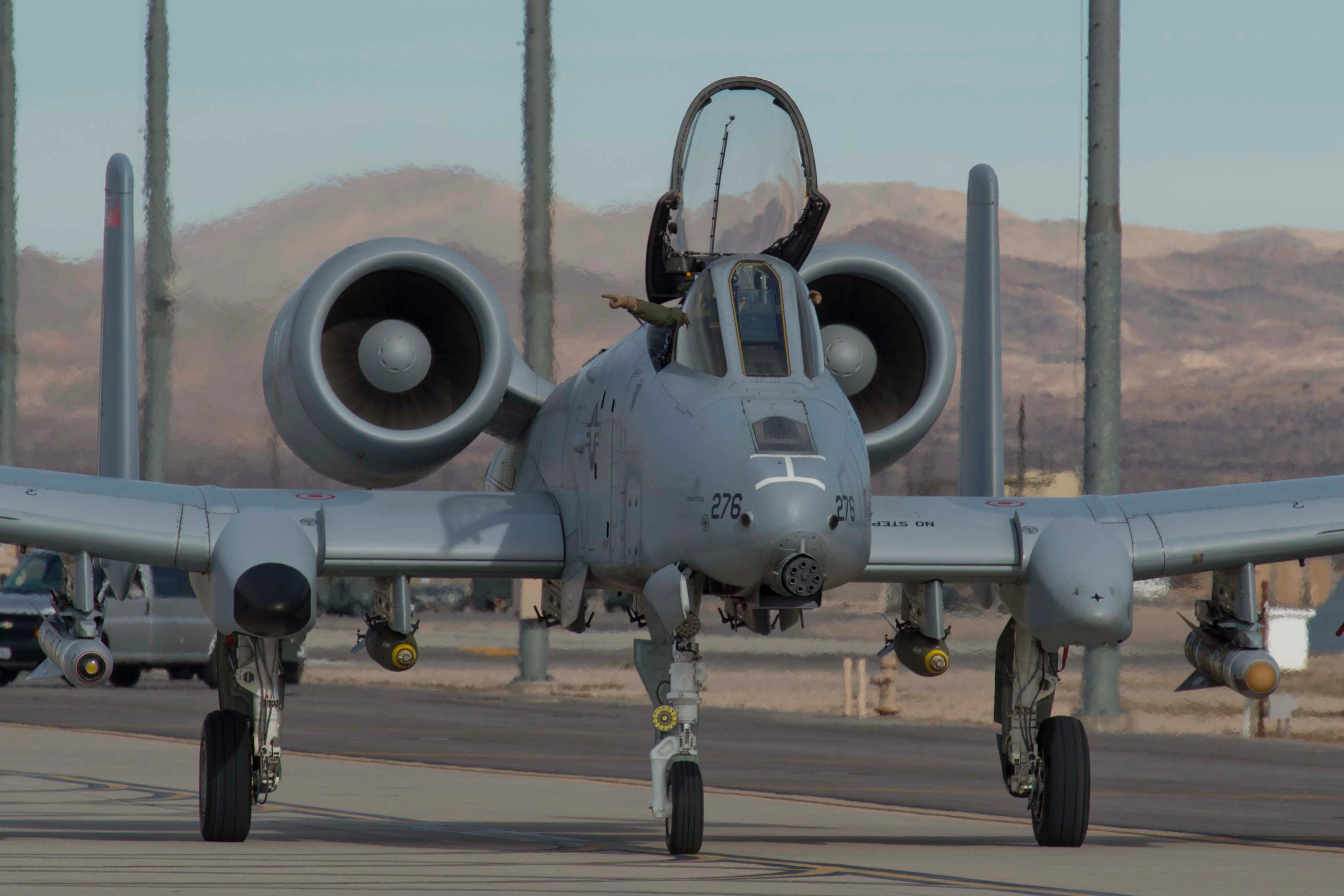
With the iconic attack jet now in the twilight of its career, there are signs that the A-10C Warthog is set to deploy to the Middle East region for Operation Epic Fury. Such a deployment might well provide the combat swansong for the A-10, which the U.S. Air Force plans to retire for good by the end of the decade, if not sooner. The development comes as U.S. President Donald Trump ramps up his threats against Iran, including threatening to eliminate its civilian infrastructure and oil-producing capability.
Publicly available flight-tracking data today suggested that the Air Force was preparing to send a flight of A-10s across the Atlantic, with three KC-135 Stratotankers already airborne from RAF Mildenhall in England, apparently to meet TABOR 71, a flight of eight Warthogs headed in the opposite direction. Two of those jets were spares, according to unverified reports based on radio traffic.
Meanwhile, there are indications that as many as 20 A-10Cs have gathered at Portsmouth International Airport at Pease, New Hampshire, which is a standard jump-off point for a flight across to RAF Lakenheath in England, which has seen a major influx of U.S. combat jets in recent weeks.
Unconfirmed reports suggest these Warthogs are drawn from the 124th Fighter Wing of the Idaho Air National Guard at Gowen Field, and from the Michigan Air National Guard’s 127th Wing at Selfridge Air National Guard Base.
A-10Cs from the 190th Fighter Squadron at Gowen Field, Idaho, prepare for takeoff at Nellis Air Force Base, Nevada, taking part in a Green Flag exercise, designed to better train pilots in their role to support ground forces. U.S. Air National Guard Photo by Tech. Sgt. Sarah Pokorney/released Master Sgt. Sarah Pokorney
As we have discussed, A-10s are already helping dismantle Iran’s Navy, operating in the region in their long-standing, if often overlooked, maritime role. This is part of broader efforts by the U.S. military to find ways to reopen the critical waterway to normal maritime commerce, which has ground to a virtual halt in the face of Iranian attacks on shipping and its declaration that the strait is closed.
Having more A-10s in theater would provide additional capability, were the U.S. military to occupy or blockade Iran’s strategically vital Kharg Island, a prospect that we have discussed in detail in the past. A-10s could also provide valuable close air support for commando raids deeper into Iran.
A U.S. Air Force A-10C prepares to refuel from a KC-135 Stratotanker aircraft over the U.S. Central Command area of responsibility during Operation Epic Fury, March 9, 2026. U.S. Air Force photo U.S. Central Command Public Affa
UPDATES:
A U.S. move against Kharg Island, as well as a potential commando raid to seize Iranian uranium, are two options apparently now on the table.
In his latest threat against Iran, President Donald Trump declared that the U.S. military will “obliterate” Iran’s Kharg Island if a deal is not reached shortly.
In a post on Truth Social, Trump today claimed the United States is in “serious discussions” with a “new and more reasonable regime” to end the war, but made direct threats against Kharg Island, as well as Iranian civilian infrastructure and oil-producing capability:
Great progress has been made but, if for any reason a deal is not shortly reached, which it probably will be, and if the Hormuz Strait is not immediately “Open for Business,” we will conclude our lovely “stay” in Iran by blowing up and completely obliterating all of their Electric Generating Plants, Oil Wells and Kharg Island (and possibly all desalinization plants!), which we have purposefully not yet “touched.”
President Donald Trump said Monday that the U.S. will “completely” obliterate Iran’s electric generating plants, oil wells and Kharg Island if the strategically vital Strait of Hormuz is not “immediately” reopened and a peace deal is not reached “shortly.”
In the same Truth Social post, Trump also raised the possibility of the United States declaring victory in the conflict without Iran reopening the Strait. This could come along with destroying much of Iran’s civilian infrastructure, including the Iranian people’s access to electricity and possibly clean drinking water.
In this message Trump:
– Signals the U.S. could end Iran mission without reopening Strait
– Threatens war crimes under international law
– Expects deal with Iran shortly despite mere days of intermediary-led message passing
Over the weekend, Trump said his “preference would be to take the oil” in Iran and that U.S. forces could seize the regime’s export hub on Kharg Island. Trump told the Financial Times that “my favourite thing is to take the oil in Iran, but some stupid people back in the US say: ‘why are you doing that?’” He also said: “Maybe we take Kharg Island, maybe we don’t. We have a lot of options.”
Trump to FT:
Maybe we take Kharg Island, maybe we don’t. We have a lot of options.
Over the weekend, the New York Timesreported that around a hundred U.S. special operations forces have arrived in the Middle East, joining thousands of Marines and Army paratroopers already in the region.
“The commandos, including Army Rangers and Navy SEALs, have not yet been assigned specific missions,” the report stated, citing unnamed U.S. officials, although a mission to try to seize Kharg Island is certainly a possibility.
Several hundred U.S. Special Operations forces, including Army Rangers and Navy SEALs, sent to Mideast to join thousands of Marines and paratroopers as Trump weighs ground operations against Iran w/@helenecooperhttps://t.co/Lcw9GnYHJY
Trump confirmed to Caitlin Doornbos of the New York Post that U.S. officials are negotiating with Iranian parliamentary speaker Mohammad Bagher Ghalibaf. The U.S. leader added that he expected to “find out in about a week” whether he is someone America can truly work with.
President Trump confirmed to me today that the US is negotiating with Iranian parliamentary speaker Mohammad Bagher Ghalibaf, saying we’ll “find out in about a week” whether he is someone America can truly work with.
On the nuclear issue, the Wall Street Journal is reporting that Trump is weighing up a military operation to extract nearly 1,000 pounds of uranium from Iran, citing unnamed U.S. officials.
TWZ had previously explored the possibility of U.S. and/or Israeli authorities launching a special operations ground raid to extract or otherwise neutralize Iran’s stockpile of enriched uranium. Given that this nuclear material is understood to be stored in deep underground bunkers, it is far from easy to achieve this objective from the air alone. Israel has demonstrated its ability and willingness to carry out complex raids on subterranean facilities, but any such operation would still face immense risks and uncertainties.
NEW; President Trump is weighing a military operation to extract nearly 1,000 pounds of uranium from Iran, according to U.S. officials, a complex and risky mission that would likely put American forces inside the country for days or longer. https://t.co/R87wGm2ukF
In related news, satellite imagery dating from last June was published over the weekend, suggesting that Iran might have moved at least some of its highly enriched uranium to a secure base to protect it from airstrikes.
Over the weekend, @lemondefr and @francoisdm published a VERY interesting image of what appears to be some of Iran’s highly enriched uranium enroute to a secure base in Isfahan last June. Amidst all this talk of seizing Iran’s uranium, it’s worth discussing…🧵 pic.twitter.com/hvmWNEsjq6
Using Pakistan as a mediator, the United States provided Iran with a 15-point ceasefire proposal last week, including reopening the Strait of Hormuz — which carries around 20 percent of the world’s oil supply — and curbs on Iran’s nuclear programs. So far, Tehran has rejected the proposals. U.S. Secretary of State Marco Rubio also toldAl Jazeera that another condition is that Iran must stop producing drones and missiles of the kinds used in combat in recent weeks.
For its part, Tehran wants an end to Israeli attacks on Iranian allies in the region as part of any negotiated deal. There are also suggestions that Iran is pushing for reparations for war damage and even the removal of U.S. military bases from the Middle East.
Speaking to journalists, Esmaeil Bagaei, an Iranian diplomat who is the current spokesperson for the Ministry of Foreign Affairs, said Iran had received messages via intermediaries indicating U.S. willingness to negotiate, but said that the American proposals were “unrealistic, illogical, and excessive.”
“Our position is clear. We are under military aggression. Therefore, all our efforts and strength are focused on defending ourselves,” Baghaei added.
Iranian Foreign Ministry spokesman Esmail Baghaei told reporters that the demands in the U.S. 15-point proposal were “excessive, unrealistic and unreasonable.” His comments directly contradicted Mr. Trump, who said last week that Iran had agreed to most of the points.…
Trump claims Iran will allow 20 oil tankers to pass through the Strait of Hormuz starting Monday morning and continuing over the next few days as a “present.”
“They gave us 10 [ships through the strait],” he said, in reference to earlier claims. “Now they’re giving 20…”
Trump added that Mohammad Bagher Ghalibaf, Iran’s parliamentary speaker, had authorised the additional tankers.
“He’s the one who authorised the ships to me,” Trump told the Financial Times. “Remember I said they’re giving me a present? And everyone said: ‘What’s the present? Bullshit.’ When they heard about that they kept their mouth shut and the negotiations are going very well.”
U.S. President Donald J. Trump tells reporters aboard Air Force One that Iran has given the United States a “tribute” of 20 oil tankers that are expected to begin crossing Monday morning through the Strait of Hormuz. pic.twitter.com/IBOt9OkumU
Scott Bessent, the U.S. Secretary of the Treasury, told Fox News today that “We are seeing more ships pass daily… but over time, the U.S. is going to retake control of the straits, and there will be freedom of navigation, whether through U.S. escorts or a multinational escort.”
Sec Scott Bessent on the Strait of Hormuz:
“We are seeing more ships pass daily… but over time, the U.S. is going to retake control of the straits, and there will be freedom of navigation, whether through U.S. escorts or a multinational escort.” pic.twitter.com/XwdHKRhwzT
The Economistreports that Iran, whose tankers continue to operate through the strait, is now earning nearly twice as much from oil sales each day as it did before the conflict began.
Absolutely remarkable. “Iran is now earning nearly twice as much from oil sales each day as it did before American and Israeli bombs started falling on February 28th. It may be pummelled on the battlefield, but the regime is winning the energy war.” https://t.co/Nnky62LjAW
PHOTO OF THE DAY: Tehran was loading five (5!!!) oil tankers simultaneously yesterday at Kharg Island, as the US-Israel-Iran war enters into its fifth week.
Based on information provided by U.S. government officials and Wall Street analysts, Bloombergpredicts that oil prices could continue to surge, up to unprecedeted $200 per barrel.
Elsewhere in the oil war, Iranian parliamentary speaker Mohammad Bagher Ghalibaf took to X to argue that pre-market statements from the White House or messages on the Truth channel are “often just a setup for profit-taking,” something that appeared to come true hours later.
The conflict expanded further over the weekend, bringing with it the prospect of additional disruption to commercial shipping, with the entry into the war of the Houthis in Yemen.
Houthi forces, close allies of Iran, said on Saturday they had fired a salvo of ballistic missiles at “sensitive Israeli military sites” and that they would continue military operations until the “aggression” came to an end on all fronts. Israel said today that it had intercepted two drones originating in Yemen.
There is now the risk that the Houthis could attempt to close the narrow Bab al-Mandab strait to maritime traffic. This would effectively close off the Red Sea to shipping, just as Iran has in effect shut the Strait of Hormuz.
The port in the northern Israeli city of Haifa was struck today, apparently by debris from an intercepted missile. Videos posted to social media showed part of the Bazan oil refinery there on fire. Israel’s fire and rescue service confirmed the incident, but there were no immediate reports of any casualties or damage to production facilities.
The Wall Street Journal is among those reporting that the oil refinery was hit by an Iranian missile.
The United Arab Emirates says its air defenses have intercepted 11 ballistic missiles and 27 drones launched from Iran today.
Overall, the defense ministry of the UAE says it has engaged 1,941 drones and 440 missiles since the war began.
“The Ministry of Defense affirmed that it remains fully prepared and ready to deal with any threats and will firmly confront anything that aims to undermine the security of the country, in a manner that ensures the protection of its sovereignty, security, and stability and safeguards its interests and national capabilities,” it said in a statement shared on social media.
UAE air defences engaged 11 ballistic missiles and 27 UAV’s.
The UAE air defences on 30th March 2026 engaged 11 ballistic missiles and 27 UAV’s launched from Iran.
Since the start of the blatant Iranian attacks, UAE air defences have engaged 425 ballistic missiles, 15 cruise… pic.twitter.com/l7vQknja23
Meanwhile, the Bahrain Defense Force (BDF) has also provided a tally of its air defense operations since the conflict began on February 28. The BDF says its air defense units have now intercepted and destroyed 398 drones and 182 missiles launched by Iran.
Oman’s port of Salalah was hit by a drone over the weekend, leaving one worker injured and causing minor damage to the facility. The Danish shipping firm Maersk announced today that operations at the port would restart from Tuesday.
Maersk said the damage was “limited” and that the port’s management would take “necessary measures” to progressively build up to full capacity.
Two kamikaze drones struck Salalah Port in Oman today, causing damage to a single container gantry crane.
So far, Oman’s keeping quiet and Iran hasn’t stepped up to claim the hit either. pic.twitter.com/E66GQNI02E
Another ballistic missile launched from Iran has been shot down after it entered Turkish airspace. Turkey’s defense ministry confirmed that the missile had been brought down by undisclosed NATO air and missile defenses deployed in the eastern Mediterranean.
This is the fourth such incident since the start of the Iran war, following three earlier interceptions by NATO air defense systems earlier this month.
BREAKING: Turkish MoD:
A ballistic munition, determined to have been launched from Iran and to have entered into Turkish airspace, has been neutralized by NATO air and missile defence assets deployed in the Eastern Mediterranean. pic.twitter.com/FnMfGJrKdA
Footage has emerged showing a British Army air defense team shooting down an Iranian attack drone over the Middle East with a Martlet Lightweight Multirole Missile (LMM). At least four RAF Regiment gunners have received ace status, shooting down five or more drones, the U.K. Ministry of Defense has said. Traditionally, an aerial ace applies to a pilot who has shot down five or more crewed aircraft in air-to-air combat.
Footage of a British air defense team shooting down an Iranian attack drone over the Middle East with an LMM Martlet SAM.
At least four RAF Regiment gunners have received ace status, shooting down 5 or more drones, while UK forces have shot down dozens of drones in the region. pic.twitter.com/HLKeHmQlc9
The Israeli Defense Forces (IDF) claims it has struck a university in Tehran run by Iran’s Revolutionary Guards Corps (IRGC), saying that the institution was used for advanced weapons research.
“In recent days, one of the IRGC’s central military infrastructure sites was struck, located within the compound of Imam Hossein University — the IRGC’s primary military academic institution, which also serves as an emergency asset for the regime’s military bodies,” an Israeli military statement said.
Israel’s military says that it had struck a university in Tehran run by Iran’s Islamic Revolutionary Guard Corps (IRGC), claiming the institution was used for advanced weapons research.https://t.co/NsNfly8fUh
Iran’s Ministry of Energy also claims that attacks were made on electricity infrastructure in the Tehran province, parts of the city of Tehran, and Alborz province, leaving them without electricity.
Iran’s Ministry of Energy has said following “attacks on electricity infrastructure in Tehran province, parts of the city of Tehran and Alborz Province”, electricity has been cut off in those areas and efforts are ongoing to resolve this matter, according to Iranian outlets. https://t.co/mcX4SVBVEG
— Ghoncheh Habibiazad | غنچه (@GhonchehAzad) March 29, 2026
On its second front, Israel has launched a new wave of strikes targeting Beirut’s southern suburbs — the first since Friday in the area, which is now largely deserted. Israel issued a warning for people in the Hezbollah stronghold to leave ahead of the latest strikes.
The Israeli military is also hitting targets in Lebanon’s south, one of which targeted an army checkpoint and killed a Lebanese soldier.
Lebanon was dragged into the conflict when the Iran-backed armed Hezbollah group began firing rockets at Israel on March 2, in revenge for the killing of Iran’s supreme leader at the start of the war.
Israel is conducting large-scale air strikes across Lebanon as well as a ground offensive in the south.
Spain has said it will not allow U.S. military aircraft involved in attacks on Iran to use its airspace.
“We don’t authorise either the use of military bases or the use of airspace for actions related to the war in Iran,” the country’s defense minister, Margarita Robles, told reporters in Madrid this morning.
Spanish newspaper El Paísreported the airspace closure, which forces U.S. military aircraft to bypass Spain other than in emergency situations, in which case the aircraft will be permitted to transit or land.
“We have denied the United States the use of the Rota and Morón bases for this illegal war. All flight plans involving operations in Iran have been rejected. All of them, including those for refuelling aircraft,” Spanish Prime Minister Pedro Sánchez said last week.
Morón Air Base near Seville serves as a key refueling and logistics hub for European and Middle Eastern operations by the U.S. Air Force. Naval Station Rota is another joint facility used by the U.S. Navy and also falls under Spanish sovereignty.
Israel apparently plans to invite the United States to relocate some of its bases in the region to Israel — and to establish new bases in the country — after the current conflict ends, Channel 12reports, citing unnamed security sources.
The security establishment sees an opportunity to “reshape the map” of U.S. military positioning in the Middle East, the report says, given that US forces are already present here now and in light of evolving security challenges.
Israel, for the first time, is planning to propose to the Trump Administration the development of U.S. military bases on its soil, including the construction of new bases and the relocation of existing military bases in countries across the Middle East, senior officials tell… pic.twitter.com/nZVM65cGON
Iran’s Revolutionary Guards Corps (IRGC) has now confirmed the death of Alireza Tangsiri, the IRGC naval commander who was killed in an Israeli airstrike last Thursday, according to a statement by the guards being carried in Iranian media.
According to the United States, Tangsiri oversaw the IRGC Navy’s testing of cruise missiles and sat on the board of a company that developed armed drones. Tangsiri had reportedly been leading Iran’s successful effort to effectively close the Strait of Hormuz.
The Islamic Revolution Guards Corps (IRGC) in a statement announced the martyrdom of the Commander of IRGC Navy Brigadier General Alireza Tangsiri and emphasized that the path of resistance will continue with strength. pic.twitter.com/RBJSJ8AqWQ
An Iraqi Air Force An-32 Cline turboprop transport was the victim of an apparent drone strike launched by Iran-backed militia. Last week, we reported on the apparent use of short-range kamikaze drones operated by militia to successfully target a U.S. military Black Hawk helicopter and a critical air defense radar at an American base in Iraq.
Iranian-backed militia drones managed to severely damage an Iraqi Air Force An-32B transport aircraft at Baghdad International Airport tonight pic.twitter.com/osdaqLoKdG
In a nod to Iranian attacks on high-end U.S. military hardware in the conflict, the nose of this Shahed-136 long-range one-way attack drone is marked with symbols denoting a U.S. Air Force E-3G Sentry radar plane — an incident you can read all about here, an AN/TPY-2 radar primarily associated with the Terminal High Altitude Area Defense (THAAD) anti-ballistic missile system, and an AN/MPQ-65 radar from a Patriot air defense system.
Peter Alexander, who covered Washington for NBC News for more than a decade, is leaving the network to join MS NOW, according to people familiar with his plans.
Alexander, 49, will serve as an anchor and chief national reporter for MS NOW. He will have a weekday program and also handle breaking news coverage throughout the day.
A 22-year veteran of NBC News, Alexander served as chief White House correspondent and co-host of the Saturday edition of “Today” with Laura Jarrett. He is among the most familiar faces in the White House briefing room.
Alexander told viewers at the end of his Saturday broadcast that he is departing NBC News but did not mention his new job. A representative for MS NOW declined comment.
MS NOW is the progressive-leaning cable channel formerly known as MSNBC. The network changed its name after it was spun off from Comcast into a new company called Versant.
After the split, MS NOW ended its relationship with NBC News. Journalists who worked on both MSNBC and NBC News had to chose which entity they would work for going forward.
Correspondents Jacob Soboroff and Ken Dilanian switched from NBC News to MS NOW. Data guru Steve Kornacki decided to stick with NBC News as he also has assignments at NBC Sports. Willie Geist, a co-host on MS NOW’s “Morning Joe,” is an exception as he continues to anchor NBC’s “Sunday Today.”
Alexander is the first NBC journalist to cross over to MS NOW since the split. His deal with Versant also gives him the opportunity to contribute to sports coverage on the company’s other cable properties, USA Network and the Golf Channel.
Alexander will anchor the 11 a.m. Eastern hour on MS NOW, succeeding Ana Cabrera, who is leaving the network when its daytime programming changes take effect in June.
Alexander joined NBC News after serving as an anchor on the network’s Washington station WRC.
He was White House correspondent from 2012 to 2014 during President Obama’s second term and returned to the assignment in 2018 to cover President Trump.
An aggressive questioner, Alexander has been chastised by Trump publicly over news conference questions that made him unhappy.
Dzeko has been a crucial player for his country since his international debut in 2007, and has 73 goals in 147 appearances – scoring every year for the past two decades.
Until as recently as last year he was still reaching double figures for goals at club level.
Last summer, he returned to Serie A to sign for Fiorentina and, at the time, dismissed suggestions he was slowing down with age.
“Age doesn’t matter, I’m not a write-off yet,” he said.
“Behind all this is the work that a 39-year-old has to do, even more than others. I feel good, we’re working hard, and this will bring us satisfaction later.”
That move did not quite work out and Dzeko soon found himself out of favour at the club, having failed to score in 11 Serie A games.
But a switch to Schalke in Bundesliga 2 in January has reinvigorated him – possibly at just the right time as the World Cup approaches – and he has scored six goals in eight games for the German side.
On what the future holds for him, Dzeko said recently: “I’ll listen to my body in the summer but at the moment, I still feel very good, and I still score goals.”
But if he does help his country qualify for the World Cup, it is very likely that conversation with his body will be delayed a little longer.
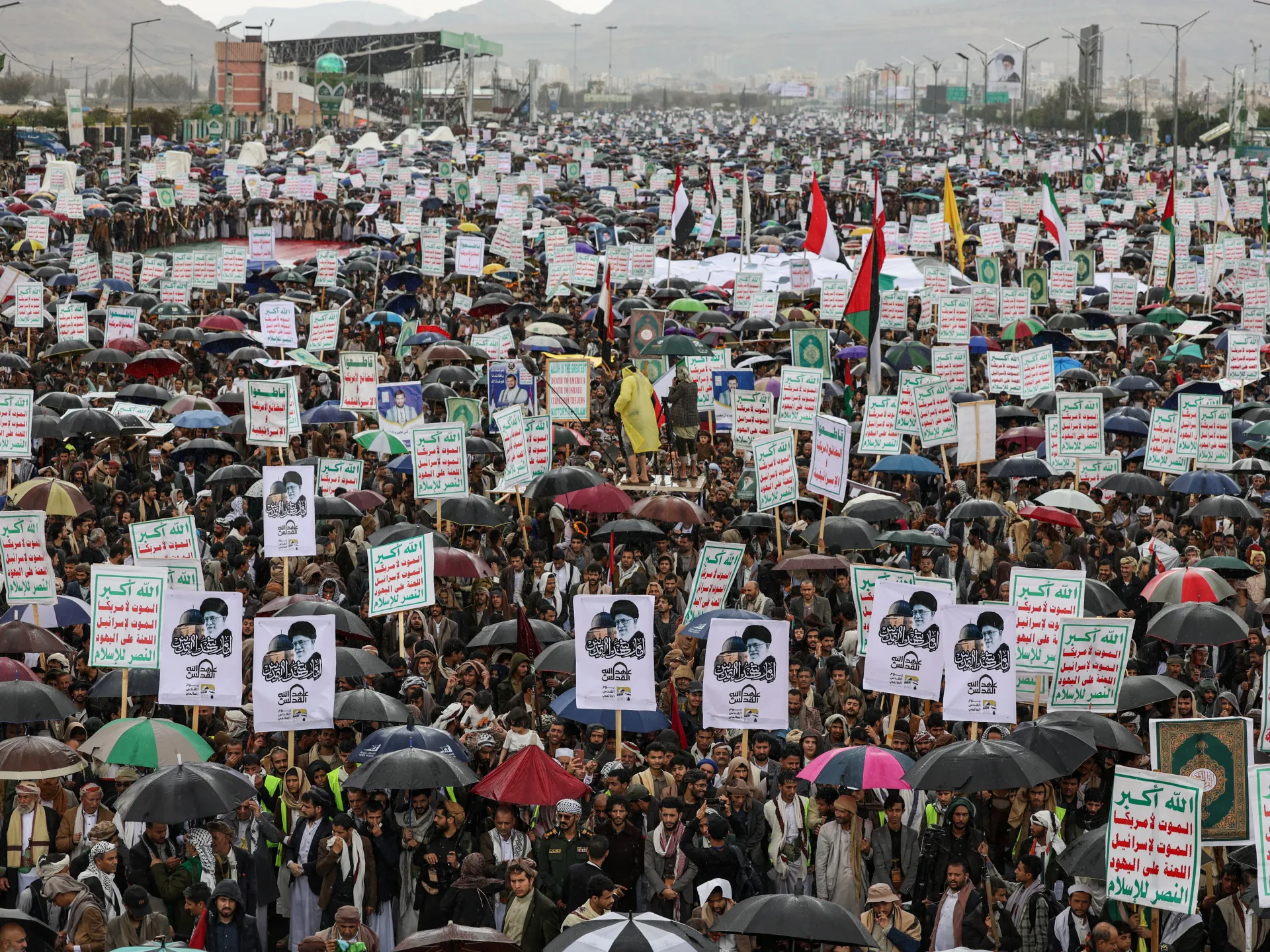
The Yemeni armed group says all options are on the table.
As the US-Israeli war against Iran drags on, Yemen’s Ansar Allah, or the Houthis, have stayed out of the conflict.
But that could change. They have said they consider themselves directly concerned and could take a position alongside Iran.
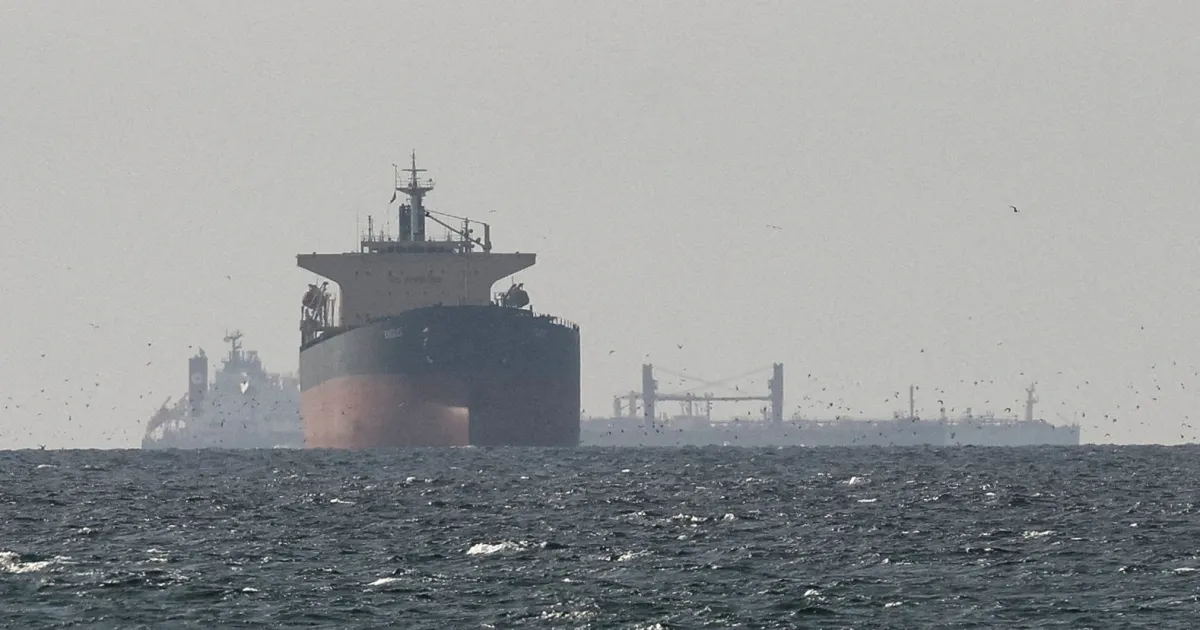
The armed group has attacked Israel and shipping in the Red Sea in recent years. If a new front opens up, global trade could be further disrupted in another maritime gateway. Shipping is already largely halted in the Strait of Hormuz, causing significant losses worldwide.
So, will the Houthis join the war? And what difference could that make for this volatile region?
Presenter: James Bays
Guests:
Farea al-Muslimi – research fellow in the Middle East and North Africa programme at Chatham House
Khaled Batarfi – political analyst who specialises in Saudi Arabian foreign policy
Rockford Weitz – director of the Fletcher Maritime Studies programme at Tufts University
Several European nations and Japan have issued a joint statement saying they would take steps to stabilise energy markets, a day after several strikes on energy facilities in the Gulf region sent oil and gas prices soaring amid the United States-Israel war on Iran.
The leaders of Britain, France, Germany, Italy, the Netherlands and Japan issued a joint statement on Thursday expressing their “readiness to contribute to appropriate efforts to ensure safe passage through the [Hormuz] Strait.”
Recommended Stories
list of 3 itemsend of list
They did not specify what those efforts may entail but urged for “an immediate comprehensive moratorium on attacks on civilian infrastructure, including oil and gas installations”.
The International Energy Agency (IEA) last week authorised a coordinated release of its members’ strategic petroleum reserves, the largest in its history, in an attempt to counter rising global energy prices. “We will take other steps to stabilise energy markets, including working with certain producing nations to increase output,” the statement said.
Markets have been hammered since the start of the war on February 28, with Tehran hitting sites across the Gulf and effectively closing the Strait of Hormuz, through which a fifth of global oil and gas flows.
European leaders have rejected demands by United States President Donald Trump to help ensure freedom of navigation in the Gulf’s key oil chokepoint by deploying warships as part of a naval coalition.
Thursday’s joint statement came ahead of a long-scheduled White House meeting between Trump and Japan’s Prime Minister Sanae Takaichi, aimed at burnishing the decades-old security and economic partnership between Washington and its closest East Asian ally.
US Treasury Secretary Scott Bessent said before the meeting on Thursday that he would expect that Japan, which gets 95 percent of its crude oil supplies from the Gulf, would want to ensure its supplies are safe.
Takaichi has sought to move Japan away from a pacifist constitution imposed by Washington after World War II, but with the Iran war unpopular at home, she has so far not offered to assist in clearing the Strait of Hormuz.
The Japanese prime minister told parliament on Monday that Tokyo had received no official request from the US, but was checking the scope of possible action within the limits of its constitution.
Soaring energy prices
Major economies have been scrambling to cushion the impact of soaring energy prices after the de facto closure of the Strait of Hormuz by Iranian forces.
QatarEnergy reported “extensive damage” from Iranian missiles in Ras Laffan, which produces about 20 percent of the world’s LNG supply and plays a major role in balancing Asian and European markets’ demand for the fuel.
The company’s CEO, Saad al-Kaabi, said Iran’s attacks damaged facilities that produce 17 percent of QatarEnergy’s LNG exports and that it would take three to five years to repair.
Qatar’s Prime Minister Mohammed bin Abdulrahman bin Jassim Al Thani said Iran’s claims that it is targeting US bases are “unacceptable and unjustified”, as the attack on Ras Laffan shows that it is targeting energy infrastructure that is vital for Qatar and the entire world.
Energy prices have soared and stocks sunk amid the region’s protracted instability, reigniting fears over global supplies and inflation as well as the likely damage to economic growth.
European gas prices were up 25 percent and Brent crude oil futures nearly 6 percent at $113 at 13:00 GMT on Thursday after briefly surging about 10 percent. European gas prices have leapt by over 60 percent since the war began on February 28.
James Meadway, co-director of the Verdant economic policy think tank, said this would not be “a temporary blip” in the prices of oil and gas.
“In addition to the Strait of Hormuz being blocked, we now have a severe disruption to the basic production of oil and gas,” Meadway told Al Jazeera.
“At this point, this looks like it will be a significant rise in those prices stretching off into the distance.”