john cornyn

Trump says anti-weaponization fund in IRS settlement is ‘dead’ even as he defends it

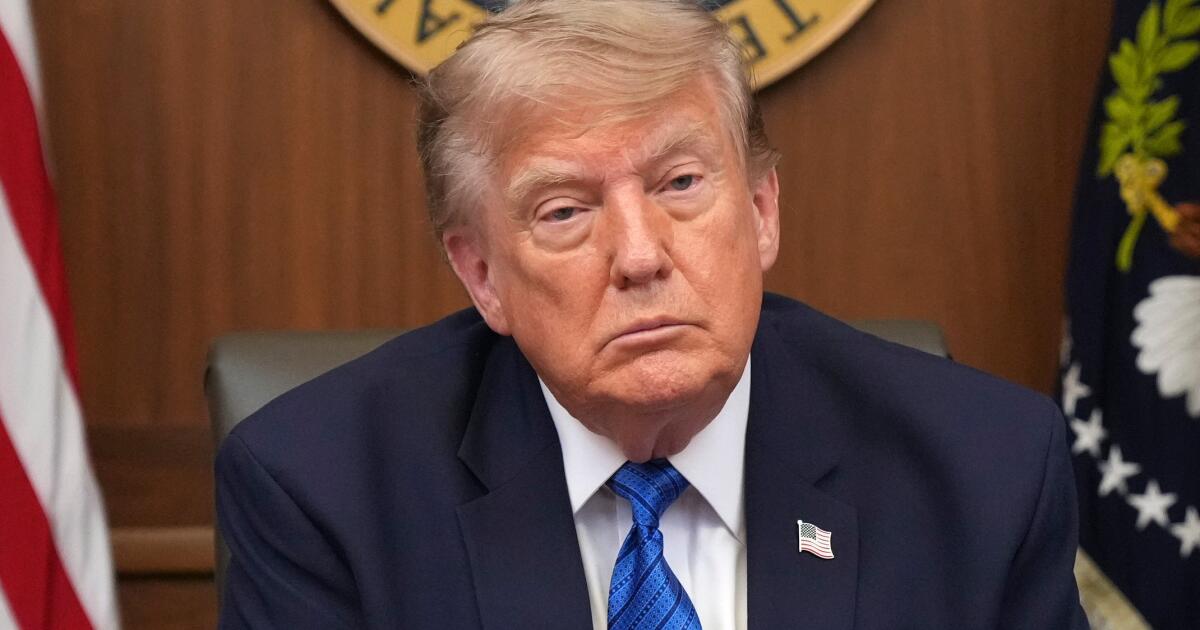
President Trump said Friday that his $1.8 billion anti-weaponization fund is “dead” while also continuing to defend it, further complicating his administration’s negotiations with two Republican senators who are blocking his attorney general nominee in protest.

Trump told reporters at Camp David on Friday morning that administration officials had “agreed not to have a fund” that compensates his political allies, yet made clear that he disagrees with that decision.

The comments came hours after an early morning social media post in which Trump said people who had been prosecuted by the Justice Department — many of them for their involvement in the violent Jan. 6, 2001, attack on the Capitol — “are suffering still, many ruined, and I felt that they should be given compensation for what has been done to them.”

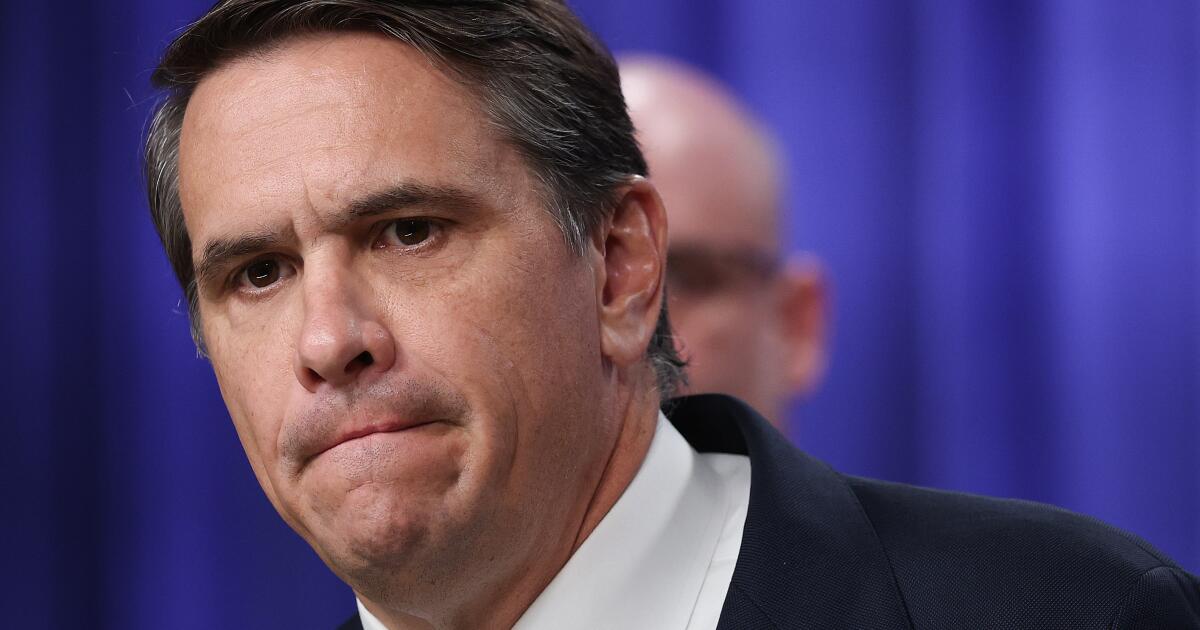
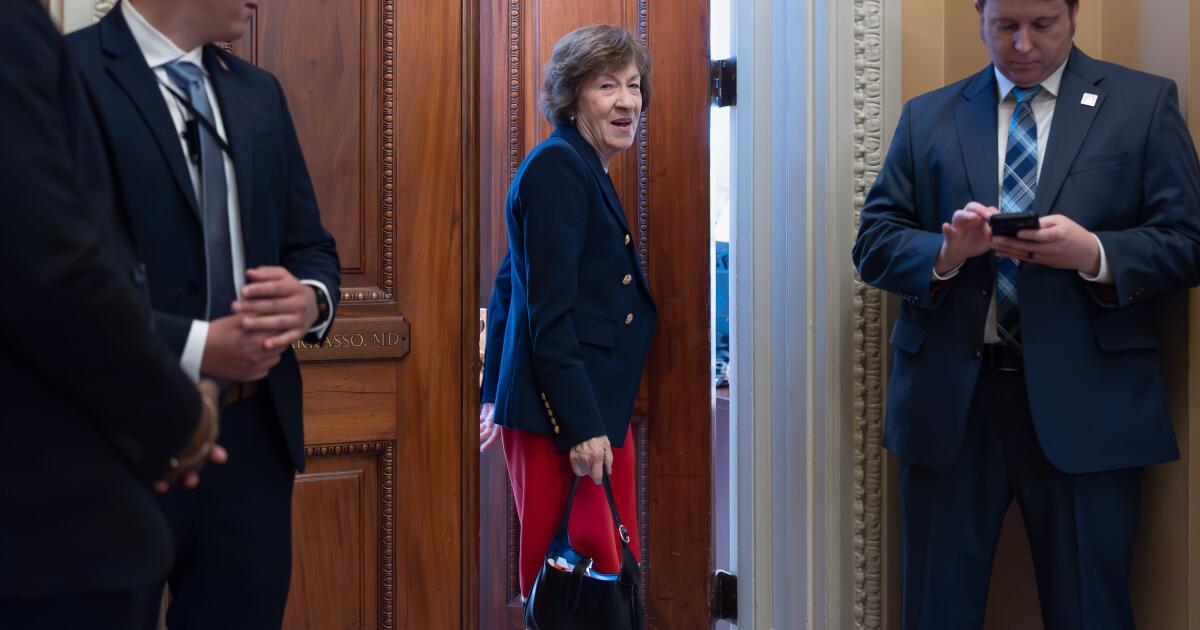
Trump’s reluctant declaration that the fund won’t be created came as Republican Sens. John Cornyn of Texas and Thom Tillis of North Carolina, both members of the Senate Judiciary Committee, say they won’t support Todd Blanche’s nomination for attorney general until they see that promise in writing. They have been working for weeks with the White House and Blanche, who is now the acting attorney general, to produce a document to that effect, but both senators have said they aren’t satisfied so far.

“The President made it clear today that the so-called Anti Weaponization Fund is still alive, which is exactly why we are attempting to formally end it,” Tillis said after Trump’s initial social media post.

Trump said in his post that Blanche should be immediately confirmed and is a “pawn in this whole thing.”

Cornyn, Tillis want promises in writing

Blanche said at a hearing two months ago that the anti-weaponization fund would not move forward after Republican senators revolted and held up an immigration funding bill.

But Tillis, who is retiring when his term ends in January, and Cornyn, who lost reelection this year after Trump endorsed his primary opponent, said they want to ensure that the White House doesn’t reverse course, especially as Trump continues to argue that a fund is needed.

The Justice Department has provided the senators with language that says Blanche’s May 18 order establishing the “Anti-Weaponization Fund” is “rescinded and shall have no force or effect,” according to a document reviewed by The Associated Press.

Cornyn and Tillis have said they also want some clarifications on a separate piece of the settlement that would grant Trump and members of his family immunity from tax audits. Cornyn said this week that it was his understanding that the audits could extend to more than 100 different Trump organization subsidiaries into the future.

“Todd Blanche said it was limited to the parties to the litigation — and it was retrospective, not prospective,” Cornyn said. “And all we’re doing is asking them to put that in writing.”

Blanche nomination is delayed in the Senate

The Judiciary Committee postponed a vote on Blanche’s nomination that had been scheduled for Thursday morning after Tillis and Cornyn said they needed more from the administration before they could provide the necessary votes.

After the meeting was delayed, Trump said in a social media post that he might pull Blanche’s nomination and resubmit it after Cornyn and Tillis leave office next year. But the two sides continued to negotiate through Thursday afternoon, when Blanche, Cornyn and Tillis met on Capitol Hill.

On Friday, a person familiar with the negotiations said talks had been positive, but the senators were still awaiting a new offer from the Justice Department. The person requested anonymity to discuss the private negotiations.

The two senators have repeatedly said the Justice Department seemed interested in reaching an agreement, but the White House wouldn’t budge even to aid the confirmation of Trump’s loyal former personal attorney, who has aggressively pursued the administration’s priorities as acting attorney general.

“I think as far as Blanche and the Department of Justice, we were pretty much on the same page,” Cornyn said Thursday. “But then when the president got wind of it, he wasn’t willing to go along with it.”

Tillis said Blanche “has been forthright, thoughtful and patient” but attributed the holdup to an “incompetent personal advisor” to the president, even as Trump himself continued to advocate for the fund.

Behind the scenes, Trump legal adviser Boris Epshteyn is being blamed as an obstacle to an agreement that would let Blanche move forward, according to three people who have direct knowledge of the discussions and requested anonymity to discuss them.

Saying the AP’s “sources are wrong,” White House communications director Steven Cheung said “anyone trying to assign blame to the President or his team has no earthly idea of what is going on and clearly is trying to deflect from the issue at hand — Todd Blanche will be an exceptional Attorney General and he should be confirmed immediately.”

Also on Friday, Trump’s attorneys notified a court it would appeal a judge’s scathing ruling that characterized the settlement of the president’s lawsuit against the IRS as an improper exercise in self-dealing. The judge in her order earlier this month referred one of Trump’s attorneys for potential disciplinary action and criticized Blanche’s involvement in the settlement, given his prior representation of Trump.

Blanche has said he disagrees “with the judge’s insinuations” about him.

Settlement fund could have benefited Jan. 6 rioters

Even as they are usually deferential to Trump, a number of Republican senators have expressed strong objections to the settlement.

“The criminals who assaulted police officers and defiled our nation’s Capitol are not ‘great American patriots’ who are ‘victims of government abuse,’” Tillis said, echoing Trump’s comments about the rioters who could potentially have received payouts. On his first day back in office, Trump pardoned more than 1,500 people who had been charged in the attack.

Republican Sen. John Kennedy of Louisiana said Thursday that the majority of Senate Republicans aren’t comfortable with the settlement fund.

“Blanche said it’s dead, and he testified that it’s not coming back,” Kennedy said. “But for whatever reason, somebody didn’t want to put it in writing.”

Jalonick, Kim and Richer write for the Associated Press. AP writers Eric Tucker and Lisa Mascaro contributed to this report.
Source link

Blanche to face questions about his independence at attorney general confirmation hearing

The Senate confirmation hearing Wednesday for Todd Blanche, President Trump’s pick for attorney general, will be a referendum on far more than his individual merits.

Blanche, the acting attorney general, served as Trump’s defense attorney before taking office and has been closely linked to many of the most consequential — and controversial — issues that have dominated the first two years of Trump’s second term.

Blanche is set to appear before the Senate Judiciary Committee, which will decide whether to approve his nomination and send it to the full Senate for a confirmation vote. The committee hearing will continue Thursday.

“I would expect committee Democrats to treat Mr. Blanche’s hearing as an opportunity to conduct oversight of the Department of Justice,” said Phil Brest, president of the American Constitution Society, a progressive legal nonprofit and a former top Democratic staffer on the committee. “It’s a test of the Senate’s willingness to probe the department’s operations and to actually serve as a check on the department and the administration more broadly.”

Democrats on the committee are expected to push Blanche on a host of topics, including the $1.8-billion “anti-weaponization fund” that critics derided as a slush fund for the president’s allies, the Justice Department’s rollout of the so-called Epstein files, and the department’s prosecution of several perceived enemies of Trump, notably former FBI Director James Comey.

“While deploying the Justice Department as a shield for the president and his cronies, Blanche has also used our top law-enforcement agency as a sword against Trump’s political opponents,” said Sen. Dick Durbin (D-Ill.), the ranking Democrat on the committee last month. “The independence of DOJ has been decimated under Blanche’s authority.”

Blanche was confirmed by the Senate as deputy attorney general in March, 2025, and was elevated to his current role after Atty. Gen. Pam Bondi was fired in April.

More critical to the success of Blanche’s nomination will be whether he can win the support of two lame-duck Republican senators, Thom Tillis of North Carolina and John Cornyn of Texas, who expressed some reservations about Blanche soon after his nomination was announced.

Cornyn raised concern about Blanche’s independence from Trump, while Tillis said Blanche’s stance on protesters who violently stormed the U.S. Capitol on Jan. 6, 2021, would be critical to his consideration.

Some of those Jan. 6 protesters were expected to be the beneficiaries of the $1.8-billion fund announced as part of a settlement to a lawsuit Trump and his sons and business brought against the IRS.

In a scathing ruling this week, the federal judge wrote that the lawsuit was improper and recommended sanctions against two Justice Department attorneys who worked on the case, though not Blanche himself.

Cornyn told Semafor on Tuesday that the ruling raised a number of issues, including “the potentially collusive nature of the lawsuit.”

He has said previously that he will hold off on making a decision about whether to approve Blanche until after the hearing.

Tillis, meanwhile, told CNN’s Manu Raju on Tuesday that the weaponization fund would need to be completely off the table for him to support Blanche’s nomination.

Trump touted Blanche’s record ahead of the hearing.

“Todd Blanche is doing a PHENOMENAL job as Acting Attorney General of the United States,” the president wrote on Truth Social. “He is a great lawyer, always very fair, and every Republican Senator should vote to CONFIRM Todd Blanche, ASAP!”

Sen. Lindsey Graham’s death means that Republicans currently only enjoy a one-seat majority, but a replacement for Graham on the committee could be in place before it votes on whether to move his nomination to the Senate floor, which will likely come two weeks after the hearing.

Blanche, 51, spent 12 years working for the U.S. attorney’s office for the Southern District of New York, working largely on drug and violent crime cases, and rose to the level of co-chief of the district’s White Plains division.

He left the office in 2014 for private practice and joined the prominent law firm Cadwalader, Wickersham & Taft in 2017 as a partner. He left the firm in 2023 and went independent after other partners expressed concern when he took Trump on as a client.

Blanche went on to represent Trump in several criminal matters, including the New York case about hush money payments to porn star Stormy Daniels, and cases brought by Special Counsel Jack Smith about Trump’s alleged efforts to block the transfer of power after the 2020 presidential election and his alleged retention of classified documents.

He listed all three as among the 10 most significant cases of his career in the questionnaire he completed ahead of the hearing, along with his work at the Justice Department on a lawsuit challenging the construction of a new White House ballroom.

A group of more than 1,200 former Justice Department attorneys wrote a letter opposing Blanche’s nomination, asserting that his leadership has resulted in mass departures of career staff. That has “meant that much of the department’s vital work isn’t being done, or isn’t being done as well – leaving communities less safe, Americans’ rights less protected, and our national security more vulnerable,” the lawyers wrote.

Former Justice Department pardon attorney Liz Oyer is scheduled to testify as a witness for Democrats on Thursday. She has said she was fired for refusing to recommend the restoration of actor Mel Gibson’s gun rights.

Oyer will be joined Thursday by Dani Bensky, one of many victims of the deceased sex abuser Jeffrey Epstein who has criticized Blanche’s handling of the release of the so-called Epstein files — millions of pages of records detailing the Justice Department’s investigations into Epstein’s crimes.

Numerous victims have said that their names and other sensitive information were not properly redacted in the files and criticized Blanche and the department for failing to investigate Epstein’s potential co-conspirators.

Blanche has also come under criticism from survivors of Epstein’s abuse for the interview he conducted in July, 2025, with Epstein accomplice Ghislaine Maxwell, who is serving a 20-year prison sentence for her role in facilitating and participating in Epstein’s abuse.

Days after their interview, Maxwell was moved from her prison in Florida to a minimum-security prison in Texas.

Source link

Defying Trump ended some GOP careers. It could help Susan Collins in Maine

This election year is déjà vu for Sen. Susan Collins — the Maine Republican is running for reelection as Democrats pin their hopes on a new candidate to defeat her. Last time, it was state lawmaker Sara Gideon. This time, it’s combat veteran and oyster farmer Graham Platner.

But Collins has proved to be a hard target for Democrats over the years — even for candidates without the baggage of Platner, who has faced criticism for his relationships with women, inflammatory online posts and a previous tattoo recognized as a Nazi symbol. Collins is seeking her sixth term with sky-high name recognition, a record-breaking run of consecutive Senate votes and a history of bringing back federal funding for her state for years.

She is also the rare Republican who sometimes can boost her own popularity back home by keeping her distance from President Trump, and she has perfected that delicate dance even as his tightening grip on the party has cost two of her Senate Republican colleagues their reelection.

Sens. John Cornyn of Texas and Bill Cassidy of Louisiana lost their primaries when facing Trump-endorsed opponents. But despite the president’s complaints about Collins, he did not campaign against her. Years of practice have made her adept at staying close — but not too close — to the president when it is politically advantageous, and moving away when showing an independent streak is helpful.

“She’s shown time and time again where her state’s electorate is. She understands what’s too far, she understands where she needs to be,” said political consultant Matt Mackowiak, who worked for Cornyn’s failed reelection campaign. Trump endorsed Cornyn’s opponent, Texas Atty. Gen. Ken Paxton.

The road to Senate control goes through Maine

The Democrats need to flip four seats to take control of the Senate in November and hope that Trump’s falling approval ratings and the war in Iran — as well as its subsequent effect on oil prices and the economy — could buoy their chances. Maine is among the top targets, along with Alaska, Ohio and North Carolina.

Platner wants to make the case that Collins isn’t as independent of Trump as her reputation suggests — repeatedly noting that she allowed his Supreme Court nominations to go through, which in 2022 led to the overturning of Roe vs. Wade, a landmark 1973 decision that legalized abortion, among other major issues.

“Susan Collins may have started her career decades ago in Washington with good intentions, but she has become just as spineless and corrupt as the establishment she now serves,” Platner said at a victory party on Tuesday.

Platner supporters are ready for change, said John Keenan, of Sullivan, Maine.

“I think Maine has grown tired of the same old system,” he said. “And putting youth into the campaign, with new instead of a rubber stamp, is very refreshing.”

Republicans have already launched their campaign in support of Collins. The National Republican Senatorial Committee posted a pro-Collins video on the social media channel X on Tuesday that resembled a 1980s video game. It stated that Collins “has brought more than $1.5 billion back to Maine” and that Platner “spent time as a kid at a $70,000 a year prep school in Connecticut.”

Trump has often criticized Collins — but not lately

Even as she faces Platner in November, Collins may have to stay wary of Trump. The president has spent years singling her out for daring to occasionally defy him on some issues.

However, he’s refrained from doing so more recently — especially as Collins failed to draw a credible challenger and cruised to a Republican primary victory.

The White House declined to comment. Political advisors close to Trump, however, said the president understands how critical it is that Republicans maintain control of Congress after November, which requires accommodating Collins. Trump understands the need to avoid a Republican wipeout like 2018’s “blue wave” midterms that saw Democrats flip the House and derail much of the last two years of his first-term plans.

“Senator Susan Collins represents the people of Maine first and foremost and has proven herself to be a dedicated public servant,” said Republican National Committee spokesperson Kristen Cianci in a statement.

Collins spokesperson Blake Kernen said the senator “has worked with five different Presidents throughout her Senate tenure, and has never agreed with any of them on every issue.”

“When she agrees with an effort, she will support it; when she disagrees, she does not hesitate to speak up for what she believes is the right outcome for Maine and for America,” Kernen said in a statement.

Other Republicans ran into trouble with Trump

That didn’t work out for some Republican senators.

Cornyn was among his party’s top voices, rising through the ranks after joining the Senate in 2002. Paxton trounced him in a runoff race days after Trump endorsed the attorney general.

In office since 2015, Cassidy voted to convict Trump during his impeachment trial after the U.S. Capitol siege on Jan. 6, 2021. He lost his primary to Trump-endorsed state Rep. Julia Letlow.

Maine figures to be a more competitive race in November — as evidenced by Trump recently refraining from singling out Collins. That’s despite her voting last week with Democrats to block the nearly $1.8-billion fund the president wanted to create to benefit allies that he claims were unfairly targeted by law enforcement.

“She’s always down in the polls and she survives,” Trump conceded when asked about Collins in an interview with the New York Post last week.

Collins defeated Gideon, the Maine House speaker, by almost 9 points in 2020, the same year that Biden beat Trump by a similar margin in the state.

Mackowiak said that “there’s just no pathway to a MAGA senator from Maine.”

“It does appear that the Trump political operation is soberly analyzing the electoral environment in Maine and really kind of follows her lead as it relates to that state and that race, particularly this cycle,” he said.

Maine Republicans are ‘a bit more pragmatic’

Chuck Ellis, a Republican from Westbrook who runs a digital marketing company, said Collins’ reluctance to move in lockstep with Trump can be a plus.

Although there are some “hard-line” voters who may disapprove, Ellis said, “ultimately a lot of your conservatives, your Republicans, are people who are a bit more pragmatic.”

After Collins opposed the White House’s signature tax cut and spending package last year, and voted against a proposal to claw back $9 billion in foreign aid and public media funding, the president complained about her on social media.

“Republicans, when in doubt, vote the exact opposite of Senator Susan Collins,” he wrote.

Then, in January, Trump lashed out at the “stupidity” of Collins and four other Senate Republicans who joined Democrats to start a debate over restricting the president’s use of force in Venezuela.

She later received a profanity-laced call from Trump.

White House may keep a further distance from Collins’ race

As chair of the powerful Senate Appropriations Committee, Collins last week cast her 10,000th Senate vote in a row, setting a record.

“She has been able to do and show that ‘I am bringing money and resources from the federal government to Maine to help Maine,’ ” Ellis said.

The president is unlikely to travel to Maine ahead of November despite visiting other states with key Senate races, like Iowa and Michigan. He could even campaign personally for Paxton.

Vice President JD Vance has been to Maine, where he promoted his anti-fraud task force. Collins didn’t attend Vance’s speech in Bangor last month in which he acknowledged the senator’s distance from the Trump administration.

“If she was as partisan as I sometimes wish that she was,” Vance said, “she would not be a good fit for the people of Maine.”

Whittle and Weissert write for the Associated Press. Weissert reported from Washington.

Source link