Sony Pictures Entertainment plans to lay off a few hundred employees globally in a move to restructure its business.
The cuts, announced Tuesday afternoon, are set to affect employees who work across Sony’s film, TV and corporate divisions the company said, declining to specify how many would lose their jobs.
Sony said the cuts reflect a shift in business strategy under its new chief executive, Ravi Ahuja.
“As we lean into those priorities, we need to operate with greater focus, speed, and alignment to strengthen our differentiated capabilities,” said Ahuja in a statement. “To support our growth, we are aligning our organization with where the business is going — not where it has been. That requires changes to how we are structured and where we invest.”
Ahuja, who was promoted just over a year ago, added that the company is ”reducing roles in certain areas while increasing focus and investment in others that are most critical to our future.”
Sony plans to focus on franchise strategy and brand extension with game shows, as well as develop more anime, experiences and invest in content that will connect with a younger audience. This includes more game adaptations and growing its YouTube capabilities.
One of the studio’s biggest franchises is the “Spider-Man” universe, which includes both live-action films starring actors like Tom Holland and the Oscar-winning animated “Spider-Verse” movies. The studio is set to release the latest live-action installment, “Spider-Man: Brand New Day,” this summer. The previous movie “Spider-Man: No Way Home” was a major win for Sony as it generated $1.9B globally.
Sony Pictures operates under its Japanese parent company Sony Group Corp, alongside other subsidiaries like Sony Music Group and Sony Electronics. The film studio was established in 1987 and maintains a strong presence in Culver City.
The company has also combined its game-show group with its nonfiction TV department and is slowing down areas of its business that have low growth, like the VFX and virtual production studio, Pixomondo.
The layoffs are the latest to hit Hollywood, which has been hard hit by the exodus of film and TV jobs to other states and countries, a cutback in the number of films being released and media consolidation. Last year, Paramount cut 10% of its workforce after it was acquired by David Ellison’s Skydance Media.
FAMILIES are facing a whopping £1.6billion tax blow on the “great British holiday”, a new report has warned.
The findings from industry body UKHospitailty, with figures crunched by Oxford Economics, show that a proposal to slap a five per cent levy on accommodation could “decimate” the industry.
Sign up for the Travel newsletter
Thank you!
A holiday tax could slap holiday goers with a £1.6billion tax hell and lead to 33,000 jobs being axedCredit: Alamy
It comes as Labour Government has been proposing to allow local authoritiesthe right to tax overnight staysin holiday parks, campsites, B&Bs and hotels as part of a new holiday tax.
UK Hospitality claim the proposed levy would slash GDP – a benchmark for the country’s economic health – by £2.2billion.
It also warned it would result in a £1.8billion reduction in hospitality spending.
The group also claimed that it would lead to the loss of 33,000 job roles in areas of the UK where there are few alternative employment opportunities.
Allen Simpson, chief Executive of UKHospitality, said the tax would make staycations “more expensive and decimate tourism.”
“There are no winners from a holiday tax. From coastal communities and city centres to local guesthouses, pubs and taxi firms, the impacts are stark and indiscriminate.
He added: “Taxes up, jobs lost and our high streets hit once again. Holidays are for relaxing, not taxing. The government should keep it that way and stop the holiday tax.”
The charge, which could be applied to hotels, Airbnb-style accommodation and short lets, could amount to a whopping £1.6billion holiday tax on tourists by 2030, according to the figures
Meanwhile, Simon Palethorpe, chief of Haven, said it would mean fewer UK holidays resulting in “less investment and fewer jobs, often in areas where there are few alternative employment opportunities”.
He added: “In the UK, visitors are already paying double the VAT rate of the most popular overseas holiday hotspots. The UK is a great place to visit and we should be encouraging people to do so, not adding extra taxes.”
The government launched a consultation on the tax, with final views submitted last month.
Other measures that also could be introduced include a £2 tax per person per night on staycations.
However, it is worth noting that it will be up to individual mayors to decide whether or not to propose a charge for visitors to their towns or cities.
Government has previously said the charge will help improve local tourism infrastructure, public services.
TWO towns are back on the railway map for the first time in 60 years after new stations finally opened.
New stops have welcomed passengers again following a massive £185million project to restore long-lost rail links across the West Midlands.
Sign up for the Travel newsletter
Thank you!
Two Black Country towns are back on the railway map
Willenhall and Darlaston stations now sit on the line between Shrewsbury and Birmingham New Street via Wolverhampton — giving locals a direct route into the city.
The first train pulled in early on Thursday morning, marking the end of decades without rail services.
Both stations were shut in 1965 during the infamous Beeching cuts, when more than 2,000 stations across the UK were shut down.
Services will now run roughly every hour on weekdays and Saturdays, with no trains stopping there on Sundays.
Commuters can expect to pay around £8.90 for a peak return from Willenhall to Birmingham, or £6.40 off-peak, while Darlaston passengers will pay slightly less.
From Darlaston, a peak return costs £8 and an off-peak ticket is £5.90.
The stations come with lifts, shelters, ticket machines and cycle racks, plus parking for 300 cars at Darlaston and 33 at Willenhall.
Pat McFadden, the MP for Wolverhampton South East which covers Willenhall, used the new trains recently, describing them as “clean, modern and easy to use”.
He added: “This is going to save people a massive amount of time. It’s going to enable people to take up jobs they probably couldn’t have taken up.
“It’s a transport boost, it’s a morale boost and it’s an economic boost to both towns.”
Walsall Council leader Mike Bird said the openings are “a major milestone for communities and a real boost for the borough’s future”.
WASHINGTON — In the escalating war in Iran, the State Department’s Bureau of Near Eastern Affairs would ordinarily be at the center of the geopolitical fray.
Typically led by a veteran diplomat, the bureau’s role would be to coordinate U.S. foreign policy across an 18-country region, much of which has become a chaotic battlefield scarred by drone and missile strikes as the U.S. and Israel remain locked in conflict with Iran.
The Trump administration for a time put Mora Namdar, a lawyer of Iranian descent with limited management experience, in charge before later moving her to a different post. One of her credentials was her contribution to Project 2025, a conservative think tank’s blueprint for the second Trump administration. Namdar’s last Senate-confirmed predecessor was a longtime Middle East expert who had been with the department since 1984 and had served as the U.S. ambassador to the United Arab Emirates.
Now that bureau is also working with far fewer resources. The administration’s most recent budget proposed a 40% cut to the bureau, though Congress eventually enacted less dramatic cuts. The administration also eliminated the dedicated Iran office, merging it with the Iraq office.
Staff reductions and management choices hamper emergency response
These kinds of personnel and management choices — coupled with President Trump’s moves to shrink government and confine decision-making to a tight circle — are limiting the ability of the United States to handle a global emergency, according to interviews with more than a dozen current and former U.S. officials, many of whom recently left government.
In divisions of the State Department that typically would handle the Iran response, numerous veteran diplomats with decades of collective experience were fired, retired or were reassigned — replaced by more junior officials or political appointees. The administration cut more than 80 staffers in Near Eastern Affairs, according to numbers compiled by a State Department employee who was terminated last year based on surveys of colleagues. (The department does not release official figures on Foreign Service officer staffing levels but did not dispute the number.)
The Trump administration has left the assistant secretary position in charge of Near Eastern Affairs vacant, along with key ambassadorships in the Middle East. Four of the five supervisors in the bureau have temporary titles.
The current and former officials, some of whom asked for anonymity to discuss sensitive internal matters during an active conflict, paint a portrait of an understaffed government workforce struggling to execute the president’s agenda. Those who remain tell colleagues that their analysis, recommendations and advice go unheeded.
The State Department vigorously disputed those assessments.
“As far as we can tell, AP’s entire ‘report’ on the evacuations does not include any conversations with people actually involved. Instead, it relies on ‘outside’ or ‘former official’ sources that have no idea what they are talking about. We walked AP through specific inaccuracy after specific inaccuracy — indeed how the whole premise was wrong,” State Department spokesman Tommy Pigott said.
More than 3,800 State Dept. employees departed since Trump took office
The State Department saw a departure of more than 3,800 employees since President Trump took office through a combination of reductions in force, staffers taking the Fork in the Road deferred resignation plan and ordinary retirements. According to estimates by the American Foreign Service Association, the labor union that represents foreign service officers, senior foreign service ranks were disproportionately represented in the layoffs compared to their share of the overall workforce.
“He’s making choices without the larger expertise of the United States government that would flag issues of consequence,” said Max Stier, CEO of the nonpartisan Partnership for Public Service, a nonprofit group that studies federal workforce issues. “Sometimes government is slow-moving because there are a lot of different factors that need to be balanced against each other.”
For instance, the administration appears to have been caught off guard by what would happen once the U.S. struck Iran — something Trump himself acknowledged this week when he expressed surprise that Tehran retaliated with strikes on American allies in the region. “Nobody expected that. We were shocked. They fought back,” Trump told reporters this week.
Pigott said staffing reductions “are not having any negative impact on our ability to respond to this operation, our ability to plan, and our ability to execute in service to Americans.” He added that the department “rejects the premise that key decisions were made without meaningful input from experienced professionals.”
But Iranian retaliation on U.S. allies was predictable, according to former officials, as well as previous war games and conflict models run by both the U.S. military and private organizations. The National Security Council, which Trump has pared, typically would have presented the president with analysis from experts within the bureaucracy.
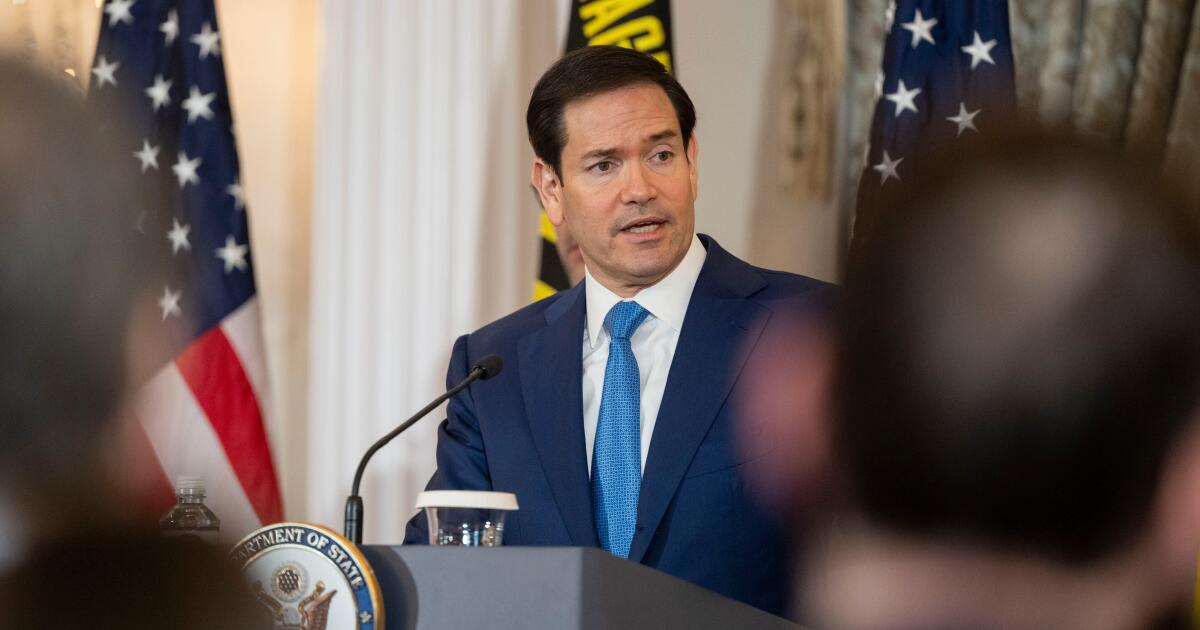
Instead, decisions are made by a small group of officials close to the president without the planning or coordination of the larger machinery of government, including Secretary of State Marco Rubio, who also serves as the president’s national security adviser.
“In the Trump Administration, decisions are made by President Trump and senior administration officials and not by no-name bureaucrat leakers who whine to the press about not being consulted about highly classified operations,” White House spokesperson Dylan Johnson said.
Advice from career officials often went unheeded
“In the time that I was there, there was no policy process to speak of,” said Chris Backemeyer, who served in Near Eastern Affairs as a deputy assistant secretary of state before resigning last year. Backemeyer was a major proponent of the Iran deal that Trump abandoned. He recently left government to run for Congress as a Democrat in Nebraska.
“They did not want to hear any advice from career people,” said Backemeyer.
Namdar was later moved to be the head of Consular Affairs, the part of the department responsible for providing assistance to American citizens overseas and issuing visas to foreign visitors.
When the U.S. made the decision to strike Iran, Ambassador to Israel Mike Huckabee offered embassy staff in Jerusalem the opportunity to evacuate — a sign that he knew strikes were coming. But some other embassies in the region did not make similar arrangements — leaving nonessential personnel and their families stranded in a war zone.
The department said it has been issuing travel warnings since January and was fully staffed to handle the crisis the moment the strikes were launched.
Evacuation planning was chaotic
Still, little planning appears to have gone into how to evacuate the Americans who were living, working, visiting or studying in many of the countries that became engulfed in the conflict — in part because the White House seems to have underestimated the possibility of the strikes expanding into a prolonged multi-country war, as evidenced by Trump’s own remarks.
After Iranian attacks on allies like Saudi Arabia, Qatar and the United Arab Emirates, the State Department began calling for Americans to leave the region. But numerous former Consular Affairs staffers say such planning should have begun long before U.S. strikes started.
In a statement posted to social media, Namdar only told Americans to evacuate several days into the conflict, when airspace was largely closed and many commercial flights were unavailable.
“The messaging that went out to American citizens — after the U.S. struck Iran — was woefully late and, initially, confusing,” said Yael Lempert, who served as U.S. ambassador to Jordan until 2025. Lempert is one of five former ambassadors expected to speak about the department’s failures at an event Thursday at the American Academy of Diplomacy in Washington.
Other poorly executed evacuations, such the Biden administration’s withdrawal from Afghanistan, have drawn criticism.
But this time they’re compounded by the loss of experienced people, officials say. Consular Affairs has lost more than 150 jobs in the Trump administration due to a combination of reductions in force, dismissals of probationary employees and retirements, according to a U.S. official who asked for anonymity — though other parts of the department were hit much harder.
The department notes that it has offered assistance to nearly 50,000 Americans impacted by the conflict, with more than 60 flights evacuating citizens from the region. In total, the department says more than 70,000 Americans have been able to return home since the outbreak of hostilities on Feb. 28.
“The loss of experienced personnel through these RIFs has clearly undermined the Bureau of Consular Affairs’ ability to fulfill its most important mission, to protect Americans abroad,” Sen. Jeanne Shaheen, the top Democrat on the Senate Foreign Relations Committee, said in a statement.
Language skills at the department are also atrophying. Thirteen Arabic speakers and four Farsi speakers, all trained at taxpayer expense, were among employees let go, according to a draft letter being circulated by former foreign service officers.
It can cost $200,000 to train a foreign service officer in a language. The letter estimates that the total number of people fired by the State Department in the name of efficiency received more than $35 million in taxpayer-funded language training and more than $100 million in total training and other career development.
The State Department has set up two temporary task forces to deal with the crisis in the Middle East. One aims to bolster the capacities of Near East Affairs and another is aimed at helping Consular Affairs evacuate Americans.
A group of more than 250 Foreign Service officers were part of the administration’s reduction-in-force last year but still remain on the State Department’s payroll. Many have volunteered to return to the department to work on either a task force or do any other job that needs to be done with the outbreak of a global crisis.
“I haven’t been given any separation paperwork. I still have an active clearance. I could go back to the department tomorrow, either to backfill or staff a task force,” said one foreign service officer who asked for anonymity because they are still technically on the department’s payroll and are not authorized to speak to the press. “I will do the scutwork jobs.”
The department hasn’t responded to their offer but said in a statement that the task force is “fully staffed.”
The Black Crowes singer Chris Robinson is reflecting on his rollercoaster relationship with his younger sibling, guitarist Rich.
Sign up for the Showbiz newsletter
Thank you!
The Black Crowes lead singer Chris Robinson, left, and his guitarist sibling RichCredit: ROSS HALFINThe pair had no set ideas for the record, as they got creative in the studioCredit: ROSS HALFIN
Their explosive chemistry once earned the outfit a fitting accolade — “The Most Rock ’n’ Roll Rock ’n’ Roll Band in the World”.
Chris is first to admit they’ve had their ups and downs since forming in 1984 under their original name, Mr Crowe’s Garden, as schoolkids in Atlanta, Georgia.
“Rich and I, for better or worse, were stubborn and arrogant but always strong believers in the art,” he admits.
“This has always been our path and, no matter what, we have to do it like this.
“Sometimes, you have to take your lumps,” continues Chris, employing that very American phrase for suffering setbacks. “But, right now, we’re in the zone. The chemistry is 100 per cent there.
“The way we feel goes right back to when we started — it’s f*** it, just play it — even if we are more well-mannered.”
But the pandemic slammed on the brakes before the dates finally happened across the US in 2021, uncorking the band’s celebrated freewheeling energy.
Back to the live arena came Jealous Again, Hard To Handle, She Talks To Angels and Twice As Hard, songs that somehow bottled up the band’s influences — Led Zeppelin, the Rolling Stones and Little Feat among them — but still refreshingly their own.
The follow-up, A Pound Of Feathers, comes tearing out of the blocks with the rocket-fuelled, riff-driven Profane Prophecy, setting the tone for another of The Black Crowes’ “love letters to rock and roll”.
The album arrives with some sound advice — “This isn’t a record you play on Sunday morning, this is a f***ing Saturday night burner!”
In a world where smoothly produced pop dominates the airwaves, The Black Crowes are unashamedly sticking two fingers up at it.
“None of what’s going on in that world is relevant to me,” decides Chris, “and rock ’n’ roll is still huge for millions and millions of people.”
He is talking to me via video call from Aspen, Colorado, the premier ski resort in the States, playground of the rich and famous.
“My wife is an avid skier. She’s the Franz Klammer of the family,” he reports with a reference to the Austrian downhill legend.
“I get to do the cooking, the reading and the hanging out.” (And talking to people like me about The Black Crowes). Brother Rich is at home in Nashville and begins his call by apologising for being under the weather.
“I’m going to be coughing randomly,” he says. “I’m in the middle of flu that’s going around.”
After clearing his throat, Rich, the less flamboyant one who lets his guitar wizardry do most of his talking, gamely picks up on Chris’s theme.
“When we got back together, we both agreed we needed to do it properly,” he affirms.
“We knew that bringing back a toxic dynamic wouldn’t be healthy for anyone.
“We couldn’t have the overarching idea that when Chris and Rich get together, it’s a bad thing.
“We’ve always written all the songs, we own the name so coming back with a more mature approach has been very helpful.”
Rich acknowledges that the music landscape for the older, wiser Black Crowes is vastly different from when they started out. “There’s a bunch of people in the industry who like to think rock ’n’ roll is dead,” he says.
“But then there’s a bunch of people trying to keep it alive. Guns N’ Roses, the Rolling Stones, Metallica and Def Leppard are still selling out stadiums.
“Tens of millions of people still want to see bands like them. Rock ’n’ roll is one thing that no one could tame.
“And it’s still like that for us. We can go into a studio with almost nothing and, in a week, make a record.
“There’s a human, organic quality to rock ’n’ roll. We don’t have auto-tune and we don’t have to set our s**t to a grid.”
Looking back at their unfettered past, Chris exclaims: “I have to say I’m so f***ing proud of The Black Crowes, man!
“Rich and I started this band when we were teenagers in Mom and Dad’s house, as a vehicle to write songs.
The Robinson brothers weren’t on speaking terms for five years after their so-called ‘contractual obligations’ tour ended in 2014Credit: GettyThe Black Crowes in 1998Credit: Getty
“And we found our way to being musicians and performers.”
Yet the creation of A Pound Of Feathers has still blown Chris away, most notably because of the stellar contributions from Rich.
The album was made in double-quick time, carried along by the brothers’ spontaneous fusion of riffs and lyrics.
Chris says: “I’ve been on stage and sat in studios my whole life with my brother playing amazing guitar.
“But, with this album, I sat there with my mouth hanging open.
“Granted I’m very close to the flame but everything he did, I was like, ‘Wow, this guy’s taking it to a new place.’”
During the sessions, The Black Crowes were visited by Chris’s friend, Todd Snider, the singer/songwriter who died last November from pneumonia aged just 59.
Chris cherished the chance to hang out with Todd — and to get some memorable feedback from him.
“He was a storyteller, a real poet, and he and I had a great friendship. He also really liked The Black Crowes.
“He asked if he could come and check out the recording. I went, ‘Dude, yeah fine, but you’re going to be the only one here’. So he sat there taking in me and Rich putting music together.
“At the end of the day, he said, ‘Are you f***ing warlocks? Is this some kind of ESP or is it a parlour trick? You don’t say anything yet, 30 minutes later, there’s this massive song blasting out of the speakers’.”
For Rich, the studio is his happy place. “I’ve always loved being in a studio,” he says.
“It’s where you bring to fruition all the things you have in your head.
“With this record, we came in without any concrete ideas. By allowing ourselves just to play in the sandbox, it became fun and exciting.”
Rich gives a shoutout to producer Jay Joyce, who also helmed Happiness Bastards.
He says: “Nine and a half times out of ten, he agrees with us when we’re excited about something.
“He’s there with us, not bogging us down by trying to insert himself when its unnecessary.”
So what of the songs? There’s the aforementioned opener Profane Prophecy which captures the unvarnished sound of The Black Crowes’ live mayhem, yet recorded in the calmer confines of a studio.
You hear Chris nodding to past rock ’n’ roll excesses by hollering, tongue firmly in cheek, “My pedigree in debauchery is my claim to fame.”
He smiles, “Of course I have to embrace that life. That’s why I sing, ‘I eat casino breakfast off the kitchen floor’.”
But he maintains that while giving “a vision of a debauched rock ’n’ roller”, he’s also “confusing fact with fiction”.
The four-minute shindig concludes with the ensemble chant of the phrase that yielded the album title, “a pound of feathers or a pound of lead”.
Chris got the line from In Here The World Begins, a song by long-defunct British electro-pop band Broadcast.
“I loved the phrase and what it could mean because a pound is a pound,” he says. “It doesn’t matter whether it’s lead or feathers. There’s some weird wisdom to it.”
We turn our attention to Cruel Streak, pounding rock underpinned by funky rhythm.
“I’m adjacent to funk at all times,” says Chris. “Growing up in Atlanta, there was this multiracial band called Mother’s Finest who played heavy funk with ‘Baby Jean’ Kennedy as lead singer.
“There’s a lot of Mother’s Finest in The Black Crowes.”
On the R&B-flavoured It’s Like That, which comes with heavy basslines and a hint of reggae, the brothers employed an amphibian guest, which, as Chris explains, fits with their anything goes attitude.
“I was staying in Nashville, and the doors were open. I heard this frog, so I recorded him. That’s my Nashville rasta frog on the solo.”
Rich says: “There are tree frogs all over the South. They were blaring one night and Chris said, ‘Man, I want to use that sound’.
Chris and Rich Robinson reflect on decades of chaos and creativity in the Black CrowesCredit: EL3
“So he took his phone and pressed record. We found the right space for it on the song.” On the loose, laidback country-tinged Pharmacy Chronicles, recalling the vibe of the Rolling Stones’ Exile On Main St., Chris sings “let the demons find you” because, he insists, we mustn’t think everything is “sugar-coated, glossy and gorgeous”.
“Especially something as messy as a 40-year career in rock ’n’ roll,” he adds. “I can’t believe some of the s**t I was doing. Get some surgical gloves and get to it!”
But Chris is not one to dwell on the past, with all its euphoric highs and crashing lows. “I am devoid of nostalgia,” he says.
“I like to think I interact with the world as a poet. I’m always writing — it could be because I overheard a conversation at an airport check-in.
“I’m no Bruce Springsteen,” he confesses. “But I connect with the world through whatever inspires me.”
And, as he puts it, “a lot of the darkness that is the United States right now” informs A Pound Of Feathers.
It explains why final track Doomsday Doggerel with its line “a front row seat to the end of times” is in stark contrast to the closing song on Happiness Bastards.
“On that last record, Kindred Friend was a beautiful pastoral thing with harmonica, about me and Rich, the band and our audience,” says Chris.
“Doomsday Doggerel is much darker. We haven’t remembered lessons from our past and the f***ing racism means we’re operating at a very low frequency.
“I just hope that someone can play this record on a Saturday night, keep out the low frequency and get a better hum going.”
Chris and Rich reunited after having gone their separate ways for years
As Pharmacy Chronicles ebbs to a close, you hear a defiant chorus of “the good times never end”.
As far as Chris and Rich and the rest of The Black Crowes family are concerned, rock ’n’ roll is the perfect antidote to personal and universal turmoil.
“We’re loud, we can be sloppy but we are like an old cartoon of two people fighting on a train,” says Chris.
“The train goes round a bend, leaning all the way over a cliff, but then it comes back up. That’s us.”
THE BLACK CROWES
A Pound Of Feathers
★★★★☆
The Black Crowes’ new album A Pound of Feathers is out in the UK on 13 March 2026