Volkswagen AG (VWAGY) is considering deeper cost-cutting measures, including eliminating up to 100,000 jobs and closing several factories, as CEO Oliver Blume seeks to improve the automaker’s competitiveness, Manager Magazin reported Friday, citing people familiar with the matter.
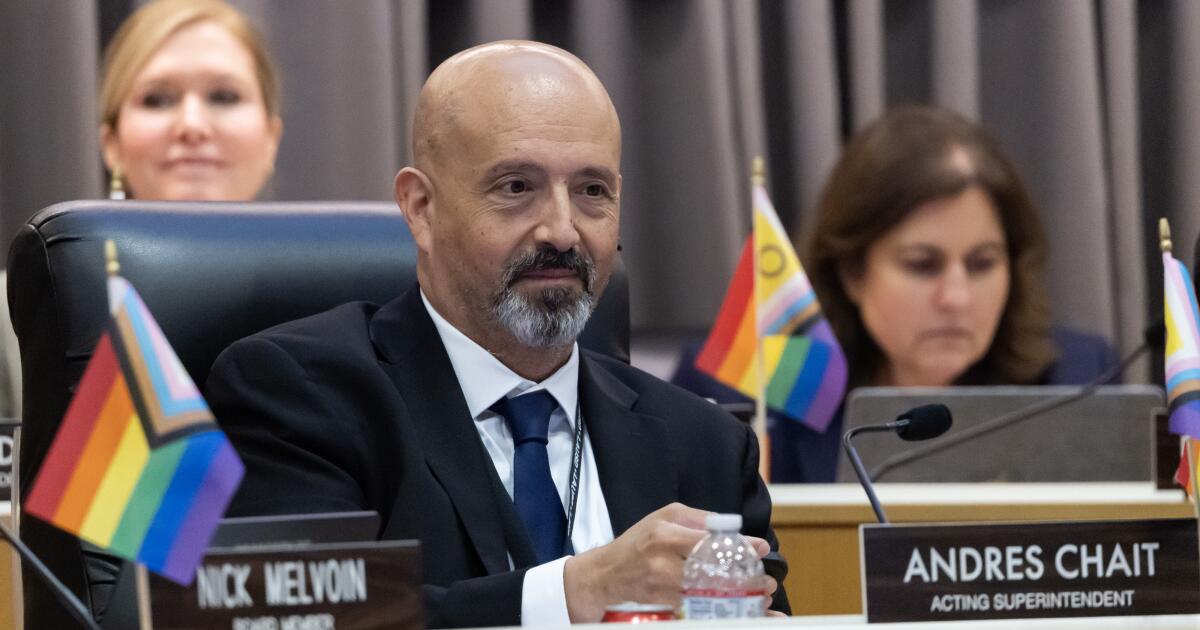
Andrés Chait has been named superintendent of the Los Angeles Unified School District three days after the resignation of Alberto Carvalho in a lightning-speed transition that elevates a well-liked insider to the top of the nation’s second-largest school system.
The Board of Education announced its unanimous decision Wednesday, which was made official during the board’s last scheduled meeting before August.
“I firmly believe in leading with gratitude and never taking the work and support of others for granted,” Chait said after the announcement. “So I begin today in that spirit of gratitude. Thank you to the board for your faith in me and for this opportunity.”
“I have always known that there is no greater accelerator of change and opportunity than the school house, and that is still true today,” Chait added. “Throughout my career in various roles, that has remained my focus. How I can be of service and support to our students and families in accessing these opportunities. Please know that commitment has not changed.”
Chait had been serving as acting superintendent since Feb. 27, two days after the FBI raided the home and office of his predecessor, Carvalho. Law enforcement sources have confirmed that the ongoing investigation includes a review of Carvalho’s actions related to a company hired to create an ill-fated AI chatbot. Carvalho has not been charged and maintains that he is innocent of wrongdoing.
Chait’s style and background stands in sharp contrast to Carvalho‘s, who had 14 years of experience leading one of the nation’s largest school systems in Miami.
Carvalho carefully curated his appearances — before and during his L.A. tenure he maintained a high national profile as a sought-after voice in education. In 2018, he had accepted the job leading the school system in New York City before changing his mind and staying in Miami. He was a familiar face in national conclaves on education and among national leaders. He took charge in L.A. in February 2022.
Chait is a district parent who started off as a kindergarten teacher at Queen Anne Place Elementary School and rose gradually through the ranks. He has never worked in another school system, although his experience in L.A. Unified included a variety of roles, including elementary school principal, regional superintendent. Most recently he served as director of operations — a non-academic function — for the entire school system.
Chait was not among the phalanx of senior officials who sat directly behind the school board on the elevated stage during board meetings. Instead, Chait’s was stationed in the back next to the audiovisual equipment, where he was off camera and frequently able to joke and interact with other district staff and community members. He’d also sometimes deal directly with a community member or employee who brought forward a personal problem or issue during the public hearing portion of a board meeting.
Over the last two years, Chait has presented periodically at board meetings, including over such issues as school safety.
The announcement was made by school board President Scott Schmerelson after the board emerged from a closed session.
“This board’s decision reflects the confidence in Mr. Chait’s leadership, his decades of service to Los Angeles Unified, and his demonstrated ability to guide the district during this period of transition,” Schmerelson said. “Throughout his career, and most recently as acting superintendent, he has shown deep commitment to our students, families, employees, and school communities.”
The decision to offer the job to Chait was not entirely a surprise because he already had taken on key tasks typically handled by a long-term superintendent. These included finishing up a four-year strategic plan and selecting administrators to fill key senior positions.
The Board of Education approved a four-year strategic plan Tuesday with academic targets and measures of college, career and social-emotional readiness.
Chait also received good marks from board members and union leaders during a trial-by-fire experience with a labor dispute that came within hours of a three-union strike that would have shut down the school system.
Chait was a key participant in getting to a deal, along with Mayor Karen Bass.
“It was wonderful to have the cooperation from the leadership of the district, from the superintendent, from the school board, from the entire school board, all of that … made a difference,” Bass said in a City Hall news conference, referring to Chait, after the all-nighter.
Leaders of the three unions each praised Chait at the time.
“I want to give you a thanks, Superintendent Chait, for showing humanity. Humanity. Humanity for seeing us, seeing the workers, and believing that you can get it across the finish line,” said Cecily Myart-Cruz, the outgoing president of United Teachers Los Angeles.
Last week, Myart-Cruz said in an interview that Carvalho needed to be replaced and that Chait appeared to have the skills needed to take over — although she said she would prefer a formal selection process that included input from labor leaders and others.
Max Arias, executive director of Service Employees International Union Local 99, also praised Chait after the contract was settled.
“I want to appreciate you … for coming into a very difficult situation and stepping in and showing leadership,” Arias said. “We are ready, our members are ready, to always give a chance to building relationship or partnership.”
Interviewed last week, Arias said Chait should be offered the job outright — that a search process was unnecessary.
Also praising Chait during that April gathering in City Hall was Maria Nichols, president of Associated Administrators of Los Angeles, which represents schools principals and assistant principals among others.
“Thank you so much for listening,” Nichols said. “I know the acting superintendent’s style — collaborative, listens. He takes action. He’s humane, and he wants the best for our students, because he’s a parent and has students in LAUSD.”
The deals accepted by Chait also have critics, who contend is it more than the district can afford.
This $20.6-billion spending plan that was approved Tuesday incorporates the layoffs of up to several hundred workers with due-process rights and perhaps 1,000 more without job protections. Over the next three years, officials project thousands of additional layoffs.
The spending plan for the 2026-27 school year is nearly $2 billion higher than last year’s figure of $18.8 billion. The district’s projected revenue is $18.6 billion, although that figure could rise based on promising state tax revenues.
In the meantime, the district will cover the shortfall with reserves, which may or may not be exhausted over the next two to three years. The increased spending results largely from significant salary increases, maintaining health benefits amid rising costs and expanding the number of part-time employees eligible for benefits.
Also straining the budget has been the expiration of COVID-relief funds, inflation surpassing state funding increases and steadily declining enrollment. L.A. Unified, with about 390,000 students in transitional kindergarten through 12th grade, is about half as large as in the early 2000s.
The board did not immediately release details of the new superintendent’s contract, including the length of the term, on the grounds that is not yet in final form.
Chait’s salary as acting superintendent was $395,867. He also has received $250 per month for expenses and the use of a district car and driver for work-related activities. In his previous job as chief of school operations, which he held for about 20 months, Chait had earned $278,205.
Carvalho’s salary was $440,000 per year with an additional $50,000 paid annually into a retirement annuity. District officials have so far declined to say if Carvalho received a severance package.
Carvalho’s predecessor as permanent superintendent, Austin Beutner, was paid $350,000 per year.
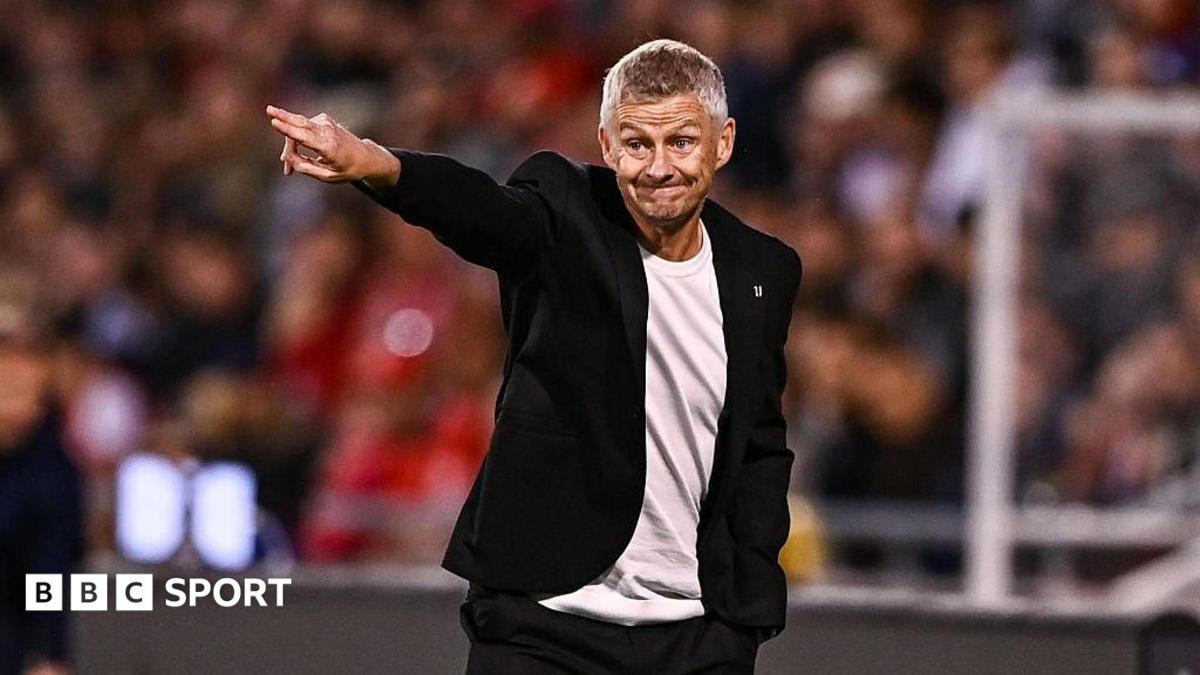
Ole Gunnar Solskjaer and Gary O’Neil are among the leading candidates to become manager at Ipswich.
Former Manchester United boss Solskjaer is high on the Tractor Boys’ list to succeed Kieran McKenna at Portman Road.
Solskjaer took a break from management after leaving Manchester United in 2021 but was keen for a quick return following his exit from Besiktas last summer.
He was overlooked for a return to Old Trafford last season, in favour of Michael Carrick, with United feeling it would be better to avoid someone who had done the job before.
McKenna worked under Solksjaer – along with his assistant Martyn Pert – at Manchester United when the Norwegian led them to second in the Premier League in 2020-21.
He played at Bristol City when current Ipswich chief executive Mark Ashton was CEO.
The French side had been confident of keeping the former Wolves head coach, who joined the club in January, but he remains a contender for the Tractor Boys.
The 40-year-old took charge of the Tractor Boys in 2021 and guided them to three promotions in the past four seasons, two of which have taken the club into the top flight.
McKenna was linked with the Fulham job after Marco Silva’s departure, but quit to take a break from the game and spend more time with his family.
“I feel this is the right time for me to step aside,” he said.
“I do so with great pride at the incredible progress we have made and with huge hope and optimism for the future of the club.”
With families struggling to find affordable summer breaks a savings platform has explained how healthcare workers can stack discounts to save up to £200 on peak-season TUI trips. The demand for budget holidays is rising as shoppers search for cheaper ways to get away.
With TikTok searches for ‘money saving tips’ up 45% and the cost-of-living crisis still impacting budgets, families are feeling the pressure. Health Service Discounts has partnered with TUI to provide healthcare professionals with a ‘Holidays for Heroes’ access code for up to an extra £100 off.
The exclusive NHS discount can be stacked on top of all TUI & First Choice package holiday deals, allowing key workers to claim TUI’s current deals plus their extra NHS discount on top. That includes family-friendly resorts with ‘Kids Go Free’ deals, last-minute Marella Cruises from £729 per person and budget hotel stays from just £30 per person.
How to access the deal:
The offer is available for NHS staff, retired healthcare staff, students in healthcare, dental practice staff, pharmacy staff, GP staff, private healthcare staff, members of a foundation trust, hospice staff, healthcare volunteers and healthcare charity staff.
Longtime on-air anchor Glen Walker is making his way back to broadcast news in Los Angeles.
After being laid off from KTLA in February, alongside other veteran broadcasters like Lu Parker and Mark Kriski, Walker is starting a new chapter with KTTV, L.A.’s local Fox affiliate. He began his new role as a per-diem anchor this week, where he’s set to have an on-air introduction on Wednesday and begin anchoring shows on Thursday evening.
“I didn’t feel like I was done,” said Walker of his career, in a phone interview Wednesday morning. “I’m still healthy. I’m not ready to retire.”
As Fox’s new rotating anchor, he won’t have a regular broadcast time, but will instead float between the KTTV and KCOP channels to fill in as needed.
Over the last few months, Walker has been eager to get back on air, especially with the local primary elections this month and the coming midterms in November. He said he plans to take the new gig “one day at a time,” but he’s most interested in covering politics and the current state of affairs in Los Angeles.
“With the elections and how it’s all related to the fires and the homeless problem, this city — maybe the whole state — has reached a point where [we ask], which direction are we going from here?” Walker said.
“[The stations] will get it figured out because there’s an adjustment period. It used to be just newspapers and radio, then you had television,” Walker said. “Now we’ve got the internet. Technology advances, and you just have to adjust to it.”
“You make a bigger impact than you think,” said Walker, who’s hopeful the same viewers will start to tune in to the local Fox station. “You just go to do your job every day, and you don’t think about it day to day, but then when something like that happens, that’s when you really see where people appreciate you.”
In between jobs, Walker said he spent his time golfing and trying to keep busy around the house and focused on landing a job. As soon as he stepped into Fox’s studio for a practice run, he said he felt an immediate sense of familiarity.
“I was sitting behind the anchor desk, and there was the teleprompter, the camera and that’s it,” Walker said. “It’s all the same at every TV station. It’s just a little bit of a different environment.”
Weekly insights and analysis on the latest developments in military technology, strategy, and foreign policy.
The U.S. Air Force has confirmed that the VC-25B “Bridge” aircraft is now wearing its new (and controversial) red, white, and blue livery as it undergoes final preparations for its official delivery.
Aviation photographer Travis Ghormley shared the first picture of the modified Boeing 747-8i with its new paint scheme yesterday. It was taken the day before in Waco, Texas. The aircraft had been undergoing modification and flight testing at L3Harris’ facility in Greenville, also in Texas, as part of the conversion into its new role, since at least April, before subsequently moving to Waco to be painted. The jet, gifted to the Trump administration by the government of Qatar last year, is set to serve as an interim Air Force One aircraft ahead of the much-delayed arrival of two fully outfitted VC-25Bs from Boeing.
The VC-25B Bridge aircraft seen unpainted sometime circa May 1. Courtesy photo via the USAF
“The VC-25B Bridge aircraft has been painted and is going through final modifications,” an Air Force spokesperson told TWZ today when asked for more information about the aircraft’s current status. “I don’t have any additional details I can provide on delivery dates at this time.”
A press release the Air Force put out on May 1 said that the “VC-25B Bridge aircraft has officially completed modification and flight testing” and was “being painted.” We have confirmed that the completed modifications referred to here were on the contractor side, but the U.S. government still has additional modifications to make to the jet.
Ghormley’s picture does clearly show the jet wearing the same red, white, and blue scheme that has already been appearing on various Air Force and other U.S. government VVIP jets. The livery also includes a large American flag, depicted blowing in the wind, painted on both sides of the tail and “UNITED STATES OF AMERICA” written on both sides of the fuselage. The paint job is virtually identical to what President Donald Trump had previously chosen for the future VC-25B Air Force Ones during his first term. President Joe Biden had previously reversed that decision, bringing back plans to paint the VC-25Bs in the iconic scheme that dates back to President John F. Kennedy’s administration.
A rendering of a future VC-25B with the livery President Trump had originally selected. BoeingA rendering of a future VC-25B wearing the Kennedy-era scheme. USAF A rendering of a future VC-25B Air Force one jet. USAF
The Bridge aircraft’s current location is also unclear. Video posted on social media yesterday, seen below, purported to be of the jet departing for its new home at Andrews Air Force Base just outside of Washington, D.C. This is where the two current VC-25A Air Force One jets, as well as a host of other Air Force VVIP aircraft, are based.
Full blown operation to get this thing out without us seeing. Fueled, loaded crew, and preflighted in the hangar. Flipped CRANE01 to face me at the south end and beam me with landing lights. Entire airport blacked out, crew and grounds crew all wearing NOD’s.
Online flight tracking data does show that another U.S. military Boeing 747-8i flew from Waco, Texas, to Andrews on June 7, using the callsign Crane 01. However, this callsign has been associated with an ex-Lufthansa 747 the Air Force has also acquired for use as a trainer in support of future Air Force One operations. This aircraft, which may now carry the serial number 25-3200, has been tracked multiple times flying between facilities in Texas and Andrews in recent months. There does not appear to be tracking data for the VC-25B Bridge jet, which may also now have the serial number 25-3300, but it could have made the trip without broadcasting on ADS-B.
Past reports have indicated that the Bridge aircraft could make its public debut on July 4, which this year is also wrapped up in additional celebrations of the 250th anniversary of the founding of the United States. President Trump’s birthday (June 14) is also this weekend.
“L3Harris, known for its executive communications systems and services, was selected to undertake a complex modification of the bridge aircraft. L3Harris not only delivers secure, reliable and resilient communications for VC-25A and the executive airlift fleet but has extensive experience with self-protection and customization of VIP aircraft,” the Air Force wrote in the May 1 press release. “The accelerated timeline was further made possible by a mission-focused partnership with Boeing, who provided the necessary engineering data to support the required structural modifications.”
“Additionally, elite specialists from multiple government agencies developed advanced protocols to detect and-if necessary-neutralize potential technical hazards on previously owned aircraft,” it added. “Their rigorous approach on the Bridge aircraft has literally ‘written the book’ and set the benchmark for integrating used airframes into the secure military inventory.”
Another picture of the unpainted VC-25B Bridge aircraft, seen after arriving in Waco, Texas. Courtesy Photo via USAF
“Safety and security were at the forefront of this program. We deliberately minimized interior aesthetic modifications to focus on modifications for safety, security and mission execution. We assessed which requirements were necessary for an interim capability. We had greater flexibility in developing our mission requirements,” the Air Force also told TWZ directly at that time. “After safety and security, we focused on the mission communications systems.”
“We have made deliberate decisions such as the reduction of the number of airstairs, less chiller space, and exclusion of the Golden Eagle mission [to fly the remains of former presidents] to minimize structural modifications, while prioritizing modifications focused on safety, security and secure communications,” the service added.
Getting a new Air Force One aircraft of some kind into service on an accelerated timetable has long appeared to be a major goal for President Trump. The fully-equipped VC-25Bs from Boeing are years behind schedule. Last year, the Air Force announced that there had been some improvement on that front, but that it still did not expect to have the first of the two jets in hand until mid-2028, which would be just months before Trump is set to leave office.
What we do know for sure is that the VC-25B Bridge aircraft is now wearing Trump’s preferred red, white, and blue paint scheme ahead of its official rollout later this summer.
Nearly 2,000 food and beverage workers at SoFi Stadium voted overwhelmingly Friday to authorize a strike just a week before the venue will stage the first World Cup game on U.S. soil in more than three decades.
Negotiations on a labor contract between Unite Here Local 11, the union representing the cooks, dishwashers, concession workers and bartenders at SoFi and, Legends Global, the stadium’s food-service operator, are expected to continue Monday despite the vote. But Kurt Petersen, the union’s co-president, said if an agreement isn’t reached workers will walk off the job and the 70,000 fans arriving for the June 12 match between the U.S. and Paraguay will be greeted by hundreds of picketers.
Union members have been working without a contract for a year and Petersen said Unite Here is demanding salary increases, protection against subcontracting and job loss through automation, and are protesting the collection of sensitive private information such as nationality and home addresses that FIFA, organizer of the World Cup, said it needs to accreditate workers.
Workers are also demanding the right to walk off the job if federal immigration enforcement enters the stadium and creates a reasonable fear for their safety. Ninety-six percent of the vote was in favor of strike authorization.
Legends Global, the stadium’s food-service operator, responded to the vote with a statement.
“Legends Global has presented progressive wage proposals to Unite Here Local 11 throughout our negotiations and remains confident an agreement is within reach,” it read. “While we expect a contract will be finalized in time, a contingency staffing plan is in place to ensure seamless operations and no disruption to fans. We remain committed to delivering an outstanding hospitality experience at the FIFA World Cup matches.”
That contingency plan would involve hiring replacement workers who would have to undergo the same detailed accreditation procedures demanded by FIFA, plus job training. SoFi Stadium is scheduled to play host to eight World Cup matches, including two of the U.S. team’s three group-stage games. The first of those is on June 12 when the U.S. faces Paraguay in its World Cup opener.
Petersen said the union is looking for “substantial increases” in hourly pay, to more than $30 an hour. Legends’ most recent proposal calls for wage freezes for some workers and a 25-cent hourly increase for cooks and dishwashers, the union said.
But perhaps the biggest sticking point is FIFA’s demand for workers’ sensitive personal information, including Social Security numbers and fingerprints, to process background checks. Under California privacy laws, workers have the right to know exactly what personal information their employer collects, how it will be used, and who it will be shared with. Local 11 said its members fears such information, if collected, could be made available to the Department of Homeland Security and ICE.
According to Petersen, when workers were originally hired by Legends they submitted the documentation necessary for employment, and under the current collective bargaining agreement the company does not have the right to request it again for FIFA.
FIFA has refused to comment on the contract talks, saying they are “between Legends Global and Unite Here Local 11.” But its insistence on collecting personal information is something Legends cannot address during contract talks, which makes a resolution impossible.
FIFA said it was partnering with the governments of the U.S., Canada and Mexico, the three countries in which the 39-day tournament will be played, “to enhance safety and security of all workers, staff, team members, vendors, journalists, volunteers, and spectators by mitigating potential insider threats. … Such name checks do not constitute pre-employment checks.”
All data collected during the name-check process, FIFA said, will be processed “in accordance with applicable data protection and privacy laws, and will be deleted by FIFA as soon as it is no longer needed for purposes of adjudicating requests for credentialed access to FIFA-controlled spaces.
SINGER Junior Andre, the son of Katie Price and Peter Andre, has hit back at nepo baby critics and insisted he “doesn’t want handouts” after getting a job on the London Underground.
Junior revealed earlier this year during an episode of ITV‘s The Princess Diaries that he secretly worked nights for TFL to help fund his music career.
Sign up for the Showbiz newsletter
Thank you!
Junior Andre has hit back at critics calling him a ‘nepo baby’Credit: GettyJunior Andre is the son of former glamour model Katie PriceCredit: PA
The 20-year-old opened up on his “hard” reality in a candid conversation with his sister.
He worked through the nights, full time, while he sorted out “differences” with his record label.
Now, in a new interview alongside his girlfriend, Jasmine, Junior has shut down trolls, making it clear that he’s paving his own way in the industry.
Junior said: “My dad was brought up very strict, so regardless of anything he says, ‘You’ve got to work son.’
“As much as he’s there for me, and my mum is there for me, I don’t want handouts. I need to learn life the proper way.
“So when things get hard, instead of sitting there doing nothing I was like, ‘I need to do what I’ve got to do.’ I threw myself in the deep end, but I never gave up on my dream.”
Junior has told how he ‘doesn’t want handouts’ from his famous parentsCredit: SplashReality TV star Princess is very close with her brother and he opened up about working for TFL on her showCredit: Getty
He continued: “It made me [the job] understand the value of money and grafting. People say, ‘You’ve never done a hard days work in your life,’ and I’m like ‘I have!”
Elsewhere in the chat, Junior and Jasmine, who have been together for two years, confessed their future plans as a couple.
Reality TV star Junior said: “I get scared if I think about kids, marriage, because we’re not there. There’s so much more we want to do before we think about that stuff.”
Jasmine added: “We’re on the same page in that they’re such big things. Having a child – that’s a full human!”
“We’ll know when the time is right,” added Junior.
Junior used to work for TFL, “grafting, lifting heavy metals, cutting, filing, painting,” so he could fund his music career.
Princess, 18, gushed over her brother saying: “So proud of Junior, his last two singles went in at number one , but while he was sorting differences out with his label he went to work through the nights and work a full time job so he was fully self sufficient.
“Which I’m super proud of.”
Junior has previously told fans that despite his parents celebrity status, he doesn’t want to live of them.
His dad, Peter, is a huge pop star, topping the UK charts in the mid-90s with his tunes “Mysterious Girl” and “Flava.”
And Junior’s mum, Katie, also shot to fame in the 90s but as a glamour model using the alter ego Jordan.
Mindy Kaling was in her early 30s when the first TV series she created, “The Mindy Project,” made its debut and set in motion her attempt at forging an identity as a prolific multi-hyphenate after “The Office,” where she was a writer and cast member for eight seasons. But if you ask her to reflect on that time of her life, she says, it’s a bit of a blur.
As she explained recently, “I remember it, but not all that distinctly. It was such a grind — waking up at 6 a.m. to be on camera, wrapping late. And I did that for 117 episodes.”
But ask her about her 20s, when she was living in New York City and trying to figure out how she could break into the industry as a comedy writer? “I remember incredibly vividly,” she says. “I’m like, did I feel things more intensely back then? I’m not sure. But that period of time … there was just so many highs and lows. And it felt cinematic to me.”
So she made a TV show about it.
Premiering Tuesday with three episodes, “Not Suitable for Work” follows five ambitious 20-somethings living in Manhattan who are navigating the early stages of their careers while trying to have a semblance of a life and the heightened emotions they experience during this period. Kaling calls it the third chapter in her semi-autobiographical TV trilogy, which includes “Never Have I Ever,” about a first-generation Indian American teenager coping with her father’s death while trying to be popular (or at least not super uncool), and “The Sex Lives of College Girls,” about four young women who dorm together and boldly maneuver their new, uninhibited lives on campus.
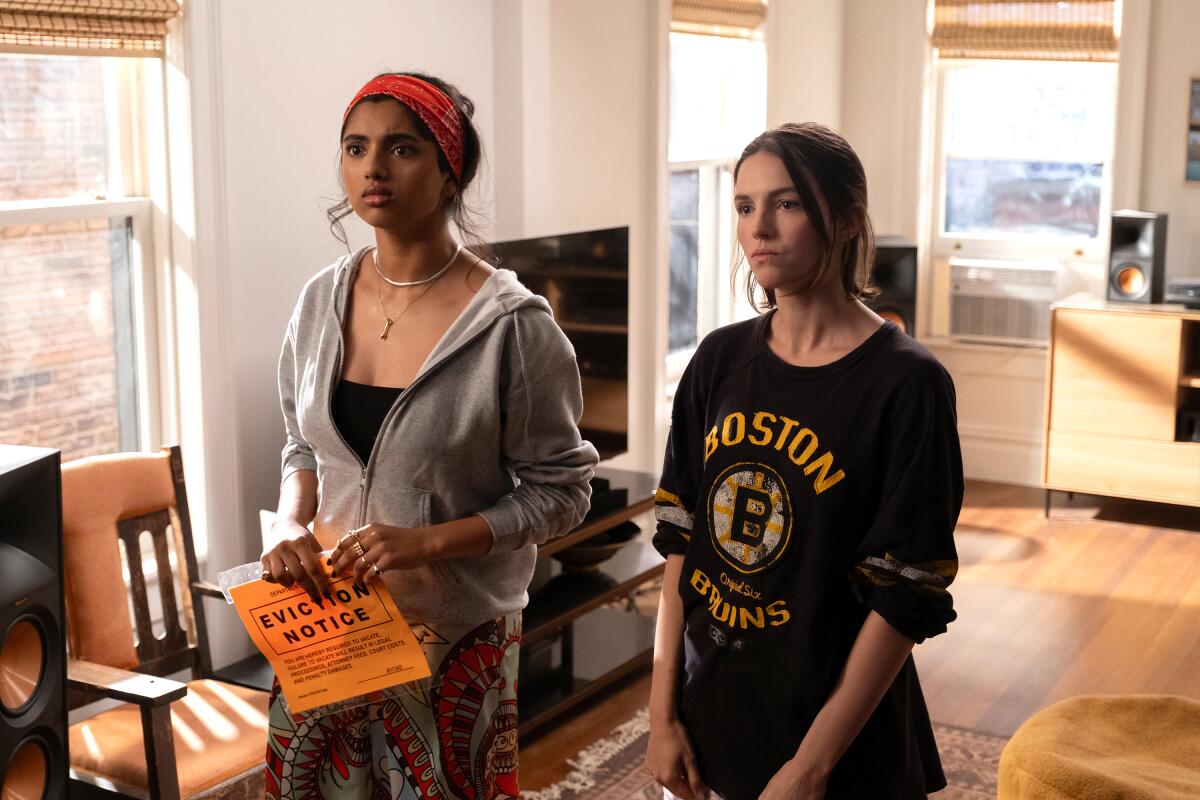
In the new Hulu series, viewers are introduced to AJ Pascarelli (Ella Hunt), a hard-working and disciplined young woman who moves to town to start a high-pressure finance job, and her roommate Abhinaya “Abby” Chilukuri (Avantika), a savvy and fashion-obsessed assistant to a celebrity stylist. They live across the hall from Josh Teitelbaum (Jack Martin), an idealistic nepo baby of a media titan — he’ll lean into his privilege when it suits him while also trying to distance himself from it — with ambitions of making it in journalism. His two roommates are Kel Washington (Nicholas Duvernay), an insecure but earnest med student who would rather be acting, and Davis Beau Bradley Barrett III (Will Angus), a high-energy, bumbling financial analyst who works at the same corporate firm as AJ and is an undercover hopeless romantic. As one might expect, there are some messy entanglements within and outside the group.
1
2
1.Abby (Avantika), left, and AJ (Ella Hunt) move in together.2.Across the hall live Davis (Will Angus), left, Josh (Jack Martin) and Kel (Nicholas Duvernay).(Gwen Capistran / Disney)
“I hope that young people will respond to the show, “ Kaling says. “We did so much research in it because at a certain point it is funny — I’m in my 40s, and I am often like, ‘I wonder if young people are suspicious about why I’m so obsessed with writing shows about young people.’”
So, why is she?
“Because I find it almost impossible to reflect on the current time I’m in,” she says. “It would be too painful to be too introspective about the time that I’m in. I need a real sense of distance to look back on it, especially since having kids. Once you have kids, it triggers these memories of your own childhood.”
Over video call from New York City, Kaling reflected on the series and her early years of trying to make it. These are edited excerpts from the conversation.
How did you land on the professions that your characters would be pursuing and what did you want to say about ambition at this stage of life?
I love people who have big wants, and sometimes the audience is like, “Maybe you want the wrong thing” and they [the characters] don’t quite know that yet. I love writing about the underdog. And with their particular professions, they’re all things that I had some interest in researching. I’ve always been fascinated by investment bankers. I went to Dartmouth, so I have a lot of friends who went into that, and I swear I’ve had my friends explain their job so many times to me, and I still didn’t totally understand it. We were lucky; a very famous investment bank very generously offered to let me come for a day and meet with young bankers. I also … write about the children of immigrants. I’m very, very interested in that story, and so we got to research what it’s like being the child of Nigerian immigrants. But every single character has a journey, or there’s an aspect of them that I feel like I really relate to, and that is in almost all my shows.
What was it like observing young people in the investment banking world?
They were wary — because they’re smart — of someone from Hollywood coming in to document what they were doing and asking questions. It helped that a lot of the guys liked “The Office” and a lot of the women liked “The Mindy Project” and “Sex Lives of College Girls” because they’re all kind of young. I think that made them trust me a little bit more. For the AJ and Davis characters, so much of what I researched when I was there fed into their plot line … almost all the characters have a boss they fear and idolize, and the way that first-year bankers feel about their managing directors is not dissimilar to the way I felt about Greg Daniels when I started at “The Office.” And the hours are actually not dissimilar.
There’s a moment early on where Jay Ellis’ character, Bill, who is a managing director at this fictional investment banking firm, is asked about work-life balance. I’m curious how you thought about that at the start of your career versus now.
I didn’t care at all about anything except my job for 16 years. It was my entire personality and purpose. When I was in my 20s, the only thing that mattered was being a good comedy writer and succeeding, and one day maybe being able to create my own shows. There was no balance. I didn’t want balance. I wanted to live and breathe comedy writing for my entire life. I hated the weekends, actually. And who wouldn’t? I was a friendless transplant in Los Angeles and I just wanted to get back to working at “The Office.” Every year I was there, I got more ambitious and I wanted to go off and create my own show and have a bigger part as an actor and everything.
It wasn’t until after I did that on “The Mindy Project” … that I just felt like, “OK, I get this. I want to now try being a mom.” Once I had my daughter, Katherine [at 37], it wasn’t that the balance changed, it was my first real, legitimate interest outside of work — that I cared about more than work.
“When I was in my 20s, the only thing that mattered was being a good comedy writer and succeeding, and one day maybe being able to create my own shows,” Kaling says. “There was no balance. I didn’t want balance.”
(Ebru Yildiz / For The Times)
After college, you moved to Brooklyn with two Dartmouth friends to pursue a career in comedy. You eventually got a full-time job as a production assistant on “Crossing Over with John Edward,” a program where people would receive psychic readings. Tell me about that time in your life.
I remember feeling like I had no access and that I didn’t have any place to put my ambition. It was so far away from anything I wanted to do — scripted comedy and reality television could not be further apart. It was a fascinating time because there were such highs and lows. There was the excitement of new crushes and having fun in a new city with two friends, but there was also the crushing disappointment of feeling like I was never gonna make it. I didn’t even have a path forward to making it, but I was lucky, because I lived with my two best friends. We would go to open mic nights, and we would go to restaurant week and see how the rich people in Manhattan were living. We would take the subway uptown to Central Park and walk along Fifth Avenue and like look at these amazing homes and just dream what it was like to be like a wealthy New Yorker who could buy everything that they read about on DailyCandy — now I’m really dating myself here, back when DailyCandy was a thing. But that’s what it was like, I just I felt a lot of extreme emotions.
How did you approach that job?
My boss was a producer and would approach the families and get their information, and then we would have to do research on them, but it was mostly because they would do a little clip package on the different families. I had to get them to sign releases to be on the show and get photographs of their deceased [loved ones] and them. I actually thought it was pretty interesting work. It just had nothing to do with comedy writing, and that job was not clearly going to lead anywhere toward comedy writing, and I came to New York because of “Saturday Night Live.” When I was working there is when my friend Brenda [Withers] … and I started writing this play “Matt & Ben” [a satirical play that imagines the story of Matt Damon and Ben Affleck before “Good Will Hunting” made them famous] in the time we had off. We started writing it, then I got that job as a PA, then the show went up at the Fringe Festival, and then it was going to go off off Broadway, and when it went off-off-Broadway, and I had a steady income, that’s when I quit my job there. I was only at “Crossing Over” for three or so months.
Greg Daniels attended a performance of “Matt & Ben” and it’s what led to you getting on “The Office” at 24.What was that first meeting like?
Back then, because the internet was so different, when I looked up Greg, besides his credits, you couldn’t find a lot of biographical information about him, or even a photo. I don’t think I even knew what he looked like. When I met him, I don’t think I had seen the British “Office” yet; I wasn’t cool. At that time, I had put so much pressure on this job. I only had two interviews — it was this and there was a show that ended up getting canceled while I was waiting to meet the showrunner. It was a pilot called “Nevermind Nirvana,” about an Indian man who married a white woman, and Ajay Sahgal was the writer. I was like, “Oh my God, if anyone is going to get hired to work on the show, it has to be me.” I was pretty excited about that meeting, but when I was sitting in the waiting room at the production offices to meet with Ajay, they told them they weren’t going to pick up the pilot, so I never even got to meet him, and they just told me I could leave.
I’d only had that interview, and then I met with Greg. This is my memory: it was a high-rise building in Century City, in the offices of “King of the Hill,” so there was a lot of like “King of the Hill” cutouts and stuff there. And he’s just a very thoughtful, quiet guy who doesn’t push conversation … I’m someone who’s pathologically chatty, and so talking to Greg, who is completely fine with there being pauses in conversation, and is just a confident grown-up, it was incredibly intimidating. I was very stressed out in our meeting, but I also was blown away by him.
That first season, you were also the only female writer on staff and the youngest —
B.J.[Novak] is a month younger than me. I want to correct that because he’ll read this and go, “Hey … !”
How did that play into how you felt in the room?
I haven’t really ever had imposter syndrome. And this is my probably my personality defect — I felt that even if I hadn’t seen anyone like me in these roles, that I was just going to be the first one, and I was going to work really hard and prove it to them. The staff was super competitive, but they were smart feminist guys. It was hierarchical and stressful, but it was not because of my fellow writers, except that I wanted to impress them. I felt nervous because I wanted to be contributing, but I don’t know why — I just loved the pilot so much that Greg had made, and I loved these characters, and this world — I was like, I can’t possibly lose my job, I love it too much. Which is probably really stupid, I didn’t ever think there’s a possibility that I could get fired here.
Phyllis (Phyllis Smith), Kelly (Mindy Kaling), Dwight (Rainn Wilson) and Michael (Steve Carell) in a scene from Season 2 of “The Office.”
(Paul Drinkwater / NBCUniversal via Getty Images)
We see how AJ wants to impress the boss and takes on more than she can chew and screws up some data before a big presentation. What was that first big mistake or misstep that you made in those early years that you still think about?
I remember Season 2 — because I just wanted to prove to Greg and to the cast and to the director, the cinematographer, and everyone that I was super invested — we were shooting “The Dundies” [episode]. I was an actor on the show as well, but I wasn’t acting in this scene, but it was my episode [that I wrote], and in between takes, John [Krasinski, who played Jim Halpert] and Jenna [Fischer, who played Pam Beesly] were just on set, and I remember going up to them and being like, “Guys, that take was so great!” And I walked away. Greg came up to me and was like, “You know, we really should let just the director talk to the cast between takes.” Greg, he’s my mentor, but he definitely, over the course of the eight years I lived there, had corrected me many times, as he should have, but that was one of the first times. I remember I was so embarrassed, but I didn’t understand it’s not the role of a story editor to be giving feedback to the cast between takes on a show.
The bosses on the show all have different styles and expectations that may seem demanding or annoying on the surface. How do they reflect where you’re at now?
No one trains you on how to be a good boss. And bad bosses are so prevalent. The entire premise of “The Office” hinges on this funny concept that terrible bosses exist. It wasn’t until I was on “The Mindy Project” that I was the employer for the first time. Every single year of that show, it was a battle getting a new season. One of the challenges of being a good boss is being able to put aside those personal, professional battles you’re fighting … but then also realizing that you’re a mentor to other people, and you have to start thinking about things that you never thought you needed to — overtime, maternity leave, respect in the workplace, the things that make the workplace enjoyable for everyone else who’s there working for you. And it’s not like that comes naturally.
The double blessing of having a good boss, which I did in Greg Daniels and Howard Klein [an executive producer on “The Office”], is that they modeled that for me. Even though I could not be more different than Greg. Even to this day, I’m realizing I have all the unique challenges of being a single mom, being the creator of these shows with crews and casts, but then also being able to be empathetic for all the people that work for me and making sure I make time to listen to them when they want to talk to me about an issue that they’re having; it’s a continual challenge that I’m hoping I’m getting better and better at [managing].
When Bill is asked about work-life balance, he’s also asked if he has inspirational words to impart. It’s very much about overworking and being productive. How do you tackle the question today?
I used to say “you have to write your own part.” And everyone would get annoyed because they’re like, “I’m not a writer.” I’ve had to really think about the question so I could be helpful. We all want a linear path to success. And if my career has taught me anything, it’s that the linear path just was not how I got my job. You know when you go on Google Maps and it shows you all the different paths — the fastest, one path with the toll road and one path that’s going to take seven minutes longer. I’ve only ever taken the one that’s seven minutes longer, or the toll; it’s never been the easy way. The sooner I got used to that, the better.
Before I let you go, in the show, one of the celebrity clients Abby is dealing with is Austin Blanchett, Cate Blanchett’s fictional nephew. Was it always going to be Cate? What other celebs were in the running?
It was Cate Blanchett’s nephew before we had Harry Richardson. When I worked on “Ocean’s Eight,” one of the biggest surprises on it was that Cate Blanchett was incredibly funny and did not take herself seriously at all. I suspect if anyone was going to think it was funny that in this fictional world of the show she had this useless nepo nephew that she had to help get jobs, it would be Cate. I hope she doesn’t sue me. I think she would think it was funny.
Just one of the nine Supreme Court justices thought it was appropriate for Roger Goodell — whose primary job as NFL commissioner is to protect the league — to decide whether the NFL’s hiring practices are still racist.
And it happens to be the same justice whose close friend is an NFL owner.
In fact, the friendship between Justice Brett Kavanaugh and Arizona Cardinals owner Michael Bidwill dates back decades, to high school. So when President Trump nominated Kavanaugh for the highest court in the land, Bidwill used the team’s official website to advocate for his confirmation. Not sure how the “stick to sports” crowd feels about it, considering how they react when players express opinions, but it felt like an overreach to me.
Obviously when a decision related to NFL owners came before the court, Kavanaugh should have recused himself. But by now we’re used to justices ignoring their own ethics rules. What I find most disturbing in this instance is Kavanaugh’s dissent.
Here’s how the hiring discrimination case came to be: Former New England Patriots head coach Bill Belichick texted the wrong Brian with congratulations for getting the New York Giants’ head coaching job, according to a lawsuit filed by former Dolphins head coach and former Patriots assistant coach Brian Flores, who is Black. In the 2022 suit, Flores said the Giants interviewed him for their vacant head coaching job under disingenuous circumstances. How can we tell? Because Belichick’s congratulations came three days before Flores’ interview with the Giants. The team had apparently already decided to hire Brian Daboll, who is white.
The NFL has spent the last three-plus years attempting to settle the dispute through NFL-controlled arbitration and fought to keep it out of court. The league lifted its appeal to the Supreme Court after failing to get Goodell in position to handle it via the lower courts.
In addition to the damning text exchange, Flores also has history on his side.
During one 60-season stretch, the NFL had no Black head coaches. To address the glaring discrepancy, the league established the “Rooney rule” in 2003, requiring teams to interview at least two minority candidates for head coach and other senior management vacancies.
Prior to that, most teams interviewed only white men.
The results have been mixed.
Yes, more minority candidates get interviewed now — perhaps after a white man has quietly been chosen for the job, but still … they get interviewed.
And yes, Tony Dungy and Mike Tomlin, both of whom are Black, not only got hired but also led their franchises to Super Bowl victories after the rule was put into place.
Still, two decades into the Rooney-rule era, roughly a third of the league’s owners had never hired a minority to lead their team. This includes the century-old New York Giants, who after firing Daboll at the end of the season, hired another white man to take his place. This is the backdrop of the discrimination lawsuit filed by Flores.
And still Kavanaugh felt this case could be handled internally by the organization that allowed it to happen.
Even Clarence Thomas, a judge known for ruling againstanything that helps Black people, thought the NFL should have to defend itself in court.
Consider this: The year before Flores filed his suit, the NFL settled a different discrimination lawsuit for $1 billion. That case arose because for decades, to help determine the payout from a concussion settlement between retired players and the league, the NFL used “race norming” — a methodology that assumes Black players are less intelligent than white players, making it more difficult for Black men to prove brain damage than white men. In a league that is roughly 70% nonwhite, the racist practice saved the billionaire owners millions.
Or how about this: After the Supreme Court ruled that Duke Power Co. used a controversial cognitive test to prevent Black employees from getting higher-paying jobs back in the 1970s, the NFL began using it. The league kept it in place until 2022.
And still Kavanaugh felt the league should handle Flores’ case.
I’m not sure what factors the justice was considering before his dissent, but it could not have been league history.
You say you want to be mayor of Los Angeles, but do you really?
I know that being a candidate has rescued you from anonymity after your career in reality TV went off a cliff. You’ve got CEOs backing you, and fans raving, and you’ve managed to milk social media attention.
But at some point you might have to answer questions from the reporters you’ve been avoiding.
And if you win, you’re going to have to drive to City Hall five, six, seven days a week, and I don’t know if you saw my column a few weeks ago, but the fountain on the south lawn hasn’t worked in about 60 years. If you get elected, you better put a wrench in your lunch box, because nobody has figured out how to fix it.
So that’s the reality, pretty much. And the unions will want what they want, and the socialists on the City Council will be lying in wait, especially after President Trump blew you a cross-country air kiss and certified your MAGA credentials.
More than 30,000 people are waiting for their broken sidewalks to get fixed (I’m not exaggerating) but there’s no money, and if you hire several thousand more police officers as you’ve pledged, the city would be bankrupt for the next decade or so and you’d need to take out a loan to buy a doughnut.
So call me, like I say, because I think there’s still time to change your mind.
If you choose to proceed, and if you actually win, it might feel like you’re in a sequel to that reality show you did called “I’m a Celebrity … Get Me Out of Here,” and you may end up praying the show gets canceled. The mayor’s hours are long, and everywhere you go, someone will want you to fix this problem or that, and as you wander the halls of power you’ll think back on your campaign pledges and hear the constant echo of a line from H.L. Mencken:
“For every complex problem there is an answer that is clear, simple, and wrong.”
Can I confess something?
I’m feeling guilty about all of this.
Not to sound presumptuous, but I feel partly responsible for the fact that you’re in contention for the job.
Like you, I’ve been calling out issues with the management of L.A., and I’ve been doing it for years. But I had the good sense not to run for mayor.
Why’s that?
Because unlike you, I know the fixes aren’t as easy as we’d like them to be.
When Karen Bass was running the first time, I had a long talk with her about her homelessness plan, among other things. At the end of the day, she asked for my input.
I reminded her that as much as people would like for the city’s top elected official to immediately clear the streets, a mayor is limited by shared power with the City Council.
By drug epidemics and untreated mental illness that are largely under county authority.
By uncertain funding from the nation’s capital.
By global forces that transformed the economy and created staggering levels of inequality that are made all the worse by the high cost of housing.
Bass was aware of all that, but said that having worked in Sacramento and D.C., and having built relationships with county supervisors, she’d be able to build better systems and get better outcomes.
So how has she done?
Not great. And then there’s the fire.
As I’ve said before, leaving the country despite forecasts of elevated wildfire risk was probably the worst mistake of her political career.
I don’t need to remind you of that. Having lost your house in the Palisades, you know that Bass badly underreacted, then stumbled on the rebuilding, and then had a hand in downplaying the Fire Department’s failure to adequately deploy and extinguish the fire that became an inferno.
To summarize, she’s left herself wide open to a challenge.
And she probably can’t believe how lucky she is that you might be her November competition, if the two of you bounce out Councilmember Nithya Raman and the other candidates in the June 2 primary.
I don’t hold it against you that you haven’t worked in government or politics before. These days, a lot of voters prefer outsiders. But it might have helped if you’d done something of purpose at some point in your life, like run a successful business or volunteer at a food bank. Were you junior high class president, or were you in the Boy Scouts? Anything could help.
Not that being the boyfriend and later the husband of someone on an MTV reality show called “The Hills,” which chronicled the work of a woman who went from “Laguna Beach: The Real Orange County” to an internship at Teen Vogue, can’t prepare a young man for statesmanship.
In this culture, you could ride that all the way to the White House.
But the flimsy resume could explain, Spencer, why you’ve been taking so many social media-fueled potshots at Bass without offering anything of substance.
Let’s arrest drug zombies.
OK, then what?
I’d advise you to study the primer by my colleagues Doug Smith and Andrew Khouri on what you can and can’t do about homelessness as a mayor in L.A. Clearly, you’ve got a lot of boning up to do. In fact, I’m reminded of a line by a Philadelphia columnist years ago, when he said of a politician who wasn’t up to the job: He’s been standing in shallow water for so long, he doesn’t realize he can’t swim.
If I were you, I’d consider the fact that President Trump made the mistake of promising easy fixes. He was going to deliver a massive infrastructure program. He was going to deliver healthcare reform that was better and cheaper for everyone. He was going to lower consumer prices on Day One, and here we are, with millions of people wondering how they’re going to pay their bills while Trump rigs it so he doesn’t have to pay the IRS.
All that being said, I’m glad you decided to run, because elected officials need constant reminders that their jobs are not secure, even when the challengers are way in over their heads. I’d almost like to see you win, because that’s one reality show I’d be sure to watch.
And I say this despite the fact that you once told your talk show buddy Alex Jones — who insisted that 9/11 was an inside job and that the Sandy Hook massacre of 20 children was a hoax — that melting ice caps are overrated. Or, as you explained it to Jones, “we’ve all seen footage of the polar bears swimming to new pieces of ice.”
When the general election rolls around, and the ice begins to break, will you know how to swim?
Over the last five years, there has been a significant shift in how fashion and sports intersect, both on and off the court, with athletes’ influence extending beyond the court and into culture at large. Why now? And how has athlete style evolved?
These were some of the questions that three prominent athlete stylists — Brittany Hampton, Courtney Mays and Dex Robinson — unpacked last week at the panel “Game Changers: Where Sport Meets Style.” Moderated by Image contributor Darian Symoné Harvin and co-organized with the Only Agency, the event took place at the private members club Gravitas, a hub for folks at the intersection of sports, business and luxury in Beverly Hills. Gathered in the swanky yet intimateupstairs bar and events room, guests sat in plush chairs and sipped pink vodka cocktails and flipped through Image’s May sports and arts issue ahead of it hitting the newsstands. An also-plush takeaway?Stress balls in the shape of footballs, courtesy of the Only Agency.
The evening could’ve kept going — Hampton, Mays and Robinson had so much to say about an industry that is still widely misunderstood and filled with gatekeeping. The below edited version of the conversation gives you a glimpse into the demanding yet deeply fulfillingworld of styling athletes.
Darian Symoné Harvin: Athletes often are not sample size. How do you source clothes and work with brands? Are they supportive? Anything you would tell brands if you could?
Courtney Mays: Size inclusivity is a huge thing. Because, especially when you’re talking about the W[NBA], you’re talking about women who are sometimes a men’s size 13 shoe, who are sometimes a 36-inch inseam. And although we’re using this platform to talk about larger issues, sometimes the larger issue is: I’m here and I’m a plus-size woman. Sometimes you have to use your presence to talk about those things, if you’re not verbally saying that, [and] you have to get the brands to stand behind you.
“We’re making sure that that Old Navy looks like Bottega,” said Courtney Mays, “so that at the end of the day you feel like the superstar that you are. We’re really curating the moment.”
Brittany Hampton: It’s also important for everyone that’s in the room to know that stylists can’t always get the ask that you guys may be asking for. If I have a seven-foot athlete, which I do have on my roster, and he’s, you know, he’s massive — he wears a 16-and-a-half shoe. There may only be a few brands [with his size]. There are going to be certain things that I may even have to pull out of his own closet. And then it still means, “Well, why do we have to give you that budget for that?” And it’s like, well, because I had to have an assistant go get that piece from his closet, have it dry-cleaned, have it picked up, then have it delivered to set. It’s still a process, there’s value in the work that we put in. We’re trying our hardest.
DSH: From a tunnel walk to a press run to a campaign, how do you break down your budget and your fee?
Dex Robinson: Each stylist approaches fees and pricing a different way, right? Also depends on how you were groomed or how you came into the situation. I was an assistant for years before I ever said I was a stylist, and even then I kind of treaded lightly before I was like, “I am a lead stylist.” I was someone’s assistant, and that’s when I asked all the questions that I needed to ask about what my fees would be. I knew the structures, I knew the things, so I wasn’t asking my peers, “Oh, how do I charge for this?”
BH: I do want to jump in and state for the people in the room that may or may not know we’re speaking in terms of expenses. The current budgets that they are talking about are particular to clothing expenses. That does not allot to our fees. We have labor that is very imperative, labor that goes into us doing market research, that goes into us having assistance across cities most of the time. I live in Los Angeles. None of my clients live in Los Angeles. So let’s say my client is currently in the playoffs and lives in Cleveland, but I’m pulling from both New York and Los Angeles, then we’re meeting in Cleveland to have a fitting with him, and that all takes a tailor of this, of that, etc. Now, having tunnel looks is one thing, but then also having a campaign is something completely different. We also then have to be very strategic about brands that we’re pulling from. And we are using our own cards!
CM: A lot of times, we are giving our own money down to say, “I’m taking this half a million dollars’ worth of wardrobe out of your store, and I’m promising you that I’m going to bring it back in a certain amount of time.”
DR: It’s a more lengthy exercise to get people to let you borrow clothes versus [when] the [clients] just pay for this stuff and I don’t have to worry about it after. I would much rather let them have it in their wardrobe and I figure out what to do with it after. And I’m not like, “Oh, you wore this one time,” and just throw this out. No, we gonna cut the arms off of this. We gonna turn this into some shorts.
When asked for one piece of advice for aspiring stylists, Dax Robinson encouraged people to first do their research. “Being fashionable does not make you a stylist … it takes years of perfecting a craft to become a stylist.”
But then to pull from a [showroom], that’s a whole ‘nother situation. That’s not really a money exchange, that’s more of a publicity exchange. And again, it’s still based off your name or your client.
CM: That’s when it’s important to get the shot. We live in a social media world. When we work with brands and we work with designers, we work with PR firms — what they’re looking for is that image. Not only the tunnel walk, but maybe it’s the walk out of the hotel or that paparazzi shot.
So we’re also partnering with photographers, saying, “Hey, our clients are going to the opening of LACMA. We need to capture the moments before.” Just like all the celebrities, they go to the SAG Awards, whatever, and they have these beautiful editorial shots before they even hit the red carpet. Why? Because they invested in a photographer to come to their home, to their hotel room, and say, “Let’s use 15 minutes before you walk out the door, get this BTS, get this shot, and we’re going to make it look beautiful.” Because we want to build the relationships with the brands of the clothing that we’re wearing.
DSH: What I love about what you’re saying is that it’s not only the tunnel, it’s not only the press run, it’s not only the campaign. It’s like, how are you creating this world around who the athlete is? To me, that’s exciting. It’s when you get into the creativity.
Let’s say that you receive a cold email from someone who wants to work with you. What kinds of questions do they ask that lets you know that they’re informed or they mean business? What lets you know, “Oh, they’ve done their homework a little bit, and they’re not just going to toss me around as a possibility”?
BH: We are brand architects, and because you guys are reaching out to us about a particular client, our job is not to just create a character, right? We don’t just create characters. We work with athletes. We understand that we have to know that athlete before they even walk in the room, and we have to understand their identity, understand their brand, and then build that with you [the brands] before we can even do the job right. There’s nothing more that I love than being on a call with a full production team for a full hour for a commercial. Because we actually want to know: One, what’s going into that player. Two, what they look like. Three, what they’re going to be doing, if there’s a double or if they’re going to be active — our talent is very performative, they’re performance-based first, and so we have to remember that when we’re dressing them.
Brittany Hampton on the role stylists play beyond the tunnel walk: “We’re not just bringing them a rack of clothes. We’re truly there to help build their identity and then who they’re about to become.”
CM: I feel like those conversations need to happen at the onset of working with a new client, with the agent, with the manager, with the assistant so that you can understand what the broader goal is for that client. A lot of times when people hire stylists, whether it’s per project or for a longer stint, a season, I think it’s like, “Oh, they just need clothes.” Like, I just had a job. [Her team] was like, “It’s the opening of the WNBA season. She needs clothes tomorrow.” Like an idiot, I took it: I really want to work with this girl. I’m gonna just send her a box. And I knew that was the dumbest thing I could have ever done, because I’ve never met her in person. I didn’t have the right sizes, and I think it ruined the relationship, because I didn’t have any context. So the fact that I couldn’t execute in 24 hours is sticking with me. I should have said no, because that is not my job — to go shop for you at the mall. My job is to really have a conversation about what your goals are, what your fit is, what brands do you love, what do you want to do when this basketball thing is over? I think that part and those conversations are important.
BH: It’s also important to have emotional intelligence. As we are the people that work with athletes on a consistent basis, we have to understand their bodies, but we also have to understand that they win games, they lose games. And half the time we are picking up their energy. We’re not just bringing them a rack of clothes. We’re truly there to help build their identity and then who they’re about to become. Sometimes you don’t get that lucky and get to have someone for that long, but the relationship building and creating that trust is something that’s so important, which is why those factors matter, like hiring someone maybe a month in advance and setting up those calls between the client and the stylist. Even if we just get on the call and we just want to shoot the shit and we’re like, “What colors do you like? What size do you like? What are brands that you love? Who do you look up to in terms of fashion?” Because some of these kids like it, and some of them absolutely don’t know.
DR: Well, that [direct relationship] might not be the reality depending on how big your client is sometimes, too. I’ve worked with people where they had to have that middleman for a little bit until they felt comfortable. So it wasn’t a situation where you could do that direct situation until they were ready. It’s also a different situation for me as a male, because guys don’t like being around other guys, so that’s why [women] dominated [the styling landscape] for years. Think about it. Like, as a guy, your mom is your first stylist. And then when you get a shorty you may say, “Yo, babe, I look nice. I’m good.” Guys really feel confident with a woman saying, “You look nice.” Not, “Yo, bro.” And then, even for me, a lot of the bigger guys I worked with, it was really their wives that was like, “You know what? My man can’t dress. I need you to come in.”
CM: That’s still the case. It’s somebody’s girlfriend or wife or agent. Like, “Please help.”
DSH: I want to talk about the people who you all work with when you are on set. I’m thinking particularly about glam. I’m curious about the makeup, hairstyle and grooming conversation that you are having, and why it matters.
“What you’re saying is that there’s a level of love that you have to put into it, and it’s not just about the clothes, but about the person,” reflected moderator Darian Symoné Harvin. “What do you like off the court? Where do you want to be? Where do you want to show up, right?”
CM: I feel like the stylist always becomes the creative director. We’re the hype man. We’re the one that’s talking to the hairstylist to say, “OK, she’s wearing this dress, we got to do XYZ, LMNOP.” We’re talking to the hairstylist. We’re talking to the photographer. We’re saying, “OK, we need a green backdrop instead of a yellow.” And I feel like that’s why we’re asking for certain rates; it’s not just me going to Old Navy to get y’all some jeans. And even if I am, because sometimes [Old Navy is] cute, we’re tailoring it. We’re making sure that that Old Navy looks like Bottega, so that at the end of the day you feel like the superstar that you are. We’re really curating the moment.
DSH: What advice would you give if you were sitting across a coffee table with a stylist who says, “I want to get into styling athletes”? What’s the one honest piece of advice you would give them?
BH: We can’t do everything. There are hundreds and hundreds of athletes across the board, and although we all came from a world of gatekeeping, it’s just not that anymore. Like we all have to share relationships. We have to continue to boost one another up. There’s been jobs where I’m like, “I can’t take that. Can you take that? Would you want that? This could be a good girl for you.”
DR: I think that a lot of people think because they’re fashionable, that means they should be a stylist. And I think being fashionable is just that. Being fashionable does not make you a stylist. I think it takes a sharpened eye. I think it takes understanding skill and proportion. I think it takes years of perfecting a craft to become a stylist. I think that people should just do research. I think that people should assist people. I think that when you come into a space and you don’t assist people, [maybe] you can easily attain a client, but retaining them is going to be hard, and I think that’s a difference, right? I wish a lot of the younger people that came into the space were more open to being a student first and not trying to become a professor.
CM: I also think that what we do is such an intimate thing. We’re getting people dressed. We’re in their homes, we’re in their hotel rooms. We’re with their families. Come as your authentic self and know that you have to do your best professionally — but also there’s a level of love that you have to put into it, and it’s not just about the clothes, but about the person, and about their goals and their aspirations. Make sure that you become a part of those conversations in a real, authentic way.
BH: It’s not just transactional. This is truly our passion. And we want to continue to work and just push for every person that comes after us.
Manchester United have reached an agreement with Michael Carrick to become the club’s permanent head coach.
The formal process of exchanging contracts is now under way, with an announcement expected inside the next 48 hours.
As things stand there is some doubt over whether the formalities can be completed before Sunday’s match against Nottingham Forest, but there is a will to have it done in time for the club’s final home game of the season.
Carrick will sign an initial two-year deal with the option of an additional 12 months.
WASHINGTON — House Democratic leader Hakeem Jeffries had warned Republicans they would come to regret the congressional redistricting fight, and when Democrats counterpunched last month with a redrawn Virginia map, he had made his point.
The net tally of seats gained and lost was essentially a wash.
“F— around and find out,” said Jeffries after the election victory.
But in a matter of days, the race for control of the House — and the speaker’s gavel — was dramatically reset by back-to-back court rulings that wiped out the Democratic gains in Virginia and now threaten to erode Black representation by Democrats in the Deep South.
The shifting political prospects have been a wake-up call for Democrats, who have been favored to win back the House this November, riding the wave of President Trump’s dipping approval ratings, and a test for Jeffries as the party faces an enlarging map of Republican-friendly seats.
The leader’s aligned outside group has spent some $60 million, much of it on Virginia alone, a hit to the Democrats’ resources as they confront Trump’s Republicans.
“It sort of crystallizes the election is now a contest between one side that has the money and the maps, and the other that has the voters and the candidates,” said Jesse Ferguson, a Democratic strategist and former deputy director of the House Democrats’ campaign arm.
Jeffries would make history as the first Black speaker of the House
Jeffries, who is in line to make history as America’s first Black speaker of the House, acknowledged the Democrats may need to flip twice as many Republican seats — a total gain of six rather than just three — to win the majority in the aftermath of the redistricting fights.
But he insisted that Democrats were on track to pick up seats, as they did in 2018 during Trump’s first term, because Republicans are relying on redistricting — rather than policy solutions — to win elections.
Trump Republicans “don’t give a damn” about Americans’ financial struggles, Jeffries said, paraphrasing the president’s own remarks.
During a closed-door meeting on Wednesday with House Democrats, Jeffries described the work ahead in almost existential terms for the country.
He said the court rulings against the Voting Rights Act and the Virginia measure were “disgusting.” And he warned his colleagues that Republicans would proceed with “diabolical intensity” in their campaigns to regain control of the House, which Democrats will not only have to match but “we have to exceed it with righteous intensity at all times.”
“Failure is not an option,” he told the Democrats, according to a person in the room granted anonymity to disclose the private remarks. “We have to win, and we are going to win.”
Path to power depends on a handful of House seats
Never easy, the race to the House majority was also not expected to be this complicated. Republicans hold a slim majority, among the most narrow in modern House history, and midterm elections tend to favor the party out of power, as a check on the White House.
But when Trump said last summer that Republicans were “entitled” to five more GOP seats from Texas, it sparked a redistricting crusade that led Jeffries to respond in kind.
Rather than take what they call the high road, Democrats said they decided to fight back, believing they could not fully count on the nation’s institutions — in this case, the courts — to provide a check on the GOP power play.
Jeffries flew to Austin to join the Texas Democrats fighting the redistricting plan in their state and stood with those same lawmakers in Chicago where they fled to deny statehouse Republicans a quorum. He joined the private meetings of California Democrats as they launched their counter attack, a voter initiative that put five more seats in the Democratic column. The Democrats picked up a seat in Utah.
And on it went.
“We had to very quickly make a decision, set a course and take a risk,” said Rep. Jared Huffman, D-Calif., recalling the closed-door talks last summer. “There was no guarantee this was going to work out.”
The Virginia measure became a turning point, Jeffries’ biggest swing yet, putting Democrats essentially at parity, if not a potential upper hand in the number of seats gained, and shifting Old Dominion more securely into the party’s column.
He rallied some 1,000 churchgoers in Richmond ahead of Election Day as voters headed to the polls.
House Speaker Mike Johnson on Wednesday called the Democratic play for Virginia a “crazy overreach” that was rightly rejected by the state’s high court.
“Fortunately, the plan failed spectacularly,” Johnson said.
Redistricting battles push into 2028
While Democrats said they expected the Supreme Court to gut the Voting Rights Act, the Virginia Supreme Court’s decision to toss last month’s election results blindsided many of them.
Jeffries joined a call with furious Virginia Democrats over the weekend who said they were more determined than ever to win the Republican seats outright, regardless of their loss over the map changes.
The overall tally after nearly a year of redistricting battles is still shifting as Republican legislatures in the South rush to redraw their maps in the aftermath of the ruling in the Voting Rights Act case, many of them preparing to eliminate districts held by some of the most senior Black lawmakers in Congress.
Rep. James Clyburn, the veteran Democratic legislator from South Carolina whose own seat is at risk, blamed the justices, not Jeffries, for the outcome in Virginia and elsewhere.
“What the hell, he can’t control the courts,” Clyburn said, vowing to run for reelection regardless of where his district is drawn. “Don’t put that on Jeffries. We won the vote.”
Jeffries acknowledged that this year’s maps are almost set, and pivoted to 2028 when he said Democrats will redouble their efforts to confront the GOP redistricting battle ahead of the next election.
“We know this unprecedented assault on Black political representation, the likes of which we have not seen since the Jim Crow era, the ghost of the Confederacy” will continue, he said. “The challenge that is in front of us is ensuring that there is a decisive and overwhelming response in advance of 2028.”
WASHINGTON, May 14 (UPI) — Every day at 4 a.m., Cesar wakes up to sell burritos on the streets of Los Angeles. He spends a few hours preparing food in his apartment kitchen and later sets up a small canopy tent with a grill, several coolers and a large sign, made by his sister, advertising “burritos for sale.”
He has done this for the last three weeks, after finding out just over a month ago that he was terminated from his human relations job. He lost the job because of renewal delays to his status under the Deferred Action for Childhood Arrivals, or DACA, program.
Sen. Dick Durbin, D-Ill, said Tuesday that 32,000 people have lost their DACA status largely as a result of delays. The Department of Homeland Security has not released data on the number of people waiting for renewals.
More than 500,000 people rely on DACA, according to the United States Citizenship and Immigration Services. The program requires recipients to renew their status every two years.
“At first, when I was let go, I was feeling devastated, defeated,” said Cesar, who came to the United States when he was 4 and who did not want his last name used for fear of government retribution. “But, after going through those feelings, I knew I couldn’t just sit there.”
Cesar is one of many DACA recipients who have lost their jobs in recent months due to renewal delays, largely caused by increased vetting procedures. The program requires recipients to renew their status every two years.
The Obama-era immigration program provides work authorization to those who qualify, as well as protection from deportation. When their status expires, DACA recipients lose both protections. Many, like Cesar, now have been terminated from their jobs as a result and fear deportation.
Cesar applied for his renewal in early December, nearly six months ago. Like many others, he has received no communication since from USCIS. Previously, renewal applications took one to two months on average, according to the Department of Homeland Security. Last year, the median processing time was 15 days, according to DHS data.
“In its 14 years, we have certainly seen the DACA program face a whole host of attacks,” said Anabel Mendoza, a spokesperson from United We Dream, a youth-led immigrant network. “But what we’re seeing now is truly the most dangerous moment in DACA’s history.
More than 700 people attended a Zoom event hosted by United We Dream last week to help DACA recipients navigate the instability created by these delays. There was a distinct sense of anxiety among the attendees.
Participants flooded the chat feature of the call with anecdotes of losing solid jobs and questions on whether DACA recipients qualified for paid leave or unemployment.
One attendee wrote that, although he would prefer not to use unemployment, he had been waiting five months to receive his renewal. Like many others, he was worried about his ability to pay off significant bills and loans after losing his job.
One person even questioned whether they could sue the current administration.
Another asked whether they could now be deported, with many worrying whether they may even be detained at their immigration appointments.
The two central benefits of DACA, historically, have been legal protection from deportation and work authorization. However, a recent ruling by the Board of Immigration Appeals, an arm of the Department of Justice, said that judges can no longer stop deportation proceedings simply based on the plaintiff having DACA status. This marked a significant shift in immigration policy.
Organizers at the event stressed that DACA still protects recipients from deportation, but judges now have to consider DACA cases more closely. They later acknowledged that many DACA recipients were detained and deported by ICE last year, even before the ruling.
Acting ICE Director Todd Lyons confirmed in April that 343 people with DACA status were detained between January and November 2025, while 176 were deported.
Former DHS Secretary Kristi Noem said in a statement in February that most of these people had “criminal histories.” However she did not specify their crimes or whether they had been arrested, charged or convicted.
“It is part of a broader pattern of really trying to undermine DACA and erode the very protections that the program was meant to uphold,” Mendoza said.
This was a sentiment echoed by Maria Fernanda Madrigal, a mother of three who recently lost her job as an immigration attorney after losing her work permit because of the delays.
In an interview, she questioned whether the delays were an intentional strategy by the Trump administration. She explained that the renewal process had previously been very straightforward for many of her clients — sometimes taking just a week.
“I’m still trying to figure out what the goal is,” Madrigal said. “Because it’s hard, do they want us to leave?”
She highlighted Trump’s attempted termination of the DACA program in 2017 during his first term. The Supreme Court blocked him and preserved the program in 2020.
Now, she wonders whether it may be easier for her and her family to leave the United States. She explained that, unlike their parents, “a lot of us [DACA recipients] have degrees and careers, so we know that we’ll be able to build lives somewhere else.”
Madrigal now keeps the doors of her house locked at all times out of fear of being detained while she awaits her renewal. She said she and her husband have had discussions about whether their small children should share a bed with them.
“If I’m ever detained, these are the moments that I’m going to want, right? I’m going to look back and say I wish I would have cuddled with them a little longer,” Madrigal said.
As Cesar’s new business continues to grow, he faces similar fears, worrying whether he might be “taken away at any moment.”
“I know a lot of people say we’re resilient and we’ll figure it out. And that’s very true,” Madrigal said. “But, I think the main thing that our people understand is, even though we might be able to stick together and get over this, we shouldn’t have to.”