Jill

10 minutes backstage with Jill Scott at the YouTube Theater

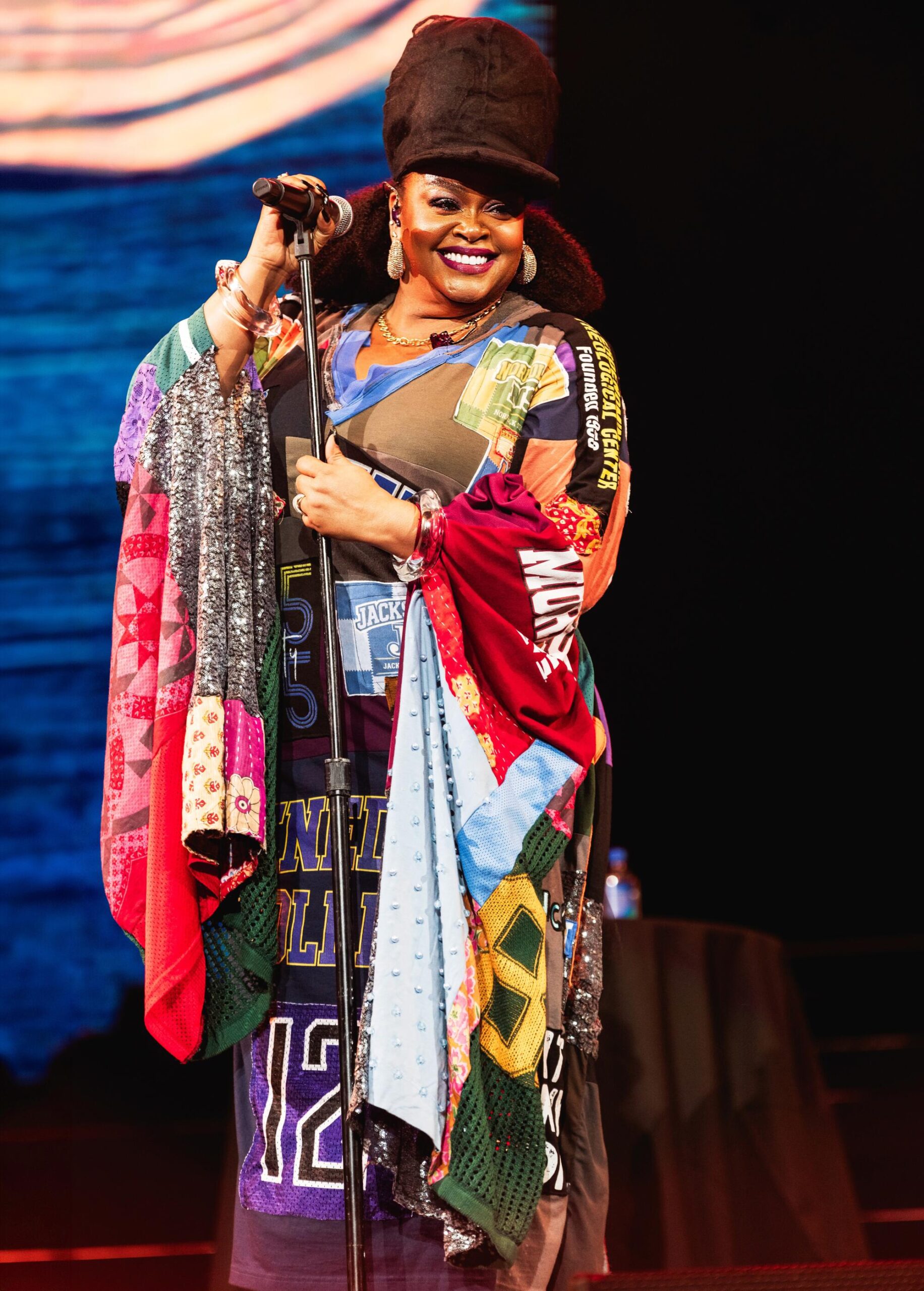
Grammy-winning singer Jill Scott brought her “To Whom This May Concern” album — her first in more than a decade — to life at Inglewood’s YouTube Theater last week. Backed by a razor-sharp 11-piece all-male band (including background singers fittingly dubbed “Freeman”), Scott moved effortlessly through a two-hour set filled with songs from the genre-expansive album along with several fan favorites like “He Loves Me (Lyzel in E Flat)” and “Gettin’ in the Way.”

Enforcing a phone-free policy at her personal request, the North Philadelphia native kept the audience intensely locked in — hanging onto her every word and every seemingly impossible note she struck with ease. Before long, it was easy to forget that we didn’t have our devices. Smiles filled the intimate room. Couples danced together. Strangers sang to each other in joyful unison, while others closed their eyes or held their hands on their chest in complete awe of witnessing a veteran artist in her element.

Jill Scott is on tour for "To Whom This May Concern," her first album in over a decade.

Jill Scott is on tour for “To Whom This May Concern,” her first album in over a decade.

(Jada Imani M)

In her only interview during the tour thus far, we caught up with Scott backstage to talk why she never performs a song the same way twice, how removing devices makes concerts better and why she thinks “To Whom This May Concern” deserves several accolades.

I’m still coming down from all of the energy from the show. How are you feeling post-show?

I am hot from the inside, and it’s gonna take me hours to calm down. [Laughs]

You’ve always described music as an intimate, two-way conversation between you and the audience. For this tour, you created a strictly phone-free space. Why did you decide to do that and how did this shift the experience for you as a performer?

In a couple of ways. One part is that it’s terrifying because there’s no buffer between me and them, so that’s actually scary, but I embrace it. The other part of it is that it’s wonderful because people initially come in kind of nervous about not having a buffer between myself and the space or themselves and space. Then I watch them gradually release, and I get a kick out of that every night. That’s my favorite part.

I’m surprised to hear that it’s scary for someone like you who’s been performing at such a high level for so many years.

Because I care. It matters to me. I really want them to have a good time. I really want them to release some things, allow themselves to be. If you want to make out, if you want to dance, if you want to cry, if you want to shout, or put up your hands in the air, or sit still, I want them to be able to do that. I think it’s important. That’s the relationship. That’s the real relationship between artist and fans of the music. It’s the connection between the music. I’m here to [be of] service. I’m here to push the ship along, but it’s really their relationship with the music and I’m a conduit. That part is probably one of my other favorites. You have to relinquish your id and allow the thing to be the thing. I think sometimes you can practice the joy and the life out of a thing. We practice a lot, but then we forget everything we practice so that it’s alive. My musicians’ freedom is mandatory. It’s a part of the job. So if they show up and play the exact same thing in the exact same way every night, they’re probably not going to be around very long. I need them to be wide open and to rediscover the music every night from their perspective. It’s their 11 perspectives on stage, and then of course there’s the lighting designer. I need him to be free. Don’t give me the same light at the same time every night. Even front-of-the-house sound engineer as well as our in-ear monitors, everybody is playing a part. “What does she need? Let’s read her. Let’s, you know, pay attention. What does she want?” It’s a lot of fun.

You could see really feel that from you and your entire band.

Tonight was a different audience. They were very attentive. Last night they danced all night long from the very beginning. I couldn’t even see the floor. Tonight they were listening. I know it’s a Wednesday night. Everybody’s got to go to work [the next morning], but they were beautiful. The listening audience is probably my favorite. They get quiet and I’m like “Oh, it’s so scary. Am I doing the right thing?” [Laughs] But that means they’re listening. Who doesn’t want to be heard?

Your son came out with you tonight. How was that experience for you?

It’s beautiful to see. He told me Tierra Whack is not traveling with us because she has a new album out, “Whack’s Museum,” so she’s a little busy. He was like, “Mom, how do you feel about me doing the second verse?” and I was like “Be at sound check tomorrow with a mic in your hand.”

He looked so comfortable on stage.

He does. It’s kind of scary. Super exciting. I don’t know what he’ll want to do, but he’s working our set, so he’s a part of the crew. So after he does his performance, he puts back on his blacks and he does his job, and I love that for him, to have that sense of responsibility. He’s exceeding anybody’s and everybody’s expectations. He’s so good at this. All the clothes you see, he steamed up.

He’s really working his way up.

Yes, you must earn your way.

Your album “To Whom This May Concern” released in February, and it feels like a love letter from your favorite auntie. There’s lessons about learning from your mistakes, honoring your ancestors and loving yourself. Now that your fans have been living with these songs for several months, I’m curious if performing them live has shifted your relationship with them at all?

No. On a great night, I like telling the stories that I’ve read. I like embodying them in front of other people. I like watching them experience them in a new way. I’m a fan of that. It just makes it more and more true. Then I see how many people are singing along and how many people are looking at me, and I’m like “Yesss.” It’s reaching the people and I know it’s going to be different because there’s a different audience every night. So I’m thrilled about the project and how it’s touching people. You hope you don’t work this hard at a thing for it to fall on deaf ears, and I know how microwavable music has been, but I believe the cream rises to the top. It’s been a beautiful 26 years. I look forward to 26 more — in my way.

Your album has been receiving a lot of praise from fans and critics. There’s still a few months before the Grammy nominations are announced, but at this point in your career, how important is that recognition to you? Is it as important as it was when you first started your career?

I think I deserve it. That’s all. [Flashes a smile]

I mean everything about this project from beginning to end is blood, sweat and tears. I stayed up many nights just to write, a hunger in my belly and a savage appetite. And I mean it. Everything is true and I love that for me. That’s the kind of thing that takes time and I think musically, it’s incredible. I think the stories are awesome and intentional, and everything about it, from the planning of it to the marketing, has been from my soul, and I think it deserves several.
Source link

10 best books to read in August 2026: fresh releases from Jill Lepore, Claudia Rankin and more

Reading List

10 books for your August reading list

If you buy books linked on our site, The Times may earn a commission from Bookshop.org, whose fees support independent bookstores.

If your summer could use a little energy boost, forget the complicated smoothie — turn to one of these fresh book releases instead. From fast-paced World War II history to a slow-burn rescue in rural Wyoming, along with an art-world mystery and a punchy look at modern America, you’ll find something to galvanize your bedside book stack. Happy reading!

FICTION:

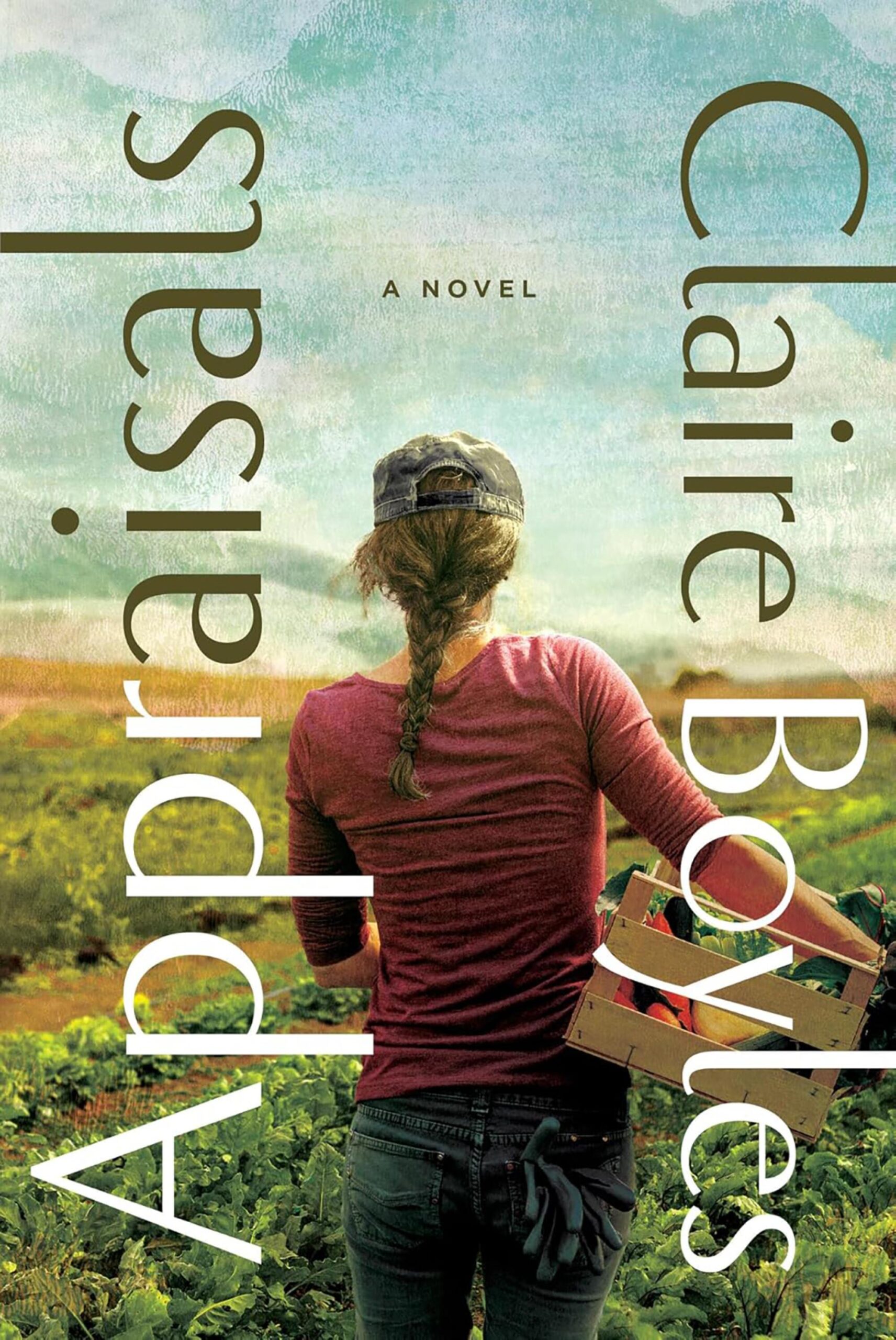
'Appraisals' by Claire Boyles

Appraisals: A Novel
By Claire Boyles
W. W. Norton: 288 pp., $30
(Aug. 4)

While Boyles’ debut novel ostensibly follows the fate of an Eastern Colorado family farm, its deeper purpose involves showing how dire water resources are for all agricultural endeavors in the region. Maggie and her husband Fish have inherited their land from her grandparents, but they and their teenage daughter Ozzie all know that without irrigation, even defeating big development plans won’t make much of a difference to locals.

'The Seekers of Deer Creek' by Thao Thai

The Seekers of Deer Creek: A Novel
By Thao Thai
Mariner Books: 320 pp., $30
(Aug. 4)

Vietnamese American sisters Vivi and Calla are also a curator and an artist. When their father dies and leaves behind a sketch that might be the work of renowned Vietnamese painter K.P. Lý, the siblings embark on a quest to find out whether Lý had connections to their family. Along the way they reexamine their difficult upbringing and find new ways to communicate that matter more than any artwork.

'Etna' by Paul Yoon

Etna: A Novel
By Paul Yoon
Scribner: 208 pp., $28
(Aug. 4)

Anyone who has seen “The Odyssey” with Matt Damon or is anticipating “Heart of the Beast” with Brad Pitt (about a veteran and his war dog), should pick up Yoon’s remarkable tale of a combat survivor in an alternate present who happens to be a former military dog named Etna. His adventures traversing a broken land of haunted people and animals may be less the stuff of future myth and more about trauma, but Yoon brilliantly creates voices for human and canine that make both more whole.

'A Tender Age' by Chang-Rae Lee

A Tender Age: A Novel
By Chang-Rae Lee
Riverhead: 368 pp., $30
(Aug. 11)

Jeon-Gi, known as J-G, is a relatively happy 10-year-old in 1976, until a neighbor’s attack on him fuels his own violent ideas. Although he gets a relatively easy sentence after threatening a classmate, J-G’s parents decide to send him to a Christian summer camp. Incidents there that might be sweet nostalgia for other kids only remind him of how different and lonely he feels inside. However, it’s J-G’s adult reason for sharing his experience that hits home.

'Sunrise' by Tea Obreht

Sunrise: A Novel
By Téa Obreht
Random House: 368 pp., $29
(Aug. 11)

Many, so so many, historical novels seek to tie a contemporary protagonist to a long-ago event or story; so so many fail to make the connections mean anything. That’s why Obreht’s superb and fascinating new book should earn a place on your 2026 reading list: She not only meaningfully connects the stories of a stranded young woman, an early-20th-century gunslinger, and a historical reenactor, but manages to make them illuminate each other.

NONFICTION:

'Triage' by Claudia Rankine

Triage
By Claudia Rankine
Graywolf: 192 pp., $28
(Aug. 4)

The book’s epigraph says a great deal: “Any attempt to name and describe our lives will always seem unstable because all language is a form of triage.” Rankine’s new attempt at triage focuses on her long friendship with a person identified only as “the theorist.” Anecdotes and analysis are interspersed with photos of all sorts of sofas and couches, calling into question ideas about where and how we find respite and support — or not.

'Your Fellow Americans' by Peter Santenello

Your Fellow Americans: Dispatches Across the Country We Call Home
By Peter Santenello
Simon & Schuster: 336 pp., $30
(Aug. 4)

Santenello has over 4 million subscribers on YouTube, where he posts videos about every kind of place in America — rich and poor, renowned and hidden, busy and abandoned. Love or hate the author’s self-described nonpartisan approach, you’ll find this book surprising, particularly as it reveals how geography, climate and infrastructure affect community and communication. Think Anthony Bourdain crossed with Michael Moore.

'Empire of Ashes' by James M. Scott

Empire of Ashes: Truman, Hirohito, and the Descent into Total War
By James M. Scott
W. W. Norton & Co.: 528 pp., $42
(Aug. 4)

Historian Scott (“Black Snow”) creates a propulsive read about the last days of World War II, in which America’s development of the atomic bomb pushed against Japan’s aggressive majority, with tragic results that many — including the author — believe necessary. The contrast between President Harry S. Truman, who had been in office for a matter of weeks, and Emperor Hirohito, whose military seemed unstoppable, remains shocking.

'The People's Historian' by Dave Zirin

The People’s Historian: The Outsized Life of Howard Zinn
By Dave Zirin
Dutton: 320 pp., $33
(Aug. 4)

Recently a friend showed me a list of books recommended by a pundit and asked which one to read first. Without hesitation I told her she should pick up “A People’s History of the United States” by Howard Zinn, first published in 1980 and still the most comprehensive remedial tonic to received wisdom I know. Zirin’s lively biography of this activist should remind everyone that history isn’t just about facts and figures but also context and compassion.

'The Rise and Fall of the Artificial State' by Jill Lepore

The Rise and Fall of the Artificial State
By Jill Lepore
Liveright Publishing Corp.: 336 pp., $30
(Aug. 25)

Hannah Arendt, one of the 20th century’s defining political thinkers, posited that modern life was making “being human superfluous”; her learned successor Lepore warns that our present bears out that idea. One day scholars will teach Lepore’s work alongside Arendt’s, seeing that Lepore interrogates not simply a modern moment, but traces our current machine age back to the 17th-century conceit for artifice as improvement. According to her, the way out is to get back to nature. Meet you in the woods.

Source link

‘Unhelpful’: Top Democrats say Jill Biden’s memoir is reopening 2024 wounds

Democrats have spent nearly two years trying to move past the 2024 presidential election. Now, Jill Biden’s new memoir is forcing them to relive it.

Her new book, “View from the East Wing,” which comes out Tuesday, is already drawing sharp rebukes from top Democrats, some of whom say it is a poorly timed and misleading account of the events that led to the demise of her husband’s presidency.

“Unhelpful … Ripping open a healing scab is never helpful,” John Morgan, a Florida trial attorney who was a major fundraiser for Biden’s 2024 campaign, told The Times. “In my opinion, she was the main problem. She loved the life and didn’t want it to end.”

Those type of frustrations erupted last week as the former first lady began promoting her book, including in a sit-down interview with CBS News airing Sunday, in which she said she thought the sitting president was having a stroke as she watched the 2024 presidential debate.

“I was frightened, because I had never ever seen Joe like that before or since. Never,” Biden said. The moment “scared me to death,” she added.

For Democrats who had a similar reaction in real time, but who spent months being told by the Biden campaign that their concerns were overblown, her remarks landed like a gut punch. With the midterms around the corner, some bemoaned that Biden was relitigating a sore subject — particularly the question of who knew what about Biden’s aging and cognitive decline.

“What I care about is what happens going forward,” Dan Pfeiffer, a host of “Pod Save America,” a popular progressive podcast, said on the show Thursday. “What bothers me the most is not the timeline of events, but whether Democratic leaders now will ever reckon with the massive breach of trust that came because of how all of that was handled.”

Meghan Hays, a former White House aide to Joe Biden, said on C-SPAN’s “Ceasefire” that although she understands that Jill Biden is trying to sell books, her efforts are not helping the party ahead of the midterm elections.

“We have a lot of momentum in our favor … and when we get pulled back into conversations about age and the election in ‘24, it’s never gonna be a good place for Democrats,” Hays said. “I think it is a tough place to be.”

The Democratic Party found itself trapped in a similar dynamic earlier this month, when the Democratic National Committee released a long-awaited, 192-page report dissecting the 2024 loss. The committee’s chairman, Ken Martin, shared the postelection autopsy after coming under intense pressure from Democratic operatives, and apologized for how he handled its release.

The report faulted Kamala Harris and Democrats’ focus on “identity politics” but did not address Biden’s decision to seek reelection amid health concerns and the rushed selection of Harris to replace him on the ticket.

In her book, the former first lady writes that her goal is to be able to “set the record straight” about what happened during the debate and the months that followed that led to President Trump’s return to the White House, according to the Atlantic, which obtained a copy of the book ahead of its release.

At one point, she writes that she even suspected her husband may have been inadvertently impaired after taking cough syrup. In the CBS interview, Biden maintained that she never saw any signs of cognitive decline while he was the sitting president.

“He was the same, the essence of the same Joe Biden, but yeah, he was slowing down. He was getting older,” she said. “You know, it’s a very intense job. I think it ages you — quickly.”

Morgan, the former Biden fundraiser, said he does not believe the first lady is telling the truth in her memoir.

“If you like fiction it’s good,” Morgan said. He added that her claim that she had never witnessed her husband act in a similar way since the debate “defies the smell test.”

“His keys should have been taken long before that night,” Morgan said.

Michael LaRosa, a former press secretary for the first lady, called Democrats’ reaction to the new memoir “pretty grim.”

“There is a deep reservoir of frustration among ‘formers’ who believe she enables the culture around her and the President rather than challenging it,” LaRosa wrote. “So now they seem to be challenging her.”

Although many Democrats are publicly expressing their annoyance at the conversation Biden has resurfaced, others do not see the former first lady’s comments having an effect on the upcoming elections.

“This is not going to be part of a conversation in the election. It’s going to be part of a conversation in Washington because that is what Washington does, but this is not going to move the needle in New Hampshire or other states where it matters,” said Steve Schale, a Democratic strategist who ran a pro-Biden super PAC during the 2020 election cycle.

Schale was blunt: “She is selling books.”

Even if that is the case, Republicans are taking notice.

In a Truth Social post on Friday, President Trump appeared gleeful to note that Biden was “finally admitting” that she did not know what was wrong with her husband during “our spectacular, and highly rated, 2024 Presidential Debate.”

The president lamented that the former first lady did not compliment his performance.

“In other words, as many have asked, did my strong performance in that debate cause him to plain and simple ‘choke,’ leading to his ignominious defeat, or were other reasons the cause? Nobody else knows the answer to that, BUT I DO!!!” Trump wrote.

Source link