Jerusalem

Israel uses law to destroy Palestinian education in East Jerusalem | Israel-Palestine conflict

On Tuesday, the Chairman of the Knesset’s Education Committee, Zvi Sukkot of the far-right Religious Zionist Party, arrived at a Palestinian school in East Jerusalem for a “surprise visit” – his second in two weeks. He did not come to evaluate pedagogy or classroom conditions or needs. Instead, he smashed the school’s entrance sign because it featured a Palestinian flag and publicly pledged to shut it down.

This storming of the school was more than just a publicity stunt meant to appeal to his political base ahead of Israel’s October 2026 elections. It was the physical embodiment of a sweeping state campaign targeting Palestinian education in unlawfully occupied and annexed East Jerusalem.

Sukkot is using his position to physically police Palestinian schools. This move comes on top of the Knesset’s aggressive legislative campaign to destroy Palestinian education in East Jerusalem that lawmakers have pushed in recent years.

One such law, passed in January 2026, bars graduates of Palestinian universities in the West Bank from working as teachers in Israel and in East Jerusalem. This law is based on racist ideology and extremist claims that graduates of these universities are inherently dangerous and morally unfit to be educators.

The motives of the law’s proponents were made clear during Knesset deliberations: advancing what several MKs called the “Israelisation” of the educational system and of the students, even at the expense of access to education. In a May 2025 Education Committee session, one Likud MK claimed that this law is needed as teachers who graduate from Palestinian universities “do not cultivate Israelisation” among their students.

The law passed despite the devastating consequences it is bound to have on the already fragile and disadvantaged Palestinian education system in East Jerusalem. This system is largely dependent on graduates of West Bank universities – who are overwhelmingly women – and it already has a serious shortage of teaching staff and classrooms.

Another law, passed in November 2024, which is widely referred to as the “Silencing Law”, gives the Israeli Ministry of Education full discretion to suspend or dismiss teachers through a fast-track administrative process. It targets speech the ministry deems to be “incitement to terrorism”, based on the ambiguous and arbitrary clauses of the Israeli Counter-Terrorism Law, which has become a catch-all mechanism to criminalise Palestinian speech.

The 2024 law also gives the ministry the right to revoke funding from schools on these same grounds, potentially leading to their closure.

Here too, the Knesset Committee’s deliberations on this law revealed an explicit targeting of the Palestinian education system in East Jerusalem and lawmakers’ views that this system is a security threat that must be dealt with. As a Likud MK said during an early 2024 Education Committee discussion on this proposed legislation: “It’s very important that they become Zionists… If I was an Arab from East Jerusalem, the first thing I would be is a Zionist. Above all”.

MK Sukkot’s pledge to shut down the school he attacked is not an idle threat. It follows the closure of six schools in East Jerusalem and its outskirts in 2025, which left 800 Palestinian children suddenly without access to formal education. These closures were the immediate result of the 2024 and 2025 anti-UNRWA laws passed by the Knesset.

The legislation and MK Sukkot’s physical vandalism of a Palestinian school demonstrate the state’s efforts to impose “Israelisation” on young Palestinian students living under occupation, and to erase any trace of Palestinian education and identity, even at the cost of trampling on every legitimate pedagogical need along the way.

Adalah – The Legal Center for Arab Minority Rights in Israel – is currently challenging all of these laws before the Israeli Supreme Court, with pending petitions against the ban on Palestinian university graduates, the “Silencing Law” targeting teachers’ political expression, and the anti-UNRWA laws.

We will continue to do all that we can to legally resist the campaign against Palestinian education. But the state’s assault on Palestinian schools will not stop until there is genuine international pressure on the Israeli government to stop its violations of nearly all the human rights of the occupied Palestinian population in East Jerusalem, including the right to education and the right to dignity.

The views expressed in this article are the author’s own and do not necessarily reflect Al Jazeera’s editorial stance.

Source link

US signs $1 lease with Israel to build permanent embassy in West Jerusalem | Construction News

NewsFeed

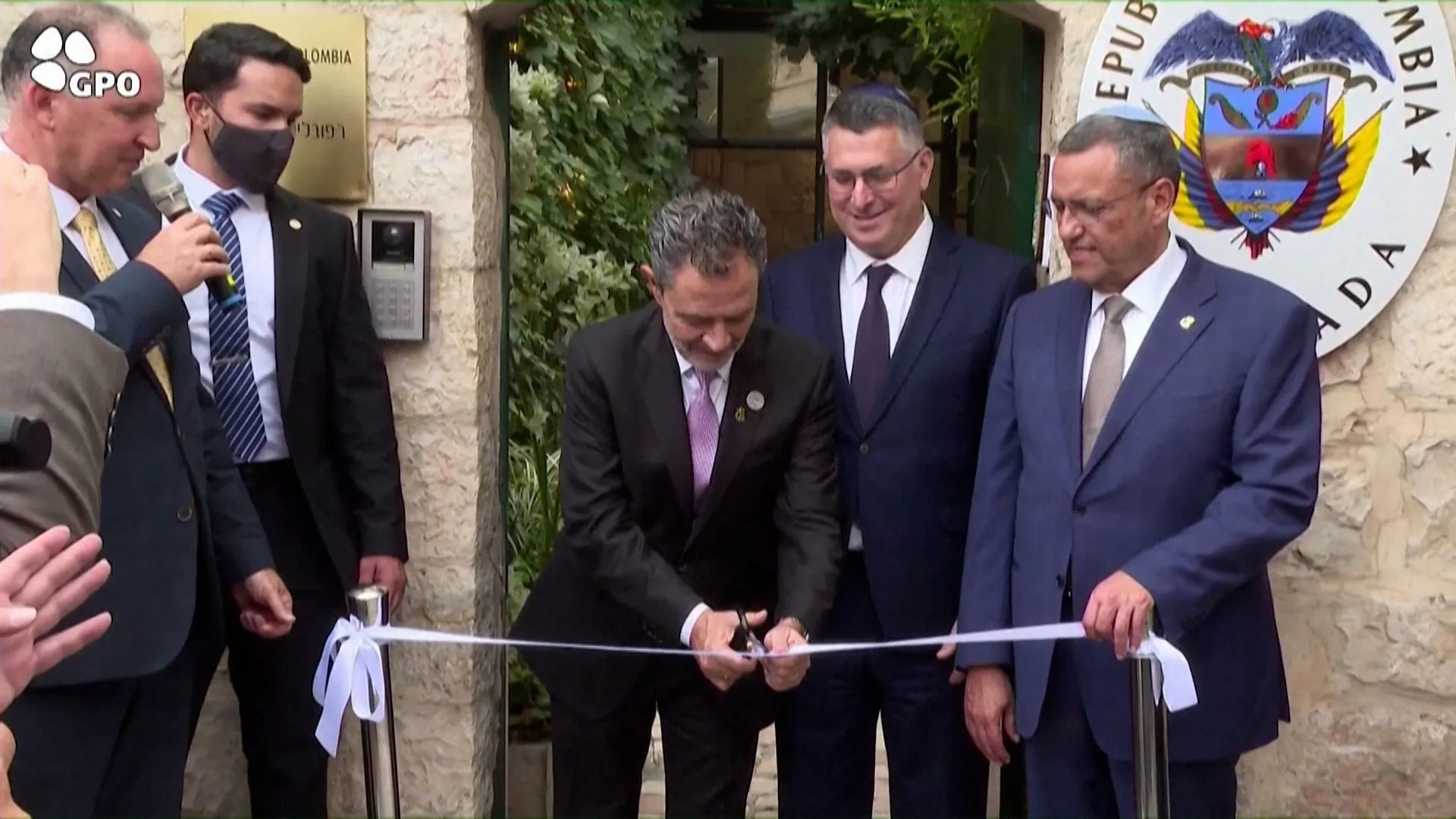
The US and Israel have signed a deal allocating land for a permanent US embassy in West Jerusalem, years after a temporary one was established during Trump’s first term in office. The move is yet another blow to the hopes of a future Palestinian capital.

Source link

For Christians in Israel and Jerusalem, intolerance is becoming normal | Religion News

At first sight, last week’s unprovoked attack on a French nun walking along a street in occupied East Jerusalem came without warning. However, for the roughly 180,000 Christians living in Israel – and the 10,000 or so Christians living in East Jerusalem – the attack is the latest in a growing number of incidents of abuse, assault, and intimidation that the community says has increased in tandem with Israel’s turn towards far-right nationalism.

While incidents of violence and arson grab the attention, low-level incidents of spitting, insults, and disparaging graffiti have become a daily experience for many Christians in the area – the majority of them Palestinian – contributing to the desire on the part of nearly half of all the religious community under 30 to leave.

Recommended Stories

list of 4 itemsend of list

Israeli officials have been quick to condemn the attack on the nun, calling it “despicable” and with “no place” in Israeli society. A man has also been arrested, after the arrest of Israeli soldiers blamed for smashing a Christian statue in southern Lebanon last month.

But ultimately, trust in the Israeli state is thin on the ground, with many of the incidents going unreported, analysts say.

Christians in Israel and East Jerusalem have been present in the area for more than 2,000 years. But they now find themselves attacked by Israelis, just for practicing their faith.

According to the volunteer-run Religious Freedom Data Center (RFDC), in the first three months of this year, Christians reported 31 incidents of harassment, most involving spitting or defacing church property. Last year, analysts with the interreligious Rossing Center for Education and Dialogue tracked 113 known attacks on individuals and church property in Israel and occupied East Jerusalem, including 61 physical assaults mainly targeting visible members of the clergy, such as monks, nuns, friars, and priests.

‘It’s definitely increased in the last three years,” said Hana Bendcowsky, programme director at the Jerusalem Center for Jewish-Christian Relations. “Resentment toward Christianity existed in the past as well, but people did not dare express it openly.”

“Over the past three years, the political atmosphere in Israel – where there is less concern about how the world perceives us – has led people to feel more comfortable harassing Christians,” Bendcowsky added. “This broader sense of Israeli isolation, and the reduced concern about international reactions, is also reflected in the way the State of Israel has acted regarding what has taken place in Gaza and southern Lebanon.”

Rising nationalism

Israel’s shift towards ultranationalism, particularly when it comes to policies towards Palestinians, has intensified under the current government of Prime Minister Benjamin Netanyahu. Under his administration, far-right voices that were once at the fringes of Israeli society have become incorporated into its heart, and now play defining roles in government.

Fuelled by a not entirely unfounded sense of impunity, a survey by the Rossing Center for Education and Dialogue last year found it was largely ultra-Orthodox and ultra-nationalistic Israelis who were responsible for the majority of attacks on Christians.

“The hate and attempt to harass non-Jews by some of the elements, particularly settler elements, knows no bounds,” Rabbi Arik Ascherman, an Israeli peace activist, told Al Jazeera. “Therefore, anything from spitting, harassing, and desecrating, to government actions to prevent churches from bringing in staff and clergy from abroad…  is simply part of the reality here.”

Bendcowsky noted that “the complexity of Jewish–Christian relations goes back to the early centuries.”

“While some churches have undergone processes of rethinking their attitudes towards Jews and Judaism and have begun a path of healing, this has not yet taken place within Israeli Jewish society,” she said. “In education, the focus is on Jewish victimhood, so the lack of familiarity with Christians, together with the historical memory of Christianity, tends to be negative. In the current political climate, there are those who exploit this as a chance to strike back.”

Incidents are rarely reported, researchers say, with concern over foreign visas, or not wanting to draw attention to the issue, mixing with a profound absence of confidence in the state to take action.

‘There’s an absolute lack of confidence in the police, and I think that’s leading to many of the attacks going unreported,” Bendcowsky said. “Unfortunately, that’s often borne out by the evidence. Unless an incident gains international attention, particularly in the US, it often goes uninvestigated, or investigations are closed without any official conclusion.”

Losing support

High-level international objections to attacks on Christians and Christianity, especially those coming from Israel’s principal backers in the United States, have typically elicited swift responses from the Israeli government.

After viral footage of Israeli soldiers destroying a Christian statue in southern Lebanon sparked international outrage, the Israeli prime minister’s office was swift to publish its own condemnation. And in March, following a backlash from many world leaders, including avowedly pro-Zionist US Ambassador to Israel Mike Huckabee, after Israeli police prevented Latin Patriarch of Jerusalem Pierbattista Pizzaballa from reaching the Church of the Holy Sepulchre, official apologies and “clarifications” were quick in coming. But Israeli military attacks on Christian churches in Gaza and Lebanon have only been acknowledged when international and specifically US sympathy for Israel risks being undermined.

In Israel, Christianity is often associated with the Palestinians – and it is therefore perhaps inevitable that as Israel becomes increasingly unrepentant in its killing of Palestinians and seizure of their land, Palestinian Christians and other Christians in the area will not find themselves spared.

Shaiel Ben-Ephraim, an Israeli analyst with Atlas Global Strategies, said that he has noticed intolerance towards Christians increasing. He noted that along with Israel’s violence in Gaza and the wider region, this is contributing towards Israel’s increasing unpopularity worldwide and in the US, and making it more difficult for Christian supporters of Israel to square their support for the country with its treatment of their co-religionists on the ground, a plight they have ignored for decades.

‘In the long term, these attacks on Christians are massive,’ Ben-Ephraim told Al Jazeera.

“Older evangelicals may be forgiving, but the young are already turning against Israel,” he said. “This erodes the little support [Israel has] left. So, while current-day leaders like [US President Donald] Trump and Huckabee will pretend this isn’t happening, this will shape an entire generation of religious Christians in a way that Israel does not even begin to imagine.”

Source link

Greek Orthodox Church sounds alarm over attacks on Christians in Jerusalem | US-Israel war on Iran News

Warning follows Jewish man’s arrest over brutal attack in which a nun was pushed and kicked in Jerusalem this week.

The head of a Greek Orthodox Church in Jerusalem has condemned a brutal attack on a nun in the city earlier in the week and warned of growing concerns over the future for Christians living in the Holy Land.

Archbishop Atallah Hanna said on Facebook that “the attack on a nun in the city of Jerusalem comes amid escalating violations against Christian institutions in the city”.

Recommended Stories

list of 3 itemsend of list

He added that “this reflects increasing concerns about the future of the historic Christian presence in the Holy Land”.

In his post, which was accompanied by a video, he warned that such attacks “are no longer isolated incidents, but part of a recurring pattern that threatens the Christian presence,” calling for international action to stop them.

On Thursday, Israeli police released a video showing what witnesses said was an attack by a Jewish man on a French nun in Jerusalem on Tuesday.

Video footage showed the man following the nun, forcibly pushing her to the ground, causing an injury to her head, then briefly walking away before returning to kick her as she lay on the ground, before bystanders intervened.

According to The Times of Israel, police said they had arrested a Jewish man suspected of assaulting the nun in Jerusalem.

“The suspect, a 36-year-old male, was identified and subsequently arrested by police,” the police said in a statement on Wednesday, adding it viewed with “utmost severity” any violent act “driven by potentially racist motives and directed toward members of the clergy”.

Father Olivier Poquillon, director of Jerusalem’s French School of Biblical and Archaeological Research, told the AFP news agency the 48-year-old nun is a researcher at the institution and did not wish to speak publicly.

Rising attacks on Christians

Attacks on Christian communities in occupied East Jerusalem and Israel have risen in recent years, according to the Rossing Center for Education and Dialogue, which tracks such incidents.

Churches in Jerusalem have repeatedly called on Israeli authorities to act decisively to put a stop to them.

On Tuesday, Israel’s Foreign Ministry called the incident a “shameful act” in a statement on X.

“In a city sacred to Jews, Christians, and Muslims alike, we remain committed to protecting all communities and ensuring those responsible for violence are held accountable,” the ministry added.

Last month, a viral photograph showing an Israeli soldier smashing a statue of Jesus Christ in southern Lebanon with a sledgehammer caused outrage.

The military said an investigation had been opened and that “appropriate measures will be taken against those involved in accordance with the findings”.

Israel later said the soldier had been jailed for 30 days, along with another soldier who had been filming him. Six other soldiers have been summoned for questioning.

Source link