issues

Chinese GP qualifying: Antonelli takes pole after Russell issues

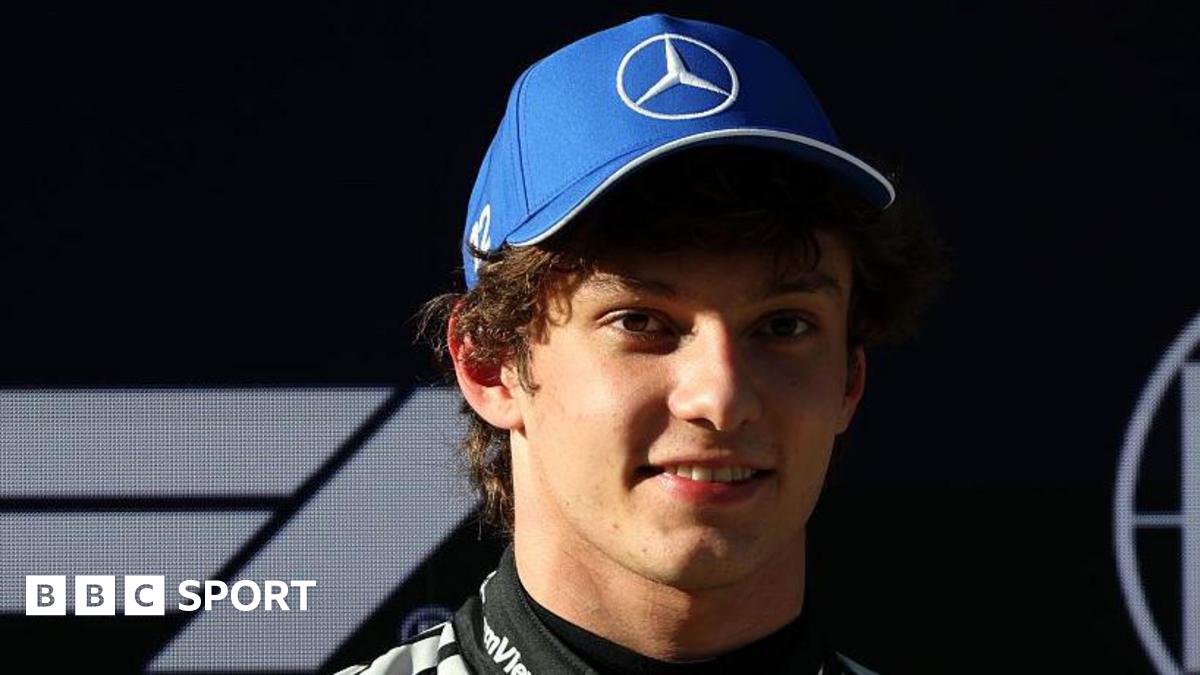
Antonelli’s new record – he is 19 years and 212 days old – beat the previous held by Sebastian Vettel, who was 21 years and 72 days old when he took pole at the 2008 Italian Grand Prix.

Antonelli said he was “very happy” but accepted that he might well not have taken pole had Russell had a problem-free qualifying.

He said: “George had an issue, so probably could have been a different story but happy to be on pole for the first time.”

Russell described his second place as “damage limitation” after a litany of problems through qualifying.

The championship leader said: “It was a crazy session. Front wing broke at the end of Q2. The team weren’t sure it had broken but I was sure it had. Then got stranded on track and just made it back out in time. It was more a case of just getting a lap done.

“P2 is better than I was expecting when I started the lap with no battery and tyre temperature. Really happy to be here because I could have been down in 10th.”

In the first session, Leclerc became the first driver to beat Russell in a competitive session this year with a time just under 0.1secs quicker than the Briton.

Then in the second session, Russell ended up third fastest behind Antonelli and Leclerc after he suffered a broken front wing flap.

Heading out for the final session with a new wing, Russell’s car stopped on track on his out lap as the gearbox refused to change gear.

Antonelli drove past his team-mate as he set the fastest time on his first flying lap, 0.3secs quicker than Leclerc.

After frantic work in the garage, Mercedes managed to fix Russell’s car by applying a series of default procedures such as switching the car off and on again and swapping out the steering wheel.

He got just out in time to set a lap but his rushed preparation meant the car was not in its optimum condition as he went for a time.

However, Antonelli had his own problems on his final run – he suffered the same front wing problem has Russell had done in Q2.

Hamilton, who tussled with Russell for the lead in the opening laps of the sprint race earlier on Saturday, was 0.351secs off pole and said he had hopes of challenging the Mercedes again in the grand prix.

“It was a really tough qualifying,” Hamilton said. “A bit harder with the wind. It is so gusty today. So challenging.

“Really happy and grateful to be up here with these guys. Engineers did some great work over the break and managed to get a little closer to these guys.

“It’s still going to be a challenge but I am sure we’re going to have some fun. Learned a lot in the sprint race and our goal is to break the gap to these guys somehow.”

The McLarens were just over 0.1secs behind the Ferraris and Norris said: “We’re happy we’re close to them, gives us a good shot at tomorrow.”

But Verstappen was downcast to be nearly a second off the pace in the Red Bull.

“We change a lot on the car, and it makes zero difference,” the four-time world champion said.

“The whole weekend we’ve been off. The car is completely undriveable. I cannot even put a bit of a reference in. Every lap is like survival.”

Source link

Foreign Office issues fresh travel guidance for anyone heading to the US

A warning about ‘additional information about existing entry requirements’ has been issued

The Foreign, Commonwealth and Development Office (FCDO) has released new travel guidance for the USA. The update was released earlier today (Friday, March 13).

The FCDO explained that the amendment pertains to ‘additional information about existing entry requirements and new information on possible travel disruption’. It was posted on the official ‘Foreign travel advice’ page.

The most recent advice also encompasses American Samoa, Guam, Northern Mariana Islands, Puerto Rico, and United States Virgin Islands. The website states: “There could be longer than usual queues at some US airports due to a partial US government shutdown. Check with your travel provider, departure airport or airline for the latest guidance.

“You must have the correct approval prior to travel. This will be either a valid US visa or Electronic System for Travel Authorisation (ESTA), depending on your personal circumstances and purpose of travel.

“US authorities enforce entry rules strictly. If you do not have the correct immigration status, or if you breach the terms of your entry, there is a risk you may be detained, refused entry, or removed (deported). Overstaying your permitted time in the US can also lead to detention and future bans on re-entry.

“A valid ESTA or visa does not guarantee you will be allowed to enter the US. Authorities may refuse you entry if, for example, they believe you do not plan to stay longer than permitted or have provided inaccurate or incomplete information. The US may change the conditions to travel to the US at any time without prior notice.”

READ MORE: Iran war – Simon Calder explains rules to Brits with holidays booked to Turkey or CyprusREAD MORE: ‘I left London for Germany – rent’s cheaper, but I still miss one thing from home’

The US is set to co-host the World Cup later this year, with the tournament running from 11 June to 19 July. If you’re planning a trip to the US during this period, check out the World Cup page for additional details. Further advisories include ensuring your passport is valid for the duration of your intended stay.

If your journey involves transiting through another country en route to or from the US, make sure to verify the entry requirements for that nation. Many countries only permit entry if your passport has at least six months’ validity remaining.

To gain entry or transit through the US, you’ll need either an Electronic System for Travel Authorisation (ESTA) or a visa. More information on visas can be found on the US State Department’s website.

Travellers whose gender on their passport differs from their birth-recorded sex should seek further advice from the US Embassy or a consulate in the UK.

Officials may request to examine your electronic devices, emails, text messages, and social media activity. Refusal could result in delayed or denied entry.

More information on electronic device searches can be found on the US Customs and Border Protection website.

Source link

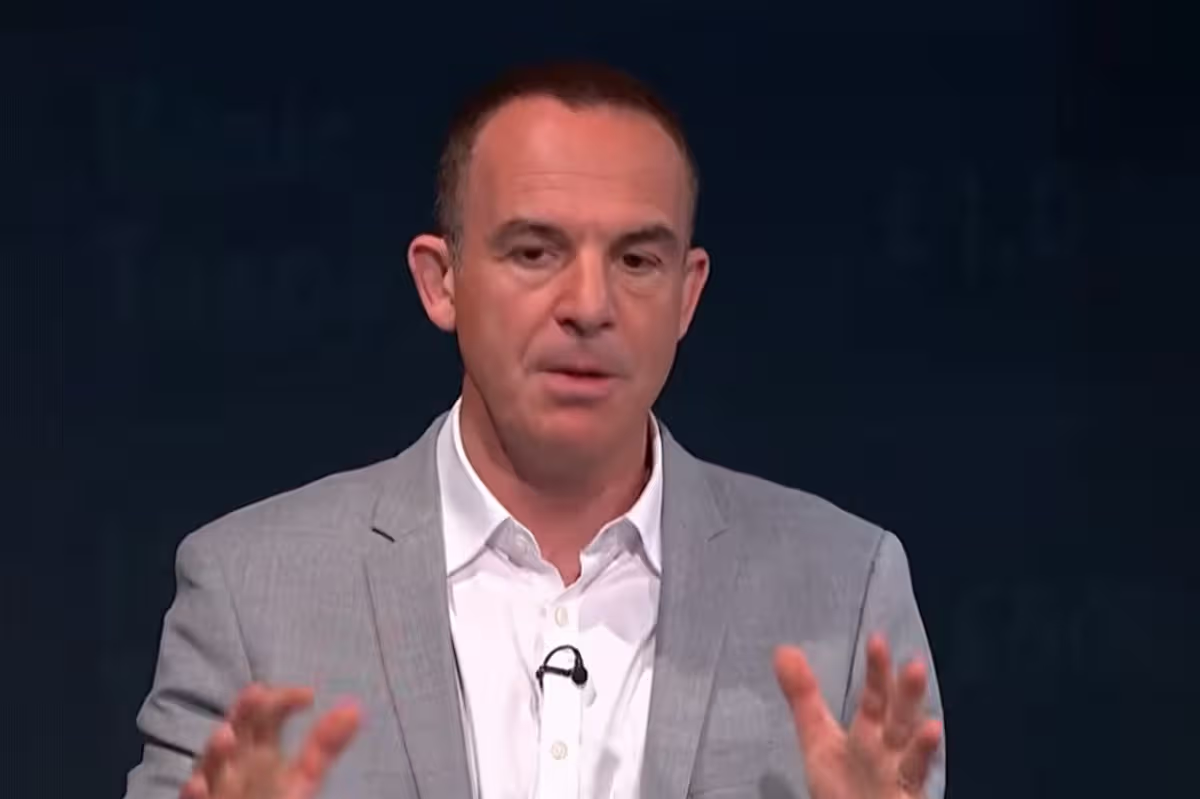
Martin Lewis issues alert to anyone with more than £11,000 in savings

Martin Lewis has explained the personal savings allowance and when basic rate taxpayers with over £22,000 in savings could pay tax on interest earned

Martin Lewis has issued a tax alert for savers, with a particular warning for those holding more than £11,000 or £22,000 in savings, depending on their tax bracket. On his ITV programme this week, Mr Lewis provided savers with guidance on structuring their savings to prevent unnecessary tax charges on interest.

He began by explaining the personal allowance, which permits anyone to earn £12,570 before any tax is levied. This threshold has remained frozen since 2021, and last November Chancellor Rachel Reeves controversially extended this freeze until 2031.

The freeze has faced criticism for creating ‘fiscal drag’, meaning more of the lowest earners in the country now pay tax as inflation and wage rises leave them with less disposable income whilst facing higher taxation.

On this he said: “The first one, the personal allowance, £12,570 a year that you can earn from any source, earnings, rent, savings, interest without paying tax on. Most people get that unless you start earning over £100,000 when it’s taken away.”

Starting Rate for Savings Tax.

Mr Lewis said: “The next one not that many people know about is called the starting rate for savings. This is another £5,000 of savings. savings interest you can earn a year on top of the personal allowance. And this is designed for people who have low work earnings but high interest on savings. Often people who are retired. And here’s how it works.

“For every pound of earnings you earn above this allowance, you lose a pound on your starting savings rate. So imagine you earn £13,570. You’re a £1,000 above that. You can now only have £4,000 of tax-free interest in your savings due to the starting savings rate. And by the time you earn from work £17,570, this is gone. So it’s only for people on low work earnings and high interest on savings.”

Content cannot be displayed without consent

He previously outlined that those in the ‘perfect circumstance’ would receive £12,570 from earned income. Mr Lewis explained the individual would then gain £5,000 through the starting savings allowance, plus £1,000 from the personal savings allowance on top ‘because they all go on top of each other’.

He added: “You could earn £18,570 a year tax-free with £12,570 of it coming from work or other sources, and another £6,000 of it coming from savings. I hope that makes sense. The main two for most people are the personal allowance and the personal savings allowance, but for those on lower incomes, it’s worth reading the starting savings allowance guide that’s our money saving expert just so you really understand it.”

Personal savings allowance

Mr Lewis described this as the ‘big one’ and said: “Next, we get the big one that many of you will know about, the personal savings allowance. And this is on top of those two. This is the fact that a basic rate taxpayer, 20% taxpayer, can earn £1,000 a year of interest in any form of savings at all without paying tax on it. Now, the top savings accounts at the moment pay about 4.5 per cent. So, you need about 22,000, just a little over £22,000 in the top savings account before you earned £1,000 interest.

“So, if you got less than that, you’re not going to be paying tax on your savings interest because it’s tax free. High rate tax because it’s within your personal savings allowance. High rate taxpayers pay £500 a year of interest they can make each year tax free. It’s about £11,000 saved at the top rate.

“If you’re an additional rate taxpayer earning over £125,000, you don’t get one of these. So, you got your personal allowance, your starting rate for savings, and on top of that up to another £1,000 in your personal savings allowance.”

For the 2025/26 tax year, the UK Personal Allowance stays at £12,570, with a 20% basic rate (up to £50,270), 40% higher rate (£50,271-£125,140), and 45% additional rate (over £125,140) applying to England, Wales, and Northern Ireland.

ISAs

Mr Lewis stated that this week’s show was focused on ISAs, explaining: “You can put up to £20,000 a tax year in, as you know. And crucially, the interest earned in a cash ISA does not count towards the personal allowance, does not count towards the starting rate of savings does not count towards the personal savings allowance. It is totally separate from that. So, anything you earn in there is not taxable. I should note premium bonds work roughly the same way, but it’s not an annual allowance. It’s a maximum £50,000 you can put in in total. Those are the main ways that you can save without paying tax on them.”

Source link

Iran war – travel expert Simon Calder issues Dubai, Qatar and Abu Dhabi flights update

Travel in the region continues to be severely disrupted

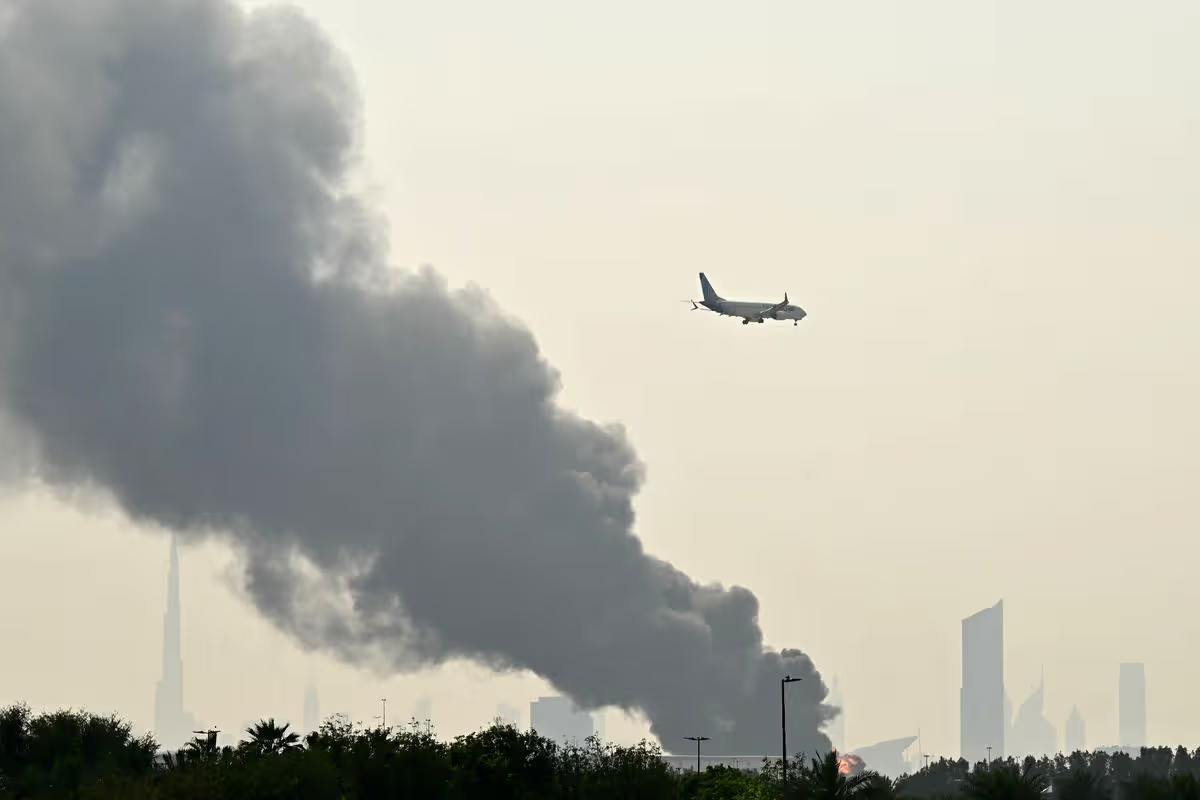
Travel expert Simon Calder has shared his thoughts on the prospect of ‘normality’ returning to airports in the Middle East. Flights to and from the region continue to be severely disrupted in the wake of the US-Israeli attacks on Iran.

A multitude of flights to and from Dubai, Qatar, and Abu Dhabi – all three being vital transport hubs for individuals travelling to and from the Gulf and Asia – have been cancelled. Approximately half a million passengers typically utilise these airports daily.

More than 37,000 Brits have made their way back to the UK from the Middle East since the crisis response commenced, with it believed that tens of thousands more remain stranded.

Mr Calder has been regularly updating on the crisis, which began on February 28. He stated that whilst he anticipates an increase in the number of flights departing from the region, there’s no definitive end to the disruption in sight.

Content cannot be displayed without consent

“There are tickets now being sold by Etihad out of Abu Dhabi,” he revealed. “Which is an interesting development. On top of that, I expect there to be a ramp-up in flights out of Doha and out of Dubai, but at the moment we are still a long way away from anything that could be described as normality, whatever that looks like.

“You know, the idea that you have half a million people flying to, through, and from the three big hubs of Dubai, Doha, and Abu Dhabi every day. And it’s an interesting question as to what on earth happens when, of course, the war is finally over, which cannot come soon enough. But anyway, so I hope that people will be able to get out.”

READ MORE: ‘Iran war means we’re stuck in the Maldives – it’s costing us thousands’READ MORE: Dr Amir Khan message for people on lansoprazole, omeprazole, or pantoprazole

On Monday, 16 out of the 18 scheduled flights from the UK to Qatar were cancelled due to ongoing airspace closures, according to aviation analytics firm Cirium.

Eleven out of 33 flights from the UK to the United Arab Emirates – encompassing Dubai and Abu Dhabi – were also scrapped. It’s anticipated that clearing the backlog of stranded passengers caused by the conflict will take weeks.

“British Airways has taken the view that we’re not going into Dubai or Abu Dhabi or Doha,” Mr Calder explained. “If you want to fly out, we’re happy to do that, but we’re going to be arranging flights from Muscat and looking at Friday night’s Virgin Atlantic flight to Dubai, that was arguably a good call because the effect was that the flight got to within maybe a couple of hundred miles of Dubai over Saudi Arabia and then turned around because of the attack on Dubai airport.

“It flew back, couldn’t get all the way back, went to Budapest to refuel and then continued to Heathrow. So it was roughly, I think, something like an 18-hour flight to nowhere.”

Source link

Thousands flee Akobo after South Sudan army issues forced evacuation order | Conflict News

Thousands of civilians have fled an opposition stronghold in eastern South Sudan after the army ordered evacuations to clear the way for a military offensive, the latest sign that the country’s fragile peace is unravelling, as fears of a return to all-out civil war haunt the world’s youngest nation.

The town of Akobo, near the Ethiopian border, was almost completely emptied by Sunday after the South Sudan People’s Defense Forces issued an ultimatum on Friday demanding that civilians, aid workers and United Nations peacekeepers leave ahead of a planned assault.

Recommended Stories

list of 2 itemsend of list

“The town is now almost empty,” said Nhial Lew, a local humanitarian official. “Women, children and the elderly have left and crossed into Ethiopia.” By Sunday evening, he could hear the conflict closing in. “We are hearing the sound of machine guns approaching,” he told the Associated Press news agency.

The army’s deadline was set to expire Monday afternoon.

The order extends a government counteroffensive, launched in January and dubbed Operation Enduring Peace, that has already displaced more than 280,000 people across Jonglei state since December, when opposition forces began seizing government positions.

The UN’s Commission on Human Rights in South Sudan warned of a possible “return to full-scale war” if the country’s leadership didn’t take the challenges it faces more seriously.

“Preventing further mass atrocity crimes, institutional collapse, and the destruction of South Sudan’s fragile transition requires urgent coordinated national, regional and international re-engagement,” the report said.

Akobo, which had been considered a relatively safe haven and sheltered more than 82,000 displaced people, is one of the last remaining strongholds of the Sudan People’s Liberation Movement-in-Opposition, or SPLM-IO, the armed movement loyal to South Sudan’s detained former vice president, Riek Machar.

Two UN flights evacuated most humanitarian staff on Sunday, though the International Committee of the Red Cross had not yet pulled its personnel from a surgical unit it runs at the local hospital, where wounded patients were still being treated.

“We are worried for our patients,” said Dual Diew, the county health director. “We tried to make a plan to take them to a safer location, but we don’t have enough fuel.”

The offensive comes amid a wider breakdown of the 2018 peace agreement that ended a civil war between forces loyal to President Salva Kiir and those backing Machar, a conflict that killed an estimated 400,000 people and forced millions from their homes.

Machar has been under house arrest in the capital, Juba, since March 2025, facing charges of treason and murder that his supporters say are politically motivated.

His detention coincided with a sharp rise in armed opposition activity, and a UN inquiry has since found that South Sudan’s leaders have been “systematically dismantling” the accord.

Conflicts have taken place across the country among groups associated with the two factions, said Jan Pospisil, a South Sudan researcher who spoke to Al Jazeera.

Dozens killed in the north

On Sunday, at least 169 people were killed, among them 90 civilians, including women and children, when armed men stormed a village in Abiemnom county in the country’s north.

The local administrator blamed the attack on elements of the White Army, a militia historically allied to Machar, alongside SPLM-IO-affiliated forces. The group denied any involvement. More than 1,000 people sought shelter at a UN base in the area.

“Such violence places civilians at grave risk and must stop immediately,” said Anita Kiki Gbeho of the UN mission in South Sudan.

Aid organisations operating in the conflict zone have also been targeted, with Doctors Without Borders, known by its French initials, MSF, saying on Monday that 26 of its staff remain unaccounted for, a month after a government air strike destroyed its hospital in the town of Lankien and a separate facility in Pieri was looted.

Staff who had been reached described “destruction, violence and extreme hardships”. It was the 10th attack on an MSF facility in 12 months.

“Medical workers must never be targets,” said Yashovardhan, the charity’s head of mission in South Sudan, who uses only one name.

Pospisil said the crisis had exposed the fragility of Kiir’s hold on power.

“The state is literally falling apart,” Pospisil said, referring to the convergence of conflict in the country and the elderly state of the president, whose condition has raised questions.

Pospisil added that the outcome of Machar’s ongoing trial would likely shape what comes next.

Source link

T20 World Cup: ICC rejects claims of “bias” over travel issues caused by Iran war

Windies coach Daren Sammy has been vocal on social media throughout the issue. On Thursday he posted “I just wanna go home”. “At least an update, tell us something,” he also said.

After England’s departure was confirmed, South Africa batter Quinton de Kock said “Funny, we have heard nothing! Strange how different teams have more pull than others.”

West Indies, South Africa and England were all scheduled to depart India via the Gulf – a situation made difficult by the Iran war and subsequent air strikes across the region.

England departed via Egypt on Saturday. West Indies and South Africa will finally travel together on a chartered plane on Monday.

“The safety and well-being of players, support staff, officials, and our own workforce remain our absolute priority as we respond to the evolving situation affecting air travel across parts of the Middle East,” the ICC said.

“The current disruption to multiple airspaces has created a highly complex and fast-moving logistical challenge.

“For instance, the England team and their staff were able to fly out from Mumbai without restriction due to the route’s airspace being unaffected and flights operating as usual.

“The ICC categorically refutes any claims of bias in this or other instances, and has been fully accommodating of specific demands and conditions put forth by teams.

“The ICC’s logistics and events teams have been working continuously with governments, aviation authorities, airlines and charter providers to secure safe travel options for all participating teams and tournament personnel.

“Furthermore, they and the ICC chief executive have maintained regular dialogue with the members’ representative ICC directors, board chairs and CEOs to assure all involved of their teams’ safety and the impact of the rapidly-changing situation.”

Source link

US issues limited licence for Venezuelan gold following high-level visit | US-Venezuela Tensions News

The licence follows a push from US President Donald Trump to open Venezuela’s resource sector to international investment.

The United States government has authorised a limited licence for the export of Venezuelan gold, following a high-level meeting to expand mining in the country.

On Friday, a notice appeared on the US Department of the Treasury’s website announcing the licence.

Recommended Stories

list of 3 itemsend of list

It allows Venezuela’s state-run mining company Minerven and its subsidiaries to export, transport and sell Venezuelan gold to the US, within the parameters set out under US law.

Under the licence, however, no Venezuelan gold will be permitted to be exchanged with Cuba, North Korea, Iran or Russia.

The licence also requires payments to sanctioned individuals to flow through Treasury accounts known as Foreign Government Deposit Funds, the same system that has been used to store the proceeds from Venezuelan oil sales.

Minerven and other state-owned industries have faced US sanctions for years, as a penalty for the push to nationalise Venezuela’s resources under former President Hugo Chavez.

But the US has been pushing for inroads into Venezuela’s oil and mining sectors since January 3, when it launched an operation to abduct and imprison the country’s then-president, Nicolas Maduro.

The January 3 military operation has been condemned as a violation of international law, and critics argue that US President Donald Trump has since sought to exploit Venezuela’s natural resources for his country’s gain.

Trump and his allies maintain that Venezuela’s oil resources were stolen from the US, citing the expropriation of assets from US businesses in 2007.

But international law guarantees that countries have permanent sovereignty over their own natural resources, which cannot be exploited by foreign powers without consent.

So far, the government of interim Venezuelan President Delcy Rodriguez has complied with Trump’s requests to surrender oil to the US and open the country’s oil and mining sectors to foreign investment.

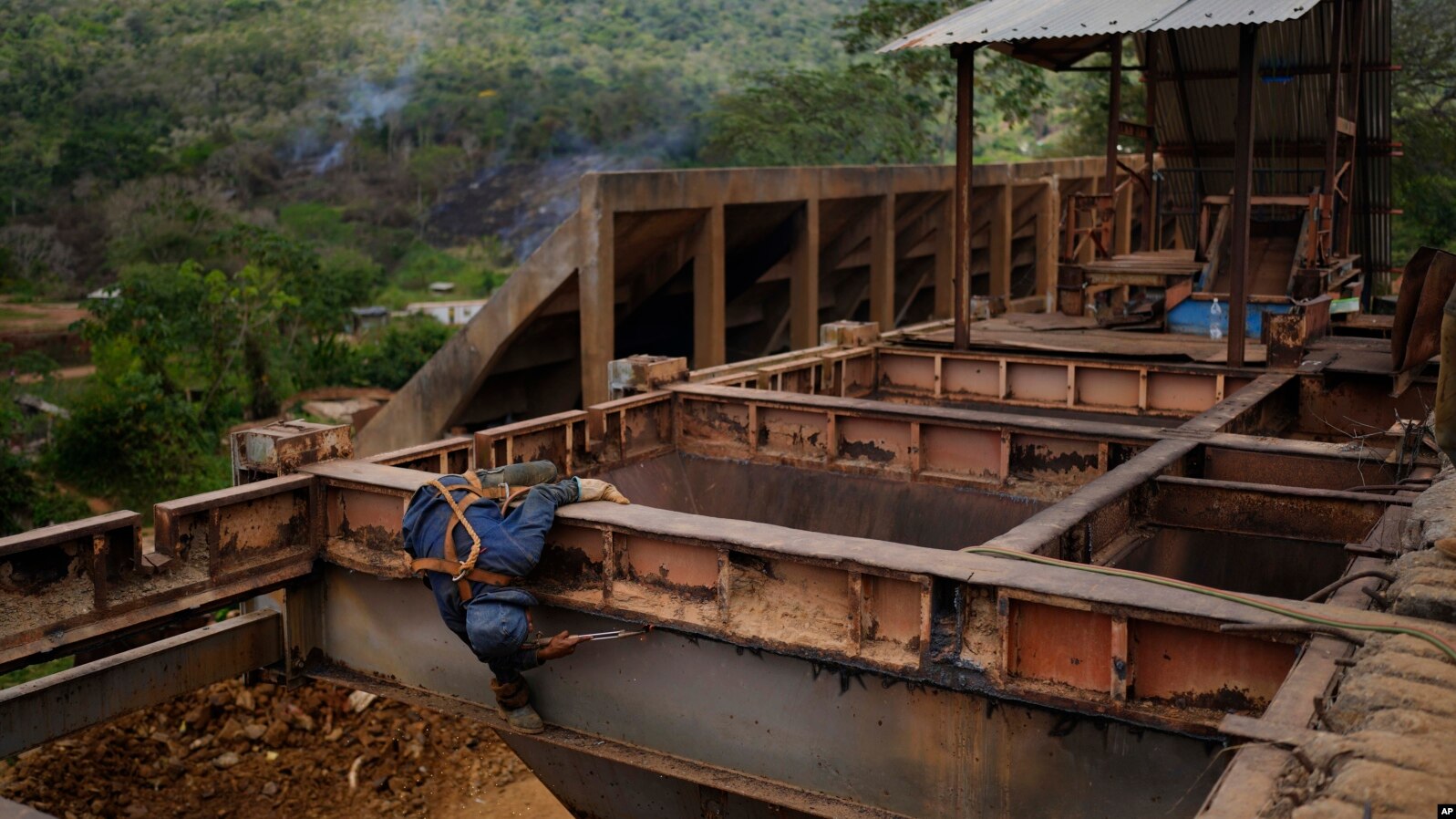
Just this week, Rodriguez agreed to send a mining reform law to the country’s National Assembly, following a two-day visit from Trump’s Interior Secretary Doug Burgum.

And in late January, Rodriguez signed into law a separate reform that allowed for the expansion of private investment from abroad in Venezuela’s oil sector and lowered taxes on the industry.

Venezuela’s economy has struggled under tightening US sanctions and government mismanagement, forcing millions of citizens from the South American country to flee its borders over the last decade.

Proponents of the reforms say outside investment can help revive Venezuela’s ailing economy and fund upgrades to its outdated mining infrastructure.

On Friday, Venezuela’s central bank released its first inflation statistics since November 2024, showing that inflation skyrocketed to 475 percent in 2025, when the US placed an embargo on Venezuelan oil exports.

Gold production from Venezuela in 2025 amounted to nearly 9.5 tonnes, according to the government, and the country sits on some of the largest oil deposits in the world.

Source link

Foreign Office issues fresh Cyprus travel update for Brits

A major travel update has been issued by the Foreign, Commonwealth and Development Office for Brits travelling to Cyprus as tensions in the Middle East escalate

The Foreign, Commonwealth and Development Office (FCDO) has issued an update on travel to Cyprus, amid the ongoing conflict in the Middle East.

Today (Thursday, 5 March), the FCDO has warned that “terrorist attacks in Cyprus cannot be ruled out”. In the updated advice, the Foreign Office stated: “There is a high threat of terrorist attack globally affecting UK interests and British nationals, including from groups and individuals who view the UK and British nationals as targets. Stay aware of your surroundings at all times.”

They added that terrorist attacks “could be indiscriminate, including in places visited by foreign nationals.” Following the update, they stated that the UK Counter Terrorism Policing has information and advice on staying safe abroad and what to do in the event of a terrorist attack.

READ MORE: British Airways announces charter flight in Oman for stranded Brits in Middle EastREAD MORE: ‘We’re trapped 3,000 miles from UK after holiday – the last five days have been hell’

While there is currently no advice against travel to Cyprus, the Foreign Office warns that the “regional escalation poses significant security risks and has led to travel disruption”. The UK government also warned of a suspected drone strike at the RAF Akrotiri base that took place on March 2.

“On 2 March 2026, the Sovereign Base Areas Administration confirmed a suspected drone impact at RAF Akrotiri. British nationals in the Sovereign Base Areas should follow instructions from the Sovereign Base Areas Administration British Bases Cyprus Facebook. British nationals in the Republic of Cyprus should follow any instructions from Cypriot local authorities,” the guidance reads.

“For British nationals, they advise the following:

  • “Read If you’re affected by a crisis abroad – GOV.UK. This includes guidance on “how to prepare for a crisis” with suggestions on what you might include in your emergency supplies and “what to do in a crisis”
  • “Sign up to FCDO Travel Advice email alerts
  • “Monitor local and international media for the latest information
  • “Sign up to local information alerts/resources and follow the instructions of the local authorities
  • “Keep your departure plans under review, and ensure your travel documents are up to date”.

On Wednesday (March 4) it was also confirmed that various airlines had cancelled flights from the UK to parts of Cyprus amid tensions in the Middle East, including easyJet, Ryanair, British Airways and TUI. Following the Foreign Office update, airlines may issue further updates on travel to Cyprus, but this is yet to be confirmed at the time of writing.

If you have an upcoming holiday, it’s best to stay in touch with your holiday provider – although they are prioritising people who are travelling imminently. As the situation is ever-evolving, travel advice can change quickly, so it’s best to check the latest Foreign Office travel advice for a destination before making any travel plans.

For more information on travel advice for Cyprus, or other areas in the Middle East, you can visit the Foreign Office website. You can also find more information on how to minimise your risk if there’s a terrorist attack while you’re away on the government website.

Do you have a travel story to share? Email webtravel@reachplc.com

Source link

BBC presenter issues update on ‘shocking’ investigation as co-star says ‘unbelievable’

The BBC programme shared an update with viewers during Wednesday’s show (March 4)

The One Show issued an update after a “shocking” investigation into a soap that some claimed left children with injuries.

The most recent episode of the BBC programme (March 4) featured Watchdog Wednesday, where Matt Allwright and Nikki Fox delve into consumer concerns, reports Wales Online.

At the start of the show, Matt revealed he had news on the soap, informing hosts Alex Jones and Clara Amfo: “A major update on last week’s shocking investigation into this children’s flammable bath soap. We’ve got big progress on that.”

After delivering his other updates, he revisited the investigation when host Alex queried: “Before you go, you mentioned last week’s story because you’ve had a bit of a result? This was all about a foam spray that parents got really worried about.”

“Yeah, not surprised,” responded Matt. “In case you missed it, last week Nikki told us all about reports that Kids Stuff Crazy Soap was catching fire when used near a flame such as a candle and that was causing injury to children whilst in the bath.”

He added: “Unbelievable stuff.

“But we are pleased to say that after that report, the Office for Product Safety and Standards has now suspended the sale of the product whilst further investigations are being carried out.”

“That is a great result, Matt,” Clara commended.

A statement on the government website regarding the Kids Stuff Crazy Foaming Soap read: “The product contains butane, isobutane and propane, which are flammable gases.

“If the product is dispensed on to a flame or other ignition source, or comes into contact with a naked flame, the foam may ignite causing burns to the user.”

The statement went on: “Corrective action: The Office for Product Safety and Standards (OPSS) is suspending sale of this product because of safety concerns while further investigations are carried out.

“Consumers who have the affected product should check the batch number and contact their retailer.”

For the latest showbiz, TV, movie and streaming news, go to the new **Everything Gossip** website

The One Show airs at 7pm on BBC One on weekdays

Source link

Wizz Air issues update for 4 destinations as flight cancellations extended

Amid the escalating Middle East conflict, Wizz Air has issued an update and confirmed that it has extended its cancellation period for four of its destinations

Wizz Air has issued a major update for four destinations and has extended its flight cancellations.

The conflict in the Middle East has caused significant travel disruptions for airlines, with thousands of flights cancelled as the Foreign, Commonwealth & Development Office (FCDO) warns against travel to parts of the region. Tensions remain high following the US-Israeli strikes on Iran that began over the weekend, with further attacks being carried out.

As the conflict escalates, Wizz Air has confirmed that it is suspending all flights to and from Israel, Dubai, Abu Dhabi, and Amman up to and including Sunday, 15 March. They had originally planned to cancel these flights until 7 March, but as the conflict shows no signs of slowing, they have extended the cancellation period.

READ MORE: Iran war chaos sees travel advice changed for 10 countries – full listREAD MORE: All 75 countries on Foreign Office’s ‘do not travel’ list from March 4

A Wizz Air spokesperson confirmed: “Wizz Air confirms that, following the recent escalation of the security situation in Iran, the airline is suspending all flights to and from Israel, Dubai, Abu Dhabi, Amman up to and including 15 March, pending structural schedule changes reflecting reduced demand. Flights to and from Saudi Arabia will resume as planned from 8 March inclusive.

“The airline is closely monitoring developments and remains in ongoing contact with local and international authorities, aviation safety agencies, security authorities, and relevant governmental bodies. Operational decisions will continue to be reviewed, and the flight schedule may be adjusted as the situation evolves.

“The safety and security of our passengers, crew and aircraft remain Wizz Air’s highest priority. We acknowledge the disruption this may cause and appreciate the understanding of our customers. Passengers with affected bookings will be contacted directly with information regarding their options.”

The extension comes just a few days after Wizz Air first announced that it had suspended all flights to Israel, Dubai, Abu Dhabi, and Amman. Wizz Air joins other major airlines that have cancelled or amended hundreds of flights to parts of the Middle East amid the chaos.

Wizz Air, which has been working hard to ensure passenger safety, confirmed that flights to and from Saudi Arabia will recommence as planned from 8 March. In a bid to support passengers who need to travel to or from Israel, Wizz Air is planning to add flights to Sharm El Sheikh (SSH) from various European airports.

If approved, the extra flights, which will provide a connection between Israel and Europe, will begin on Friday, 6 March. They will be as follows:

  • Budapest (BUD): from 3 to 10 weekly flights
  • Rome Fiumicino (FCO): from 11 to 18 weekly flights
  • London Luton (LTN): from 4 to 8 weekly flights
  • Milan Malpensa (MXP): from 6 to 11 weekly flights
  • Sofia (SOF): from 0 to 3 weekly flights

Ensure our latest lifestyle and travel stories always appear at the top of your Google Search by making us a Preferred Source. Click here to activate or add us as your Preferred Source in your Google search settings.

Do you have a travel story to share? Email webtravel@reachplc.com

Source link

Travel expert Simon Calder issues Emirates, Etihad and Qatar Airways latest ‘development’ update

Simon Calder said it ‘possibly points the way forward’ but there was still a long way to go

A travel expert has provided an update on when flights to and from the Middle East might resume normal service. Flights continue to be severely disrupted due to the US-Israeli strikes on Iran, which started over the weekend.

It is estimated that around 300,000 Brits are currently in the Gulf region. Airspace closures in the Middle East have led to numerous commercial flights being grounded, with over a third of today’s (Monday, March 2) scheduled flights to the area cancelled.

Major airlines such as British Airways, Virgin Atlantic, Qatar Airways, Etihad, and Emirates are among those to have cancelled flights. The Foreign, Commonwealth and Development Office is presently advising against all but essential travel to the United Arab Emirates.

Travel journalist Simon Calder gave an update on the Independent’s Instagram page about how the situation might unfold. He stated: “Day three of the crisis in the Gulf, which has seen all air operations cease at the key hubs of Dubai, Doha, and Abu Dhabi, and tens of thousands of passengers stranded as a result trying to head back to the UK.

Content cannot be displayed without consent

“The latest news is not encouraging from the airlines; Qatar Airways has just said we’re not going to tell you any more updates until Tuesday morning. Emirates says we will not be flying anything before 3:00 on Monday-I think it’s extremely unlikely that that will happen; similar story from Etihad, who are based in Abu Dhabi.

“At the moment, though, obey the Foreign Office advice, and if you are booked to travel on one of those airlines-Emirates, Etihad, or Qatar Airways-your flight will not be operating today, and I fear that it might be some time before we see those planes back in the sky.”

READ MORE: Aviation expert Alex Macheras predicts when Emirates, BA, and Qatar Airways flights might resumeREAD MORE: Travel expert Simon Calder explains when Dubai, Emirates and Qatar flights could resume

It is believed that out of the 300,000 Brits in the region, approximately 100,000 may require evacuation back to the UK. British citizens are being advised to heed the instructions of local authorities and keep a close eye on the Foreign Office’s travel advice, which officials anticipate will change rapidly.

One current proposal is that individuals may be transported overland to countries such as Oman and Saudi Arabia, before catching flights back from there. At present, these countries do not have any travel warnings against them.

Mr Calder added: “One development overnight, though, I think possibly points the way forward. A British Airways Boeing 787 flew out overnight from London Heathrow to Oman and landed at Muscat-that is the airport where there is no Foreign Office warning at the moment.

“It took on board pilots and cabin crew from British Airways who were stranded in the UAE when airspace was closed. Now, you might be thinking, ‘well, why didn’t they bring back any passengers?’ but there’s a good reason for that..

“The Foreign Office says, ‘no, you should not travel anywhere if you are in the UAE”. However, if the crisis drags on-and unfortunately, it shows every sign of doing that-then I fear we are going to be in a situation where the best option is to organise an airlift from Muscat, possibly another one also from Saudi Arabia for people travelling overland from Qatar.”

Source link

Turkey and Cyprus travel advice for Brits as Foreign Office issues warning

The Foreign Office has updated its travel advice for Turkey and Cyprus amidst the ongoing conflict between Iran, the US and Israel

Travel warnings have been issued for Brits in both Cyprus and Turkey as the conflict between Iran, the US and Israel enters its fourth day.

A huge swathe of the global airspace has been shut down completely as the conflict spreads further across the region. Israel and Hezbollah in Lebanon have exchanged strikes, with the Lebanese health ministry announcing that Israeli attacks in Beirut and southern Lebanon have killed at least 31 people, with 149 injured

On Sunday, an Iranian missile strike killed nine people in the Israeli city of Beit Shemesh, while Iranian officials reported that at least 153 people were killed after a strike on a girls’ school. Iran’s President Masoud Pezeshkian called the incident a “barbaric act”.

Have you been impacted by the conflict? If you’re safe to do so, please contact webtravel@reachplc.com

READ MORE: ‘Several’ US military jets crash in Kuwait as smoke seen near embassyREAD MORE: Death toll of Ian strikes so far as US continues combat operations and more countries are hit

It is important to note that at the time of writing, the Foreign, Commonwealth and Development Office (FCDO) has not issued ‘do not travel’ warnings for either Turkey or Cyprus. Such alerts are key because they signal extremely high risks – such as conflict, terrorism, or civil unrest – that often instantly invalidate travel insurance, leaving tourists personally liable for accidents or medical bills.

However, the FCDO does advise against all travel to within 10km of the border with Syria “due to fighting and a heightened risk of terrorism”, warning that “your travel insurance could be invalidated if you travel against advice from the FCDO.”

On Sunday, the FCDO updated its Turkey travel advice for those planning to cross the border from Iran to Turkey. The border remains open visa-free for people travelling on UK or Iranian passports.

“If you are a British national intending to cross the land border from Iran into Turkey, you must request facilitation from the British Embassy in Ankara by contacting the FCDO before travelling to the border. You must state which border point you intend to use and provide personal details (name, date of birth, details of travel document used to enter Turkey). Also indicate whether you are contacting from Iran or from the UK on behalf of a relative,” the FCDO update reads.

“If you intend to leave Iran overland, you do so at your own risk. In Iran, holding a British passport or having perceived connections to the UK can be reason enough for the Iranian authorities to detain you. “

Concerns are also growing for Cyprus, which sits less than 100km from the coasts of Lebanon and Syria. This morning it was reported that the RAF base Akrotiri in Cyprus has been hit by a one-way attack drone. No one was reported injured.

In response to the attack, the base is moving families and temporarily relocating non-essential staff. Around 30,000 Brits live in Cyprus and 1.3million visit from the UK each year.

The Foreign Office travel advice for Cyprus was updated this morning (March 2). The latest advice reads: “On 2 March 2026, the Sovereign Base Areas Administration confirmed a suspected drone impact at RAF Akrotiri. British nationals in the Sovereign Base Areas should follow instructions from the Sovereign Base Areas Administration British Bases Cyprus Facebook. British nationals in the Republic of Cyprus should follow any instructions from Cypriot local authorities.”

The FCDO has also issued general advice for people in the region. It urges British nationals to take “sensible precautions, considering their own individual circumstances.” These include:

  • Read if you’re affected by a crisis abroad – GOV.UK. This includes guidance on “how to prepare for a crisis” with suggestions on what you might include in your emergency supplies and “what to do in a crisis”
  • Sign up to FCDO Travel Advice email alerts
  • Monitor local and international media for the latest information
  • Sign up to local information alerts/resources and follow the instructions of the local authorities

The governmental body has also launched a central advice hub where all the latest updates can be found. British nationals in Bahrain, Israel, Kuwait, Palestine, Qatar and United Arab Emirates can register their presence to receive direct updates from the Foreign Office.

Make sure to check the Foreign Office advice regularly if you’re travelling to or are in the region. The advice is updated often.

Source link

Travel expert Simon Calder issues three-word advice for Brits caught up in Iran attacks

Thousands of Brits are thought to be stranded in the Middle East after US and Israeli airstrikes on Iran

A travel expert has issued three words of crucial advice for people stranded in the Middle East following US and Israeli air strikes on Iran. Simon Calder made the remarks after hundreds of thousands of travellers found themselves stuck in destinations such as Qatar and Abu Dhabi in the wake of the attacks.

Numerous airlines, including British Airways, Emirates, and Qatar Airways, grounded flights following Iranian retaliatory strikes throughout the region. When flights will resume normal service remains unclear, with thousands of Britons believed to be stranded.

Speaking on Radio 5 Live, Mr Calder had three key words he urged travellers to follow: “At the moment, the best advice I have for anyone who is stuck in various parts of the world is: just be patient.”

The situation will be resolved – I hope, very much sooner rather than later,” he added. “What we have seen is the extraordinary sight of the big three of Middle Eastern hubs – Dubai International, Doha, and Abu Dhabi – all closing because of the retaliatory strikes from Iran. We have never seen that. The last thing of this scale we saw in this area like that here was the Covid pandemic.

READ MORE: Travel expert Simon Calder predicts when BA, Etihad and Emirates flights will resume after Iran attackREAD MORE: Nationwide customers’ three steps needed to qualify for free £100 payout

“Consider this. More than a quarter of a million passengers were due (on Saturday) to fly to and through Dubai International Airport alone. It is bigger than Heathrow Airport, handles more passengers, and everyone is desperate to get where they need to be.

“I have been speaking to people who were about to take off, they had the ‘boarding complete’ announcement, and suddenly the captain said, ‘Sorry, airspace closed, we are staying here’. It took them three hours to get off the aircraft because they all had to be processed through immigration, leaving them in a place where they really didn’t want to be. Many of them were just off a previous flight a few hours before and were waiting to travel on to their final destination of London Heathrow.”

It was subsequently confirmed that Iranian Supreme Leader Ayatollah Ali Khamenei was killed in the strikes, casting serious doubt over the future of the Islamic Republic. The death of Mr Khamenei, following decades in power, has triggered furious scenes across other parts of the Middle East and beyond, heightening the threat of potential regional instability.

Dubai International ranks as the world’s busiest airport, processing roughly 250,000 passengers daily. Doha Airport in Qatar handles approximately 150,000 travellers each day, meaning enormous travel chaos as both airports continue to be affected.

Doha holds particular significance for British passengers flying to and from the Middle East, Asia and the UK. Mr Calder went on to say: “Some people are in the difficult position of being stranded on the wrong side, and they are trying to get back to the UK but finding that air passenger rights rules – which are great when you are flying from Europe – don’t work the same way when you are flying to Europe on a non-UK or non-EU airline.

“They can basically just say, ‘well, good luck, we’ll try and get you there in a week or you can take a refund’. It’s really, really difficult Airlines like Emirates, Etihad, Qatar Airways, they are not legally obliged to find hotel accommodation for all these stranded passengers and get them back as soon as possible but hopefully they will do so.

“The other problem for people whose flights have been cancelled, when flights resume, they go to the back of the queue. If flights resume on Monday, anybody who has a flight booked on Monday will fly on Monday, and people whose flights were cancelled over the weekend – and we are talking hundreds of thousands now – they are going to be finding that they are at the back of the queue, scrabbling for whatever available seats there are.”

Source link

UK food ban for airport travellers update as minister issues statement

Currently anyone found with five types of food – even bought in duty free – will have the seized, destroys and face £5,000 fines

A government minister has given an update on a ban on anyone bringing food into the UK on aircraft. Since last April passengers face being stopped at the UK border and having items confiscated and could face fines of £5,000.

The ban is in place because of a food and mouth outbreak in Europe. The Department for Environment, Food & Rural Affairs (DEFRA) banned items like sandwiches, cheese, cured meats, raw meats or milk into Great Britain.

Travellers are not allowed to bring cattle, sheep, goat, and pig meat, as well as dairy products, from EU countries into Great Britain for personal use, to protect the health of British livestock, the security of farmers, and the UK’s food security.

And yesterday the government issued an alert about a new outbreak in UK holiday hotspot Cyprus, meaning more restrictions have been brought in on commercial imports.

UK Chief Veterinary Officer Dr Christine Middlemiss said: “Foot and Mouth disease has now been confirmed in Cyprus, we remain in contact with our European counterparts to understand the latest situation.

“Robust plans are already in place to minimise the risk of disease incursion to support Britain’s farming community and food security.”

Those found with these items will need to either surrender them at the border or will have them seized and destroyed. In serious cases, those found with these items run the risk of incurring fines of up to £5,000 in England.

In a new parliamentary written question Labour MP Ben Goldsborough asked if enough was being done to inform the public and asked the Secretary of State for Environment, Food and Rural Affairs Emma Reynolds “If she will make an assessment of the potential merits of funding public awareness campaigns, including advertisements at airports and ports, on (a) foot and mouth disease and (b) African swine fever.”

DEFRA minister Dame Angela Eagle said extensive efforts have been made recently to highlight the ban: “ Biosecurity is a priority for this Government. To protect UK farmers and animals from serious diseases like Foot and Mouth Disease and African Swine Fever, we used the Christmas period as an opportunity to remind the public about the personal imports ban on travellers from the EU and EEA countries bringing dairy and meat products to GB, that came into force last year.

“This included promoting awareness of the rules to the travelling public and extending our reach through partnership channels across Government and with industry. Our insights survey results indicate that over 90% of respondents are aware that they should not bring back meat and dairy products from these countries.

“Any decisions on funding paid campaigns will be made based on the current threat level, evidence of effectiveness and available resources, ensuring maximum impact in protecting UK biosecurity.”

Restrictions on meat, dairy and animal products for human consumption

You cannot bring in any of the following:

  • cheese, milk and dairy products like butter and yoghurt
  • pork
  • beef
  • lamb
  • mutton
  • goat
  • venison
  • other products made from these meats, for example sausages

You can bring the following into Great Britain from any country without any restrictions:

  • bread, but not sandwiches filled with meat or dairy products
  • cakes without fresh cream
  • biscuits
  • chocolate and confectionery, but not those made with a lot of unprocessed dairy ingredients
  • pasta and noodles, but not if mixed or filled with meat or meat products
  • packaged soup, stocks and flavourings
  • processed and packaged plant products, such as packaged salads and frozen plant material
  • food supplements containing small amounts of an animal product, such as fish oil capsules

Ensure our latest headlines always appear at the top of your Google Search by making us a Preferred Source. Click here to activate or add us as your Preferred Source in your Google search settings.

Source link

NASA rules out March launch for manned moon mission over technical issues | Space News

Artemis 2 is a precursor to the US space agency’s planned astronaut moon landing with Artemis III scheduled for 2028.

NASA chief Jared Isaacman says Artemis 2 – the first crewed flyby mission to the moon in more than 50 years – will not launch next month because of technical problems.

Workers detected an issue with helium flow to the massive Space Launch System (SLS) rocket that will “take the March launch window out of consideration”, Issacman said in a post on social media Saturday.

Recommended Stories

list of 4 itemsend of list

Solid helium flow is essential for purging the rocket’s engines and pressurising its fuel tanks.

“I understand people are disappointed by this development. That disappointment is felt most by the team at NASA who have been working tirelessly to prepare for this great endeavor,” Isaacman said.

NASA’s next opportunity for the launch would be at the beginning or end of April.

The US space agency hopes to put humans back on the moon as China forges ahead with a rival effort that is targeting 2030 at the latest for its first crewed mission.

China’s uncrewed Chang’e 7 mission is expected to be launched in 2026 for an exploration of the moon’s south pole, and testing of its crewed spacecraft Mengzhou is also set to go ahead this year.

Multiple postponements

NASA surprised many late last year when it said Artemis 2 could happen as soon as February – an acceleration explained by the administration of US President Donald Trump’s wish to beat China to the punch.

But the programme has been plagued by delays. The uncrewed Artemis 1 mission took place in November 2022 after multiple postponements and two failed launch attempts.

Then, technical problems in early February – which included a liquid hydrogen leak – cut short a so-called wet dress rehearsal for the Artemis 2 launch. That was finally completed earlier this week.

The wet dress rehearsal was conducted under real conditions – with full rocket tanks and technical checks – at Cape Canaveral in Florida, with engineers practising the manoeuvres needed to carry out an actual launch.

The space agency revealed the latest technical problem just one day after targeting March 6 for the launch of the Artemis 2 mission.

The towering SLS rocket and Orion spacecraft will be rolled back into the Vehicle Assembly Building at the Kennedy Space Center in Florida to investigate the technical issues and make any necessary repairs, Isaacman said. He said a bad filter, valve, or connection plate could be to blame for the stalled helium flow.

Isaacman added that a complete briefing will follow in the coming days.

The goal of the Artemis 2 mission, a 10-day flight around the moon and back, is to “explore the Moon for scientific discovery, economic benefits, and to build the foundation for the first crewed missions to Mars”, according to NASA.

The planned Artemis 2 crew includes three US astronauts – Reid Wiseman, Victor Glover, and Christina Koch – and Canadian astronaut Jeremy Hansen. The mission is poised to be the farthest human flight into space ever, and the first crewed moon mission since the US Apollo programme more than half a century ago.

Artemis 2 is a precursor to NASA’s planned astronaut moon landing with Artemis 3, which is scheduled for 2028.

Source link

Vernon Kay issues apology after ‘getting emotional’ over family update live on-air

BBC Radio 2 presenter Vernon Kay apologised to listeners after getting emotional while discussing his family life, before accidentally saying the wrong thing on air

BBC presenter Vernon Kay, who shares two daughters with wife Tess Daly, has issued an apology for using language his mum wouldn’t be pleased with, during a discussion about vintage technology that prompted him to share personal family memories.

The TV and radio presenter, 51, explored how technology has evolved by referencing his Sony Walkman. Vernon explained: “Earlier this week I was talking about finding my old [Sony] Walkman in the loft, played some old mixtapes from various clubs in the north west.

“It’s interesting, we were talking in the studio how the evolution of playing music whilst you’re on the go, whilst you’re mobile, has changed so much through the years. I was fascinated, I lifted the lid and just watched the tape go round.

“I was in a trance, thinking wow it’s so mechanical, it’s so raw, it’s there, you can see the engineering in it and these days you just press play and music plays in your ear.

“There was something so stunning about watching a tape go round knowing that back in the day, it was the opposite, you hated winding it on with a pencil and then mixtapes. So there have been many advances in personal listening technology, some of which took off, others not so much.”

Vernon subsequently played a segment from Tomorrow’s World showcasing the Dataplay, a device that never gained traction.

Later during the BBC programme, he turned to video recordings and revealed how his dad would accompany his grandad on lorry trips throughout Europe, before inadvertently uttering the word “Jesus”, then recalling his mother’s disapproval of taking the Lord’s name in vain.

He explained: “My mum in particular, has some footage somewhere of my grandad from way back when, because when my dad used to do international lorry driving he used to take my mum’s dad with him in his truck.

“So they’d go down to the south of Spain, Africa, all that kind of stuff. I think they’ve got some old cine-reel footage of them both trucking together.

“Trucks in them days weren’t as comfy as they are now….I was emotional then, I was getting quite emotional then.”

He then remarked to radio producer Phil: “You’re like a big full stop. He’d be a rubbish therapist, move on, your time’s up son, get out. Go on. Jesus.”

Suddenly realising his slip-up, he quickly added: “Sorry for swearing, do beg your pardon…You just feel so relaxed and then you forget that seven million people are listening.

“I’m so sorry. Gladys, she hates me using the Lord’s name in vain…so sorry.”

Source link

Expert Simon Calder issues airport advice ahead of massive travel rules change next week

Travel expert Simon Calder warns that dual British citizens with expired UK passports could face £589 certificate fees as new electronic travel authorisation rules come into force from February 25

Travel expert Simon Calder has issued advice to Brits travelling to and from Europe. The alert comes as a significant change affecting UK-bound travellers takes effect on February 25.

From that date, anyone wishing to visit the UK who isn’t British or Irish must register for an electronic travel authorisation (ETA). The Government describes it as delivering ‘a more streamlined, digital immigration system which will be quicker and more secure‘.

An ETA serves as digital travel permission – it’s neither a visa nor a tax and doesn’t guarantee UK entry – rather, it authorises someone to journey to Britain. However, Mr Calder highlighted another aspect that could trip people up.

Speaking to the Independent, he warned that British citizens holding out-of-date passports might encounter problems. He explained: “There’s growing confusion and concern about electronic borders. The first change that’s going to be happening is on the 25th of February.

Content cannot be displayed without consent

“It’s going to be mandatory for everyone who is not a British or Irish citizen and who wants to travel to the UK to register for the electronic travel authorisation. This is the online permit that increasingly many countries are demanding.

“That is clear, except that it also means that dual citizens who have the right to live in the UK have to enter on a British passport or have a certificate of entitlement to live in the UK. British passports cost £94.50. That certificate of entitlement is £589. And there is concern that a lot of people who are British citizens but don’t have a valid passport for all sorts of reasons-they’ve never needed one, they had one but it lapsed, they’ve got a perfectly good passport from somewhere else-they are going to have to have either that passport or the certificate of entitlement if they want to come to the UK.

“Again, this does not apply to anybody with the immense wisdom and good fortune to have an Irish passport, because that is the passport with superpowers that will get you in and out of the UK and indeed the European Union without any problems at all.”

READ MORE: Doctor explains ‘really apparent’ problem levothyroxine users need to ‘speak to medical professional’ aboutREAD MORE: AA says ‘more than 10,000’ drivers caught by high-tech AI cameras that spot offences a mile away

According to the 2021 Census, approximately 1.26 million usual residents across England and Wales held multiple passports. The Home Office has cautioned that airlines will be verifying passengers have the correct documentation.

The right of abode that Mr Calder references permits you to live or work in the UK without any immigration restrictions whatsoever. If you possess the right of abode, you do not require a visa or ETA to enter the UK.

There’s no cap on how long you can remain in the country. Concerns have also emerged regarding Europe’s new biometric border system currently being introduced.

Several airports have allegedly experienced delays stretching up to six hours, prompting warnings of potential travel ‘chaos’.

The European Commission indicated it might be feasible to suspend the new system during busy periods until September. Mr Calder explained: “The European Union’s entry-exit system started to be rolled out in October. By the 9th of April, it is supposed to be in a position where everybody is able to enter or exit through those Schengen area frontiers, just being fingerprinted on the first occasion and having a facial biometric taken. After that, it’s going to be the facial biometric all the way.

“Now, the airports and the airlines are saying it’s a terrible thing, it’s not working properly. We’ve already seen two-hour queues; they’re warning of four-hour queues in the summer. They want it to be suspended. No sense that it will be or not at the moment. Europe says it is going well, but don’t be surprised if it is.

“The only advice I can offer, because this is simply something that’s done to you-you don’t need to prepare for it-is when you’re coming back from the Schengen area, I would turn up at the airport really early just to make sure you make your plane, because it applies on the way out as well as on the way in to the Schengen area.”

Source link