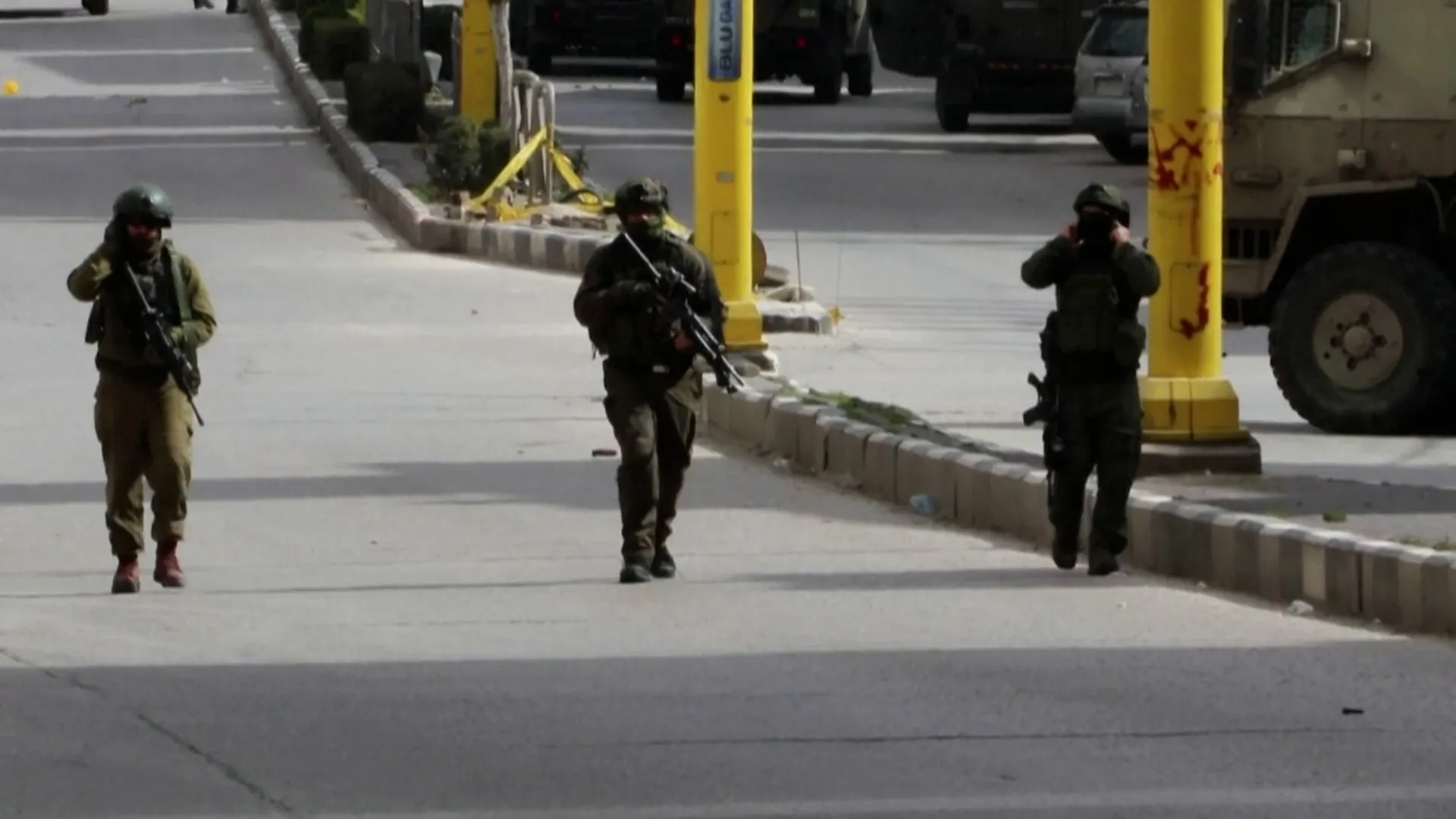
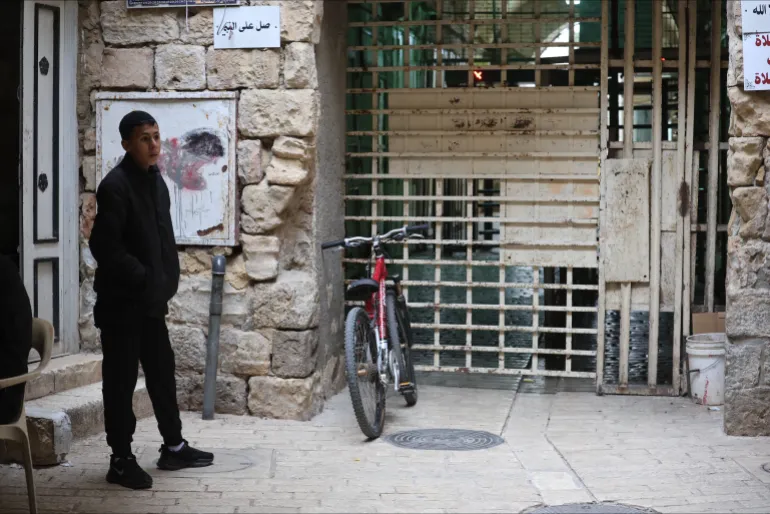
Israeli forces raided the Muslim Youth Association in Hebron, firing tear gas at Palestinians and shutting down the group’s headquarters. Troops confiscated and destroyed equipment during the raid.
Political analyst Trita Parsi says no one should be surprised that Iran has rejected the idea of a ceasefire deal with the US and Israel, given their history of violating previous agreements.
WHO driver Majdi Aslan was killed and a WHO doctor wounded, along with several other Palestinians, medical sources said.
Published On 6 Apr 20266 Apr 2026
A member of staff from the World Health Organization (WHO) has been killed in Gaza and several others injured when the Israeli army fired on their vehicle, according to sources, including an Al Jazeera correspondent.
WHO driver Majdi Aslan, 54, was killed on Monday. A doctor from the international organisation and several other Palestinians were also injured in the incident in eastern Khan Younis, according to sources at the enclave’s Nasser and Al-Aqsa hospitals.
Recommended Stories
list of 4 itemsend of list
As the world’s attention remains fixed on the United States-Israel war on Iran, Israel is continuing its attacks on the Gaza Strip, which has seen near-daily Israeli fire and strikes since a fragile ceasefire was reached in October, with more than 700 Palestinians killed since, according to Gaza’s Health Ministry.
Monday’s incident took place in an area close to the so-called yellow line in eastern Khan Younis, reported Al Jazeera’s Hani Mahmoud.
Israeli forces shot “indiscriminately” at people and vehicles moving along the Salah al-Din Street in the southern Gaza Strip, he said.
A commercial vehicle was transporting civilians between southern and central Gaza. It was followed by a car carrying WHO employees, said Mahmoud.
“The driver was shot in the head, and by the time he was transported to the Al-Aqsa Hospital, he was announced dead,” the correspondent reported from Gaza City. Seven or so others suffered injuries, he added.
Translation: Qamar Majdi Mustafa Aslan (54 years old), a resident of Bureij camp, who ascended after being wounded in a shooting targeting a World Health Organization vehicle on Salah al-Din Street east of Khan Younis city.
WHO did not immediately confirm that the man killed was an employee, but said in a statement emailed to Al Jazeera that “this morning, a critical security incident occurred in Gaza that is under review by relevant authorities”.
“As [a] result of this critical security incident, today’s medical evacuation from Gaza via Rafah to Egypt has been put on hold with immediate effect, until further notice,” the statement added.
WHO has been overseeing coordination between Egypt and Israel since the opening of the Rafah crossing, which has allowed small numbers of injured Palestinians desperate for medical aid to leave to seek treatment abroad.
Israel has, however, continued to limit the entry of humanitarian aid into the besieged territory, also shutting the vital crossing in the early days of the US-Israeli war on Iran.
Elsewhere on Monday in the southern part of Khan Younis, a Palestinian man with special needs was killed after being shot by Israeli soldiers.
To the north, a drone attack in Gaza City killed one person, Mahmoud said.
“The target was an electric bike … moving in the area that was struck by drone missiles. It killed … a 36-year-old individual who was moving … around the displacement camps,” he reported.
A child was also injured in the attack and is now in critical condition in hospital, the correspondent added.
Two Palestinians were also killed in Israeli drone strikes on the Yarmouk and Shujayea neighbourhoods, according to a medical source at al-Shifa Hospital.
Sources at Gaza hospitals have reported the deaths of eight Palestinians in Israeli air strikes outside areas under Israeli control since Sunday.
Several Palestinians were rushed to hospital with severe injuries after an Israeli air strike hit a crowd near the Al Jazeera Club in central Gaza City. Near-daily Israeli attacks have killed more than 700 people since the so-called “ceasefire” entered into effect in October 2025.
Weekly insights and analysis on the latest developments in military technology, strategy, and foreign policy.
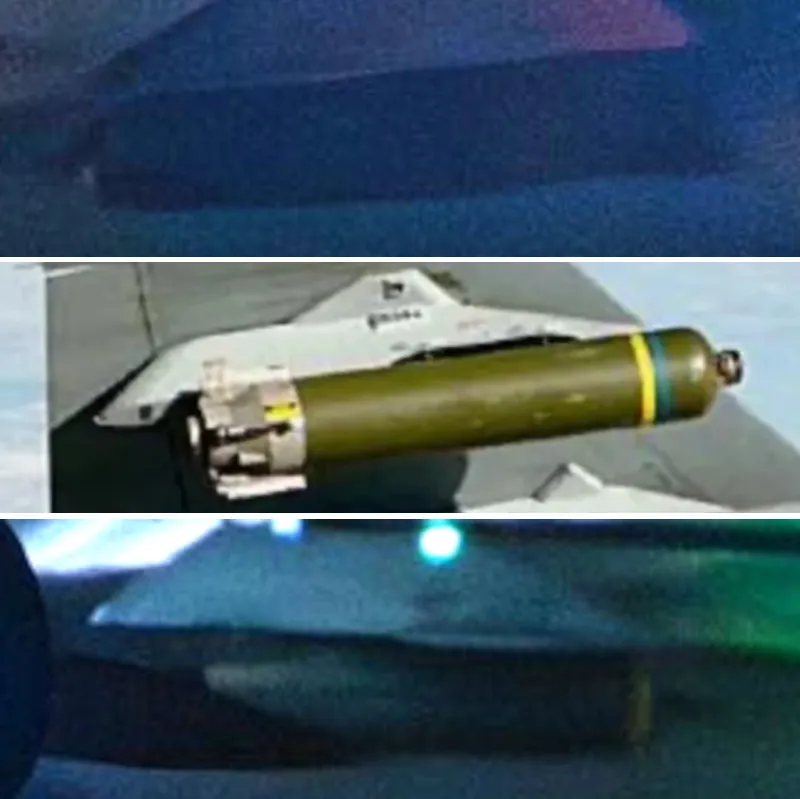
The Israeli Air Force has released a picture of F-16I Sufa fighters taking part in strikes on Iran, and the jets appear to be carrying cluster munitions. What submunitions might be inside is unknown. However, just three days before the image was posted, Iranian officials accused the United States of employing air-dropped BLU-91/B anti-tank mines, which are delivered via cluster bomb. This seems most likely to be part of a limited-use area denial strategy to contain long-range missile launches, as you can read about in our previous reporting here.
“In parallel, the Air Force struck sites used for storing and launching ballistic missiles, which pose a direct threat to the citizens of the State of Israel, as well as several defense systems of the terror regime. More than 150 fighter jets struck, over the past day, weapons production sites throughout Tehran,” the Israeli Air Force wrote in a Hebrew language post on X accompanying the picture on March 29, according to a machine translation. “The strikes on the regime’s military industries in Tehran continue at this hour as well. The Air Force continues to deepen the strikes on the regime’s military industries in order to deny the production capabilities it has built up over [the] years.”
The picture, seen at the top of this story and in parts below, is a nighttime shot, making it hard to definitively identify the munitions under the wings of the F-16Is. However, they look to have blunt noses with prominent fuzes sticking out from the center, as well as largely straight bodies and flat tail ends. This is all in line with features typically seen on air-dropped cluster munitions, especially U.S. types that make use of variants of the Tactical Munitions Dispenser (TMD), which we will come back to later on. TMDs, as well as other types of bomb-shaped ‘dispensers,’ can be loaded with different payloads, and each specific configuration generally has its own designation.
Close-ups of the munitions seen in the picture that the IAF released are presented here at top and bottom. A stock picture of a cluster munition utilizing a variant of the Tactical Munitions Dispenser (TMD) loaded on a U.S. Air Force F-16C is present in the middle for comparison. IAF/US Military
It is possible that the munitions seen under the wings of the F-16I are not cluster bombs, but this seems less likely to be the case. The features that are visible are distinctly different from the kinds of precision-guided bombs and missiles more typically seen loaded on Israeli tactical jets.
Another picture of a pair of F-16Is supporting current operations against Iran, which the IAF also released on March 29. A Joint Direct Attack Munition (JDAM) precision-guided bomb is seen under the wing of the jet in the foreground. IAFThe IAF released this picture of an F-16I with a full load of four Rampage missiles on March 6. This is another example of a loadout more commonly seen on these jets. IAF
In terms of what submunitions might be inside the dispensers, as already noted, Iran has previously alleged the use of air-dropped BLU-91/B anti-tank mines, which it blamed on the United States. Reports about the employment of the mines first emerged last week, with Iranian state and quasi-state media publishing what it said were pictures of examples recovered in outlying areas around the city of Shiraz, as seen below.
جنایت جدید آمریکایی ـ صهیونی در برخی مناطق کشور
رهاسازی بستههای انفجاری با جنگنده
این بستههای انفجاری شبیه کنسرو آماده بوده و حاوی مواد منفجرهای است که بعد از بازگشایی منفجر شده و باعث تلفات جانی میگردد #انتقام_سختpic.twitter.com/0mChpxVhLP
Part of a larger scatterable mine system called Gator, BLU-91/Bs, as well as a companion anti-personnel mine designated the BLU-92/B, can be employed via TMD-series dispensers. They can also be dropped using the Mk 7 or SUU-58/B dispensers, the former of which has a notably different nose shape from what is seen in the picture the IAF released. The SUU-58/B is derived from the Mk 7, but has a distinct nose profile. Examples of complete cluster munitions loaded with Gator mines include the CBU-78/B (45 BLU-91/Bs and 15 BLU-92/Bs loaded in either a Mk 7 or SUU-58/B) and the CBU-89/B (72 BLU-91/Bs and 22 BLU-92/Bs loaded in a SUU-64/B TMD).
A general overview of the common cluster munitions loaded with Gator mines. The distinctly different nose USAF An SUU-58/B dispenser. US military
“The US is the only participant in the Iran war known to possess Gator Scatterable Mines,” Bellingcat reported last week. However, “known users of the CBU-89/B and the CBU-78/B weapons include Israel, the Netherlands, and the United States,” according to a 2003 report from Forecast International.
The F-16 is also on the broad list of platforms that can drop cluster munitions loaded with Gator mines.
As to why BLU-91/Bs might have been scattered over parts of Iran, as TWZ previously wrote:
“Iran has been able to preserve a number of its missile launchers, which could involve moving them in and out of underground facilities like the one near Shiraz or hiding them elsewhere in the area and moving them to designated launch points. This is occurring even after these facilities have been repeatedly bombed. These aerial attacks have focused on keeping their entrances caved in. These strikes are on top of the vast, resource-consuming interdiction effort to hunt for and strike launchers that are exposed. So, continued launches from these areas would be a major reason why resorting to deploying anti-tank mines there makes sense and would have a high military value. Mining the entrances of the underground missile cities would also make it harder for heavy equipment to access them in order to open them back up.“
🚨 WATCH: CENTCOM releases footage of strikes on fortified missile bases in southern Iran. The first footage includes hits on tunnel entrances and on mobile and stationary launchers at the missile base in Hajjiabad, Iran. pic.twitter.com/wuoi5GEhqp
— Major Sammer Pal Toorr (Infantry Combat Veteran) (@samartoor3086) March 22, 2026
The IDF publishes footage showing a recent airstrike on an Iranian ballistic missile launcher in western Iran that it says was primed for an attack on Israel.
In additional strikes yesterday, the military says the Israeli Air Force hit several ballistic missile storage and… pic.twitter.com/UVE5bTAJNd
— Emanuel (Mannie) Fabian (@manniefabian) March 24, 2026
CENTCOM:
The Iranian regime is using mobile launchers to indiscriminately fire missiles in an attempt to inflict maximum harm across the region.
U.S. forces are hunting these threats down and without apology or hesitation, we are taking them out.pic.twitter.com/l4lxbTlAf4
“Designed to attack tanks and trucks, the mines could destroy or disable the launchers and likely the payloads they carry. They could also make roads to and around the underground missile cities unpassable. Even limiting where the launchers could go within these areas could make them more vulnerable.“
This would also align with the IAF’s post on X accompanying the image of the two F-16Is, which discussed new strikes on “sites used for storing and launching ballistic missiles.”
Israel does have, or at least had, other air-dropped cluster munitions in its inventory. The IAF employed Cold War-era CBU-58/Bs during the country’s intervention in Lebanon in 2006. Each of those munitions consists of 650 grenade-like BLU-63/B anti-personnel bomblets in a SUU-30-series dispenser, which has a distinctly tapered tail section that is not seen on the munitions in the recently released IAF picture. Israel has also received Rockeye cluster bombs from the United States in the past, which consist of 247 Mk 118 anti-tank bomblets in Mk 7-series dispensers. The current status of either of these munitions in Israeli service is unclear.
An inert CBU-58/B cluster bomb on display at the National Museum of the US Air Force. USAFAn inert example of a Rockeye-series cluster bomb, also on display at the National Museum of the US Air Force. USAF
Israel Military Industries (IMI) also previously developed an air-dropped cluster bomb called the Runway Attack Munition, which is filled with submunitions specifically designed to crater runways. The RAM has reportedly been in Israeli service since 2008.
An IMI promotional image showing the Runway Attack Munition (RAM), at top, and the 1,000-pound-class PB500A1 laser-guided bunker-buster bomb, at bottom. IMI
Runways at Iranian air bases have been cratered by U.S. and Israeli strikes in the course of the current conflict, but there have been no signs so far of the use of cluster munitions to do so. Israel could be employing anti-personnel and/or anti-tank cluster munitions against various other targets in Iran, including missile and drone launchers, but, again, there has been no evidence of this so far.
The employment of BLU-91/Bs in the current conflict with Iran also remains unconfirmed, though the picture of the IAF F-16Is with what look to be cluster munitions does add to the existing evidence. Whether the employment of those mines, whether by the United States or Israel, was an isolated event or a new part of the ongoing campaign is also still not clear. As mentioned earlier, dropping the mines fits with an effort to deny access to remote missile storage and launch areas.
Cluster munitions and landmines are both controversial weapons in their own right, particularly given the risks they can pose to civilians well after a conflict has ended. Many countries have agreed to ban their use. At the same time, the U.S. military and others continue to stress the operational utility these weapons offer, and the steps that can be taken to mitigate the risks of their use. The BLU-91/B, for instance, has a built-in self-destruct feature. Cluster munitions and landmines can also be employed under tightly controlled parameters to reduce the dangers they might pose to innocent bystanders, such as targeting only facilities far from population centers.
If cluster munition use by Israeli and/or U.S. forces does become a more widespread aspect of the ongoing conflict, more evidence of this could continue to emerge.
Special thanks to user @blocksixtynine on X for bringing the IAF picture of the two F-16Is carrying what look to be cluster munitions to our attention.
Lebanese armed group Hezbollah fires projectiles at northern Israel while Israeli troops push deeper into southern Lebanon.
Published On 5 Apr 20265 Apr 2026
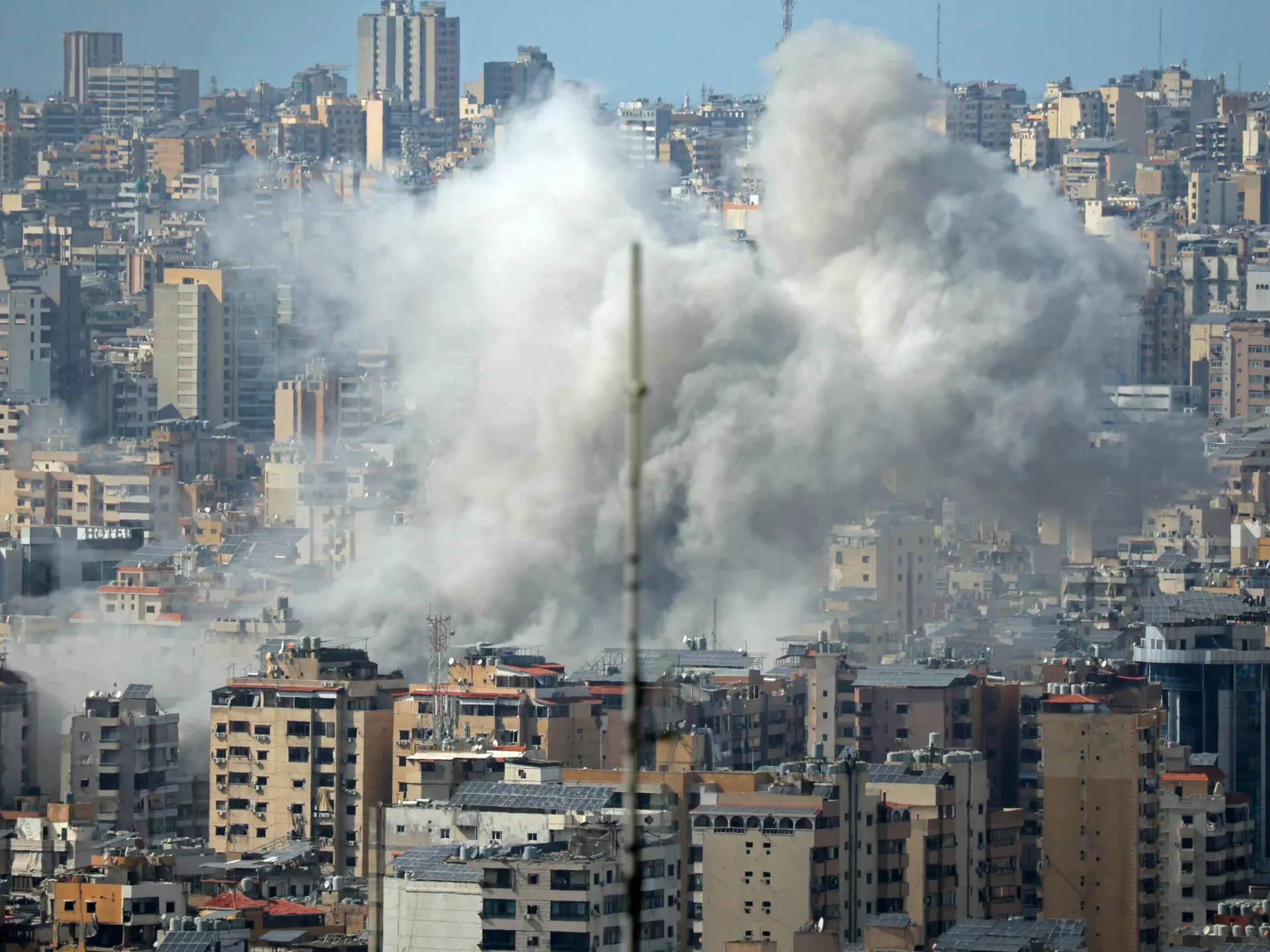
Israeli strikes across southern Lebanon and the capital, Beirut, have killed at least 14 people, a day after Israel threatened to hit Lebanon’s main border crossing with Syria, forcing its closure.
Israeli strikes on Beirut’s southern suburbs on Sunday killed at least four people while 10 people – including a family of six – were killed in Israeli attacks on southern Lebanon.
Recommended Stories
list of 3 itemsend of list
A further 39 people were wounded in an Israeli strike on Beirut’s Jnah neighbourhood, according to Lebanon’s Ministry of Public Health. The strike hit about 100 metres (330ft) from Rafik Hariri University Hospital, the country’s largest public medical facility, a medical source told the AFP news agency.
Israel has launched air strikes across Lebanon since March 2 after the Lebanese armed group Hezbollah fired rockets into Israel in response to the United States-Israeli war on Iran. Israeli forces have also launched a ground invasion of southern Lebanon.
Hezbollah on Sunday claimed to have fired a cruise missile at an Israeli warship 126km (78 miles) off the Lebanese coast. There was no immediate comment from the Israeli military. Al Jazeera was not able to verify the claim.
Although most Israeli strikes against Hezbollah have been conducted by jets and drones, some have come by sea.
In a statement, the Israeli military warned it had “begun striking Hezbollah infrastructure sites” in Beirut’s southern suburbs without providing evidence for its claims.
On Saturday, Israel said it would carry out strikes on the Masnaa border crossing between Lebanon and Syria. Masnaa serves as a vital trade route for both countries and a key gateway to the rest of the region for Lebanese people.
The border post was quickly evacuated on the Lebanese side, and the site was virtually deserted early on Sunday with only a few guards still on duty, according to AFP.
In Syria, Mazen Aloush with the General Authority for Borders and Customs insisted that the crossing, known as Jdeidet Yabous on the Syrian side, was “exclusively for civilian use and is not used for any military purposes”.
Aloush said traffic through the crossing would be temporarily suspended due to the Israeli threat.
Israeli attacks on Lebanon since March 2 have killed more than 1,400 people, including 126 children, and displaced over 1.2 million, according to Lebanese authorities.
In the southern Lebanese town of Kfar Hatta, an Israeli strike killed seven people including a four-year-old girl and a Lebanese soldier, the Health Ministry said on Sunday.
The previous evening, the Israeli army issued a forced evacuation order for the town, where many displaced people from other parts of southern Lebanon have fled.
In another air strike on southern Lebanon, at least three people were killed and others injured early on Sunday, Lebanon’s National News Agency (NNA) reported.
As Israeli troops push deeper across their border into southern Lebanon and destroy villages, Lebanese President Joseph Aoun reiterated his call for talks with Israel, saying he wanted to spare southern Lebanon from destruction on the scale seen in Israel’s genocidal war on Gaza.
“Why don’t we negotiate … until we can at least save the homes that have not yet been destroyed?” he proposed in a televised address on Sunday.
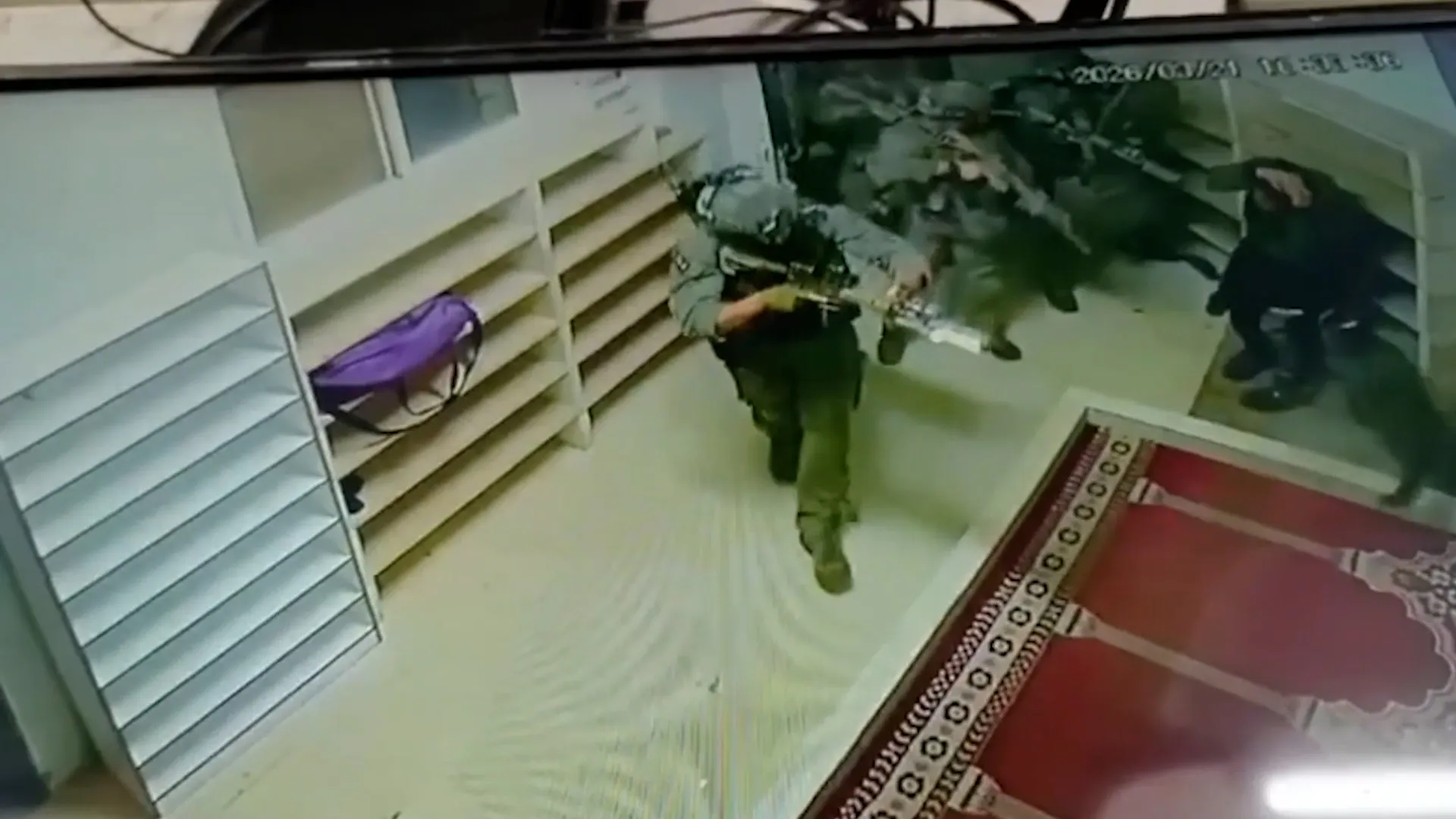
CCTV footage circulated online shows the moment that a military dog attacks a worshipper leaving a mosque during an Israeli raid on Tarqumiyah in the occupied West Bank.
Tzruya “Suki” Lahav, a violinist and poet who played with Bruce Springsteen and the E Street Band in the mid 1970’s on some of the band’s most beloved LPs, has died. She was 74.
Yonatan Albalak, her son, posted on Facebook April 2 that his mother had been “gathered into infinity after a short and hard battle with the cursed disease” of cancer.
“She wrote songs that touched people’s hearts,” he wrote, describing her as “a special woman, smart, pure in heart and loving life. She was the best mom I could ever ask for.”
Lahav’s tenure with the group lasted only between 1974 and 1975, yet she contributed several standout moments to Springsteen’s catalog. She performed on “The Wild, the Innocent and the E Street Shuffle” and its follow-up, the smash “Born to Run.” She played the famed violin intro to the classic single “Jungleland,” and performed the multi-tracked choir on “4th Of July, Asbury Park (Sandy)” after a church vocal group failed to turn up for the session. She also played on a fan-favorite, widely-bootlegged cover of Bob Dylan’s “I Want You.”
She entered Springsteen’s camp after her husband, Louis Lahav, engineered on Springsteen’s 1972 debut album, “Greetings From Asbury Park.” Lahav told the Jerusalem Post in 2007 that she joined the group as “a young girl in a flowing white dress from Kibbutz Ayelet Hashahar in the Upper Galilee, barely out of the army, barely married … I went from kibbutz harvest music to rocking with Bruce.”
She remained a major artist in Israel for decades after her tenure with Springsteen. She recorded with the Israeli rock band Tamuz, and wrote songs for prominent Israeli artists like Rita, including “Yemei Hatom” and “Shara Barkhovot.” She won the ACUM Lifetime Achievement Award and the Arik Einstein Prize there. In 1990, “Shara Barkhovot” was Israel’s submission to the Eurovision Song Contest.
Hebron, occupied West Bank – Hebron’s Ibrahimi Mosque is no more than 50 metres from Aref Jaber’s home, in the neighbourhood that bears his surname, reflecting his family’s long history in the Palestinian city.
The 51-year-old has taken advantage of that proximity since his childhood, regularly praying at the mosque, one of the most important Islamic sites, and a Palestinian national symbol.
Recommended Stories
list of 3 itemsend of list
But the Ibrahimi Mosque of Jaber’s childhood is not the one of today. A 1994 massacre of Muslim worshippers by the Israeli settler Baruch Goldstein killed 29 Palestinians. Instead of getting justice, Palestinians faced more restrictions in the aftermath of the attack.
Israeli settlers began establishing an illegal presence in Hebron, part of the occupied West Bank, in 1968, the year after Israel seized control of the Palestinian territory. The settlers have been working to grow their presence ever since, with increased support from the Israeli government.
After 1994, Israel began taking steps to, in effect, control the Ibrahimi Mosque – known to Jews as the Cave of the Patriarchs – by closing off large areas in Hebron’s Old City and the southern area surrounding the mosque, then dividing it between Muslims and a few hundred Jewish settlers, granting the latter the right to pray there.
This was followed by the signing of the Hebron Agreement with the Palestinian Authority in 1997, which stipulated the division of the city into two parts: H1, under Palestinian control, comprising 80 percent of the area, and H2, under Israeli control, comprising 20 percent, but including the Ibrahimi Mosque and the Old City.
Following this series of events, settlement activity intensified in the heart of Hebron. Settlers established illegal outposts within the Old City and began gradually expanding and seizing new homes under the protection of the Israeli army.
Meanwhile, Palestinians were subjected to closures, restrictions and repressive measures aimed at forcing them to leave the Old City, thus facilitating Israeli control over the mosque.
Israeli forces have erected metal barriers throughout the neighbourhoods surrounding the Ibrahimi Mosque, restricting access for Palestinians [Mosab Shawer/Al Jazeera]
Neighbours of the Ibrahimi Mosque
Jaber had hoped that his children would pray at the mosque daily and become familiar with it, but Israeli measures prevented this.
He explained that since 1994, the southern gate of the mosque, which residents of his neighbourhood used for access, has been closed. They have instead been forced to take alternative routes, turning a journey of 50 metres into one that now spans almost three kilometres.
Things have gotten worse since the beginning of Israel’s genocidal war on Gaza in October 2023, when Israel also ramped up its attacks in the West Bank.
Israel tightened its grip on the mosque and its surroundings, closing more of the alternative routes.
“The difficulty of reaching the mosque is compounded by the procedures at the iron and electronic gates installed at its entrances and in its vicinity,” Jaber said. “We are subjected to searches, detention, and harassment without any justification, and often young men, boys, and even women are arrested.”
The Israeli government says that the restrictions are necessary for security reasons – to protect Israeli settlers whose presence in the West Bank’s most populous city is illegal under international law.
Jaber explained how the Israeli army closes barriers and gates around the mosque and the neighbourhoods that surround it for extended periods under security pretexts. Palestinian residents are not allowed to leave their homes, even to shop, while settlers are permitted to move freely throughout the Old City.
Israeli authorities also used the justification of the current conflict with Iran to close access to the Ibrahimi Mosque for Palestinians for six days from February 28, allowing it to reopen for a limited number of worshippers on March 6.
The Ibrahimi Mosque is an important Islamic holy site and a Palestinian national symbol, also holy to Jews who call it the Cave of the Patriarchs [Mosab Shawer/Al Jazeera]
Increased control
But these measures aren’t only aimed at restricting Palestinians in the vicinity of the mosque, but also seem to be an attempt to establish complete Israeli security control over it, with measures similar to those Israel employs at the Al-Aqsa Mosque in occupied East Jerusalem.
In Al-Aqsa, the third holiest site in Islam, renewable expulsion orders are used to prevent the entry of worshippers deemed troublesome. Searches are also regularly conducted at the gates of Al-Aqsa, as well as detentions, confiscation of identity cards and restrictions on entry to certain parts of the mosque compound.
Israel now regularly conducts similar actions at the Ibrahimi Mosque.
The Israeli army issued orders to remove Moataz Abu Sneineh, the director of the Ibrahimi Mosque, and other employees from the mosque for 15 days in January. The Palestinian Authority said that the orders were part of “an attempt to reduce their role in the administration and supervision of the Ibrahimi Mosque’s religious and administrative affairs”.
Israeli officials have also tried to push through construction work in the mosque without the approval of Palestinian officials.
On February 9, the Israeli cabinet approved the transfer of licensing, building and municipal administration powers in Hebron from the municipality to the Israeli Civil Administration, in addition to establishing a separate settlement municipality within the city.
The change, part of an internationally condemned Israeli push to increase control over the West Bank and make Israeli settlement easier, is seen as illegitimate and dangerous to the existing status quo, threatening freedom of worship and public order, according to a statement issued by the Hebron Municipality in response to the decision.
Abu Sneineh told Al Jazeera that Israel has transformed the mosque into something resembling a “military barracks” due to the stringent measures it imposes, which “aim to reduce the number of worshippers there”.
According to Abu Sneineh, the Israeli government interfered in the authority of the Ministry of Religious Endowments, and the call to prayer was prevented from being performed dozens of times a month. Worshippers were subjected to humiliating treatment at the mosque entrance, including beatings, verbal abuse and expulsion. Abu Sneineh said the measures were part of a systematic Israeli policy aimed at transforming the mosque into a Jewish synagogue.
“Israel is trying to impose a new reality by controlling the mosque and obstructing worshippers’ access to it, whether during Ramadan or at other times. After October 2023, the measures became even more stringent to erase the Islamic identity of the place, as if it were racing against time to seize control of it,” he added.
On February 28, coinciding with the start of Israeli-American strikes on Iran, the Israeli army expelled worshippers and staff from the mosque and informed them of its closure until further notice, just as it had done at Al-Aqsa Mosque in Jerusalem on the same day under the declared state of emergency measures.
The director of the Youth Against Settlements group and a resident of the Old City, Issa Amro, believes that the situation at the Ibrahimi Mosque is more dangerous than at Al-Aqsa Mosque because it has suffered from temporal and spatial division since 1994.
The “arbitrary” barriers, the closure of surrounding markets and main roads leading to it, and recently the closure of checkpoints in the southern area of the city – which includes the Old City and the Ibrahimi Mosque – prevent approximately 50,000 citizens from accessing it, along with the transfer of supervisory authority of parts of the mosque to the Religious Council in the illegal Kiryat Arba settlement, are extremely dangerous steps that threaten the Palestinian identity of the site, Amro said.
“The Jewish area [of the mosque] has been expanded, and recently, residents around the mosque have been living a difficult life due to soldier violence, settler terrorism, the constant closure of barriers, and restrictions on leaving their homes. They live as prisoners in their own homes in fear of settlers and soldiers, and disturbed by the constant gatherings held by settlers in the mosque,” he added.
According to the Applied Research Institute – Jerusalem (ARIJ) – a Palestinian research institute – approximately 40,000 Palestinians live in the H2 area, alongside about 800 Israeli settlers residing in 14 small illegal settlement outposts. These outposts are under heavy protection from thousands of Israeli soldiers deployed around the perimeter of the area and in the streets of the Old City, preventing Palestinians from leading normal lives.
The outposts are managed by the Hebron Settlements Council, which is linked to the parent settlement, Kiryat Arba, located east of the city.
A research study published by the institute in November 2025 revealed a significant increase in the forced displacement of Palestinians from the H2 area over the past two decades.
The Israeli human rights group B’Tselem said in a 2019 report that about 35,000 Palestinians lived in Hebron’s H2 area when the Hebron Agreement was signed in 1997. Today, only around 7,000 remain. Roughly 1,000 of them live in a particularly restricted zone around the Tel Rumeida neighbourhood and Shuhada Street – formerly Hebron’s main shopping street, which is now closed to Palestinians, due to the presence of several illegal Israeli settlements.
Palestinian families in the Old City and the vicinity of the Ibrahimi Mosque are subjected to various forms of pressure, including demolition orders under the pretext of unlicensed construction, frequent arrests, settler attacks on residents and students travelling to and from school, economic restrictions, shop closures, and movement restrictions, particularly regarding access to places of worship and hospitals.
According to the United Nations Office for the Coordination of Humanitarian Affairs, the area contains 97 various military checkpoints and barriers.
These are often closed for hours or even days at a time without prior notice, paralysing movement within the Old City and the residential areas adjacent to the mosque.
Towards full annexation
Observers see these measures in Hebron as a prelude to establishing a fait accompli in the West Bank as a whole, which has been subjected for more than two years to accelerated policies aimed at controlling the largest possible area of land and expanding settlements.
Settlement affairs researcher Mahmoud al-Saifi told Al Jazeera that Israel has sought over the past two years to solidify the annexation of the West Bank, particularly Area C, which constitutes more than 61 percent of the total area of the West Bank.
Israeli authorities have approved 54 new official settlements and 86 smaller outposts in 2025 alone, according to data from Peace Now, which monitors settlement activity.
Planning was approved or advanced for some 51,370 settlement units in the West Bank from late 2022 to the end of 2025, a figure also announced by Israeli government agencies based on data from the Higher Planning Council.
In addition, 222 kilometres of secondary and bypass roads were constructed in the two years preceding January 2025, aimed at connecting outposts to main settlements.
As a result of these policies, the Palestinian presence has dwindled in many areas, particularly the Jordan Valley, where their number has decreased to no more than 65,000.
“Israel is implementing a policy of encirclement and strangulation of small villages in the West Bank by confiscating land and preventing Palestinian construction, in contrast to the frenzied settlement wave that Smotrich called a ‘settlement revolution,’ and the accompanying bitter reality for Palestinians,” al-Saifi said.
There are now thousands of armed settlers spread throughout the West Bank, al-Saifi noted. Skilfully trained and often called settlement guards, they are essentially a rear guard force for the Israeli army, used to attack and intimidate Palestinians and seize their land.
“All Bedouin communities are located in Area C, and 47 of them have been forcibly displaced since October 2023, meaning more than 4,000 Palestinians have been displaced in just two and a half years,” al-Saifi said. “This is part of ethnic cleansing and de facto annexation on the ground.”
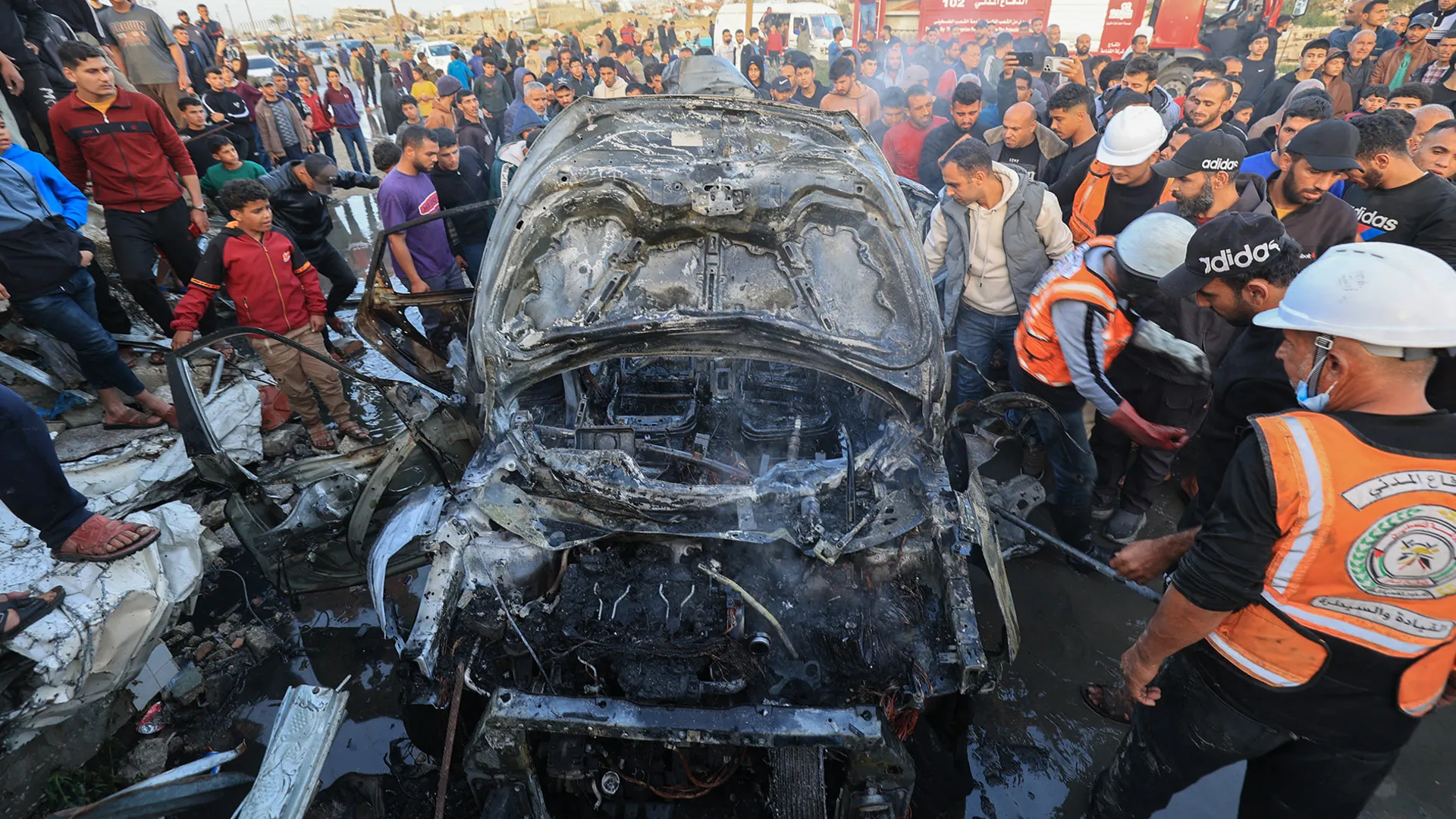
Videos show Palestinians in Gaza scrambling to extinguish a vehicle engulfed in flames in az-Zawayda after it was targeted by an Israeli drone. Israel has killed more than 700 people since the October 10 “ceasefire,” according to local officials.
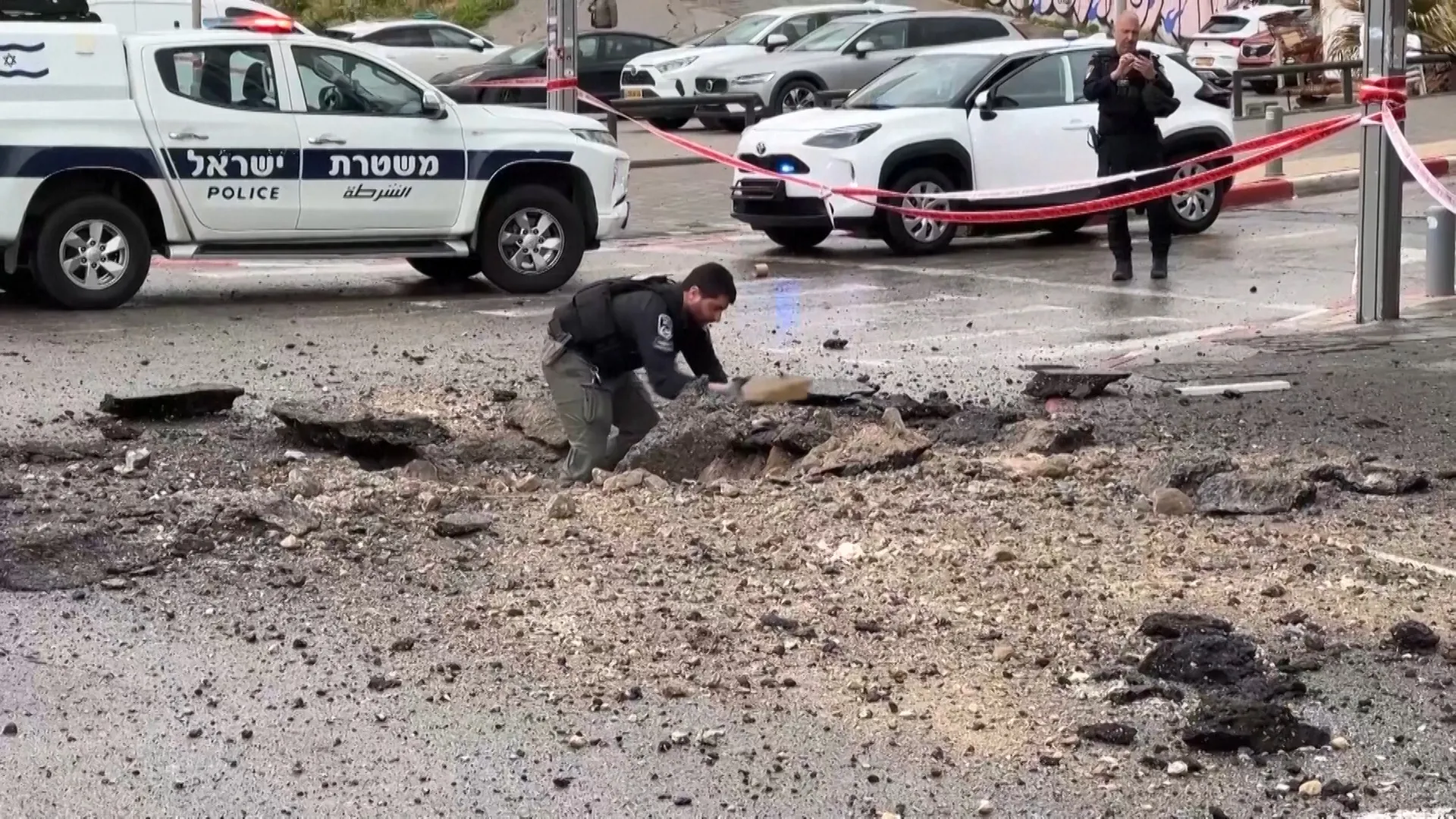
Police inspect a strike site in Tel Aviv after a missile hit the city, causing injuries as the US-Israeli war on Iran enters its fifth week. Meanwhile, Washington signals the conflict could soon wind down, even as timelines remain unclear.
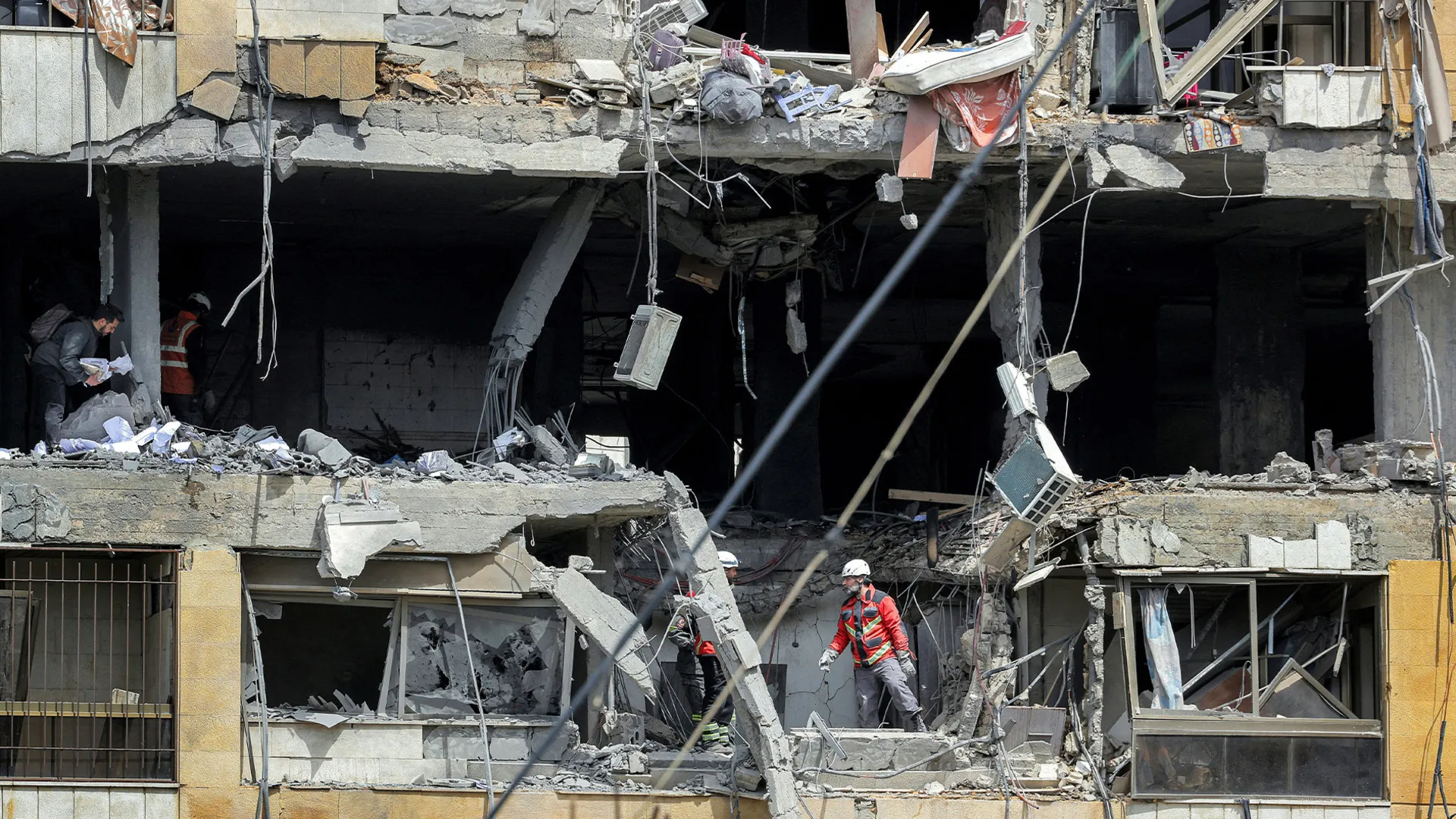
An Israeli air strike has heavily damaged a residential building in Beirut’s southern suburbs, scattering rubble and crushing cars. Israel says its relentless attacks target Hezbollah, as more than a million people were forced to flee their homes since the war on Lebanon began on March 2.
UNIFIL says it doesn’t know the origin of the projectile that killed the Indonesian peacekeeper amid ongoing fighting between Israel and Hezbollah.
Published On 30 Mar 202630 Mar 2026
The United Nations Interim Force in Lebanon (UNIFIL) has confirmed one of its peacekeepers was killed in the country’s south as fighting between Israeli troops and the Hezbollah group intensifies amid Israel’s invasion.
“A peacekeeper was tragically killed last night when a projectile exploded in a UNIFIL position near Adchit al Qusayr,” a UNIFIL statement said on Monday. “Another was critically injured.”
Recommended Stories
list of 3 itemsend of list
Indonesia confirmed that one of its peacekeepers was killed and three others were wounded due to “indirect artillery fire”.
The UNIFIL statement said they did not know the origin of the projectile but had launched an investigation. “No one should ever lose their life serving the cause of peace,” it added.
UN Secretary-General Antonio Guterres called “on all to uphold their obligations under international law and to ensure the safety and security of UN personnel and property at all times”.
UNIFIL has reported that its positions have been hit more than once since the start of the latest fighting on March 2.
On March 7, three Ghanaian soldiers were wounded by gunfire in a border town in southern Lebanon.
‘Control is going to be key’
The US-Israel war on Iran spread to Lebanon after Iran-aligned Hezbollah fired rockets at Israel, following the assassination of Iran’s Supreme Leader Ayatollah Ali Khamenei on the first day of the war on February 28.
Before that, Hezbollah had not attacked Israel since a ceasefire came into effect in November 2024, despite near-daily Israeli breaches of the deal.
On Monday, the Israeli military said six soldiers were injured in three separate incidents, and three of them were seriously wounded.
Israeli officials say their invasion of southern Lebanon intends to set up a security zone extending 30km (18.6 miles) from the Israeli border.
Reporting from the Lebanese capital, Beirut, Al Jazeera’s Zeina Khodr said the Israeli military has shifted from “limited incursions” to a broad ground offensive in southern Lebanon, aiming to seize territory up to the Litani River.
“Since last week, Israeli troops have advanced into several areas,” she said, noting the movement along the western coastal highway and about 8km [4.97 miles] south of Tyre, one of the main cities in southern Lebanon.
“It’s still too early to say who will have the upper hand … but the word control is going to be key,” she said. “What Hezbollah will try to do is prevent the Israeli army from consolidating control, and that will be Hezbollah’s test.”
Other attacks
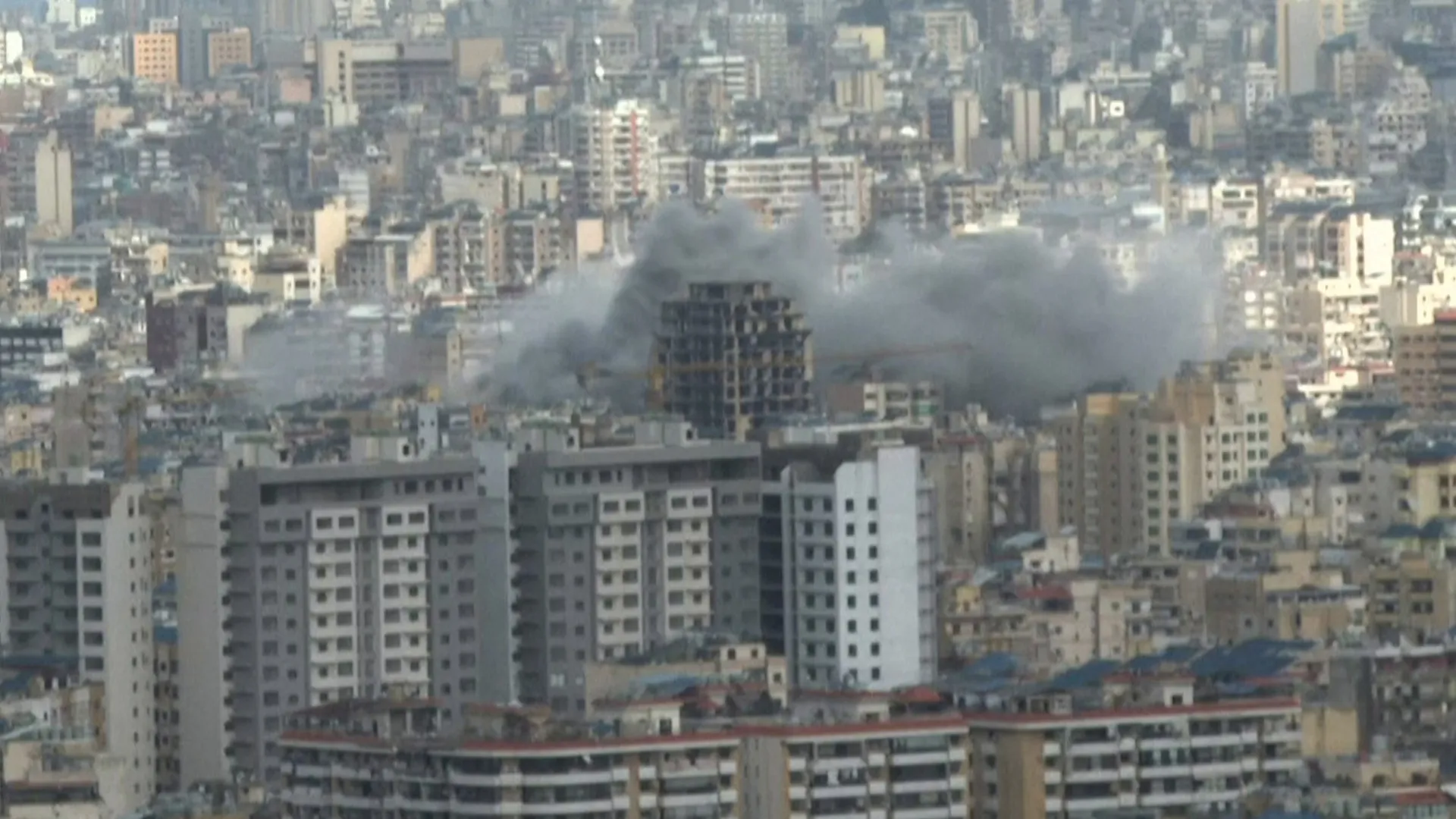
Meanwhile, a strike hit Beirut’s southern suburbs on Monday, the first Israeli attack since Friday. Live footage showed plumes of smoke rising from the area.
The attack comes after the Israeli military warned of attacks on seven southern suburbs of the city, including Haret Hreik, Ghobeiry, Laylaki, Haddath and Burj al-Barajneh, claiming it was targeting Hezbollah military sites in the areas without providing any evidence.
The Israeli military has carried out aerial and ground attacks across Lebanon while issuing mass forced displacement orders for residents in the south, including several Beirut suburbs.
Smoke rises from Beirut’s southern suburbs following an Israeli attack [File: Adnan Abidi/Reuters]
“Many will say there are no military targets left in this area,” Al Jazeera’s Khodr reported. “This is just about collective punishment and putting pressure on Hezbollah.”
More than 1.2 million people have been forced out of their homes since the beginning of March, according to the UN, prompting concerns about a mounting humanitarian crisis.
Smoke billows above buildings in Beirut’s southern suburbs after a strike that followed Israeli warnings targeting the area. The neighbourhood has been largely emptied after residents were forcibly displaced by repeated Israeli attacks since the war with Hezbollah began on March 2.
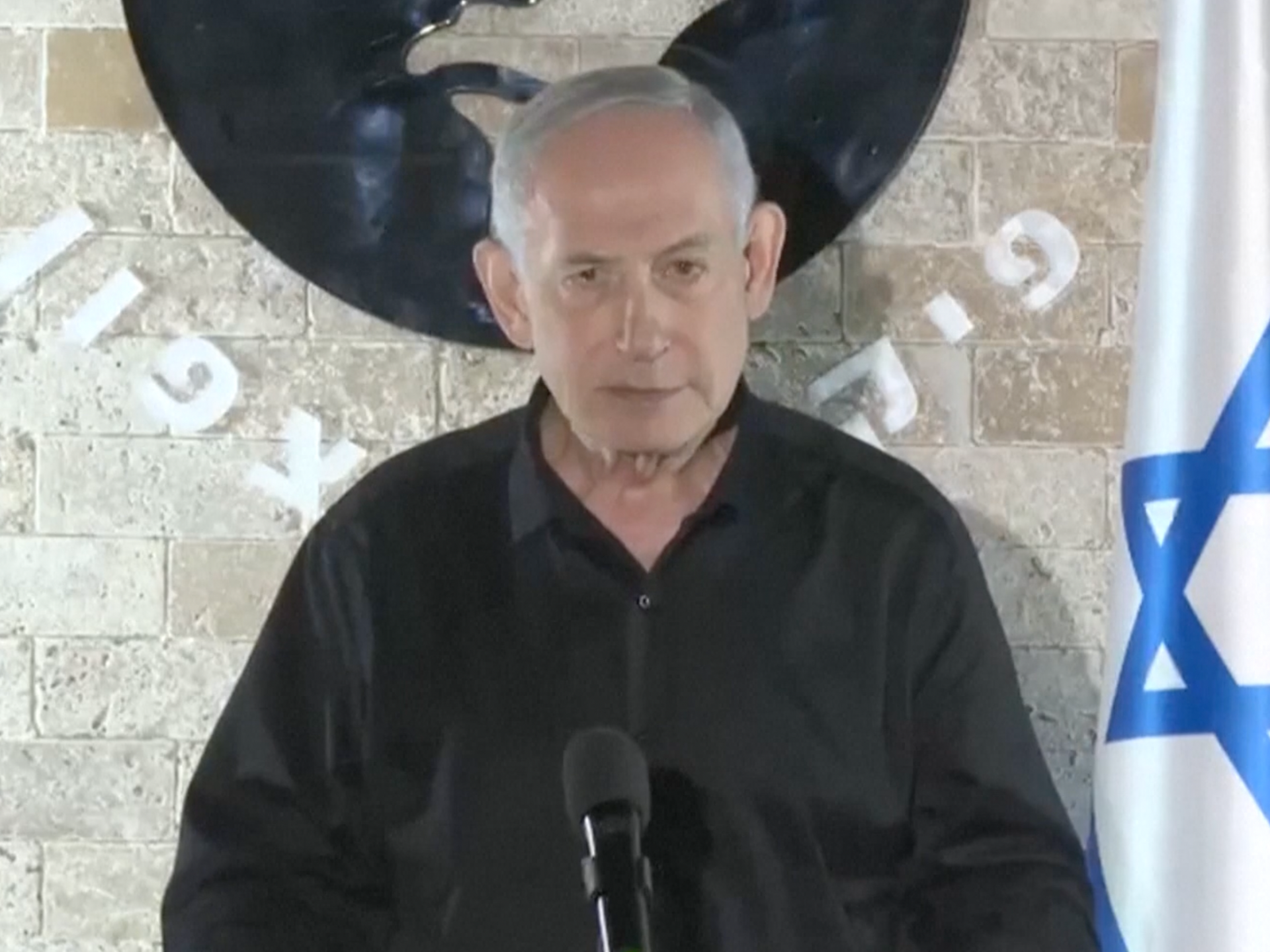
Israeli Prime Minister Benjamin Netanyahu has ordered the military to expand its invasion in southern Lebanon, pushing deeper to extend what he calls a ‘buffer zone’. As Israeli forces advance towards the Litani River, an explosion at a UN position in southern Lebanon killed a peacekeeper.
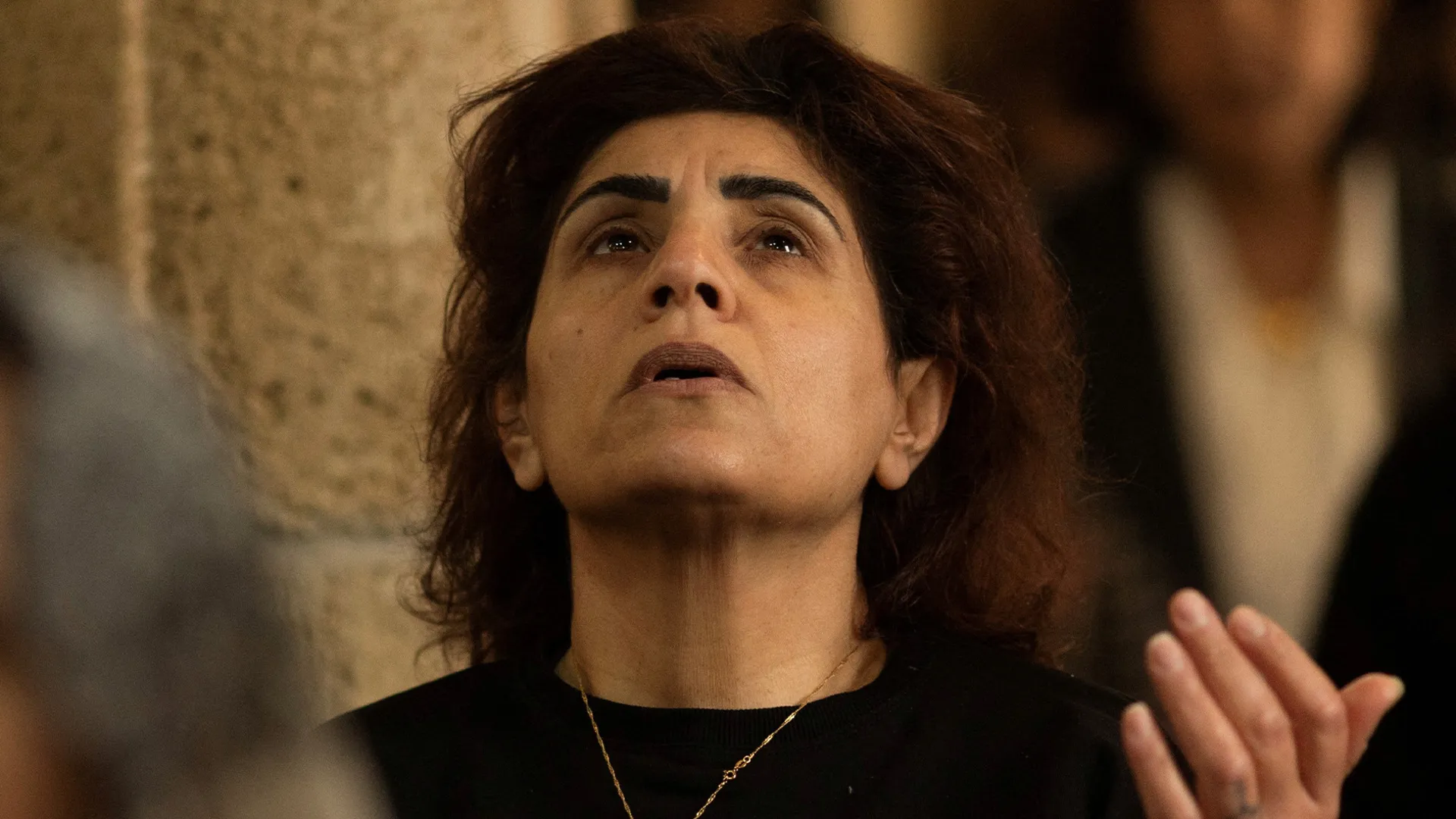
Christians in Jerusalem and Gaza marked Holy Week under wartime restrictions, with Israeli police blocking the Latin Patriarch from the Holy Sepulchre for the first time in centuries. In Gaza, a small Christian community continued Palm Sunday rites despite ongoing attacks and severe shortages of basic essentials.
Speaker of the Parliament of Iran Mohammad Bagher Ghalibaf speaks during a news conference in Beirut, Lebanon, on October 12, 2024. File Photo by Wael Hamzeh/EPA
March 29 (UPI) — Iran’s parliament speaker, Mohammad Bagher Ghalibaf, issued a warning Saturday against a possible ground troop invasion as the U.S. military sends more troops to the region.
Ghalibaf made the comments in a message marking 30 days since the start of the war. The United States and Israel began strikes on Iran on Feb. 28 in their efforts to diminish the country’s nuclear weapons program.
Ghalibaf accused the United States of secretly planning a ground invasion of Iran. On Saturday, two U.S. ships arrived in the region carrying 3,500 U.S. service members as well as fighter jets, transport aircraft, amphibious assault vessels and other tactical assets. More troops were expected, U.S. Central Command said.
“The enemy publicly sends messages of negotiation while secretly planning a ground invasion — unaware that our men are waiting for American troops to enter on the ground, ready to unleash devastation upon them and punish their regional allies,” Ghalibaf said, as reported by CNN.
Last week, the Trump administration proposed a 15-point peace plan with Iran. President Donald Trump also ordered a 10-day halt on strikes against Iranian energy sites, though Israel carried out its own attacks on energy sites Friday.
Secretary of State Marco Rubiosaid Friday that Iran had not responded to the peace proposal.
“The United States speaks of its aspirations, presenting what it failed to achieve in war as a 15-point list to pursue through diplomacy,” Ghalibaf said.
“As long as the Americans seek Iran’s surrender, the answer of your sons remains clear: ‘Far be it from us to accept humiliation.'”
Ghalibaf’s message came in the wake of a Saturday report by The Washington Post that the Defense Department has drawn up plans for a weeks-long ground operation in Iran. Officials told The Post the plan isn’t considered a full-scale ground invasion, but would involve Special Operations forces and infantry troops.
White House press secretary Karoline Leavitt issued a statement in response to the possibility of ground troops in Iran.
“It’s the job of the Pentagon to make preparations in order to give the commander in chief maximum optionality,” she said. “It does not mean the president has made a decision.”
Iran has launched attacks on Israeli and other U.S. allies in the Persian Gulf region, including one Sunday on a military camp in Kuwait, which killed 10 Kuwaiti service members. The army said it detected 14 ballistic missiles and 12 hostile drones in Kuwaiti airspace over the previous 24 hours. Since the start of the war, it has monitored more than 300 ballistic missiles, 2 cruise missiles and more than 600 hostile drones.
Meanwhile, Israeli officials said emergency officials were working on a large fire that broke out at a hazardous materials factory at the Neot Hovav industrial complex, The Guardian reported. The Israeli military blamed “a weapon fragment or interceptor fragment” for the damage and fire.
Since the US and Israel launched a war on Iran, Israel has closed holy sites in Jerusalem, citing safety concerns.
Published On 29 Mar 202629 Mar 2026
Israeli police have prevented Cardinal Pierbattista Pizzaballa, the Latin patriarch of Jerusalem, from entering the Church of the Holy Sepulchre to mark Palm Sunday Mass.
The Catholic Church said on Sunday that Pizzaballa and Francesco lelpo, the official Guardian of the Church of the Holy Sepulchre, were both prevented from entering the church.
Recommended Stories
list of 3 itemsend of list
“As a result, and for the first time in centuries, the Heads of the Church were prevented from celebrating the Palm Sunday Mass at the Church of the Holy Sepulchre,” the statement said.
“This incident is a grave precedent and disregards the sensibilities of billions of people around the world, who, during this week, look to Jerusalem,” it added.
Israeli police said all holy sites in Jerusalem were closed due to safety concerns amid the United States and Israel’s war on Iran. During the Muslim month of Ramadan, which also coincided with the war, Al-Aqsa Mosque was also closed to worshippers.
Issa Kassissieh, a Palestinian Christian who is popular for being the Santa Claus of the city, holds a cross and a palm frond while standing at the doors of the Church of the Holy Sepulchre after finding them locked, following the cancellation of the traditional Palm Sunday procession from the Mount of Olives, amid restrictions on group gatherings and the US-Israeli war on Iran, in Jerusalem’s Old City on March 29, 2026 [Ammar Awad/Reuters]
In a statement to the AFP news agency, Israeli police said Pizzaballa’s request to deliver the Catholic mass to mark Palm Sunday, the beginning of the Christian Holy Week that ends with Easter, could not be approved.
“The Old City and the holy sites constitute a complex area that does not allow access for large emergency and rescue vehicles, which significantly challenges response capabilities and poses a real risk to human life in the event of a mass casualty incident,” the force said.
While the Catholic Church had already announced it had cancelled the traditional Palm Sunday procession, in a statement, it said Israel’s actions to ban Pizzaballa and Ielpo were a “manifestly unreasonable and grossly disproportionate measure”.
“This hasty and fundamentally flawed decision, tainted by improper considerations, represents an extreme departure from basic principles of reasonableness, freedom of worship, and respect for the status quo,” it said.
But the prevention also caused condemnation from other countries.
Italian Prime Minister Giorgia Meloni said the incident was “an offence not only to the faithful, but to any community that respects religious freedom”.
Italian Foreign Minister Antonio Tajani also said in a post on X that he had summoned Israel’s ambassador over the incident.
French President Emmanuel Macron condemned the decision and said worship “for all religions” must be guaranteed in Jerusalem.
Antiwar protesters rally in Tel Aviv and US cities, as attacks kill a family of four in Iran’s Bushehr province and damage a water facility in Khuzestan.
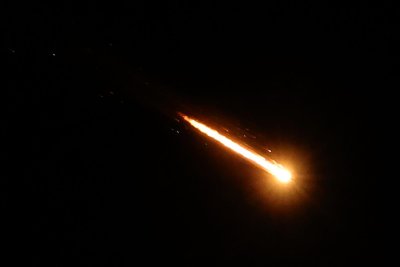
A projectile crosses the sky above the West Bank city of Nablus, on Friday. The Israeli military reported that it had detected missiles launched from Iran toward Israel, several of which struck central Israel. Photo by Alaa Badarneh/EPA
March 27 (UPI) — Iranian Foreign Minister Abbas Araghchi said Friday that his country “will exact [a] heavy price” for Israeli strikes on infrastructure Friday.
In a post on X, he said the strikes hit two of Iran’s largest steel factories, a power plant, civilian nuclear sites and other infrastructure.
“Israel claims it acted in coordination with the U.S.,” Araghchi wrote.
The airstrikes came less than a day after U.S. President Donald Trump extended a pause on U.S. attacks on Iran’s energy sites for 10 days. Trump said he extended the deadline because negotiations between the United States and Iran had been going “well,” and Iran had permitted several oil tankers to transit the Strait of Hormuz.
The “attack contradicts POTUS extended deadline for diplomacy,” Araghchi wrote.
“Iran will exact HEAVY price for Israeli crimes.”
The Guardian reported that the airstrikes hit the Khondab heavy-water plant near Arak and a uranium production facility in Ardakan. They also hit steel plants in Khuzestan and Mobarakeh.
Iran’s state-run Tasnim news agency said Tehran was considering launching attacks on six steel factories in Israel in retaliation for Friday’s attack.
The Israeli military said Friday it had intercepted missiles launched by Iran, NBC News reported.
“A short while ago, the [Israel Defense Forces] identified missiles launched from Iran toward the territory of the State of Israel,” the military said in a statement. “Defensive systems are operating to intercept the treat.”
Speaking Friday evening at the Future Investment Initiative in Miami, Trump said Iran is “on the run,” one month after the United States and Israel jointly began attacking the country. The violence came amid negotiations in which the United States sought to limit Iran’s nuclear program.
“Tonight, we’re closer than ever to the rise of the Middle East that is finally free at least from Iranian terror, aggression and nuclear blackmail,” Trump said.
Iran is “being decimated,” he added.
“We are talking now, they want to make a deal.”
The United States offered a proposed 15-point peace plan to Iran this week, but Araghchi said Iranian officials had no plans to negotiate it “for now.”
“This is Israel’s war, and people of the region and people of the U.S. are paying the price for it,” he said.
Iran’s Red Crescent Society reported Friday that more than 70,000 residential units, 600 schools and 300 health facilities had been damaged since the start of the war.
Displaced Lebanese families ‘living in constant fear’ under Israeli bombardment, warns UN Refugee Agency official.
Lebanon faces the threat of a “humanitarian catastrophe”, the United Nations Refugee Agency (UNHCR) has warned, as Israel expands its weeks-long bombardment and ground invasion of the country.
UNHCR’s Lebanon representative Karolina Lindholm Billing said on Friday that Israeli strikes and forced displacement orders have affected people living across the country – from southern Lebanon to the Bekaa Valley, the capital Beirut, and further north.
Recommended Stories
list of 3 itemsend of list
More than 1.2 million people have been forced from their homes since Israel’s intensified attacks against its northern neighbour began in early March, according to UN figures.
“The situation remains extremely worrying and the risk of a humanitarian catastrophe … is real,” Lindholm Billing told reporters during a briefing in Geneva.
She noted that, as displacement numbers continue to rise, Lebanon’s already overstretched shelter system is struggling to meet families’ needs.
“Just last week, there were strikes that hit central Beirut, including in densely populated neighbourhoods … where many people had tried to find safety in collective shelters,” Lindholm Billing said.
“The families are … living in constant fear, and the psychological toll, particularly on children, will last far beyond this current escalation.”
Israel launched intensified attacks across Lebanon after Hezbollah fired rockets towards Israeli territory following the February 28 assassination of Iranian Supreme Leader Ayatollah Ali Khamenei in the US-Israel war on Iran.
The Israeli military has carried out aerial and ground attacks across the country while issuing mass forced displacement orders for residents of the country’s south, as well as several suburbs of Beirut.
On Friday afternoon, the Israeli military said it had begun a wave of air strikes on Beirut. It also issued more forced displacement orders for several areas in the city’s southern suburbs, including the neighbourhoods of Haret Hreik and Burj al-Barajneh.
Hezbollah has continued to fire rockets into northern Israel and confront Israeli troops in southern Lebanon, with leader Naim Qassem stressing this week that the group had no plans to stop fighting “an enemy that occupies land and continues daily aggression”.
Israeli Prime Minister Benjamin Netanyahu also announced plans to expand the country’s ground invasion in southern Lebanon, saying the military would create “a larger buffer zone” in Lebanese territory.
Rights groups have condemned the expanded operation and warned that preventing Lebanese civilians from returning to their homes in the south may amount to the war crime of forced displacement.
“Israel’s tactics of mass expulsion in Lebanon raise serious risks of forced displacement,” Human Rights Watch said on Thursday. “Forced displacement and collective punishment are war crimes.”
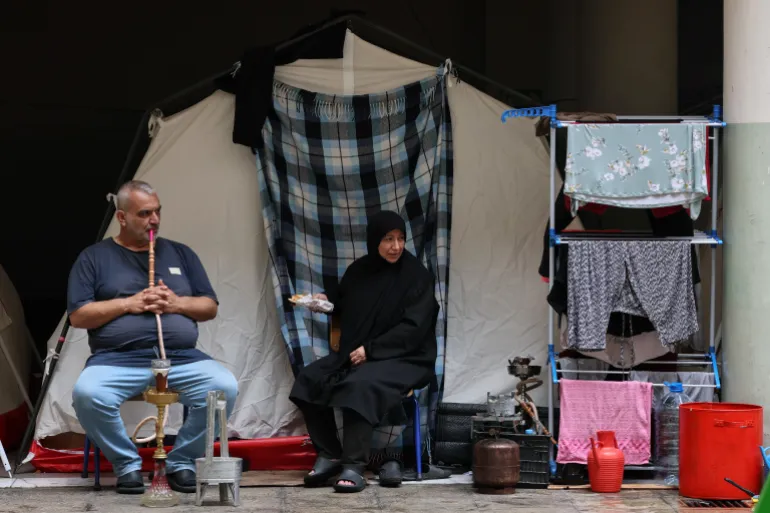
Displaced residents sit outside a tent in a local school in Beirut after fleeing their homes in southern Lebanon, on March 27, 2026 [Wael Hamzeh/EPA]
The Israeli military’s destruction of civilian homes and several bridges linking southern Lebanon to the rest of the country has also fuelled concerns that Israel is trying to isolate the area.
During Friday’s news briefing, UNHCR’s Lindholm Billing noted that the destruction of the bridges has made accessing southern Lebanon “increasingly difficult”.
“The destruction of key bridges in the south has cut off entire districts … isolating over 150,000 people and severely limiting humanitarian access with essential items to reach them,” she said.
Reporting from Tyre in southern Lebanon on Friday afternoon, Al Jazeera’s Obaida Hitto also stressed that Israel’s forced evacuation orders are “causing a lot of panic” among residents.
“Evacuation orders are happening in areas that were previously thought to be safe,” he said, adding that the destruction and damage to bridges over the Litani River in the south has made the prospect of finding safety more difficult.
“This is putting the government in Beirut in a very difficult situation to try and respond to the humanitarian crisis quickly growing in the south of the country,” Hitto said.