Israel-Palestine conflict

‘From the movies’: Sami Hamdi details ‘aggressive’ ICE detention | Israel-Palestine conflict News

Bundled into vehicle with blacked-out windows, British journalist recounts detainment in US due to Palestinian support.

British journalist Sami Hamdi, who says he was held illegally for more than two weeks by United States immigration authorities for his pro-Palestinian commentary, has described his detention as “like something from the movies”.

In an interview with Al Jazeera, Hamdi accused the US Department of Homeland Security’s Immigration and Customs Enforcement (ICE) of using “loopholes” to abuse people, and he directed attention towards the plight of Palestinian prisoners held in Israeli detention.

Recommended Stories

list of 3 itemsend of list

The 35-year-old British citizen was stopped at San Francisco International Airport in California on October 26 midway through a speaking tour discussing Israel’s war on Gaza.

Hamdi said Laura Loomer and other right-wing activists and allies of President Donald Trump created the grounds for his arrest by posting his lectures and calling for his visa to be revoked.

Homeland Security Department authorities stopped Hamdi at the airport and told him his visa had been revoked. However, they refused to allow him to immediately leave the US by flying to London instead of his planned domestic flight.

“And then four other ICE agents appeared out of nowhere,” he told Al Jazeera. “They surrounded me, and then they escorted me outside of the airport where a black car with tinted windows was waiting for me. They told me, ‘Get in the car.’”

He was given a few moments to use his phone after insisting on his legal rights as a United Kingdom citizen, which he used to contact the Council on American-Islamic Relations. The civil rights group agreed to help him get legal representation and inform his family of his detention.

After three car rides in handcuffs, he arrived at an ICE detention facility and was checked in with a number of other people of various ethnicities.

He later discovered through a lawyer that he was being held in Golden State Annex in McFarland, California, in what he labelled “a very politically motivated manoeuvre”.

Hamdi said he and 20 other men were held in a small cell with no facilities. Inmates repeatedly had their cases delayed through bureaucracy, he said.

One Latino man named Antonio whose wife and children are US citizens had been in detention for 10 months without charge, Hamdi said.

“This is the tragedy. You have these people who are illegally detained, who shouldn’t be there longer than six months, according to all habeas corpus rules, but who stay there longer because of bureaucratic loopholes,” said the journalist, who returned to London on Thursday.

ICE agents were “particularly aggressive” and most displayed “little sympathy for the people they were dealing with”, Hamdi said. They appeared to feel that they could act with “impunity”, he continued.

The journalist noted that while his case has received much attention, he believes it is important to remember that thousands of Palestinians remain incarcerated in Israeli military prisons in appalling conditions.

“It’s important to note that arbitrary detention for the sake of expression of freedom of speech isn’t something that’s under threat just in America or in the UK.”

Source link

Israel kills at least three in Gaza, as thousands endure heavy flooding | Gaza News

The Israeli military has killed at least three Palestinians in Gaza, as the coastal enclave reeled from heavy rains flooding shoddy makeshift tents housing thousands who have been denied adequate shelter owing to Israel’s continued throttling of aid supplies.

A source at Nasser Medical Complex told Al Jazeera on Sunday that three people had been killed after Israel bombed east of Khan Younis in southern Gaza. That same day, Israel also struck Gaza City’s Zeitoun neighbourhood and areas close to the southern city of Rafah.

Recommended Stories

list of 3 itemsend of list

Reporting from Gaza City, Al Jazeera’s Ibrahim al-Khalili said the Israeli army was still targeting locations inside the so-called yellow line, which demarcates where troops have withdrawn as part of the ceasefire.

Al-Khalili said the situation was “going from bad to worse” for families living near the yellow line, as the military continued to “demolish residential buildings” and “spread panic” while they contended with heavy rains flooding makeshift shelters.

The United Nations agency for Palestinian refugees (UNRWA) said that 13,000 families in Gaza whose homes were destroyed during two years of indiscriminate Israeli bombardment are now exposed to freezing temperatures and flooding in woefully inadequate shelters.

UN data shows that more than 80 percent of all buildings and housing units in Gaza have been damaged or destroyed since the start of the war. But Israel continues to block the entry of tents and mobile homes into the enclave despite the ceasefire, which was meant to unleash a flow of aid to stricken residents.

Tamara Alrifai, UNRWA’s director of communications, said Israel had placed limitations on what could enter the enclave, banning certain items deemed to be of dual use that could potentially be used for military purposes. “Israel … would take out many items that are extremely needed, especially in this winter situation,” she said.

“UNRWA is under double the amount of scrutiny and restrictions than other agencies despite being the largest agency there,” Alrifai said, adding that the UN agency has enough supplies to fill 6,000 aid trucks from its warehouses in Egypt and Jordan.

‘Submerged’

Reporting from Gaza City, Al Jazeera’s Hani Mahmoud said: “It’s been raining for two days and people are telling us that everything has started to leak. Many of these displacement camps are at a different elevation to surrounding areas, allowing water to run in from all sides. Some areas are completely submerged.”

“For people sheltering inside bombed-out buildings, everything is leaking, and there is a risk that with the heavy rains, the buildings could collapse. People who set up tents near the coast are at risk of strong tides washing away their tents,” he said.

Abdulrahman Asaliyah, a displaced Palestinian in the city, told Al Jazeera: “All the tents have been flooded, people’s mattresses, their food, their water, their clothes. Everything has been soaked. We are calling for help for new tents that can at least protect people from the winter cold.”

Caroline Seguin, Gaza emergency coordinator at Doctors Without Borders (known by its French acronym, MSF), said that many people were awakened by the floods and were afraid to go back to sleep. “In Gaza, it is a luxury to spend the night in a dry place,” she told Al Jazeera.

Seguin said Israel was still putting up barriers to much-needed aid entering the enclave. Bringing in supplies, including tents and medication, was still “very complicated”, she said, requiring “even more administrative processes” from the Israeli side.

Netanyahu unsure about truce duration

Since the start of the ceasefire agreement last month, at least 266 people have been killed and 635 wounded by Israeli attacks, adding to a grim toll now approaching 70,000 deaths.

Prime Minister Benjamin Netanyahu told his cabinet on Sunday that he did not know how long the Gaza ceasefire would hold, adding that Israel was still expecting the remains of three captives to be returned by Hamas.

Hamas’s military wing, the Qassam Brigades, has been undertaking efforts with the Red Cross to locate the remains of captives under mountains of rubble left behind by Israeli bombardment.

Netanyahu also said that his opposition to a Palestinian state had “not changed one bit”, one day before the UN Security Council votes on a United States-drafted resolution mentioning a “credible pathway” to Palestinian statehood that would mandate an international stabilisation force in Gaza.

Meanwhile, Israeli violence in the occupied West Bank continued unabated, with raids on two camps that left two young Palestinians dead.

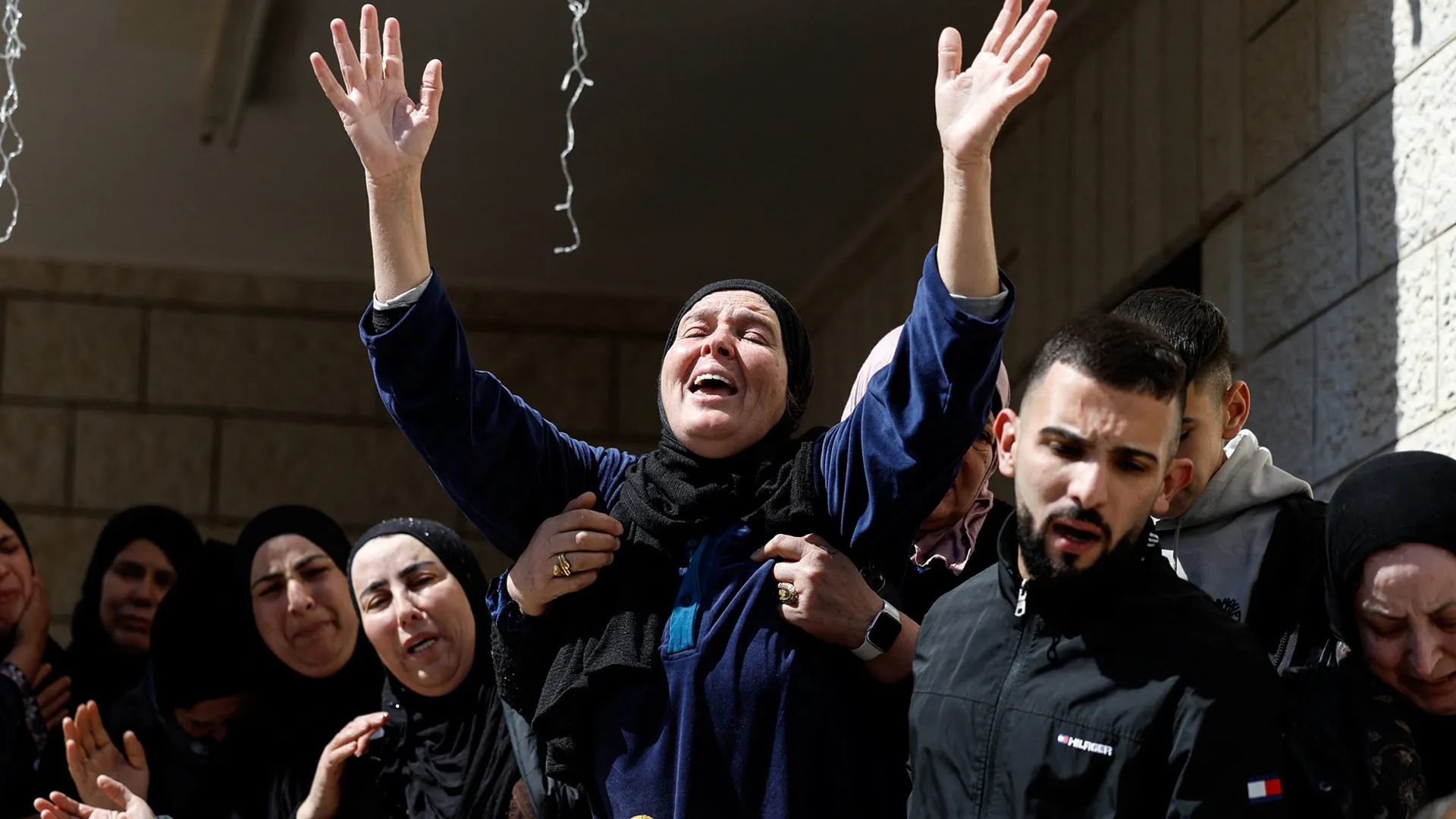
Soldiers shot Jadallah Jihad Jumaa Jadallah, a 15-year-old ninth-grade student, as they raided the Far’a camp, located south of the city of Tubas in the West Bank, preventing paramedics from assisting him, according to Palestinian news agency Wafa.

Separately, the military also killed Hassan Sharkasi during a raid on the Askar refugee camp east of Nablus, according to the Palestinian Red Crescent.


Source link

Israel pushes US to close door on Palestinian statehood before UNSC vote | Israel-Palestine conflict News

Israel is engaged in a last-ditch bid to change the wording of a United Nations Security Council (UNSC) resolution on the next phase of United States President Donald Trump’s Gaza peace plan that was recently amended to mention a “credible pathway” to Palestinian statehood.

Israeli Prime Minister Benjamin Netanyahu told his cabinet on Sunday that his opposition to a Palestinian state had “not changed one bit”, one day before the UNSC votes on the US-drafted resolution, which would mandate a transitional administration and an international stabilisation force (ISF) in Gaza.

Recommended Stories

list of 3 itemsend of list

Israeli public broadcaster Kan reported on Sunday that Netanyahu’s government was engaged in a last-minute diplomatic push to alter the draft resolution, which the US had changed to include more defined language about Palestinian self-determination under pressure from Arab and Muslim countries expected to contribute troops to the ISF.

The draft now says that “conditions may be in place for a credible pathway to Palestinian self-determination and statehood” after reforms to the Palestinian Authority are “faithfully carried out and Gaza redevelopment has advanced”.

There has been criticism that Palestinian voices and aspirations have been sidelined in the whole spectacle of Trump’s Gaza plan from its launch, which came with the US president’s customary fanfare.

Later on Sunday, Hamas and other Palestinian resistance factions called on Algeria – a non-permanent member of the UNSC – to reject the plan for stabilisation forces to be deployed in Gaza.

In a statement, the resistance factions called the efforts “a new attempt to impose another form of occupation on our land and people, and to legitimise foreign trusteeship”.

“We direct a sincere and fraternal appeal to the Algerian Republic, government and people, to continue adhering to its principled positions supporting Palestine, and its steadfast rejection of any projects targeting Gaza’s identity and our people’s right to self-determination,” the statement added.

On Friday, a joint statement with eight countries – Qatar, Egypt, United Arab Emirates, Saudi Arabia, Indonesia, Pakistan, Jordan and Turkiye – urged “swift adoption” of the draft resolution by the 15-member UNSC. Potential contributors to the force have indicated that a UN mandate is essential for their participation.

Israel has already said it will not accept Turkiye, a key Gaza ceasefire mediator, having any role on the ground.

Turkiye has maintained staunch criticism of Israeli actions in Gaza over the past two years and recently issued arrest warrants for genocide against Netanyahu and other senior officials.

Ahead of Monday’s crucial vote, which is expected to garner the nine votes needed to pass, with the likely abstention of Russia and China, Netanyahu confidants and officials from the Foreign Ministry were said to be engaged in intensive talks with their US counterparts, according to the Israeli Public Broadcasting Corporation (Kan).

Netanyahu under pressure

A far-right walkout over the ceasefire plan, in which Trump has heavily invested his own prestige, could bring down Netanyahu’s right-wing government well before the next election, which must be held by October 2026.

On Sunday, Israeli government officials lined up to express their opposition to any proposals backing a Palestinian state.

“Israel’s policy is clear: no Palestinian state will be established,” Defence Minister Israel Katz wrote on X.

He was followed by Foreign Minister Gideon Saar, who said on X that his country would “not agree to the establishment of a Palestinian terror state in the heart of the Land of Israel”.

Far-right firebrand and National Security Minister Itamar Ben-Gvir called the Palestinian identity an “invention”.

Hardline Finance Minister Bezalel Smotrich, a major backer of Israel’s settler movement who has been sanctioned by a number of countries for “incitement of violence” against Palestinians, urged Netanyahu to take action.

“Formulate immediately an appropriate and decisive response that will make it clear to the entire world – no Palestinian state will ever arise on the lands of our homeland,” he said on X.

Russia’s rival resolution

The UNSC resolution would give the UN’s blessing to the second phase of Trump’s 20-point plan, which brought about a ceasefire after two years of genocidal war that has killed nearly 70,000 Palestinians.

The ceasefire came into effect on October 10, although it has been repeatedly breached by Israel with near-daily attacks that have killed hundreds of people.

There has been plenty of jockeying ahead of the vote.

Meanwhile, Russia is circulating its own resolution to rival the US version, offering stronger language on Palestinian statehood and stressing that the occupied West Bank and Gaza must be joined as a contiguous state under the Palestinian Authority.

In a statement, Russia’s UN mission said that its objective was to “to amend the US concept and bring it into conformity” with previous UNSC decisions.

“We would like to stress that our document does not contradict the American initiative,” said the statement. “On the contrary, it notes the tireless efforts by the mediators – the United States, Qatar, Egypt, and Turkiye – without which the long-awaited ceasefire and the release of hostages and detainees would have been impossible.”

Source link

Israel can’t fly us all out to South Africa | Israel-Palestine conflict

Earlier this week, a flight carrying 153 Palestinians from Gaza landed in South Africa without documentation. The passengers were stuck on the plane for 12 hours before the South African authorities, who claimed they had not been informed by Israelis about the deportation flight, allowed them to disembark on humanitarian grounds.

The Palestinians on board had paid between $1,500 and $5,000 to a company called Al-Majd Europe to leave Gaza. The operation is run by a few Palestinians on the ground in coordination with the Israeli occupation authorities. At least two other such flights had already been made since June this year.

This is the latest scheme Israel is deploying to depopulate Gaza – a longstanding goal of its apartheid regime that goes back to the early 20th century.

Since the beginning of the Zionist movement, Palestinians have been perceived as a demographic obstacle to establishing a Jewish state. In the late 19th century, Theodor Herzl, one of the founding fathers of Zionism, wrote that the displacement of Arabs from Palestine must be part of the Zionist plan, suggesting that poor populations could be moved across borders and deprived of employment opportunities in a quiet and cautious manner.

In 1938, David Ben-Gurion, a key Zionist leader who would later become Israel’s first prime minister, made clear he supported forced “relocation” and saw nothing “immoral” in it. Part of this vision was carried out 10 years later during the Nakba of 1948, when more than 700,000 Palestinians were forced out of their homes in what Israeli historian Benny Morris has called “necessary” ethnic cleansing.

After 1948, Israel continued efforts to displace Palestinians. In the 1950s, tens of thousands of Palestinians and Palestinian Bedouins were forcibly transferred from the Naqab (Negev) desert to the Sinai Peninsula or Gaza, which was under Egyptian administration at that time.

After the June 1967 war, when Israel occupied Gaza, the West Bank and East Jerusalem, it adopted a strategy of what it called “voluntary migration”. The idea was to create harsh living conditions to pressure residents to leave, including demolishing homes and reducing employment opportunities.

In parallel, “emigration offices” were established in the refugee camps of Gaza to encourage people who have lost any hope of return to their homes to leave in exchange for money and travel arrangements. Israel also encouraged Palestinians to go work abroad, especially in the Gulf.  The price Palestinians had to pay for leaving was never being allowed to come back.

After October 7, 2023, Israel saw another chance to carry out its plan of ethnically cleansing Gaza – this time through genocide and forced expulsion. It thought it had the necessary international sympathy and diplomatic capital to carry out such an atrocity, as statements by various Israeli officials, such as ministers Itamar Ben-Gvir and Bezalel Smotrich, show. They even came up with the so-called “General’s Plan” to fully depopulate northern Gaza.

The new scheme for forcing Palestinians out of Gaza fits well into this historical pattern. What distinguishes it, however, is that Palestinians are made to pay for their own forced displacement and their desperation is exploited by Palestinian collaborators who seek to make easy profit. This, of course, is meant to further the financial depletion of the Palestinian population and create more internal fissures and tensions.

This scheme, like previous ones, also has the central feature of denying Palestinians return. None of the passengers on the plane received Israeli exit stamps on their passports, which was the reason the South African authorities struggled with the admission process. Having no legal record of leaving the Israeli-occupied territory of Gaza means these people are automatically classified as illegal migrants and have no possibility of returning.

It is important here to clarify why Israel is allowing these flights to take place while impeding the evacuation of ill and injured Palestinians and students accepted in foreign universities. These exits of patients and students would be legal, and they imply the right to return – something Israel does not want to allow.

That there are Palestinians willing to fall for this flight scheme is unsurprising. Two years of genocide have driven the people of Gaza to unimaginable desperation. There are that many Gaza residents who would willingly board those planes. And yet, Israel cannot fly us all to South Africa.

Through decades of Zionist occupation, Palestinians have persevered. Palestinian steadfastness in the face of wars, sieges, home raids, demolitions, land theft, and economic subjugation confirms that the Palestinian land is not merely a place to live, but a symbol of identity and history that people are not willing to give up.

In the past two years, Israel has destroyed the lives and homes of two million Palestinians. And even that has failed to kill the Palestinian spirit and drive to hold onto the Palestinian land. The Palestinians are not flying out; we are here to stay.

The views expressed in this article are the author’s own and do not necessarily reflect Al Jazeera’s editorial policy.

Source link

50,000 fans cheer for Palestine at friendly football match in Spain | Gaza

NewsFeed

The Palestinian national football team played their first match in Europe in a generation against Basque Country at a sold-out stadium in Bilbao, Spain. Players walked onto the pitch with roses instead of children to remember those killed in Israel’s genocide. Despite a 3–0 loss, the game was seen as a symbolic victory for solidarity, with proceeds donated to Doctors Without Borders.

Source link

How Palestinian artists carry the New Visions spirit of resilience | Israel-Palestine conflict

In the quiet of his Ramallah studio in the occupied West Bank, Palestinian artist Nabil Anani works diligently on artworks deeply rooted in a movement he helped create during the political tumult of the late 1980s.

Cofounded in 1987 by Anani and fellow artists Sliman Mansour, Vera Tamari and Tayseer Barakat, the New Visions art movement focused on using local natural materials while eschewing Israeli supplies as a form of cultural resistance. The movement prioritised self-sufficiency at a time of deep political upheaval across occupied Palestine.

Recommended Stories

list of 3 itemsend of list

“[New Visions] emerged as a response to the conditions of the Intifada,” Anani said. “Ideas like boycott and self-reliance inspired a shift in our artistic practice at the time.”

Each of the founding members chose to work with a specific material, developing new artistic styles that fit the spirit of the time. The idea caught on, and many exhibitions followed locally, regionally and internationally.

Nearly four decades later, the principles of New Visions – self-sufficiency, resistance and creation despite scarcity – continue to shape a new generation of Palestinian artists for whom making art is both an expression and an act of survival.

Anani, now 82, and the other founding members are helping keep the movement’s legacy alive.

Nabil looks right at the camera, a pipe in his mouth, held in his left hand. Behind him is a large artwork in earth tones
Nabil Anani [Courtesy of Zawyeh Gallery]

Why ‘New Visions’?

“We called it New Visions because, at its core, the movement embraced experimentation, especially through the use of local materials,” Anani said, noting how he had discovered the richness of sheepskins, their textures and tones and began integrating them into his art in evocative ways.

In 2002, Tamari, now 80, started planting ceramic olive trees for every real one an Israeli settler burned down to form a sculptural installation called Tale of a Tree. Later, she layered watercolours over ceramic pieces, mediums that usually do not mix, defying the usual limits of each material, and melded in elements of family photos, local landscapes and politics.

Sixty-six-year-old Barakat, meanwhile, created his own pigments and then began burning forms into wood, transforming surface damage into a visual language.

“Other artists began to embrace earth, leather, natural dyes – even the brokenness of materials as part of the story,” Mansour, 78, said, adding that he had personally reached a kind of “dead end” with his work before the New Visions movement emerged, spending years creating works centred around national symbols and identity that had started to feel repetitive.

“This was different. I remember being anxious at first, worried about the cracks in the clay I was using,” he said, referring to his use of mud. “But, in time, I saw the symbolism in those cracks. They carried something honest and powerful.”

An art piece with geometric designs rendered on a wood panel, the mud is in different colours, making a mosaic
Sliman Mansour’s Mud on Wood 2 [Courtesy of Sliman Mansour]

In 2006, the group helped create the International Academy of Art Palestine in Ramallah, which was open for 10 years before being integrated into Birzeit University as the Faculty of Art, Music and Design. The academy’s main goal was to help artists transition from older ways of thinking to more contemporary approaches, particularly by using local and diverse materials.

“A new generation emerged from this, raised on these ideas, and went on to hold numerous exhibitions, both locally and internationally, all influenced by the New Visions movement,” Anani said.

A legacy maintained but tested

The work of Lara Salous, a 36-year-old Palestinian artist and designer based in Ramallah, echoes the founding principles of the movement.

“I am inspired by [the movement’s] collective mission. My insistence on using local materials comes from my belief that we must liberate and decolonise our economy.”

“We need to rely on our natural resources and production, go back to the land, boycott Israeli products and support our local industries,” Salous said.

Through Woolwoman, her social enterprise, Salous works with local materials and a community of shepherds, wool weavers and carpenters to create contemporary furniture, like wool and loom chairs, inspired by ancient Bedouin techniques.

A traditional wooden loom
A traditional loom used by the artisans Lara Salous works with [Courtesy of Lara Salous, photo by Greg Holland]

But challenges like the increasing number of roadblocks and escalating settler violence against Palestinian Bedouin communities, who rely on sheep grazing as a basic source of income, have made working and living as an artist in the West Bank increasingly difficult.

“I collaborate with shepherds and women who spin wool in al-Auja and Masafer Yatta,” said Salous, referring to two rural West Bank areas facing intense pressure from occupation and settlement expansion.

“These communities face daily confrontations with Israeli settlers who often target their sheep, prevent grazing, cut off water sources like the al-Auja Spring, demolish wells and even steal livestock,” she added.

In July, the Reuters news agency reported an incident in the West Bank’s Jordan Valley, where settlers killed 117 sheep and stole hundreds of others in an overnight attack on one such community.

Such danger leaves Palestinian women who depend on Woolwoman for their livelihoods vulnerable. Several female weavers working with Salous and supporting her enterprise have become their families’ sole breadwinners, especially after their spouses lost jobs due to Israeli work permit bans following the Hamas-led attacks on southern Israel on October 7, 2023, and the start of the Gaza war.

Visiting the communities where these wool suppliers live has become nearly impossible for Salous, who fears attacks by Israeli settlers.

mixed media depicting a group of Palestinian villagers, with children, next to an olive tree
Nabil Anani’s Exit into the Light, leather and mixed media on wood [Courtesy of Nabil Anani]

Meanwhile, her collaborators must often prioritise their own safety and the protection of their villages, which disrupts their ability to produce wool to sustain their livelihoods.

As a result, the designer has faced delays and supply chain issues, making completing and selling her works increasingly difficult.

Anani faces similar challenges in procuring hides.

“Even in cities like Ramallah or Bethlehem, where the situation might be slightly more stable, there are serious difficulties, especially in accessing materials and moving around,” he said.

“I work with sheepskin, but getting it from Hebron is extremely difficult due to roadblocks and movement restrictions.”

Creating vs surviving

In Gaza, Hussein al-Jerjawi, an 18-year-old artist from the Remal neighbourhood of Gaza City, is also inspired by the New Visions movement’s legacy and meaning, noting that Mansour’s “style in expressing the [conditions of the occupation]” has inspired him.

Due to a lack of materials like canvases, which are scarce and expensive, al-Jerjawi has repurposed flour bags distributed by the United Nations agency for Palestinian refugees (UNRWA) as canvases for creating his artwork, using wall paint or simple pens and pencils to create portraits of the world around him.

In July, however, the artist said flour bags were no longer available due to Israel’s blockade of food and aid into the Gaza Strip.

A drawing of a family preparing bread over an open flame, painted onto a UNRWA flour bag
Hussein al-Jerjawi uses empty UNRWA flour bags as canvases for his artwork showing everyday life in Gaza [Courtesy of Hussein al-Jerjawi]

“There are no flour bags in Gaza, but I’m still considering buying empty bags to complete my drawings,” he said.

Gaza-born artist Hazem Harb, who now lives in Dubai, also credits the New Visions movement as a constant source of inspiration throughout his decades-long career.

“The New Visions movement encourages artists to push boundaries and challenge conventional forms, and I strive to embody this spirit in my work,” he said while noting that it has been challenging to source the materials from Gaza that he needs for his work.

“The ongoing occupation often disrupts supply chains, making it difficult to obtain the necessary materials for my work. I often relied on local resources and found objects, creatively repurposing materials to convey my message.”

Anani, who said the conditions in Gaza make it nearly impossible to access local material, added that many artists are struggling but still strive to make art with whatever they can.

“I believe artists [in Gaza] are using whatever’s available – burned objects, sand, basic things from their environment,” Anani said.

“Still, they are continuing to create in simple ways that reflect this harsh moment.”

Hazem Harb sits in front of a grayscale artwork, his chin on his hand
Hazem Harb [Courtesy of Hazem Harb]

Source link

Man says shadowy group sending Palestinians out of Gaza has Israeli support | Israel-Palestine conflict News

Entity called Al-Majd Europe taking families on buses out of Gaza to Israel’s Ramon Airport – and then to unknown destinations.

A Palestinian man who says he left Gaza through a shadowy organisation that has landed 153 people in South Africa without documentation describes the process set up to encourage more Palestinians to leave the devastated enclave.

The man, whose identity remains anonymous due to security concerns, told Al Jazeera there was “strong coordination” between the Al-Majd Europe group and the Israeli army on such displacements.

Recommended Stories

list of 4 itemsend of list

He said the process seemed “routine” and included a thorough search of personal belongings before he was put on a bus that moved through southern Gaza’s Israeli-controlled Karem Abu Salem crossing (which Israelis call Kerem Shalom) into southern Israel and the Ramon Airport.

At Ramon, “since there is no recognition by [Israel] of a Palestinian state, they did not stamp our passports,” the Palestinian man said.

A Romanian aircraft took the group to Kenya, a transit country. He said there appeared to be some coordination between Al-Majd Europe and the Kenyan authorities.

None of the passengers knew which country they would end up in, he said, adding that there were at least three people coordinating from inside Gaza while several Palestinian citizens of Israel carried out the rest of the network communication from outside the enclave.

Initially, there was an online registration, followed by a screening process. The man said he paid $6,000 to get himself and two family members out of Gaza.

“The payments are made through bank applications to the accounts of individual persons, not to an institution,” he said.

The first group he knew about left Gaza for Indonesia in June while the transfer of a second group to an unknown location was delayed before it received a call to leave in August.

The Palestinians on board Friday’s flight to South Africa were made to pay $1,500 to $5,000 per person to leave Gaza. They were allowed to bring only a phone, some money and a backpack.

Mysterious operation

Al-Majd Europe has been moving people using unofficial channels facilitated by the Israeli military. It has been demanding payments from Palestinians to leave Gaza. But it is unclear who is behind its operations.

The group claims it was founded in 2010 in Germany, but its website was registered only this year. The website shows images generated by artificial intelligence of its executives with no credible contact details. The website provides no office location, which is in the Sheikh Jarrah neighbourhood of occupied East Jerusalem.

Al Jazeera spoke to another Palestinian man who identified himself only as Omar in WhatsApp text messages. He said an Al-Majd Europe representative told him a passport and a birth certificate would be required to be accepted for a flight and there would be an initial charge of $2,500 per person as a down payment.

Omar, however, said his request for a transfer out of Gaza was rejected by the representative because the group did not accept solo travellers.

Speaking from az-Zawayda in central Gaza, Al Jazeera’s Hind Khoudary said Palestinians in Gaza have been hearing more about the operation and some are driven to consider it due to the “unbearable living situation” after two years of Israeli bombardments and ground operations.

“The education system in Gaza has also collapsed, so some Palestinians feel there is no future for them and their children,” she said.

The Israeli military acknowledged “facilitating” transfers of Palestinians out of Gaza, which is part of the “voluntary departure” policy for Palestinians that is backed by Israel and the United States.

The Israeli army established a unit in March to further encourage and facilitate this policy after obtaining approval from Prime Minister Benjamin Netanyahu’s security cabinet.

Source link

Former UN rapporteur who investigated Israeli abuses interrogated in Canada | Israel-Palestine conflict News

Montreal, Canada – A former United Nations special rapporteur who investigated Israeli abuses against Palestinians says he was interrogated by Canadian authorities on “national security” grounds as he travelled to Canada this week to attend a Gaza-related event.

Richard Falk, an international law expert from the United States, told Al Jazeera that he was questioned at Toronto Pearson international airport on Thursday alongside his wife, fellow legal scholar Hilal Elver.

Recommended Stories

list of 3 itemsend of list

“A security person came and said, ‘We’ve detained you both because we’re concerned that you pose a national security threat to Canada,’” Falk, 95, said on Saturday in an interview from Ottawa, the Canadian capital. “It was my first experience of this sort – ever – in my life.”

Falk and Elver – both US citizens – were travelling to Ottawa to take part in the Palestine Tribunal on Canadian Responsibility when they were held for questioning.

The tribunal brought together international human rights and legal experts on Friday and Saturday to examine the Canadian government’s role in Israel’s two-year bombardment of the Gaza Strip, which a UN inquiry and numerous rights groups have described as a genocide.

Falk said he and his wife were held for questioning for more than four hours and asked about their work on Israel and Gaza, and on issues of genocide in general. “[There was] nothing particularly aggressive about his questioning,” he said. “It felt sort of random and disorganised.”

But Falk said he believes the interrogation is part of a global push to “punish those who endeavour to tell the truth about what is happening” in the world, including in Gaza.

“It suggests a climate of governmental insecurity, I think, to try to clamp down on dissident voices,” he added.

Canadian senator ‘appalled’

Asked about Falk’s experience, the Canada Border Services Agency (CBSA), which manages the country’s border crossings, told Al Jazeera that it cannot comment on specific cases due to privacy regulations.

The CBSA’s role “is to assess the security risk and admissibility of persons coming to Canada”, spokesperson Rebecca Purdy said in an email. “This process may include primary interviews and secondary examinations,” she said.

“This means that all travellers, foreign nationals and those who enter Canada by right, may be referred for secondary inspection – this is a normal part of the cross-border process and should not be viewed as any indication of wrongdoing.”

Global Affairs Canada, the Canadian foreign ministry, did not immediately respond to Al Jazeera’s request for comment on Falk’s allegation that his interrogation is part of a broader, global crackdown on opposition to Israel’s Gaza war.

Canadian Senator Yuen Pau Woo, a supporter of the Palestine Tribunal, said he was “appalled” that two international law and human rights experts were questioned in Canada “on the grounds that they might pose a national security threat”.

“We know they were here to attend the Palestine Tribunal. We know they have been outspoken in documenting and publicising the horrors inflicted on Gaza by Israel, and advocating for justice,” Woo told Al Jazeera in an interview on Saturday afternoon.

“If those are the factums for their detention, then it suggests that the Canadian government considers these acts of seeking justice for Palestine to be national security threats – and I’d like to know why.”

Enabling Israel’s war

Like other Western countries, Canada has been under growing pressure to cut off its longstanding support for Israel as the Israeli military assault on Gaza killed tens of thousands of Palestinians and plunged the coastal territory into a humanitarian crisis.

Ottawa announced in 2024 that it was suspending weapons permits to its ally as pressure mounted over the war.

But researchers and human rights advocates say loopholes in Canada’s arms export system have allowed Canadian-made weapons to continue to reach Israel, often via the United States.

Rights groups have also called on the Canadian government to do more to support efforts to ensure that Israel is held accountable for abuses against Palestinians in Gaza, including war crimes.

“This violence is not in the past tense; the bombs have not stopped falling,” Rachel Small, the Canada organiser for the antiwar group World Beyond War, said during the Palestine Tribunal’s closing day on Saturday.

“And none of that violence, none of Israel’s genocide … [would be] possible without the flow of weapons from the United States, from Europe, and yes, from Canada,” Small said.

At least 260 Palestinians have been killed in Israeli attacks on Gaza since a ceasefire deal between Israel and Hamas came into effect last month, according to health authorities in the besieged coastal enclave.

Palestinians also continue to reel from a lack of adequate food, water, medicine and shelter supplies as Israel maintains strict curbs on humanitarian aid deliveries.

Against that backdrop, Falk told Al Jazeera on Saturday that “it’s more important than ever … to expose the reality of what’s happening” on the ground in Gaza.

“There’s this whole false sense that the genocide is over,” he said. “[But Israel] is carrying out the genocidal project in a less aggressive way, or a less intense way. It’s what some have called the incremental genocide.”

Source link

Palestinians reel under winter rains as Israel blocks Gaza shelter supplies | Israel-Palestine conflict News

Palestinian families call for help as Israel’s two-year military assault has left hundreds of thousands vulnerable.

Cold temperatures and heavy rainfall have worsened already dire conditions for hundreds of thousands of displaced Palestinian families across the Gaza Strip, as Israel continues to block deliveries of tents and other critical shelter supplies to the besieged territory.

Humanitarian groups have been warning for weeks that Palestinians living in tent camps and other makeshift shelters do not have what they need to withstand blistering winter conditions in the coastal enclave.

Recommended Stories

list of 3 itemsend of list

Many have been forcibly displaced multiple times as a result of Israel’s two-year bombardment of Gaza, which damaged and destroyed more than 198,000 structures across the Strip, according to United Nations figures.

“I have been crying since morning,” a displaced Palestinian mother of two told Al Jazeera from Gaza City on Saturday, pointing to her family’s tent, which had been flooded as a result of heavy rainfall overnight.

The woman, who did not provide her name, said she was struggling to provide for her children after several members of her family, including her husband, were killed in Israel’s genocidal war, which began in October 2023.

“I am asking for help to get a proper tent, a mattress and a blanket. I want my children to have suitable clothes,” she said. “I don’t have anyone to turn to … There is no one to help me.”

The UN and other humanitarian groups have urged Israel to lift all restrictions on aid to the Strip, where more than 69,000 people have been killed in more than two years of Israel’s war.

But the Israeli government has maintained its severe restrictions on the flow of humanitarian aid despite a ceasefire deal with the Palestinian group Hamas that came into effect on October 10.

Aid groups said earlier this month that about 260,000 Palestinian families in Gaza, totalling almost 1.5 million people, were vulnerable as the cold winter months approached.

‘Misery on top of misery’

At the same time, the UN agency for Palestinian refugees (UNRWA) has said it has enough shelter supplies to help as many as 1.3 million Palestinians – but cannot bring them into Gaza due to the Israeli restrictions.

On Saturday, UNRWA chief Philippe Lazzarini said deliveries were more critical than ever as this winter coincides with Gaza’s displacement crisis.

“It’s cold and wet in Gaza. Displaced people are now facing a harsh winter without the basics to protect them from the rain and cold,” he said in a social media post.

Describing the humanitarian toll as “misery on top of misery”, Lazzarini noted that Gaza’s fragile shelters “quickly flood, soaking people’s belongings”.

“More shelter supplies are urgently needed for the people,” he added.

Reporting from az-Zuwayda in central Gaza, Al Jazeera’s Hind Khoudary also said many Palestinians have no other option but to remain in flooded and flimsy tents since their neighbourhoods were destroyed by Israel and shelters are full.

“Parents are unable to [buy] their children winter clothes, shoes and slippers,” she said. “Families are left helpless, without knowing what to do.”

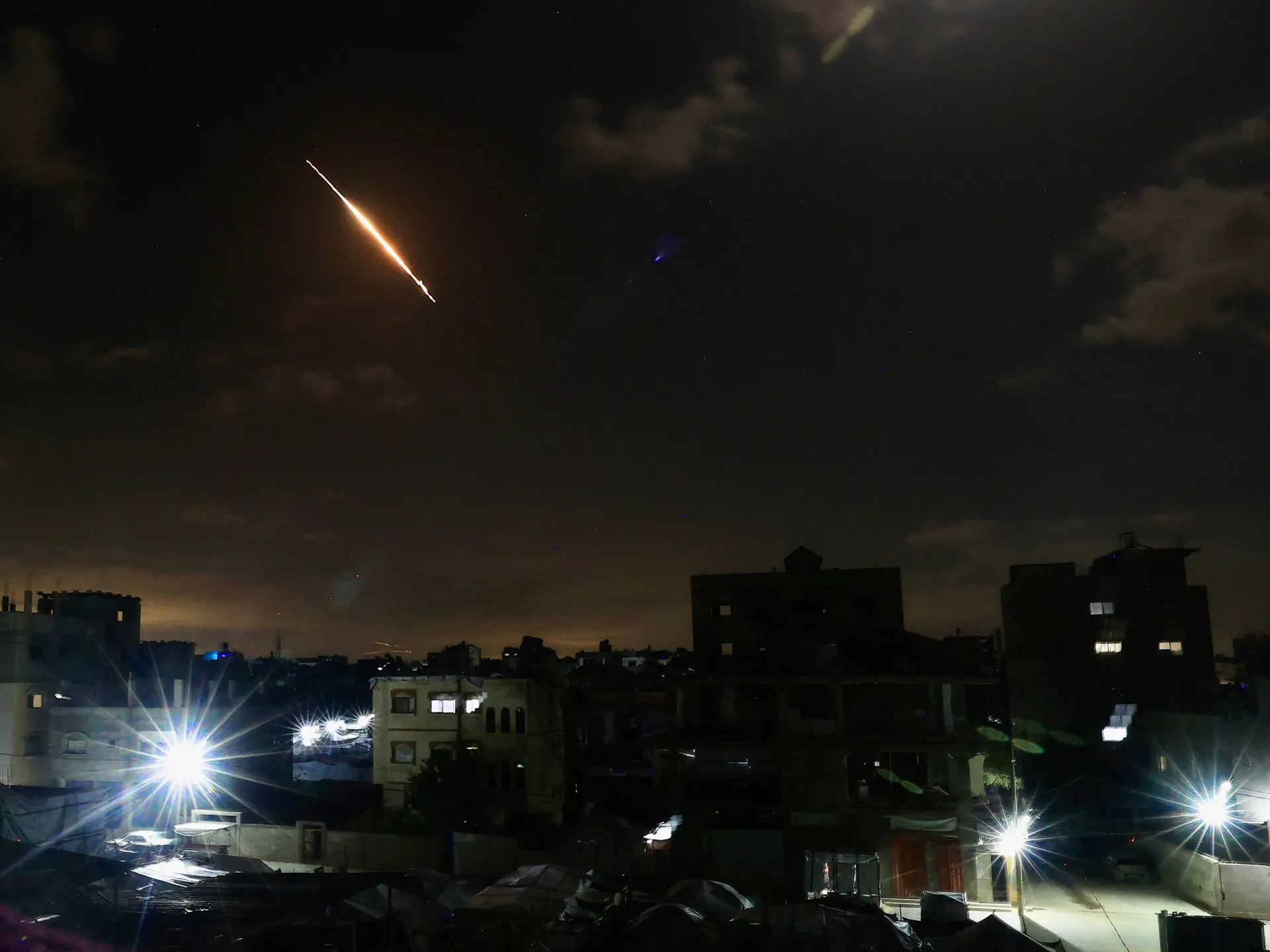
Late on Saturday, the Israeli military fired flares in areas southeast of Khan Younis city, sources in southern Gaza told Al Jazeera. Armies generally launch flares to highlight enemy positions and indicate incoming attacks.

Earlier, Israel launched air strikes inside Gaza ceasefire’s “yellow line” demarcation near Khan Younis as well as Gaza City in the north.

Source link

Investigators probe group that arranged ‘trafficking’ flights out of Gaza | Gaza

NewsFeed

Concerns have been raised about a ‘humanitarian organisation’ that flew people from Gaza to South Africa. Inquiries into Al-Majd Europe revealed a website based in Iceland, crypto payments and AI images showing ‘executives.’ The company didn’t respond when asked to comment.

Source link

Displaced Palestinian families suffer as heavy rains flood Gaza tent camps | Israel-Palestine conflict News

Palestinians call for better tents and other supplies as Israel maintains restrictions on aid to war-ravaged Gaza Strip.

Displaced Palestinians are reeling after heavy rains flooded their tents in makeshift displacement camps in Gaza City, as the United Nations warns that Israeli restrictions on aid have left hundreds of thousands of families without adequate shelter.

Abdulrahman Asaliyah, a displaced Palestinian man, told Al Jazeera on Friday that residents’ mattresses, clothes and other belongings were soaked in the flooding.

Recommended Stories

list of 3 itemsend of list

“We are calling for help, for new tents that can at least protect people from the winter cold,” he said, explaining that nearly two dozen people had been working for hours to get the water to drain from the area.

“This winter rain is a blessing from God, but there are families who no longer wish for it to fall, fearing for the lives of their children and their own survival,” Asaliyah said.

Gaza’s civil defence agency said Friday’s flooding primarily affected Palestinians in the north of the Strip, where hundreds of thousands of people have returned following last month’s ceasefire agreement between Israel and Hamas.

Flooding was also reported in central Gaza’s Deir el-Balah, said the rescue agency, which urged the international community to do more to “address the suffering” of Palestinians whose homes were destroyed in Israel’s two-year war on the enclave.

“We urge the swift delivery of homes, caravans, and tents to these displaced families to help alleviate their suffering, especially as we are at the beginning of winter,” it said in a statement.

While the October 10 ceasefire has allowed more aid to get into the Gaza Strip, the UN and other humanitarian groups say Palestinians still lack adequate food, medicine and other critical supplies, including shelter.

Aid groups working to provide shelter assistance in the occupied Palestinian territory said in early November that about 260,000 Palestinian families, totalling almost 1.5 million people, were vulnerable as the cold winter months approached.

The UN agency for Palestinian refugees (UNRWA) said this week that it has enough shelter supplies to help as many as 1.3 million Palestinians.

But UNRWA said Israel continues to block its efforts to bring aid into Gaza despite the ceasefire deal, which stipulated that humanitarian assistance must be delivered to Palestinians in need.

“We have a very short chance to protect families from the winter rains and cold,” Angelita Caredda, Middle East and North Africa director at the Norwegian Refugee Council (NRC), said in a statement on November 5.

Reporting from Deir el-Balah on Friday, Al Jazeera’s Hind Khoudary said Palestinians across Gaza have been voicing fears that this winter would be particularly difficult due to the lack of safe shelter.

“It only rained for a couple of minutes – 30 minutes or so … [and] they were completely flooded,” she said. “Their tents are very fragile and worn-out; they have been using them for the past two years.”

She added that most Palestinians do not have any other options but to remain in tent camps or overcrowded shelters, despite the difficulties.

“We’re already seeing Palestinian children walking barefoot. They do not have winter clothes. They do not have blankets. And at the same time, the aid that is coming in … is being restricted,” Khoudary said.

Back in Gaza City, another displaced Palestinian man affected by the heavy rains, Abu Ghassan, said he and his family “no longer have a normal life”.

“I’m lifting the mattresses so the children don’t get soaked,” he told Al Jazeera. “But the little ones were already drenched here. We don’t even have proper tents.”

Source link

‘Trip of suffering’: Gaza evacuee details 24-hour journey to South Africa | Israel-Palestine conflict News

A resident of the Gaza Strip, who is one of 153 Palestinians that landed in South Africa without the correct paperwork this week, says the group did not know where they would end up when they left Israel.

Loay Abu Saif, who fled Gaza with his wife and children, told Al Jazeera on Friday that the journey out of the battered and besieged enclave was a “trip of suffering”.

Recommended Stories

list of 3 itemsend of list

“We were not too convinced that any group … would be able to make this kind of evacuation,” Abu Saif said from Johannesburg, a day after the chartered plane his group was on landed at the city’s OR Tambo International Airport.

“I can say I feel safe … which means a lot for Palestinians, especially for those in Gaza,” he added.

Details are slowly emerging of a controversial transit scheme run by a non-profit, through which activists say Israel is encouraging the displacement of Palestinians out of Gaza by helping them settle in other countries.

Based on Abu Saif’s testimony to Al Jazeera, the Israeli military appears to have facilitated his group’s transfer through an Israeli airport.

The flight carrying Abu Saif left Israel’s Ramon Airport and transited through Nairobi, Kenya, before landing in Johannesburg on Thursday morning, where authorities did not initially allow the passengers to disembark as the Palestinians did not have departure stamps from Israel on their documents.

All in all, the journey lasted more than 24 hours and involved a change of planes.

Abu Saif said his family left Gaza without knowing their final destination. They only learned they were bound for Johannesburg when boarding their connecting flight in Nairobi.

Al Jazeera’s Nour Odeh, reporting from Amman, Jordan, on Friday, said Israel was yet to comment on the issue, but it was unlikely the Palestinians who left did so without “Israeli coordination”.

“Nobody can approach that imaginary yellow line [in Gaza] without being shot at. These people had to be bused through the yellow line, through the 53 percent of Gaza that the Israeli army still controls and is operating in out of Gaza, through Israel to the Ramon airport,” she reported.

Uncertainty loomed

According to Abu Saif, his wife registered the family with a nonprofit called Al-Majd Europe, with headquarters in Germany with an office in Jerusalem, according to their website.

The group advertised the registration form on social media, he revealed. On how he was selected, Abu Saif said the process appeared to focus on families with children and required a valid Palestinian travel document, along with security clearance from Israel.

“This is all what I know about the criteria,” he said.

When asked whether he knew in advance when they would leave Gaza, he said no timelines were given.

“They told us … we will inform you one day before – that’s what happened,” he said, adding that the organisation told them not to carry any personal bags or luggage except relevant documents.

In terms of cost, people were charged about $1,400-$2,000 per person for the trip, Abu Saif said. Parents also paid the same fee per child or baby they carried with them.

After they were selected to leave, Abu Saif and his family were taken by bus from the southern Gaza city of Rafah to the Karem Abu Salem crossing (called Kerem Shalom in Israel), along the border with Israel, where they underwent checks before being transferred onward towards Israel’s Ramon Airport.

He said their travel documents were not stamped by Israeli authorities, but he thought it was just a routine procedure since there were no Palestinian border officials in Gaza.

“We realised the problem … when we reached South Africa and they were asking us … ‘Where are you coming from?’” Abu Saif said.

Future plans

The group that organised the trip, Al-Majd Europe, said they would be able to help his family for a week or two, after which they would be on their own, Abu Saif said.

However, he added that the evacuees had made their own plans going forward.

“They have their papers for Australia, Indonesia, or Malaysia. We can say that 30 percent of the total number of passengers left South Africa on the same day or within the first two days,” he said, while others may choose to stay for several reasons, including receiving treatment.

South African authorities reported that of the 153 Palestinians who landed on Thursday, 130 entered the country, while 23 transferred to other destinations.

“People have calculated that the cost of life in any country … will be cheaper compared to the cost of living in Gaza,” said Abu Saif.

Source link