European markets cratered on Monday as the fallout from a dramatic weekend of US and Israeli strikes on Iran rattled investors across the continent.
ADVERTISEMENT
ADVERTISEMENT
The Euro Stoxx 50 shed 2% at the open, with the broader pan-European Stoxx 600 close behind at -1.8% — and the selling shows no signs of stopping.
Regional indices from Frankfurt to Paris to Milan are all in the red, spooked by an escalating conflict that has choked shipping traffic through the Strait of Hormuz and drawn Hezbollah into the fray on Sunday.
In London, the FTSE 100 is having the more durable response, only falling around 0.3%.
However, Germany’s DAX 30 edged down 1% whilst France’s CAC 40 dropped more than 1.4%.
Italy’s FTSE MIB fell roughly 1.8%, the Netherlands’ NL 25 declined over 1% and Spain’s IBEX 35 has seen a sharp drop of more than 2%.
Before European markets opened, Japan’s Nikkei 225 was already in free fall and is currently down over 2.3%.
Likewise, US futures opened lower on Sunday with the E-mini S&P 500 dropping over 1.6% and E-mini NASDAQ down more than 2%.
In the UAE, regulators have taken the dramatic step of shutting down both the Abu Dhabi Securities Exchange and the Dubai Financial Market for the next two days.
The Capital Market Authority made no attempt to dress it up and the closures are explicitly designed to prevent panic selling after a staggering 165 ballistic missiles, 541 drones, and 2 cruise missiles rained down on the country over just 48 hours.
Oil and precious metals
While global markets sink into negative territory, crude oil prices rose in early trade on Monday morning as investors continue to weigh the potential impact of escalating tensions in the Middle East on the supply of energy.
The price of a barrel of US benchmark crude initially surged by about 8%. It later traded 5.9% higher at $71.00 per barrel. Brent crude rose 6.2% to $77.38 per barrel.
Gold is up roughly 2.5% while silver climbed 2% and platinum 1.2% as well.
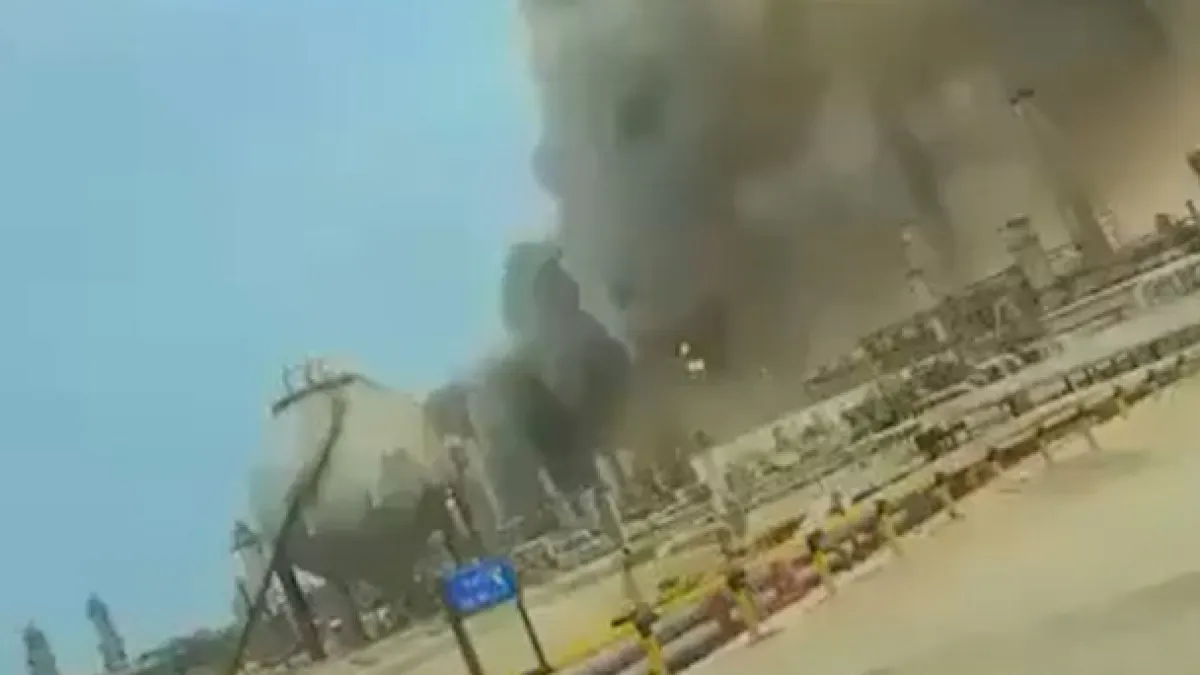
Videos show smoke rising from a refinery operated by Saudi Aramco after a fire broke out, which Saudi officials say was caused by debris from an intercepted Iranian missile. Oil prices have surged sharply amid the disruption and the closure of the Strait of Hormuz, raising fears over global supply.
Deir el-Balah/Gaza City – When Hani Abu Issa headed to the Deir el-Balah market on Saturday morning, he was not carrying a long shopping list. He had only intended to buy ingredients for his family’s Ramadan iftar meal, nothing more.
But the sight of crowds gathered in front of grocery shops caught him by surprise and prompted him to ask what was happening.
Recommended Stories
list of 4 itemsend of list
A passer-by told him that Israel had struck Iran and war had broken out.
Hani was shocked as he watched people around him leaving one after another, carrying sacks of flour on their shoulders, and buying whatever food supplies and goods they could manage.
That was how the first hours of the military confrontation between Israel, joined by the United States, and Iran unfolded in Gaza.
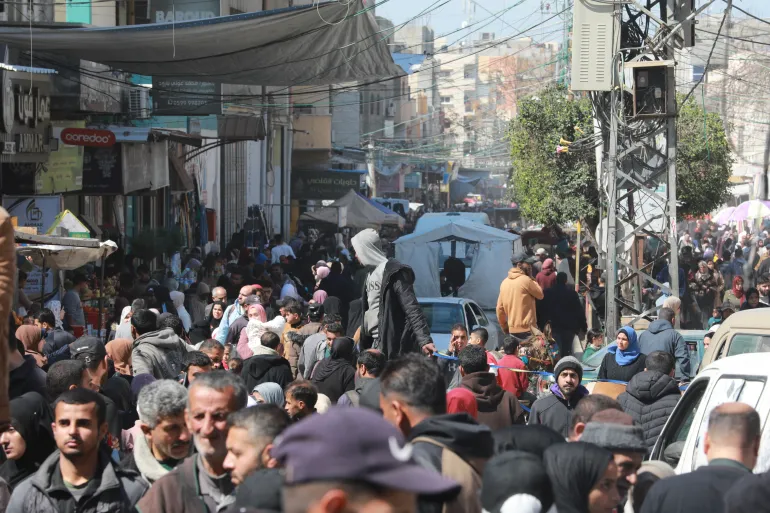
The scene in the enclave changed completely as people everywhere rushed to the market to buy sugar, flour, cooking oil and yeast.
Shelves began to empty, and the price of essential goods increased.
A father of five children, 51-year-old Hani told Al Jazeera that he believes the Israel-US war with Iran “will not directly affect Gaza”. But he admits that people in Gaza are no longer able to react calmly to any military development in the region.
“People have become afraid of everything. Since the morning, everyone rushed to the markets to stockpile, and that led to shortages of many goods and rising prices,” he said, while standing in front of food stalls in the Deir el-Balah market, in central Gaza.
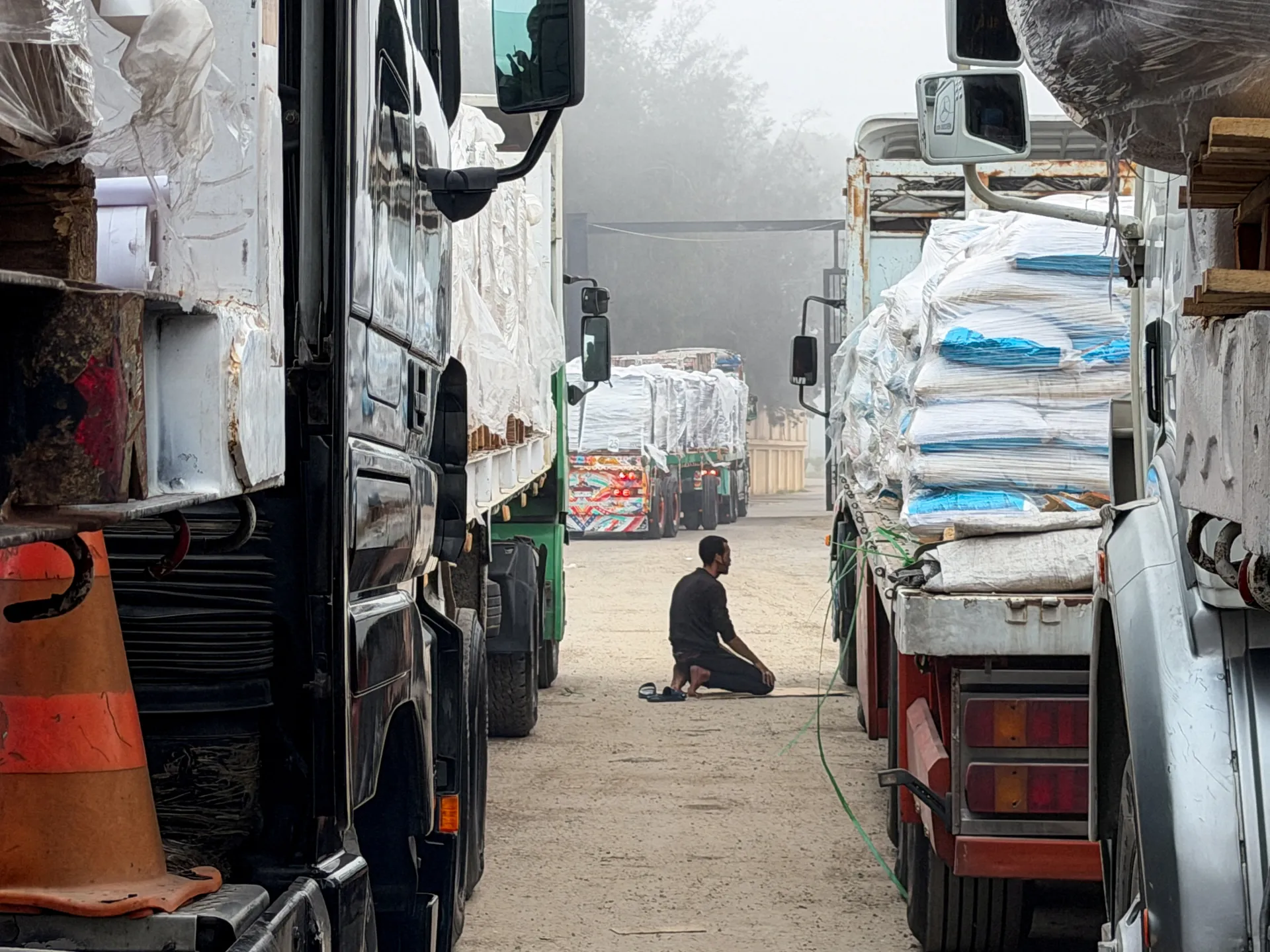
Anxiety among residents intensified after COGAT, the Israeli body managing the Palestinian territory, released a statement on its Facebook page on Saturday evening announcing the closure of crossings leading to Gaza and the occupied West Bank “until further notice”, in light of security developments related to the war with Iran.
Hani said the possibility of crossings remaining closed deeply worried him.
“Flour, sugar, cooking oil, and yeast… those were the first things to disappear from the market because of the heavy demand,” he said.
“I lived through famine [during Israel’s genocidal war on Gaza] like everyone else. The worst days were when I had to buy a sack of flour for more than 1,000 shekels [$319]. I don’t want to relive that experience.”
He said that stockpiling while the crossings remained closed was not a viable solution.
“Goods run out quickly, and the conditions we live in may spoil whatever we store. All we need is for someone to reassure us that the closure of the crossings will not last.
“For someone to tell us that we will not be affected.”
Crowds filled Gaza’s markets as residents rushed to stockpile food after news of the war with Iran and the closure of Gaza and West Bank crossings [Abdelhakim Abu Riash/ Al Jazeera]
Local sources reported that the crossing closures were linked to the Jewish holiday of Purim, which created confusion over how long they would last.
“We cannot be certain or confirm anything. Israel’s word cannot be relied upon, and no specific duration was given,” Hani added in frustration.
“Gaza has not recovered from two years of war and famine. All I think about now is traveling and leaving with my two daughters to live in another country. That is enough.”
At around the same time last year, during Ramadan last March, Palestinians in Gaza endured one of the harshest phases of the war after crossings were closed and goods were prevented from entering for extended periods, leading to shortages of food supplies and price hikes that resulted in the spread of famine.
Israel’s policy of starvation at the time faced widespread condemnation. Markets turned into empty spaces, flour prices soared to record highs, and people died due to severe malnutrition.
Omar Al-Ghazali sells groceries at his food stall in the Nuseirat market in central Gaza [Abdelhakim Abu Riash/ Al Jazeera]
Justified fear
In the Nuseirat market, where people are still frantically buying groceries, 28-year-old seller Omar Al-Ghazali told Al Jazeera that the famine experience has left a deep psychological impact.
“People’s fear is completely justified. They were shocked and frightened and want to secure themselves. They learned from the previous famine experience and from fears of trader hoarding,” the father of four said.
“Today, although the war is not taking place on Gaza’s land, the fear of repeating the famine scenario appears stronger than any logical analysis of the regional situation,” he added.
“We cannot tell people not to buy. What they went through was extremely difficult. We try to convince ourselves that things are fine and that no one will be affected, but fear is stronger.”
‘Where would we even store it?’
Not everyone can afford to stockpile.
Asmaa Abu Al-Khair, 38, was wandering through the Gaza City market on Sunday, visibly confused. A mother of eight, she wants to stock up, but lacks both the financial ability and the space.
“Where would we store it? And what would I even store? We need everything, and we can barely provide our daily food during Ramadan,” she told Al Jazeera as she walked empty-handed through the market.
“I feel great anxiety. Everyone is talking about it – about Iran’s strike and the closure of the crossings – and I cannot afford to buy what I need, while at the same time, I am afraid of famine returning. I have young children,” she said sorrowfully.
Asmaa said many displaced families living in nearby tents were facing the same reality as they “do not have the money to buy supplies, nor the space to store them inside the tents”.
“We endured so much hardship during the war, and it barely ended with the announcement of a ceasefire. So why close the crossing now? What do we have to do with what is happening? Is what we witnessed not enough? Why play with people’s nerves?”
Until yesterday evening, Asmaa had hoped the crossings would not be closed and that things would continue as they were. Then, the announcement came.
“It felt like a stab in my heart. I went to sleep with deep frustration,” she said bitterly.
Mohammed Daher chose not to stockpile, saying he is exhausted by the repeated Israeli crossing closures, particularly those that coincided with Ramadan last year [Abdelhakim Abu Riash/ Al Jazeera]
Mohammed Daher, 46, from Jabalia, who is now displaced and living in Deir el-Balah, said he had been living the spirit of Ramadan “calmly and peacefully”, without war or gunfire for the first time in two years, until the news of war with Iran.
“I found myself lost again. But I decided not to stockpile anything,” he told Al Jazeera while looking around the market.
“We are exhausted. I reached a point where I have grown used to all scenarios,” he said despairingly. “Israel is looking for any pretext to starve Gaza’s residents again and deepen their humanitarian crisis.”
Daher said he had spent most of his money during the previous famine buying basic food items at inflated prices.
“Everything was priced like gold… if you could even find it. Today, I have no energy left to endure that torment again. Let whatever happens, happen.”
Deepening Gaza’s humanitarian crisis
There were widespread reactions to the Israeli closure decision on social media, as Palestinians questioned whether they were on the brink of an even harsher phase of Israel’s treatment. Many people accused Israel of closing the crossings to push Palestinians towards further starvation and collective suffering.
Some wondered whether Israel was using the moment to create more suffering for Palestinians in Gaza while the world was distracted by the war with Iran.
Ali al-Hayek, a member of the Palestinian Businessmen Association in Gaza, warned that closing the crossings could halt aid distribution to struggling families and put a pause on charitable kitchens. It would also obstruct urgent medical travel abroad, particularly for those who are wounded, in critical condition or living with chronic diseases, such as cancer.
He pointed out that Gaza’s economy has already contracted by more than 85 percent because of Israel’s genocidal war, with the majority of the population pushed below the poverty line, unemployment reaching nearly 80 percent, and more than 97 percent of industrial facilities ceasing operations.
Al-Hayek called on the international community to intervene immediately and pressure the Israeli side to reopen the crossings and restore their normal operations, while ensuring freedom of movement for individuals and goods.
But he also said it is important that traders not use the shortage to increase prices. It’s Ramadan time, he emphasised, and Palestinians should demonstrate solidarity now more than ever.
The killing of Iranian Supreme Leader Ali Khamenei in a United States-Israeli air campaign has sent shockwaves through the Middle East, decapitating the leadership of the “axis of resistance” at its most critical moment.
For decades, this network of groups allied with Iran was Tehran’s forward line of defence. But today, with its commander-in-chief dead and its logistical arteries cut, the alliance looks less like a unified war machine and more like a series of isolated islands.
Recommended Stories
list of 4 itemsend of list
Hassan Ahmadian, a professor at the University of Tehran, warned that the era of strategic patience is over and the Iranian government is now prepared to “burn everything” in response to the attacks.
While Tehran promised to retaliate against the US and Israel “with a force they have never experienced before”, the reaction from its key proxies in Lebanon, Yemen and Iraq revealed a deep hesitation driven by local existential threats that may outweigh their ideological loyalty to a fallen leader.
Hezbollah: Walking between raindrops
In Beirut, the response from Hezbollah, long considered the crown jewel among Iran’s regional allies, has been cautiously calibrated.
After Sunday’s announcement of Khamenei’s death, the group issued a statement condemning the attack as the “height of criminality”. However, Al Jazeera correspondent in Beirut Mazen Ibrahim noted that the language used was defensive, not offensive.
“If one dismantles the linguistic structure of the statement, the complexity of Hezbollah’s position becomes clear,” Ibrahim said. “The secretary-general spoke of ‘confronting aggression’, which refers to a defensive posture. … He did not explicitly threaten to attack Israel or launch revenge operations.”
This caution is rooted in a new strategic reality. Since the collapse of Bashar al-Assad’s government in Syria in late 2024, the “land bridge” that supplied Hezbollah has been severed. Ali Akbar Dareini, a Tehran-based researcher, noted that this loss “cut the ground link with Lebanon”, leaving the group physically isolated.
Now with top leaders of Iran’s Islamic Revolutionary Guard Corps (IRGC) killed alongside Khamenei, Hezbollah appears paralysed – caught between a battered domestic front in Lebanon and a vacuum of orders from Tehran.
The Houthis: Solidarity meets survival
In Yemen, the Houthis face an even more volatile calculus.
In his first televised address after the strikes on Iran began on Saturday, the group’s leader, Abdel-Malik al-Houthi, declared his forces “fully prepared for any developments”. Yet his rhetoric notably emphasised that “Iran is strong” and “its response will be decisive,” a phrasing that analysts interpreted as an attempt to deflect the immediate burden of war away from the Houthis.
The Houthis are under immense pressure. While they have successfully disrupted Red Sea shipping and fired missiles at Tel Aviv, they now face a renewed threat at home.
The internationally recognised Yemeni government, having won a power struggle against southern separatists, has sensed a shift in momentum. Defence Minister Taher al-Aqili recently declared: “The index of operations is heading towards the capital, Sanaa,” which the Houthis control. The statement signalled a potential ground offensive to retake Houthi territory.
This places the Houthis in a bind. While Houthi negotiator Mohammed Abdulsalam recently met with Iranian official Ali Larijani in Muscat, Oman, to discuss “unity of the arenas”, the reality on the ground is different. Engaging in a war for Iran could leave the Houthis’ home front exposed to government forces backed by regional rivals.
“Expanding the circle of targeting will only result in expanding the circle of confrontation,” the Houthi-affiliated Supreme Political Council warned in a statement that threatened escalation but also implicitly acknowledged the high cost of a wider war.
Iraq: The internal time bomb
Perhaps nowhere is the dilemma more acute than in Iraq, where the lines between the state and the “resistance” are dangerously blurred.
Iran-aligned militias, many of which operate under the state-sanctioned Popular Mobilisation Forces, are now caught in a direct standoff with the US. Tensions have simmered since late 2024 when Ibrahim Al-Sumaidaie, an adviser to Iraq’s prime minister, revealed that Washington had threatened to dismantle these groups by force, a warning that led to his resignation under pressure from militia leaders.
Today, that threat looms larger than ever. Unlike Hezbollah or the Houthis, these groups are technically part of the Iraqi security apparatus. A retaliation from Iraqi soil would not just risk a militia war but also a direct conflict between the US and the Iraqi state.
With the IRGC commanders who once mediated these tensions now dead, the “restraining hand” is gone. Isolated militia leaders may now decide to strike US bases of their own accord, dragging Baghdad into a war the government has desperately tried to avoid.
Resistance without a head
Khamenei’s assassination has essentially shattered the command-and-control structure of the “axis of resistance”.
The network was built on three pillars: the ideological authority of the supreme leader, the logistical coordination of the IRGC and the geographic connection through Syria. Today, all three are broken.
“The most important damage to Iran’s security interests is the severing of the ground link,” Dareini said. With Khamenei gone, the “spiritual link” is also severed.
What remains is a fragmented landscape. In Lebanon, Hezbollah is too exhausted to open a northern front. In Yemen, the Houthis face a potential domestic offensive. In Iraq, militias risk collapsing the state they live in.
When the dust settles in Tehran, the region will face a dangerous unpredictability. The “axis of resistance” is no longer a coordinated army. It is a collection of angry, heavily armed militias, each calculating its own survival in a world where the orders from Tehran have suddenly stopped coming.
Oil prices climbed on Monday morning as investors assessed the economic impact of US and Israeli attacks on Iran, which triggered swift retaliation from Tehran targeting assets in multiple Middle Eastern countries.
ADVERTISEMENT
ADVERTISEMENT
In early trade, the price of a barrel of US benchmark crude initially surged by about 8%. It later traded 5.9% higher at $71.00 per barrel. Brent crude rose 6.2% to $77.38 per barrel.
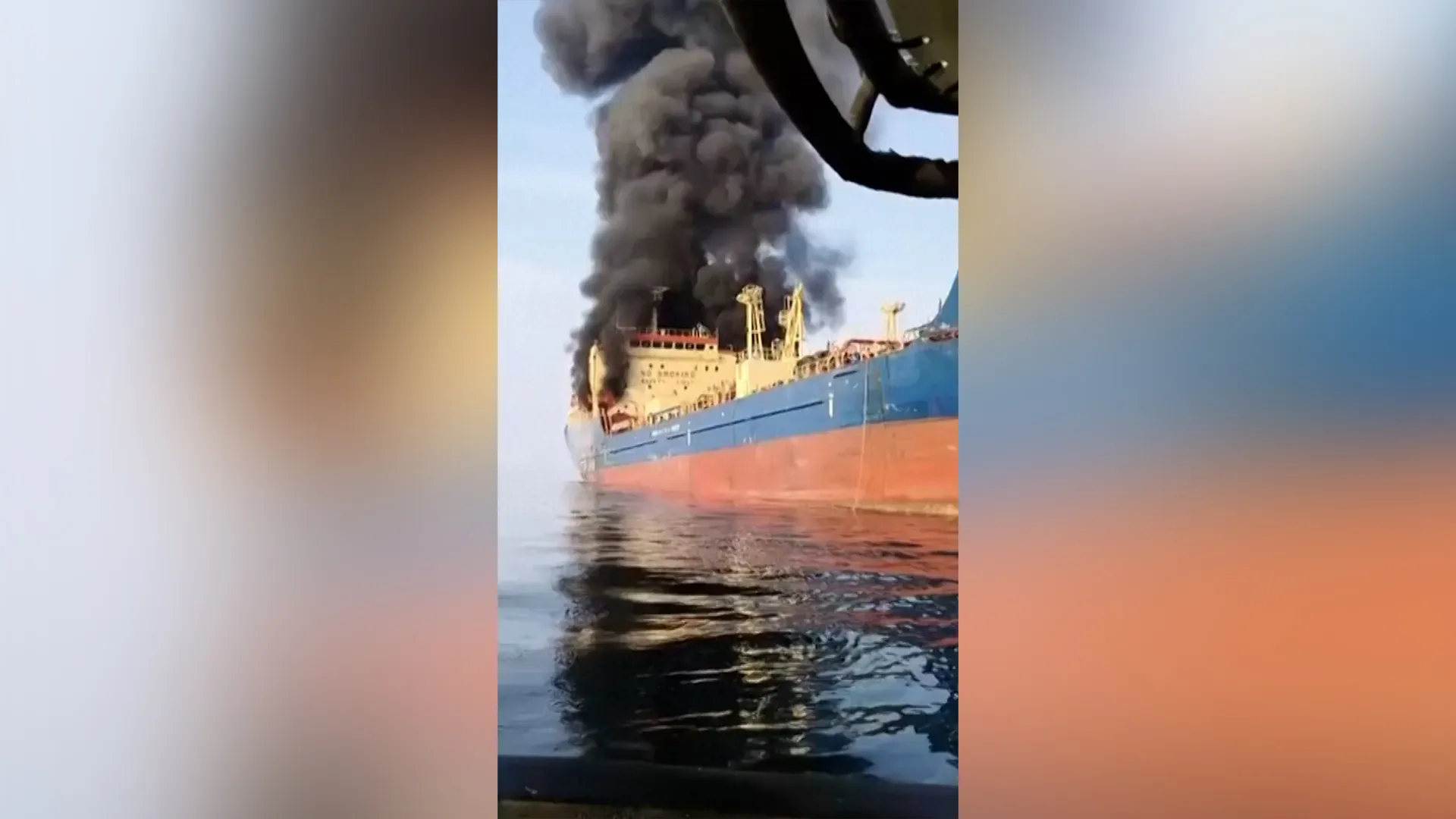
Traders were betting that oil supplies from Iran and elsewhere in the Middle East could slow or grind to a halt. Attacks across the region, including on two vessels travelling through the Strait of Hormuz — the narrow mouth of the Persian Gulf — have restricted countries’ ability to export oil to the rest of the world.
“Roughly one-fifth of global oil and LNG (liquefied natural gas) flows squeeze through the Strait of Hormuz. This is not an obscure canal. It is the aorta of the global energy system,” Stephen Innes of SPI Asset Management said in a commentary note.
A prolonged war would likely result in higher prices for other fuels and petrol, and could ripple through the global economy, adding to overall production costs.
Likewise, prolonged interruptions to oil flows through the Middle East would have “huge implications for oil and LNG and every market everywhere if it occurs. Energy is an input to all production,” RaboResearch Global Economics & Markets said in a report.
Iran exports roughly 1.6 million barrels of oil a day, mostly to China. Beijing may need to look elsewhere for supply if Iran’s exports are disrupted — another factor that could push energy prices higher.
However, China has ample oil reserves of up to 1.5 billion barrels and could offset a decline in Iranian oil by increasing imports from Russia, said Michael Langham of Aberdeen Investments.
The attacks had been anticipated, following a significant build-up of US forces in the Middle East, so traders had already adjusted their positions to account for that risk.
In other early trading on Monday, the price of gold — usually viewed as a safe haven in times of uncertainty — rose 2.4% to about $5,371 per ounce.
Elsewhere, futures for the S&P 500 and the Dow Jones Industrial Average were down about 0.8% by mid-morning in Bangkok.
Asian shares also opened lower. Japan’s Nikkei 225 initially fell more than 2%. In Hong Kong, the Hang Seng lost 1.6% to 26,215.91, while the Shanghai Composite was flat at 4,163.01.
Taiwan’s benchmark index fell 0.6% and Singapore’s dropped 1.9%. In Bangkok, the SET declined 2.1%, while Australia’s S&P/ASX 200 shed 0.3% to 9,173.50.
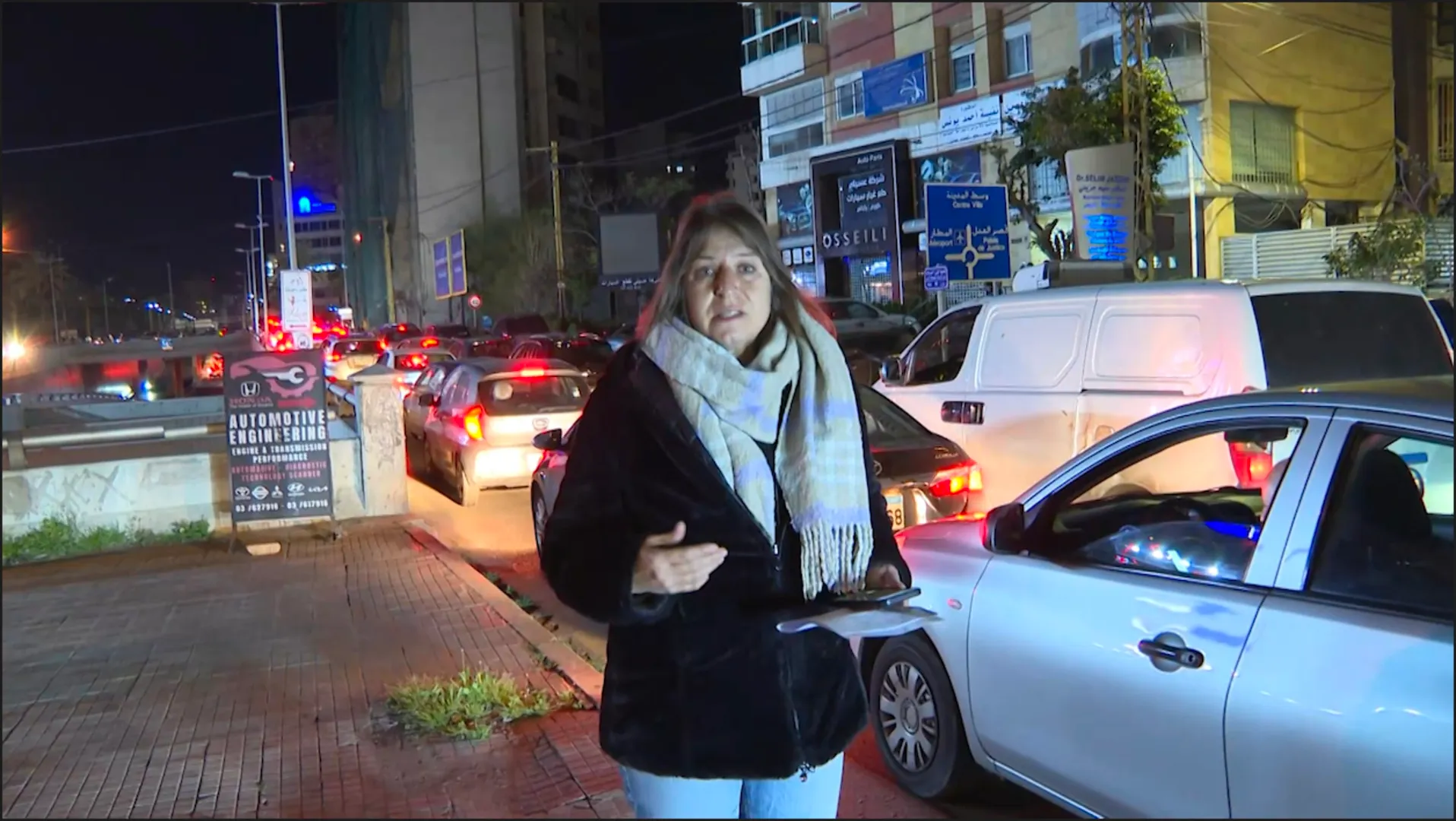
Tens of thousands of Lebanese civilians are leaving areas in Beirut following Israeli strikes and forced displacement orders. Earlier Hezbollah launched a retaliatory attack on Israel. Al Jazeera’s Zeina Khodr is amid the heavy traffic.
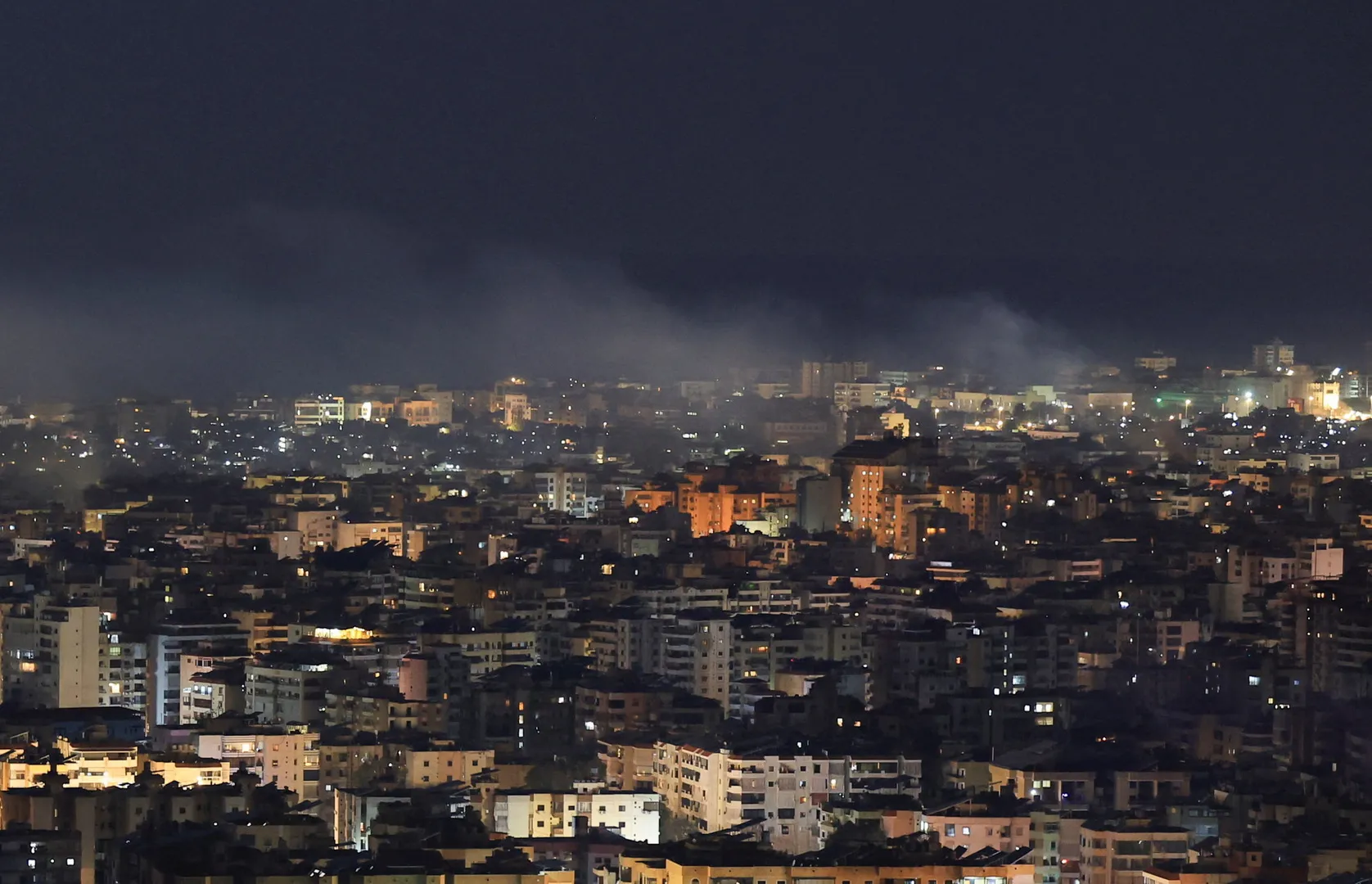
Israel has carried out heavy strikes in the southern suburbs of Lebanon’s capital Beirut after Hezbollah launched an attack on northern Israel in retaliation for the killing of Iran’s Supreme Leader Ali Khamenei.
A poll conducted in the hours after the United States and Israel launched a major military operation against Iran, sparking regional retaliation, shows dismal approval for the strikes from the US public.
The Reuters Ipsos poll was conducted beginning on Saturday and closing on Sunday, before the administration of President Donald Trump announced that the first US troops had been killed in the conflict. Only one in four respondents approved of the US-Israeli attacks.
Recommended Stories
list of 3 itemsend of list
The early findings could have a significant effect on how the Trump administration moves forward in the days ahead and on how lawmakers respond to the attacks, particularly as they look to a punishing midterm election season.
Trump on Sunday promised to continue what he described as a “righteous mission” until “all objectives are achieved”. Referencing the three US military members announced killed on Sunday, Trump said that “there will likely be more before it ends”.
After a US-Israeli strike killed Iranian Supreme Leader Ayatollah Ali Khamenei, Trump again framed Iran as an existential threat to the US, claiming that the country’s leaders “have waged war against civilization itself”.
The Reuters-Ipsos poll suggested that the US public does not share that view, with 43 percent of respondents saying they disapproved of the war and another 29 percent saying they were unsure.
Approval among Republicans was stronger, but not resounding, with 55 percent saying they approved of the strikes, 13 percent disapproving and 32 percent unsure.
Perhaps most significantly, about 42 percent of Republicans said they would be less likely to support the operation if it led to “US troops in the Middle East being killed or injured”.
About 74 percent of Democrats disapproved of the strike, with 7 percent approving and 19 percent unsure.
Midterms loom
The poll released on Sunday comes as Republican lawmakers have largely coalesced around Trump’s message on Iran, even as its contradiction to Trump’s campaign promises risks alienating his Make America Great Again (MAGA) base.
Trump had run on a pledge to cease “endless wars” and halt US interventionism abroad in an “America First” pivot.
While Trump has shown a unique ability to shape the views of his staunchest supporters in his likeness, some conservative commentators have warned that he is playing with fire.
“If this war is a swift, easy, and decisive victory, most of them will get over it,” Blake Neff, a former producer for late conservative activist Charlie Kirk, wrote on X on Saturday.
“But if the war is anything else, there will be a lot of anger.”
He added that “success can override bad explanations. So we must pray for success.”
Speaking to Al Jazeera, Doug Bandow, a senior fellow at the Cato Institute, a libertarian think tank, said the confirmation that US soldiers had been killed “brings home the cost of the war”.
“Americans, by a very large margin, don’t want to be tied up in an ongoing conflict in the Middle East,” he said during a television interview. “The fact that Americans have died suddenly shows this is not just a video game from the standpoint of America.”
Beyond the three US military personnel killed, at least 201 people have been killed in Iran, nine in Israel, two in Iraq, three in the United Arab Emirates and one in Kuwait.
Meanwhile, 45 percent of respondents to the Reuters-Ipsos poll, including 34 percent of Republicans and 44 percent of independents, said they would be less likely to support the campaign against Iran if gas or oil prices increased in the US.
The conflict has threatened arterial trade routes, with several companies suspending shipments in the area.
Democrats will also be keeping a close eye on public sentiment on the war, which will surely hang over the campaign season ahead of the midterm elections in November.
The party has made affordability a key issue, with incumbents and upstart challengers alike portraying Trump’s military adventurism, which has also included the US abduction of Venezuelan leader Nicolas Maduro, as out of touch with his messaging.
Elected Democrats, meanwhile, have given a range of responses to the US operation against Iran, with at least one Democratic senator praising Trump’s strikes. Others celebrated Khamenei’s killing, but remained more circumspect on Trump’s justification for the attacks, while several others were forthright in condemning the strikes.
Several Democrats on Sunday said the killing of US soldiers underscored the urgency of passing a war powers resolution, which would require approval from Congress before further military action is taken.
“I’m thinking of the brave American soldiers killed today,” Senator Chris Van Hollen, a proponent of the resolution, posted on X on Sunday. “They should still be with us.”
“Trump said he would keep us out of war. This is his war of choice.”
A vote on the resolution is expected early this week.
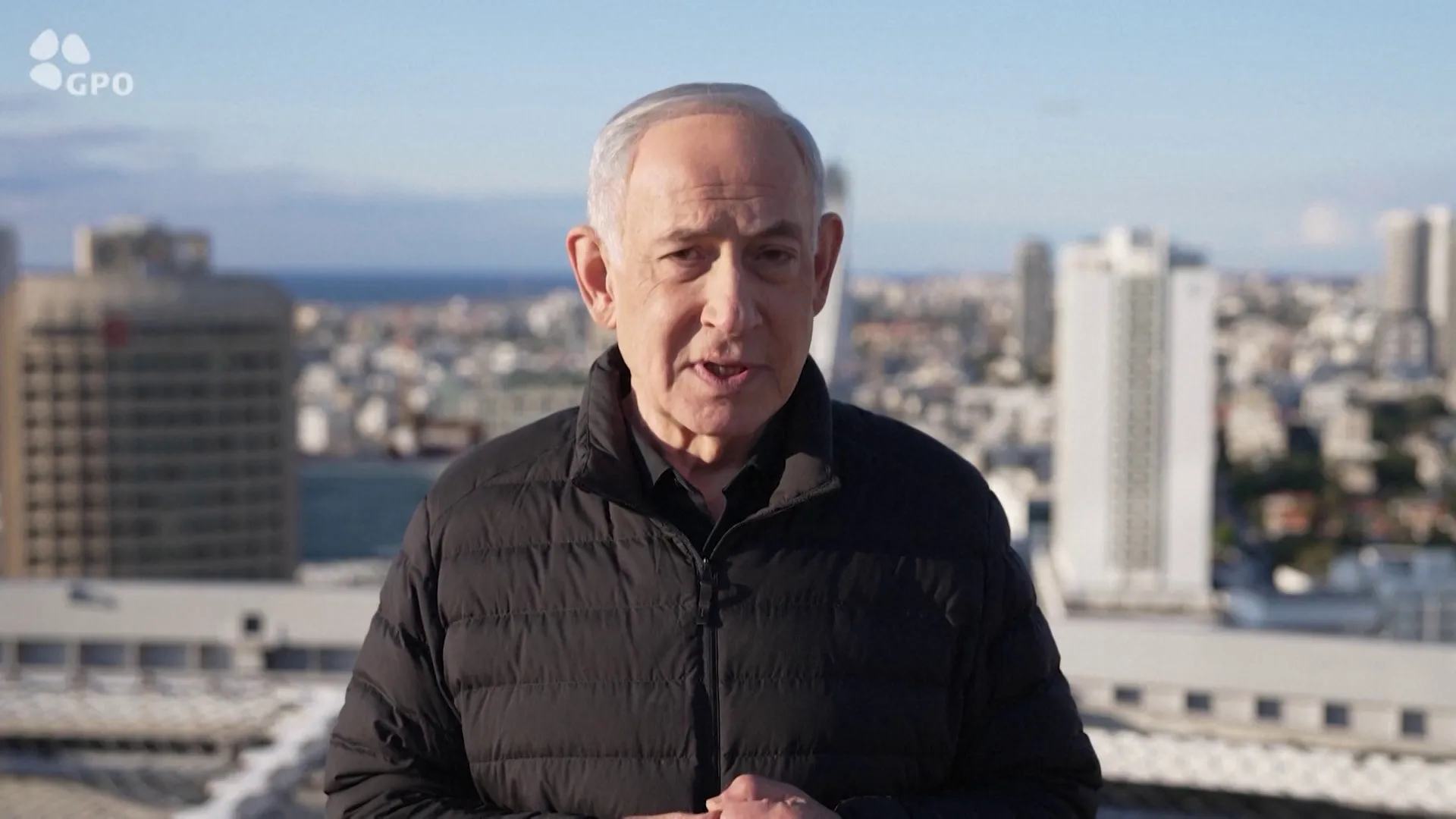
Israel’s prime minister says strikes on Tehran will increase in the coming days, with US support, to do what Benjamin Netanyahu says he’s ‘hoped to do for 40 years’. Israel and the US killed Iran’s Supreme Leader on Saturday in a renewed war on Iran.
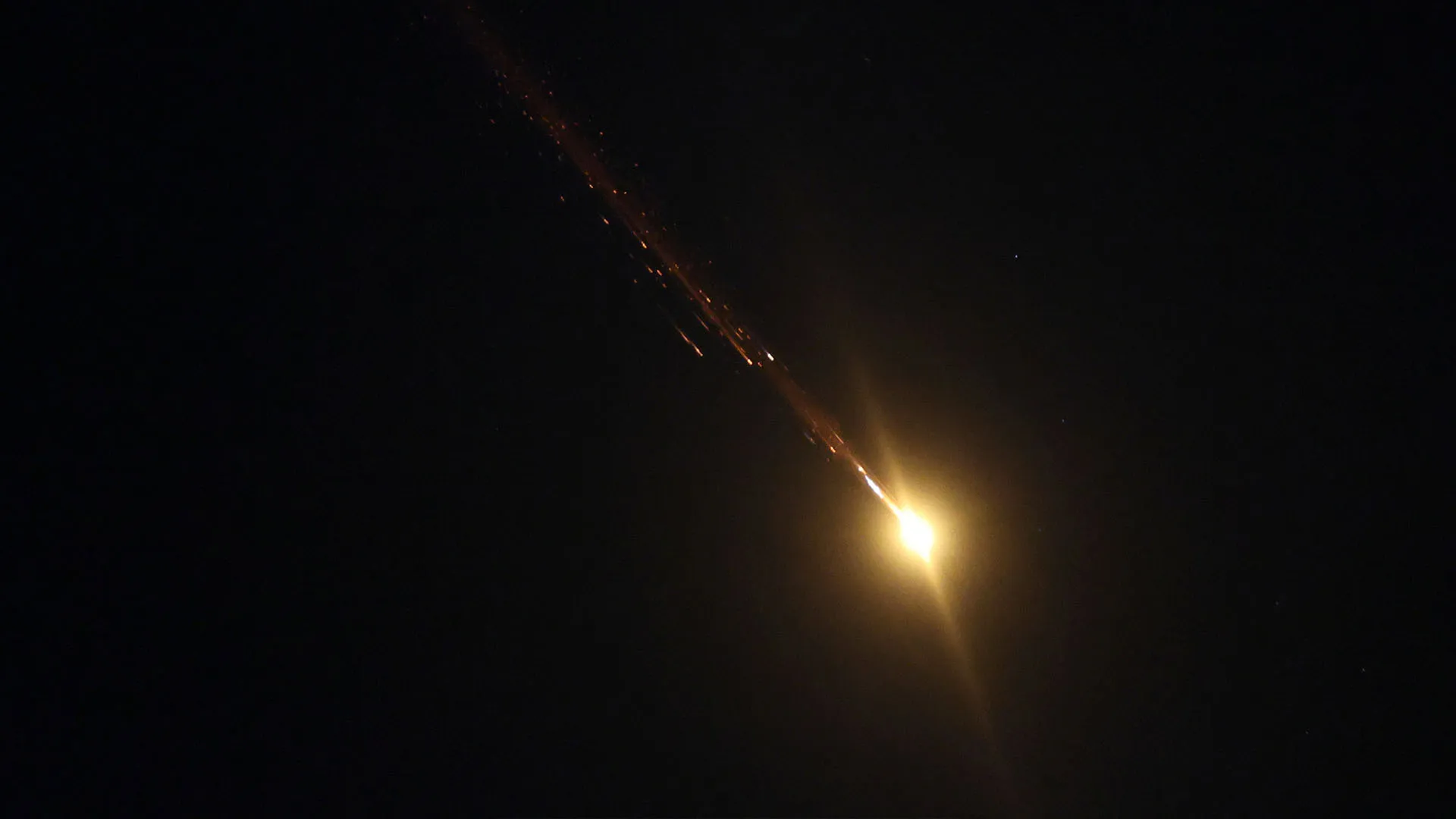
Israelis filmed the moment an Iranian missile broke through Israel’s air defence systems to strike a target in West Jerusalem, in retaliation for Israel’s war on Iran.
The Lebanese armed group has not taken action against Israel or US assets since the attacks on Iran began on Saturday.
Published On 2 Mar 20262 Mar 2026
Share
The Lebanese armed group Hezbollah has pledged to fulfil its duty in “confronting aggression” after attacks by Israel and the United States killed Iranian Supreme Leader Ayatollah Ali Khamenei.
In a statement on Sunday, the Iran-aligned group offered condolences for Khamenei, who was killed along with other Iranian leaders in a joint US-Israeli attack on Iran early on Saturday.
Recommended Stories
list of 3 itemsend of list
“That the criminal American and Zionist [Israeli] aggression targeted our guardian, our leader, the leader of the Nation, Imam Khamenei (may his soul be sanctified), along with a group of leaders, officials, and innocent sons of the Iranian people, represents the height of criminality,” the group said.
“We will fulfill our duty in confronting aggression, confident in Allah’s victory, guidance, and support… No matter how great the sacrifices, we will not abandon the field of honour and resistance, nor the confrontation against American tyranny and Zionist criminality, in defence of our land, our dignity, and our independent choices,” it added.
So far, Hezbollah, which operates as a largely independent armed force within Lebanon, has not taken action against Israel or US assets since the attacks began on Saturday.
Lebanese President Joseph Aoun said on Sunday that “the decision of war and peace rests solely with the Lebanese state”, after an emergency meeting of the country’s Higher Defence Council.
On Saturday, Lebanese Prime Minister Nawaf Salam said he would not accept anyone “dragging the country into adventures that threaten its security and unity”.
“In light of the serious developments unfolding in the region, I once again call on all Lebanese to act with wisdom and patriotism, placing Lebanon and the Lebanese people’s interests above any other consideration,” Salam said in a statement sent to the Reuters news agency.
Lebanon is continuing its attempts to recover after a yearlong war between Hezbollah and Israel that ended after the November 2024 ceasefire. However, Israel has continued to target Lebanon in violation of the agreement and has maintained several military outposts within Lebanese territory.
Thousands mourn in Beirut
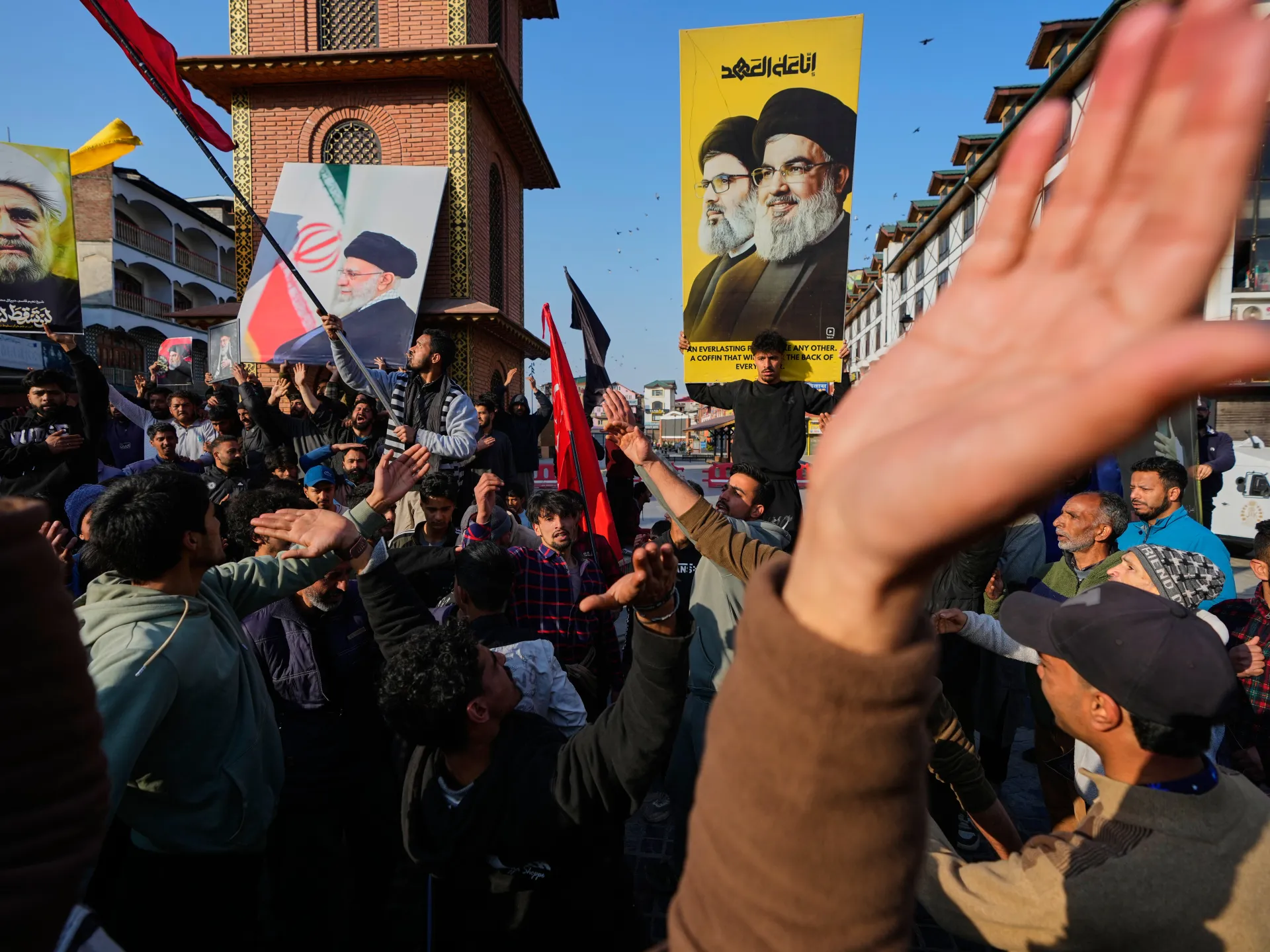
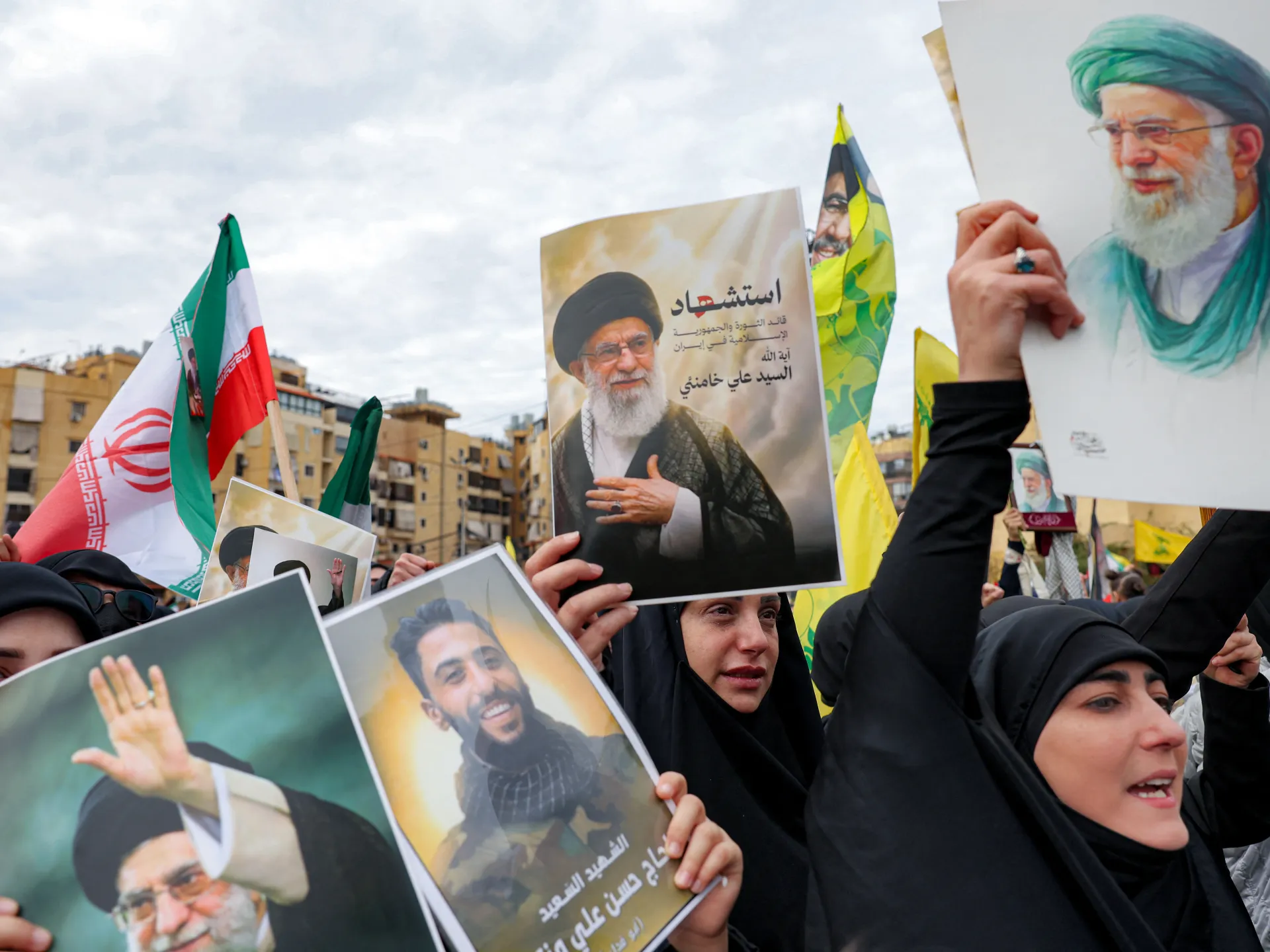
On Sunday, Hezbollah organised a gathering of thousands of supporters in the capital, Beirut, to mourn Khamenei, as they chanted, “Death to America, death to Israel”.
Zainab al-Moussawi, a 23-year-old teacher, told the AFP news agency that the death of Khamenei was “very painful. It is a tragedy.”
“It felt just like the martyrdom of the Sayyed,” she added, referring to Israel’s killing of former Hezbollah leader Hassan Nasrallah in 2024.
Hezbollah also called on mosques to recite the Quran and organise other mourning ceremonies in different parts of the country where the group holds influence to mark Khamenei’s death.
United States President Donald Trump has pledged to continue the “righteous mission” against Iran, until “all objectives are achieved”, adding there will likely be more US troop deaths in the process.
Speaking in a video posted to his Truth Social account on Sunday, Trump again framed the war against Iran as a response to an existential threat to the US, saying that “an Iranian regime armed with long-range missiles and nuclear weapons would be a dire threat to every American”.
Recommended Stories
list of 3 itemsend of list
Trump and his top officials had repeatedly made similar statements in the run-up to Saturday’s attacks, which killed Iranian Supreme Leader Ayatollah Ali Khamenei and several high-ranking members of the country’s leadership.
However, they have to date presented no evidence to support that Iran was developing a long-range missile capable of hitting the US or was anywhere close to developing a nuclear weapon.
Tehran has long denied seeking such a weapon, with experts assessing that if it did seek nuclear weapons, the development would still be several years off. The US launched its attacks alongside Israel in the middle of ongoing US-Iran talks on its nuclear programme.
Trump also referenced the three US military personnel confirmed killed on Sunday amid Iran’s regional retaliation.
“As one nation, we grieve for the true American patriots who have made the ultimate sacrifice for our nation, even as we continue the righteous mission for which they gave their lives,” Trump said.
“And sadly, there will likely be more before it ends,” he said. “That’s the way it is – likely be more, but we’ll do everything possible where that won’t be the case.”
He added: “But America will avenge their deaths, and deliver the most punishing blow to the terrorists who have waged war against, basically, civilisation”.
No mention of diplomacy
The speech marked a stark contrast to several interviews Trump had given throughout the day, in which he appeared to float diplomatic off-ramps.
“They want to talk, and I have agreed to talk, so I will be talking to them,” Trump told the Atlantic magazine, referring to what the publication described as Iran’s “new leadership”.
“They should have given what was very practical and easy to do sooner. They waited too long,” he said.
A White House official confirmed to Al Jazeera that Trump was willing to engage with Iran’s new leaders.
Earlier on Sunday, Iran announced a three-member interim leadership council to run the government in the wake of Khamenei’s killing. It includes: President Masoud Pezeshkian; the chief justice of the Supreme Court, Gholam-Hossein Mohseni-Ejei; and a member of the Guardian Council, Ayatollah Alireza Arafi.
Trump acknowledged that some of the negotiators involved in the talks with the US had since been killed.
Some analysts have argued that Iran’s new leadership will likely be wary of engaging with the Trump administration, given its track record. The US also launched attacks alongside Israel during US-Iran negotiations in June last year.
The new leadership could instead pursue a protracted conflict that could be politically damaging for Trump, some experts have said.
“Most of those people are gone,” Trump told The Atlantic. “Some of the people we were dealing with are gone, because that was a big – that was a big hit.”
Attacks continue
In his speech on Sunday, Trump did not reference any diplomatic overtures, instead calling for regime change in Iran.
He again offered amnesty to Iranian Revolutionary Guard Corps (IRGC) members, the Iranian military and police who “lay down” their arms. If they do not, they will face “certain death”, he said.
He also again called on “Iranian patriots who yearn for freedom to seize this moment to be brave, be bold, be heroic, and take back your country”.
He appeared to reference his threats in January to strike Iran in response to the government’s crackdown on protesters.
“I made a promise to you, and I fulfilled that promise,” Trump said. “The rest will be up to you. We’ll be there to help”.
Trump spoke as fighting continued across the region.
The US command that oversees the Middle East (CENTCOM) announced the killing of the three members of the US military earlier on Sunday, but did not provide further details. It said five others were “seriously wounded” in the operation.
The US media has reported that those killed in Iranian strikes were based in Kuwait. Iran has also launched a barrage of attacks against Qatar, the United Arab Emirates, Saudi Arabia, Jordan, Bahrain, and Oman.
Meanwhile, at least 201 people have been killed in Iran, with 747 wounded, while at least nine have been killed and 121 wounded in Israel.
At least one person has been killed in Kuwait, three have been killed in the UAE, and two have been killed in Iraq since the escalation began.
Iran’s IRGC said earlier on Sunday that it had targeted the USS Abraham Lincoln aircraft carrier with four ballistic missiles, but a US official told Al Jazeera that no damage was caused.
Speaking in a separate Fox News interview on Sunday, Trump said that 48 “leaders” had been killed in Iran, although a full list of those killed has not been released. In a post on Truth Social, the US president said the US had “destroyed and sunk 9 Iranian Naval Ships, some of them relatively large and important”.
“In a different attack, we largely destroyed their Naval Headquarters,” he said.
In a post on X, CENTCOM said the IRGC “no longer has a headquarters”.
Iranian Minister of Foreign Affairs Abbas Araghchi, meanwhile, said Iran’s military command had been interrupted, with units acting in an “independent and somewhat isolated” way. He said they were operating “based on general instructions given to them in advance”.
Still, Araghchi told ABC News, “We see no limit for ourselves to defend our people, to protect our people.”
Footage from near the Strait of Hormuz shows a Palau-flagged oil tanker ablaze after what Oman’s maritime security centre said was a hit from an unidentified projectile. At least three ships have been struck in the area. More than 150 others have dropped anchor to avoid entering the strait.
Until Khamenei’s successor is picked, the three-member leadership council, including Ayatollah Alireza Arafi, will lead Iran.
Published On 1 Mar 20261 Mar 2026
Share
Iranian authorities have announced a three-member interim leadership council to run the government after the killing of Supreme Leader Ali Khamenei in Israeli-United States strikes.
Iran’s government pledged to avenge the killing on Saturday of Khamenei, who had been in power for nearly four decades. Tehran has since targeted Israeli and US assets located across Gulf countries in retaliatory strikes.
Recommended Stories
list of 4 itemsend of list
While US President Donald Trump has said he wants a change in Iran’s government, the religious leaders of Iran moved on Sunday to start the process of choosing Khamenei’s successor.
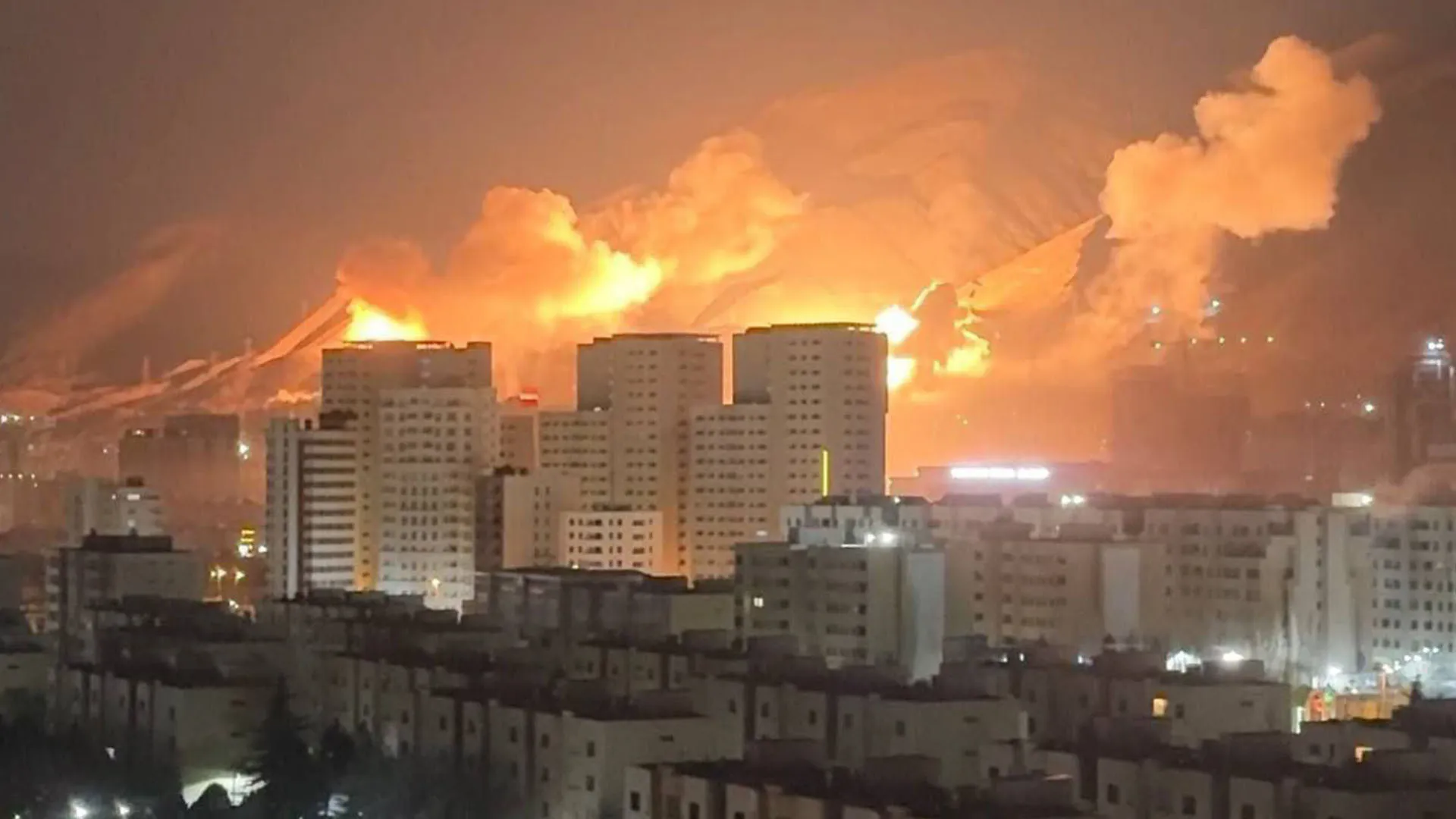
Plumes of smoke rise over residential areas of Tehran from US-Israeli air strikes on March 1, 2026 [Fatemeh Bahrami/Anadolu]
What is the interim leadership council?
Article 111 of Iran’s Constitution authorises a temporary leadership council to assume the supreme leader’s duties until a successor is elected.
That council will consist of President Masoud Pezeshkian; the chief justice of the Supreme Court, Gholam-Hossein Mohseni-Ejei; and a member of the Guardian Council, Ayatollah Alireza Arafi.
So who are these three figures who will temporarily run Iran as it reels from war?
Pope Francis greets Ayatollah Alireza Arafi, president of the Islamic Seminaries of Iran, during a private audience at the Vatican on May 30, 2022 [Handout/Vatican Media via Reuters]
Ayatollah Alireza Arafi
Arafi has been a member of the Guardian Council since 2019. Its members are appointed by the supreme leader. It is an Islamic legal authority that vets Iran’s laws and policies to make sure they conform to Islamic principles. It approves election candidates, has veto power over legislation passed by parliament and supervises elections.
Arafi also serves as the deputy chairman of the Assembly of Experts, the body responsible for overseeing the selection of the supreme leader. He leads Friday prayers in Qom, Iran’s most important religious centre, and heads the seminary system, overseeing education for religious leaders nationwide.
Masoud Pezeshkian, the president of Iran, attends the United Nations General Assembly in New York [File:Angelina Katsanis/AP]
Masoud Pezeshkian
Pezeshkian, 71, is a reformist politician and heart surgeon who served in the army during the Iran-Iraq War. He was elected president in the 2024 elections.
He previously served as health minister under President Mohammad Khatami and, after 2005, as a member of parliament representing the northwestern city of Tabriz.
Pezeshkian ran unsuccessfully for president earlier but in 2024 won on a reform-oriented platform and has since navigated economic pressures and regional tensions.
He earlier campaigned on economic stabilisation, easing social restrictions and pursuing constructive engagement abroad while affirming loyalty to the Islamic Republic’s constitutional framework.
Reacting to Khamenei’s assassination, Pezeshkian said in a statement that Iran now considers “it its legitimate duty and right to avenge the perpetrators and masterminds of this historic crime”.
Gholam-Hossein Mohseni-Ejei [File: AFP]
Gholam-Hossein Mohseni-Ejei
Mohseni-Ejei is a senior religious leader and has headed the judiciary since Khamenei appointed him to the post in July 2021.
He previously served as intelligence minister from 2005 to 2009 and later as prosecutor-general and first deputy chief justice. He is regarded as a hardline figure aligned with the conservative wing of the government.
In January, when the collapsing rial triggered protests across Iran, Mohseni-Ejei promised “no leniency” towards what he called “rioters”.
Mohseni-Ejei said the US and Israel “openly and explicitly supported the unrest” in the country after Trump called on Iranians to take to the streets.
After Khamenei’s killing, Trump again addressed the Iranian public on Saturday, calling for them to topple the government. “This will probably be your only chance for generations,” he said on Saturday after the US and Israeli attacks on Iran began.
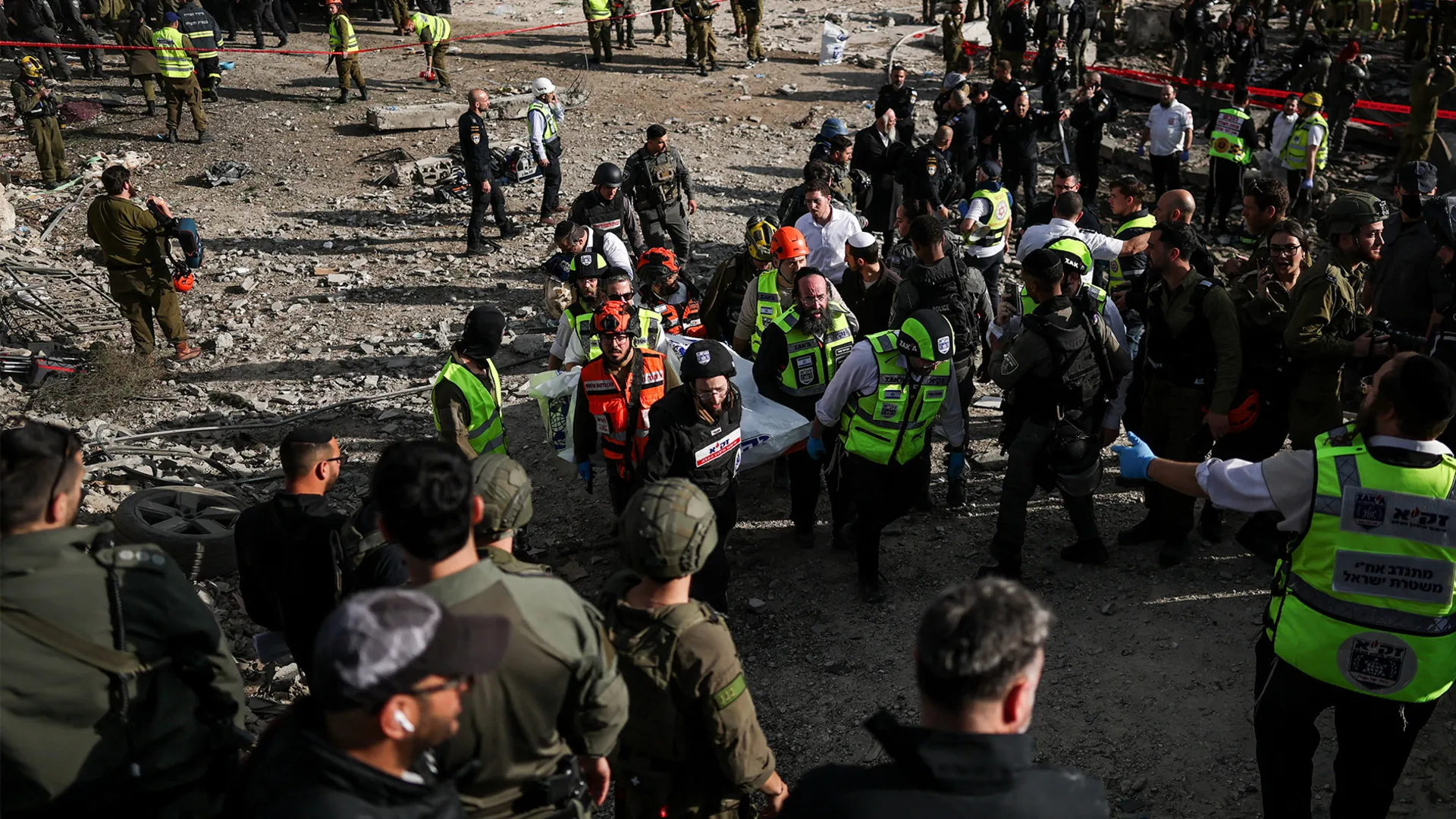
An Iranian missile attack on the Israeli town of Beit Shemesh, 30 kilometers west of Jerusalem, has killed at least nine people and wounded dozens more. The strikes reportedly targeted an army headquarters and a weapons manufacturing complex.
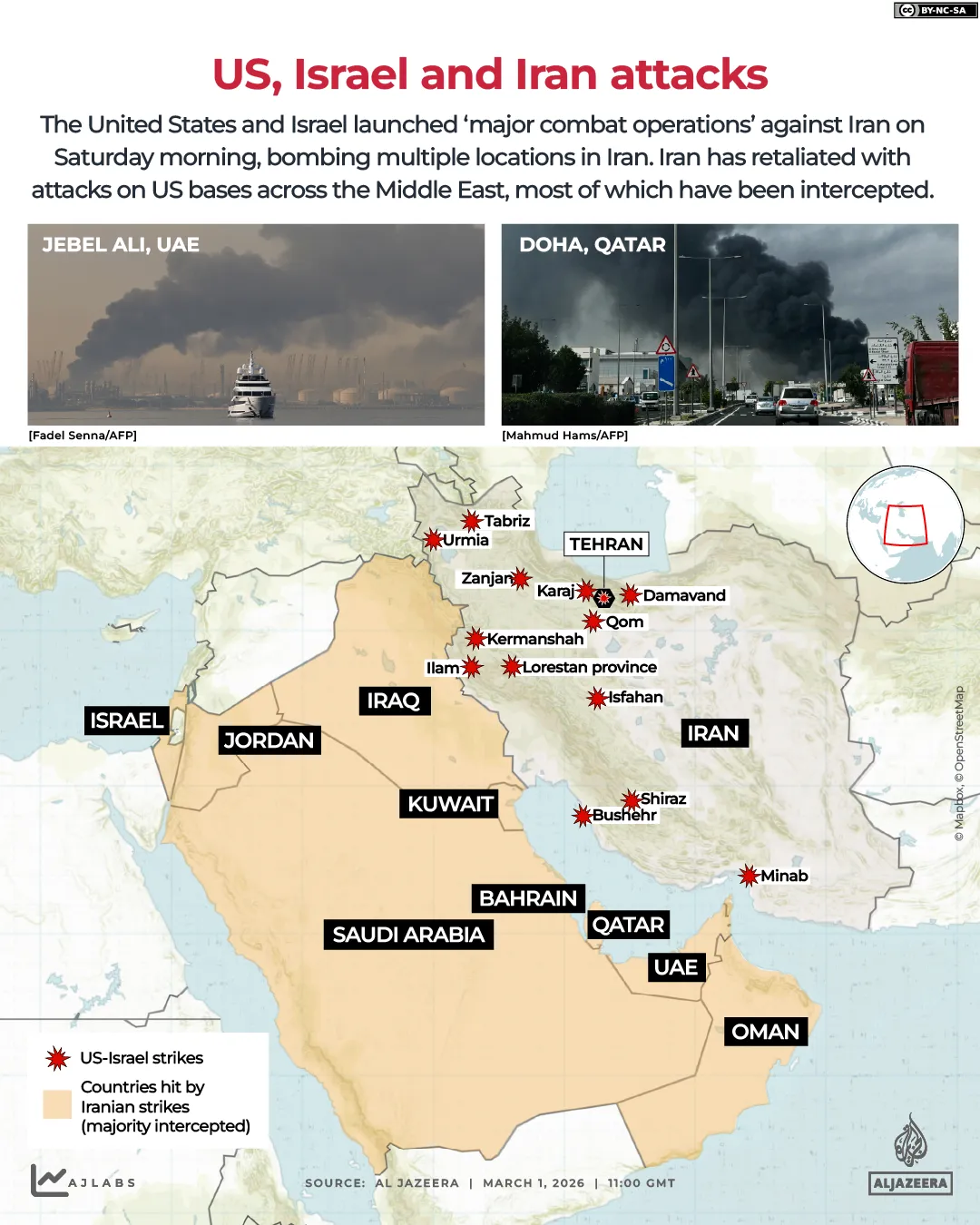
Explosions are being heard in Iran, Israel and across several Middle Eastern states after the United States and Israel began attacking Iran on Saturday.
Tehran has responded by launching waves of missiles and drones at Israel and towards several military bases in the Middle East where US forces operate.
Iran had previously warned that if it were attacked, it would respond by targeting US military facilities across the region, which it considers legitimate targets.
Which countries have been attacked?
Israel’s air force says it dropped more than 1,200 munitions across 24 of Iran’s 31 provinces over the past day in its joint attack with the US.
Iran’s Islamic Revolutionary Guard Corps (IRGC) says it has launched attacks on 27 bases in the Middle East where US troops are deployed as well as Israeli military facilities in Tel Aviv and other parts of Israel.
So far, Iran has launched strikes across eight countries in the region: Bahrain, Iraq, Jordan, Kuwait, Oman, Qatar, Saudi Arabia and the United Arab Emirates.
Most of these attacks have been intercepted.
(Al Jazeera)
US military presence in the Middle East
The US has operated military bases in the Middle East for decades.
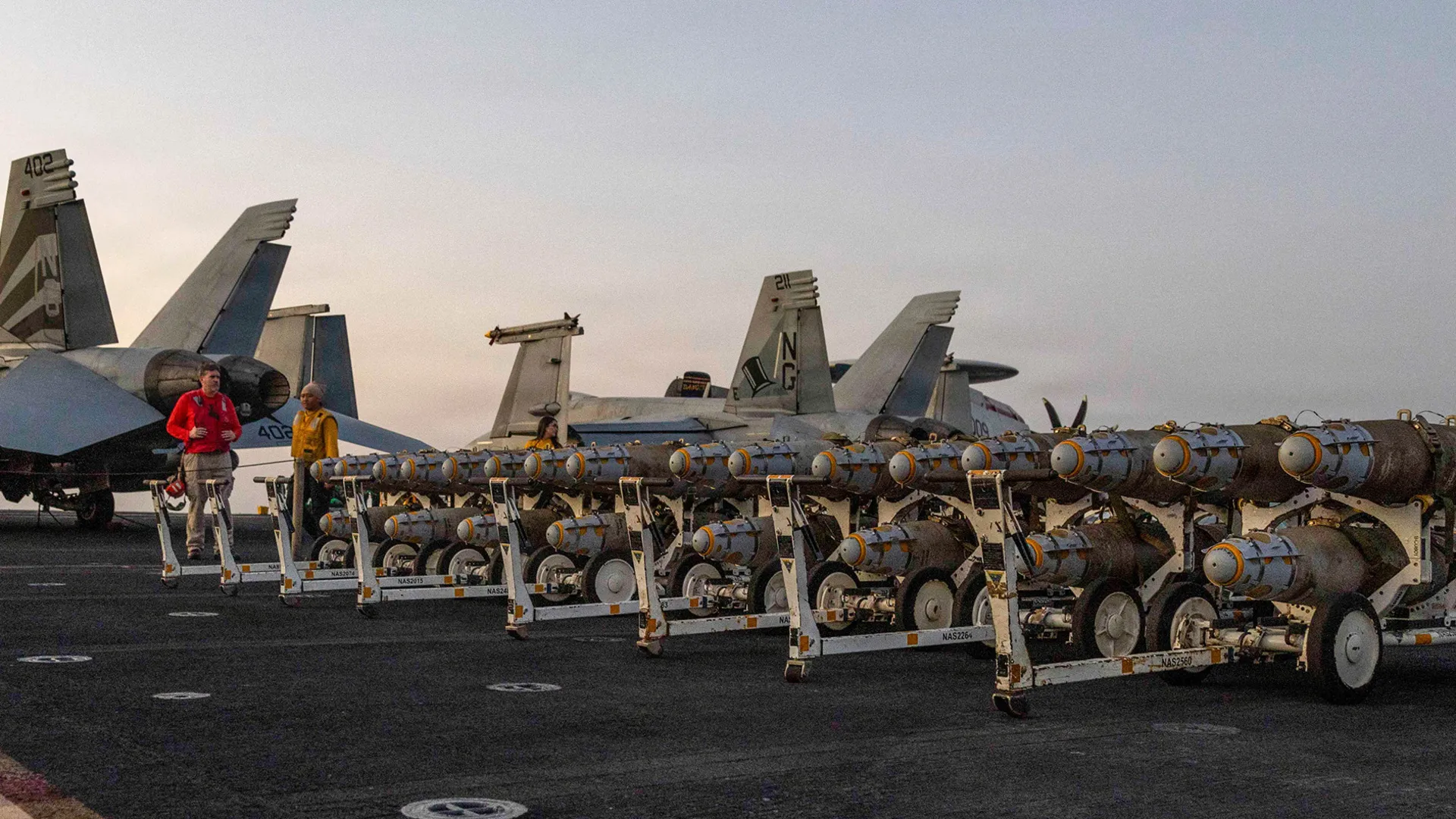
According to the Council on Foreign Relations, the US operates a broad network of military sites, both permanent and temporary, across at least 19 locations in the region.
Of these, eight are permanent bases in Bahrain, Egypt, Iraq, Jordan, Kuwait, Qatar, Saudi Arabia and the UAE.
As of mid-2025, there are about 40,000 to 50,000 US soldiers in the Middle East stationed in both large, permanent bases and smaller forward sites.
The countries with the most US soldiers are Qatar, Bahrain, Kuwait, the UAE and Saudi Arabia. These installations serve as critical hubs for US air and naval operations, regional logistics, intelligence gathering and force projection.
(Al Jazeera)
How many people have been killed or injured?
Below are the confirmed casualties across the 10 countries that have been subject to attacks as of Sunday at 13:40 GMT.
Due to the rapidly evolving situation, all figures may change as more information becomes available.
Iran – killed: 201, injured: 747
As of Sunday morning, the Iranian Red Crescent Society and official state-linked media have reported preliminary casualty figures of 201 people killed and at least 747 injured as rescue operations continue.
Since then, explosions continue to be heard across Iran with Israel saying it has carried out a large aerial attack on the “heart of the capital”.
The deadliest single incident occurred in the city of Minab in southeastern Iran, where a strike on an elementary girls school reportedly killed at least 148 people and injured 95. The attack occurred on Saturday, and the death toll has been climbing since.
Israel – killed: 9, injured: 121
On Sunday afternoon, an Iranian ballistic missile strike on central Israel’s Beit Shemesh killed eight people and injured about 20. Rescue workers are still combing through the rubble.
Late on Saturday, one woman in the Tel Aviv area was confirmed killed after being struck by falling shrapnel.
At least 121 others have been reported injured, at least one seriously.
At least 40 buildings in Tel Aviv were damaged in Iranian strikes on Saturday, the Israeli newspaper Haaretz reported, citing the city government.
An explosion occurs in Tel Aviv on February 28, 2026, after Iran launched missiles into Israel [Gideon Markowicz/Reuters]
Bahrain – killed: 0, injured: 4
Iranian missiles targeted the headquarters of the US Navy’s 5th Fleet in Bahrain’s Juffair area.
Bahrain’s Ministry of Interior also confirmed that the country’s international airport was targeted with a drone, “resulting in material damage without loss of life”.
On Saturday night, several residential buildings in the capital, Manama, were struck by Iranian drones.
Government hospitals said four people were receiving treatment for shrapnel-related injuries.
A building was damaged in the Seef commercial district of Manama, Bahrain, on March 1, 2026, in an Iranian drone attack [Hamad Mohammed/Reuters]
Iraq – killed: 2, injured: 5
The US and Israel also targeted the Jurf al-Sakher base, also known as Jurf al-Nasr, in southern Iraq, which houses the Popular Mobilisation Forces, made up of mostly Shia fighters, and the Iran-supported Iraqi paramilitary group Kataib Hezbollah.
Iraqi state media and sources within Kataib Hezbollah confirmed that two fighters were killed in the strikes and five were wounded.
In northern Iraq‘s semiautonomous Kurdish region, where the US is reported to still have troops, several powerful explosions were reported near the US consulate and international airport in Erbil.
Air defences intercepted the drone attacks on Saturday, according to reports.
A plume of smoke rises near Erbil International Airport in Erbil, Iraq, on March 1, 2026 [Shvan Harki/AFP]
Jordan – killed: 0, injured: 0
The Jordanian armed forces reported intercepting 49 drones and ballistic missiles that entered Jordanian airspace. While their fragments caused localised property damage, there have been no deaths or injuries within the kingdom.
Kuwait – killed: 1, injured: 32
Kuwait’s Ministry of Defence says Ali al-Salem Air Base came under attack by a number of ballistic missiles, all of which were intercepted by Kuwaiti air defence systems.
A drone targeted Kuwait International Airport on Saturday, resulting in minor injuries to a number of employees and limited damage to the passenger building.
On Sunday, Kuwait’s Ministry of Health said one person had been killed and 32 wounded.
Kuwait City in the aftermath of strikes by Israel and the US on Iran [Stephanie McGehee /Reuters]
Oman – killed: 0, injured: 5
On Sunday morning, the Oman News Agency, quoting a security source, said two drones had targeted the Duqm port, injuring one foreign worker.
Later, Oman’s Maritime Security Centre said a Palau-flagged oil tanker was attacked about 5 nautical miles (9km) off Oman’s Musandam governorate, injuring four people.
Qatar – killed: 0, injured: 16
As of Sunday morning, the Qatari Ministry of Interior confirmed that the number of injured was at 16 people. Most injuries were reported to be from falling shrapnel and debris with one person seriously hurt.
The Qatari Ministry of Defence confirmed that two ballistic missiles struck the Al Udeid military base, where US forces are stationed, while a drone targeted an early warning radar installation.
Qatari air defence systems, in coordination with regional partners, successfully intercepted about 65 missiles and 12 drones over Qatari airspace, it said.
The Qatar Civil Aviation Authority suspended all air navigation indefinitely. Qatar Airways grounded all flights and advised passengers that updates will be provided on Monday by 9am (06:00 GMT).
All schools have moved to remote learning, and public gatherings for Ramadan have been suspended until further notice to ensure public safety.
Saudi Arabia – killed: 0, injured: 0
The Saudi Ministry of Foreign Affairs confirmed that Iranian attacks targeted both the capital, Riyadh, and Eastern Province, home to major oil infrastructure and the King Abdulaziz Air Base.
The kingdom has officially reported no casualties as of Sunday afternoon.
United Arab Emirates – killed: 3, injured: 58
As of Sunday afternoon, at least three people in the UAE were confirmed killed and 58 others wounded.
A Pakistani national was killed and seven people were injured when debris from intercepted missiles and drones fell on a residential area near Zayed International Airport in Abu Dhabi.
The Ministry of Defence confirmed that another individual, identified as an Asian national, was killed by falling shrapnel in a residential district of the capital.
Additionally, four airport staff at Dubai International Airport sustained injuries, and four people were injured at Palm Jumeirah after a fire in a building caused by falling debris.
As of Sunday afternoon, The UAE’s Defence Ministry says it detected 165 ballistic missiles, destroying 152, and intercepted two cruise missiles.
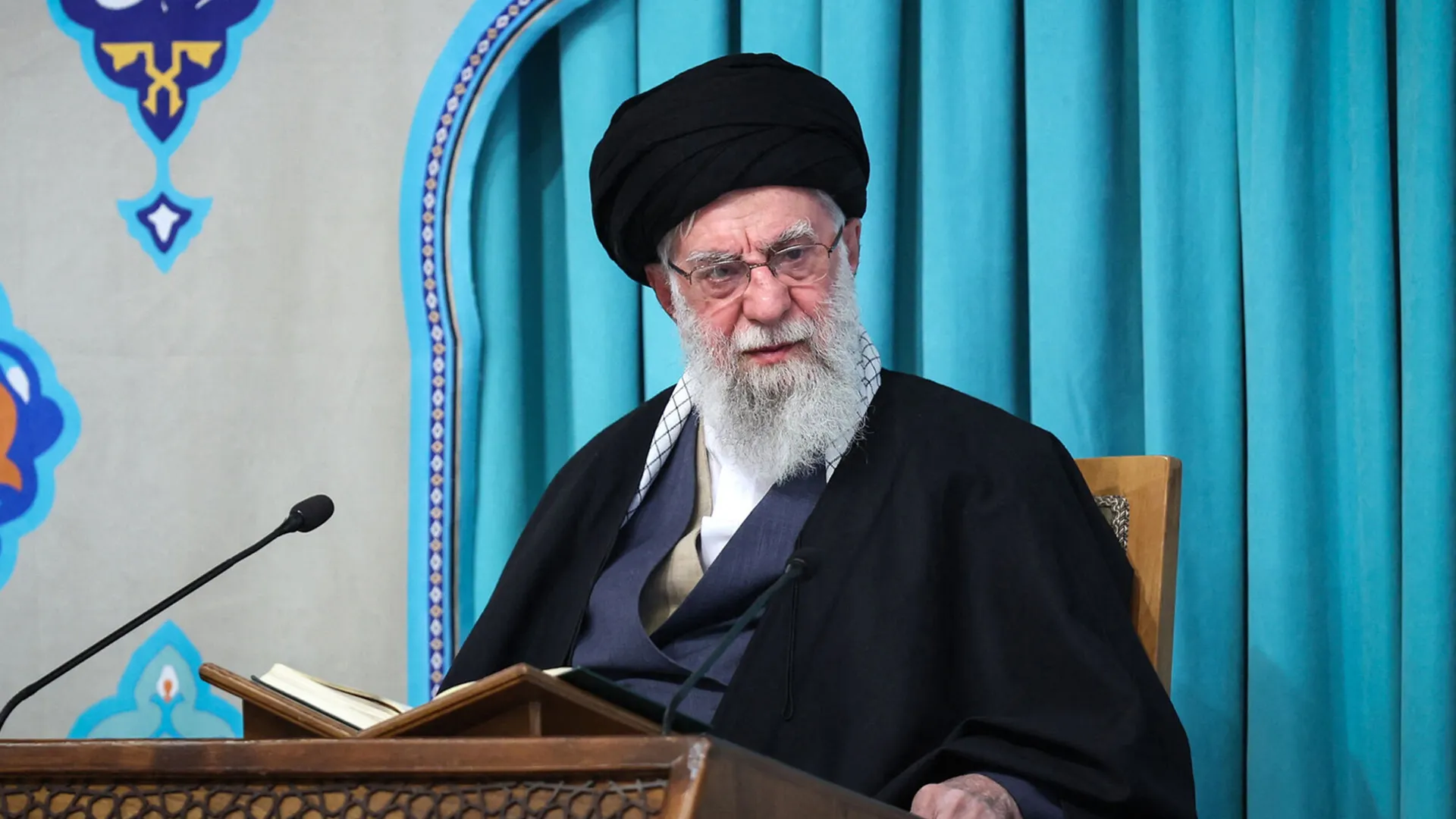
Iranian state media confirmed that Ayatollah Ali Khamenei, Iran’s supreme leader since 1989, was killed in a joint US-Israeli air strike. Here’s what we know about him and the key moments that defined his rule.
The assassination of Iran’s Supreme Leader Ayatollah Ali Khamenei, 86, in the US-Israeli air attacks has thrust Tehran to a pivotal crossroads as the clergy looks to pick the late ayatollah’s successor.
With Iran on a war footing, several senior leaders close to Khamenei were killed in the attack as well, including his top security adviser Ali Shamkani and Islamic Revolutionary Guard Corps (IRGC) commander-in-chief Mohammad Pakpour.
Tehran has vowed to avenge the killing of Khamenei. The US President Donald Trump warned against the retaliatory attacks and suggested that the strikes on Iran would continue.
The US-Israeli attacks hit Iran on Saturday, when Tehran’s top diplomats were waiting for the next round of talks on upcoming Monday to lock a deal with Trump, including laying down nuclear ambitions, and avoiding an armed conflict.
After 36 years in power, the late ayatollah’s killing has left Iran’s top clerics to prepare for the transfer of power to the next Supreme Leader. That’s something that they have only done once before, four decades ago.
So, who will be the next Supreme Leader of Iran? And how will he be chosen?
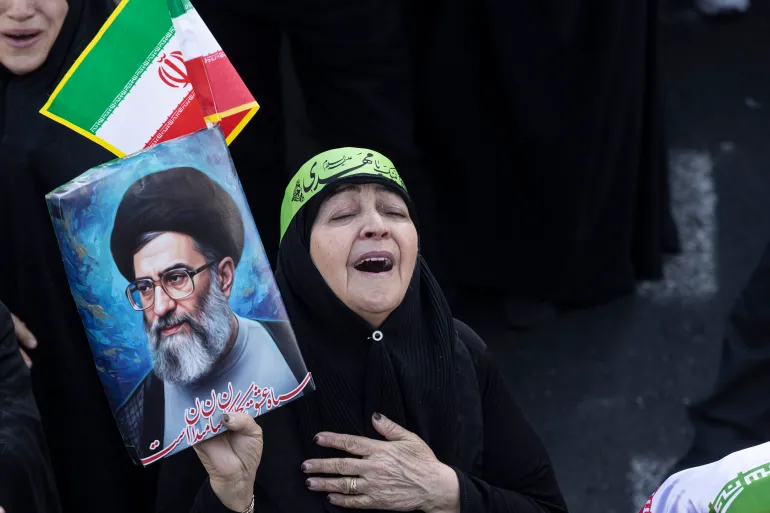
A woman wails and holds a poster as thousands of people gather in Enghelab Square for a pro-government demonstration after Iranian state media confirmed the death of Ayatollah Ali Khamenei on March 1, 2026 in Tehran, Iran. (Photo by Majid Saeedi/Getty Images) (Getty)
How is the Supreme Leader selected?
Iran’s Supreme Leader is selected by the Assembly of Experts, an 88-member clerical body elected by the public every eight years.
Candidates who run for the Assembly must first be vetted and approved by the Guardian Council, a powerful oversight body whose members are partly appointed by the Supreme Leader himself.
When the position becomes vacant, due to death or resignation, the Assembly of Experts convenes to choose a successor. A simple majority is sufficient to appoint the new Supreme Leader.
As per Iran’s constitution, the candidate must be a senior jurist with deep knowledge of Shi’a jurisprudence, as well as qualities such as political judgment, courage, and administrative capability.
Earlier, there had been only one other transfer of power in the office of the Supreme Leader of Iran, when Grand Ayatollah Ruhollah Khomeini, the leader of the Islamic Revolution, died at age 86 in 1989.
Emergency personnel stand at the site of an Iranian missile strike on a residential building, after Iran launched missile barrages following attacks by the U.S. and Israel on Saturday, in Tel Aviv, Israel March 1, 2026. REUTERS/Ronen Zvulun (Reuters)
What happens in Iran during a leadership vacuum?
Article 111 of Iran’s constitution mandates that a temporary council handle duties until a new supreme leader is elected.
That council will have: President Masoud Pezeshkian, Supreme Court Chief Justice Gholam-Hossein Mohseni-Ejei, and a cleric from the Guardian Council, according to Iranian media.
They will lead the country until the assembly formally picks the new supreme leader.
Iran’s security chief and a close confidante of the late Khamenei, Ali Larijani, said on Sunday that the transition process is underway.
Luciano Zaccara, a research associate professor in Gulf Politics at Qatar University, told Al Jazeera that Iran’s political system has been prepared for the current situation, knowing that Khamenei’s assassination was a real possibility.
“Trump wants to get the best deal possible, but the method he’s using to get that deal is to annihilate or destroy as much as he can,” Zaccara said. “This is the way to impose conditions, not to negotiate anything. Trump wants a surrender of the regime, not a change.”
The late Ayatollah made sure to put in a structure, he added, to avoid a vacuum of power and kept replacements for all the officials eliminated in the last few months ready. “The structures remain, the line of power [and] the line of command remain in place,” Zaccara told Al Jazeera.
(Al Jazeera)
What is the Supreme Leader of Iran?
The Supreme Leader is the top position in the Islamic Republic’s political and religious hierarchy.
He is essentially the commander-in-chief of the armed forces and the final word in the country – and appoints key judicial, military, and media officials.
He also leads the mighty Revolutionary Guard, a paramilitary force that leads the so-called Axis of Resistance.
Here are the contenders for the top job in Tehran
Mojtaba Khamenei, the second son of Iran’s Supreme Leader Ayatollah Ali Khamenei, visits Hezbollah’s office in Tehran, Iran, October 1, 2024. Office of the Iranian Supreme Leader/WANA (West Asia News Agency)/Handout via REUTERS ATTENTION EDITORS – THIS PICTURE WAS PROVIDED BY A THIRD PARTY.
Mojtaba Khamenei
Khamenei’s second son, Mojtaba Khamenei, is among the top contenders to succeed his father in Iran.
He is known to wield significant influence among the administrators and the Islamic Revolutionary Guard Corps (IRGC), the most powerful military body.
However, Khamenei’s lineage is also among the biggest barriers he faces.
Khamenei was reportedly opposed to the father-to-son succession. It is frowned upon in Iran, particularly after the US-backed Shah Mohammad Reza Pahlavi monarchy was toppled in 1979.
Pope Francis is shown a gift as he receives Ayatollah Alireza Arafi, president of Islamic Seminaries of Iran, and entourage in a private audience at the Vatican May 30, 2022. Vatican Media/Handout via REUTERS
Alireza Arafi
Arafi, a 67-year-old cleric, is an influential figure in the Islamic Republic’s religious establishment, but not a widely accepted political actor.
He serves as the deputy chairman of the Assembly of Experts, the body responsible for overseeing the selection of the Supreme Leader, and has been a member of the Guardian Council, which vets election candidates and laws passed by parliament.
Arafi was appointed as the jurist member of Iran’s Leadership Council, the body tasked with fulfilling the Supreme Leader’s role until the Assembly of Experts elects a new leader, Iran’s state media reported on Sunday.
Arafi is also the Friday prayer leader of Qom — Iran’s most important religious center — and heads the country’s seminary system, overseeing clerical education nationwide.
Mohammad Mehdi Mirbagheri
Mirbagheri is an ultra-hardline clerical voice in the establishment and a member of the Assembly of Experts.
He is widely known for his unrelenting anti-Western worldview — and currently heads the Islamic Sciences Academy in the northern city of Qom.
Gholam-Hossein Mohseni-Ejei
Mohseni-Ejei is a senior Iranian cleric and currently heads the judiciary of the Islamic Republic, appointed to the role in July 2021 by the late Khamenei.
He previously served as Minister of Intelligence from 2005 to 2009 and later as Prosecutor-General and First Deputy Chief Justice. He is regarded as a hardline figure aligned with the conservative wing of the regime.
Ayatollah Ruhollah Khomeini’s grandson, Hassan Khomeini stands next to Iran’s Supreme Leader Ayatollah Ali Khamenei during the 36th anniversary of the death of the leader of Iran’s 1979 Islamic Revolution, Ayatollah Ruhollah Khomeini, at Khomeini’s shrine in southern Tehran, Iran June 4, 2025. Office of the Iranian Supreme Leader/WANA (West Asia News Agency)/Handout via REUTERS
Hassan Khomeini
Khomeini, 54, is among the most discussed names in succession talks for the next Supreme Leader.
He is the grandson of Ayatollah Ruhollah Khomeini, the founder of the Islamic Republic, and also the custodian of his grandfather’s mausoleum in Tehran.
While he has not held a public office, Khomeini is a reformist figure known for his rather moderate views on public life and policy. He attempted to run for the Assembly of Experts in 2016, but the vetting council disqualified him.
The assassination of Iran’s Supreme Leader Ayatollah Ali Khamenei in joint US-Israeli air attacks has caused one of the most significant blows to the country’s leadership since the 1979 Islamic revolution, triggering protests by his supporters.
Khamenei assumed Iran’s supreme leadership in 1989 after the death of Ayatollah Ruhollah Khomeini, who had led the Islamic revolution against the pro-United States Shah Mohammad Reza Pahlavi.
Recommended Stories
list of 4 itemsend of list
On Sunday, Iranian President Masoud Pezeshkian said seeking revenge for the killing of Khamenei and other senior Iranian officials is the country’s “duty and legitimate right”.
President Donald Trump has framed the operation as a “liberation” moment, predicting that the removal of the “head” will lead to the swift collapse of the body. However, in Iran, the reality suggests a far more complex situation.
Interviews with insiders, military experts and political sociologists suggest that the decapitation of Iran’s top leadership may not go the way the West envisions. Instead, it risks birthing a “garrison state” – a paranoid, militarised system fighting for its existence with no political red lines left to cross.
The limits of ‘decapitation’
The central premise of the US operation is that Iran is too brittle to survive the death of its supreme leader. In a phone interview with CBS News, Trump claimed he “knows exactly” who is calling the shots in Tehran, adding that “there are some good candidates” to replace the supreme leader. He did not elaborate on his claims.
However, military analysts warn against the assumption that air strikes alone can trigger “regime change”. Michael Mulroy, a former US deputy assistant secretary of defence, told Al Jazeera Arabic that without “boots on the ground” or a fully armed organic uprising, the state’s deep security apparatus can survive simply by maintaining cohesion.
“You cannot facilitate regime change through air strikes alone,” Mulroy said. “If anyone is left alive to speak, the regime is still there.”
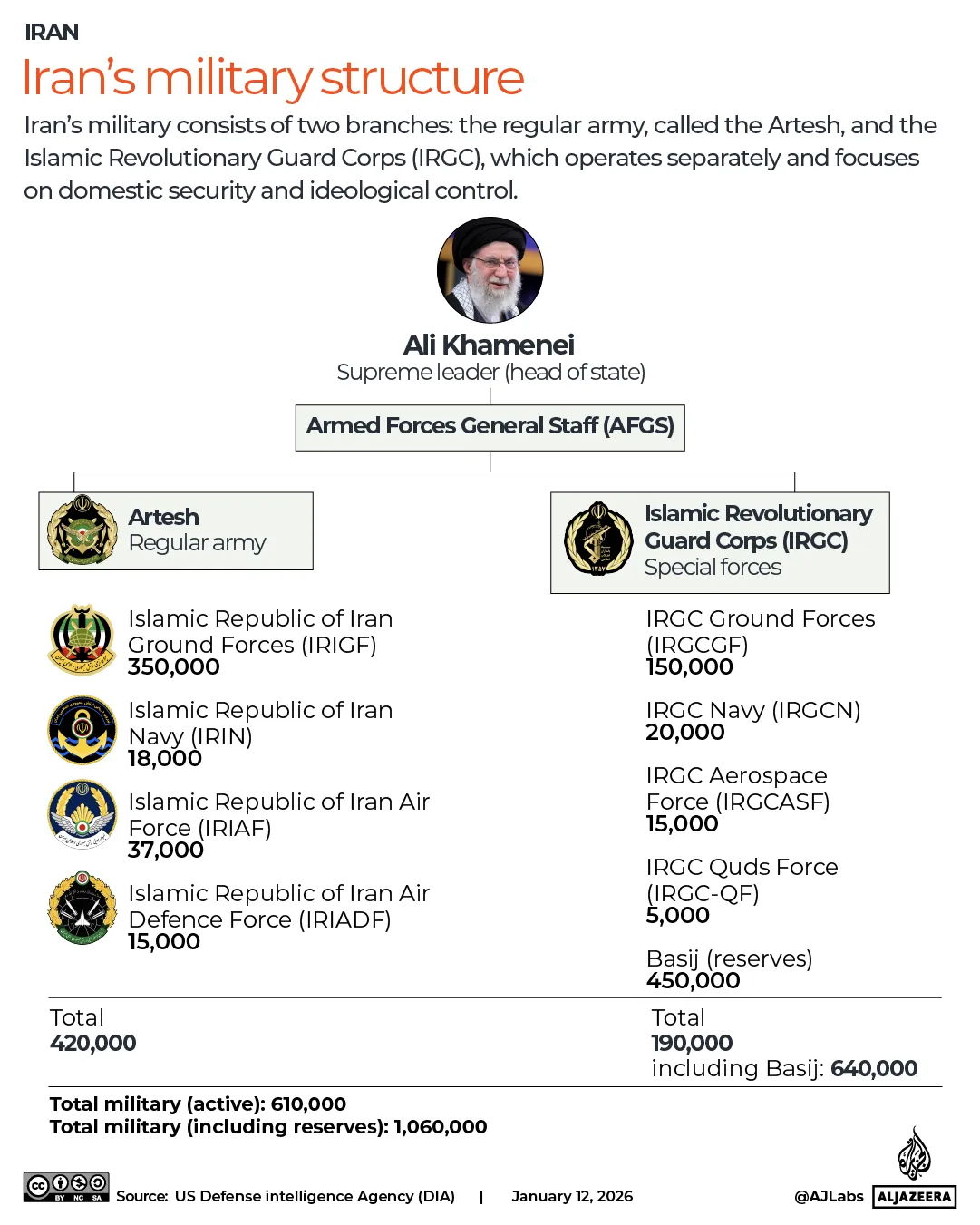
This resilience is rooted in Iran’s dual military structure. The government is protected not just by a regular army (Artesh), but also by the Islamic Revolutionary Guard Corps (IRGC) – a powerful parallel military force constitutionally tasked with protecting the velayat-e faqih system – the principle of the guardianship of the Islamic jurist.
Supporting them is the Basij, a vast paramilitary volunteer militia embedded in every neighbourhood, specifically trained to crush internal dissent and mobilise ideological loyalists.
That cohesion is already being tested.
Hossein Royvaran, a political analyst based in Tehran, confirmed that the strikes wiped out the country’s top security tier, including Khamenei’s adviser and secretary of the newly-formed Supreme Defence Council, Ali Shamkhani.
The secretary of Iran’s Supreme National Security Council, Ali Larijani, said the leadership transition will begin on Sunday.
“An interim leadership council will soon be formed. The president, the head of the judiciary and a jurist from the Guardian Council will assume responsibility until the election of the next leader,” said Larijani.
“This council will be established as soon as possible. We are working to form it as early as today,” he said in an interview broadcast by state TV.
The rapid formation of an interim leadership council – comprising the president, judiciary chief, and a Guardian Council religious leader – indicates that the system’s “survival protocols” have been activated.
According to Royvaran, the system is designed to be “institutional, not personal”, capable of functioning on “autopilot” even when the political leadership is severed.
But a Tehran-based analyst said direction of Iran is still unclear as officials try to ‘project stability’.
“Officials here are trying to project stability, emphasising that the situation is under control and that state institutions are functioning effectively,” Abas Aslani, senior research fellow at the Center for Middle East Strategic Studies, said.
“Today, [the US-Israeli] air strikes targeted security and military infrastructure in the capital [Tehran] and other cities. There are expectations that such strikes could continue – and possibly intensify – in the coming hours or days,” he told Al Jazeera.
“That prospect of escalation is not something many ordinary Iranians welcome. At the same time, Iranian officials are issuing strong warnings, suggesting they could respond with capabilities that have not previously been used against Israel or the United States.”
From theocracy to nationalist survival
Perhaps the most significant shift in the immediate aftermath is Iran’s pivot from religious legitimacy to survivalist nationalism.
Aware that the death of the supreme leader might sever the spiritual bond with parts of the population, surviving officials are reframing the war not as a defence of the clergy, but as a defence of Iran’s territorial integrity.
Larijani, a conservative heavyweight and key figure in the transition, issued a stark warning that Israel’s ultimate goal is the “partition” of Iran. By raising the spectre of Iran being broken into ethnic statelets, the leadership aims to rally secular Iranians and the opposition against a common external enemy.
This strategy complicates the US hope for a popular uprising.
Saleh al-Mutairi, a political sociologist, notes that the government’s declaration of 40 days of mourning creates a “funeral trap” for the opposition. The streets will likely be filled with millions of mourners, creating a human shield for the government and making it logistically and morally difficult for antigovernment protests to gain momentum in the short term.
The end of ‘strategic patience’
If Iran survives the initial shock, the nation that emerges will likely be fundamentally different: less calculated and probably more violent.
For years, Khamenei championed a doctrine of “strategic patience”, often absorbing blows to avoid all-out war.
Hassan Ahmadian, a professor at the University of Tehran, says the era died with the supreme leader.
“Iran learned a hard lesson from the June 2025 war: Restraint is interpreted as weakness,” Ahmadian told Al Jazeera Arabic. The new calculus in Tehran is likely to be a “scorched earth” policy.
“The decision has been made. If attacked, Iran will burn everything,” Ahmadian added, suggesting that the response will be broader and more painful than anything seen in previous escalations.”
This risks a scenario where field commanders, freed from the political caution of the clerical leadership, lash out with greater ferocity. The assassination has humiliated the security establishment, exposing what Liqaa Maki, a senior researcher at Al Jazeera Centre for Studies, calls a catastrophic intelligence failure.
“The believer is not bitten from the same hole twice, yet Iran has been bitten twice,” Maki said, referring to the pattern of US strikes. This “total exposure” is likely to drive the surviving leadership underground, turning Iran into a hyper-security state that views any internal dissent as foreign collaboration, he said.
While the “head” of Iran has been removed, the “body” – armed with one of the largest missile arsenals in the Middle East – remains, Maki said.
As Israel and the United States attacked Iran, Palestinians in the Gaza Strip began to panic. They remembered how crossings were closed in the past, causing famine, and rushed to markets to buy whatever they could. As a result, prices of food and basic necessities skyrocketed. Soon enough, the news came that the border crossings had been closed.
All of this happened just as the grace period set by Israel for 37 NGOs to withdraw from Gaza for not fulfilling registration requirements expired. Organisations like Doctors Without Borders (also known by its French acronym MSF), Medical Aid for Palestinians UK, Handicap International: Humanity & Inclusion, ActionAid, CARE, etc were supposed to stop operating in Gaza.
At the last moment, a ruling by the Israeli Supreme Court allowed them to continue working while it considers their appeal against the ban. But even with this court decision, these organisations cannot continue to function fully. That is because the Israeli occupation continues to prevent their supplies and foreign staff from entering Gaza.
According to these NGOs, together they are responsible for half of the food handouts in the Strip and 60 percent of services provided in field hospitals.
For many families in Gaza, this means hunger – because food parcels will not be distributed and livelihoods will be lost.
We know this is not about NGOs failing to meet new registration rules, just like the closure of the border crossings is not a matter of security. They are about exacting yet another form of collective punishment on the Palestinians.
Even if the Supreme Court miraculously rules against the NGO ban, the Israeli occupation would still find another way to push these foreign organisations out of Gaza. This was made clear this month when it was revealed that World Central Kitchen, which has been running dozens of soup kitchens across the Strip and which is not on the ban list, may be suspending its activities.
According to Gaza’s Government Media Office, this was because Israel blocked most of the organisation’s supply trucks from coming in. As a result, there are not enough supplies to continue cooking. World Central Kitchen previously said it serves 1 million meals daily.
So now, amid the war with Iran, which may last weeks or months, hundreds of thousands of families will not have adequate food once again.
All of this comes on top of Israel’s continuing war on UNRWA. Since its creation in late 1949, the United Nations agency has been the backbone of international support for Palestinian refugees. It has the largest capacity for emergency response and the widest spectrum of services on offer. And yet, Israel has banned its operations and has blocked its supplies from entering the Strip.
Through relentless lobbying, Israel has managed to achieve substantial cuts to UNRWA’s budget. As a result, last month 600 employees were fired. The salaries of the rest were reduced by 20 percent.
The NGO ban will likely result in thousands of people losing their jobs as well. And this is at a time when unemployment in Gaza has gone beyond 80 percent.
My family will also suffer. In the past, we have benefitted from food and basic supplies handouts from NGOs, and my brother has been able to find temporary work as a driver for one of them.
The possible closure of international organisations is a direct threat to the lives of hundreds of thousands of civilians who depend on their services and employment. The closure of the border crossings could mean another hunger crisis.
These are a form of collective punishment that yet again will not make the news. Israel is constantly thinking of new ways to make our lives that much more unbearable, that much more impossible in our devastated homeland.
Two and half years of the Israeli genocide has destroyed hospitals, schools, universities, roads, sewage and potable water systems, water treatment plants, the electricity grid, and countless generators and solar panels.
The vast majority of the population lives primitive lives in tents or makeshift shelters that cannot protect people from extreme heat or cold.
Water is contaminated, food is insufficient, land has been destroyed and poisoned.
Now we will be deprived of the little international support we have been receiving.
And what is the goal of all this? To push us ever closer to despair and the ultimate surrender, to make us desire to leave our homeland on our own. Ethnic cleansing by mutual agreement.
All of the organisations that Israel is seeking to ban are foreign. Most of them are based in Western countries. Yet there has been little to no condemnation from Western governments of Israel’s actions against their own organisations. There has been no outrage that the occupation is trying to destroy international humanitarian provision so it can fully control aid distribution.
Collective punishment is a violation of international law. States are obliged to go beyond verbal condemnations and take action by imposing sanctions. Until that happens, we in Gaza will continue to be subjected to ever more brutal acts of collective punishment by our occupiers.
The views expressed in this article are the author’s own and do not necessarily reflect Al Jazeera’s editorial stance.


![Crowds filled Gaza’s markets as residents rushed to stockpile food after news of the Iran war and the closure of Gaza and West Bank crossings [Abdelhakim Abu Riash/ Al Jazeera]](https://i0.wp.com/occasionaldigest.com/wp-content/uploads/2026/03/0Q1A3962-1772398086.jpg?w=640&ssl=1)
![Omar Al-Ghazali sells groceries from his food stall in Nuseirat market in central Gaza [Abdelhakim Abu Riash/ Al Jazeera]](https://i0.wp.com/occasionaldigest.com/wp-content/uploads/2026/03/873A4837-1772398146.jpg?w=640&ssl=1)
![Mohammed Daher chose not to stockpile, saying he is exhausted by the repeated Israeli crossing closures, particularly those that coincided with Ramadan last year [Abdelhakim Abu Riash/ Al Jazeera]](https://i0.wp.com/occasionaldigest.com/wp-content/uploads/2026/03/873A4880-1772398240.jpg?w=640&ssl=1)



![Gholamhossein Mohseni Ejei was put on US and EU sanctions blacklists 10 years ago for his role in a crackdown on a popular uprising [File: AFP]](https://i0.wp.com/www.aljazeera.com/wp-content/uploads/2021/07/000_9DM946.jpg?w=640&ssl=1)