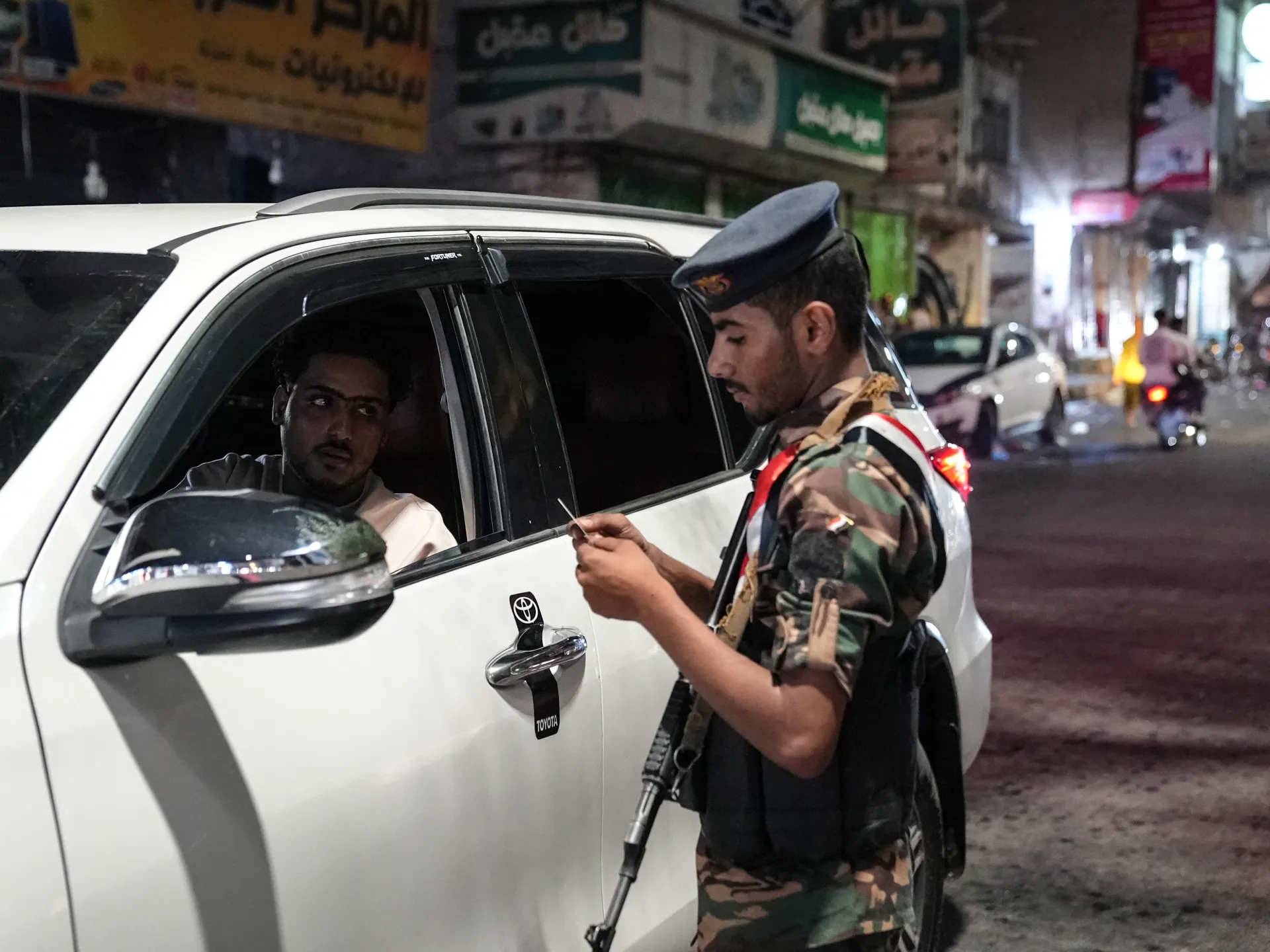
Iran war live: Fighting intensifies in Yemen, hundreds killed or injured
Fighting intensifies across Yemen as the army says 474 attacks in 24 hours killed or wounded 1,540 Houthi fighters.
Source link
Fighting intensifies across Yemen as the army says 474 attacks in 24 hours killed or wounded 1,540 Houthi fighters.
Source link
President Masoud Pezeshkian says Iran “has never avoided” dialogue with the US, even though it’s been attacked three times during negotiations.


Published On 2 Oct 20262 Oct 2026
Share
Trump repeats the claim that the US has “virtually total control” over the Strait of Hormuz during an event marking Hispanic Heritage Month.


Published On 1 Oct 20261 Oct 2026
Share
US President Donald Trump reiterates that Tehran will not have a nuclear weapon.
Published On 30 Sep 202630 Sep 2026
Share
White phosphorus can cause severe burns, ignite repeatedly and produce intense heat and toxic smoke. Here’s how Israel has used it in southern Lebanon, its impact on civilians and farmland, and why its use in populated areas is restricted under international law.
Al Jazeera’s Reem Takieddine explains.
Published On 29 Sep 202629 Sep 2026
Share
Iran’s foreign minister says his visit to the UN General Assembly last week was mainly to outline Tehran’s position on regional conflicts and the critical security situation in the Strait of Hormuz.

Published On 29 Sep 202629 Sep 2026
Share
US Central Command says they redirected 122 commercial vessels to “ensure strict compliance” with the US blockade against Iran.

Published On 26 Sep 202626 Sep 2026
Share
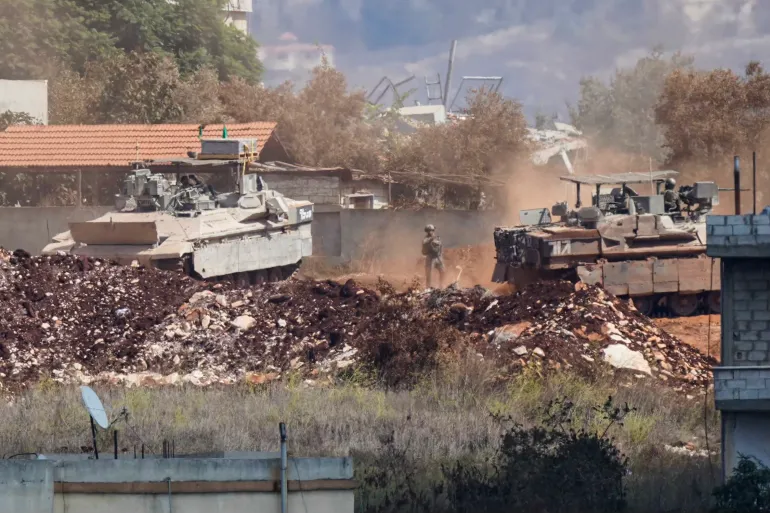
Lebanese Prime Minister Nawaf Salam wants US-brokered ceasefire to be consolidated and for Israel to retreat.
Lebanese Prime Minister Nawaf Salam has called for an end to the Israeli occupation of southern Lebanon and the full enforcement of the ceasefire, as Israeli shelling and demolitions continue.
“We want the war to end and we want the ceasefire [with Israel] consolidated,” Salam said in a speech at the United Nations General Assembly in New York on Friday.
The prime minister demanded a complete withdrawal of Israeli forces from Lebanese territory up to its internationally recognised border and the release of all Lebanese detainees.
As delegates gathered to listen to Salam, on the ground in Lebanon, Israeli forces carried out a large explosion near Taybeh and Deir Siryan, while an Israeli air strike targeted a valley between Froun and Ghandourieh, triggering a large fire.
Al Jazeera’s Zeina Khodr, reporting from Froun, said the reality on the ground is that the conflict is far from over.
“From the ground here in Froun, we can still see Israeli warplanes and drones flying at low altitudes in the skies above and Israeli artillery shelling is still causing uncontrollable fires. Lebanese civil defence and firefighters are not being allowed by the Israelis to reach these areas and put out the flames,” she said.
“More than 60 towns in southern Lebanon are still occupied by the Israeli army, where the Israelis are carrying out a systematic campaign of demolitions,” Khodr added.
Israeli forces are “blowing up people’s homes, despite the framework agreement in which there is supposed to be a ceasefire that they have signed with the Lebanese government,” she said.
Israeli attacks in southern Lebanon have killed at least 4,386 people and wounded 12,407 others since March 2 , when the current Hezbollah-Israel war started. Since then, Israeli forces have occupied up to 600sq km of Lebanese territory up to the Litani River.
A US-brokered framework agreement between Lebanon and Israel in June provides for a gradual Israeli withdrawal from Lebanese territory and the deployment of the Lebanese army in areas vacated by Israeli forces.

Speaking at the UNGA, Salam said his government had entered into negotiations with Israel, mediated by the United States and President Donald Trump, “to end the war and restore Lebanon’s sovereignty”, adding that the success of any agreement is measured not by intentions but by fulfilment of commitments.
“What is required is to complete the translation of this agreement into practical steps within a clear timetable and with a verification mechanism that ensures the implementation of all its provisions,” he said.
He focused on state sovereignty, saying it “cannot be untouchable in one place and negotiable in another, nor can the rules of international law apply to some but not to others”.
Salam also pledged to oversee the disarmament of Hezbollah in exchange for Israel’s eventual full withdrawal, also saying “weapons must be exclusively in the hands of the state and that decisions on war and peace rest solely with its constitutional institutions”.
Stability in the Middle East can only come with respect for Palestinian rights, he said.
“There can be no lasting stability in Lebanon without lasting stability in our region, and there can be no stability in the region as long as this organisation [the UN] remains unable to enable the Palestinian people to exercise their inalienable right to self-determination, like all other peoples of the world,” Salam said. “No less and no more.”
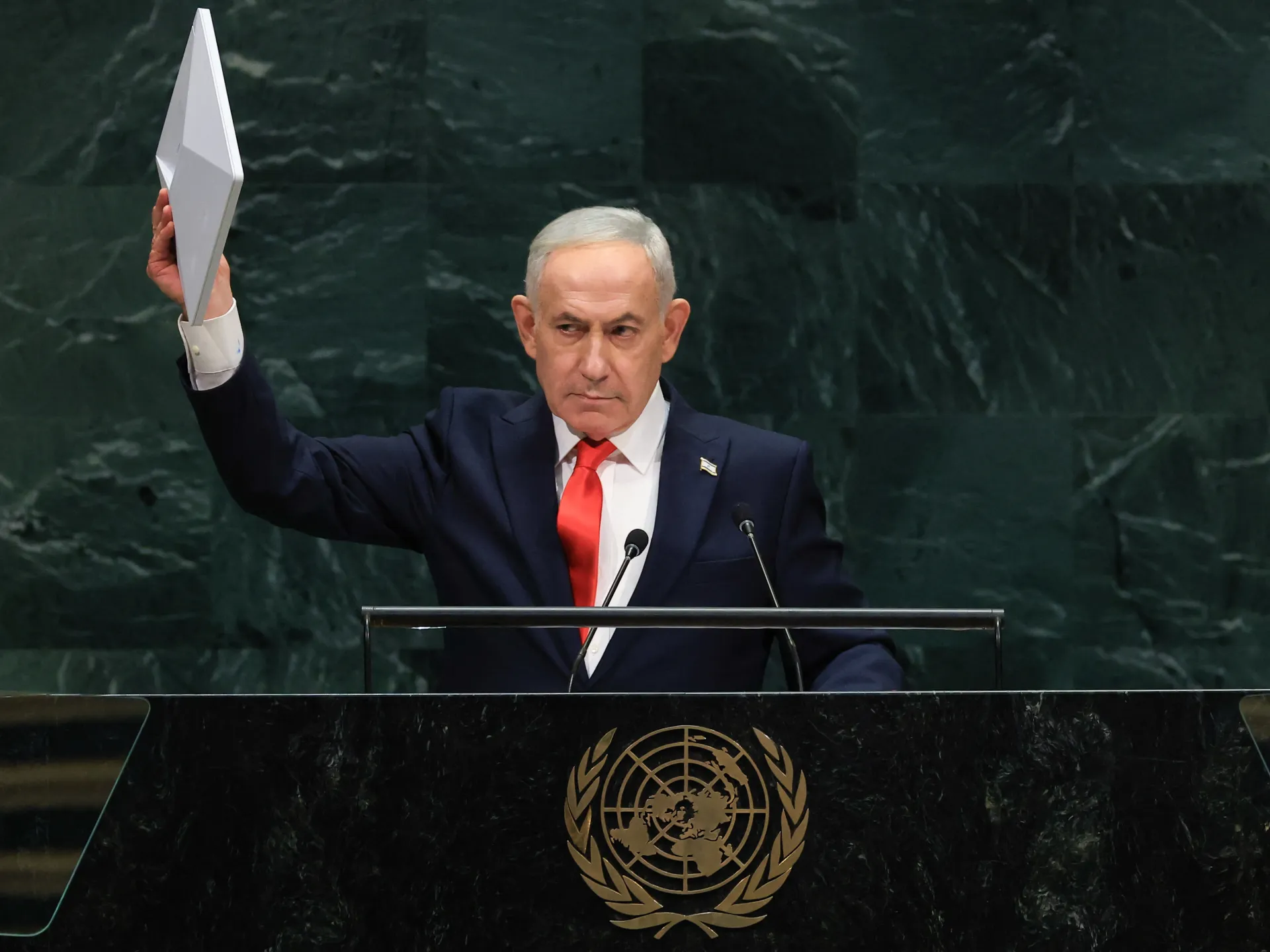
Israeli Prime Minister Benjamin Netanyahu has used his platform at the United Nations General Assembly to attack detractors and allies alike, and his presence sparked uproar in the chamber.
Speaking before the UNGA on Thursday, Netanyahu attacked New York City Mayor Zohran Mamdani, critics and Iran’s leadership, as well as allied countries like the United Kingdom and France.
list of 3 itemsend of list
Back home, the prime minister is locked in a tight race to stay in power ahead of an election on October 27, and analysts say his UNGA speech was aimed as much at people back home as it was at international viewers.
Dozens of envoys from around the world walked out as the speech began, some jeering and booing, while Netanyahu’s own team stood and applauded, and the speaker of the session shouted for order.
“If there are any other moral cowards who haven’t left this hall, please do so now,” Netanyahu said to those turning their backs on him.
He addressed the war that the US and Israel launched on Iran in February, saying: “Devastating Iran’s nuclear facilities was hard, was very hard to do.”
“But for me, it was one of the easiest decisions I’ve ever had to make as prime minister”, claiming that if he had not, “we’d all be dead”, he added.
In his own speech before the UNGA on Wednesday, Iranian President Masoud Pezeshkian also addressed the nuclear issue and called out the “double standard”.
“The nuclear weapon is in Israel, but the inspectors are in Iran. Israel kills, but Iran is subject to sanctions,” Pezeshkian said.
Netanyahu on Thursday said that Israel was fighting a “seven-front war”, including Gaza, the occupied West Bank, Syria, Lebanon, Iran, Yemen’s Houthis and militias in Iraq.
“We are going to win. We have no other choice,” Netanyahu declared, repeating the words of his older brother Yonatan Netanyahu, who was killed in 1976 during Operation Entebbe in Uganda.
The United Kingdom and France, historic partners of Israel, were also in Netanyahu’s firing line. They have become increasingly outspoken in their criticism of the country’s actions and have both imposed limited sanctions on Israeli exports from the occupied West Bank.
“They accuse Israel, tiny Israel, of colonialism – some colonialism. And who’s accusing us? Among them are people in Britain and in France. For God’s sakes, they invented the term,” he said.
But Netanyahu thanked his “friend”, United States President Donald Trump.
“In this battle against the barbarians, we’ve had no greater partner than President Trump,” he said, as the US delegation joined the Israeli one in applauding Netanyahu’s remark.
“I thank him,” said Netanyahu, adding that Israel and the US had acted together as pilots from both countries “flew joint missions over the skies of Iran”.
Netanyahu said the US and Israel also “worked together to bring back our remaining hostages [from Gaza]”, as he defended Israeli actions in the enclave against charges of genocide.
“To all those spreading lies about my country, whether they sit in this hall or in the office of the anti-Semitic mayor of New York, I say this: shame on you,” Netanyahu said as he attacked Zohran Mamdani, who had previously said he would push for the arrest of the Israeli prime minister during his visit to the city.
“Mr Mamdani, you tried to stop me from coming here. You tried to silence me. Well, you can’t silence me,” Netanyahu said as he denied that Israel has committed genocide in Gaza.
Reacting to Netanyahu’s comments, Mamdani called the accusations against him “baseless lies” meant to “sanitise his genocide of Palestinians”.
Since October 7, 2023, Israel has faced repeated accusations of genocide in Gaza, as well as systematic war crimes in Gaza and the occupied West Bank.
The Hague-based International Criminal Court (ICC) said in 2024 it had reasonable grounds to believe Netanyahu was responsible for war crimes in Gaza, where over 73,000 Palestinians have been killed. Netanyahu denies the ICC charges.
Netanyahu attended the UNGA meeting despite an ICC warrant calling for his arrest. While he was welcomed, the Trump administration denied a visa for Palestinian President Mahmoud Abbas, who addressed the UNGA through a prerecorded video statement from Ramallah earlier in the day.
As Netanyahu spoke, activists from US-based organisation Jewish Voice for Peace protested outside, accusing the United Nations of “playing host to a war criminal”.
“All across New York, Jews, Palestinians and people of conscience are rising up to demand an end to US support for the livestreamed horrors, rigged ceasefires and forever wars,” Sonya Meyerson-Knox, the group’s communications director, told Al Jazeera.
Meyerson-Knox said that “solidarity with Palestinian freedom has never been greater, and here in the US we are demanding with one voice to stop arming Israel”.
Adding to tensions, dozens of protesters, some brandishing “stop the genocide” banners, gathered near the UN. Several demonstrators were detained, including prominent actor Susan Sarandon.
Inside the UN, but addressing divisions back home in Israel, Netanyahu said: “Throughout this long war, our goal never wavers – to win with unwavering resolve … What unites us is so much stronger: our history, our values, our courage.”
Ariel Cohen, a senior fellow at the Atlantic Council’s Eurasia Center, said the Israeli prime minister delivered a “good speech” at the UNGA but that he did so in the “wrong forum”.
“That speech should be given at an election rally in Israel; this is who he’s communicating to,” Cohen told Al Jazeera. “He is making points that should be made to the Israeli audience for his political survival.”
Netanyahu is only making a whirlwind stop in New York before rushing back to Israel, where the election campaign is in full swing. He is not scheduled to meet any top US leaders.
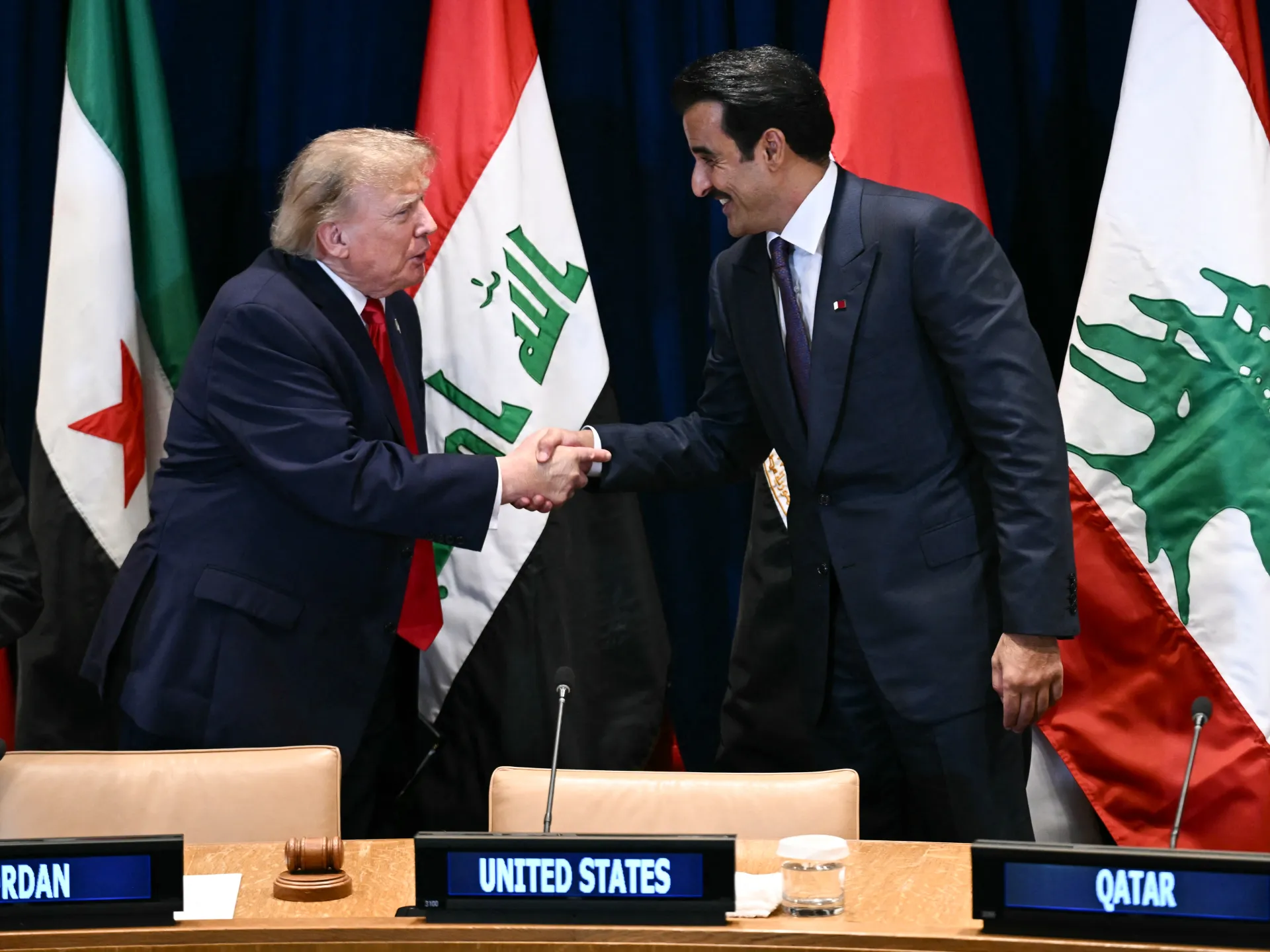
Iranian media has reported the sound of an explosion near Iran’s Qeshm Island in the Strait of Hormuz, though the cause remains unclear.
Published On 23 Sep 202623 Sep 2026
Share
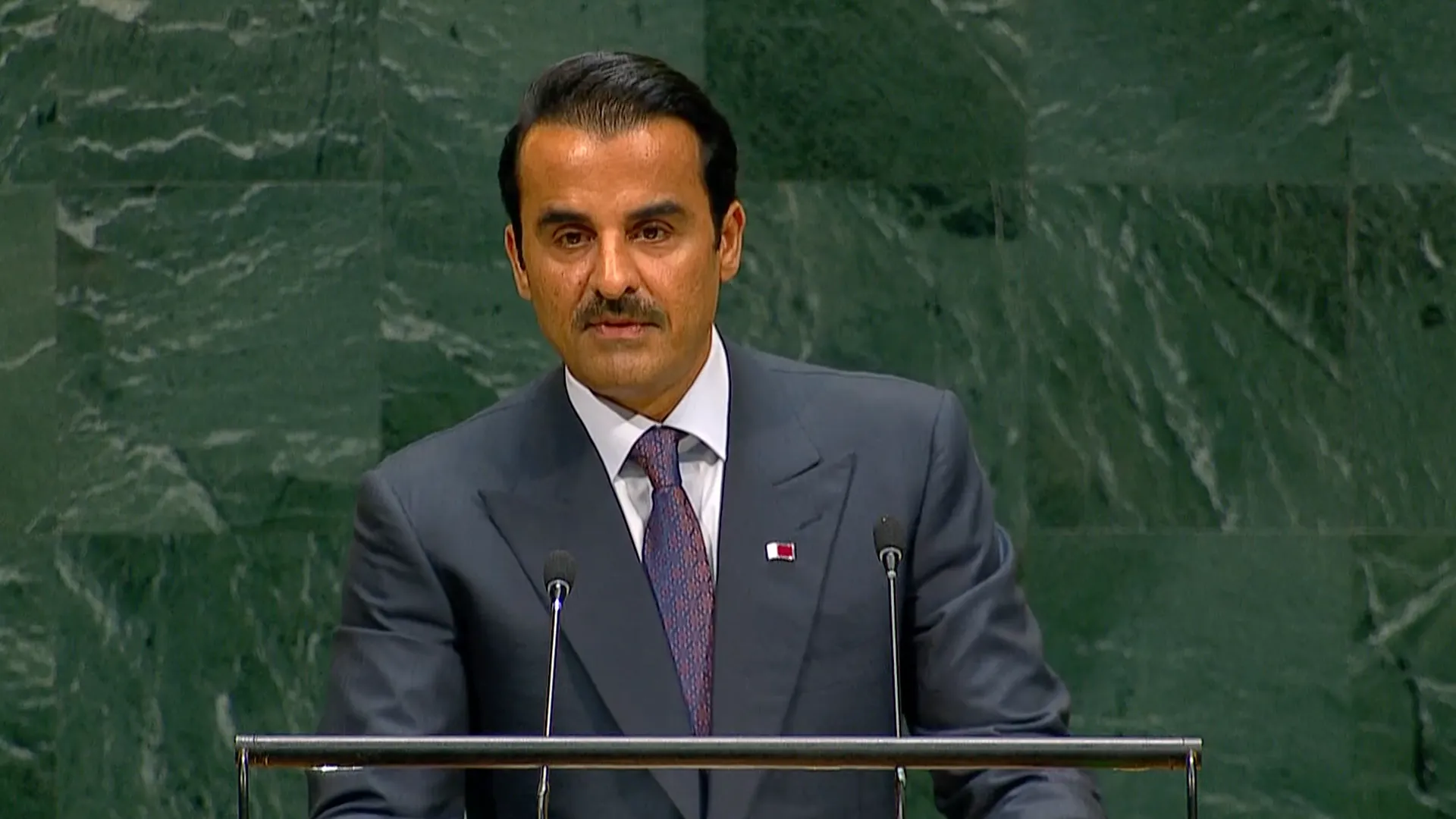
Qatari Emir Sheikh Tamim bin Hamad Al Thani has denounced Israeli aggression in neighbouring countries, saying Israel openly declares it will not abide by its agreements in Lebanon.
Published On 22 Sep 202622 Sep 2026
Share
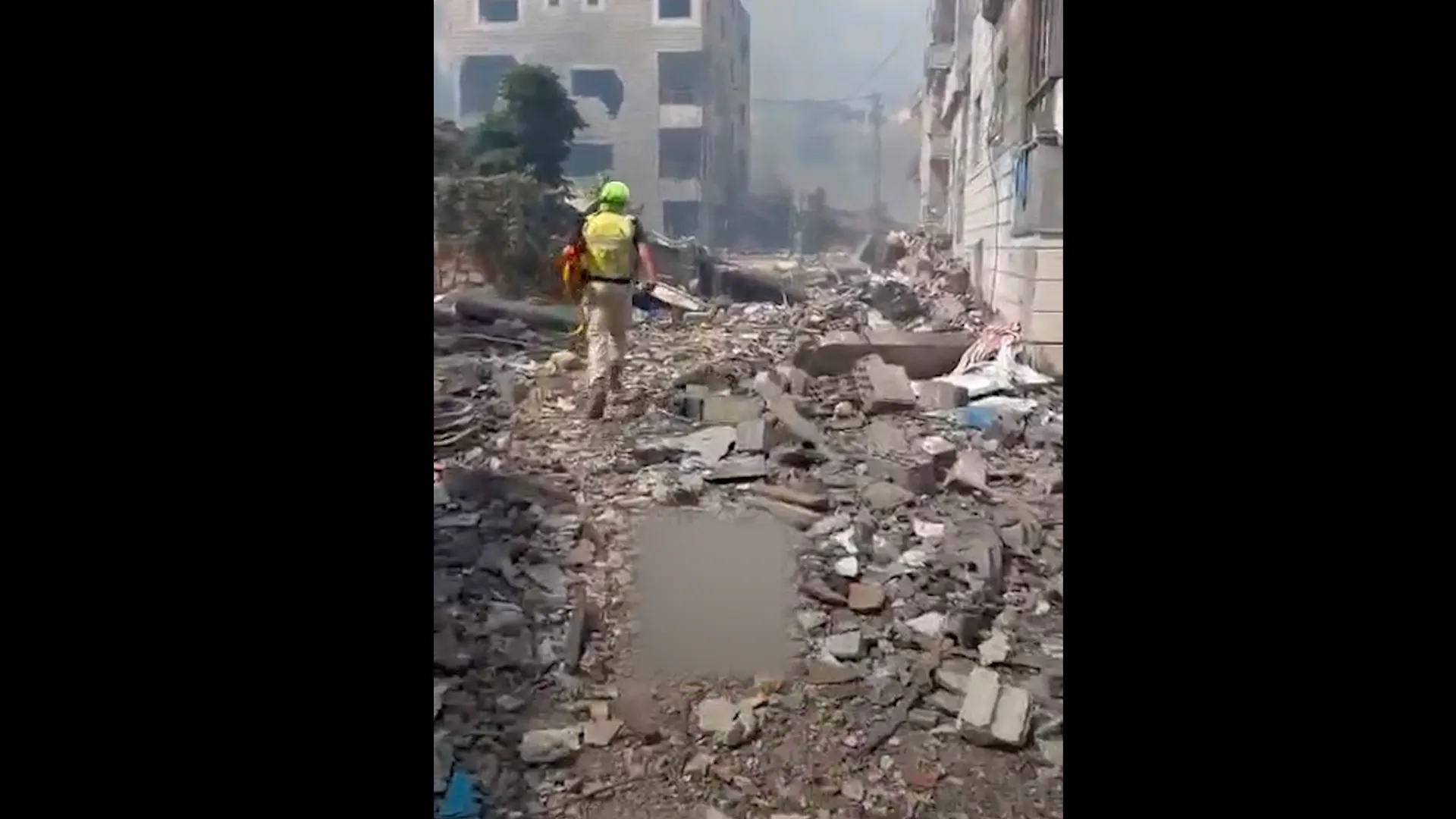
Two back-to-back Israeli air strikes hit Lebanon’s southern city of Nabatieh, while a third strike targeted an ambulance team responding to the attacks. At least 4,386 people have been killed and 12,400 injured since 2 March, when the current Israel-Hezbollah war began.
Published On 19 Sep 202619 Sep 2026
Share
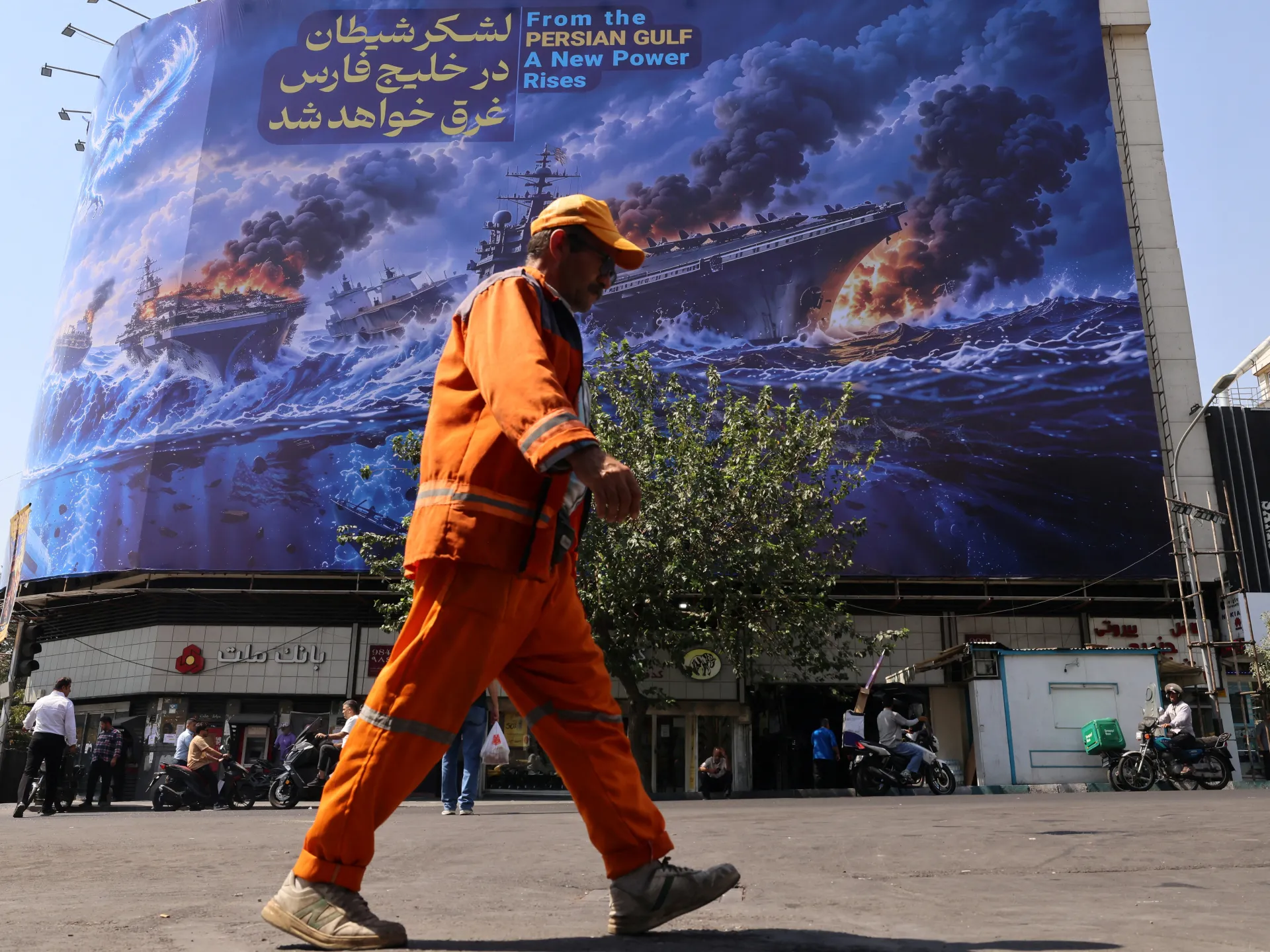
Report says ‘reasonable grounds’ US was behind the deadly strike against a school in Minab in February.
Published On 18 Sep 202618 Sep 2026
Share
Israeli attacks come a week after it said to have established operational control over the strategic ridge.

Published On 10 Sep 202610 Sep 2026
The Israeli military says it has destroyed Hezbollah’s underground infrastructure at a key site in southern Lebanon, with Israeli government officials adding that the operation consolidated its so-called security zone in the area.
In a joint statement, Prime Minister Benjamin Netanyahu and Defence Minister Israel Katz said on Thursday that Israeli forces would remain in the area to prevent the Iran-aligned Hezbollah militant group from re-establishing its presence and rebuilding its capabilities.
list of 4 itemsend of list
The Ali al-Taher ridge, about 15 km (10 miles) from the Israeli border, has become one of the most contested areas of the war between Israel and Hezbollah. Katz claimed last Friday that Israeli forces had driven Hezbollah fighters out of what he said was a network of tunnels under the disputed highland.
Reuters reported that Hezbollah is believed to have built an underground command centre and weapons stores there in July, quoting unnamed Lebanese security sources.
Lebanon’s National News Agency said that the Israeli military carried out a powerful blast at the ridge, with tremors and the sound of the explosion felt across Nabatieh and surrounding areas in southern Lebanon.
Hezbollah has yet to respond to the recent Israeli attack.
The Israeli military said its forces had established “operational control” over the ridge, both above and below ground, before dismantling the infrastructure. The network extended for more than 2 km (just over 1 mile) and contained dozens of rockets, missiles and drones, as well as anti-tank missiles, mines and explosive devices, it said.
The military said a central command complex belonging to Hezbollah’s Badr unit was located within the underground infrastructure. The complex contained command centres, weapons storage rooms and living quarters that allowed fighters to remain underground for extended periods, it said.
Iran reportedly warned the United States last month that it would respond forcefully if Israeli attacks on the ridge continued.
Over the last weeks, Israeli strikes and ground operations around the Ali al-Taher ridge continued despite a ceasefire agreed in June, after Israel gained control of nearby Beaufort Castle and part of the higher ground overlooking much of southern Lebanon and northern Israel.
A US-brokered framework agreed after a June ceasefire — between Lebanon and Israel, without negotiating with Hezbollah — called for Israeli forces to gradually withdraw from southern Lebanon while Lebanese troops disarm Hezbollah.
The process has stalled, however, with Hezbollah refusing to give up its weapons and Israel saying it will not withdraw until the group disarms.
Since 2023, Israel has pushed into southern Lebanon and seized several strategic positions, occupying swathes of land, which it now increasingly says it needs to maintain a so-called buffer zone between Israel and Hezbollah positions in Lebanon.
Published On 7 Sep 20267 Sep 2026
An Israeli air attack on Kfar Reman in southern Lebanon has killed at least 10 people, including an infant, with at least two others missing.
The attack early on Monday on the town in the Nabatieh district comes a day after at least seven people were killed and 20 others were wounded in Israeli air raids on the nearby town of Arab Salim.
list of 4 itemsend of list
The Israeli military also struck a residential area in the town of Deir al-Zahrani in southern Lebanon overnight after it issued a forced evacuation order. The army says it targeted a building near a Hezbollah facility, which it claims was used to launch an explosive drone.
Attacks continued despite a United States-brokered ceasefire agreement between Israel and Lebanon in June.
Reporting from Kfar Reman on Monday after overnight strikes, Al Jazeera’s Zeina Khodr said “uncertainty and fear” are the prevailing feelings in southern Lebanon. “Among the dead are children, including a two-month-old infant,” she said.
“People just do not know what is next. There’s been a wave of Israeli attacks over the past 48 hours. Civilians are being killed. Residential homes are being destroyed,” she said, adding, “Recovery efforts by civil defence workers are continuing. They’ve been here throughout the night.”
Israeli attacks against villages and towns across southern Lebanon continue despite truce agreements and diplomacy.
Published On 4 Sep 20264 Sep 2026
An Israeli air strike targeting a motorcycle has killed two people in the Lebanese town of Kfar Reman, the Ministry of Public Health has said, as Israeli forces intensify attacks on southern Lebanon.
Lebanon’s state-run National News Agency (NNA) reported on Friday that the strike hit in Nabatieh near the strategic Ali al-Taher ridge, which the Israeli army said it had captured, though Hezbollah did not confirm losing it.
list of 3 itemsend of list
Israeli Defence Minister Israel Katz on Friday claimed the military had cleared Hezbollah fighters embedded in tunnels under the strategic ridge, which overlooks a wide area that has become one of the most hotly contested.
Israeli raids and artillery shelling also targeted seven towns in the Tyre and Nabatieh districts, causing no casualties.
NNA said the attacks hit al-Mansouri, Majdal Zoun, Buyout al-Sayyad, Beit Lif and Srebbine in the Tyre district, as well as Zawtar al-Sharqiyah and Mayfadoun in Nabatieh.
The attacks come amid continued Israeli escalation against villages and towns across southern Lebanon despite two truce agreements – on June 4 and 26 – mediated by United States President Donald Trump’s administration.
The June 4 ceasefire was contingent on a “complete cessation” of Hezbollah fire and the evacuation of its fighters from the area south of the Litani River.
The June 26 framework agreement did not specifically call for the withdrawal of the Israeli forces and instead tied it to the disarmament of Hezbollah.
Since March 2, when the latest Israeli escalation in its war on Lebanon began, Israeli attacks have killed more than 4,000 people and injured at least 12,000 others, while forcing more than one million people from their homes, according to Lebanese authorities.
Israel has expanded its military presence across swaths of southern Lebanon since launching its new campaign against Hezbollah, which fired rockets into Israel in retaliation for US-Israeli air strikes that killed Iranian Supreme Leader Ayatollah Ali Khamenei.
On Friday, Israeli authorities separately released four Lebanese people who had been held in Israeli prisons after being detained in southern Lebanon.
They were transferred to Lebanese authorities via the International Committee of the Red Cross, a day after one Lebanese man was released as part of an agreement between the two countries.
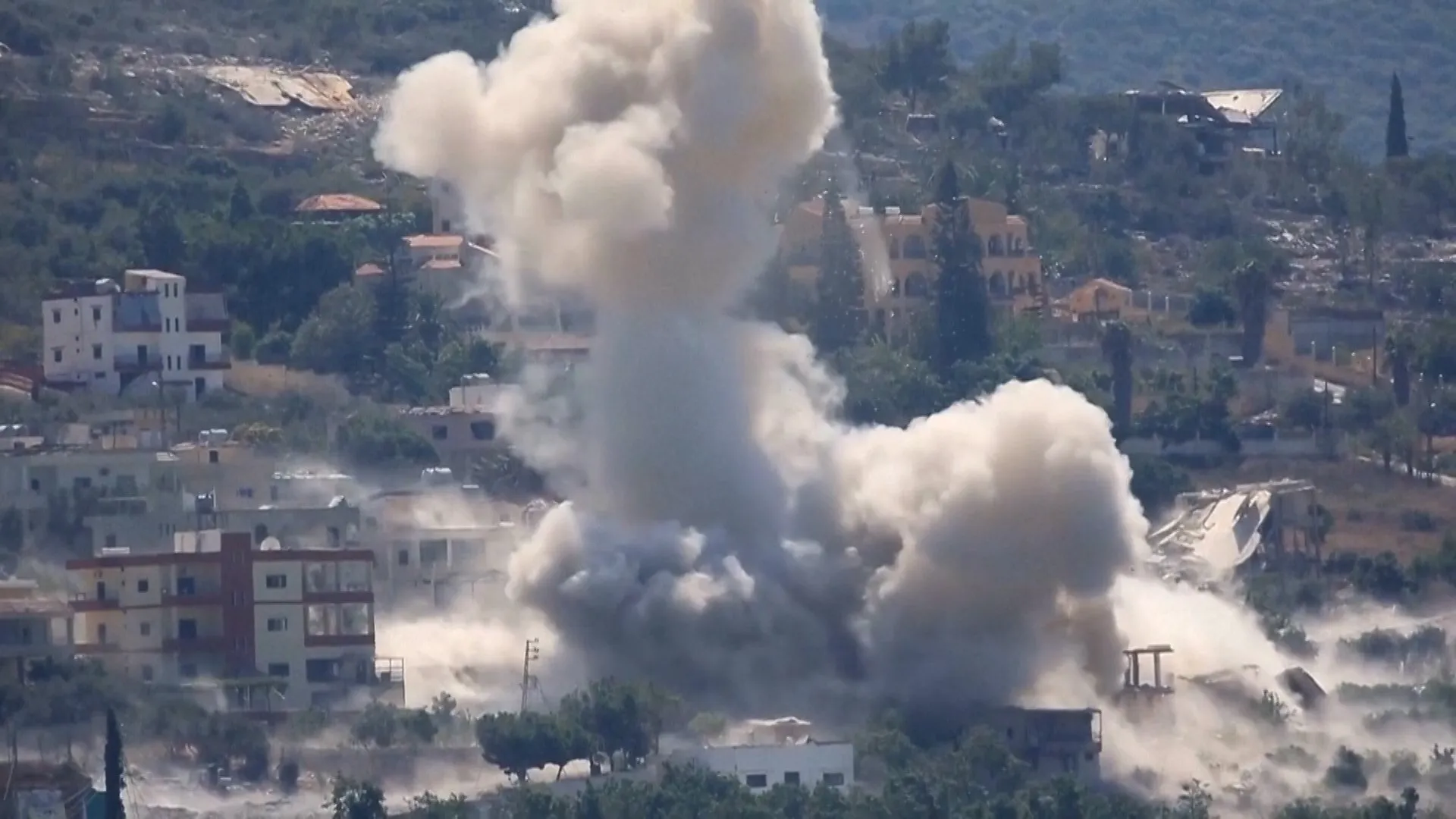
Several explosions rocked the southern Lebanese town of Mansouri after Israeli military drones dropped explosives in the area.
Published On 4 Sep 20264 Sep 2026
Share
Lebanese President Joseph Aoun praises the release and thanks US President Donald Trump for his efforts.
Published On 4 Sep 20264 Sep 2026
Four Lebanese citizens who were held in Israel have been released and handed over to the International Committee of the Red Cross (ICRC), the day after a first prisoner was freed.
In a statement on Friday, Lebanon’s President Joseph Aoun thanked the United States after the Red Cross facilitated the transfer. The US has been brokering talks between Beirut and Tel Aviv aimed at ending hostilities between the neighbouring countries.
list of 4 itemsend of list
Aoun expressed his gratitude “for all the efforts exerted, particularly by the US under the leadership of President Donald Trump and by international bodies, especially the ICRC”.
The ICRC confirmed that “at the request of the relevant parties, [it] facilitated the transfer to Lebanon of five individuals released from Israeli detention”.
Associated Press and Anadolu news agency reporters said they saw a convoy of ICRC vehicles heading towards the Naqoura border crossing on Friday morning and later returning. The convoy then entered a Lebanese army barracks in Tyre.
The release follows a pledge by Israeli Prime Minister Benjamin Netanyahu on Thursday that authorities would free five Lebanese prisoners.
The prisoner released on Thursday was identified as Malek Ghazi.
It was the first such handover since the outbreak of the latest Israel-Hezbollah war six months ago.
Other released prisoners include Hussein Ayash from the village of Harouf and Mohammed Juheir, a fisherman from the border town of Naqoura, AP reported.
Dozens of Lebanese citizens are believed to be held in Israeli detention centres, including civilians as well as Hezbollah members captured during fighting in southern Lebanon.
The ICRC called for its teams to be granted access to the remaining prisoners unjustly held by Israel, noting that it has not had access to detainees held in Israel since October 2023.
“Many families in Lebanon are still waiting for answers about the fate of loved ones who may be detained, deceased or otherwise unaccounted for,” it said.
Clashes between the Israeli army and Hezbollah began after Israel launched its genocidal war on Gaza in October 2023. That led to over a year of hostilities that escalated into a full-blown war in 2024.
Two years later, Lebanon was fully drawn into the conflict when the US and Israel launched a war on Iran. Hezbollah, a key ally of Iran, fired rockets into Israel in retaliation for the killing of Supreme Leader Ayatollah Ali Khamenei. Israel responded with air strikes and a ground invasion that have killed at least 4,300 people in Lebanon.
Lebanon began direct talks with Israel in April. Aoun’s government has vowed to fulfil the terms of the US-brokered framework agreement.
He said it would pave the way for “the full restoration of Lebanese sovereignty, without giving up an inch of our land or a single one of our people”.
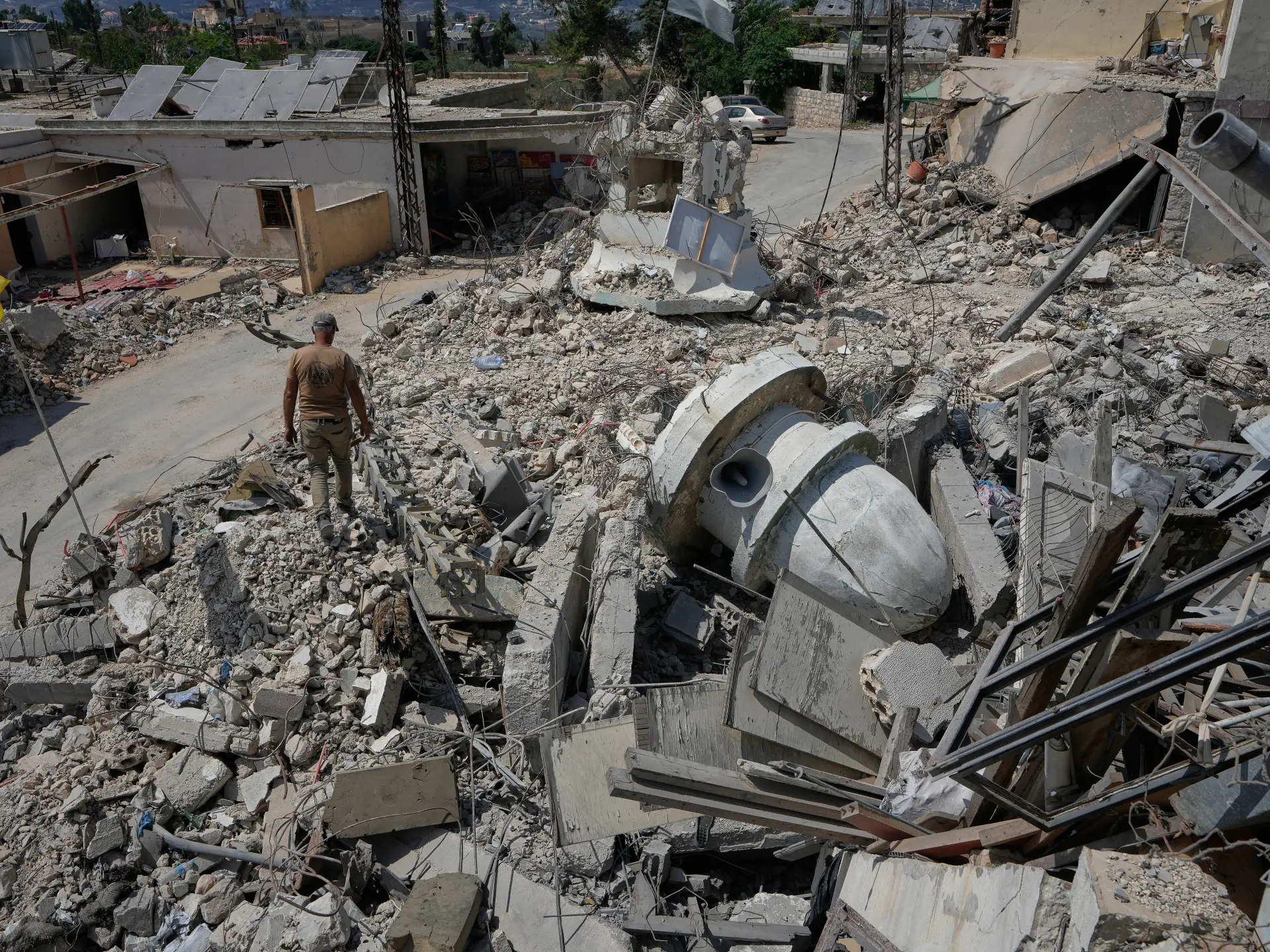
Froun, Lebanon – Hasan Saeid Ramadan, 56, was at home in this southern Lebanese municipality when he heard the explosions.
“It shook the ground like an earthquake, and the mountain collapsed,” he said, pointing at the nearby Qantara mountains.
list of 3 itemsend of list
Israeli forces are present just south of Froun and occupy large areas of southern Lebanon, where they conduct operations, including regular detonations, that they say target the Lebanese group Hezbollah.
The ones conducted by Israel along the Qantara mountain range this week led to a visible collapse in at least two places in the mountains. Locals and officials in villages along the edge of Israeli-controlled Lebanese territory, such as Froun, Ghandouriyeh, Bourj Qalaway and Qalaway, told Al Jazeera that the sounds of war – warplanes, drones but, most of all, Israeli demolitions – are constant and often keep them up at night.
While Ramadan was speaking, an explosion echoed in the distance – another apparent Israeli detonation of a home. “Day and night,” he said. “We even see them.”
He added: “It’s become routine.”
In March, Israel invaded Lebanon for the second time in less than two years. The first invasion in October 2024 was followed by a near-full Israeli withdrawal with soldiers remaining in five locations in southern Lebanon. After the second invasion, however, Israeli officials have said their troops will stay on in southern Lebanon despite promises from United States officials that the Israelis do not have territorial ambitions in Lebanon.
While US President Donald Trump announced a ceasefire in April, Israel’s military has continued to attack what it says are Hezbollah targets and infrastructure around southern Lebanon.
Meanwhile, the Lebanese state has been locked in US-brokered direct discussions with Israel despite objections from Hezbollah and its allies, who favour indirect discussions with the Israelis to try to end the war and the Israeli presence in southern Lebanon.
Israel and Lebanon agreed a “framework agreement” in June, which launched a “pilot zone” plan. The pilot zones are to act as a test area for the Lebanese army to disarm Hezbollah and for the Israelis to withdraw. The first pilot zones were the villages of Froun, Srifa and Zawtar al-Gharbiyeh. But locals disputed the inclusion of Froun and Srifa, saying they were never occupied by Israel in the first place.
“[The Israelis] didn’t take a single step here,” Ramadan said.
For its part, Israel is also reportedly critical of the pilot zone scheme, and analysts doubt their willingness to allow it to progress.
“The pilot zones can only really work if you have goodwill of various parties,” Nicholas Blanford, a nonresident senior fellow at the Atlantic Council and author of a book on Hezbollah, told Al Jazeera. “The trouble is the Israelis have said they are not going to stage any more withdrawals, so it brings the process to a halt.”
And regardless of the efforts from the Lebanese state and the Lebanese army, both Hezbollah and Israel have played a role in undermining the process.
“Hezbollah opposes the scheme outright and argues that Lebanon should rely on Iran to pressure the US into demanding an Israeli withdrawal,” David Wood, the International Crisis Group’s senior analyst for Lebanon, told Al Jazeera. “Israel has paid lip service to the pilot zones scheme but has recently expanded – rather than reduced – its occupation of Lebanese territory.”
In the villages near the areas Israel controls, many of the homes and local infrastructure lie destroyed. Piles of concrete rubble and dust line many of the roads to the villages. Explosions were heard throughout the day on Thursday, and locals said they are often worse at night and disrupt their sleep.
During the harshest days of the war, these villages were ghost towns. Residents fled north to Sidon or Beirut, where they stayed with family, in displacement centres, or slept rough on the streets, locals said.
Residents began to return to these villages after the announcement of the framework agreement. But what they returned to was not what they had left behind.
Mohammad Ali Nader, the head of the municipality of Ghandouriyeh, said his area was mostly agricultural and farmers grew olives, wheat, chickpeas, corn and tobacco, among many other crops. But now, the area lies overwhelmingly in ruins. Most residents don’t have access to water or electricity.
The clanking sound of cranes and other construction equipment moving rubble or smashing concrete echoed out into the rolling hills behind Nader. He stood on the ruins of a home that had been destroyed by two Israeli rockets.
“Much like all the other houses that were destroyed, this house is no longer habitable,” he said, saying it had once boasted two storeys and a large garden. He added that the electric and water infrastructure in the area was also mostly destroyed. “We used to grow carob here, but where is there carob now?” he asked rhetorically. “Not a carob is left nor olives, tobacco or wheat.”
Nasser Mokdad, an official in the municipality of Froun, said the area was currently not receiving state-provided electricity but added that the Lebanese government was working on returning services, setting September 15 as a target date.
Residents in the affected villages said the current period reminds them of the days of the Israeli occupation of southern Lebanon from 1982 to 2000. Hasan Bazzi, the head of the municipality of Froun, said the only difference is that during the previous occupation, southerners remained in their Israeli-occupied villages.
This time around, the Israeli demolitions are ensuring that those whose homes are in Israeli-occupied areas will have difficulty returning, even if the troops eventually withdraw.
When the war restarted this year, Ramadan fled his home of 30 years and took refuge in an area near Tyre, a coastal city in southern Lebanon, and then moved farther north to Sidon, about an hour south of Beirut.
When he returned after the truce in the area, his house had been badly damaged. Still, it fared better than the neighbouring houses, which he said belonged to his cousins. He’s now sleeping in his garage with his wife. Their house, like the surrounding area, has no access to water or electricity.
He said the heat at night bothers him and he’s developed a bad heat rash. During the day, he slowly works on fixing the shrapnel-pocketed walls of his home.
Dripping with sweat under the midday sun, he smiled. “My conscience is at ease because I’m by my home,” he said.