IRGC doubles down as Iran-US MoU jeopardised by Hormuz strikes | US-Israel war on Iran News
Tehran, Iran – The memorandum of understanding (MoU) signed last week between Iran and the United States appears to be in jeopardy after a second day of military strikes, as well as the a framework agreement that entrenches Israeli forces on Lebanese soil.
The Islamic Revolutionary Guard Corps (IRGC) on Sunday released video showing the launch of ballistic missiles overnight, with a message written on them in English and Persian saying US President Donald Trump was insisting on a “defeated war”.
Recommended Stories
list of 3 itemsend of list
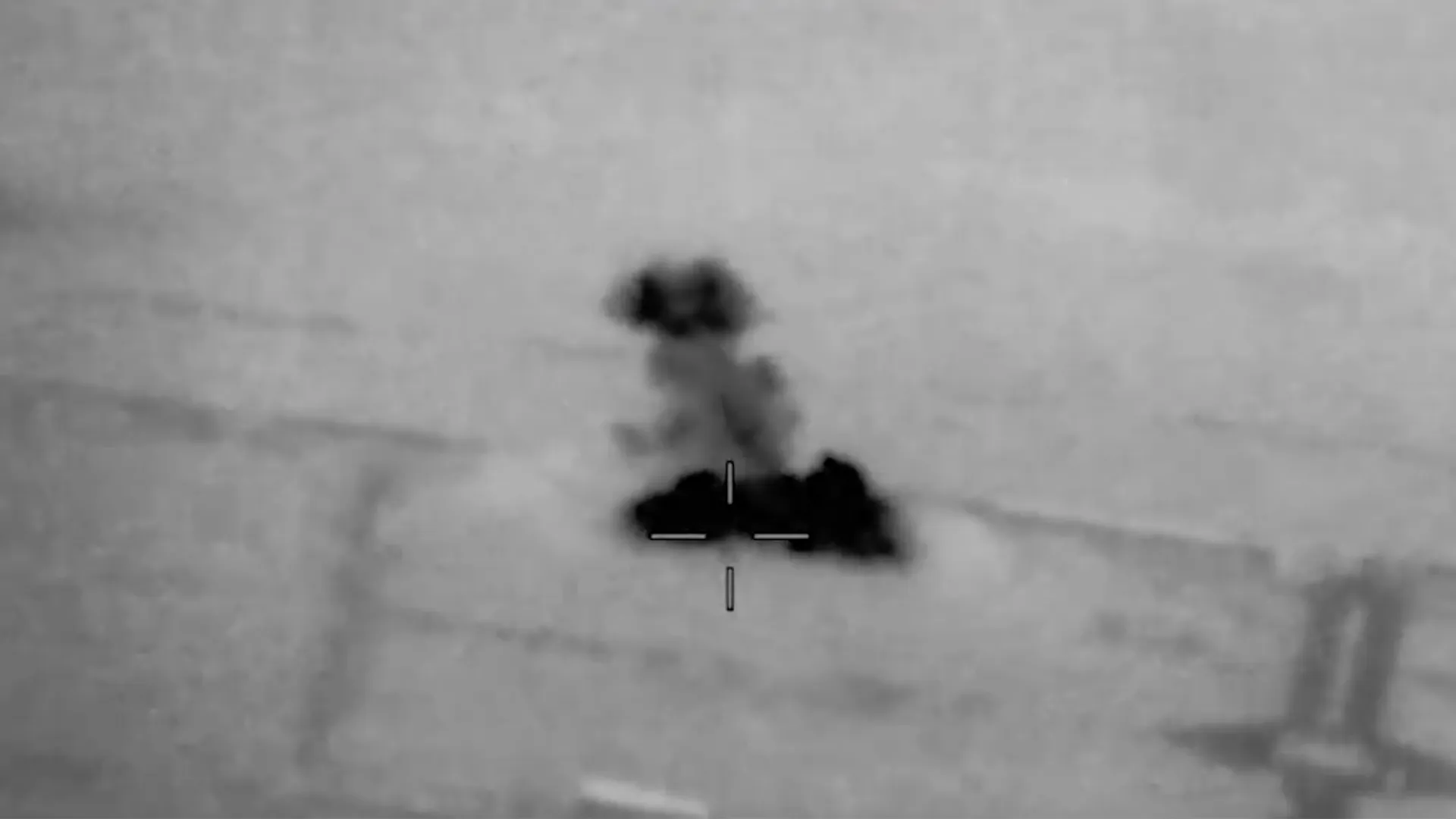
The IRGC said it had fired missiles and drones towards the US Ali Al Salem airbase in Kuwait and the US Fifth Naval Fleet in Bahrain in retaliation for a second day of US strikes. It threatened more attacks if the deal is violated again by the “deceitful” US, which, along with Israel launched air attacks across Iran on February 28.
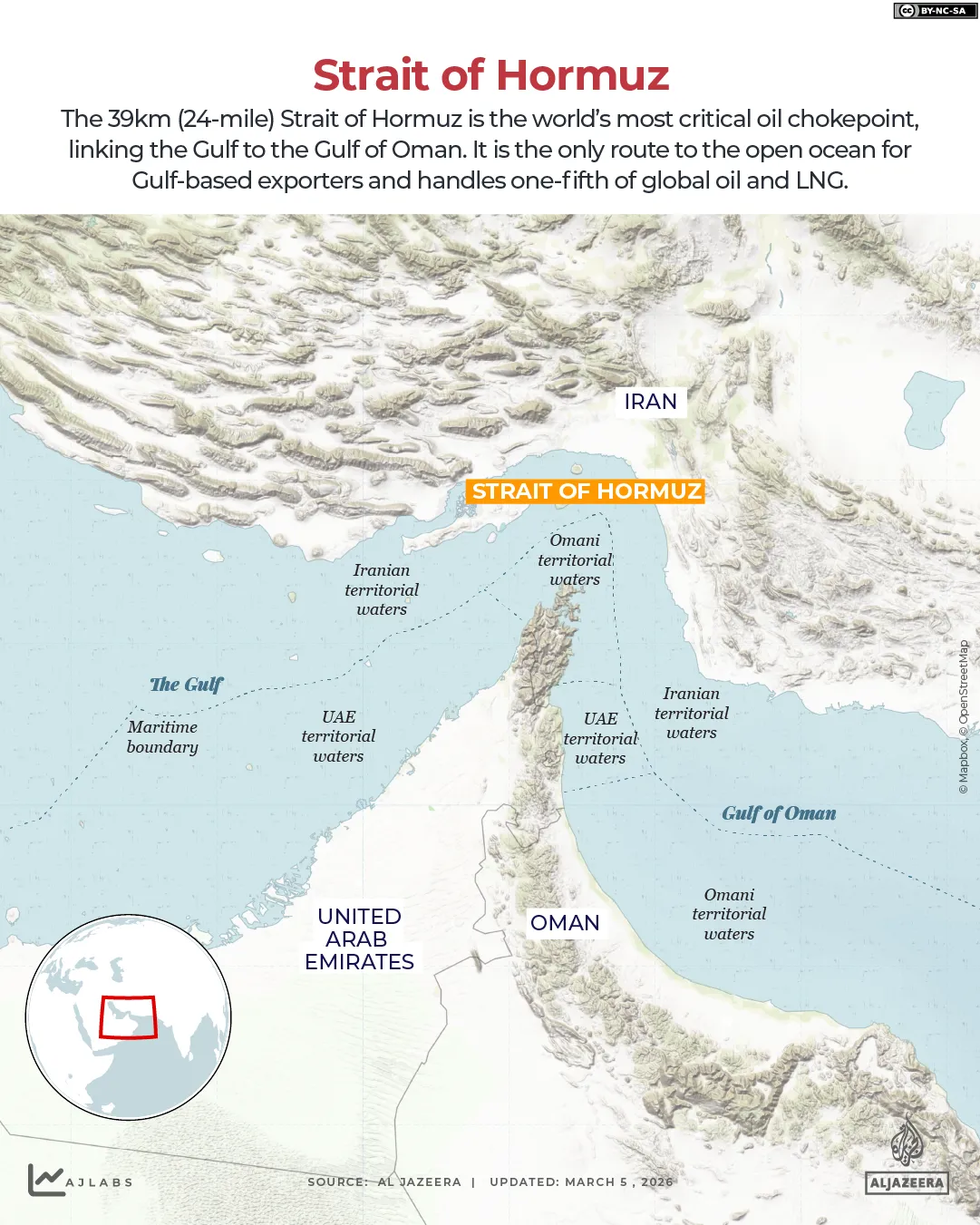
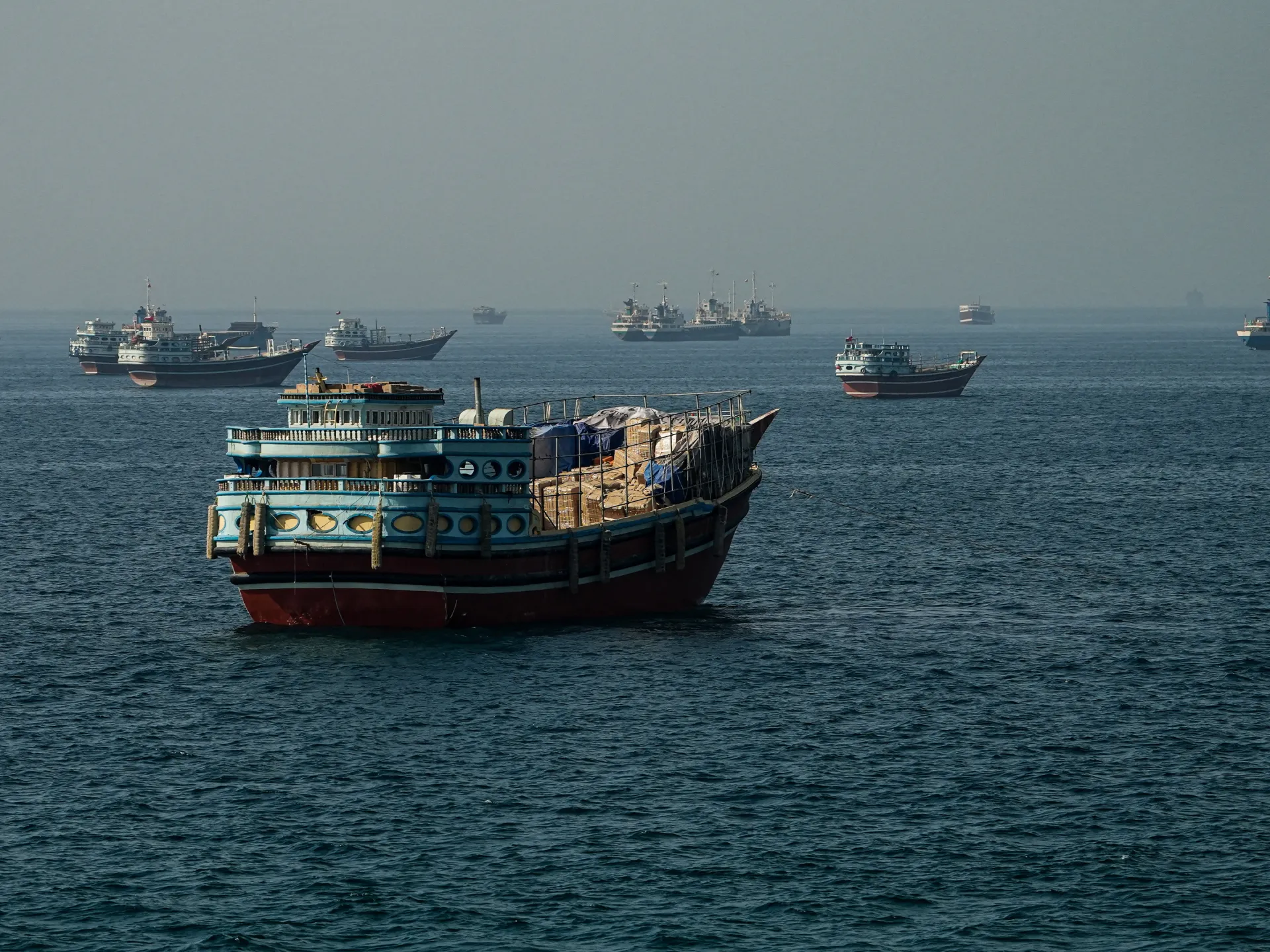
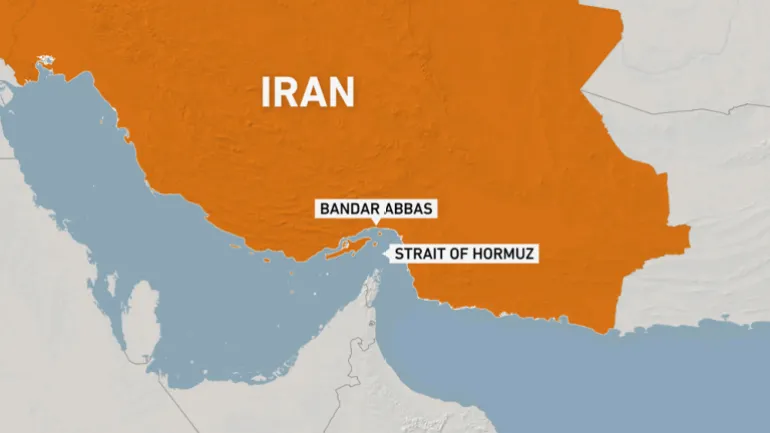
The exchanges of fire come after the US coordinated the transit of vessels out of the Strait of Hormuz in cooperation with Oman and the International Maritime Organization.
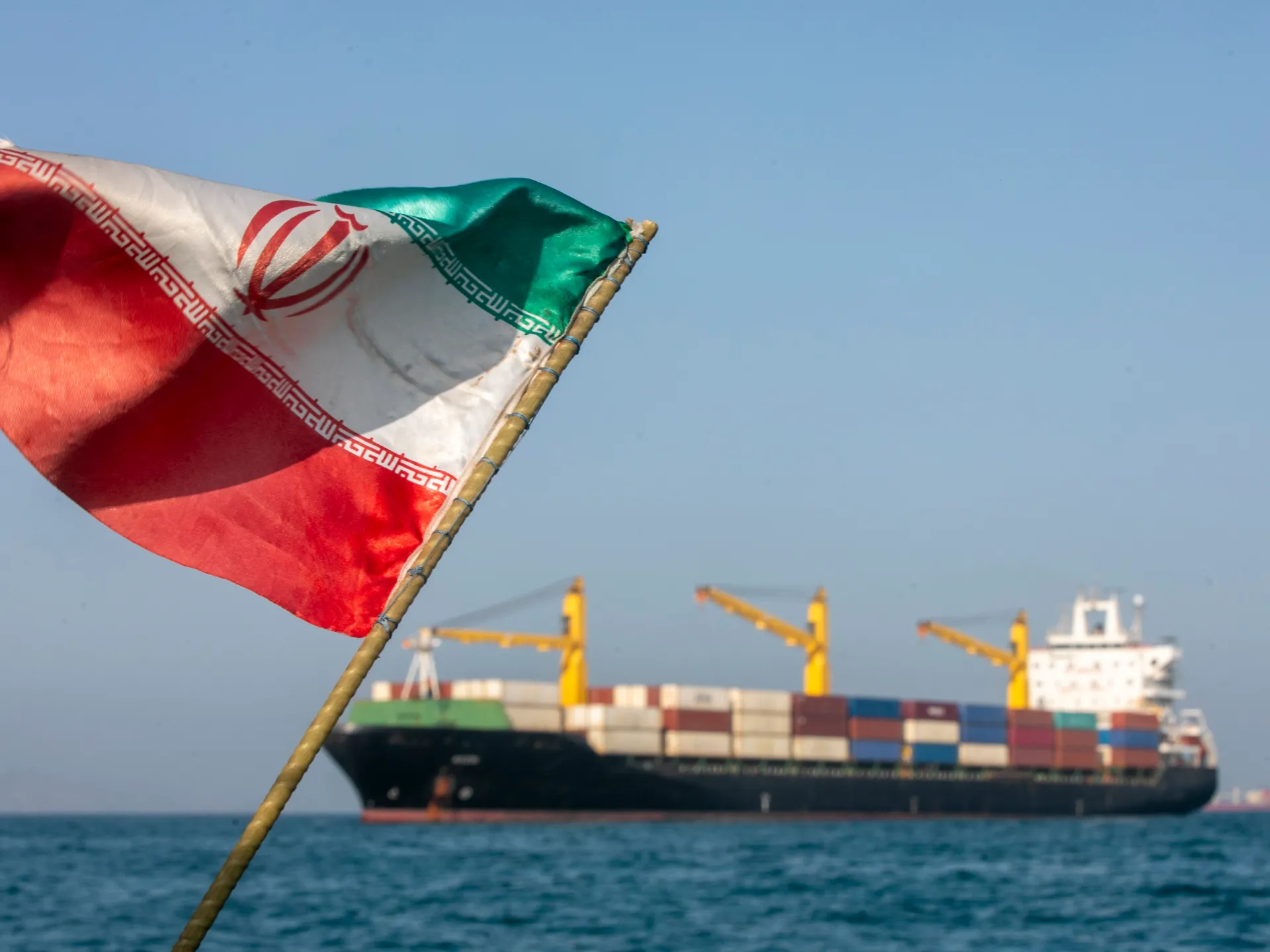
Many ships were being directed through Oman’s waters, which prompted the IRGC to hit a container ship and a tanker with explosive-laden drones in an attempt to force traffic to pass through Iranian waters instead.
Speaking to reporters in neighbouring Iraq on Sunday, Foreign Minister Abbas Araghchi said Iran will exercise sole management and oversight of the critical waterway for the next 30 days before allowing full traffic to resume.
He also emphasised the first clause of the June 17 MoU, which says military operations must immediately and permanently end on all fronts, including Lebanon, and urged Washington to exert pressure on Israel to stop attacking southern Lebanon.
The governments of Israel and Lebanon reached a US-brokered framework deal on Friday that allows Israeli forces to remain in southern Lebanon, until Tehran-backed Hezbollah is fully disarmed. That appears to contradict the MoU signed with Iran.
Hezbollah swiftly rejected the agreement, calling it “humiliating, shameful and a surrender” of Lebanon’s sovereignty.
Negar Mortazavi, a senior fellow at the Center for International Policy, said she expected the Lebanon issue to negatively impact the MoU because Hezbollah was not on board and the Lebanese government’s previous ceasefire deals with Israel have been repeatedly violated.
She also told Al Jazeera that Iran has found tremendous leverage with the Strait of Hormuz, treating it as a “golden card”, as the disruption to oil exports has heavily impacted markets and made the war unpopular among many, including in the US.
“They are using that leverage to the max and not going back to the status before the war, pretending like no war happened,” she said, adding that Iranian authorities and the IRGC have sought to centre themselves in the process of coordinating transit through the strait.
“They’re saying they want traffic to go through in coordination with them, and I think they will be able to exert that kind of power,” she said.
On Saturday, Iran’s President Masoud Pezeshkian, Speaker and chief negotiator Mohammad Bagher Ghalibaf and judiciary chief Gholam-Hossein Mohseni-Ejei released an image of their first publicised trilateral meeting since the start of the war more than four months ago.
Supreme Leader Mojtaba Khamenei has not been seen or heard from since succeeding his father, Ayatollah Ali Khamenei, who was killed in a US-Israeli attack on the first day of the war. But a new written text message attributed to him on Sunday said: “What is certain is that the criminals must be seized by the collar and made to face the punishment for their criminal acts”.
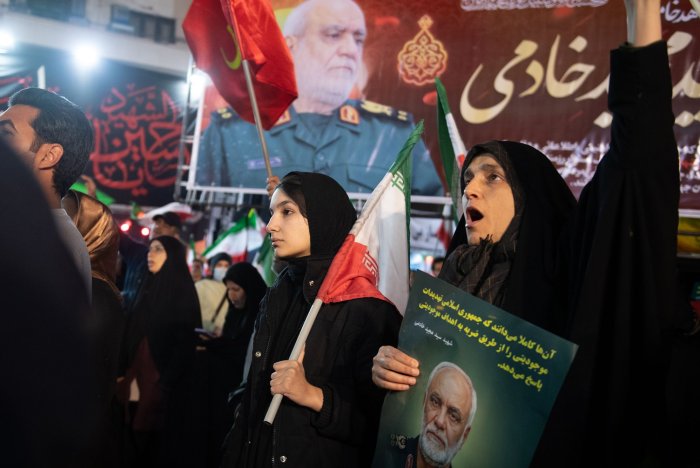
Supporters of the Islamic Republic cheered on the latest IRGC attacks against US interests as they continued demonstrating on the streets overnight into Sunday as hardline politicians and analysts called for further attacks until Iran gets better concessions.
On the state-linked talk show, Tamam Rokh, political analysts said Tehran should significantly strengthen its ties with Moscow and Beijing.
“We could do many things with help from Russia and China to damage US strategic equipment in the region like vessels, refuelling aircraft and electronic warfare,” pro-state analyst Ali Samadzadeh said on the programme on Saturday.
“There was no movement in Tehran to tie Beijing and Moscow to the war, and this major flaw exists in the form of the negotiations and the text of the MoU as well,” he said.
More than 60 hardline legislators on Sunday postponed plans to protest against the closure of parliament since the start of the war after its presiding board said it would meet to reconvene the assembly, following Ali Khamenei’s burial next month.
Many others say demands for extracting major concessions from the US and Israel do not correspond with the reality of the situation after months of war.
“In terms of military power, we couldn’t do anything about the US blockade and we didn’t think the crisis would get so serious,” pro-state commentator Vahid Ashtari told crowds at a street event in Tehran.
“I think a type of blind idealism has emerged that believes we are on top and at the peak, so we shouldn’t make a deal. But there are facts on the ground. We have some missiles and drones to carry out an asymmetric defence, but we have no fighter jets to fly to the US and hit Trump. Not only could we not avenge [Khamenei], we could not avenge Haj Qassem either,” he added, in reference to General Qassem Soleimani, who was assassinated by the US in 2020.
After two nights of attacks, Iran’s financial markets also reacted poorly, with the national currency losing gains since the signing of the MoU to trade at about 1.7 million rials against the dollar in Tehran’s open market on Sunday.
The main index of the Tehran Stock Exchange also lost more than 100,000 points to stand at just over five million points at the end of trading on Sunday, the second day of the working week in Iran.
Vahid, a 37-year-old mechanic who also deals in car parts in Tehran’s Grand Bazaar, told Al Jazeera that while the market has marginally improved since the signing of the deal with the US, it is still treading on thin ice.
He said parts for foreign cars are becoming harder to find, while prices have been rising rapidly for both domestic and foreign vehicle parts.
“I think the war will start again over the coming months and some in the bazaar think the same,” he said.