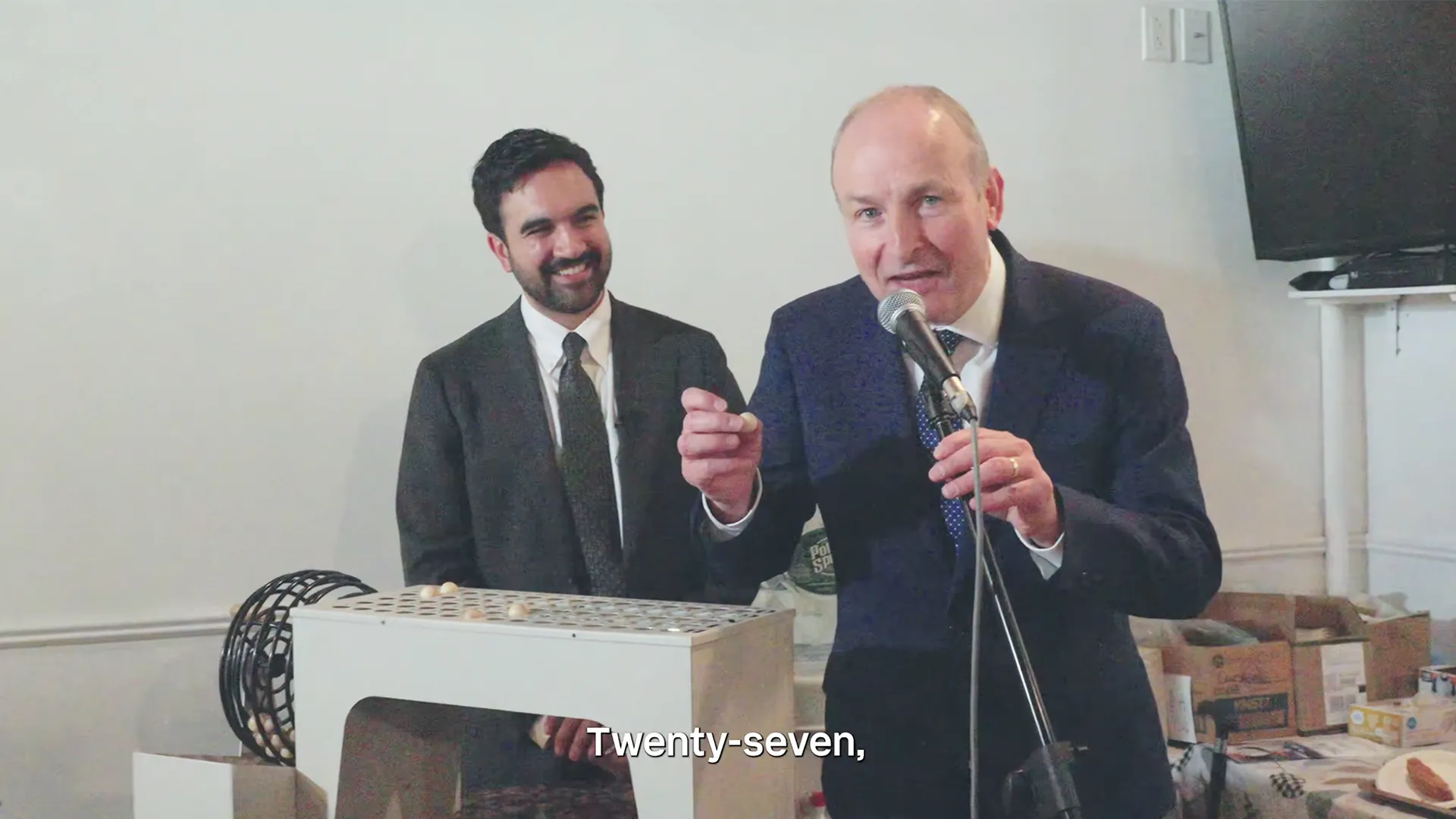
Mamdani, Irish PM play bingo, ‘split the G’ in New York
New York City Mayor Zohran Mamdani shared a video riding the subway with Irish PM Micheal Martin during UN week.
Source link
New York City Mayor Zohran Mamdani shared a video riding the subway with Irish PM Micheal Martin during UN week.
Source link

Ulster will be without backs Michael Lowry, Aitzol Arenzana-King and Robert Baloucoune for Saturday’s United Rugby Championship game against Glasgow at Scotstoun (17:30 BST).
Full-back Lowry and wing Baloucoune suffered concussions in the Irish province’s 34-29 defeat by Edinburgh in their opening URC game of the 2026-27 campaign.
Winger Arenzana-King picked up a knee injury during the game in Belfast, from which Ulster emerged with two bonus points.
All three players started last weekend’s fixture, with Lowry captaining the side and scoring the first of Ulster’s four tries in a match which Richie Murphy’s side’s comeback fall short after they bounced back from a 34-5 deficit.
Glasgow began their season with an impressive 26-20 victory on the road at Munster.
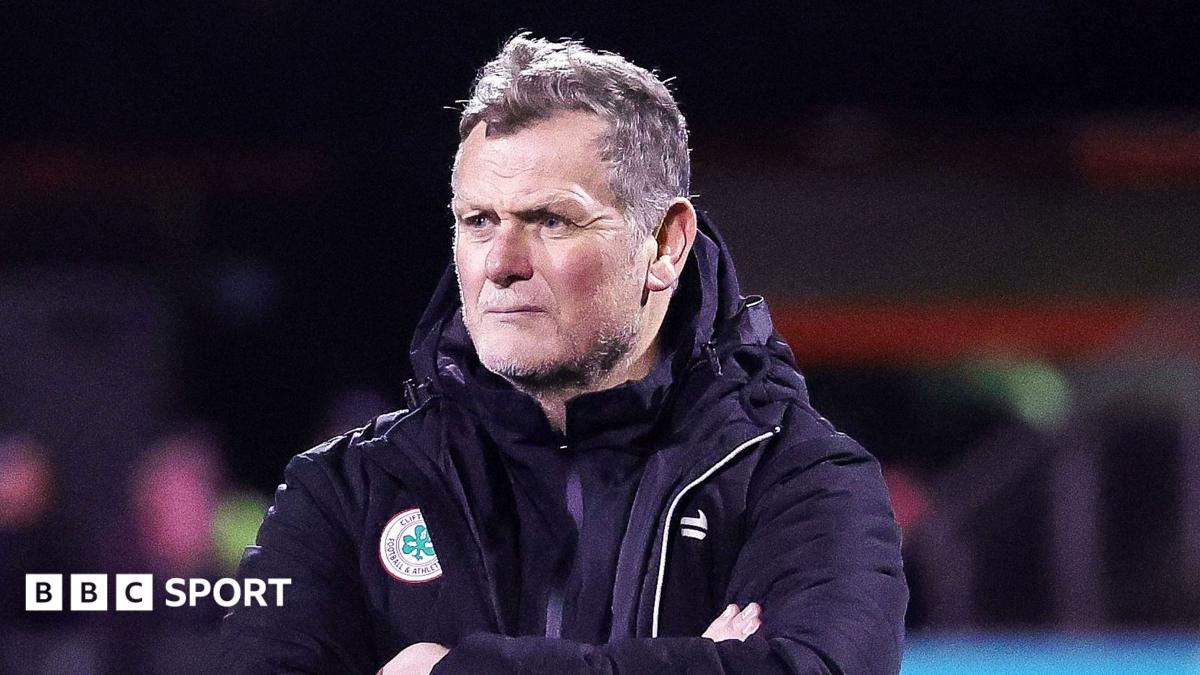
Glentoran have identified Cliftonville manager Jim Magilton as their preferred candidate to take over from Declan Devine.
Devine left the Oval club on Monday after two years in charge following a poor start to the season.
Assistant managers Paddy McCourt and Tim McCann oversaw Tuesday night’s home defeat by Irish Premiership leaders Coleraine.
Magilton has emerged at the front-runner with the Glens making a formal approach to speak with the Cliftonville boss, with the clubs set to meet in an Irish Premiership fixture at Solitude on Saturday.
The 57-year-old former Northern Ireland international was appointed Cliftonville boss in 2023, succeeding Paddy McLaughlin, and led the club to Irish Cup glory the following year, ending a 45-year wait for the trophy.
Magilton, who previously worked at Ipswich Town, the Irish FA, Dundalk and Melbourne Victory, also led the Reds to the 2025 BetMcLean Cup, beating Glentoran in the final, but lost to Dungannon Swifts in the Irish Cup decider two months later.
British Prime Minister Andy Burnham maintains that a poll is ‘off the table’ as there isn’t enough popular support for Northern Ireland to leave the UK.
United States President Donald Trump has said that a unified Ireland would be “fantastic”, in remarks made during a visit to Dublin that were not welcomed by government ministers in London.
Trump’s comments on Saturday came weeks after British Prime Minister Andy Burnham said a referendum on Northern Ireland leaving the United Kingdom was “off the table”.
list of 3 itemsend of list
“Well, I don’t want to cause any problems, but I will tell you, I’d love to see it unified,” Trump told reporters, while sitting next to Ireland’s Prime Minister, Micheal Martin.
“It’s going to happen eventually … I think it would be a fantastic thing,” he said.
“Now the UK will have something to say about it … but I think it would be a great thing,” he added.
Martin declined to respond to reporters’ questions to comment on the US president’s remarks.
Following Trump’s comments, a spokesperson for Burnham said his position on Irish unification remained unchanged.
Responding to questions from members of parliament on Wednesday about a potential poll in Northern Ireland, Burnham said: “I am not aware that there is majority public support for another referendum, and until that changes, there will not be one”.

Under the terms of the 1998 Good Friday Agreement (also known as the Belfast Agreement), a referendum on leaving the UK can be held only at the discretion of the British government.
The accord ended three decades of violence known as The Troubles. The sectarian conflict involved mostly Catholic nationalist paramilitaries seeking a united Ireland, mostly Protestant unionist paramilitaries wanting to remain part of the UK, and British troops.
Gavin Robinson, leader of the DUP, Northern Ireland’s main unionist party, said that Northern Ireland’s future was a matter for its people to decide, not Trump.
“President Trump knows better than most that elections matter. Northern Ireland’s constitutional future will be decided by the people of Northern Ireland, not by commentary in London, Dublin or Washington.”
While polls show a comfortable majority in Northern Ireland favour remaining in the UK, the gap has narrowed slightly since Britain’s departure from the European Union pushed unity higher up the political agenda.
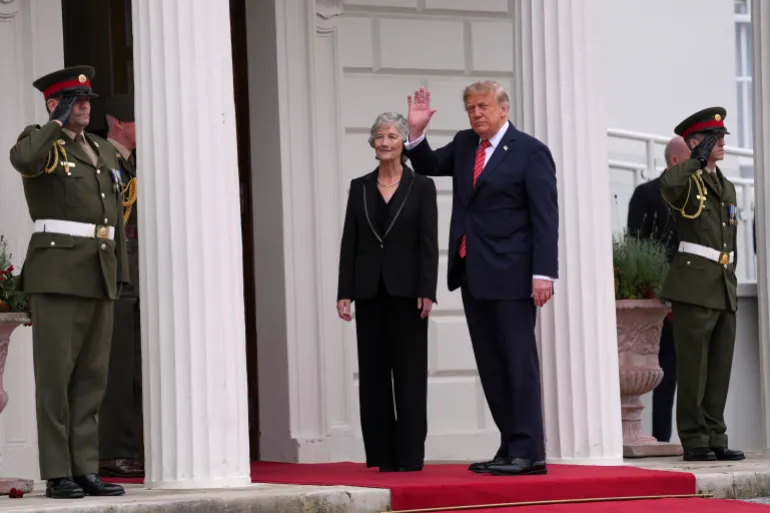
Trump also met Irish President Catherine Connolly, who was elected head of state last year. When Trump last visited Ireland as president in 2019, Connolly, an outspoken politician with left-wing foreign policy views, protested at Shannon Airport in western Ireland.
During Trump’s current visit, some supporters had urged her to speak out against US military actions around the world and defend Ireland’s neutrality.

Anti-war and anti-Trump protests were held in Dublin and some were planned for later in western Ireland, near Trump’s golf course in Doonbeg.
Reporting from the capital, Al Jazeera’s Milena Veselinovic said Dubliners had a “laundry list” of reasons for protesting against Trump’s visit.
“They feel that the Irish government should not be, in their words, rolling out the red carpet for someone like Trump, who they say is a cause of instability in the world and has been enabling Israel’s actions in Gaza … and destabilised the whole of the Middle East.”
Irish people are also protesting against the high cost of hosting Trump, including security, which they say could pay for other things, such as healthcare and social issues, added Veselinovic.

DUBLIN — President Trump is taking a break this weekend from the pressures of the Iran war and American voter anger over the conflict’s economic fallout by indulging in one of his favorite pastimes: golf.
After observing the somber 25th anniversary on Friday of the 9/11 attacks that killed more than 3,000 people in New York, Washington and Pennsylvania, Trump plans to fly to Ireland for a weekend at his eponymous golf resort in Doonbeg on the country’s Atlantic coast. Trump International Golf Links is hosting the Irish Open, which kicked off Thursday.
The president is an avid golfer who hits the links at clubs he owns in Florida, New Jersey and Virginia just about every weekend. Prime Minister Micheál Martin invited Trump to watch the Irish Open during a St. Patrick’s Day trip to Washington in March, and Ireland’s political leaders will most likely see the visit as a chance to maintain warm relations despite differences over trade and foreign policy.
Daniel Mulhall, a former Irish ambassador to the United States, said Irish and U.S. officials will see Trump’s trip “as a happy opportunity for him to have a little bit of R&R in a place that he really loves, which is his golf course in Doonbeg.”
“The relationship with America is on an even keel, which is great because not every country in the world can say that,” he said.
Trump plans to sit down on Saturday to talk about trade and international issues with Martin and will also have a brief meeting with President Catherine Connolly, a progressive campaigner who was elected Ireland’s ceremonial head of state last year. He’ll give remarks to business leaders at the U.S. ambassador’s residence, the White House said. Then he’ll travel to Doonbeg to attend the tournament, and possibly present the winner’s trophy on Sunday.
The U.S. and Ireland share ties of history — 30 million Americans claim Irish heritage, and more than 1 million Americans visit Ireland every year — and strong economic bonds. The Irish Treasury takes in billions in corporate tax from U.S. technology and drug companies operating in Ireland, and American firms employ more than 200,000 people in the country.
Ireland is a member of the European Union, a frequent target of Trump’s ire, but so far the country’s lucrative pharmaceutical sector has avoided steep levies.
The Middle East is a potential source of friction. Ireland has recognized a Palestinian state and banned goods from Israeli settlements in the occupied West Bank, both positions eschewed by the Trump administration.
Martin, who leads a center-right coalition government, struck up a cordial relationship with Trump during his St. Patrick’s Day visits, though Trump said in the Oval Office in March 2025 that “of course” Ireland was among countries taking advantage of the United States.
Not everyone in Ireland is welcoming Trump’s visit. More than 150 Irish lawyers signed a letter objecting to the visit, alleging that through support for conflicts in Gaza and Iran Trump is “executing and enabling war policies which are illegal, causing death and destruction on a massive scale.”
A collection of left-leaning opposition parties, anti-military groups, pro-Palestinian organizations, environmentalists and others plans to demonstrate in Dublin on Saturday.
Trump’s attendance at the Irish Open continues his trend of appearing at prominent sporting events — and having a hand in organizing some of them in ways that benefit his family business. His clubs in Doral, Fla., and Bedminster, N.J., have each hosted professional golf tournaments this year.
In July, Trump marked the 250th anniversary of U.S. independence from Britain by staging a UFC fight night on the South Lawn of the White House and sanctioning the first IndyCar race ever held on the streets of Washington.
Since beginning a second term in office in January 2025, he’s attended the Super Bowl, the Daytona 500, the FIFA Club World Cup final and the U.S. Open men’s tennis final. He recently announced that he will be at the Presidents Cup golf tournament in late September near Chicago in the traditional role as honorary chairman of the matches.
Last summer, he visited his golf courses in Scotland, meeting then-Prime Minister Keir Starmer and European Commission President Ursula von der Leyen during the trip.
The president’s visit has brought a huge security operation to the rural area 175 miles west of Dublin, complicated by the presence of some 20,000 golf fans attending the Open.
Local councilor Rita McInerney, who owns a shop in Doonbeg, said Trump’s purchase of the golf course in 2014 has been a mixed bag for the town.
She said Doonbeg has been “vilified” by some in Ireland because of its Trump connection, but that the resort is a major employer and a responsible member of the local business community.
The area draws many American tourists, some of whom come because “they love the golf more than they hate Trump,” she said.
“And then there’s a group of people that will come because they follow Trump or they like Trump or they support him in the U.S.,” she said. “And then there’s other people that will avoid the place because he owns it.”
Superville and Lawless write for the Associated Press.
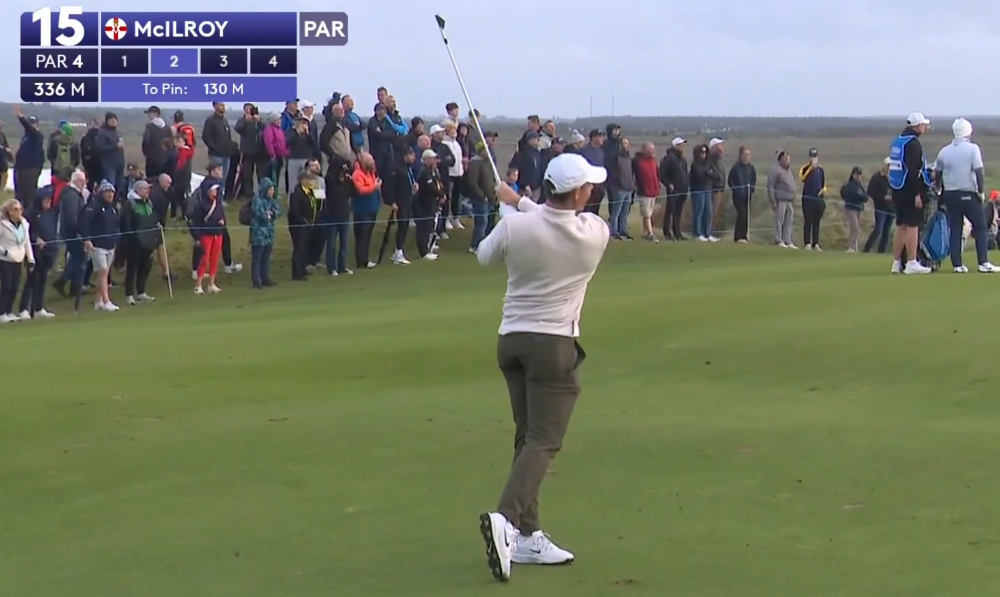

DUBLIN: Rory McIlroy battled against fierce winds to remain in contention at the Irish Open on Thursday with a one under par opening round to sit four shots behind leader Joaquin Niemann.
US President Donald Trump is set to jet in to attend the event over the weekend, which is being held at his resort in the County Clare village of Doonbeg.
Northern Irishman McIlroy is defending his title and aiming to win for the first time since collecting a second green jacket at the Masters in April.
A double bogey six at the 13th set the world number two back, but those were the only dropped shots of his round, which was disrupted by the blustery conditions leading to a glacial pace of play.
“I hung in there, shot under par, and at least don’t feel like I’m out of the tournament. A good day tomorrow gets me right back in it,” said the six-time major champion.
“There were a couple of things that were tough today. Obviously the wind and the strength of the wind was one thing, and then the pace of play.”
“This course isn’t conducive to sort of letting you get in a flow. Especially the first two days with so many people in the field, there is a lot of stopping and starting.”
Niemann made four birdies in a row from the 14th to forge ahead.
“It’s a really tricky course and a really fun golf course to play with, especially with the Irish weather,” said the Chilean. “(I’m) getting used to this weather and the rain, so it was fun.”
Delays caused by the conditions meant that some players will have to return early on day two to complete their opening rounds.
Home favourite Shane Lowry is among a five-strong group, two shots behind Niemann after a 67.
Adrian Meronk, Maximilian Steinlechner and Renato Paratore were also at three under when bad light brought their opening day to an end without completing their rounds.
Jon Rahm was level par on a rare appearance back on the DP World Tour.
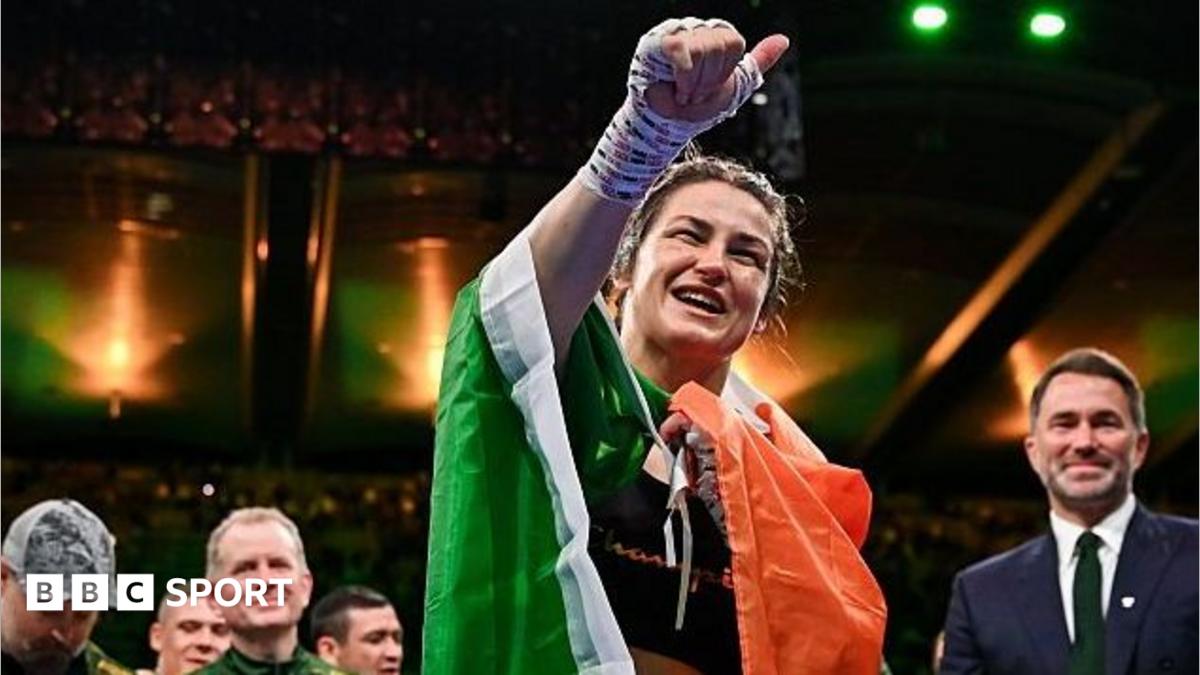
While her trophy cabinet is overflowing with gold medals and world title belts, perhaps her greatest legacy is leaving women’s boxing in a vastly better place than she found it – that Serrano trilogy lifting women’s boxing to new heights.
Taylor broke through the barriers with a grace which belied the obstacles she faced yet her quiet determination and humble nature will serve as an example of what can be achieved by belief, hard work and a refusal to accept her lot as young girls can now walk the path she laid.
Fierce inside the ring yet unassuming outside of it – even factoring in an impulse-buy speedboat, since sold – superlatives such as trailblazer, icon and Ireland’s greatest sportsperson are not hyperbolic, for Taylor’s status as a legend is in no way cliched.
She has indicated she will remain in the sport, but for now, there is time to savour an extraordinary career, with her place among boxing’s greats set in stone.
Irish boxing is going to be a lesser place.
“I’m retired now so I can eat what I want, but I’m just going to enjoy a nice celebration and look back on a dream ending to a dream career.
“My story is the story of everyone in this room: we all have our ups and downs. I think people resonate with your vulnerabilities and your successes – saw me cope with the heartbreak of Rio, the Chantelle Cameron loss and personal difficulties.
“My story is the story of everyone in this room.”