Ireland

Will the boycott of Eurovision have any impact? | Gaza News

The decision by five nations to boycott the song contest comes amid Israel’s genocide in Gaza.

Five nations are boycotting Eurovision, citing Israel’s participation. Their action is against Israel’s war in Gaza and allegations of vote manipulation in the song contest.

But why is it so important for Israel to take part? And is the competition’s future under threat?

Presenter: Folly Bah Thibault

Guests:

Steve Wall – Musician, actor and member of the Ireland Palestine Solidarity Campaign

Jonathan Hendrickx – Assistant professor in media studies at the University of Copenhagen

Ori Goldberg – Political commentator

Source link

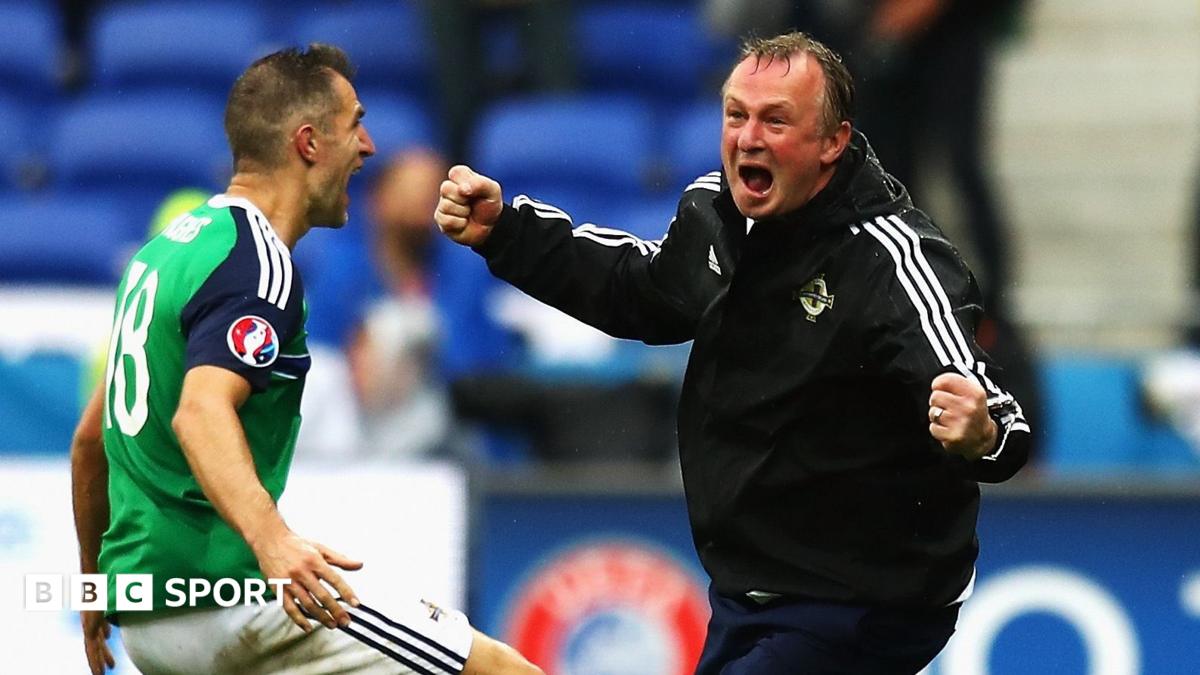
Michael O’Neill: Northern Ireland manager not taking Blackburn job on permanent basis

Northern Ireland fans will be delighted that O’Neill has agreed to continue in his role as manager, especially given the foundation he has laid for possible future success.

He had said that he would “return to the status quo” for Northern Ireland’s June fixtures when asked about his future in March, but then said in April that a decision was still to made, which would have set alarm bells ringing.

Thankfully, for all parties, a decision has been made swiftly, allowing O’Neill to work towards preparing his NI squad for June’s friendlies and the upcoming Nations League campaign, while Blackburn now have plenty of time to appoint a permanent boss ahead of the 2026-27 campaign.

O’Neill, like in his first spell, inherited a struggling Northern Ireland side from predecessor Ian Baraclough and while they missed out on qualifying for Euro 2024 and this year’s World Cup, he has certainly shaped them into a more competitive and attractive side.

The average age of O’Neill’s starting team for the defeat against Italy in their World Cup play-off in March was just 22.5 years – the country’s second youngest on record since World War Two.

Add in three key players in Conor Bradley, Dan Ballard and Ali McCann, who were missing for the game and the age profile remains the same, demonstrating the high ceiling this youthful but talented team has to grow.

With O’Neill remaining in the role, belief will really start to grow that he can guide the team to another European Championships as he did after a period of building with his squad in 2016.

The Irish FA would have known that the job would have been much more attractive now to potential candidates than before O’Neill returned in 2022, but will be pleased that he has decided to stay on for the next qualifying campaign and there won’t be any upheaval before the Nations League starts in September.

Source link

Women’s Six Nations 2026: Ireland 33-12 Wales: ‘Ireland ‘still hungry to get better’ – Bemand

France and England will battle it out for the Six Nations title in the final match next weekend and, even though Ireland aren’t pushing those heavyweights, they now established themselves as a young, upcoming squad.

Their victory over Wales is their second of this campaign after an impressive 57-20 win over Italy, who occupy fourth spot.

“We’re starting to handle bigger occasions and bigger pressure more, and with that comes more expectation. But that’s the cool thing, that’s where we want to be,” he continued.

“Our next thing now is we’re going to start converting that belief, that confidence, that understanding and that we’re quite good into results.

“We’ll get there, the trajectory is still up and we’re still hungry to get better. So no doubt we’ll get there and as quick as we can get there, the quicker the better.

Despite their progress, Bemand also acknowledged they still have room to improve.

Ireland have never beaten France nor England with the head coach adding that this must be an aim of the side.

“We do want to be in games where we’re in a position to beat an England and a France.

“Are we getting there? Well, with this competition, we’ve proved that we haven’t as yet.

“So, we’ll take that, but unfortunately it means we have to sit on it for 12 months before we get another crack at them, a top four team.

“Our job now is to get as good as we can in the next year so that when we get them over here, we can condense that scoreline even further.”

Ireland finish their Six Nations campaign with a home match against Scotland on 17 May at the Aviva Stadium.

Source link

Women’s Six Nations: Welsh progress stalls in sluggish Ireland showing

Compared to their second-half showing against England, where they bagged two late tries for a bonus-point, Wales could muster very little after the break in Belfast.

Ireland were utterly dominant with possession and territory, with last year’s player of the championship Aoife Wafer leading the charge.

Travelling fans’ only consolation was a 78th minute Jasmine Joyce try but it was not enough to prevent Wales from leaving empty handed.

“We’re ranked 12th in the world, we played the team ranked 5th in the world and you can clearly see when you’re away from home, you’ve got to be a lot more clinical,” said Wales head coach Sean Lynn.

“We said in the huddle at the end of the game, we’ve got to be better with our composure and accuracy.

“I wouldn’t have said the girls dropped their heads. They stuck at it, stuck to their processes, but Ireland kept the ball really well.

“The girls give everything out there and when you see them upset after the game it’s because they care, they want to be winning, so it is tough.”

Source link

Women’s Six Nations 2026: Ireland 33-12 Wales: Ireland overcome Wales for hard-fought home win

Despite losing their previous eight Six Nations matches, Wales came into the game with confidence after they registered a record four tries against world champions England in their last outing.

They started stronger in Belfast, but Wafer gave Ireland the lead against the run of play when the back row’s persistence paid off and she forced her way over the line before Dannah O’Brien added a challenging extra two.

Wales looked to respond quickly with a huge tackle from Parsons denying Hannah Dallavalle after Carys Cox had taken advantage of a mix-up and fed the ball through.

The visitors kept pushing and registered their first try when Georgia Evans dived over from close range and Keira Bevan was able to convert to level the match.

A double movement denied Cliodhna Moloney-MacDonald after she had powered her way over as the home side, buoyed by a vocal crowd, began to settle.

Wafer then turned provider, shrugging off multiple white shirts before a superb offload to Parsons, who raced down the right wing to restore Ireland’s lead.

They then struck a hammer blow just before the break as, opting to play on with clock in the red, Ireland were rewarded for their persistence as they added their third try when Hogan crossed after sustained pressure from a ruck.

After the restart, a television match official [TMO] check confirmed Moloney-MacDonald’s kick out at Evans warranted a yellow card.

Wales were unable to take advantage of having an extra player and it was soon 14-players apiece for a period as Jasmine Joyce was shown a yellow card for placing her hands on the ground when bringing Eve Higgins down.

As the hour mark approached, Aoife Dalton and Linda Djougang linked up and fed the ball to Wafer to cross to secure the bonus point.

Bemand then turned to his bench and made a flurry of changes which added energy to their play.

Replacement Jones thought she had added Ireland’s fifth shortly after her introduction, only for her effort to be ruled out after a TMO review.

Joyce added Wales’ second try in the final five minutes as she held off Parsons and stretched to ground the ball.

Ireland did land a fifth try in the final seconds as Hogan bundled over from close range, with O’Brien able to convert for a fourth time.

Source link

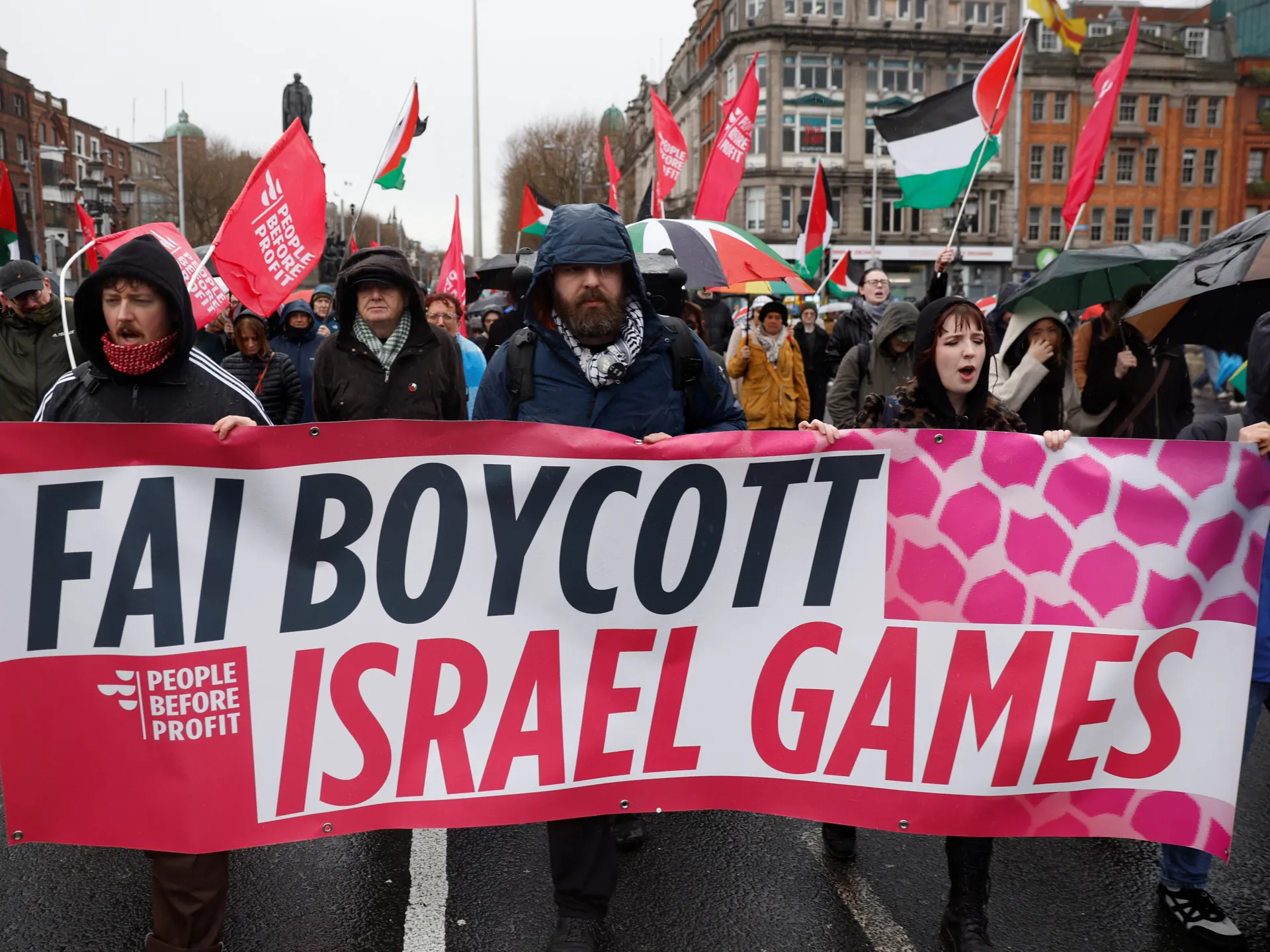
Irish footballers and celebrities urge boycott of Israel matches | Football News

Irish Sport for Palestine accuses Israel of engaging ⁠in ‘genocide’ in war on Gaza ahead of UEFA Nations League game.

Leading Irish footballers have joined celebrities in a campaign urging ⁠the Republic of Ireland to boycott a UEFA Nations League match against Israel later this year.

An open letter sent to the Football Association of Ireland (FAI) from campaign group Irish Sport for Palestine accuses Israel of engaging ⁠in “genocide” in the war in Gaza and of breaching UEFA and FIFA statutes by allowing teams to play on occupied Palestinian land.

Recommended Stories

list of 4 itemsend of list

In November 2025, 93 percent of FAI members voted for its leadership to press UEFA to suspend Israel under those statutes, a mandate campaigners say the Irish governing body should “respect and represent”.

Israel has denied that its forces have ‌committed genocide during the war in Gaza.

The letter, entitled “Stop the Game”, was signed by League of Ireland players, former men’s coach Brian Kerr and twice women’s player of the year Louise Quinn.

Irish rock band Fontaines D C, hip-hop trio Kneecap and singer-songwriter Christy Moore were among the other signatories, along with Oscar-nominated actor Stephen Rea.

Ireland are set to host Israel at Dublin’s Aviva Stadium on October 4, while a September 27 fixture designated as an Israeli home ⁠match is expected to be staged at a neutral venue.

The letter includes a statement ⁠from Shamrock Rovers captain and Professional Footballers’ Association of Ireland chair Roberto Lopes.

“We can’t ignore the humanitarian catastrophe in Palestine; the sheer loss of life there has to take precedence over any sporting consideration,” said Dublin-born Lopes, who is set to play at the ⁠World Cup for Cape Verde in June.

“Ireland has an opportunity here to lead and do what others won’t.”

Israel have played in UEFA competitions since the early 1980s after ⁠being excluded from Asian Football Confederation (AFC) competitions in the 1970s when ⁠several countries refused to play against them.

Ireland’s prime minister Micheal Martin said the two matches against Israel should go ahead.

“We have been critics and have opposed very strongly Israeli government policy within Gaza in particular. We condemned the Hamas attack on Israel which was absolutely horrific,” ‌the taoiseach told The Irish Times.

“I think sport is an area that can be challenging when it crosses into the realm of politics.”

In February, FAI Chief Executive David Courell said the national team had no choice but ‌to ‌fulfil its obligations or risk harming the long-term sporting interests of Irish football, including potential disqualification from future competitions.

A poll by the Irish Football Supporters Partnership found 76 percent of respondents opposed the fixture being played.

Source link

The tiny Irish island with famous goat farm, rugged walks and basking sharks perfect for day trip — with €9 ferry rides

THIS stunning Irish island has rugged coastal walks, homemade goat’s cheese and some of the best wildlife spotting in the country.

Cape Clear Island lies just eight miles off the coast of West Cork and is Ireland’s most southerly inhabited Gaeltacht island.

Visitors can only get to the island by ferry Credit: Alamy
Cape Clear has a stunning, rugged coastline Credit: Alamy

Visitors can reach the remote spot by ferry from Baltimore, with the journey taking around 40 minutes.

The island is known for its sparkling waters, dramatic coastline and wildlife-filled seas, where dolphins, whales and basking sharks can often be spotted.

And once on land, visitors can explore walking trails, visit the famous goat farm or enjoy a pint and a bite to eat before catching the ferry home.

Ferry tickets to the remote island start at just €9 for children’s tickets.

There are tours of the Fastnet Rock Lighthouse Credit: Cape clear ferries
Return tickets for adults to the island start at €20 Credit: Hopkins Communications -Miki Barlok

Cape Clear Island is three miles long and one mile wide.

As a Gaeltacht island, the majority of people living there speak Irish, or Gaeilge.

Adult return tickets from Baltimore to Cape Clear cost €20, while children’s tickets cost €9.

There are also special family packages, including two adults and two children, for €50 return.

The island is a popular destination during the summer months with secondary school students looking to improve their Irish language skills on immersion courses.

The hillsides are covered in heather, gorse and other wildflowers, while the water sparkles beneath.

While on the ferry, passengers have a good chance of spotting wildlife beneath the waves.

Dolphins, basking sharks and even whales are known to frequent the waters surrounding Cape Clear.

From higher ground on the island, harmless basking sharks can often be seen lazily gliding through the waters close to shore.

And a number of companies provide boat tours specifically for dolphin and whale watching.

GOAT FARM

Once you’re on the island, there’s plenty to do to keep busy — including visiting the Cape Clear Goat Farm, or Cléire Goats.

The quaint farm was established in 1979 and is located near the Cape Clear Heritage Centre.

Visitors can meet the friendly goats and try delicious homemade goat’s cheese and ice cream.

And if visitors attend the farm between 10am and 12pm, they’ll get a chance to see the goats being milked.

There’s also the main heritage centre, the Fastnet Rock Lighthouse, which can be toured, and a world-renowned birdwatching observatory to visit.

There are also plenty of places to go for a paddle in the sea, or to kayak further out.

And on land, there are a number of walking routes that allow visitors to explore every inch of the island’s beauty.

FOOD AND ACCOMMODATION

Cape Clear has a small number of restaurants and bars that provide hearty meals and drinks.

There’s a farmers’ market every Sunday, a small grocery shop and a tourist shop.

Many people who visit the island choose to do a day trip, arriving on the ferry in the morning and leaving again in the evening.

But for those hoping to stay overnight, there are some accommodation options.

There are a few apartments, cottages and houses to rent.

There is also the Chléire Haven glamping site, which is a family-friendly camping site open from April to September.

There’s the Ard na Gaoithe B&B, which provides an early breakfast for guests and encourages Irish speaking.

There’s also Cape Clear Hostel.

Source link

CBS’s ‘Tracker’ is moving to LA to chase CA’s film tax incentive

“Tracker,” one of TV’s most-watched shows, is uprooting its Canadian production and moving to Los Angeles.

The action drama, produced by Disney’s 20th Television, is among a slate of new and recurring series benefiting from California’s improved $750 million tax incentive program. The show’s fourth season, set to begin shooting this summer, will receive the state’s largest tax credit , at $48 million, according to the California Film Commission.

The production will film for 176 days in California, with 250 crew members and 275 actors on board. The tax credit is based on the show’s projected spending of over $129 million. Deadline first reported the news of the show’s relocation.

The show stars actor Justin Hartley and follows his character as he tracks down people for reward money. Ever since its 2024 premiere, the show has resonated with audiences. Its third season is currently airing and was the fourth most-watched program on linear TV as of late April, according to Nielsen.

“Tracker” is primarily set in the wilderness, making the move to California a fresh opportunity for the production to explore diverse landscapes as its backdrop. Due to the rural setting, the show is also eligible to earn an extra 5% tax credit bonus, in addition to the 35% base credit, on qualified expenditures incurred outside the designated 30-mile zone of the Greater Los Angeles area.

Before “Tracker” secured the highest TV show tax credit, season 3 of Amazon’s “Fallout,” which relocated from New York to Los Angeles, received a $42M incentive. Dan Fogelman’s new NFL drama “The Land” received $42.8M. Other productions that have benefited from the tax program include medical drama “The Pitt,” Disney’s new animated movie “Phineas and Ferb” and Netflix’s upcoming reboot of “13 Going on 30.”

More than 100 productions have received tax credits since the program was expanded last year in response to the continued migration of productions to other countries like Ireland, U.K. and Canada.

But film industry advocates say these efforts aren’t enough to fully revitalize U.S.-based productions and local film economies.

To that end, , U.S. Sen. Adam Schiff (D-Calif.) announced in March he is working on a bipartisan federal film incentive proposal that would be globally competitive.

“State programs cannot simply substitute for the kind of global, federal and competitive tax incentives that are needed to bring production back to American soil and stop its offshoring,” Schiff said.

Source link

New IRA linked to car bomb outside police station in Northern Ireland

Deputy Chief Constable Bobby Singleton, pictured Sunday morning visiting officers and staff at the Dunmurry police station in west Belfast after a car bombing nearby last night, said the attack is thought to have involved the New IRA. Photo by Police Service of Northern Ireland/Facebook

April 26 (UPI) — Police in Northern Ireland said Sunday morning that the New IRA is believed to have been involved in a car bombing near a police station in Belfast.

Detectives are treating a car bombing outside a police station in the Dunmurry area of outer Belfast as an attempted murder, and said called it a miracle that nobody was injured, The Guardian and the Belfast Telegraph reported.

A delivery car was hijacked late Saturday night in West Belfast, an explosive device was placed in the car’s boot and the delivery driver was told to drive to the police station and abandon it there, police said.

Bobby Singleton, deputy chief constable of the Police Service of Northern Ireland, told reporters that the attack was nearly identical to an attack earlier this year.

“As a consequence of that, our early working hypothesis is that this may well be the work of the New IRA, who claimed responsibility for the attack in Lurgen,” Singleton said.

“Thanks to the swift actions of police, no one has been injured, which is nothing short of miraculous,” he said.

The attempt on a Lurgen police station in March was unsuccessful because the device did not detonate, but the method — hijacking a car and forcing the driver to abandon the bomb on wheels somewhere — was nearly the same, Singleton said.

President Donald Trump and first lady Melania Trump participate in the 2026 White House Correspondents’ Association Dinner in Washington on April 25, 2026. Photo by Yuri Gripas/UPI | License Photo

Source link

Women’s Six Nations: ‘Fine margins’ – What cost Ireland in France defeat?

After the big talk in the build-up, Ireland blew France away in the opening 40 minutes but, largely, were left unrewarded for their efforts.

Cliodhna Moloney-MacDonald crossed for Ireland but had two efforts chalked off, while Brittany Hogan and Fiona Tuite were also denied first-half scores.

France, who are tipped to meet England in a Grand Slam decider on the final day of the Six Nations, showed a clinical edge and moved clear after the restart through Carla Arbez, Anais Grando and Lea Champon, while Ireland could not back up their first-half performance and fell short.

Under head coach Scott Bemand, Ireland have moved up to fifth in the world and stunned New Zealand and Australia in 2024, but the elusive Six Nations scalp goes on.

England had too much on the opening day, when a slow start was punished, and defeat by France shows there is still work to be done.

“In these kinds of Test matches the margins become finer, so we’re after finer margins than we were,” Bemand said.

“Nail your kick to touch and nail your exit – they are the type of things that don’t let France in.

“We will keep going after the finer margins and keep trying to get better. I’ve got a group who is up for that.”

Source link

Women’s Six Nations 2026: Coach Scott Bemand says Ireland are ‘ready’ for big-game pressure in France

Head coach Scott Bemand says Ireland are “ready” for the pressure of facing France in Clermont on Saturday after learning from a string of big-game experiences.

Ireland began their Women’s Six Nations campaign with a 33-12 loss to England in front of a record 77,120 at Twickenham’s Allianz Stadium.

Bemand’s side also faced New Zealand and France in front of near-capacity crowds at the World Cup last year – and the coach feels those days will stand to his squad as they bid for a first win on French soil.

“We’ve got the benefit now with our group having come through the World Cup piece where we had full stadiums, a lot of noise and a lot of expectation, internal expectation,” said Bemand.

“Going away to France is a class experience. We were away in England two weeks ago so we’ve had a recent opportunity of stepping into that sort of arena.

“I saw a completely different group to two years ago walking into that space, so as we continue to evolve, continue to get more confident in ourselves and our performances, I think we’re ready for this one.”

Bemand, who has made one change from last week’s nine-try win over Italy, added the team feel “excitement and anticipation rather than nerves”.

“We’re ready for this, we’ve trained well this week,” he added.

“We’re now recovering, we’ll travel, we’re going to enjoy it. The weather looks good over there and we’ll be absolutely gunning to start and get out of the blocks when the whistle goes on Saturday night.”

Source link

Nations Championship 2026: Japan v Ireland to take place at McDonald Jones Stadium

Ireland’s Nations Championship fixture against Japan will take place at McDonald Jones Stadium in Newcastle, Australia on 11 July (11:00 BST).

Andy Farrell’s side open the inaugural tournament against Australia in Sydney on 4 July and will face the Brave Blossoms before travelling to New Zealand to take on the All Blacks at Auckland’s Eden Park on 18 July.

Ireland have won 10 out of 11 Tests with Japan, the sole defeat coming at the 2019 Rugby World Cup at Shizuoka Stadium. Ireland won the last meeting 41-10 in Dublin last November.

After July’s fixtures, Ireland will host Argentina, Fiji and South Africa in November at Aviva Stadium.

The biennial 12-team Nations Championship comprises six rounds of matches across the summer and autumn Test windows before a ‘finals weekend’ on 27-29 November at Twickenham’s Allianz Stadium.

After each team has played the other six from the opposing hemisphere once, they are ranked within their own hemisphere.

The finals weekend in London will start with the sixth-placed northern hemisphere side taking on their southern hemisphere equivalent, and culminate in the two group winners taking each other on for the title.

The results on the finals weekend will also contribute to a north v south overall score and title.

Ireland’s fixtures (times BST)

4 July

Australia v Ireland, Allianz Stadium, 11:00

11 July

Japan v Ireland, McDonald Jones Stadium, 11:00

18 July

New Zealand v Ireland, 08:10

6 November

Ireland v Argentina, Aviva Stadium

14 November

Ireland v Fiji, Aviva Stadium

21 November

Ireland v South Africa, Aviva Stadium

Finals weekend

27 November

Sixth-place North v Sixth-place South

Third-place North v Third-place South

28 November

Fifth-place North v Fifth-place South

Second-place North v Second-place South

29 November

Fourth-place North v Fourth-place South

First-place North v First-place South

Source link

Spain, Slovenia, Ireland push EU to debate Israel pact suspension | Gaza News

In a letter to EU foreign policy chief Kaja Kallas, the three governments say Israel is violating ‘human rights’.

Spain, Slovenia and Ireland have urged the European Union to debate suspending its association agreement with Israel, saying the bloc can no longer remain “on the sidelines” as conditions worsen in Gaza, the occupied West Bank and Lebanon.

Speaking before a meeting of EU foreign ministers in Luxembourg on Tuesday, Spanish Foreign Minister Jose Manuel Albares said the three countries had formally requested that the issue be placed on the agenda.

Recommended Stories

list of 4 itemsend of list

“Spain, along with Slovenia and Ireland, has requested that the suspension of the Association Agreement between the European Union and Israel be discussed and debated today,” Albares said.

“I expect every European country to uphold what the International Court of Justice and the UN say on human rights and the defence of international law. Anything different would be a defeat for the European Union,” he added.

In a joint letter sent last week to EU foreign policy chief Kaja Kallas, the three governments said Israel had taken a series of measures that “contravene human rights and violate international law and international humanitarian law”, adding that it breached the 1995 agreement that outlines political, economic and trade relations between the EU and Israel.

They said repeated appeals to Israel to reverse course had been ignored. The ministers pointed to a proposed Israeli law that would impose the death penalty by hanging on Palestinians convicted in military courts, describing it as “a grave violation of fundamental human rights” and a further step in the “systematic persecution, oppression, violence and discrimination” faced by Palestinians.

They also cited the humanitarian crisis in Gaza, saying conditions there were “unbearable”, with continuing violations of the ceasefire agreement and insufficient aid entering the territory.

The letter warned that violence in the occupied West Bank was also intensifying, with settlers acting “with absolute impunity” alongside ongoing Israeli military operations, causing civilian deaths.

“The European Union can no longer remain on the sidelines,” the ministers wrote, calling for “bold and immediate action” and saying all options should remain on the table.

The three countries argued Israel was in breach of Article 2 of the EU-Israel Association Agreement, which ties relations to respect for human rights. An earlier EU review had already found Israel was failing to meet those obligations, they said, adding that the situation had deteriorated further since then.

During a donor conference in Brussels, Kallas said the estimated cost of rebuilding Gaza had risen to $71bn.

Ireland and Spain first pushed for a review of the agreement in 2024, but the effort failed to win enough backing from member states supportive of Israel. A later Dutch-led initiative succeeded in triggering an EU assessment, which concluded Israel had “likely” breached its obligations under the pact.

Possible trade measures, including suspending parts of the relationship, were later discussed but not implemented after Israel pledged to significantly increase humanitarian aid entering Gaza.

Occupied Territories Bill

Ireland is also seeking to revive its Occupied Territories Bill, first introduced in 2018, which would ban trade in goods and services from illegal settlements in the occupied Palestinian territory, including the West Bank. Progress has stalled despite unanimous backing in the lower house of parliament, the Dail.

Meanwhile, Spain and Slovenia have moved to curb trade with illegal Israeli settlements in the occupied West Bank following sustained public protests and growing political pressure. In August last year, Slovenia banned imports of goods produced in Israeli-occupied territories, becoming one of the first European states to take such a step.

Spain followed later that year with a decree banning imports from illegal Israeli settlements, with the measure coming into force at the start of 2026.

All three countries formally recognised the State of Palestine in May 2024, in what was widely seen as a coordinated diplomatic move aimed at increasing pressure for a two-state solution.

Source link

Popular countries like Spain and Italy will ‘pay Brits thousands’ to move abroad

Destinations loved by Brits are actually paying people to move there. If you fancy a life in the sun, you could make some extra cash while topping up your tan in Spain or Italy

Many people may dream of moving abroad, but you might not realise that some countries will actually pay you to do so. If you fancy living in the glorious sunshine, and making some money in the process, you could actually embark on the travel adventure of a lifetime by packing your bags for good.

Countries like Spain, Italy and Greece will actually pay Brits “thousands” to relocate and start a new life abroad. If you’re fed up of the weather, fancy starting a fresh chapter or simply want to move to somewhere totally different, it may be something worth considering to liven things up.

Schemes people can use were recently highlighted on TikTok by History On A Map to tell people what they need to know. It’s incredible to think you can be paid to relocate to these beautiful countries.

Italy

Italy is one country that pays people to relocate. If you fancy tucking into pasta, enjoying gorgeous wine and immersing yourself in history a little more, you can actually be paid to move here. It explained: “Regions like Calabria, Molise and Sardinia are suffering from massive depopulation.

“To revive these ghost towns, the local governments are offering between €10,000 (£8,705.50) to €30,000 (£26,116.50) to people under 40 who are willing to settle there.”

Content cannot be displayed without consent

It turns out Italian regions such as Calabria, Molise and Sardinia offer financial incentives to boost declining populations in rural areas. There are reported to be schemes that offer up to €30,000 to people willing to move to towns with fewer than 2,000 to 3,000 residents.

Usually, to benefit from the scheme, applicants need to be under 40, start a business or renovate a home. There are some guidelines people need to follow to be able to benefit.

Spain

Again, towns in rural areas are looking for people to move there, such as Ponga in Asturias. The video detailed: “As part of the empty Spain initiative, the town of Ponga is offering €3,100 per person just to move there.”

According to reports, this figure is actually claimed to be between €2,971 and €3,000 per person (often reported as roughly £2,600) to new residents. However, there are additional incentives for couples and families to boost its dwindling population.

If you fancy taking the leap, the scheme requires a five-year commitment to live in the area. In other words, you need to be sure before you apply to move.

Greece

You can also move to the tiny island of Antikythera in Greece. It’s said people can be paid up to €500 per month for the first three years.

The relocation package aims to repopulate the area, providing new residents with a house, a plot of land and the monthly payments. The initiative primarily targets families and skilled professionals such as bakers, builders and farmers to support the local community.

Other options

The video also highlights that people can be paid to move to Japan. The amounts people can be paid differ, as every scheme has its own set of guidelines, and may not be as much as detailed in the video.

While people can’t be paid for simply moving to Ireland, grants are available for people who move to renovate properties on its remote offshore islands. There are all sorts of schemes people can benefit from, but it’s not as easy as packing your bags.

There are rules people need to follow to benefit, and they vary depending on where you want to apply to move. Do your research to find out more.

Source link

I quit England to raise family in Ireland but miss three things about the UK

After eight years of living in London, I made the move back to Ireland shortly after turning 30 when I had to weigh up where was better to raise a family, and below is a glimpse into my experience

The year was 2017, my college (universiaty) exams in Dublin were complete and I had two ambitions — move to London and put my degree to some use by making a living as a journalist.

Part one was straightforward, given my girlfriend had already made the plunge a few months before, and the second part was achieved after I got a job at a local newspaper not too long after touching down in Gatwick.

As for why living in London was so high on my to-do list, I had been going on trips across the Irish Sea since I was a kid, predominantly to watch my childhood heroes like Robbie Keane score at the old White Hart Lane before rushing back to catch a flight to Dublin Airport hours after the final whistle.

So, the dream had been fulfilled and over the years I got a season ticket which took me to Wembley and the plush new Tottenham Hotspur Stadium. When I wasn’t watching Mauricio Pochettino’s men take us agonisingly close to glory, I had become a national reporter.

However, fast forward to 2023, and suddenly the dream wasn’t what it once was.

My partner and I had had our first child — and we were living in a tiny one-bedroom flat in Greenwich, south-east London.

We loved the apartment, it was small, but we had been there for a few years. However, add a baby girl into the mix, and things were suddenly much more challenging.

Our families were both based in Ireland, so we had to make a choice — either pay more to rent somewhere bigger, while also forking out fortunes for childcare in London, or move back to Ireland.

After a memorable few years in London, where we hold so many great memories including one year of raising our daughter there, we had to move home, as so many Irish eventually do after exploring different countries in their youth.

We have now been back for a couple of years, and below are three things that I miss about the UK.

1) Public Transport

My parents live in County Meath and my partner’s parents live in County Cavan — and we now live between both of our childhood homes.

Although having free childcare on hand is a game changer (we have since had kid number two), the main thing we miss about London is the public transport.

Whatever I was doing in London, there were numerous ways I could get home again, be it the underground, the DLR, the bus, the trains or simply walking.

In Ireland, particularly if you are not living in Dublin, driving is essential.

There is no train station near me, and if I didn’t want to get stuck in traffic driving into Dublin City Centre, I would have to rely on Bus Eireann.

I have used the service three times since I’ve been back, on each occasion the bus was over 30 minutes late, and twice there was overcrowding, with some passengers being forced to stand, which was far from safe or comfortable.

Even once you get to Dublin, the public transport is incomparable to London. Frankly, any Londoners who find themselves overly complaining about things like delays or strikes, you have no idea how good you have it.

2) Sporting Events

Another miss is going to sporting events, and I now have to settle with watching Spurs on the TV, although given we now struggle to draw matches let alone win, perhaps that’s not a bad thing.

But it wasn’t just the football, it was the old pubs on Tottenham High Road, and meeting up with pals before and after the games.

Football aside, there was also Wimbledon, where you could just go and enjoy the sunshine and tennis on Henman Hill.

Another big one was martial arts. I remember seeing George Groves in Wembley Arena and also UFC London events at The O2 which was within walking distance of my flat. For years, professional boxing bouts in Ireland didn’t happen, and you may want to read about my experience at the Regency Hotel shooting to understand why.

There is plenty of sport to enjoy in Ireland, and although I’m a casual GAA and rugby fan, there’s still nothing like having Premier League action at your doorstep, and some of my favourite adventures were the away days, be it Arsenal, Fulham or Manchester United.

3) Weather

This isn’t something that can be helped, so there is little point moaning about it for long, but the weather in London compared to home is much different.

London was generally warmer and it rained less, and any rare bit of sun we get in Ireland, you will hear people firing up their lawn mowers, because everyone knows the opportunity to cut the grass is limited.

No regrets

Having said all that, you may be thinking that I regret moving back home, and still pine for my old life in London.

However, this isn’t the case, and the switch has given my family a better quality of life.

My daughter turns three next month and she is thriving — and is close to all of her grandparents who get to see her and her baby brother often. This also gives us a chance to get a break, something that wasn’t possible without family support in London.

We’ve also managed to buy our first home, something that would have been impossible for us in the English capital, where getting on the property ladder wasn’t even worth dreaming about. Having said that, there is also a huge housing crisis in Ireland, and we were one of the lucky ones.

And although I don’t have White Hart Lane on my doorstep, raising a family in Ireland is hard to beat for several reasons which I can get into another day. If we had stayed, we wouldn’t have been able to welcome a second child, who is already being brainwashed into supporting a certain London club like his sister.

Despite my concerns about the public transport and the live sport, life is now calmer. I now do Brazilian Jiu-Jitsu classes three times a week, which has been far better for my mental and physical health than watching the club I love which is destined for the Championship.

And one thing England will never beat Ireland on is a pint of Guinness down the local.

So having said all that — Sláinte!

Source link