Sarina Hosseiny said she had never heard of Qassem Suleimani, an Iranian general assassinated by the U.S. in 2020.
That is, not until this year, when threatening comments cropped up on social media claiming that she and her mother were relatives of Suleimani and were terrorists who should be deported.
The 25-year-old, who studies fashion at Los Angeles Trade Technical College, now sits in an immigration detention facility in Texas, alongside her 47-year-old mother. And other L.A. Iranian Americans helped put her there.
Sarina Hosseiny, 25, shown in an undated photo, is a student at Los Angeles Trade Technical College now held at an immigration detention facility in Texas, alongside her 47-year-old mother.
(Courtesy of Hosseiny family)
“They were sending me death threats. Literally saying like, they were gonna find me and kill me and my mom and all this stuff,” Hosseiny said in a phone interview from the facility last week. “All I’ve ever posted is that I was against war and just innocent people dying.”
In recent weeks, as the war in Iran continues, the U.S. State Department has detained five L.A. area-based Iranian nationals, including Hosseiny and her mother — all of whom are green card holders — and moved to strip them of their residency.
The arrests have exposed a rift in the Iranian American community, which has grown increasingly polarized in recent years, leading to online smear campaigns and at times violence.
In L.A., home to the largest concentration of people of Iranian descent outside Iran, a vocal segment has joined forces with Trump-aligned far-right conservatives, including Laura Loomer, to wage campaigns against other Iranians they believe should not be allowed to live here.
Many in the local community fled Iran after the Islamic Revolution in 1979 and cheered the recent U.S. military attacks on their native country. Some have turned on Iranian Americans who have expressed antiwar opinions, interpreting that stance as support for the current government.
A poster in support of Iran’s former crown prince, Reza Pahlavi, hangs in a window of the Gallery Eshgh, which sells artwork and clothing reflecting Iranian culture on Westwood Boulevard in Los Angeles in April 2026.
(Kayla Bartkowski / Los Angeles Times)
The tensions are interpersonal, with arguments at family gatherings and friendships strained or shattered. But much of the conflict also takes place online, as when a San Diego-based “mommy influencer” — who normally posts images of herself and her three young children in a luscious backyard shucking nuts, arranging tulips and peeling pomegranates — urged her Instagram followers to contact Loomer so that “the deportation of [the Islamic Republic’s] lackeys can be arranged.”
Anger at the Iranian government has been channeled toward family members of current or former officials, with online petitions describing them as living luxuriously in the States even as ordinary Iranians face repression from a brutal government back home.
Agoura Hills residents Seyed Eissa Hashemi and Maryam Tahmasebi, both psychology professors, were detained by immigration authorities in early April — as was their son, Seyed Mobin Hashemi. The elder Hashemi, the State Department said, is the son of Masoumeh Ebtekar, who gained fame as a spokeswoman for militants who stormed the U.S. Embassy in Tehran in 1979 and became a reformist politician pushing for environmental protections and women’s rights.
The petition that led to the family’s detention amassed more than 140,000 signatures, with many identifying themselves as members of the Iranian diaspora in the U.S., Australia or elsewhere. The creator of the petition on Change.org, a user who also published petitions targeting five other families, did not respond to a request for comment.
The Times was not able to reach Hashemi or the family’s attorney. U.S. Secretary of State Marco Rubio said on social media when announcing their detentions that the Obama administration had granted visas to the family members, who have been lawful permanent residents since June 2016.
The Department of Homeland Security declined to respond to questions about Hosseiny and her mother’s case. White House spokesperson Abigail Jackson also declined to comment. The State Department and Loomer did not respond to requests for comment.
Jamal Abdi, president of the National Iranian American Council, said that some of the sentiment comes from real grievances about corruption in Iran, such as the banker who embezzled millions before fleeing to Canada. But he said that rumors have been weaponized to muffle voices opposing U.S. and Israeli military aggression in Iran and exploited by the Trump administration to exercise a show of strength at home during a flailing war.
The flags of pre-revolution Iran are prominently displayed in the Jordan Market, a purveyor of Persian groceries on L.A.’s Westwood Boulevard, in April 2026.
(Kayla Bartkowski / Los Angeles Times)
“This witch hunt has become really pervasive, and it’s not new,” Abdi said. “What seems to be new is there’s an administration who is willing and eager to entertain this McCarthyism and actually punish people based on what the mob is calling for.”
In the section of Westwood known as “Tehrangeles,” support for Reza Pahlavi, the exiled crown prince and son of the late shah, is apparent. A campaign to install him as Iran’s leader intensified in January, as protests ripped through the country. Supreme Leader Ayatollah Ali Khamenei was killed in a U.S.-Israeli attack in February.
“Make Iran Great Again” signs and posters of a stern-faced Pahlavi are plastered on nearly every window. Iran’s flag before the 1979 revolution — green, white and red with a lion and a rising sun — flutters from many overhangs.
In early March, as the U.S. widened its assault on Iran, crowds from the diaspora rallied in the neighborhood, dancing and celebrating even as the death toll in Iran grew and reports said a missile strike had killed more than 100 schoolchildren.
In Westwood these days, many are more tepid in their support for the war than at the outset and are hesitant to speak openly, whether because of potential backlash here in the U.S. or repercussions for relatives in Iran.
Iranians who don’t back a return to a monarchy under Pahlavi or American and Israeli intervention have gotten “a hell of a lot of backlash,” said Narges Bajoghli, an associate professor of Middle East studies at John Hopkins University. Bajoghli cited a groupthink dynamic stoked by popular Persian-language media such as Iran International, as well as U.S.-funded counter-propaganda programs during Trump’s first term.
After Aida Ashouri, a human rights lawyer who is running for L.A. city attorney, posted a video explaining why she opposes the U.S. war in Iran, the comments came rolling in.
“Please deport this woman,” one user wrote, tagging Rubio and Immigration and Customs Enforcement. “She is constantly spreading suspicious anti war propaganda.”
Aida Ashouri, who is running for L.A. city attorney, poses for a picture at Astralab on April 24, 2026.
(Etienne Laurent / For The Times)
Ashouri, a U.S. citizen, spent her childhood frequenting businesses in Westwood, but she no longer feels comfortable there, fearing some sort of altercation. Some businesses removed her campaign posters from their windows after the war began, she said.
“It’s 100% impacting my campaign. It’s hard to connect with the Iranian community now, even though I’m Iranian,” she said.
The State Department has said it revoked the green cards of Iranians it targeted in recent weeks, including Hosseiny and her mother. Immigration experts said it’s not so simple, as a legal process has to play out, during which the green cards remain valid.
Even so, Muzaffar Chishti of the Migration Policy Institute said that the executive branch has vast discretion in immigration law, particularly when invoking national security justifications, and defense attorneys may face an uphill battle.
Aaron Reichlin-Melnick, a senior fellow at the American Immigration Council, said he is “personally troubled by the idea that we need to deport someone because of who their grandparent is.”
“The government doesn’t usually outsource its investigatory processes to external people,” he said, referring to Loomer and others. “There’s still a lot of questions about how these people are being found and targeted.”
After Hosseiny and her mother, Hamideh Soleimani Afshar, were arrested by U.S. Immigration and Customs Enforcement agents on April 3, the State Department asserted that they were the Iranian general’s grand-niece and niece. Afshar had denounced America as the “Great Satan” and shown “unflinching support for the Islamic Revolutionary Guard Corps” while “enjoying a lavish lifestyle in Los Angeles,” the State Department said.
Social media posts, showing Soleimani Afshar posing for glamour shots and photos of Hosseiny in a similar vein, were published by numerous news outlets.
Loomer took credit on April 4 for the two women’s arrests, writing on X that over several months she had “quietly been documenting” their social media activity and shared the information with the Department of Homeland Security and the State Department.
Within hours, however, Hosseiny and her mother’s connection to the slain general was disputed, with his daughter writing on social media that they had “no relation whatsoever” to her family. A review of family documents, as first reported by Dropsite News, shows that Afshar’s father had no brothers and that the general is from a different province than Afshar’s family.
Hosseiny said her mother has been sharply critical of the U.S. and Israel’s military assault in Iran. But Hosseiny “always thought that in America, people have freedom.”
She said that her mother’s health has deteriorated as she battles severe autoimmune-related anemia and that her mother’s home and car were broken into, amid the stream of online hate.
After four weeks in detention, Hosseiny said, she is “still in disbelief.” Her friends have been raising funds for her legal defense.
Times staff writer Cierra Morgan contributed to this report.
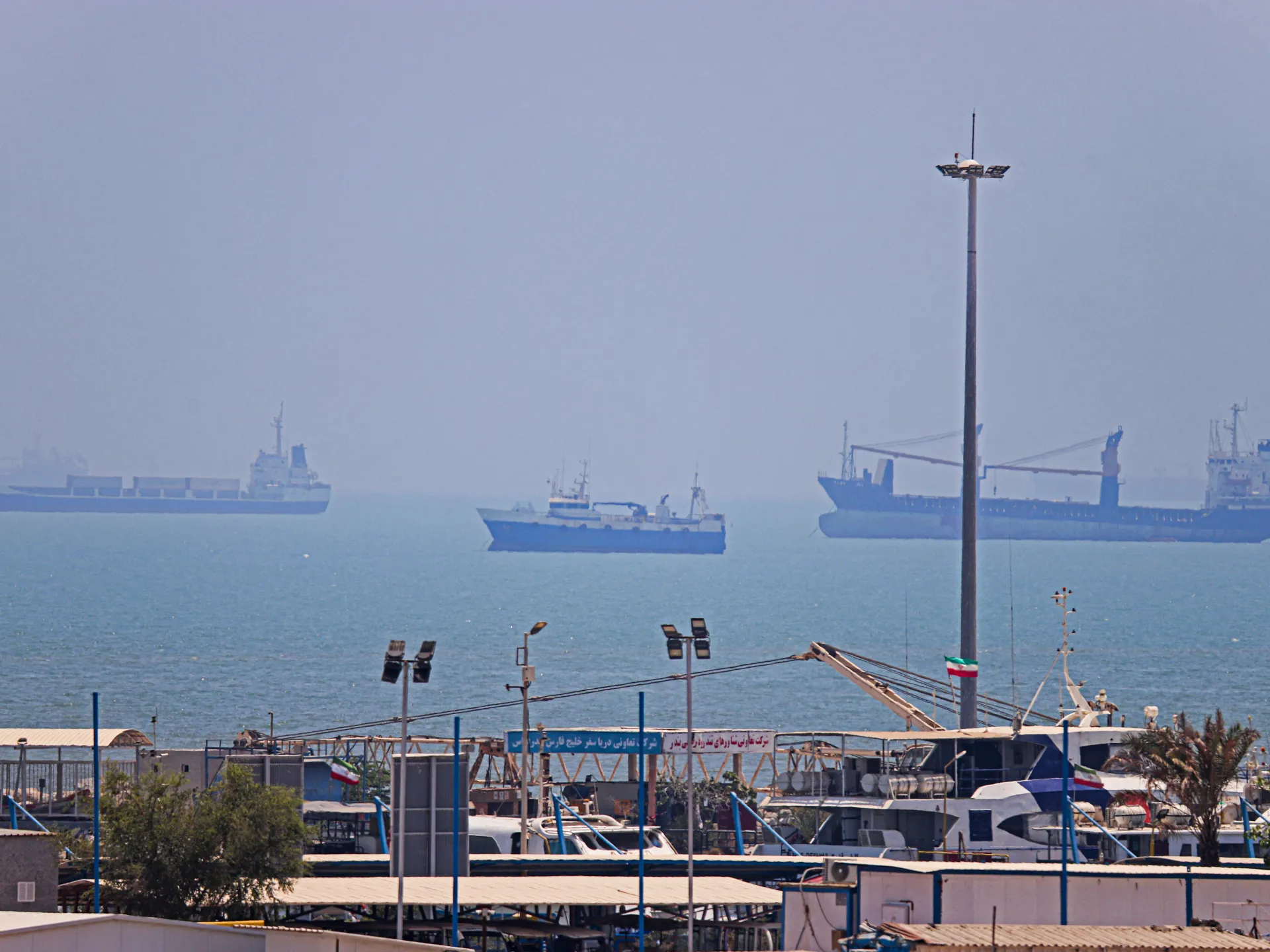
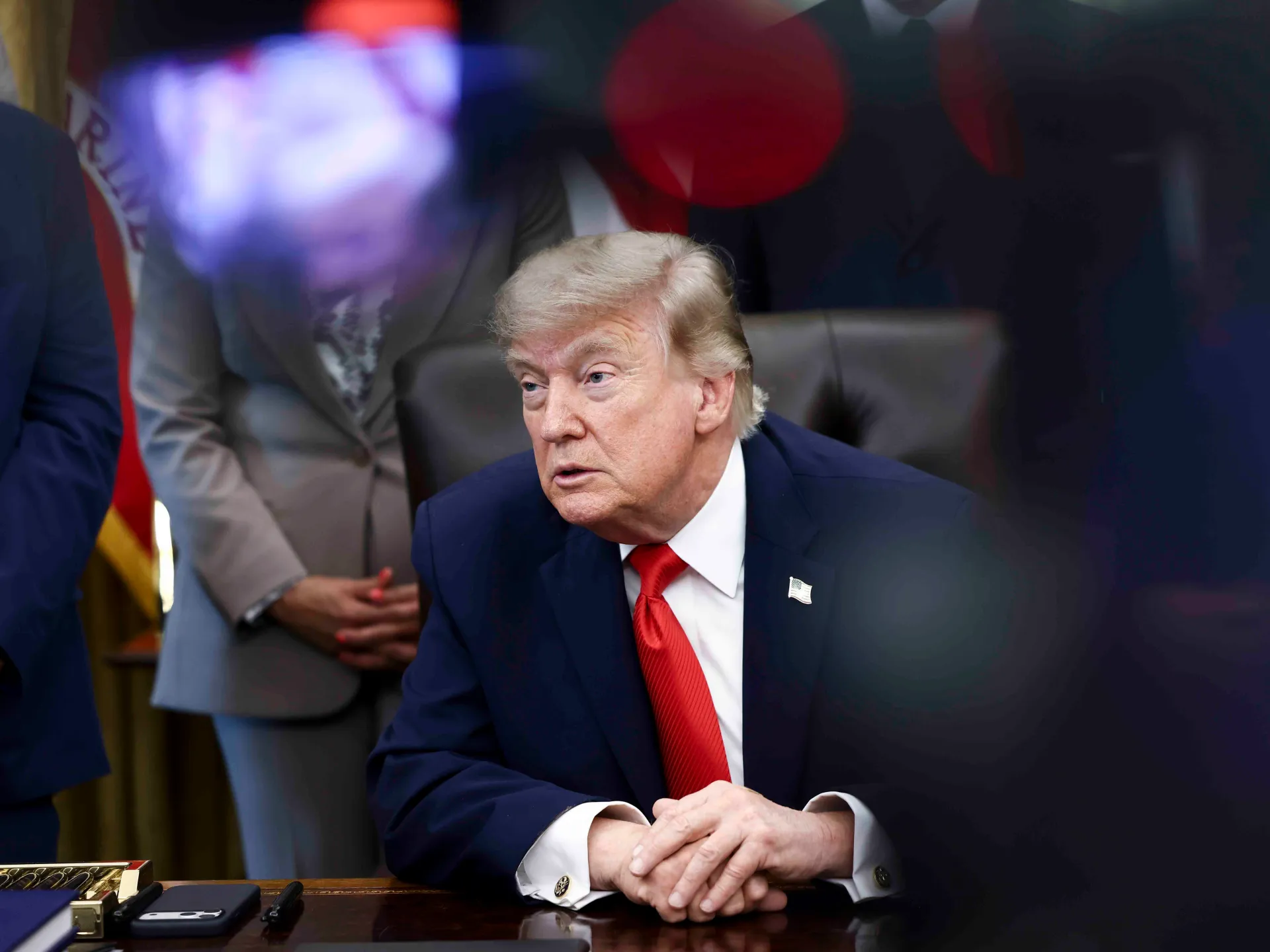
Donald Trump says US forces are ‘like pirates’ taking over Iranian ships and cargo near the Strait of Hormuz. The US is maintaining a blockade of Iran’s ports and has seized at least three Iranian flagged vessels.
Mohammadi has lost consciousness twice and suffered a severe cardiac crisis, her foundation has announced.
By Al Jazeera Staff and The Associated Press
Published On 1 May 20261 May 2026
Iranian human rights activist and 2023 Nobel Peace Prize laureate Narges Mohammadi has been transferred from prison to a hospital due to a sharp decline in her health.
Mohammadi had two episodes of complete loss of consciousness and a severe cardiac crisis, her foundation announced on Friday.
Recommended Stories
list of 3 itemsend of list
“This transfer was done as an unavoidable necessity after prison doctors determined her condition could not be managed on-site, despite standing medical recommendations that she be treated by her specialized team in Tehran,” the Narges Mohammadi Foundation said.
Earlier on Friday, Mohammadi had fainted twice in prison in Zanjan in northwestern Iran, according to the foundation.
She was believed to have suffered a heart attack in late March, according to her lawyers, who visited her a few days after the incident. At the time, she appeared pale, underweight and needed a nurse to help her walk.
In February, she was sentenced to more than seven years in prison. Her lawyer said six years of that sentence was for the accusation of “gathering and collusion to commit crimes”.
Her family said in February that her health was worsening in prison, in part because of an alleged beating she had endured during her arrest in December. They said multiple men hit and kicked her in her side, head and neck.
The Nobel committee condemned the “ongoing life-threatening mistreatment” of Mohammadi in a statement in February.
The Iranian government has not commented on the alleged attack.
Prior to her arrest in December, Mohammadi had already been serving a sentence of 13 years and nine months on charges of collusion against state security and propaganda against Iran’s government, but had been released on furlough since late 2024 due to medical concerns.
It is unclear whether football officials from Iran were issued Canadian visas to attend AFC and FIFA congresses.
Published On 29 Apr 202629 Apr 2026
Representatives from Iran’s football federation were not present at the largest formal meeting of Asia’s football leaders before the World Cup.
In the presence of FIFA President Gianni Infantino, there was no discussion at the Asian Football Confederation (AFC) Congress about Iran’s participation in the tournament or whether the team’s games should be moved out of the United States because of the US-Israeli war on Iran.
Concerns were raised that visa issues could affect the Iranian delegation’s ability to travel to both the confederation meeting in Vancouver and the overall FIFA Congress on Thursday, as well as the World Cup starting on June 11.
The 48-team tournament is being hosted by the US, Canada and Mexico.
It was not clear if visa issues prevented Iranian representatives from attending the AFC Congress. However, as the nine AFC teams that qualified for the World Cup were presented with commemorative gifts, it was announced that Iran would receive their token “once they arrive”.
An Iranian government spokesperson said last week that the national team was preparing for “proud and successful participation” in its World Cup games in the United States.
FIFA, football’s international governing body, has consistently said Iran will stick to the World Cup game schedule decided last December, before the US and Israel launched military attacks on Iran on February 28, and has refused to entertain suggestions that the team’s games be moved to Mexico.
“Now even more, now that the world is going through a very, very delicate, difficult, dangerous time with many conflicts, and many of you are directly affected and involved in these conflicts,” Infantino told the AFC leaders.
“Now even more, we need to find ways to build these famous bridges, or maybe to build football fields instead. And to build competitions where people can join and come together.”
Iran are placed in Group G with Belgium, New Zealand and Egypt.
Team Melli’s planned training camp would be in Tucson, Arizona, and they are scheduled to open their World Cup campaign on June 15 against New Zealand in Inglewood, California, near Los Angeles.
Iran will play Belgium in Inglewood on June 21 before facing Egypt in the final group match in Seattle on June 26.
“Epic Fury has been a PhD course in logistics,” said Robert Hein, Director of Maritime Operations for the Navy’s Military Sealift Command (MSC), said during the Sea-Air-Space 2026 (SAS) exposition near Washington, D.C.
“So traditionally, for 25 years, we’ve been at war in the Middle East and that war was effectively fought in the parking lot of a giant gas station,” Hein explained. “Iran has effectively shut down that gas station. So we’ve had to come up with really creative ways of, ‘how do we replenish the fleet?’”
Smoke rises after Iran carried out a missile strike on the main headquarters of the U.S. Navy’s 5th Fleet in Manama in retaliation against US-Israeli attacks, in Bahrain February 28, 2026. (Photo by Stringer/Anadolu via Getty Images) Anadolu
The answer was shifting from having fleet oilers call on ports to executing at-sea replenishment of those oilers by using consolidated cargo operations (CONSOL) tankers – vessels leased by MSC that are specially equipped to offload fuel at sea. The concept isn’t new. After shifting away from using chartered ships to refuel oilers at sea in favor of conducting the transfers at port facilities, MSC reintroduced the CONSOL process in 2015, “as a way to utilize a flexible platform that allows MSC to operate worldwide in a variety of missions,” according to the Navy. Having a CONSOL tanker provide fuel to oilers means they don’t have to return to a port, reducing costs and increasing time on station to support the fleet. During a time of conflict, that can also mean less risk to the oiler, which is a critical asset that would be in very high demand.
The way the chartered tankers have been used in the Middle East during Epic Fury has taken this process to a new level.
The Navy created what Hein called a system of “tanker treadmills” at sea with “tankers cycling in and out” to replace the fixed infrastructure no longer available due to Iranian attacks.
“There are no more logistics hubs they’re going to,” Hein proffered. “All those nodes are now remaining at sea.”
In addition to the CONSOL tankers’ ability to refuel oilers at sea, “we’re putting an additional fuel delivery system on those tankers so they’ll be able to replenish destroyers and ships other than oilers,” Hein added. He did not provide details about what kind of system, however, the Navy has previously discussed developing what is called a Modular CONSOL Adapter Kit (MCAK).
“By installing it on the deck of a tanker, it can refuel other ships through the receiving ship’s fuel delivery hoses,” the Navy explained.
Military Sealift Command (MSC) dry cargo ship USNS Matthew Perry (T-AKE 9) connects fuel lines with MSC chartered ship motor tanker Badlands Trader during a consolidated cargo (CONSOL) replenishment operation in the vicinity of Okinawa, Japan, Dec. 15. (Courtesy photo) Grady Fontana
There are currently 15 CONSOL tankers available to the Navy worldwide. Rear Adm. Chris Stone, Director of Strategic Plans, Policy, Logistics and Warfighting Development for U.S. Transportation Command, said that’s not enough.
“If there’s one thing that I had the power to stroke a check on today, it would be to create more CONSOL tankers – those consolidated cargo replenishment at sea vessels,” he said at the same SAS panel.
“We probably need something more than 15, because when there’s a crisis or a conflict around the world, the first thing that a geographic combatant commander asks TRANSCOM for is a CONSOL vessel, and we don’t have enough of them today without trade offs that create risk in other areas.”
Off the coast of Southern California Military Sealift Command’s long-term chartered motor tanker ship Empire State (T-AOT 5193) conducted connected at-sea refueling operations (CONSOL) with three MSC Combat Logistics Fleet ships July 11-14. (USN). Sarah Cannon
“We’ve proven CONSOL capability during Operation Epic Fury,” Stone added. “We have a treadmill of vessels where one is on the front line, one is topping off, and they’re continually rotating to ensure that we’ve got support for the warfighter.”
CONSOL tankers, Stone posited, “are no longer supply ships. They’re not logistics ships. They’re force projection platforms that support our warfighters. They allow us to support the joint force and refuel them underway. It extends our operational reach and endurance, while reducing the reliance on predictable, vulnerable port visits. In less than two years, we’ve increased the capacity dramatically, and we’ll continue to do so.”
Henry J. Kaiser class underway replenishment oiler USNS Yukon, right, prepares to conduct a consolidated loading (CONSOL) with commercial tanker MT Empire State. (U.S. Navy photo by Mass Communication Specialist 1st Class Patrick W. Menah Jr./Released) Petty Officer 2nd Class Patrick Menah
While a boon to the system, the CONSOL tankers are not without their issues. The main one being time. It takes about two hours for an oiler to refuel a destroyer, said Hein, while it takes about six hours for a tanker to get the job done.
“Unlike a quick trip to the gas pumps for a car, CONSOLing can take hours to complete,” the Navy noted in a story about the tankers. “This creates a unique set of challenges for the ships conducting the operations. CONSOLing is a dance between two ships. Each must maneuver alongside the other, and maintain a consistent speed and course. Because of their size, tanker maneuverability becomes a challenge.”
“We simply do not maneuver like the [oilers] do. They are graceful, gliding through the water,” said Capt. Michelle Laycock, Maersk Peary’s master. “There’s not a lot of ‘grace’ to a fully loaded tanker. We don’t glide, we plow through the water.”
Military Sealift Command (MSC) dry cargo ship USNS Matthew Perry (T-AKE 9) connects fuel lines with MSC chartered ship motor tanker Badlands Trader during a consolidated cargo replenishment operation in the vicinity of Okinawa, Japan, Dec. 15. (Courtesy photo)
The increased time and effort is worth it, Hein said.
“This is a capability that is needed that will help mitigate the lack of oilers right now,” Hein suggested.
He wants to take the concept a step further.
“So while we can CONSOL for fuel, I’d like to get to a point where you CONSOL for food as well,” he stated.
While CONSOL has provided a lifeline for vessels during Operation Epic Fury, its utility would be dramatically magnified during a war in the vast Pacific, one where ports at much farther distances would be under threat as would ships of all kinds over huge swathes of that theater. There have been consistent concerns about the size of the oiler fleet being a point of weakness for the Navy’s ability to project power in a near-peer conflict. Doubling-down on CONSOL and giving those vessels the ability to directly refuel surface combatants, carriers and amphibious warships could go a long way to buying down risk and fortifying operational planning.
A day after President Donald Trump ordered U.S. forces to destroy Iranian ships laying mines in the Strait of Hormuz, the Chairman of the Joint Chiefs of Staff on Friday said efforts to prevent mining are already underway.
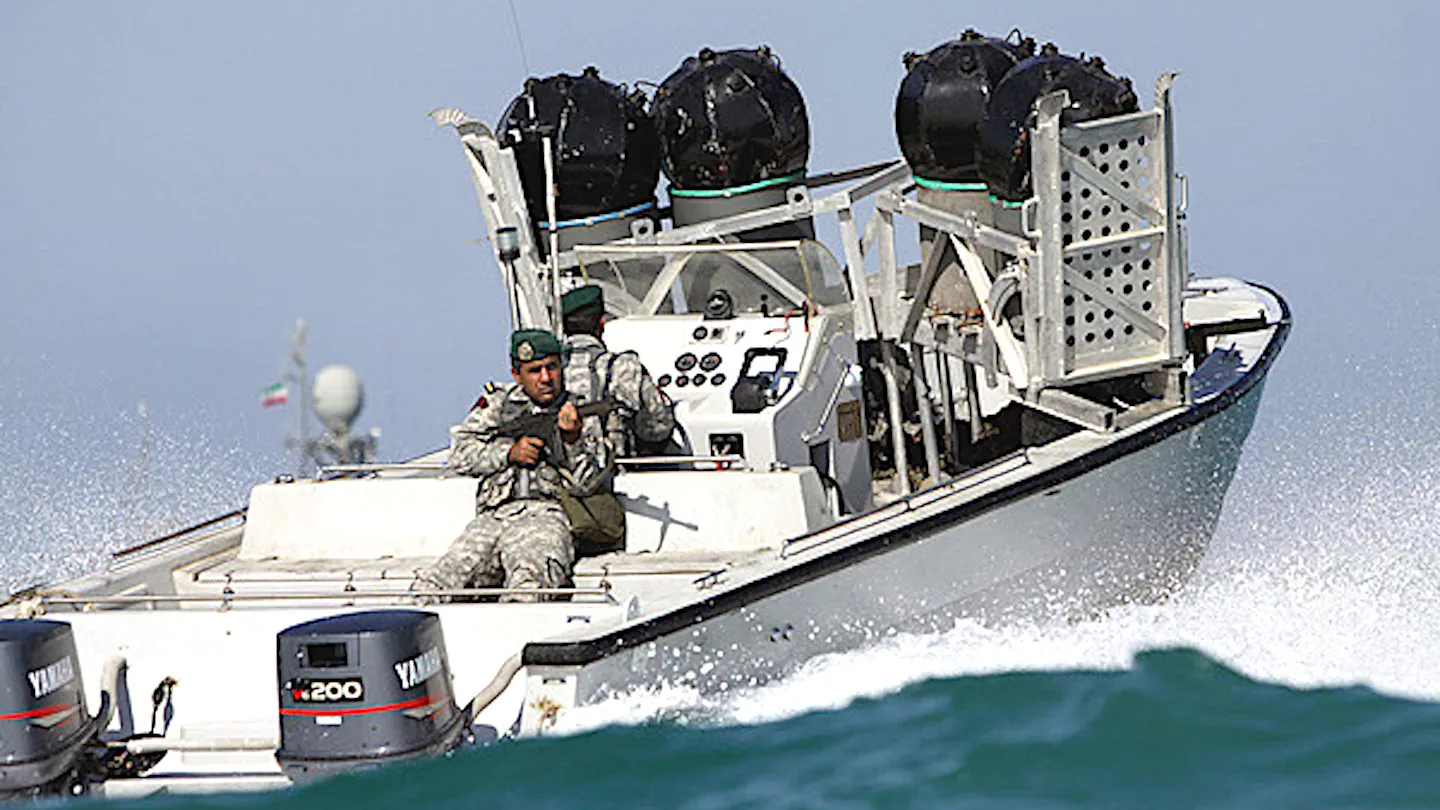
The Islamic Revolutionary Guard Corp (IRGC) “has a variety of smaller Boston Whaler-size boats,” Air Force Gen. Dan Caine told reporters, including from The War Zone, during a Friday morning media briefing. “We have forces up there deterring and preventing them from continuing to [lay mines], and will continue to do so pursuant to the orders of the Secretary and the President.”
You can hear Caine’s comments on Iranian mining at the 23-minute mark in the following video.
Caine did not offer specifics about what assets are involved, when they arrived or what actions they have taken. The Pentagon and CENTCOM have declined to comment. A U.S. official, however, did provide us with some additional information.
“Iran likely placed some mines in or near the Strait at some point during the conflict,” the official told us, speaking anonymously to discuss operational details. “We’re not talking about a high volume. In fact, more than 95% of Iran’s naval mines were destroyed during Operation Epic Fury.”
U.S. forces “are actively addressing the matter using a combination of manned and unmanned capabilities to ensure passage through the Strait is safe.” The official declined to say if the U.S. is actively searching for mines already laid or provide further details. In our story yesterday, we spelled out what assets the Navy has for its surface fleet to conduct demining operations, though it remains unclear how many are in the region. You can read more about that here.
As we noted, the Independence class littoral combat ship USS Canberra is the only confirmed mine sweeper currently in CENTCOM, according to a post on the Pentagon’s image sharing site that shows the ship patrolling in the Arabian Sea.
The Independence class littoral combat ship USS Canberra (LCS 30) patrols the Arabian Sea during a maritime blockade against ships entering or exiting Iranian ports and coastal areas, April 17, 2026. (U.S. Navy photo) NAVCENT Public Affairs
War Secretary Pete Hegseth, also speaking at the briefing, said “reckless mining like that is a violation of the cease fire.” He declined to say how long it will take to clear the Strait of mines.
“We would not speculate on a timeline,” he proffered in response to a question about a Washington Post story claiming Congress was informed it could take up to six months to do so. “We feel confident in our ability, in the correct period of time, to clear any mines that we identify, and we encourage other countries to be a part of such an effort as well. But we’re tracking that very closely.”
It isn’t clear why these efforts to keep small boats from mining the Strait have not been persistent and ongoing from early in the conflict, but especially now that Iran professes control over the strategic waterway. However, Hegseth derided the IRGC as a fighting force.
“Iran’s battered military, the IRGC, specifically, has been reduced to a gang of pirates with a flag,” the secretary scowled.
Sec. Of War Pete Hegseth: “The IRGC specifically has been reduced to a gang of pirates with a flag… They know that we, the United States of America, control the flow of global shipping — and we know that they know. Their real navy is at the bottom of the Arabian Gulf.” pic.twitter.com/94HNDITkMn
Caine offered some new details about the three Iranian-linked ships the U.S. interdicted this week. Those efforts started Sunday with the Iranian-flagged cargo ship Touska, which was fired upon and later boarded.
At about 9 a.m. EDT on Sunday, the Arleigh Burke class guided missile destroyer USS Spruance “disabled the Touska‘s engine by firing nine inert rounds from the destroyer’s Mk-45 5-inch gun precisely into the engine room and engine space on board the Touska,” he explained. Seven hours later, CENTCOM gave the command for Marines to fast-rope in from helicopters and “seize the shot,” Caine added.
.@thejointstaff Chairman Gen. Dan Caine: As of this morning, 34 ships have met the U.S. blockade and made the wise choice to turn around. One ship did not. Over several hours this past Sunday, the U.S. conducted maritime interdiction operations against the Touska, whose crew… pic.twitter.com/GG5UxxDACa
China on Friday pushed back against Trump’s claim that the Touska contained a “gift from China perhaps.” The president made that claim earlier this week on CNBC. .
“China rejects any assertion and speculation that lack factual evidence,” the Chinese Foreign Ministry responded. “Normal trade between countries should not be disrupted.”
MFA Spokesperson’s response to President Trump’s remarks that the Iranian cargo ship intercepted by the U.S. might have carried a “gift” from China:
China rejects any assertion and speculation that lack factual evidence. Normal trade between countries should not be disrupted. pic.twitter.com/0aGAa7174N
— CHINA MFA Spokesperson 中国外交部发言人 (@MFA_China) April 24, 2026
The Touska was carrying “vital dialysis supplies and medical equipment,” Al Jazeera reported on X, citing the Iranian Red Crescent Society. The War Zone cannot independently verify that claim.
Caine also addressed the fate of two other Iranian-linked ships – the Tifani and the Majestic X – that were stopped in the Indian Ocean this week. The vessels and their crews “remain in U.S. custody, and we will continue to conduct similar maritime interdiction actions and activities in the Pacific and Indian Oceans against Iranian ships and vessels of the Dark Fleet,” Caine noted.
Jeanine Pirro, U.S. Attorney for the District of Columbia, said the Tifani and Majestic X each contained 1.9 million barrels of oil.
Overnight, pursuant to a seizure warrant submitted by my office and signed by a federal magistrate, U.S. forces interdicted the dark fleet vessel, M/T Majestic (formerly known as the M/T Phonix), while carrying approximately 1.9 million barrels of Iranian oil in the Indian Ocean.…
German shipping giant Hapag-Lloyd told us that one of its ships has recently transited the Strait of Hormuz.
“For security reasons, we will not comment on the timing or provide further details regarding this passage or on individual ships still in the Persian Gulf,” the company explained. “What we can tell you is that of the original six ships, we currently have four remaining in the Persian Gulf with approximately 100 seafarers.”
“The safety of our crews remains our highest priority,” Hapag-Lloyd’s spokesperson added. “We are in close contact with the vessels, local authorities and naval forces, and continue to monitor the situation closely. At this moment, it is not possible to predict any change of this situation.”
Overall, global trade intelligence firm Kpler’s Risk & Compliance tracker showed that transits through the Strait of Hormuz continue to be reduced.
Between April 22 and 23, “traffic remained low at 17 crossings of both commercial and non-commercial vessels, well below pre-crisis levels,” Kpler stated. “Ongoing monitoring provides critical insight into supply flows and potential disruption risks.”
Strait of Hormuz | Daily Vessel Crossings:
Kpler’s Risk & Compliance tracker provides daily monitoring of vessel activity through one of the world’s most strategic maritime routes. Across 22–23 April, traffic remained low at 17 crossings of both commercial and non-commercial… pic.twitter.com/8J0pE4XjO7
Oil output from Persian Gulf nations has been running 14.5 million barrels a day below pre-war levels this month, Bloomberg News reported, citing Goldman Sachs Group Inc., which estimated any resumption would take months.
The region-wide total is 57% lower than before the outbreak of the Iran war, analysts including Daan Struyven said in an April 23 note. A possible restoration would likely take “a few months,” a scenario based on a full-and-safe reopening of the Strait of Hormuz and no renewed strikes, according to Goldman Sachs.
Goldman: Oil output from Persian Gulf nations has been running 14.5 million barrels a day below pre-war levels this month. The region-wide total is 57% lower than before the outbreak of the Iran war. A possible restoration would likely take “a few months,” a scenario based on a…
Saudi Arabia has “achieved a huge boost in crude exports through its Red Sea terminals, but has yet to stabilize flows at its target level for the route,” Bloomberg also noted.
Shipments of crude to overseas destinations from Yanbu “have averaged about 4 million barrels a day in the first three weeks of April,” data compiled by the outlet show. “That’s about five times as much as Saudi Arabia exported on the route before the conflict in Iran started, but still only about 80% of Riyadh’s target.”
Saudi Arabia has achieved a huge boost in crude exports through its Red Sea terminals, but has yet to stabilize flows at its target level for the route. https://t.co/uzIybMCFqk
Joining the USS Abraham Lincoln and USS Gerald R Ford, it marks the first time since 2003 that there were three carriers in the area of responsibility since 2003. Combined, the three carrier strike groups have 200 aircraft, nine Arleigh Burke class guided missile destroyers, and 15,000 sailors and Marines.
For the first time in decades, three aircraft carriers are operating in the Middle East at the same time. Accompanied by their carrier air wings, the USS Abraham Lincoln (CVN 72), USS Gerald R. Ford (CVN 78) and USS George H.W. Bush (CVN 77) include over 200 aircraft and 15,000… pic.twitter.com/fbMdz1IYn8
There may be some movement toward new talks to end the war. White House Press Secretary Karoline Leavitt confirmed that the U.S. is sending a negotiating team to Pakistan where Iran’s foreign minister is already headed. The swiftly moving situation follows on the heels of previous diplomatic efforts that failed to end the 55-day-old conflict.
“I can confirm that Special Envoy Witkoff and Jared Kushner will be off to Pakistan again tomorrow morning to engage in talks, direct talks – intermediated by the Pakistanis who have been incredible friends and mediators throughout this entire process – with representatives of the Iranian delegation.”
“The Iranians want to talk,” Leavitt told reporters. “They want to talk in person. And so the president is, as I’ve said many, many times, to all of you, always willing to give diplomacy a chance. So Steve and Jared will be heading to Pakistan tomorrow to hear the Iranians out. We hope progress will be made, and we hope that positive developments will come from this meeting, and we will see that the President, the Vice President, the Secretary of State, will be waiting here in the United States for updates.”
Vice President JD Vance, she added,”is on standby and will be willing to dispatch to Pakistan if we feel it’s a necessary use of his time.”
CNN reported that Witkoff and Kushner will “participate in talks with Iranian Foreign Minister Abbas Araghchi.”
Scoop: Trump is sending his special envoy Steve Witkoff and Jared Kushner to Pakistan to participate in talks with Iranian Foreign Minister Abbas Araghchi, two administration officials tell CNN.
VP JD Vance is not currently planning to attend given Iran’s Speaker of the…
The move to send a U.S. team to Pakistan follows Araghchi’s announcement earlier on Friday that he will head to Pakistan Friday night and then to Oman and Russia to “closely coordinate with our partners on bilateral matters and consult on regional developments.”
Embarking on timely tour of Islamabad, Muscat, and Moscow.
Purpose of my visits is to closely coordinate with our partners on bilateral matters and consult on regional developments.
At the time of Araghchi’s announcement, it was believed that the Iranian delegation was not expected to speak with US representatives, CNN reported, citing a U.S. source and Iranian state media. However, “the Pakistanis anticipate the meeting will lead to a second round of talks between the US and Iran,” the cable network suggested.
All this follows a second round of peace talks that failed to materialize this week after Iran declined to send negotiators to Islamabad. However, Trump extended the ceasefire to what has been reported to be sometime over this weekend. As we discussed yesterday, a large reason for Iran’s reluctance to talk may be a schism between hardliners in the IRGC and more moderate elements of the government like Araghchi. While Trump is pushing that narrative, Iranian officials are pushing back, claiming no such divide exists.
In response to Trump’s claim that there are divisions among Iranian officials, the country’s authorities released a joint statement, whose translation was also shared in a tweet by President Pezeshkian 👇 https://t.co/DnhWk9l9KDpic.twitter.com/miTVh211a4
— IRIB (Islamic Republic of Iran Broadcasting) (@iribnews_irib) April 24, 2026
Another factor that may be contributing to Iran’s lack of a concrete response to U.S. demands may be the condition of its putative leader. A reporter from The New York Times said that Ayatollah Mojtaba Khamenei was so badly injured on the first day of Epic Fury that his face and lips are burned to the point where he has trouble speaking and that one of his legs may have been amputated.
NYT reporter says Supreme Leader Khamenei’s face is severely burned, he has trouble speaking and may need a prosthetic leg. She also says he uses a long chain of human couriers to send hand-written messages from hiding. pic.twitter.com/f9dyjuDBIK
Pakistan says Araghchi called its Deputy Prime Minister/Foreign Minister Mohammad Ishaq Dar today.
“Both sides exchanged views on regional developments, the ceasefire, and ongoing diplomatic efforts being pursued by Islamabad in the context of US-Iran engagement,” Pakistan’s Foreign Ministry stated on X. Dar “underscored the importance of sustained dialogue and engagement to address outstanding issues, in order to advance regional peace and stability at the earliest. Araghchi appreciated Pakistan’s consistent and constructive facilitation role in this regard, and both leaders agreed to remain in close contact.”
DPM/FM Senator Mohammad Ishaq Dar @MIshaqDar50 received a call today from Foreign Minister of Iran H.E. Abbas Araghchi @Araghchi.
Both sides exchanged views on regional developments, the ceasefire, and ongoing diplomatic efforts being pursued by Islamabad in the context of… pic.twitter.com/eJ1fuVTVKE
— Ministry of Foreign Affairs – Pakistan (@ForeignOfficePk) April 24, 2026
Ukrainian President Volodymyr Zelensky returned to Saudi Arabia today, where he said he had a “very productive meeting with the Crown Prince of Saudi Arabia, Mohammed bin Salman Al Saud.”
“We appreciate our constructive cooperation,” Zelensky stated on X. “There is a strategic security arrangement that we are actively developing across three key areas. The first is the export of Ukrainian security expertise and capabilities in air defense. The second is energy cooperation, which makes Ukraine more resilient in this difficult time. The third is the area of food security. We are working together to strengthen our peoples and our partners. We have set tasks for our teams, and I expect their prompt and full implementation.”
A very productive meeting with the Crown Prince of Saudi Arabia, Mohammed bin Salman Al Saud. We appreciate our constructive cooperation. There is a strategic security arrangement that we are actively developing across three key areas.
— Volodymyr Zelenskyy / Володимир Зеленський (@ZelenskyyUa) April 24, 2026
After suffering through intense Iranian missile and drone barrages, UAE presidential advisor Anwar Gargash said it will take a long time to reconcile with Tehran.
“You can’t be attacked with 2,800 missiles and drones then talk to me about trust,” he stated. “That will take ages and ages.”
UAE President MbZ’s Advisor Anwar Gargash on Iran:
You can’t be attacked with 2,800 missiles and drones then talk to me about trust. That will take ages and ages. pic.twitter.com/ComhPnA7fz
An internal Pentagon email “outlines options for the United States to punish NATO allies it believes failed to support U.S. operations in the war with Iran, including suspending Spain from the alliance and reviewing the U.S. position on Britain’s claim to the Falkland Islands,” Reuters reported. It based the information on what it was told by a U.S. official.
“The policy options are detailed in a note expressing frustration at some allies’ perceived reluctance or refusal to grant the United States access, basing and overflight rights – known as ABO – for the Iran war,” the news outlet added, citing the anonymous official.
However, an alliance official told us that “NATO’s Founding Treaty does not foresee any provision for suspension of NATO membership, or expulsion.”
While Trump and CENTCOM say Iran’s ability to produce weapons has been destroyed during Epic Fury, Tehran says otherwise.
Iran’s Defense Ministry says “the Islamic Republic will continue producing military equipment and that it is fully prepared to meet the armed forces’ needs in all scenarios, including war and peacetime conditions,” Iran’s official Press TV news outlet claimed on X.
Iran’s Defense Ministry says the Islamic Republic will continue producing military equipment and that it is fully prepared to meet the armed forces’ needs in all scenarios, including war and peacetime conditions.
Kuwait’s Defense Ministry (MoD) said two northern border centers were struck by fiber-optic guided drones launched from Iraq.
The attack caused material damage, but no casualties, said MoD spokesman Colonel Saud Abdulaziz Al-Otaibi.F
بيان رقم (60) صادر عن المتحدث الرسمي لوزارة الدفاع العقيد الركن سعود عبدالعزيز العطوان
استهدف صباح اليوم موقعان من المراكز الحدودية البرية الشمالية لدولة الكويت، لهجوم عدواني آثم بواسطة عدد (2) طائرة درون مفخخة، موجّهة بسلك الألياف الضوئية، قادمة من جمهورية العراق، ما أسفر عن… pic.twitter.com/UwRQCxGqgv
— KUWAIT ARMY – الجيش الكويتي (@KuwaitArmyGHQ) April 24, 2026
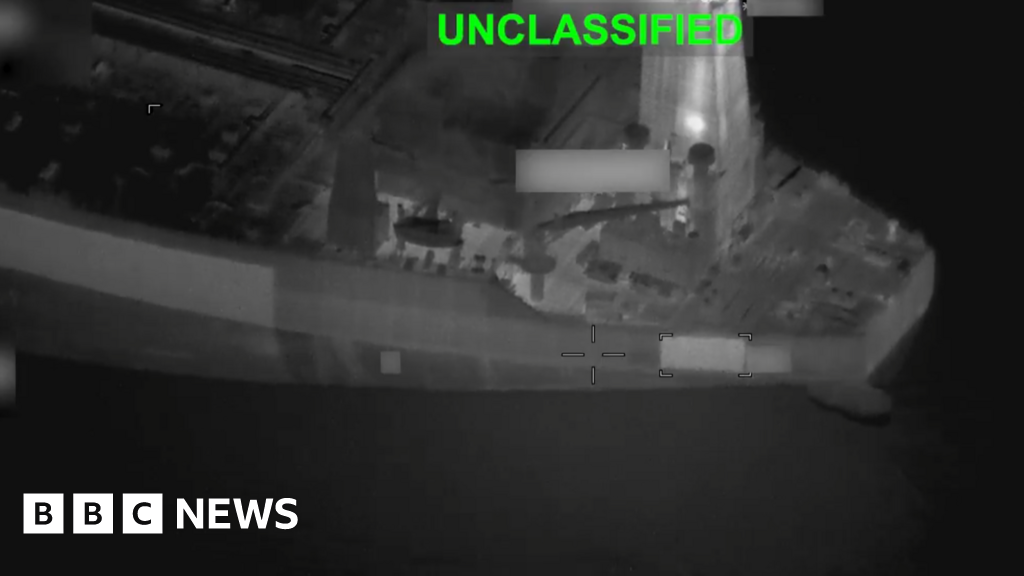
US forces have released video appearing to show the capture of an Iranian-flagged ship near the Strait of Hormuz, which President Donald Trump says was attempting to breach its naval blockade. Iran has condemned the operation as ‘maritime piracy,’ warned of retaliation, and cast doubt on new talks with the US. Here’s what we know.
New video from the US military is said to show an operation by its forces to seize an Iranian-flagged ship which attempted to bypass the US blockade of Iranian ports. The US says the cargo ship Touska was linked to a sanctioned company, while Iran condemned the move as ‘piracy’ and a violation of the ceasefire.
US Central Command has published a video said to show a guided-missile destroyer firing at an Iranian-flagged cargo ship near the Strait of Hormuz. The USS Spruance fired several rounds into the Touska’s engine room for ‘violating the US blockade’, before marines boarded it.
Tehran, Iran – United States President Donald Trump’s announcements about securing major concessions from Tehran have riled supporters of the Iranian establishment, prompting rejections and clarifications from the authorities.
Several current and former senior officials, state media and the Islamic Republic’s hardcore backers expressed anger, frustration, and confusion after the US leader made a series of claims, with days left on a two-week ceasefire reached on April 8.
Recommended Stories
list of 4 itemsend of list
Trump on Friday said Iran and the US would jointly dig up the enriched uranium buried under the rubble of bombed Iranian nuclear sites, and transfer it to the US. He claimed Iran had agreed to stop enriching uranium on its soil.
He also said the Strait of Hormuz had been opened and would never be closed again, while the US naval blockade of Iran’s ports remained in place, and sea mines were removed or were in the process of being removed.
Trump also emphasised that Iran would not receive billions of dollars of its own frozen assets abroad due to US sanctions, and that the 10-day ceasefire between Israel and Lebanon was completely unrelated to Iran.
Amid Pakistan’s ongoing efforts to mediate another round of negotiations, Iran’s Parliament Speaker Mohammad Bagher Ghalibaf, who led the Iranian delegation to the Islamabad talks earlier this month, rejected all of Trump’s claims.
“With these lies, they did not win the war, and they certainly will not get anywhere in negotiations either,” he posted on X early on Saturday.
By Saturday noon, the Khatam al-Anbiya Central Headquarters of the Islamic Revolutionary Guard Corps (IRGC) released a statement, saying the Strait of Hormuz is once again heavily restricted and under “strict management” of the armed forces. It cited continued “acts of piracy and maritime theft under the so-called label of a blockade” by Washington as the reason.
‘Haze of confusion’
In the hours it took between Trump’s flurry of announcements on Friday and official responses from Iranian authorities, supporters of the establishment voiced serious concerns about any major concessions.
“Is there no Muslim out there to talk to the people a bit about what is happening?!” Ezzatollah Zarghami, a former state television chief and current member of the Supreme Cyberspace Council that controls the heavily restricted internet in Iran, wrote on X.
Alireza Zakani, the hardline mayor of Tehran, said if any of Trump’s claims are true, then the Iranian establishment must beware “not to gift the vile enemy in negotiations what it failed to achieve in the field”.
A fan account on X for Saeed Jalili, an ultrahardline member of the Supreme National Security Council who has opposed any deals with the US for decades, said “dissent” may be at play. It said Supreme Leader Mojtaba Khamenei, who has not been seen or heard from outside of several written statements attributed to him, must release a voice or video message to confirm what is happening.
Jalili’s main account distanced itself from the comment, saying the fan account – which was subsequently deleted – was a sign of “infiltration” by enemies of Iran who were trying to sow discord.
Iranian state media released another written statement attributed to Khamenei on Saturday to mark Army Day, but made no mention of the political drama unfolding hours earlier, or the negotiations with the US.
The dissonance was clearly on display on state television and other state-linked media on Friday, especially those affiliated with the IRGC.
Multiple state television hosts and analysts harshly attacked Foreign Minister Abbas Araghchi because he tweeted on Friday that the Strait of Hormuz was “declared completely open for the remaining period of ceasefire, on the coordinated route as already announced by Ports and Maritime Organisation”.
One of the hosts demanded Araghchi must immediately clarify. Another said the top diplomat’s tweet was in English, and since the Iranian people do not have access to X due to the state-imposed near-total internet shutdown for seven weeks, the message was not directed at the people.
With a huge Hezbollah flag in the background, a furious presenter on state television’s Channel 3 claimed that Araghchi was somehow “the representative of the people of Lebanon, Yemen and Iraq” because they are a part of Iran’s “axis of resistance” of armed forces, so he should demand concessions on their behalf from Trump.
Morteza Mahmoudvand, a representative for Tehran in the Iranian parliament, went as far as saying Araghchi would have been impeached had it not been for “the excuse of war”.
The Fars and Tasnim news sites, which are affiliated with the IRGC, also heavily criticised Araghchi and called for further explanations on Friday evening, with Fars arguing that “Iranian society was plunged into a haze of confusion.”
Armed supporters in the streets
Critical comments from supporters of the Iranian government also flooded social media, including local messaging applications and the comments section of state-run sites.
“We took to the streets every night with clear demands, but you shook hands with the killer of our supreme leader and handed our strait to the Zionists,” one user wrote on Friday in the local app Baleh, in reference to Israel.
“After all these years of sanctions and war and costs imposed on the people, if you are to give up the uranium and the strait, then why did you play with the people’s livelihoods and the blood of the martyrs for so long?” another user wrote.
A large number of analysts and media personalities, including Hossein Shariatmadar, the head of the Kayhan newspaper, who was appointed by late Supreme Leader Ayatollah Ali Khamenei, also voiced criticism and demanded answers on Fars and other outlets.
Regardless of whether there will be more mediated negotiations in Pakistan or whether the war will continue, Iran continues to encourage and arm backers to take to the streets to maintain control.
State media on Friday aired footage of more armed convoys moving through the streets of Tehran while waving the flags of Lebanon’s Hezbollah, Iraq’s Hashd al-Shaabi and other groups. The video below shows women and children crewing heavy machineguns mounted on the back of pick-up trucks during a rally in downtown Tehran.
With no end in sight to the state-imposed internet shutdown that has wiped out millions of jobs in Iran, in addition to steel factories and other infrastructure that were destroyed, the Iranian economy continues to suffer.
The timing of the back-and-forth between Trump and the Iranian officials meant that oil prices dropped before Western markets closed on Friday, and the Iranian currency experienced more volatility.
The rial was priced at about 1.46 million against the US dollar on Saturday morning, the first day of the working week in Iran. But it shot back up to about 1.51 million after the IRGC announced the repeated closure of the Strait of Hormuz.
Weekly insights and analysis on the latest developments in military technology, strategy, and foreign policy.
Merops drones effectively counter Iranian Shahed attacks. The Merops interceptor drones, initially used in Ukraine, have been deployed to protect U.S. troops from Iranian Shahed-136 munitions.
Cost-effective solution against expensive threats. Each Merops drone costs about $15,000, significantly less than the $30,000 to $50,000 Shaheds they intercept, offering a favorable cost ratio.
Potential for further cost reduction with larger orders. Prices could drop to $3,000 to $5,000 per unit with increased production, making them even more economical.
Streamlined acquisition process enabled rapid deployment. The Army’s reorganization of its acquisition process allowed for quick deployment of Merops drones in conflict zones.
Merops drones part of a layered defense strategy. While not as advanced as Patriot missiles, Merops drones can be deployed in large numbers for effective area coverage.
Bottom line: Merops interceptor drones have proven to be a cost-effective and efficient defense against Iranian Shahed drones, protecting U.S. troops and equipment. Their success in Ukraine and streamlined acquisition process suggest a growing role for such low-cost solutions in future military strategies.
The Army’s top official pointed to low-cost interceptor drones first sent to Ukraine as one defense against Iranian barrages of Shahed-136 one-way attack munitions. During Congressional testimony on Thursday, Army Secretary Daniel Driscoll lauded the Merops interceptor and the process to get it quickly into the hands of troops in the Middle East.
The Merops is a small, relatively inexpensive drone built specifically to zip through the skies and intercept long-range one-way attack drones. As we have previously reported, Ukraine has been using several locally produced drones, as well as Merops, to counter Russian Shaheds successfully for some time now, proving-out the concept.
“When the conflict kicked off, within about eight days, we were able to purchase…13,000 Merops, which are incredible,” Driscoll exclaimed. “They’re about $15,000 a piece right now. We think as they scale, they’ll get less than [$10,000] and we’re able to take Shaheds down that cost $30,000 to $50,000, which is amazing because that puts us on the right end of the cost curve, and we will make that trade all day long.”
The U.S. has its own interceptors that have been in service for years, such as Raytheon’s Coyote, but they cost roughly 10 times more.
A new system to identify and take down Russian drones is deployed to NATO’s eastern flank
In a recent interview with Bloomberg, Driscoll said that larger orders could drive that to $3,000 to $5,000 per interceptor. Given the success in Ukraine, it is likely that the Pentagon and other customers would see far less risk when it comes to ordering large numbers.
As we noted in a story last month, the Pentagon sent thousands of these drone interceptors to the Middle East. Iranian strikes on U.S. military facilities killed U.S. troops and caused damage to bases and equipment. Driscoll did not offer more specifics about how often they were used, how many Shaheds they downed or exactly where they were deployed.
Merops was “developed as part of the US-backed Project Eagle initiative, which includes contributions from Swift Beat, a company associated with former Google CEO Eric Schmidt,” according to the Ukraine Defense Tech Community (DTC), a marketplace for modern weaponry. “The system is built around Surveyor drones, which act as airborne interceptors capable of destroying enemy UAVs mid-flight.”
A U.S. Army soldier launches an AS3 Surveyor interceptor drone, part of the U.S. counter-drone system known as ‘MEROPS,’ during a live-fire demonstration at the Deba training grounds in Subcarpathian Voivodeship, Poland, on November 18, 2025. (Photo by Artur Widak/Anadolu via Getty Images) Anadolu
Each Merops unit “includes a command station, launch platforms, and a fleet of Surveyor drones,” DTC explained. “These interceptors can operate autonomously or be remotely piloted and are equipped with onboard sensors for target tracking.”
While full technical specifications remain undisclosed, they can reportedly reach speeds of over 280 km/h (175 mph). “The platform is considered fast enough to intercept jet-powered drones such as the Russian Geran-3, which can exceed 300 km/h,” DTC pointed out.
A Polish soldier launches an interception drone of the American MEROPS counter drone system during tests at the Nowa Deba military training ground, south-eastern Poland, on November 18, 2025. (Photo by Wojtek RADWANSKI / AFP) WOJTEK RADWANSKI
Driscoll said the ability to field Merops so quickly is because the Army streamlined its acquisition process.
“Fundamentally, one of the core problems was our own bureaucracy, our own infrastructure, our own decision-making organizations had decayed from any sort of speed and rationality,” he testified. “The reason we’ve been able to move fast since the conflict in Iran started is because of work 10, 12, 14 months ago to reorganize our acquisitions department.”
“And practically,” he added, “what that did is it took us from a 16-step decision-making process – where each of the bodies along those 16 steps could veto it and start it back over, and it could take two to seven years to purchase something.”
“We put everybody into a group who could make decisions on the fly,” the secretary noted. “And so a lot of the things the Army has worked on in the previous year are paying dividends as we try to make decisions quickly.”
You can watch Driscoll’s testimony on Merops at the 36-minute mark of the video below.
Budget Hearing – The United States Army
In Ukraine, Merops has proven to be a far cheaper alternative to munitions like Patriot interceptors and even far less advanced missiles for downing Shahed drones which have caused widespread destruction across that country. While these drones have neither the payload nor range of the far more expensive Patriot munitions, they can be deployed in great numbers giving them the ability to cover larger geographical areas. That helps keep the magazine depth of more sophisticated effectors from being quickly depleted and turns the disastrous ‘exchange ratio’ between cost of target versus effector on its head. In many cases, these systems would still need to be part of a layered defense, especially when used as point defense at high value installations and infrastructure.
Now that these weapons have helped save American lives and equipment, Merops success means we will likely be seeing more low-cost drone interceptors like it in the future.
Arrests of several L.A. Iranian families sow confusion in a polarized community
Sarina Hosseiny said she had never heard of Qassem Suleimani, an Iranian general assassinated by the U.S. in 2020.
That is, not until this year, when threatening comments cropped up on social media claiming that she and her mother were relatives of Suleimani and were terrorists who should be deported.
The 25-year-old, who studies fashion at Los Angeles Trade Technical College, now sits in an immigration detention facility in Texas, alongside her 47-year-old mother. And other L.A. Iranian Americans helped put her there.
Sarina Hosseiny, 25, shown in an undated photo, is a student at Los Angeles Trade Technical College now held at an immigration detention facility in Texas, alongside her 47-year-old mother.
(Courtesy of Hosseiny family)
“They were sending me death threats. Literally saying like, they were gonna find me and kill me and my mom and all this stuff,” Hosseiny said in a phone interview from the facility last week. “All I’ve ever posted is that I was against war and just innocent people dying.”
In recent weeks, as the war in Iran continues, the U.S. State Department has detained five L.A. area-based Iranian nationals, including Hosseiny and her mother — all of whom are green card holders — and moved to strip them of their residency.
The arrests have exposed a rift in the Iranian American community, which has grown increasingly polarized in recent years, leading to online smear campaigns and at times violence.
In L.A., home to the largest concentration of people of Iranian descent outside Iran, a vocal segment has joined forces with Trump-aligned far-right conservatives, including Laura Loomer, to wage campaigns against other Iranians they believe should not be allowed to live here.
Many in the local community fled Iran after the Islamic Revolution in 1979 and cheered the recent U.S. military attacks on their native country. Some have turned on Iranian Americans who have expressed antiwar opinions, interpreting that stance as support for the current government.
A poster in support of Iran’s former crown prince, Reza Pahlavi, hangs in a window of the Gallery Eshgh, which sells artwork and clothing reflecting Iranian culture on Westwood Boulevard in Los Angeles in April 2026.
(Kayla Bartkowski / Los Angeles Times)
The tensions are interpersonal, with arguments at family gatherings and friendships strained or shattered. But much of the conflict also takes place online, as when a San Diego-based “mommy influencer” — who normally posts images of herself and her three young children in a luscious backyard shucking nuts, arranging tulips and peeling pomegranates — urged her Instagram followers to contact Loomer so that “the deportation of [the Islamic Republic’s] lackeys can be arranged.”
Anger at the Iranian government has been channeled toward family members of current or former officials, with online petitions describing them as living luxuriously in the States even as ordinary Iranians face repression from a brutal government back home.
Agoura Hills residents Seyed Eissa Hashemi and Maryam Tahmasebi, both psychology professors, were detained by immigration authorities in early April — as was their son, Seyed Mobin Hashemi. The elder Hashemi, the State Department said, is the son of Masoumeh Ebtekar, who gained fame as a spokeswoman for militants who stormed the U.S. Embassy in Tehran in 1979 and became a reformist politician pushing for environmental protections and women’s rights.
The petition that led to the family’s detention amassed more than 140,000 signatures, with many identifying themselves as members of the Iranian diaspora in the U.S., Australia or elsewhere. The creator of the petition on Change.org, a user who also published petitions targeting five other families, did not respond to a request for comment.
The Times was not able to reach Hashemi or the family’s attorney. U.S. Secretary of State Marco Rubio said on social media when announcing their detentions that the Obama administration had granted visas to the family members, who have been lawful permanent residents since June 2016.
The Department of Homeland Security declined to respond to questions about Hosseiny and her mother’s case. White House spokesperson Abigail Jackson also declined to comment. The State Department and Loomer did not respond to requests for comment.
Jamal Abdi, president of the National Iranian American Council, said that some of the sentiment comes from real grievances about corruption in Iran, such as the banker who embezzled millions before fleeing to Canada. But he said that rumors have been weaponized to muffle voices opposing U.S. and Israeli military aggression in Iran and exploited by the Trump administration to exercise a show of strength at home during a flailing war.
The flags of pre-revolution Iran are prominently displayed in the Jordan Market, a purveyor of Persian groceries on L.A.’s Westwood Boulevard, in April 2026.
(Kayla Bartkowski / Los Angeles Times)
“This witch hunt has become really pervasive, and it’s not new,” Abdi said. “What seems to be new is there’s an administration who is willing and eager to entertain this McCarthyism and actually punish people based on what the mob is calling for.”
In the section of Westwood known as “Tehrangeles,” support for Reza Pahlavi, the exiled crown prince and son of the late shah, is apparent. A campaign to install him as Iran’s leader intensified in January, as protests ripped through the country. Supreme Leader Ayatollah Ali Khamenei was killed in a U.S.-Israeli attack in February.
“Make Iran Great Again” signs and posters of a stern-faced Pahlavi are plastered on nearly every window. Iran’s flag before the 1979 revolution — green, white and red with a lion and a rising sun — flutters from many overhangs.
In early March, as the U.S. widened its assault on Iran, crowds from the diaspora rallied in the neighborhood, dancing and celebrating even as the death toll in Iran grew and reports said a missile strike had killed more than 100 schoolchildren.
In Westwood these days, many are more tepid in their support for the war than at the outset and are hesitant to speak openly, whether because of potential backlash here in the U.S. or repercussions for relatives in Iran.
Iranians who don’t back a return to a monarchy under Pahlavi or American and Israeli intervention have gotten “a hell of a lot of backlash,” said Narges Bajoghli, an associate professor of Middle East studies at John Hopkins University. Bajoghli cited a groupthink dynamic stoked by popular Persian-language media such as Iran International, as well as U.S.-funded counter-propaganda programs during Trump’s first term.
After Aida Ashouri, a human rights lawyer who is running for L.A. city attorney, posted a video explaining why she opposes the U.S. war in Iran, the comments came rolling in.
“Please deport this woman,” one user wrote, tagging Rubio and Immigration and Customs Enforcement. “She is constantly spreading suspicious anti war propaganda.”
Aida Ashouri, who is running for L.A. city attorney, poses for a picture at Astralab on April 24, 2026.
(Etienne Laurent / For The Times)
Ashouri, a U.S. citizen, spent her childhood frequenting businesses in Westwood, but she no longer feels comfortable there, fearing some sort of altercation. Some businesses removed her campaign posters from their windows after the war began, she said.
“It’s 100% impacting my campaign. It’s hard to connect with the Iranian community now, even though I’m Iranian,” she said.
The State Department has said it revoked the green cards of Iranians it targeted in recent weeks, including Hosseiny and her mother. Immigration experts said it’s not so simple, as a legal process has to play out, during which the green cards remain valid.
Even so, Muzaffar Chishti of the Migration Policy Institute said that the executive branch has vast discretion in immigration law, particularly when invoking national security justifications, and defense attorneys may face an uphill battle.
Aaron Reichlin-Melnick, a senior fellow at the American Immigration Council, said he is “personally troubled by the idea that we need to deport someone because of who their grandparent is.”
“The government doesn’t usually outsource its investigatory processes to external people,” he said, referring to Loomer and others. “There’s still a lot of questions about how these people are being found and targeted.”
After Hosseiny and her mother, Hamideh Soleimani Afshar, were arrested by U.S. Immigration and Customs Enforcement agents on April 3, the State Department asserted that they were the Iranian general’s grand-niece and niece. Afshar had denounced America as the “Great Satan” and shown “unflinching support for the Islamic Revolutionary Guard Corps” while “enjoying a lavish lifestyle in Los Angeles,” the State Department said.
Social media posts, showing Soleimani Afshar posing for glamour shots and photos of Hosseiny in a similar vein, were published by numerous news outlets.
Loomer took credit on April 4 for the two women’s arrests, writing on X that over several months she had “quietly been documenting” their social media activity and shared the information with the Department of Homeland Security and the State Department.
Within hours, however, Hosseiny and her mother’s connection to the slain general was disputed, with his daughter writing on social media that they had “no relation whatsoever” to her family. A review of family documents, as first reported by Dropsite News, shows that Afshar’s father had no brothers and that the general is from a different province than Afshar’s family.
Hosseiny said her mother has been sharply critical of the U.S. and Israel’s military assault in Iran. But Hosseiny “always thought that in America, people have freedom.”
She said that her mother’s health has deteriorated as she battles severe autoimmune-related anemia and that her mother’s home and car were broken into, amid the stream of online hate.
After four weeks in detention, Hosseiny said, she is “still in disbelief.” Her friends have been raising funds for her legal defense.
Times staff writer Cierra Morgan contributed to this report.
Source link
Trump says US forces are ‘like pirates’ taking Iranian oil | US-Israel war on Iran
Donald Trump says US forces are ‘like pirates’ taking over Iranian ships and cargo near the Strait of Hormuz. The US is maintaining a blockade of Iran’s ports and has seized at least three Iranian flagged vessels.
Published On 2 May 20262 May 2026
Share
Source link
Iranian Nobel laureate Narges Mohammadi hospitalised as health deteriorates | Human Rights News
Mohammadi has lost consciousness twice and suffered a severe cardiac crisis, her foundation has announced.
By Al Jazeera Staff and The Associated Press
Published On 1 May 20261 May 2026
Iranian human rights activist and 2023 Nobel Peace Prize laureate Narges Mohammadi has been transferred from prison to a hospital due to a sharp decline in her health.
Mohammadi had two episodes of complete loss of consciousness and a severe cardiac crisis, her foundation announced on Friday.
Recommended Stories
list of 3 itemsend of list
“This transfer was done as an unavoidable necessity after prison doctors determined her condition could not be managed on-site, despite standing medical recommendations that she be treated by her specialized team in Tehran,” the Narges Mohammadi Foundation said.
Earlier on Friday, Mohammadi had fainted twice in prison in Zanjan in northwestern Iran, according to the foundation.
She was believed to have suffered a heart attack in late March, according to her lawyers, who visited her a few days after the incident. At the time, she appeared pale, underweight and needed a nurse to help her walk.
‘Life-threatening mistreatment’
Mohammadi, 53, has been imprisoned since December 12 after she was arrested during a visit to the eastern Iranian city of Mashhad.
In February, she was sentenced to more than seven years in prison. Her lawyer said six years of that sentence was for the accusation of “gathering and collusion to commit crimes”.
Her family said in February that her health was worsening in prison, in part because of an alleged beating she had endured during her arrest in December. They said multiple men hit and kicked her in her side, head and neck.
The Nobel committee condemned the “ongoing life-threatening mistreatment” of Mohammadi in a statement in February.
The Iranian government has not commented on the alleged attack.
Prior to her arrest in December, Mohammadi had already been serving a sentence of 13 years and nine months on charges of collusion against state security and propaganda against Iran’s government, but had been released on furlough since late 2024 due to medical concerns.
Source link
Iranian officials absent from pre-World Cup football events in Canada | World Cup 2026 News
It is unclear whether football officials from Iran were issued Canadian visas to attend AFC and FIFA congresses.
Published On 29 Apr 202629 Apr 2026
Representatives from Iran’s football federation were not present at the largest formal meeting of Asia’s football leaders before the World Cup.
In the presence of FIFA President Gianni Infantino, there was no discussion at the Asian Football Confederation (AFC) Congress about Iran’s participation in the tournament or whether the team’s games should be moved out of the United States because of the US-Israeli war on Iran.
Concerns were raised that visa issues could affect the Iranian delegation’s ability to travel to both the confederation meeting in Vancouver and the overall FIFA Congress on Thursday, as well as the World Cup starting on June 11.
The 48-team tournament is being hosted by the US, Canada and Mexico.
It was not clear if visa issues prevented Iranian representatives from attending the AFC Congress. However, as the nine AFC teams that qualified for the World Cup were presented with commemorative gifts, it was announced that Iran would receive their token “once they arrive”.
An Iranian government spokesperson said last week that the national team was preparing for “proud and successful participation” in its World Cup games in the United States.
FIFA, football’s international governing body, has consistently said Iran will stick to the World Cup game schedule decided last December, before the US and Israel launched military attacks on Iran on February 28, and has refused to entertain suggestions that the team’s games be moved to Mexico.
“Now even more, now that the world is going through a very, very delicate, difficult, dangerous time with many conflicts, and many of you are directly affected and involved in these conflicts,” Infantino told the AFC leaders.
“Now even more, we need to find ways to build these famous bridges, or maybe to build football fields instead. And to build competitions where people can join and come together.”
Iran are placed in Group G with Belgium, New Zealand and Egypt.
Team Melli’s planned training camp would be in Tucson, Arizona, and they are scheduled to open their World Cup campaign on June 15 against New Zealand in Inglewood, California, near Los Angeles.
Iran will play Belgium in Inglewood on June 21 before facing Egypt in the final group match in Seattle on June 26.
Source link
Iranian Attacks Change Way Navy Refuels Its Ships In Middle East
The TWZ Newsletter
Weekly insights and analysis on the latest developments in military technology, strategy, and foreign policy.
After Iranian missile and drone barrages disrupted U.S. Navy’s logistics by destroying port infrastructure and putting ships at risk, the service turned to a fleet of specially equipped commercial vessels to deliver fuel to warships away from the danger zone. These vessels proved so effective that one top Navy official said this week that he wants to see more of them pressed into service.
“Epic Fury has been a PhD course in logistics,” said Robert Hein, Director of Maritime Operations for the Navy’s Military Sealift Command (MSC), said during the Sea-Air-Space 2026 (SAS) exposition near Washington, D.C.
“So traditionally, for 25 years, we’ve been at war in the Middle East and that war was effectively fought in the parking lot of a giant gas station,” Hein explained. “Iran has effectively shut down that gas station. So we’ve had to come up with really creative ways of, ‘how do we replenish the fleet?’”
The answer was shifting from having fleet oilers call on ports to executing at-sea replenishment of those oilers by using consolidated cargo operations (CONSOL) tankers – vessels leased by MSC that are specially equipped to offload fuel at sea. The concept isn’t new. After shifting away from using chartered ships to refuel oilers at sea in favor of conducting the transfers at port facilities, MSC reintroduced the CONSOL process in 2015, “as a way to utilize a flexible platform that allows MSC to operate worldwide in a variety of missions,” according to the Navy. Having a CONSOL tanker provide fuel to oilers means they don’t have to return to a port, reducing costs and increasing time on station to support the fleet. During a time of conflict, that can also mean less risk to the oiler, which is a critical asset that would be in very high demand.
The way the chartered tankers have been used in the Middle East during Epic Fury has taken this process to a new level.
The Navy created what Hein called a system of “tanker treadmills” at sea with “tankers cycling in and out” to replace the fixed infrastructure no longer available due to Iranian attacks.
“There are no more logistics hubs they’re going to,” Hein proffered. “All those nodes are now remaining at sea.”
In addition to the CONSOL tankers’ ability to refuel oilers at sea, “we’re putting an additional fuel delivery system on those tankers so they’ll be able to replenish destroyers and ships other than oilers,” Hein added. He did not provide details about what kind of system, however, the Navy has previously discussed developing what is called a Modular CONSOL Adapter Kit (MCAK).
“By installing it on the deck of a tanker, it can refuel other ships through the receiving ship’s fuel delivery hoses,” the Navy explained.
There are currently 15 CONSOL tankers available to the Navy worldwide. Rear Adm. Chris Stone, Director of Strategic Plans, Policy, Logistics and Warfighting Development for U.S. Transportation Command, said that’s not enough.
“If there’s one thing that I had the power to stroke a check on today, it would be to create more CONSOL tankers – those consolidated cargo replenishment at sea vessels,” he said at the same SAS panel.
“We probably need something more than 15, because when there’s a crisis or a conflict around the world, the first thing that a geographic combatant commander asks TRANSCOM for is a CONSOL vessel, and we don’t have enough of them today without trade offs that create risk in other areas.”
“We’ve proven CONSOL capability during Operation Epic Fury,” Stone added. “We have a treadmill of vessels where one is on the front line, one is topping off, and they’re continually rotating to ensure that we’ve got support for the warfighter.”
CONSOL tankers, Stone posited, “are no longer supply ships. They’re not logistics ships. They’re force projection platforms that support our warfighters. They allow us to support the joint force and refuel them underway. It extends our operational reach and endurance, while reducing the reliance on predictable, vulnerable port visits. In less than two years, we’ve increased the capacity dramatically, and we’ll continue to do so.”
While a boon to the system, the CONSOL tankers are not without their issues. The main one being time. It takes about two hours for an oiler to refuel a destroyer, said Hein, while it takes about six hours for a tanker to get the job done.
“Unlike a quick trip to the gas pumps for a car, CONSOLing can take hours to complete,” the Navy noted in a story about the tankers. “This creates a unique set of challenges for the ships conducting the operations. CONSOLing is a dance between two ships. Each must maneuver alongside the other, and maintain a consistent speed and course. Because of their size, tanker maneuverability becomes a challenge.”
“We simply do not maneuver like the [oilers] do. They are graceful, gliding through the water,” said Capt. Michelle Laycock, Maersk Peary’s master. “There’s not a lot of ‘grace’ to a fully loaded tanker. We don’t glide, we plow through the water.”
The increased time and effort is worth it, Hein said.
“This is a capability that is needed that will help mitigate the lack of oilers right now,” Hein suggested.
He wants to take the concept a step further.
“So while we can CONSOL for fuel, I’d like to get to a point where you CONSOL for food as well,” he stated.
While CONSOL has provided a lifeline for vessels during Operation Epic Fury, its utility would be dramatically magnified during a war in the vast Pacific, one where ports at much farther distances would be under threat as would ships of all kinds over huge swathes of that theater. There have been consistent concerns about the size of the oiler fleet being a point of weakness for the Navy’s ability to project power in a near-peer conflict. Doubling-down on CONSOL and giving those vessels the ability to directly refuel surface combatants, carriers and amphibious warships could go a long way to buying down risk and fortifying operational planning.
Contact the author: howard@thewarzone.com
Source link
U.S. Efforts To Prevent Iranian Mine Laying In Strait Of Hormuz Underway
A day after President Donald Trump ordered U.S. forces to destroy Iranian ships laying mines in the Strait of Hormuz, the Chairman of the Joint Chiefs of Staff on Friday said efforts to prevent mining are already underway.
The Islamic Revolutionary Guard Corp (IRGC) “has a variety of smaller Boston Whaler-size boats,” Air Force Gen. Dan Caine told reporters, including from The War Zone, during a Friday morning media briefing. “We have forces up there deterring and preventing them from continuing to [lay mines], and will continue to do so pursuant to the orders of the Secretary and the President.”
You can hear Caine’s comments on Iranian mining at the 23-minute mark in the following video.
Caine did not offer specifics about what assets are involved, when they arrived or what actions they have taken. The Pentagon and CENTCOM have declined to comment. A U.S. official, however, did provide us with some additional information.
“Iran likely placed some mines in or near the Strait at some point during the conflict,” the official told us, speaking anonymously to discuss operational details. “We’re not talking about a high volume. In fact, more than 95% of Iran’s naval mines were destroyed during Operation Epic Fury.”
U.S. forces “are actively addressing the matter using a combination of manned and unmanned capabilities to ensure passage through the Strait is safe.” The official declined to say if the U.S. is actively searching for mines already laid or provide further details. In our story yesterday, we spelled out what assets the Navy has for its surface fleet to conduct demining operations, though it remains unclear how many are in the region. You can read more about that here.
As we noted, the Independence class littoral combat ship USS Canberra is the only confirmed mine sweeper currently in CENTCOM, according to a post on the Pentagon’s image sharing site that shows the ship patrolling in the Arabian Sea.
As we have frequently reported, the IRGC has invested heavily in its fleet of small boats for decades. In addition to being armed with short-range anti-ship missiles, as well as artillery rockets and other weapons, they can also be used to lay naval mines. While the president claimed that 159 Iranian ships have been destroyed, the IRGC still has a large number of these small vessels.
War Secretary Pete Hegseth, also speaking at the briefing, said “reckless mining like that is a violation of the cease fire.” He declined to say how long it will take to clear the Strait of mines.
“We would not speculate on a timeline,” he proffered in response to a question about a Washington Post story claiming Congress was informed it could take up to six months to do so. “We feel confident in our ability, in the correct period of time, to clear any mines that we identify, and we encourage other countries to be a part of such an effort as well. But we’re tracking that very closely.”
It isn’t clear why these efforts to keep small boats from mining the Strait have not been persistent and ongoing from early in the conflict, but especially now that Iran professes control over the strategic waterway. However, Hegseth derided the IRGC as a fighting force.
“Iran’s battered military, the IRGC, specifically, has been reduced to a gang of pirates with a flag,” the secretary scowled.
UPDATES
Caine offered some new details about the three Iranian-linked ships the U.S. interdicted this week. Those efforts started Sunday with the Iranian-flagged cargo ship Touska, which was fired upon and later boarded.
At about 9 a.m. EDT on Sunday, the Arleigh Burke class guided missile destroyer USS Spruance “disabled the Touska‘s engine by firing nine inert rounds from the destroyer’s Mk-45 5-inch gun precisely into the engine room and engine space on board the Touska,” he explained. Seven hours later, CENTCOM gave the command for Marines to fast-rope in from helicopters and “seize the shot,” Caine added.
China on Friday pushed back against Trump’s claim that the Touska contained a “gift from China perhaps.” The president made that claim earlier this week on CNBC. .
“China rejects any assertion and speculation that lack factual evidence,” the Chinese Foreign Ministry responded. “Normal trade between countries should not be disrupted.”
The Touska was carrying “vital dialysis supplies and medical equipment,” Al Jazeera reported on X, citing the Iranian Red Crescent Society. The War Zone cannot independently verify that claim.
Caine also addressed the fate of two other Iranian-linked ships – the Tifani and the Majestic X – that were stopped in the Indian Ocean this week. The vessels and their crews “remain in U.S. custody, and we will continue to conduct similar maritime interdiction actions and activities in the Pacific and Indian Oceans against Iranian ships and vessels of the Dark Fleet,” Caine noted.
Jeanine Pirro, U.S. Attorney for the District of Columbia, said the Tifani and Majestic X each contained 1.9 million barrels of oil.
German shipping giant Hapag-Lloyd told us that one of its ships has recently transited the Strait of Hormuz.
“For security reasons, we will not comment on the timing or provide further details regarding this passage or on individual ships still in the Persian Gulf,” the company explained. “What we can tell you is that of the original six ships, we currently have four remaining in the Persian Gulf with approximately 100 seafarers.”
“The safety of our crews remains our highest priority,” Hapag-Lloyd’s spokesperson added. “We are in close contact with the vessels, local authorities and naval forces, and continue to monitor the situation closely. At this moment, it is not possible to predict any change of this situation.”
Overall, global trade intelligence firm Kpler’s Risk & Compliance tracker showed that transits through the Strait of Hormuz continue to be reduced.
Between April 22 and 23, “traffic remained low at 17 crossings of both commercial and non-commercial vessels, well below pre-crisis levels,” Kpler stated. “Ongoing monitoring provides critical insight into supply flows and potential disruption risks.”
Oil output from Persian Gulf nations has been running 14.5 million barrels a day below pre-war levels this month, Bloomberg News reported, citing Goldman Sachs Group Inc., which estimated any resumption would take months.
The region-wide total is 57% lower than before the outbreak of the Iran war, analysts including Daan Struyven said in an April 23 note. A possible restoration would likely take “a few months,” a scenario based on a full-and-safe reopening of the Strait of Hormuz and no renewed strikes, according to Goldman Sachs.
Saudi Arabia has “achieved a huge boost in crude exports through its Red Sea terminals, but has yet to stabilize flows at its target level for the route,” Bloomberg also noted.
Shipments of crude to overseas destinations from Yanbu “have averaged about 4 million barrels a day in the first three weeks of April,” data compiled by the outlet show. “That’s about five times as much as Saudi Arabia exported on the route before the conflict in Iran started, but still only about 80% of Riyadh’s target.”
CENTCOM provided some additional context to the arrival yesterday of the aircraft carrier USS George H.W. Bush into the region.
Joining the USS Abraham Lincoln and USS Gerald R Ford, it marks the first time since 2003 that there were three carriers in the area of responsibility since 2003. Combined, the three carrier strike groups have 200 aircraft, nine Arleigh Burke class guided missile destroyers, and 15,000 sailors and Marines.
There may be some movement toward new talks to end the war. White House Press Secretary Karoline Leavitt confirmed that the U.S. is sending a negotiating team to Pakistan where Iran’s foreign minister is already headed. The swiftly moving situation follows on the heels of previous diplomatic efforts that failed to end the 55-day-old conflict.
“I can confirm that Special Envoy Witkoff and Jared Kushner will be off to Pakistan again tomorrow morning to engage in talks, direct talks – intermediated by the Pakistanis who have been incredible friends and mediators throughout this entire process – with representatives of the Iranian delegation.”
“The Iranians want to talk,” Leavitt told reporters. “They want to talk in person. And so the president is, as I’ve said many, many times, to all of you, always willing to give diplomacy a chance. So Steve and Jared will be heading to Pakistan tomorrow to hear the Iranians out. We hope progress will be made, and we hope that positive developments will come from this meeting, and we will see that the President, the Vice President, the Secretary of State, will be waiting here in the United States for updates.”
Vice President JD Vance, she added,”is on standby and will be willing to dispatch to Pakistan if we feel it’s a necessary use of his time.”
CNN reported that Witkoff and Kushner will “participate in talks with Iranian Foreign Minister Abbas Araghchi.”
The move to send a U.S. team to Pakistan follows Araghchi’s announcement earlier on Friday that he will head to Pakistan Friday night and then to Oman and Russia to “closely coordinate with our partners on bilateral matters and consult on regional developments.”
At the time of Araghchi’s announcement, it was believed that the Iranian delegation was not expected to speak with US representatives, CNN reported, citing a U.S. source and Iranian state media. However, “the Pakistanis anticipate the meeting will lead to a second round of talks between the US and Iran,” the cable network suggested.
All this follows a second round of peace talks that failed to materialize this week after Iran declined to send negotiators to Islamabad. However, Trump extended the ceasefire to what has been reported to be sometime over this weekend. As we discussed yesterday, a large reason for Iran’s reluctance to talk may be a schism between hardliners in the IRGC and more moderate elements of the government like Araghchi. While Trump is pushing that narrative, Iranian officials are pushing back, claiming no such divide exists.
Another factor that may be contributing to Iran’s lack of a concrete response to U.S. demands may be the condition of its putative leader. A reporter from The New York Times said that Ayatollah Mojtaba Khamenei was so badly injured on the first day of Epic Fury that his face and lips are burned to the point where he has trouble speaking and that one of his legs may have been amputated.
Pakistan says Araghchi called its Deputy Prime Minister/Foreign Minister Mohammad Ishaq Dar today.
“Both sides exchanged views on regional developments, the ceasefire, and ongoing diplomatic efforts being pursued by Islamabad in the context of US-Iran engagement,” Pakistan’s Foreign Ministry stated on X. Dar “underscored the importance of sustained dialogue and engagement to address outstanding issues, in order to advance regional peace and stability at the earliest. Araghchi appreciated Pakistan’s consistent and constructive facilitation role in this regard, and both leaders agreed to remain in close contact.”
Ukrainian President Volodymyr Zelensky returned to Saudi Arabia today, where he said he had a “very productive meeting with the Crown Prince of Saudi Arabia, Mohammed bin Salman Al Saud.”
“We appreciate our constructive cooperation,” Zelensky stated on X. “There is a strategic security arrangement that we are actively developing across three key areas. The first is the export of Ukrainian security expertise and capabilities in air defense. The second is energy cooperation, which makes Ukraine more resilient in this difficult time. The third is the area of food security. We are working together to strengthen our peoples and our partners. We have set tasks for our teams, and I expect their prompt and full implementation.”
Last month, Zelensky said he inked 10-year defense cooperation agreements with Saudi Arabia, the United Arab Emirates and Qatar.
After suffering through intense Iranian missile and drone barrages, UAE presidential advisor Anwar Gargash said it will take a long time to reconcile with Tehran.
“You can’t be attacked with 2,800 missiles and drones then talk to me about trust,” he stated. “That will take ages and ages.”
An internal Pentagon email “outlines options for the United States to punish NATO allies it believes failed to support U.S. operations in the war with Iran, including suspending Spain from the alliance and reviewing the U.S. position on Britain’s claim to the Falkland Islands,” Reuters reported. It based the information on what it was told by a U.S. official.
“The policy options are detailed in a note expressing frustration at some allies’ perceived reluctance or refusal to grant the United States access, basing and overflight rights – known as ABO – for the Iran war,” the news outlet added, citing the anonymous official.
However, an alliance official told us that “NATO’s Founding Treaty does not foresee any provision for suspension of NATO membership, or expulsion.”
While Trump and CENTCOM say Iran’s ability to produce weapons has been destroyed during Epic Fury, Tehran says otherwise.
Iran’s Defense Ministry says “the Islamic Republic will continue producing military equipment and that it is fully prepared to meet the armed forces’ needs in all scenarios, including war and peacetime conditions,” Iran’s official Press TV news outlet claimed on X.
Kuwait’s Defense Ministry (MoD) said two northern border centers were struck by fiber-optic guided drones launched from Iraq.
The attack caused material damage, but no casualties, said MoD spokesman Colonel Saud Abdulaziz Al-Otaibi.F
Contact the author: howard@thewarzone.com
Source link
What we know about the US capture of Iranian vessel near Hormuz | US-Israel war on Iran
US forces have released video appearing to show the capture of an Iranian-flagged ship near the Strait of Hormuz, which President Donald Trump says was attempting to breach its naval blockade. Iran has condemned the operation as ‘maritime piracy,’ warned of retaliation, and cast doubt on new talks with the US. Here’s what we know.
Published On 20 Apr 202620 Apr 2026
Share
Source link
US military releases video of marines seizing Iranian ship | US-Israel war on Iran
New video from the US military is said to show an operation by its forces to seize an Iranian-flagged ship which attempted to bypass the US blockade of Iranian ports. The US says the cargo ship Touska was linked to a sanctioned company, while Iran condemned the move as ‘piracy’ and a violation of the ceasefire.
Published On 20 Apr 202620 Apr 2026
Share
Source link
US forces attack and seize Iranian ship Touska near Strait of Hormuz | US-Israel war on Iran
US Central Command has published a video said to show a guided-missile destroyer firing at an Iranian-flagged cargo ship near the Strait of Hormuz. The USS Spruance fired several rounds into the Touska’s engine room for ‘violating the US blockade’, before marines boarded it.
Published On 19 Apr 202619 Apr 2026
Share
Source link
Trump claims on Iranian concessions trigger questions, rejections in Tehran | US-Israel war on Iran News
Tehran, Iran – United States President Donald Trump’s announcements about securing major concessions from Tehran have riled supporters of the Iranian establishment, prompting rejections and clarifications from the authorities.
Several current and former senior officials, state media and the Islamic Republic’s hardcore backers expressed anger, frustration, and confusion after the US leader made a series of claims, with days left on a two-week ceasefire reached on April 8.
Recommended Stories
list of 4 itemsend of list
Trump on Friday said Iran and the US would jointly dig up the enriched uranium buried under the rubble of bombed Iranian nuclear sites, and transfer it to the US. He claimed Iran had agreed to stop enriching uranium on its soil.
He also said the Strait of Hormuz had been opened and would never be closed again, while the US naval blockade of Iran’s ports remained in place, and sea mines were removed or were in the process of being removed.
Trump also emphasised that Iran would not receive billions of dollars of its own frozen assets abroad due to US sanctions, and that the 10-day ceasefire between Israel and Lebanon was completely unrelated to Iran.
Amid Pakistan’s ongoing efforts to mediate another round of negotiations, Iran’s Parliament Speaker Mohammad Bagher Ghalibaf, who led the Iranian delegation to the Islamabad talks earlier this month, rejected all of Trump’s claims.
“With these lies, they did not win the war, and they certainly will not get anywhere in negotiations either,” he posted on X early on Saturday.
By Saturday noon, the Khatam al-Anbiya Central Headquarters of the Islamic Revolutionary Guard Corps (IRGC) released a statement, saying the Strait of Hormuz is once again heavily restricted and under “strict management” of the armed forces. It cited continued “acts of piracy and maritime theft under the so-called label of a blockade” by Washington as the reason.
‘Haze of confusion’
In the hours it took between Trump’s flurry of announcements on Friday and official responses from Iranian authorities, supporters of the establishment voiced serious concerns about any major concessions.
“Is there no Muslim out there to talk to the people a bit about what is happening?!” Ezzatollah Zarghami, a former state television chief and current member of the Supreme Cyberspace Council that controls the heavily restricted internet in Iran, wrote on X.
Alireza Zakani, the hardline mayor of Tehran, said if any of Trump’s claims are true, then the Iranian establishment must beware “not to gift the vile enemy in negotiations what it failed to achieve in the field”.
A fan account on X for Saeed Jalili, an ultrahardline member of the Supreme National Security Council who has opposed any deals with the US for decades, said “dissent” may be at play. It said Supreme Leader Mojtaba Khamenei, who has not been seen or heard from outside of several written statements attributed to him, must release a voice or video message to confirm what is happening.
Jalili’s main account distanced itself from the comment, saying the fan account – which was subsequently deleted – was a sign of “infiltration” by enemies of Iran who were trying to sow discord.
Iranian state media released another written statement attributed to Khamenei on Saturday to mark Army Day, but made no mention of the political drama unfolding hours earlier, or the negotiations with the US.
The dissonance was clearly on display on state television and other state-linked media on Friday, especially those affiliated with the IRGC.
Multiple state television hosts and analysts harshly attacked Foreign Minister Abbas Araghchi because he tweeted on Friday that the Strait of Hormuz was “declared completely open for the remaining period of ceasefire, on the coordinated route as already announced by Ports and Maritime Organisation”.
One of the hosts demanded Araghchi must immediately clarify. Another said the top diplomat’s tweet was in English, and since the Iranian people do not have access to X due to the state-imposed near-total internet shutdown for seven weeks, the message was not directed at the people.
With a huge Hezbollah flag in the background, a furious presenter on state television’s Channel 3 claimed that Araghchi was somehow “the representative of the people of Lebanon, Yemen and Iraq” because they are a part of Iran’s “axis of resistance” of armed forces, so he should demand concessions on their behalf from Trump.
Morteza Mahmoudvand, a representative for Tehran in the Iranian parliament, went as far as saying Araghchi would have been impeached had it not been for “the excuse of war”.
The Fars and Tasnim news sites, which are affiliated with the IRGC, also heavily criticised Araghchi and called for further explanations on Friday evening, with Fars arguing that “Iranian society was plunged into a haze of confusion.”
Armed supporters in the streets
Critical comments from supporters of the Iranian government also flooded social media, including local messaging applications and the comments section of state-run sites.
“We took to the streets every night with clear demands, but you shook hands with the killer of our supreme leader and handed our strait to the Zionists,” one user wrote on Friday in the local app Baleh, in reference to Israel.
“After all these years of sanctions and war and costs imposed on the people, if you are to give up the uranium and the strait, then why did you play with the people’s livelihoods and the blood of the martyrs for so long?” another user wrote.
A large number of analysts and media personalities, including Hossein Shariatmadar, the head of the Kayhan newspaper, who was appointed by late Supreme Leader Ayatollah Ali Khamenei, also voiced criticism and demanded answers on Fars and other outlets.
Regardless of whether there will be more mediated negotiations in Pakistan or whether the war will continue, Iran continues to encourage and arm backers to take to the streets to maintain control.
State media on Friday aired footage of more armed convoys moving through the streets of Tehran while waving the flags of Lebanon’s Hezbollah, Iraq’s Hashd al-Shaabi and other groups. The video below shows women and children crewing heavy machineguns mounted on the back of pick-up trucks during a rally in downtown Tehran.
With no end in sight to the state-imposed internet shutdown that has wiped out millions of jobs in Iran, in addition to steel factories and other infrastructure that were destroyed, the Iranian economy continues to suffer.
The timing of the back-and-forth between Trump and the Iranian officials meant that oil prices dropped before Western markets closed on Friday, and the Iranian currency experienced more volatility.
The rial was priced at about 1.46 million against the US dollar on Saturday morning, the first day of the working week in Iran. But it shot back up to about 1.51 million after the IRGC announced the repeated closure of the Strait of Hormuz.
Source link
Cheap Interceptor Drones Proven In Ukraine Protected U.S. Troops Against Iranian Shaheds
The TWZ Newsletter
Weekly insights and analysis on the latest developments in military technology, strategy, and foreign policy.
Bottom line: Merops interceptor drones have proven to be a cost-effective and efficient defense against Iranian Shahed drones, protecting U.S. troops and equipment. Their success in Ukraine and streamlined acquisition process suggest a growing role for such low-cost solutions in future military strategies.
The Army’s top official pointed to low-cost interceptor drones first sent to Ukraine as one defense against Iranian barrages of Shahed-136 one-way attack munitions. During Congressional testimony on Thursday, Army Secretary Daniel Driscoll lauded the Merops interceptor and the process to get it quickly into the hands of troops in the Middle East.
The Merops is a small, relatively inexpensive drone built specifically to zip through the skies and intercept long-range one-way attack drones. As we have previously reported, Ukraine has been using several locally produced drones, as well as Merops, to counter Russian Shaheds successfully for some time now, proving-out the concept.
“When the conflict kicked off, within about eight days, we were able to purchase…13,000 Merops, which are incredible,” Driscoll exclaimed. “They’re about $15,000 a piece right now. We think as they scale, they’ll get less than [$10,000] and we’re able to take Shaheds down that cost $30,000 to $50,000, which is amazing because that puts us on the right end of the cost curve, and we will make that trade all day long.”
The U.S. has its own interceptors that have been in service for years, such as Raytheon’s Coyote, but they cost roughly 10 times more.
A new system to identify and take down Russian drones is deployed to NATO’s eastern flank
In a recent interview with Bloomberg, Driscoll said that larger orders could drive that to $3,000 to $5,000 per interceptor. Given the success in Ukraine, it is likely that the Pentagon and other customers would see far less risk when it comes to ordering large numbers.
As we noted in a story last month, the Pentagon sent thousands of these drone interceptors to the Middle East. Iranian strikes on U.S. military facilities killed U.S. troops and caused damage to bases and equipment. Driscoll did not offer more specifics about how often they were used, how many Shaheds they downed or exactly where they were deployed.
Merops was “developed as part of the US-backed Project Eagle initiative, which includes contributions from Swift Beat, a company associated with former Google CEO Eric Schmidt,” according to the Ukraine Defense Tech Community (DTC), a marketplace for modern weaponry. “The system is built around Surveyor drones, which act as airborne interceptors capable of destroying enemy UAVs mid-flight.”
Each Merops unit “includes a command station, launch platforms, and a fleet of Surveyor drones,” DTC explained. “These interceptors can operate autonomously or be remotely piloted and are equipped with onboard sensors for target tracking.”
While full technical specifications remain undisclosed, they can reportedly reach speeds of over 280 km/h (175 mph). “The platform is considered fast enough to intercept jet-powered drones such as the Russian Geran-3, which can exceed 300 km/h,” DTC pointed out.
The interceptor can carry an explosive warhead and destroys targets either through a direct collision or a proximity detonation.
Driscoll said the ability to field Merops so quickly is because the Army streamlined its acquisition process.
“Fundamentally, one of the core problems was our own bureaucracy, our own infrastructure, our own decision-making organizations had decayed from any sort of speed and rationality,” he testified. “The reason we’ve been able to move fast since the conflict in Iran started is because of work 10, 12, 14 months ago to reorganize our acquisitions department.”
“And practically,” he added, “what that did is it took us from a 16-step decision-making process – where each of the bodies along those 16 steps could veto it and start it back over, and it could take two to seven years to purchase something.”
“We put everybody into a group who could make decisions on the fly,” the secretary noted. “And so a lot of the things the Army has worked on in the previous year are paying dividends as we try to make decisions quickly.”
You can watch Driscoll’s testimony on Merops at the 36-minute mark of the video below.
Budget Hearing – The United States Army
In Ukraine, Merops has proven to be a far cheaper alternative to munitions like Patriot interceptors and even far less advanced missiles for downing Shahed drones which have caused widespread destruction across that country. While these drones have neither the payload nor range of the far more expensive Patriot munitions, they can be deployed in great numbers giving them the ability to cover larger geographical areas. That helps keep the magazine depth of more sophisticated effectors from being quickly depleted and turns the disastrous ‘exchange ratio’ between cost of target versus effector on its head. In many cases, these systems would still need to be part of a layered defense, especially when used as point defense at high value installations and infrastructure.
Now that these weapons have helped save American lives and equipment, Merops success means we will likely be seeing more low-cost drone interceptors like it in the future.
Contact the author: howard@thewarzone.com
Source link