Iran

Foreign Office says ‘don’t travel’ to these 55 countries in 2026 for UK holidaymakers

Anyone travelling to these destinations could invalidate their holiday insurance

There are certain spots around the globe that are considered quite risky, and travellers heading there receive guidance on safety precautions they should adopt to avoid mishaps.

However, only 55 locations feature on the ‘do not travel’ list, which has been flagged with a warning by the Foreign Office.

Anyone journeying to these places will be voiding their holiday insurance, meaning if things go pear-shaped, they’ll be left without support. Officials also caution that they could be jeopardising their safety. If you require consular assistance locally, it will likely be difficult to obtain.

For specific countries, the Foreign Office also advises against all but essential travel, implying you should reconsider any holiday plans The Foreign Office cautions: “Get advice and warnings about travel abroad, including entry requirements, safety and security, health risks and legal differences.”

It explained: “No foreign travel can be guaranteed safe. FCDO publishes travel advice to help you decide if it’s safe enough for you to travel to a particular destination. In some instances we also give information about how to reduce the risks you may face there. All environments contain some level of risk and you should consider what precautions you should take.

“You must take personal responsibility for your own travel. Only you can decide whether you should travel to a country or stay there, and what activities to take part in.”

People may face different risks due to their:

  • gender
  • ethnic background
  • sexuality
  • health

The Foreign Office has general guidance for specific types of traveller to help you understand some of these risks.

The FCDO sometimes formally advises British people against ‘all but essential travel’ or ‘all travel’ to a particular country. It said:

“Your travel insurance could be invalidated if you travel against advice from FCDO. We only advise against travel if we think the risk to British nationals is unacceptably high. For example, this could be due to:

  • armed conflict
  • military coups
  • civil unrest
  • disease outbreaks
  • natural disasters

“For terrorist threats, we only advise against travel:

  • in situations of extreme and imminent danger
  • where the threat is sufficiently specific, large-scale or widespread to affect British nationals severely

“We may advise against travel to:

  • a whole country
  • parts of a country

“The ‘Warnings and insurance’ section of each travel advice page lists all the areas where we advise against travel. If you want to know about changes to travel advice for a specific country, you can sign up to receive email alerts about updates.”

FCDO advises against all travel

  1. Afghanistan – “The security situation is volatile”
  2. Belarus – “You face a significant risk of arrest”
  3. Burkina Faso – “Due to the threat of terrorist attacks and terrorist kidnap”
  4. Haiti – “Due to the volatile security situation”
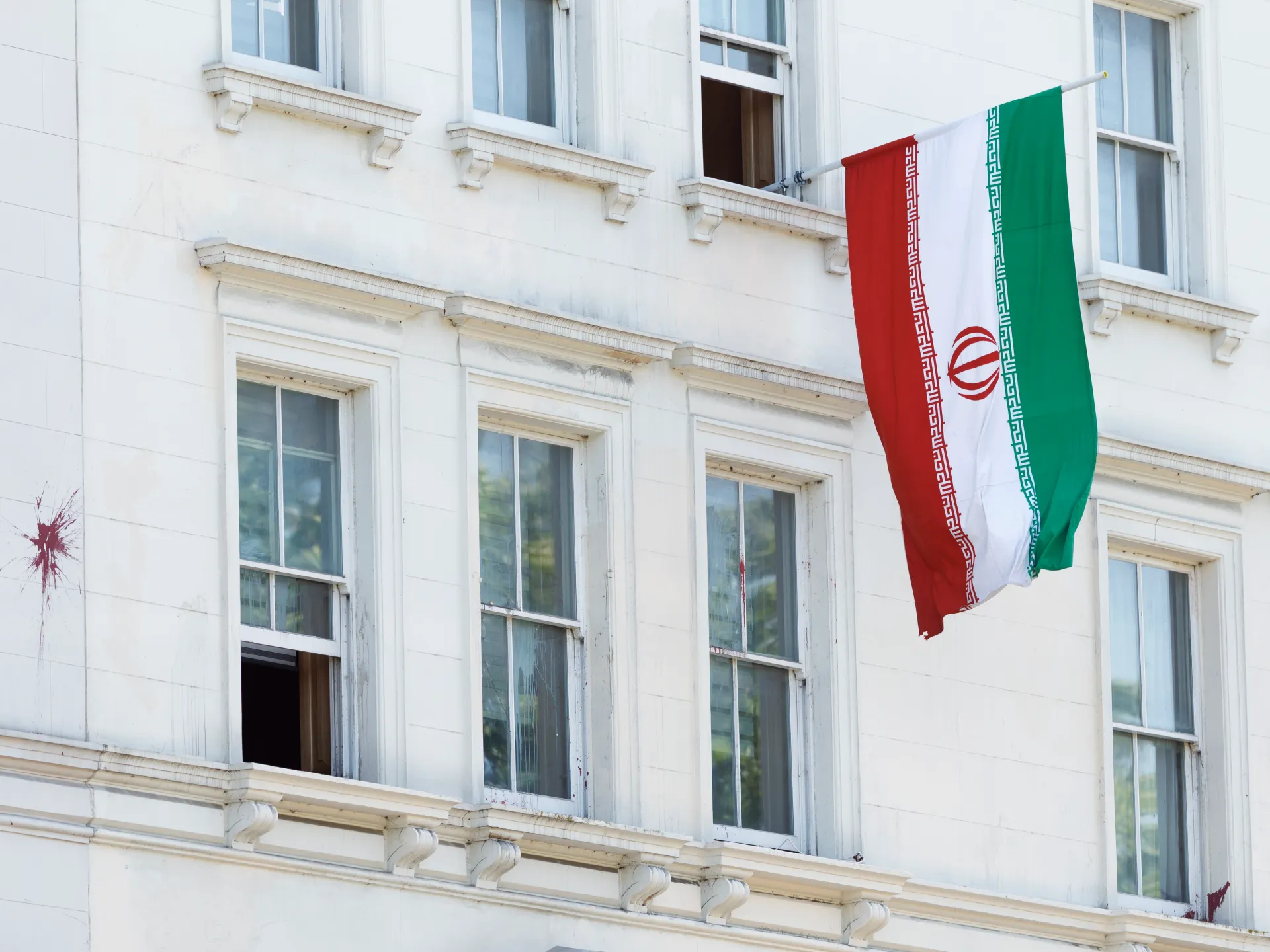
  5. Iran – “British nationals are at significant risk of arrest”
  6. Mali – “Due to unpredictable security conditions”
  7. Niger – “Due to the rise of reported terrorist and criminal kidnappings”
  8. Russia – “Due to the risks and threats from its continuing invasion of Ukraine”
  9. South Sudan – “Due to the risk of armed violence and criminality”
  10. Syria – “Ongoing conflict and unpredictable security conditions”
  11. Yemen – “Unpredictable security conditions”

FCDO advises against all travel to parts

  1. Algeria – all travel to within 30km of Algeria’s borders with Libya, Mauritania, Mali, Niger, Tunisia
  2. Armenia – within 5km of the full eastern border between Armenia and Azerbaijan, the M16/H26 road between the towns of Ijevan and Noyemberyan
  3. Azerbaijan – within 5km of the Azerbaijan-Armenia border
  4. Benin – northern border regions
  5. Burundi – Cibitoke and Bubanza provinces, former Kayanza province, former Bujumbura Rural province and the RN5 road north of Melchior Ndadaye airport
  6. Cambodia – within 50km from the border with Thailand
  7. Cameroon – Bakassi Peninsula, parts of the Far-North Region, North-West Region and South-West Region and within 40km of the Central African Republic, Chad and Nigeria borders
  8. Central African Republic – against all travel except to the capital, Bangui
  9. Chad – Borkou, Ennedi Ouest, Ennedi Est and Tibesti provinces, Kanem Province, including Nokou, Lake Chad region and within 30km of all Chad’s other borders
  10. Congo – within 50km of the Republic of Congo-Central African Republic border in Likouala Region
  11. Côte d’Ivoire – within 40km of borders with Burkina Faso and Mali
  12. Democratic Republic of the Congo – within 50km of the border with the Central African Republic, the province of Kasaï Oriental, the Kwamouth territory of Mai-Ndombe Province and provinces in Eastern DRC
  13. Djibouti – Djibouti-Eritrea border
  14. Egypt – within 20km of the Egypt-Libya border and the North Sinai Governorate
  15. Eritrea – within 25km of Eritrea’s land borders
  16. Ethiopia – international border areas, parts of the Tigray region, Amhara region, Afar region, Gambela region, Oromia region, Somali region, Central, Southern, Sidama and South West regions and Benishangul-Gumuz region
  17. Georgia – South Ossetia and Abkhazia
  18. India – within 10km of the India-Pakistan border and Jammu and Kashmir
  19. Indonesia – Mount Lewotobi Laki-Laki, Mount Sinabung, Mount Marapi, Mount Semeru, Mount Ruang, Mount Ibu
  20. Iraq – advises against all travel to parts of Anbar province, Basra province, Diyala province, Kirkuk province, Ninawa province, Salah al-Din province, Sadr City and within 30km of federal Iraq’s borders with Iran, Syria, Saudi Arabia and Kuwait
  21. Israel – against all travel to Gaza, parts of the West Bank and Northern Israel
  22. Jordan – within 3km of the border with Syria
  23. Kenya – Kenya-Somalia border and northern parts of the east coast
  24. Lebanon – areas in Beirut and Mount Lebanon Governorate, the South and Nabatiyeh Governorates, the Beqaa Governorate, the Baalbek-Hermel Governorate, the Akkar Governorate, the city of Tripoli and Palestinian refugee camps
  25. Libya – advises against all travel to Libya except for the cities of Benghazi and Misrata
  26. Mauritania – Eastern Mauritania and within 25km of the Malian border
  27. Moldova –Transnistria
  28. Mozambique – Cabo Delgado Province
  29. Myanmar (Burma) – Chin State, Kachin State, Kayah State, Kayin State, Mon State, Rakhine State, Sagaing and Magway regions, Tanintharyi Region, Shan State North, North Mandalay Region
  30. Nigeria – Borno State, Yobe State, Adamawa State, Gombe State, Kaduna State, Katsina State, Zamfara State and the riverine areas of Delta, Bayelsa, Rivers, Akwa Ibom and Cross River states
  31. Pakistan – within 10 miles of the border with Afghanistan, areas in Khyber Pakhtunkhwa Province and the Balochistan Province
  32. Philippines – western and central Mindanao and the Sulu archipelago
  33. Saudi Arabia – within 10km of the border with Yemen
  34. Somalia – advises against all travel except the western regions Awdal, Maroodijeh and Sahil
  35. Sudan – against all travel except to the Hala’ib Triangle and the Bir Tawil Trapezoid
  36. Palestine – against all travel to Gaza, parts of The West Bank and Northern Israel
  37. Thailand –parts of the south, near the Thailand-Malaysia border, the Hat Yai to Padang Besar train line and within 50km of the whole border with Cambodia
  38. Togo – within 30km of the border with Burkina Faso
  39. Tunisia – parts of Western Tunisia, including the Tunisia-Algeria border and Southern Tunisia, including the Tunisia-Libya border
  40. Turkey – within 10km of the Turkey-Syria border
  41. Ukraine – all regions of Ukraine with the exception of some western regions
  42. Venezuela – within 80km of the Venezuela-Colombia border, within 40km of the Venezuela-Brazil border, Zulia State
  43. Western Sahara – within 30km of ‘the Berm’ boundary line and areas south and east of the Berm boundary line

FCDO advises against all but essential travel

With regard to the definition of ‘essential travel’, the FCDO says: “Whether travel is essential or not is your own decision. You may have urgent family or business commitments which you need to attend to. Only you can make an informed decision based on your own individual circumstances and the risks.”

  1. North Korea – “The security situation can change quickly with no advance warning”

Source link

Is the US making a great gamble to reshape Iraq? | Donald Trump

United States President Donald Trump’s second administration has introduced a bold and unconventional strategy for the Middle East. The administration intends to recalibrate US influence in a region historically scarred by conflict, prioritising regional stability through economic strength and military consolidation by asserting a stronger, business-minded US presence.

At the centre of Trump’s ambitious goal is what the new US envoy to Iraq, Mark Savaya, described as his goal to “make Iraq great again”. This approach moves away from traditional endless war tactics towards a transactional, results-oriented diplomacy that aims to restore Iraqi sovereignty and economic vitality. It could be the “great gamble” for Trump, who seeks an Iraq that serves as a stable, sovereign regional hub rather than a battleground for foreign interests.

Trump’s primary plans and wishes for Iraq involve a twofold mission: consolidating all armed forces under the command of the legitimate state and drastically reducing the influence of malign foreign players, most notably Iran. The administration seeks to open Iraqi markets to international investment, upgrade the country’s infrastructure, and secure the independence of its energy sector. Hence, the plan is to ground a genuine partnership that respects Iraq’s unity while ensuring that it is no longer a central node for militia activity or external interference.

Militias and political gridlock

This assertive US strategy lands directly in a highly contested and fractured political environment in Iraq, which is less a single state than a patchwork of competing powers. The heart of the problem lies not just in parliament, but also in the persistent shadow influence of armed factions and militias that often operate outside the formal chain of state command. Those groups were among the biggest winners in the November 2025 elections.

Now the ongoing government negotiations have thrown a stark light on these non-state actors.

Their power raises crucial concerns for the future: How can Iraq enforce the law and, crucially, attract the foreign investment needed for revival if armed groups challenge state authority? The consolidation of the country’s armed forces under complete state control is an urgent necessity, underscored by rising regional tensions and security threats.

Moreover, the path to achieving genuine stability is severely obstructed by entrenched political interests.

For Iraq to achieve stability, it must urgently strengthen its institutional frameworks and clearly establish a separation of powers. Yet, many political parties seem more focused on maintaining control over lucrative state resources than on implementing the meaningful reforms the country desperately needs. The result is a governance model struggling to stand firm amid the crosscurrents of competing loyalties and power grabs.

Washington’s play

To achieve these high-stakes goals, Trump has bypassed traditional diplomatic channels by appointing Mark Savaya as the US special envoy to Iraq on October 19. Such an appointment signals a shift towards “deal-making” diplomacy. Savaya’s mission is to navigate the complex political turmoil following Iraq’s parliamentary elections to steer the country towards a stable transition. His job is to bridge the gap between institutional support and massive financial investment, acting as a direct representative of Trump’s business-centric foreign policy.

Savaya is an Iraqi-born, Detroit-based businessman lacking the traditional diplomatic background; his experience is rooted in the private sector in the cannabis industry, but he gained political prominence as an active supporter of Trump’s campaign in Michigan.

He played a key role in the delicate negotiations that secured the release of Elizabeth Tsurkov, the Israeli-Russian academic and Princeton University student who had been kidnapped by an Iraqi militia for more than two years.

Savaya’s communal and ethnic ties have given him significant access to Iraqi power centres that traditional diplomats often lack.

The Iran factor

Iraq’s position in a geopolitical tug-of-war is compounding the internal struggles, forced to balance its critical relationships with two giants: the US and Iran. On the one hand, Washington’s objective is clear: it wants to bolster Iraq’s sovereignty while simultaneously pushing back against the dominance of powerful, often Iran-backed, militias. The US believes that allowing these armed groups too much sway could leave the nation isolated and wreck its fragile economic stability.

But Iranian influence remains a formidable and enduring force. Tehran views Iraq not just as a neighbour but also as a crucial strategic ally for projecting its power across the entire region. The Islamic Revolutionary Guard Corps (IRGC) has been actively working to maintain unity among key Shia factions in Baghdad. This move clearly signals Iran’s deep and enduring interest in shaping Iraq’s political alignment and its future path. Iraq must therefore navigate this high-stakes balancing act to survive.

Savaya’s mission unfolds at a time when Iran’s regional “axis of resistance” is under unprecedented pressure. Having already lost their primary foothold in Syria after the fall of the Assad regime in late 2024, and seeing Hezbollah’s political and military standing in Lebanon severely decimated by the 2025 conflict with Israel, Iranian proxies now face the very real prospect of losing their grip on Iraq too.

In Lebanon, a new government is committed to regaining the state’s monopoly on the use of force, leaving Hezbollah increasingly isolated. This regional retreat means that for Tehran, maintaining influence in Baghdad is a final, desperate stand to remain a relevant regional power.

Other regional actors

The success of Trump’s gamble also depends on the roles of other regional players. Turkiye has recently recalibrated its strategy to integrate Iraq into ad hoc regional trade and security frameworks, effectively diluting Iran’s centrality. Simultaneously, Gulf monarchies such as Saudi Arabia and the United Arab Emirates are emerging as key economic and security partners for Baghdad, offering an alternative to reliance on Iran.

However, these regional actors also bring their own agendas — such as Turkiye’s focus on containing Kurdish movements — which may conflict with US objectives. If Savaya can successfully align these diverse regional interests with Trump’s plan, he may fundamentally rewrite Iraq’s turbulent future.

A realist pragmatism

The “Make Iraq Great Again” strategy reflects a pragmatic reassertion of US interests within the anarchic international system, prioritising Washington’s security and economic power over idealistic goals.

By appointing Savaya — an unconventional, business-oriented envoy — the Trump administration is employing “transactional realism”, utilising economic diplomacy and personal ties as strategic tools to pull Iraq away from Iran’s orbit. This approach views the US-Iran rivalry as a zero-sum game of power politics, where integrating Iraq’s armed forces under centralised state control is fundamental to restoring a state-centric order and sidelining non-state militias that currently feed Tehran’s regional influence.

The new US envoy to Iraq has made clear that “there is no place for armed groups in a fully sovereign Iraq”. His calls resonated with Iraqi officials and militia leaders alike – now at least three militias close to Iran have publicly agreed to disarm. However, other groups have yet to do the same, while rejecting the call from the outset.

However, this high-stakes attempt to shift the regional balance of power faces a significant “security dilemma”, as aggressive moves to diminish Iranian influence may trigger a violent defensive response from Tehran to protect its remaining strategic assets. While the strategy seeks to exploit a regional shift – leveraging the weakened state of Iranian proxies in Syria and Lebanon – it must contend with the “hybrid” power of Iraqi militias and the narrow self-interests of neighbouring players like Turkiye and the Gulf states.

The success of this gamble depends on whether the US can dismantle the shadow economies that facilitate foreign interference and establish a stable, autonomous Iraqi state capable of navigating the intense geopolitical tug-of-war between Washington and Tehran.

The stakes for Iraq’s future

Ultimately, the appointment of Savaya serves as the definitive stress test for Iraqi sovereignty, marking a high-stakes transition towards a transactional “America First” strategy aimed at “Making Iraq Great Again”. By attempting to consolidate military command under the state and dismantle the shadow economies fuelling Iranian influence, Savaya’s mission seeks to exploit the current regional weakening of Tehran’s proxies to transform Iraq into a stable, autonomous hub.

However, the success of this “Great Gamble” hinges on Savaya’s ability to overcome entrenched political opposition and reconcile the presence of US forces with the demand for national unity. If this unconventional diplomatic push can bridge internal divides — particularly between Baghdad and the semi-autonomous Kurdish region in the north — Iraq may finally secure a path towards economic independence; otherwise, the nation risks remaining a perpetual battleground caught in the geopolitical crossfire between Washington and Tehran.

The views expressed in this article are the author’s own and do not necessarily reflect Al Jazeera’s editorial stance.

Source link

Iran’s Deadly Crackdown on Alleged Israeli Spies Intensifies

NEWS BRIEF Iran executed a man on Saturday accused of spying for Israel, the latest in an escalating series of death sentences carried out amid a deepening shadow war between Tehran and Jerusalem. The execution, described by human rights groups as based on coerced confessions, underscores Iran’s harsh response to perceived security threats and the […]

The post Iran’s Deadly Crackdown on Alleged Israeli Spies Intensifies appeared first on Modern Diplomacy.

Source link

Iran executes man accused of spying for Israel’s Mossad: State media | Israel-Iran conflict News

Aghil Keshavarz is the tenth person put to death for espionage since June conflict with Israel.

Iran has executed a man convicted of spying for Israel’s Mossad intelligence agency, judicial authorities announced, as Tehran continues a widening crackdown on alleged collaborators following the 12-day Israel-United States-Iran war earlier this year.

Aghil Keshavarz was put to death on Saturday morning after the Supreme Court upheld his conviction on espionage charges, according to Mizan, the judiciary’s official news agency.

Recommended Stories

list of 2 itemsend of list

The 27-year-old architecture student was arrested earlier this year in the northwestern city of Urmia after military patrols caught him photographing an army headquarters building.

The execution adds to a growing number of people put to death for espionage since the June conflict, with at least 10 executed by September alone.

In September, Iran executed a man it said was “one of the most important spies for Israel in Iran”.

In October, Tehran toughened legislation against alleged spies for Israel and the US, making espionage automatically punishable by death and asset confiscation.

According to the Mizan report, Keshavarz was accused of conducting more than 200 missions for Israeli intelligence services across Tehran, Isfahan, Urmia and Shahroud.

The missions allegedly included photographing target sites, conducting opinion polling, and monitoring traffic patterns at specific locations.

Authorities said he communicated with both Israel’s Mossad and military officials through encrypted messaging platforms, receiving payment in cryptocurrency after completing assignments.

The judiciary said Keshavarz had “knowingly cooperated” with Israeli services with the intention of harming Iran’s Islamic Republic.

The Oslo-based Iran Human Rights group has previously disputed similar espionage convictions, saying suspects are often tortured into false confessions.

Israel’s offensive in June involved 12 days of air attacks, including several against Iran’s top generals and nuclear scientists, as well as civilians in residential areas, for which Iran retaliated with barrages of missiles and drones. The US also carried out extensive strikes, on Israel’s behalf, on Iranian nuclear sites during the conflict. According to Amnesty International, Israeli attacks on Iran killed at least 1,100 people.

In response to the June war and protests in recent years over the state of the economy and women’s rights, as well as calls for regime change, Iran has sentenced more people to death.

Source link

Iran’s foreign minister says strikes won’t stop nuclear programme | Israel-Iran conflict

Exclusive: Iran’s foreign minister sits down with Fault Lines to discuss the nuclear standoff and diplomatic deadlock.

In an exclusive, wide-ranging interview recorded in October with Al Jazeera’s Fault Lines documentary programme, Iranian Foreign Minister Abbas Araghchi tells correspondent Hind Hassan that strikes by Israel and the United States in June caused “serious damage” to Iran’s nuclear facilities but insists its nuclear programme will continue.

“Technology cannot be eliminated by bombing,” he says, arguing that Iran’s scientific knowledge remains intact.

As Iran remains locked in a standoff with the US and refuses to renew negotiations while zero uranium enrichment demands remain in place, Araghchi says European snapback sanctions have undermined future cooperation with the United Nations nuclear watchdog, the International Atomic Energy Agency, and Iran would reconsider how it cooperates in the future.

Despite emphasising that “diplomacy is our priority,” the foreign minister insists that Iran is prepared to fight back if it is attacked again. Araghchi maintains that while Tehran has “never trusted the United States as an honest negotiating partner”, Iran remains prepared to engage diplomatically if both sides respect each other’s rights and pursue mutual interests based on equality.

Source link

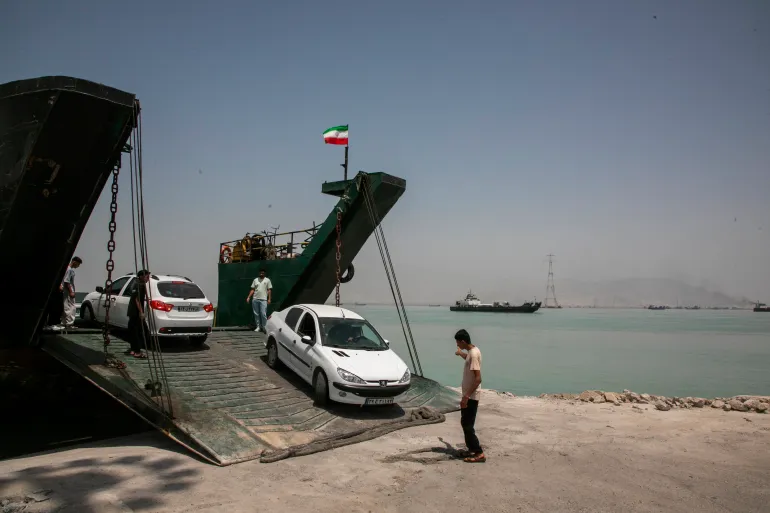
US forces stormed cargo ship travelling from China to Iran: Report | International Trade News

Incident in November latest reported instance of Trump administration’s increasingly aggressive maritime tactics.

United States forces raided a cargo ship travelling from China to Iran last month, according to the Wall Street Journal, in the latest reported instance of increasingly aggressive maritime tactics by the administration of US President Donald Trump.

Unnamed officials told the newspaper that US military personnel boarded the ship several hundred miles from Sri Lanka, according to the report on Friday. It was the first time in several years US forces had intercepted cargo travelling from China to Iran, according to the newspaper.

Recommended Stories

list of 3 itemsend of list

The operation took place in November, weeks before US forces seized an oil tanker off the coast of Venezuela earlier this week, citing sanctions violations. It was another action Washington has not taken in years.

US Indo-Pacific Command did not immediately confirm the report. An official told the newspaper that they seized material “potentially useful for Iran’s conventional weapons”. However, the official noted the seized items were dual-use, and could have both military and civilian applications.

Officials said the ship was allowed to proceed following the interdiction, which involved special operation forces.

Iran remains under heavy US sanctions. Neither Iran nor China immediately responded to the report, although Beijing, a key trading partner with Tehran, has regularly called the US sanctions illegal.

Earlier in the day, Chinese Foreign Ministry spokesperson Guo Jiakun condemned the seizure of the oil tanker off the coast of Venezuela, which was brought to a port in Texas on Friday.

The action came amid a wider military pressure campaign against Venezuela, which Caracas has charged is aimed at toppling the government of leader Nicolas Maduro.

Beijing “opposes unilateral illicit sanctions and long-arm jurisdiction that have no basis in international law or authorisation of the UN Security Council, and the abuse of sanctions”, Guo said.

White House spokesperson Karoline Leavitt told reporters on Thursday the Trump administration would not rule out future seizures of vessels near Venezuela.

Source link

Nuclear ambition, proxies & defiance: Iran’s former top diplomat | Israel-Iran conflict

On the Record

In this episode of On the Record, Al Jazeera’s Ali Hashem is joined by Iran’s former foreign minister, Mohammad Javad Zarif. They discuss Iran’s political and military involvement in the Middle East and beyond. Zarif reflects on Iran’s involvement with resistance groups in Syria, Gaza and Lebanon and why Iran’s nuclear ambitions have not been obliterated by either the US or Israel.

Source link