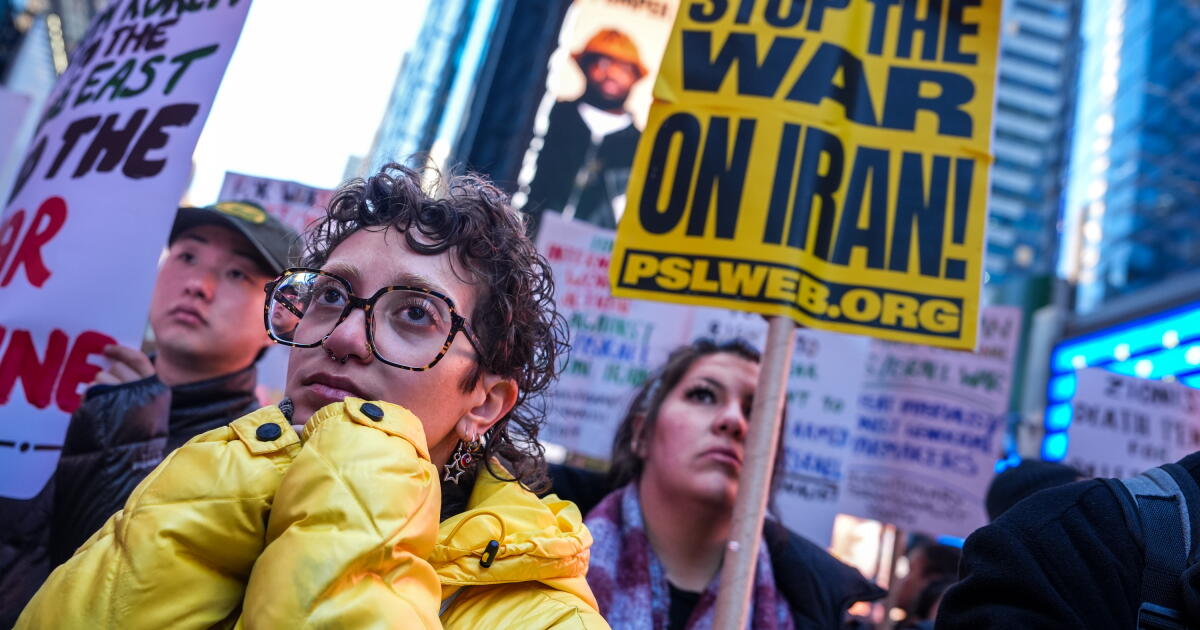
The front month contract on Brent crude, the international standard for oil prices, crossed $100 per barrel again on Wednesday morning while the US standard, WTI, hovered around $95.
ADVERTISEMENT
ADVERTISEMENT
Prices have risen almost 20% since the middle of last week as fighting around the world’s most important oil chokepoint has once again intensified.
It is also the first time since 23 July that oil has hit the $100 mark.
US Central Command said its forces destroyed five Iranian tankers carrying crude oil on 8 September after Iran’s Revolutionary Guard fired ballistic missiles at a US Navy warship twice within two days. The command did not identify the ship, but said it was not hit and continued patrolling regional waters.
It followed a similar strike on 5 September, when Iranian forces fired ballistic missiles at a US aircraft carrier and a destroyer, both of which evaded the attack. The command responded by disabling or destroying three Iranian tankers.
Tehran retaliated by firing missiles at a US military base in Jordan, where air defences intercepted most of them, and renewed threats to target tankers in Kuwaiti and Bahraini waters.
Iran has also repeatedly warned vessels against using unauthorised routes through the Strait of Hormuz.
Mohsen Rezaei, secretary of Iran’s Supreme National Security Council, said Tehran would soon declare an exclusion zone outside the strait, warning that any vessel entering without Iranian coordination would be added to a sanctions list.
Saudi Arabia has been drawn in too, with Aramco facilities at Jazan attacked again on Monday, though damage was reported as limited.
Roughly 7 million barrels a day are still moving through the Strait of Hormuz, against about 20 million before the war began on 28 February.
No end in sight
The military escalation is running alongside a financial one.
Washington launched Operation Economic Outcast in late August, an effort to sever Iran from the global financial system by targeting its access to digital assets, technology, gold, aviation and shipping.
The US Treasury designated close to 60 companies, individuals and vessels at the outset and has signalled fresh measures weekly, with the European Union endorsing the campaign this month.
Rhetoric on both sides has hardened.
US Secretary of War Pete Hegseth said the country “will destroy [and sink]” Iranian oil tankers if Iran fires on American vessels while the Iranian parliament speaker Mohammad Bagher Ghalibaf replied by stating “strike our assets and you get struck”.
US President Donald Trump has continued to insist the waterway is functioning, posting on Truth Social last week that “Hormuz volumes are BACK” and claiming 18 million barrels a day were flowing.
However, the US Energy Secretary Chris Wright put Monday’s figure at 17 million barrels of crude and products combined, while acknowledging the multi-day rolling average is considerably lower.
During last week’s White House press conference, US Vice President JD Vance also declined to categorise the ongoing conflict as a war and stated that “the only reason we do not have a worldwide energy crisis is because of the leadership of the President.”
Faced with the latest developments, analysts are adjusting upward.
Goldman Sachs raised its Brent and WTI forecasts by $5 on Monday to $85 and $80, respectively, for December and warned prices could exceed $120 next year should Gulf output remain 4 million barrels a day below pre-war levels, though the bank does not treat that as its base case.
WASHINGTON — For the last six months, President Trump has attempted to control the narrative of the Iran war.
As days, weeks and months passed, he repeatedly said that an agreement to end the conflict was close at hand and that Iran was already defeated. Between fraught negotiations, Trump has gone from conciliatory to antagonistic, characterizing Iran’s new leadership as more “rational” than their predecessors, only to later call them “sick individuals.”
There have even been times the commander in chief contradicted himself and his own Cabinet in the same week — and sometimes, the same day.
Friday marks the sixth month of the war launched by the U.S. and Israel. Among U.S. forces, there have been at least 18 killed and 758 wounded, according to Pentagondata. The Human Rights Activists News Agency puts the death toll in Iran at 3,636. In Lebanon, officials, say more than 4,300 have died. The Israeli military reported 72 deaths, and at least 50 civilians have died, according to news reports.
Here is a recap of notable comments Trump made in public remarks and on social media during half a year of war:
What he said: “The United States military has undertaken a massive and ongoing operation to prevent this very wicked, radical dictatorship from threatening America and our core national security interests.”
In announcing the start of Operation Epic Fury from the White House, Trump called Iran the world’s No. 1 state sponsor of terror and recalled actions by Iran or its proxies, such as the hostage crisis of 1979 and the bombing of a Marine barracks in Lebanon in 1983 that left 241 dead.
The goals of the operation, Trump said, were to destroy Iran’s nuclear ambitions, its naval capabilities and missile industry and to ensure that Iranian proxies — including Hezbollah and Hamas — were thwarted. He implored Iranian citizens to rise up against the government.
Women carry the casket of a teacher from Shajareh Tayyebeh Elementary School toward the cemetery in Minab, Iran, on March 30. The teacher was among those killed in a missile strike on Feb. 28, the first day of the war on Iran.
(Zohreh Saberi / For The Times)
What happened: That morning the U.S. and Israel conducted airstrikes on Iran, killing Supreme Leader Ayatollah Ali Khamenei as well as other key military and government figures. According to Iran’s Red Crescent, 24 of Iran’s 32 provinces were hit in the first day of bombings, with more than 200 deaths and 700 injuries reported. Iranian officials said that at least 120 students and 26 teachers died in a missile strike on Shajareh Tayyebeh Elementary School in Minab.
Iran retaliated by launching missiles at Israel and U.S. bases in Saudi Arabia, Iraq, Jordan, Kuwait, Bahrain, Qatar, United Arab Emirates. The Islamic Revolutionary Guard Corps also warned ships to not travel through the Strait of Hormuz, the passageway for 20% of the world’s oil and energy supplies.
What he said: “We grieve for the true American patriots who have made the ultimate sacrifice for our nation, even as we continue the righteous mission for which they gave their lives. Sadly, there will likely be more.”
In an interview with the New York Times, Trump was asked how long the U.S. and Israel could sustain its offensive in Iran. “It won’t be difficult,” he replied. “We have tremendous amounts of ammunition. You know, we have ammunition stored all over the world in different countries.”
What happened: An Iranian one-way drone attack was launched against the industrial Port Shuaiba in Kuwait, where American soldiers set up an operations center after abandoning the larger Camp Arifjan military installation.
What he said: “We projected four to five weeks, but we have capability to go far longer than that.”
At a Medal of Honor ceremony at the White House, Trump assessed the progress of the attacks on Iran, saying the U.S. was “already substantially ahead of our time projections.”
Retired Command Sgt. Maj. Terry P. Richardson is presented the Medal of Honor by President Trump on March 2, the same day Trump said progress in the war on Iran was exceeding projections. ..
(Win McNamee / Getty Images)
What happened: The conflict expanded, with Iran-backed militant group Hezbollah in Lebanon launching drones against Israel.
Israel’s counter-strike would ultimately decapitate Hezbollah leadership, but strikes between the two forces would continue through the first week of war.
U.S. Central Command increased the number of U.S. troop deaths in the Kuwait strike to six from three.
What he said: “The war itself is going unbelievably. It’s as good as it can be.”
He said that the U.S. “wiped out” the Iranian navy, air force, drone manufacturing capabilities and “every form of leadership you can have,” adding that he was interested in being a part of the selection of Iran’s new leader.
He also said that he believed the strike on the Minab school was a misdirected missile launched by Iran. He offered no evidence.
The family of 8-year-old Reza Habashian, a second-grader killed in the strike on Shajareh Tayyebeh Elementary School, observes the Persian New Year at his graveside in Minab, Iran, on March 20.
(Zohreh Saberi / For The Times)
What happened: Iranian drone and missile strikes on gulf neighbors continued.
The day after Trump said Iranians had no existing leadership prospects, Mojtaba Khamenei, one of Ayatollah Ali Khamenei’s sons, would become the new supreme leader.
U.S. officials familiar with the preliminary findings of an investigation into the Minab school strikes leaked information to the New York Times that indicated the U.S. had bombed the school as a result of a “targeting mistake.”
What he said: “Watch what happens to these deranged scumbags today. They’ve been killing innocent people all over the world for 47 years, and now I, as the 47th President of the United States of America, am killing them. What a great honor it is to do so!”
In a Fox News radio interview with Brian Kilmeade, Trump said that an uprising by Iranian civilians appeared likely. “It’ll happen, but it probably will be, maybe not immediately,” he said.
What happened: Iran and Hezbollah continued joint attacks against Israel, while Israel continued its own large-scale strikes on Beirut and Tehran.
On March 13, a U.S. Air Force KC-135 Stratotanker — a refueling and airlift plane — crashed over Western Iraq without being attacked, resulting in the death of six more U.S. service members, Central Command announced. The U.S. death toll increased to 13.
What he said: “I think we won. All they’re doing is clogging up the Strait [of Hormuz], but from a military standpoint, they’re finished.”
Lightning streaks across the sky over an oil tanker on March 21 at Sultan Qaboos Port in Muscat, Oman.
(Elke Scholiers / Getty Images)
That same afternoon, in a post on his social media website, Trump said the U.S. was considering “winding down” military efforts in Iran.
What happened: The Pentagon said in a statement that it would send three warships and roughly 2,500 Marines to the Middle East for “routine training.”
What he said: “I am pleased to report that the United States of America and the country Iran have had, over the last two days, very good and productive conversations regarding a complete and total resolution of our hostilities in the Middle East.”
Trump also postponed military strikes against Iranian power plants and energy infrastructure after threatening to do so if Iran did not open access to the Strait of Hormuz.
What happened: Mohammad Bagher Qalibaf, Iran’s parliament speaker, responded to Trump’s claims in a post on X. “No negotiations have been held with the U.S.,” Qalibaf wrote, adding that he believed the U.S. was using the prospect of an accord to ease strain on financial and oil markets.
What he said: “The United States of America is in serious discussions with A NEW, AND MORE REASONABLE, REGIME to end our Military Operations in Iran.”
Iranian Foreign Ministry spokesman Esmail Baghaei, addressing journalists in Tehran on March 30, said a truce plan proposed by the United States contained “very excessive, unrealistic and unreasonable” demands.
(Shadati / Xinhua / Getty Images)
While saying in a social media post that progress had been made, Trump leveled additional threats if a pact wasn’t reached shortly. “We will conclude our lovely ‘stay’ in Iran by blowing up and completely obliterating all of their Electric Generating Plants, Oil Wells and Kharg Island,” he wrote.
What happened: Iranian Foreign Ministry spokesperson Esmail Baghaei once again rejected that direct talks with the U.S. had taken place, describing the proposed terms as “unrealistic, unreasonable and excessive.”
What he said: “We’re gonna hit them hard over the next two to three weeks. We’re gonna bring them back to the stone ages, where they belong.”
In an address to the nation, Trump also denied that a change of governments was ever a goal in attacking Iran.
What happened: Thousands more U.S. troops arrived in the Middle East amid continuous back-and-forth strikes. Iran hit an oil tanker off Qatar’s coast and fired missiles and drones at Jordan, which were intercepted. Israel carried out strikes on a Beirut neighborhood.
What he said: “A whole civilization will die tonight, never to be brought back again. I don’t want that to happen, but it probably will.”
Vice President JD Vance holds a cellphone up to a microphone while on a call with President Trump at an event on April 7..
(Jonathan Ernst / Pool Photo)
What happened: Trump’s post about a whole civilization dying went live around 5 a.m., but later in the day the U.S. and Iran announced a two-week truce. Iran’s Supreme National Security Council said in a statement that the truce did not “signify the termination of the war.”
What he said: “Effective immediately, the United States Navy, the Finest in the World, will begin the process of BLOCKADING any and all Ships trying to enter, or leave, the Strait of Hormuz.”
What happened: U.S. Central Command announced that the blockade of Iranian ports began at 10 a.m. Eastern. Central Command said the blockade would be “enforced impartially against vessels of all nations” entering or departing Iranian ports and coastal areas.
People pass in front of a pro-government political mural in Tehran on April 12.
(Majid Saeedi / Getty Images)
What he said: “I think it’s close to over, yeah. I view it as very close to being over.”
Trump’s comment to Fox Business anchor Maria Bartiromo on “Mornings with Maria” came two days after he announced the blockade of Iranian ports.
What happened: Though the ceasefire continued to hold, Iran officials had not relented on their right to enrich uranium, to maintain conventional defensive capabilities and to police traffic through the Strait of Hormuz.
What he said: “I didn’t guarantee no war. Why would I have built the strongest military in the world?”
In an interview with Kristen Welker of NBC on the 100th day of the conflict, Trump claimed that he had never promised during his campaign that he would not engage in new wars in the Middle East.
President Trump sits for an interview with NBC’s Kristen Welker.
(Adam Bettcher / NBC / Getty Images)
What happened: On multiple occasions during his 2024 presidential campaign, Trump suggested that he wouldn’t start new “endless wars.”
In a social media post in late June 2024, he framed the election as a choice between “peace and prosperity or war and no war.”
What he said: “It’s a memorandum of understanding, and if I don’t like it, we’ll go back to shooting at them, dropping bombs on their head.”
Trump spoke the same day he signed a 14-point Memorandum of Understanding with Iran to cease hostilities for 60 days. Trump put his signature to the memorandum while attending a dinner with French President Emmanuel Macron in Versailles.
French First Lady Brigitte Macron, President Emmanuel Macron and President Trump meet at the Palace of Versailles in France on June 17.
(Mustafa Yalcin / Anadolu / Getty Images)
What happened: The document set out a series of conditions, including the release billions of dollars in Iranian assets that were frozen and restricted by the United States “upon the implementation” of the memorandum.
Some issues, such as the future of Iran’s nuclear program, were set aside for negotiations down the road.
The White Housed pushed back on bipartisan criticism of the deal, arguing its concessions were contingent on Iran’s conduct.
What he said: “There may come a point when we are no longer able to be reasonable, and will be forced to militarily complete the job that we very successfully started. If that happens, the Islamic Republic of Iran will no longer exist!”
President Trump boards Air Force One on Aug. 9 at Morristown Airport in Morristown, N.J.
(Eric Lee / Getty Images)
What happened: Trump’s social media post came as Iran and the U.S. continued to carry out strikes in the Middle East despite the memorandum. CENTCOM announced that military surveillance, air defense sites and drone storage facilities were struck after an Iranian attack on a container ship, the Ever Lovely.
What he said: “Iran has been very, very badly damaged. They’ve lost everything, almost, militarily. … They’ve got very little left; They’ve got some missiles; They’ve got some drones; They’ve got some manufacturing ability, not much; We control the Strait.”
People gather July 19 on a bridge rendered unusable in a U.S. airstrike in Iran’s Hormozgan province. Iranian authorities said the United States carried out attacks on 95 locations in Iran over the previous 10 days.
(Amir Hossein Khorgooei / Anadolu / Getty Images)
What happened: According to a CENTCOM press release, the U.S. completed 13 nights of consecutive strikes against Iran by July 23, adding to an earlier announcement that Iran had attacked more than 30 commercial vehicles in the previous three months of conflict.
Trump made the comment in the Oval Office while back-and-forth strikes — primarily over control of the Strait of Hormuz — continued.
What happened: According to a report by NPR, Iran’s parliament aimed to block U.S. and Israeli access to the Strait of Hormuz, despite Trump’s assertion that the waterway was under his control.
What he said: “We are only semi-negotiating with them. We are just watching Iran with its huge inflation and the fact they have no money.”
Trump’s comments reflected how U.S. officials sought to readjust wartime strategy after multiple rounds of failed negotiations. Trump told Axios that he would not proceed with expanded strikes against Iran, as the U.S. was “low-keying” its approach to the conflict.
What happened: As the war approached its six-month mark, both sides mostly ceased military attacks, but shifted to economic pressure.
“ANY country that allows its financial institutions, businesses, airports, or government entities to provide any type of lifeline to Iran will itself face TREMENDOUS Economic Consequences,” Trump wrote in an Aug. 19 post, threatening “ECONOMIC D-DAY” if Iran did not comply with his demands.
According to Reuters, Qalibaf, the Iranian parliament speaker, said that the Strait of Hormuz would remain closed until military threats ceased and sanctions on Iran were lifted.
What happened: In a post on X three days before Trump’s “completely collapsing” post, the hard-line leader of Iran’s Supreme National Security Council had noted economic sanctions placed on Iran by previous presidents, including Obama and Biden, and said they had all failed.
“We have seen this movie before,” he wrote. “Same bull. Different bullies.”
Iranian President Masoud Pezeshkian and other officials attend an event at the mausoleum of Ayatollah Ruhollah Khomeini, the founder of the Islamic Republic of Iran, in Tehran on Aug. 23.
BETHLEHEM, Pa. — Mike Gibbons sat out the presidential election two years ago, frustrated that Democrat Kamala Harris did not take a stronger stand against Israel’s war in Gaza and unable to bring himself to cast a vote for Republican Donald Trump.
That is not his plan this year.
The 33-year-old restaurant server in this eastern Pennsylvania town that once housed one of the world’s largest steelmakers is eager to vote for any Democrat he can in November. As the war with Iran that Trump initially said would last weeks surpasses six months on Friday, Gibbons is feeling the fallout every time he fills his tank at nearly $1 per gallon more than last year.
“The price of gas affects the price of everything and the price of everything’s up and my pay hasn’t gone up,” he said. “I’m doing blue no matter who this time.”
The Iran war has reshaped the rapidly approaching midterm elections, undermining Trump’s campaign pledge to steer clear of foreign conflicts and challenging Republicans who would rather focus on their tax cuts as they cling to narrow majorities in Congress.
While the president’s supporters are undeterred, the war’s unpopularity and economic ripple effects could tilt the scales in tightly contested U.S. House districts like the one in Bethlehem, where Republican Rep. Ryan Mackenzie is one of this year’s most vulnerable incumbents.
Midterm elections are always difficult for the party in power in Washington. But interviews with voters around the country show how a war that Trump expected to end with a swift victory could undermine the final years of his presidency.
Many U.S. adults say the war has not been worth fighting
About two-thirds of U.S. adults say the war with Iran has not been worth fighting, according to a July poll from The Associated Press-NORC Center for Public Affairs Research. That includes the vast majority of Democrats and independents, as well as more than one-third of Republicans.
Although Trump has long criticized Iran’s leadership, he did little to prepare Americans or allies for such a lengthy conflict. Republican President George W. Bush, for instance, spent more than a year making a case for launching a war in Iraq through speeches and attempts to build an international coalition. Trump did none of that.
Trump has refused to acknowledge the war’s cost, saying this month he would “never apologize” for higher prices stemming from it and insisting he did “the right thing” to prevent Iran from obtaining a nuclear weapon. His administration announced new sanctions this week in an attempt to further isolate Tehran.
In Congress, Republicans have shifted from initially cheerleading Trump’s moves in Iran to expressing concern about the toll of the war. But the party has largely unified to block measures that would curb Trump’s war powers and leaders have shown no interest in cutting off money for the war, preferring to portray Democrats as extremists who cannot be trusted to govern.
Democrats who were blamed just two years ago for presiding over high prices see an opportunity to turn the issue back on their opponents. As part of his comeback U.S. Senate bid in Ohio, Sherrod Brown released an ad this week filmed at a gas station as he said “the cost of gas is out of control and we’re the ones paying for it.”
Speaking to a group of older adults recently in a Republican-dominated swath of western Maryland, Democratic U.S. Sen. Angela Alsobrooks blamed higher prices on the war. Heading into November, she encouraged fellow Democrats to stay focused on the war’s impact and what it says about Trump’s leadership.
“We ought to be saying what is obvious, which is our country is heading in the wrong direction,” she said in an interview.
That resonates with voters such as Brandon Bane, a fast-food worker in Bakersfield, California, where Republican Rep. David Valadao is also in a competitive congressional race. Bane, who described himself as a political independent, said he often has to balance paying rent and groceries, noting high gas prices have only added to the challenge.
“It hasn’t been worth it at all,” he said of the war, adding that he plans to vote for Valadao’s challenger, Democrat Randy Villegas.
Melissa Wegman, a Democratic retiree who is also from Bakersfield, said she was shocked when the pump recently whirled to $128 to fill the tank on her SUV.
“I have to manage a budget,” she said.
Some voters are sticking with Republicans
But there is a risk, too, that the war does not provide Democrats with the political boost they are expecting.
While there is plenty of frustration about prices, there are also voters willing to make adjustments without blaming Republicans. Many remain aligned with Trump and are not interested in seeing Democrats return to power.
North Carolina is a top pickup opportunity for Democrats hoping to flip a U.S. Senate seat. But at the State Farmers Market in Raleigh, North Carolina, Lucienda Lowe of Sugarloaf Orchards said her faith in Trump is solid.
“There has to be a reason why they’re over there,” she said. “They wouldn’t be over there doing that if there wasn’t something more going on than what we’re seeing.”
She has not raised her prices on apples even as fuel and fertilizer costs soar. Her family has been farming since 1846 so she feels resilient to weather the next rough patch and tells others to do the same.
“Suck it up, buttercup,” she said.
Similarly in Iowa, where Democrats are bullish on their prospects of flipping everything from a U.S. Senate seat and the governor’s mansion to several U.S. House races, Larry Cole said higher gas prices as a result of the war are just the “nature of the beast.”
The 66-year-old Republican service manager from Perry, Iowa, said he will back Republicans in this midterm elections and does not want to see Democrats gain control in either chamber. He said Trump has taken action that other presidents were not willing to do to keep Iran in check.
Trump “hit them where they need to be hit,” Cole said.
Mark Duffy, 65, of Scottsdale, Arizona, said he did not expect the Iran war to go on as long as it has, but it has not had material effects on his life.
“I didn’t think it would go this long,” said Duffy, who retired a year ago from his career selling electronic components. “I don’t think anybody did, but now the next wave is the economic sanctions, so we’ll see if that works and maybe that is a way for other people to join.”
For others, the war has only reinforced a sense that neither political party is responsive to the needs of voters.
As he left a tattoo parlor in Ashland, Virginia, 26-year-old Evan Mise said he feels the increase in gas prices and worries about whether his mom will be able to retire or whether he will someday be able to.
But he had not decided whether to support Democrats or Republicans in November.
“I feel like our government is pretty corrupt through and through,” he said. “It’s kind of just a sit-back-and-watch thing. And I think my generation especially feels helpless.”
Catalini and Sloan write for the Associated Press. Sloan reported from Washington. AP writers Allen G. Breed in Raleigh, N.C., Michael R. Blood in Bakersfield, Sarah Rankin in Ashland, Va., Jonathan J. Cooper in Scottsdale, Ariz., and Hannah Fingerhut in Des Moines, Iowa, contributed to this report.
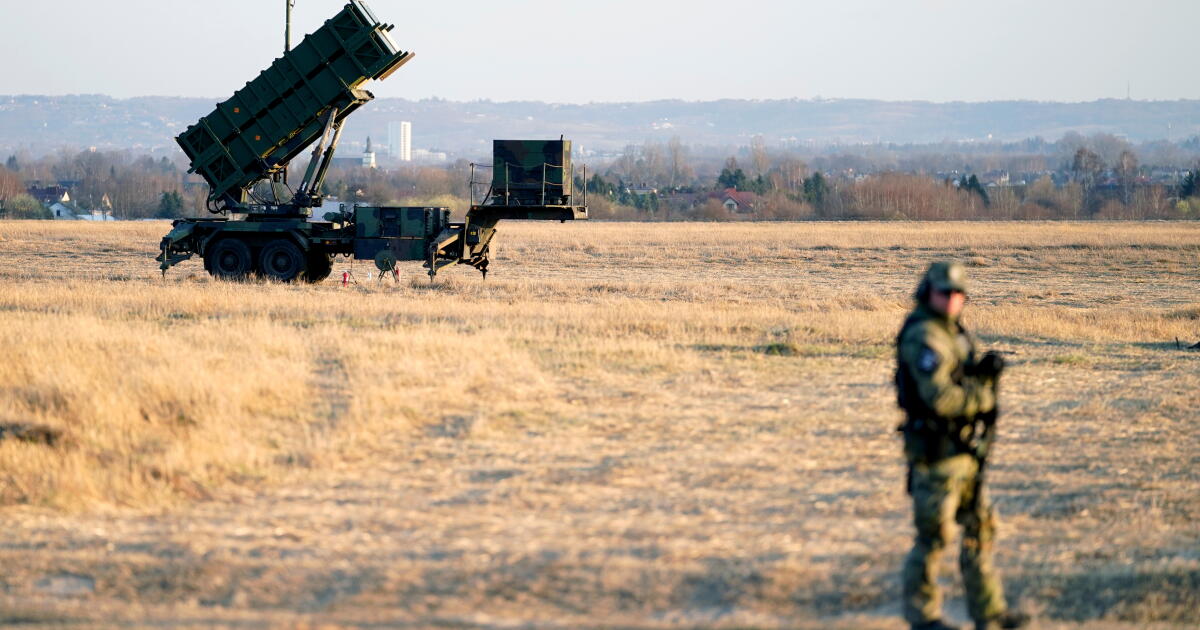
WASHINGTON — The U.S. military is experiencing a “beyond critical” shortage of advanced missile interceptors in Europe largely driven by President Trump’s war with Iran, a U.S. defense official in Europe and a NATO official told the Associated Press, raising concerns about vulnerabilities in NATO countries to a potential Russian attack.
The U.S. defense official said the most concerning shortfall involves Patriot missile interceptors, which can shoot down Russia’s high-speed ballistic missiles. The NATO official confirmed the low inventories of Patriots among American and NATO forces in Europe. Both spoke on condition of anonymity to discuss sensitive military matters.
In the event of a Russian ballistic missile assault on, for example, a military headquarters or power plant, NATO could be in a similar position to Patriot-starved Ukraine and be forced “to take punch after punch in the mouth,” the U.S. defense official said.
In Europe, the American military “definitely” does not have enough Patriots to stop any possible sustained ballistic missile attack and would have “very limited” capability to defend against a single ballistic missile strike or a stray Russian missile that goes off course, the U.S. official said.
It illustrates the cascading fallout from Trump’s decision to launch a war against Iran, a conflict that reaches the six-month mark on Friday. U.S. missile stocks in Europe have been moved to the Middle East, where U.S. and Gulf allies have fired off significant numbers of interceptors, including Patriots, to thwart Iran’s drones and missiles. Some of those attacks have killed and wounded American troops.
Though a Russian ballistic missile attack against NATO countries is not imminently expected, CIA Director John Ratcliffe went to Moscow this week to warn Russia not to attack, The Wall Street Journal reported. Trump played down the significance of the rare and secretive trip, saying it was “sort of semi-routine.”
European and NATO officials say Russia could be in a position to attack countries in the alliance by 2030. Patriot stockpiles are projected to rebound by then. In the meantime, Russia’s war in Ukraine could hinder its ability to carry out any missile attack on Europe as it would be a challenge for Moscow to fight an air war on two fronts.
U.S. Patriot transfers to Ukraine played a role in the drawdown, but the Iran war wasn’t expected
The Patriot missile shortage is most acutely felt in Ukraine, where officials are begging for more air defense support and where previous U.S. transfers also have drawn down some supply. Kyiv says only U.S.-made Patriots can stop Russia’s advanced ballistic missiles, which increasingly are getting through Ukrainian defenses, including as part of a barrage overnight into Thursday.
The U.S. supplied hundreds of Patriot missiles to Ukraine over the course of the 4 1/2-year-long conflict, but the Iran war was the tipping point for shrinking inventories, said Ed Arnold, senior associate fellow at the Royal United Services Institute, a military think tank in London.
The supply to Ukraine was planned for and reasonably measured, he said, whereas stocks in the Middle East have been unexpectedly and quickly drained, exposing supply chain constraints.
The U.S. military in Europe also is grappling with critical shortages of the Army Tactical Missile System, or ATACMS, a medium-range ballistic missile designed to strike behind enemy lines, the two officials said. But the overall munitions picture in Europe is less dire than on air defenses alone because some European militaries have their own offensive missiles, such as the Taurus and Storm Shadow, which are both long-range air-launched bunker-busting missiles.
U.S. Army Col. Martin O’Donnell, a senior NATO military spokesperson, said it is “simply not the case” that the number of Patriot missiles in Europe is beyond critical.
NATO, he said, is able to “block punches” and has enough air defense munitions available to defend itself as well as to donate to Ukraine.
Chief Pentagon spokesman Sean Parnell said in a statement Thursday that claims of U.S. munition shortages “are false.”
“We have everything required to strike at the time and place of the President’s choosing,” Parnell said. “Across multiple combatant commands, we have already executed successful operations while maintaining a deep, ready arsenal to defend our people and our interests.”
Europe has few alternatives while stocks are low
The dearth of Patriot interceptors in Europe would leave few alternatives for shooting down Russia’s more advanced ballistic missiles, which can be combined with swarms of inexpensive drones to overwhelm defenses, experts say.
Ukraine and some allies already use systems that can destroy slower-moving drones without expensive missiles. But ballistic missiles are a challenge because they dive steeply toward targets at more than five times the speed of sound, leaving little time to stop them.
The Patriot system tracks the missile, predicts its path and launches within minutes, all while carrying out complex calculations to ensure the interceptor finds its target. One Patriot battery can only cover a limited area: for example, a small military base but not a whole city.
One alternative could be France and Italy’s SAMP/T NG air defense system. France has promised to speed up the delivery of the system — the upgraded version of the current SAMP/T — to Ukraine, which the manufacturer says is better able to counter ballistics.
The new iteration, however, has not yet been battle tested and the current version of the SAMP/T has a smaller range than the Patriot.
While U.S. and European militaries have warships that can serve as mobile air defense, they may be too far from a target to protect it and could risk getting sunk.
Patriot stocks have plunged during the Iran war
Ukraine has received Patriots from American and European stockpiles since Russia’s 2022 invasion, with the U.S. providing about 600 of the interceptors during the Biden administration, said Mark Cancian, a retired Marine colonel who is now senior adviser at the Center for Strategic and International Studies, a Washington think tank.
But the greatest expenditure has been during the Iran conflict, which has used up 65% of U.S. Patriots, amounting to roughly 1,500 of the nation’s 2,330 interceptors, CSIS says. About 600 missiles, including those destined for Europe, should be made this year, with a production goal of 2,000 Patriot missiles a year set for 2030, Cancian said.
NATO says Europe’s first Patriot missile production facility is expected to open in Germany in September, with deliveries possibly beginning early next year. The first deliveries should go to countries that have already placed orders, including Germany, the Netherlands, Romania and Spain, the U.S. defense official said.
But for now, that means some countries, such as Germany, have bought expensive Patriot systems but are in the “ridiculous” position of not having any ammunition to fire from them, said Arnold of the London think tank.
Germany’s defense ministry said it does not comment on stockpiles.
Russia also has limitations
Moscow likely cannot carry out a sustained air assault on a NATO target while it launches almost nightly attacks on Ukraine, Arnold said.
Ukraine’s recent strikes into Russia also have exposed weaknesses in Russia’s air defenses, which could prompt Putin to think twice about provoking a retaliatory attack.
“The uncomfortable truth is possibly the best air defense that we have is Russian constraints,” Arnold said.
Burrows and Finley write for the Associated Press. Burrows reported from London. AP writer Konstantin Toropin contributed to this report.
The US is ramping up its economic pressure on Iran after Treasury Secretary Scott Bessent declared the start of an “economic D-Day”.
ADVERTISEMENT
ADVERTISEMENT
According to Bessent, this represents “the single greatest financial offensive ever marshalled against an adversary.” He set out the position in a post on X late on Sunday and in a Financial Times opinion article published the same day.
Bessent stated that US President Donald Trump’s military campaign had “significantly dismantled Iran’s military capabilities and weakened its nuclear programme”. He added that the administration is now “entering the endgame” and that the economic measures begin at dawn.
The objective, according to the US Treasury Secretary, is to “sever every economic lifeline that sustains the tyrannical regime until Tehran stands alone”.
Bessent cautioned countries that continue to buy or transport Iranian petroleum, facilitate financial flows through exchange houses and free trade zones, handle flights, maintain ship registries or enable seaborne fuel transfers, that any remaining links would accelerate their own isolation.
The comments follow remarks by US President Donald Trump last week. At the time, Trump announced in a Truth Social post “the most crushing economic operation ever taken agaisnt any country!”
Despite both declarations, specific measures have not yet been set out.
According to Bessent’s outline, the package could centre on secondary sanctions against nations and entities that keep purchasing Iranian oil, process its finances, operate related banks or support shipping and other commercial channels, layered on top of the existing naval blockade.
Bessent is scheduled to hold a press conference at 7 PM CET on Monday to announce the concrete steps.
Market reaction
Oil prices are lower on Monday morning even as the rhetoric intensifies.
At the time of writing, Brent crude, the international standard, is trading at around $91.5 which is 2% lower than Friday’s close while West Texas Intermediate stands at roughly $86.2, about 1.5% lower than last week’s close.
The fall may stem from profit-taking after recent gains and from reports of a temporary rise in tanker movements through the Strait of Hormuz.
According to shipping information cited by Axios, around 40 tankers transited the southern channel on Friday night, moving roughly 16 million barrels of oil, higher than the 15-20 vessels recorded on preceding nights.
Overall volumes through the waterway remain well below pre-conflict levels.
On the other hand, US futures are also in the red ahead of market open while European stocks are trading flat.
Oil prices rose on Thursday, holding near their highest levels in weeks, as the deadlocked standoff between the United States and Iran kept supply concerns elevated in the Middle East.
ADVERTISEMENT
ADVERTISEMENT
Brent crude, the international benchmark, rose 0.3% to $91.90 a barrel, while US benchmark crude edged up 0.2% to $84.57 a barrel.
Prices have climbed steadily since the start of August, when Brent was trading at around $87.38 a barrel, as the standoff over the Strait of Hormuz keeps supply concerns elevated even without any single new escalation.
Both benchmarks remain well above the barrel prices they were trading at before the war began.
Markets rebound on Treasury move
Global shares rallied on Thursday, reversing course after Wednesday’s heavy sell-off in artificial intelligence-related stocks, after the US Treasury Department said it would at least double the size of its buyback operations for longer-dated government debt, to $4 billion (€3.4bn) or more per operation, starting in September.
The move eased pressure on bond markets that had pushed yields to multi-decade highs in recent months, and lifted risk appetite across Asia.
South Korea’s Kospi surged 6.1% to 6,858.91, rebounding sharply after sinking 5.8% on Wednesday. Samsung Electronics jumped 9.7%, while SK Hynix surged 14.1% after the memory chipmaker announced a share buyback plan.
Japan’s Nikkei 225 added roughly 0.9%, while the Topix rose 0.8%, recovering some of Wednesday’s losses. Hong Kong’s Hang Seng gained 1.1% to 25,786.32, and the Shanghai Composite rose 0.3% to 3,905.23. Australia’s S&P/ASX 200 was up 0.3% to 9,066.40.
Bond yields ease from multi-decade highs
The yield on the 10-year US Treasury fell to around 4.64%, from 4.71% on Tuesday, while the 30-year yield dropped to 5.18% from 5.28% — pulling back from its highest level since 2007.
Yields have climbed in recent months on concerns over inflation stemming from the war in Iran and rising government debt.
Japan’s 10-year government bond yield, which had been trading near a three-decade high, fell to around 2.83% from more than 2.89% on Wednesday.
On Wall Street on Wednesday, the S&P 500 climbed 0.2% for its first gain in four sessions, snapping a three-day losing streak. The Dow Jones Industrial Average and the Nasdaq composite each added 0.2%.
The US dollar rose to 158.60 yen from 158.16, while the euro slipped slightly to $1.1676 from $1.1677.
Government borrowing costs are surging on both sides of the Atlantic.
ADVERTISEMENT
ADVERTISEMENT
Long-term bond yields across Europe’s biggest economies hit multi-year highs on Tuesday, while the yield on 30-year US Treasuries rose to its highest level in nearly two decades.
The sell-off came as hopes of a swift resolution to the Iran conflict faded, pushing oil prices higher and renewing concerns about persistent inflation. International benchmark Brent crude traded at nearly $91 a barrel on Tuesday morning amid heightened tensions in the Middle East.
“The breakdown in US-Iran peace talks has increased the risk that energy prices remain elevated for the rest of the year, which could keep inflation higher than expected and increase the chance of central banks raising rates,” Richard Carter, head of fixed interest research at Quilter Cheviot, told Euronews Business.
Investors are increasingly betting on tighter monetary policy in the eurozone, with the ECB deposit rate expected to reach 2.76% by March 2027, up from 2.25% currently.
According to Trading Economics, investors see a 90% probability of a September rate hike by the European Central Bank (ECB).
At the same time, in the US, the 30-year Treasury yield reached 5.33%, a level not seen since 2007. In the UK, the 30-year gilt traded at 5.85% — its highest level since May 2026.
As government bonds came under renewed selling pressure globally, France’s 10-year bond yield rose to 4.10% on Tuesday morning, its highest level since June 2009.
Germany’s 10-year Bund yield, the benchmark for the eurozone, climbed above 3.25%, reaching its highest level since March 2011.
France’s 30-year bond yield reached its highest level since 2008, amid a global bond sell-off and growing concern about the country’s 2027 budget negotiations and next year’s presidential election. Germany’s 30-year bond yield rose to 3.78%, its highest level in 15 years.
Rising long-dated bond yields are not driven solely by expectations of higher interest rates and inflation fears.
“Investors are concerned about the scale of borrowing in major economies including the UK, France and Japan,” Carter continued, adding that “significant volumes of AI-related bond issuance have also added to supply, creating further pressure on prices and pushing yields higher.
Higher borrowing costs put pressure on economies and raise financing costs across a range of investments.
As government debt offices constantly raise money through bond markets, the effect of the jump in yields will gradually feed into their borrowing costs as they refinance maturing debt.
Italy is expected to refinance maturing debt equivalent to 17% of GDP in 2026, according to S&P Global Ratings, compared with 12% for France and 7% each for Germany and the UK.
For now, bond markets are likely to remain sensitive to developments in both geopolitics and economic data,” Carter said.
He added that bonds remain attractive to investors because yields are historically high and comfortably exceed inflation, offering a positive return after price rises are taken into account.
WASHINGTON — President Trump’s war against Iran is stretching the limits of U.S. aircraft carriers and leaving the western Pacific without one of the key American warships as China shows more signs of aggression.
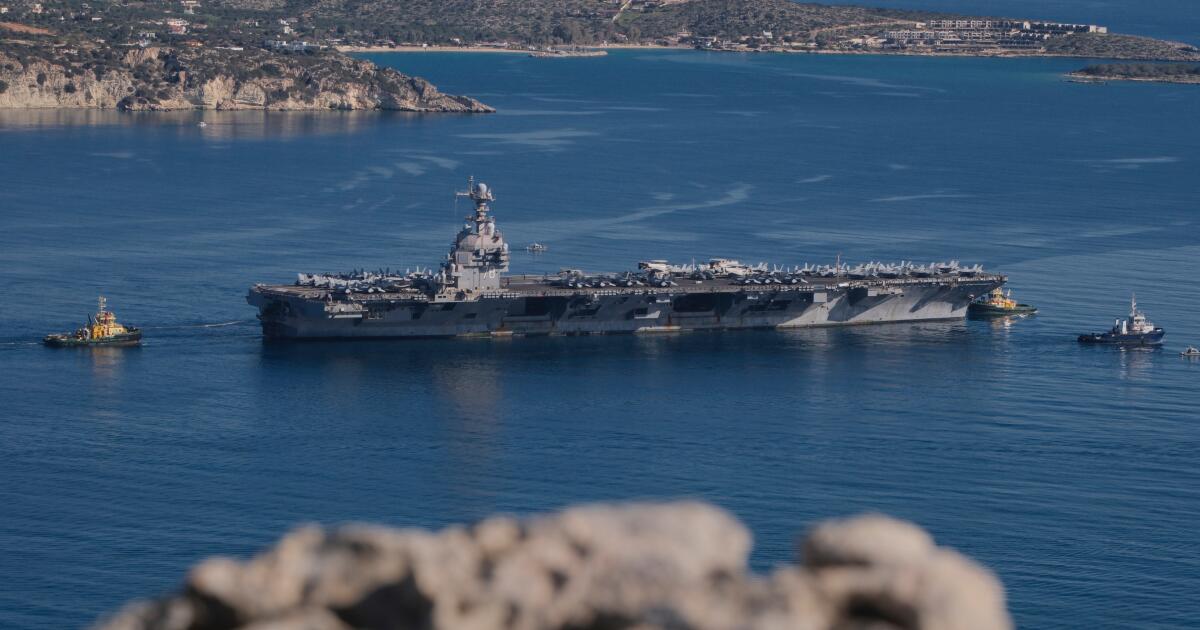
The USS George Washington is departing the Pacific to relieve the USS Abraham Lincoln in the Middle East, amid growing concerns about mental health and supply issues aboard the long-deployed carrier. The Lincoln has had its time at sea extended from its original May return date to support the war in Iran.
The lack of a U.S. carrier in the Pacific may be short-lived if the Navy deploys another in the next couple of months. But it shows how the open-ended operations with Iran are running some American sailors ragged, analysts say, while the Trump administration further retreats from the Asia-Pacific region and focuses on the Western Hemisphere.
“The administration says that the Pacific is supposed to be the most important behind the Western Hemisphere,” said Greg Poling, director of the Southeast Asia Program at the Center for Strategic and International Studies. Instead, the U.S. is “doing the exact opposite” of its previously expressed goal of pulling out of the Middle East.
American allies in the Pacific are unsettled over the unpredictability of the Trump administration, Poling said, while China “is quite happy with U.S. distraction, with the frustration of U.S. allies and partners.”
China may take advantage
Beijing sees the U.S. military presence in the region as a threat to China’s rise and an obstacle to its ambition to seize Taiwan, the self-governing island it claims as its own. But the United States has argued that the Pacific region is too important economically to lose.
No one expects China to invade Taiwan just because an American aircraft carrier has left the region. But the carrier’s absence gives the Chinese another opportunity to show its strength, said Bryan Clark, a former Navy submariner who is a defense analyst at the Hudson Institute.
“They’re using this as part of the narrative to demonstrate to the Philippines, to Japan, to Indonesia and others that the U.S. is not the big dog in the western Pacific anymore,” Clark said. “They would just prefer that countries in the region decide that China is the bigger power and the U.S. is not able to guarantee their security anymore.”
China conducted naval exercises this week with Indonesia and recently has shown signs of aggression toward Japan and the Philippines, two key U.S. allies that also have territorial disputes with Beijing.
China carried out military drills this month near the Scarborough Shoal in the South China Sea. Both China and the Philippines have claims over the shoal. Last month, a Chinese guided-missile destroyer conducted a live-fire exercise off Japan’s southernmost island of Okinotori.
Adm. Frank Bradley, head of the U.S. Special Operations Command, has been trying to reassure regional allies of Washington’s commitment. He was in Manila on Thursday, telling his Filipino counterparts that U.S. special operations forces are ready to step up joint exercises to strengthen the countries’ alliance. He also is expected to travel to Japan.
Evan Sankey, a policy analyst at the Cato Institute who focuses on U.S. policy toward China, said aircraft carriers provide psychological assurance to U.S. allies. The absence of carriers in the region, he said, “adds to the general sense that the U.S. is distracted by events in the Middle East.”
Trump has relied on aircraft carriers for military actions
Trump has relied heavily on aircraft carriers to support his numerous military operations during his second term. The USS Gerald R. Ford returned home in mid-May after an 11-month deployment, the longest since the Vietnam War, during which it supported the U.S. fight against Iran and the capture of Venezuelan President Nicolás Maduro.
The Ford had experienced a fire in a laundry space that forced the carrier to turn around and return to the Mediterranean Sea for repairs and left hundreds of sailors without places to sleep.
The USS Lincoln has been at sea 268 days as of Saturday, a record deployment without a port visit, as the Ford had. Democratic lawmakers and families of the sailors have been calling for investigations and greater visibility into conditions aboard the ship, which is preparing to return to its home port in San Diego.
Warships and their crews can handle only so much, said Robert Farley, who teaches national security and diplomacy at the University of Kentucky and often writes about aircraft carriers.
“People don’t get enough rest. It’s psychologically exhausting. And R&R is part of keeping the crew healthy,” Farley said. “Sometimes it’s framed as, ‘These people haven’t had a vacation.’ But we are dealing with well-known limits on the capacity of a crew to operate at top efficiency over time. And that just declines.”
Clark, of the Hudson Institute, said the squeeze on the nation’s aircraft carriers stems from the lack of preparation and planning for the Iran war.
“If we were going to mobilize to do this kind of conflict, and we anticipated it might go this long, we might have done some changes to the carrier schedule to make sure more would be available,” Clark said.
Clark said the Navy has 11 aircraft carriers and typically deploys two or three at a time. But it could soon deploy four if the USS Theodore Roosevelt leaves San Diego for the Middle East, allowing the Washington to return to Pacific.
But the massive warships will need maintenance, probably causing a bottleneck at the nation’s only two carrier shipyards.
“We’ll end up with a maintenance debt that needs to be paid for the next few years,” Clark said. “We’ll probably have less carrier presence than we’ve had in the previous years because carriers will be lined up to get into the shipyard.”
Role in modern warfare
Michael Swaine, a senior research fellow in the Quincy Institute’s East Asia Program, questions the future need for aircraft carriers as warfare rapidly changes.
Carriers can be more easily targeted with drones and missiles, particularly by an adversary such as China, Swaine said, while smaller ships and submarines can be as effective in striking targets as the fighter jets that launch off a carrier.
Top Navy officials have indicated a desire to move away from a heavy reliance on carriers. Adm. Daryl Caudle, chief of naval operations, told the Associated Press in February that he wants to convince commanders to use smaller, newer ships and other assets instead of consistently turning to huge aircraft carriers.
Oil prices climbed and world stocks were mixed on Wednesday, with Asian shares mostly higher even as Wall Street slipped further from last week’s record highs, as investors awaited a crucial US inflation reading and watched for any breakthrough in the stalled Iran war talks.
ADVERTISEMENT
ADVERTISEMENT
The price of a barrel of Brent crude, the international benchmark, was up 0.9% at $89.67 early on Wednesday. US benchmark crude picked up 0.9% to $83.98.
Gold edged up 0.8% to $4,400.44 an ounce, while silver gained 1% to $65.30 an ounce.
Iran has rejected a comment by US President Donald Trump suggesting that, since Tehran is seeking compensation as part of any talks to end the war, Washington would demand the same.
The United States and Israel attacked Iran in late February, a strike that led to the closure of the Strait of Hormuz and kept much of the world’s oil pent up in the Middle East. Last month alone, Brent’s price swung between $72 and $102 a barrel.
Meanwhile, an attack by Iran-backed Houthi rebels on a vessel in the Bab el-Mandeb strait, off Yemen’s southern tip, has raised concerns that the violence could reignite civil war and further threaten regional shipping routes.
Higher oil prices worsen inflation, and they have pushed the average cost of a gallon of regular petrol in the US to $4.01, according to AAA — up from less than $3.14 a year ago.
That has Wall Street’s attention fixed on Wednesday, when the US government releases its latest monthly inflation reading. Economists expect it to show inflation slipped to 3.4% in July from 3.5% in June.
On Tuesday, the S&P 500 fell 0.3% for a second modest drop since setting its all-time high on Friday. The Dow Jones Industrial Average dipped 184 points, or 0.3%, and the Nasdaq Composite sank 0.6%.
Cooler inflation could ease pressure on the Federal Reserve to raise interest rates to tamp down price increases.
Higher rates could curb inflation, but they would also drag on the wider US economy by making it more expensive for households and businesses to borrow, while undercutting prices for stocks and other investments.
Treasury yields have jumped since the war with Iran began, driven by higher oil prices and inflation worries, sending long-term US mortgage rates to their highest levels in a year.
Tokyo’s Nikkei 225 gained 0.6% to 67,334.94.
In South Korea, the Kospi jumped more than 4% to 6,597.90 on renewed buying of computer chipmakers. Samsung Electronics gained 7.7% and memory chipmaker SK Hynix rose 7.1%.
Taiwan’s Taiex advanced 0.8%.
The Shanghai Composite index added 0.3% to 3,946.51, while Hong Kong’s Hang Seng slipped 1.2% to 25,352.13.
In Australia, the S&P/ASX 200 lost 0.6% to 9,197.00.
In other early Wednesday dealings, the dollar rose to 159.41 yen from 159.30 yen. The euro slipped to $1.1535 from $1.1544.
Crude and US Treasury yields rose together as traders judged that the exchange of compensation demands between the US and Iran has pushed any potential deal further out of reach.
ADVERTISEMENT
ADVERTISEMENT
The US president said on Monday he had told his negotiators to seek payment from Iran for Americans killed and wounded in attacks he attributes to Tehran going back decades, including the bombing of the USS Cole in the year 2000 and for Iranians killed in protest crackdowns.
In a follow-up post on Truth Social he expanded on the demand, saying Iran should also pay for “the damages and death caused to the people of Lebanon, Syria, Yemen, and Gaza”.
Tehran, whose representatives had sought compensation for five months of US and Israeli bombardment, says the Strait of Hormuz will stay shut until Washington lifts its naval blockade, ends sanctions and releases frozen Iranian assets.
The front month contract on Brent traded at around $89.8 a barrel on Tuesday and West Texas Intermediate at about $84.2, both up roughly 2.5%.
The US bond market read it the same way, with yields rising across the US curve in a modest global sell-off, the two-year over 4.25%, the ten-year above 4.7% and the thirty-year higher than 5.27%. The yields for all durations are trading at the highs of this year.
Since yields move inversely to prices, the rise means investors are selling government debt as they expect that costlier oil will feed into inflation and strengthen the case for higher interest rates.
Money markets now put roughly even odds on a Federal Reserve rate hike in September, with July inflation data due on Wednesday.
Control claimed, traffic missing
The current stalling of US-Iran negotiations is deliberate as US President Donald Trump appears to have been favouring a slower approach as of late.
The US president told Axios in an interview published on Sunday that the US is “low-keying it,” meaning Washington was only semi-negotiating and content to watch Iran’s inflation and empty coffers do the work, a signal he is prepared to let economic pressure mount rather than order a fresh military campaign.
In the Oval Office on Monday, he struck a triumphant note, claiming the US controls “100%” of the Strait of Hormuz, that only the US Navy holds sway in the region, that American forces have swept it clear of Iranian mines and that the blockade of Iranian ports is impenetrable.
However, shipping data tells another story.
Confirmed crossings have run at 6 to 11 vessels a day recently, against the 130 to 140 daily before the war, according to Kpler data, leaving traffic at a fraction of normal levels throughout the five-month conflict.