iran war

Polymarket bets tied to Iran war spur lawmakers’ call for investigation

Calls inside Congress for investigations into the prediction market platform Polymarket are increasing after the latest instance in which groups of anonymous traders made strategic, well-timed bets on a major geopolitical event hours before it occurred.

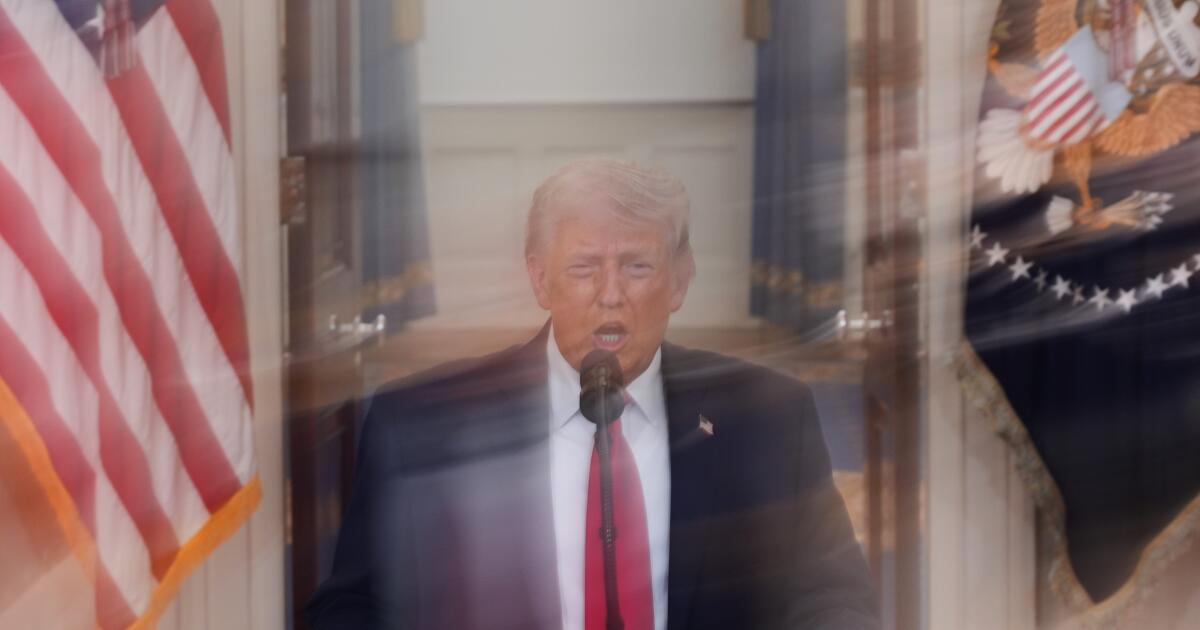
On Wednesday, the Associated Press reported that at least 50 new accounts on Polymarket placed substantial bets on a U.S.-Iran ceasefire in the hours, even minutes, before President Trump announced it late Tuesday. These were the sole bets made on Polymarket through these accounts.

In January, an anonymous Polymarket user made a $400,000 profit by betting that Venezuelan leader Nicolás Maduro would be out of office, hours before Maduro was captured. In the hours before the start of the Iran war, another account made roughly $550,000 in a series of trades effectively betting that the U.S. would strike Iran and that Ayatollah Ali Khamenei would be removed from office.

Such prescient wagers have raised eyebrows — and accusations that prediction markets are ripe for insider trading. And the issue goes beyond these three geopolitical events, according to at least one report.

Researchers at Harvard University released a paper last month in which, using public blockchain data, they estimated that $143 million in profits have been made on Polymarket by individuals who potentially had insider information about events ranging from Taylor Swift’s engagement to the awarding of the Nobel Peace Prize last year.

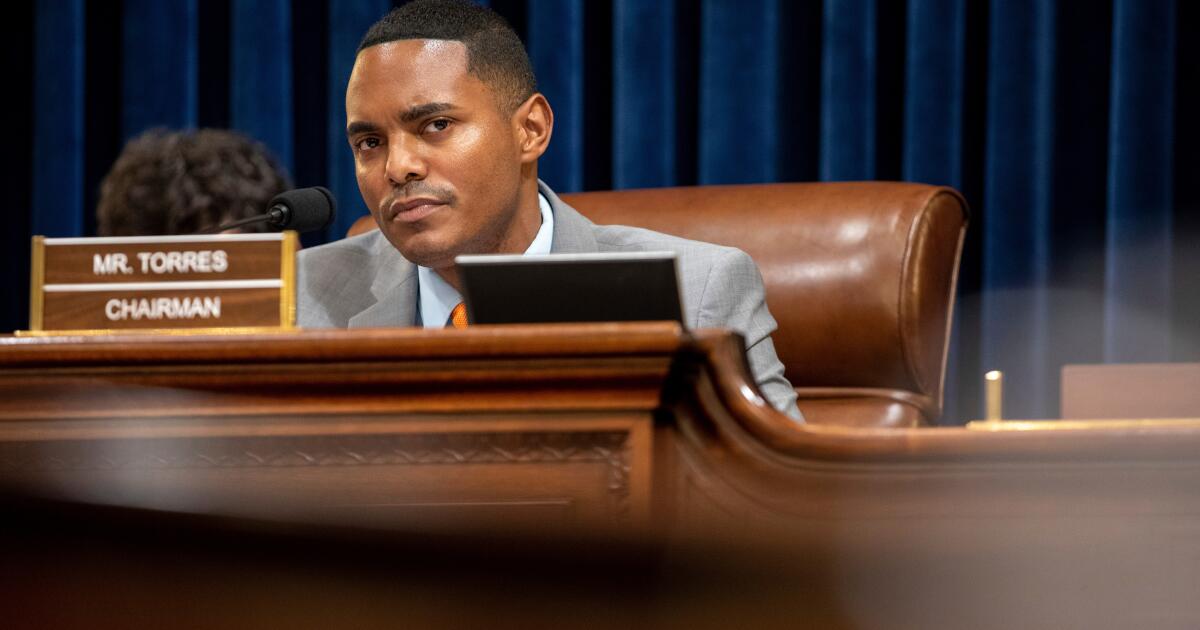
Rep. Ritchie Torres, D-N.Y who sits on the House Financial Services Committee as well as the subcommittee on digital assets and financial technology, sent a letter Thursday to the Commodity Futures Trading Commission demanding the regulator review and investigate these well-timed trades. The CFTC regulates the derivatives markets, which includes prediction markets.

“This pattern raises serious concerns that certain market participants may have had access to material nonpublic information regarding a market-moving geopolitical event,” Torres wrote. The letter was shared exclusively with AP.

“What is the statistical likelihood that of anyone other than an insider trader placing a winning bet 12 minutes before a market-moving presidential announcement?” Torres said in an interview with AP. “There are two answers: God, or an insider trader. And something tells me that God is not placing bets around Donald Trump’s posts on Truth Social. “

Prediction market platforms like Kalshi and Polymarket allow users to bet on everything from whether it will rain in Phoenix, Ariz., next week to whether the Federal Reserve will raise or lower interest rates.

Americans have limited access to Polymarket, which was banned from the U.S. in 2022. The company has moved to reenter the country by acquiring a CFTC-licensed exchange and clearinghouse, giving it a legal pathway to start offering contracts domestically. The company has begun a limited rollout in the U.S.

Polymarket also operates a separate, crypto-based platform offshore that remains outside U.S. jurisdiction. That platform accounts for most of its activity.

Sen. Richard Blumenthal, D-Conn., sent a letter to Polymarket on Thursday demanding the company explain why it continues to allow trades on war and violence as well as whether the company is making efforts to keep insiders from trading on the platform.

“Polymarket has become an illicit market to sell and exploit national security secrets unlike any in history, and by extension a potential honeypot for foreign intelligence services watching for those same suspicious bets and wagers,” Blumenthal wrote.

Republicans also have criticized these platforms and called for bans on these sorts of bets. There are at least two bills pending in Congress co-signed by both parties, one in the House and one in the Senate.

“We don’t want to imagine a world where America’s adversaries use prediction markets to anticipate our next move,” Rep. Blake Moore, R-Utah, said after the release of AP’s findings on the ceasefire wagers.

Polymarket did not immediately reply to a request for comment.

The stakes are high for both Polymarket and Kalshi as they seek approval to operate nationwide, particularly in the lucrative sports betting market.

Kalshi, which already is regulated in the U.S., and its executives have a goal of making the company the nation’s dominant prediction market. Kalshi has leaned heavily into sports, which critics have said effectively makes it a sports betting platform that dabbles in event-based contracts on the side. Both companies also announced partnerships with sports teams and even news organizations to broaden their reach as well. AP has an agreement to sell U.S. elections data to Kalshi.

The competition also carries political overtones. Donald Trump Jr. is an investor in Polymarket through his venture capital firm, 1789 Capital, and separately serves as a paid strategic adviser to Kalshi.

Sweet writes for the Associated Press.

Source link

Oil prices drop sharply after Iran ceasefire as markets remain cautious

Published on Updated

Oil prices have fallen sharply and Asian markets surged on Wednesday after the US and Iran agreed to a two-week ceasefire that includes reopening the Strait of Hormuz but traders are cautious so far until the truce proves durable.


ADVERTISEMENT


ADVERTISEMENT

Brent crude stood at $92.99 per barrel as of Wednesday morning, up 28.30% since the war began in late February but well below the peaks of recent weeks which went up to $110 per barrel.

WTI crude sat at $94.70 per barrel, still 41.30% above pre-war levels despite the ceasefire-driven selloff. Wholesale gasoline was at $2.94 per gallon, also up more than 41% since the conflict began.

The moves follow a dramatic overnight plunge after US President Donald Trump said he was holding off on threatened strikes against Iranian bridges, power plants and other civilian infrastructure.

Iran’s foreign minister confirmed the Strait of Hormuz would be open to shipping for the next two weeks under Iranian military management.

Asia surges, Europe slides

Asian markets responded with enthusiasm. Japan’s Nikkei 225 gained 5.0% in early Wednesday trading, South Korea’s Kospi soared 5.9% and Hong Kong’s Hang Seng jumped 2.6%.

European markets told a different story. The Stoxx Europe 600 was down 6.82% in early trading, reflecting the accumulated damage from weeks of war-driven volatility rather than Wednesday’s ceasefire bounce — European markets having closed before the overnight news broke.

On Wall Street, the S&P 500 is down by 3.81% in pre-market US trading, having swung sharply during Tuesday’s session before clawing back losses after Pakistan’s prime minister urged Trump to extend his deadline and called on Iran to reopen the strait.

Cautious optimism

The ceasefire has done little to fully settle markets.

Attacks were still reported in Israel, Iran and across the Gulf region in the early hours of Wednesday, and neither side has specified when the truce formally begins.

The worry that has stalked markets since late February remains, namely that a prolonged disruption to Gulf oil flows will keep energy prices elevated long enough to push a fresh wave of inflation through the global economy — with or without a ceasefire.

Source link

Markets send mixed signals ahead of Trump’s deadline to escalate Iran war

Published on

Both European and Asian markets opened slightly lower on Tuesday as investors brace for US President Donald Trump’s deadline for Iran to either agree to a deal, or have their energy infrastructure targeted by air strikes.


ADVERTISEMENT


ADVERTISEMENT

The deadline falls at 8 pm Eastern Time (2 am CET), giving Iran until then to accept a deal that would keep the Strait of Hormuz open to all shipping or face what Trump has called the “complete demolition” of its civilian infrastructure, including every power plant and bridge in the country.

At the time of writing, Benchmark US crude is trading at $113.5 a barrel while Brent crude, the international standard, is around $111. Both prices are up around 1%.

The Euro Stoxx 50 and the broader pan-European Stoxx 600 are both up 0.5% as well.

The UK’s FTSE 100 is flat while Germany’s DAX 30 is around 0.2% higher, and France’s CAC 40 and Italy’s FTSE MIB have risen close to 1% each.

Over in Asia, there is a mixed reaction from markets in anticipation of the deadline.

South Korea’s Kospi has jumped 0.8% while Tokyo’s Nikkei 225 is effectively trading flat.

Hong Kong’s Hang Seng is down 0.8% while the Shanghai Composite is slightly higher by 0.3%. Additionally, Australia’s ASX 200 and Taiwan’s Taiex both rose 2%.

On Easter Sunday, President Trump renewed the threat publicly for the last time before the deadline stating that “Tuesday will be Power Plant Day, and Bridge Day, all wrapped up in one, in Iran. There will be nothing like it!!!”

US futures and precious metals

On Tuesday morning, US futures are all trading between 0.1% and 0.3% lower.

The moves follow a strong close on Monday as the S&P 500 rose 0.4%, coming off its first winning week in the last six. The Dow Jones Industrial Average added 165 points, or 0.4%, and the Nasdaq composite climbed 0.5%.

Monday also offered the first chance for US markets to react to a report from Friday that stated American employers hired more workers last month than economists expected.

These were encouraging signals for an economy that’s had to absorb painful leaps in costs for gasoline since the Iran war started.

The average price for a gallon of regular gasoline is nearly $4.12 across the country, according to AAA. It was below $3 a couple days before the US and Israel launched attacks to begin the war in late February.

In other trading, gold is up 0.77% at around $4,685 while silver is rose roughly 0.2% to $72.95 an ounce.

Source link

What could move the markets this week? Here’s what investors are watching

Published on

With European markets reopening after the Easter holidays, investors are set to navigate a mix of geopolitical risks and crucial economic data that may shape sentiment over the coming week.


ADVERTISEMENT


ADVERTISEMENT

Attention will focus on Iran’s response to US President Donald Trump’s deadline to reopen the Strait of Hormuz, a critical chokepoint for global oil supplies. Any escalation or de-escalation could quickly affect energy markets, driving oil prices and inflation expectations.

J.P. Morgan noted on Thursday that oil prices could reach as high as $150 a barrel if supply disruptions persist until mid-May.

Beyond geopolitics, inflation data, central bank signals and corporate updates will also draw attention as markets gauge the outlook for the second quarter.

Economic data in focus

The macroeconomic calendar kicks off on Tuesday with the release of eurozone PMI data, a key leading indicator of economic activity. Recent readings have pointed to slowing growth in the bloc, with the composite PMI signalling only marginal expansion amid softening demand and heightened uncertainty.

On Wednesday, investors will examine the latest eurozone retail sales and industrial producer price figures from Eurostat. These will shed light on consumer demand and upstream inflation pressures.

The European data schedule remains relatively light but still significant. Euro area financial accounts will provide additional detail on lending trends, while UK markets stay attuned to labour market and growth signals following recent signs of stagnation.

Focus then shifts to the US, with the release of the Federal Reserve’s latest meeting minutes on Wednesday. These will be scrutinised for hints on policymakers’ views regarding the timing of any potential rate cuts.

Thursday brings key US labour data, including weekly jobless claims, offering further insight into employment conditions.

The week ends with the US consumer price index for March, including the closely watched core CPI reading. A stronger-than-expected figure could dampen hopes for policy easing and spark volatility in global markets, including Europe.

On the corporate side in Europe, activity is limited, although Raiffeisen Bank International’s annual general meeting on Thursday will be watched for any signals on banking sector health and regional credit conditions.

Source link

OPEC+ to hike crude output: Will it make a difference to oil prices?

Published on Updated

OPEC+ members met virtually on Sunday and afterwards announced plans to hike crude quotas by 206,000 barrels per day (bpd) in May as the Strait of Hormuz, which is the world’s most important route for black gold, continues to face disruptions as a result of the US-Iran conflict.


ADVERTISEMENT


ADVERTISEMENT

However, the modest rise agreed by the eight key producing countries — Saudi Arabia, Russia, Iraq, the UAE, Kuwait, Kazakhstan, Algeria and Oman — is not likely to bring down oil prices as it represents less than 2% of the supply disrupted by the Hormuz closure. Moreover, the increase is more symbolic than material as the oil can’t be exported until the Strait of Hormuz opens.

“In their collective commitment to support oil market stability, the eight participating countries decided to implement a production adjustment of 206 thousand barrels per day from the 1.65 million barrels per day additional voluntary adjustments announced in April 2023. This adjustment will be implemented in May 2026,” the group said in a statement.

The members’ statement also noted that the 1.65 million barrels per day may be returned in part or in full subject to evolving market conditions and in a gradual manner.

“The countries will continue to closely monitor and assess market conditions, and in their continuous efforts to support market stability, they reaffirmed the importance of adopting a cautious approach and retaining full flexibility to increase, pause or reverse the phase out of the voluntary production adjustments, including reversing the previously implemented voluntary adjustments of the 2.2 million barrels per day announced in November 2023,” the statement also said.

Efforts to stabilise soaring oil prices

The latest statement from OPEC+ comes as oil prices have surged since the Iran conflict began, with Brent and US crude nearing $120 a barrel, driving up fuel costs and putting pressure on consumers and businesses worldwide.

Meanwhile, J.P. Morgan said in a note on Thursday that oil prices could go as high as $150 a barrel if supply flows remain disrupted until mid-May.

US President Donald Trump has given Iran a deadline of Tuesday to open the Strait of Hormuz and has vowed to hit the country’s power plants and bridges otherwise.

European markets were closed on Monday for the Easter holiday.

Source link

Inside the Pentagon, fears of a disrupted war effort after Army chief’s ouster

Merely two weeks had passed since the Iran war began when Gen. Randy George, the Army’s highest-ranking officer, began sounding an alarm.

Touring a weapons depot in North Carolina, George warned lawmakers present that the conflict’s vast and ever-growing list of targets was straining U.S. capacity — “depleting our stockpiles faster than we can replace them,” as one congressman recalled. Since assuming Army leadership, George had made it his mission to strengthen the nation’s industrial base in anticipation of precisely this moment, when the United States would be engaged in a major war with a formidable adversary.

On Thursday, in a brief phone call, Defense Secretary Pete Hegseth fired George. No reason was given, a U.S. official familiar with the matter told The Times.

The forced departure of George in the middle of a war created yet another blow to morale inside the Pentagon, where multiple officials expressed dismay over the state of the department’s leadership. Over the last year, Hegseth has fired five sitting members of the joint chiefs of staff, with only two holdovers remaining in their posts.

“Whenever you have a change in leadership, military or otherwise, there is bound to be some churn in information management,” one U.S. official said, granted anonymity to speak candidly. “So what you’re doing, in the middle of a war, as we are taking U.S. casualties, is you’re taking out the general in charge of making sure the right people and equipment are flowing into the Middle East.”

Inside the building, officials believe that Hegseth’s next target is Dan Driscoll, the Army secretary and an ally to President Trump. Driscoll has been seen by Hegseth’s aides as outshining the Defense secretary on prominent policy initiatives.

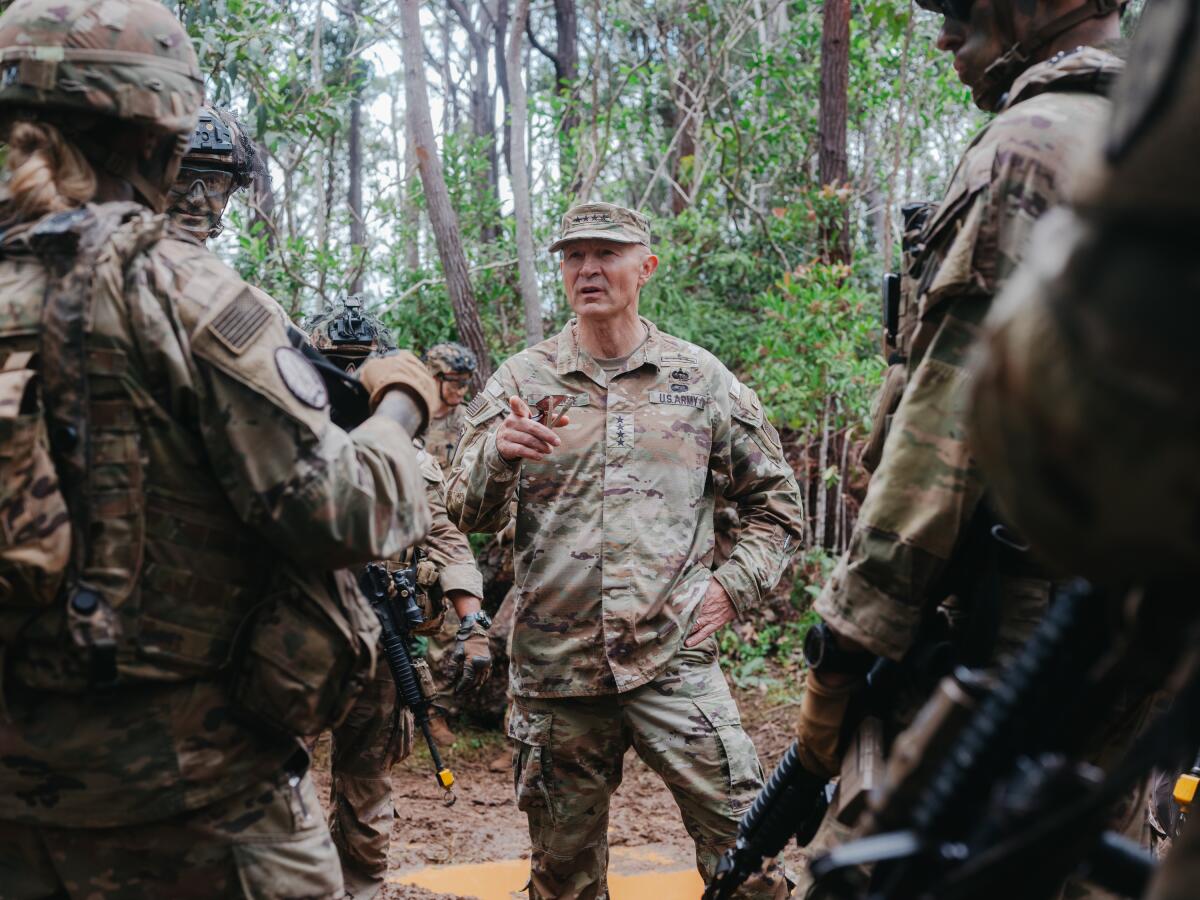
General Randy George, US Army chief of staff, speaks with soldiers during training exercises

Gen. Randy George, U.S. Army chief of staff, speaks with soldiers during training exercises at Lightning Academy at Schofield Barracks in Honolulu on Nov. 10, 2025.

(Christopher Lee/Bloomberg via Getty Images)

It is a purge that Republican lawmakers on Capitol Hill fear could have tangible, detrimental effects on the war effort. Sens. Roger Wicker of Mississippi, Tom Cotton of Arkansas and Joni Ernst of Iowa, all members of the Senate Armed Services Committee, have expressed private concerns over George’s firing, a second U.S. official said.

Forcing out Army leadership responsible for training and equipping its soldiers, and for ensuring weapons stockpiles continue to meet demand, risks bureaucratic chaos and despair in the ranks at a time when the Trump administration is openly considering a ground operation in Iran.

Others in the Pentagon have raised concern over the U.S. military stockpile, including Air Force Secretary Troy Meink, who last month warned at a defense conference that munitions shortages were a concern even before the war began.

“It was something that we were concerned about even before the operation,” Meink said. “It has just been the fact that we couldn’t see the threat evolving and what we’re facing. So we definitely have to improve on that.”

Trump has denied that the United States faces weapons shortages, even after meeting with the nation’s top contractors last month in a push for them to increase — and on some products, quadruple — their output.

“What interceptors we have for Iran is because of Randy George,” the first U.S. official countered. “He continued to work that problem set up through [Thursday]. It’s a problem set he was working in real time.”

Jerry McGinn, director of the Center for the Industrial Base at the Center for Strategic and International Studies, said U.S. forces have reached a stage in the war where they can pivot away from standoff weapons systems. With Iran’s air defenses largely degraded, they can instead rely on weapons such as laser-guided bombs, helping ease pressure on stockpiles.

But Iran’s downing of two U.S. aircraft on Friday suggests that longer-range weapons may still be necessary.

“When the stockpile is stressed, as it was after Ukraine and then now with Iran, any surge in need leads to a backlog as they try to replenish,” McGinn said.

“The three things they’ve been using a whole lot of are Tomahawks, [Terminal High Altitude Area Defense] and Patriots, and those inventories were already somewhat depleted after Midnight Hammer last summer,” McGinn added. “You can’t crank those out very fast.”

Beyond his role tending to the nation’s “magazine depth” — making sure the military isn’t firing more weapons than it is able to replenish — George also led the Pentagon’s effort to set up a joint task force last year aimed at speeding up the U.S. military’s ability to counter small unmanned aircraft systems, or drones.

The program has proved critical in the war effort. Tehran now relies heavily on its Shahed drones, with its missile production and launch capacity severely diminished.

Acknowledging the Pentagon expulsions, Iran’s embassy in South Africa posted photos on social media Friday x-ing out portraits of several top U.S. military officials fired in recent months.

“Regime change happened successfully,” the Iranians wrote.

Source link

Trump’s Iran war leaves Republicans adrift ahead of midterms

This is not the run up to the midterm elections that Republicans wanted.

A year and a half after winning the White House by promising to lower costs and end wars, Donald Trump is a wartime president overseeing surging energy costs and an escalating overseas conflict that many in his own party do not like.

He offered little clarity to a nation eager for answers this week during a prime-time address from the White House, his first since the U.S. and Israel attacked Iran more than a month ago, simultaneously suggesting that the war was ending and expanding.

“Thanks to the progress we’ve made, I can say tonight that we are on track to complete all of America’s military objectives shortly, very shortly,” Trump said. “We’re going to hit them extremely hard over the next two to three weeks.”

Trump’s comments come roughly six months before voters across the nation begin to cast ballots in elections that will decide control of Congress and key governorships for Trump’s final two years in office. For now, Republicans, who control all branches of government in Washington, are bracing for a painful political backlash.

“You’re looking at an ugly November,” warned veteran Republican pollster Neil Newhouse. “At a point in time when we need every break possible to hold the House and Senate, our edge is being chipped away.”

Republicans confront evolving political landscape

It’s hard to overstate how dramatically the political landscape has shifted.

At this time last year, many Republican leaders believed there was a path to preserve their narrow House majority and easily hold the Senate. Now they privately concede that the House is all but lost and Democrats have a realistic shot at taking the Senate.

Republicans are also struggling to coalesce around a clear midterm message on Iran.

The Republican National Committee has largely avoided the war in talking points issued to surrogates over the last month. The leaders of the party’s campaign committees responsible for the House and Senate declined interview requests. Many vulnerable Republican candidates sidestep the issue, unwilling to defend or challenge Trump publicly.

The president remains deeply popular with Republican voters, and he has vocal supporters like Sen. Lindsey Graham of South Carolina.

“That was the best speech I could’ve hoped for,” he wrote on social media after Trump’s address on Wednesday evening. Graham said Trump “gave the American people a clear and coherent pathway forward.”

Trump made little effort to sell the conflict to Americans before the initial attack. Five weeks later, at least 13 U.S. service members have been killed and hundreds more injured. Thousands more troops have converged on the region, and the Pentagon requested $200 billion in new funding.

The Strait of Hormuz, a key passage for a fifth of the world’s oil, remains closed. The average price for a gallon of gasoline in the U.S. was $4.08 on Thursday, according to AAA, almost a full dollar higher than on President Joe Biden’s last day in office.

On Wednesday, Trump insisted that gas prices would fall quickly once the war concluded but offered no solution for reopening the Strait of Hormuz. Instead, he invited skeptical U.S. allies to do it themselves.

He insisted that the war would be worth it.

“This is a true investment in your grandchildren and your grandchildren’s future,” Trump said. “When it’s all over, the United States will be safer, stronger, more prosperous and greater than it has ever been before.”

Former Rep. Marjorie Taylor Greene, a Georgia Republican who was once among Trump’s most vocal allies in Congress, lashed out against his Iran policy.

“I wanted so much for President Trump to put America First. That’s what I believed he would do. All I heard from his speech tonight was WAR WAR WAR,” she wrote on social media. “Nothing to lower the cost of living for Americans.”

Time is not on Trump’s side

About 6 in 10 U.S. adults say the U.S. military action in Iran has “gone too far,” according to AP-NORC polling from March. Roughly a third approve of how he’s handling Iran overall.

The possibility of sending U.S. forces into Iran also appears politically unpalatable.

About 6 in 10 adults are “strongly” or “somewhat” opposed to deploying U.S. troops on the ground to fight Iran. That includes about half of Republicans. Only about 1 in 10 favor deploying troops.

At the same time, Trump’s approval ratings have remained consistently weak. About 4 in 10 Americans approve of how he’s handling the presidency, roughly in line with how it’s been throughout his second term.

Republican strategist Ari Fleischer, a senior aide in former President George W. Bush’s administration, acknowledged that Trump has not received the polling bump in this war that Bush got after invading Iraq.

Bush, of course, worked to build public backing for the Iraq War before going in. Immediately after the 2003 invasion, Bush’s popularity soared, as did the stock market.

Public sentiment and the economy soured only after the conflict stretched on. It ultimately spanned more than eight years, spawning a generation of anti-war Republicans — and sowing the seeds of Trump’s “America First” foreign policy.

“My hope is that the Trump experience is the exact opposite of the Bush experience,” Fleischer said.

He said Trump must win the war decisively and quickly to avoid a further backlash, saying there could be a “very significant political upside if things end well, oil comes down and markets rally.”

Fleischer added that Trump’s actions will matter much more than his words.

“Ultimately, he is not going to get judged on his persuasion or his explanations or his assertions, he’s going to get judged on results,” he said.

Peoples writes for the Associated Press. AP writer Linley Sanders in Washington contributed to this report.

Source link

Trump speech on Iran war and recent remarks on oil, NATO, daycare costs land with a thud

President Trump’s meandering speech on the Iran war late Wednesday — in which he paired promises of a swift exit with new threats of escalated bombing and denied responsibility for the Strait of Hormuz — did little to assuage U.S. allies and world markets concerned about the conflict’s ongoing disruptions to the global oil supply.

Stocks dropped after markets opened Thursday and oil prices soared, with the price of U.S. crude oil jumping more than 10%, to above $110.

In the wake of the speech, diplomats from more than 40 nations — not including the U.S. — met to strategize on how to lift Iran’s continued stranglehold on the strait, the vital oil corridor that the U.S.-Israeli war drove Iran to restrict but which Trump on Wednesday said wasn’t his problem.

Iranian officials remained unbowed, asserting the U.S. and Israel “know nothing” of its remaining capabilities, that “not a single life will be spared” if either attempts a ground incursion into its territory, and that “every last” Iranian would become a soldier if necessary.

“Iranians don’t just talk about defending their country. They bleed for it,” Iranian parliament Speaker Mohammad Qalibaf, a pugilistic figure and one of Iran’s most prominent wartime voices, wrote on X. “You come for our home… you’re gonna meet the whole family. Locked, loaded, and standing tall. Bring it on.”

Meanwhile, remarks Trump made earlier Wednesday about leaving NATO elicited subtle rebukes from both international and domestic allies, including French President Emmanuel Macron and Senate Majority Leader John Thune (R-S.D.), while the president’s comments about the U.S. not being able to focus on social services like Medicare or other domestic needs such as child care as it wages its foreign war sparked outrage at home.

Far from a call for a unified push to end the war alongside allies, Trump’s speech — his first formal address to the nation since the war began a month ago — further isolated the U.S. and the Trump administration on the global stage.

Trump firmly asserted in his speech that reopening the Strait of Hormuz to oil tanker traffic was not the responsibility of the U.S., despite it causing the war, because it receives less oil from the corridor than other nations.

“The countries of the world that do receive oil through the Hormuz Strait must take care of that passage. They must cherish it. They must grab it and cherish it. They could do it easily. We will be helpful, but they should take the lead in protecting the oil that they so desperately depend on,” Trump said.

“To those countries that can’t get fuel, many of which refuse to get involved in the decapitation of Iran — we had to do it ourselves — I have a suggestion: No. 1, buy oil from the United States of America. We have plenty. We have so much,” Trump continued. “And No. 2, build up some delayed courage.”

He said those nations should have been better assisting the U.S. in its war effort already, but should now “go to the strait and just take it, protect it, use it for yourselves.”

“Iran has been essentially decimated,” he said. “The hard part is done, so it should be easy.”

Trump has consistently downplayed the threat Iran continues to pose in the region. And securing the strait — which runs along Iran’s mountainous coast, full of strategic locations from which Iranian forces can threaten ship traffic — is not an easy task, as was acknowledged by the foreign diplomats meeting to solve the issue without the U.S. on Thursday.

“We have seen Iran hijack an international shipping route to hold the global economy hostage,” said U.K. Foreign Secretary Yvette Cooper.

Meanwhile, Macron, speaking in South Korea, said the U.S. “can hardly complain afterward that they are not being supported in an operation they chose to undertake alone.”

Macron also slammed Trump’s criticism of NATO, which Trump called a “paper tiger” in remarks prior to his speech Wednesday.

“If you cast doubt on your commitment every day, you erode its very substance,” Macron said.

Trump for weeks has suggested that NATO allies who declined to join the U.S. war had failed to live up to their treaty obligations, and that remaining in the alliance may not be worth it for the U.S., though he made no mention of NATO in his Wednesday evening speech.

Trump has no power to unilaterally withdraw the U.S. from NATO. That power sits with Congress — where Trump’s own allies downplayed the idea.

“We got an awful lot of people who think that NATO is a very critical, incredibly successful post-World War II alliance,” Thune said. “I think in the world today, you need allies.”

Trump’s formal speech appeared to be geared in part toward his allies at home, including his MAGA base, where frustrations with the war have mounted among the cohort of Trump supporters who’d championed his “America First” message and campaign promises to extricate the U.S. from foreign entanglements, not start new ones.

Trump said he has promised since his first foray into politics in 2015 that he would never let Iran develop a nuclear weapon. He told Americans listening that the war “is a true investment in your children, and your grandchildren’s future,” because it was making the world safer.

However, Trump exacerbated frustrations over the war’s distraction from domestic priorities with separate comments he made earlier on Wednesday at a private Easter luncheon, video of which the White House posted online and then deleted.

In those remarks, Trump said U.S. military needs had to take priority over social services and other major costs for Americans, such as child care, which maybe states could pay for by increasing taxes.

“It’s not possible for us to take care of daycare, Medicaid, Medicare, all these individual things,” Trump said. “They can do it on a state basis. You can’t do it on a federal. We have to take care of one thing: military protection. We have to guard the country.”

The president’s political opponents leaped on the remarks as out of touch.

“Trump says we can pay for war in Iran but can’t afford childcare,” Rep. Ro Khanna (D-Fremont) wrote on X, before asserting that the billions of dollars the U.S. has spent in Iran could have been used to offset Americans’ daycare costs.

White House Press Secretary Karoline Leavitt, in response, accused Democrats and the media of taking Trump’s remarks “out of context,” and claiming he was only talking about “stopping the scams” and rooting out fraud in such programs.

Democrats also took broader swipes at Trump’s framing of the war.

“Donald Trump’s month-long war with Iran has come at a big cost to taxpayers and has tragically taken the lives of 13 American service members. He dragged our country into a conflict that rattled markets, drove up gas prices, squeezed working families, and further destabilized the Middle East,” Sen. Alex Padilla (D-Calif.) wrote on X. “With his poll numbers falling to record lows, Trump is now trying to cut and run with little to show for it. He started this unauthorized war with no clear or consistent justification and the consequences of his choices won’t disappear when he walks away.”

United Nations Secretary-General António Guterres on Thursday said the war was “inflicting immense human suffering and already triggering devastating economic consequences,” and called directly on the U.S. and Israel to end it. He also called on Iran to “stop attacking their neighbors” and “respect navigational rights and freedoms along critical maritime routes, including the Strait of Hormuz.”

“Conflicts do not end on their own,” Guterres said. “They end when leaders choose dialogue over destruction.”

In addition to defending NATO, Macron and other French politicians on Thursday were also reacting to Trump mocking Macron in his remarks Wednesday. He mimicked a French accent while accusing Macron of only wanting to aid the U.S. war effort once the battle had been “won” and referenced a moment last year when Brigitte Macron was caught on video pushing her husband’s face, which he said was them joking with each other.

“There is too much talk, and it’s all over the place,” Macron said, according to French newspaper Le Monde. “We all need stability, calm, a return to peace — this isn’t a show!”

Yaël Braun-Pivet, president of France’s lower house of parliament, told the French broadcaster franceinfo that the Iran war is “having consequences for the lives of millions of people, people are dying on the battlefield, and we have a president who is laughing, who is mocking others.”

Times staff writer Nabih Bulos in Beirut contributed to this report.

Source link

A look at the U.K.’s Royal Navy, which has faced jibe after jibe from Trump and Hegseth

President Trump and his Defense Secretary Pete Hegseth have been damning of the U.K.’s naval capabilities. Their jibes may have stung in a country with a long and proud maritime history, but they do carry some substance.

The U.K. has been at the forefront of Trump’s ire since the onset of the Iran war on Feb. 28, when British Prime Minister Keir Starmer refused to grant the U.S. military access to British bases.

Though that decision has been partly reversed with the decision to permit the U.S. to use the bases, including that of Diego Garcia in the Indian Ocean, for so-called defensive purposes, Trump is adamant he was let down.

He has repeatedly lashed out at Starmer and branded the Royal Navy’s two new aircraft carriers as “toys.”

“You don’t even have a navy,” he told Britain’s Daily Telegraph in comments published Wednesday. “You’re too old and had aircraft carriers that didn’t work.”

The HMS Queen Elizabeth and the HMS Prince of Wales are the largest and most powerful vessels ever constructed for the Royal Navy, though smaller and less capable than the U.S. Navy’s main fleet carriers. However, they are widely considered to be highly capable, especially for coalition warfare, despite some technical issues that have afflicted them in their first years of service.

Hegseth, meanwhile, said sarcastically that the “big, bad Royal Navy” should get involved in making the Strait of Hormuz safe for commercial shipping.

For numerous reasons, the Royal Navy is not as big and bad as it used it to be when Britannia ruled the waves. But it’s not as feeble as Trump and Hegseth imply and is largely similar with the French navy, with which it is often compared.

“On the negative side, there is a grain of truth, with the Royal Navy being smaller than it has been in hundreds of years,” said Professor Kevin Rowlands, editor of the Royal United Services Institute Journal. “On the positive side, the Royal Navy would say that it’s entering its first period of growth since World War II, with more ships set to be built than in decades.”

Capabilities and preparedness

It’s not that long ago that Britain could muster a task force of 127 ships, including two aircraft carriers, to sail to the south Atlantic after Argentina’s invasion of the Falkland Islands, a British overseas territory. That 1982 campaign, which then-U. S. President Reagan was lukewarm about, marked the final hurrah of Britain’s naval pedigree.

Nothing on that scale, or even remotely, could be accomplished now. Since World War II, Britain’s combat-ready fleet has declined substantially, much of it linked to changing military and technological advances and the end of empire. But not all.

The number of vessels in the Royal Navy fleet, including aircraft carriers, destroyers frigates and submarines has fallen from 166 in 1975 to 66 in 2025, according to the Associated Press’ analysis of figures from the Ministry of Defense and the House of Commons Library.

Though the Royal Navy has two aircraft carriers at its command, there was a seven-year period in the 2010s when it had none. And the number of destroyers has halved to six while the frigate fleet has been slashed from 60 to just 11.

Diminished state

The Royal Navy faced criticism for the time it took to send the HMS Dragon destroyer to the Middle East after the war with Iran broke out. Though naval officials worked night and day to get it shipshape for a different mission than the one it was readying for, to many it symbolized the extent to which Britain’s military has been gutted since the fall of the Berlin Wall in 1989.

For much of the Cold War, Britain was spending between 4% and 8% of its annual national income on its military. After the Cold War, that proportion steadily dropped to a low of 1.9% of GDP in 2018, fuel to Trump’s fire.

Like other countries, Britain, largely under the Labour governments of Tony Blair and Gordon Brown, sought to use the so-called “peace dividend” following the collapse of the Soviet Union to divert money earmarked for defense to other priorities, such as health and education.

And the austerity measures imposed by the Conservative-led government in the wake of the global financial crisis of 2008-09 prevented any pickup in defense spending despite the clear signs of a resurgent Russia, especially after its annexation of Crimea and parts of eastern Ukraine.

No quick fix

In the wake of Russia’s full-blown invasion of Ukraine in 2022, and with another Middle East war underway, there’s a growing understanding across the political divide that the cuts have gone too far.

Following the Ukraine invasion, the Conservatives started to turn the military spending tide around. Since the Labour Party returned to power in 2024, Starmer is seeking to ramp up British defense spending, partly at the cost of cutting the country’s long-vaunted aid spending.

Starmer has promised to raise U.K. defense spending to 2.5% of gross domestic product by 2027, and the updated goal is now for it to rise to 3.5% of GDP by 2035, as part of a NATO agreement pushed by Trump. That, in plain terms, will mean tens of billions pounds more being spent — a lot more equipment for the armed forces.

The pressure is on for the government to speed that schedule up. But with the public finances further imperiled by the economic consequences of the Iran war, it’s not clear where any additional money will come.

The jibes will likely keep coming even though the critiques are unfair and far from the truth, said RUSI’s Rowlands, who was a captain in the Royal Navy.

“We are dealing with an administration that doesn’t do nuance,” he said.

Pylas writes for the Associated Press.

Source link

In major speech, Trump says Iran war will be over ‘shortly’ but offers little clarity

In his first formal address to the nation since launching a war on Iran more than a month ago, President Trump on Wednesday night repeated a familiar list of claimed successes — and brushed aside setbacks — while providing little clarity on a clear path to ending the conflict.

“We are going to finish the job, and we’re going to finish it very fast. We are getting very close,” the president said from the White House.

Trump said Iran is “no longer a threat,” yet spoke of potentially needing to escalate the conflict and increase bombings on Iran’s energy and oil infrastructure if it continues to fight back.

“If there is no deal, we are going to hit each and every one of their electric generating plants, very hard and probably simultaneously,” he said. “We have not hit their oil, even though that’s the easiest target of all, because it would not give them even a small chance of survival or rebuilding. But we could hit it, and it would be gone, and there’s not a thing they could do about it.”

Trump earlier this week said he expects to pull American forces from Iran within three weeks, and emphasized that the United States does not have to be in the Middle East but that it is only there to “help our allies.”

In his speech, Trump did not lay out a specific timeline for an exit strategy, but said the the U.S. is “on track to complete all of America’s military objectives shortly, very shortly.”

“We are going to hit them extremely hard over the next two to three weeks. We are going to bring them back to the Stone Ages, where they belong,” he said. “In the meantime, discussions are ongoing.”

He also repeated his assertions, made for weeks, that the U.S. has basically already defeated Iran and won the war, which he characterized as a “decisive, overwhelming victory.”

He also stressed that it is “very important that we keep this conflict in perspective,” before listing out — by month and day — the length of World War I, World War II, the Korean War, the Vietnam War and the Iraq War.

Prior to Wednesday night’s formal address, Trump had only spoken of the war — which U.S. and Israel launched against Iran on Feb. 28 — in less formal settings, during media gatherings and other public events.

The speech was a key messaging moment for the president, who, 33 days into the war, has struggled to clearly explain the scope and objectives of a conflict that has killed thousands of people in Iran and neighboring countries and disrupted global markets.

Trump repeatedly insisted that the U.S. is doing great, is “in great shape for the future,” and doesn’t need the oil that Iran has put a stranglehold on in the Strait of Hormuz, ignoring the clear effects of the war and those disruptions on the U.S., including on gas prices.

Those effects are already contributing to fractures within Trump’s base. Some have expressed frustration with the administration’s decision to enter a new conflict in the Middle East, concerns that could become a political liability for Republicans ahead of the high-stakes midterm elections in November.

In his remarks, Trump appeared to be speaking to those who have criticized him for deviating from his campaign promises by entering the war, saying he had promised to never allow Iran to have a nuclear weapon “from the very first day” he announced his first presidential campaign in 2015.

Trump has repeatedly downplayed the economic pressure the war has placed on Americans, including rising gas prices, arguing that the short-term financial strain is necessary for national security. He has also promised that gas prices will “come tumbling down” when the conflict ends.

“Gas prices will rapidly come back down,” Trump repeated on Wednesday. “Stock prices will rapidly go back up. They haven’t come down very much. Frankly, they came down a little bit, but they’ve had some very good days.”

Trump appeared less energetic during his evening speech than during some of his previous daytime events, where he has consistently maintained an upbeat tone about the war, while offering inconsistent accounts of what his administration aimed to achieve, or how long and what it would take to meet those objectives.

Those inconsistencies were evident even hours ahead of the address. In an interview with Reuters, he said he was not concerned about the enriched uranium held by Tehran — a statement that appeared to undercut a central justification for the war.

“That’s so far underground, I don’t care about that,” Trump said, adding that the U.S. military will be “watching it by satellite.”

In public remarks ahead of the address, Trump said the war was launched to prevent Iran from developing a nuclear weapon, but also that the U.S. had completely obliterated Iran’s nuclear capabilities months prior, in separate attacks over the summer. He also said he was worried about Iran’s enriched uranium, wanted the U.S. to take it, and would even consider sending U.S. forces inside Iran to collect it.

There have also been mixed messages about the U.S.’s intentions for Iran’s leadership since Iran’s Supreme Leader Ayatollah Ali Khamenei was killed at the start of the conflict, leaving a leadership vacuum that was filled by his son, Mojtaba Khamenei, a 56-year-old hard-line cleric who Trump initially called an “unacceptable choice.”

As Iran’s clerical rulers maintained a firm grip on the country, Trump administration officials, such as Secretary of State Marco Rubio, argued that U.S. war objectives had “nothing to do” with Iran’s leadership. But Trump in recent days has repeatedly talked about how “regime change” was achieved.

On Wednesday, Trump said a deal remained within reach with Iran’s new leaders, who he called “less radical and much more reasonable.”

Hours before Trump was to deliver his speech, Rubio posted a video which he began by saying, “Many Americans are asking, ‘Why did the United States have to attack Iran now?’” — an apparent acknowledgment that Trump’s own answers to that question in recent days may have failed to resonate.

Rubio also pushed another rationale for the war that the administration has floated on and off for the past month — saying Iran was building up an arsenal of missiles and drones to shield its nuclear ambitions, and that the war was the “last best chance” for the U.S. to eliminate those weapons capabilities before it was too late.

“We were on the verge of an Iran that had so many missiles and so many drones that nobody could do anything about their nuclear weapons program in the future,” Rubio said. “That was an intolerable risk.”

Others also tried to frame the war narrative Wednesday.

Prior to Trump’s speech, Iran President Masoud Pezeshkian issued a public letter denouncing what he described as “a flood of distortions and manufactured narratives” from the U.S., and arguing Iran is not a threat and has only ever defended itself against U.S. aggression.

He called on the American people to “look beyond the machinery of misinformation” from the Trump administration and reach their own conclusions about the war and its purpose, at one point echoing a question also being asked by some in Trump’s base: “Is ‘America First’ truly among the priorities of the U.S. government today?”

He noted Iran was in the midst of nuclear negotiations with the U.S. when the U.S. attacked it “as a proxy for Israel,” and accused U.S. leaders of committing a “war crime” by targeting Iran’s energy and industrial facilities.

“Exactly which of the American people’s interests are truly being served by this war?” he asked.

Source link

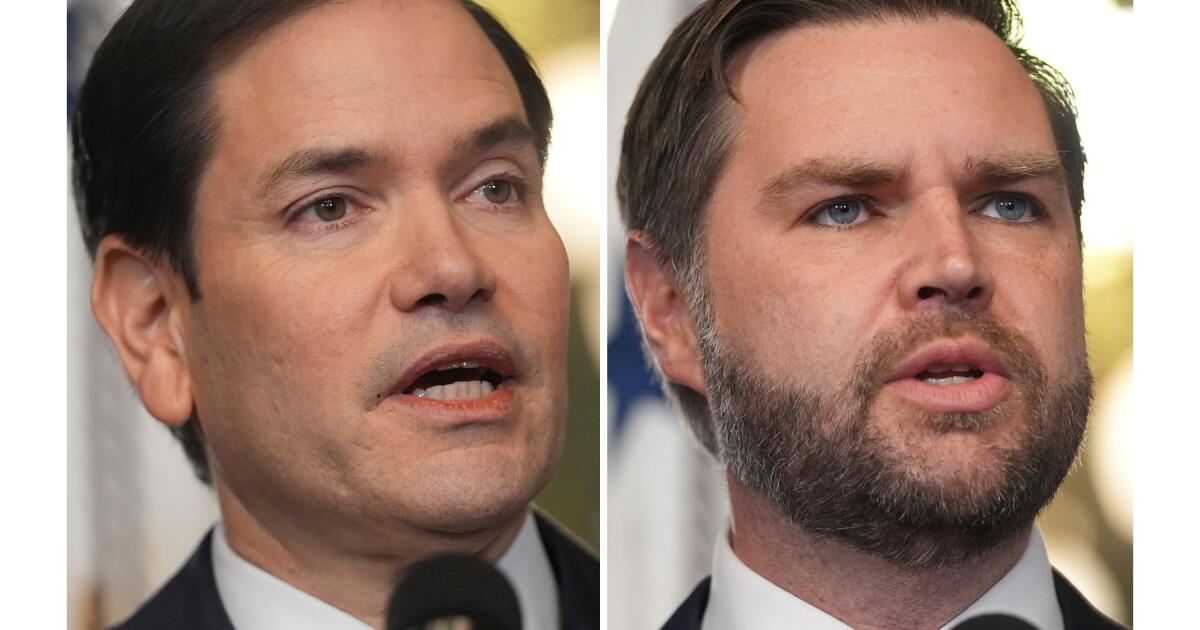
Rubio’s and Vance’s differing postures on Iran war highlight their challenges ahead of 2028 election

As President Trump assembled his Cabinet last week, he asked Secretary of State Marco Rubio and Vice President JD Vance to give an update on the Iran war.

Rubio, known for his hawkish views, gave an impassioned defense of the war, calling it “a favor” to the United States and the world.

Vance, who has long pushed for restraint in U.S. military intervention overseas, was more sedate. He said that the U.S. now has “options” it didn’t have a year ago and that it is important Iran does not get a nuclear weapon — before redirecting his remarks toward wishing the troops a happy Easter.

The exchange was a distillation of their diverging postures toward the war that their boss has launched in Iran. And it comes as some would-be Republican presidential candidates begin quietly courting officials in key states like New Hampshire in the early stages of the GOP’s next nomination fight.

With Vance and Rubio seen as the party’s strongest potential candidates in a 2028 primary, the two have to balance their roles in the Trump administration with their future political plans.

“It’s very obvious from the way that Rubio talks about Iran and the way that Vance talks about Iran that they are of different casts of mind,” said Curt Mills, the executive director of “The American Conservative” magazine and a vocal critic of the war. The Cabinet meeting episode was telling, he said, because it seemed as though Vance, discussing Easter, was “literally trying to talk about anything else other than the war.”

The White House addressed the Rubio-Vance relationship on Wednesday in an unsolicited statement after the initial publication of this article.

“President Trump has full confidence in both Vice President Vance and Secretary Rubio, who continue to be trusted voices within the administration,” said White House spokesperson Anna Kelly. “He values both the vice president and the secretary’s opinions and wealth of expertise.”

It’s too soon to forecast how Republican voters might feel about the war next spring, when the 2028 contest is expected to begin in earnest, but the risks for both Vance and Rubio are acute. Rubio’s full-throated support for the war could come back to haunt him depending on how the conflict develops. Vance, meanwhile, would risk accusations of disloyalty if he were to stray too far from Trump, but struggles to square an appearance of support for the war with his past comments.

Vance, who served in the Marines in the Iraq war, has said that Iran cannot have a nuclear weapon, but he’s long been skeptical of foreign military interventions.

Trump seemed to allude that Vance may have held onto that position in private discussions about Iran, telling reporters that Vance was “philosophically a little bit different than me” at the outset of the conflict.

“I think he was maybe less enthusiastic about going, but he was quite enthusiastic,” Trump said.

Though Vance has been careful in how he speaks about the war, what he’s not saying has been conspicuous. On a March 13 trip to North Carolina, he was twice asked by reporters if he had concerns about the conflict. Each time, he said it was important that Trump could have conversations with advisers “without his team then running their mouths to the American media.”

A few days later at the White House, when Vance was again asked if he had concerns, he accused the reporter of “trying to drive a wedge between members of the administration, between me and the president.”

For Rubio, long before he became the country’s chief diplomat, he voiced support for muscular foreign policy and American intervention abroad.

Days into the war, he told reporters that it was “a wise decision” for Trump to launch the operation, that there “absolutely was an imminent threat” from Iran and that the operation “needed to happen.”

State Department spokesperson Tommy Pigott pointed to last week’s Cabinet meeting as evidence that “the entire administration is in lockstep behind President Trump.”

“Secretary Rubio is proud to be on the team implementing President Trump’s policies, and he has a great relationship, both professionally and personally, with the entire team,” Pigott said.

Fractures are emerging in the GOP

The apparent split between Rubio and Vance on the Iran war is emblematic of the divide starting to cleave within the Republican Party. A recent survey from The Associated Press-NORC Center for Public Affairs Research found some divisions within the GOP on Iran, with about half of Republicans saying the U.S. military action has been “about right.” Relatively few Republicans, about 2 in 10, say military action has not gone far enough, while about one-quarter say it’s gone too far.

While some conservatives have described the war as a betrayal, many other Republicans have cheered on the president’s actions.

Alice Swanson, a 62-year-old who attended Vance’s event in North Carolina, said she wants Vance and Rubio to run together in 2028 but favors the vice president.

“I think he fully believes and supports exactly what his convictions are,” Swanson said.

Swanson acknowledged, nonetheless, that Vance has been an outspoken opponent of interventionist policy but has been quieter on the subject since the war. “I can see both sides,” Swanson said after expressing full support for Trump’s decisions.

Tracy Brill, a 62-year-old from Rocky Mount, spoke highly of Rubio, but declared, “I love JD Vance.”

She made it clear she sides with the president, calling the course he’s taken “spot on.” But she defended the vice president if he seems at odds with his past statements, noting politicians do it frequently. “They’ve all changed their positions at one point or another,” she said.

However, Joe Ropar, attending the Conservative Political Action Conference last week, said Rubio’s unequivocal support for the Iran war helped crystallize his preference for the secretary of state for 2028.

“I’m not looking at JD Vance for president, and it’s for stuff like that,” said Ropar, a 72-year-old retired military contractor from McKinney, Texas. “I don’t 100% trust him.”

Benjamin Williams, of Austin, Texas, said at CPAC that both Trump and Vance are “tied to this war.” The 25-year-old marketing specialist for Young Americans for Liberty is looking elsewhere for a candidate.

The political risks might not be known until the field fills out

Whether the war becomes a political problem for Vance and Rubio depends on who ultimately enters the GOP’s next presidential primary.

While Vance and Rubio are currently considered the overwhelming front-runners, former New Hampshire Gov. Chris Sununu expects a half dozen high-profile Republicans to enter the contest.

Sununu and former RNC Committeewoman Juliana Bergeron told The Associated Press that multiple Republican presidential prospects have reached out to them in recent weeks to discuss the political landscape in the state that traditionally hosts the opening presidential primary; they declined to name them.

Republican strategist Jim Merrill, a top New Hampshire adviser for Rubio’s 2016 presidential bid, predicted that Iran would become a flashpoint in 2028 — just as the Iraq war was for Democrats in 2004 and 2008.

“If for some reason things don’t go as anticipated, there will be contrasts drawn,” he said.

Still, Sununu is doubtful that Iran would become a meaningful dividing line in a prospective Vance-Rubio matchup given their status as prominent members of the Trump administration. Both will likely take credit if the conflict ends well, and both would look bad if it does not, he predicted.

“They’re tied together with the success or failure of Iran. It doesn’t really separate one versus the other, at least I don’t think that’s how the electorate will see it,” Sununu said.

Price and Peoples write for the Associated Press. Peoples reported from New York. AP writers Matthew Lee in Washington, Bill Barrow in Rocky Mount, N.C., and Thomas Beaumont in Grapevine, Texas, contributed to this report.

Source link

Stocks jump and oil drops as Trump renews hopes of Iran war ending

Published on

Renewed optimism over a possible de-escalation in the Iran war, now in its fifth week, gave a strong boost to stock markets in Europe and Asia on Wednesday.


ADVERTISEMENT


ADVERTISEMENT

At the time of writing, the Euro Stoxx 50 is up over 1%, while the broader pan-European Stoxx 600 is around 2.5% higher.

In London, the FTSE 100 has risen roughly 0.8% with Germany’s DAX 30 and France’s CAC 40 making equal moves to the upside. Italy’s FTSE MIB has jumped the most and is 1.7% higher.

During a press gaggle at the White House on Tuesday, US President Donald Trump stated that the country would “probably” stop attacks on Iran within two to three weeks “‘whether we have a deal or not”.

Following Trump’s comments, the front month future contracts for oil also saw a sharp decline, with Brent crude and WTI both trading around 4% lower and below $100 a barrel.

Trump also stressed that the US would “not have anything to do with” what happens next in the Strait of Hormuz.

Despite the relief, markets are eagerly anticipating Trump’s address to the nation about the conflict, which will occur overnight on Wednesday, according to the White House Press Secretary.

Asian markets, US futures and precious metals

Asian shares also rose sharply on Wednesday after Trump’s statement.

At the time of writing, South Korea’s Kospi has recovered losses from earlier this week, surging over 8%, while Tokyo’s Nikkei 225 rose more than 2%.

A survey by Japan’s central bank released on Wednesday showed that business sentiment among major manufacturers had improved despite concerns over the Iran war.

Hong Kong’s Hang Seng index is also over 2% higher, while the Shanghai Composite has jumped around 1.5%. Additionally, India’s Sensex rose roughly 2%, Australia’s ASX 200 is up 1% and Taiwan’s Taiex climbed more than 4%.

“De-escalation hopes have given markets a lift, but we think the effects of the war would, in many cases, persist even if it were to end soon,” said Thomas Mathews, head of markets for Asia Pacific at Capital Economics, in a research note on Wednesday.

US futures are also all trading between 0.7% and 1.2% higher.

The move comes after US stocks recorded their strongest day in almost a year on Tuesday, when the S&P 500 rose 2.9%, its largest gain since May.

The Dow Jones Industrial Average climbed 2.5%, while the Nasdaq jumped 3.8%.

“It’s worth considering how markets might respond if the war were to end very soon. Do markets have further to recover if sentiment continues to improve? The answer is almost certainly yes,” Mathews added.

In other trading, gold rose is up 1.4% trading at around $4,730 while silver is down roughly 1% to $74.3 an ounce.

Source link

Seizing Kharg Island would risk U.S. troops’ lives and may not end Iran war, experts say

President Trump is threatening to deploy ground troops to seize critical oil infrastructure on Iran’s Kharg Island, a military gambit that experts say would risk American lives and could still fail to end the war.

If Trump wants to hobble Iran’s oil industry for leverage in negotiations, a better option might be setting up a blockade at sea against ships that have filled up at Kharg Island’s oil terminals, the experts said.

The island — located on the other side of the Persian Gulf from U.S. bases in Kuwait and Saudi Arabia — is the beating heart of Iran’s oil industry, through which 90% of its exports pass. It is important because Iran’s coastline is mostly too shallow for tanker ships to dock.

“Putting people on the ground might be the most psychologically compelling way of striking a blow at Iran,” said Michael Eisenstadt, a former U.S. military analyst who now directs the Military and Security Studies Program at the Washington Institute for Near East Policy.

“On the other hand, you’re putting your own troops at jeopardy,” said Eisenstadt, a retired Army reserve officer who served in Iraq. “It’s not far from the mainland. So they can potentially rain a lot of destruction on the island, if they’re willing to inflict damage on their own infrastructure.”

Seizing Kharg Island could escalate the conflict, said Danny Citrinowicz, an Iran expert at Israel’s Institute for National Security Studies.

He said Iran and its proxies — including Yemen’s Houthi rebels — could intensify their retaliation, including by laying mines in the Strait of Hormuz or striking targets with drones across the Arabian Peninsula, from the Persian Gulf to the Red Sea.

Commodities researchers and investment banks warn major retaliation could have lasting implications for energy prices and the global economy.

“It will be hard to take. It will be hard to hold,” Citrinowicz said of Kharg Island. “And it might damage the economy, but not in a way that will force the Iranians to capitulate.”

Trump says ‘maybe we take Kharg Island’

Trump is under growing pressure to end the monthlong conflict with Iran, which has attacked U.S. bases and allies in the region.

Iran also has largely closed the Strait of Hormuz, a narrow chokepoint through which 20% of the world’s oil normally flows, causing fuel prices to soar and other economic tumult.

Trump said in a social media post Monday that “great progress is being made” in talks with Iran to end military operations. But he said that if a deal is not reached “shortly” and the strait is not immediately reopened, the U.S. would obliterate power plants, oil wells, Kharg Island and possibly even desalination plants.

Trump has raised the idea of American forces seizing Kharg Island.

“Maybe we take Kharg Island, maybe we don’t. We have a lot of options,” Trump told the Financial Times. “It would also mean we had to be there (on Kharg Island) for a while.”

Asked about Iranian defenses there, he said: “I don’t think they have any defense. We could take it very easily.”

Secretary of State Marco Rubio said Friday that ground troops would not be needed to achieve the Trump administration’s goals. He did not repeat that assertion Monday after being asked about plans for U.S. ground troops, saying “the president has several options at his disposal” but diplomacy is Trump’s preference.

“Now, they are making threats about controlling the Hormuz Strait in perpetuity, creating a tolling system and the like,” Rubio told ABC’s “Good Morning America.” “That’s not going to be allowed to happen. And the president has a number of options available to him, if he so chooses, to prevent that from happening.”

U.S. has hit targets on the island crucial to Iran

The U.S. has already struck various targets on the island, including air defenses, a radar site, the airport and a hovercraft base, according to satellite analysis by the Institute for the Study of War and American Enterprise Institute’s Critical Threats Project.

Petras Katinas, an energy researcher at the Royal United Services Institute, said disrupting Kharg Island would not completely halt oil exports as Iran has other small ports. But it would reduce the oil revenue flowing to Iran’s government, “forcing flows through a much smaller, costlier and less efficient export system,” he said.

However, Tehran has too much at stake to surrender over a single asset, no matter how economically significant, said Citrinowicz, the Iran expert at Israel’s Institute for National Security Studies.

While occupying Kharg might offer Washington some leverage in any negotiations, he said the notion that control of the island could be traded for Iran’s stockpile of enriched uranium was far-fetched.

“It’s in no way a decisive blow,” Citrinowicz said.

U.S. troops face risk from Iran’s mainland if they tried to seize Kharg Island

A U.S. Navy ship carrying about 2,500 Marines recently arrived in the Middle East, while at least 1,000 troops from the 82nd Airborne Division are expected soon. Another 2,500 Marines are being deployed from California. The Trump administration has not said what all those troops will be doing, but the 82nd Airborne is trained to parachute into hostile or contested territory to secure key territory and airfields.

One of the reasons American troops would be vulnerable on Kharg Island is its close proximity — about 33 kilometers (21 miles) — to the Iranian mainland, from which missiles, drones and artillery could be fired. Despite continued U.S. and Israeli strikes, the Islamic Republic is still attacking targets across the region, including a Saudi air base hundreds of miles away where more than two dozen American troops were injured last week.

Even with American ships and planes providing support, there would still be a relatively short window of time to shoot down every drone or missile launched from the mainland at the island, Eisenstadt said.

“The coast tends to be mountainous, so the drones can come in through mountain passes where it’s hard for our radar to pick up,” he said. “And we don’t have the warning time.”

Eisenstadt says a sea blockade against ships carrying Iranian oil would be a safer strategy and achieve the same goal of controlling most of Iran’s oil industry.

“Throw up a quarantine that seeks to seize Iranian oil shipments that are exiting the Gulf,” agreed Clayton Seigle, an energy security expert at the Center for Strategic and International Studies. It could be done at a distance “outside the range of the lion’s share of Iran’s weapon systems.”

Seigle argued against destroying Kharg Island’s oil infrastructure, which Trump also suggested.

“We were supposed to be coming to the rescue of the people that had been rising up and protesting for a better future,” Seigle said. “So to cripple Iran’s revenue-generating potential for many years to come would definitely not work in that direction.”

Finley and Metz write for the Associated Press. Metz reported from Ramallah, West Bank.

Source link

Oil remains above $110 as markets once again grapple with uncertainty over Trump’s next move

Investors remain wary, as the Wall Street Journal report came on the same day the US president threatened to destroy Iran’s key oil export hub and desalination plants unless it accepts a deal, while also suggesting that diplomacy was making progress.


ADVERTISEMENT


ADVERTISEMENT

The news comes as governments around the world scramble to implement measures to ease the burden of surging fuel prices while also seeking to conserve energy, with around one-fifth of global crude oil and gas passing through the waterway.

The Wall Street Journal, citing administration officials, said Trump and his aides had concluded that a mission to reopen the waterway would extend beyond his four- to six-week timeline. It added that he had decided to focus on targeting Iran’s missiles and navy, before seeking to pressure the country diplomatically to reopen the Strait.

Further fuelling concerns, a drone struck a Kuwaiti oil tanker in Dubai waters, causing a fire on Tuesday morning. Dubai authorities said the blaze had already been extinguished, but concerns about a potential oil spill remain.

Maritime traffic disruptions in the Strait of Hormuz, through which roughly a fifth of the world’s oil normally passes, remain a key pressure point for global energy supplies. US Secretary of State Marco Rubio said Trump has “options available” in response to Tehran’s threats to control the strait, after Iran was reported to have effectively created a “toll booth” there.

Both major oil benchmarks fell on Tuesday, though West Texas Intermediate and Brent crude remained well above $100 a barrel. At 7 a.m. CET, the international benchmark Brent was trading at nearly $113, while WTI crude was above $102 a barrel.

Most equity markets in Asia rose briefly, but by this point Tokyo’s Nikkei 225 was down 1.3%, South Korea’s Kospi had fallen 3.3%, Hong Kong’s Hang Seng had shed 0.5%, and the Shanghai Composite index was down 0.4%.

US futures were up between 0.6% and 0.8%.

In other early Tuesday trading, gold and silver prices rose. Gold was up 0.7% at $4,587.80 an ounce, while silver climbed 2.4% to $72.25 per ounce.

The US dollar stood at 159.61 Japanese yen, down from 159.71 yen. The euro was trading at $1.1472, up from $1.1465.

Source link

Gold and silver prices plunge: Why has safe-haven demand faded amid Iran war?

Published on

It is an old market saying, but it has never felt more apt: when people are worried about the future, they buy gold — when they are worried about the present, they sell it.


ADVERTISEMENT


ADVERTISEMENT

While the Iran war has raised longer-term concerns over energy security and global stability, the immediate fallout, in the form of surging oil prices and renewed inflation fears, has forced investors to prioritise liquidity and higher-yielding assets over metals.

Gold hit an all-time high of $5,602 (€4,873) at the end of January and looked to be heading higher still in early March, but has since dropped nearly 25% to a low of $4,100 (€3,567), trading around $4,500 (€3,915) at the time of writing.

The decline marks a dramatic pullback from gold’s extraordinary performance last year.

In 2025, the metal delivered one of its best annual gains in decades, rising more than 60% to record levels as central banks accumulated reserves and investors sought protection amid economic uncertainty.

The drop in 2026 has triggered a swift unwinding of leveraged positions in futures and exchange-traded funds which were riding last year’s tremendous rise.

This sharp reversal defies the traditional role of the metal as a refuge during geopolitical turmoil, with a stronger US dollar and rising bond yields proving far more influential.

Macroeconomic forces override safe-haven appeal

Rising US Treasury yields and a firmer US dollar have been the dominant headwinds for precious metals.

Higher oil prices stemming from the Iran war have lifted inflation expectations, prompting markets to price in fewer Federal Reserve rate cuts or even the possibility of tighter policy for longer, including potential hikes that were previously unexpected.

This has increased the opportunity cost of holding non-yielding gold, while the US dollar’s strength has made it more expensive for international buyers.

The result has been a classic “flight to liquidity” rather than the expected flight to quality risk assets, as leveraged traders facing margin calls accelerated the sell-off.

The correction for metals has been one of the sharpest in recent memory.

Silver shares in gold’s downturn

Silver, which often amplifies gold’s moves, followed with an even bigger drop.

The white metal reached an all time high of $121 just one day after gold, on 29 January, but it has since dropped roughly 50% to as low as $61.

At the time of writing, it is trading at around $70.

Silver enjoyed an even more spectacular rally than gold in 2025, surging roughly 145% thanks to robust industrial demand from solar panels, electronics and electric vehicles, combined with investment buying.

In 2026, however, it has also declined sharply amid the same pressures of US dollar strength and higher yields, although its industrial fundamentals continue to offer longer-term support.

Source link

European markets set for lower open as oil prices continue to soar

Published on Updated

European markets are set to open lower on Monday, with futures pointing to declines across major indices as investor sentiment remains cautious amid rising oil prices and geopolitical tensions in the Middle East.


ADVERTISEMENT


ADVERTISEMENT

As of early morning trading, Germany’s DAX was down around 0.5%, the FTSE 100 fell roughly 0.3%, and France’s CAC 40 was also in negative territory, according to IG data.

The weaker outlook follows losses in Asia, where shares mostly dipped overnight as concerns persisted around soaring oil prices and the potential for further escalation in the US war with Iran.

The declines follow steep losses on Wall Street on Friday, marking a fifth consecutive losing week — the longest such streak in nearly four years.

“US equity markets remained under sustained pressure, with the S&P 500 falling 2.1% for the week and the Nasdaq 100 sliding 3.2%. The Dow Jones held up comparatively better, declining 0.9%, owing to its lower technology weighting. Both the Nasdaq 100 and the Dow Jones have now officially entered correction territory after recording drawdowns of more than 10% below their respective peaks,” IG market analyst Fabien Yip said in a commentary note.

Asia-Pacific markets lower overnight

Japan’s benchmark Nikkei 225 fell 4.5% in early trading, Australia’s S&P/ASX 200 dropped 1.2%, and South Korea’s Kospi slid 3.2%. Hong Kong’s Hang Seng declined 1.7%, while the Shanghai Composite edged 0.7% lower.

Investor worries have been particularly acute due to the risk of disrupted access to the Strait of Hormuz, a critical route for global oil shipments.

Benchmark Brent crude rose above $116 a barrel in early trading, marking an increase of more than 50% since the Iran conflict began on 28 February. Prices were just over $70 a barrel when the war started. US benchmark crude was also up, at around $101 a barrel, reflecting continued volatility in global energy markets.

The surge comes as US President Donald Trump raised the possibility of American forces seizing Iran’s Kharg Island, the country’s main oil terminal in the Persian Gulf. He made the comment in an interview published early Monday by the Financial Times.

“Maybe we take Kharg Island, maybe we don’t. We have a lot of options,” Trump told the newspaper. “It would also mean we had to be there (on Kharg Island) for a while.”

Asked about Iranian defences there, he said: “I don’t think they have any defence. We could take it very easily.”

The US has already launched airstrikes it said targeted military positions on the island. Iran has threatened to launch its own ground invasion of Gulf Arab countries and new attacks if US troops land on its territory.

Meanwhile, G7 finance ministers, energy ministers and central bank governors are set to hold an emergency meeting today to discuss the conflict and its consequences. It will mark the fourth time since the start of the war in Iran the G7 has convened at a ministerial level.

Source link

Trump’s conflicting messages sow confusion over the Iran war

President Trump says the United States is winning the war with Iran, even as thousands of additional American troops deploy to the Middle East.

He has pilloried other countries for not helping the U.S., only to say later he does not need their assistance. He has twice delayed deadlines for Iran to reopen the Strait of Hormuz. He has threatened to “obliterate” Iran’s energy plants if the vital waterway remains largely shut down and said the U.S. was “not affected” by the closure.

At one point this month, Trump claimed that one of his predecessors — who, he strongly suggested, was a Democrat — privately told him he wished he had taken similar action against Iran. Representatives for every living former president denied that any such conversation happened.

As the war entered its second month over the weekend, Trump’s penchant for embellishments, exaggerations and falsehoods is being tested in an environment where the stakes are much higher than a domestic political fight.

A president who has long embraced bluster and salesmanship to shape narratives and focus attention is confronting the unpredictability of war.

Leon Panetta, who served Democratic presidents as Defense secretary, CIA director and White House chief of staff, said he has “seen enough wars where truth becomes the first casualty.”

“It’s not the first administration that has not told the truth about war,” he said. “But the president has made it kind of a very standard approach to almost any question to in one way or another kind of lie about what’s really happening and basically describe everything as fine and that we’re winning the war.”

Michael Rubin, a historian at the American Enterprise Institute who worked as a staff advisor on Iran and Iraq at the Pentagon from 2002 to 2004, said Trump is “the first president of any party in recent history that hasn’t self-constrained to live within rhetorical boundaries.”

“So of course it creates a great deal of confusion,” he said.

The zigs and zags are the point

To his critics, Trump’s style is a sign that doesn’t have a coherent long-term strategy. But for Trump, the zigs and zags seem like the point, a method that keeps his opponents — and pretty much everyone else — always on their heels.

The approach was clear last week in the hours before he announced the second delay of the deadline for Iran to reopen the strait. Asked what he would do about the deadline, Trump said that he did not know and that he had a day before he had to decide.

“In Trump time, a day, you know what it is, that’s an eternity,” Trump said to laughter from members of his Cabinet.

But investors are unimpressed, with U.S. stocks closing out their worst week since the war began. To some on Capitol Hill, the freewheeling is more frustrating than amusing.

Rep. Gregory Meeks of New York, the top Democrat on the House Foreign Affairs Committee, lamented that Trump is “going back and forth and constantly contradicting himself.”

“The administration is winging it,” he said. “So how can you trust what the president says?”

Republicans were not willing to go that far, but their concern was apparent heading into a two-week break from Washington. Sen. John Kennedy of Louisiana said his constituents “support what the president has done.”

“But most of my people are also equally or even more so concerned about cost of living,” he said.

Republican Rep. Chip Roy of Texas, who sits on the House Budget Committee and is a member of the hard-right House Freedom Caucus, said his constituents were on board with “blowing some crap up.” Nonetheless, he expressed reservations about the prospect of ground troops and said the administration has not provided enough details in briefings for lawmakers. Such sessions, he said, only reveal information you “read in the papers.”

“Taking out bad guys, taking out conventional [weapons], taking out or at least working to take out nuclear capability, pressing to keep the straits open, all those are good things and I’ve been supportive and will continue to be supportive,” Roy said. “But we’ve got to have a serious conversation about how long this is going to go, boots on the ground, all those things, press for further briefings and understanding of where it’s all headed.”

Political risks ahead

While Trump has maintained deep support among Republicans, a poll last week from the Associated Press-NORC Center for Public Affairs Research indicates that the president risks further frustrating his voters if the U.S. gets involved in the kind of prolonged war in the Middle East that he promised to avoid. He campaigned against starting new foreign wars altogether, and his reversal on that already has irked some of his longtime supporters.

Although 63% of Republicans back airstrikes against Iranian military targets, the survey found, only 20% back deploying American ground troops.

That reflects the political challenges ahead for Trump, who did not prepare the country for such an extensive overseas conflict. If the war drags on or escalates, pressure on Republicans could build before the November elections, when their majorities in Congress are at risk. Some in the party have said sending in ground troops would be a red line that Trump should not cross.

The administration also will probably need congressional support for an additional $200 billion he seeks to support the war. That amount of money, which Trump has said would be “nice to have,” even as he said the war was “winding down,” would be a tough vote at any time. But it poses particular risks for Republicans in an election year.

White House spokesperson Anna Kelly said in a statement that Trump is “right to highlight the vast success of Operation Epic Fury,” the military name for the war in Iran.

“Iran desperately wants to make a deal because of how badly they are being decimated, but the President reserves all options, military or not, at all times,” she said.

Some see ‘logic’ to Trump’s approach

Rubin, the former Iran and Iraq advisor at the Pentagon, said there could be some “logic” to the president’s ever-evolving rhetorical approach to the war. He said Trump’s initial comments about ongoing negotiations, which Iran denied, could “spread suspicion and fear within the regime circles.”

“Perhaps Donald Trump or those advising him simply want the Iranians to grow so paranoid they refuse to cooperate with each other or perhaps they even turn on each other,” he said. “But then again, there’s always a danger with Donald Trump of assuming that his rhetoric is anything more than shooting from the hip.”

Rep. Adam Smith of Washington state, the top Democrat on the House Armed Services Committee, said Trump is not going to be able to fully achieve his objectives, even those that have been clearly articulated — including the complete elimination of Iran’s nuclear program — “in the current trajectory.”

And if that is the case, Smith said, the president has the option to rely on his rhetorical skills to simply say the U.S. won — and end the war.

“As I’ve jokingly said, nobody I have ever met or heard of in human history is better at exaggerating his own accomplishments than Donald Trump,” Smith said. “So go knock yourself out and claim this was some great success.”

Sloan writes for the Associated Press.

Source link

At CPAC, a young-old conservative divide over Iran war

A generational divide over the Iran war surfaced between older attendees and their political heirs at this year’s Conservative Political Action Conference, as the group’s leaders pleaded for unity in a challenging midterm election year for Republicans.

Younger conservatives at CPAC, which concluded Saturday, spoke of disappointment and even betrayal over President Trump’s war against Iran, saying in interviews with the Associated Press that the president’s actions run counter to his many pledges to oppose foreign entanglements.

Meanwhile, older conservatives were looking past Trump’s campaign criticism of military action to achieve regime change, arguing that the war in Iran is a pragmatic act necessitated by threats to the United States.

The bright dividing line emerged in conversations with a dozen participants on either end of the age spectrum who gathered this week for the annual meeting of conservatives, being held outside Dallas. That split could reflect flagging enthusiasm for Trump among some younger voters, a potentially troubling sign for Republicans heading into midterm elections and for the conservative movement as it looks beyond Trump’s tenure.

“We did not want to see more wars. We wanted actual America-first policies, and Trump was very explicit about that,” said Benjamin Williams, a 25-year-old marketing specialist for Young Americans for Liberty. “It does feel like a betrayal, for sure.”

Worries about sending troops to Iran

Williams, from Austin, Texas, said he worries about his friends in the military, especially his Air Force officer brother. More broadly, he sees the war as an unnecessary disruption to the stability in the Middle East that could have long-term negative effects on the U.S. economy.

“Trump’s rhetoric was very important for people of my generation,” Williams said.

Auburn University sophomore Sean O’Brien’s support for Trump has slipped, especially with his talk of sending U.S. ground troops into Iran. “I’m not happy,” he said.

Sending troops into Iran, he said, “would be full betrayal.”

With at least 1,000 troops from the 82nd Airborne Division deploying in the Middle East, O’Brien said, “That’s what keeps me up at night.”

Older attendees’ views

Older CPAC participants were far more supportive of the war effort, describing Trump as wisely responsive to what they described as the threat Iran posed. Several suggested that Trump did not initiate the war, but that Iran had decades ago.

“I don’t believe he started a new war. He was acting in response to a 40-year-old war by Iran,” said 70-year-old retired defense contractor Joe Ropar of McKinney, Texas. “How long were we supposed to wait? I think he did what he had to do when he had to do it.

“Do nothing? I’m not on board with that,” Ropar said.

Echoing a common theme from older participants, Kelle Phillips said Trump’s decision was a pragmatic reaction to a real threat that overrules the best hopes of campaign rhetoric.

“You campaign on what you want to do and then the world’s dynamics happen,” said Phillips, a 61-year-old author and religious instructor from Frisco, Texas. “I think the difference is if you have someone in the Iranian regime who wants to destroy America, you can’t reason with them.”

Trump’s goals in Iran, James Scharre believes, are short-term and not a concern for those adverse to a long slog overseas.

Scharre, 61, also interprets Trump’s steadfast campaign opposition to regime change as a preference, not an ironclad promise.

“I think he said he was against it,” he said. “Trump is a wise leader. He does what works. And I’m for it.”

High-profile conservatives also split

Cracks in the conservative coalition began appearing early in the war, led by influential opinion leaders like podcaster Tucker Carlson, a staunch opponent of the Iran war.

Joe Kent recently quit his post as Trump’s director of the Center for Counterterrorism at the Department of Homeland Security, saying in his departure statement that “I cannot in good conscience support the ongoing war in Iran” and that “Iran posed no imminent threat to our nation.”

Right-wing podcaster Stephen K. Bannon, a longtime Trump advisor and former White House aide who is expected to speak at CPAC, has worried aloud that a protracted Mideast military engagement would cost Republicans support by pushing some conservatives to sit out the November midterms.

This comes at a time when Republicans’ hold on the U.S. House is in jeopardy and the GOP’s thin Senate majority is not as secure as it appeared just a few months ago.

A recent survey from the Associated Press-NORC Center for Public Affairs Research indicates that while Trump’s approval rating is low but holding steady, the conflict could be turning into a major political liability for his administration. About 59% of Americans say U.S. military action in Iran has been excessive, the poll found.

Calls for unity

CPAC Chairman Matt Schlapp acknowledged conservatives were divided over Iran and said the convention’s annual straw poll will include a question about it. The results were to be released later Saturday.

“Any consensus is still to be determined. I think people trust President Trump, so I don’t think there’s been any shaking of his support,” Schlapp told the AP. “But I think underneath there’s concern about where does this lead.”

Tiffany Krieger, a 20-year-old sophomore at the University of Pittsburgh, said her onetime level-10 support for Trump has dipped to 5 over the war.

“It seems like the love for him is plateauing. We see our party splitting apart and we’re supposed to be united,” said Krieger, of Harrisburg, Pa. “I think this issue with the war has put a line through the conservative movement.”

Almost if addressing Krieger directly, Mercedes Schlapp, senior fellow for the CPAC foundation, opened Thursday’s session of the conference in Texas with a direct appeal.

“We cannot divide from within,” she told an audience of hundreds from the stage at the convention center. Referring to political opponents, she added: “Let’s stay united. They want us divided.”

Beaumont writes for the Associated Press.
Source link

Trump jokes, rants, talks price of pens as Iran war enters fifth week

During his first Cabinet meeting since launching the U.S. war on Iran, President Trump spent 10 minutes talking about the price of ceremonial White House pens — which he claimed to have brought down, from $1,000 to $5, by switching to his favored Sharpie brand.

Trump was trying to make the point during the Thursday meeting that he’s a great money saver. He seemed chipper, joking with the other leaders of his administration at the table.

Late Thursday, when asked on “The Five” on Fox News about whether Iranian people have access to basic necessities such as drinking water and food, Trump complimented the looks of Dana Perino, the Fox host who’d asked the question, compared to when he’d met her years before.

“Now I’m not allowed to say this, it’s the end of my political career, but you may be even better looking, OK?” Trump said. “You’re not allowed to say a woman’s beautiful anymore.”

He then talked about Iranian authorities killing protesters, but said he’d been pleased with them more recently because they had given him a “present” by allowing oil ships through the Strait of Hormuz.

Through both discussions, Trump maintained a flippant, casual tone — the same he has maintained since the war began a month ago, and a vast departure from that of past wartime presidents.

For weeks, Trump has batted away criticisms of the war campaign and questions about why it was justified and how long it will last. He has derided reporters for asking questions about tactics and whether he’ll deploy boots on the ground as inappropriate and foolish, and repeatedly met concerns about the human toll of the war by shrugging them off or changing the subject.

Meanwhile, his war has cost the U.S. billions of dollars and depleted its global reserves of critical weapons systems such as Tomahawk missiles, which cost millions of dollars each and are needed to maintain U.S. security around the world, according to the Washington Post.

Entering its fifth week, the war has badly disrupted markets, with U.S. stocks falling Friday as Wall Street approached the end of its fifth straight losing week — the longest such streak in nearly four years — and oil prices rising again.

Markets have fluctuated based on Trump’s changing messages on an end to the war, planned and then postponed strikes on Iran’s power plants, strikes on oil and gas infrastructure across the Middle East and Iran’s stranglehold on the Strait of Hormuz, through which a quarter of global oil usually passes.

Trump has talked in recent days about an impending deal to end the war, but so far it has not materialized, with Iran downplaying the seriousness of the negotiations. Iran instead appeared to be formalizing its hold on the strait, including by creating what amounts to a toll on ships seeking passage through the channel from its Islamic Revolutionary Guard Corps.

The number of U.S. deaths in the conflict has held steady for days — at 13 — but the war continues to exact a daily, devastating toll in the Middle East. In Iran, thousands of targets continued being hit, with the death toll ticking toward 2,000.

Speaking by video during a Human Rights Council meeting in Geneva on Friday, Iranian Foreign Minister Abbas Araghchi accused the United States and Israel of harboring a “clear intent to commit genocide” in Iran, claiming that more than 600 schools had been damaged or demolished and more than 1,000 students and teachers “martyred or wounded.”

The discussion related in part to a Feb. 28 strike on an elementary school in Minab that killed more than 165 people, most of them children, which evidence reportedly suggests was the work of the U.S. and which the U.S. says is under investigation.

Casualties also continued in Gulf nations allied with the U.S., where Iran continues to strike U.S. military installations and other infrastructure, and in Lebanon, which Israel has invaded and bombed relentlessly in its own war with the Iranian-aligned Hezbollah force.

And yet, Trump has bounced between speaking engagements and more formal meetings with an apparent lightness — seeming unbothered by the weight of the conflict and acting as if U.S. victory were already at hand.

“We’ve already won the war. Militarily we’ve totally won the war,” he told “The Five” on Thursday.

After Trump’s exchange with Perino, fellow host Greg Gutfeld began to change the topic, saying, “I’m debating whether to be serious or not serious.”

“Do you think Biden would do this interview? Can you imagine? You think Biden — Sleepy Joe — he would do it?” Trump said.

He called the war a “little bit of a detour” from what he said were his otherwise winning economic policies, and asserted again — without providing evidence — that Iran was on the cusp of having a nuclear weapon and would have used it to cause devastation across the Middle East and to the U.S. if the U.S. hadn’t struck first, including when it bombed Iran’s nuclear sites last summer.

“You can’t let a madman or you can’t let a mad ideology have a nuclear weapon,” Trump said.

He repeated his long-pushed lie that he won the 2020 election, and suggested his support among his MAGA base remains at 100%.

An AP-NORC poll this week found that most Americans believe that the U.S. military campaign in Iran has gone too far — including about a quarter of Republicans — and that many are worried about gas prices.

During his Cabinet meeting Thursday, Trump seemed supremely confident, but also aware that the conflict was far from settled.

He said that the U.S. was “extremely — really a lot — ahead of schedule” in its war effort, and that “the Iranian regime is now admitting to itself that they have been decisively defeated.” But he also said that “even now, we don’t know if there are any mines” in the Strait of Hormuz, despite the U.S. having wiped out Iran’s “mine droppers,” and acknowledged that “if you think there may be a mine, that’s a bad thought and it stops things up.”

He said the U.S. has “decimated” about 99% of Iranian capabilities, but “the problem with the strait” is that the remaining 1% threat “is unacceptable, because 1% is a missile going into the hull of a ship that cost $1 billion.”

“If we do a 99% decimation, that’s no good,” he said.

During “The Five” interview, Trump was also asked if the CIA had told him that Supreme Leader Ayatollah Mojtaba Khamenei — who took on the Iranian leadership role after his father, Supreme Leader Ayatollah Ali Khamenei, was killed in initial strikes — is gay, which would be a crime under Iranian law.

“Well they did say that, but I don’t know if it was only them. I think a lot of people are saying that. Which puts him off to a bad start in that particular country, you know?” Trump said, in a stunning acknowledgment of a previously rumored intelligence briefing.

Source link

G7 meets on the Iran war as Rubio tries to sell U.S. strategy to skeptical allies insulted by Trump

Group of Seven foreign ministers met on Friday in France to discuss the Russia-Ukraine conflict, with deep divisions apparent over the U.S.-Israeli war with Iran, following President Trump’s repeated complaints that America’s allies have ignored or rejected requests for help in the military operation and in confronting Iran’s retaliatory attacks, including the closure of the Strait of Hormuz to most international shipping.

U.S. Secretary of State Marco Rubio joined his counterparts from the G7 just 24 hours after Trump’s latest round of insults lobbed at NATO and as instability in oil markets persisted with the Iran war entering its fourth week along with uncertainty over the status of potential negotiations to end the crisis.

Most of America’s closest allies have greeted the Iran war with deep skepticism, sentiments that were on display as the G7 foreign ministers met at a historic 12th-century abbey in Vaux-de-Cernay, outside Paris, even as they urged a diplomatic solution to resolve the situation.

As the diplomats gathered, France’s Minister of the Armed Forces Catherine Vautrin said the war in the Middle East “is not ours,” adding that the French position is strictly defensive.

“The aim is truly this diplomatic approach, which is the only one that can guarantee a return to peace,” she said on Europe 1 and CNews. “Many countries are concerned, and it is absolutely essential that we find a solution.”

British Foreign Secretary Yvette Cooper, meanwhile, said Britain also favored a diplomatic path, acknowledging differences with the United States. “We have taken the approach of supporting defensive action, but also we’ve taken a different approach on the offensive action that has taken place as part of this conflict,” she said.

Rubio already faced difficulties in trying to sell the U.S. strategy for the Iran conflict, but Trump’s vitriolic comments about NATO countries not stepping up to help the U.S. and Israel during a Cabinet meeting on Thursday will likely make it an even tougher task.

Of the G7 nations — besides the U.S. — Britain, Canada, France, Germany and Italy are members of the trans-Atlantic military alliance. Japan is the only one that is not.

“We are very disappointed with NATO because NATO has done absolutely nothing,” Trump said in comments echoed later by his top diplomat.

“Frankly, I think countries around the world, even those that are out there complaining about this a little bit, should actually be grateful that the United States has a president that’s willing to confront a threat like this,” Rubio said Thursday.

Rubio, who chatted briefly with Ukrainian Foreign Minister Andrii Sybiha, also still has work to do to smooth things over with allies like those in Europe that have faced criticism or outright threats from Trump and others in his Republican administration. The Europeans are still smarting over Trump’s earlier demands to take over Greenland from NATO ally Denmark and are concerned about U.S. support for Ukraine in its war with Russia. The conflict in the Middle East has added another point of tension.

“Today at the G7 I reiterated that President Trump is committed to reaching a ceasefire and negotiated settlement to the Russia-Ukraine war as soon as possible,” Rubio said in a post on X containing a photo of him meeting with his counterparts.

Shortly before leaving Washington Rubio told reporters he was not concerned about G7 unhappiness with the Iran war.

“I’m not there to make them happy,” he said. “I get along with all of them on a personal level, and we work with those governments very carefully, but the people I’m interested in making happy are the people of the United States. That’s who I work for. I don’t work for France or Germany or Japan.”

Trump has complained about lack of support from allies

Trump has complained that he has not been able to rally support behind his war of choice in Iran and that NATO and most other allies have rejected his calls to help secure the Strait of Hormuz, where Iran’s chokehold has disrupted oil shipments and pushed up energy prices.

“We’re there to protect NATO, to protect them from Russia. But they’re not there to protect us,” Trump said Thursday.

Before the U.S. leader’s comments, NATO Secretary-General Mark Rutte reiterated the increase in defense spending by alliance members — which Trump has urged — saying Europe and Canada had been “overreliant on U.S. military might” but a “shift in mindset” has taken hold.

Iran has long insisted that its nuclear program is peaceful, and its ambassador to the International Atomic Energy Agency has said that the United States and Israel’s “justification that Iran wants to develop nuclear weapons is simply a big lie.” The ambassador, Reza Najafi, has accused the U.S. and Israel of attacking ”Iran’s peaceful safeguarded nuclear facilities.”

G7 host France has been skeptical of the Iran war

France is hosting the G7 meeting near Versailles and has been highly skeptical of the war. Besides Vautrin’s comments on Friday, the chief of the French defense staff, Gen. Fabien Mandon, complained this week that U.S. allies had not been informed about the start of hostilities.

“They have just decided to intervene in the Near and Middle East without notifying us,” Mandon said, lamenting that the U.S. “is less and less predictable and doesn’t even bother to inform us when it decides to engage in military operations.”

However, 35 countries joined military talks hosted by Mandon on how to reopen the Strait of Hormuz “once the intensity of hostilities has sufficiently decreased,” France’s Defense Ministry said.

Rubio said that with Iran threatening global shipping, countries that care about international law “should step up and deal with it.”

Similar sentiments to Mandon’s have been expressed by other allies that also worry about the U.S. commitment to Ukraine as the Iran war closes in on four weeks.

“We must avoid further destabilization, secure our economic freedom and develop perspectives for an end of and the time after the hostilities,” German Foreign Minister Johann Wadephul said Thursday. “Our joint support for Ukraine … must not crumble now. That would be a strategic mistake with a view to Euro-Atlantic security.”

Lee writes for the Associated Press. AP writers Lorne Cook in Brussels, John Leicester in Paris and Geir Moulson in Berlin contributed to this report.
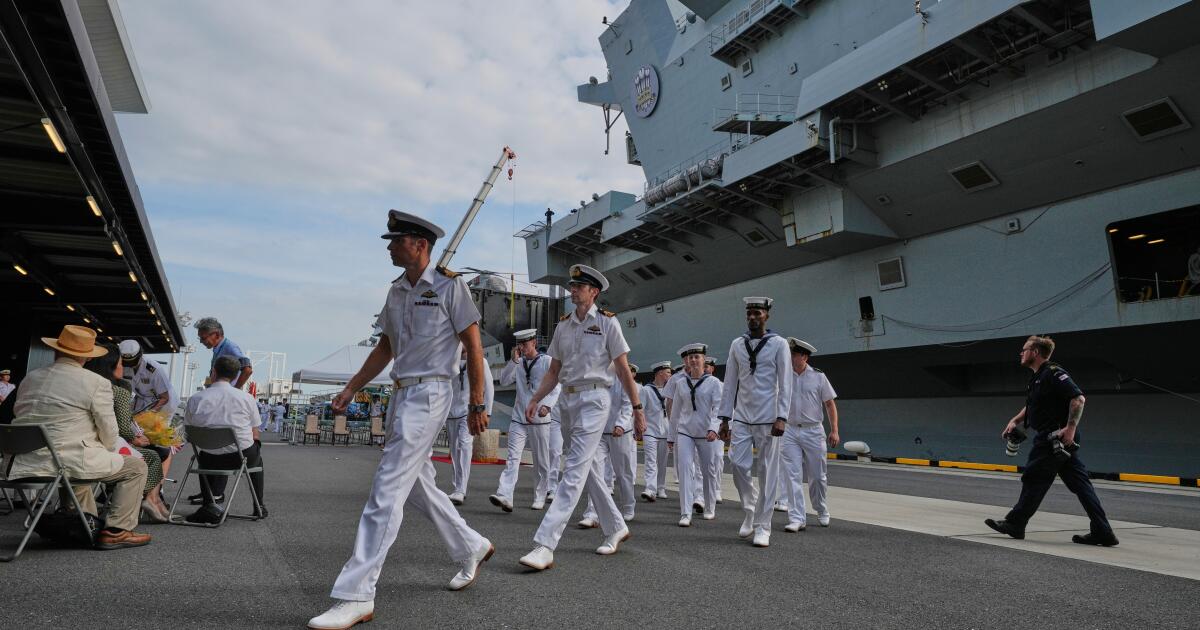
Source link

Bond yields surge as Iran war stirs inflation fears almost a month into the conflict

Yields on government debt across European countries and the United States have been rising since the start of the Iran war.


ADVERTISEMENT


ADVERTISEMENT

Investors are demanding higher yields as confidence in the global economy has cratered due to the severe negative impact of the conflict on energy markets, supply chains and Middle Eastern infrastructure.

The 2-year notes, sensitive to near-term rate expectations, have risen faster than their 10-year counterparts in a classic bear-flattening move, while longer-dated yields reflect worries over the economic drag caused by more expensive energy.

Speaking to Euronews, BCA Research’s Chief Fixed Income Strategist, Robert Timper, explained that “the aggressive bear flattening of yield curves reflects a hawkish monetary policy repricing in response to inflation fears stemming from the Iran war”.

“The front-end [2-year yields] is more sensitive to changes in monetary policy and has therefore risen more than the long-end [10-year yields] in response to investors’ anticipation of more hawkish central bank policy,” Timper added.

Historically, this specific curve behaviour often precedes an inverted yield curve, which is a well-recognised indicator of a potential economic recession.

European bonds bear the brunt of the sell-off

The repricing has been most pronounced in Europe, with the UK bond market feeling the biggest pressure.

Since the start of the conflict, the 10-year UK gilt yield has risen from 4.2% to a high of over 5% while the 2-year note yield jumped from 3.5% to a peak of 4.6%.

Timper explained to Euronews that past inflation experience has proved decisive, stating that “rate hikes in the UK are more likely than elsewhere because inflation has been more elevated than elsewhere, and the risk of inflation expectations unanchoring is therefore higher.”

On Wednesday, AJ Bell’s investment director Russ Mould highlighted the UK-specific implications in a detailed press release, noting that the 10-year gilt yield is hovering near 5% for only the third time since 2008 while the 2-year gilt yield comfortably exceeds the Bank of England base rate.

Mould also explained that the gap between the 10-year gilt yield and the FTSE 100 dividend yield has widened to more than one-and-a-half percentage points, making UK equities relatively less attractive.

Elsewhere in Europe, bond yields experienced similar surges.

Germany’s 10-year bund yield increased from 2.65% to around 3%, nearing 15-year highs, while the 2-year note yield climbed from roughly 2% to 2.65%.

In France, the 10-year OAT yield jumped from 3.2% to above 3.7%, approaching 17-year peaks, while the 2-year note yield has risen from 2.1% to over 2.8%.

As for Italy, the 10-year BTP yield was at around 3.3% before the Iran war and has now surpassed 3.9%, approaching two-year highs, while the 2-year note yield has increased from roughly 2.15% to 3%.

In every single one of these bond markets, the yield on the 2-year notes has risen faster than their 10-year counterparts.

The 30 and 20-year bond yields are also all trading higher which denotes deteriorating confidence in the long-term growth prospect of the respective European economies.

US Treasuries face comparable headwinds

Across the Atlantic, US Treasuries have followed a similar trajectory, though the sell-off has been less severe than in the UK for example.

The 10-year note yield has risen from around 3.9% to a peak of 4.4%, reached on Monday, and is currently trading at 4.37%.

Meanwhile, the 2-year note yield increased from 3.35% to a high of over 4%, and it is hovering 3.9% at the time of writing.

The yields on both notes have hit an 8-month high.

Timper’s analysis places US bond performance close to that of the euro area, reflecting broadly comparable inflation histories and policy outlooks. There is scant evidence of investors fleeing European bonds for US Treasuries as a safe-haven trade.

Speaking to Euronews, Timper explained that such shifting flows would be more visible in currency markets as the US dollar benefits from being the predominant denominator for energy exports.

For now the message from bond markets on either side of the Atlantic is consistent, the Middle East conflict has rewritten the near-term outlook for inflation, monetary policy and borrowing costs.

Source link

Trump will travel to Beijing for rescheduled China trip May 14-15, after delay due to Iran war

President Trump will travel to Beijing for a rescheduled summit with Chinese President Xi Jinping on May 14 and 15, the White House announced on Wednesday.

Trump had been scheduled to travel to China later this month but previously announced he was delaying the trip so he could be in Washington to help steward the U.S. and Israeli war against Iran. The Republican president had announced a rescheduled trip even though the war in Iran continues and the U.S. is pressing Tehran to accept a ceasefire proposal.

The president and First Lady Melania Trump also plan to host Xi and his wife, Peng Liyuan, for a White House visit later this year, press secretary Karoline Leavitt said.

Leavitt, when asked if the new dates for Trump’s trip could suggest he believes the Iran war could end soon, offered an optimistic tone that the conflict could reach an endgame before he travels.

“We’ve always estimated four to six weeks,” Leavitt responded. “So you could do the math on that.”

The United States and Israel launched the attacks against Iran on Feb. 28.

The China trip had been planned for months but began to unravel as Trump pressured Beijing and other world powers to use their military might to protect the Strait of Hormuz, a critical waterway for the flow of oil. The strait has been effectively closed as Iran targets energy infrastructure and traffic through it.

Trump said last week while meeting with Irish Prime Minister Micheál Martin in the Oval Office that he would be going to China in five or six weeks’ time instead of at the end of the month. He said he would be “resetting” his visit with Xi.

“We’re working with China — they were fine with it,” Trump said then. “I look forward to seeing President Xi. He looks forward to seeing me, I think.”

Trump’s visit to China is seen as an opportunity to build on a fragile trade truce between the two superpowers, but it has become tangled in his effort to find an endgame to the war in Iran. Soon after pressing China and other nations to send warships to secure access to Middle Eastern oil, Trump indicated last week that his travel plans depended on Beijing’s response, though he added then that the U.S. didn’t need help from the allies that rebuffed his request.

Madhani writes for the Associated Press.
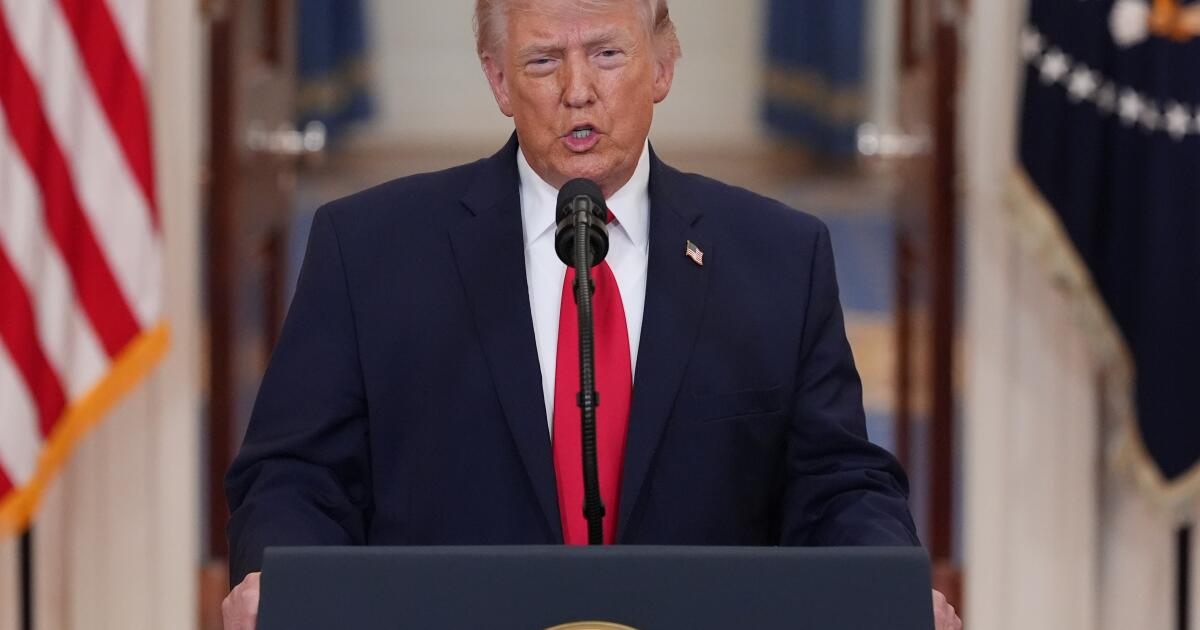
Source link