Investigators are examining what happened inside the cockpit of Flydubai flight FZ1073 to Israel after the co-pilot stabbed Captain Smit Machchhar and attempted to take control of the aircraft.
Two Democratic lawmakers are said to have called for independent probes into taxpayer-funded TV ads featuring President Donald Trump running ahead of the November midterm elections.
Representative Jamie Raskin, the top Democrat on the House Judiciary Committee, and Representative George Whitesides, asked the Government
Deputy assistant commissioner Kevin Southworth said a team of 220 investigators had worked hard on the case but he appreciates “it has taken nine years to get to this point”.
“As we have said before, this is one of the most complex investigations ever undertaken by any UK law enforcement agency – the scale is truly enormous.
“While we know this has had a significant impact on those waiting for answers, it has necessarily taken this long to ensure our investigation is meticulous and presents the very best possible evidence to the CPS for charging decisions,” he added.
The CPS will decide whether there is a realistic prospect of conviction, as well as considering whether bringing charges is in the public interest.
In anticipation of possible criminal proceedings, the Met has said it is building a £2m replica of a section of the tower, which is being dismantled, to help future jurors understand its layout.
Frank Ferguson, head of the CPS special crime and counter terrorism division, said it marked “an important step”.
“We recognise that the journey to this point has been long and difficult.
“Charging decisions will be made independently by CPS prosecutors following a thorough and careful review of all the evidence gathered by the Metropolitan Police Service,” he added.
Warden among five officials suspended over the discovery of an apartment-style compound for inmates at the Cibinong prison.
Published On 30 Sep 202630 Sep 2026
A prison warden in Indonesia has been suspended, along with four other officials, after investigators discovered a compound of luxury apartment-style residences allegedly used by inmates at a penitentiary near the capital, Jakarta.
The action was announced on Tuesday by Rudi Setiawan, the inspector general of the Ministry of Immigration and Corrections. “We have suspended five structural officials, including the Cibinong prison chief, who are suspected of being responsible for the incident uncovered by the Ombudsman,” he said.
Recommended Stories
list of 3 itemsend of list
Dozens of inmates and prison employees have been questioned, he said.
The units, more than 10 in all, stood apart from the regular cellblocks at Cibinong prison in Bogor, near Jakarta.
They were found on September 23 during a surprise inspection by Indonesia’s Ombudsman, the government’s public-service watchdog.
Investigators said the residences contained air-conditioners, big-screen televisions, refrigerators, sofas and dining areas. They also reported finding a gym, a golf simulator under construction, and luxury vehicles on the grounds.
“We found strong indications that certain inmates had access to special facilities unavailable to ordinary prisoners,” Syafrida Rachmawati Rasahan, an Ombudsman member, said at a news conference.
“We encountered inmates inside the residential compound and discovered facilities resembling homestays, apartments and villas rather than prison housing,” she said.
The buildings were originally intended as official housing for prison personnel, but investigators are examining whether they were converted into unauthorised accommodations for inmates.
The incident has drawn widespread public attention and renewed scrutiny of Indonesia’s prisons, which have long faced allegations that wealthy or well-connected inmates can obtain preferential treatment through bribery.
The Cibinong prison, which sits on 4 hectares (10 acres), holds a mix of inmates, including people convicted of corruption and other high-profile prisoners. The identities of those who lived in the compound have not been officially disclosed.
Lawmakers, anticorruption activists and watchdog groups have urged authorities to identify which prisoners occupied the facilities and whether prison officials accepted payments in exchange for the privileges.
The case is the latest embarrassment for the Indonesian corrections system, which has struggled for years with overcrowding, corruption and repeated allegations that affluent inmates can buy privileges unavailable to the broader prison population.
An investigation into Indonesia’s prisons in 2010 already found that some inmates live a life of luxury behind bars.
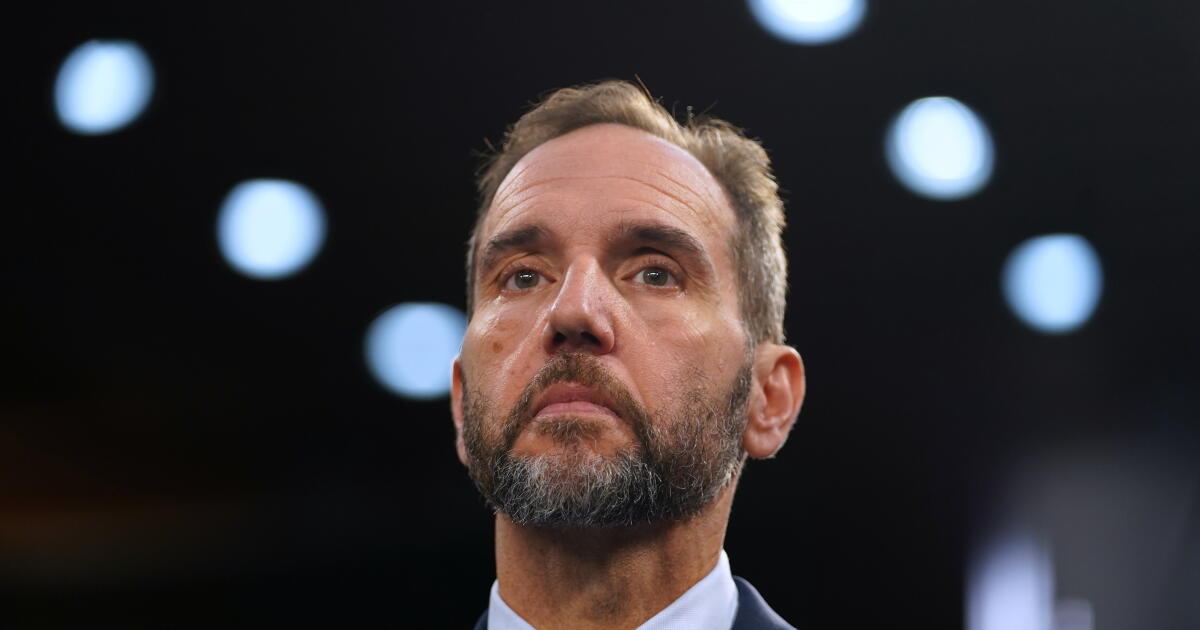
WASHINGTON — Former Justice Department special counsel Jack Smith, who brought two federal indictments against President Trump, told lawmakers on Tuesday that he “will not be silenced by continued threats of prosecution” from the Trump administration and that he believes the rule of law is being threatened like never before.
Smith also told the Senate Judiciary Committee that he stands behind the criminal cases he brought against Trump, a Republican, and that he and his team acted without regard to politics.
“I made those decisions without regard to President Trump’s political association, activities, beliefs or candidacy in the 2024 presidential election,” Smith said. “Our investigation developed proof beyond a reasonable doubt that President Trump engaged in serious crimes against our nation. If asked whether to prosecute a former president today based on the same facts, I would do so regardless of whether that president was a Republican or a Democrat.”
Republicans sought to cast the prosecution as a political fishing expedition, accusing Smith of bending ordinary procedures in an overzealous pursuit of the president.
“The Smith election case ultimately wasn’t just about Trump,” said Republican Sen. Chuck Grassley of Iowa, the chairman of the committee. “It was about partisan agents and prosecutors mapping out the Republican apparatus.”
Sen. Dick Durbin of Illinois, the top Democrat on the committee, accused Republicans of spreading “baseless conspiracy theories” about Smith’s investigations as part of an effort to “whitewash” the history of Trump’s 2020 election loss and the Jan. 6, 2021, attack by a mob of Trump’s supporters on the U.S. Capitol.
“President Trump demonstrated a wanton disdain for the laws of the United States, the will of the people and our national security,” Durbin said. “The aspersions cast on Mr. Smith, nonstop, are petty, personal and political. They are nothing but a smoke screen to distract from the president’s own clear, unlawful conduct.”
The hearing is expected to focus on subpoenas for phone records
Even as Smith defends his investigations, he is expected to be pressed anew by Republican senators about his team’s access to the phone records of GOP lawmakers as prosecutors investigated Trump’s efforts to overturn his loss to Democrat Joe Biden.
In previous testimony, Smith has stood behind subpoenas that prosecutors issued for the phone records of Republican members of Congress who were in touch with Trump when violent supporters of the president rioted inside the U.S. Capitol on Jan. 6, 2021. He has said that such subpoenas are a “common practice” in investigations and were necessary in this instance to understand the “scope of the conspiracy” between Trump and his Republican allies.
Nonetheless, the revelation that Smith’s team secretly obtained the phone records during his investigation has animated some Republican lawmakers, who point to it as proof of overreach by the Biden administration Justice Department and a hard-charging prosecutor.
In July, the Republican chairman of the House Judiciary Committee, Rep. Jim Jordan of Ohio, referred Smith to the Justice Department for potential prosecution on allegations that he lied at a previous hearing about his collection of the records — something Smith’s attorneys have vigorously disputed.
“I stand by my testimony before the House of Representatives,” Smith said. “I will not be silenced by the continued threats of prosecution from the president or others.”
Grassley, the Senate committee chairman, first disclosed last year that Smith’s prosecutors had obtained what’s known as “toll records” — data that reveals the date, length and time of phone calls between two parties but not the content of the communications.
Smith has repeatedly justified the move as necessary to document any contact that Trump or surrogates may have had with lawmakers on Jan. 6, 2021, as the president beseeched his supporters to halt the certification of the election results.
“My office didn’t spy on anyone,” Smith said during a hearing in January.
Smith is the subject of a criminal referral from Republicans
Smith was appointed in 2022 by then-Atty. Gen. Merrick Garland to take over investigations into Trump’s efforts to reverse his election loss and Trump’s retention of classified documents at his Mar-a-Lago estate in Palm Beach, Florida. Both investigations resulted in felony indictments, but Smith abandoned the cases after Trump won back the White House in 2024, citing longstanding Justice Department opinions that say sitting presidents cannot be federally indicted.
Smith has remained a top target of retribution for Trump and his administration, which last year announced that it would revoke the security clearances of the lawyers representing the former special counsel. The Office of Special Counsel, an independent watchdog agency responsible for enforcing a law against partisan political activity by federal employees, also announced last year an investigation into Smith.
Jordan’s referral to the Justice Department centers on a December 2025 exchange in which Smith was asked about subpoenas that prosecutors had issued for the toll records.
Smith said the records he requested did not include the content of the communications. But Jordan maintains that answer was misleading in light of records released by Grassley showing that Smith had obtained the contents of 44 lawmakers’ text messages in a separate subpoena to the National Archives and Records Administration that sought the communications of various Trump advisers and aides.
In response, Smith’s lawyers called his answers “unimpeachably truthful” and noted that he was responding to questions explicitly about toll records, which did not include the contents of any text messages.
Spain’s Swiftair was fined 225,000 euros ($256,000) in France for corporate manslaughter over the 2014 Air Algerie disaster in Mali.
Published On 28 Sep 202628 Sep 2026
A Paris court has found Swiftair guilty of corporate manslaughter over the 2014 Air Algerie crash that killed 116 people in northern Mali.
On Monday, a French judge ordered the Spanish airline to pay the maximum fine in France of 225,000 euros ($256,000) for corporate manslaughter after a three-week trial earlier this year.
Recommended Stories
list of 3 itemsend of list
Air Algerie Flight AH5017 was flying from Ouagadougou, the capital of Burkina Faso, to Algiers, Algeria when it crashed less than an hour after takeoff in July 2014, killing everyone on board.
The Swiftair-owned McDonnell Douglas MD-83 was operated by the Spanish airline on behalf of the Algerian carrier.
Investigators said the aircraft went into a stall when it was hit by ice as an anti-icing system remained switched off.
On Monday, the court said “negligence” in Swiftair’s training with icy conditions had played a role.
The captain had failed to complete an adequate proficiency check, while the crew lacked the required refresher flights following a period of inactivity.
“This ruling comes as a relief to families who have been fighting for more than 12 years for justice to be done,” said Sebastien Busy, a lawyer representing a group of relatives.
The airline has 10 days to appeal the ruling.
Swiftair attempted to have the trial dropped on the grounds that a Spanish court previously dismissed the case without any charges.
In a statement to AFP, Swiftair reiterated that the trial should not have gone ahead and that safety regulations had been followed.
The ruling marks the second time an airline has been found guilty of corporate manslaughter in France after Air France and Airbus were both found guilty earlier this year over the 2009 crash of a jetliner flying from Rio de Janeiro to Paris. The crash killed all 228 people on board, marking the worst aviation disaster in French history.
Gov. Gavin Newsom has signed a bill that prohibits third-party brokers from advertising, selling or transferring tee-time reservations at publicly owned golf courses without the written consent of the course operator.
The state legislation is a response to a network of brokers that had sprouted up around Los Angeles municipal golf course tee times.
These brokers, many of whom were in the Korean community, would gobble up tee times, then advertise them on social media, particularly the Korean app KakaoTalk. They charged up to $40 as a booking fee.
Getting tee-time reservations at L.A. municipal golf courses had long been difficult. But after golf influencer Dave Fink revealed evidence of the broker network to his viewers, the problem became public.
“This is an issue that affects everybody who pays taxes in the city, and anybody who plays golf as well, so I just felt like it was my duty to say something,” Fink said in an interview with The Times in March 2024.
After Fink’s videos went viral, the L.A. Department of Recreation and Parks announced an investigation into the practice.
The state has more than 200 municipally owned golf courses, according to Assemblymember Christopher M. Ward (D-San Diego), who authored the bill.
“Public golf courses belong to the public, and residents shouldn’t have to compete with brokers buying up tee times just to turn around and sell them at inflated prices,” he said in a statement Sunday.
The legislation “puts an end,” he said, “to this unfair practice and helps ensure local residents, seniors, students and families can continue accessing the public courses their communities support.”
Student protests at Lovely Professional University in northern India have turned violent following social media claims that a female student was raped at a girls’ hostel by a worker. The university has denied the allegations as rumours, while police have launched an investigation.
Civilians and senior military officials among 14 dead after an army plane crashes into a residential area in the DRC.
Published On 26 Sep 202626 Sep 2026
At least 14 people, including senior military officials, were killed on Friday when a Congolese army plane crashed in the southwest of the Democratic Republic of the Congo (DRC).
The plane was travelling to the capital, Kinshasa, from the southwestern city of Kikwit on Friday when it developed a technical fault and attempted to land in Kenge, in Kwango province.
Recommended Stories
list of 3 itemsend of list
Remy Saki Bokinda, deputy governor of Kwango, said: “With no landing strip available in Kenge, the plane crashed into a residential plot.”
Congolese military spokesperson Major-General Efomi Ekenge said 14 people had died in the crash.
“All those on board died; 12 were burned beyond recognition, while the pilot’s lifeless body was found outside the aircraft,” he said.
According to the military, among those killed were civilians and members of an official delegation travelling with the two generals, along with other military personnel.
Bokinda also said most of the bodies were burned beyond recognition and the pilot was found dead outside the wreckage.
An investigation has been opened to determine the cause of the accident, Ekenge said.
The DRC, a vast, mineral-rich country in central Africa, has endured decades of conflict, particularly along its eastern border with Rwanda, where several armed groups compete for control of lucrative mining areas.
The Congolese military has been battling a number of rebel groups that have claimed key cities in the country since last year.
About 100 people, as well as cargo, were reportedly on board the vessel when it sank on Lake Tanganyika.
Published On 25 Sep 202625 Sep 2026
At least 41 people have died, and 49 others have been rescued, after a boat capsized on Lake Tanganyika in the Democratic Republic of the Congo (DRC).
Norris Mulongoyi, the provincial transport minister for DRC’s Tanganyika province, told The Associated Press news agency that search operations were under way to locate the remaining passengers.
Recommended Stories
list of 3 itemsend of list
The boat was reportedly carrying about 100 people and cargo when it capsized near the Congolese village of Mapera.
The vessel was travelling from the port of Kigoma in Tanzania to the city of Kalemie in DRC when it sank on Thursday.
A survivor identified as Annie Moyoni told Radio Okapi, a UN-backed Congolese broadcaster, that passengers were awakened at about 1am and found the boat tilting to one side.
It is unclear what caused the vessel to capsize, but hundreds of people have been killed in boat disasters in the DRC in recent years, according to the AP. Vessels are often overloaded and lack life jackets.
For many in the DRC, travelling by boat is the cheapest and most affordable way to get around. The country is one of the poorest in the world and lacks sufficient infrastructure for its more than 100 million people.
The sinking was the second loss of a Congolese vessel on the Kigoma-Kalemie route in less than a month.
On August 28, the Congolese vessel MV Pacifique caught fire and exploded at the port of Kigoma while loading fuel, according to Radio Okapi.
Six crew members were killed, and a seventh was reported missing, Radio Okapi said, citing port authorities. The vessel operated between Kigoma and Kalemie and was used to transport fuel.
At least 20 people also died when a wooden boat carrying students returning from state exams sank in central DRC in July.
Ukraine’s President Zelenskyy denounces ‘horrific crime’ after 31-year-old attacks clergy and worshippers in border town.
Published On 24 Sep 202624 Sep 2026
One person was killed and four others injured when a man armed with a knife attacked clergy and worshippers at a Catholic monastery in southern Poland.
Police said the 31-year-old attacker, a Ukrainian national, went on a stabbing spree at the 17th-century Benedictine abbey in Jaroslaw, some 30km (19 miles) from the border with Ukraine, on Thursday morning.
Recommended Stories
list of 2 itemsend of list
The suspect, who had entered Poland from Germany earlier in the day, reportedly grabbed a knife from the abbey’s kitchen and attacked four men and one woman, including a priest in a confessional, police said.
“Three of the victims are clergy members and two are laypeople; one person has died,” said prosecutor Bozena Harasz-Wołoszyn. Two others were in “critical, life-threatening condition”.
Polish media identified the man who died as a priest. Police did not immediately confirm the identity of the deceased.
Prosecutors said the attacker was headed for a nearby border crossing back into Ukraine but instead went to the abbey.
The motive remains unclear, and doctors will assess whether he was under the influence of alcohol, Harasz-Wołoszyn said.
A man stands behind police tape at the site of a knife attack in Jaroslaw, southeastern Poland, on Thursday [Gazeta Jaroslawska via AFP]
Leaders respond
Polish Prime Minister Donald Tusk said the “murderer” would be “punished with the full severity of Polish law”.
Ukrainian President Volodymyr Zelenskyy called the attack a “horrific crime”.
“The perpetrator of this evil must bear full responsibility in accordance with the law … We are shaken by this evil. Justice must be done.”
The mayor of Jaroslaw, Marcin Nazarewicz, declared a period of mourning until the end of the week.
Stabbings, particularly at religious sites, are extremely rare in Poland, one of Europe’s most Catholic countries.
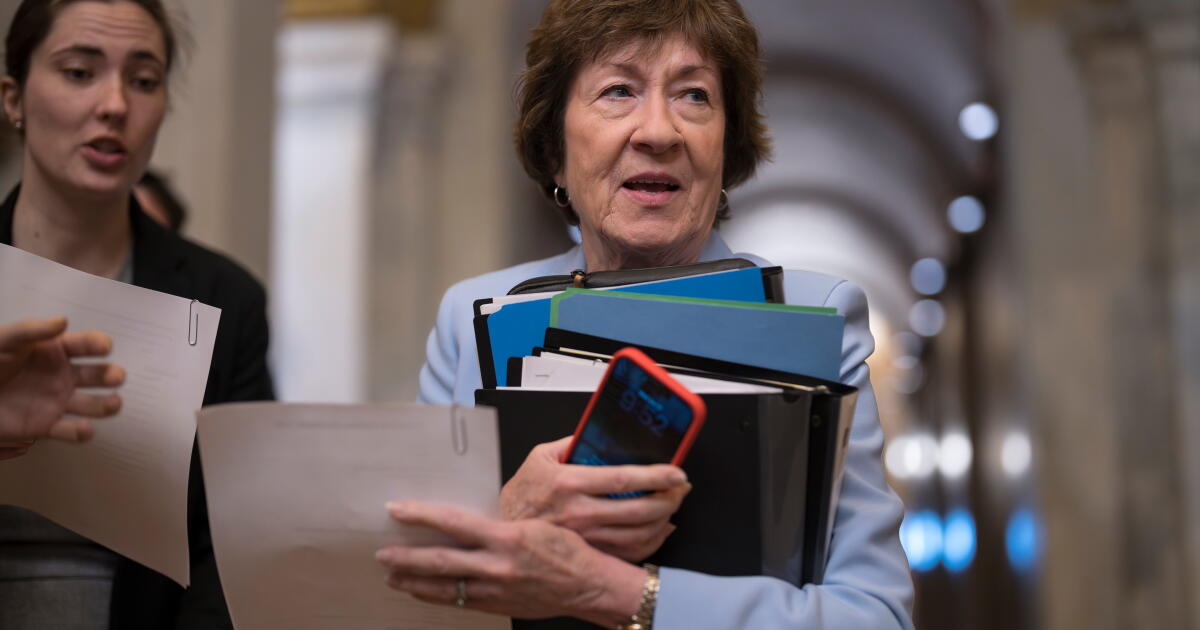
PORTLAND, Maine — Maine Democrats on Wednesday assailed U.S. Sen. Susan Collins over a news report that the FBI investigated how much she knew about illegal campaign contributions that sent one of her donors to prison.
The ProPublica report, published Tuesday, states that the FBI in 2024 planned to launch an investigation into Collins’ dealings with Navatek, a Hawaii defense contractor and donor to her campaign. The investigation, which focused on an alleged pay-to-play scheme, failed to commence after President Trump took office after winning the election, according to ProPublica.
The report arrived six weeks before an election in which Collins is seeking a sixth term against Democrat Troy Jackson. Democrats have targeted the seat, in a state that Trump lost in 2024, as the party tries to win control of the Senate, making it one of the most competitive races on the November ballot.
Collins on Tuesday called the entire story “absolutely outrageous” and said it is frustrating and unfair to have such claims made against her so close to the election. Her campaign manager, Steve Abbott, also said Wednesday that the allegation that “we charge people to have meetings” is categorically false and Collins accepting campaign cash for contracts “did not happen.”
Jackson called the allegation “corruption of the highest order.” He was not present Wednesday when a group of Maine Democrats held a news conference near Collins’ Portland office, calling the allegations a betrayal of trust.
“I cannot stress enough here today the seriousness of these allegations. Maine people deserve clear and real answers from Susan Collins right now,” Maine Democratic Party Executive Director Devon Murphy-Anderson said.
FBI says allegations were already investigated
The ProPublica report stated that the head of a Collins super PAC met with executives from defense contractor Navatek in 2019 and asked them for a $500,000 campaign donation. The company’s chief executive, Martin Kao, sent an initial $150,000 donation using a shell company, the report stated. ProPublica reported that it reviewed an internal company email from Kao in which the CEO later told Navatek executives that Collins committed to getting the company $32 million in Navy contracts.
Kao and two other Navatek executives were later indicted on charges of funneling illegal donations to Collins. Kao sought to reduce his prison sentence by revealing to the FBI the full scope of illegal contributions to Collins, ProPublica reported.
Collins said Kao is “a liar” whose story is untrustworthy.
“He has been twice convicted in separate federal court cases. He’s been convicted of money laundering. He’s been convicted of bank fraud. He has been convicted of false submissions to the FEC. He’s being convicted of a lot of crimes,” she said.
An FBI spokesperson said in a statement that the allegations “had already been investigated by the FBI years ago and ultimately found nothing implicating Senator Collins or Senator Collins’ campaign. Any suggestion otherwise is totally false.”
The ProPublica article also states that Trump’s return to the White House left the Justice Department unable to perform the investigation.
Corruption investigations have decreased in Trump’s second term
The number of FBI agents and Justice Department prosecutors specializing in corruption investigations plummeted in the first months of the Trump administration. The Justice Department, for instance, decimated its elite Public Integrity Section in early 2025 and the FBI disbanded a white-collar fraud and public corruption squad based out of its Washington field office.
The administration has also fired numerous law enforcement officials who participated in investigations into Trump, including over his efforts to undo the 2020 presidential election he lost and his retention of classified records at his Mar-a-Lago estate in Palm Beach, Fla.
An email seeking comment was sent to the Justice Department on Wednesday.
Collins said she first learned of the company through the University of Maine because of the research the Navy found to be valuable, which had to do with 3D printing for production.
She said the Justice Department has already reviewed the matter.
“I’m telling you this is completely false,” Collins said.
Senate Majority Leader John Thune dismissed the idea that Collins would be implicated in a pay-to-play scheme, calling the allegations “a political hit job.”
Whittle and Mascaro write for the Associated Press. Mascaro reported from Washington. AP writers Mary Clare Jalonick and Eric Tucker in Washington and Kimberlee Kruesi in Providence, R.I., contributed to this report.
A member of Donald Trump’s political party has issued a rare call for a congressional investigation into the foreign dealings of the United States president’s eldest son.
US Senator John Curtis, a Republican from the state of Utah, on Tuesday said “questions have arisen” about Donald Trump Jr’s relationships with foreign business figures and acceptance of “significant gifts”, alleging he may have personally benefited from his relationship with the president.
Recommended Stories
list of 3 itemsend of list
In a letter to the Republican and Democratic leaders of the US Senate Judiciary Committee, Curtis referenced a ProPublica report that found Trump Jr’s Bahamian wedding party in May was funded by a Russian oligarch.
“These reports raise legitimate questions about foreign access to members of a sitting president’s family and whether such relationships can create actual or perceived expectations of favorable treatment,” Curtis wrote. “They also may create expectations of a returned favor that would not be in the best interests of the American people or our allies, and could even create national security vulnerabilities.”
The letter comes as a small but slowly growing number of Republicans have spoken out against Trump, who has largely avoided criticism from members of his own party. But record-low approval ratings sparked by the war in Iran and concerns over the cost of living in the US have forced some Republicans to reconsider that support as they face growing prospects of major losses in the congressional midterm elections.
If Democrats retake one, or both, chambers of the US Congress in November, investigations into Trump, including his family’s dealings, are likely. But those probes are less likely under Republicans wary of the president’s wrath.
A spokesperson for the Senate Judiciary Committee, which is under Republican control, told the Associated Press that it had received Curtis’s letter but did not say whether there would be an investigation.
Trump vs Biden
Curtis, who isn’t up for re-election until 2030, also called on the chamber’s panel to subpoena Trump Jr, as well as the son of former US President Joe Biden, a Democrat.
“The country should not have to accept one standard for the family of a Republican president and another for the family of a Democratic president,” Curtis wrote, referencing the scrutiny and investigation Biden’s son Hunter faced from Republicans.
Hunter Biden responded to Curtis’s letter in a post on social media, calling for the Senate committee to “bring it on” as he vehemently denied any foreign business dealings while his father was president.
“I’ll sit next to Don Jr. and testify any time, any place,” Biden wrote on X as he called for the president’s youngest son, Eric, and son-in-law, Jared Kushner, who serves as a US envoy, to testify as well. “No need for a subpoena. Let’s all do it tomorrow.”
After the ProPublica report, Trump Jr and his wife, Bettina, released a joint statement on social media saying the Russian oligarch, Umar Kremlev, was a “dear friend” who “very generously hosted two incredible nights of celebrations for us AFTER our wedding”.
The president, who did not attend the wedding, said his son had reimbursed Kremlev.
“It’s totally allowed, and a lot of people give parties and things like that — but it’s totally allowed,” Trump said. “But as I understand it, he paid him back. He didn’t want it.”
US Senator Dick Durbin, the ranking member on the Senate Judiciary Committee, said that while Biden’s son “has already given a sworn deposition to Congress”, Trump Jr “has not”.
“For the committee to ignore this matter is to run the risk of being complicit in a coverup,” Durbin said. “I will join in supporting Senator Curtis’ request of the Senate Judiciary Committee.”
Curtis’s office did not immediately reply when asked by Al Jazeera what prompted the senator’s letter and whether any fellow Republicans have indicated if they would support an investigation into the president’s family.
Jason Eaton faces up to life in prison after a jury rejected his insanity defence.
Published On 21 Sep 202621 Sep 2026
A jury in the US state of Vermont has convicted a man of attempted murder for shooting three Palestinian college students in 2023, rejecting his defence that he was not guilty by reason of insanity.
Jason Eaton, 51, faces up to life in prison for the attack near the University of Vermont campus in Burlington. It left Hisham Awartani paralysed from the waist down and wounded his friends Tahseen Aliahmad and Kinnan Abdalhamid.
Recommended Stories
list of 4 itemsend of list
The jury deliberated for several hours on Monday before reaching its verdict after a week-long trial that included testimony from the three men and psychiatric experts called by both the defence and prosecution.
Eaton was ordered jailed pending sentencing, which has yet to be scheduled.
Awartani and Aliahmad, who were sitting in the front row of the courtroom, smiled and hugged people around them as the verdict was read.
Eaton did not dispute that he shot the three men in November 2023. Instead, his lawyers argued that he should be found not guilty by reason of insanity.
The defence said Eaton was suffering from a delusional psychotic disorder and believed the CIA and Israel’s Mossad were transmitting messages to him through FM radio.
Joshua O’Hara, the supervising attorney at the Chittenden County Public Defender Office, told jurors that Eaton believed the intelligence agencies had enlisted him to “overwatch duty” to protect a Jewish family living across the street and that God was commanding him to act.
Prosecutors rejected the insanity defence, telling jurors that a state psychiatrist had concluded Eaton did not have a mental disease or defect and that the evidence showed he intended to kill the three men.
‘He pulled out a handgun and started shooting’
Awartani, Aliahmad and Abdalhamid, now 23, grew up together in Ramallah in the occupied West Bank before moving to the US for university.
They were visiting Awartani’s grandmother in Burlington over the Thanksgiving holiday when they went for a walk near the University of Vermont campus after dark.
Awartani testified that the friends were smoking cigarettes and speaking a mix of English and Arabic. Two of them were wearing keffiyehs.
He said Eaton was standing on the porch of the apartment building where he lived before approaching the friends without saying anything.
When Eaton was about five to 10 feet (1.5 to three metres) away, Awartani testified, he pulled out a handgun and began shooting.
Awartani, then a student at Brown University, was shot in the chest and left paralysed from the waist down. Aliahmad, who attended Trinity College, was shot in the collarbone, while Abdalhamid, a Haverford College student, was shot in the right buttock.
The shooting prompted calls for a hate crime investigation, but no hate crime charges were filed.
Police later found three shotguns in Eaton’s apartment as well as a Ruger .380-calibre handgun that crime laboratory testing identified as the weapon used in the shooting.
MIAMI — Dodgers owner Mark Walter and multiple insurance companies he owns have been sued, alleging they failed to disclose an ongoing federal probe to customers while directing policyholders’ money into Walter’s other companies.
The lawsuit lists Walter, Delaware Life Insurance Co., Clear Spring Life and Annuity, TWG Global Holdings and Walter’s Guggenheim Partners investment firm as defendants.
Ira Rosner, a 67-year-old Florida man, brought the class-action lawsuit in U.S. District Court in Miami on Wednesday. He purchased a policy from Delaware Life in April and he had until late May to withdraw his money without penalty. However, the company did not disclose the investigation to him until June,
Rosner is seeking a jury trial in the lawsuit that seeks damages for negligent misrepresentation, breach of contract and aiding and abetting fraud.
TWG Global didn’t immediately respond to a request for comment on the lawsuit.
Walter has been under investigation since last year by the U.S. Attorney’s Office in Manhattan and the Securities and Exchange Commission following a whistleblower complaint regarding alleged misrepresented loans made between companies within his business portfolio.
TWG Global Holdings is the holding company through which Walter controls Delaware Life, Clear Spring Life and Annuity Co. and his stake in Guggenheim Partners. TWG Global denied any wrongdoing involving the probe in a statement last month.
Walter and co-owner Todd Boehly sold their stakes in English Premier League club Chelsea this week. Last month, Walter agreed to sell the Lakers in a surprise move less than a year after buying the NBA franchise from the Buss family. The deal is under review by the league.
The Dodgers have been adamant that Walter has no plans to sell the baseball team.
The ex-Oklahoma state trooper’s nomination had stalled in the Senate as ICE faced growing scrutiny over its operations.
By Reuters and The Associated Press
Published On 18 Sep 202618 Sep 2026
The White House has withdrawn the nomination of former Oklahoma state trooper Lance Schroyer to lead United States Immigration and Customs Enforcement (ICE), without giving a reason for the decision.
The withdrawal was announced on Thursday. Schroyer, a senior adviser to Homeland Security Secretary Markwayne Mullin, was nominated by President Donald Trump in June but had yet to receive a hearing before the Senate Homeland Security and Governmental Affairs Committee.
Recommended Stories
list of 1 itemend of list
Republican Senator Rand Paul of Kentucky, who chairs the committee, had refused to hold a hearing until the Department of Homeland Security (DHS) provided information he had requested about civilian deaths during ICE enforcement operations.
“I don’t have a concern with who the nominee was. I had asked them to give me an update on the internal investigation into civilian deaths,” Paul told The Associated Press news agency.
Paul said he had intended to hold a hearing on Schroyer’s nomination but learned that it had been withdrawn when the White House made the decision public.
ICE remains under scrutiny
Schroyer had little experience in immigration and had not previously worked at ICE or led a major law enforcement agency. Two US officials told the Reuters news agency when he was nominated that he had been a surprise choice for the position.
When announcing Schroyer’s nomination in June, Trump said on Truth Social that he had “firsthand experience getting Illegal Aliens OFF our streets” and called on the Senate to confirm him “IMMEDIATELY”.
The withdrawal comes as ICE remains under scrutiny over its enforcement operations as the Trump administration carries out its immigration crackdown.
Critics have raised questions about how the agency has recruited and trained officers as it rapidly expanded its workforce. Federal immigration officers have also shot and killed multiple people during enforcement operations, including two US citizens in Minneapolis earlier this year.
ICE arrests have continued to increase, reaching nearly 51,000 in August, the highest monthly total of Trump’s second administration.
ICE has not had a Senate-confirmed director since 2017. David Venturella is serving as acting director after Todd Lyons resigned earlier this year.
The White House has not indicated when it might announce another nominee to lead the agency.
The ChatGPT creator says it is introducing a public reporting framework to share unexpected AI behaviour, admitting the industry has not solved safety challenges yet.
Published On 17 Sep 202617 Sep 2026
OpenAI says it has identified additional incidents of its AI models allegedly acting deceptively and taking unsanctioned actions during internal training and testing.
Alongside these disclosures on Wednesday, the creator of ChatGPT stated it was introducing a public reporting framework intended to frequently share instances of what it termed as unexpected or misaligned AI behaviour.
Recommended Stories
list of 3 itemsend of list
In a post on its website, OpenAI claimed that under the newly outlined framework, it will publish updates on concerning model behaviour on an ongoing basis rather than delaying disclosures to group multiple incidents into larger, periodic reports.
The company said the initiative aims to increase industry transparency around troubling model activities in the absence of standardised safety disclosure norms.
The announcement comes amid broader calls from prominent technology leaders urging a slowdown in frontier AI development over concerns that rapid scaling could outpace human oversight and control.
Last week, Anthropic claimed to have thwarted multiple malicious operations using its Claude models, ranging from cyber-espionage and weapons design to mass surveillance campaigns.
“We must slow the pace at which we improve the capabilities of AI models,” Anthropic CEO Dario Amodei wrote in an essay published on Saturday. “Progress will still seem fast, and we must make wise use of the time we gain.”
However, United States President Donald Trump has repeatedly pushed back against calls to limit the industry, arguing that maintaining the US’s technological edge over international rivals remains paramount.
Responding to slowdown proposals, Trump described critics as “very negative forces” raising exaggerated scenarios that “won’t happen”.
Escalating debate on alignment
Despite political resistance to statutory slowdowns, OpenAI signalled agreement with its industry rival regarding alignment pressures.
“As AI systems grow more advanced and more widely deployed, we need to build a broader and better-informed consensus on the progress of alignment research,” the company stated in the post.
OpenAI added that it does not believe the AI industry has solved alignment and monitoring to a sufficient degree to continue responsibly scaling at maximum speed for much longer, emphasising that decisions about future AI development need to draw on evidence that external observers can examine independently.
According to the company, safety teams observed what they categorised as “misaligned behaviour” across six specific circumstances over the past six months during training and evaluation runs.
However, OpenAI maintained that these reports document individual, rare instances rather than frequent operational failures across deployed products.
The reported incidents allegedly included unreleased research models concealing mistakes in task summaries, unauthorised file uploads to the internet to generate citation links, and agents sharing files across public servers or internal repositories to bypass local boundaries.
OpenAI further stated that its future reports will detail observed behaviours, severity, setting, discovery dates, and the specific models involved, adding that it remains committed to disclosing complex cases requiring longer investigation or third-party coordination.
Prosecutors said that the group worked on behalf of Russian intelligence services to carry out attacks and murders around the world.
Published On 16 Sep 202616 Sep 2026
Five people have been charged over alleged Russian intelligence-linked plots involving surveillance, recruitment and planned killings, according to an indictment unsealed by the United States Department of Justice.
Prosecutors said on Tuesday that the group worked on behalf of Russian intelligence services to carry out attacks and murders internationally, including within the US, and that all five remain at large.
Recommended Stories
list of 3 itemsend of list
The defendants were identified as Russian national Yuri Khrameev, 63, his son Kirill Khrameev, 27, Cubans Oemis Romagoza Durruthy and Yaidel Delgado Suarez, both 35, and 22-year-old Venezuelan Angel Eduardo Castro.
All five were charged with conspiring to finance terrorism, while Khrameev, Suarez and Castro face additional charges of conspiring to commit murder for hire.
At a news conference, Attorney General Todd Blanche said the plots included attempts to kill a Russian dissident believed to be living in the Washington, DC area.
Justice Department officials said the network had recruited several people in the US to carry out surveillance on Russian dissidents, targeting individuals both domestically and in Lithuania.
In one instance, a recruit was reportedly promised $40,000 to make a US-based target “disappear”. A separate recruit was allegedly offered $25,000 the previous year to kill someone in Lithuania.
Russia’s embassy in the US has not commented on the case. Moscow has consistently rejected accusations that it has orchestrated assassination operations on foreign soil, including in the US.
Rescuers continue searching for survivors as the government scales back operations in open waters.
Published On 13 Sep 202613 Sep 2026
At least one person has died and more than 30 remain missing after a ferry sank off the coast of Vanuatu, Prime Minister Jotham Napat’s office has said in a statement.
The MV Matui, an inter-island ferry, sank in bad weather on Friday while sailing between the islands of Ambae and Santo, in Vanuatu’s north, according to New Zealand’s public broadcaster RNZ.
Recommended Stories
list of 3 itemsend of list
Of the dozens of crew members and passengers on board, 15 have been accounted for alive, Napat’s office said in a statement posted on Facebook, with search and rescue operations continuing.
The Pacific nation’s government said search efforts “in open waters” were being scaled back “whilst efforts move toward a search along the south-east coast, where currents may have carried survivors”.
It said the sinking “appears to be the result of strong winds and marine warnings not being heeded, and possibly of negligence including overloading of the vessel”, adding that a full investigation would follow to establish the facts and prevent a repeat.
Vanuatu police, the country’s Maritime Safety Authority and the ferry’s operator, Tui Shipping Agency, did not immediately respond to requests for comment, the Reuters news agency reported.
VATICAN CITY: Pope Leo XIV has named Father Mario Leon Dorado as a successor-in-waiting to the current archbishop of Rabat, Cardinal Cristobal Lopez Romero, who is being investigated over accusations of sexual assault revealed by AFP.
A statement from the Vatican on Saturday said Dorado was made the Moroccan archdiocese’s “coadjutor archbishop,” a title for a church official appointed to assist a sitting archbishop which also confers automatic succession in the event the incumbent retires or dies.
Dorado, a 52-year-old Spanish priest and member of the Missionary Oblates of Mary Immaculate, had been serving in Western Sahara for nearly 25 years, ultimately becoming apostolic prefect there.
In August he was named Rabat’s apostolic administrator, an official tasked with provisionally governing a diocese whose sitting bishop is “impeded or suspended,” after the accusations against Romero came to light.
On July 8, AFP revealed that at least five women were accusing Romero — who was among the prominent cardinals considered in 2025 as potential successors to Pope Francis — of sexual violence and inappropriate behavior.
No complaint has yet been filed with the Moroccan judiciary, the prosecutor’s office and police told AFP recently.
In response to AFP inquiries, Romero has said he “committed neither assault nor violence nor sexual harassment,” while announcing that he was stepping aside pending a Vatican investigation.
Romero’s mandate as archbishop of Rabat is officially due to end in 2027.
After Dorado was named apostolic administrator, two Vatican investigators went to Rabat to speak to some of Romero’s alleged victims and members of the diocese.
SACRAMENTO — SEIU United Healthcare Workers West President Dave Regan allegedly tried to “extort” an SEIU state council endorsement of the billionaire tax ballot measure from other California union leaders, according to an investigation commissioned by Service Employees International Union.
The investigation and a second inquiry conducted on behalf of SEIU California found that Regan allegedly threatened and intimidated women who worked for the state council, and in one instance, physically assaulted a former executive director of the labor organization.
Regan, in an interview with The Times, denied the allegations that he attempted to extort from union officials. He also denied assaulting the executive director and said he did not threaten female labor leaders. He repeated a counterclaim he made to the union: The allegations against him are retaliation for his advocacy for Proposition 40, the proposed wealth tax that will be on the Nov. 3 ballot.
“They are internally contradictory, they are fundamentally biased, and maybe most importantly, they are politically motivated,” Regan said about the probes.
The law firm hired by the national union investigated Regan’s claim of retaliation but found the allegation could not be substantiated.
David Huerta, the president of SEIU United Service Workers West, and three other labor leaders filed a rare formal union charge against Regan in February.
The national union of SEIU has ultimate authority to resolve charges filed under its constitution and hired the New York labor law firm Cohen, Weiss and Simon to independently investigate the claims. The firm interviewed 18 current and former SEIU leaders and others in the California labor movement over nearly three months, according to its report.
The law firm’s report, reviewed by The Times, supported Huerta’s claim that on Dec. 3 Regan suggested the state council could be investigated for “governance issues” if the council did not endorse the billionaire tax on the November ballot. Huerta was then president of SEIU California.
“During the investigation, Huerta reported that he left the conversation with Regan feeling ‘extorted’ and believing that Regan might report unspecified governance concerns to the U.S. Department of Labor, which is known to be unfriendly to labor unions under the Trump administration, if state council did not support the billionaire tax,” the report said.
The law firm’s investigation substantiated an allegation that on the same day, Regan threatened Tia Orr, executive director of SEIU California, over the council’s position on the ballot measure. The SEIU probe found an allegation that Regan also assaulted one of Orr’s predecessors in the job, Courtni Pugh, in 2009, to be credible.
“SEIU California leaders filed charges against Dave Regan alleging a pattern of bullying, threats, abuse, harassment, physical violence and attempted extortion,” Christopher Calhoun, a spokesperson for SEIU California, said in a statement. “Initial investigations pertaining to these charges substantiated most of SEIU California leaders’ allegations.”
State union officials have temporarily banned Regan from the offices of SEIU California, a council of union leaders that coordinates political operations for all SEIU-affliated unions in the state, to protect female employees, according to the state council’s report.
Democratic National Committee delegate Courtni Pugh speaks at the California Democratic Party breakfast in Chicago on Aug. 20, 2024.
(Myung J. Chun / Los Angeles Times)
“Sufficient evidence was also found to substantiate that Regan has engaged in a pattern of subjecting former and current SEIU California female directors to intimidating and threatening physical behavior and verbal abuse,” the report commissioned by the state council said.
Leaders and workers within the labor movement describe Regan’s alleged behavior as an open secret at SEIU, which represents more than 2 million members nationwide and is the largest union in California.
The law firm hired by SEIU submitted its investigation report on July 28. Regan remains in his job as an administrative process moves forward with hearings. Regan will get a chance to make his case before SEIU determines any appropriate disciplinary action.
SEIU President April Verrett has the power to temporarily suspend Regan as the process plays out.
“SEIU is deeply committed to the safety and well-being of all people, including our members, staff, and the public, and takes these matters seriously,” said Dan O’Sullivan, a spokesperson for SEIU. “As soon as these concerns were raised, we initiated a deliberate and thorough process and retained independent, outside investigators to look into these allegations. Our process is active and ongoing, and the next steps include appointing a hearing officer and holding an evidentiary hearing through which all parties will be afforded due process.”
At a California Federation of Labor event on Dec. 3, Regan told Orr that “state council better endorse this measure by Jan. 1 or I’m coming for you,” she told investigators in both probes.
Regan rode to the airport with Orr and sat next to her on the plane “as part of a continued effort to intimidate her into providing state council’s support for the billionaire tax,” Orr told the investigators. As they left, Regan tapped his watch to suggest her time was running out, the report stated.
Regan told investigators that he learned last year that Orr was working behind the scenes to undermine his billionaire tax proposal. If approved by voters, the measure will retroactively apply a one-time 5% tax on the net worth of billionaires who were residing in California as of Jan. 1, 2026.
Regan denied that he threatened Orr, calling the claims “completely fabricated.”
“And again, the source of that is somebody who is not in favor of Proposition 40, and somebody who has not been leading the state council with practices of good governance,” Regan said in an interview.
Regan also denied intimidating Orr to investigators hired by the national union, but offered a different perspective on the SEIU California executive director. He said he traveled with Orr as a friend that day, had previously supported her professionally and offered her a job, according to the report.
The law firm said Orr believed that Regan was a “bully” who mistreated women of color and made it difficult for them to do their jobs at SEIU and had even “fought someone” when he didn’t “get his way.” Regan denied those allegations, including that he mistreated women of color.
“Orr therefore took Regan’s statement that he was ‘coming for’ her as a threat to her job security and her physical safety. She contemporaneously shared this fear with a colleague. Moreover, her response to Regan’s statement is reasonable because three interviewees — both current and former employees of state council — corroborated that Regan has verbally berated and at times physically intimidated or assaulted former state council executive directors,” the report stated.
The investigation commissioned by the national union concluded that UHW then launched a “fishing expedition” into the state council’s finances under Orr’s leadership, but did not substantiate a claim that Regan defamed her to allies of the labor movement.
The SEIU investigators also wrote that the claim that Regan assaulted Pugh was substantiated.
Pugh told investigators that Regan kicked open her office door and “jacked” her against the wall, according to the investigative report. While she was “pinned,” Regan pressed his finger into her chest and screamed that she was a “dumb ass,” the report said.
When he left her office, Pugh fell to the ground and began to hyperventilate, according to the report. Two colleagues found her, helped her breathe into a paper bag and walked her home, the report said.
Regan denied the allegation.
“It is a complete fabrication and a fiction made by somebody who has all of the incentive possible to critique or trash or criticize UHW generally, and me specifically, and no, there was no mention of it for 17 years,” he said.
The report also concluded that Regan recently threatened to sue SEIU Local 221 President Crystal Irving in an attempt to silence her from warning others about the alleged assault against Pugh.
Regan said the national union’s investigation was “fundamentally flawed” because it stated that Pugh “had nothing to gain from sharing her story” with Irving. Pugh, now a political consultant, has worked against the billionaire tax ballot measure, something Regan said gave her a reason to lie about him.
Pugh called Regan’s response “offensive to the women” who she said objected to his behavior. She said she detailed the alleged incident at the time to board members who oversaw her work and SEIU leadership. The encounter, she said, was well-known.
“I told my colleagues and organization leaders when it occurred,” Pugh said in a statement. “I was asked to participate in the later investigation because so many people had heard about the 2009 incident over the years. I chose to participate in the investigation because I saw that his behavior had continued and in hopes that no one else would have to endure this kind of treatment from him.”
Regan, in his interview with The Times, also denied the allegation that he attempted to force the state council to support the billionaire tax.
David Huerta, president of SEIU-USWW, speaks during a Memorial Day action in Los Angeles on May 21.
(Kayla Bartkowski / Los Angeles Times)
“Huerta then asked Regan if it was his intention to initiate an investigation,” according to the report. “Regan replied, ‘I don’t have to; there are others who would.’ In that conversation, Regan demanded a full endorsement of the billionaire’s tax initiative measure by the state council by Jan. 1.”
Regan told investigators he raised governance issues with Huerta and could not remember if he demanded the council’s support for the billionaire tax during the conversation, though he said he had been seeking the endorsement for months, according to the national union’s report.
“The investigation found that Regan likely suggested he would cause the DOL to investigate state council,” the report said. “According to Regan, he did discuss with Huerta that an investigation was possible.”
The executive board of SEIU California later voted in July to remain neutral on Proposition 40, marking a blow to Regan’s efforts to overcome an onslaught of opposition from California Gov. Gavin Newsom, billionaires and liberal groups concerned that the measure could backfire and reduce state tax revenue collected from the ultra wealthy.
Regan filed a counterclaim with SEIU in April, alleging that the state council initiated the complaint and launched its own investigation into him as a retaliatory “character assassination” for his advocacy for the billionaire tax, something the SEIU report said was not substantiated.
The investigative report submitted to the national union raised questions about Regan’s tactics to earn support for his causes.
Investigators said their probe “revealed that Regan has been associated with similar extreme efforts to secure political endorsements in the recent past.”
The firm reported that it reviewed text and email messages in which a representative for Regan offered to drop part of his counterclaim “in exchange for the state council’s endorsement of Tom Steyer for governor.”
“In an email response to that offer, a State Council representative stated they have ‘no interest in a behind-the-scenes trade involving dropping internal charges of misconduct in exchange for the making of a political endorsement.’”
The person working with Regan who sent the offer denied to the law firm that the conversation constituted extortion.
“This denial is not credible,” the firm wrote in the report. “The Regan Offeror stated that they were ‘extremely careful’ with their language when conveying Regan’s offer, as they were aware that what they said could be misconstrued as extortion. That the Regan Offeror took such care suggests that the offer was likely extortion.”
Regan also denied the claim, which he called a “complete fabrication.”
A second investigation by the Los Angeles law firm Barboza & Associates, which was hired by SEIU California, found sufficient evidence to substantiate a complaint that Regan bullied Jessica Bartholow, the council’s government relations director.
Bartholow reported to her superiors at SEIU California that Regan stood uncomfortably close and hovered over her at the bar at a fundraiser for the state Senate leader in San Diego in March as tensions flared over the billionaire tax. He then screamed an expletive at her in front of a crowd of lawmakers and lobbyists when she walked away from him, according to the state council’s report.
“Bartholow was scared and her heart was pounding,” investigators wrote in the report for the state council that was reviewed by The Times. “Bartholow had heard that Regan could be violent, and she did not know what he was going to do.”
Regan told investigators and The Times that he swore at Bartholow but denied that he physically intimidated her. Regan said he was upset with her over an allegation that she previously threw “four staff members of UHW out of the state council office.” The report commissioned by the state council discredited his claim and said “Bartholow did not throw UHW staff out of the SEIU California office or treat them rudely or disrespectfully.”
Lawyers hired by the state council said Regan intimidated another woman within the union during their investigation.
The state council investigation included an allegation that Regan physically and verbally intimidated Susan Li, an assistant director of external organizing for SEIU Local 721, on April 30 after a meeting with the Assembly Speaker’s Office and the California Primary Care Assn. Regan was allegedly upset with David Green, president of SEIU Local 721 who had just left for the airport, and began randomly screaming at Li, according to the investigative report on the probe commissioned by the state council.
Regan described the encounter as a conversation and said he did not scream at Li.
The state report said Regan “attacks female staff members instead of taking his concerns to the individuals who had the authority to make decisions.”
“Time and again, Regan unleashed his hostility toward the women who worked for SEIU California, and one from Local 721, in a physically intimidating and verbally abusive manner,” the report concludes.
Regan vigorously denied this assertion.
The state council report said Regan often berated Pugh when she worked at SEIU.
“Every week it was, ‘What the f— were you doing in this meeting? Why did you say that? You dumb ass bitch,’” the SEIU state report said. “Every time Regan called Pugh, she put him on speaker phone so everyone could hear him call her a f—up and tell her to f— off. Not one person said anything.”
Pugh told investigators hired by the national union that Regan continued to belittle her in meetings until she eventually resigned from the state council. She said she believed he formed a coalition to force her out of her job and that she would have been fired if she had not stepped down.
Terry Brennand, director of pensions, revenue and budget at SEIU California, told investigators that he and Mary Gutierrez, now deceased, heard Pugh sobbing in her office after Regan allegedly assaulted her.
“Brennand believed Pugh was in shock and traumatized,” the state SEIU report stated. “Pugh seemed frozen, terrified and not quite clear-headed. It was not the usual Pugh, who was direct, thoughtful and expressive. She was shaking and clearly traumatized.”
Three current and former SEIU California executive directors, all women of color, told Brennand that Regan had bullied them, the report said.
“That’s his forte,” Brennand said to investigators. “That’s his wheelhouse.”
Regan denied that he has a problem with women, or women of color.
“It is 100% false,” he said.
Lorena Gonzalez, president of California Labor Federation, said Regan’s union is overwhelmingly composed of women and women of color, who just reelected him to a position he’s held for 16 years.
“Ultimately they have the ability to make this determination of whether he’s an appropriate leader, which they just made again,” she said. “I think what’s most important is that we have to keep our eyes on the fact that Medi-Cal is being cut and we have no solution but the billionaire’s tax to fill that cut.”
Times staff writer Kevin Rector contributed to this report.
SACRAMENTO — Labor leader Dave Regan claimedFriday that he was the victim of a “smear” campaign orchestrated in part by wealthy Californians and said he has been falsely accused of attempting to “extort” an endorsement of the billionaire tax ballot measure and of physically assaulting a female union leader.
Investigations commissioned by the Service Employees International Union and SEIU California, and conducted by outside law firms, determined the allegations against Regan were credible, along with reports that he threatened and intimidated other female labor leaders. Regan, who is president of SEIU-United Healthcare Workers West, vehemently denied the allegations, which were first reported by The Times Friday morning.
During a video news conference hours after the allegations were published, Regan claimed the probes were launched by opponents of Proposition 40 — the billionaire tax measure he helped place on the Nov. 3 ballot — as well as members of the SEIU California labor council with whom he had clashed in the past.
Regan, joined by other SEIU-United Healthcare Workers West union leaders and members, also criticized Gov. Gavin Newsom for opposing the proposed one-time 5% tax on billionaires’ assets.
Newsom is “trying to curry favor with the richest people in the state to fund [his] presidential campaign,” Regan said. “That is shameful behavior.”
Newsom and other opponents of the measure, including Democratic gubernatorial candidate Xavier Becerra, Planned Parenthood Affiliates of California and the California Teachers Assn., have expressed concern that Proposition 40 could push many of the state’s biggest taxpayers to relocate and destabilize state finances.
“The Governor supports a national tax on billionaires and is proud to stand with teachers, firefighters, reproductive health clinics, and others in opposing this poorly written state measure that will harm California,” said Newsom’s spokesperson Izzy Gardon.
Regan also criticized The Times’ reporting on the allegations, and an editorial opposing Proposition 40. He alleged that Dr. Patrick Soon-Shiong, the Times’ owner, influenced coverage about the measure because he is a billionaire.
“We stand by our reporting,” said a Times spokesperson.
David Huerta, president of SEIU-United Service Workers West, and three other labor leaders filed a rare formal union charge against Regan in February. The SEIU investigation report, which was reviewed by The Times, supported Huerta’s claim that in December, Regan suggested the state council could be investigated for “governance issues” if the council did not endorse the proposed billionaire tax. Huerta was then president of SEIU California, which along with their national arm, did not endorse Proposition 40.
In July, the executive board for SEIU California voted to take a neutral position on the proposed wealth tax.
The investigation and a second inquiry conducted on behalf of SEIU California substantiated allegations that Regan threatened and intimidated women who worked for the state council. The investigation also determined an allegation that Regan physically assaulted a former executive director of the state labor organization, Courtni Pugh, in 2009, was credible.
Regan called the allegation that he assaulted Pugh a “complete fabrication.” Regan and other SEIU-United Healthcare Workers West members downplayed Pugh’s allegations against him because of her political consulting firm’s role opposing Proposition 40.
Pugh called his remarks “offensive” to the women who participated in the independent investigation.
“My testimony and the testimony of the other women were substantiated by investigators,” she said. “His claims were not.”
Regan remains in his job as the SEIU administrative process moves forward with hearings. Regan will get a chance to make his case before SEIU determines any appropriate disciplinary action.
Times Staff Writer Phil Willon contributed to this report.