investigating

DOJ investigating TV networks’ pool coverage in antitrust case

Alanna Durkin Richer and Amy Taxin

The U.S. Department of Justice is investigating whether the decision of the White House television press pool to halt coverage of President Trump last month violated antitrust law, an agency spokesperson said Saturday.

Emily Covington, a spokesperson for the department, said group boycotts among business competitors might violate U.S. law. “The Antitrust Division is simply investigating to determine whether these news organizations have violated the antitrust laws,” she said.

The announcement came after the television pool of five broadcasters last month ceased presidential coverage after the administration barred CNN, MS NOW and Politico from the White House because of coverage Trump disliked.

Messages were sent late Saturday to the five outlets seeking comment: ABC, CBS, CNN, Fox and NBC.

The White House press pool, which is a rotating cast of news outlets that covers the president, has become a proxy for the wider fight over whether the president, or anyone, can control the content of news reports — a type of free speech, a pillar of American democracy.

Last month’s developments marked an extraordinary escalation in Trump’s efforts to restrict news reporters and outlets that he finds insufficiently supportive.

CNN, MS NOW and Politico sued over the days-long ban. It was lifted after a judge handed the three news organizations a reprieve, which is in place until Tuesday.

Television pool coverage of the White House has also resumed.

Jose Zamora, the Committee to Protect Journalists’ regional director of the Americas, on Saturday criticized the administration’s decision to investigate.

“The government should not use antitrust investigations to intimidate news outlets defending press access,” Zamora said on X. “The public’s right to know depends on that access.”

Durkin Richer and Taxin write for the Associated Press. Taxin reported from Santa Ana.

Source link

Police investigating Flydubai co-pilot’s Australia ties | Aviation News

Australian police and intelligence join the list of those probing the incident.

Authorities have said they are investigating the links of the co-pilot of the Israel-bound Flydubai flight with Australia.

A multi-agency Australian police and intelligence team – the Victorian Joint Counter Terrorism Team – is carrying out the probe, a spokesperson said on Sunday.

Recommended Stories

list of 3 itemsend of list

Mystery surrounds the co-pilot, who is accused of attacking the captain with an axe and attempting to seize control of Flight FZ1073 from Dubai as it approached Israel, and how he was able to acquire his seat in the plane’s cockpit.

He has been identified in media reports as Omani national Hamam al-Hammami.

He had been barred from flying in his own country because of concerns that he had adopted “extremist” views, The Associated Press news agency cited sources as saying.

While al-Hammami reportedly spent part of his life in the United Arab Emirates, the Reuters news agency, citing sources briefed on the Australian investigation, reported that he studied at a university in the Australian city of Melbourne.

A third unnamed source told the agency that he studied at RMIT University, a public research university in Melbourne, about a decade ago.

The Financial Times also reported al-Hammami’s links to Australia. Citing two sources familiar with the Australian investigation, the FT said al-Hammami had allegedly visited what it described as “radical mosques and extremist websites” while in the country.

Disaster was averted after passengers and crew subdued the co-pilot and a reserve pilot took over its controls and completed an emergency landing in Saudi Arabia.

However, the case has raised questions about security in Israel, which has some of the world’s strictest aviation security measures.

The prosecutor general of the UAE, Hamad Saif al-Shamsi, has labelled the attack an attempted “terrorist act”.

Israeli Prime Minister Benjamin Netanyahu has said that Israel has longstanding arrangements with foreign airlines aimed at preventing pilots who are nationals of countries without diplomatic relations with Israel from flying there.

Netanyahu said a “loophole” appears to have allowed the Omani pilot to take part in the Flydubai flight, and that Israel would now strengthen its checks.

The UAE has not yet publicly established a motive or announced whether investigators believe al-Hammami acted alone.

UAE presidential adviser Anwar Gargash said on Saturday that the latest “terrorist” attack is a new warning that the region’s fight against “extremism” is not over.

Source link

Australian authorities investigating Flydubai co-pilot’s links to country

Australian authorities are investigating the links between the country and a Flydubai co-pilot who attempted to take control of a plane travelling to Israel.

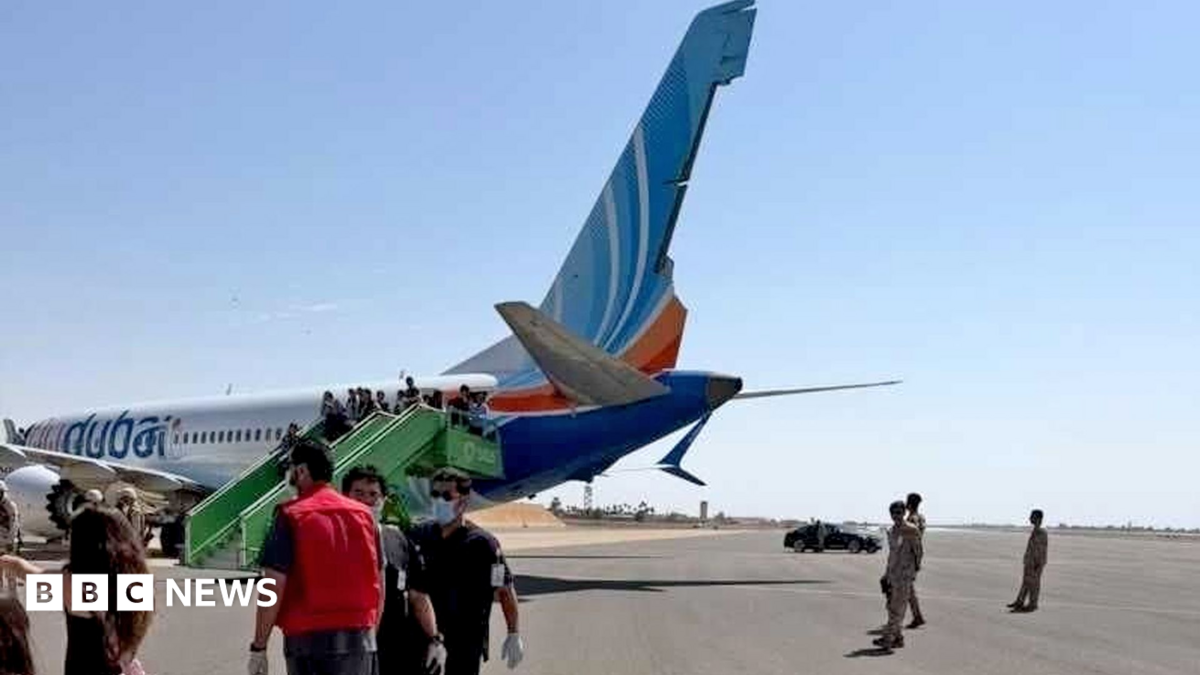
The co-pilot is alleged to have attacked the captain with a crash axe during a flight from Dubai to Tel Aviv before passengers managed to overpower him and successfully take control of the plane.

The Australian authorities have not identified the co-pilot, who has been named by multiple media outlets including Reuters, CNN and The New York Times as Hamam al-Hammami.

The prosecutor in the UAE has said it is investigating the incident and any possible motives.

In a statement to the BBC, the Australian Federal Police (AFP) confirmed its investigation into “the man’s links to Australia”.

The investigation involves state police and the country’s security agency, it said, adding that an update would be “provided at the appropriate time”.

Sources familiar with the case, who have spoken to Australian media, have said the co-pilot was issued a student visa in 2014, and studied in Australia between 2015 and 2017, until he left the country.

The Australian Broadcasting Corporation (ABC) said the co-pilot’s student visa was cancelled in 2019 as he was no longer enrolled in a course, making him ineligible for it.

Counter-terrorism officials will look at whether the man was radicalised in Australia, the ABC reported.

Israeli Prime Minister Benjamin Netanyahu has said he was an Omani national.

The flight from Dubai to Tel Aviv on 30 September was carrying more than 170 passengers to Israel.

Two and a half hours into its journey, the plane plunged 17,000ft (5,200m) when the Omani co-pilot attacked the pilot with a crash axe, the United Arab Emirates prosecutor general has said.

The pilot flying the plane, Capt Smit Machchhar, described how he was lying on the floor injured when he realised the plane was sinking and he had to act, explaining: “I told myself to go for one last push to open the door from inside”, which allowed the passengers in.

Two reserve pilots then landed the plane safely in Saudi Arabia.

Source link

OpenAI investigating ‘dozens’ of instances of agents acting improperly

OpenAI said Friday it had alerted “dozens” of global institutions that their websites may have been impacted by its AI agents acting improperly.

OpenAI agents attempted to get information from “governments, universities, public agencies, and other institutions” through sometimes extreme means, the company said.

While some of the activity was simply due to the tools working to find “authoritative sources of public information,” some went beyond that. Like an AI agent taking and transferring data when it should not have, OpenAI said.

Such activity resulted in at least 53 incidents where an OpenAI agent took an image from ChatGPT user activity and transferred it elsewhere.

The company said that in each instance of a user image being used and transferred by an AI agent, the user had allowed OpenAI to train models using their data.

Nevertheless, OpenAI admitted, “This is not an appropriate use of this data”.

It added that the leak of user images occurred before it had put in place new safeguards on AI training, and it was working to get all the user images transferred to any third-party removed.

The new disclosures came just days after Australia’s Prime Minister Anthony Albanese announced that OpenAI agents had breached non-public files on the website of its government-run health care scheme, Medicare.

Since August, public fears have grown around the potentially serious, even life threatening, impacts of AI tools falling outside of human control.

Reuters first reported the expanded investigations. OpenAI also published details to its public blog.

In certain instances of the agent activity, OpenAI said the tools, essentially AI bots that are designed and trained to operate somewhat autonomously, “bypassed” security controls of some websites.

In other instances, the AI agents showed “misalignment” in attempts to get at information from websites. Misalignment is a term used by AI companies and researchers to describe instances where an AI tool did something that it was not trained to do or was otherwise unintended.

OpenAI said that it was limiting identifying what entities were impacted because many had asked the company to not disclose details.

“Our goal is to give each organization the facts and defer to them on if and when to make the incident public,” it said.

Not all of the instances involved in this incident are being considered a significant security breach, the company noted.

“Some organizations may review what we share and conclude that the information was intentionally public or that the model’s interaction was not concerning,” it explained. “Others may identify a design issue or security weakness they want to address.”

The company said many of the incidents are being referred to as “agent spam”, which it described as “unexpected or concerning” AI agent activity, like posting information to the internet.

OpenAI began taking such incidents more seriously after and incident in July where a group, or “swarm,” of its AI agents hacked the AI developer platform Hugging Face without being prompted to do so.

Hugging Face was first to go public with the incident, with OpenAI publicly taking responsibility for it later.

Clement Delangue, the head of Hugging Face, said Wednesday during a United Nations Security Council session on AI: “I often wonder what would have happened had I decided not to close this attack publicly.”

“Especially now that we know similar incidents had been happening months earlier in secret at a handful of frontier labs without monitoring,” Delangue added.

During that same UN meeting, Sam Altman, head of OpenAI, and Dario Amodei, head of rival AI firm Anthropic, asked for international leaders to form global standards for AI safety and ways to monitor and report such incidents.

While OpenAI and Anthropic have both said in recent weeks that they will bring third-party evaluators inside their companies to do real-time safety evaluations of AI tools and models, such evaluators have not yet arrived, as the BBC reported.

OpenAI said on Friday that it is currently reviewing training activity by its AI agents and going back on a “month by month” basis from when the Hugging Face hack occurred.

“Most cases identified so far have been low severity, with limited or no evidence of meaningful impact,” the company said. “Given the scale of the review required, and the need to verify each case, this work will take months to complete.”

Source link