Canada official condemns Israel’s ‘invasion’ of Lebanon, calls for sovereignty as aid pledged to the crisis-hit nation.
Published On 19 Aug 202619 Aug 2026
Canada’s secretary of state for international development, Randeep Sarai, visited Lebanon to announce new humanitarian aid, condemning what he called Israel’s “unlawful invasion” of Lebanon.
During his visit, Sarai stated that Beirut should govern its own space. He also announced new programmes Canada is launching to support Lebanese families affected by the conflict, raising its total assistance to Lebanon this year to more than $50m.
Recommended Stories
list of 4 itemsend of list
“Our commitment is long-term, and we’re there for Lebanon,” said Sarai, who visited shelters housing people displaced by the war and Syrian refugees during his visit.
Amid the escalation between Israel and Lebanon in March, Canada warned on March 25 that Lebanese sovereignty and territorial integrity “must not be violated” and strongly condemned plans by Israeli forces to occupy southern Lebanon.
As part of the US-mediated framework agreement signed in late June, “pilot zones” were designed to return small areas in southern Lebanon from Israeli forces to the Lebanese army.
Buildings hit by Israeli strikes lie in ruins in Zawtar al-Sharqiyah, Lebanon as seen from Zawtar al-Gharbiya, one of the designated pilot zones under the ceasefire agreement between Lebanon and Israel, from which Israeli forces have withdrawn, August 5, 2026 [Stringer/EPA]
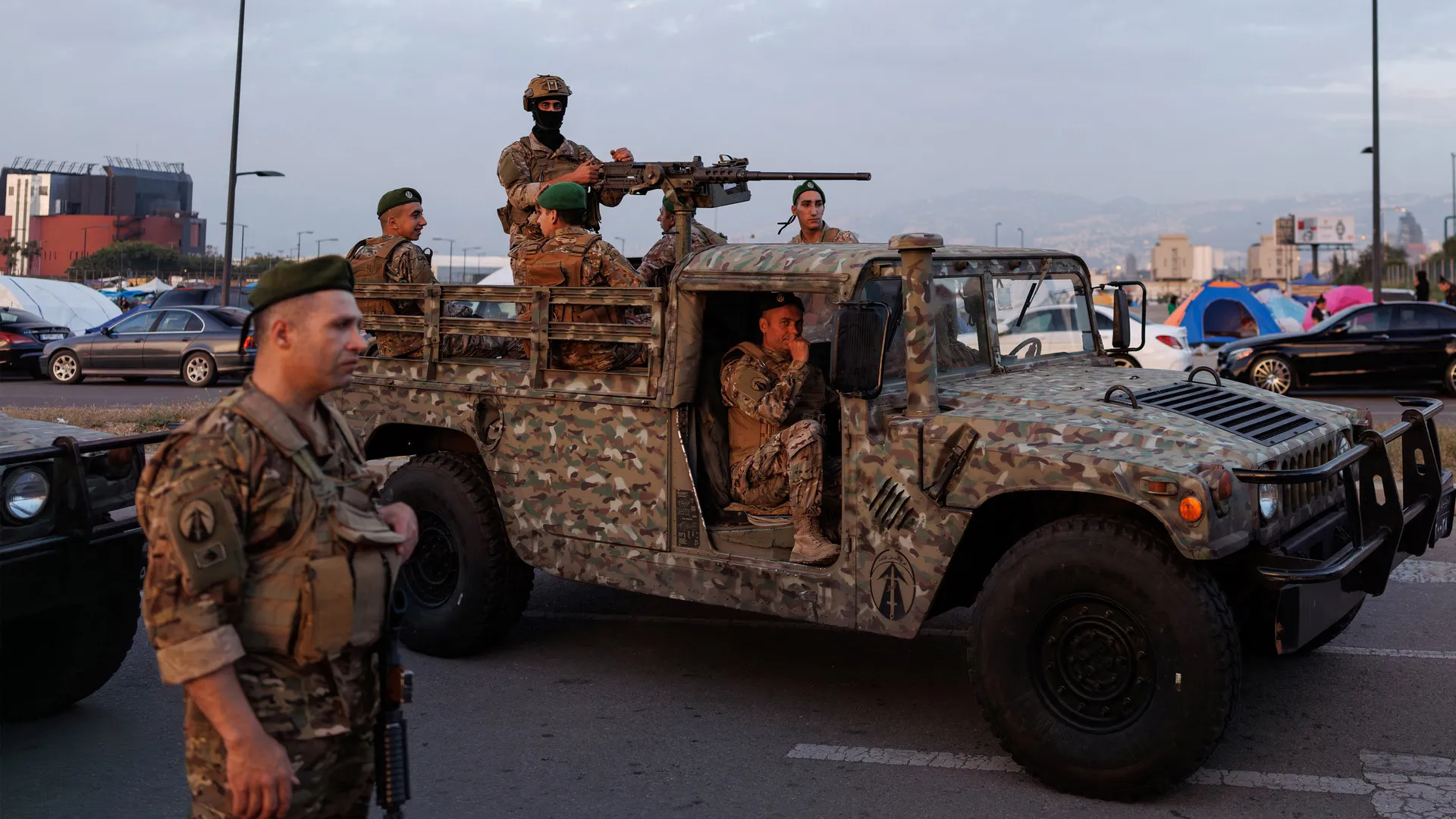
In late July, the Lebanese Armed Forces accused Israel of obstructing its efforts to take over control of security in southern Lebanon.
The war has killed more than 4,000 people and has caused widespread destruction across Lebanon. The United Nations says that about 360,000 people are displaced as a result of the latest conflict.
Home to a large Lebanese diaspora, Canada has given Lebanon about $575m in assistance in the past 10 years, Sarai said.
Sarai also met Lebanese President Joseph Aoun and Prime Minister Nawaf Salam, who promised to reinstate state authority across Lebanon and to implement reforms to fight corruption.
Israeli officials said they will not pull out of Lebanon until Hezbollah is disarmed.
Weekly insights and analysis on the latest developments in military technology, strategy, and foreign policy.
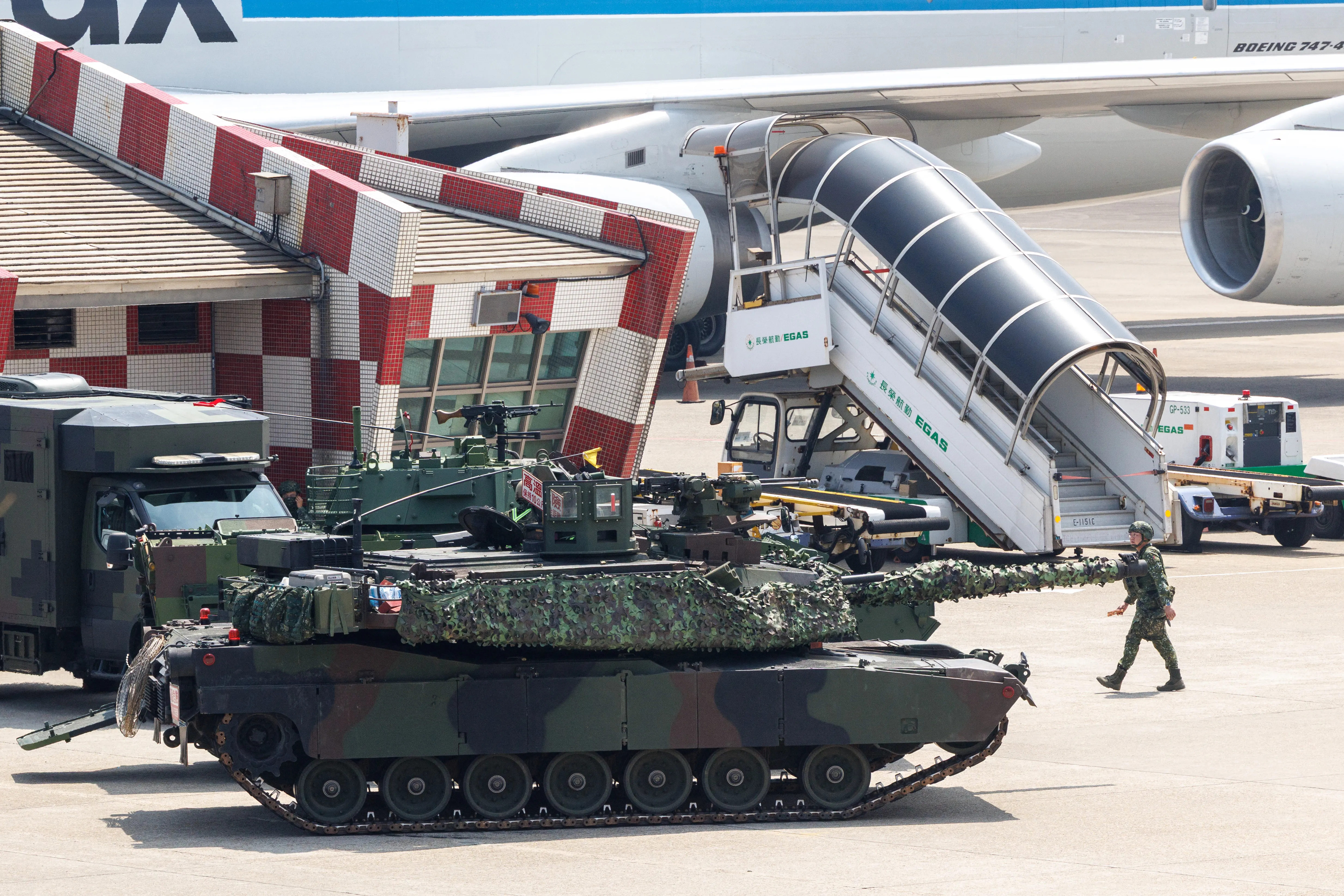
Taiwan’s newest M1A2T Abrams main battle tanks have deployed to Taoyuan International Airport, the main hub serving Taipei, the capital of Taiwan, for the first time. The deployment is part of the ongoing Han Kuang 42 exercise and reflects a growing emphasis on denying critical infrastructure to an invading force from the Chinese mainland.
The airport defense drill simulated an attempt by enemy airborne forces to seize Taiwan’s largest international airport and establish it as an airbridge for follow-on troops and logistics. Alongside M1A2T tanks, Republic of China Army (ROCA) Clouded Leopard 8×8 infantry fighting vehicles occupied defensive positions around the airfield while engineers erected obstacles across key approach routes.
A Taiwanese M1A2T tank during a drill simulating an enemy airborne assault at Taiwan Taoyuan International Airport in Taoyuan on August 7, 2026. Photo by CHENG Yu-chen / AFP
During the exercise, armored vehicles from the ROCA’s 584th Armored Brigade, including four M1A2Ts and six Clouded Leopard vehicles in three different variants, established firing positions while engineering units emplaced temporary obstacles intended to prevent the landing of enemy aircraft, airborne troops, and special operations forces.
— 新‧二七部隊 軍事雜談 (New 27 Brigade)🇹🇼🇺🇦🇮🇱 (@new27brigade) August 7, 2026
Combat engineers assembled steel “hedgehog” anti-vehicle obstacles in three-man teams, creating a defensive barrier along the airfield. Additional obstacles were constructed using cargo containers and airport vehicles provided by airport authorities, demonstrating how civilian infrastructure is incorporated into wartime defensive planning.
The scenario focused on preventing an airborne assault from establishing control of Taoyuan Airport, a long-recognized strategic objective in China’s People’s Liberation Army invasion planning because of its proximity to Taipei. Taiwanese military planners assess that if an attacking force secured the airport intact, it could serve as a hub for reinforcements, logistics, and the rapid advance of mechanized forces toward the capital.
Taiwanese soldiers set up “hedgehog” obstacles during a civil-military drill simulating an enemy airborne assault at Taiwan Taoyuan International Airport in Taoyuan on August 7, 2026. Photo by CHENG Yu-chen / AFP CHENG YU-CHEN
The exercise also rehearsed casualty treatment and evacuation under combat conditions, with medical personnel conducting battlefield trauma procedures before evacuating simulated wounded. Meanwhile, Taoyuan Airport Fire Department firefighting vehicles participated by spraying water across parts of the training area to simulate decontamination and firefighting operations following chemical incidents or attacks.
❗️🇹🇼 “Han Kuang-42” Exercises
August 7, 2026.
Defense of Facilities
The 584th Combined Arms Brigade deployed four M1A2T Abrams tanks, six CM-32 armored vehicles, and medical and fire-fighting vehicles to Taoyuan International Airport. The objective was to thwart any attempt by… pic.twitter.com/Z0dhM9jE2F
Military officials said the drill was designed to validate joint military-civilian coordination during wartime while ensuring normal airport operations continued uninterrupted. Commercial flights continued to arrive and depart throughout the exercise.
The airport defense scenario also included a final escalation phase. Should defending forces prove unable to hold the airfield, other ROCA units would coordinate with the 53rd Engineer Group and airport authorities to demolish runways and other critical infrastructure, denying their use to an occupying force.
A pair of M1A2T tanks next to a Cargolux 747 at Taiwan Taoyuan International Airport in Taoyuan on August 7, 2026. Photo by CHENG Yu-chen / AFP CHENG YU-CHEN
For a deeper look at how Taiwan plans to counter a Chinese invasion, you can read our detailed analysis here.
Suffice it to say, the Han Kuang 42 scenario echoes the battle for Hostomel Airport during the opening phase of Russia’s full-scale invasion of Ukraine in February 2022. Russian airborne forces succeeded in capturing the airport after an initial helicopter assault, but the airfield was heavily contested and damaged in the ensuing fighting, preventing it from functioning as the airbridge Moscow had envisioned for rapidly flying in large numbers of reinforcements and heavy equipment. Ukrainian counterattacks ultimately forced Russian troops to abandon Hostomel as they withdrew from the Kyiv region weeks later.
Returning to Taiwan, the ROCA has received all 108 of the M1A2T tanks it ordered as part of the modernization of its armed forces, which face an expanding military threat from Beijing. Generally speaking, the M1A2T is equivalent to the M1A2 SEPv3 version — or System Enhancement Package version 3 — which you can read more about here.
Taiwan’s Ministry of National Defense (MND) confirmed today that the first shipment of M1A2T tanks had arrived from the United States in December 2024, as we reported here. The final examples were reportedly delivered in April of this year.
U.S. M1A2T Abrams Tanks Arrive in Taiwan | TaiwanPlus News
The M1A2T procurement led to some questions about how suitable the big and heavy Abrams is for Taiwan’s very particular defensive requirements.
The Abrams is arguably not ideal for the kinds of urban warfare that the ROCA might have to engage in if it meets a PLA invasion — something that it already regularly trains for in these kinds of settings. Scenarios like this also pose a particular challenge for main battle tanks.
However, the drill at Taoyuan Airport reflects the reality that, were it to face a PLA invasion, Taiwan could not afford to leave any armored vehicle on the sidelines. Beijing continues to claim the self-governed island as its own and has repeatedly threatened to seize it by force if necessary, compelling Taiwan to keep even aging armored vehicles in service.
Despite questions about the utility of heavy armor in potential conflicts in the Indo-Pacific region, the ROCA is clearly looking at how the M1A2T and other armored vehicles could help defend key objectives in urban areas.
It’s also worth noting that the M1A2Ts are only one element of Taiwan’s layered defense. The ROCA also fields AH-64 Apache attack helicopters, long-range artillery, multiple-launch rocket systems, coastal anti-ship missile batteries, and air defenses intended to disrupt and attrit an invasion force well before it can land troops and armored vehicles on the island. Increasingly, drones, too, are part of this defensive equation.
Should the ROCA have to fight the PLA in its cities, this is another area in which specialist tactics are regularly trained.
We have reported in the past how Taiwan has demonstrated the extraordinary measures it is prepared to take to keep its armored forces alive in a conflict with China. During combat readiness drills, the ROCA conceals tanks and other armored vehicles throughout urban areas using improvised camouflage, disguising them as piles of scrap or civilian construction equipment in an effort to complicate PLA targeting.
A Clouded Leopard 8×8 infantry fighting vehicle adapted to look like a yellow civilian crane. ROC Military News AgencyAn ROCA M113 armored personnel carrier concealed under a bridge during an urban warfare exercise. ROC Military News Agency
Taiwan’s military has also begun incorporating Taipei’s subway system into its wartime planning. During exercises last year, troops — including teams armed with Stinger shoulder-launched surface-to-air missiles — used the Taipei Metro to move around the capital in what appeared to be the first public demonstration of the concept. In a conflict with China, the underground network could provide a comparatively protected route for shifting troops, air defense teams, and supplies between key sectors while roads and other infrastructure above ground come under attack.
Military, civil forces team up in Taipei Metro drill
The Han Kuang exercise has increasingly emphasized defending Taiwan’s critical infrastructure against airborne and special operations attacks. The appearance of the M1A2T at Taoyuan Airport marks the first time Taiwan’s newest and most capable tanks have participated in this high-profile airport defense mission, highlighting their growing operational role beyond conventional armored warfare.
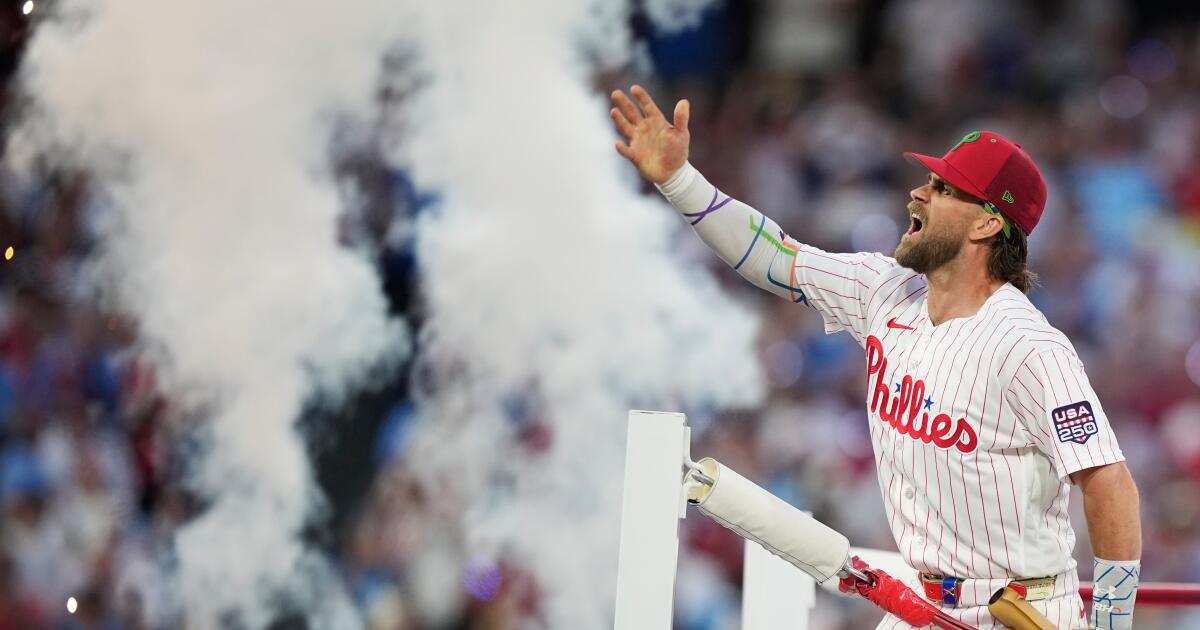
Two lawsuits already serve as backdrops to the unseemly sequence of events that led to Bryce Harper sending Thanksgiving wishes on behalf of FanDuel to an admitted sports gambling addict.
Could there be a third?
Legal experts say Harper might have grounds to sue FanDuel for false endorsement, misappropriation and invasion of privacy.
The Philadelphia Phillies All-Star first baseman said in a statement posted on Instagram that he created a personalized 21-second video on behalf of FanDuel but would not have done so had he known the online sportsbook allegedly intended to use it to entice VIP customer Terry Thompson to continue gambling.
“I did not know FanDuel would do this,” Harper wrote. “I did not consent to it, and FanDuel had no right to do it.”
Harper said he received a request on Cameo in November 2024 to read a message provided by FanDuel VIP host Bryttanni Morgan for a personal “holiday video for Terry.”
“Hey, Terry? What’s up, brother? Hey, man, your host Bryttanni from FanDuel wanted to make sure your Thanksgiving was extra special,” Harper says in the video.
Thompson sued FanDuel, Morgan, DraftKings and the NFL in March, alleging that the sportsbooks caused him to lose about $1.6 million while betting an estimated $18.5 million over a four-year period.
“Had I known FanDuel’s true intent, I would not have made the video,” Harper said. “The same is true had I known anything about Terry or his situation, or about any alleged ‘partnership’ between Cameo and FanDuel.”
The lawsuit filed by the nonprofit Public Health Advocacy Institute on behalf of Thompson and fellow gambler Christopher Sage alleges that FanDuel and DraftKings intentionally fostered addiction by providing enticements such as Super Bowl tickets, hotel accommodations and access to athletes and celebrities.
Thompson said his home fell into foreclosure after he took out second and third mortgages. He borrowed money from family and friends and burned through his savings, losing his last $10,000 on a DraftKings parlay bet in February.
He describes in the lawsuit feeling so desperate that he reached out to his therapist, who called police officers to his home to prevent him from harming himself.
Harper, an eight-time All-Star and two-time Most Valuable Player, has earned nearly $252 million in salary over his 15-year MLB career and is owed another $75 million before his contract expires after the 2031 season. He also earns about $9 million a year in endorsements, according to Sportico.
In a legal action, Harper could seek monetary damages by alleging that the video tarnished his reputation. The perception that he urged a gambling addict to continue destructive behavior could negatively impact his ability to land endorsement deals.
“Section 43(a) of the federal Lanham Act prohibits false endorsements, including when a business draws from an athlete’s NIL and other identifying characteristics without permission,” McCann wrote. “There can be a viable claim when that unauthorized use leads consumers to believe the athlete endorses the business’s product or service.
“Harper could also sue over unauthorized use of his name, image, voice and other uniquely identifying features. To that end, he could argue the video constitutes misappropriation or invasion of privacy.”
FanDuel, in turn, could counter by pointing out that Harper agreed to create the video as part of his relationship with Cameo, a company that connects fans with celebrities and creators for personalized digital interactions.
“False endorsement and misappropriation, FanDuel could insist, are inapplicable to a personalized video setting where the video’s talent voluntarily assents in exchange for compensation,” McCann wrote. “Further, FanDuel could assert that Harper was, or should have been, aware of a potential connection between the video and FanDuel and, more generally, sports betting.”
FanDuel issued a statement after the Harper video came to light in an investigative story published July 9 in the Philadelphia Inquirer.
“We are committed to fostering a culture of responsible gaming and protecting our customers,” the statement said. “Unlike illegal offshore sportsbooks, FanDuel employees are trained to recognize and flag signs of problem gambling and offer resources and tools, and we continue to review and strengthen our policies to ensure we have the industry’s strongest consumer protection initiatives.”
FanDuel and DraftKings, the leading sportsbooks since the U.S. Supreme Court ruled in 2018 that states could legalize sports betting, have developed lucrative partnerships with leagues in all major sports. The 2022 MLB collective bargaining agreement opened the door for players to do promotional work for sportsbooks.
Yet the collaborations have not come without problems. The MLB players union’s licensing and marketing arm filed a lawsuit in 2024 that accused DraftKings, FanDuel and Bet365 of using without permission or compensation photos of players on its betting app and in social media posts.
Coincidentally, Harper became embroiled in that lawsuit, in which the plaintiffs pointed to images of Harper’s face on the DraftKings app as evidence. The two sides reached a settlement in April ahead of trial.
WASHINGTON — The leaders of Europe are bracing for another turbulent summit with President Trump this week as NATO members gather for their annual meeting in the Turkish capital.
European diplomats view Trump’s decision to attend as a positive sign of his continued commitment to the alliance. But the president’s grievances with several European governments over their refusal to join the U.S. war with Iran have cast a pall over a summit already strained by Trump’s wavering support for the continent.
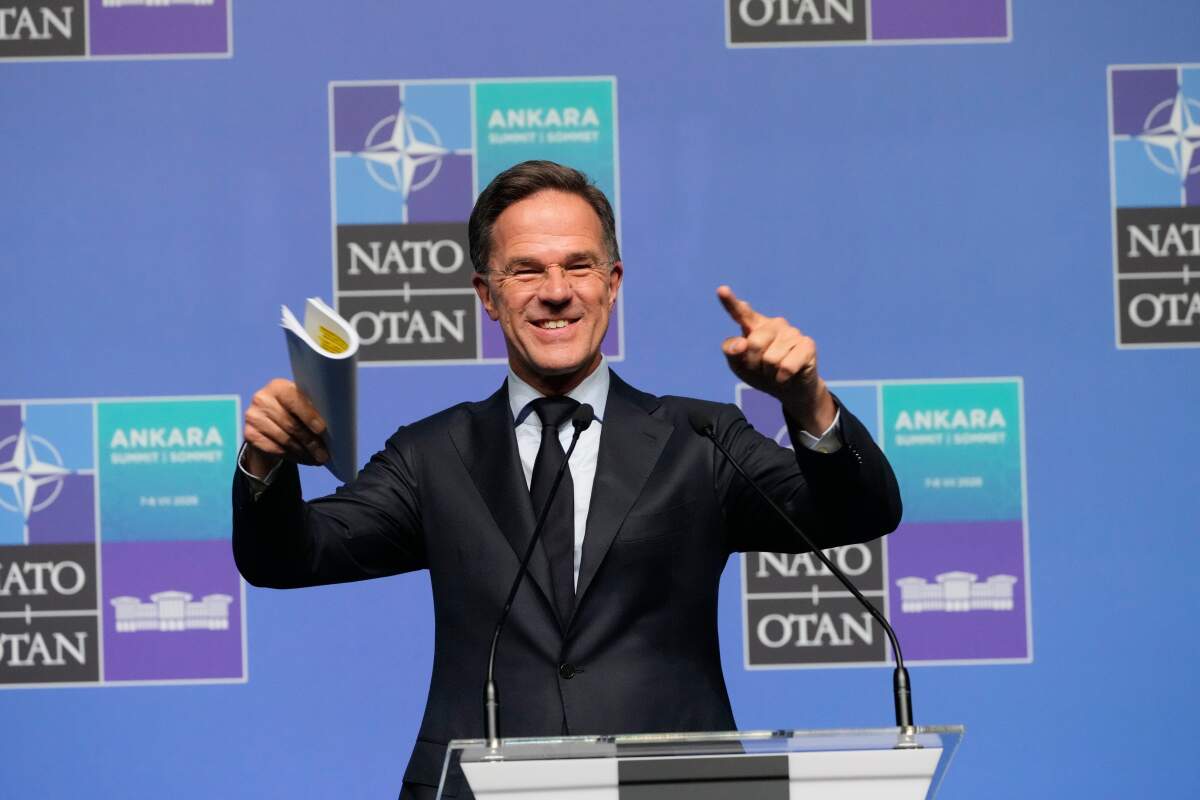
The secretary-general of the transatlantic alliance, Mark Rutte, told reporters on Monday that Trump had aired his resentments in a recent phone call. But Rutte countered with a mix of flattery and countervailing facts that has thus far kept Trump engaged.
While Trump has accused European leaders of denying U.S. forces access to allied bases for takeoffs and refueling during the war, Rutte noted that about 5,000 sorties supporting Operation Epic Fury launched from European airfields. And last Friday, France and Britain committed to a joint military mission with Oman to support freedom of navigation in the Strait of Hormuz — “an extremely important development,” Rutte said.
At last year’s summit, held in The Hague, all NATO member states — with the exception of Spain — agreed to spend 5% of their GDP on defense by 2035, marking a significant increase in historic spending goals for modern Europe. The pledge is divided into two categories, with 3.5% of spending allocated to core military requirements, and the rest committed to a broad set of security-related investments.
Trump’s tough love on the alliance “is, I think, bringing NATO closer together,” the secretary general told reporters.
“You could argue that he is the first president of the U.S. since Eisenhower who was able to come to this situation where the Europeans and the Canadians will spend the same as the Americans” on security, Rutte said. “This equalization was a wish for 50, 60 years, and now it’s happening — I think in large part due to his leadership.”
NATO Secretary-General Mark Rutte speaks to reporters Monday ahead of the NATO summit in Ankara, Turkey.
(Hussein Malla / Associated Press)
In a video message posted on social media Monday, Trump’s ambassador to NATO, Matthew Whitaker, said the summit this week would serve as a “report card” to determine whether countries were beginning to fulfill their commitments from last year.
He offered a note of optimism and suggested the president’s goal is to enhance, rather than undermine, the alliance.
“The United States will be here, but we also need our allies to be here. We cannot do it alone, and the American taxpayer should no longer bear the burden,” Whitaker said.
A White House schedule for Trump’s trip lists bilateral meetings with Rutte and the leaders of Turkey, Syria and Ukraine, in between alliance-wide meals and conferences.
Ukraine will remain at the top of the agenda, Trump told reporters Monday, expressing hope that the war could soon come to an end after four brutal years of fighting.
Russia’s invasion of Ukraine has caused the greatest loss of life in Europe since World War II, resulting in more than 1 million casualties, including an estimated 600,000 dead. Since Russian President Vladimir Putin launched his full-scale invasion in 2022, following his covert invasions of Ukraine’s Crimean peninsula and eastern regions in 2014, Russian forces have captured roughly 12% of Ukraine’s territory.
The war has settled into a deadly stalemate since a 2023 Ukrainian counteroffensive failed to break Russian defensive lines. While Russian forces have occasionally advanced, they have only managed to hold marginal gains along the front, at tremendous cost.
In recent weeks, however, expanded Ukrainian drone and missile capabilities have shifted the dynamic, striking military production sites deep inside Russia and targets near Moscow, bringing the war more directly into the Russian public consciousness and raising questions in the Russian capital whether the war effort is sustainable.
Ukraine’s boldness has impressed the Trump administration, Alexander Stubb, the president of Finland, told the Financial Times this week.
“I think he does feel pressure,” Trump said of Putin, addressing reporters in the Oval Office before departing for Turkey on Monday.
The president referred to an ongoing U.S. effort to end the war, a goal that has remained elusive for Trump since returning to office.
“I think we’re getting much closer than people realize,” he said. “President Putin wants it to end, I will tell you that. Very strongly. Had a good call. And President Zelensky actually wants it to end now.”
“We’re going to be going to NATO, and we’re going to be talking about it,” Trump added. “And I think we’re going to get it ended. It’s been terrible.”
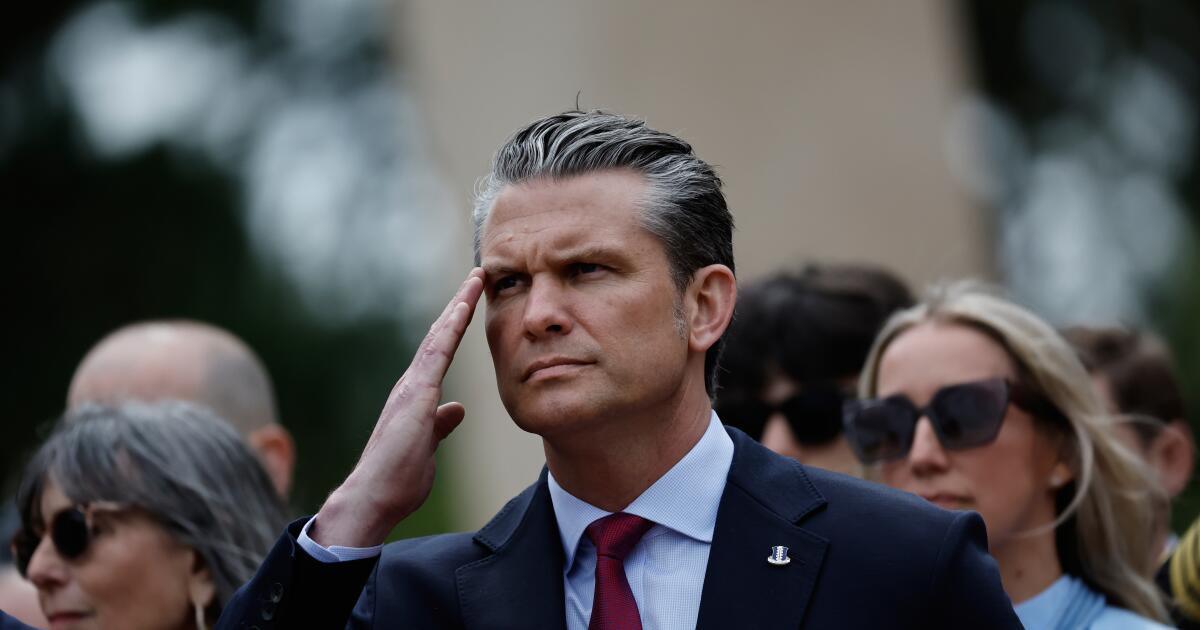
PARIS — U.S. Defense Secretary Pete Hegseth gave a D-day anniversary speech Saturday that appeared to link immigration by sea to the wartime liberation of Europe, warning that the freedom won by Allied troops could prove temporary if leaders failed to defend it against today’s “invasion.”
Hegseth, speaking at the Normandy American Cemetery in Colleville-sur-Mer overlooking Omaha Beach in northwestern France during commemorations for the 82nd anniversary of the June 6, 1944, landings, said that today, “different European beaches are stormed by different dangerous ideologies.”
“Beaches in Spain and Italy and Greece and Bulgaria. Boats and men arrive,” he said.
“When will European capitals do something about that invasion? Or is it too late?” he added. “I pray not, and I believe not.”
Hegseth did not use the word “immigration,” but his remarks echoed broader Trump administration criticism of Europe over migration, borders and what U.S. officials have described as censorship of nationalist and far-right voices.
On Saturday, British Prime Minister Keir Starmer’s office condemned Vice President JD Vance’s remarks blaming immigration for the killing of Henry Nowak, an 18-year-old British student stabbed to death in Southampton, even though both Nowak and his killer were British.
In December, the Trump administration’s national security strategy warned that Europe faced the “prospect of civilizational erasure” and could become “unrecognizable” within 20 years.
Geopolitical analyst Joe Macaron says the Lebanese army is ‘overly stretched’ as Israeli troops expand their occupation of Lebanese territory. The Israeli army has pushed north of Lebanon’s Litani River and appears poised to encircle the major city of Nabatieh.