International Trade

In a bid to counter China, Trump hosts a summit for Latin America leaders | Donald Trump News

Over the past two decades, China has quietly eclipsed the United States as the dominant trading partner in parts of Latin America.

But since taking office for a second term, United States President Donald Trump has pushed to reverse Beijing’s advance.

Recommended Stories

list of 3 itemsend of list

That includes through aggressive manoeuvres directed at China’s allies in the region.

Already, the Trump administration has stripped officials in Costa Rica, Panama and Chile of their US visas, reportedly due to their ties to China.

It has also threatened to take back the Panama Canal over allegations that Chinese operatives are running the waterway. And after invading Venezuela and abducting President Nicolas Maduro, the US forced the country to halt oil exports to China.

But on Saturday, Trump is taking a different approach, welcoming Latin American leaders to his Mar-a-Lago estate for an event dubbed the “Shield of the Americas” summit.

How he plans to persuade leaders to distance themselves from one of the region’s largest economic partners remains unclear.

But experts say the high-level meeting could signal that Washington is prepared to put concrete offers on the table.

Securing meaningful commitments from Latin American leaders will take more than a photo op and vague promises, according to Francisco Urdinez, an expert on regional relations with China at Chile’s Pontifical Catholic University.

Even among Trump’s allies, Urdinez believes significant economic incentives are required.

“What they’re really hoping is that Washington backs up the political alignment with tangible economic benefits,” he said.

‘Reinforcing the Donroe Doctrine’

Already, the White House has confirmed that nearly a dozen countries will be represented at the weekend summit.

They include conservative leaders from Argentina, Bolivia, Chile, Costa Rica, Ecuador, El Salvador, the Dominican Republic, Honduras, Panama, Paraguay, and Trinidad and Tobago.

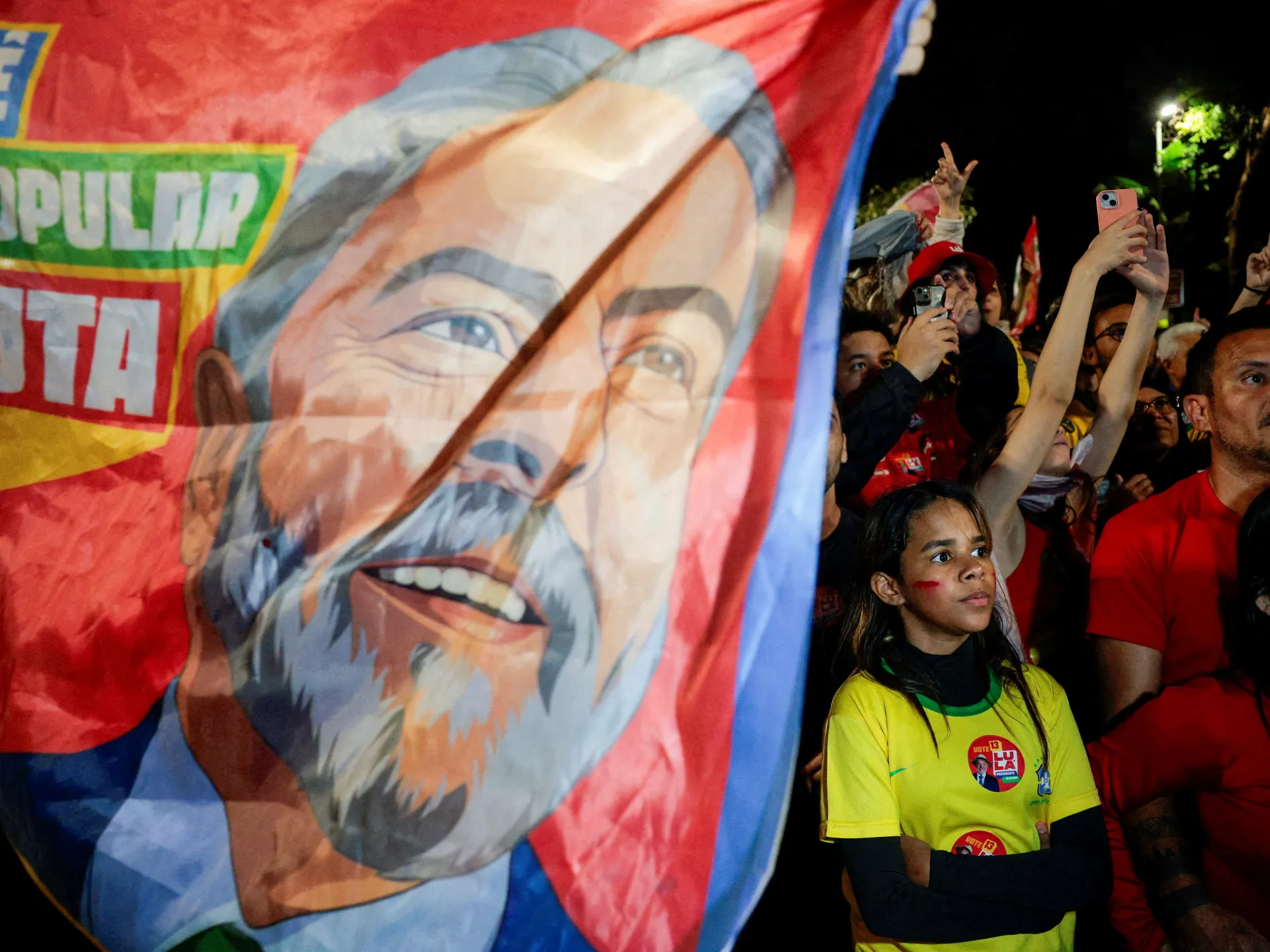
Mexico and Brazil, the region’s largest economies, have been notably left out. Both are currently led by left-leaning governments.

In a post on social media, the Trump administration framed the event as a “historic meeting reinforcing the Donroe Doctrine”, the president’s plan for establishing US dominance over the Western Hemisphere.

Part of that strategy involves assembling a coalition of ideological allies in the region.

But rolling back Chinese influence in a region increasingly reliant on its economy will not be an easy feat, according to Gimena Sanchez, the Andes director at the Washington Office on Latin America (WOLA), a US-based research and advocacy group.

The US “is trying to get countries to agree that they’re not going to have China be one of their primary trading partners, and they really can’t at this point”, Sanchez said.

“For most countries, China is either their top, second or third trading partner.”

China, after all, has the second-largest economy in the world, and it has invested heavily in Latin America, including through infrastructure projects and massive loans.

The Asian giant has emerged as the top trading partner in South America in particular, with bilateral trade reaching $518bn in 2024, a record high for Beijing.

The US, however, remains the biggest outside trade force in Latin America and the Caribbean overall, due in large part to close relations with its neighbour, Mexico.

As of 2024, US imports from Latin America jumped to $661bn, and its exports were valued at $517bn.

Rather than choosing sides, though, many countries in the region are trying to strike a balance between the two powers, Sanchez explained.

Still, she added that the US cannot come empty-handed to this weekend’s negotiations.

“If the US is very boldly telling countries to cut off strengthening ties with China”, Sanchez emphasised that “the US is going to have to offer them something.”

What’s on the table?

Trump has already extended economic lifelines to Latin American governments politically aligned with his own.

In the case of Argentina, for instance, Trump announced in October a $20bn currency swap, meant to increase the value of the country’s peso.

He also increased the volume of Argentinian beef permitted to be imported into the US, shoring up the country’s agricultural sector, despite pushback from US cattle farmers.

Trump has largely tied those economic incentives to the continued leadership of political movements favourable to his own.

The $20bn swap, for instance, came ahead of a key election for Argentinian President Javier Milei’s right-wing party, which Trump supports.

Isolating China from resources in Latin America could also play to Trump’s advantage as he angles for better trade terms with Beijing.

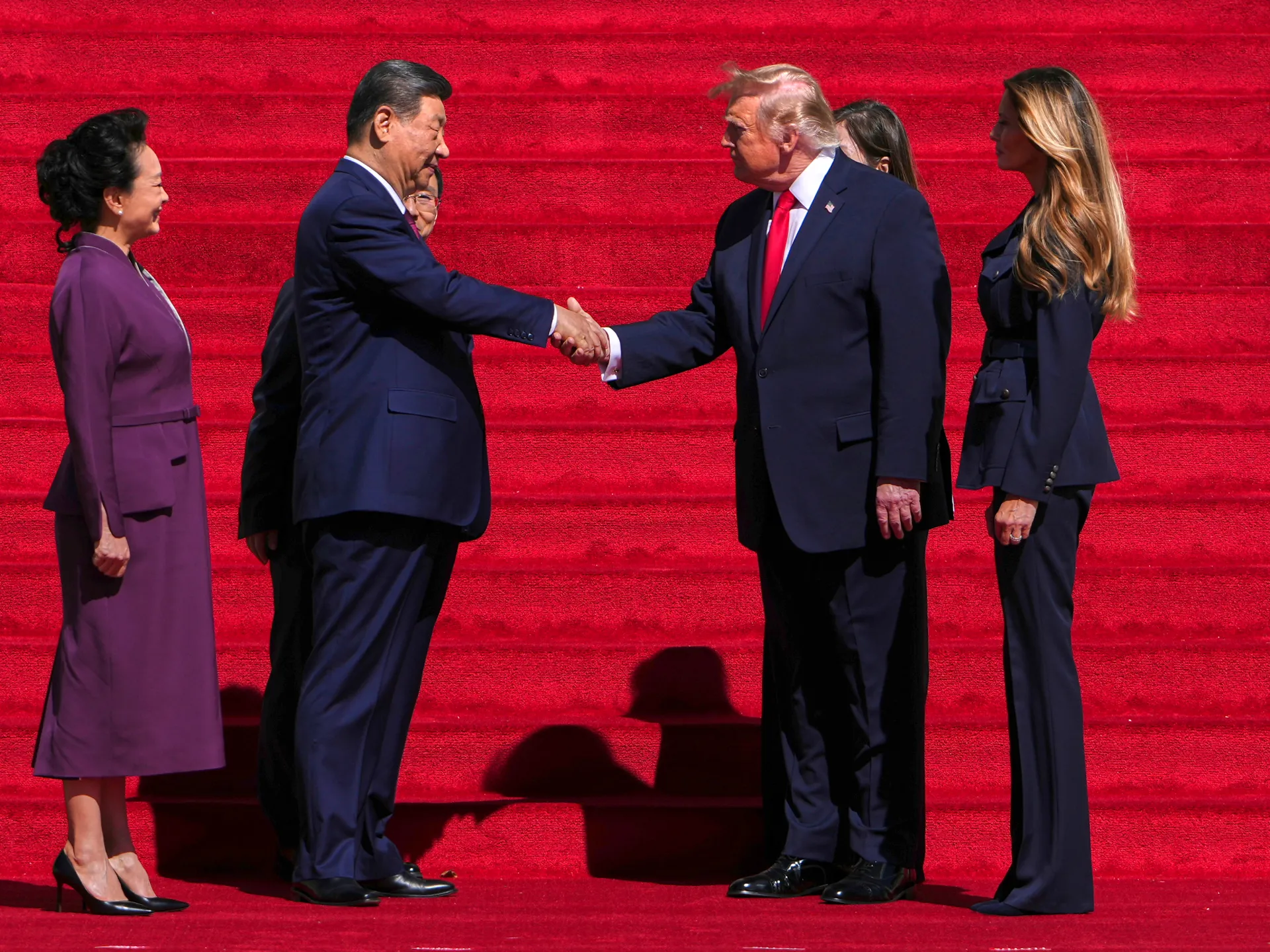
A show of hemispheric solidarity could give Trump extra leverage as he travels to Beijing in early April to meet with Chinese President Xi Jinping, Urdinez pointed out.

Then there’s the regional security angle. The US has expressed particular concern about China’s control of strategic infrastructure in Latin America and the critical minerals it could exploit in the region to bolster its defence and technology capabilities.

Bolivia, Argentina and Chile, for instance, are believed to hold the world’s largest deposits of lithium, a metal necessary for energy storage and rechargeable batteries.

The Trump administration referenced such threats in its national security strategy, published in December.

“Some foreign influence will be hard to reverse,” the strategy document said, blaming the “political alignments between certain Latin American governments and certain foreign actors”.

But Trump’s security platform nevertheless asserted that Latin American leaders were actively seeking alternatives to China.

“Many governments are not ideologically aligned with foreign powers but are instead attracted to doing business with them for other reasons, including low costs and fewer regulatory hurdles,” the document said.

It argued that the US could combat Chinese influence by highlighting the “hidden costs” of close ties to Beijing, including “debt traps” and espionage.

‘More aspiration than reality’

Henrietta Levin, a senior fellow at the Center for Strategic and International Studies in Washington, believes that many Latin American countries would prefer to deepen economic engagement with the US over China.

But in many cases, that hasn’t been an option.

She pointed to Ecuador’s decision to sign a free trade agreement (FTA) with China in 2023 after it failed to negotiate a similar agreement with the US under President Joe Biden.

Some US politicians had opposed the deal as a threat to domestic industries. Others had encouraged Biden to reject it due to alleged corruption in Ecuador’s government.

Critics, though, said the resistance pushed Ecuador into closer relations with China.

“ When Ecuador signed their free trade agreement with China a couple years ago, their leader actually made quite clear that they had wanted an FTA with the US and would’ve preferred that,” said Levin.

“But the US didn’t want to negotiate such an agreement, and China did.”

As a result, Ecuador became the fifth country in Latin America to ink a free trade pact with China, after Chile, Peru, Costa Rica and Nicaragua.

For Levin, the question looming over this weekend’s summit is whether the Trump administration will step up and provide alternatives to the economic engagement China has already delivered.

Options could include trade agreements, financing for new development and investments with attractive terms.

But without such offers, Urdinez, the Chilean professor, warns that Trump will face limits to his ambitions of checking China’s growth in Latin America.

“Until Washington is willing to fill the economic space it’s asking countries to vacate, the rollback strategy will remain more aspiration than reality,” said Urdinez.

Source link

US will provide insurance for ships in Gulf amid Iranian attacks: Trump | Energy News

US Navy ‘will begin escorting’ oil tankers through the Strait of Hormuz, a strategic waterway, if necessary, US President Trump says.

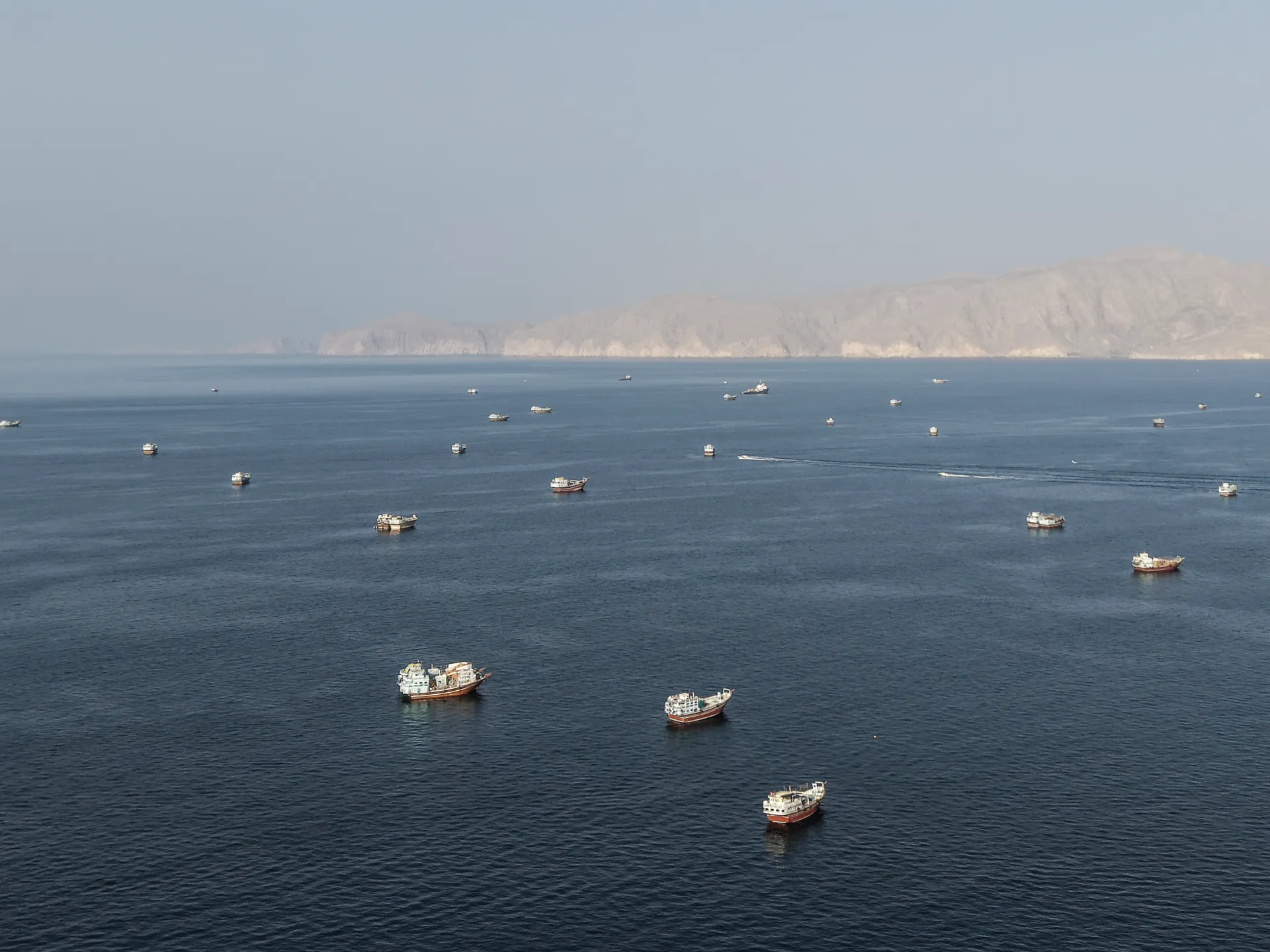
President Donald Trump has announced that the United States government will offer insurance to ships in the Gulf after Iran largely succeeded in shutting down the Strait of Hormuz, sending oil prices soaring.

The US president added that the US military will accompany ships through Hormuz if necessary.

Recommended Stories

list of 3 itemsend of list

“Effective IMMEDIATELY, I have ordered the United States Development Finance Corporation (DFC) to provide, at a very reasonable price, political risk insurance and guarantees for the Financial Security of ALL Maritime Trade, especially Energy, traveling through the Gulf,” Trump wrote in a social media post on Tuesday.

DFC is the US government’s development finance agency. Its mission is to “advance US foreign policy and strengthen national security by mobilising private capital” across the world.

Trump added that the discounted risk insurance will be available for all shipping lanes.

“If necessary, the United States Navy will begin escorting tankers through the Strait of Hormuz, as soon as possible,” he wrote.

“No matter what, the United States will ensure the FREE FLOW of ENERGY to the WORLD.”

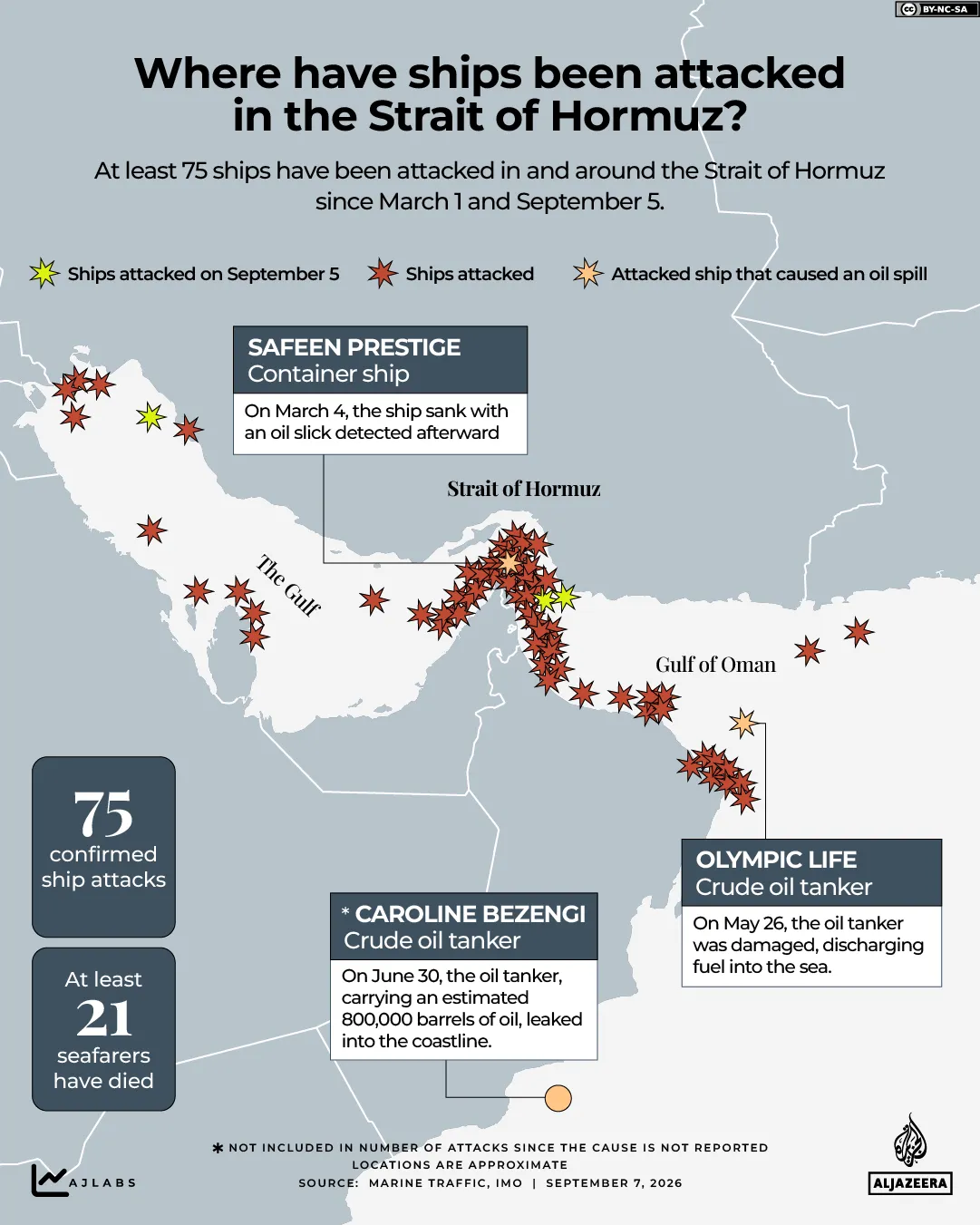
The Strait of Hormuz is a vital trade artery that connects the Gulf to the Indian Ocean. Around 20 percent of the world’s oil flows through it.

The price of oil has shot up by more than 15 percent since the US and Israel launched strikes on Tehran that started a war with Iran three days ago.

Costs are expected to rise even higher as oil supplies decrease as a result of Iran’s closure of the strait, as well as attacks on energy instalments in the Gulf.

Some insurance companies were reported to have cut back coverage amid the Iranian attacks.

Although the US is largely self-sufficient with its oil production, an uptick in prices globally could hike the cost for Americans at the gas or petrol pump, and could boost inflation.

The average price of one gallon of gas (3.8 liter) in the US jumped more than 11 cents overnight to $3.11 on Tuesday, according to the AAA Gas Prices website.

Earlier on Tuesday, Trump stressed that the attack on Iran “had to happen” despite its human cost and the strain it is putting on the energy market.

“We have a little high oil prices for a little while, but as soon as this ends, those prices are going to drop – I believe – lower than even before,” he told reporters.

Opinion polls show that the attack on Iran is unpopular among the US public. Increasing economic costs from the war could further diminish support for the war, months ahead of the US midterm elecitons.

Source link

India and Israel pledge to boost cooperation on trade, defence | International Trade News

Narendra Modi’s visit to Israel has drawn criticism at home amid tensions over Israel’s genocidal war on Gaza.

Prime Minister Narendra Modi says India and Israel will collaborate more closely on defence technology while pursuing a free trade agreement, as he wrapped up a controversial two-day visit.

Modi and his Israeli counterpart Benjamin Netanyahu said at a joint news conference in Jerusalem on Thursday that they would also foster collaboration on technologies, such as artificial intelligence and cybersecurity, as their countries concluded more than a dozen bilateral agreements.

Recommended Stories

list of 3 itemsend of list

“The future belongs to those who innovate and Israel and India are bent on innovation,” said Netanyahu. “We’re proud ancient civilisations, very proud of our past. But absolutely determined to seize the future, and we can do it better together.”

A joint statement highlighted cooperation in the field of “horizon scanning”, describing it as a mechanism that “helps identify emerging global trends in areas like technology, economy and society, by leveraging data”.

Israel also agreed to allow 50,000 more Indian nationals into the country, where tens of thousands of South Asians have filled construction and caregiving jobs since new restrictions were placed on Palestinian workers at the start of its war on Gaza.

Strategic embrace

Modi’s visit, his second since he took office in 2014, has drawn criticism at home, signalling an ongoing expansion of India’s strategic embrace of Israel amid ongoing tensions over Israel’s genocidal war against Palestinians in Gaza, which has killed more than 72,000 people.

Confirming their growing ties, the leaders’ joint statement referenced the Hamas-led attack on Israel on October 7, 2023, and an April 2025 attack on tourists and civilians in Pahalgam, in Indian-controlled Kashmir.

“Terrorism cannot be accepted in any form or expression,” said Modi, who has historically supported the establishment of a Palestinian state yet has sometimes abstained from criticism of Israel in international forums, including the United Nations.

Earlier this month, India was among the countries that condemned Israeli measures to effectively deepen its control over the occupied West Bank.

Both countries also lauded United States President Donald Trump’s plan to advance the “ceasefire” in the Gaza Strip.

Source link

Has Trump’s trade strategy lost leverage? | Business and Economy

A Supreme Court setback on tariffs challenges Trump’s protectionist trade strategy.

Tariffs: The most beautiful word in the dictionary, as Donald Trump says, or unlawful?
The Supreme Court has ruled that the president cannot use emergency powers to impose them.
It’s a significant check on his power and a major setback to his second-term agenda.
But despite the ruling, Trump has already found new ways to keep his trade barriers in place.
Tariffs remain central to his economic policy, both to boost US manufacturing and generate revenue.
The court may have disarmed one of Trump’s trade weapons, but the turn towards protectionism is far from over.

Source link

Germany’s Merz eyes business opportunities at Chinese tech hub in Hangzhou | International Trade News

German Chancellor visits eastern city, home to AI firm DeepSeek and e-commerce giant Alibaba, with business leaders.

German Chancellor Friedrich Merz has arrived in the tech hub of Hangzhou on the second day of his first official trip to China, flanked by a delegation of business leaders seeking contracts in the eastern city.

Merz travelled from Beijing to the city of some 12 million people on Thursday, where he was due to tour some leading companies, including Germany’s Siemens Energy and Unitree, a Chinese firm producing humanoid robots.

Recommended Stories

list of 4 itemsend of list

Hangzhou is a major hub in China’s tech sector, home to giants, including artificial intelligence company DeepSeek and e-commerce platform Alibaba.

Before leaving Beijing, Merz, who is being accompanied by a delegation, including executives of German car giants Volkswagen, BMW and Mercedes, visited a Mercedes plant in the Chinese capital where he tested a self-driving vehicle.

‘Improved’ trade relationship sought

Merz’s trip to China, which became Germany’s largest trading partner last year, seeks to deepen decades-old economic ties with the world’s second-largest economy in the wake of tariffs imposed by the United States last year.

But he has also sought to address “challenges” in the relationship, most notably tackling the massive imbalance which saw Germany’s trade deficit with China hit a record 89 billion euros ($105bn) last year, fuelling complaints from German businesses that Chinese competitors are flooding the market with cheaper goods.

In a meeting with Chinese Premier Li Qiang in Beijing on Wednesday, before he met Chinese President Xi Jinping, Merz said he wanted “to improve and make fair” the cooperation between the countries.

Following the talks with Xi and top Chinese leaders, Merz said China had agreed to buy up to 120 Airbus aircraft, and said other contracts were in the pipeline.

The two leaders stressed their commitment to developing closer strategic relations, with Xi telling Merz he was willing to take relations to “new levels”.

Ukraine, Taiwan discussed

The talks between Xi and Merz also touched on geopolitical issues, with the German leader saying any “reunification” with Taiwan, the self-ruled island China claims as its territory, must be done peacefully.

Merz also told reporters that he asked the Chinese government to use its influence with Russia to help end the war in Ukraine, amid frustrations among European leaders that Beijing was not doing enough to bring the war to an end.

“We know that signals from Beijing are taken very seriously in Moscow,” Merz said.

Following the meeting, the two countries released a joint statement saying they supported efforts to achieve a ceasefire and lasting peace in Ukraine, emphasising the importance of fair competition and mutual market access, and committing to resolving any concerns through dialogue, Chinese state media reported.

Merz is the latest in a string of Western leaders to visit Beijing in recent months, including the United Kingdom Prime Minister Keir Starmer, French President Emmanuel Macron and Canadian PM Mark Carney, amid the fallout from the Trump administration’s tariffs on long-established trade partners.

Source link

Germany’s Merz arrives in China for two-day visit with focus on trade | International Trade News

Chancellor says he wants to deepen trade relationship while making it fairer during visit that sees signing of several agreements.

German Chancellor Friedrich Merz has kicked off his inaugural visit to China with a focus on resetting trade relations and deepening cooperation.

Speaking in Beijing on Wednesday, Merz told Chinese Premier Li Qiang that Germany sought to build on the decades-old economic ties with China, while emphasising the need to ensure fair cooperation and open communication.

Recommended Stories

list of 4 itemsend of list

“We have very specific concerns regarding our ⁠cooperation, which we want to improve and make fair,” said Merz, in an acknowledgement of the strain faced by Germany’s manufacturing sector from Chinese competition.

Li, who met Merz shortly after his arrival in Beijing’s Great Hall of the People, called on both sides to work together to safeguard multilateralism and free trade, in a reference to US President Donald Trump’s tariff policy that has upended the global trading system.

“China and Germany, as two of the world’s largest economies and major countries with important ‌influence, should strengthen our confidence in cooperation, jointly safeguard multilateralism and free trade, and strive to build a more just and fair global governance system,” Li said.

During the meeting, representatives from both sides signed several agreements and memorandums, including on climate change and food security.

“We share responsibility in the world, and we should live up to that responsibility together,” Merz said, adding there was “great potential for further growth”.

He added that open channels of communication were essential, as he announced visits by several ministers in the months ahead.

‘More equal playing field’ sought

Reporting from Beijing, Al Jazeera’s Rob McBride said the visit, in which Merz was being accompanied by a large delegation of German business executives, was important for both Europe’s economic powerhouse and the world’s second-largest economy.

Alongside the signing of deals with Chinese companies, a key focus of Merz’s visit would be “looking for a more equal playing field when it comes to trade”, he said.

“There is a real concern in markets like the European Union about cheaper, sometimes subsidised Chinese products that are looking for markets other than the US, suddenly flooding other marketplaces such as Germany … undercutting many domestic manufacturers there,” he said.

Germany’s imports from China increased 8.8 percent to 170.6 billion euros ($201bn) last year, while its exports to China dropped 9.7 percent to 81.3 billion euros ($96bn).

McBride noted Beijing was seeking to pitch itself as a “responsible advocate of free trade compared to the sometimes unpredictable and chaotic tariffing policy of the US”.

He said the visit would also see Merz attend a banquet with Chinese President Xi Jinping, and visits to German companies with strongly established presences in China, such as Siemens and Mercedes-Benz.

Geopolitics and human rights would also be on the table, he said, with Germany particularly concerned about Beijing’s support, tacit or otherwise, for Russia amid its war on Ukraine.

Western leaders court Beijing

Merz is the latest in a string of Western leaders to visit Beijing in recent months, including the UK’s Keir Starmer, France’s Emmanuel Macron and Canada’s Mark Carney, amid the fallout from Trump’s tariffs on long-established trade relationships.

The chancellor said on Friday he was going to Beijing in part because export-dependent Germany needs “economic relations all over the world”.

“But we should be under no illusions,” he said, adding that China, as a rival to the United States, now “claims the right to define a new multilateral order according to its own rules.”

Source link

Tokyo protests as China blocks ‘dual-use’ exports to 20 Japanese companies | International Trade News

China’s Commerce Ministry says the move against Japanese firms will prevent the remilitarisation of Japan.

Japan has strongly protested China’s move to restrict the export of “dual-use” items to 20 Japanese business entities that Beijing says could be used for military purposes, in the latest twist in a months-long diplomatic row between the two countries.

Japanese Deputy Chief Cabinet Secretary Sato Kei said at a news conference that the move by China’s Ministry of Commerce on Tuesday was “deplorable” and would “not be tolerated” by Tokyo.

Recommended Stories

list of 4 itemsend of list

Companies affected by China’s export ban on dual-use items, or items that can be used for civilian or military purposes, include Mitsubishi Heavy Industries’ shipbuilding group, aerospace and marine machinery subsidiaries, Kawasaki Heavy Industries, Japan’s National Defense Academy, and the Japan Aerospace Exploration Agency.

Beijing said restricting the export of dual-use items to the Japanese firms was necessary to “safeguard national security and interests and fulfil international obligations such as non-proliferation”, adding that the companies were involved in “enhancing Japan’s military strength”.

China’s Commerce Ministry said on Tuesday that it would also add another 20 entities to its export restrictions watchlist, including Japanese automaker Subaru, petroleum company ENEOS Corporation, and Mitsubishi Materials Corporation.

Chinese exporters must submit a risk assessment report for each company to ensure “dual-use items will not be used for any purpose that would enhance Japan’s military strength”, according to a statement on the Commerce Ministry’s website.

China has imposed similar restrictions on the US and Taiwan as a form of political protest, particularly over Washington’s ongoing unofficial support for the self-governed island. Beijing claims democratic Taiwan as its territory and has not ruled out using force for “reunification”.

Tokyo and Beijing have a historically acrimonious relationship, but diplomatic ties took a turn for the worse in November, when Japanese Prime Minister Sanae Takaichi told legislators that a Chinese attack on Taiwan would constitute a “survival-threatening situation” for Japan, which could necessitate military action.

Japan has had a pacifist constitution which restricts its use of force, but an attack on Taiwan could legally allow Tokyo to activate its army, the Self-Defence Forces, Takaichi said.

Takaichi’s remarks were some of the most explicit regarding whether Japan could become involved in a conflict in the Taiwan Strait, and have been accompanied by a push to expand Japan’s military capability.

Beijing reacted with fury to Takaichi’s remarks, discouraging Chinese citizens from visiting Japan, leading to a major drop in tourism revenue from Chinese visitors.

In January, Beijing also imposed Japanese export restrictions on rare earths like gallium, germanium, graphite and rare earth magnets that could be used for defence purposes, according to the US-based Centre for Strategic and International Studies (CSIS) think tank.

The CSIS said at the time that “these retaliatory measures underscore rising tensions between Beijing and Tokyo and serve as a pointed warning from China to countries that take explicit positions on cross-strait relations”.

Tokyo does not have official diplomatic relations with Taiwan, but several of its outlying islands, including Okinawa, are geographically closer to Taiwan than mainland Japan. Taiwan is also enormously popular with the Japanese public.

Source link

India’s Modi visits Israel: What’s on the agenda, and why it matters | International Trade News

Indian Prime Minister Narendra Modi will begin a two-day visit to Israel on Wednesday. Modi’s first trip to Israel was in 2017, when he was the first Indian leader to ever visit the country.

India was among the countries that opposed the creation of Israel in 1948, and for decades was one of the most forceful non-Arab critics of Israel’s policies towards Palestinians. It only established diplomatic ties with Israel in 1992, but since 2014, when Modi came to power, relations between the two countries have flourished.

Here is more about what is on the agenda for Modi’s visit, and why it is significant.

Who will Modi meet, and what will they talk about?

Modi is expected to land at the Ben Gurion international airport outside Tel Aviv at 12:45pm local time (10:45 GMT).

Israeli Prime Minister Benjamin Netanyahu is expected to welcome Modi at the airport, as he did during the Indian premier’s 2017 visit. The two leaders are scheduled to hold talks shortly after.

Then, at 4:30pm (14:30 GMT), Modi is scheduled to address the Knesset, the Israeli parliament, in Jerusalem. He then returns to Tel Aviv for the night.

On the morning of February 26, Modi is scheduled to visit the Yad Vashem museum, a memorial to Holocaust victims, before meeting Israeli President Isaac Herzog. Modi and Netanyahu will then meet again and oversee the signing of agreements between the two countries, before Modi departs Israel in the afternoon.

Overall, Modi and Netanyahu aim to use this visit to bolster strategic economic and defence agreements between India and Israel, officials from both sides have said.

“We don’t compete, we rather complement each other,” JP Singh, India’s ambassador to Israel, told state broadcaster All India Radio on Monday, speaking of relations with Israel. “Israel is really good at innovation, science and technology. Therefore, there will be a lot of discussion on AI, cybersecurity and quantum.”

The two countries signed a new Bilateral Investment Treaty in September last year, replacing the 1996 investment treaty, to provide “certainty and protection” to investors from both countries. They are also aiming to upgrade existing bilateral security agreements at this meeting.

In a video posted on the Israeli Embassy’s social media channels on Monday, Israel’s ambassador to India, Reuven Azar, said: “Our economic partnership is gaining real momentum. We signed a bilateral investment treaty, and we are moving forward to sign a free trade agreement, hopefully this year.”

Azar said that Israel wants to encourage Indian infrastructure companies to come to Israel to build and invest in the country.

He added: “We will deepen our defence relationship by updating our security agreements.”

In an X post of his own on Sunday, Netanyahu wrote that he is looking forward to greeting Modi in Jerusalem.

“We are partners in innovation, security, and a shared strategic vision. Together, we are building an axis of nations committed to stability and progress,” he wrote.

“From AI to regional cooperation, our partnership continues to reach new heights,” Netanyahu added.

How are India-Israel relations?

Relations between India and Israel have improved exponentially over the years. While still under British rule in the 1920s and 1930s, India strongly identified with the Palestinian struggle for independence.

In 1917, the United Kingdom signed the Balfour Declaration, promising Jews who had been displaced from Europe due to Adolf Hitler’s oppression a homeland in the British Mandate in Palestine. This was opposed by many nations, including India, which was fighting British colonialism at the time.

“Palestine belongs to the Arabs in the same sense that England belongs to the English, or France to the French,” Mahatma Gandhi, India’s most prominent freedom fighter who is revered as the father of the nation, wrote in an article in his weekly newspaper Harijan on November 26, 1938.

India was among the nations opposed to the creation of Israel in 1948. In 1949, India also voted against Israel’s UN membership. While it recognised Israel as a state in 1950, it was not until 1992 that the two formalised diplomatic relations, and economic relations gradually grew over the following two decades.

Since Modi became India’s leader in 2014, there has been a major shift in the relationship between India and Israel. Nine years ago, Modi was the first Indian prime minister ever to visit Israel.

India is currently Israel’s second-largest trading partner in Asia, after China. According to India’s Ministry of External Affairs, trade jumped from $200m in 1992 to $6.5bn in 2024.

India’s main exports to Israel include pearls, precious stones, automotive diesel, chemicals, machinery, and electrical equipment; imports include petroleum, chemical machinery and transport equipment.

Azad Essa, a senior reporter at Middle East Eye and author of the 2023 book Hostile Homelands: The New Alliance Between India and Israel, told Al Jazeera that Modi’s visit to Israel shows how far India’s relations with Israel have evolved over the past decade.

“Whereas a partnership existed, it was a lot more limited prior to Modi. [New] Delhi has now emerged as Israel’s strongest non-Western ally, so much so that it is now considered a ‘special relationship’, rooted in strategic cooperation and ideological convergence,” Essa said.

“This visit will be Netanyahu’s opportunity to offer appreciation to Modi, and will be used by him to show Israelis that he is a well-respected and popular leader in the Global South.”

Under Modi, India has become Israel’s top arms customer. And in 2024, during Israel’s genocidal war on Gaza, Indian arms firms supplied Israel with rockets and explosives, according to an Al Jazeera investigation.

Modi’s Hindu nationalist Bharatiya Janata Party (BJP) envisions India as a Hindu homeland, echoing Israel’s self-image as a Jewish state. Both India and Israel frame “Islamic terrorism” as a key threat, a label critics say is used to justify wider anti-Muslim policies.

“The alliance between India and Israel is not just about weapon sales or trade. It is about India’s open embrace of authoritarianism and militarism in building a supremacist state in Israel’s image,” Essa said.

“It is also a story about how security, nationalism and democratic language can be used to justify and normalise increasingly illiberal policies, and this has implications for democracies everywhere.”

Why is this visit significant?

Modi’s visit comes at a time of rising and complex geopolitical tensions in and around the Middle East.

Despite the warm relations between the two countries in recent decades, Modi’s trip comes just a week after India joined more than 100 countries in condemning Israel’s de facto expansion in the occupied West Bank. New Delhi signed the statement on February 18 – a day later than most – after initially appearing hesitant.

This week, Netanyahu claimed that he plans to form a new regional bloc of countries, which he termed a “hexagon” alliance, to stand against “radical” Sunni and Shia-majority nations.

On Sunday, Netanyahu said this alliance would include Israel, India, Greece and Cyprus, along with other unnamed Arab, African and Asian states. None of these governments has officially endorsed this plan, including India.

Analysts said Modi’s visit will be viewed by many as an endorsement of Israeli policies, however.

“The timing of the visit is notable because it comes at a time when Netanyahu has lost immense credibility around the world, and to have the leader of the world’s so-called largest democracy visiting Israel and showing affection to Netanyahu, who has a warrant in his name from the International Criminal Court, is a ringing endorsement of him and Israel’s policies,” Essa said.

Modi’s visit also comes at a time of heightened tensions between Iran and the United States.

India and Iran have long had a cooperative relationship. After Modi visited Iran in 2016, the two countries signed a major deal, allowing India to develop the strategically located port of Chabahar on Iran’s southeastern coast. However, after the US imposed additional sanctions on Iran last year and threatened to penalise all countries that do business with Tehran, India has reportedly started moving out of Chabahar.

In June 2025, India did not join the Shanghai Cooperation Organisation’s (SCO’s) condemnation of Israel’s attacks on Iran during the 12-day war between Iran and Israel. However, it did join a later condemnation by the BRICS grouping of major emerging economies of the Israeli and US attacks on Iran.

The US, which has been applying its own pressure on India over the past year in retaliation for its purchase of Russian oil, is building up a vast array of military assets in the Arabian Sea, close to Iran, as President Donald Trump increases pressure on Iran to agree to a deal over its nuclear programme and stock of ballistic missiles.

Trump said last Friday that he was considering a limited strike on Iran if Tehran does not reach a deal with the US. “I guess I can say I am considering that,” he told reporters.

Iran has said it is seeking a diplomatic solution, but will defend itself if Washington resorts to military action.

Israel will likely be a front-line participant in any escalation that might follow from US strikes or Iranian retaliation, analysts say.

Source link

Hiltzik: Why consumers won’t see a tariff refund

The Supreme Court just declared most of Trump’s tariffs to be unconstitutional. But consumers probably won’t be getting any money back

Treasury Secretary Scott Bessent, who has a way of saying the quiet parts out loud in defending President Trump’s economic policies, told the truth again Friday, during a public appearance a few hours after the Supreme Court threw out most of Trump’s tariffs.

Asked about the prospects that Americans would be receiving refunds of the illegal tariffs paid since Trump imposed them in April, Bessent replied with a condescending smirk: “I get a feeling the American people won’t see it.”

A couple of things about that. One is that there doesn’t seem to be any legal question that those who paid the tariffs are entitled to refunds. In his 6-3 ruling invalidating levies imposed on imports under the International Emergency Economic Powers Act of 1977, or IEEPA, Chief Justice John Roberts made clear that those tariffs were unconstitutional and illegal from their inception.

The refund process is likely to be a ‘mess.’

— Supreme Court Justice Brett Kavanaugh

Therefore, there’s no excuse for the government to hold on to the money it has collected — estimated at somewhere between $135 billion and $170 billion. But Roberts didn’t state whether refunds are warranted or, if so, how they should be calculated and distributed.

Trump has dangled the prospect of tariff refunds — actually, tariff “dividend” checks of $2,000 — in front of taxpayers for months. In effect, that would mean returning to taxpayers the money that his tariffs have cost them. Bessent’s comments put paid to that promise.

Get the latest from Michael Hiltzik

Today, no one is arguing seriously that checks should be cut for taxpayers — except Illinois Gov. JB Pritzer, who demanded refund checks totalling $8.7 billion for his constituents. But that has the aroma of a campaign stunt for Pritzker, who is running for a third term and may be positioning himself for a presidential run.

By not specifying a refund process, the Supreme Court decision left a vacuum that Bessent tried to fill. In his comments, he explained why refunds will be nothing but a dream for the average American — and those comments were chilling.

First, he said, Trump has the authority to reimpose the same tariffs under different laws. Indeed, Trump has already announced that he will be imposing 15% tariffs across the board.

He also signaled that although Roberts pushed refund decisions down to the Court of International Trade, the government is poised to challenge importers’ applications for reimbursement, generating litigation that “can be dragged out for weeks, months, years.”

In other words, Bessent implied that, far from resolving the economic confusion Trump has generated through his on-again-off-again tariff policies during 2025, the court’s decision provoked Trump to inject even more uncertainty into U.S. trade relations and domestic business decisions.

That dime appeared to drop for stock market investors Monday. The markets rose modestly in a relief rally Friday after the Supreme Court released its decision, but tumbled Monday as Trump doubled down on tariffs. At the close, the Dow Jones industrial average was down by 821.91 points, or nearly 1.7%, and the Nasdaq and Standard & Poor’s 500 indices both fell by more than 1%.

Bessent didn’t mention the most important reason why American consumers are unlikely to see anything resembling a tariff refund.

Tariffs on imported products are, by any measure, a tax on domestic consumers. Economic opinion is virtually unanimous on that point. As I reported in January, the Kiel Institute for the World Economy, a German think tank, concluded that 96% of the 2025 Trump tariffs were paid by American importers and their domestic clients.

“The tariffs are, in the most literal sense, an own goal,” Kiel’s researchers wrote. “Americans are footing the bill.” Their conclusion was largely echoed earlier this month by the Federal Reserve Bank of New York, which placed the burden on American importers and consumers at “nearly 90%.”

That said, the specifics of tariff payments are in the hands of importers and retailers, which keep records of how much they’ve paid and on what products or parts. Consumers don’t normally know the numbers. (I actually received an invoice last year breaking out the tariffs charged by a Japanese retailer on a set of pens I had bought for a birthday present, but since the sum came to $12 I’m not sure that demanding a refund from the government would be worth it.)

So far, about 1,500 businesses have filed claims for refunds through the Court of International Trade. Most filed these claims to secure for themselves a position in the scrum for refunds, like music fans lining up overnight for tickets to a star’s upcoming concert.

Many of these businesses may not actually have put a number on their claim. Costco, perhaps the biggest retailer to file with the CIT, didn’t say in its Nov. 28 filing how much it thought it was owed, possibly because it was still bound to pay the tariffs until the Supreme Court issued a final decision.

U.S. Customs and Border Protection, which actually computes and collects the tariffs, says it will cease collecting the invalidated levies when the clock strikes 12:01 a.m. Tuesday morning.

What consumers don’t know is how much of the tariffs have been passed down to them. Some sellers decided to eat some or all of the tariffs to keep consumer prices steady. Some may have stocked up on tariff-eligible products ahead of the formal imposition of the levies.

Will retailers seek out customers who paid higher prices on products that were tariffed to hand them refunds? None has said that such an eventuality is in the cards, though it might not be surprising to see some businesses use the end of tariffs as a marketing device — you know, “We’re cutting prices on Toyotas during ‘tariff freedom month!’” etc., etc.

It’s also conceivable that retailers passed imaginary tariff costs on to their customers, putting through price increases that had nothing to do with the levies but could be blamed on them anyway.

That’s what happened after Trump imposed tariffs on washing machines, which were almost all foreign-made, in 2018. According to a 2020 survey by Federal Reserve and University of Chicago economists, the tariffs forced washing machine prices up by nearly 12%, or about $86 each. The researchers discovered, however, that prices on clothes dryers increased by about the same amount, even though they weren’t subject to the tariffs at all.

What happened? The researchers conjectured that because washers and dryers are typically sold as pairs, retailers may have simply spread the washing machine cost increase between the two products to keep their prices similar. It’s also possible that retailers, figuring that consumers would expect to pay more for tariffed washing machines and would assume the same effect held for dryers, charged more for the latter to fatten their profits. One wouldn’t expect consumer refunds in those cases.

Another imponderable is the effect of Trump’s tariffs on the U.S. consumer economy generally. The Trump tariffs cost the average American household the equivalent of a tax increase of about $1,000, the Tax Foundation has calculated.

About $600 of that sum was due to the IEEPA tariffs now struck down. But the new tariffs Trump announced after the Supreme Court ruling will raise the tariff tax for American families by $300 to $700, the Foundation reported — potentially a greater total burden than existed before the court’s action.

All of Trump’s tariffs increased the average tariff rate to 13.8%, the Foundation reckoned. The Supreme Court’s ruling reduced that to about 6% — still the highest U.S. tariff rate since 1971 — but the new 15% tariff Trump announced would raise the applied rate back to 12.1%. By law, the new tariff can remain in effect for only five months unless it’s extended by Congress. In 2022, America’s applied tariff rate was 1.5%.

Perhaps the most immediate question facing businesses is how refund claims will be administered. In his dissent to Roberts’ IEEPA decision, Justice Brett Kavanaugh wrote that “the refund process is likely to be a ‘mess.’”

Possibly Kavanaugh’s concern was that the Court of International Trade will have to adjudicate 1,500 claims one by one. But it need not be so.

In 1998, the Supreme Court declared a Harbor Maintenance Tax on exports, based on the constitutional provision that exports can’t be taxed. Responsibility for those refunds also fell to the Court of International Trade, which established a standardized procedure for claims. Even under the streamlined system, however, the resolution of all those claims took until 2005, or seven years. And that involved only about $1 billion in claims, not the more than $130 billion at stake today.

What remains unexplained in the miasma created by Trump’s tariff policies is why he is doing this. None of his rationales has been borne out. The tariffs haven’t restored manufacturing employment in the U.S., which have fallen throughout Trump’s current term. They haven’t eliminated America’s trade deficit with the rest of the world, which has persisted since 1975 and — despite Trump’s assertions — isn’t anywhere close to an economic crisis.

As it happens, while the overall trade deficit fell modestly last year by less than $3 billion, or about one-third of 1%, most of the reduction was in services; the deficit in goods rose by $25.5 billion to a record $1.24 trillion.

All that’s left is Trump’s inclination to wield tariffs as tools of geopolitical bullying. He has raised or threatened to raise tariffs on Brazil because of that country’s criminal pursuit of former President Jair Bolsonaro for leading a coup attempt; on Switzerland because he felt dissed by a Swiss government leader; and on several European countries for thwarting his effort to annex Greenland.

None of those actions bore fruit (Bolsonaro was convicted and is currently serving a 27-year prison sentence). America’s trading partners plainly recognize that the new tariffs must expire within 150 days and can’t be renewed without action by a Congress plainly queasy about giving Trump his tariffs back after the Supreme Court took them away. They don’t seem to be taking Trump seriously.

They can tell that on tariffs, as on many other things, Trump is increasingly behaving like a lame duck, albeit one with a whim of iron. But as the stock market seemed to be telling us Monday, even a whim of iron can be very, very costly.

Source link

Hong Kong conglomerate says Panama Canal ports seized by authorities | International Trade News

CK Hutchison says the Panamanian government has taken ‘administrative and operational control’ of its two ports on the canal.

The government of Panama has seized control of two ports on either end of the Panama Canal from a Hong Kong conglomerate following a recent ruling by the country’s Supreme Court.

Hong Kong’s CK Hutchison said on Tuesday that Panama’s government had “made direct physical entry into the terminals at Balboa and Cristobal” and assumed “administrative and operational control” over the two ports on the Panama Canal.

Recommended Stories

list of 4 itemsend of list

The company said the “unlawful” takeover reflects the culmination of a campaign by the Panamanian state against its subsidiary, Panama Ports, following the Supreme Court ruling last month.

According to a government decree, the Panama Maritime Authority has been authorised to occupy the ports for “reasons of urgent social interest”, according to The Associated Press (AP) news agency.

The maritime authority also has the right to take over port property, including computer systems and cranes, according to the decree.

The state takeover marks the latest twist in a yearlong saga for CK Hutchison, which has been caught in a three-way fight between China, the United States, and Panama following US President Donald Trump’s return to the White House last year.

Starting in December 2024, Trump began to allege that the Panama Canal was being operated by China and promised to “take it back” – using military force if necessary – as part of a greater effort to reassert US dominance over the Western Hemisphere.

Last month, Panama’s Supreme Court ruled that CK Hutchison’s concession to operate the two ports was “unconstitutional” despite the company renewing its concession in 2021 for another 25 years.

The Chinese government’s Hong Kong and Macao Affairs Office (HKMAO) weighed in on the controversy, describing the ruling as “absurd” and “shameful”, while warning that the Latin American country would pay “heavy prices both politically and economically”.

Panama’s President Jose Raul Mulino responded, saying he “strongly” rejected China’s threat against his country and that Panama was a country that upholds the rule of law “and respects the decisions of the judiciary, which is independent of the central government”.

Source link

Trump’s new tariff threats trigger economic uncertainty; trade deals stall | Trade War News

The White House is set to impose a 15 percent tariff through Section 122 of the Trade Act of 1974 after the US Supreme Court ruled against Donald Trump’s use of the International Emergency Economic Powers Act of 1977.

United States President Donald Trump has ramped up tariff threats following last week’s US Supreme Court decision that ruled that Trump’s sweeping global tariffs, imposed under the International Emergency Economic Powers Act, were unlawful.

On Monday, Trump said that any countries that wanted to “play games” after the high court’s ruling would be hit “with a much higher tariff ” in a post on his social media platform Truth Social.

Recommended Stories

list of 4 itemsend of list

In a separate post on the platform, Trump claimed that he does not need the approval of the US Congress for tariffs.

“As President, I do not have to go back to Congress to get approval of Tariffs . It has already been gotten, in many forms, a long time ago! They were also just reaffirmed by the ridiculous and poorly crafted supreme court decision!” Trump said in the post.

Trump does have some authority to impose other tariffs, but they are much more limited.

Following the court’s 6–3 decision on Friday, the president said he would introduce a 10 percent tariff, raising it to 15 percent by Saturday under Section 122 of the 1974 Trade Act, the maximum limit under the statute that enables the White House to impose tariffs for 150 days.

The statute only requires a presidential declaration and does not require further investigation. Section 122 is only temporary; the tariffs would then expire unless Congress extends them.

Trump’s tariffs are overwhelmingly unpopular. A new Washington Post-ABC News-Ipsos poll found that 64 percent of Americans disapprove of the president’s handling of tariffs.

Looming uncertainty

Experts warn that Trump’s newly imposed tariffs will fuel further economic uncertainty.

“What we do know is that it would continue to require all those parties affected to continue to live in uncertainty and, as many have already pointed out, such uncertainty is not good for our economy and has negative impacts on American consumers,” Max Kulyk, partner and CEO of Chicory Wealth, a private wealth advisory firm, told Al Jazeera.

“It’s impossible to plan. You hear that tariffs are off, and you are considering how to get refunds. Then a few hours later, it’s 10 percent. Then it’s 15 percent the next day…. Not having that stable framework is hurtful for activity, hiring, investment,” Gregory Daco, chief economist at EY-Parthenon, told the Reuters news agency.

Gold, which is considered a safe investment in times of economic uncertainty, surged by 2 percent on Monday, hitting a three-week high as tariff pressures remain unclear.

US markets are also taking a hit. The tech-heavy Nasdaq is down 1.1 percent in midday trading. The S&P 500 is also down by 1 percent, and the Dow Jones Industrial Average slumped by 1.5 percent since the market opened on Monday.

Stalling trade deals

Trump’s erratic approach has also deterred movement on looming trade deals.

On Monday, the European Parliament opted to postpone voting on a trade deal with the US. It is the second time the bloc has pushed back the vote. The first was in protest against Trump’s unsolicited attempts to acquire Greenland.

The assembly had been considering removing several European Union import duties on US goods. Committee chair Bernd Lange said the new temporary US tariff could mean increased levies for some EU exports, and no one knew what would happen after they expire in 150 days. EU lawmakers will reconvene on March 4 to assess if the US has clarified the situation and confirmed its commitment to last year’s deal.

Source link

How Modi ‘broke down walls’ between India, Israel – at Palestine’s expense | Narendra Modi

New Delhi, India – As Indian Prime Minister Narendra Modi emerged from his plane at Ben Gurion airport outside Tel Aviv on July 4, 2017, his Israeli counterpart, Benjamin Netanyahu, waited for him at the other end of the red carpet laid out on the tarmac.

Minutes later, the leaders hugged. Speaking at the airport, Modi said his visit was a “path-breaking journey” – it was the first time an Indian prime minister had visited Israel. Netanyahu recalled their first meeting in New York in 2014, where, he said, “we agreed to break down the remaining walls between India and Israel”.

Nine years later, as Modi prepares to fly to Israel on February 25 for his second visit, he can largely claim to have accomplished that mission, analysts say. A relationship that was once frowned upon in India, and then carried out clandestinely, is now one of New Delhi’s most public friendships. Modi has frequently described Netanyahu as a “dear friend”, despite the International Criminal Court having issued an arrest warrant in late 2024 for the Israeli premier over alleged war crimes carried out during Israel’s genocidal war on Gaza.

Indian diplomats and officials have justified the country’s pivot towards Israel as a “pragmatic approach” – Israel, with its tech and military expertise, has too much to offer to be ignored, they argue – balanced by efforts from New Delhi to strengthen ties with its Arab allies.

Yet, it has come at a cost, analysts say: to Palestine, and India’s relationship with it, and, according to some experts, to India’s moral credibility.

“The so-called realist turn of India has cost its moral power, which it used to enjoy in the Global South,” said Anwar Alam, a senior fellow with the Policy Perspectives Foundation think tank in New Delhi.

Amid an ongoing war in the Palestinian territory, Modi’s visit “amounts to legitimising the apartheid Israeli state”, Alam told Al Jazeera.

modi
Indian Prime Minister Narendra Modi extends his hand for a handshake with his Israeli counterpart, Benjamin Netanyahu, during a photo opportunity ahead of their meeting at Hyderabad House in New Delhi, India, on January 15, 2018 [Adnan Abi/Reuters]

An ideological alliance

India was a staunch advocate for Palestine in the post-colonial world order, with major leaders backing Palestinian independence. In 1947, India opposed the United Nations plan to partition Palestine. And four decades later, in 1988, India became one of the first non-Arab states to recognise Palestine.

The end of the Cold War – India leaned towards the Soviet Union despite officially being non-aligned – forced a change in New Delhi’s calculations. Alongside an outreach to the United States, India also established diplomatic relations with Israel in January 1992.

Since then, defence ties have anchored the relationship, which has also expanded on other fronts in recent years.

Modi’s rise to power in India in 2014 proved to be the catalyst for the biggest shift in relations. Modi’s Hindu nationalist Bharatiya Janata Party (BJP) has an ideology rooted in the vision of making India a Hindu nation, a natural homeland for Hindus anywhere in the world – an approach that mirrors, in many ways, Israel’s view of itself as a Jewish homeland. Both Modi and Israel view “Islamic terrorism”, which critics say is also shorthand for justifications needed to pursue broader anti-Muslim policies, as major threats.

Under Modi, India has become Israel’s largest weapons buyer. And in 2024, as Israel waged its war on Gaza, Indian weapons firms sold Israel rockets and explosives, according to an Al Jazeera investigation.

Ahead of Modi’s upcoming visit, the two countries signed a memorandum of understanding that aims to further deepen defence ties, with India exploring the joint development of anti-ballistic missile defence with Israel. In Jerusalem, Modi is scheduled to address the Knesset, Israel’s parliament.

“Modi’s address is special because of how it underlines the scale of the shift in relations under the Bharatiya Janata Party towards an overtly pro-Israel policy,” Max Rodenbeck, project director at the Washington-based Crisis Group’s Israel-Palestine department, told Al Jazeera.

But Modi’s visit is also personal for Netanyahu, Rodenbeck said. Israel is months away from a national election that is, in effect, a referendum on Netanyahu’s government – from the intelligence failures that enabled the October 7 attack by Palestinian groups to the war on Gaza that followed, as well as his attempts to weaken judicial independence through reforms.

The visit appears “as almost a personal favour to Netanyahu by boosting his image as an international statesman just as Israeli election campaigning is getting underway”, Rodenbeck said.

While several Western leaders have visited Israel since it began its genocidal war on Gaza in October 2023, few leaders from the Global South have made the trip.

At a time when the Gaza war has shrunk the set of countries willing to be seen as Israel’s friends, especially among emerging economies, Modi’s visit is significant.

Israel does not “have many friends” globally at the moment, said Kabir Taneja, the executive director of the Middle East office at the Observer Research Foundation, a New Delhi-based think tank. “So India is playing that role,” he added. “[Modi’s visit] sort of shows that Israel is not fully isolated.”

modi
Indian Prime Minister Narendra Modi and Israeli Prime Minister Benjamin Netanyahu attend an Innovation conference with Israeli and Indian CEOs in Tel Aviv, Israel, on July 6, 2017 [Oded Balilty/Reuters]

The July 2017 visit

In many ways, Modi’s visit to Israel this week will look to build on his July 2017 trip, which was a watershed moment in the bilateral ties, analysts note.

No Indian Prime Minister had previously visited Israel, but even lower-level diplomats would, until then, pair their Israel visits with parallel engagements in the Palestinian territory.

Modi broke with that policy. He did not visit Palestine in 2017, only making a trip there in 2018, by which time he had already also hosted Netanyahu in New Delhi. It had also been the first visit by an Israeli premier to India.

The 2017 Modi visit has been under scrutiny recently. An email released by the US Justice Department as part of the Jeffrey Epstein files showed that the late disgraced financier had advised a billionaire close to Modi during his trip.

After the visit on July 6, Epstein, a convicted sex offender, had emailed an unidentified individual he referred to as “Jabor Y”, saying: “The Indian Prime minister modi took advice. and danced and sang in israel for the benefit of the US president. they had met a few weeks ago.. IT WORKED. !”

India’s Ministry of External Affairs has dismissed these claims as the “trashy ruminations” of a convicted criminal.

Nonetheless, Modi’s visit to Israel solidified the bilateral relationship. Trade between the two nations has grown from $200m in 1992 to more than $6bn in 2024.

India is still Israel’s second-largest Asian trading partner after China in goods, dominated by diamonds, petroleum, and chemicals. India and Israel signed a Bilateral Investment Treaty (BIT) in September last year and have both been looking to close negotiations on a free trade deal.

At the same time, people-to-people ties have grown as well. After Israel banned Palestinians from working in the country following the Hamas-led attack on October 7, 2023, thousands of Indians lined up to work in Israeli construction companies.

“India and Israel have a fairly deep strategic and economic relationship that has been flourishing since Prime Minister Modi came to office,” said the Observer Research Foundation’s Taneja.

Modi was also among the first world leaders to condemn the Hamas-led attack and throw India’s support behind Israel.

“It really, really feeds into India’s posture against terrorism,” Taneja said about the India-Israel ties. “Israel is a country that India sees facing similar crisis when it comes to terrorism.”

India accuses Pakistan of sponsoring armed attacks on its territory and in Indian-administered Kashmir. Pakistan has accepted that its nationals have, in some instances, been behind these attacks, but has rejected accusations that it has trained or financed the attackers.

modi
Israeli Prime Minister Benjamin Netanyahu and his wife, Sara, tie a garland made of cotton threads to the portrait of Mahatma Gandhi, as Indian Prime Minister Narendra Modi stands next to them, at Gandhi Ashram in Ahmedabad, India, on January 17, 2018 [Amit Dave/Reuters]

Over the horizon, a different Middle East?

Despite its close ties with Israel, New Delhi under Modi has not completely abandoned its position on the Palestinian cause, calling for a two-state solution and peace through dialogue. But it has been increasingly hesitant to criticise Israel over its war crimes in the occupied Palestinian territory.

India’s historical support for the Palestinian cause is rooted in its pivotal role in the non-alignment movement, the Cold War-era neutrality posture adopted by several developing nations. Even before India gained independence, the leader of its freedom struggle, Mahatma Gandhi, decried the “imposition of Jews over Arabs” through the creation of Israel.

India now no longer calls its approach non-alignment, instead referring to it as “strategic autonomy”.

“The Middle East is the only geography where this policy actually functions, and also provide[s] dividend[s],” Taneja told Al Jazeera. “India has good relations with Israel, Arab powers and Iran alike. One of the reasons [it works is] because India does not step into regional conflicts and confrontations.”

But under pressure from US President Donald Trump, India has stopped buying oil from Iran and taken steps to end its work on developing the strategically significant Chabahar port, which New Delhi viewed as a gateway into landlocked Central Asia and Afghanistan.

Now, Trump is threatening to attack Iran. The US has amassed warships and jets near Iran, even as Washington and Tehran continue to engage in diplomatic talks.

“I suspect India may be looking over the horizon to a Middle East where Iran has suffered heavy attack from the US and Israel, and no longer projects power in the region. In these circumstances, Israel will emerge as something of a regional hegemon,” said the Crisis Group’s Rodenbeck.

“India is perhaps positioning itself to benefit. Also, Modi sees Israel as influential in Washington, and may hope that friendliness to Israel wins points with Congress and Trump, which India badly needs.”

Source link

Tariff refunds could take years amid US Supreme Court ruling, experts warn | Trade War News

The United States Supreme Court ruling against the administration of US President Donald Trump’s sweeping global tariffs has left a question unanswered on what is the refund process for the funds collected over the past several months through the tariffs that had been imposed on most US trading partners .

In a 6–3 decision issued on Friday, Chief Justice John Roberts upheld a lower court ruling that found the president’s use of the International Emergency Economic Powers Act (IEEPA) exceeded his authority.

Recommended Stories

list of 4 itemsend of list

The high court did not specify how the federal government would refund the estimated $175bn collected under the tariffs. In his dissent, Justice Brett Kavanaugh warned that issuing refunds would present practical challenges and said it would be “a mess”.

The case will now return to the Court of International Trade to oversee the refund process.

More than 1,000 lawsuits have already been filed by importers in the trade court seeking refunds, and a wave of new cases is expected. Legal experts say the administration will likely require importers to apply for refunds individually. That process could disproportionately burden smaller businesses affected by the tariffs.

“The government is probably not going to voluntarily pay back the money it unlawfully took. Rather, the government is going to make everyone request a refund through different procedures by filing formal protests. They’re going to delay things procedurally as long as they can. Hiring lawyers and going through these procedures costs money and time,” Greg Shaffer, a law professor at Georgetown University, told Al Jazeera.

“I imagine the largest companies, who have been prepared for this eventuality, will eventually get their money back. But smaller importers, it’s a cost-benefit analysis where they might shrug their shoulders and say it’s not worth going through the hassle to get the unlawfully imposed taxes paid back to them.”

Trump’s path forward

Despite Friday’s ruling, other sweeping levies remain in place. Trump had invoked Section 232 of the 1962 Trade Expansion Act to impose sector-specific tariffs on steel and aluminium, cars, copper, lumber, and other products, such as kitchen cabinets, worldwide.

On Friday, Trump said he would impose a 10 percent global tariff for 150 days to replace some of his emergency duties that were struck down. The order would be made under Section 122 of the Trade Act of 1974, and the duties would be over and above tariffs that are currently in place, Trump said.

The statute allows the president to impose duties of up to 15 percent for up to 150 days on any and all countries related to “large and serious” balance of payments issues. It does not require investigations or impose other procedural limits.

The president also has other legal avenues available to continue taxing imports aggressively.

“Our trading partners were well aware of the risks the President faced in using IEEPA as the basis for reciprocal and other tariffs. Nevertheless, they chose to conclude deals with Washington, convinced by Washington that other statutes would be utilised to keep the tariffs in place,” Wendy Cutler, vice president of the Asia Society Policy Institute, told Al Jazeera in a statement.

“With respect to China, USTR [United States trade representative] still has an active Section 301 investigation on China’s compliance with the Phase One agreement, which could be a major feature of the back-up plan for Beijing.”

The president is expected to travel to Beijing next month to meet his Chinese counterpart, Xi Jinping, to discuss trade.

“The two main options include Section 301 of the Trade Act of 1974, the traditional mechanism for imposing tariffs in response to unfair trade practices by other countries. It requires an investigation and a report, but ultimately gives the president considerable discretion to impose tariffs. It has been used in the past and will likely be the most frequently used measure going forward,” Shaffer, the law professor, said.

He noted, however, that the administration’s tariff options could not be applied retroactively, meaning any new tariffs would apply only to future imports rather than covering duties already paid.

Raj Bhala, professor of law at The University of Kansas School of Law, argues there are remedies at the president’s disposal in addition to Section 122. Bhala said that Trump could use Section 338 of the Tariff Act of 1930 (also known as the Smoot-Hawley Act). That allows the president to impose a 50 percent tariff to challenge discriminatory trade practices from other countries.

“Each option involves procedural hurdles,” Bhala said.

Congressional pressure

Roberts wrote that the president must “point to clear congressional authorization” to impose tariffs. The ruling has increased pressure on both Trump’s allies and critics in Congress to clarify the scope of executive trade authority.

“What a fantastic ruling for a feckless branch of government. While its current tendency is to abdicate, the court has told Congress to do its job,” a former official in the White House Office of Management and Budget told Al Jazeera in response to the decision.

“Congress must either act with specific legislation, or declare war, which would grant the President the emergency powers to levy tariffs.”

“Congress and the Administration will determine the best path forward in the coming weeks,” House Speaker Mike Johnson said in a post on the social media platform X.

Senate Democratic Leader Chuck Schumer, by contrast, welcomed the ruling, saying it will “finally give families and small businesses the relief they deserve” and that Trump should end “this reckless trade war for good.”

But how that money will get paid back, and if it was already spent, will require Congress to step in.

“If it has been spent, the money will have to be reallocated by Congress. Congress will have to determine how much is owed to importers, pass a law to fund it, and create a mechanism for repayment. There’s also the question of who is entitled to it. Is it only the importer, or does it extend to the end consumer? Where does the line stop?” Babak Hafezi, professor of international business at American University, told Al Jazeera.

“This is not something that will be fixed in 24 hours. It will most likely take years, possibly even a decade, to resolve all the issues this less-than-a-year-old law has imposed on Americans.”

Source link

US trade deficit swells in December as imports surge | Trade War News

The second straight monthly deterioration in the United States’ trade deficit occurred as US firms boosted imports of computer chips and other tech goods.

The United States trade deficit has widened sharply in December amid a surge in imports, and the goods shortfall in 2025 was the highest on record despite US President Donald Trump’s tariffs on foreign-manufactured merchandise.

The second straight monthly deterioration in the trade deficit reported by the US Commerce Department on Thursday suggested that trade made little or no contribution to gross domestic product (GDP) in the fourth quarter.

Recommended Stories

list of 4 itemsend of list

Exports rose 6 percent last year, and imports rose nearly 5 percent.

The US deficit in the trade of goods widened 2 percent to a record $1.24 trillion last year as American companies boosted imports of computer chips and other tech goods from Taiwan to support massive investments in artificial intelligence.

Amid continuing tensions with Beijing, the deficit in the goods trade with China plunged nearly 32 percent to $202bn in 2025 on a sharp drop in both exports to and imports from the world’s second-biggest economy. But trade was diverted away from China. The goods gap with Taiwan doubled to $147bn and shot up 44 percent, to $178bn, with Vietnam.

Trump last year unleashed a barrage of tariffs against trading partners with the aim, among other things, of addressing trade imbalances and protecting US industries. But the punitive duties have not yielded a manufacturing renaissance, with factory employment declining by 83,000 jobs from January 2025 through January 2026.

“There just isn’t any evidence out there in the economic research literature to suggest that tariffs have materially impacted trade deficits historically when countries have implemented them,” said Chad Bown, senior fellow at the Peterson Institute for International Economics.

The trade gap ballooned by 32.6 percent to a five-month high of $70.3bn, the Commerce Department’s Bureau of Economic Analysis and the US Census Bureau said. Economists polled by Reuters forecast the trade deficit would contract to $55.5bn.

The report was delayed because of last year’s government shutdown.

Imports increased 3.6 percent to $357.6bn in December. Goods imports surged 3.8 percent to $280.2bn, boosted by a $7bn increase in industrial supplies and materials, mostly non-monetary gold, copper and crude oil. Capital goods imports increased by $5.6bn, lifted by computer accessories and telecommunications equipment. That rise is likely related to the construction of data centres to support artificial intelligence.

But consumer goods imports fell, pulled down by pharmaceutical preparations. There have been large swings in imports of pharmaceutical preparations because of tariffs.

“But strong imports should also imply strength in details like inventories or business investment,” said Veronica Clark, an economist at Citigroup. “Surging computer imports in particular should correspond with stronger business equipment investment and could remain strong due to AI-related demand.”

Exports fell 1.7 percent to $287.3bn in December. But capital goods exports increased, boosted by semiconductors. There were increases in exports of consumer goods, including pharmaceutical preparations.

Source link

US says it caused dollar shortage to trigger Iran protests: What that means | Explainer News

United States Treasury Secretary Scott Bessent has claimed that Washington engineered a dollar shortage in Iran to send the rial into freefall and cause protests on the streets.

In December and January, Iran was faced with one of the biggest antigovernment protests the country has seen since the Islamic revolution of 1979, prompted by the severe economic crisis.

Protests over soaring prices in Iran began with shopkeepers in Tehran who shuttered their shops and began demonstrating on December 28, 2025, after the rial plunged to a record low against the US dollar in late December. The protests then spread to other provinces of Iran.

Supreme Leader Ayatollah Ali Khamenei’s government responded with force. More than 6,800 protesters, including at least 150 children, are thought to have been killed in a sweeping crackdown by the government on the protest movement.

So, how did Washington create a “dollar shortage” in Iran, ultimately causing the rial to tank? And what effect has that had on the Iranian people?

iran
People walk next to an anti-US mural on a street as protests erupt over the collapse of the currency’s value in Tehran, Iran, January 2, 2026 [Majid Asgaripour/West Asia News Agency (WANA) via Reuters]

What is a ‘dollar shortage’?

A “dollar shortage” refers to when a country does not have enough US dollars to pay for things it needs from the rest of the world.

The US dollar is the main currency used in global trade, especially for oil, machinery and loan repayments, which means countries need a steady supply of it.

If exports fall and sanctions block access to the US financial system, dollars can become scarce. As a result, the local currency weakens, prices of imported goods rise, and inflation worsens.

In Iran, a “dollar shortage” was engineered by simultaneously blocking the two main channels of foreign exchange (FX) inflow: Oil exports and international banking access, said Mohammad Reza Farzanegan, an economist at Germany’s Marburg University. The US did this by imposing sanctions on Iranian oil, meaning anyone buying or selling it would be subject to punitive measures.

Given Iran’s dependence on oil for revenue, economic sanctions on its oil can create a severe FX constraint.

“By using secondary sanctions to threaten any global entity trading in dollars with Iran, the US traps Iran’s existing reserves abroad and prevents new dollars from entering the domestic market,” Farzanegan told Al Jazeera.

US Treasury Secretary Scott Bessent attends the 56th annual World Economic Forum (WEF) meeting in Davos, Switzerland, January 20, 2026
US Treasury Secretary Scott Bessent attends the 56th annual World Economic Forum (WEF) meeting in Davos, Switzerland, on January 20, 2026 [Denis Balibouse/Reuters]

What has US Treasury Secretary Scott Bessent said?

Replying to a query about dealing with Iran at a Congressional hearing last week, Treasury Secretary Bessent described the US strategy to send the Iranian currency plunging.

“What we [have done] at Treasury is created a dollar shortage in the country,” Bessent said, adding that the strategy came to a “grand culmination in December, when one of the largest banks in Iran went under … the Iranian currency went into freefall, inflation exploded, and hence, we have seen the Iranian people out on the street.

“We have seen the Iranian leadership wiring money out of the country like crazy,” Bessent added. “So the rats are leaving the ship, and that is a good sign that they know the end may be near.”

Before this, speaking with Fox News at the World Economic Forum last month in Davos, Bessent explained the role US sanctions played in driving the recent nationwide protests.

“President Trump ordered Treasury … to put maximum pressure on Iran, and it’s worked,” he said. “Because in December, their economy collapsed. They are not able to get imports, and this is why the people took to the streets.”

In both instances, Bessent referred to his earlier remarks at the Economic Club of New York, in March last year, when he outlined how the White House would leverage President Donald Trump’s “maximum pressure” campaign to collapse Iran’s economy.

In his address there, Bessent said the US “elevated a sanctions campaign against [Iran’s] export infrastructure, targeting all stages of Iran’s oil supply chain”, coupled with “vigorous government engagement and private sector outreach” to “close off Iran’s access to the international financial system”.

iran
Iranian scholars stand in the Islamic seminary that was burned during Iran’s protests, in Tehran, Iran, January 21, 2026 [Majid Asgaripour/West Asia News Agency (WANA) via Reuters]

What effect did the dollar shortage have in Iran?

In January, the Iranian rial was trading at 1.5 million to the dollar – a sharp decline from about 700,000 a year earlier in January 2025 and about 900,000 in mid-2025. The plummeting currency triggered steep inflation, with food prices an average of 72 percent higher than last year.

In 2018, during his first presidency, Trump withdrew from the 2015 Joint Comprehensive Plan of Action, a deal between Iran and global powers limiting Tehran’s nuclear programme in return for sanctions relief.

Since re-election last January, President Trump has doubled down on his so-called “maximum pressure” to cripple Iran’s economy and corner Tehran to renegotiate its nuclear and regional policies. Last month, Trump threatened a 25 percent tariff on countries doing business with Iran.

Through the rigorous blocking of Iran from the global financial system by creating a dollar shortage, the US pushed Tehran towards a severe “import compression, [and as a result, Iran] cannot pay for the intermediate goods and machinery required for domestic production”, said Farzanegan, the economist.

The US strategy, he said, “is particularly devastating because it leverages commercial risk management against humanitarian needs”. In short, Washington’s strategy “makes the small Iranian market a commercial liability” for any company, even if they are only dealing with medicine, for instance, Farzanegan added.

A research paper published by Farzanegan and Iranian American economist Nader Habibi last year found that the size of Iran’s middle class would have expanded by an annual average of approximately 17 percentage points, between 2012 and 2019, if it were not for US action.

In 2019, the estimated size of loss in the middle-class share of the population in Iran was 28 percentage points, the research found.

“People lost their purchasing power, and savings were wiped out,” the economist told Al Jazeera. “This is a long-term destruction of the country’s human capital.”

Besides the US action is the existing vulnerability of Iran’s economic structure, with factors like long-term mismanagement, high rates of corruption and over-reliance on oil revenues making it fragile.

While the US sanctions created external shock, a lack of domestic structural reforms left the government with “no fiscal space to cushion the blow”.

What is the US’s endgame here – and will it succeed?

Bessent’s admission that Washington deliberately created a “dollar shortage” signals the US’s shift towards a total economic warfare narrative.

“This is economic statecraft; no shots fired,” Bessent said at the WEF in Davos last month.

“This admission may complicate the US’s diplomatic standing, as it confirms that the humanitarian channels for food and medicine are often rendered useless if the entire banking system is being targeted for collapse,” Farzanegan said.

Bruce Fein, a former US associate deputy attorney general who specialises in constitutional and international law, told Al Jazeera that this type of economic coercion is “as common as the sun rising in the east and setting in the west”, pointing to economic sanctions against Russia, Cuba, North Korea, China and Myanmar.

However, unlike in other cases where the US has applied economic pressure, Farzanegan said Iran’s case is “a unique experiment due to the duration and intensity of the pressure”.

Unlike Russia, which has a more diversified export base and larger reserves, Iran has been facing varied forms of sanctions for decades since the supreme leader took power in 1979.

“Iran has a sophisticated internal mechanism for sanctions circumvention that makes the ‘dollar shortage’ a game of cat-and-mouse rather than a one-time shock,” the economist said.

With a US armada currently stationed in the Arabian Sea, the US and Iran are in talks to defuse tensions. The US wants three key things from Iran: To stop enriching uranium as part of its nuclear programme, to get rid of its ballistic missiles and to stop arming non-state actors in the region.

Ultimately, observers say, the US wants regime change in Iran.

But Fein said his experience shows that economic sanctions alone “seldom, if ever, topple regimes … Regime change comes externally only with the use of military force.

“Iran’s dollar shortage will not oust the mullahs or Revolutionary Guard,” he said, referring to Iran’s current administrative structure.

The impoverishment of Iranians will diminish, Fein told Al Jazeera, “rather than promote the likelihood of a successful revolution because day-to-day survival will be the priority”.

Source link

US and Taiwan sign ‘pivotal’ deal to cut tariffs | International Trade News

Taipei agrees to buy some $85bn of US energy, aircraft and equipment in exchange for 15 percent tariff rate.

The United States and Taiwan have finalised a trade deal to reduce tariffs on Taiwanese exports and facilitate billions of dollars of spending on US goods.

The agreement announced on Thursday lowers the general tariff on Taiwanese goods from 20 percent to 15 percent, the same level as Asian trade partners South Korea and Japan, in exchange for Taipei agreeing to buy about $85bn of US energy, aircraft and equipment.

Recommended Stories

list of 4 itemsend of list

Under the deal, Taiwan will eliminate or reduce 99 percent of tariff barriers and provide preferential market access to numerous US goods, including auto parts, chemicals, machinery, health products, dairy products and pork, the office of the US trade envoy said in a statement.

The US will, in turn, exempt a large range of Taiwanese goods from tariffs, including chalk, castor oil, pineapples and ginseng.

Taiwanese President William Lai Ching-te said Taipei had secured tariff exemptions for some 2,000 Taiwanese products, hailing the agreement as a “pivotal” moment for the self-governing island’s economy.

Lai said the deal, when various carve-outs are included, would take the average tariff rate on Taiwanese goods to 12.3 percent.

“From familiar items such as Phalaenopsis orchids, tea, bubble tea ingredients (tapioca starch), and coffee, to pineapple cakes, taro, pineapples, and mangoes – these products that represent Taiwan will become more price-competitive in the US market,” Lai said in a statement on social media.

“We aim not only to sell Taiwan’s great flavors overseas, but also to ensure Taiwanese brands truly enter international markets,” he said.

Lai made no mention of Taiwan’s chip industry, a crucial driver of the island’s economy that is estimated to account for up to 20 percent of gross domestic product (GDP).

Taiwan’s exports rose by 35 percent in 2025 on the back of furious demand for its AI chips, hitting a record $640.75bn.

Thursday’s agreement notably does not include specific commitments from Taiwan to invest in the US chip industry, despite an announcement by US President Donald Trump’s administration last month that Taiwanese firms would pour $250bn into the sector.

A fact sheet released by the Office of the US Trade Representative said the two sides “take note” of the January deal, which included a prior commitment by chip giant Taiwan Semiconductor Manufacturing to invest $100bn in the US.

US Trade Representative Jamieson Greer said Thursday’s agreement built on the longstanding trade relations between Taiwan and the US and would “significantly enhance the resilience of our supply chains, particularly in high-technology sectors”.

“President Trump’s leadership in the Asia Pacific region continues to generate prosperous trade ties for the United States with important partners across Asia, while further advancing the economic and national security interests of the American people,” Greer said.

Nearly one-third of Taiwan’s exports went to the US in 2025, making the country the island’s biggest market for the first time since 2000.

Source link

CBO: US Federal deficits and debt to worsen over next decade | Government News

The nonpartisan Congressional Budget Office’s 10-year outlook projects worsening long-term United States federal deficits and rising debt, driven largely by increased spending, notably on Social Security, Medicare, and debt service payments.

Compared with the CBO’s analysis this time last year, the fiscal outlook, which was released on Wednesday, has deteriorated modestly.

Recommended Stories

list of 4 itemsend of list

The CBO said that the deficit for fiscal 2026 – President Donald Trump’s first full fiscal year in office – will be about 5.8 percent of GDP, about where it was in fiscal 2025, when the deficit was $1.775 trillion.

But the US deficit-to-GDP ratio will average 6.1 percent over the next decade, reaching 6.7 percent in fiscal 2036 – far above US Treasury Secretary Scott Bessent’s goal to shrink it to about 3 percent of economic output.

Major developments over the last year are factored into the latest report, including Republicans’ tax and spending measure known as the “One Big Beautiful Bill Act,” higher tariffs, and the Trump administration’s crackdown on immigration, which includes deporting millions of immigrants from the US mainland.

As a result of these changes, the projected 2026 deficit is about $100bn higher, and total deficits from 2026 to 2035 are $1.4 trillion larger, while debt held by the public is projected to rise from 101 percent of GDP to 120 percent — exceeding historical highs.

Notably, the CBO says higher tariffs partially offset some of those increases by raising federal revenue by $3 trillion, but that also comes with higher inflation from 2026 to 2029.

Rising debt and debt service are important because repaying investors for borrowed money crowds out government spending on basic needs such as roads, infrastructure and education, which enable investments in future economic growth.

CBO projections also indicate that inflation does not hit the Federal Reserve’s 2 percent target rate until 2030.

A major difference is that the CBO forecasts rely on significantly lower economic growth projections than the Trump administration, pegging 2026 real GDP growth at 2.2 percent on a fourth-quarter comparison basis, fading to an average of about 1.8 percent for the rest of the decade.

Trump administration officials in recent weeks have projected robust growth in the 3-4 percent range for 2026, with recent predictions that first-quarter growth could top 6 percent amid rising investments in factories and artificial intelligence data centres.

CBO’s forecasts assume that tax and spending laws and tariff policies in early December remain in place for a decade. The government’s fiscal year starts on October 1.

While revived investment tax incentives and bigger individual tax refunds provide a boost in 2026, the CBO said that this is attenuated by the drag from larger fiscal deficits and reduced immigration that slows the growth of the labour force.

Jonathan Burks, executive vice president of economic and health policy at the Bipartisan Policy Center said “large deficits are unprecedented for a growing, peacetime economy”, though “the good news is there is still time for policymakers to correct course.”

‘Urgent warning’

Lawmakers have recently addressed rising federal debt and deficits primarily through targeted spending caps and debt limit suspensions, as well as deploying “extraordinary measures” when the US is close to hitting its statutory spending limit, though these measures have often been accompanied by new, large-scale spending or tax policies that maintain high deficit levels.

And Trump, at the start of his second term, deployed a new “Department of Government Efficiency”, which set a goal to balance the budget by cutting $2 trillion in waste, fraud and abuse; however, budget analysts estimate that DOGE cut anywhere between $1.4bn to $7bn, largely through workforce firings.

Michael Peterson, CEO of the Peterson Foundation, said the CBO’s latest budget projection “is an urgent warning to our leaders about America’s costly fiscal path.”

“This election year, voters understand the connection between rising debt and their personal economic condition. And the financial markets are watching. Stabilising our debt is an essential part of improving affordability, and must be a core component of the 2026 campaign conversation.”

Source link