intelligence

Trump taps housing finance director Pulte as acting director of national intelligence

President Trump has tapped Bill Pulte, head of the Federal Housing Finance Agency, to be the acting director of national intelligence — putting a real estate scion and fierce Trump loyalist in a key national security post as the U.S. remains at war with Iran.

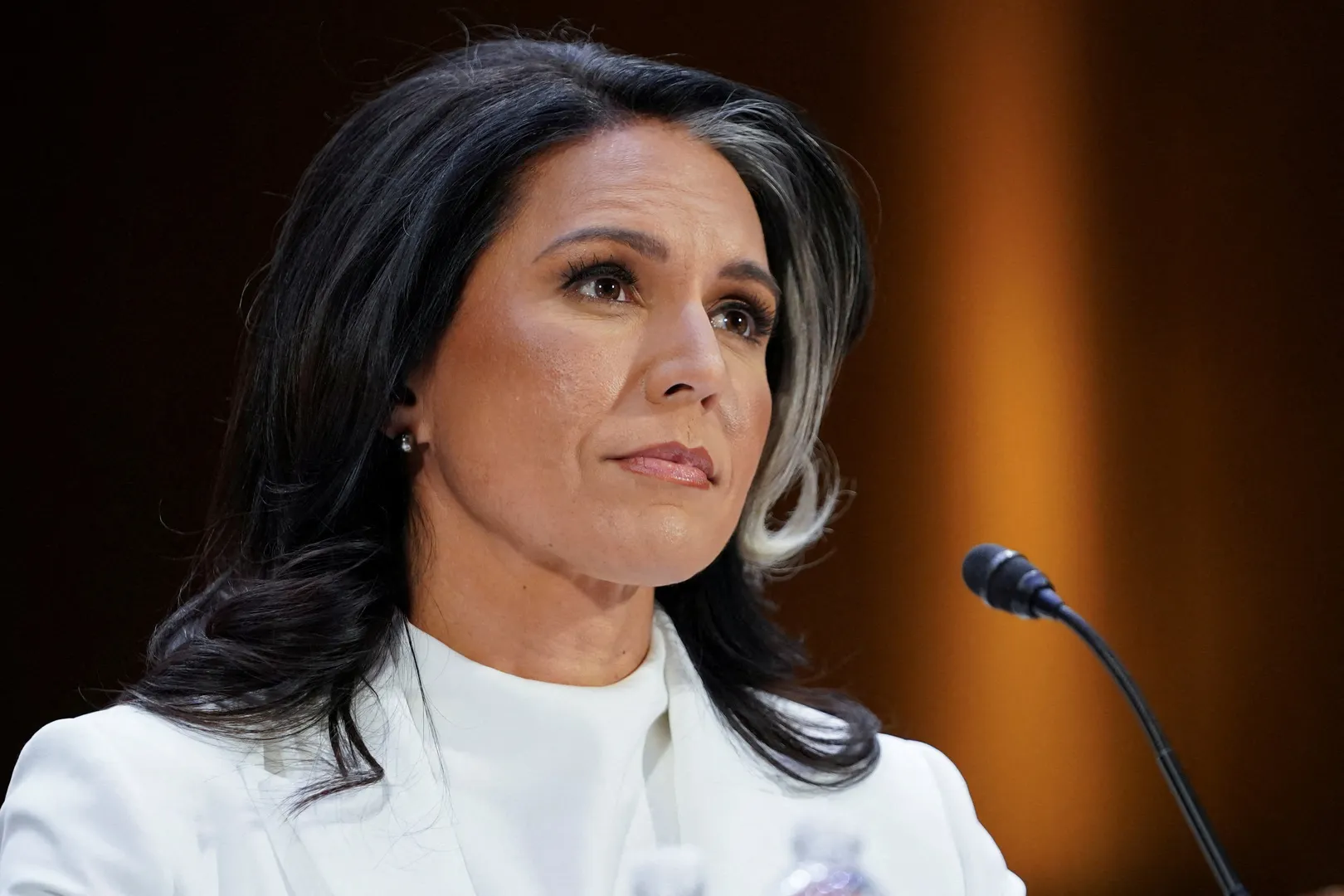
Trump made the surprise announcement Tuesday on social media that Pulte would be replacing Tulsi Gabbard, the former Hawaii congresswoman who served as the director of national intelligence.

The Republican president cited Pulte’s work at the FHFA and his role as chair of the mortgage giants Fannie Mae and Freddie Mac, saying that the 38 year-old “has deep experience managing the most sensitive matters in America, the safety and soundness of the Markets, and over 10 Trillion Dollars at Fannie Mae/Freddie Mac, a substantial increase from where it was just 12 months ago.”

Pulte’s sudden elevation to a role coordinating sensitive national security matters is a sign of how Trump is putting a priority on loyalty over a traditional resume full of previous military and intelligence assignments. It’s unclear what national security expertise Pulte has, but he has been a frequent guest on Air Force One as Trump has traveled to Mar-a-Lago, his home and club in Palm Beach, Florida.

As the grandson of the founder of PulteGroup, one of the country’s largest homebuilders, Pulte has cut a combative streak on social media and used his post at the FHFA to attack perceived opponents of the Trump administration.

His time overseeing mortgage finance has been linked with criminal referrals for mortgage fraud by public officials Trump sought to punish, including New York Attorney General Letitia James, a Democrat; Sen. Adam Schiff, D-Calif.; and Lisa Cook, a member of the Federal Reserve, who was nominated by a Democratic president, Joe Biden.

Pulte has famously gone after then-Federal Reserve Chair Jerome Powell for not cutting the central bank’s benchmark interest rates as aggressively as the president wanted. He has also been linked to ideas such as the 50-year mortgage and efforts to lower mortgage rates through the purchase of home loan debt that have not paid off as promised.

Trump said Pulte will keep his other positions even as he fills in for Gabbard, who resigned last month after revealing her husband’s cancer diagnosis.

If formally nominated, Pulte would need to be confirmed by the Senate to hold the position full time.

Boak writes for the Associated Press.

Source link

Artificial Intelligence in the Interregnum: Technology and the Reconfiguration of Meaning

There are moments in history when civilizations continue to advance materially while progressively losing confidence in the values  and structures that once gave direction and coherence to collective life. Institutions continue to function, markets continue to expand, and technological progress accelerates uninterruptedly, yet beneath this movement emerges a quieter uncertainty.

As Simone Weil observed, “to be rooted is perhaps the most important and least recognized

need of the human soul.”[1] Yet contemporary societies often struggle to sustain those forms of

belonging and shared meaning that once anchored human communities. The crisis is

therefore not simply political or economic. It concerns meaning itself.

Artificial intelligence has appeared precisely within such a historical juncture. Most contemporary discussions approach AI primarily as a technological revolution, or as an element of economic and geopolitical competition between great powers. Governments now frame it as a strategic race, corporations present it as the next engine of productivity, and Silicon Valley often speaks of AI in the language of inevitability and destiny, recalling Aldous Huxley’s fear that technological progress might ultimately weaken rather than deepen human civilization.[2]

 But such interpretations may ignore something deeper still. AI may be less the cause of a civilizational transformation than one of its clearest symptoms. It reflects a broader historical transition in which inherited moral and symbolic frameworks are dissolving faster than new forms of collective meaning can emerge.

Slouching Towards Bethlehem[3]

This condition closely resembles what Antonio Gramsci described as an interregnum: a period in which the old world is dying while the new world struggles to be born. [4] Such periods produce not only political instability, but also moral exhaustion, the erosion of shared narratives, and declining confidence in beliefs once considered self-evident. Civilizations have passed through similar moments before.

The enduring fascination of Edward Gibbon’s monumental The Decline and Fall of the Roman Empire lies not merely in its account of imperial decline, but in its portrayal of the slow weakening of the moral and symbolic foundations that once sustained an entire civilization.[5] Rome did not collapse overnight. Its institutions remained impressive long after few still believed in the civilization they were meant to serve. Administrative power survived even as collective meaning and aspirations deteriorated.

That pattern feels strangely familiar.

Never before have technological capacities appeared so extensive while social distrust, political fragmentation, and loneliness have become so pervasive. Hyperconnectivity was supposed to bring societies closer together. In many cases, it has done the reverse.

AI in the Anthropocene

AI emerges from within this historical condition . It appears perfectly suited to societies organized around abstraction, speed, quantification, and technological mediation. In this sense, AI is profoundly historical. It results from a long civilizational development in which rationalization, efficiency, and technical calculation have come to replace older moral, religious, and symbolic frameworks as primary sources of legitimacy and meaning. What distinguishes AI from previous technologies is that it extends these same principles into domains traditionally considered irreducibly human. Activities once understood as distinctly human, such as reasoning, creativity, interpretation, and even emotional interaction, are now becoming technologically mediated.

The deeper unease therefore concerns anthropology as much as technology. What remains distinctively human when machines become capable of imitating reasoning, generating art, and mediating human relationships?

Such moments of civilizational disorientation are not entirely unprecedented.

The Renaissance confronted a similar rupture. Medieval Europe had long possessed a relatively coherent worldview capable of organizing religion, politics, morality, and human identity within a common order. By the late fifteenth century, however, this equilibrium was beginning to fracture under the pressure of new scientific discoveries, religious wars, and the weakening of older political and spiritual authorities. Thinkers such as Niccolò Machiavelli and Giovanni Pico della Mirandola sought, in radically different ways, to redefine humanity’s place within a rapidly changing world.[6] Pico celebrated human beings as creatures capable of shaping themselves through freedom and intellect, while Machiavelli recognized more soberly that periods of transition dissolve inherited certainties and force societies to confront instability and power directly.

Both understood that historical transformation is ultimately existential before being institutional. Our own transition may prove even more radical because technology no longer transforms only economic or political life, but cognition itself.

AI now mediates everyday experience itself: how people search for information, communicate, work, and make sense of the world around them.

Algorithms no longer merely distribute information. They shape attention, influence perception, and affect how individuals relate emotionally to public life and to one another. Under such conditions, the distinction between human judgment and technological mediation becomes far less clear.

The Price of Nostalgia

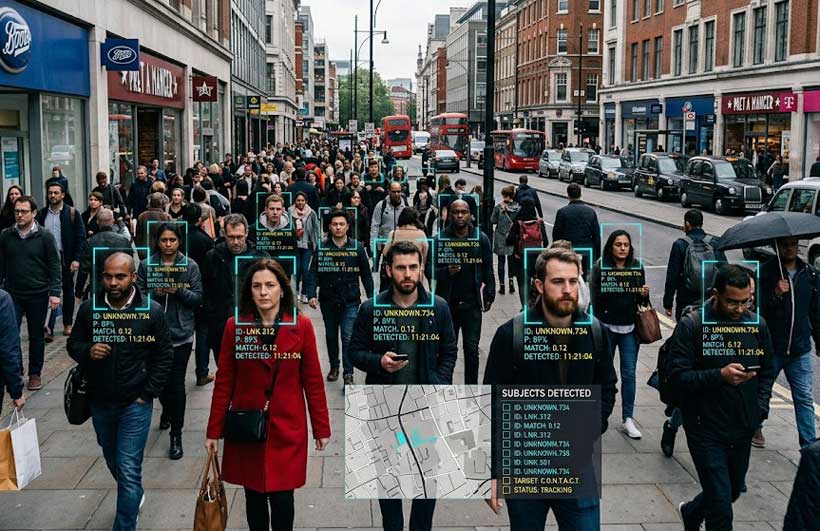
One striking feature of the contemporary digital environment is the degree to which individuals now participate voluntarily in their own data extraction. Recent Instagram trends such as the viral “What Were You Like in the ’90s?” challenge encourage users and celebrities alike to upload curated archives of personal photographs spanning decades of their lives. Presented as nostalgia and entertainment, these trends also generate immense quantities of highly valuable visual and behavioural data: faces across time, emotional reactions, aesthetic preferences, social interactions, and patterns of self-presentation. Whether or not such material is directly incorporated into future AI systems, the broader objective remains significant. Human memory, identity, and even nostalgia itself increasingly becomes raw material for computational analysis and commercial platforms.

Reactions to AI therefore oscillate easily between fascination and anxiety. Beneath both lies a deeper uncertainty about whether modern societies still possess a coherent understanding of what human beings are for, beyond economic productivity and consumption.

Friedrich Nietzsche anticipated aspects of this crisis more than a century ago. His declaration that “God is dead” did not merely constitute a theological provocation but signalled the emergence of a civilization in which traditional moral structures would lose authority long before new ones could replace them.[7] Nietzsche feared not nihilism alone, but the possibility that societies might become incapable of generating new forms of transcendence once older ones had collapsed. We saw how his worldview provided an intellectual base for Fascism.

I Read, therefore I Am

In increasingly mediated environments, the act of sustained reading itself begins to take on a countercultural character. To read is, in some sense, to resist. We have access to more information than any previous generation, yet physical books can still provide a sense of orientation. The books people return to, annotate, or simply keep close over time often reveal something enduring about the way they think and who they are.

The central issue, therefore, is not simply whether artificial intelligence will become more powerful. The deeper question is whether societies organized around AI can still sustain stable forms of responsibility and belonging strong enough to preserve coherent collective life. This is ultimately a political and civilizational problem before it is a purely technical one.

Much contemporary discourse still assumes that technological advancement naturally produces historical progress. History offers little evidence for such confidence.

Civilizations do not endure simply because they innovate technologically. They endure because they preserve, or reinvent, systems of meaning capable of holding societies together over time.

The Roman Empire mastered engineering yet gradually lost the moral cohesion that had once sustained it. Renaissance Europe produced extraordinary creativity precisely because it confronted existential instability directly rather than attempting to ignore it.

Contemporary Western societies appear caught between immense technological sophistication and growing uncertainty about their own civilizational narrative.

AI therefore represents more than innovation. It reflects a transformation in how human beings understand themselves, authority, knowledge, and reality itself. The danger is not simply that machines become too powerful. It is that societies now outsource judgment, imagination, and responsibility while slowly losing the cultural and moral resources required to govern these technologies wisely. Yet periods of interregnum are not necessarily periods of decline alone. They are also moments in which civilizations redefine themselves.

AI For Good ?

Historical transitions create possibilities as well as dangers. The Renaissance emerged from the crisis of medieval Europe. Modern democracy emerged from the upheavals of industrial society. Today’s uncertainty may likewise force Western societies to confront questions long obscured by economic growth and technological optimism:

What constitutes a good society? What forms of belonging remain possible in a hyper-mediated world? What aspects of human life should never be reduced to data, prediction, or optimization?

AI cannot answer these questions. But its emergence makes avoiding them increasingly difficult.


[1] Simone Weil, The Need for Roots: Prelude to a Declaration of Duties Towards Mankind (1949/1952).

[2] See Aldous Huxley, Brave New World (1932) and his later essays such as Brave New World Revisited (1958), where he warns that technological efficiency and social conditioning could erode authentic human experience.

[3] The phrase alludes to the final lines of W.B. Yeats’ poem “The Second Coming” (1919): “And what rough beast, its hour come round at last, / Slouches towards Bethlehem to be born?”

[4] Antonio Gramsci, Prison Notebooks (written 1929–1935, published posthumously). The “interregnum” concept appears in Notebook 3: “The crisis consists precisely in the fact that the old is dying and the new cannot be born; in this interregnum a great variety of morbid symptoms appear.”

[5] Edward Gibbon, The History of the Decline and Fall of the Roman Empire (6 volumes, 1776–1789). Gibbon famously attributed part of the decline to the rise of Christianity and the erosion of civic virtue.

[6] Giovanni Pico della Mirandola, Oration on the Dignity of Man (1486) — often called the “Manifesto of the Renaissance”; Niccolò Machiavelli, The Prince (1532) and Discourses on Livy.

[7] Friedrich Nietzsche, The Gay Science (1882, §125 – “The Madman”) and Thus Spoke Zarathustra. The full phrase is usually rendered “God is dead. God remains dead. And we have killed him.”

Source link

Tulsi Gabbard resigns as Trump’s top US intelligence official | Donald Trump News

NewsFeed

Tulsi Gabbard has resigned as US Director of National Intelligence, citing her husband’s cancer diagnosis. Her departure comes after months of tensions inside President Trump’s administration over foreign policy and intelligence matters, including over the decision to strike Iran.

Source link

Tulsi Gabbard resigns as intelligence chief after husband’s cancer diagnosis

May 22 (UPI) — Tulsi Gabbard resigned as director of national intelligence Friday to support her husband, who has been diagnosed with a rare form of bone cancer.

Gabbard said in a resignation letter, which she posted on X, that after her husband Abraham Williams’ recent diagnosis she will “step away from public service to be by his side and fully support him through this battle.”

The principal deputy director of national intelligence, Aaron Lukas, will take over as acting DNI after Gabbard departs June 30, President Donald Trump said in a post on Truth Social.

“I am deeply grateful for the trust you placed in me and for the opportunity to lead the Office of the Director of National Intelligence for the last year and a half,” Gabbard said in her letter.

Gabbard, who told Trump that she is resigning during a meeting in the Oval Office on Friday, was a controversial nominee for the position.

Nearly all Republicans voted to confirm her on a party-line vote, but former Senate Republican leader Sen. Mitch McConnell voted against her because she had “failed to demonstrate” that she was ready for the position.

Before she was named DNI, Gabbard served in the U.S. House of Representatives and the Hawaii House of Representatives dating to 2002.

The decision to resign, Gabbard said, is the balance of her husband’s dedication to her career, dating to her time in the military, and that she “cannot in good conscience ask him to face this fight alone while I continue in this demanding and time-consuming position.”

In his post, Trump said that Gabbard “has done an incredible job, and we will miss her.”

“She, rightfully, wants to be with [Abraham], bringing him back to good health as they currently fight a tough battle together,” Trump said. “I have no doubt he will soon be better than ever.”

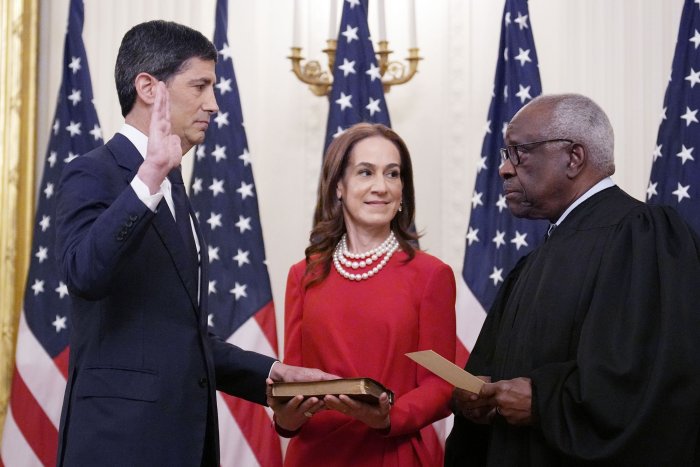
Kevin Warsh takes the oath of office as he is sworn-in as the new chairman of the Federal Reserve by Supreme Court Associate Justice Clarence Thomas in the East Room of the White House on Friday. Photo by Yuri Gripas/UPI | License Photo

Source link

Tulsi Gabbard resigns as Trump’s top US intelligence official | News

Tulsi Gabbard ⁠is resigning ⁠from her job as United States President Donald Trump’s director of national ⁠intelligence, according to her ⁠resignation letter posted on her X account.

In her resignation letter, Gabbard told Trump she was “deeply ⁠grateful for the trust ⁠you placed in me and for the opportunity to lead the Office ⁠of the Director of National Intelligence for ⁠the last year ⁠and a half”.

She cited her husband’s recent diagnosis with ‌a rare form of bone cancer as the reason for her resignation.

More to come…

Source link

Tulsi Gabbard resigns as director of national intelligence, citing her husband’s health

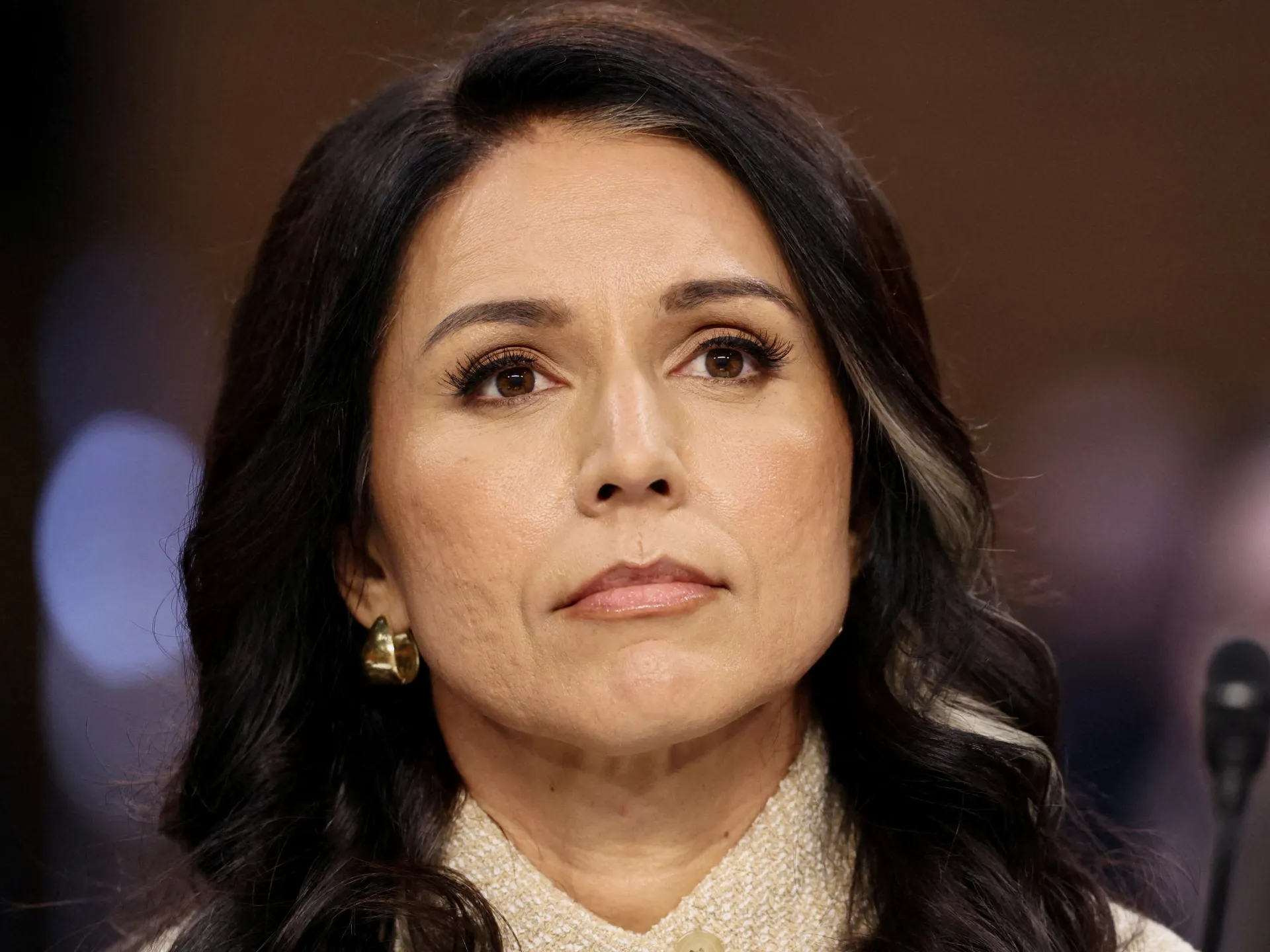
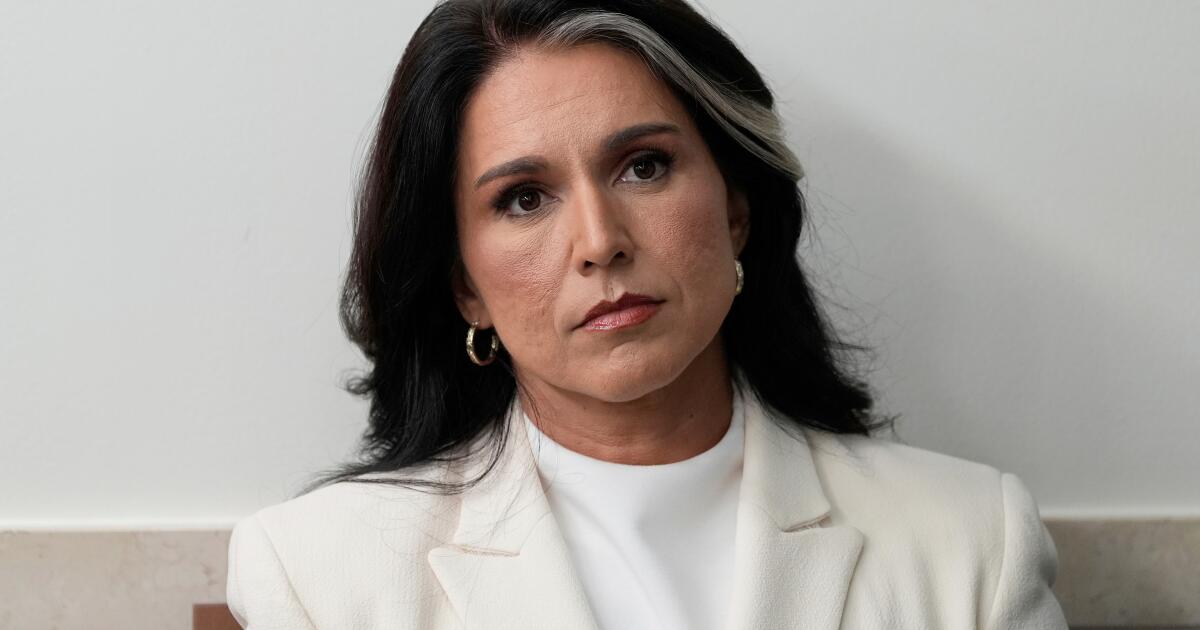
Tulsi Gabbard resigned as President Trump’s director of national intelligence on Friday, saying she needed to step away as her husband battles cancer. She is the fourth Cabinet official to depart during Trump’s second term.

“Unfortunately, I must submit my resignation, effective June 30, 2026,” Gabbard wrote in her resignation letter, which she posted on X. “My husband, Abraham, has recently been diagnosed with an extremely rare form of bone cancer.”

There had been rumblings that Gabbard would split with Trump after the president’s decision to strike Iran, which caused some division within his administration. Joe Kent, the director of the National Counterterrorism Center, announced his resignation in March, saying he “cannot in good conscience” back the war.

Gabbard, a veteran and former Democratic congresswoman from Hawaii, built her political name on her opposition to foreign wars. This put her in an awkward position when the U.S. joined Israel in launching attacks on Iran on Feb. 28.

During a congressional hearing in March, her measured comments were notable for their careful non-endorsement of Trump’s decision to strike Iran. She repeatedly dodged questions about whether the White House had been warned of potential fallout from the conflict, including Iran’s effective closure of the Strait of Hormuz.

Gabbard said in written remarks to the Senate Intelligence Committee that there had been no effort by Iran to rebuild its nuclear capability after U.S. attacks last year “obliterated” its nuclear program. That statement contradicted Trump, who has repeatedly asserted that the war was necessary to head off an imminent threat from the Islamic Republic.

This created several awkward exchanges with lawmakers who asked Gabbard for her opinion on the threat posed by Iran as the nation’s top intelligence official. She repeatedly said it was Trump’s decision to strike, not hers.

“It is not the intelligence community’s responsibility to determine what is and is not an imminent threat,” she said.

Gabbard’s departure follows Trump having ousted Homeland Security Secretary Kristi Noem in late March, in the midst of mounting criticism over her leadership of the department — including the handling of the administration’s immigration crackdown and disaster response.

The second Cabinet member to leave was Attorney General Pam Bondi, in response to growing frustration over the Justice Department’s handling of files related to Jeffrey Epstein. And Labor Secretary Lori Chavez-DeRemer resigned in April, after being the target of various misconduct investigations.

A surprising choice for the job

A veteran but without any intelligence experience, Gabbard was a surprising choice to head the Office of the Director of National Intelligence, which oversees the nation’s 18 intelligence agencies. She ran for president in 2020 on a progressive platform and her opposition to U.S. involvement in foreign military conflicts.

Citing her military experience, she argued that U.S. wars in the Middle East had destabilized the region, made the U.S. less safe and cost thousands of American lives. Gabbard later dropped out of the race and endorsed the ultimate winner, President Joe Biden.

Two years later she left the Democratic Party to become an independent, saying her old party was dominated by an “elitist cabal of warmongers” and “woke” ideologues. She subsequently campaigned for several high-profile Republicans and became a contributor to Fox News.

She later endorsed Trump, who also was a strong critic of past U.S. wars in the Middle East and campaigned on a pledge to avoid unnecessary wars and nation-building overseas.

Iran caused early tensions

But friction with the president started soon after he began his second term and tapped Gabbard to lead ODNI, which was set up after the Sept. 11, 2001, attacks to improve coordination between the nation’s intelligence agencies.

Shortly after taking on the job, Gabbard testified before lawmakers that there was no intelligence suggesting Iran was seeking to develop nuclear weapons. After Trump launched attacks on Iranian nuclear sites in June he said Gabbard was wrong and that he didn’t care what she said.

She appeared to be back in Trump’s good graces when she took a lead role in Trump’s effort to relitigate his 2020 election loss to Biden, whom Gabbard had endorsed. She appeared at an FBI search of election offices in Fulton County, Georgia, even though her office was created to focus on foreign espionage, not state elections.

Earlier this week, however, she testified to lawmakers during an annual threats hearing that last year’s strikes on Iran’s nuclear sites had “obliterated” their nuclear program and that there had been no subsequent effort to rebuild.

The statement seemed to complicate Trump’s repeated assertions that Iran posed an imminent threat and created several awkward exchanges with lawmakers who asked Gabbard for her opinion on Iran’s threat as the nation’s top intelligence official. She repeatedly said that it was Trump’s decision to strike, not hers.

“It is not the intelligence community’s responsibility to determine what is and is not an imminent threat,” she said at one of this week’s hearings.

Gabbard wrought big changes in one year

Gabbard vowed to eliminate what she said was the politicization of intelligence by government insiders. But she quickly used her office to support some of Trump’s most partisan of arguments — that he won the 2020 election.

She also worked to undermine the results of earlier investigations into Trump’s ties to Russia.

In her year on the job, Gabbard oversaw a sharp reduction in the intelligence workforce, as well as the creation of a new task force that she charged with considering big changes to the intelligence service.

Earlier this year an intelligence sector whistleblower filed a complaint that Gabbard was withholding intelligence for political reasons, a complaint that prompted calls from Democrats for Gabbard’s resignation.

Gabbard, 44, was born in the U.S. territory of American Samoa, raised in Hawaii and spent a year of her childhood in the Philippines. She was first elected as a 21-year-old to Hawaii’s House of Representatives but had to leave after one term when her National Guard unit deployed to Iraq.

As the first Hindu member of the House, Gabbard was sworn into office with her hand on the Bhagavad Gita, the Hindu devotional work. She was also the first American Samoan elected to Congress.

During her four House terms she became known for speaking out against her party’s leadership. Her early support for Sen. Bernie Sanders ’ 2016 Democratic presidential primary run made her a popular figure in progressive politics nationally.

Kinnard, Weissert and Klepper write for the Associated Press.

Source link