insurers

China injects over €45 billion into state banks and insurers as growth slows

Beijing has reached for its chequebook.


ADVERTISEMENT


ADVERTISEMENT

The Chinese finance ministry is advancing a 360 billion yuan (€46.1bn) package to businesses, announced on Sunday through statements from the companies involved and reported by state news agency Xinhua, making it one of the larger interventions in China’s financial system this year as growth slows.

The Chinese banks take the bulk of it, roughly 290 billion yuan (€37.2bn), intended to preserve their capacity to keep lending as Beijing presses them to increase support for economic activity.

Xinhua reported the injection would strengthen the institutions’ “sound operating capabilities, risk resistance capabilities and ability to serve the real economy.”

The Agricultural Bank of China is pursuing a private placement of A-shares worth up to 160 billion yuan (€20.5bn) and the Industrial and Commercial Bank of China up to 100 billion yuan (€12.8bn), with the finance ministry among the investors.

Unusually, so is the China National Tobacco Corporation, which operates the state tobacco monopoly and the Export-Import Bank of China which will receive 30 billion yuan (€3.85bn).

Insurers account for the remaining 70 billion yuan (€9bn).

China Life Insurance Group, the country’s largest life insurer, gets 35 billion yuan (€4.5bn) and China Taiping Insurance Group 7 billion yuan (€900mn).

The People’s Insurance Company of China plans to raise up to 15 billion yuan (€1.9bn) through a private placement to the ministry, China Export and Credit Insurance Corporation receives 10 billion yuan (€1.28bn), and China Reinsurance Group is raising 3 billion yuan (€385mn).

Insurers have been squeezed from two directions as years of low interest rates have eroded investment returns, while the government has directed them to put money into Chinese equities.

The currency has been moving in the same direction.

The Chinese yuan reached its strongest level against the US dollar since January 2023 on Monday, trading at around $0.149, a firmer exchange rate that also happens to blunt a long-standing American complaint about Chinese currency management, weeks before talks in Washington.

Beijing’s busy month

The capital injection is not the only move Beijing is making this month.

Chinese President Xi Jinping is reportedly preparing to bring a large delegation of business executives to his Washington visit on 24 September, according to sources cited by news agencies.

It would be a notable departure from customary practice.

Xi rarely travels with corporate leaders, many of whom lost standing after the regulatory crackdowns on technology, education and property that began in 2020, and the last comparable delegation accompanied him to the US more than a decade ago, in 2015.

Washington’s response has also been curious.

“The White House is not tracking a Chinese CEO delegation,” a US official said, without explaining what tracking meant in this context, leaving the statement short of either confirmation or denial.

The gesture would be reciprocal in any case.

When US President Donald Trump visited Beijing in May, he brought a roster of American CEOs including Elon Musk, Tim Cook and Jensen Huang. Bringing Chinese counterparts to Washington would signal a willingness to invest and trade with the US, while handing the White House potential economic wins before November’s midterm elections.

Expectations for the summit itself remain modest, with the two sides still divided over which products should count as non-sensitive under trade arrangements.

US Treasury Secretary Scott Bessent, US Trade Representative Jamieson Greer and Chinese Vice Premier He Lifeng are due to meet in early September to work on deliverables.
Source link

LeBron James borrowed $300 million from insurers arranged by Guggenheim

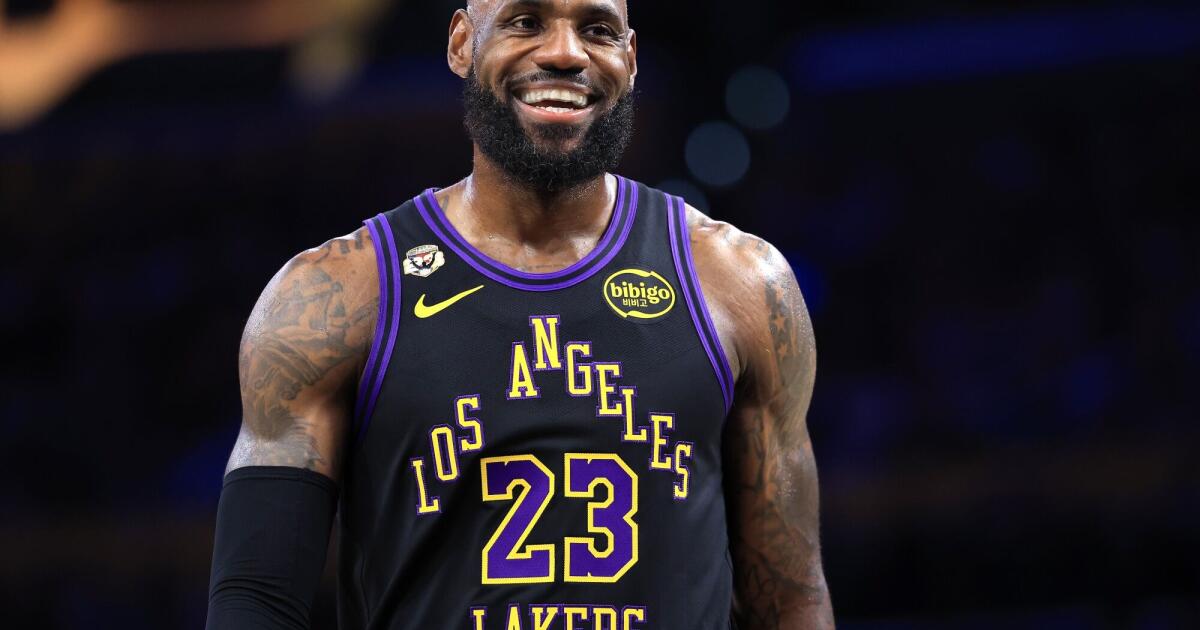
When LeBron James signed up to lead the Los Angeles Lakers to NBA glory with a $154 million contract in 2018, it wasn’t the biggest deal he did that year.

Just months before he joined, a limited liability company he controls borrowed almost $300 million from a pair of Midwestern life insurers advised by an arm of Guggenheim Partners, according to insurance industry records reviewed by Bloomberg.

The previously unreported bonds, which are due in 2049, were structured to provide immediate cash to James and backed by a stream of future revenue tied to his earnings outside basketball such as a lifetime Nike Inc. sponsorship, people with knowledge of the matter said.

The burst of lending began before Guggenheim leader Mark Walter started acquiring the storied basketball team. In an abrupt turn this month, the billionaire mogul agreed to sell the Lakers amid a federal probe into parts of his business empire. There’s no indication that the loans to James have anything to do with those inquiries.

Athletes and artists are increasingly using future earnings like royalties and licensing deals to structure deals that help them unlock immediate capital. David Bowie was famously the first recording artist to go to Wall Street to tap the future earnings of his music, paving the way for a thriving market for esoteric securities.

But James’ deal offers another look at how Walter and fellow Wall Street money managers have tectonically shifted the once-boring business of life insurance, steering policyholder premiums into more unusual investments. Guggenheim has moved insurers’ money deeper into private credit, sports franchises and — with James — financing for a star player. That’s far outside the industry’s traditional focus on plain-vanilla assets to reliably pay out future claims.

The two insurers — North American Company for Life and Health Insurance and Midland National Life Insurance Co. — are both owned by Sammons Financial Group. During a call with investors this week, Sammons said Guggenheim was the sole manager in charge of picking assets for the firm’s portfolios until 2021, according to people who heard the remarks and, like others in this story, asked not to be identified describing confidential dealings.

Sammons has been distancing itself from Guggenheim recently. Walter’s firm had long counted Sammons’ parent company among its biggest investors. During the call, though, Sammons’ representatives said it has been selling down that stake, the people said.

The “transactions were a securitization done by Mr. James with his personal, non-NBA salary, assets and income which is a very common financial structure for an individual with this level of earnings and assets,” a spokesperson for James said.

Spokespeople for Sammons and Guggenheim declined to comment.

The scrutiny of Walter’s empire by the Justice Department and Securities and Exchange Commission has turned up the spotlight on the intermingling of asset managers and insurers.

Wall Street power players have used insurance balance sheets to pursue their quest for higher returns, steering the savings of everyday Americans into more opaque and complex investments. The approach lets asset managers originate and structure deals, and then find uncomplaining buyers by parking such investments on the balance sheets of insurers they influence.

King James Funding

James’ borrowing from the two Midwestern insurers — structured as sales of asset-backed bonds — began when he was at the Cleveland Cavaliers and his career was poised for new heights.

The two companies bought almost $300 million bonds issued by an LLC he controlled called King James Funding, the records show. Within a few years, the LLC paid down some of that debt, then sold more bonds to the insurers, leaving them with about $245 million on their books by the end of last year, the records show.

The initial bonds from 2018 had a 4.8% interest rate and aren’t due until late 2049, the industry filings show. Terms are otherwise scant in the records reviewed by Bloomberg.

A few months after the deal, James started looking for another team as a free agent, ultimately picking the Lakers. In an oft-retold moment, he received a visit at home from Walter’s longtime business partner Magic Johnson, then a top executive for the Lakers. James ultimately signed a four-year contract.

Then in mid-August 2022, James signed a $97 million contract extension with the Lakers. Around that same time, the same Midwestern insurers provided his LLC with more cash, buying almost $60 million of 34-year bonds with a 5.75% interest rate, the insurers’ records show.

“Both transactions were independently credit rated by a third party and the 2022 transaction was fully approved by NBA,” James’ spokesperson said, noting the athlete had no affiliation with Guggenheim, Sammons, North American Co. or Midland National beyond their participation in the transactions.

Guggenheim also got involved in some of James’ other personal ventures. As the Covid pandemic took hold in 2020, he and his childhood friend and business partner, Maverick Carter, announced that they had raised $100 million for their media venture called SpringHill Co. Guggenheim was listed among investors in that company.

Leaving the Lakers

For more than a decade, Walter has mixed money from insurers with investments in sports. His 2012 acquisition of the Los Angeles Dodgers with business partners including Johnson relied heavily on the insurance industry.

Afterward, the new team’s owners ramped up spending on players to turn the franchise into a jewel of professional baseball, appearing in five of the past nine World Series. But that playbook isn’t as feasible in the NBA, which has stricter caps on team salaries.

Walter’s acquisition of the Lakers began in 2021 when he purchased a minority stake, granting him rights that paved the way for him to take a majority stake last year.

The sale of the team came as Walter has been reshaping his empire to unwind more than $20 billion of loans on his insurers’ books that should have been marked as funding affiliated businesses, but weren’t. While regulations allow insurers to lend money to such parties, they require that the dealings be disclosed.

James, meanwhile, announced that he’s leaving the Lakers and he signed a two-year deal with the Philadelphia 76ers. His new team is co-owned by Josh Harris, whose 26North Partners invests across middle-market private equity, credit and insurance.

Li, Sridhar Natarajan and Rajbhandari write for Bloomberg.

Source link