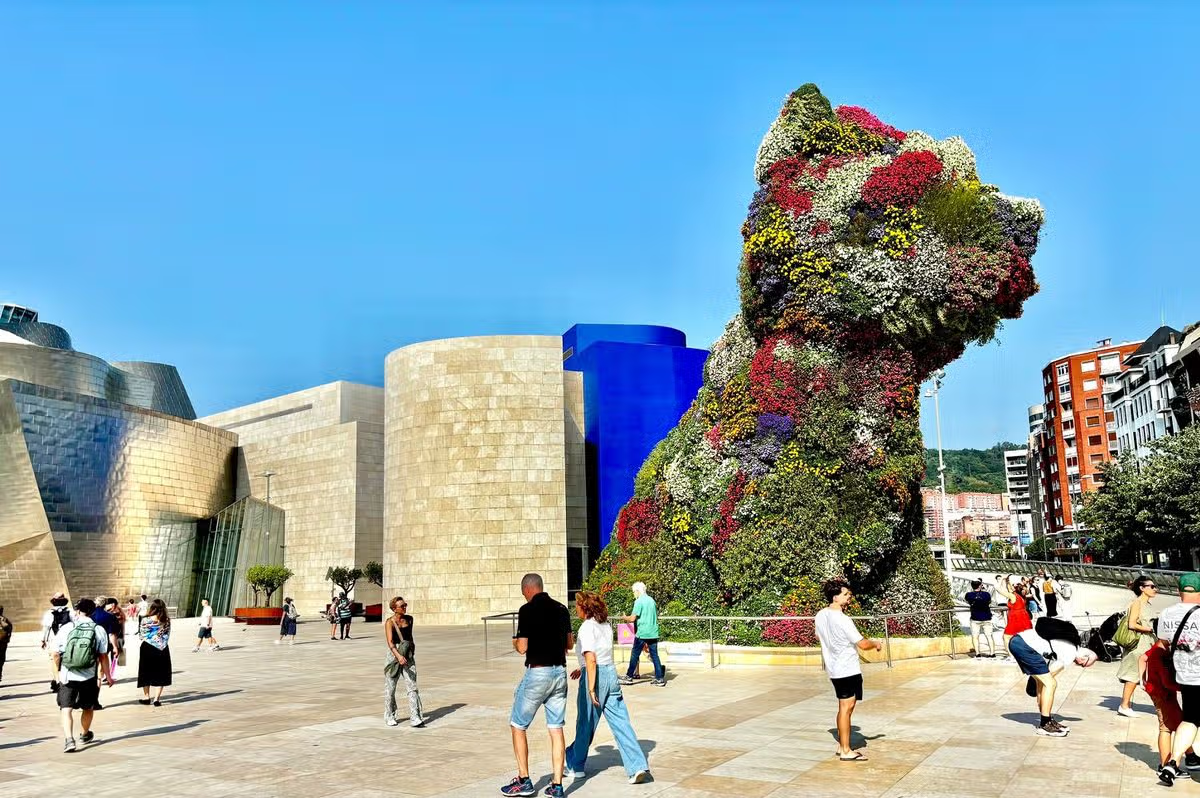
Milo Boyd visited Bilbao in the Basque region of Spain – a hilly and green city known for its excellent food scene, great climate, cheap beer and the iconic Guggenheim Museum

The Guggenheim has put Bilbao on the map
It’s not every day you go somewhere and think ‘this is the future.’
China’s towering metropolis Chongqing, where fast food arrives by drone and monorails connect skyscrapers, and Seoul, with its ultra-trendy, perfectly made-up population and world-conquering pop music, are the most obvious, shiny forms of tomorrowland.
But there is a place that is a gentler, far more liveable and cooler version of the future, less than two hours from the UK.
“Everything here just works,” a British friend told me shortly after my Vueling flight from Gatwick landed in Bilbao. “And it’s really vibey.”
He had moved to the Basque city of 350,000 after visiting from Malaga and instantly falling in love with its laidback trendiness. Like him, before arriving, I knew nothing about Bilbao beyond the Guggenheim, something I put down to its lack of classic Spanish holiday ingredients. It’s five miles down the Nervión River from the sea and often shrouded in cloud, meaning beach days are tricky. Free tapas with drinks are not a thing, nor are all-inclusive hotels.
But visit, and you’ll soon forget all about that. Because Bilbao delivers art, music and food better than almost any city I’ve been to.
The Guggenheim is the obvious place to start. It towers up above the river, chrome-tile plated buildings designed by Frank Gehry to look like ships sailing into town. When it opened in 1997, the Guggenheim supercharged Bilbao’s transformation from an Atlantic port town into Spain’s premier cultural spot.
The gallery is better than I could’ve imagined. In the 55m central atrium, Jenny Holzer’s LED display scrolls triply to the ceiling, accompanying visitors as they walk up the floating staircases. Whether Richard Serra’s massive rusted maze sculptures, Jeff Koons’ huge floral puppy or Andy Warhol’s One Hundred and Fifty Multicolored Marilyns, there’ll be something for you in there. If somehow there isn’t, the building, with its swooping walkway that emits steam and blasts of fire at night, beneath a towering road bridge and in the shadow of mountains, will keep you entertained.
Bilbao is far from a one-trick museum pony. The Basque Museum sits in a 17th-century former Jesuit college in the Old Town, giving voice to the region’s working people and history of struggle in a razor-sharp space complete with giant dolls standing sentry in the courtyard. The Maritime Museum takes you down to the docks and through Bilbao’s rise as a centre of iron and wool trading. A small mark against the city’s futurist credentials – no mention is made of Bilbao’s role as a shipmaker in Spain’s trans-Atlantic slave trade, a detail no UK museum would now omit.
The air-conditioned museums provide respite from the summer sunshine, as does walking along the river’s banks. A cooling breeze often licks off the water, the wind rolling down from the surrounding green hills. Locals call the valley El Botxo (the hole), due to the way the city is hidden away beneath the hills and protected from the ferocious Spanish sun.
More exposed are your legs. Bilbao’s extreme hilliness has you sweating up hills and clambering up Calzadas de Mallona’s 350 steps. Outdoor elevators provide assistance in parts of Santutxu, where high-rises cut into the slopes make it one of Europe’s most densely populated neighbourhoods. Locals beat the hills by riding electric scooters and cooling off at the numerous free water taps.
These public amenities make you feel looked after. As do spotless streets, hosed down each night, and a city centre river clean enough to house shoals of fish. Socialist tendencies and well-funded public works are baked into Bilbao. It produced the iconic Euskalduna dock strike, gave rise to the communist icon Dolores Ibárruri, and was central to the Basque Separatist Movement.
Bilbao’s days of industry are behind it, replaced by a booming service-led economy, but its leftist tendencies remain. They are visible in the graffiti, children’s playparks dotted along the riverside, and the virtually free public transport system (just make sure to buy a Barik card before you board the airport bus to avoid being ripped off).
Its more recent transformation to a truly international city is obvious in the food.
Like Barcelona and other northern cities, Bilbao specialises in small plates called pintxos, best eaten beneath a parasol in Casco Viejo. Unlike many other parts of the country where it can be tricky to find non-Spanish cuisine, you can enjoy Europe’s 17th best pizza at Demaio, Vietnamese/Mexican fusion at Perro Chico, a vegan build-you-own plate at Margarito, a hefty focaccia at Molica and much, much else.
All of this can be washed down with half a liter of Spanish lager that rarely costs more than three euros.
Although Bilbao is not as well-connected as the country’s bigger cities, Vueling flies from Heathrow, Gatwick and Edinburgh, with flights occasionally available for £14. From my experience, the Spanish flag carrier delivers a mid-range service for budget prices. It’s a little roomier, the loading smoother, and the staff that much cheerier than its rivals.
A hassle-free way, then, to get to this future-facing city.