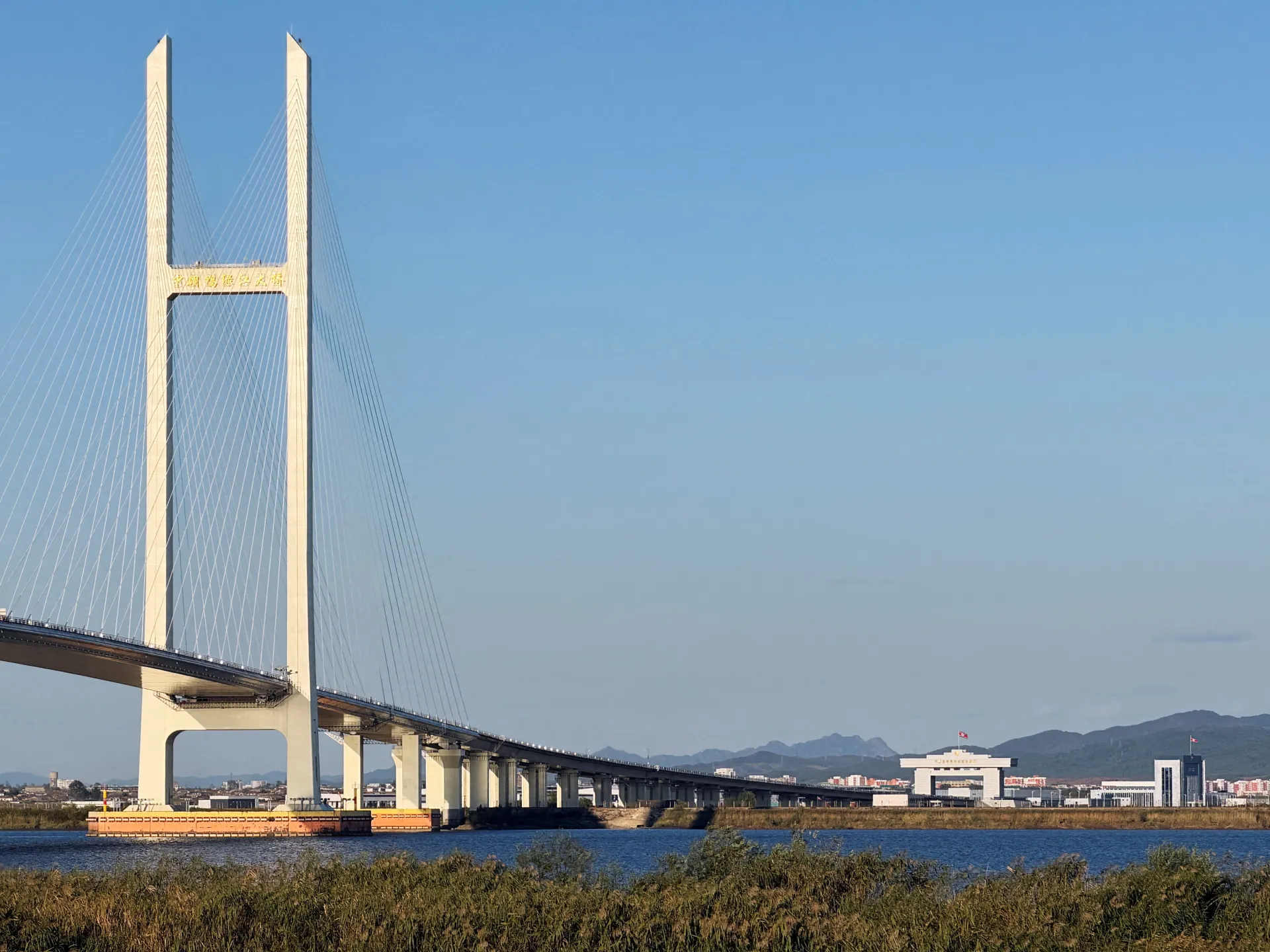
The long-delayed bridge will formally open on Thursday, according to China’s state-run Xinhua news agency.
Published On 14 Oct 202614 Oct 2026
China and North Korea will officially open the New Yalu River Bridge to traffic on Thursday, China’s state-run Xinhua news agency reports.
China completed its side of the bridge in 2014, hoping to boost trade ties. However, North Korea left its side unfinished for years as relations soured after Beijing supported United Nations sanctions over Pyongyang’s nuclear tests.
Recommended Stories
list of 4 itemsend of list
The first bridge connecting Russia and North Korea also opened earlier this month.
China-North Korea Relations
China’s exports to North Korea rose to a six-year high of $2.3bn last year, a 25 percent increase from the previous year. Chinese President Xi Jinping was welcomed in Pyongyang in June for the first time since 2019.
Since 2018, Beijing has tried to repair ties with Pyongyang, which also briefly began improving relations with Washington around the same time.
The China-North Korea relationship was forged during the Korean War. In 1961, the two countries signed the Treaty of Friendship, Cooperation and Mutual Assistance, which remains China’s only formal military alliance.
The treaty contains a mutual defence clause committing either side to assist the other if one comes under armed attack.
Although China was North Korea’s main diplomatic partner and protector for decades, relations strained after Beijing in 2017 supported tightening sanctions on Pyongyang for its nuclear weapons programme.
Analysts say North Korea’s recent growing relationship with Russia may have changed the balance of Pyongyang’s diplomatic dependence, reducing its reliance on Beijing.
North Korea and Russia signed a comprehensive strategic partnership treaty in 2024, including a mutual defence provision. Military and political ties between the two countries have grown considerably stronger, with North Korea deploying thousands of troops to fight in Russia’s war on Ukraine.
United States President Donald Trump also signalled an interest in repairing relations with Pyongyang last month, after his talks with North Korean leader Kim Jong Un abruptly ended in 2019. In his second term, Trump has floated meeting Kim again, though no official meeting has been set.
North Korea has not yet resumed issuing tourism visas to Chinese citizens, who once made up the bulk of its overseas visitors.
While North Korea’s trade with Russia largely involves military supplies, exchanges with China could arguably involve goods North Korea needs to develop its civilian economy, analysts have said.
Hundreds of French supermarkets have suffered unprecedented cyberattacks resulting in tonnes of food perishing and raising fears about the vulnerabilities of food systems to advanced technology.
The attacks, which appeared to target internet-linked refrigeration systems manufactured by a Danish company, raised the temperature of fridges and freezers to as high as 50 degrees Celsius (122F) at more than 500 shops and supermarkets across the country. Supermarkets confirmed the attacks on Monday.
Recommended Stories
list of 4 itemsend of list
France’s cybersecurity agency has advised companies operating affected freezer models to immediately disconnect them from the internet – or restrict access to them – and to perform software updates.
It is unclear who may have been behind the attacks, but authorities say they have now launched an investigation.
Here’s what we know:
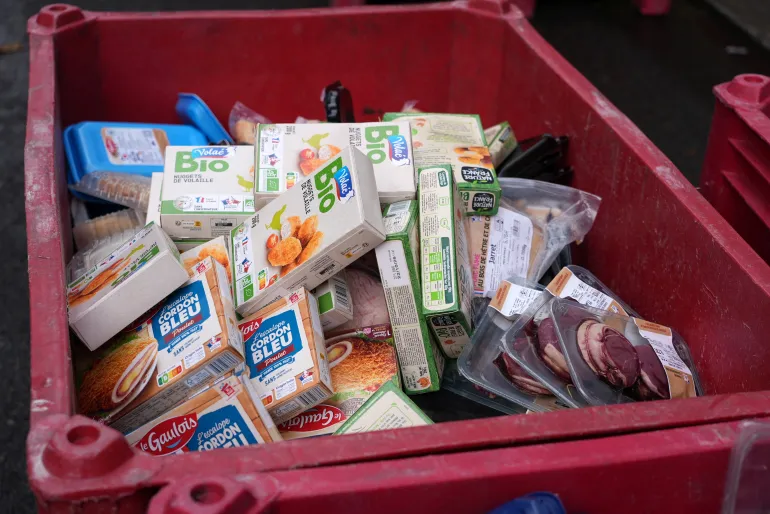
Perished goods outside a supermarket in Paris the day after a cyberattack targeted refrigeration systems in France, October 13, 2026 [Lucien Libert/Reuters]
What happened?
Hackers gained internet access to the refrigeration systems and remotely cranked up temperatures in freezers and fridges to 50C during the night when shops were closed. Millions of euros worth of food was spoiled, according to retailers. In some cases, the raised temperatures sparked fires or melted equipment.
French supermarket groups E-Leclerc, Intermarche, Carrefour, Monoprix and Cooperative U were all hit.
At least 300 of Intermarche’s stores and its Netto brand were affected. Cooperative U said more than 100 of its supermarkets were targeted, while Carrefour said 80 supermarkets were affected and Monoprix reported that about 5 percent of its roughly 490 stores were hit.
Officials are still investigating who launched the attack and how it was carried out. French TV channel BFM reported that the attackers appeared to have remotely triggered a forced defrosting option in the refrigeration systems.
The systems targeted are built by Danish manufacturer Danfoss, according to France’s government cybersecurity agency. The refrigeration models attacked included the AK-SM800 and AK-SC355.
Danfoss told the AFP news agency that most of the affected control systems were “legacy” products that had “outdated firmware”. The company said it had previously advised supermarkets to update them.
AFP also reported that officials are liaising with other European countries which may have been affected.
It is unclear exactly how much food has been lost. The attacks come after President Emmanuel Macron ordered last month that the country’s critical infrastructure be protected from Russian “hybrid attacks”.
Have supermarkets been hit by cyberattacks before?
Yes. Attacks like these have been reported in other parts of Europe and in the United States.
In April 2025, British retailer and supermarket chain Marks and Spencer suffered a sophisticated ransomware attack that the company said cost it approximately 300 million pounds ($397m) after it was forced to suspend online and app orders. The attack was orchestrated by a hacker group called Scattered Spider, using ransomware from DragonForce, another criminal group. Ransomware attacks involve using malicious software to hide essential data unless a ransom is paid.
According to UK media, the same hackers also tried to attack Co-op and the iconic Knightsbridge store, Harrods.
Similar reports have also emerged from the US. In June 2025, United Natural Foods, a frozen food company which supplies big supermarket brands such as Whole Foods, said it had discovered a cyberattack that forced it to take its systems offline. The company did not reveal the nature of the attack.
In November last year, Ahold Delhaize USA said it was the victim of a cyberattack that disrupted operations at more than 2,000 stores, including Hannaford, Food Lion and Stop and Shop.
Why target supermarkets?
They are an easy target and the consequences can be widespread.
As food and agricultural systems increasingly digitise, analysts say supermarkets selling perishable foods are increasingly vulnerable to attacks due to the nature of their stocks.
The rising sophistication of cyberattacks now means that common people and local, third-party companies relying on big chains for business are also falling victim as attacks disrupt supply chains, experts say.
Speaking to Al Jazeera, tech and cybersecurity analyst Steven Lachance said smart appliances connected to the internet will always be vulnerable as hackers seize on security lapses to log in to the systems remotely and trigger malicious features.
“It’s the new reality of having these connected equipment,” Lachance said, pointing out that attacks could evolve to target medical or energy systems.
“This should come as a global wake-up call … Throughout society, we have connected infrastructure that is live on the internet, and that can be hacked. It’s a new reality, and we absolutely need national and international measures to prevent those attacks; otherwise, it’s just going to keep happening,” he warned.
Rescue operation underway after flash floods swept away home, bridges and parts of the Manaslu trekking trail.
Published On 13 Oct 202613 Oct 2026
More than 100 foreign trekkers have been stranded in central Nepal, according to a local official, a day after flash floods in the Gorkha district washed away bridges, hiking trails and hundreds of homes.
Bhuwan Raj Ojha, an official of the Manaslu Conservation Area Project, told the Reuters news agency on Monday that the trekkers were stranded in different areas of the popular Manaslu trekking trail because part of the route had been swept away.
Recommended Stories
list of 3 itemsend of list
“Those hikers who want to return because of the flood need to be rescued. Those who want to continue their trekking can do so from locations that are safe,” he told Reuters from Gorkha.
“There are restaurants and tea houses along the route. They are safe”.
The flash floods hit on Sunday, when a predawn landslide blocked the Budhi Gandaki River in the Gorkha district, about 100km (62 miles) west of the Nepalese capital, Kathmandu.
Authorities rescued 321 people, including 12 foreigners, on Monday, and the army said the rescue operation would continue on Tuesday, even as the water level in the river receded.
The river is a tributary of the Trishuli River, downstream from another tributary where a glacier collapse caused a catastrophic flood in August that killed 1,457 people, with thousands still missing.
There were no reports of deaths in the latest flood, but five villagers were out of contact after black muddy sludge and debris washed away more than 200 homes and damaged infrastructure, including three hydroelectric plants, national disaster authorities said.
Md Shahadat Hossain, a Bangladeshi trekker stranded in Jagat village, told the Anadolu news agency that nine Bangladeshis were waiting for a possible evacuation by helicopter.
“We have been stranded in Jagat since yesterday. A flash flood came down from above the village and flowed through its lower part,” he said.
“We are safe, but there has been no electricity since yesterday, communication with the outside world has been disrupted, and food supplies are gradually running short,” he added.
Gorkha district authorities have asked villagers living along the riverbanks downstream to evacuate.
National disaster authorities had also alerted people living along the river in the Gorkha, Tanahun, Chitwan, East Nawalparasi and West Nawalparasi districts about the flood.
Ukraine says it has received proposals from India, Turkiye, Egypt and the United States to broker talks with Russia. The offers come as the two adversaries escalate attacks on each other’s energy and port infrastructure with their war now in its fifth year.
Ukrainian Foreign Minister Andrii Sybiha revealed the four proposals at a briefing in Kyiv on Friday and singled out New Delhi’s. “The most comprehensive is India’s proposal,” he said, adding that India had signalled a willingness to play a role for the first time.
Recommended Stories
list of 3 itemsend of list
None of the proposals aims to end the war. Each seeks a narrower truce, covering energy facilities, ports or commercial shipping in the Black Sea.
Here’s what we know:
What is India proposing?
India has not made its plan public. Quoting unnamed sources, however, Indian media have reported it has three parts. According to the Hindustan Times, it would aim to protect infrastructure, keep grain and energy supplies moving through Black Sea ports, and ensure the safety of commercial shipping.
The first part – mutually halting strikes on energy facilities and ports – matches what Kyiv has been demanding. Sybiha said any deal must be a complete energy truce that covers port infrastructure as well.
The second part builds on the Black Sea Grain Initiative, which Turkiye and the United Nations mediated in 2022 but Russia abandoned in 2023.
The third part, protecting merchant ships and their crews, is particularly important to India because Indian sailors have been killed or harmed on Black Sea routes.
The sources were quoted as saying India’s plan goes further than the other three proposals because it covers infrastructure and shipping together. A Ukrainian official told the Kyiv Independent that it incorporates elements of the Turkish, Egyptian and US initiatives. The Kyiv Post reported that Sybiha also described the plan as addressing a possible ceasefire along the front lines, although other accounts said he gave no specifics.
The proposal likely took shape during Indian External Affairs Minister Subrahmanyam Jaishankar’s first visit to Ukraine last month and in a later meeting with Sybiha at the UN General Assembly in New York, also in September. Jaishankar said New Delhi was “trying to be helpful, starting with the Black Sea safety of shipping issue”.
What do we know about the Turkish and Egyptian proposals?
Very little. Neither Ankara nor Cairo has published details. Both reportedly focus on keeping Black Sea grain supplies moving by suspending attacks on commercial shipping. Some reports said the two countries proposed a grain truce jointly while others described two separate plans.
Turkiye has done this before. With the UN, it steered the 2022 grain deal, one of the few narrow truces of the war to hold for any length of time. Ankara and the UN are now organising new Black Sea talks with a round planned for October.
Beyond its Black Sea focus, almost nothing is known about Egypt’s proposal. Its interest, however, is clear: Egypt relies on Ukraine for nearly one-third of its grain supplies.
What is the US pitching?
According to Ukrainian President Volodymyr Zelenskyy, Washington has proposed three steps: a mutual halt to energy strikes, a reopening of the grain corridor and a trilateral meeting with Ukraine and Russia, possibly in Abu Dhabi.
The latest effort began in early September when US President Donald Trump’s envoys visited Kyiv and Moscow and secured an agreement in principle for a trilateral meeting. Steve Witkoff and Jared Kushner met Russian President Vladimir Putin in Moscow on September 5 while Kremlin envoy Kirill Dmitriev visited the US twice in September.
The trilateral meeting has since been pushed back. It had been expected to take place in the United Arab Emirates in early October. Washington now wants it in late October, and people close to the talks blamed the delay on Russia.
Washington has also invited Putin to the Group of 20 summit in Miami, Florida, in December. “We hope that’s an invitation he’ll accept,” US Secretary of State Marco Rubio said. The Kremlin said no decision has been made.
At the same time, the US is applying pressure to try to end the war. Trump recently signed a law giving him sweeping powers to sanction buyers of Russian energy.
He has also called on Ukraine to stop targeting Russian diesel facilities amid a diesel prices crisis in the US, where Trump faces tricky midterm elections next month. “Mr Zelenskyy has to do one thing,” he said on September 13. “He has to stop knocking out diesel fuel in Russia.” This drew much criticism that Trump instead should focus his comments on Russia, which began the war with its invasion of Ukraine in February 2022.
He is reportedly sceptical about his own government’s latest diplomatic initiative. People familiar with his thinking have told US media that he doubted Putin would agree to an energy truce before winter.
(Al Jazeera)
How have Russia and Ukraine responded?
Sybiha said Ukraine would agree to a truce but with conditions. It would accept an energy and Black Sea shipping ceasefire, but only as a combined package, he said.
He added that Kyiv is also open to an unconditional ceasefire along the current front lines. Zelenskyy backs the US-proposed meeting but stressed it needs “not only Ukraine but also the Russian side” to support it.
Moscow has been warm in tone but has committed to nothing. Kremlin spokesperson Dmitry Peskov said Russia would welcome India’s peace efforts while Putin said Modi has “very good ideas aimed at finding mutually acceptable solutions”, but he did not elaborate.
In private, Moscow appears to have said no. A Ukrainian official told the Kyiv Independent that Russia has rejected India’s proposal although this has not been confirmed publicly. Ukraine’s agriculture minister said Russia had rejected every Black Sea ceasefire option the mediators have presented.
Why are Global South countries becoming more involved?
Food supplies, the lives of their citizens and fuel prices are all at stake.
“I think it’s clear to many countries that this war is not a localised war, but it’s a war that has these global consequences,” Fredrik Wesslau, a senior policy fellow at the European Council on Foreign Relations, told Al Jazeera.
Russia and Ukraine account for more than a quarter of global wheat shipments, and their attacks on each other’s ports helped push wheat futures to a three-year high in August.
Sailors from countries with no links to the war are being killed. At least five Indian seafarers have died in strikes on Black Sea shipping in recent months along with seven Azerbaijani crew members since June. On Saturday, a Russian strike on a Liberian-flagged ship in a port in the Odesa region killed a crew member. Ukraine, for its part, has targeted tankers it links to Russia’s shadow fleet since July.
The energy war is also being felt in global markets. Ukraine reported more than 194 drone attacks on Russian refineries this year, hitting all 11 of the largest. Bloomberg News estimated that Russia’s fuel output has fallen by more than 30 percent. With Middle East supply already down as a result of the US-Israel war on Iran, global diesel markets are more exposed to the loss of Russian supplies.
Maximilian Hess, a nonresident senior fellow in the Eurasia Program at the Foreign Policy Research Institute, said energy is at least as important as grain in driving the diplomatic efforts. He pointed to a “clear frustration” among many countries over high oil prices, which reflect both the Russia-Ukraine war and the crisis in the Middle East.
“Of course, Ukrainian grain is important for them, but the oil-price factor is important there as well,” he told Al Jazeera. “I think it is those commodity-shock concerns that are pushing them to re-embrace this rhetoric, rather than anything else.”
What are the challenges ahead?
Every previous attempt at diplomacy has failed to end the Russia-Ukraine war. A US-brokered, 30-day energy truce in early 2025 collapsed amid accusations of violations on both sides. At talks in Istanbul in May 2025, Zelenskyy complained that Russia had sent a junior delegation with no authority to sign a ceasefire.
In August 2025, a meeting between Trump and Putin in Alaska yielded no results despite Trump claiming to be close to a deal ahead of it.
Wesslau said Washington’s efforts have faltered partly because Trump – who had boasted he would end the war within 24 hours of taking office in January 2025 – has appeared unwilling to put real pressure on Moscow. “The Russians see this, and they conclude that they can continue this war,” he said.
Deep distrust remains. Oleksandr Merezhko, head of the Ukrainian parliament’s foreign affairs committee, said: “Putin never keeps agreements.”
Moscow’s actions on the ground suggest it is in no hurry, Wesslau said “They’re trying to strangle Ukraine, strangle the economy, and make it unliveable ahead of the winter,” he said. He added that Moscow’s occasionally softer rhetoric was aimed mainly at the Trump administration and “has always proved to be a bluff”.
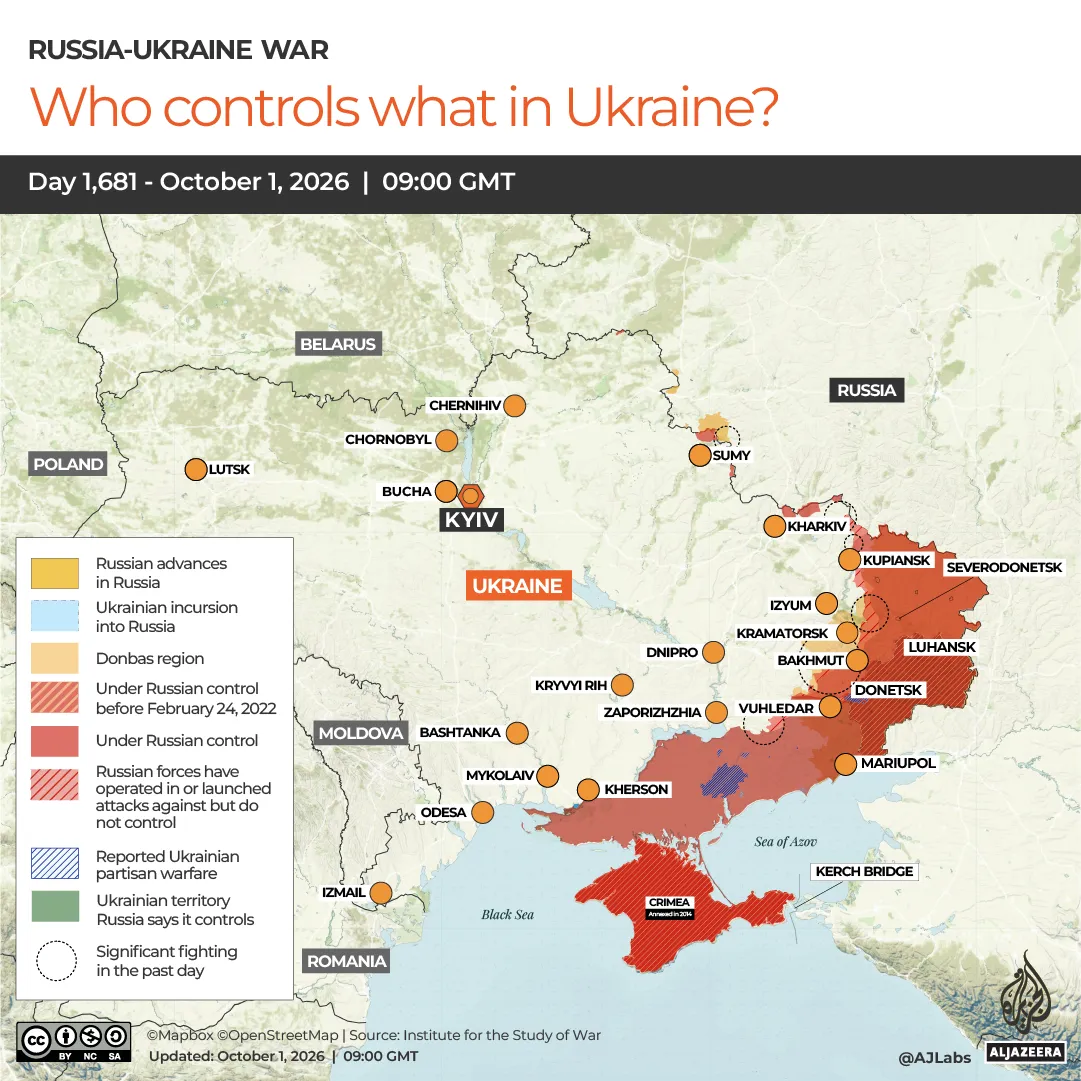
Russia’s terms are another obstacle. Hess said Moscow’s demands have not softened at any point since it launched the war and at times have grown. Putin has demanded all of Ukraine’s Donetsk, Luhansk, Kherson and Zaporizhia regions, including territory Russian forces have never controlled, as well as a buffer zone in northern Ukraine. Moscow is also seeking sanctions relief and military concessions for any Black Sea deal.
“I don’t think it’s a question of who actually mediates. I think it’s really a question of the calculation in Moscow,” Wesslau said. “Fundamentally, the problem is that Putin doesn’t want a ceasefire or a peace agreement. He wants to continue the war. He believes that he can win.”
Analysts said only greater economic pressure is likely to change that calculation.
Wesslau said if Europe can close down Russia’s shadow fleet of oil tankers, “this would be a massive blow to Russia’s war economy.” Hess said the country best placed to shift things quickly is China, rather than the US, by cutting its purchases of Russian oil. However, he added: “I don’t think Beijing is interested in doing so.”
Hess said that unless there is an outside shock, the war “is much more likely to last another four years than another four months”.
Hundreds of Muslims have gathered in the Indian city of Ujjain to protest the partial demolition of a mosque they say is more than 600 years old. The BJP-led state government says the action is needed to widen roads ahead of the 2028 Hindu pilgrimage, which is expected to draw large crowds.
About 100 people, as well as cargo, were reportedly on board the vessel when it sank on Lake Tanganyika.
Published On 25 Sep 202625 Sep 2026
At least 41 people have died, and 49 others have been rescued, after a boat capsized on Lake Tanganyika in the Democratic Republic of the Congo (DRC).
Norris Mulongoyi, the provincial transport minister for DRC’s Tanganyika province, told The Associated Press news agency that search operations were under way to locate the remaining passengers.
Recommended Stories
list of 3 itemsend of list
The boat was reportedly carrying about 100 people and cargo when it capsized near the Congolese village of Mapera.
The vessel was travelling from the port of Kigoma in Tanzania to the city of Kalemie in DRC when it sank on Thursday.
A survivor identified as Annie Moyoni told Radio Okapi, a UN-backed Congolese broadcaster, that passengers were awakened at about 1am and found the boat tilting to one side.
It is unclear what caused the vessel to capsize, but hundreds of people have been killed in boat disasters in the DRC in recent years, according to the AP. Vessels are often overloaded and lack life jackets.
For many in the DRC, travelling by boat is the cheapest and most affordable way to get around. The country is one of the poorest in the world and lacks sufficient infrastructure for its more than 100 million people.
The sinking was the second loss of a Congolese vessel on the Kigoma-Kalemie route in less than a month.
On August 28, the Congolese vessel MV Pacifique caught fire and exploded at the port of Kigoma while loading fuel, according to Radio Okapi.
Six crew members were killed, and a seventh was reported missing, Radio Okapi said, citing port authorities. The vessel operated between Kigoma and Kalemie and was used to transport fuel.
At least 20 people also died when a wooden boat carrying students returning from state exams sank in central DRC in July.
Overnight missile and drone attacks hit several Ukrainian regions as world leaders gather in New York for the UN General Assembly.
Published On 22 Sep 202622 Sep 2026
Russian forces have launched widespread attacks targeting industrial sites and critical energy infrastructure across several regions of Ukraine, killing at least three people and knocking out power to nearly 100,000 residents, Ukrainian officials said.
The strikes overnight hit industrial facilities simultaneously in the Dnipropetrovsk region, including Dnipro, Pavlohrad and Kryvyi Rih, the hometown of President Volodymyr Zelenskyy, regional Governor Oleksandr Hanzha said on Telegram on Tuesday.
Recommended Stories
list of 3 itemsend of list
Three people were killed and six others were wounded in Dnipro, where missiles, drones and artillery heavily damaged business and warehouse premises, Hanzha said.
Ukraine’s air force said Moscow’s overnight barrage involved 212 drones, four cruise missiles, and an unspecified number of Oniks antiship and ballistic missiles.
The strikes also damaged energy infrastructure. An attack on a power facility left nearly 100,000 consumers without electricity in the northern region of Chernihiv, while in the Poltava region, Governor Vitalii Diakivnych said a “massive” Russian attack hit an industrial enterprise and a critical infrastructure facility.
The Russian Ministry of Defence confirmed its forces carried out major strikes, stating it hit industrial and military facilities, the fuel and energy sector, port infrastructure and sea vessels operating for the Ukrainian military.
Meanwhile, Ukrainian drones targeted Russia’s Samara region along the Volga River, killing one person and injuring four, according to the local governor. The region hosts critically important facilities, including oil refineries.
The Russian Defence Ministry said its air defence units intercepted and destroyed 297 Ukrainian drones across various regions overnight.
Diplomatic push in New York
The attacks come as Zelenskyy arrived in New York for the United Nations General Assembly (UNGA), where talks on ending the war are set to be high on the agenda as nearly 130 heads of state gather.
The Ukrainian president wrote on X that a “drone deal” was ready to be signed to bolster air defence and secure funding for the war effort.
“Of course, Ukraine’s number one priority is bringing peace closer and protecting the lives of our people,” Zelenskyy posted. “There are concrete security proposals and de-escalation measures that could bring the end of the war closer. We are working to strengthen air defence and ensure sufficient financing for Ukraine.”
He said, “Around 20 meetings are planned, including with the US president, European leaders, US senators and members of the House of Representatives, heads of international organisations, leading American companies and think tanks.”
Zelenskyy met French President Emmanuel Macron on Monday and is likely to meet US President Donald Trump on Tuesday.
Earlier, Macron also met Trump, after which he said the two countries agreed to work together to secure a moratorium on strikes targeting energy networks and civilian infrastructure in Ukraine. Both Zelenskyy and Russian Foreign Minister Sergey Lavrov are set to address the UNGA later this week.
French President Emmanuel Macron, left, with his Ukrainian counterpart, Volodymyr Zelenskyy, on the sidelines of the UNGA in New York, US, September 21, 2026 [Ludovic Marin/AFP]
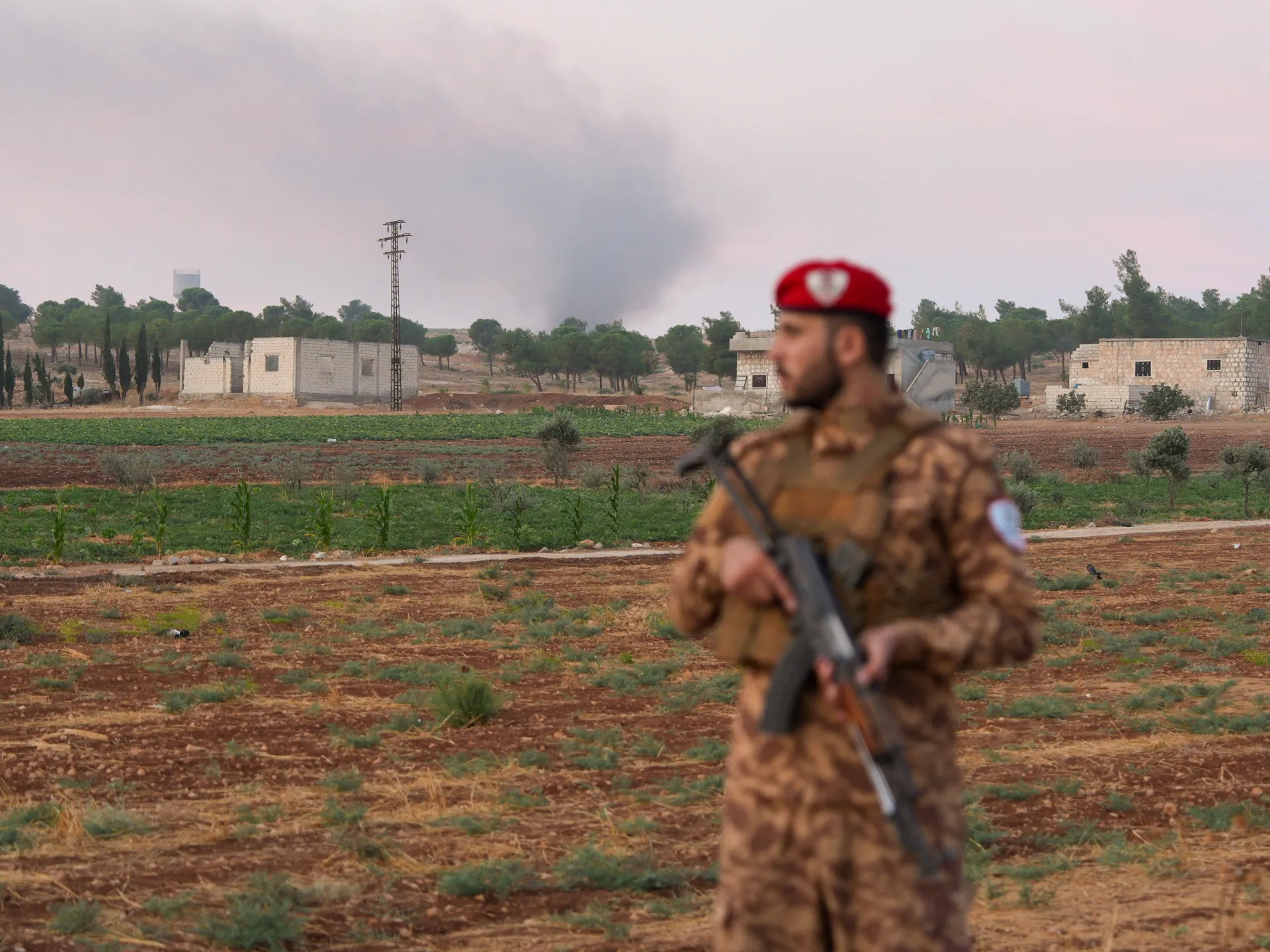
Repeated blasts at military sites expose the risks facing Syria as it rebuilds its army and consolidates weapons after years of war.
A series of explosions at weapons and ammunition sites across Syria this month have exposed the difficulties facing the country’s military in storing and moving munitions, as the armed forces rebuild after more than a decade of war.
The latest blasts injured at least four people in the early hours of Monday morning at an arms depot in al-Eis, south of Aleppo.
Recommended Stories
list of 3 itemsend of list
On Friday, a blast in Ayyash, west of Deir Az Zor, killed 11 soldiers. Another on September 9 killed 14 defence ministry personnel in Sarmada, Idlib. Also in Idlib, five people were killed when a vehicle carrying ammunition exploded in the town of Binnish on September 1 .
According to a tally by the Reuters news agency, at least 16 similar explosions have hit arms storage facilities since the fall of long-time President Bashar al-Assad in December 2024 after an opposition offensive.
Some have been attributed to poor storage conditions. The Syrian Defence Ministry said it is investigating the causes behind the recurrent explosions to prevent future incidents.
Long-time neglect
Security analysts are divided on the root causes, with some pointing to a lack of professional infrastructure and others highlighting the potential for foreign interference – although there is as yet no hard evidence for that.
Omer Ozkizilcik, a nonresident senior fellow for the Syria Project in the Atlantic Council’s Middle East Programmes, explained to Al Jazeera that the Syrian military is undergoing a period of huge change. It is reorganising from what it was under al-Assad, consolidating weapons from different sources and integrating various forces. All of that could be putting pressure on Syria’s storage infrastructure, which was already creaking after the long war and international isolation.
“The explosions could have happened due to neglect, Ozkizilcik said. “The Syrian army is receiving much more military aid than ever before. It gained control over the stockpiles of the former regime and the formerly US-backed [Syrian Democratic Forces]. The increase in quantity coupled with the need to protect weapons from potential Israeli airstrikes may have pushed the Syrian army to store weapons in inadequate places.”
Ozkizilcik emphasised that Syria’s military is still in a transitional phase. The former army was dissolved after the fall of the al-Assad regime and fighters from armed opposition groups were integrated into a new military structure. Damascus has also been working to integrate territory and forces previously controlled by the Kurdish-led SDF.
“The Syrian army has yet to become a professional army,” Ozkizilcik added. “These explosions are not the first that happen in Syria. Before the fall of al-Assad, similar things happened many times in Syria. [but] I don’t think these explosions will affect Syria’s military capabilities in any visible way. It’s merely a loss of some stockpiles that can be replenished.”
Weapons and ammunition, by their nature, need to be handled extremely carefully and stored properly. Storing large quantities of ageing ammunition for years in poor conditions, such as high temperatures or humidity, can accelerate their deterioration and lead to them becoming unstable.
“The current warehouse infrastructure suffers from severe ageing; most of it dates back decades and does not meet international safe storage standards,” said security expert Ismat al-Absi. “Storing ageing munitions in open or semi-closed environments without controlled cooling and humidity systems creates what we call a thermal runaway chain reaction.”
Possibility of sabotage
The repeated explosions have led to some fears of sabotage, particularly in light of repeated Israeli attacks against Syria since the fall of al-Assad, many of which have targeted the military, including the August strikes on the Abu al-Duhur airbase in Idlib.
Ozkizilcik noted that there was “no public information about possible sabotage” being behind the weapons depot explosions, and no evidence of any direct Israeli links. But the repeated explosions, coupled with Israel’s attacks in Syria and past intelligence operations against groups like Lebanon’s Hezbollah, mean it cannot be totally ruled out.
“Considering that the Israeli media recently wrote about the growing military capabilities of Syria, suspicions grow,” he said.
Al-Absi told Al Jazeera that the wide geographic scope of the explosions nevertheless meant that deliberate interference should be investigated.
“The main loopholes that [could have allowed sabotage operations] are the absence of smart surveillance, relying on traditional human guarding instead of remote sensors and thermal movement detection; weak securing of transport lines and administrative fragmentation,” al-Absi said. “The weakness of security discipline during the restructuring phase of the military institution has made some sites vulnerable to penetration or internal manipulation.”
Moscow mayor reports intercepting 1,600 drones during ‘unprecedented’ attack, accusing Ukraine of election interference.
Published On 20 Sep 202620 Sep 2026
At least two people have been killed and a major refinery has been damaged as hundreds of drones targeted the Russian capital, Moscow, and its surrounding region on the final day of the country’s parliamentary elections.
Moscow’s Mayor Sergei Sobyanin said on Sunday that more than 1,600 drones had been intercepted and shot down, 450 of which were heading for Moscow.
Recommended Stories
list of 3 itemsend of list
He also accused Ukraine of attempting to interfere with a tightly controlled three-day election that is set to tighten President Vladimir Putin’s 26-year grip on power.
“The unprecedented attack was clearly planned with the aim of disrupting the elections. The enemy did not succeed,” he said on Telegram.
Moscow regional Governor Andrey Vorobyov said on social media that a 44-year-old woman and an elderly man were killed in two separate locations.
A fire triggered by a drone crashing into a 21-storey building forced the evacuation of 400 people, Vorobyov said.
The strikes come as Kyiv has intensified its long-range drone campaign against Russia, particularly targeting energy infrastructure to cut off a vital source of Kremlin revenue used to fund its war effort, now in its fifth year.
“A facility on the territory of the Moscow Oil Refinery has been damaged,” Sobyanin added, saying that no casualties were reported so far and emergency services were on the scene.
The major refinery has already been hit by Ukrainian strikes in recent months.
The latest strike follows claims by US President Donald Trump on Monday that Ukraine and Russia had agreed not to target each other’s energy facilities.
It also comes as Russians vote in the country’s first parliamentary elections since Moscow sent troops into Ukraine in February 2022, igniting a war that has killed hundreds of thousands of people. Moscow has also organised voting in parts of Ukraine that it has seized in the four-and-a-half-year war.
Meanwhile, Ukraine’s Air Force Command reported that Russia launched 138 drones of various types across the country overnight, according to the Interfax-Ukraine news agency.
It added that air defences managed to shoot down or neutralise 101 of them.
Gulf investment is rising, but Africa needs long-term solutions to close a huge infrastructure financing gap.
Africa harbors grand aspirations. In the continent’s long-term development blueprint, Agenda 2063, “world-class” infrastructure is one of the goals under Aspiration 2.
Realizing the goal of linking the continent by rail, road, sea, and air, as well as energy and ICT, to specifically unleash regional and international trade is proving herculean. The reason is financing constraints. Annually, Africa wrestles with an infrastructure financing gap of more than $80 billion, according to the Africa Development Bank.
For decades, China was the blue-eyed boy, helping Africa address infrastructure bottlenecks. In recent years, however, Gulf states have emerged as strategic partners.
Dubai-based DP World is among Gulf companies investing billions in Africa’s infrastructure. The conglomerate’s latest foray is in Kenya, where it is investing $100 million in a mega special economic zone (SEZ). The complex is expected to integrate Kenyan companies into regional and global supply chains.
While Gulf partners are at the forefront of helping Africa meet infrastructure needs, the huge funding gap is forcing the continent to innovate in mobilizing long-term financing at scale. In this context, digital bonds are the latest capital-raising solution.
AFC Issues Digital Bonds
Africa Finance Corporation (AFC) became the first African institution to issue the asset class, raising 350 million Swiss francs ($427.4 million) through a five-year digital bond, structured as a tokenized security on a Distributed Ledger Technology (DLT) platform and priced at a 1.4925% coupon.
As the largest ever issuance in the Swiss Franc market, it attracted unprecedented interest from high-quality investors, including banks, asset managers, and hedge funds.
“Digital bonds have the ability to resolve frictions that characterize traditional bond issuances, making them ideal for investors with a different kind of risk appetite,” said Eric Musau, Head, Research & Sustainable Finance at Kenya’s Standard Investment Bank.
Fragmentation, exorbitant costs, slow and manual processes, and a complex web of intermediaries are among the friction points digital bonds can resolve.
As debt securities issued and recorded on DLT or blockchain, digital bonds are gaining traction. In 2025, global DLT fixed-income issuance totaled €4.8 billion ($5.5 billion), a 48% increase from €3.2 billion in 2024, according to the Association for Financial Markets in Europe.
Asia remains the epicenter of issuances, with €3.8 billion issued in 2025, representing 78% of the world’s total.
AFC has identified inadequate infrastructure as the primary threat to Africa’s long-term growth. The institution, which has disbursed $19 billion to finance numerous projects across 36 countries, believes the new capital pool will help accelerate financing for critical sectors, including transport, power, natural resources, heavy industry, and telecommunications.
Transport, SEZs, and industrial parks are often cited as being central to the success of the African Continental Free Trade Area (AfCFTA). In transport, for instance, traffic flows are expected to increase significantly across all modes.
Maritime is a case in point. According to the Economic Commission for Africa, freight is projected to double from 58 million tonnes to 131.5 million tonnes by 2030 under the AfCFTA.
John Njiraini is a contributing writer based in Kenya.






![France's President Emmanuel Macron meets with Ukraine's President Volodymyr Zelenskyy on the sidelines of the United Nations General Assembly in New York City on September 21, 2026 [Ludovic Marin/AFP]](https://i0.wp.com/www.aljazeera.com/wp-content/uploads/2026/09/AFP__20260922__C8XY4MU__v1__HighRes__UsFranceUkrainePoliticsDiplomacy-1790058813.jpg?w=640&ssl=1)