A BRITISH indie icon has been rushed to hospital after a nasty scooter accident.
He confessed he felt “stupid” and “embarrassed” as this comes just days before he’s set to headline a huge weekend festival.
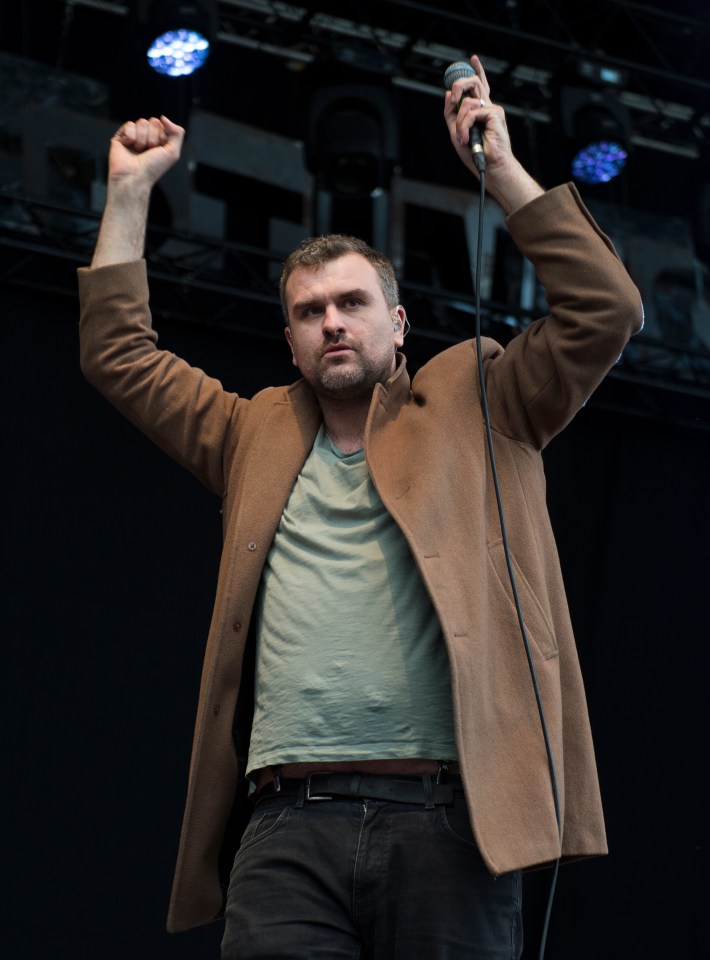
Jon McClure, lead singer of Reverend and the Makers has admitted he feels ‘stupid’ and embarrassed after his scooter accidentCredit: GettyJon has assured fans that he and the band will still be performing at their gigs over the weekendCredit: Getty
The 44-year-old is set to appear onstage at the Tramlines Festival in Sheffield – his home town – and has assured fans it will still go ahead.
He said: “This weekends gigs @togetheragainfest and @tramlines will go ahead even if I have to dose myself up . Hopefully it’s just a knock.
“Might need a cuddle though. Proper shook me up. Feeling a bit blue.”
One fan penned: “Take it gentle Rev, you will still have the crowds bouncing.”
Another fan added: “Ouch! Get well soon bud – if you are going to take a fall being daft on a scooter feels like the way to do it though! You know you are the heart beat of Tramlines – come what may you and the gang will smash it this weekend.”
Jon, nicknamed “The Reverend,” and his band shot to fame in 2007 after releasing their debut album The State of Things.
They then landed a UK top 10 single with Heavyweight Champion of The World, which peak at number eight.
In 2009, the band were invited to support Oasis on their final major stadium tour before they split.
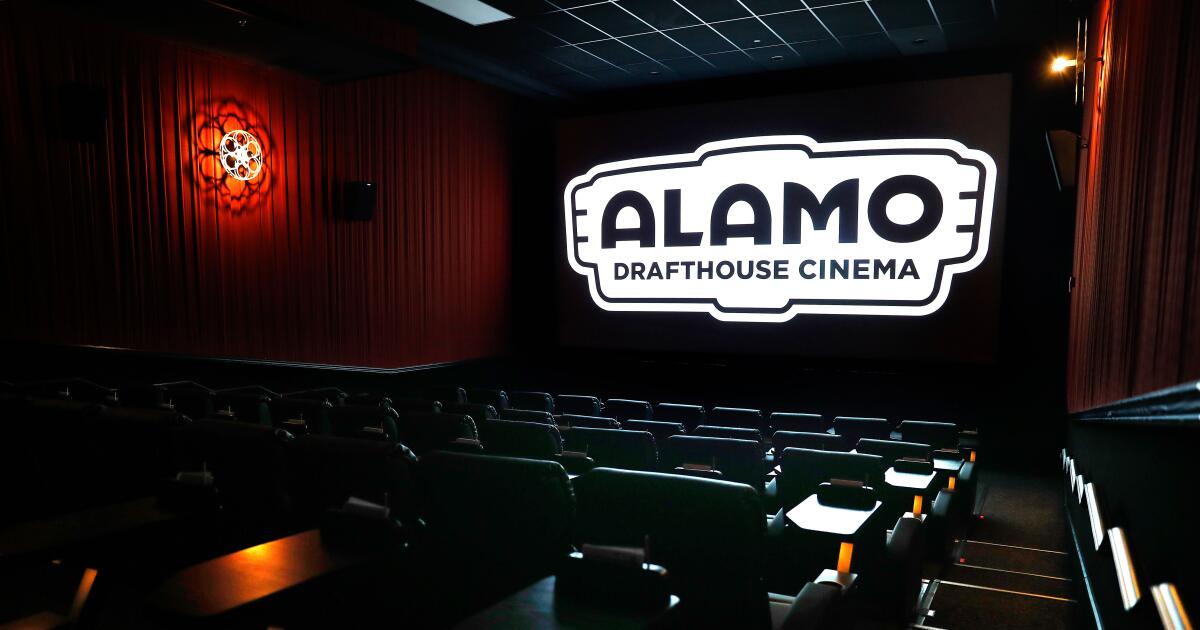
Dine-in movie theater chain Alamo Drafthouse Cinema is launching a new initiative to show unreleased independent films that had successful festival runs, a move that comes as specialty films have struggled to gain distribution.
The Alamo Exclusives program, announced Wednesday, will give limited theatrical runs to films that showed at festivals including Sundance, the Toronto International Film Festival, Tribeca Festival and South by Southwest festival, as well as Alamo’s own Fantastic Fest.
The idea is to help showcase films that received critical acclaim, but did not secure distribution or acquisition deals. The chain will not acquire these films, but instead will enter into agreements with filmmakers to exhibit their films on Alamo Drafthouse screens. By showing these films to audiences on the big screen, these films could get the momentum they need for further opportunities.
The program’s first film will be the documentary “Butthole Surfers: The Hole Truth and Nothing Butt,” which debuted last year at South by Southwest and chronicles the history of the punk rock band.
The film will be shown in Alamo Drafthouse theaters for a limited time later this summer.
The Austin-based chain, which is owned by Sony Pictures, has a long history of curating indie films for its audiences, giving Alamo Drafthouse confidence that its viewers want to see these kinds of movies, company chief executive Michael Kustermann said in a statement.
“Time and again, they’ve shown they’ll come out to support bold, original films when given the opportunity,” he said. The new Alamo Exclusives “gives us another way to champion filmmaker-driven films that deserve to be discovered and connect them with the wider Alamo Drafthouse audience.”
The initiative comes at a difficult time for indie films. Since the pandemic upended the movie business, traditional studios and distributors have had less appetite for risk, including betting on smaller indie films out of festivals.
And as the 2023 dual writers’ and actors’ strikes thinned out theatrical lineups, that aversion to uncertainty became a push for reliable and profitable hits.
“Too many incredible films premiere at festivals and then never receive the theatrical life they deserve,” Lisa Dreyer, director of Fantastic Fest and film innovation at Alamo, said in a statement. “We are actively searching for films across all genres, from horror to comedy, to everything in-between, to champion in this new, exciting way.”
Ben Gibbard remembers late 2023 as a time of competing realities.
Onstage, the frontman of Death Cab for Cutie and the Postal Service was thriving as his two bands toured together to mark the 20th anniversaries of Death Cab’s “Transatlanticism” and the Postal Service’s “Give Up.”
Behind the scenes, Gibbard’s personal life was in shambles.
“I was getting off phone calls — very difficult phone calls — 20 minutes before going on in an arena,” he says. The singer and his wife, photographer Rachel Demy, were in the middle of an agonizing breakup that would eventually lead to divorce. Yet audiences in the thousands were turning up nightly to see Gibbard reanimate the peak-millennial classics that made him one of indie rock’s defining stars.
“I’d just tell myself, You’re a professional — you’re gonna go out there and do it, and no one’s gonna know,” he recalls. “It was all waiting for me when I got offstage, of course. But for two hours I was able to disconnect and be a performer, which was incredibly …” Gibbard, 49, trails off into a laugh.
“I don’t know if it was healthy,” he says. “But it was helpful.”
Two and a half years later, that split-screen experience — “this idea of how we compartmentalize our pain or our grief or our trauma,” as Gibbard puts it now — forms a through line of Death Cab’s ruminative new album, “I Built You a Tower.” Due Friday from Anti Records, where the group landed after leaving its longtime home of Atlantic amid a corporate shake-up, the LP sets thoughts of broken fences and never-ending storms against tuneful arrangements that can churn, shimmer or chime.
“I pledge myself to your misery / I kneel at its throne,” Gibbard sings in his still-boyish tenor over the sleek new wave groove of “Trap Door,” “Respecting your proclivity / To languish on your own.” In the fuzzed-out “Envy the Birds,” the frontman recounts an argument between two lovers “spraying bullets of grievances”; the driving “Riptides” is narrated by a guy “too tired to end the war.”
“This record is definitely the result of a divorce,” Gibbard says plainly during a recent visit to Los Angeles from his home in Seattle. “But I didn’t want to make a score-settling record or an angry record. This wasn’t an opportunity to defame someone or make this about how I’d been wronged. People drift apart — relationships don’t work. And I think how that’s affected me at almost 50 is a very different mindset than I found myself in when I was 33 or whatever the last time it happened.”
Gibbard means his first divorce, in 2012, from the actor and singer Zooey Deschanel — a split that inspired Death Cab’s 2015 album “Kintsugi,” on which one song asks, “Was I in your way when the cameras turned to face you?” and another chides an unnamed celebrity: “You’ll never have to hear the word ‘no’ if you keep all your friends on the payroll.”
“There’s some gnarly stuff on that record,” says Gibbard, who’d moved to L.A. to be with Deschanel then promptly left as soon as their marriage collapsed. “It’s not exactly a kind album.”
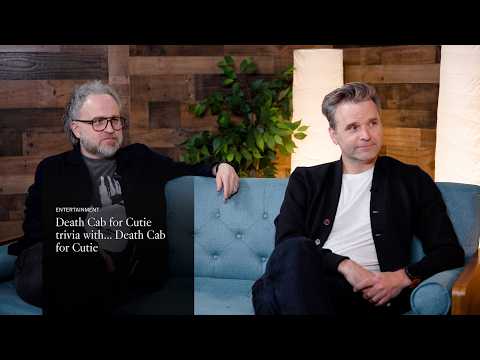
Bassist Nick Harmer, who formed Death Cab with Gibbard in the late ’90s after the two met as students at Western Washington University, agrees that “I Built You a Tower” represents a shift in perspective. “There’s so much more self-examination — and so much more self-indictment,” he says. (Death Cab’s other members are drummer Jason McGerr, guitarist Dave Depper and keyboardist Zac Rae.)
Which isn’t to say that Gibbard entirely resists placing blame. In “Trap Door” he sings about “a trap door in your heart and a button on your desk well-worn from being pressed.”
The frontman says that in recent years he’d “tried to get away from using the word ‘heart’ because that had been a touchstone for so many of our early records.” Yet this line seemed worth holding onto when it came to him.
“I Googled it to see: Did I already write this?” he says, laughing. “Or is there a very popular song called ‘There’s a Trap Door in Your Heart,’ and now I’m just rewriting it? We’ve made a lot of songs at this point — you gotta check your work.”
Indeed, “I Built You a Tower” is Death Cab’s 11th studio LP. After the band’s previous album, 2022’s “Asphalt Meadows,” fulfilled its deal with Atlantic, Death Cab reupped with the major label for one more record, Gibbard says, based on its strong relationship with the company’s then-CEO, Julie Greenwald.
“Julie was our shepherd and our protector the whole time we were there,” the singer says of Death Cab’s nearly two-decade run at Atlantic, which began with 2005’s Grammy-nominated “Plans.” Yet just days after they reached an agreement for “Tower,” Greenwald was fired and replaced by a new leader, Elliot Grainge, about whom the band felt less than optimistic.
Ben Gibbard
(Cielito Mercado Vivas / For The Times)
“We weren’t given the impression that Elliot had spent a lot of time with ‘Transatlanticism’ in college,” Gibbard says of the 32-year-old exec, who made his name signing rappers like Ice Spice and Trippie Redd. With Greenwald’s help, Gibbard says, Death Cab negotiated an exit from Atlantic with ownership of the new album.
Did Grainge try to persuade the band to stay?
“Never heard a word,” Gibbard says.
In an email, Grainge (whose father is Universal Music Group Chairman and Chief Executive Lucian Grange) said that Death Cab’s music “has meant a great deal” to him.
“Working together may not have been in the cards for us; however, that does not lessen my enthusiasm for the band,” he wrote. “They have delivered an impressive body of work over their decades-long career, and I am looking forward to their new music.”
Death Cab’s Harmer says he and his bandmates “talked for half a beat” about putting out “Tower” on their own before thinking better of the idea.
“We’re not businesspeople,” Gibbard says. “Music is the only thing we know how to do.”
At a friend’s wedding in 2024, the frontman had been seated next to the musician Allison Crutchfield, who was then heading up Anti’s A&R department; early this year, Death Cab announced that it had signed to the indie label, whose other acts include Fleet Foxes and Madi Diaz.
This summer, the band will tour behind “I Built You a Tower,” including two shows in August at L.A.’s Greek Theatre. After the “Transatlanticism”/”Give Up” anniversary outing — not to mention a subsequent tour on which the group looked back at “Plans” — Gibbard is “very ready to play some new material,” he says.
Doing the hits was fun. “But at a certain point,” he adds, “it’s really about moving ahead.”