Liam (L) and Noel Gallagher are returning with their band Oasis next year on a European and U.S tourCredit: PAOne of the bands tipped to support Oasis is CastCredit: Getty
Indie rockers Cast have already supported Oasis on their 2025 reunion to and bookies now have the at 5/4 favourites to play at Oasis’ Knebworth concerts.
Bookies William Hill also have Manic Street Preachers as the next favourite band to join the Hertfordshire gig after first supporting Oasis there in 1996.
Sign up for the Showbiz newsletter
Thank you!
Other rumoured acts rumoured to appear include, The Charlatans, Ocean Colour Scene, Kula Shakers, and The Chemical Brothers.
Bookies are also anticipating Noel and Liam Gallagher will release a new album as Oasis next year and have them headlining Glastonbury at 14/1.
And Manic Street PreachersCredit: GettyOasis will also perform in Paris for the first time since 2009Credit: Getty
But they are also giving odds that the brothers will split up before the Paris leg of next year’s tour.
“With the inclusion of Knebworth in Oasis’ 2027 tour dates announcement – on what will be 31 years since their historic concerts at the Hertfordshire venue – there’s a frenzy of speculation on who will support the Britpop titans,” spokesperson for William Hill, Lee Phelps.
“It is safe to say next year’s Knebworth gig will be nostalgic for many, and we make it 1/5 for any of their 1996 support to make a reappearance in the 2027 revival of one of Britpop’s most iconic performances.”
From they they will perform at Manchester City’s ground, Noel, 59, and Liam, 53, will fly to Europe for a round of shows including France, where Oasis will play for the first time in Paris since the group split in 2009.
The shows in Paris will begin on 23 July, before they fly to Italy for shows at the Stadio Olympico in Rome which start on 29 July.
Noel and Liam will then move stateside after the European shows before returning to Ireland and, as The Sun exclusively revealed earlier this year, Noel and Liam will then end their triumphant run of shows at Knebworth.
The four performances there will begin on September 11.
TORONTO — Greetings from the Great White North, where the Toronto International Film Festival rolls to the end of its first weekend.
As packed as our viewing schedules have been, Amy Nicholson notices something lacking at this year’s festival: big Hollywood. In her first critical dispatch, she sees no “Frankenstein” or “Wake Up Dead Man” in the lineup.
Toronto has even resorted to rebooking the under-the-radar smash “Obsession,” the little movie that grew from a 2025 midnight TIFF launch into a global phenomenon.
Director Curry Barker and star Inde Navarrette delighted festgoers who lined up around the block to watch a special conversation.
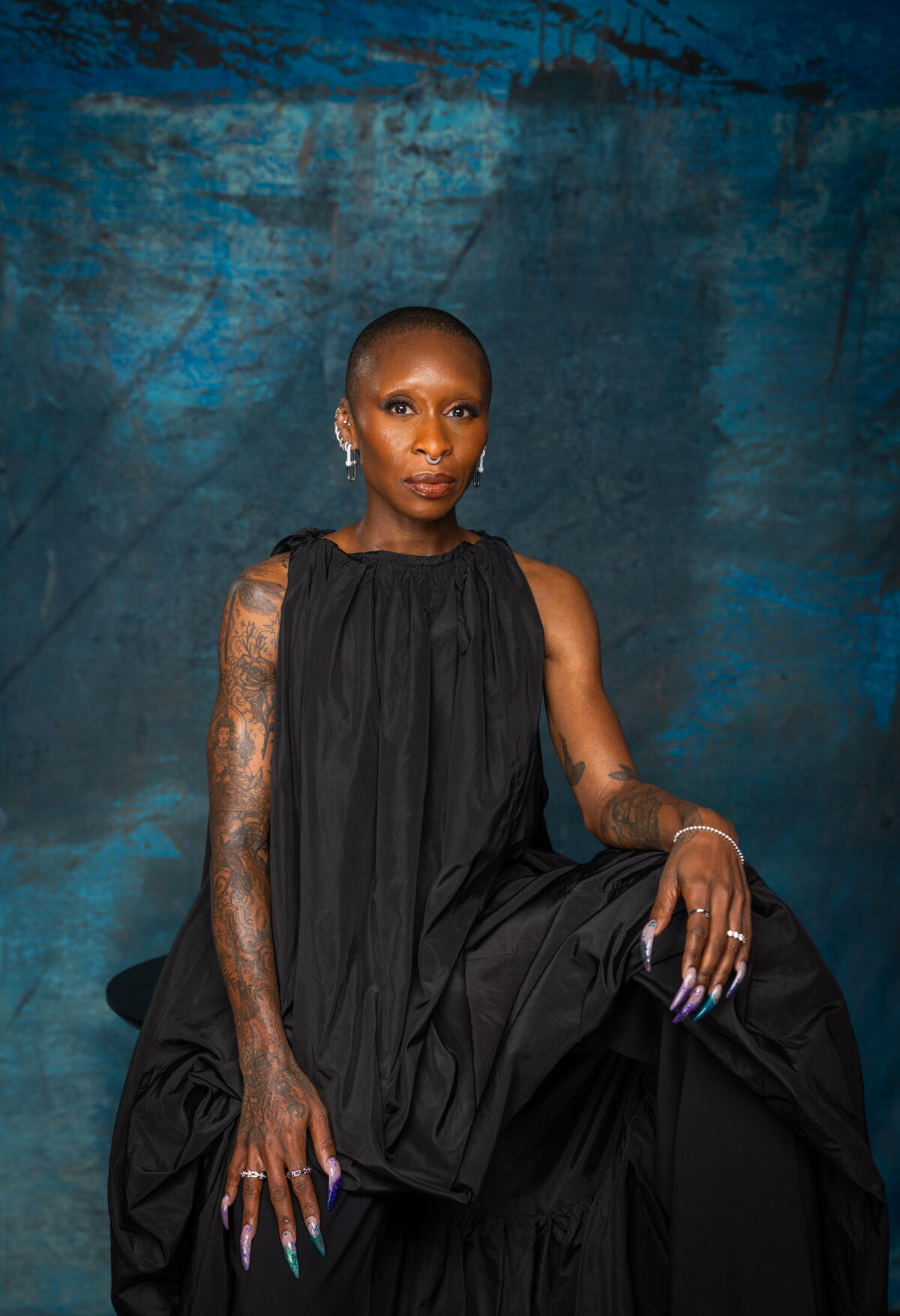
Cynthia Erivo of the film “Prima Facie,” photographed in the Los Angeles Times Studio at RBC House during the 2026 Toronto International Film Festival.
(Jason Armond / Los Angeles Times)
Cynthia Erivo stunned us in our studio space, looking fierce in a dark ensemble and scary nails. We also saw the likes of the luminous Laura Linney and the dapper Korean cast of “Possible Love.” Click through for more celebrity photos and daily surprises.
It takes thermonuclear moxie to write, direct and star in your debut feature — and cast yourself as the cad. No wonder Jordan Firstman‘s uproarious dramedy “Club Kid” blew away expectations at Cannes and has landed in Toronto ready to shake up awards season.
Firstman plays Peter, an aging New York City party promoter whose scene-y shindigs and subsequent hangovers are starting to feel old.
Enter Arlo (a self-possessed Reggie Absolom) the 9-year-old kid he never knew he had and never fathomed he would have, given that women aren’t his thing (except for that one drug-fueled night with a British girl he barely remembers).
You may think you know where the story is headed and you aren’t entirely wrong, but the route there is a riot. — Amy Nicholson
‘Alpha Gang’
A scene from the movie “Alpha Gang.”
(TIFF)
The latest from filmmaking siblings Nathan and David Zellner rolls into Toronto after having just had its world premiere at Telluride.
Their oddball sensibilities and elastic imagination means that you never quite know what to expect from one of their films and this is no exception: a wholly unpredictable story of an alien invasion told from the aliens’ point-of-view that is inscrutably absurd and touched by a startling romantic fatalism.
Two alien cadres, having assumed the looks of 1950s biker gang members, bicker and fight with one another even as they largely overlook their common enemy, the humans.
The cast is likewise a preposterous mash-up of performers you would not wholly expect to see together, including Cate Blanchett, Kelvin Harrison Jr, Léa Seydoux, Riley Keough, Chris Pine, Dave Bautista and others, making the film’s very existence seem like something dropped from outer space. — Mark Olsen
‘The Spiral’
A scene from the movie “The Spiral.”
(TIFF)
Italian horror is my happy place and this is where I’ll be tonight at midnight, sopping up what many early viewers have already described as stylish and vicious.
Director Paolo Strippoli’s domestic drama got sharp reviews out of Venice; it sounds like a cross between a Bava film and “Parasite.” I’ll investigate. — Joshua Rothkopf
THEY were the cool Brit pop duo that broke onto the music scene in 2007 with a number one album and chart-topping smash hit.
And almost two decades later, the husband-and-wife pair are still releasing new music – though their look is worlds away from their noughties heydey.
The husband and wife band rose to fame in the early 2000s – but are rocking a very different look these daysCredit: InstagramThe female star – one half of the pop duo – has ditched her rock chic era and instead appears to be channeling Dolly PartonCredit: Instagram
The Ting Tings, comprised of married couple Katie White and Jules De Martino have taken to TikTok to share a clip of them singing their brand new song Home.
In the video, rock chick turned boho babe Katie can be seen showing off her impressive vocals, while hubby Jules plays guitar.
Sign up for the Showbiz newsletter
Thank you!
They look world’s away from their earlier rock and roll vibe with Katie in particular then known for her heavy eye make-up and platinum blonde Debbie Harry-esque locks.
They wrote over their new video: “Hey, we’re Katie & Jules from a band called The Ting Tings and you might remember us from our song That’s Not My Name.
The duo were all the rage in the noughtiesCredit: HandoutThey scored a number one hit with That’s Not My Name back in the dayCredit: GettyBut their style has changed a lot from their noughties heydeyCredit: thetingtingsofficial/TiktokKatie belted out vocals for new single Home while cradling the couple’s daughter in her lapCredit: thetingtingsofficial/Tiktok
“This is us, 18 years on singing Home from our latest album with our daughter. A lot has changed since 2008.”
The caption read: “18 years & 5 albums later… we are back in the studio, song writing and working on our 6th record.”
The iconic band made a shock comeback to the music industry back in January 2024.
In a cute video posted to Instagram, they added the caption: “Where have we been? Here, making the record of our lives. Get ready. J K x”
The scenes showed a blonde-haired toddler strolling around, leading one fan to quiz: “Is that a baby Ting Ting?”
During a chat with the BBC in 2022, they confirmed their happy news – with the tot dubbed “mini Ting” aged one at the time.
Katie admitted: “We never particularly spoke about it.
“We always wanted to keep it quite separate from the music, but it’s quite hard when you have literally a mini person.
“We’ve been together a long time now.”
The Salford-based duo formed in 2007, with their debut album We Started Nothing topping the UK charts just a year later.
Their iconic track That’s Not My Name became a huge success and has been streamed more than 1.1million times.
The group then fine-tuned their material in New York, yet a tour scheduled for three years later was scrapped after Katie suffered a hand injury.
Following their comeback, they went on to release their fifth album Home and are now gearing up for their sixth offering.
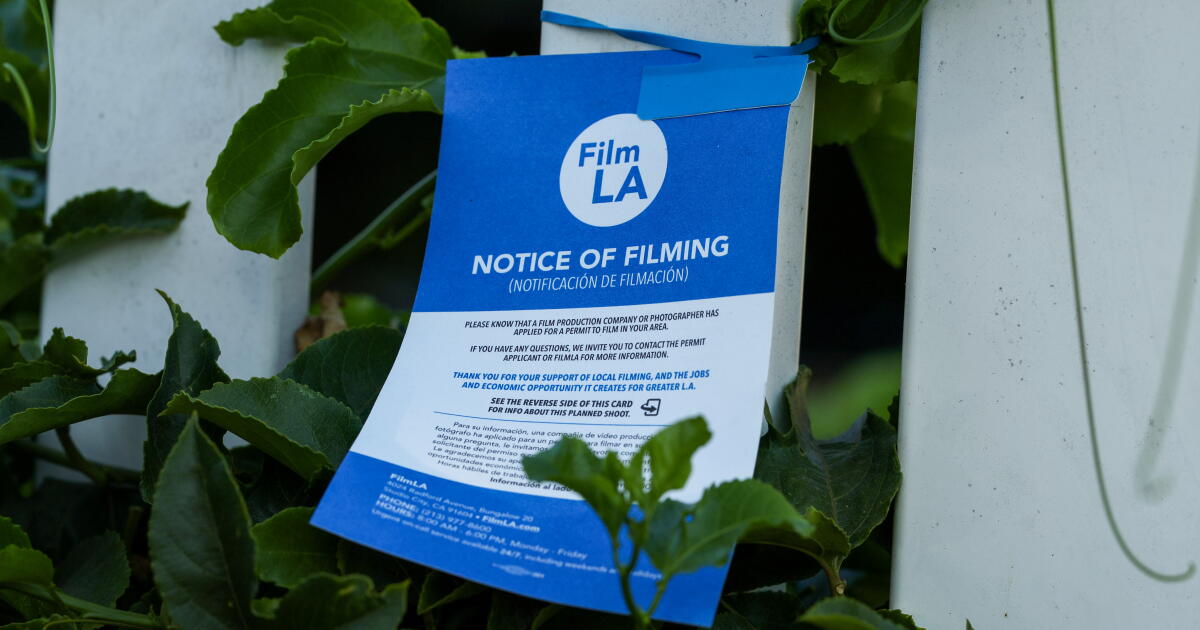
State lawmakers have approved a series of modest changes intended to bolster California’s film and TV tax credit program.
Among the key revisions, independent filmmakers would be exempted from the $5 million state corporate tax credit cap that was approved earlier this year as part of Gov. Gavin Newsom’s state budget.
Film industry advocates lobbied hard for a carve-out, saying the cap would undercut gains made under the current film and TV tax credit program at a time when Hollywood has been reeling from job losses.
The bill includes other changes intended to help Hollywood, such as allowing companies to carry forward older tax credits for up to 15 years (the old limit was nine) and reducing the discount they are charged when they opt to seek a cash refund on unused credits.
Producers will also be able to collect their refund money more quickly — within two years instead of five.
California offers tax credits of up to 35% on qualified expenses, which can be applied to any tax liabilities the production companies have in the state. The program allocates $750 million annually in film and TV tax breaks.
The budget trailer bill was introduced to the Senate on Friday by Assemblyman Rick Chavez Zbur (D-Los Angeles), chair of the Assembly Democratic Caucus and Senator Ben Allen (D-Santa Monica).
The new cap, issued by Gov. Newsom, would have undermined the “competitiveness” of the current California Film and Television Jobs Program, said the Entertainment Union Coalition, an advocacy group that supports the bill. But with these new modifications, the group — which represents the Directors Guild, SAG-AFTRA, IATSE and more — said the program will be able to continue to “support the fragile recovery of our industry here in California.”
“Most importantly, we want to recognize the major role our members played in today’s success as advocates for their industry in California,” Rebecca Rhine, the coalition’s president, said in a statement. “They sent an unprecedented 450,000 letters to the California legislature, making clear the negative impact that SB 122 [the new cap] would have on their livelihoods, their families, and their communities.”
Over the program’s first full year in its expanded $750-million form, the California Film Commission says it delivered $6.6 billion in direct production spending and $4.3 billion in qualified expenditures, supporting nearly 35,000 cast and crew jobs across 6,630 filming days statewide.
The bill cleared the Assembly floor by a vote of 68-2, with the Senate approving its companion measure by a vote of 32 in favor, 8 against the same day. It now awaits Gov. Newsom’s signature.
“It’s a good day that we took steps to strengthen the program and while we have to do more next year, this was a crucial first step,” Zbur said in an interview.
Zbur said he believes everyone in the state’s film and TV tax credit program should have been exempted from the corporate tax credit cap and he plans to look at that within the context of next year’s budget.
“There were budget implications to doing that, so we really did all the things that are viable to do in this legislative session,” Zbur said.
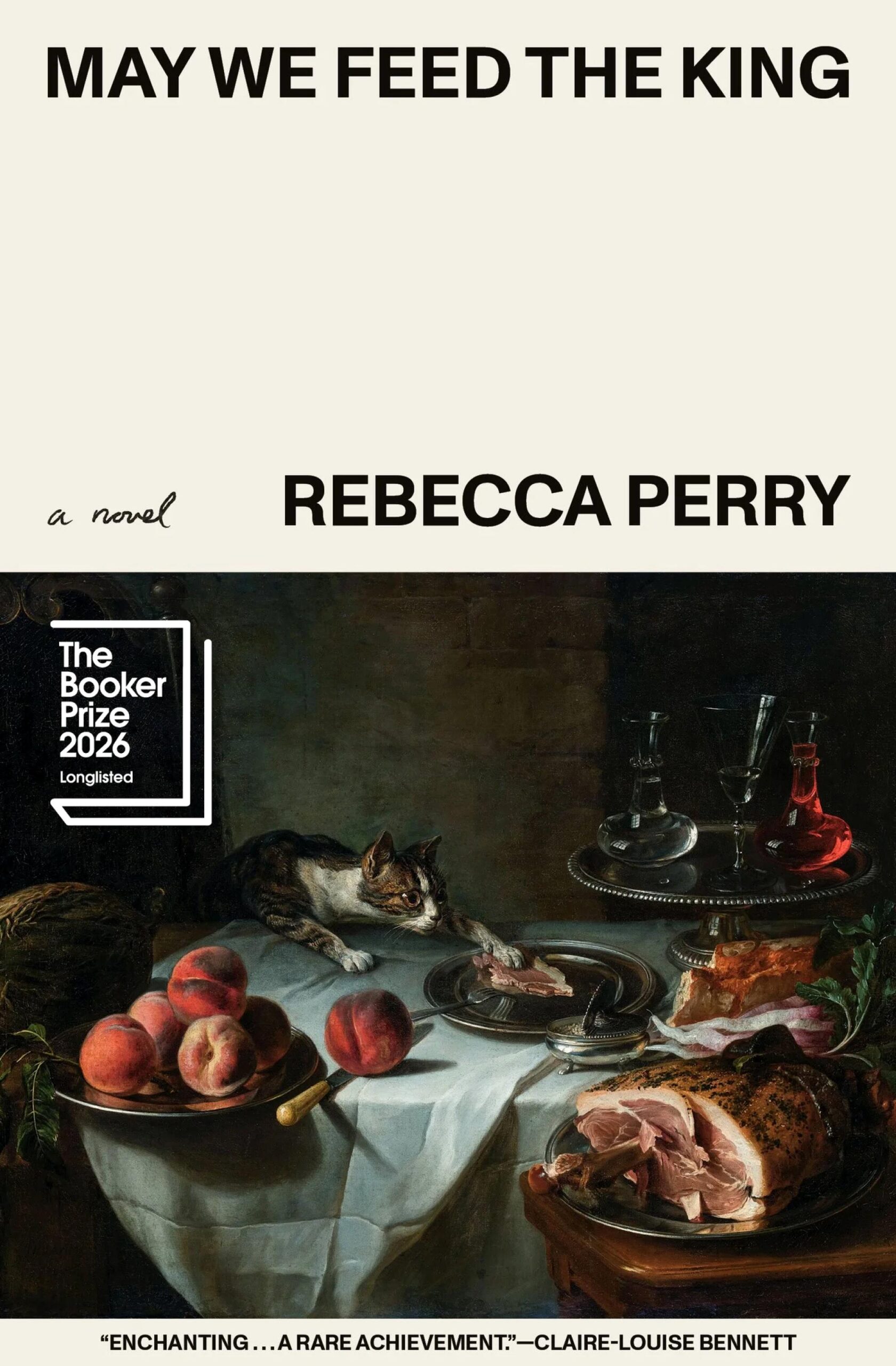
When the Booker Prize longlist was recently announced, it included a book with the memorable title “May We Feed the King.” The debut novel by British author Rebecca Perry isn’t yet available in the U.S., and when it does hit shelves, it will be coming from Transit Books, a small Bay Area publisher run by the husband-and-wife team Adam Z. Levy and Ashley Nelson Levy.
Cited by the Booker committee as “a playful, stirring meditation on history and storytelling” about a curator and a king, the book “has been an early favorite with indie booksellers,” Ashley says.
“May We Feed the King” by Rebecca Perry
(Transit)
“We knew the book was special when we acquired it,” Adam adds. “Ever since, we’ve been crossing our fingers and knocking on wood and sending up flares to the Booker gods, and sent the book to the printer a little earlier than usual just in case.”
Transit, known for publishing intelligent international fiction, began about a decade ago, when Ashley and Adam were convinced that great works of literature were being passed over by New York publishers, and that those books should have a place in America.
There were, Adam says, “really great authors who might have incredible reputations elsewhere not finding publishing houses here that are able to champion them in a way that gets them to access to a broader readership.”
The two were working full-time jobs while talking about their literary dreams over the dining room table. They had met at Columbia in New York and both worked in publishing there before moving to California, where Ashley is from.
Adam Z. Levy and Ashley Nelson Levy, co-publishers of the Bay Area nonprofit publisher Transit Books.
(Jennifer Baquing)
They carefully set out to connect with the international literary community and went through the slow process of launching Transit as a nonprofit. They now have a small staff, an office in Berkeley and count a Nobel Prizewinner, Jon Fosse, among their authors.
For the record:
9:20 a.m. Aug. 19, 2026An earlier version of this article stated that Transit’s office is located in Oakland. It is based in Berkeley.
At the same time Transit was starting out in Northern California, a pair of not-married friends in Los Angeles saw the same possibilities. Chris Heiser and Olivia Taylor Smith were convinced that they could begin a publishing house, starting with international noir.
Smith, who is now a senior editor at Simon & Schuster and lives in Germany, recalled those early days for me over Zoom. “We launched it at a time when it was almost the golden age of independent, small publishing, a lot of which was translation-focused,” she says.
They jumped right in, came up with a name, Ricochet, and a logo. Then they got a cease-and-desist letter — a small poetry press was also starting as Ricochet. “We had to change names,” Heiser says. “We were literally unnamed.” That’s how they launched Unnamed Press.
“A Certain Hunger” by Chelsea G. Summers
(Unnamed Press)
“I’m very grateful to the litigious poets who forced us to change our name,” Heiser adds. Their original crime-fiction focus rapidly expanded. Science fiction? Nonfiction? Feminist cannibal fiction? Yes, yes, yes.
That last was “A Certain Hunger” by Chelsea Summers, which Smith acquired. “I really loved that it is violent and intense and so visceral,” Smith said. “The prose is incredible and it absolutely was a cut above. Not to use a cannibalistic meat pun.” To date, the 2021 novel has been Unnamed Press’ biggest seller.
Where many literary novels from small presses sell fewer than 2,500 copies, “A Certain Hunger” has sold close to 200,000. “We’re a hits-driven business, you know — you have to have a book that does well enough to keep you going,” Heiser says.
Heiser remains with Unnamed as its publisher, and continues to guide it to unpredictable destinations. In 2022, the press opened North Figueroa Bookshop in Highland Park with fellow L.A. publisher Rare Bird Books — it stocks all publishers’ titles, not just their own.
Guests gather at the North Figueroa gallery for Unnamed Press’ launch of “Four Nose Jobs a Day,” a poetry book with an accompanying vinyl album by Devendra Banhart, center.
(Hoda Mallone)
And next door is the gallery they opened late last year. In June they held a gala launch for Devendra Banhart’s new collection of poems, “Four Nose Jobs a Day” in the North Figueroa gallery, published by Unnamed as both book and record album. The party was a little livelier than your typical book launch: Heiser says it “featured a reading backed by an excellent jazz trio, ceramic noses, a scent-maker, mimes and speed therapy, among many other things.”
Where Unnamed often makes unexpected turns, Transit has stuck close to its original mission: to translate a handful of books a year, often works of translation themselves, with a certain aesthetic.
For readers in sync with Transit’s sensibility — literary, bold and with an edge that feels fresh — they offer subscriptions. Their biggest swerve was adding children’s books. “The quality of the writing is really important, first and foremost,” Ashley said on a Zoom call with Adam and their executive editor, Lizzie Davis.
“We’re really attracted to literature that takes risks on the page,” Adam said. They began publishing acclaimed Norwegian author Jon Fosse’s work three years before he was awarded the Nobel Prize in literature. Transit is the American home of Fosse’s big and bold “Septology,” translated into English by Damion Searls.
“Septology 1-VII,” by Jon Fosse
(Transit Books)
Despite years of a cohort within the publishing community advocating for international literature, such as the National Book Awards’ translated literature prize being relaunched in 2018, translated works remain only 3% of the U.S. publishing market. Transit has remained committed to publishing works in translation, and has had genuine success.
Small publishers can be caught in a catch-22 when they have a sudden success. They have to pay to print books and get them distributed, then wait months before the profits (or unsold returns) come back. An author winning the Nobel Prize in literature is about as big a bonanza of demand as you can imagine.
When Fosse won the Nobel in 2023, that meant publishing a big run of his almost 700-page masterwork. “It was a bit of a cash crunch for us,” Adam admits, “but I think we were also lucky in a lot of ways.” The year before they had published “I Who Have Never Known Men” by Jacqueline Harpman, a Belgian novelist who died 20 years before — hardly a guaranteed success.
“Stories, Like Illnesses” by James Elkins
(Unnamed Press)
The publishers themselves can’t fully describe what happened — it was well-reviewed, it went viral, it kept selling, it went viral again. Now, the novel has sold more than 450,000 copies. “I feel like for a small press you really need to, not just catch a break, but catch a break every time,” Adam said, “if you want to last.” Those two pillars — the Fosse and Harpman — allowed the Levys to open their office in Oakland in 2024.
Transit recently released another Harpman book, “We Were Forbidden,” a trio of never-before translated novellas. In September, in addition to Perry’s book, they’ll also be publishing two novels by esteemed French writer Marie Darrieussecq.
Unnamed Press’ fall schedule includes James Elkins’ “Stories, Like Illnesses,” the third installment of a multivolume work called “Five Strange Languages.” Unnamed is publishing in five volumes over five years, “an epic publishing project for any publisher,” Heiser says. Luckily, the first volume got a boost when Jacob Elordi was photographed reading it during a marathon Frankenstein makeup session.
The Levys and Heiser all maintain that there was something about being in California that gave them the creative space to launch their publishing houses.
From their similar visions a decade ago, Transit and Unnamed were born separately, and have taken very different paths to sustainability. The Levys were deliberate and focused; Unnamed spontaneous and evolving. Both are flourishing and show what a little freedom can do.