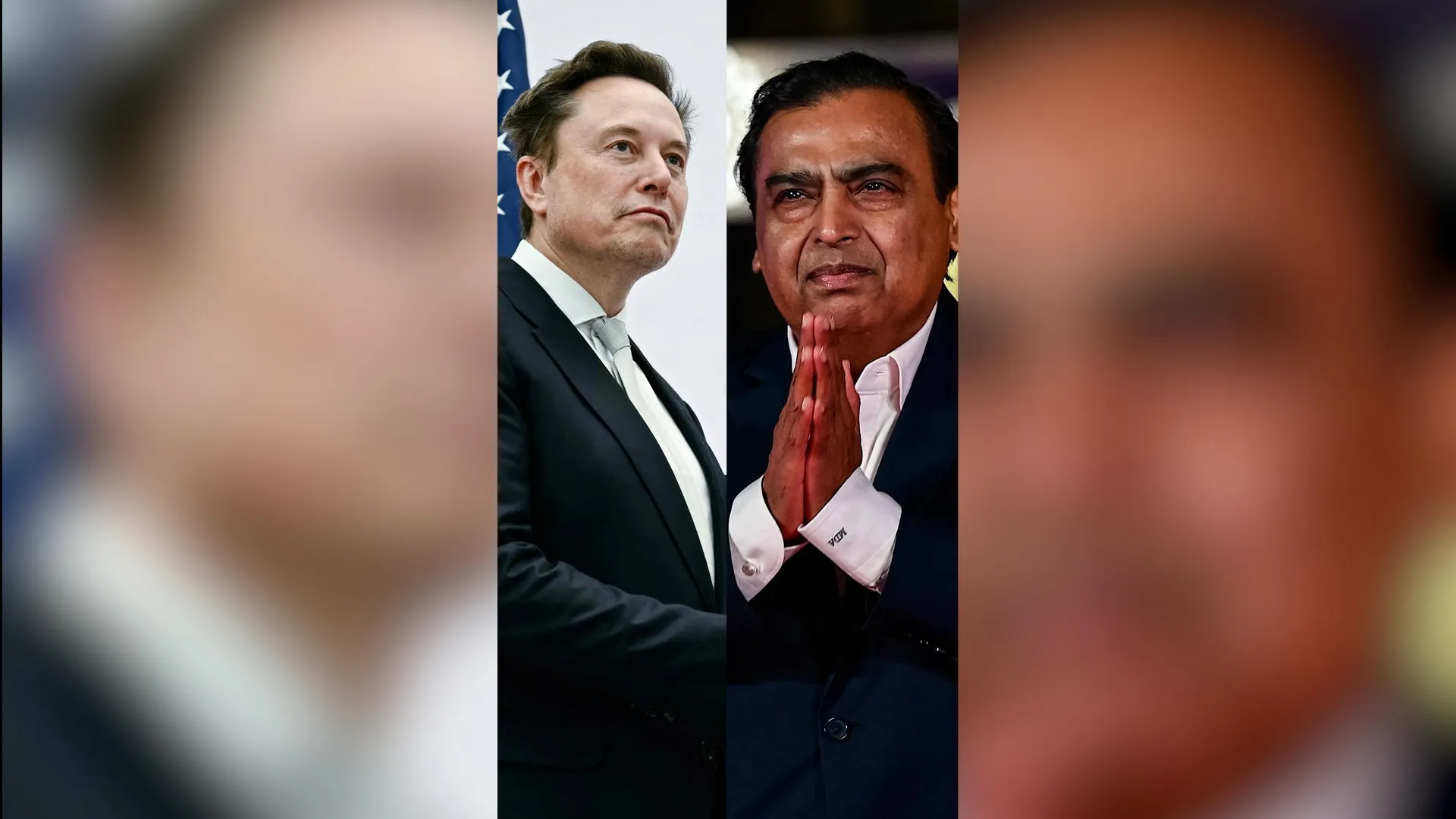
Elon Musk has accused Indian billionaire Mukesh Ambani of being India’s ‘real boss’ in a row over delays to Starlink’s entry into India. Ambani’s Reliance Jio has over 500M subscribers in India, and Musk claims Ambani is using political interference to sabotage his business interests.
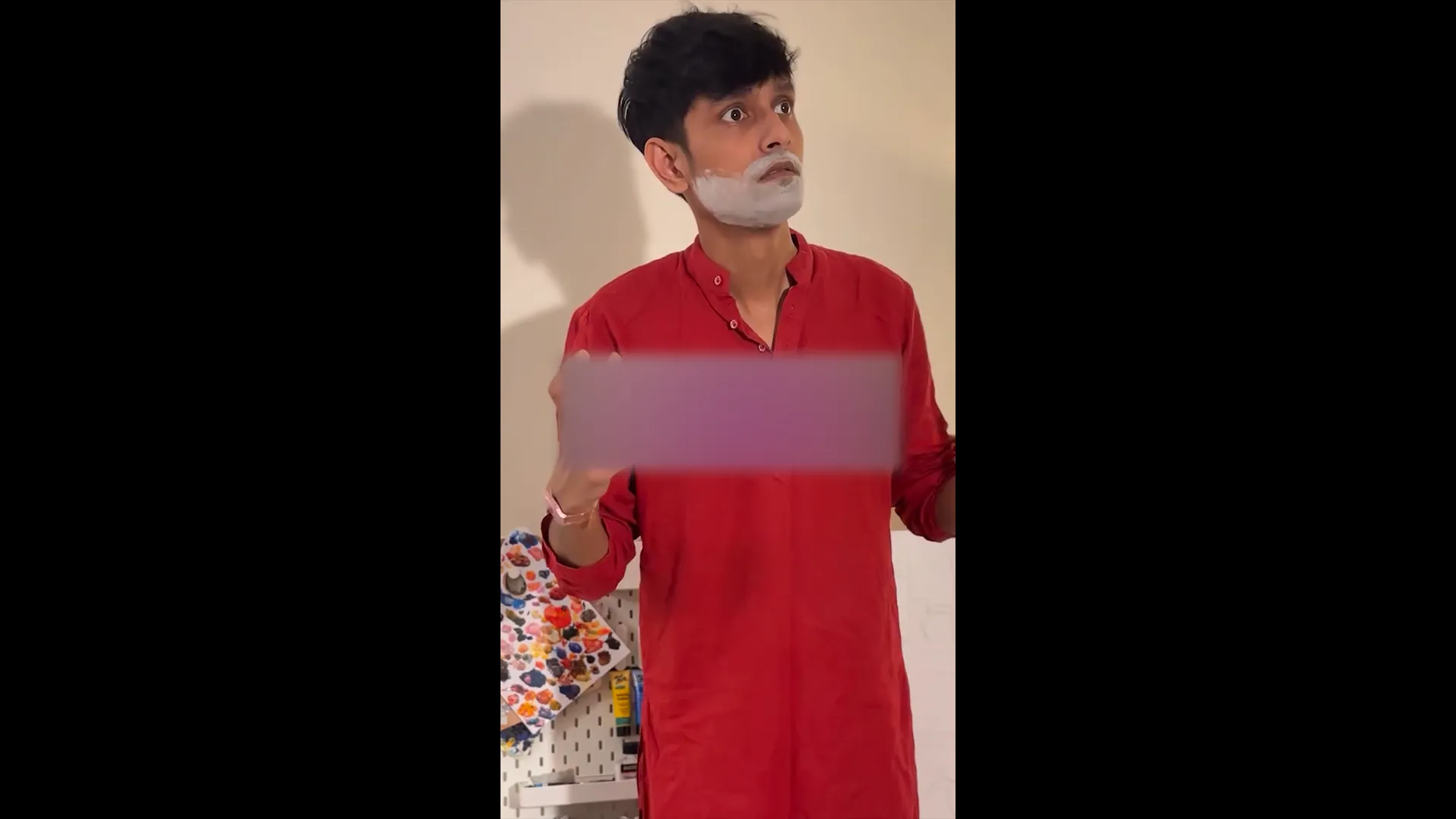
New Delhi, India – Stand-up comic Brijesh Jha posted a parody video on Instagram last week to protest the removal of his name, along with his father’s and sister’s, from a voter list in the eastern Indian state of West Bengal.
The video, which alleged that India’s Chief Election Commissioner Gyanesh Kumar had disenfranchised millions of voters at the behest of Prime Minister Narendra Modi’s Bharatiya Janata Party (BJP), garnered 1.7 million views after it was posted on September 29.
Recommended Stories
list of 4 itemsend of list
Two days later, Meta, the United States-based company that owns Instagram, took the video down, citing “local laws” without giving further explanation.
“I felt very helpless that day. I have only one thing in this country – that I can vote. If you take that away from me, then I have nothing left. So I didn’t know what to do. As an artist, I can just make art, or I can protest,” the Mumbai-based artist told Al Jazeera.
Jha said his parody song was removed because the Modi government is “scared” after an investigation by the Indian Express newspaper last month revealed that two of the election commission’s three members had raised serious concerns over a controversial revision of voter rolls being conducted by the poll panel across the country.
The exercise, known as the Special Intensive Revision (SIR), was launched in June last year to identify deceased, duplicate or dubious voters and remove them from the rolls. So far, the process has deleted more than 130 million voters – nearly 14 percent of India’s total voters, an overwhelming number of them Muslims who do not usually vote for Modi’s Hindu nationalist party.
The Indian Express investigation found that two of Kumar’s fellow election commissioners had formally objected at least 14 times to key decisions linked to the SIR exercise taken by their chief.
Opposition politicians and critics accused Kumar, a Modi government appointee, of acting at the behest of the BJP and demanded an independent inquiry into the decisions taken by the election commission during his tenure.
The revelations have led to street protests across India, demanding Kumar’s resignation.
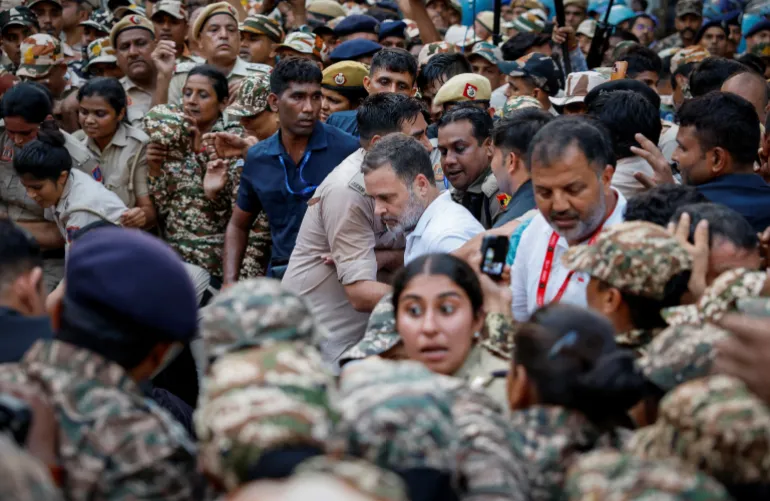
On Tuesday, police in the capital New Delhi briefly detained the main opposition leader, Rahul Gandhi, and other leaders of his Congress party as they tried to march to the election commission office.
“The country has been hijacked by Narendra Modi through vote theft,” Gandhi told reporters. “What has been done to our country is called treason. Nobody is going to escape.”
In response, the BJP accused the opposition parties of “making a concerted effort to change the government”.
“They are deliberately attacking India’s democracy and constitutional institutions,” a BJP spokesman told reporters on Tuesday.
The Congress protesters and their political allies were back on the streets on Wednesday. Their demonstrations followed a series of protests by the satirical Cockroach Janta Party (CJP) and a group of left-wing students in Mumbai and New Delhi since October 2. The CJP has planned another demonstration in New Delhi on October 10 if Kumar does not resign by then.
‘Question the people in power’
What stood out in these protests was an increasingly inventive language of dissent, driven by humour, art and music, with much of it existing online alongside the demonstrations on the streets.
But a crackdown on such memes and jokes has also been simultaneous.
According to the Indian Express newspaper, the government issued nearly 195,000 content-blocking orders to Instagram, Facebook and YouTube between March and July this year – an average of one blocking order every 68 seconds.
Rejecting the newspaper report, the government said in a statement, “With 600 million users in India posting up to 78,703 items every 68 seconds, it is reasonable to expect that on average, one of these items may not be lawful.”
The crackdown came after the Modi government tightened rules governing online content in February. According to the new rules, social media platforms must remove content that a government authority or court has declared “unlawful” within three hours of receiving the order, down from 36 hours previously.
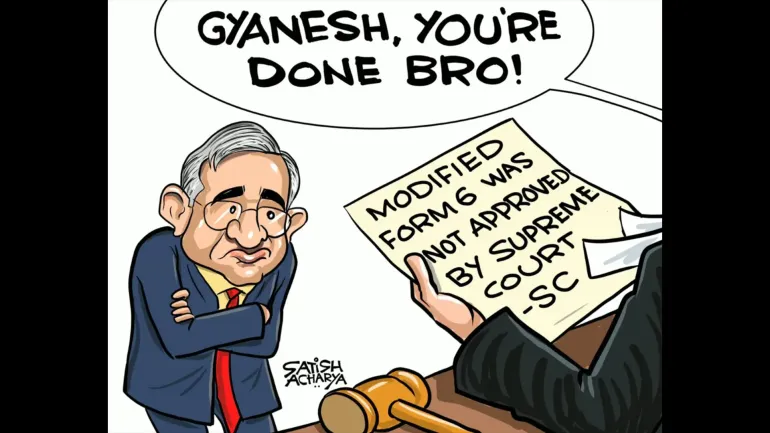
Among those whose works were taken down was political cartoonist Satish Acharya.
One of Satish Acharya’s cartoons taken down by the social media companies [File: Al Jazeera]
Several of Acharya’s cartoons, some up to three years old, were removed and his Instagram account was blocked in India from September 28 until late on October 5, he told Al Jazeera.
“At different phases of history, people used cartoons as a tool to express their protest and question the people in power. With the advanced use of social media, cartoons appear in different forms now, sometimes memes and reels,” the 55-year-old said.
“I have a lot of hope in Gen Z. They are fearless, they are creative and they care for the country. Our politicians can learn a lot from them.”
Stand-up comic Jha, who attended the CJP’s protest in Mumbai, agrees. “The more cruel the power is, the softer, more humorous and more artistic the protest becomes,” he told Al Jazeera.
But Jha has refused to apply for a reinstatement of his name in the voters’ list.
“I think they will see this interview and probably I will be in some detention centre. I just want to see what will happen. I’ll not register my name again,” he said.
However, he had a satirical message for Modi as he urged the Indian leader to stop the crackdown on online content.
“Please give back my right to vote. You are a great leader with a 56-inch chest. You shouldn’t be scared of one video,” he said, invoking a long-held right-wing boast about Modi’s famous bust.
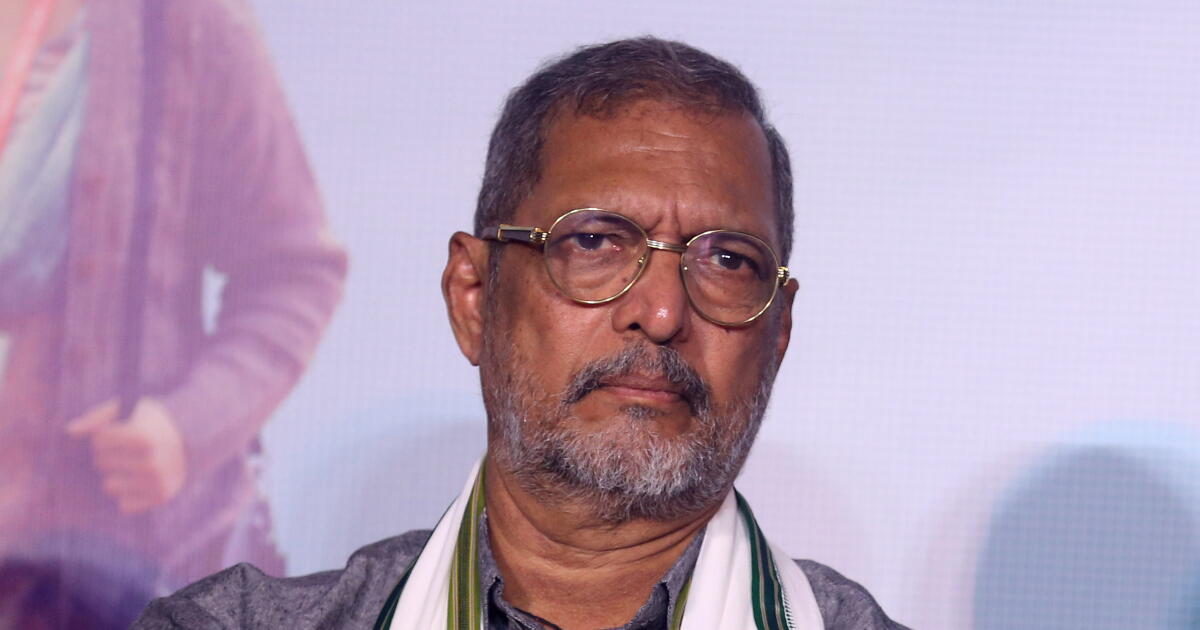
NEW DELHI — Nana Patekar, an acclaimed Indian actor and filmmaker, died Thursday at his home in the western state of Goa. He was 75.
Patekar died of a suspected cardiac arrest, the Press Trust of India news agency reported, citing a doctor at the hospital where he was pronounced dead.
Born in 1951 in India’s western state of Maharashtra, Patekar built a career spanning nearly five decades in Hindi- and Marathi-language cinema. He was known for intense performances and roles that often portrayed complex or unconventional characters.
Patekar made his film debut in the 1978 Hindi film “Gaman” and later earned acclaim for “Parinda” and “Krantiveer.” Patekar became popular in mainstream Bollywood films, while also working in India’s “parallel cinema” movement, known for its focus on realism and social issues. He gained wider international recognition with filmmaker Mira Nair’s Oscar-nominated “Salaam Bombay!”
He won three National Film Awards, India’s highest film honors, and received the Padma Shri, one of the country’s highest civilian honors.
In 2018, during India’s #MeToo movement, a Bollywood actress accused Patekar of sexual harassment on a film set. Patekar denied the allegation. The case was among several that drew attention as women publicly spoke about sexual misconduct in India’s film industry.
Prime Minister Narendra Modi mourned Patekar’s death, praising his “intensity, individuality and unmistakable presence” as an actor.
“He brought remarkable versatility and creativity to every role and gave us characters that will be remembered for generations,” Modi wrote on X.
Rahul Gandhi has been arrested several times at protests demanding the resignation of poll body chief.
Published On 7 Oct 20267 Oct 2026
Indian opposition leader Rahul Gandhi has been detained for the third time in two days during a protest demanding the resignation of the election chief over a controversial revision of voter lists.
Gandhi and other opposition lawmakers were apprehended by police on Wednesday as they marched towards Jantar Mantar, a designated protest site in India’s capital, New Delhi.
Recommended Stories
list of 3 itemsend of list
A live feed on the YouTube channel of Gandhi’s Congress Party showed police taking him into a vehicle and driving away. Authorities also detained several other opposition lawmakers and protesters.
Opposition parties, their student units and the “Cockroach” youth movement have been demanding the resignation of Chief Election Commissioner Gyanesh Kumar, accusing the poll body he heads of benefiting Prime Minister Narendra Modi’s ruling Bharatiya Janata Party.
India’s Election Commission has so far removed more than 130 million names from the voter lists, with millions appealing the removals. About 969 million people were eligible to vote in the 2024 election.
Protesters allege the changes disproportionately removed voters who support opposition parties while preserving or adding voters more likely to back Modi’s party.
Police detain Indian opposition leader Rahul Gandhi during a protest organised by opposition parties in New Delhi [Adnan Abidi/Reuters]
The commission and government deny the allegations. They say the revision has no political motive but is aimed at removing duplicate and ineligible entries while ensuring eligible voters remain registered.
Opposition lawmakers led by Gandhi protested on Tuesday as well, before police broke up their gathering and briefly detained them.
Speaking before his detention on Wednesday, Gandhi said protesters showed up unannounced after Delhi police “stopped” their gathering the day before.
“We will go to the designated protest site, sit there, and tell the country that, for us, Gyanesh Kumar is not the legitimate commissioner,” he told reporters, referring to Jantar Mantar.
“The people who have done this [vote theft] are traitors … Gyanesh Kumar will have to resign,” he added.
There was no immediate comment from the police on the detentions.
The demonstrations present a new political challenge to Modi midway into his third term, just months after similar protests led by the Cockroach Janta Party youth movement forced the resignation of his education minister over exam paper leaks.
The “Cockroach” protests, one of the most visible signs of public dissent against Modi’s government in recent years, reflected growing anger over job scarcity, corruption and a lack of government accountability.
Smit Machchhar recalls mid-air disaster after co-pilot’s attack on flydubai flight to Tel Aviv.
Published On 2 Oct 20262 Oct 2026
Indian pilot Smit Machchhar, who was stabbed by his co-pilot in an alleged attempt to crash a Flydubai flight to Tel Aviv, has shared a public account of how he managed to open the cockpit door and let passengers take control of the plane despite his injuries.
Speaking on Friday from a hospital bed in Abu Dhabi via video call with Indian Prime Minister Narendra Modi, Machchhar said that he knew the aircraft was going down as he lay bleeding on the floor.
Recommended Stories
list of 3 itemsend of list
“I had suffered so many injuries that I had collapsed. At that time, I could feel that the aircraft was going down. I knew this was the last push, that the door was right there,” he said in a nearly 10-minute video released on the prime minister’s social media channels.
He added: “I was being hit even then, but I just opened the door and everyone came in.”
Machchhar, who has 17 years of aviation experience, including 11 as a captain, said that experience helped him grasp what was happening even while wounded.
He told Modi he had recited a Hindu devotional prayer during the ordeal.
“I know God himself saved me,” he said, in an emotional exchange with Modi, who is from the same home state of Gujarat.
Modi praised Machchhar’s bravery, saying his presence of mind had saved lives and the reputation of Indian pilots.
Machchhar said he allowed passengers and crew to overpower the co-pilot and let a second pair of Flydubai pilots take control and land the plane in Tabuk, Saudi Arabia.
The Flydubai flight was carrying 174 people as it briefly plunged around 17,000 feet (5,180 metres) before it was brought back under control.
UAE presidential adviser Anwar Gargash has called the incident a “terrorist act”, while Israeli Prime Minister Benjamin Netanyahu said the co-pilot had undergone “Islamist radical indoctrination” and appeared “suicidal”.
US President Donald Trump has warned that Iran would be “hit very hard” if found to be linked to the attack.
India is facing growing discontent among its youth and they are taking to the streets. One Indian artist tells Al Jazeera the Modi government changed his voting status and had his Instagram post taken down. Now he’ll join thousands expected at a Cockroach Janta Party-led protest demanding change.
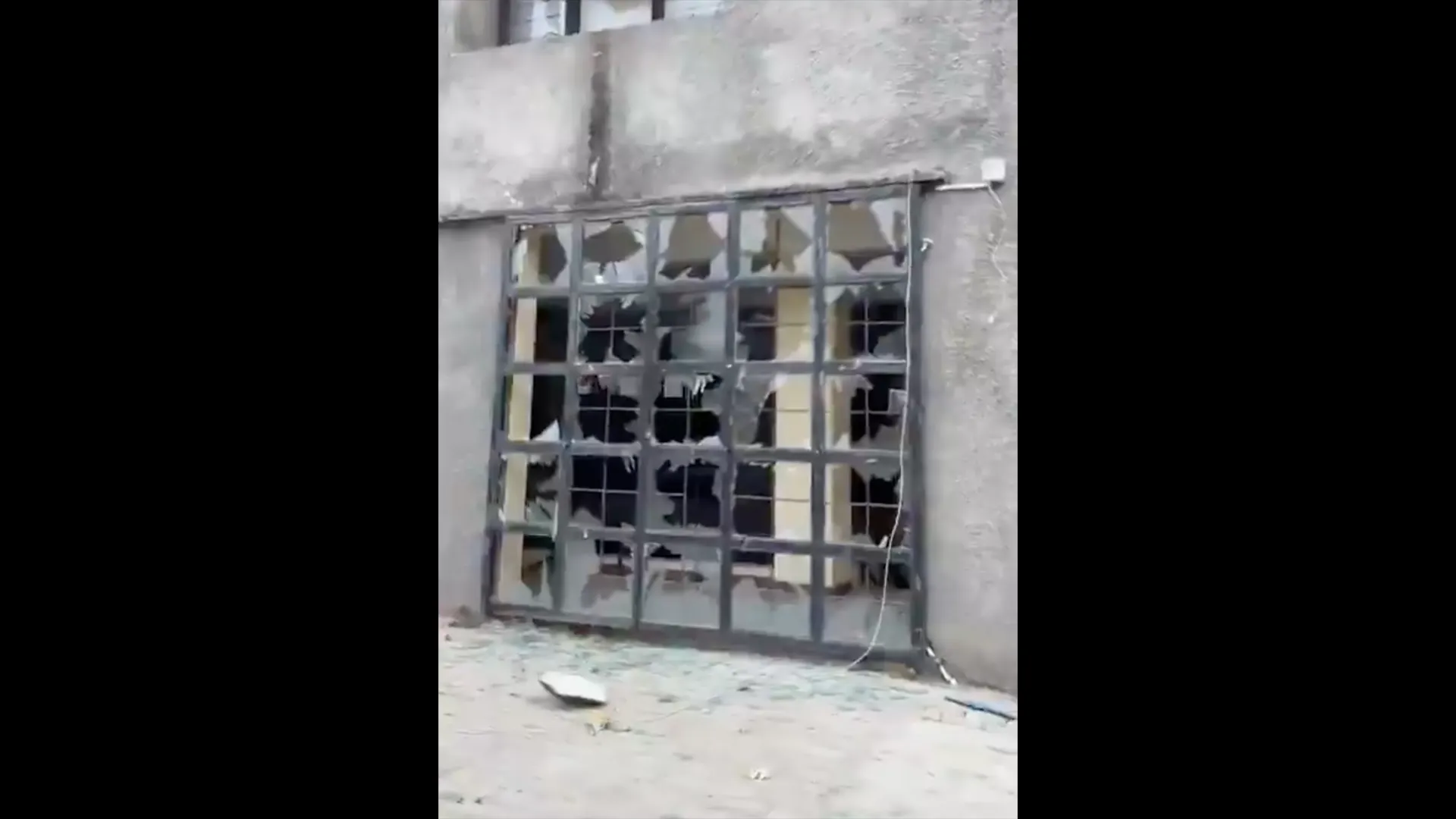
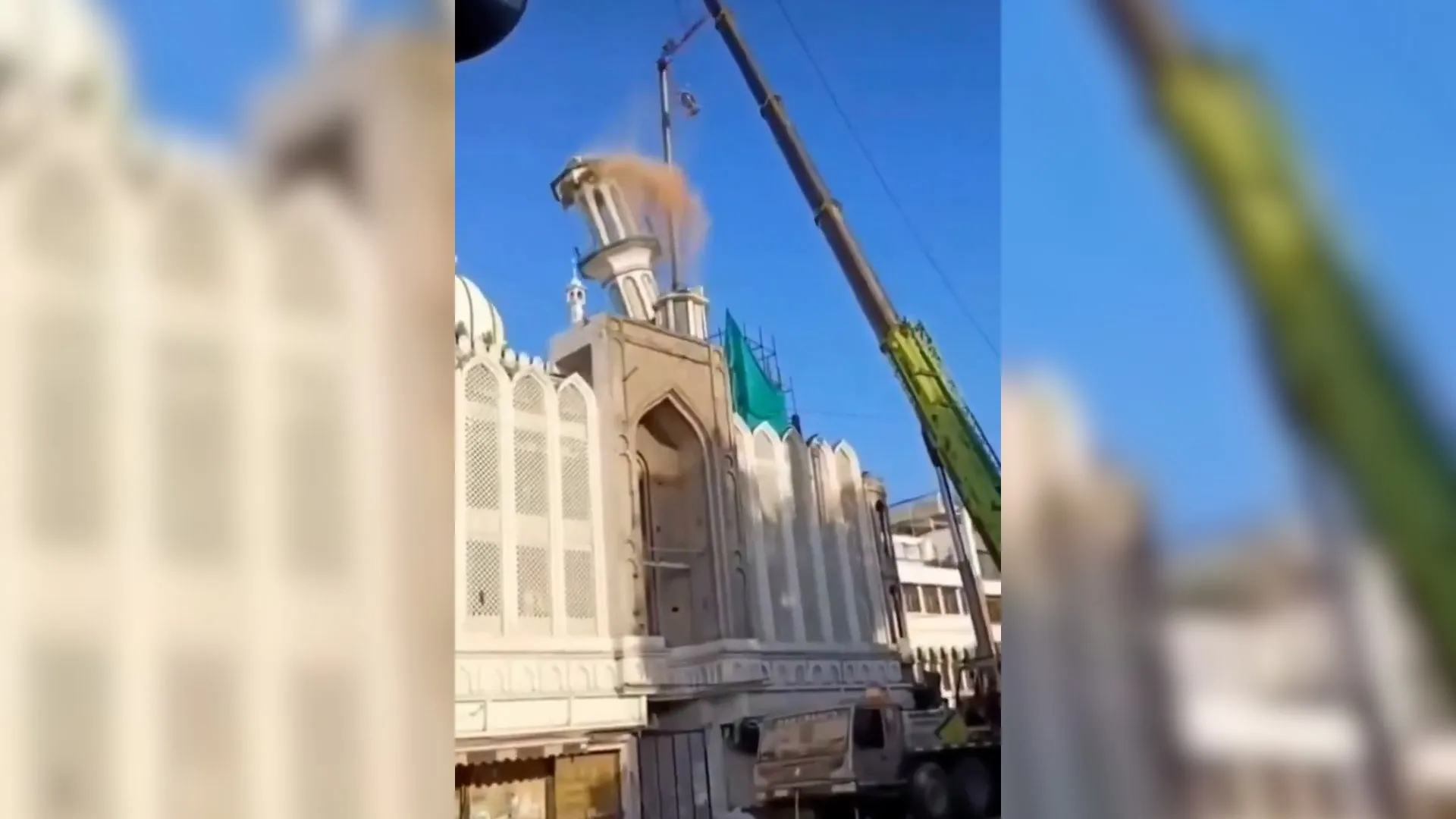
Video shows the moment the minaret of India’s 600-year-old Ujjain mosque collapsed during demolition work for a road-widening project for a Hindu pilgrimage, triggering despair among Muslims onlookers. Officials described it as an accident caused by faulty machinery.
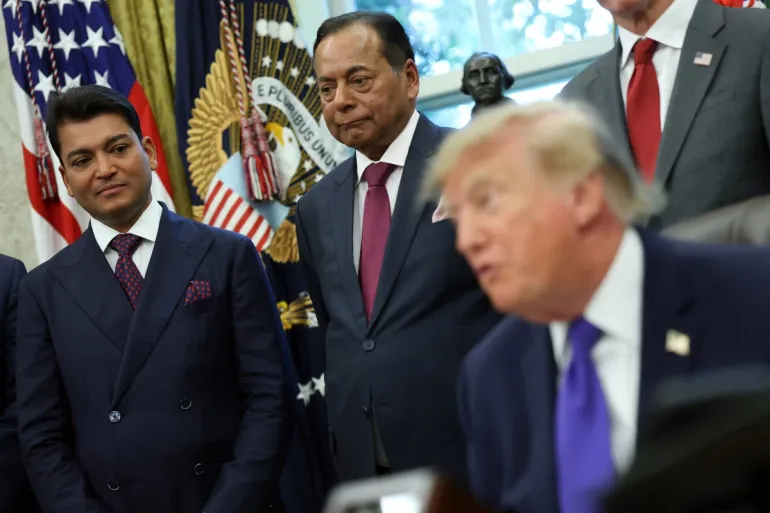
As US President Donald Trump announced a $15bn steel megaplant while seated at his Oval Office desk on Monday, he had a lineup of mostly US politicians standing behind him – from cabinet members to elected representatives from Iowa, where the mill is to be built. There was one exception: an Indian man with a receding hairline and a lilac pocket handkerchief, standing behind the US president’s right shoulder.
Ravi Ruia is a cofounder of the Essar Group, which owns Mesabi Metallics, the Minnesota-based firm that’s building the steel mill, which is expected to be the United States’s largest once it is complete. A decade earlier, in October 2016, his brother Shashi was in the photo frame with a different president during the signing of another major deal: Russian leader Vladimir Putin.
Steel and metallics aren’t Essar’s only association with minerals and natural resources. The conglomerate had been involved for years with oil, before it sold one of India’s largest private oil refineries to a Russian-led consortium in 2016 for nearly $13bn. Essar Oil was rebranded as Nayara Energy.
Today, Nayara Energy is half-owned by Russian gas major Rosneft, which is under heavy US and European sanctions over Moscow’s war on Ukraine. Nayara has also emerged as a supplier of petroleum products to Russia at a time when the country is facing a fuel crisis following multiple Ukrainian attacks on its oil and gas depots.
And as part of a 99-year deal, Nayara is continuing to use Essar’s branding in India, where the company runs thousands of petrol stations. Nayara is under European Union sanctions.
The White House is touting the Iowa steel project, unveiled just before the US midterm elections, as a major economic win for Americans, promising hundreds of jobs and billions of dollars in revenue. And there is no evidence that the steel project is in violation of any Russia-specific US sanctions.
But Trump’s announcement of a mega project with an Indian firm closely tied to Russian investments under Western sanctions underscores how the US has struggled to isolate Moscow economically despite an unprecedented economic pressure campaign.
And the timing of the steel mill announcement raises questions, because it comes days after Trump signed a law that empowers him to punish countries that buy Russian oil with up to 100 percent tariffs. India is Russia’s second-largest oil buyer. But the legacy Indian conglomerate that best epitomises the country’s links to Russian energy is now also behind the US’s biggest steel factory.
Rewant Ruia, left, chairman of Mesabi Metallics, and Ravi Ruia, centre, board member of Mesabi Metallics and director of Essar Capital, listen as US President Donald Trump delivers remarks in the Oval Office at the White House on September 28, 2026, in Washington, DC [Kevin Dietsch/Getty Images]
What’s the steel factory project about?
The new project would integrate its iron ore mining operations in Minnesota’s Mesabi Iron Range with the upcoming steel complex in Iowa.
The White House and the company’s announcements said that the Iowa steel plant is expected to create at least 1,750 permanent jobs – “while continuing to work with suppliers and businesses throughout Iowa and the Midwest” – and support up to 6,000 construction jobs.
Washington also noted that the mill will produce 7.5 million tonnes of steel per year in its first phase, expected to rise to 10 million tonnes. First steel production is expected in 2030.
The first phase of the project is expected to generate $95bn in total economic impact during construction and its first 10 years of operation, according to the White House.
Trump’s commerce secretary, Howard Lutnick, told the reporters that “these are your 232 tariffs, the steel tariffs at work.” He added: “Without those tariffs, this mine and steel plant doesn’t get built.”
Trump chipped in, too. “Soon after my inauguration, I imposed powerful 50 percent tariffs on all foreign steel, and now our steel industry is roaring back to life,” Trump said. “Everyone’s building their plant here because they don’t want to pay tariffs.”
But the steel project is also evidence of how countries and companies have skirted US economic pressure – and how it gives them leverage to continue to do so.
An Essar petrol station with pumps showing no fuel in Stanley, County Durham, UK, September 27, 2021 [Lee Smith/Reuters]
What are Essar’s ties to Russia?
Essar Oil, the group’s energy arm, began refining crude in 2008 at its refinery in Vadinar on the coast of the western Indian state of Gujarat.
But by 2016, the company was in deep debt, listed as a defaulter by the Reserve Bank of India, the country’s central bank, and desperately looking for a buyer who would take over its oil operations. The timing was opportune. President Putin in Russia was at the time trying to get Rosneft, his country’s energy giant, to offload some stakes in exchange for foreign capital.
Indian Prime Minister Narendra Modi played matchmaker, helping stitch together a series of deals between 2014 and 2016 that helped Rosneft and Essar. First, Indian public sector oil majors bought stakes in Rosneft, giving it the cash it needed. Rosneft, in turn, joined hands with other investors to buy the Vadinar refinery, freeing Essar from its debts.
Essar Oil became Nayara Energy – a company in which Rosneft owns a 49 percent stake, and United Capital Partners, a Russian asset management company, owns another 49 percent. The buyers paid Essar $12.9bn for the deal. As part of the agreement, Nayara got to use Essar’s branding – including on thousands of petrol stations across India – for 99 years.
Logo of Nayara is seen at its fuel station on the outskirts of Ahmedabad, India, November 16, 2022 [Amit Dave/Reuters]
Is Nayara under Western sanctions?
Yes. The European Union imposed sanctions on Nayara in July last year as part of the broader 18th package of sanctions against Russian oil.
The sanctions banned the import of petroleum products processed using Russian crude oil and restricted the refinery’s access to EU shipping insurance, as well as financial and other services.
Nayara’s Vadinar refinery in western India has been processing only Russian oil since other suppliers backed out following the sanctions. Since then, Nayara has relied on international traders to import crude and export refined fuels.
In July this year, Nayara Energy sold petroleum to Russia as Ukrainian attacks targeted oil refineries across the country, triggering a fuel crisis.
In recent months, Ukrainian forces have targeted Russian oil facilities, setting them ablaze and causing long lines for fuel across the country, including in the capital, Moscow. The fuel crisis, unprecedented for Russia, a country that is one of the world’s biggest energy producers, has led to rationing in many regions.
These Russian links have brought Nayara Energy under wider scrutiny, prompting companies, including SAP, to suspend services to the refiner, citing sanctions and obligations under EU law.
Nayara challenged the move in the Delhi High Court, which ordered SAP India to restore its services earlier this month.
Are Essar or the steel plant violating any sanctions?
While Nayara is under EU sanctions, Essar does not face any US or EU sanctions.
In October 2016, after Essar struck its deal with Rosneft and United Capital Partners to sell the Vadinar refinery, the US – at the time under the Barack Obama administration – said that the agreement was not in violation of any sanctions.
“I don’t think we see any violation of any US-EU sanctions stemming from this deal,” State Department spokesperson Mark Toner said at the time. Essar also said that the deal was compliant with US sanctions.
There is no evidence of any sanctions breach in Essar’s investment in Mesabi, or in the planned investment to set up the steel factory in Iowa.
But Essar’s relations with Russia have nevertheless attracted scrutiny, including in the United Kingdom, where the Ruia brothers have long had major investments.
At the time of the sale of the Vadinar refinery to Russian buyers, the Russian bank VTB also gave Essar a $3.9bn loan for debt reconstruction.
The bank was hit by major US and EU sanctions in February 2022, right after Russia’s full-fledged invasion of Ukraine. Essar, reporting published in April 2026 by The Guardian and investigative journalism platform SourceMaterial, showed, moved the VTB loan to Mauritius, a tax haven, allegedly to avoid the sanctions. Essar owns the Stanlow oil refinery in the UK.
US President Donald Trump waves as he walks to board Marine One as he departs from the South Lawn of the White House in Washington, DC, on September 26, 2026 [AFP]
Why is the timing of the steel plant announcement significant?
Trump’s Republican Party is heading for crucial midterm congressional elections in November, while his approval rating has been plumbing all-time lows in the face of voter concerns about inflation, the cost of living, and the war on Iran.
In his second term, Trump has made tariffs and a revival of US manufacturing a cornerstone of his economic vision, claiming that higher barriers to imports will drive investment back to the US.
Moreover, Washington introduced legislation that would allow the president to impose tariffs of up to 100 percent on imports from countries that continue economic engagement with Russia or Iran, aiming to put pressure on countries that continue buying Russian energy.
New Delhi is particularly exposed since it became one of the largest buyers of discounted Russian crude after the invasion of Ukraine in 2022. Trump imposed an additional 25 percent tariff on Indian imports in 2025 over the issue, before removing it in February 2026 after India committed to stop buying Russian crude.
Russia has remained India’s largest source of crude, although purchases have declined as the threat of US penalties has grown. The news agency Reuters reported that India imported approximately 2.1 million barrels per day of Russian crude in August.
There is also a recent parallel to underscore the incentives for investment in Trump’s US. In May this year, Washington moved to dismiss the criminal fraud and bribery charges against Indian billionaire Gautam Adani, while his lawyers had told the Justice Department that Adani was prepared to invest $10bn in the United States. A federal judge subsequently dismissed the criminal case in August.
Lovely Professional University in Punjab suspends classes for 10 days due to campus unrest over rape allegations that university officials deny.
Published On 28 Sep 202628 Sep 2026
A university in the Indian state of Punjab has suspended classes for 10 days after protests on campus over an alleged rape last week, a claim that university officials have denied.
In an announcement on Monday, Lovely Professional University in Phagwara also postponed midterm examinations due to the demonstrations, which turned violent.
Recommended Stories
list of 3 itemsend of list
“Students may, in consultation with their parents/guardians, travel to their hometowns during this 10-day period, if they wish to do so,” it said in a statement.
“Students who stay back are advised to stay inside their hostels/places of residence and avoid unnecessary movement or involvement in any unrest-related activities in the interest of their own safety.”
According to posts on social media, a female student was raped on campus. Some claimed the student committed suicide. Police said they were investigating the alleged incident, adding that the identity of the student had not been established, the news magazine India Today reported.
The protests escalated on Sunday as demonstrators clashed with police, and reports in local media said there were incidents of vandalism inside the university.
Protesters allegedly threw stones, smashed windows and set fire to vehicles on campus as well as damaging police vehicles, according to reports. Students also reportedly blocked a nearby highway.
University registrar Monica Gulati denied the rape had taken place, saying on Sunday that there was “no truth” to the allegations.
“The manner in which such false and misleading information is being systematically circulated appears to be a deliberate and concerted attempt to malign the reputation of the university and tarnish its image,” The Times of India, the country’s largest English newspaper, reported.
Meanwhile, three female students residing in the same building where the alleged rape took place appeared in a video featuring Gulati and backing the registrar’s claims that no rape had taken place.
However, according to the news channel NDTV, a separate video emerged later in which the same three students said they were instructed on what statements to make.
Ongoing concerns around sexual violence
The incident comes as the Supreme Court on Monday pushed for accountability over a recent spate of rape cases in the national capital and neighbouring districts, saying they reflected a “failure of law enforcement”.
Hundreds of students protested in Delhi last week to demand better safety for women after a teenager said she was raped by three men at a park in the city.
Last month, a 17-year-old girl was allegedly raped in a moving bus by the driver and conductor, local media reported.
Sexual violence is a major problem across India with more than 80 rapes reported to police every day, according to the National Crime Records Bureau. Activists said that number is a major undercount and many victims do not report rapes because of social stigma or coercion.
Student protests at Lovely Professional University in northern India have turned violent following social media claims that a female student was raped at a girls’ hostel by a worker. The university has denied the allegations as rumours, while police have launched an investigation.
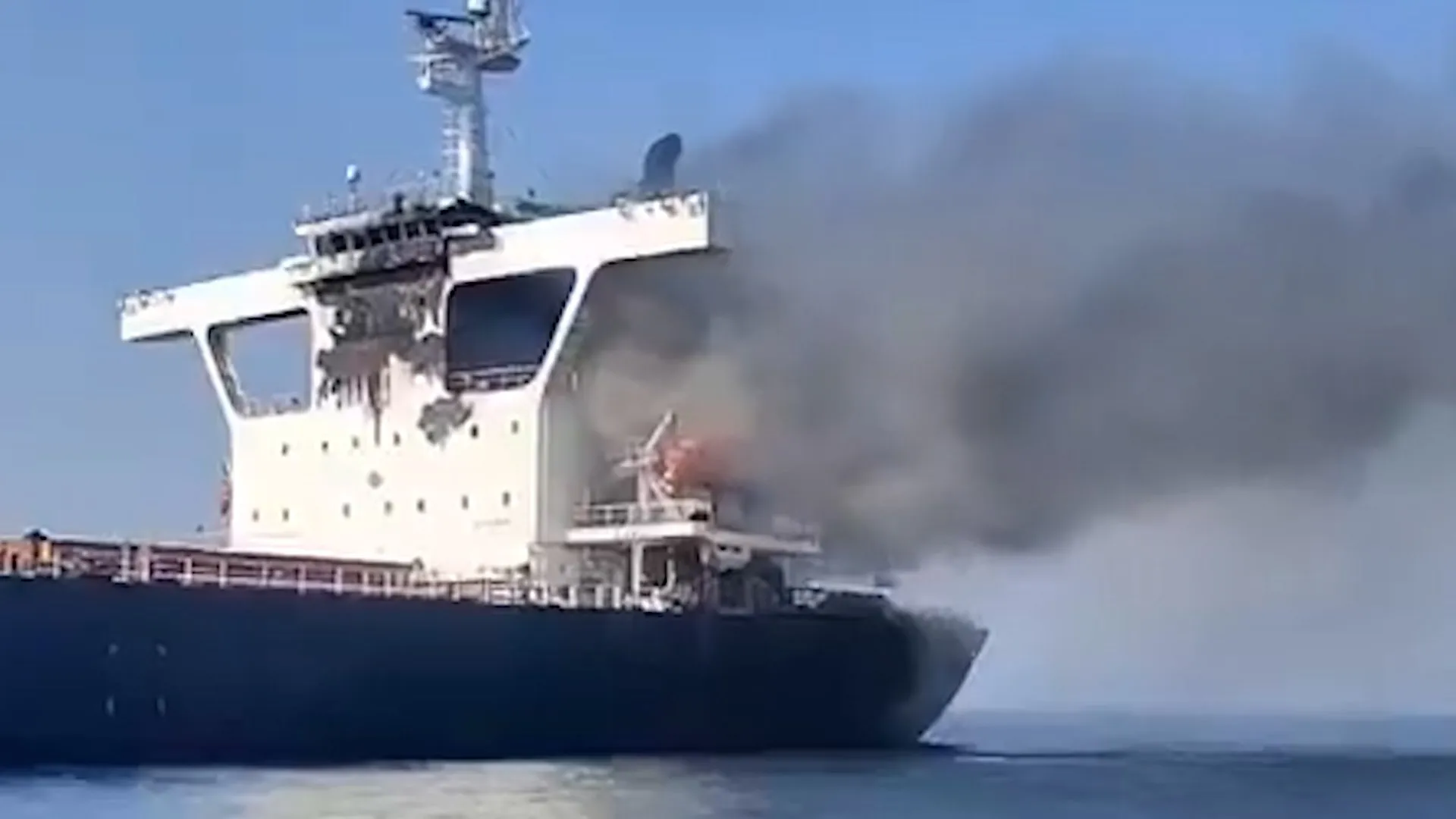
A crew member was killed in an attack on an Indian cargo vessel off the coast of Oman. MV Cape Dao was heading to India when it was struck twice by a projectile, setting the vessel on fire.





![US President Donald Trump waves as he walks to board Marine One as he departs from the South Lawn of the White House in Washington, DC, on September 26, 2026 [AFP]](https://i0.wp.com/occasionaldigest.com/wp-content/uploads/2026/09/1790693783_407_afp_6ab7d4f7ee67-1790432503.jpg?w=640&ssl=1)